The Bowery Boys: New York City History

The tides of American history flow through the streets of New York City — from the huddled masses on Ellis Island to the sleazy theaters of 1970s Times Square. Greg and Tom explore more than 400 years of action-packed stories, featuring both classic and forgotten figures who have shaped the world.
New York's Most Haunted Historic Places (Best of)
We have been recording Halloween podcasts about New York City -- for twenty years! The first Bowery Boys ghost story podcast was released on October 11th, 2007, the first time we used actual urban legends about wandering spirits and other unpleasant things as a way to share historical tales about the city.
Before the arrival of next week's brand new episode, get in the mood with this best-of compilation of our favorite stories from past shows, featuring places that you can still visit today, pulled from past episodes and compiled together for the very first time. Newly scared...
#493 The Mysterious Fox Sisters
In the town of Hydesville, south of the bustling city of Rochester, a traveling peddler was brutally murdered and buried in the cellar of a forlorn wooden farmhouse. His restless spirit, it was claimed, haunted the house.
In 1848, the teenage girls Kate and Maggie Fox claimed to receive spiritual transmissions from the murdered man. Their gifts included interpreting mysterious knocking sounds and an unusual ability to conjure such otherworldly communications on a whim.
Later joined by their sister Leah, the Fox Sisters soon exhibited greater powers to communicate with the dead. They took this “act” on th...
#492 How Mamie Fish Partied Her Way to Gilded Age Power
In the summer of 1902, all of Newport was buzzing: a European prince was coming to town, and Mamie Fish — one of the reigning hostesses of American high society — was throwing a dinner in his honor.
The young ladies practiced their curtsies. But what walked through the door that night was no prince, but did tell you everything about who Mamie Fish was.
She hadn’t started anywhere near the top. Raised in the Gramercy Park neighborhood in the 1850s, she watched her family’s fortune vanish and they relocated to the working class neighborhood of Astoria...
The World Trade Center in the 1970s (Rewind)
This year marks the 25th anniversary of the attacks on the Twin Towers on September 11, 2001. Today there’s an entire generation that only knows the World Trade Center as an emblem of tragedy. But people sometimes forget that the World Trade Center, designed by Japanese-American architect Minoru Yamasaki, was a very complicated addition to the New York skyline when it officially opened in 1973.
While it might be fun to think of New York City in the 1970s through the lens of places like Studio 54 or CBGB, the Twin Towers were what really redefined New York.
Th...
Little Italy: From Immigrant Enclave To Italian Theme Park (Rewind)
How do vibrant New York City neighborhoods react to major changes to city life while retaining their historic character? For the next three weeks, we will present three neighborhood-history shows from the Bowery Boys podcast in a new light, exploring how these historic areas survive sudden changes in economic growth, housing needs and tourism. And listen to our prior shows on SoHo and Downtown Brooklyn.
Little Italy is the pocket-neighborhood reminder of the great wave of Italian immigration that came through New York City starting in the late 1870s. It was once a densely packed, vibrant district o...
What's Up With Downtown Brooklyn? (Rewind)
Downtown Brooklyn has a history that is often overlooked by New Yorkers. You’d be forgiven if you thought Brooklyn’s civic center — with a bustling shopping district and even an industrial tech campus — seemed to lack significant remnants of Brooklyn’s past; many areas have been radically altered and hundreds of old structures have been cleared over the decades.
But, in fact, Downtown Brooklyn is one of the few areas to still hold evidence of the borough’s glorious past — its days as an independent city and one of the largest urban centers in 19th century America.
<...The Story of SoHo: A Lofty History (Rewind)
How do vibrant New York City neighborhoods react to major changes to city life while retaining their historic character? For the next three weeks, we will present three neighborhood-history shows from the Bowery Boys podcast in a new light, exploring how these historic areas survive sudden changes in economic growth, housing needs and tourism.
Picture the neighborhood of SoHo (that’s right, South of Houston) in your head today, and you might get a headache. Crowded sidewalks on the weekend, filled with tourists, shoppers and vendors, could almost distract you from SoHo's unique appeal as a place of...
The Gossip Game: The Man Who Blackmailed the Gilded Age
Before the era of the tabloid, New Yorkers got their gossip fix from a publication known as Town Topics, where the shocking secrets of the Gilded Age were revealed. But its publisher, William D'Alton Mann, was into more than just a bit of sleaze; he used these scandalous revelations to blackmail members of New York’s high society.
In this very special presentation of the Gilded Gentleman podcast, Carl Raymond and his special guest, Vanity Fair writer Joe Pompeo, introduce you to this forgotten scheme which threatened to tear apart the morals and polite mannerisms of Gilded Ag...
#491 Adventures in Old New York
Our book, The Bowery Boys Adventures in Old New York, was just re-released as a 10th-anniversary edition with lots of brand-new entries. So to celebrate, we thought we would highlight three of our all-time favorite stories from the book. Featuring:
— The Astor House, one of the first luxury hotels in the United States, owned by the original Astor himself — John Jacob Astor. When it opened in 1836, it wrote the rules for how people even stay in hotels in New York City. Why was it considered so revolutionary during its day, and why did its eventual demolition in the...
#490 The Murder of Bill the Butcher
It’s a scene more commonly imagined today in a Wild West saloon -- a shootout at Stanwyx Hall, across from the most elegant hotel in New York. The year was 1855, and the combatants were bitter rivals who had fought many times, including once in the notorious neighborhood of Five Points.
By the end, one man lie bleeding on the floor -- William Poole, a member of the Bowery Boys street gang, better known as Bill the Butcher.
The Martin Scorsese film Gangs of New York, loosely based upon the Herbert Asbury book, features a ve...
#489 Heated Rivalries from American History (Live at City Winery)
Alexander Hamilton vs Aaron Burr! Delmonico's vs Sherry's! John Adams vs everybody! Some of history's most fascinating stories involve important figures who did not like each other very much.
In this edition of Bowery Boys History Live!, recorded at Manhattan's City Winery on May 26, 2026, Greg Young from the Bowery Boys brings some of these stories to a live audience, featuring author Laurie Gwen Shapiro, tour guide Billy Nemec, and the Gilded Gentleman himself, Carl Raymond.
Featuring tales of Revolutionary War spite, obscene Gilded Age banquets, and Jazz Age flights of spite. PLUS: New York City's...
Tearing Down King George: Revolutionary Summer 1776 (Rewind)
Bowling Green is best known today as the calming, flower-filled oasis in lower Manhattan, next to the decidedly less calming, lumbering sculpture Charging Bull, which is popular with tourists. But this peaceful park was once home to New York City’s most infamous statue -- and the stage for America's first No Kings protest.
In 1770, the old park became the home of a monumental statue of King George III on horseback, an ostentatious artifact meant to remind the rebellious colonists of just who was in charge.
On July 9, 1776, following a reading of the freshly minted De...
#488 Party Like It's 1976!
New York City will be at the center of celebrations for the 250th anniversary of the United States, thanks to the largest-ever flotilla of tall ships to sail into New York Harbor — a reminder of the city's storied maritime history. It will be like ghosts of the past returning from a long voyage.
The parade of tall ships, known as Operation Sail, first assembled in New York waters for the 1964 World's Fair and later for the big U.S. Bicentennial of 1976. The city had a lot going on that year, most notably a financial crisis and a pu...
#487 The Knicks and the Knickerbockers: The Story of a Name
The New York Knicks are the ultimate New York City sporting franchise. Why would we make such a big claim? It's all in the name.
The Knicks were founded in 1946 as one of the inaugural teams from the sports professional league which became the National Basketball Association (NBA). Their owner Ned Irish, from Madison Square Garden, chose the name Knickerbockers, quite literally pulled it from a hat, because the word evoked the spirit of Old New York and the early days of Dutch New Amsterdam.
However there were no notable Knickerbockers in the original Dutch...
Marilyn Monroe at 100: Her Life in New York City (Rewind)
Marilyn Monroe was born Norma Jeane Mortenson 100 years ago on June 1, 1926. In late 1954, on the cusp of major Hollywood stardom, Marilyn moved to New York City on a quest to become a better actress and to find a little peace on streets where she could sometimes go unnoticed.
The year 1955 was one of discovery for the star of The Seven-Year Itch and Gentlemen Prefer Blondes — exploring the city, working on her craft and generally being the toast of the town.
In particular, she came to New York to become a better actress via the Actors St...
#486 The Many Intrigues of Eliza Jumel
She arrived in New York calling herself Eliza Brown — but she’d been born Betsy Bowen, daughter of a woman jailed for running a disorderly house in Providence.
By the time she died in 1865, she was Eliza Jumel -- Manhattan’s richest woman, mistress of a hilltop mansion in Washington Heights, the widow of a former vice president, and the subject of so many wild rumors that even her New York Timesobituary couldn’t keep the facts straight.
Tom is joined by Catherine Hughes and Danielle Gaita of the historic Morris-Jumel Mansion to sort the legend f...
The Real Historical Figures from Broadway's 'Ragtime'
The Lincoln Center revival of Ragtime — with music by Stephen Flaherty, lyrics by Lynn Ahrens, and a book by Terrence McNally, adapted from the novel by E. L. Doctorow — has just garnered 11 Tony Award nominations, including Best Revival of a Musical, along with multiple acting nods for its acclaimed cast.
This new production feels more timely and resonant than the one that first played on Broadway in 1998. In addition to the fictional Coalhouse Walker Jr. and the archetypal figures known simply as Father, Mother, and Younger Brother, Ragtime brings to life several real celebrities and power brokers from...
#485 The Painter Who Brought The World To New York
Perched over the Hudson River near the city of Hudson sits Olana State Historic Site, once the wondrous home of painter Frederic Church. This Gilded Age mansion is unlike any in the valley, mystical and imposing, evoking Persian and Moorish architectural styles and reflecting the art and ambitions of its former owner.
Church was more than a Hudson River School painter; he was an adventurer and dreamer, bringing the vistas of the world to America within his massive landscape creations. In 1859, when his Heart of the Andes made its New York debut, thousands lined up to soak...
The Garment District: Where New York Fashion Is Made (Rewind)
The Garment District in Midtown Manhattan has been the center of American fashion for almost one hundred years. The lofts and office buildings here still buzz with the business of making clothing — from design to distribution.
But the district has become endangered today as clothing manufacturers move out and the entire industry faces new challenges from online sales and overseas production.
During the mid-19th century, garment production thrived in New York thanks to thousands of arriving immigrants skilled in making clothes. Most clothing in the United States was made below 14th Street, in the ci...
#484 The Phrenology Craze
In our modern world, people are turning to all sorts of unusual beliefs and fringe disciplines just outside the bounds of medical science and psychology, all in search of a better understanding of the human mind and the origins of personality.
In the mid-19th century, New Yorkers with similar questions became obsessed with the unusual practice of phrenology, which promised to unlock the secrets of the brain through a careful examination and mapping of the human skull.
By the 1840s, visitors to New York City Hall and Barnum’s American Museum could walk just a...
#483 The Treasures of Carnegie Hall
Carnegie Hall is one of America’s greatest and most enduring cultural landmarks, enchanting audiences and making history since its opening night on May 5, 1891, when Pyotr Ilyich Tchaikovsky appeared there in his first performance in the United States.
This groundbreaking performance space (originally known simply as “Music Hall”) is in fact a trio of distinct venues, all nestled within a single, opulent Italian Renaissance–style building.
Although its benefactor Andrew Carnegie and his fellow Gilded Age elites had moved their grand residences farther up Fifth Avenue, New York’s established cultural institutions, like the venerable Academy of...
The Pushcarts of the Lower East Side (Rewind)
Once upon a time, the streets of the Lower East Side were lined with pushcarts and salespeople haggling with customers over the price of fruits, fish and pickles. Whatever became of them?
New York’s earliest marketplaces were large and surprisingly well regulated hubs for commerce that kept the city fed. When the city was small, they served the hungry population well.
But by the mid 19th century, mass waves of immigration and the necessary expansion of the city meant a lack of affordable food options for the city’s poorest residents in overcrowded tenement dist...
The Scandalous Hamiltons: Sex, Lies and Blackmail (The Gilded Gentleman)
In 1889, Robert Ray Hamilton, great-grandson of Alexander Hamilton, became ensnared in a sensational web of deceit — forged identities, attempted murder, and brazen fraud that captured headlines across the country. Although this gripping saga played out over a two-year period, it has largely faded from public memory.
In his book The Scandalous Hamiltons, author Bill Shaffer resurrects the scandal in vivid detail. Bill joins The Gilded Gentleman to unravel this astonishing true-crime drama, a story that shocked Gilded Age readers and is sure to raise eyebrows even today.
This show is brought to you by The Gil...
#482 Pride and Preservation (The Streets of the West Village Part 3)
Why is the West Village both historically important and incredibly expensive? In the final part of our West Village mini-series, we look at the elements that define the modern neighborhood — from battles with Robert Moses to the protests that galvanized the gay-rights movement.
The 19th-century charms of the old Village seem timeless, but they survive thanks to the 1969 Greenwich Village Historic District. The fight to save the neighborhood, however, began two decades earlier, and those early conflicts even popularized the name “West Village.” Jane Jacobs, fresh off the publication of her landmark book The Death and Life of Gre...
#481 How The West Village Became A Neighborhood (The Streets of the West Village Part 2)
In Part Two of our mini-series, The Streets of the West Village, we turn to the people who gave the neighborhood its character and vitality — from Irish longshoremen on the docks to actors on the off-Broadway stage, from street gangs to speakeasy proprietors. From Eugene O’Neill to Bea Arthur, their stories help define this corner of Manhattan.
Well into the early 19th century, the West Village still felt like a true village, with its preserved, winding lanes. Over the following decades, a diverse array of residents arrived and made the neighborhood their own, working along the wate...
#480 The Streets of the West Village: Creating the Village (Part 1)
Why are the streets of Manhattan's West Village so unusually charming and romantic? Why does it make such an excellent place for a night out in New York City? Why is the real estate so expensive? And when did it become a distinct place separate from Greenwich Village?
We hope to get to the bottom of these questions in the first part of our epic new limited series on the history of the West Village.
People have been living in this region of Manhattan Island for centuries -- first the Lenape, then the Dutch, who...
Frozen in Time: The Great Blizzard of 1888
Here’s a classic from the Bowery Boys Podcast archive, recorded in early 2013, just a few months after Hurricane Sandy.
Each winter, when forecasters warn of an approaching monster storm, they inevitably invoke one of the most infamous tempests ever to strike New York City: the now-legendary Great Blizzard of 1888, a devastating collision of wind and snow.
The battering snow-hurricane of 1888, with its freezing temperatures and crazy drifts three stories high, was made worse by the condition of New York’s transportation and communication systems, all completely unprepared for 36 hours of continual snow.
For t...
How To Dig a Train Tunnel Under the Hudson River (from HISTORY This Week)
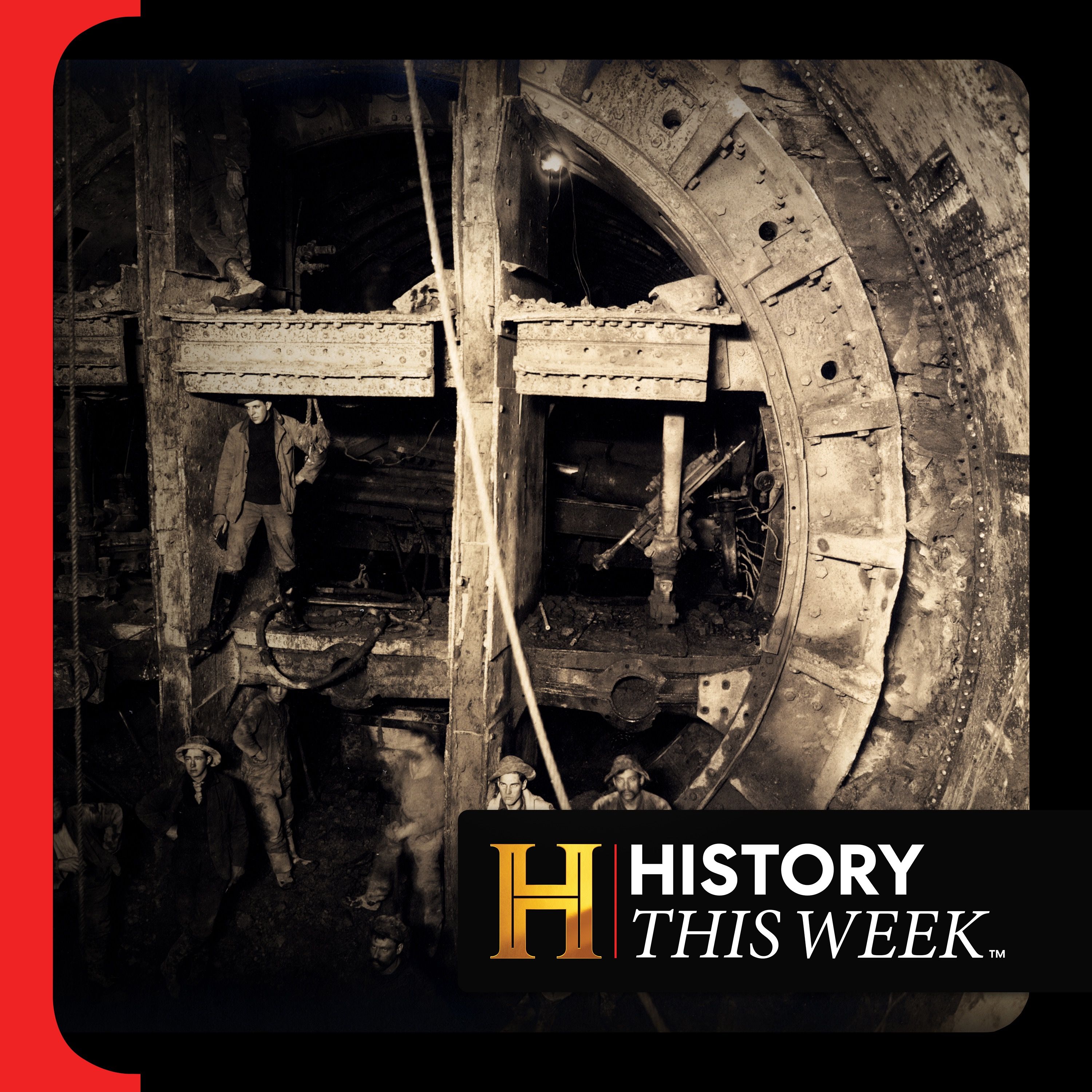
For more historical deep dives just like these, check out HISTORY This Week wherever you get your podcasts!
February 14, 1905. A stick of dynamite detonates under the Hudson River — and the ground above swallows a locomotive whole. It's the latest setback in an audacious plan to tunnel beneath the river and bring trains into Manhattan. The Pennsylvania Railroad is the largest corporation in the world, but the goopy riverbed keeps fighting back. How did they finally break through? And why are these 115-year-old tunnels still the most critical infrastructure in America?
Special thanks to our guests: Poll...
#479 NYC '84: The Case of the 'Subway Vigilante'
On the afternoon of December 22, 1984, shots rang out beneath the streets of New York, from the subway's 2 Seventh Avenue express train.
A Greenwich Village man named Bernhard Goetz shot four black teenagers who he believed were about to assault him. The incident made international news, amplified by the city’s shameless tabloid newspapers because it so perfectly embodied all the cultural stereotypes about New York City in the 1980s.
Goetz became a sort of folk hero, the so-called Subway Vigilante, who took things into his own hands because the city’s weakened and inept services coul...
#478 The Disappearance of Judge Crater
On August 6, 1930, Supreme Court Justice Joseph Force Crater stepped into a taxi on West 45th Street and vanished without a trace.
For 27 days, nobody reported him missing—not his wife waiting in Maine, not his Tammany Hall cronies, not the courts. When the story finally broke, it became the most famous missing persons case in New York history.
Judge Crater was a rising star in the city’s legal world—a Tammany Hall insider who’d just landed a prestigious judgeship paying $23,000 a year (about $450,000 today). But he was also tangled up in corruption, office-buying schemes...
The History of Brooklyn Heights and the Promenade
“A Highway is Crumbling. New York Can’t Agree on How to Fix It.”
That was a headline in the New York Times back in November about the highly problematic section of the Brooklyn-Queens Expressway located beneath the Brooklyn Promenade, the romantic walkway that offers sumptuous views of lower Manhattan.
Everybody loves the Promenade. Nobody loves the BQE, especially in its present state. So how did we get here? You have to go all the way back to the origins of the neighborhood of Brooklyn Heights for the answers.
A stroll through Brooklyn Height...
#477 Chester A. Arthur: The Gentleman Boss
On Lexington Avenue sits a special food store named Kalustyan's with a second floor stocked with international spices, syrups, and bitters. In 1881, this was the home of Chester A. Arthur, and it was here in the early morning hours of September 20, that he became the 21st President of the United States.
He is one of only two men inaugurated as president in New York City -- the other was George Washington. And Arthur was certainly no Washington!
Fans of the Netflix series Death By Lightning have already been introduced to Arthur's rugged, street-toughened personality, an...
#476 Hot Victorian Holiday: Bowery Boys History Live! at City Winery
Bowery Boys History Live is a live-show series at City Winery hosted by Greg Young featuring a variety of historians and tour guides. The last installment this summer featured author Liz Block and tour guide Keith Taillon. As live performances, they're a bit more loose and irreverent than the regular podcast and sometimes feature references to images being projected on stage.
As a special holiday bonus, step into the season with this festive dose of “Hot Victorian” history, naughty-list edition.
Join Greg Young of the Bowery Boys Podcast as he hosts this special holiday edition of B...
#475 Subway Tokens, MetroCards and Other Historic Fare
New Yorkers have gotten around their cities by subways, buses, elevated trains, streetcars and ferries. And the ways in which they have paid for them have changed as well. And keeps changing!
This month, the city is saying farewell to the MetroCard, the magnetic-stripe card that has gotten the town moving since the early 1990s. When the orange cards debuted, they replaced the strange physical tokens commuters had been using since 1953.
Mass transit fares were also a key issue in the past New York mayoral race — and they’ve always been a key issue for vote...
The Great Fire That Transformed New York
This month marks the 190th anniversary of one of the most devastating disasters in New York City history — The Great Fire of 1835.
This massive fire, among the worst in American history in terms of its economic impact, devastated the city during one freezing December evening, destroying hundreds of shops and warehouses and changing the face of Manhattan forever.
It also underscored the city’s need for a functioning water system and a permanent fire department.
So why were there so many people drinking champagne in the street? And how did the son of Alexa...
#474 Made in France: The Statue of Liberty’s Forgotten Origin Story
She stands in New York Harbor as America’s most recognizable symbol—but the story of the Statue of Liberty begins thousands of miles away, in the charming Alsatian city of Colmar, France.
In this special on-location episode, Tom ventures to the picturesque town where sculptor Frédéric Auguste Bartholdi was born in 1834. Walking through Colmar’s cobblestone streets and half-timbered facades, Tom sits down with Juliette Chevée, curator of the Musée Bartholdi, to uncover the French side of this iconic American monument.
Who was Bartholdi? What did the statue originally mean to the Fre...
The Last Ships From Hamburg: An Immigration Story
Our second in a series of podcasts about New York City and American immigration history.
Between the late 1890s and early 1920s, over 2 million Jews from Eastern Europe fled their homes and made the long journey to America, escaping persecution and violence in their native countries. Many were fleeing state-sanctioned antisemitism in Russia.
This mass immigration effort was, in large part, brought about by three entrepreneurial men: Albert Ballin, the director of the Hamburg-America line; Jacob Schiff, the German-born New York-based philanthropist and financier; and the Gilded Age financial titan J.P. Morgan.
It is...
#473 The Other Side of Ellis Island
Ellis Island is one of America’s great landmarks, a place in New York Harbor that represents the millions of people who arrived in this country during the late 19th and early 20th centuries. The north side of Ellis Island, now operated by the National Park Service as the Ellis Island National Museum of Immigration (part of the Statue of Liberty National Monument), saw nearly 12 million immigrants processed between 1892 and 1954. Part of the "processing" involved medical and mental health tests. Most people passed successfully, then boarded a ferry to the mainland — and a new life.
But some were...
The Rockefeller Center Christmas Tree: A History in Lights
The Rockefeller Center Christmas tree has brought joy and sparkle to Midtown Manhattan since the early 1930s. The annual festivities may seem steady and timeless but this holiday icon actually has a surprisingly dramatic history.
Millions tune in each year to watch the tree lighting in a music-filled ceremony on NBC, and tens of thousands more will crowd around the tree’s massive branches during the holiday season, adjusting their phones for that perfect holiday selfie.
But the Rockefeller Center Christmas Tree is more than just decor. The tree has reflected the mood of the Un...
#472 The Many Mysteries of Amelia Earhart
The aviation hero Amelia Earhart, who became one of the world's most famous women during the Great Depression, is one of those historic figures that people think they know quite well.
But during her lifetime, much of her public image was the product of a New York book publisher. And even today, Earhart's legacy is reduced down to seemingly strange disappearance over the Pacific Ocean in 1937.
Laurie Gwen Shapiro, author of The Aviator and the Showman: Amelia Earhart, George Putnam, and the Marriage that Made an American Icon, joins Greg on this week's show to...