Comical Opinions: Comics Reviews for Image, Dynamite, Zenescope, And More
Your regular update on Comic Book reviews, the latest news about the Comics Industry, and honest opinions. comicalopinions.substack.com
Is the Variant Cover Boom Repeating the 1990s Mistake?
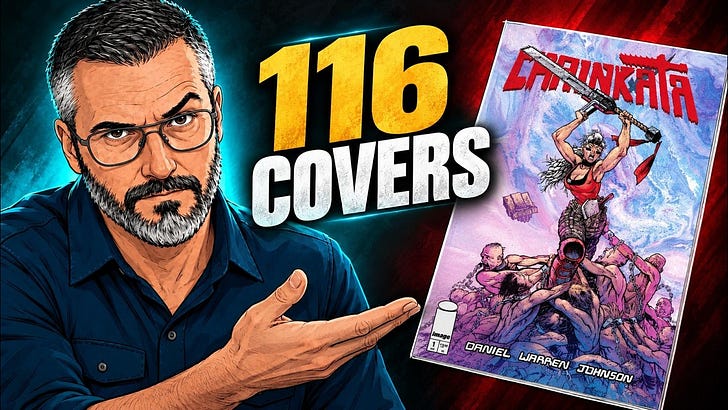
Chainkata #1 was announced with 116 retailer-exclusive covers. Meanwhile, Absolute Batman #25 reportedly exceeded 775,000 retailer preorders. Those numbers have reignited a familiar debate about comic book sales, collectible editions, and the health of the direct market.
But do these examples actually prove that a new speculation bubble is forming?
In this Comical Opinions industry deep dive, we examine the difference between retailer orders, customer demand, collectible premiums, and lasting readership. We look at what the 1990s can teach us, why enormous order numbers are not automatically evidence of speculation, and what publishers and comic shops should watch next.<...
Why Marvel's $4.99 Comics Could Hurt Comic Book Sales
Marvel's $4.99 price floor could hurt comic book sales. Not because every reader will quit, but because trying unfamiliar comics is getting more expensive.
Marvel's last $3.99 holdout, Generation X-23, is scheduled to end in November 2026. The change raises a bigger business question: can publishers collect more per issue without making readers more selective about which books they try?
In this Comical Opinions video, we examine the move from $3.99 to $4.99, calculate what it means for a monthly pull list, and separate a credible risk to reader sampling from a sales decline that has not yet been demonstrated.<...
Why Marvel's Short Runs Could Cost Shops in the Comic Book Market by 2027
Marvel's next publishing cycle may depend less on keeping every comic alive and more on repeatedly launching books that can earn readers' attention. I put the odds at 70% that Marvel will continue rotating through ongoing series, finite runs, and relaunches into 2027, but the evidence has to distinguish planned endings from a genuine shift toward shorter-lived comics.
This video examines Marvel's recent Avengers transition, third-party sales-chart classifications, and the difference between launch attention and repeat readership. The goal is to determine whether Marvel's publishing model is becoming more dependent on new #1 issues, what evidence could disprove that prediction...
Marvel Reversing One More Day Could Save Comic Book Sales
Marvel may finally have a reason to revisit One More Day, but the evidence does not yet prove Peter Parker's marriage to Mary Jane is coming back.
Nearly 19 years after Mephisto's bargain erased their marriage from Spider-Man continuity, two developments have renewed speculation: the memory-theft storyline in Amazing Spider-Man #1000 and #1001, and Marvel's mysterious “1 Day” tease for June 2027.
But are these clues connected, or are fans reading more into them than the evidence supports?
In this video, we examine what Ravage's powers actually establish, what Marvel has (and has not) revealed about “1 Day,” and what a g...
Why Couldn't DC Turn Aquaman's $1 Billion Movie Into Comic Sales?
Aquaman proved a character can be a billion-dollar movie star and still not be a monthly comics seller. The first film made $1.152 billion worldwide. Aquaman and the Lost Kingdom made about $440 million. Neither number tells you anything about whether readers bought thecomic. That's the gap almost every analysis of this character walks straight past.
In this video: why retailer orders measure optimism rather than readership, what the sequel's box-office drop does and doesn't prove, why DC's 2025 Aquaman series is the first honest test in this whole story, and what DC, readers, and retailers should each be doing...
Why Comic Shops Are Booming Without Comics
Comic shops just posted their strongest quarter in years — and monthly comics were only 13% of it. Prana Direct Market Solutions presented Q3 2026 point-of-sale data from 82 tracked comic shops at NYCC Retailer Day on October 7, and the numbers tell two different stories depending on where you look.
Revenue rose 25.9% year over year to $17.8 million in register sales.
Trading cards and collectible card games drove 36% of that increase.
Books and graphic novels drove 22%.Periodical comics drove 13% — and while periodicals still grew 9–11% each quarter of 2026, their share of shop revenue fell from 30.3% to 26.7%.
In this v...
Is Marvel’s Midnight Universe Actually Building Readers?
Marvel just launched the Midnight Universe with Midnight Spider-Man #1, Midnight Fantastic Four #1, and Midnight X-Men #1, and Marvel says the three books generated more than 1 million combined retailer orders.
But 1 million orders isn't 1 million readers.
In this video, I assess all three Midnight #1s and put Marvel's new horror universe through three tests:
• The Universe Test — Do these three books actually feel like one shared universe?
• The Horror Engine Test — Does each book establish a horror premise capable of sustaining an ongoing series?
• The Commitment Test — Did these #1s give readers a re...
Why Green Lantern's Villains Could Be DC's Next Big Franchise
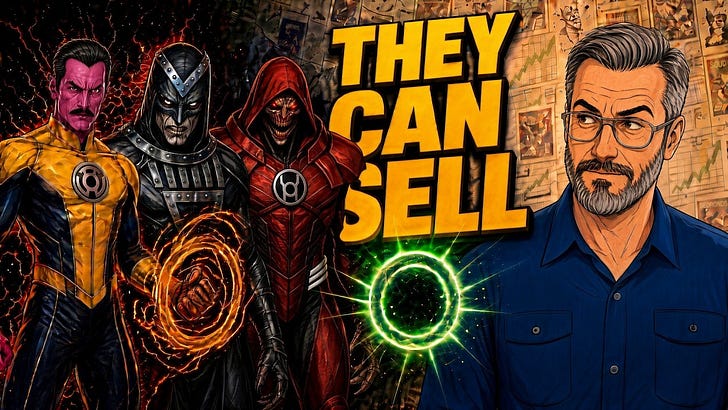
Most people think Green Lantern’s villains can’t sell comics without Green Lantern himself.
But what if the problem isn’t the characters but the way DC has been using them?
In this video, I’m judging whether Green Lantern’s biggest villains can actually carry their own comic books, and which ones could become sustainable franchises rather than one-off curiosities.
We’ll look at Sinestro, Atrocitus and the Red Lanterns, Black Hand, and Larfleeze, and test each one against the question that actually matters:
Would readers keep buying the book if Gree...
Why Dark Horse's Licensed Comics Aren't Solving Its Real Problem
Most people think Dark Horse Comics needs licensed comics to survive. But Dark Horse's own history tells a more complicated story.
In this deep dive, the Internet Judge examines the business model behind one of the most important comic book publishers in the industry and asks a bigger question: Does publishing other people's intellectual property actually create a durable publishing business?
Dark Horse has built a major presence through licensed comics, while also developing creator-owned and publisher-controlled properties. But the company's history - including what happened when it lost one of the biggest licenses in...
Why One DC Book Matters More Than Marvel's 1 Million-Copy *Midnight* Launch
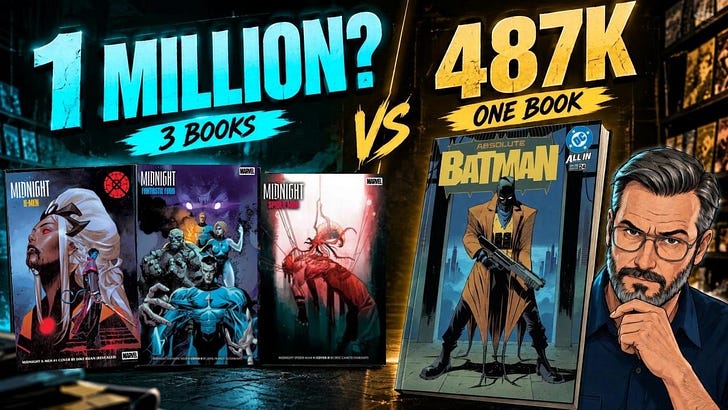
Everyone is talking about Marvel's 1 million-copy Midnight launch. But that number may not be the most important story in the comic book industry.
Marvel generated more than 1 million combined retailer orders for three Midnight #1s. Meanwhile, one established DC title, Absolute Batman #24, reportedly generated roughly 487,000 orders by itself.
So why does that comparison matter?
Because these numbers represent two very different kinds of comic book sales: launch demand vs. sustained demand.
In this video, we look beyond the Marvel Comics vs. DC Comics headline to examine what the numbers actually tell...
Is DC Building 2027 Readers?
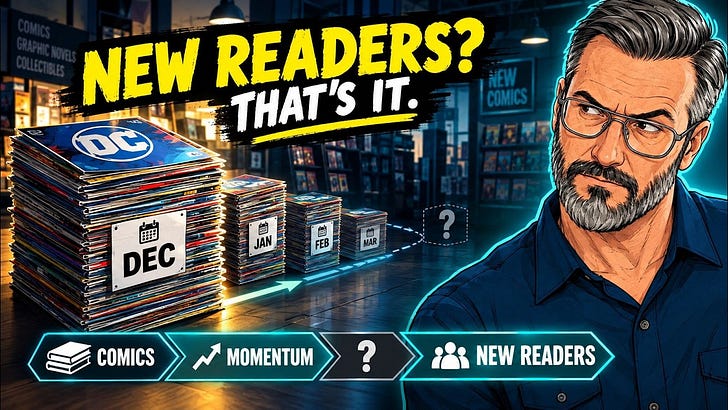
Most people see DC Comics’ December 2026 solicitations and see momentum.
I see a test.
DC has spent 2026 building attention with the Absolute Universe, major creative teams, returning fan-favorite creators, and a growing slate of books. But getting someone to buy a comic once is not the same thing as turning that person into a recurring reader.
So the real question heading into 2027 is: Is DC building new readers, or just selling 2026’s momentum?
In this video, I break down what DC’s December 2026 solicitations actually tell us about the comic book indust...
DC Is Selling More Comics
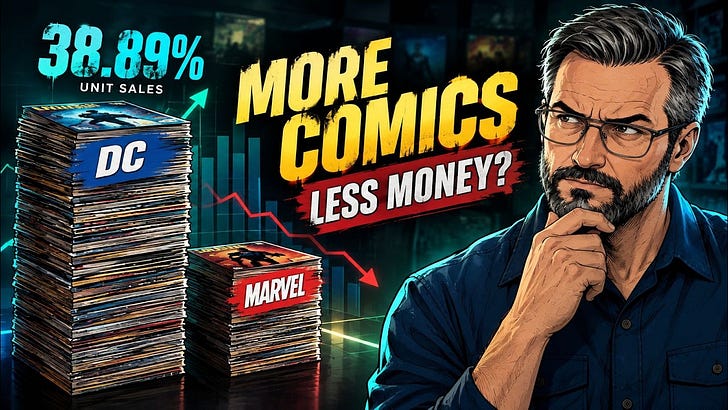
The August 2026 comic book sales numbers reveal a strange split: DC led Marvel in unit sales, while Marvel led DC in dollar share. So which number actually tells us who is winning the comic book market?
In this month's Internet Judge ruling, we break down the DC vs Marvel market-share battle and explain why units sold and dollars generated can tell two very different stories. Marvel's higher cover prices change the math, while DC's stronger unit performance raises a more important question: is higher revenue actually the same thing as stronger consumer demand?
We'll look...
DC vs. Marvel: Why Comic Shops Choose DC
Everyone thinks the biggest comic book characters should automatically produce the biggest comic book sales. But DC Comics beating Marvel Comics in the direct market reveals a very different reality: comic shops don't just reward IP power. They reward predictable demand, reader retention, and confidence that customers will keep buying.
In this deep dive, we look beyond the latest DC vs. Marvel market-share numbers to examine the larger pattern shaping the comic book industry. Why does a massive #1 issue sometimes collapse by the second issue? Why do retailers care so much about repeat demand? And what does...
Marvel Hasn’t Proven Its New Miracleman Will Sell
Marvel has a new Miracleman, but has it actually created a character readers will keep paying for?
David Colton becoming the next Miracleman in Avengers: Armageddon #4 is the kind of comic book reveal that can instantly generate attention, speculation, and collector interest. But here’s the ruling: Marvel hasn’t proven its new Miracleman will sell.
The real question isn't whether Avengers: Armageddon #4 becomes a hot comic book. It's whether the interest in Miracleman carries into the new Avengers series and turns into sustained readership.
In this video, we look past the spoiler and...
What 2027 Could Look Like for Comics
2025 comics proved they could bounce back. 2026 is showing us where that rebound is concentrating. Now the real question: is the comics industry actually getting healthier or just more selective about who gets to win?
In this Forward Judgment, I'm not predicting the future. I'm following the patterns already visible in the data: direct market growth, DC vs. Marvel vs. Image market share shifts, the rise of creator-owned franchises like Spawn and Invincible, the Kickstarter comics boom, and what happens to publishers stuck in the middle. My ruling: the comics market is getting bigger, but it's getting a...
Is Hal Jordan Actually Racist?
Hal Jordan isn't racist. He's an arrogant, insensitive jerk who says things that sound racist, but Lanterns Episode 3 doesn't actually prove that racism is why he treats John Stewart the way he does.
The internet has already reached a verdict on Hal Jordan: racist. But when you actually lay out the Lanterns Episode 3 chronology, the evidence tells a very different story. John Stewart's father was offered the Green Lantern ring before Hal Jordan ever got it — he was tested, he admitted he was afraid, and he failed. Hal didn't take John's opportunity. He got his own, after Jo...
Why Variant Covers Keep Making the Comic Market More Fragile
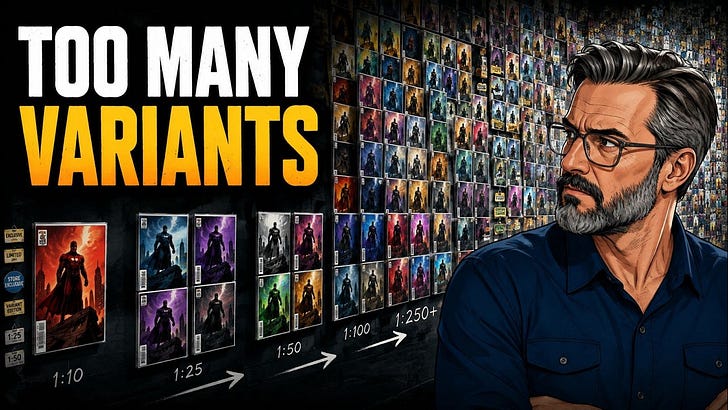
Variant covers now make up 78% of DC's SKUs and 79% of Marvel's. That's not a collector fad, it's a business model. And it might be the same mistake the comic book industry made in the 1990s, just running a more sophisticated version of it.
In this Pattern & Post-Mortem deep dive, I break down the real mechanism behind comic book variant cover inflation. Not "there are too many covers," but the feedback loop where publishers, retailers, and collectors all have a short-term reason to keep the machine running until demand breaks.
We trace it from the variants...
Marvel & DC Are Getting Into AI Through WEBTOON
Marvel and DC Comics don't need to build an AI platform... they just need WEBTOON.
WEBTOON just rolled out a wave of AI comic features: AI-powered translation, recommendation, interactive AI experiences like byUs, and AI-assisted fan creation tools. The headlines are all about WEBTOON's AI strategy. But there's a bigger story underneath: Marvel and DC are moving deeper into WEBTOON's ecosystem at the exact moment it's becoming an AI-driven platform.
Disney took an equity stake in WEBTOON. New Marvel comics titles are in development for the platform. DC has years of precedent with manhwa-style hits...
Which Indie Publishers Will Survive A Shrinking Comic Market?
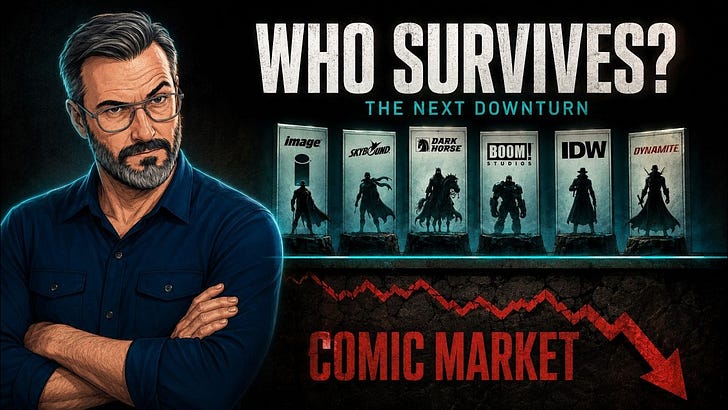
The direct market just had its best year in a decade, so why isn't every publisher actually safe?
In this video, I'm ruling on which indie comic publishers are structurally built to survive the next downturn, and which ones are just currently lucky. I break down the one variable that separates a publisher that can absorb a shock from one that can't — IP ownership vs. dependency — and rank Skybound, Image Comics, Dark Horse, BOOM! Studios, IDW, Dynamite, Mad Cave, and DSTLRY on where they actually stand.
This isn't a doom video about the comic book indu...
Avengers: Armageddon Is Losing Momentum
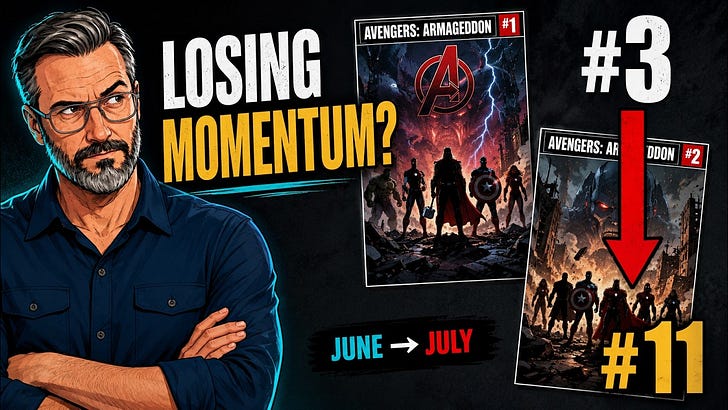
Marvel's Avengers: Armageddon debuted at #3 on the sales charts. One issue later, it dropped to #11 — and the tie-in books around it aren't picking up the slack either. In this video, I break down the actual comic book sales data behind Marvel's latest crossover event, what it means for the direct market heading into fall, and why it matters for Marvel's next big swing: the Midnight Universe launch on October 7th.
This isn't a hot take. It's a full breakdown of the ICv2 Top 50 comics chart, what rank movement can and can't tell you about a comic book's pe...
How $4.99+ Comics Are Changing What Readers Buy
Why do $4.99+ comics feel like a completely different purchase than a $2.99 comic did ten years ago? This isn't just inflation — it's a behavioral shift that's quietly making the entire direct market more conservative. In this Pattern Deep Dive, I break down the feedback loop connecting rising cover prices to shrinking pull lists, the growing dependence on known IP, and the format decisions publishers may not want to talk about out loud.
If you've ever dropped a title you were curious about because it just didn't feel worth the risk anymore — this one's for you.
⏱️ TIMESTAMPS
0:0...
Why *Amazing Spider-Man #1000* Is Dividing Readers
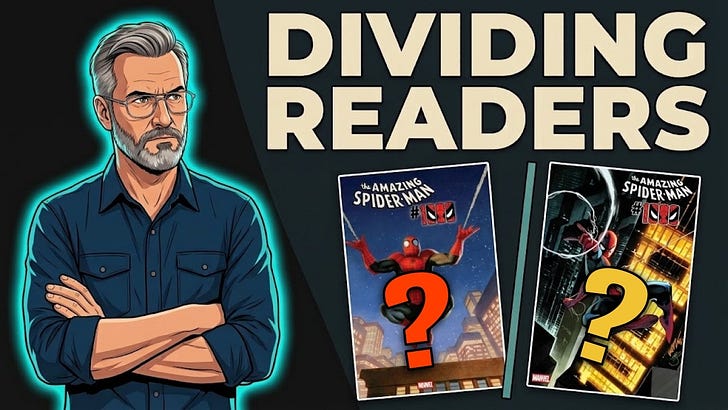
Marvel didn't cave to fan outrage over the Amazing Spider-Man #1000 cover, and that's actually the more interesting story. In this Timely Ruling, I break down why John Romita Jr. and Pepe Larraz ended up with dueling main covers for Spider-Man's biggest anniversary issue, why the "Marvel pulled the cover" narrative spread in the first place, and what this controversy actually reveals about how publishers handle milestone comics in 2026.
This isn't a hot take on whether one cover looks "better." It's a breakdown of the real fault line: does a #1000 milestone owe readers the iconic Spider-Man they already...
Mid-2026 Update
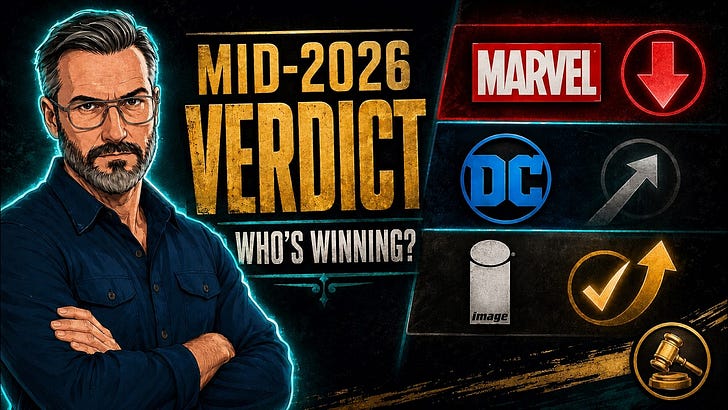
Marvel isn't losing because of bad writing; it's a structural problem. DC's Absolute line is 22 issues deep and still outselling everything on the stands. And Image just posted its best market share in years without a single crossover event. I pulled the real Q2 2026 sales data to rule on which comic book lines are actually working at the midpoint of the year and which ones are coasting on hype.
In this Mid-2026 comic book sales analysis, I break down the direct market performance of DC, Marvel, and Image using ICv2 and Comichron data, covering the Absolute Batman...
Why Spider-Man Won Gen Z When Every Other Superhero Movie Lost Them
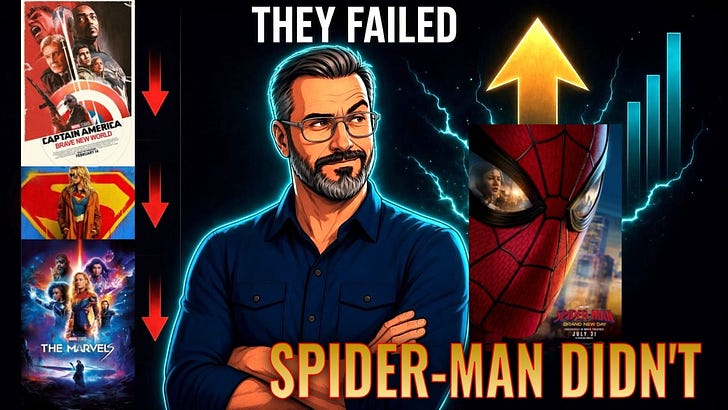
Gen Z just gave Spider-Man: Brand New Day a record-breaking opening, and the reason isn't the story. It's something the Big 2 comic publishers can't buy: safe, approachable star power.
In this Pattern Deep Dive, I break down the box office data, the Gen Z demographic skew, and why comparable films with "safe" casting (The Marvels, Captain America: Brave New World, Supergirl) still failed. Then the ruling: what this pattern means for Marvel and DC's struggle to bring younger readers into comics.
If you want the pattern-based breakdowns before they hit the mainstream trades, hit subscribe...
Why One Bad Comic Run Can Damage a Character for Years
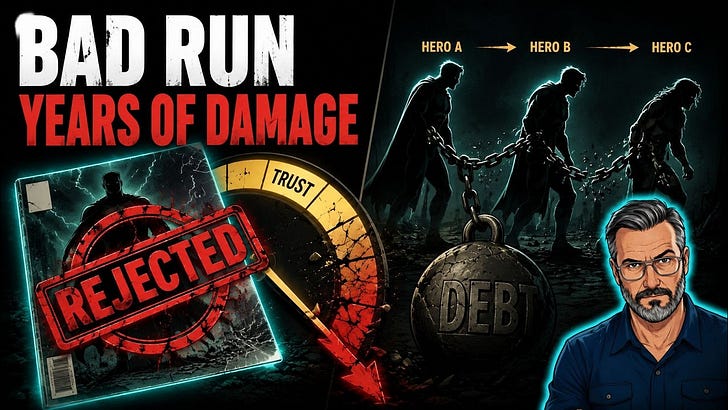
Every time a new creative team is announced on a damaged character, the fandom reacts the same way before a single page leaks: skepticism. That's not random. It's a repeating industry pattern called Reputational Debt, and once you see it, you'll spot it in every "fresh start" solicitation from here on out.
In this Pattern Deep Dive, I break down how a single poorly received comic run doesn't just hurt sales during publication, it changes how readers perceive a character for years afterward, forcing every future creative team to spend their first year rebuilding trust instead of...
This Comic Is Outselling Marvel and DC
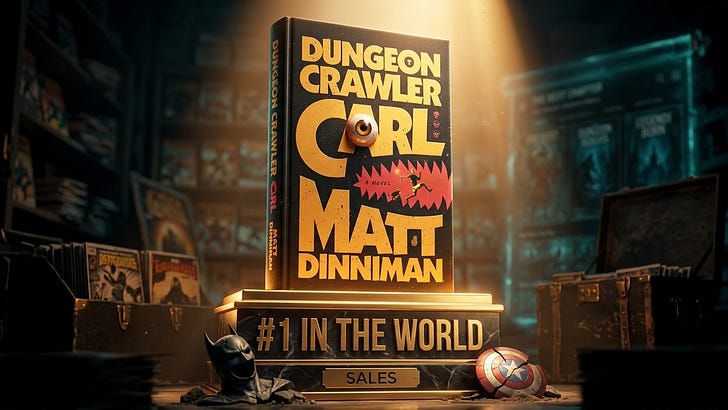
Dungeon Crawler Carl just outsold Marvel and DC in the graphic novel charts, BUT it's not for the reason most comic coverage is giving it credit for. I break down the actual ICv2 point-of-sale data behind why Dungeon Crawler Carl is outselling Marvel & DC Comics right now, what the numbers really say about the direct market's shifting graphic novel sales trends in 2026, and why calling this a straightforward "creator owned comics vs marvel and dc" win misses the real mechanism driving it.
We'll look at the exact units and dollars from the May and June 2026 top selling...
The Direct Market Survived Diamond's Collapse.
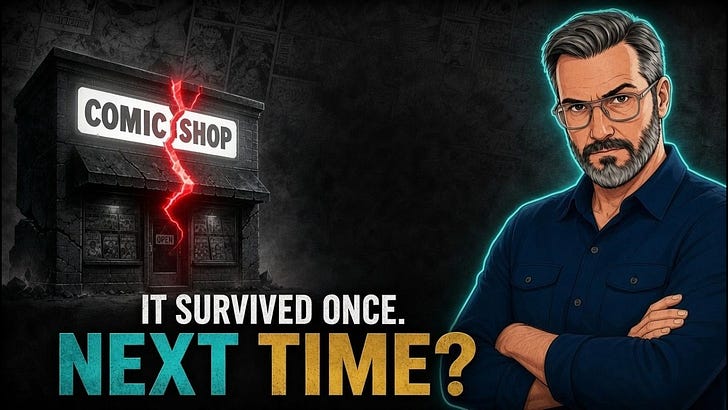
Comic shops just had one of the best years in the history of the direct market: $2.2 billion in sales, record foot traffic, and a wave of new readers. Everyone in this industry is calling it a comeback story.
I don't think that story is finished.
Based on the patterns in how Lunar, Penguin Random House, and Universal rebuilt the comic book direct market after the Diamond Comic Distributors bankruptcy, I think the industry didn't actually solve the concentration risk that caused the original collapse — it just redistributed it across fewer, better-funded players. In this Forward Ju...
Odin Comic: When Sales Charts Miss The Whole Point
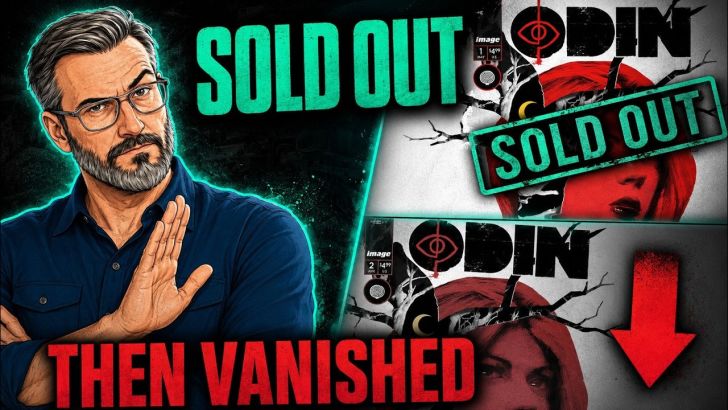
Odin #1 sold out at the distributor and went back to print within a month. Odin #2 didn't even chart. Same creative team, same publisher, same imprint. So, what actually happened between issue one and issue two?
In this ruling, I break down the sales data, the print history, and three months of critical reviews to show why James Tynion IV and Marguerite Bennett's neo-Nazi horror maxiseries spiked hard on debut and then dropped off the industry's top 50 almost entirely... and what that gap actually tells us about who was buying issue #1 in the first place.
This...
New Comic #1s: Why They Never Last Past Issue 3
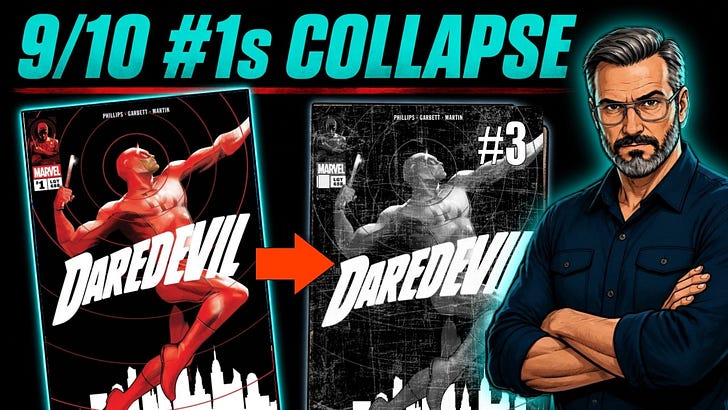
Nine out of ten #1 issues you pre-order this year will lose more than half their readers within two issues, and it's not because the story got bad. There's a mechanical process baked into how publishers and retailers handle a relaunch, and it's been running the same way for fifteen years. This is the Relaunch Tax: how comic book sales drop after issue 1, why the crash always happens in that #1-to-#3 window, and why it's less about readers losing interest and more about how comic shops order stock after a #1 launch.
I'm using DC's New 52 as the case...
Why Absolute Batman Keeps Winning
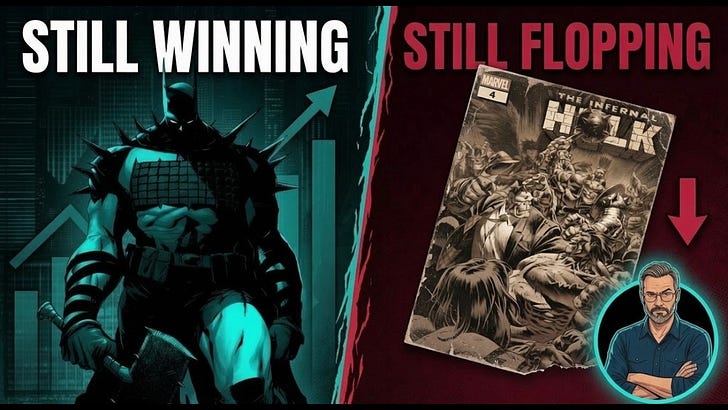
Absolute Batman isn't winning because the story's better — it's winning because of a supply strategy Marvel refuses to copy. In this ruling, I break down the print-discipline mechanism keeping Absolute Batman on shelves and dominating the ICv2 charts, why Marvel's cancel-and-relaunch playbook keeps collapsing books by issue four, and what the Q1 2026 market share numbers actually reveal about where this industry is headed.
If you're a collector wondering whether the book in your hands is still going to be findable in six months, or a retailer trying to get your reorder math right, this is the video th...
Comic Books No Longer Expect New Readers on Wednesdays
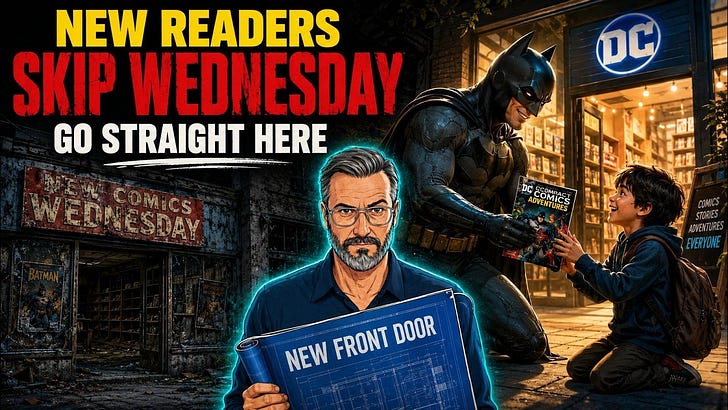
DC just quietly changed who a comic reader is supposed to be. The new Compact Comics Adventures line — part of DC's Spring 2027 kids' publishing strategy — isn't just a new format. It's proof that publishers no longer expect new comic readers to start on a Wednesday, at a comic shop, with a monthly issue. In this video I break down why the comic book industry's front door quietly moved to bookstores, libraries, and school book fairs — and what that means for the future of comic shops, the Direct Market, and the readers who grew up on a pull list.
If y...
Why Diamond's Collapse Proves the Comic Book Industry Is Broken
Diamond Comic Distributors collapsed — and somehow Marvel and DC walked away without a scratch. The industry called it a "crisis." For the smallest comic book publishers, it still is. Today I'm breaking down the actual market share data, the fallout retailers won't say out loud, and who's really been left to die in the wreckage of the direct market's biggest distribution collapse.
If you've noticed your favorite small press comics quietly vanishing from shelves while Marvel and DC keep posting record numbers, this is why — and it's not the story the trade press told you.
⏱️ TIMESTAM...
Supergirl's Failure Proved Comic Readers Right All Along
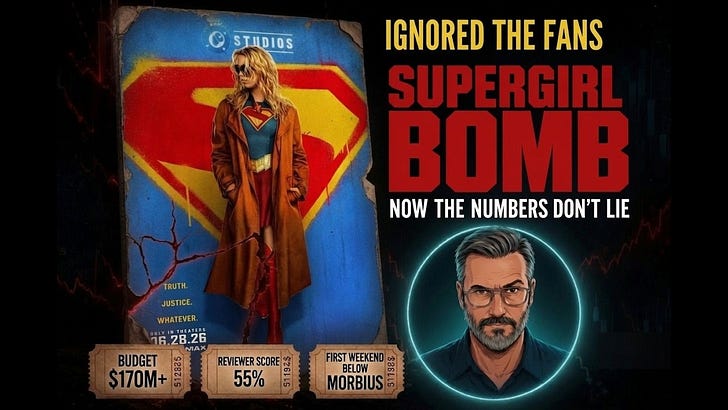
Supergirl just became the latest box office bomb nobody in Hollywood saw coming — except comic readers, who predicted it years ago. This isn't a marketing failure. It's what happens when a studio spends a decade telling its most engaged audience they don't matter, then acts shocked when that audience doesn't show up.
In this video, I break down exactly how Hollywood gaslighting turned "toxic gatekeeper" into a punchline the box office is now delivering back — and why comic readers predicted this collapse long before opening weekend. We're diagnosing the real structural mechanism behind the flop, walking through the...
Marvel Cleared the Shelves Instead of Selling These Comics

Marvel cleared its entire October release schedule down to three books and called it confidence. It's not. It's an admission — and the data tells you exactly what they're admitting.
This week Marvel launches the Midnight Universe: Midnight Spider-Man, Midnight X-Men, and Midnight Fantastic Four. Three ongoing horror reimaginings. And zero competition from their own catalog. Every other Marvel title pulled from New Comics Day so the new universe gets the shelf to itself.
That's not a bold creative launch. That's Hostage Comics™.
In this video: what the October 7th shelf clearance actually reveals abou...
Marvel Owes Its Wolverine Cover Inker

Marvel can clear an entire release week for three new universes. They can't cut a check for a veteran cover inker who turned in five covers before the deadline — months ago. Greg Capullo had to go public. Marvel still hasn't replied.
This is what Disney's 2026 layoffs actually did to Marvel's freelance creators — and why it will keep happening until payment terms have teeth.
CHAPTERS
00:00 – Marvel Didn't Pay Its Cover Inker
02:33 – The Work Glapion Did (And When He Did It)
04:05 – Why the Layoffs Are the Real Story
05:54 – What the Page Rat...
Direct-to-Reader Will Crush Marvel & DC Comics

Rippaverse just signed a worldwide distribution deal with Hachette Book Group — effective July 6, 2026 — after crossing $15 million in direct-to-consumer sales and moving 100,000+ copies of Isom #1 without a single Diamond invoice. Zero FOC games. Zero variant incentive tiers. Zero tollbooth fees.
This isn't a political story. It's a business autopsy.
The direct market was never a lifeline. It was a habit. And Rippaverse just proved habits are breakable. We break down the DTC model, the Hachette deal, what the numbers actually mean, and the playbook every publisher under 50,000 average orders should be running right now.
"Marv...
Variant Covers: The Comic Industry's Most Dangerous Pattern

ICv2 just dropped data that should make every comic reader's wallet combust. At a major direct market retailer, variant covers now account for 50–80% of every single order. DC is pulling 43.4% of its dollar sales from variants alone. And the reading experience across every single one of those covers is identical.
This isn't a collector trend. It's a structural business decision — and you've been funding it every Wednesday.
In this video, I break down the ICv2 June 2026 data, walk through exactly how the variant cover became the primary revenue engine of the direct market, and name the...
Why Everyone Is Misreading DC's Supergirl Movie

Everyone is arguing about the Supergirl movie. Half of them haven't read the comic. That's not a debate; that's noise.
Before the film hits theaters on June 26, here's the context the trailer breakdowns aren't giving you: what Supergirl: Woman of Tomorrow actually is, how Tom King writes, why Bilquis Evely's art matters, and why the reaction to this movie is so divided before anyone's even seen it.
This isn't a trailer reaction. This is the video you need before you can have an intelligent conversation about this film.
What We Cover:
00:00 — Th...
Conde Nast Taught Me Why DC's Black Comics Never Stick

DC Comics ran 1,200 days without a mainline Black-led ongoing. The DC Blackout boycott launched May 28th... and folded within a weekend. Here's why that was never going to work.
The corporate line is always the same: fans didn't buy it. But when you map DC's Q1 2026 market share numbers against what's actually selling -- and what keeps getting canceled on schedule -- a different story emerges. This isn't a diversity problem. It's a passion architecture problem. And I learned the framework that explains it from Conde Nast.
Today we're exposing the Point of Passion...
DC Blackout Exposes the Comic Industry's Demand Delusion

DC Comics hasn't published a Black-led ongoing series in over 1,200 days. That's the claim fueling the DC Blackout movement. But this story isn't just about DC's publishing record — it's about a much bigger lie the entire comic industry keeps telling itself: that social-media noise is the same thing as demand.
It isn't.
This week, I'm breaking down why the DC Blackout campaign accidentally exposes the direct market's deepest structural problem — the gap between applause and a pull list — and what publishers, retailers, trade press, and readers would actually have to do to fix it.
Spoi...
