Barbarians at the Gate

A semi-serious deep dive into Chinese history and culture broadcast from Beijing and hosted by Jeremiah Jenne and David Moser.
Somerset Maugham's On a Chinese Screen
In this Barbarians at the Gate x China Books Review crossover, Jeremiah Jenne is joined by CBR Associate Editor Alexander Boyd to discuss the latest addition to the China Archives: W. Somerset Maugham's On a Chinese Screen (1922), a collection of vignettes from Maugham's trip through China in the winter of 1919–1920.
Maugham came to China and mostly found... the English. Missionaries who profess love for a country they secretly loathe, taipans dreading burial in Chinese soil, diplomats who could be posted to Peking or Bern without noticing the difference. Jeremiah and Alexander match these hundred-year-old archetypes to...
Barbarian Remix: The Secrets and History behind Beijing's Forbidden City
It’s the summer travel season, and one of the most popular sites here in Beijing is the Palace Museum at the Forbidden City. To talk about China’s most famous imperial palace, we are joined by Matthew Hu Xinyu, Trustee of the Beijing Cultural Heritage Protection Center (CHP) and founder of the Courtyard Institute. Matthew provides us with updates on renovated sections of the Palace Museum previously inaccessible to tourists, such as the Palace of Compassion and Tranquility (Cining Gong 慈宁宫), where the Empress Dowager celebrated her birthdays and worshipped the Buddha, and the living quarters of the imperial concubines...
Neysun Mahboubi on the past, present, and future of US-China Academic Exchanges
We are honored to have Professor Neysun Mahboubi, Director of the Penn Project on the Future of U.S.-China Relations, a program that provides a platform for talented U.S.-based China scholars to contribute academically informed analysis on the most important issues in U.S.-China relations. Neysun recounts his experiences as a legal scholar in China during the 1990s Reform and Opening Up period, focusing on his mentors and the legal scholars who were at the forefront of legal reform in the PRC. A passionate advocate for scholarly research on China, Neysun emphasizes the value of...
AI Slop, AI Detectors, and Authentic Voice: A China-Tech Insider on Writing and Working With AI
Should we view today’s powerful AI language tools as intellectual crutches or as incredibly useful assets? Can they be safely integrated into our existing toolkit for business and academia, or should we approach them with justified caution? And why is the Western world terrified of AI, whereas China is already incorporating it into all sectors of society? Spoiler alert: The West views AI as a possible extinction risk, to be monitored and controlled, while China pragmatically views it as merely a tool to improve the lives of ordinary people. In this episode, we’re delighted to welcome back Zhang Yaju...
China Books Review x Barbarians at the Gate: The Private Life of Chairman Mao
The Politburo had given Mao Zedong’s personal physician Li Zhisui a direct order: prepare the Chairman’s body so that he can be on permanent display. Li was aghast. It was not what Mao had wanted, and besides, “How to pickle your country’s leader” wasn’t one of the courses he studied in medical school. But after the turbulence of the Cultural Revolution, Mao’s death meant a potential political showdown between the Gang of Four, including Mao’s wife, Jiang Qing, and Mao’s chosen successor, Hua Guofeng. Dr. Li did not want to be caught in the middle. So Li...
This Was Funnier in China: Jesse Appell's Cross-Cultural Comedy Journey
On this episode, we sit down with the one and only Jesse Appell—Chinese TV stand-up comedian, blogger, lecturer, tea entrepreneur, and passionate bridge-builder for US–China cultural exchange. In his newly published book, Jesse shares the unlikely story of how a Fulbright Fellowship to study the traditional Chinese humor form “crosstalk” (xiangsheng) launched him from student to television star, with his video clips capturing more than half a billion views on the Chinese Internet.
The Business of Burgers in Beijing: What Fast Food Festivals Reveal About China's Economy
Mike Wester launched the first Burger Fest in Beijing 13 years ago as a scrappy response to the collapse of print ad revenue. Today, burger festivals run in third-tier cities across China, subsidized by local governments trying to drive foot traffic into half-empty malls. Hefei alone has four a year. In this episode, Jeremiah talks with Mike Wester, co-founder of True Run Media and publisher of the Beijinger, about how burgers became one of China's fastest-growing new cuisines, what the food festival boom reveals about Chinese commercial real estate, and why a generation raised on McDonald's is now opening artisanal burger...
Barbarians Remix: Do you really need to learn to write characters to study Chinese?
Warning: GEEKY CONTENT Hosting solo in this week’s episode, David takes a geeky deep dive into the digital revolution in Chinese language learning in conversation with Chinese language pedagogy expert Matt Coss. The Sisyphean task of learning to write hundreds of Chinese characters has long been the bête noire of Chinese language students. The explosion of digital devices and apps for processing Chinese characters is giving rise to a radical rethinking (no pun intended) of the handwriting and dictation components of Chinese language curricula. Matt Coss is on the front line of a new generation of Chinese language educa...
The Many Lives of Da Shan: Mark Rowswell on Chinese Poetry, Performing Live, and Staging Shawshank in Mandarin
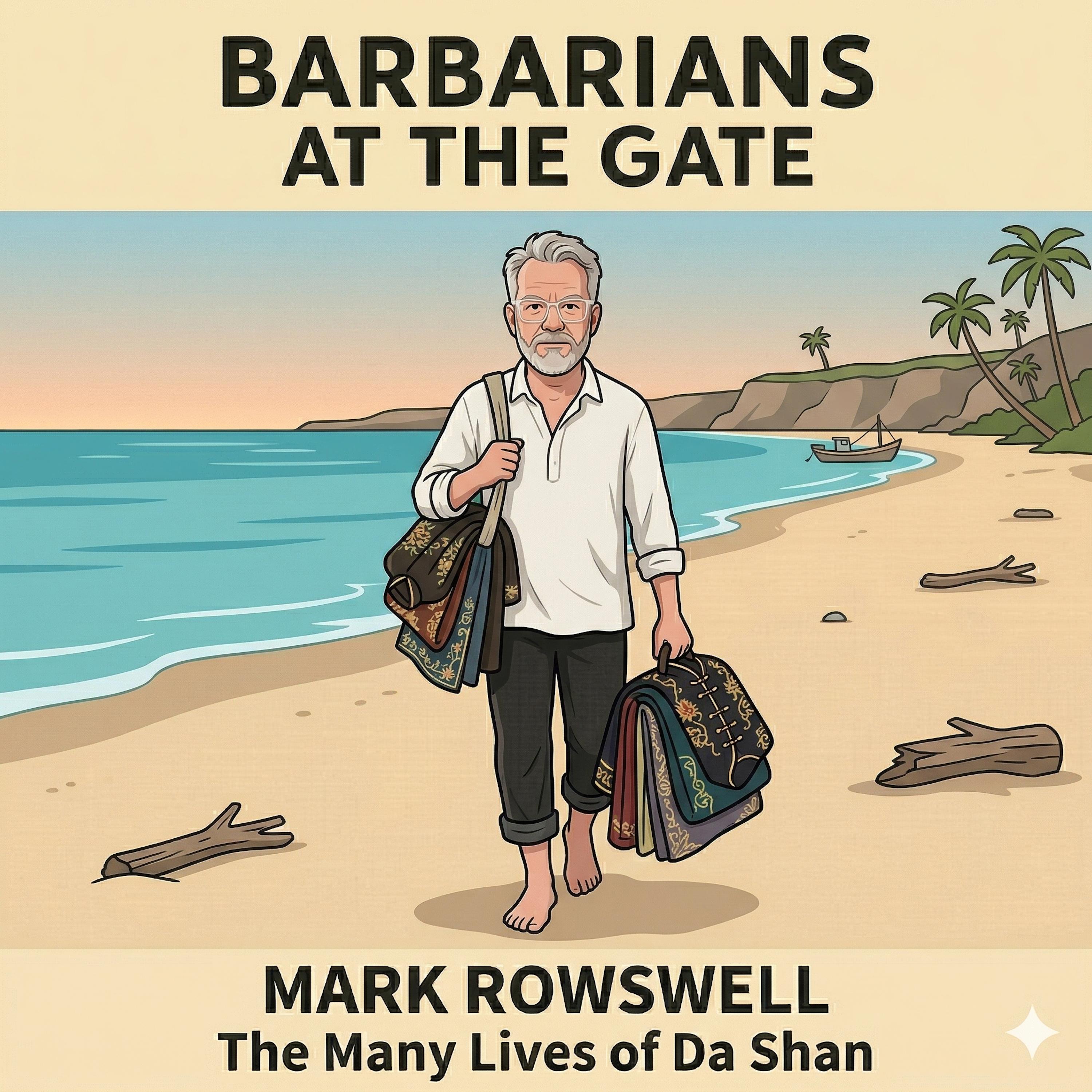
In this episode, we reconnect with an old friend of the podcast, Canadian performer Mark Rowswell—better known in China as Dashan, or “Big Mountain.” Mark reflects on his early career in China, where his remarkable fluency in Mandarin launched him from a young foreign newcomer into the world of xiangsheng (相声, crosstalk), and soon after into a highly sought-after TV host and cultural ambassador bridging East and West. He also shares insights into his latest creative project: a series of online videos featuring his recitations of classic Chinese poetry. What began during the pandemic with a relatively obscure Chu Ci (楚辞) poem that went...
Lee Moore's China Backstory: Why Saying "History Proves" Actually Means "I Haven't Done the Reading"
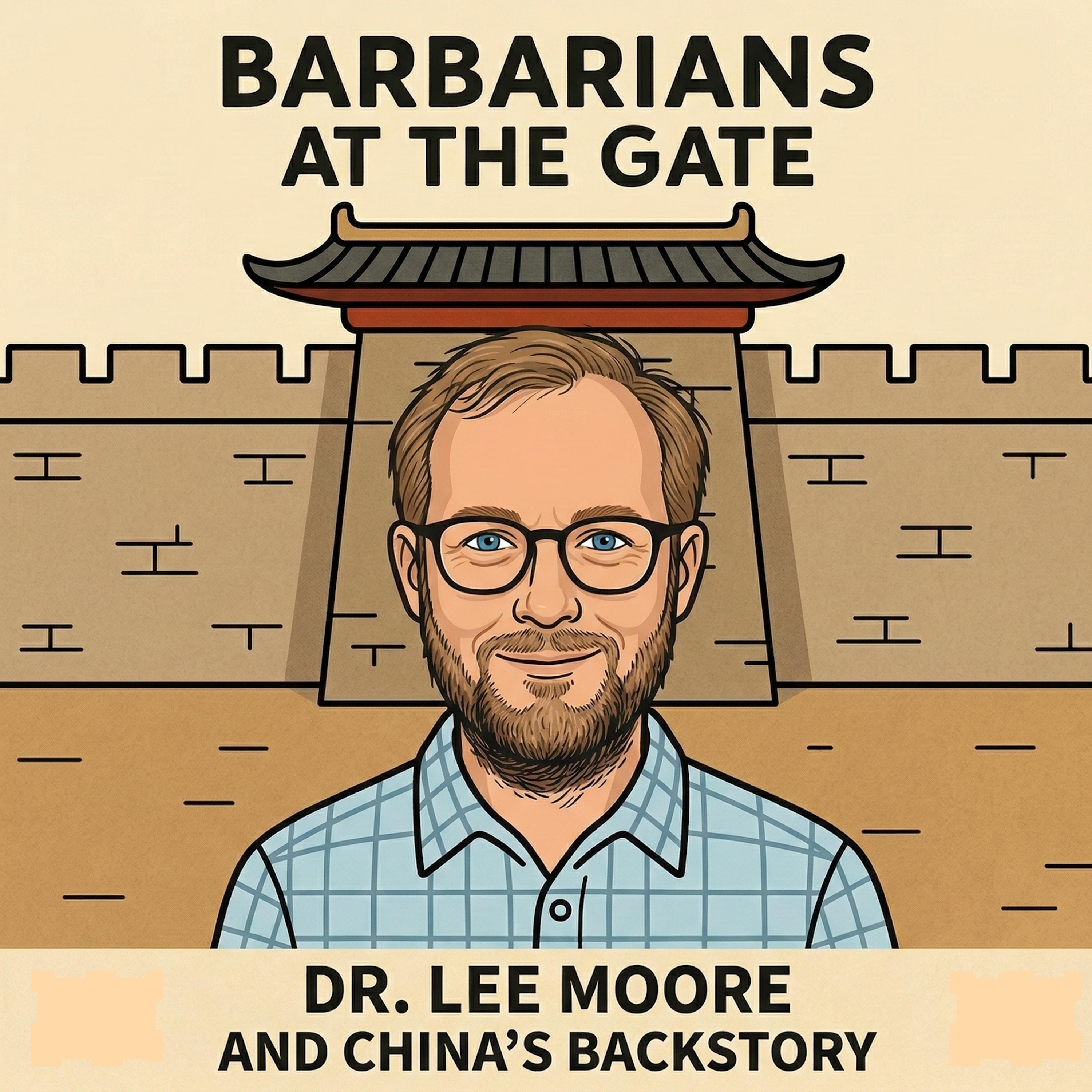
Lee Moore's new book challenges both Chinese state propaganda and Western pundits on Taiwan, Xinjiang, the Chinese economy, and Hong Kong with 1400 endnotes, and a drinking game for beheadings. A historian who writes about Ming emperors getting stabbed in the balls, a drinking game for beheadings in Xinjiang, and why almost everything politicians say about Taiwan’s history is wrong. In this episode, we talk with Lee Moore about China’s Backstory: The History Beijing Doesn’t Want You to Read. It is often said that China is the most talked-about country that Americans know the least about. Lee’s book see...
Décadence Mandchoue: The wild (and almost certainly fictional) affair between Sir Edmund Backhouse and Empress Dowager Cixi
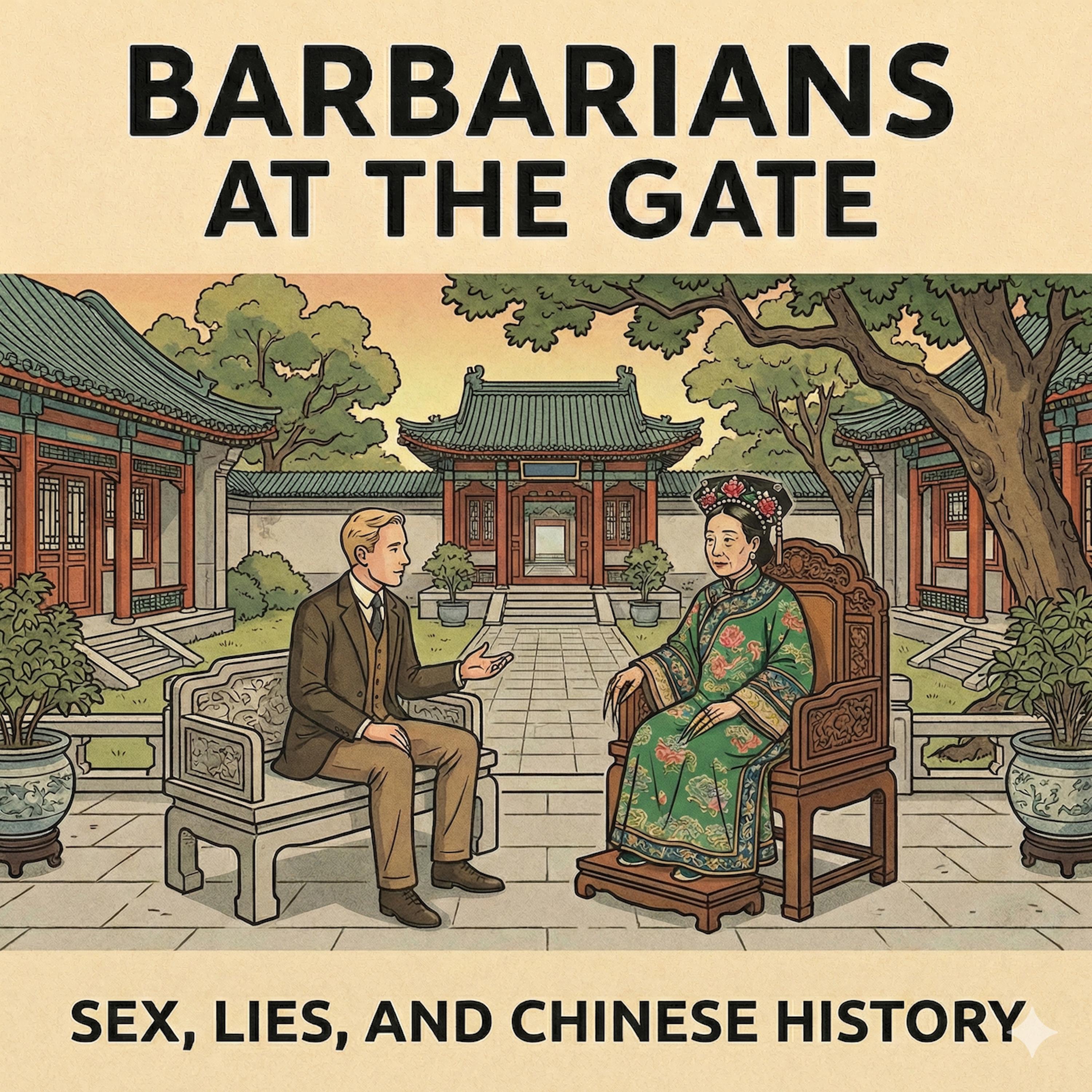
It’s another Barbarians at the Gate crossover with China Books Review. This month’s China Archives column covers Decadence Mandchoue by Edmund Backhouse, edited and annotated by Derek Sandhaus. CBR Associate Editor Alexander Boyd and I sat down to talk about all things Backhouse and try to parse one of Sinology’s more controversial memoirs. Backhouse was the son of a British baronet who dropped out of Oxford, fled to Beijing in 1898, and spent the next four decades as a fixer, translator, and professional eccentric in the hutongs. He was also a forger, a fabulist, possibly a fascist sympathizer, and th...
Barbarians at the Gate x By Their Own Compass: Emily Hahn's Shanghai
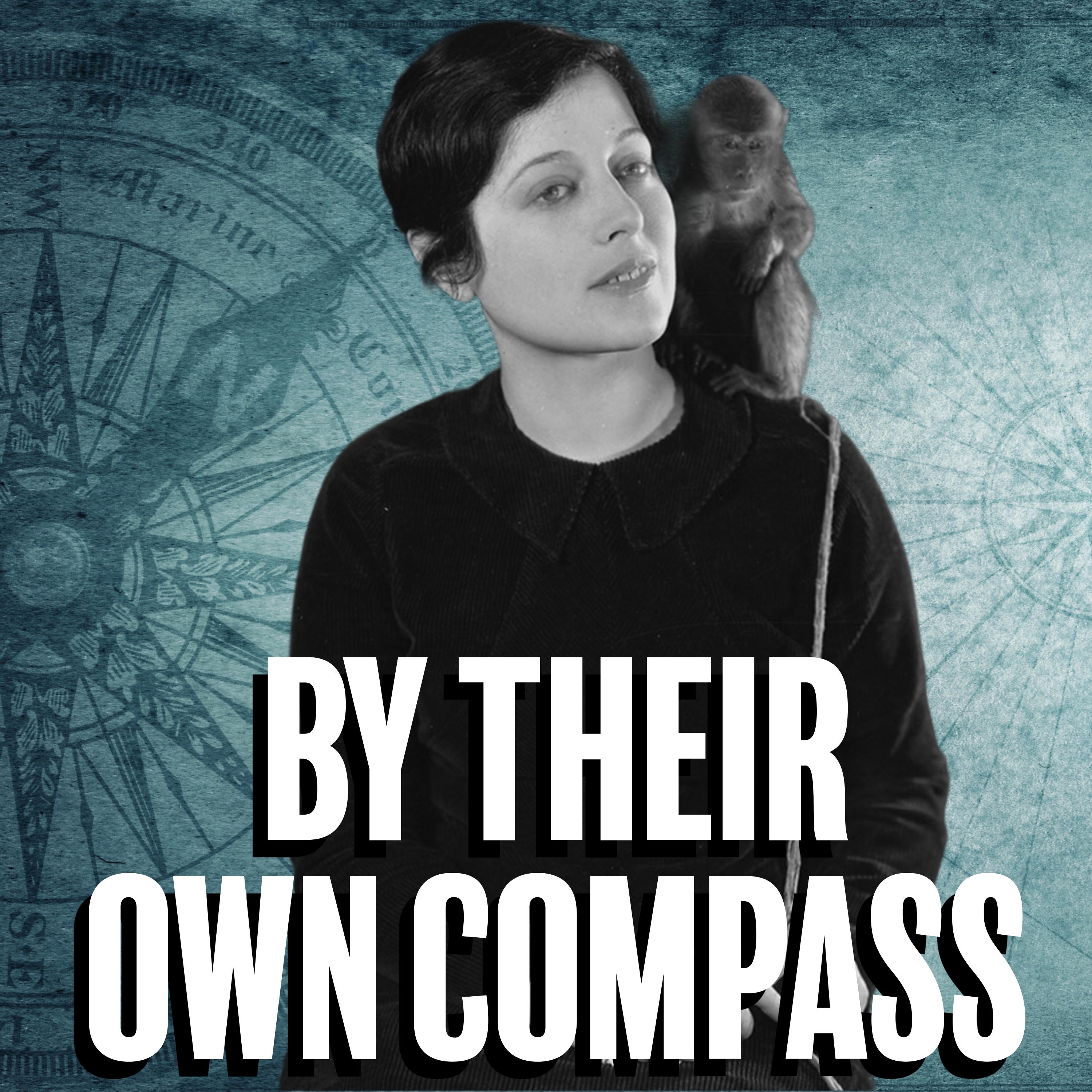
Welcome to a special episode of Barbarians at the Gate. David and Jeremiah are off this week preparing for Chinese New Year, but as a special gift to our listeners, we are cross-posting this bonus episode about the life and China travels of the American writer Emily "Mickey" Hahn. This episode is from By Their Own Compass, a podcast looking at historical travelers and past journeys co-hosted by Jeremiah with travel expert Sarah Keenlyside.
Emily Hahn partied with poets (and her pet gibbon) at Shanghai soirees. Wrote biographies while dodging bombs in wartime Chongqing, and...
Lost in Thailand: The New Chinese Diaspora from Bangkok to Addis Ababa
It’s high season in Thailand. The weather is perfect. But look around the hotel lobbies and the night markets, and you’ll notice something missing: the tour buses. For the last decade, Thailand bet the house on Chinese mass tourism. Now, that wager is looking shaky. The numbers are down, and the reasons go deeper than just a sluggish post-COVID economy. On this episode, David dials in from Addis Ababa and we are joined by travel writer Thomas Bird (author of Harmony Express), global strategist Yajun Zhang to try and figure out where everyone went and where Chinese travelers are...
Perilous Prognostications for China in 2026
Following a tumultuous 2025, we gallop into the Year of the Horse. Tradition says it should be a year of dynamism and progress, but which way is the stampede heading? To help us read the tea leaves, we welcome back our occasional co-host, Zhang Yajun. As a global strategist and former innovation lead at the World Economic Forum, Yajun has spent over 16 years translating complex shifts—from AI to cultural narratives—for international audiences. She joins us to look past the headlines and offer a reality check on where China’s policies, social fabric, and daily life are actually going in 2026. Topics...
Barbarians Remix: Horse Racing, History, and the Final Champion's Day in Old Shanghai
Champions Day in the city of Shanghai, November 1941. The world was at war, but the clubhouse at the Shanghai Race Club (now People's Park) was packed with owners and punters cheering on the pony. The funeral of Shanghai's richest widow, Liza Hardoon, was a spectacle that filled the streets of the International Settlement. Japanese occupiers and their Chinese collaborators came together in a bizarre ritual to celebrate the birthday of revolutionary leader Sun Yat-sen. The opening of a new movie featuring, of all subjects, Charlie Chan had folks lining up at the local cinema box office. The world had changed...
The Dowager and the Dynasty
How does a teenage girl from Beijing’s hutongs end up ruling the world’s largest empire—without ever technically sitting on the throne? In this episode, Jeremiah traces the improbable ascent of Empress Dowager Cixi, who entered the Forbidden City as a minor concubine and departed as the most powerful woman in Chinese history. The story begins in imperial catastrophe: the Xianfeng Emperor dies in the wake of the humiliating looting of the Summer Palace, leaving behind a four-year-old son and a power vacuum waiting to be filled. Cixi, her fellow empress dowager Ci’an, and Prince Gong move quickly...
Barbarians at the Gate x China Books Review: From Heaven Lake
In 1981, the Indian writer and poet Vikram Seth traveled from Nanjing, where he was studying literature, to his hometown of Delhi. Moving by train across China to Gansu, then hitchhiking southwest through Qinghai and Tibet, it was an itinerary that makes sense when a traveler has a surfeit of curiosity but a shortage of funds. Armed with half-decent Mandarin, a fistful of foreign exchange certificates, and a scrap of paper authorizing his route, he negotiated China just as it was emerging from the Maoist era. No WeChat. No Trip.com. No Google Translate. Just a student improvising his way home...
The Destruction of the Old Summer Palace
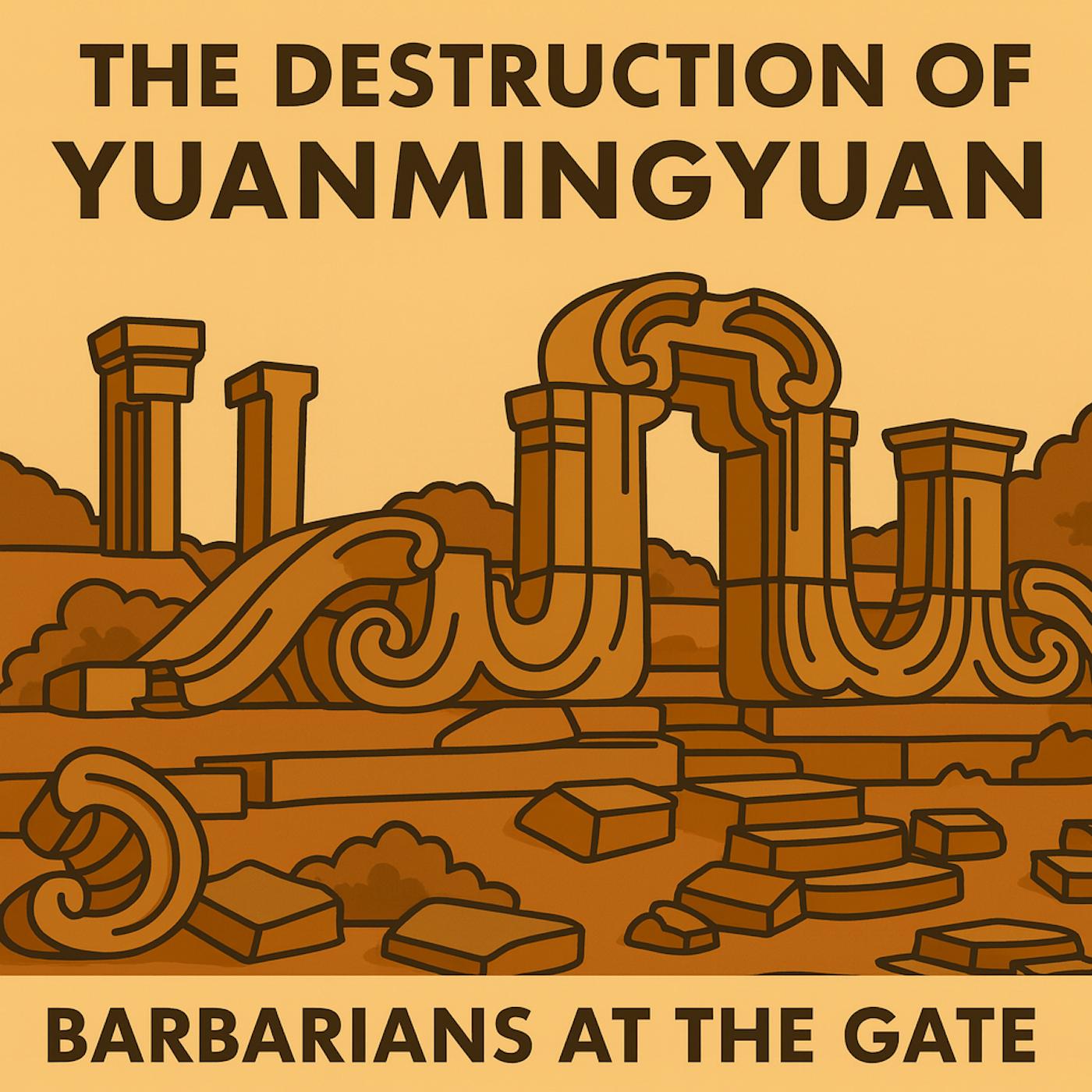
Yuanmingyuan, the "Garden of Perfect Brightness," commonly referred to as the Old Summer Palace, was a Qing Dynasty imperial residence comprised of hundreds of buildings, halls, gardens, temples, artificial lakes, and landscapes, covering a land area five times that of the Forbidden City and eight times the size of Vatican City. This expansive compound, once referred to by Victor Hugo as "one of the wonders of the world," now exists only as a sprawl of scattered ruins on the northern outskirts of Beijing, having been thoroughly burned and looted by the French and British over three days in October 1860, in...
The Voyages of Zheng He
It’s just two guys talking China's naval history. In this episode, David and Jeremiah dig into the story of Zheng He, the 15th-century admiral who took China's treasure fleets halfway around the world as Western Europe was just starting to figure out ocean navigation. Here's a Muslim eunuch who went from prisoner to running the emperor's treasure fleets. The man brought giraffes home as diplomatic gifts and offered up Sri Lankan kings as trophies to his boss. His fleets dwarfed anything Europe had, yet China wasn't really interested in claiming territory, just showing up, trading, and reminding everyone who ra...
Barbarians at the Gate x China Books Review: The Records of the Grand Historian
Picture this: You’re 45 years old, halfway through writing the definitive history of your civilization. Writing this history is the family business, and you’ve made a promise to your dying father to finish his work no matter what, when your boss, who happens to be the Emperor of China, gives you a choice. You can be executed or, if that doesn’t work for your schedule, how about castration? Sima Qian picked door number two. If you enjoyed this tale of commitment, consider subscribing or supporting the Substack. Your subscription will cost far less than what Sima Qian paid. We pro...
Barbarians Remix: Seeking News, Making China
In this encore episode of Barbarians at the Gate, first broadcast in March 2024, John Alekna talks about his fascinating new book Seeking News, Making China: Information Technology and the Emergence of Mass Society. In 20th-century China, the gradual importation and development of information technology had an enormous impact on the way news was disseminated and accessed by the general public. When radio first appeared in the early 1920s, fewer than 8 in 1,000 people had access to newspapers, whereas by the Mao period hundreds of millions of citizens were receiving daily news and information via radio, TV, and shortwave technology. This book...
AI-Laoshi Will See You Now
Teachers are an excitable lot prone to excessive consumption of caffeine and loudly proclaiming that [Insert New Technology Here] will doom a generation to intellectual oblivion. Whether it was television, computers, the Internet, Wikipedia, or now AI, we've seen this panic before. But in this episode, Jeremiah and David try to do a few deep knee bends and discuss what AI actually means for Chinese language learning. How do we teach when near-perfect translations are waiting on students' phones? How do we integrate AI into our work while putting guardrails on classroom use? AI might be the greatest learning tool...
Calling all China nerds and Sinology Geeks
Where are our nerds at? David Moser is on summer holiday, and stepping into David's seat for this episode is literary translator Brendan O'Kane. It takes about two minutes for Jeremiah and Brendan to go off the rails, over the edge, and back to the Amilal Courtyard in Beijing ca. 2010 (if you know, you know). In this wide-ranging conversation, Brendan and Jeremiah rate different levels of dynastic decline on the "fuckery" scale, Brendan reads a translation from Chinese philosopher Mencius, there's discussion of how to best gloss "laowai," if Xi Jinping is "president," "chairman," or something else entirely, a quick...
Barbarians Remix: The Year of the Boxers with historian Jeffrey Wasserstrom
Jeremiah and David are joined by Jeffrey Wasserstrom, historian of modern China and a longtime interpreter of the country’s shifting place in the world. Originally recorded in 2020, this conversation revisits the Boxer War of 1900—not through the usual lens of siege and rescue, but by examining what followed: the punitive occupation, the fractured international memory, and the long shadow cast by a global media frenzy. Wasserstrom’s reading reframes the Boxers not as an isolated burst of anti-foreign violence, but as part of a cycle of uprisings and reprisals that shaped modern China’s encounter with the West. He discusse...
Is America Beginning to Look More Like China?
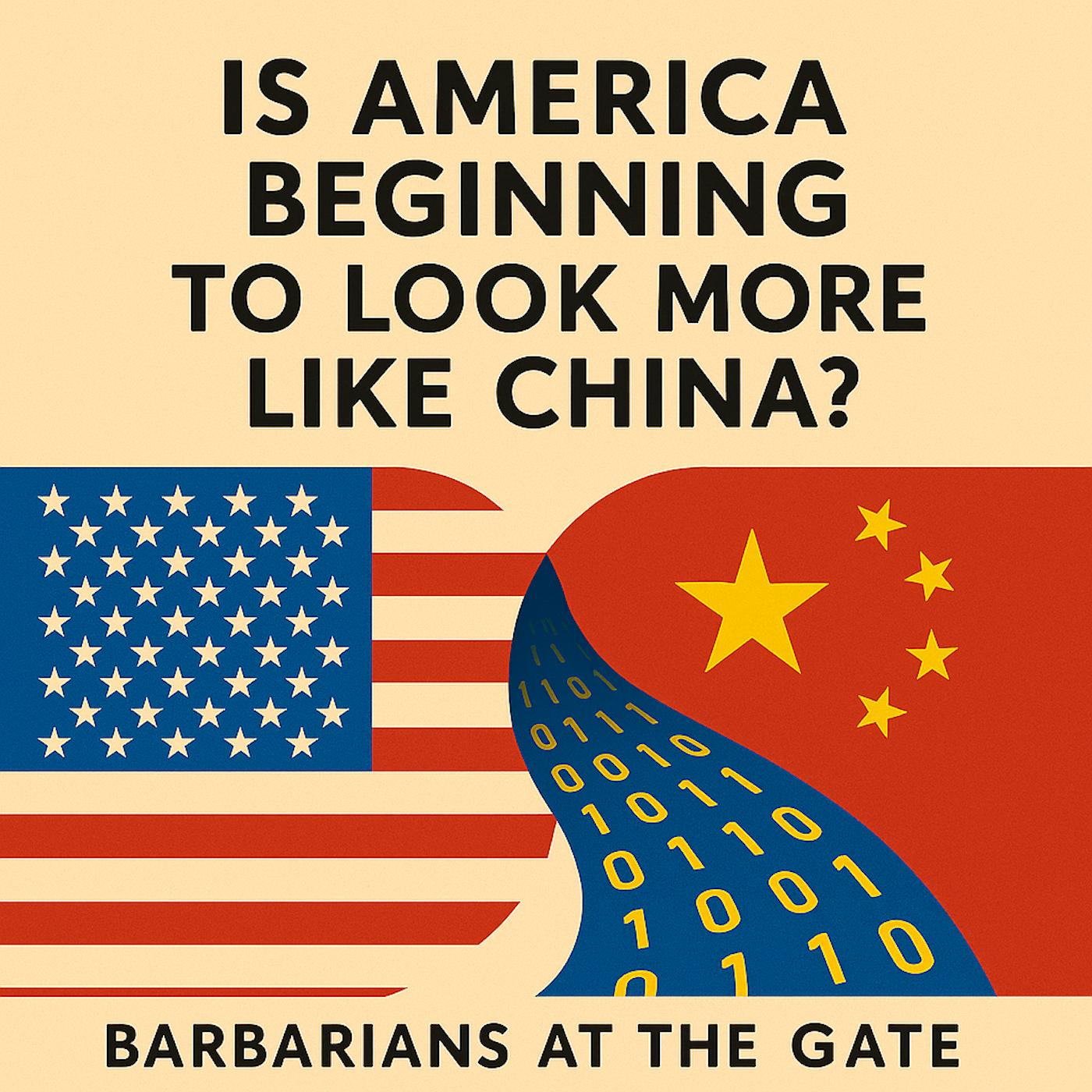
In this episode we chat with Shanghai-based author and editor Jacob Dreyer, a China watcher who writes with great insight and nuance about the shifting landscape of China-US relations. We touch on questions such as: Is the China model of governance outperforming Western liberal democracy? Is China winning the AI and technology wars? (Spoiler alert: That ship has sailed.) How do the architecture and logic of surveillance and information control systems differ between the U.S. and China? Is the current China-US geopolitical chill drifting toward a hot war? And finally, we unpack the question posed in Jacob’s guest op...
Raiders, Rulers, and Traders: The Horse and the Rise of Empires
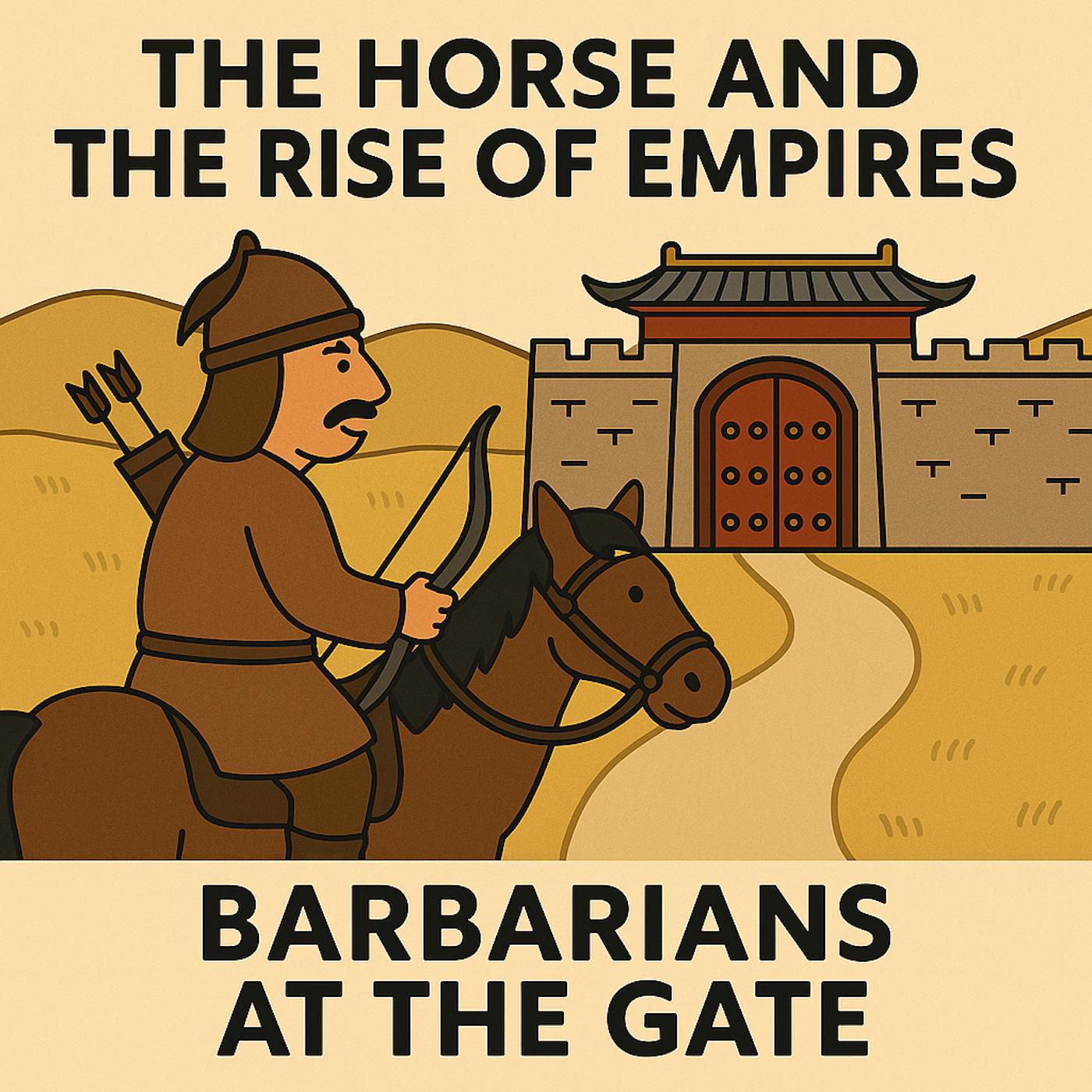
This week on the podcast, we explore the role of the horse in Chinese culture with author David Chaffetz, whose new book Raiders, Rulers, and Traders traces the sweeping impact of horse domestication across world civilizations. Chaffetz explains how equestrian cultures not only transformed warfare and mobility in China, but also reshaped the very boundaries of empire and cultural identity. Our conversation follows China’s long and complex relationship with the horse, from defending against nomadic cavalry along the northern frontier to importing prized horses through Silk Road diplomacy. Chaffetz recounts the challenges faced by Chinese dynasties in breeding horses to...
Barbarians Remixed: Mandarin Mayhem I
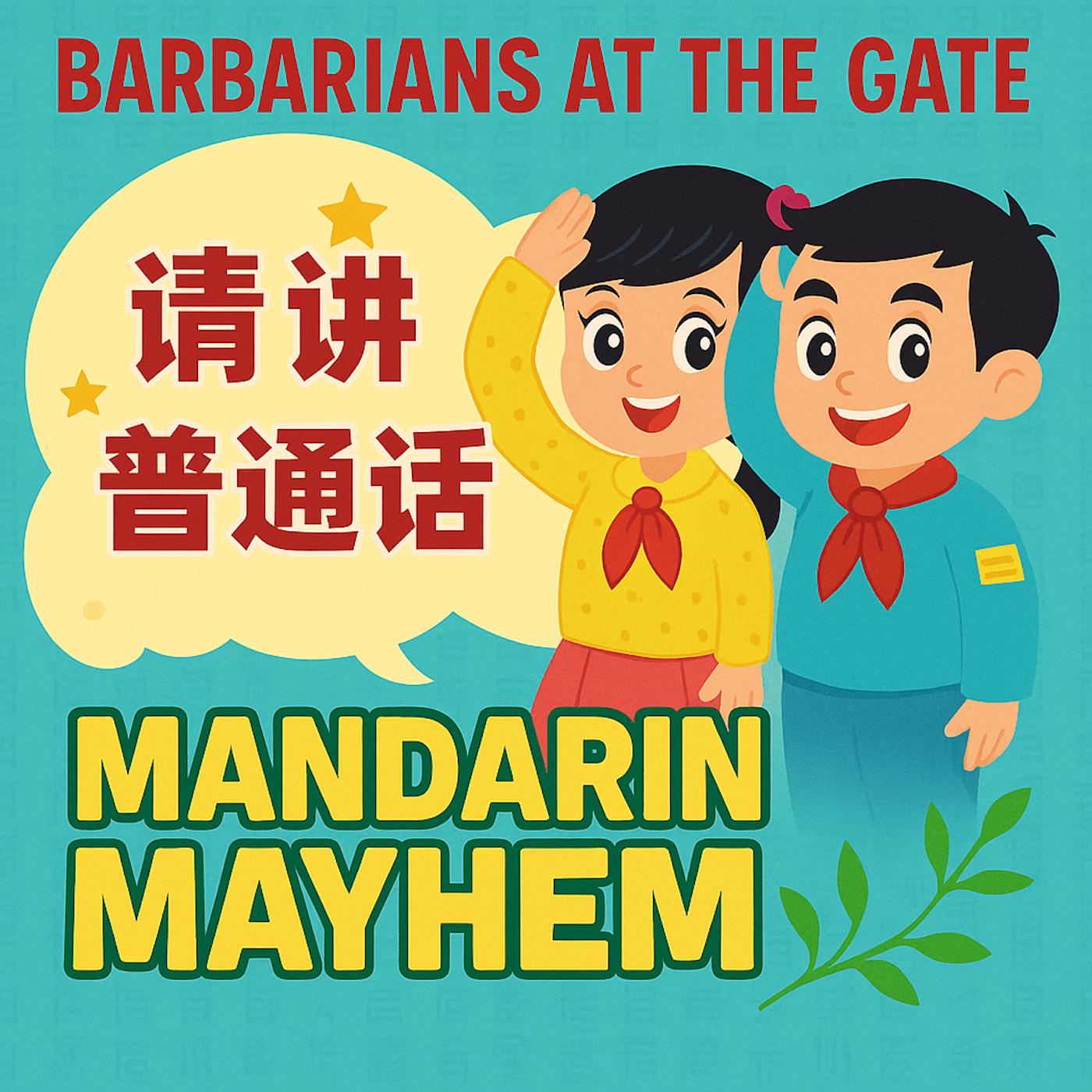
In this classic episode from 2020, we look at Putonghua, the spoken language most people refer to as Mandarin. David wrote a book in 2016 on the evolution of Putonghua in China. What's the point of Putonghua? What is a dialect and what is a language in China? And what's the difference between Mandarin as spoken during the dynastic period, "Guoyu" (National Speech) in the Republican Period, and Putonghua in the PRC? We also get an assist from Zhang Yajun who talks with David about the differences between the spoken language of Northern China, especially around Beijing, and "Standard" Putonghua.
Emergency Pod: The Trump Administration restricts Harvard International Enrollment as State Department Reviews Chinese Student Visas
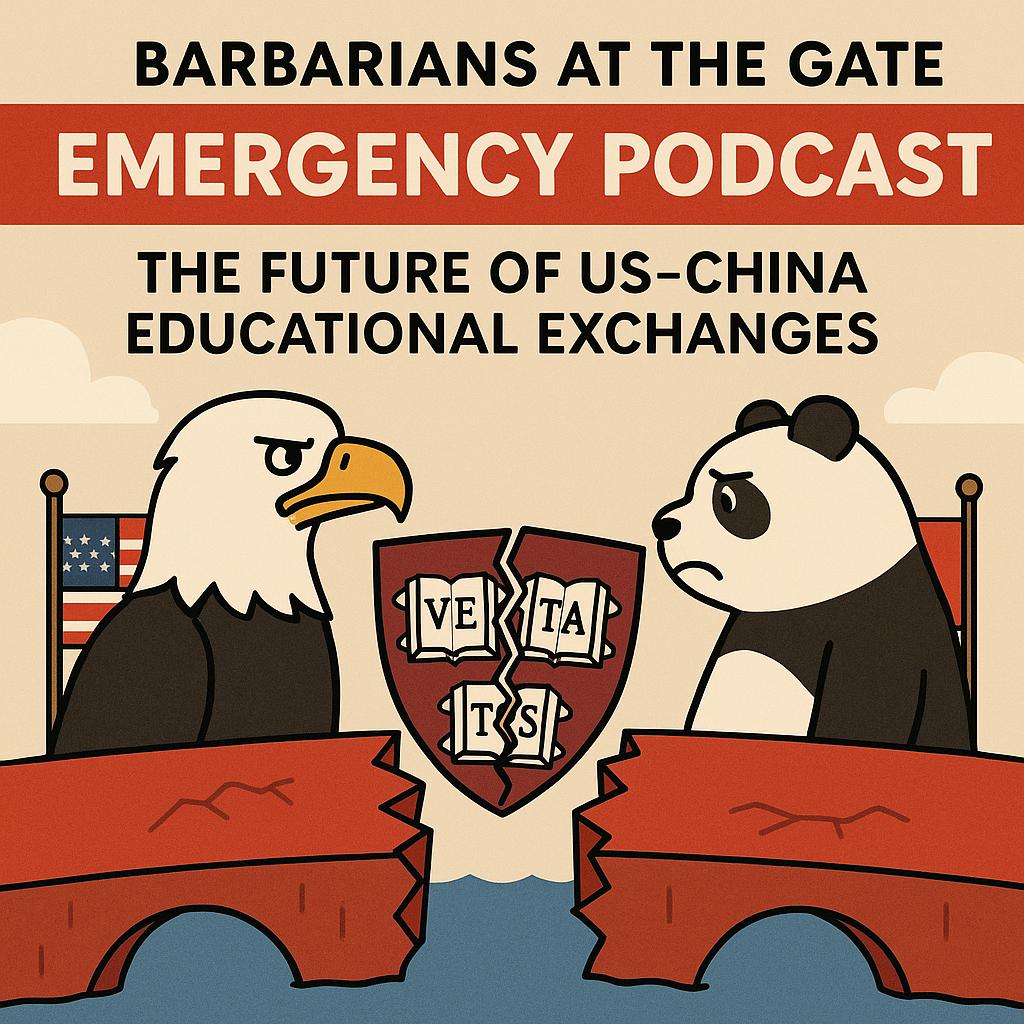
In this special episode, we examine the Trump administration's ongoing attacks on higher education in America and their implications for the future of US-China academic exchanges. On May 29, the Department of Homeland Security banned Harvard from enrolling international students—a decision that is now being challenged in the courts even as the educational plans of nearly 7,000 students and post-grads are thrown into jeopardy.
This announcement comes on the heels of US Secretary of State Marco Rubio's announcement last Wednesday that the State Department will start "aggressively" revoking the visas of Chinese students, starting with those wi...
The Six: Recovering the Lost Story of the Titanic's Chinese Survivors
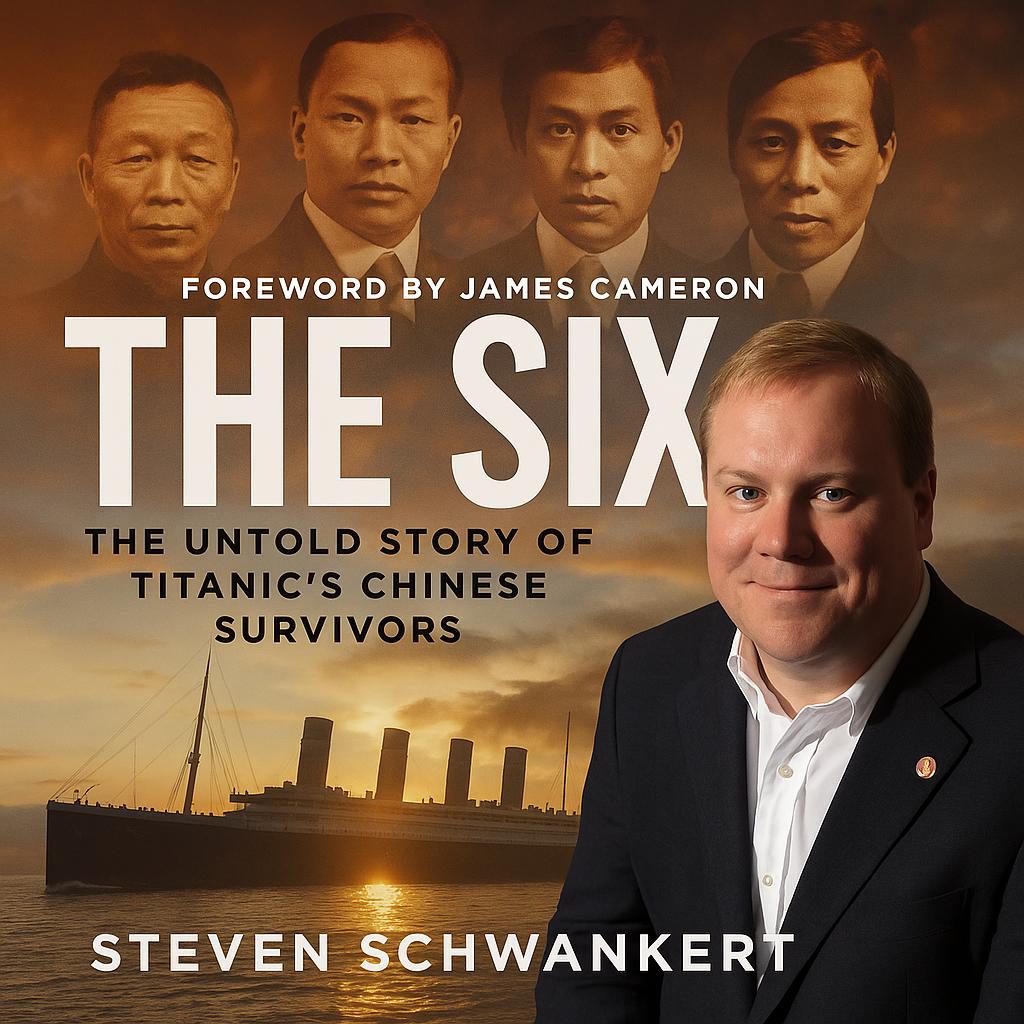
In this episode of Barbarians at the Gate, hosts Jeremiah Jenne and David Moser interview Steven Schwankert about his groundbreaking research into the forgotten story of the Chinese survivors of the Titanic disaster. Schwankert, author of The Six: The Untold Story of the Titanic's Chinese Survivors, details how he uncovered the remarkable tale of six Chinese men who survived the sinking in 1912—a story largely erased from historical records. The conversation explores how these third-class passengers achieved an extraordinary survival rate despite their disadvantaged position on the ship. Schwankert explains how their maritime experience as professional sailors working for the Do...
Dealing with Culture Shock when Studying and Living in China
In this episode, Jeremiah and David explore a topic drawn from their many years of experience with American study abroad programs: culture shock.
Let Only Red Flowers Bloom

In this episode of Barbarians at the Gate, we talk with Emily Feng about her new book Let Only Red Flowers Bloom: Identity and Belonging in Xi Jinping’s China. Drawing on years of on-the-ground reporting for NPR, Emily paints a picture of how state control has intensified over recent years, reshaping Chinese society, politics, and culture. Emily explains how she wove together personal stories into the historical, cultural, and political contexts, offering insights into the lives of Uyghurs separated by detention camps, human rights lawyers battling censorship, Mongolian educators struggling to preserve their language, and ordinary citizens whose acts of...
Curating Chinese Internet Culture for Global Audiences
This week, we catch up with Dutch sinologist Manya Koetse, the creator of "What's on Weibo," a platform offering in-depth insights into trends, events, memes, and social phenomena on Weibo, one of China's largest social media platforms, often referred to as the "Chinese Twitter."
As a bridge for non-Chinese speaking audiences to understand the dynamics of Chinese digital culture, "What's on Weibo" has evolved over the years, recently expanding to include a premium newsletter while maintaining its mission to decode Chinese social media for a global audience.
Manya explains Weibo's role...
Is this America's Cultural Revolution Moment?
In this episode of Barbarians at the Gate, host Jeremiah Jenne speaks with Chris Stewart, the creator of the History of China podcast. They discuss Chris's transition from living in Shanghai to returning to Bozeman, Montana, his journey into Chinese history, and the challenges of podcasting. The conversation also touches on the impact of COVID-19, the cultural revolution, and the importance of historical context in understanding current events. Chris shares insights on audience engagement and the evolution of his podcast over the years.
Experiencing the World of Jazz in China
This week, we explore a topic close to our hearts: the world of jazz in China. Both Jeremiah and David bring their musical expertise to the table—Jeremiah as a rock and blues keyboardist, and David as an active pianist in Beijing's jazz scene. David takes us back to his experiences in the 1980s, a period of renaissance for jazz in Beijing, when Chinese rock musicians began to discover—or rediscover—this intricate Western genre. During China's early "Reform and Opening Up" era, musicians with little prior exposure to jazz and scarce recordings embarked on the challenging journey of mastering its fu...
Challenges of Foreign Reporting in China
In this episode, Jeremiah and David welcome Jane Perlez, former Beijing bureau chief for the New York Times (2012-2019), to discuss the evolving challenges of reporting from China. Drawing from her firsthand experience, Jane details the gradual erosion of press freedom under Xi Jinping's leadership, including the 2018 expulsion of journalists and the ongoing obstacles faced by news assistants working for foreign media. The conversation explores both the creative strategies reporters now use to conduct investigative journalism from outside China's borders and Jane's latest podcast project, 'Face Off: The US vs. China,' which examines the deterioration of U.S.-China...
From the Archives: Xi Built this City
Happy Year of the Snake!
In this archive episode from January 2024, we chat with Andrew Stokols, who is researching varieties of digital urbanism globally, with an emphasis on China.
We briefly compare notes on the urban development of Beijing in the 21st century, including the contradictions between Beijing as a technologically advanced urban center and an ancient capital city. Andrew also provides updates on the progress of Xiong’an, the digital “smart city” being constructed in Hebei province, as a showcase for Xi Jinping’s vision for urban development. The urban plan was...
Shalama: An Epic Story of Family, Community, and Survival in Republican-era China
In this episode, we are thrilled to welcome Jean Hoffman Lewanda back to the podcast to discuss her new book, Shalama: My 96 Seasons in China, published by Earnshaw Books. Listeners may recall Jean's previous appearance, where she shared insights about her father, Paul Hoffman's memoir, Witness to History: From Vienna to Shanghai—A Memoir of Escape, Survival, and Resilience. That captivating memoir details how Paul fled Vienna at the age of 18 to escape the rise of Nazism, arrived in Shanghai in 1938, and became part of the historic wave of Jewish refugees who found a safe haven in China during Worl...
Where have all the American China Experts Gone?
In this episode, we invite Rory Truex, an associate professor at Princeton University, to discuss a recurring issue on the podcast: the plight of the US-China academic exchange and the urgent need to attract more American scholars to do research in China.
Despite the recent revival of several American academic programs in China, the post-COVID number of US students in the PRC is still woefully inadequate. Professor Truex gives an overview of some reasons for this deterioration of interest by American scholars and the challenges of doing meaningful research in the current Chinese academic environment.
<...Laws of the Land: Feng Shui in Chinese History
MIT professor Tristan Brown discusses his award-winning book on how Feng Shui shaped law and society in imperial China. From environmental regulation to social order, discover how feng shui had less to do with furniture placement and was more about power, belonging, and the control of space in a rapidly evolving society.
What can the end of the Ming Dynasty tell us about the election of Donald Trump and what comes next
Last week’s election of Donald Trump to a second term as U.S. President disappointed half of the American electorate and much of the world (outside the Kremlin). To help Jeremiah and David process what’s next, they’re joined by Brendan O’Kane— writer, translator, expert in the literature of the late Ming Dynasty, and a Pennsylvania voter.
Brendan explores the works of Zhang Dai (張岱 1597-1634), the Jin Ping Mei 金瓶梅, and other literary examples from the twilight of the Ming Dynasty (1368-1644). What was it like to witness the end of an era and the collapse of...
