Voices of Greater Yellowstone

The wild heart of North America - the Greater Yellowstone Ecosystem - is home to vast landscapes, roaring rivers, iconic wildlife, and diverse communities. Join us to hear the stories of those who love this wild ecosystem.
Path of the Pronghorn

What if I told you that the pronghorn might truly be the most iconic Greater Yellowstone wildlife species? You may disagree, saying surely it must be the grizzly bear or the bison instead. What could possibly make those affectionately nicknamed “speed goats” so incredibly special?
Joining us on the podcast today is writer and Wyoming native Emilene Ostlind, whose life is inextricably linked to the pronghorn. We’ll cover the prehistory of the pronghorn from the Pleistocene, or Ice Age, why the Path of the Pronghorn is one of the most remarkable wildlife corridors on Earth, why they’r...
Roadless Area Conservation Rule: Myth vs Fact!

When the Roadless Rule was adopted in 2001, it followed one of the most robust public engagement processes in U.S. history. Over nearly four years, the federal government hosted more than 600 public meetings across the country and received a record-setting 1.6 million public comments—an overwhelming majority 90 percent of which were in support of protecting roadless forests.
The U.S. Department of Agriculture, which houses the U.S. Forest Service, announced its plan to eliminate the Roadless Rule in mid-August 2025. The rollback of the Roadless Rule jeopardizes nearly 10 million acres of undeveloped backcountry forestland in Montana and Wyoming an...
When Predators Collide

Wolves, cougars, and bears—oh my. The Greater Yellowstone Ecosystem is home to many large carnivores and omnivores, making it unlike anywhere else on Earth. So, what happens when these masses of teeth, fur, and claws meet on the landscape?
While it’s a rare sight in Yellowstone, watching two large predators encounter each other is one of the most exciting and intense experiences you could have. When an enormous male grizzly bear comes across a pack of wolves and their kill, who will be victorious? Will the grizzly bear muscle his way in and steal the priz...
History of Grand Teton National Park (Part 2)

Grand Teton National Park may be known for its dramatic peaks and postcard views, but the story didn’t stop once the park was established. In many ways, that’s when a whole new chapter began.
Since obtaining its national park status, the park has been shaped by decades of change—expanding boundaries, growing visitation, wildlife management, historic preservation, and ongoing debates about how people use and protect this landscape. What started as a relatively small national park eventually became one of the most recognized public lands in the country.
We’re excited to share part 2 o...
History of Grand Teton National Park (Part 1)

Grand Teton National Park is one of those places that stays with you long after you’ve visited. The peaks are stunning, the wildlife is abundant, and the lakes and rivers tie it all together. Still, as iconic as the Tetons are, the story behind the park is a lot more complicated—and a lot more interesting—than most people realize.
Before it became a national park, this landscape was shaped by Indigenous communities, early fur traders, ranchers, homesteaders, prospectors, conservationists, and some pretty heated debates about land, tourism, and the future of the valley itself.
Than...
The Stealthy Threat of Noxious Weeds

Medusahead. Black Henbane. Dyer’s woad. Ventenata. Yellow starthistle. Heavy metal bands, or noxious weeds found in the Greater Yellowstone Ecosystem?
We’re all pretty familiar with the common weeds that make their appearance in our yards and hometowns. Despite their status, I’m still a fan of dandelions. But what makes a noxious weed, a noxious weed?
It’s a surprising issue found here in the Greater Yellowstone Ecosystem. Conservation topics like the politics of grizzly bears or the increase of wildfires get top billing in the media, while noxious weeds are more of an under...
Sandhill Cranes: Greater Yellowstone's Modern Dinosaurs

Have you ever heard what sounds like a prehistoric call on the air? It’s one of my favorite sounds that signals spring’s arrival in the Greater Yellowstone Ecosystem.
One of my favorite questions to ask friends, or just people I meet in general, is "What’s your favorite bird?" I’m usually met with a long groan at the impossible nature of the question. Many times, the answer I receive is a Sandhill crane.
Sandhill cranes are seasonal visitors to the Greater Yellowstone Ecosystem. So, what is it about these lanky birds that draws us...
Virtual Fencing: Win-Win Tech for Wildlife and Livestock
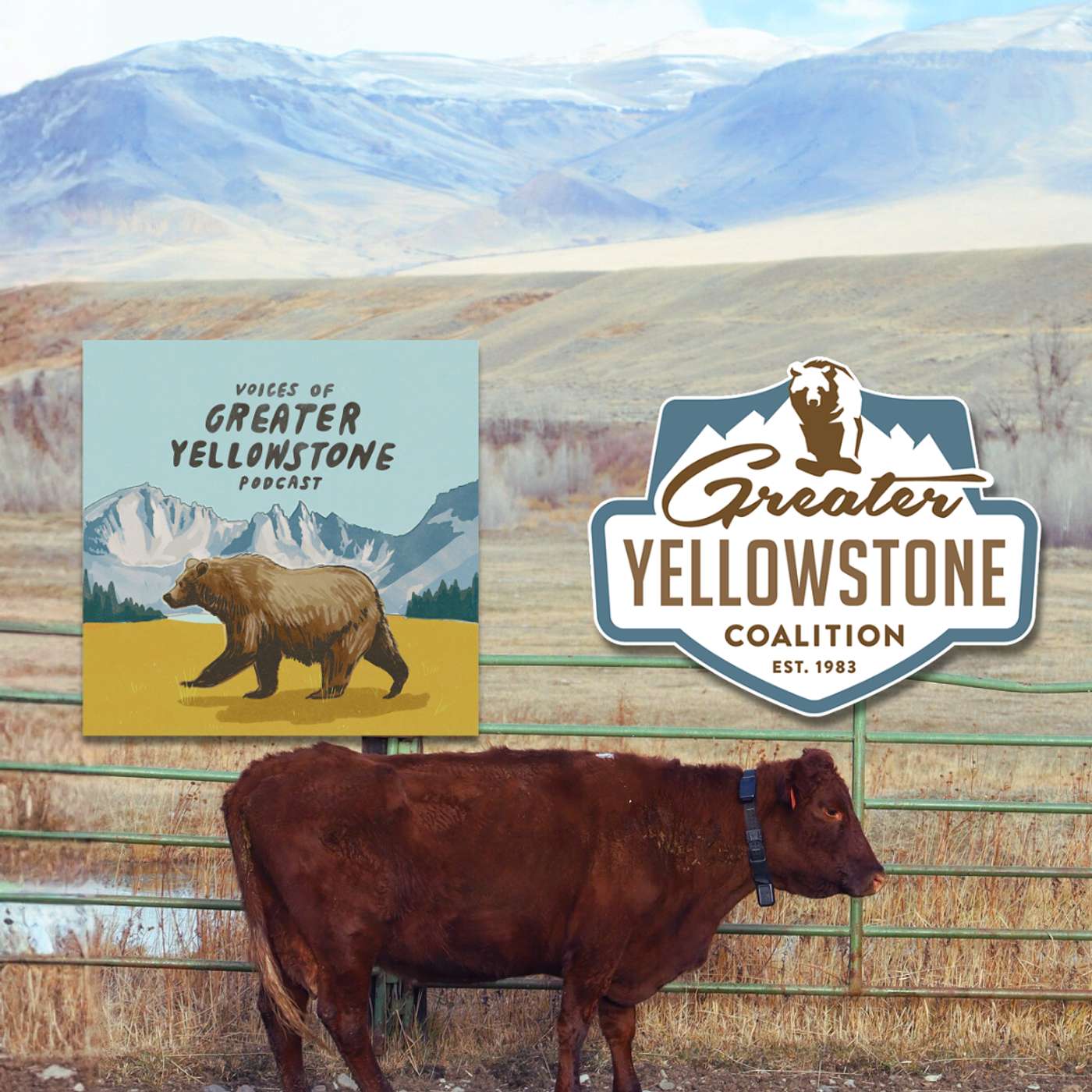
The vast public and private lands that make up Greater Yellowstone are crisscrossed with miles upon miles of fences. While fences aren’t inherently bad—and are often necessary in certain areas to keep wildlife off roads, livestock contained, and property boundaries visible—they create barriers that fragment wildlife habitat.
What happens when wildlife can’t reach seasonal habitats—and how can we make wildlife migration and movement easier for these iconic Greater Yellowstone species?
Virtual fencing is an exciting new technology that’s making waves across the Greater Yellowstone Ecosystem and beyond. It’s pretty much ex...
The Fight for Our Public Lands
I want you to think of your very favorite spot on public lands.
Is it a local backcountry camping site? A trail you love to hike with your friends and family? A secret location in Yellowstone National Park where you find solitude? Now, could you imagine that special spot sold off to the highest bidder and no longer accessible?
Today, this is a very real threat. Our public lands are under attack.
2025 was full of assaults on our public lands. From proposed selloffs and protection rollbacks to the nomination of anti-conservation people to lea...
Frozen Assets: Why Greater Yellowstone Needs Snow

If you live in the Greater Yellowstone Ecosystem, or have visited during the winter months, you know just how absolutely magical this place is with a thick blanket of snow. Whether you’re out skiing, snowshoeing or admiring it from your cozy fireplace window, a snowy winter in the Greater Yellowstone Ecosystem is the best.
Snow plays a more crucial role in this ecosystem than you could imagine. Between 70-80 percent of our water comes from snowpack in the West. When the snowpack in the mountains of the Greater Yellowstone Ecosystem and across the West me...
Making Strides for Montana Wildlife Crossings

Wildlife crossings are amazing.
They’re one of the greatest tools in the toolbox when it comes to preserving migration and movement corridors in the Greater Yellowstone Ecosystem while keeping drivers safe on the road. They’ve been proven to reduce wildlife vehicle collisions by up to 90 percent, sometimes even more. It seems like a no-brainer, win-win solution.
Well, what may appear to be a simple answer to keeping people and wildlife safe while traveling is much more nuanced than you may think. There are countless people, agencies, and processes involved in taking a wild...
Story Time in the Gallatin and Madison Mountain Ranges

Just northwest of Yellowstone National Park rise two remarkable mountain ranges home to a host of iconic wildlife, the headwaters of significant river systems, and world-class recreation opportunities. Encompassed in the 3.1-million-acre Custer Gallatin National Forest, these are the Madison and Gallatin mountain ranges.
The Madison and Gallatin ranges are some of the wildest places left in the continental United States. As more and more people move to the communities surrounding the Madison and Gallatin ranges – often drawn by unmatched access to public lands – this wild landscape is experiencing unprecedented use.
Montana is changing fast, and th...
Thermophiles: Life in Yellowstone's Geothermal Features (Part 2)

Welcome back to part 2 of our thermophiles in Yellowstone conversation! If you haven’t tuned in to part 1 first, I recommend pausing this episode and hopping into the previous one to learn the basics about the terrific thermophiles.
I’m excited to continue our conversation with Dr. Eric Boyd and dive deeper into the world of thermophiles. Did you know that a thermophile species discovered in Yellowstone has been used in important scientific discoveries related to crime scene investigation? If you’re an avid true crime podcast listener, you’ll definitely want to stick around to learn about tha...
Thermophiles: Life in Yellowstone's Geothermal Features (Part 1)

The Greater Yellowstone Ecosystem is known for a lot of big things. Charismatic megafauna like bears and bison, expansive forests as far as the eye can see, and mountain ranges that seem to touch the sky are all found in this unique region. However, did you know that the Greater Yellowstone Ecosystem is also home to some of the most fascinating microbes found on the planet?
Enter thermophiles: microscopic creatures found in Yellowstone’s geothermal regions that thrive in scalding hot temperatures. The name thermophile comes from the Greek word thermē meaning heat and the Greek word phi...
Trout Tales: The Comeback of the Yellowstone Cutthroat

Is there any fish species in the Greater Yellowstone Ecosystem more iconic than the Yellowstone cutthroat trout? While the name conjures imagery of a ruthless nature, these fish are called cutthroats due to the distinct red markings found along their jawline and gills. Yellowstone cutthroat trout are a keystone species in the region, providing food to numerous species including bears, otters, ospreys, and others.
Yellowstone cutthroat trout are also at the epicenter of one of the most interesting species recovery stories from the Greater Yellowstone Ecosystem. Decades ago, when an unexpected threat appeared in Yellowstone Lake, the...
Re-Indigenizing Public Lands

Before public lands were even a concept, the Greater Yellowstone Ecosystem was, and continues to be, stewarded by Indigenous Peoples. In short, public lands are Native Lands. In today’s world, many current public land management policies exclude or marginalize Indigenous roles and input.
In the Greater Yellowstone Ecosystem and beyond, a growing movement is pushing to restore Indigenous connection, stewardship, sovereignty, and sustainable practices rooted in Traditional Ecological Knowledge.
Joining us on the podcast today is an Apsáalooke Tribal member and educational and cultural consultant, Dr. Shane Doyle. Shane is a Montana historian and...
Beaver-Mania! (Part 2)

In the Greater Yellowstone Ecosystem and beyond, beavers are experiencing a bit of a renaissance. These large aquatic rodents are critical ecosystem engineers and play a role in mitigating the effects of climate change and strengthening wildlife habitat. However, decades of rampant trapping and views of beavers as a nuisance have decreased their numbers across the country.
The Greater Yellowstone Ecosystem needs healthy beaver populations doing their job to help keep this place remarkable. Luckily, beavers are making a comeback. Their star power is soaring as climate resiliency heroes and efforts to bring back beavers are becoming a...
Beaver-Mania! (Part 1)

In the Greater Yellowstone Ecosystem and beyond, beavers are experiencing a bit of a renaissance. These large aquatic rodents are critical ecosystem engineers and play a role in mitigating the effects of climate change and strengthening wildlife habitats. However, decades of rampant trapping and views of beavers as a nuisance have decreased their numbers across the country.
The Greater Yellowstone Ecosystem needs healthy beaver populations doing their job to help keep this place remarkable. Luckily, beavers are making a comeback. Their star power is soaring as climate resiliency heroes and efforts to bring back beavers are becoming a...
Why Yellowstone Bison Matter

What makes Yellowstone bison special? Sure, they’re the largest herd of bison found in the United States, but why are they the best bet for restoring bison across the country? Is it the fluffiest fur, the pointiest horns, or something else? In this episode, we’ll dive into why Yellowstone bison matter.
Joining us again on the podcast is the Greater Yellowstone Coalition’s wildlife program manager Shana Drimal. Shana provides strategic leadership to the Greater Yellowstone Coalition’s policies and programs to conserve, manage, and protect the Greater Yellowstone Ecosystem’s iconic wildlife. Her main focus is on...
Hydrothermal Explosions: When Yellowstone Goes Boom!

What happens beneath Yellowstone is vast and varied. One of the most interesting geological phenomena found here is hydrothermal explosions. While they may not have a timetable like some of the iconic geysers, or the breathtaking colors of some pools, 2024’s sky-high event at Biscuit Basin put hydrothermal explosions on the map.
Reading about this unpredictable encounter got me thinking: what are the underlying forces behind hydrothermal explosions? Is the caldera waking up? How are they studied? Luckily, our guest will explain all that and more!
Joining us is Dr. Mike Poland, a research geophysicist and...
The Past, Present, and Future of Grizzly Bear Conservation

What would Greater Yellowstone be like without the grizzly bear? Once upon a time, we were close to answering that question. Today, these grizzly bears represent one of the greatest conservation success stories. Going forward, we want to make sure that grizzlies can continue to thrive on the landscape long into the future.
In Greater Yellowstone, figuring out the next steps in grizzly bear conservation and management is a complex issue. There isn’t consensus on how best to manage grizzlies, and in this conversation you’ll have a better understanding of why it’s so complicated. On thi...
Echoes in the Dark: All About Bats in Greater Yellowstone (Part 2)

Bats elicit many emotions from us – fear, intrigue, aversion, adoration. These pint-sized flyers often go unnoticed, yet they play a vital role in maintaining the balance of the Greater Yellowstone Ecosystem.
From their incredibly unique adaptations to their contributions to pest control, bats are truly nature’s unsung heroes.
In Part 2, we’re joined again by Dr. Riley Bernard, an applied wildlife ecologist and Assistant Professor in the Department of Zoology and Physiology at the University of Wyoming. Dr. Bernard’s research focuses on the ecology and behavior of cryptic species, including bats, on topics such as f...
Echoes in the Dark: All About Bats in Greater Yellowstone (Part 1)

Bats elicit many emotions from us – fear, intrigue, aversion, adoration. These pint-sized flyers often go unnoticed, yet they play a vital role in maintaining the balance of the Greater Yellowstone Ecosystem.
From their incredibly unique adaptations to their contributions to pest control, bats are truly nature’s unsung heroes.
We’re joined by Dr. Riley Bernard, an applied wildlife ecologist and Assistant Professor in the Department of Zoology and Physiology at the University of Wyoming.
Dr. Bernard’s research focuses on the ecology and behavior of cryptic species, including bats, on topics such as foragi...
History of Yellowstone National Park (Part 2)

Yellowstone National Park holds the distinction of being the United States' first national park. What does it mean to be the first? What was a national park in the 19th century, and does it hold the same definition today? We’ll answer those questions and more as we dive into how Yellowstone became the park we know and love today.
This episode is the second part of our History of Yellowstone National Park series, so we recommend listening to Part 1 first. If you’ve already tuned in to Part 1, thanks for joining us again!
In Part...
History of Yellowstone National Park (Part 1)

Yellowstone National Park holds the distinction of being the United States' first national park. What does it mean to be the first? What was a national park in the 19th Century, and does it hold the same definition today? We’ll answer those questions and more as we dive into how Yellowstone became the park we know and love today.
On this episode, we sit down with Alicia Murphy who is the park historian for the National Park Service in Yellowstone National Park. Basically, it’s her job to preserve and explore the history of Yellowstone, communicate the...
How Native Pollinators Keep Greater Yellowstone Blooming

It’s no secret that Greater Yellowstone contains some of the most beautiful wildflower landscapes in the world. In late spring and early summer, fields explode with yellow, purple, pink, and many more vibrant hues found in our native blooming plants. We can thank our native pollinators for providing such a show.
However, Greater Yellowstone’s pollinators are responsible for more than just a wildflower symphony of colors. They are key players in the health of the ecosystem, ensuring native plants flourish and provide nourishment for wildlife, from our smallest birds to our largest grizzly bears. Without nati...
Studying Yellowstone's Iconic Wolves

Wolves in Greater Yellowstone represent one of the greatest conservation success stories. Once absent from the ecosystem, a reintroduction nearly 30 years ago brought back this keystone species to the landscape. Today, Yellowstone wolves are renowned across the world and represent a significant economic driver through wildlife-watching and tourism, generating an estimate $82 million annually. Their presence in Yellowstone National Park has also allowed researchers to conduct a multi-year study on their biology and effect on the landscape and wildlife around them.
On the podcast, we’ll get to chat with one of those researchers, Kira Cassidy. Kira is a r...
Trail Crew Work in Yellowstone’s Backcountry

Thanks to that little glowing box in our hand, we are constantly inundated with heavy news, social media updates, or the fact that you forgot to do Wordle again. Have you ever just wanted to chuck it into the trash and head out to your nearest trail or place of solitude? Maybe find some respite among the trees, enjoying the simplicity of nature. From my conversation today, I believe that’s what compels many people who join the backcountry trail crew in Yellowstone National Park.
Being part of a backcountry trail crew is a labor-intensive job to enh...
Surviving the Cold: How Winter Habitats Sustain Wildlife

Winter is a brutal time of year in the Greater Yellowstone Ecosystem. The sun rises late and sets early, temperatures stay well below freezing for weeks on end, and the snow can pile up foot on top of foot. For the ecosystem’s many ungulates, including pronghorn, elk, deer, and moose, winter is the hardest season to survive. For the best chance of enduring the cold and snow, ungulates migrate with the seasons, seeking milder winter habitat that provides a respite from winter’s intensity and a better chance of finding food.
A herd or an individual’s chanc...
Innovative Wildlife-Livestock Conflict Prevention

The Greater Yellowstone Ecosystem is a vast landscape shared by people and wildlife. Habitat for species like grizzly bears, wolves, elk, and more isn’t just found within public lands, but exists alongside, and even overlaps with, the wide-open working lands of this region. With wildlife and people living in such close proximity, the possibility of conflict is often not far behind.
Wildlife-livestock conflict is a complex challenge that requires thoughtful, multi-faceted, and creative solutions. Luckily, there are some ranchers and landowners in the Greater Yellowstone Ecosystem testing some ground-breaking methods to keep their livelihoods intact and th...
Wild Wolverines!

A question we commonly ask fans of the Greater Yellowstone Ecosystem is: If you could see one animal out in the wild, what would it be? It may surprise you that the most popular answer by far is the wolverine. So, why are wolverines at the top of so many peoples’ wildlife bucket list?
These elusive critters are rarely seen and even more rarely captured on camera. Their near-mythological status, incredible journeys over isolated jagged peaks, and wild fierceness in a furry compact body makes the wolverine definitely one of the coolest species in the ecosystem… if not t...
Conservation Storytelling through a Lens

They say, “a picture is worth a thousand words,” although sometimes it feels like we’re left speechless when viewing the spectacular photos and film of the Greater Yellowstone Ecosystem. People from across the globe who have never visited this remarkable region feel a connection simply from the story these images tell. From a bird’s eye view of Grand Prismatic Spring, to a sweet moment of a grizzly bear sow and her cubs, to the sheer vastness that is Greater Yellowstone, the moments captured via camera inspire us all.
On today’s episode, we’re thrilled to welcome R...
Ravens: Yellowstone's Clever Corvids

To fit with the spooky theme of today, Halloween, we are spending some time with one of Greater Yellowstone’s most enigmatic and charismatic creatures. If you’ve been to Old Faithful in Yellowstone National Park, you’ve definitely seen these beautiful, surprisingly large, black birds that seem dead set on making mischief. That’s right, we are talking ravens.
Ravens can be found throughout Greater Yellowstone and are members of the corvid family, which also includes crows, magpies, jays, and more. These birds are known for their intelligence, mimicry skills, and penchant for taking advantage of and robbing...
Global "Weirding" and Climate Conversations

We know Greater Yellowstone is a remarkable ecosystem. It is also an increasingly vulnerable ecosystem. The impacts of climate change on this landscape can be felt far and wide and are showing up in some surprising ways.
As the impacts of climate change put our communities, water, and wild lands at risk, GYC is working alongside diverse partners and stakeholders to better understand climate-related threats, prepare for a warmer, drier future, and protect our most climate-sensitive resources.
On today’s episode, we’re sitting down with GYC’s Climate Conservation Coordinator Sierra Harris to learn about h...
How to Stop a Gold Mine near Yellowstone

Directly on the northern edge of Yellowstone National Park, Crevice Mountain rises some 3,000 feet above the Yellowstone River and is a prime example of what makes the Greater Yellowstone Ecosystem so extraordinary. The area provides vital habitat for grizzly bears; is an important migration corridor for elk, mule deer, and big horn sheep; and is one of the few designated places outside the park where Yellowstone bison can roam.
Now imagine a full-scale gold mining operation right in the middle of this wild landscape. That’s exactly what’s in store for Crevice Mountain. New roads, clear cuts...
May the Forest Be With You

The beautiful, unbroken forests found in Greater Yellowstone are an integral part of the ecosystem’s overall health and vitality. They provide crucial habitat and forage for its many wildlife species, are buffers against the effects of climate change, and offer nearly endless opportunities for solitude and recreation to us human inhabitants of the region. Many of the forests here in Greater Yellowstone are part of the national forest system – federally managed lands overseen by the U.S. Forest Service.
The national forests within Greater Yellowstone cover just under 15 million acres – that’s nearly seven times the acreage f...
The Vital Role of Whitebark Pine

If you’ve ever spent time in the high, wild reaches of Greater Yellowstone, up near the tree line, you may have come across a silvery, gnarled pine tree. If you’ve seen it, chances are you’ve encountered a whitebark pine. These remarkable trees can live upwards of 1,000 years, and are often the highest elevation pines you’ll find in Greater Yellowstone. And not only that, but they are important to the overall health of ecosystem in some surprising ways.
On today’s episode, we sit down with Dr. Danielle Ulrich, a plant physiologist and assistant professor...
Northern Arapaho Cultural Preservation

The Greater Yellowstone Ecosystem is home to awe-inspiring landscapes and iconic wildlife. And since time immemorial, it’s been stewarded by Indigenous People who view its lands, waters, and wildlife as sacred. The Indigenous way of caring for the land acknowledges its life-giving energy, is centered on reciprocity, and uses Traditional Ecological Knowledge to keep the ecosystem in balance. Recognizing and reinstituting Indigenous values, beliefs, and practices is a vital step in restoring the cultural and ecological integrity of this region.
Over 49 Tribes have current and ancestral connections to the Greater Yellowstone Ecosystem. The Hinono’eino’ People, also c...
Search and Rescue in Teton Country

The Greater Yellowstone Ecosystem is replete with opportunities for adventure. There is no shortage of hikers, mountain bikers, climbers, mountaineers, hunters, and more out exploring the ecosystem at any given moment. With all that space, and so many people out in it, there is also no shortage of opportunities to get in a bit of trouble.
So, what happens when you fall down a slope and break your leg miles from the trailhead? Or a friend of yours went out for a hike, but it’s hours after they were supposed to return and there’s no sign...
Where the Buffalo Roam

Oh, give me a home, where the buffalo roam. This 19th-century poem line turned western song lyric evokes days past when wild bison covered wide open spaces across North America. But these days, the only place wild American plains bison can be witnessed in large, free-roaming herds is within Yellowstone National Park. Yellowstone bison are the descendants of just two dozen animals who found refuge in Yellowstone's high interior during the mass extermination of bison that took place in the late 1800s at the hands of European settlers and the American military. Today, nearly 6,000 bison roam Yellowstone, but you...
