Books on Asia
Books on Asia is your guide to finding quality books on Japan and Asia, including travel, literature, current events, and culture. Explore Asia in-depth. Hosted by Amy Chavez.
Yamagata 3: The Last Human Train Platform Vendor
Episode Notes
This is Part 3 of a 3-part series on Yamagata Prefecture, as part of our Travel & Books focus. If you haven't listened to the first two, you can find them at: Yamagata 1: Samurai, Beef & Bashō and Yamagata 2: Dewa Sanzan and Mt. Yudono Secrets.
In this episode, Amy visits a secret train station. As the train from Fukushima slows down at the stop to let people off, she notices a definite excitement among the passengers. "She's there!, She's there!" they murmur to each other while SLR camera lenses are brought up to eye level, and pe...
Yamagata 2: Dewa Sanzan (3 Sacred Mountains) + Mt. Yudono Secret
Episode Notes
This is Part 2 of a 3-part series on Yamagata Prefecture, as part of our Travel & Books focus. You can still listen to Part 1: Samurai, Beef and Basho.
Content Warning: This episode talks about death and dying.
In this episode, Amy visits Mount Yudono, one of the three sacred mountains of the Dewa Sanzan. This mountain has a shrine that is so sacred, those who enter are not allowed to talk about their experience afterwards. Before going into the Yudono Shrine grounds, she asks a Japanese person what the rules are. Once...
Yamagata 1: Samurai, Beef and Basho
This is Part 1 of a 3-part series on Yamagata Prefecture, as part of our Travel & Books focus. In this episode, we discuss Michael Booth’s Sushi and Beyond: What the Japanese Know About Cooking, (also known as Super Sushi Ramen Express: One Family's Journey Through the Belly of Japan) which explores the myths and semi-myths behind Japanese beef—from beer-drinking, massaged cows to the influence of breed and diet. You may be surprised at some of the truths. Then we’ll trace the story of Yamagata's Yonezawa beef, the legendary samurai Uesugi Kenshin, and the influence of British English teacher...
Japan by Charinko: Tom Gibb's 2,500-Km Ride
Japan by Charinko: Tom Gibb’s 2,500-Kilometer Ride
John Ross chats with Tom Gibb about his cycling adventures in Japan, the subject of his newly released Charinko. In the summer of 2005, Tom set off to see Japan properly. His transport was a cheap bike. And his Japanese was just about good enough for the modest challenge he had set himself: have at least one conversation every day. Six weeks and 2,500 kilometers later, Tom had pedalled from Kyushu back home to Ibaraki (still his home today) and discovered that cycling might be the perfect speed for getting to kn...
Japanese museums, treasure halls and Nara e-hon
Amy and John talk about recent travels in Japan including great museums, treasure halls full of ancient art and manuscripts, and travel by ferry vs. shinkansen. (Don't miss the Paseo ferry if you're traveling between Kure, Hiroshima and Matsuyama on Shikoku). John introduces a great outdoor museum in Osaka for architecture lovers, and a naval museum. Amy introduces Nara e-hon—which replaced illustrated emaki scrolls of the Heian and Kamakura periods—that started in the Muromachi period (1336-1573) and remained popular through the Edo period). Published in Kyoto (not Nara) they were one of Japan's first codices to use this...
New Lonely Planet Guides on Japan
Alternative title: Lonely Planet arc—from pre-internet days to Instagram + a new Japanese etiquette tip + a couple more guidebook options
Amy opens the show with her recent experience as a tour guide in the Seto Inland Sea islands. She also introduces a new Japanese manners tip, a result of her etiquette skills being put to shame recently when she traveled with Japanese people on a business trip.
From there she delves into the new Lonely Planet Guidebooks and gets a little nostalgic about the older pre-internet publications and tells why they were better than the ne...
Adachi Masao: Pink Films, Red Politics, with William Andrews
Adachi Masao (born 1939) has lived one of the most extraordinary lives in Japanese cinema. He has made experimental films, worked with leading figures of the Japanese New Wave, and spent decades in Lebabon alongside the radical left-wing Japanese Red Army.
John talks to Tokyo-based researcher, writer and translator William Andrews about Pink Auteur, Red Outlaw, his new biography of this provocative filmmaker and revolutionary. Recording this episode, John and William faced radical conditions themselves – annoying ambulances, copulating cats, and clanking bottle collection, and more cats – but for you, dear listener, all that artistic struggle was left on the...
The Devil’s Chow: A Chinese Food History–Stephen Jack
Stephen’s childhood in Bendigo, Australia, gave him early exposure to Chinese culture and food. Nineteenth-century gold rushes brought numerous Cantonese workers to the town, and their cuisine has long since become part of local life. Decades later, Stephen – a longtime Taiwan resident – would pursue his interest in Chinese food by making extensive journeys across China.
John and Stephen talk about the rich heritage of Chinese agriculture before eventually getting to some notable dishes, from the famed Peking duck to the infamous wangji dan (fertilized egg). Stephen tells the surprising story of chop suey – long dismissed as an Ameri...
Taiwan 22: Travels in Paradox—Tyrel Cameron Eskelson
For Tyrel Eskelson, a Canadian academic living in Hokkaido, curiosity about Taiwan-related news stories turned into something of an obsession; there were months of travel, hundreds of conversations, and a book (published by John at Plum Rain Press). In this BOA chat, Tyrel talks about his search to better understand the island nation and its people. Among the topics covered are Taiwan’s Japanese colonial legacy, the 228 Incident of 1947, the Battle of Kinmen, and why the book is called Taiwan 22.
Taiwan 22 is available as an ebook on the Plum Rain Press website (but not yet on Amazon).
What's it like to host a US Military Base? Jon Mitchell on Okinawa
Today 31 US bases sit on a landmass smaller than Rhode Island, and Okinawans remain Japan's poorest people. Why is this? And what is the US military presence actually doing there?
In his new book Why Are We in Okinawa?: A History of Violence (Bloomsbury Academic, 2026), award-winning journalist Jon Mitchell answers these questions and many more, tracing how the islands were annexed by Japan in the 19th century, occupied by the US through WWII, handed back to Japan in 1972, and now menaced by China — with tensions between the military and Okinawan citizens still simmering today. He gives Okinawans a...
Old Lhasa: A Biography
Old Lhasa – A Biography of a Sacred City
Michael Aldrich joins John Ross to discuss Old Lhasa: A Biography, his richly detailed portrait of Tibet’s historic capital. It’s the third book in his trilogy on Asian cultural centers. He wrote the first two, on Beijing and Ulaanbaatar, while living in those cities, where he worked as a lawyer. There was no opportunity for this with Lhasa, so he had to rely on multiple trips (from his home in Taiwan) and an incredible amount of reading and research. Rather than writing a conventional history, Aldrich set out to...
Golden Age of China Books: The 1930s
China’s Golden Age on the Western Bookshelf
China may seem like a big story today, but its presence on Western bookshelves was even greater during the 1930s. Books about China not only appeared on bestseller lists but often dominated them. In this short solo episode, John discusses some of the most notable titles of the decade. He begins with Pearl S. Buck’s The Good Earth and ends with Ruth Harkness’s account of panda collecting. Most of the popular books about China were highly sympathetic to the Chinese people. We take a close look at a stri...
Japanese Literary Prizes—How many do you know?
Amy breaks down Japan's most prestigious literary prizes — starting with the twin titans of the Japanese book world, the Akutagawa and Naoki Prizes, both announced twice a year, every January and July, on the very same day. Up your knowledge ahead of the next announcement of the winners on July 15, at around 6 pm!
Most Japanese literature fans can probably guess who the Akutagawa Prize is named after (hint: Rashomon) — but how many know who the Naoki Prize honors? And while the Tanizaki and Mishima Yukio Prizes might be obvious, can you guess what the Noma Prize is for...
Taiwan Travelogue: Food and Friendship in Japanese Formosa
John Ross chats with Eryk, his Formosa Files co-host, about the International Booker Prize-winning novel Taiwan Travelogue. Set in colonial Taiwan in 1938, the story is told by narrator Aoyama Chizuko, a young Japanese novelist, who, accompanied by her brilliant Taiwanese interpreter, Chi-chan, travels around the island in search of memorable meals. The original Chinese edition came out in 2020. It caused quite a stir, as author Yang Shuang-zi was misleadingly credited as being the translator. (No translation was needed, however – this story was entirely fictional, not the rediscovered Japanese text it purported to be.) The English edition, translated by Lin Ki...
Replay: Tina deBellegard—The Art of the Short Story
Episode Notes
Today we're talking with Tina deBellegarde about short stories: What makes a good short story, and why certain short story writers are so appealing. Tina has been nominated for the Agatha Award for Best First Novel, has a short story published in the Mystery Writers of America anthology called "When a Stranger Comes to Town," and most recently won the USA Prize in the Writers in Kyoto annual story competition.
They start the topic of the podcast by highlighting some Japanese short story writers such as Haruki Murakami and Banana Yoshimoto, Hiromi Kawakami...
Whistling Arrows and Heavenly Horses: The Han-Xiongnu War
Whistling Arrows and Heavenly Horses: The Han-Xiongnu War
John Ross speaks with Scott Forbes Crawford about his book The Han-Xiongnu War, 133 BC–89 AD. For more than two centuries, Han China fought a bitter struggle against the Xiongnu, a powerful confederation of horse-riding nomads from the Asian steppe. This was far more than a border war. It helped shape the future of China, transformed Central Asia, and opened the routes that would become known as the Silk Road.
In writing this history, Scott followed the example of China’s greatest historian, Sima Qian (the subject of BOA...
Don Weiss: Future of the Shikoku Pilgrimage
Amy Chavez talks to Don Weiss, currently mid-way through the Shikoku Pilgrimage — Japan's 1,300 km Buddhist route that has been walked for almost as many years. Pilgrims share their journey with Kobo Daishi, patron saint of the 88-temple circuit and founder of Shingon Buddhism in Japan. Don explains his "gratitude pilgrimage," what it means and why he is undertaking it. Along the way, he speaks with fellow pilgrims and priests at a number of temples to assess the experience for international visitors. While the 88-temple route faces challenges — from local depopulation to overtourism — Don finds common ground in conversations with priest...
Sima Qian–China’s Grand Historian (with Tim McGirk)
Sima Qian – China’s Grand Historian (with Tim McGirk)
John Ross chats with repeat guest Tim McGirk about Sima Qian (c. 145–86 BC), the Father of Chinese History. He earned this accolade for his monumental work, the Shiji (usually translated as Records of the Grand Historian). It covers more than two thousand years, from the legendary early emperors up to Emperor Wu, under whom Sima Qian lived and fell afoul. Sima Qian would use his history writing to criticize cruel leaders, most notably Qin Shi Huang, the despotic first emperor of China, who burned books and attacked the humanisti...
Hiroshima's Last Witnesses and Japan's Nuclear Future
M. G. Sheftall has lived in Japan since 1987. He has a PhD in international relations and modern Japanese history from Waseda University in Tokyo. Since 2001, he has been a professor of modern Japanese cultural history and communication at the Faculty of Informatics of Shizuoka University. He lives in Hamamatsu, Japan.
Amy Chavez talks about Sheftall's books on the Asia Pacific War, in particular Hiroshima: The Last Witnesses and Nagasaki: The Last Witnesses both oral histories featuring interviews with survivors of the atomic bombs.
Has Japan's 80 years of peace education been all for naught? The book s...
Jason Nieling and Paul Bresin of the Sightseeing Japan
Sightseeing Japan
John Ross is joined by Jason Nieling and Paul Bresin of the Sightseeing Japan Podcast, which started back in 2019 and now has over 160 detailed but fun episodes. The two Japanophiles discuss how their show explores Japan through episodes on culture, food, and travel. Jason and Paul share a range of fiction and non-fiction book recommendations.
Book Recommendations
You Gotta Have Wa (1977) by Robert Whiting. (Amy spoke with Robert about his Tokyo Junkie memoir back in 2021.)
Battle Royale (1999, Eng. 2003) by Koushun Takami
Tearmoon Empire (2019) by Nozomu Mochitsuki
<...Simon Elegant’s City on Fire: A Novel of Hong Kong
Simon Elegant’s City on Fire: A Novel of Hong Kong
John chats with writer and journalist Simon Elegant about his third novel, a crime thriller set during the Hong Kong protests of 2019. City on Fire is published by Pegasus Crime, an imprint of Simon & Schuster. The novel follows Inspector Killian Tong’s investigation of a brutal murder against a backdrop of political chaos, police tensions, and also personal conflict – Killian’s half-sister is a radical protester. John and Simon also discuss the background to the 2019 protests, including the National Security Law and the earlier 201...
Jane Lawson: Secret Japan
Amy Chavez talks with Jane Lawson about her book Secret Japan: An Insider's Guide to Deeper Travel in the World's Most Fascinating Country (Simon & Schuster, 2026).
Jane encourages people to get off the beaten track to discover the most amazing people, places, and foods. This gives travelers a chance to see and experience Japanese life and culture from the inside by spending time in smaller places. It's the difference between tourism being forced on locals and those locals being granted the choice to reach out and connect. Use Jane's prescription for travel to let the Japanese i...
Replay: Alex Kerr on Finding the Heart Sutra
Amy Chavez talks with Alex Kerr about his book Finding the Heart Sutra: Guided by a Magician, an Art Collector and Buddhist Sages from Tibet to Japan (Penguin U.K., 2020).
Kerr is the author of several books, including Lost Japan, Dogs and Demons, Another Kyoto (w/Kathy Arlyn Sokol), Another Bangkok and Hidden Japan.
The Books on Asia Podcast is co-produced with Plum Rain Press.
Podcast host Amy Chavez is author of The Widow, the Priest, and the Octopus Hunter: Discovering a Lost Way of Life on a Secluded Japanese Island. and Am...
Anna Beth Keim: A History of Taiwan Through the Life of Huang Chin-tao
John talks to Anna Beth Keim about her acclaimed biography, Heaven Does Not Block All Roads: A History of Taiwan Through the Life of Huang Chin-tao. Huang Chin-tao (1926–2019) lived through every twist and turn of Taiwan’s turbulent twentieth century. He served as a Japanese soldier in China during World War II, joined an armed uprising against Taiwan's Chinese Nationalist post-war government (the 2-28 Incident of 1947), then went into hiding. He served with the Republic of China Navy before being captured and spending 23 years in prison. Once more a free man, he became a driving force in the pro-democracy move...
Michael Freiling—100 Poems from Old Japan
Show Notes
Mike Freiling was born in San Francisco. His interest in poetry was first kindled in the mid-‘60’s, when he attended high school near the Haight Ashbury district, and attended readings by American Beat poets Gary Snyder, Allen Ginsberg, and Lenore Kandel.
Freiling attended University of San Francisco and MIT and helped co-found MIT’s literary magazine Rune. He studied poetry under David Ferry at Wellesley. After receiving his PhD, he was named a Luce Scholar with an appointment to Kyoto University,
In 2014, Freiling returned to Kyoto where he and his wife S...
Bruce Rutledge and Chin Music Press
Bruce Rutledge and Chin Music Press
John talks to Bruce Rutledge, founder of Chin Music Press, about running an independent Asia-focused press, the origins of the company in Tokyo, and the move to Seattle, where Chin Music now has a bookstore in Pike Place Market. They talk about Chin Music’s highly successful graphic novel trilogy on the Japanese American incarceration experience during World War II. The wide-ranging conversation is an honest celebration of the challenges and pleasures of independent publishing.
Chin Music Press books mentioned in the episode include:
Their very first bo...
Steven Herman: Behind the White House Curtain
Steven Herman spent 1990-2006 in Japan, most of those years with Voice of America. He served as South East Asia Bureau Chief as well as North East Asia Bureau Chief for the Korean Penninsula & Japan. Over his 16 years living in Japan he covered the Kobe Earthquake as well as the 2011 Tohoku Earthquake-tsunami-nuclear disaster, which he said was "covering three disasters at the same time."
He also recounts his more recent days as a White House Foreign Correspondent, especially his time as a traveling pool reporter. You'll learn what it's like to fly on Air Force One, why...
David Leffman "A Murder in Yunnan"
John Ross speaks with English travel writer and photographer David Leffman about his new book, A Murder in Yunnan: The Unsolved Killing of a British Diplomat on China’s Southwestern Frontier. The conversation begins with David’s own long engagement with China, which started with a difficult first trip in 1985, and then continued a decade later with work on The Rough Guide to China.
In the 1860s, the British dreamed of opening a profitable overland trade route into China from British India via Burma. The 1868 Sladen Expedition scouted a route from Bhamo in Burma to Tengyue/Tengchong in Y...
Anti Foreign Sentiment, Overtourism and Tourist Behvavior
Amy discusses the relationship between anti-foreign sentiment, overtourism, and tourist manners in Japan. Protests in Kyoto, Kamakura, and Tokyo claim that overtourism negatively impacts the daily lives of locals. Right-wing populist groups like the Sanseito party further use overtourism to fuel anti-foreign sentiment. With Japan's aging population, and only 59% of the Japanese people in the working age range, foreign workers are being brought to Japan to fill jobs, creating a perceived burden to locals, who are already battling overtourism. Amy also shares examples of poor tourist behavior that exacerbates anti-foreign sentiment. She emphasizes the importance of understanding and respecting...
Replay: Angus Waycott Walks Sado Island
On March 1, ferries from Japan's main Island of Honshu to Sado Island (Niigata Prefecture), started running again after their long winter slumber waiting for the frothy Sea of Japan to settle and for calmer winds to set in for reliable crossings. Let's celebrate Spring in Japan with this previous Books on Asia episode with author and travel-writer Angus Waycott who talks about his 8-day walk around Sado Island.
Waycott gives us in-depth accounts of: a mujina (tanuki-worshipping) cult, funa-ema (literally "ship horse pictures"), exile (including those of Zeami and Buddhist priest Nichiren), and the controversy behind the Ki...
Robert Norris on Living and Writing in Japan
Robert Norris has lived in Japan since 1983, mostly in Dazaifu, near Fukuoka, Kyushu. After retiring from university teaching in 2016, he returned to his long-standing passion for writing. The result was a heartfelt memoir about his life – and his mother’s – titled: The Good Lord Willing and the Creek Don’t Rise: Pentimento Memories of Mom and Me (Tin Gate, 2023).
In this episode with John Ross, we hear about Robert’s decades in Japan, from his early days learning Japanese through a local softball team, to his later academic career, including his time as a university dean. Naturally, the conver...
T.R.Reid and How to Ski Japan!
In a tribute to the 2026 Winter Olympics being held right now in Cortina, Italy, Amy takes up a discussion of skiing in Japan. Japan has hosted the Winter Olympics 2 times: 1972 (Sapporo) and 1998 (Nagano). Amy introduces previous Washington Post Tokyo Bureau Chief T.R. Reid's guidebook called Ski Japan! (Kodansha, 1993).
T.R. Reid lived in Japan for five years during the early 1990's. When the Gulf War started, the world turned its attention to that news, leaving foreign journalists in Japan with some unexpected free time. Reid and his family took action: they went skiing! The result is h...
China's Backstory with Lee Moore
John Ross talks to Lee Moore about his book, China’s Backstory: The History Beijing Doesn’t Want You to Read (2025, Unsung Voices Books). The book looks at the four important China-related stories that often make headlines: Taiwan, Xinjiang, the Chinese economy, and Hong Kong. In this conversation, Lee and John focus mainly on the history of Xinjiang and the Uyghurs, but also cover a wide range of other topics. Hoping to reach a broad audience, Lee took an unusual approach to writing China’s Backstory; although a scholar, he uses colloquial translations of Chinese texts, peppers his paragraphs with c...
Japan Guides and Guidebooks 1891 to 2019
Amy muses on the death of guidebooks due to the internet and reminisces about some oldies but goodies on Japan, from John Murray's Handbook for Travellers in Japan (1891) to more recent guidebooks specializing in hiking mountains and pilgrimages.
Books Mentioned
John Murray's Handbook for Travellers in Japan (1890's)
Japanese Customs and Manners by Mock Joya (Sakurai Shoten/JTB, 1951)
Japanese Etiquette: An Introduction (World Fellowship Committee of the Tokyo WYCA, Charles E Tuttle Co., 1955)
Japanese Etiquette, by Bun Nakajima (1955, 1957)
Western Manners and English Conversation, by Glenn F. Baker (S...
Simon Winchester’s Biography of Joseph Needham (with Tim McGirk)
The Man Who Loved China by Simon Winchester (with Tim McGirk)
John Ross talks with Tim McGirk about Simon Winchester’s masterpiece, The Man Who Loved China. That man was Joseph Needham, an eccentric Cambridge biochemist who traveled through war-torn China to document the nation’s scientific heritage. The ensuing book series, Science and Civilisation in China, revealed the world’s debt to Chinese science. John and Tim discuss the “Needham Question” (why China, once the global leader in technology, fell behind) and the scandal that almost ended his academic career. McGirk, a former foreign correspondent who knows Winc...
New 2026 Book Releases on Japan, Taiwan
This episode of the Books on Asia podcast introduces new fiction and non-fiction on Japan to be published this year, along with two upcoming books on Taiwan. We present the books here in the order they appear on the podcast. Listen to the episode for more information on each title:
Phantom Paradise: Escape from Manchuria, by Kay Enokido
(Bold Story Press, January 13, 2026)
Kokun: The Girl from the West, by Nahoko Uehashi (transl. Cathy Hirano)
(Europa Editions, January 13, 2026)
When the Museum Is Closed, by Emi Yagi (transl. Yuki Tejima)
(Soft Skull...
Harmony Express: Travels by Train through China with Thomas Bird
Thomas Bird was living in Southern China when he decided to explore the country by train and write a book about it. He first attempts to trace the steps of Bruce Chatwin after reading an article of his in the New York Times, but eventually decides to just go with the flow, traveling far and wide on China's old railway during the pre-Covid years 2014-2019. He seeks out old lines and trains and chronicles the people he meets along the way to tell readers what China is like today. The result is Harmony Express: Travels by Train Through China.
The 1910 Japan-British Exhibition
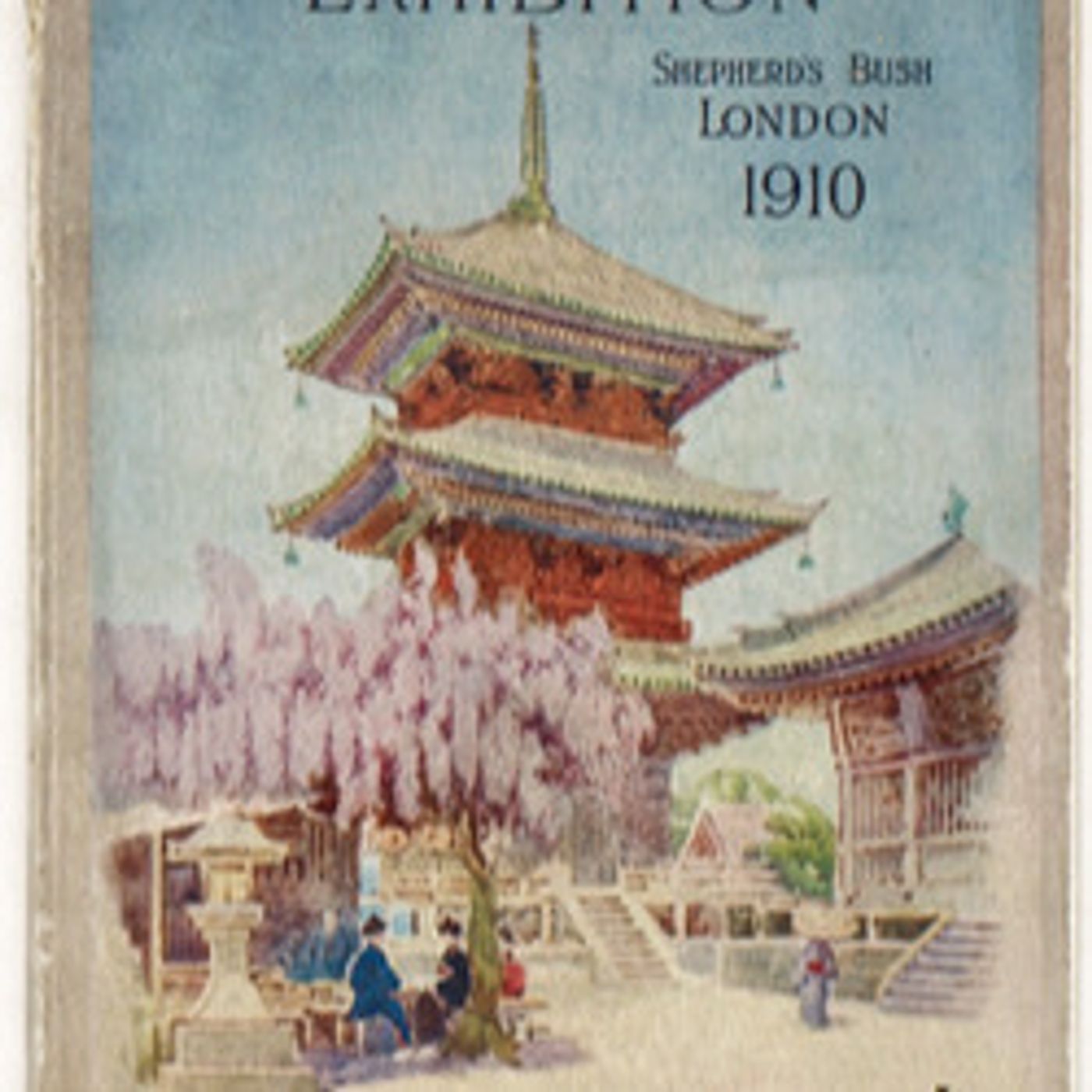
The 1910 Japan-Britain Exhibition – with Formosa Files
In this special crossover episode, John Ross and Eryk Michael Smith from Formosa Files: the History of Taiwan Podcast explore how Japan showcased its “model colony” of Formosa (1895–1945). First up is the 1910 Japan–British Exhibition in London, which featured human exhibits – 24 Indigenous Paiwan people from southern Taiwan. Next, they follow Crown Prince Hirohito on his 1923 royal tour of the island, before finishing with the 1935 Taiwan Exposition, a massive event commemorating forty years of rule. To learn more about these stories – and to find other episodes – visit the Formosa Files website.
Book recommend...
Amy Reads from her Book: The Widow, The Priest & The Octopus Hunter
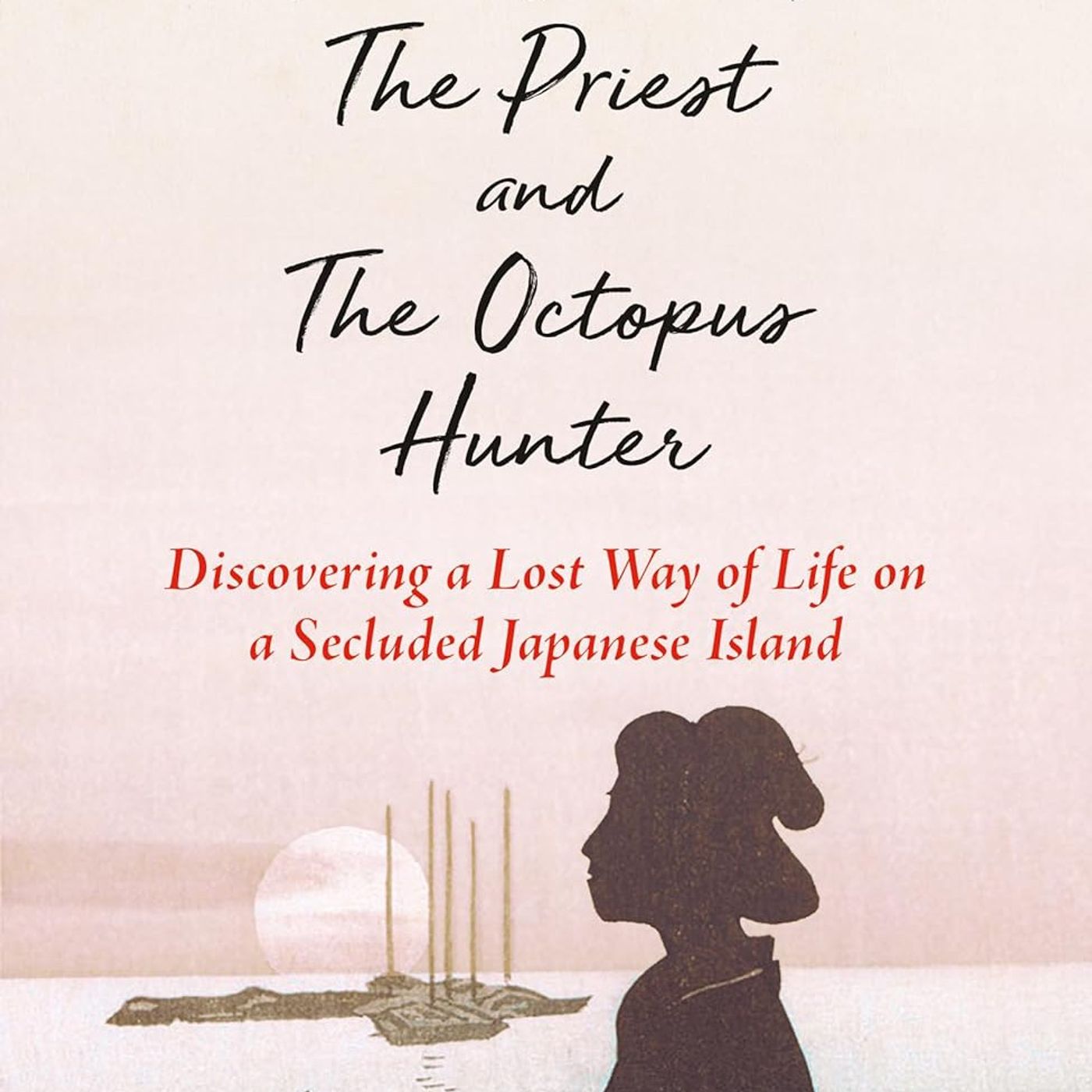
Amy reads from The Widow, the Priest, and the Octopus Hunter: Discovering a Lost Way of Life on a Secluded Japanese Island.
Chapter 1: The War Widow
In 1997, Amy moved to a small island of just 950 people in Japan's Seto Inland Sea. She rented an akiya (empty house) from a widow whose soldier-husband had died in WWII. Six years later, when the widow dies, Amy purchases her home and must finally clear out the old woman's possessions. This is when Amy becomes fascinated with the woman, her life of hardship, and her will to overcome the pa...
Amy & John Discuss Childhood Reading Influences
John Ross, during his schoolboy days in New Zealand, was interested in far-flung places such as South America, Papua New Guinea, Ancient Greece and Rome, as well as books on World War One and Two. He read a lot of youth fiction starting at 10 years old, but as a teenager, had a voracious appetite for nonfiction. In his 20s he discovered a few wonderful fiction writers, but has still kept mostly to nonfiction through the decades.
His first books were Willard Price’s Adventure series and Gerald Durrell books on real-life animal collecting. He also read detective an...
