The End of the Road in Michigan
This audio collection of amazing short stories is taken from the Great Lakes region and the Tip of Michigan’s Thumb. We love Michigan's history, places to see, and things to do in Michigan. Each episode is taken from feature articles from Thumbwind.com and Michigan4you.com. So, as a podcast, you can enjoy them anytime and anywhere. So sit back, relax, and enjoy this week’s tale from the End of the Road in Michigan. Thank you for taking the time to listen to check out and listen to our little podcast. If you like this kind of tale...
Mail in a Bucket: Detroit’s Little Boat With a Big Job
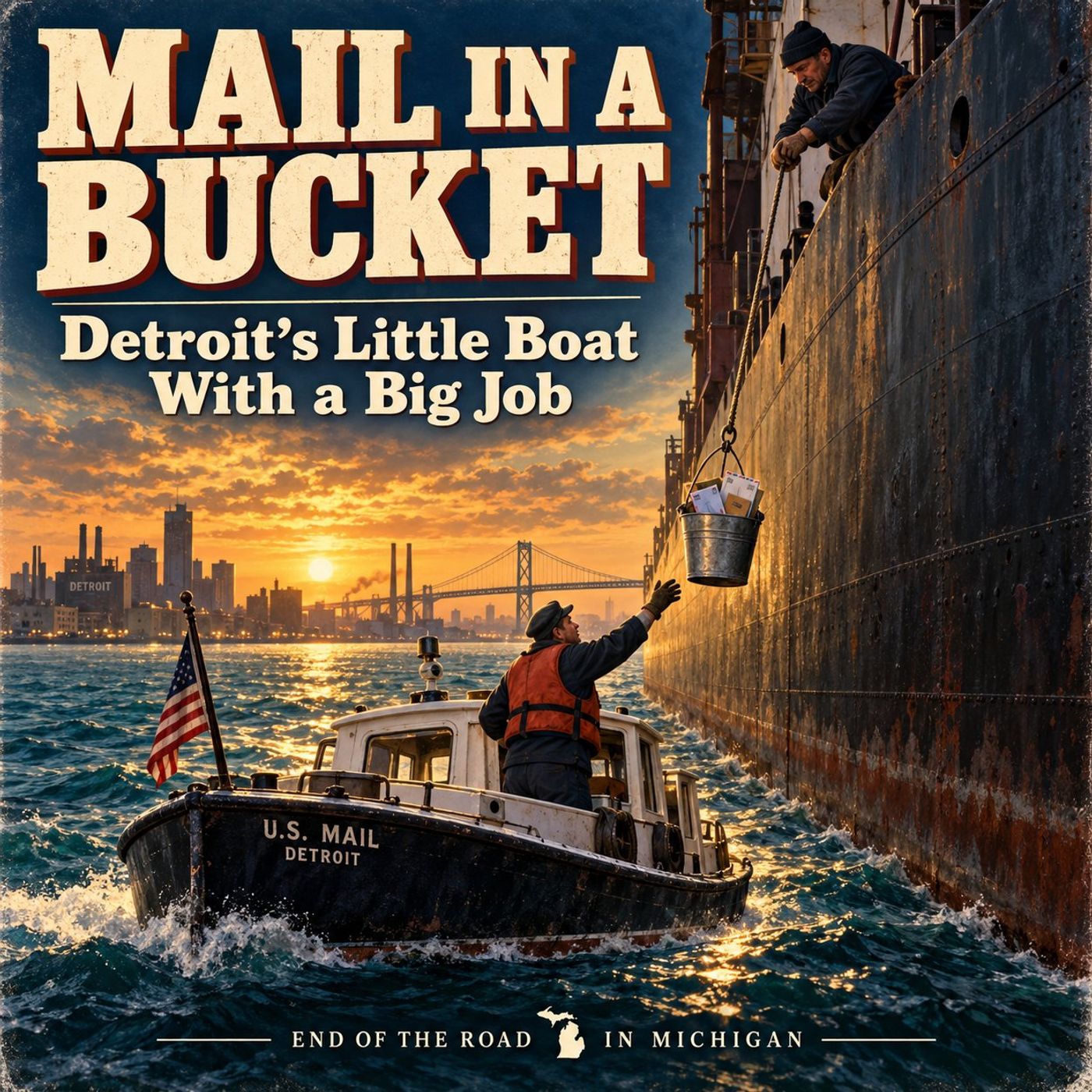
A freighter keeps moving. A small boat pulls alongside. High above the water, a bucket descends on a rope. For a sailor waiting for news from home, this is the delivery that matters.
In this episode of End of the Road in Michigan, we follow the J.W. Westcott Company from its beginnings in 1874 to its role as Detroit’s floating mail service. Capt. John Ward Westcott started by carrying shipping instructions to passing vessels. His practical solution grew into a business delivering letters, packages, supplies and even pizza.
Meet the 45-foot J.W. Westcott II, le...
A Message Washed Ashore on Lake Michigan - The Lost Railcar Ferry Milwaukee
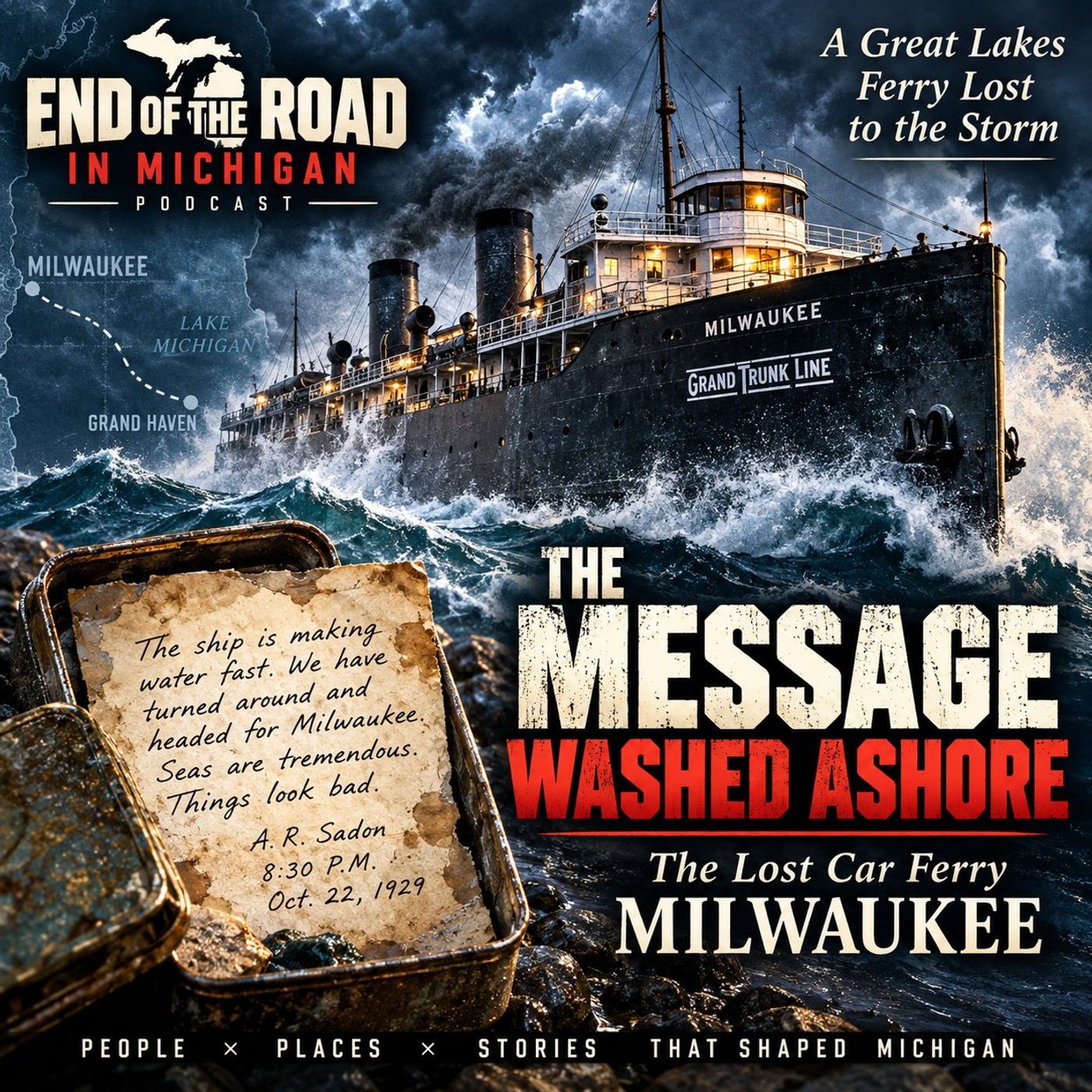
On Oct. 22, 1929, the railroad car ferry Milwaukee left Wisconsin for Grand Haven, Michigan, despite a severe storm raging across Lake Michigan.
The 338-foot vessel carried 25 loaded railroad cars and nearly 50 crew members. Other captains had chosen to remain in port, but Capt. Robert “Bad Weather” McKay headed into the gale.
The Milwaukee never reached Michigan.
Days later, bodies, lifeboats and wreckage began washing ashore. Then searchers found something remarkable: a watertight message container holding a handwritten note from the ship’s purser.
“The ship is making water fast,” he wrote. “Se...
44 Days in Flint: The Strike That Took Over General Motors
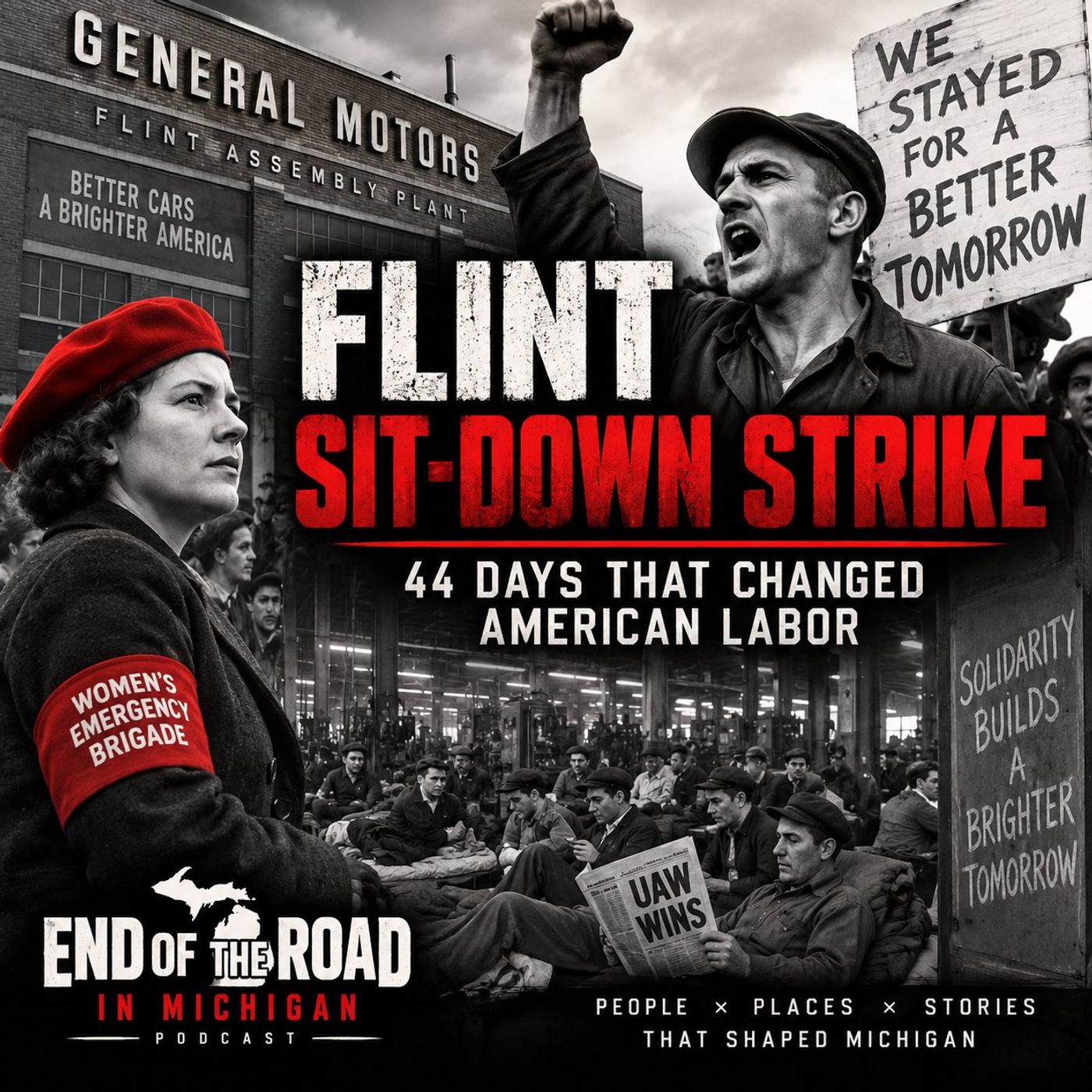
In the winter of 1936-37, General Motors workers in Flint, Michigan, did something radical: they stopped working and refused to leave the factories.
For 44 days, workers occupied key GM plants while police, courts, company officials, Michigan Gov. Frank Murphy and the National Guard tried to determine how the standoff would end. Women organized emergency brigades, violence erupted outside Fisher Body Plant No. 2, and union leaders pulled off a clever decoy that helped workers seize the critical Chevrolet Plant No. 4.
In this Labor Day weekend episode of End of the Road in Michigan, we tell the story...
Algonac - The Michigan River Town That Made Going Nowhere the Most Stylish Trip in America!
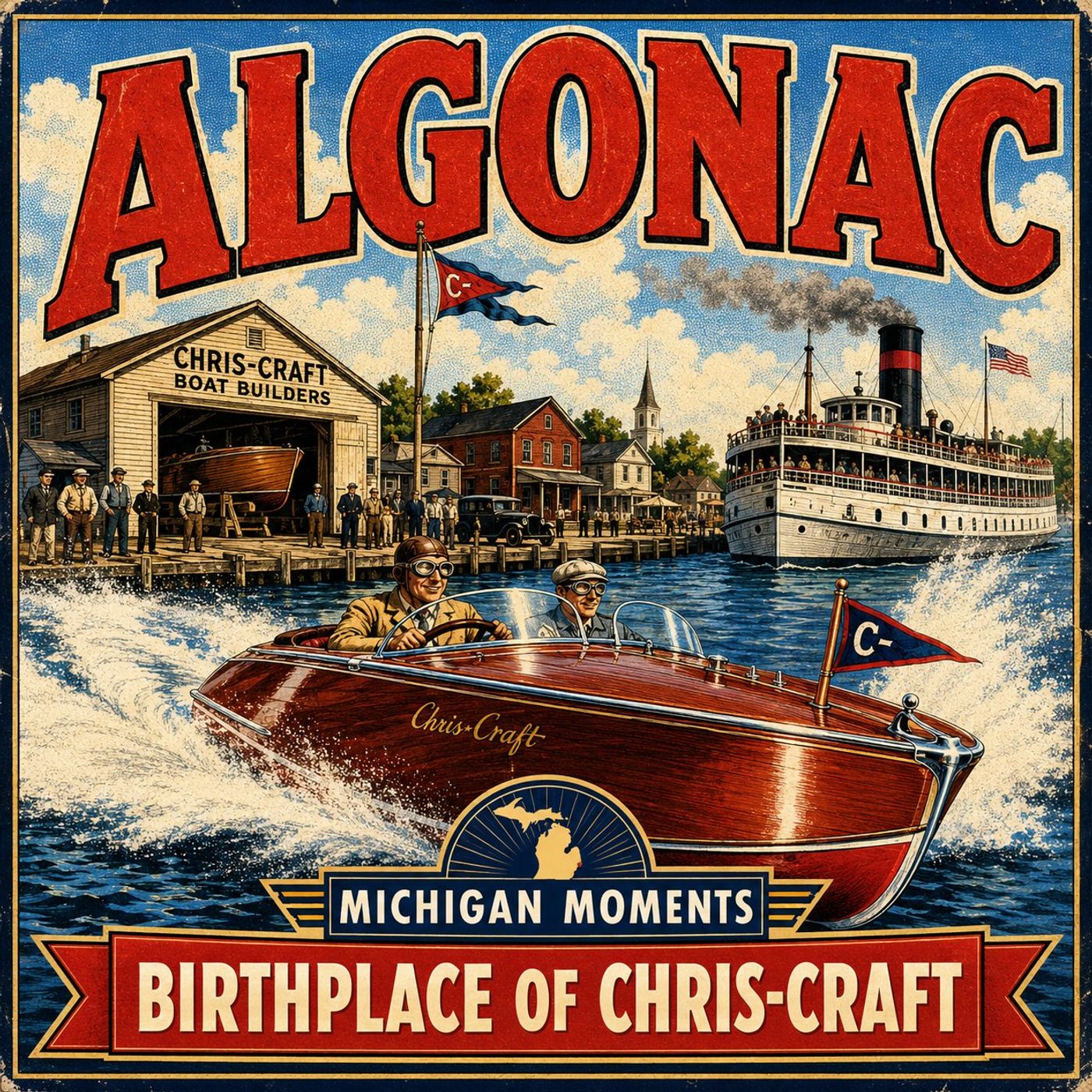
Algonac, Michigan, became the birthplace of Chris-Craft on a river crowded with steamers, fishing boats and summer visitors. This Michigan Moments episode follows the town from 1890 to 1940, when electric interurbans met horse-drawn wagons and polished mahogany runabouts began leaving local boat shops.
Hear how Christopher Columbus Smith turned his knowledge of the St. Clair River into a national boatbuilding business. Follow his work with racing champion Gar Wood, the record-setting Miss America boats and Algonac’s rise as a center of powerboat racing.
The story also visits Main Street, the Starlight dance pavilion, waterfront hotels, tourist ca...
History of St. Clair Flats: A Voyage to Detroit’s Lost Island Playground
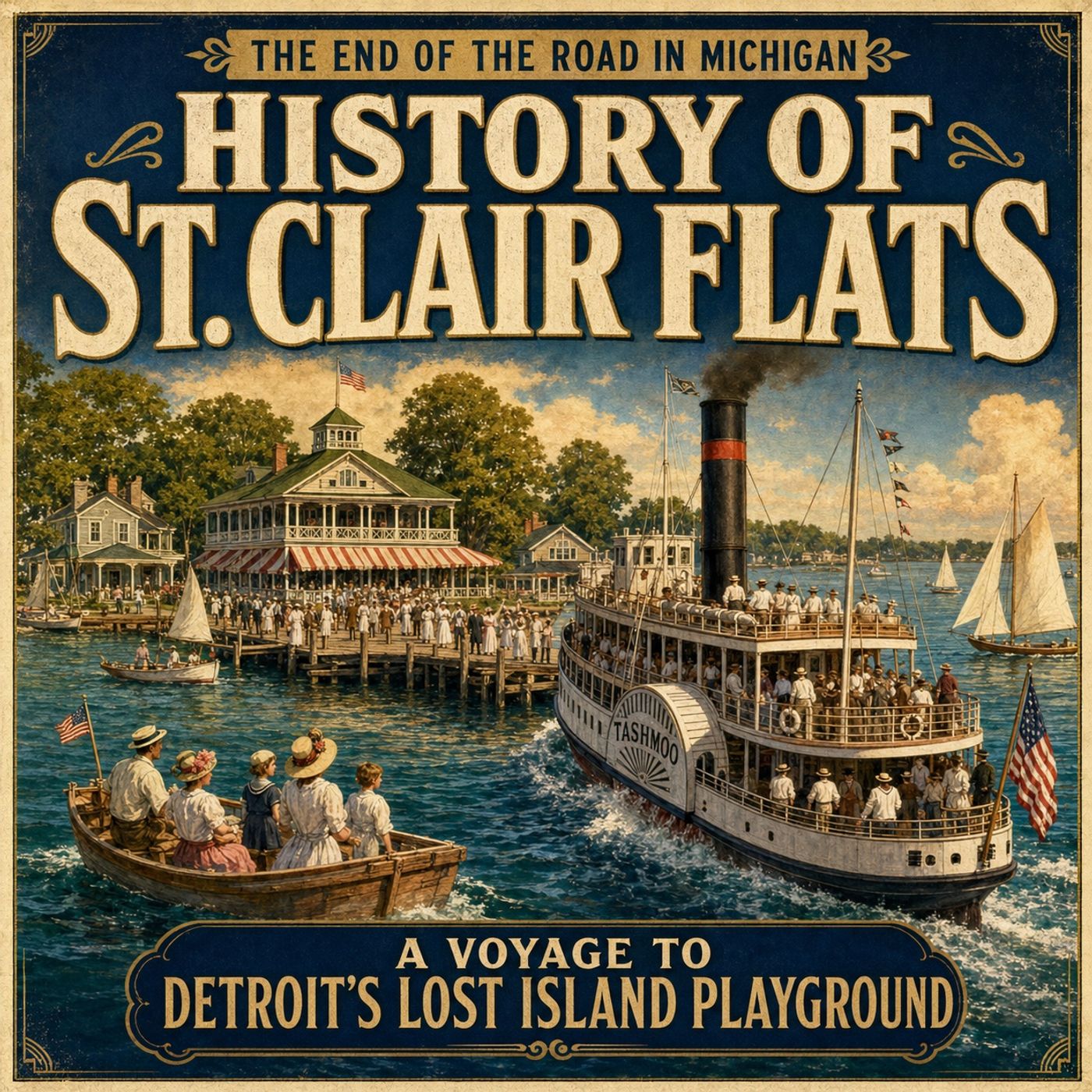
At the mouth of the St. Clair River, a maze of channels and islands became Detroit’s favorite summer escape. Steamers carried families to Harsens Island, Tashmoo Park, private clubs and waterfront hotels where the docks served as front doors.
This episode of The End of the Road in Michigan traces the history of the St. Clair Flats from its Anishinaabe roots and early navigation channels through the peak of its resort era. It follows the famous steamer Tashmoo, its close 1901 race against the City of Erie and the 1936 accident that ended its career.
The story al...
When Copper Went Quiet: Three Public Works Projects That Remade Keweenaw County
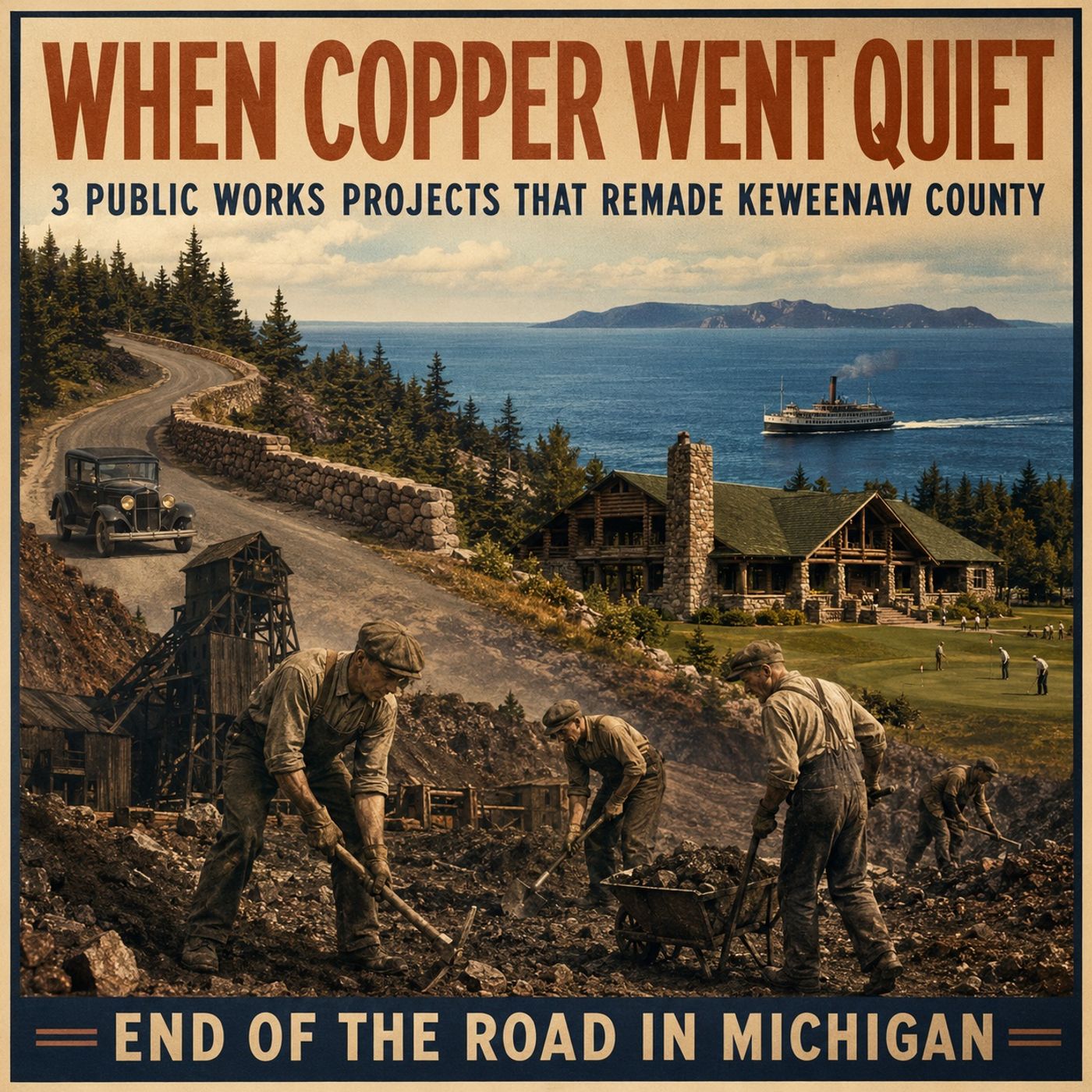
When copper mines closed during the Great Depression, more than three-quarters of Keweenaw County’s workforce was reportedly unemployed. Local and federal officials responded with three major public projects that helped create a new tourism economy at Michigan’s northern tip.
This episode of End of the Road in Michigan examines the construction of Brockway Mountain Drive, Ocha Potter’s controversial Keweenaw Park and Golf Course, and the early development of Isle Royale National Park.
Relief workers carved a road across Brockway Mountain, cleared thousands of trees and stumps for a publicly owned resort, and built early...
Buried Alive: Michigan's Deadliest Mine Disaster | The Barnes-Hecker Mine Collapse of 1926
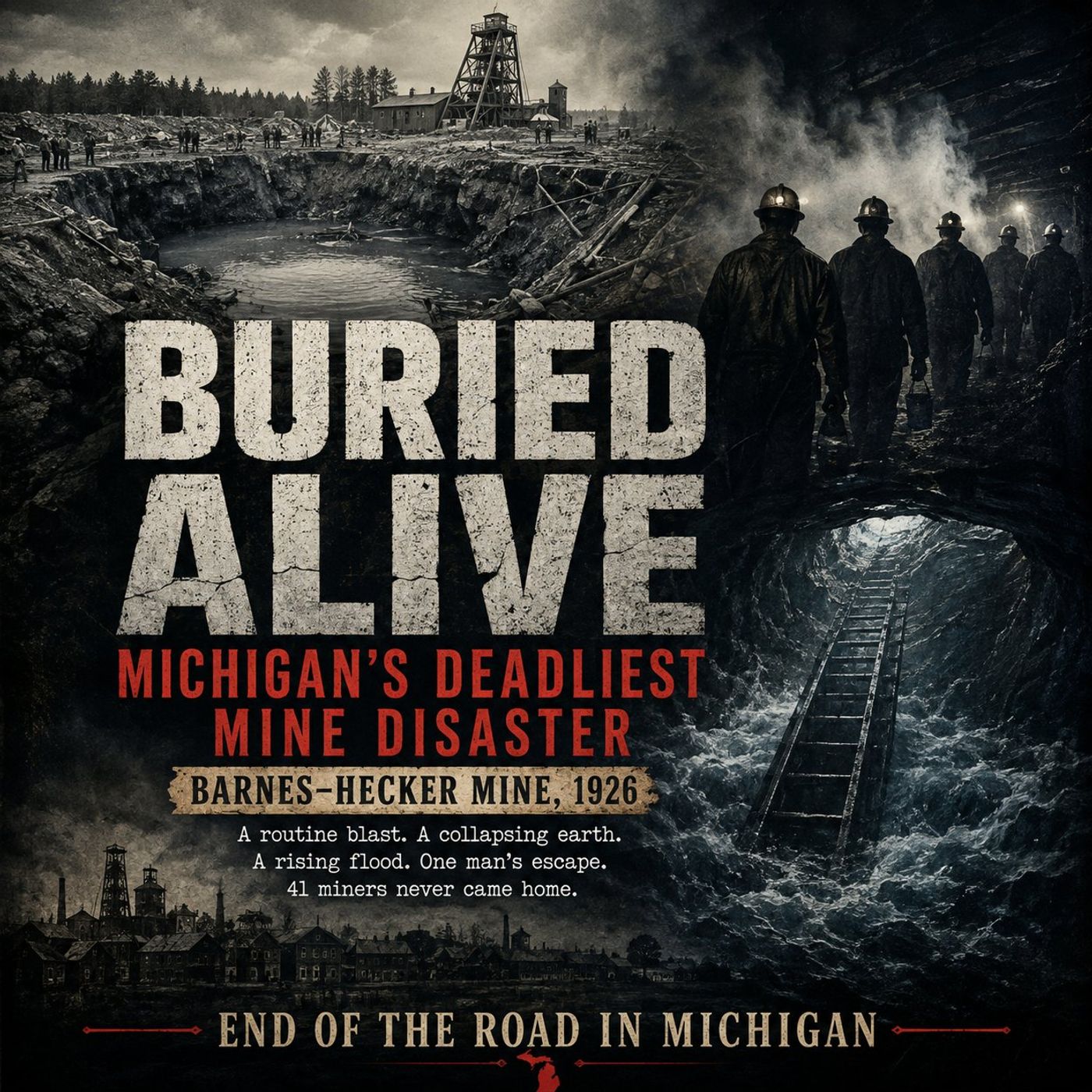
On a cold November morning in 1926, fifty-one miners descended into the Barnes-Hecker Mine near Ishpeming expecting another ordinary shift. Minutes later, a violent collapse sent water, mud, and thousands of tons of earth crashing into the underground workings.
Only one miner escaped.
Forty-one men were never recovered and remain buried beneath Michigan's Upper Peninsula nearly a century later.
In this episode of End of the Road in Michigan, we reconstruct the disaster minute by minute using historical records, eyewitness accounts, and modern research. You'll hear the remarkable story of Wilfred Wills, the lone survivor...
The Train That Fled Into the Fire: The Metz Disaster of 1908
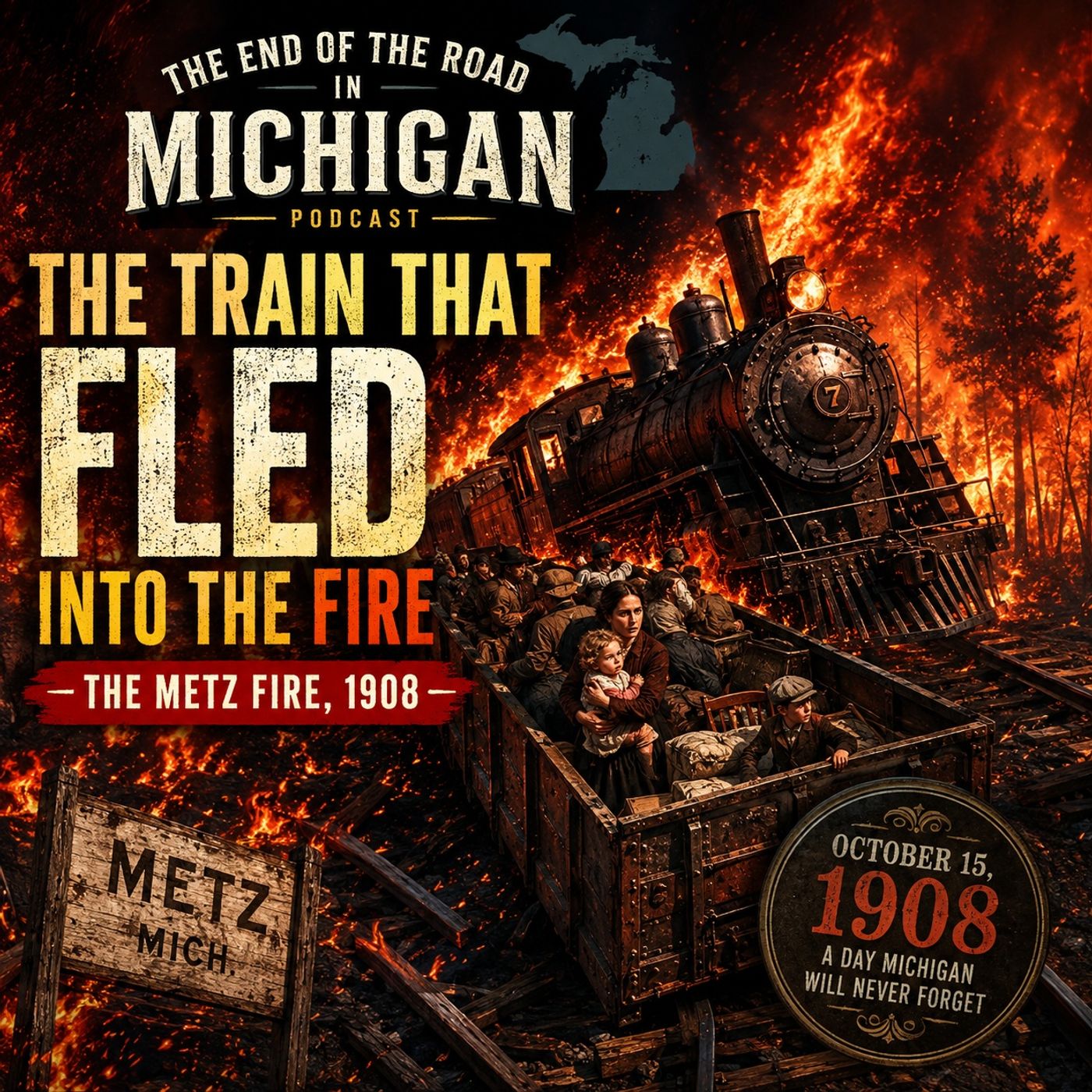
On Oct. 15, 1908, a freight train pulled away from Metz, Michigan, carrying families trying to escape one of the worst forest fires in state history.
The passengers believed the railroad would carry them to safety. Instead, the train entered a burning corridor lined with cedar posts, railroad ties, hemlock bark and timber. Heat had damaged the tracks, and the locomotive derailed near Nowicki’s Siding. The open freight cars behind it became a deadly trap.
In this episode of The End of the Road in Michigan, we revisit the Metz Fire of 1908, the doomed relief train and th...
The Good Hart Murders: A Family, a Cottage and a Killer Who Walked Away
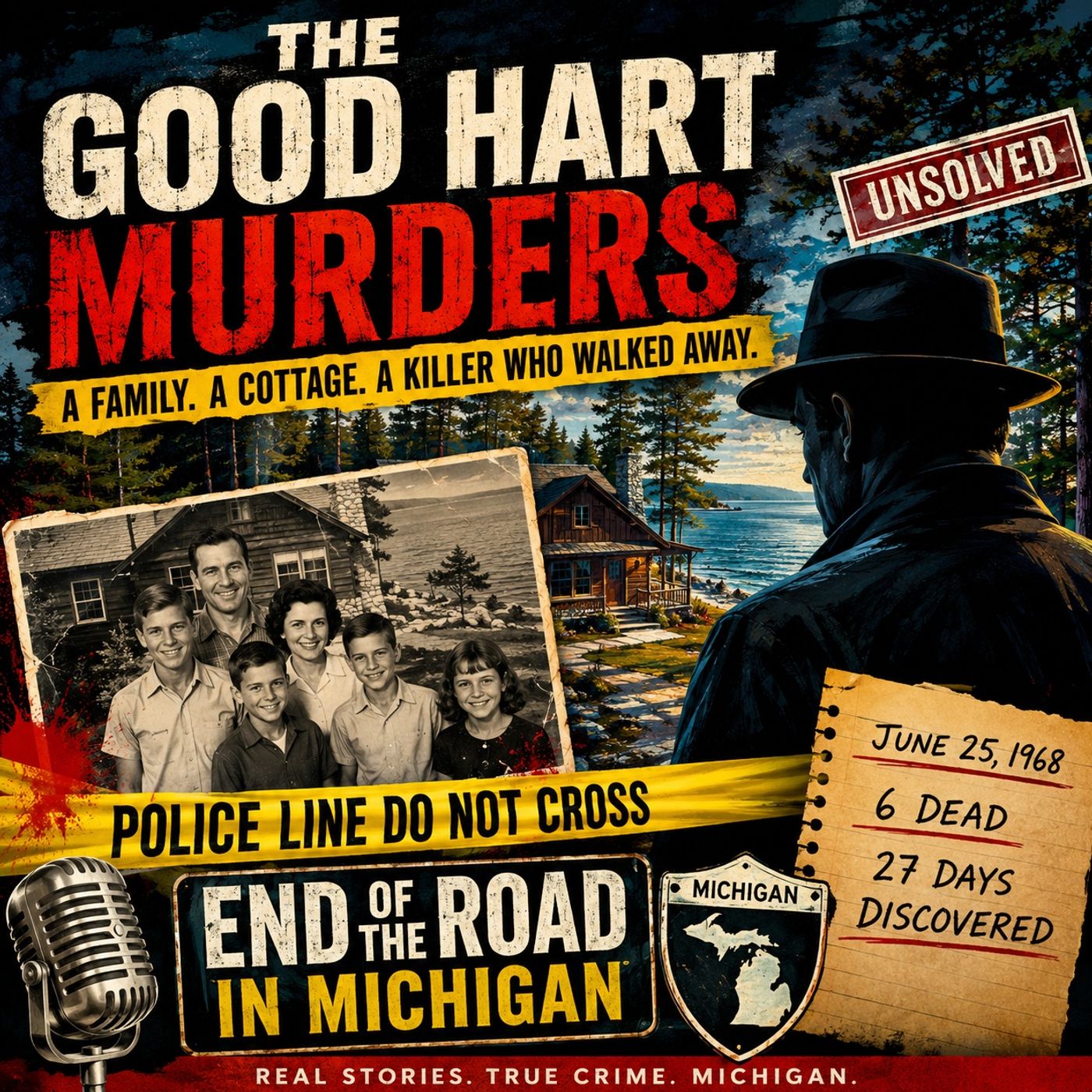
In June 1968, Richard and Shirley Robison took their four children to the family’s secluded summer cottage near Good Hart, Michigan. Twenty-seven days later, a caretaker entered the locked home and found all six members of the family dead.
Investigators built a strong circumstantial case against Richard’s employee, Joseph Scolaro, pointing to missing business funds, an unexplained gap in his movements and links to weapons connected to the crime.
But prosecutors never brought the case to trial, and Scolaro died before a jury could hear the evidence.
In this episode of End of the...
38 Hours on Lake Huron: The Last Man of the Daniel J. Morrell
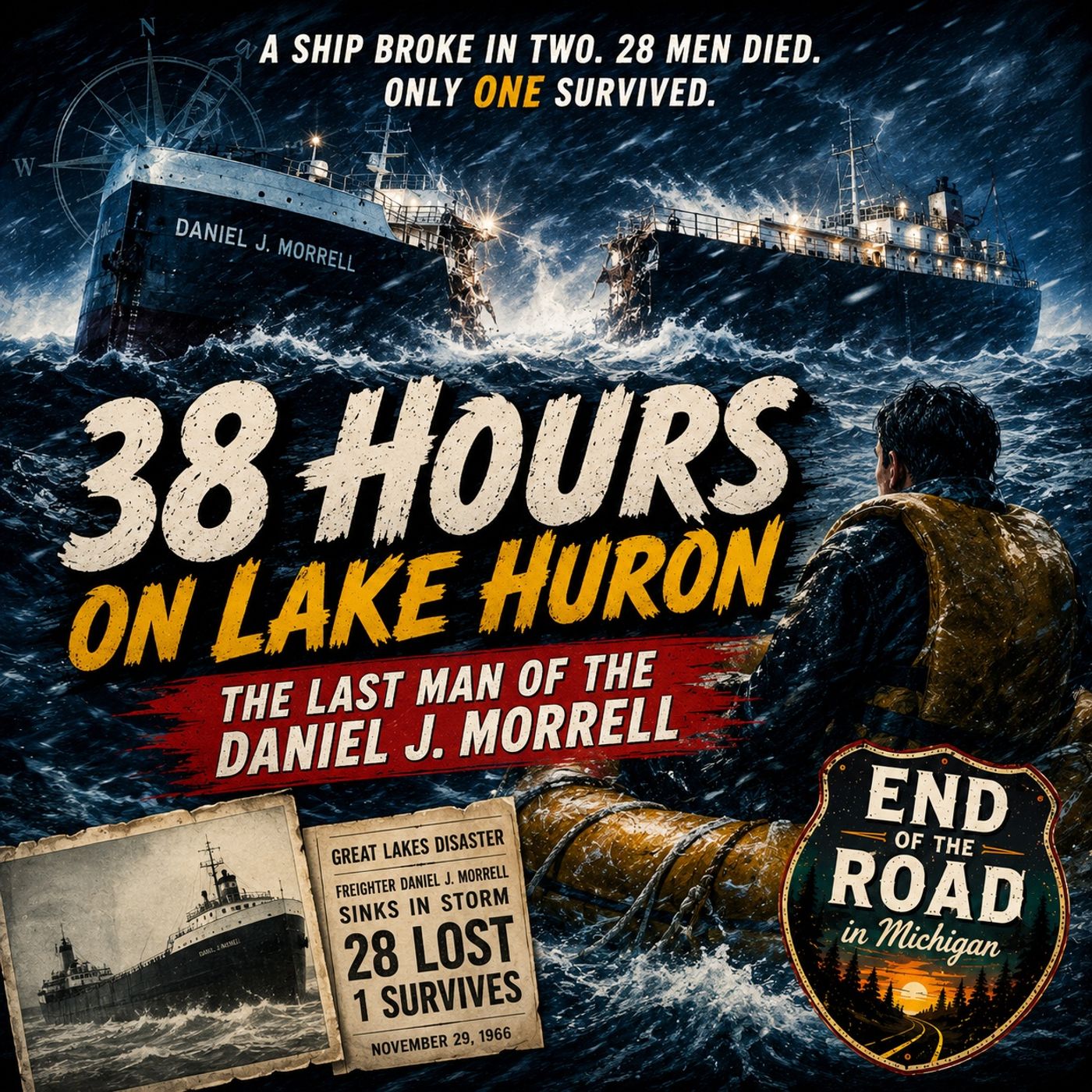
Before dawn on Nov. 29, 1966, the Great Lakes freighter Daniel J. Morrell broke in two during a violent storm on Lake Huron.
Twenty-nine men were aboard. Only one came home.
Watchman Dennis Hale escaped onto a life raft with three crewmates. One by one, the other men died from exposure as the raft drifted through freezing spray, towering waves and two nights of darkness. Hale remained alone for 38 hours before a Coast Guard helicopter spotted movement on what appeared to be a raft carrying four bodies.
In this episode of End of the Road in...
The Senator Who Knew Too Much: Murder, Corruption and a Deadly Silence

On Jan. 11, 1945, Michigan state Sen. Warren G. Hooper was found shot to death in his car along M-99 near Springport. Four days later, he was expected to testify in a sweeping corruption investigation involving bribery, political influence and some of the most powerful figures in Michigan.
Hooper was no innocent bystander. He had admitted taking bribes himself and agreed to cooperate with investigators in exchange for immunity. That made him a dangerous witness.
In this episode of End of the Road in Michigan, we follow the roadside murder, the Purple Gang connection, the conspiracy convictions, the...
The Banker Who Robbed His Own Bank in Hudson
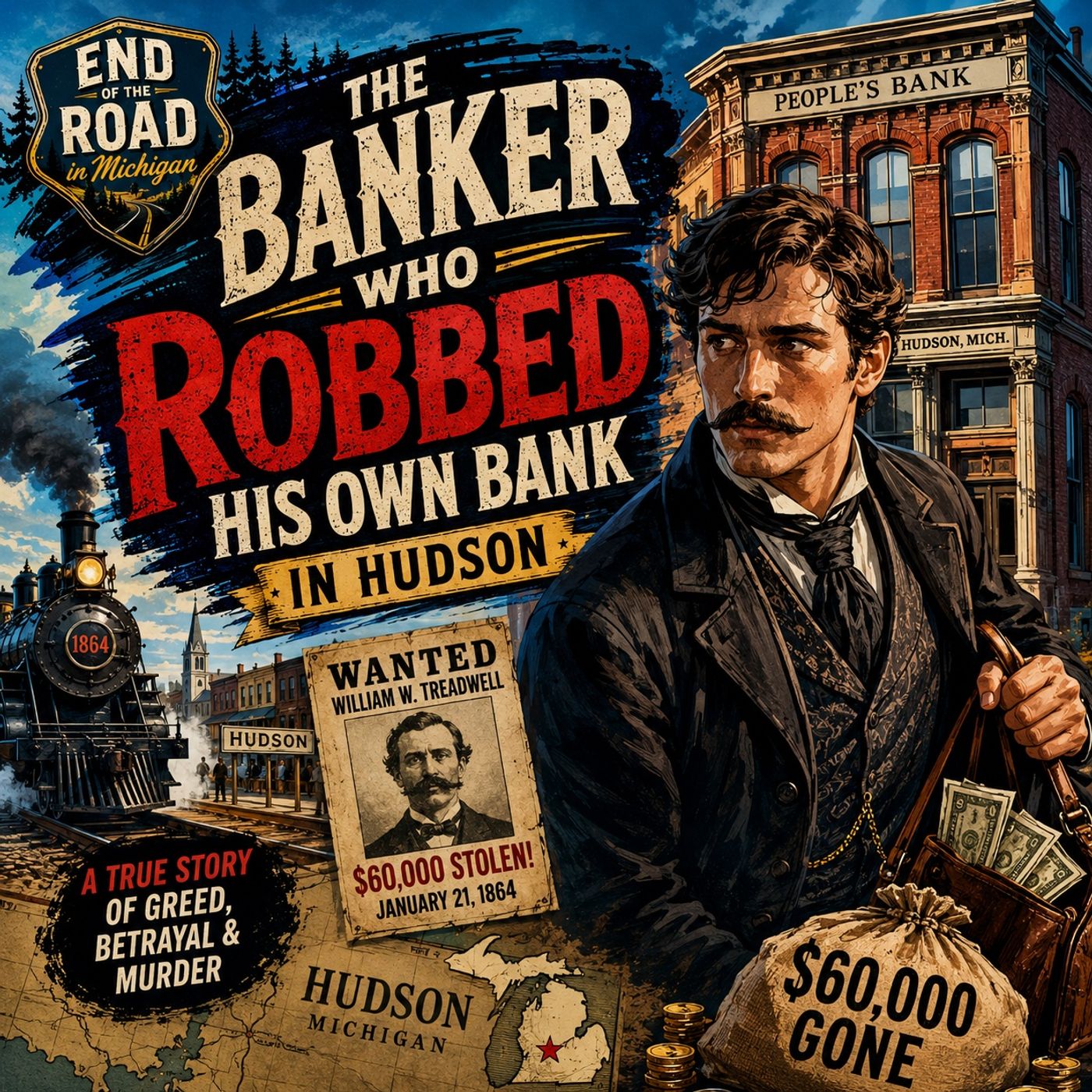
In 1864, a respected young banker in Hudson, Michigan, vanished with $60,000 in cash—money that belonged to townships, soldiers, and widows.
His name was William Treadwell, and the bank he robbed was his own. This episode traces a Civil War–era crime that stunned the state: a carefully planned theft, a dramatic jailbreak, and a betrayal that ended in murder deep in the Ohio woods.
It’s a true-crime story of greed, trust, and downfall—one of the strangest financial scandals in Michigan history.
The End of the Road in Michigan is a production of Thumbwin...
Vanished Over Superior: The Kinross Intercept Mystery

On a cold November night in 1953, a U.S. Air Force jet vanished over Lake Superior while chasing an unidentified radar contact. The crew—Lt. Felix Moncla and Lt. Robert Wilson—were never found. In this episode, we dig into the facts behind the so-called Kinross Incident: radar records, Cold War tensions, conflicting official reports, and the moment two blips merged into one and disappeared.
Was it a tragic accident, a Cold War misidentification—or something stranger? No speculation, just a sharp look at one of Michigan’s most enduring aviation mysteries.
The End of the Road in...
Michigan’s Dixie Highway - 10 years before Route 66
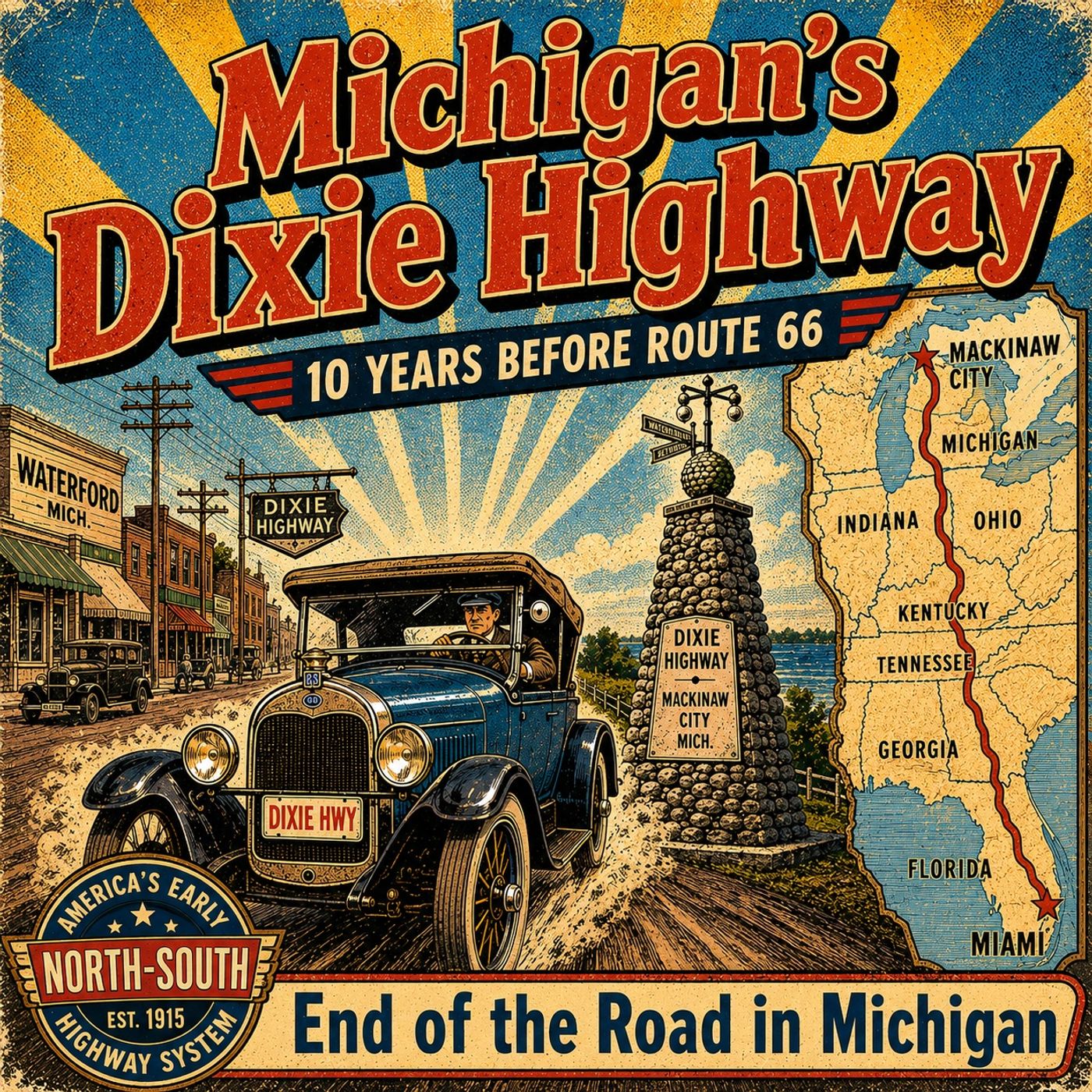
Before Route 66 became an American road-trip icon, Michigan motorists were already following another ambitious highway south.
In this episode of End of the Road in Michigan, we trace the history of the Dixie Highway, a sprawling early automobile route that linked Michigan with Florida beginning in 1915. Its eastern and western divisions crossed the Lower Peninsula, passed through communities such as Detroit, Waterford and Mackinaw City, and helped usher in a new era of tourism, roadside businesses and long-distance driving.
We look at Carl G. Fisher’s role in promoting the route, Michigan’s push to become part...
Trucks, Sugar & Survival: The World War I History of Alma Michigan.
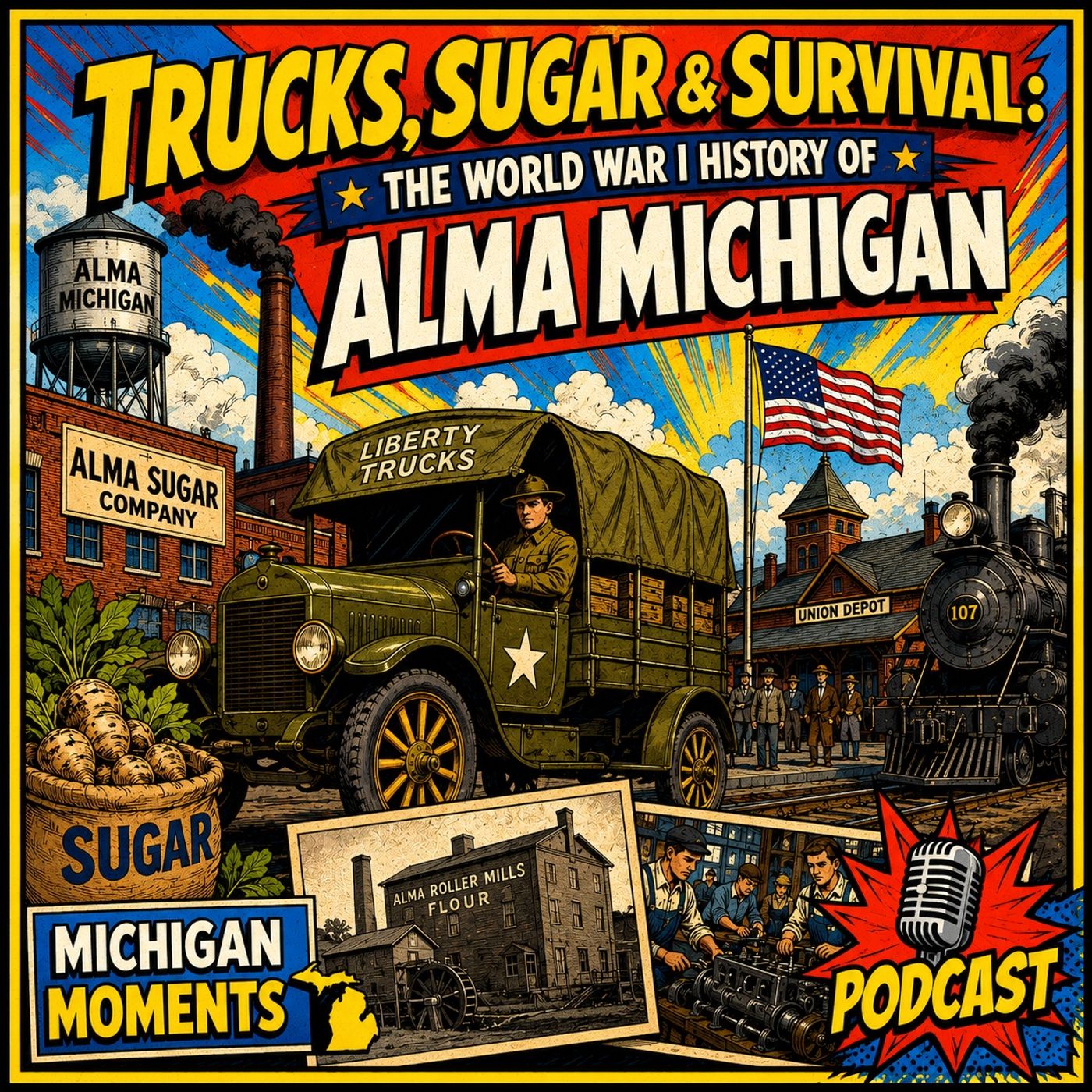
At the turn of the 20th century, Alma, Michigan transformed from a quiet former lumber town into a thriving industrial hub. Sugar beet fields replaced pine forests, and a bustling refinery put Alma on the map for sugar production. Visionary local leader Ammi Wright built mills, factories, and even a college, laying the groundwork for growth.
When World War I erupted, Alma’s Republic Truck Company answered the call by producing thousands of Liberty Trucks for the U.S. Army. Meanwhile, the town’s roller mills, canneries, and Swift & Co. plant kept America’s food supply flowing.
T...
The Fishing Village of Leland Michigan: One of The Last Commercial Fisheries on Lake Michigan
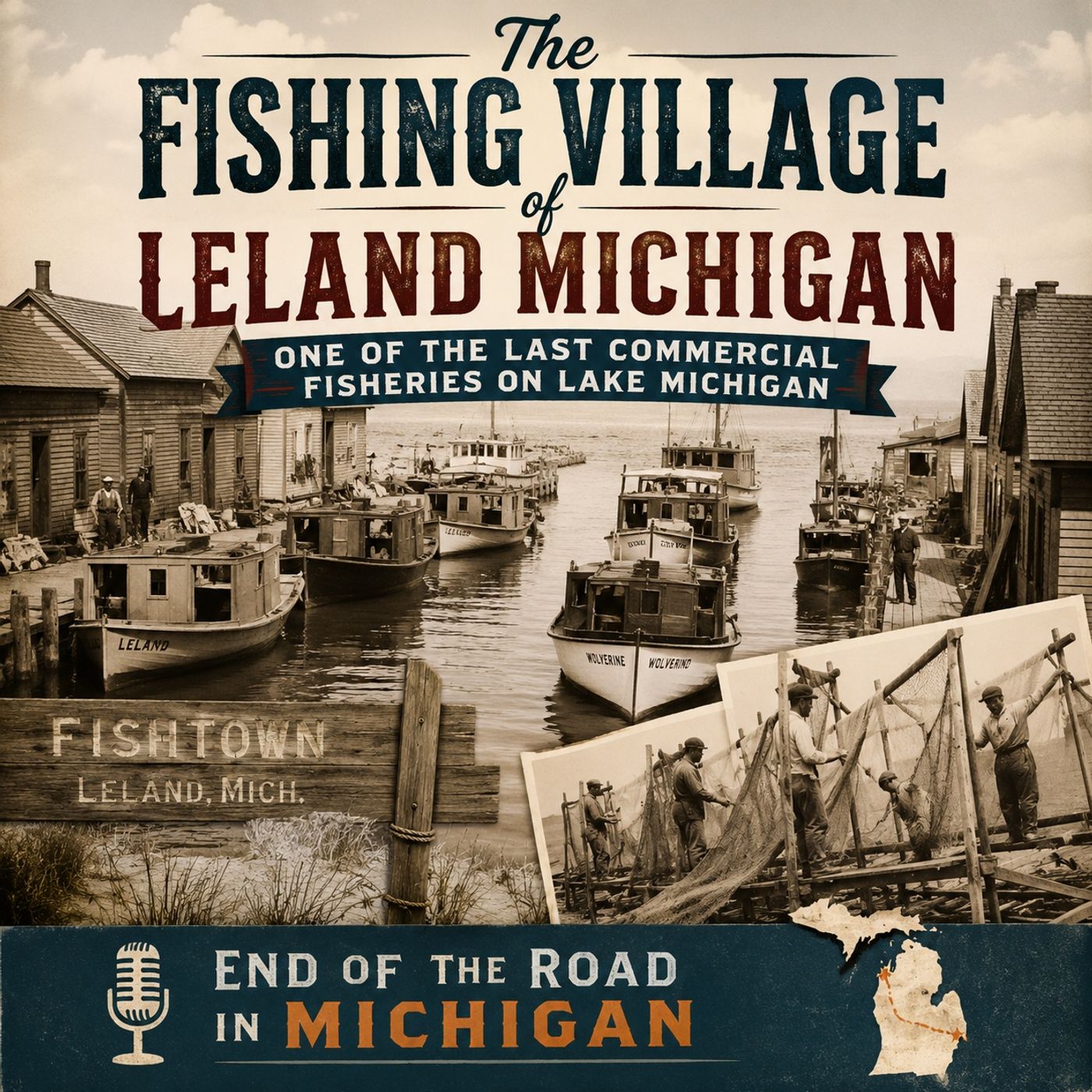
The Fishing Village of Leland Michigan: One of the Last Commercial Fisheries on Lake Michigan tells the story of Fishtown, a rare working waterfront that grew from Native fishing grounds, sawmill power, iron smoke and Lake Michigan commercial fishing.
This episode of End of the Road in Michigan follows Leland from the late 1800s through the mid-1900s, when fish tugs, smokehouses, net racks and weathered shanties lined the Leland River. Before it became one of Michigan’s best-known travel stops, Leland was a hard-working harbor where families made a living from whitefish, trout, ciscoes and lake winds.
The Hotel Ojibway: Luxury, Legends, and Life Along the Soo Locks
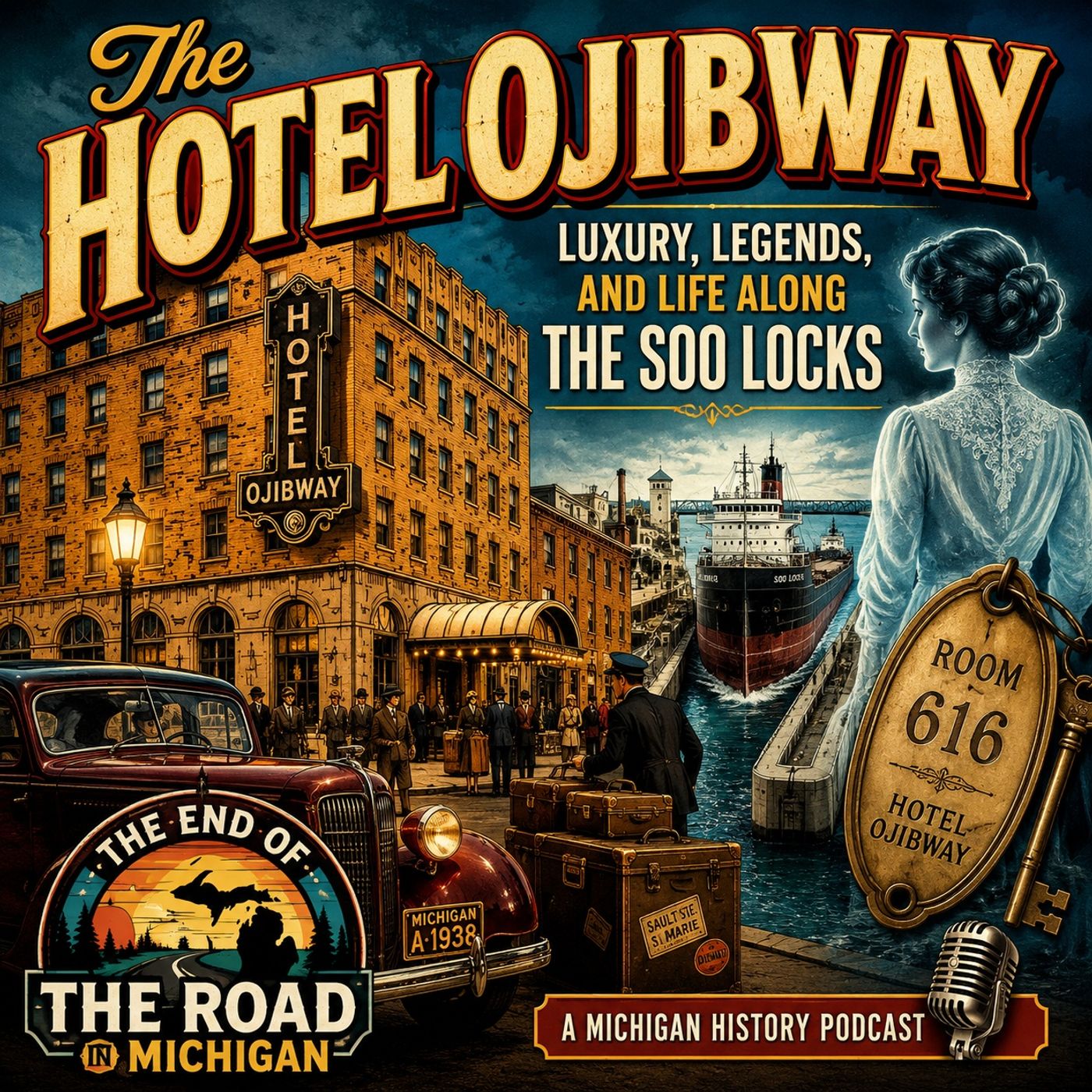
For nearly 100 years, the Hotel Ojibway has stood as one of Michigan's most recognizable historic hotels. Overlooking the Soo Locks in Sault Ste. Marie, it welcomed tourists, business leaders, politicians, and Great Lakes travelers during the golden age of railroads and automobile tourism.
In this episode of The End of the Road in Michigan Podcast, we trace the hotel's story from its grand opening in 1927 through the Great Depression, World War II, and decades of change in Michigan's Upper Peninsula. You'll meet longtime owners Leon and Beatrice Deglman, learn why former Governor Chase S. Osborn helped...
Michigan's Little Known Ghost Towns - Lost Ports, Mining Camps And Vanished Company Towns
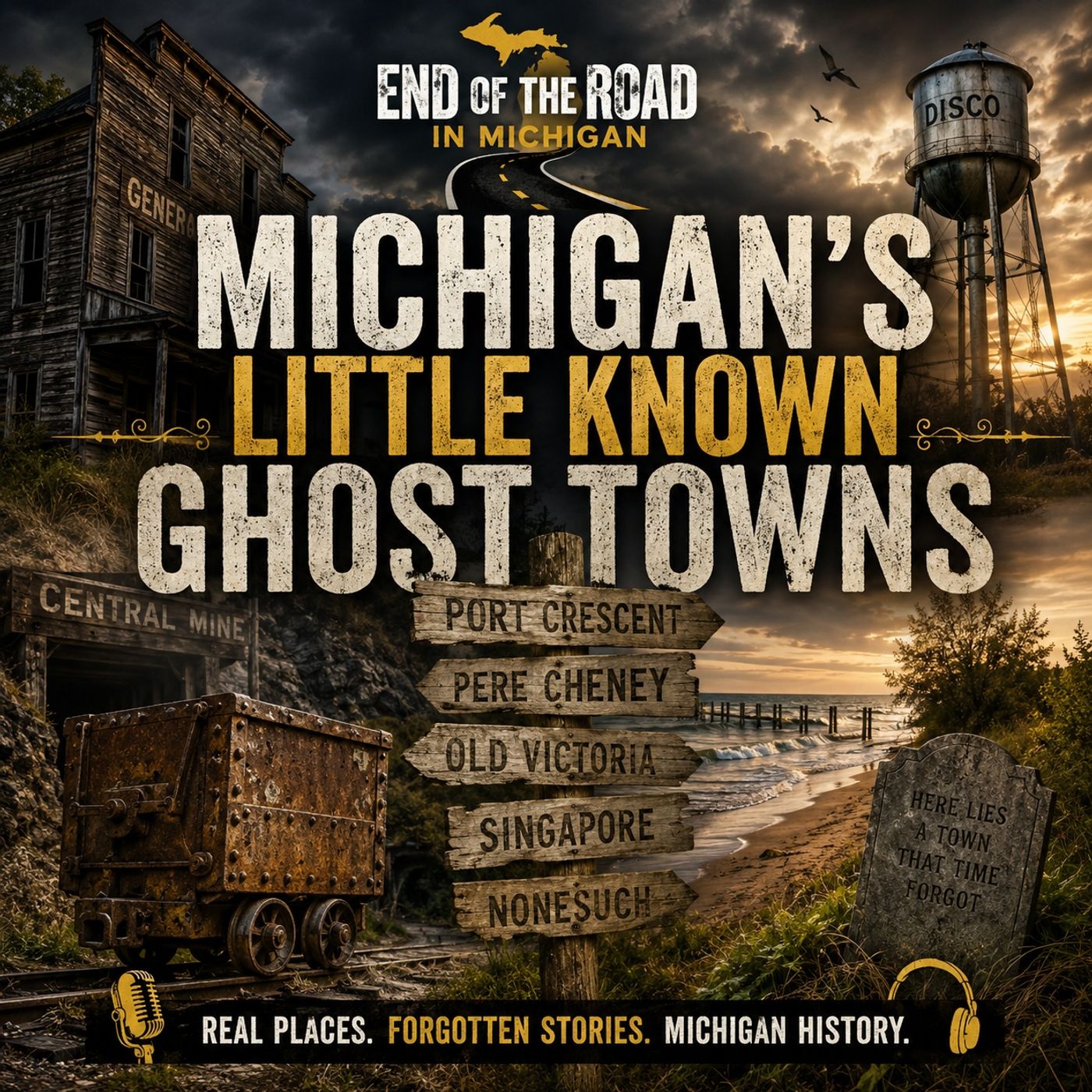
Michigan is full of towns that once had mills, mines, hotels, post offices, rail depots, docks, stores and big plans. Then the timber ran out. The copper market fell. The railroad moved. The dunes shifted. The fires came. The ships stopped calling. And in many cases, the town simply faded from the map.
In this episode of End of the Road in Michigan, we take a lively trip through some of Michigan’s most interesting ghost towns, from the Upper Peninsula to the Thumb and the Lake Michigan shore. These are not just spooky names on old maps. Th...
Pere Marquette Docks Show How Arcadia Served The Great Lakes
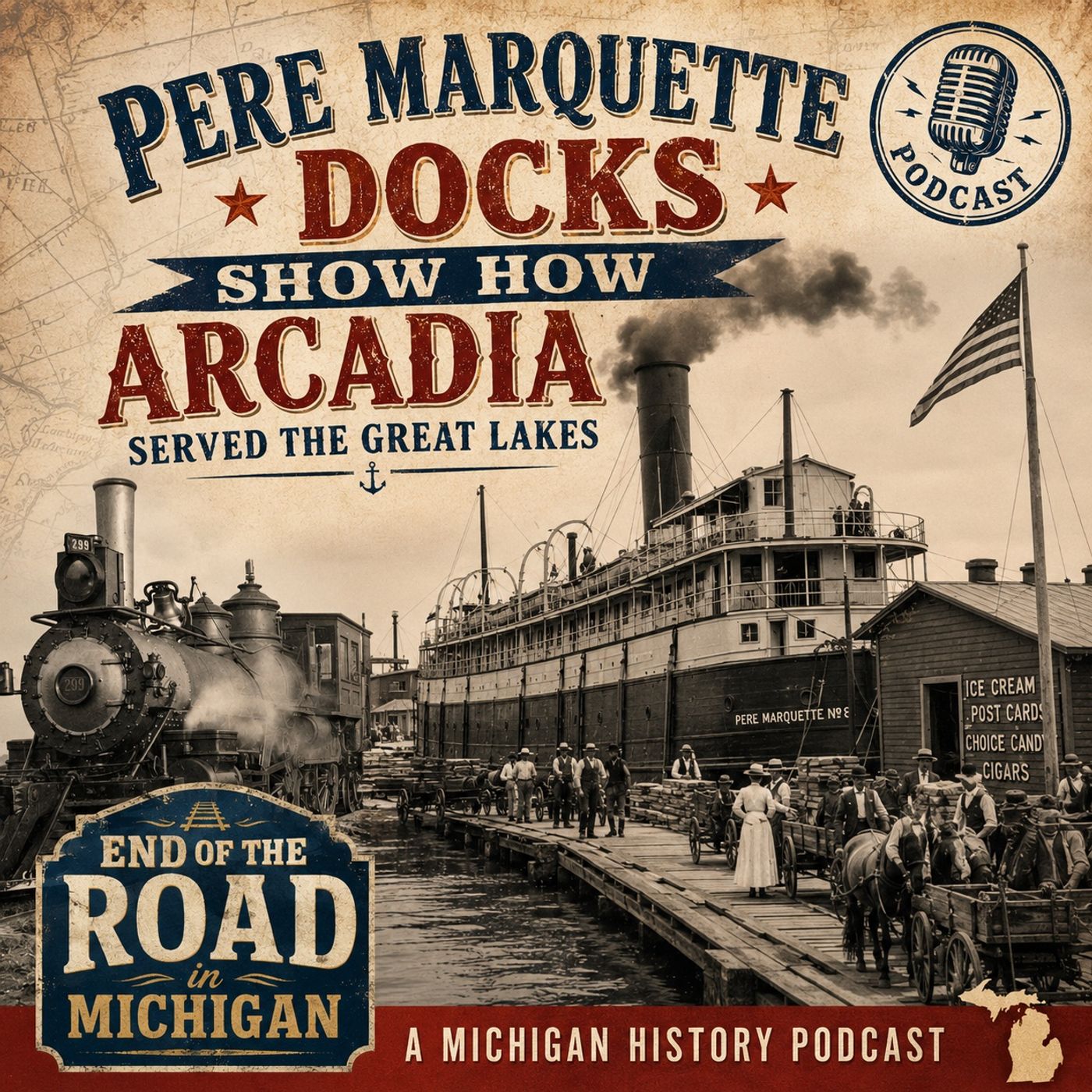
The Pere Marquette docks in Arcadia, Michigan, once connected a small Lake Michigan village to a much larger world. In this episode of End of the Road in Michigan, we follow the story of the harbor, railroad and steamship network that helped shape Arcadia during the late 1800s and early 1900s.
Through rare historic postcards and local history, we examine how the Pere Marquette Railroad, the Arcadia & Betsey River Railway and Great Lakes steamers worked together to move lumber, freight, passengers and manufactured goods through this busy harbor. What began as a lumber town grew into a transportation...
Ora Labora: Michigan’s Lost Colony on Wild Fowl Bay
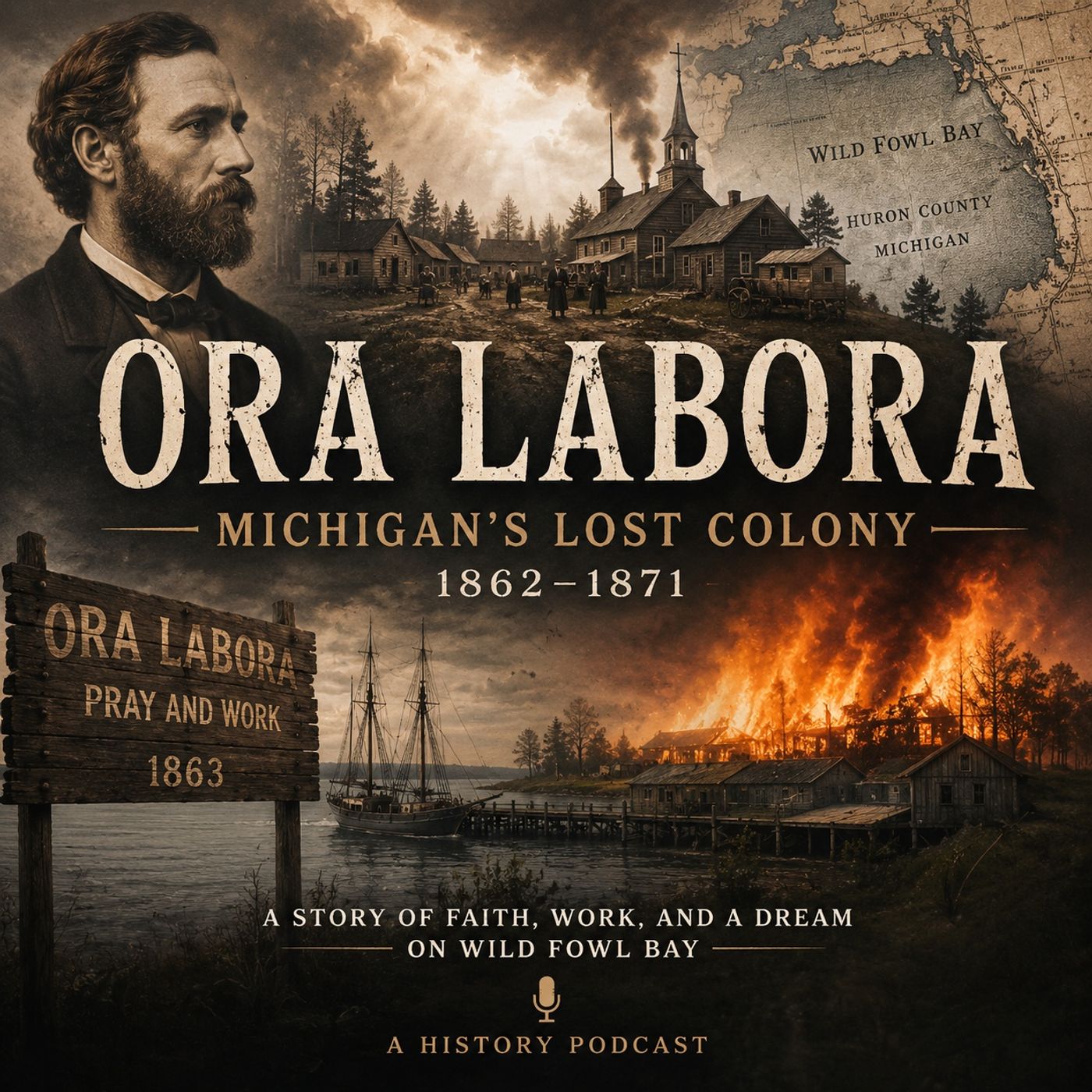
In 1863, a group of German Methodist families came to the edge of Wild Fowl Bay near Bay Port, Michigan, with a bold plan. They would build a Christian colony in the wilderness. They called it Ora Labora, meaning “Pray and Work.”
Led by Emil Baur and backed by the Harmony Society of Pennsylvania, the settlers raised cabins, cleared land, built mills, opened a store, created a post office, and tried to form a self-sufficient community during the darkest years of the Civil War.
But faith alone could not overcome debt, labor shortages, hard winters, poor planning, and...
Hillman, Michigan: Fire, Rails and Lake Avalon in a Northern Village
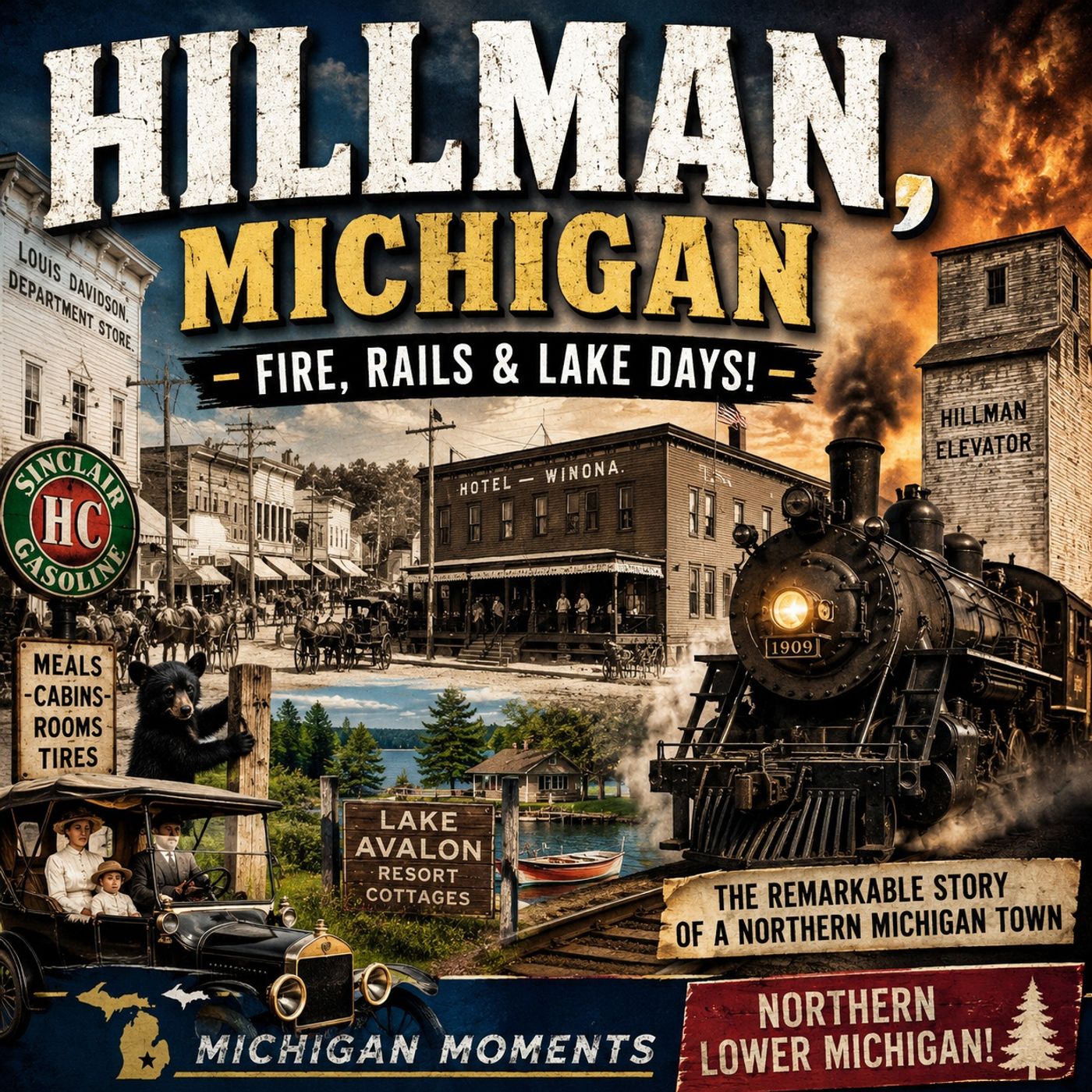
Hillman, Michigan, began as Brush Creek, a small settlement shaped by timber, water, farm trade and the Thunder Bay River. In this episode of Michigan Moments, we follow Hillman from its early days as a Montmorency County center to its years as a railroad stop, hotel town, farm market and Lake Avalon resort community.
The story includes State Street, Louis Davidson’s Department Store, the Winona Hotel, the Hillman depot, local elevators, Cronk’s service station, early automobiles, hunting clubs and the cottage culture that grew around Brush Lake, later known as Lake Avalon.
One...
Pull Over, Kids: Michigan’s Roadside Tourist Attractions
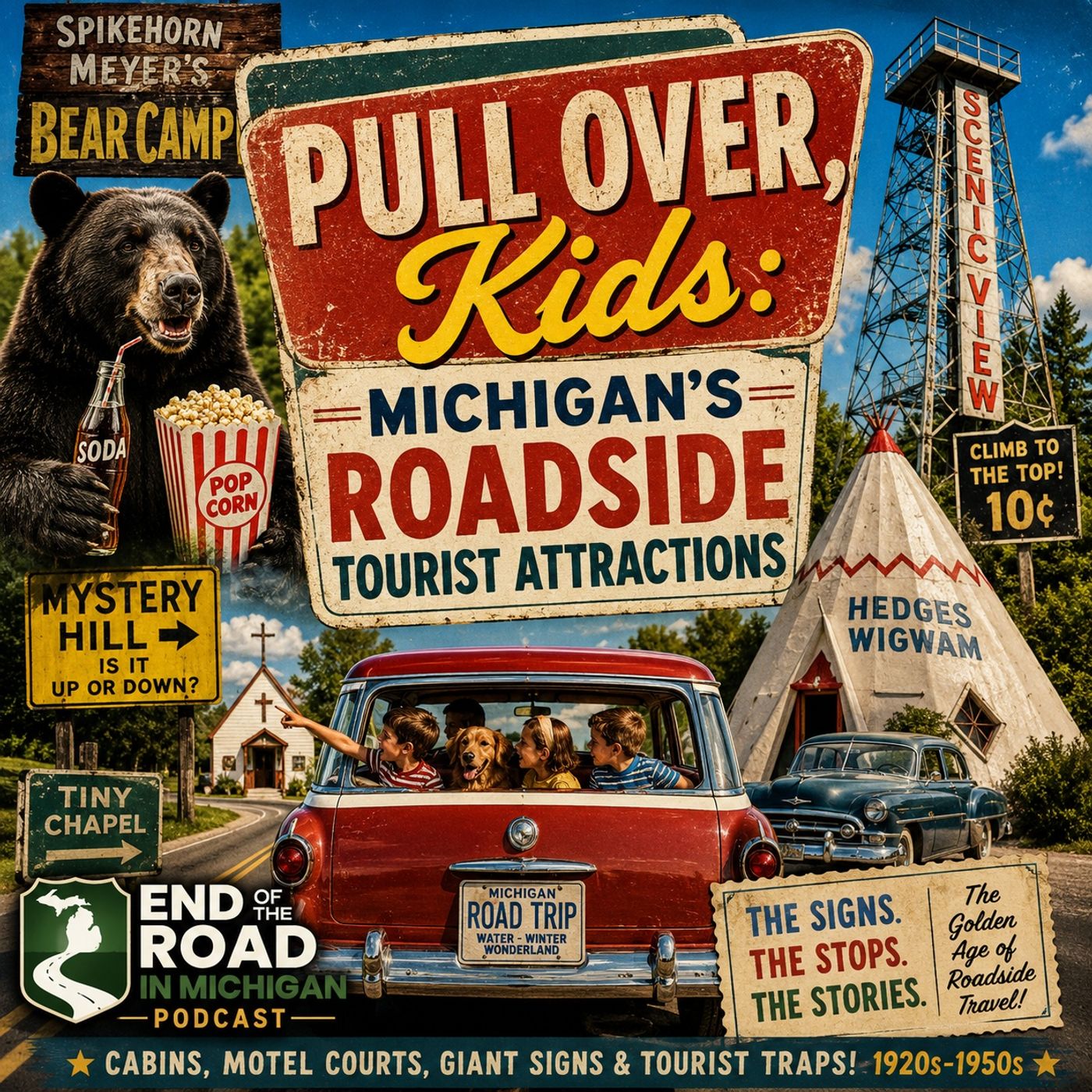
Michigan’s roadside tourism boom turned two-lane highways into stages for bear camps, tourist towers, novelty buildings, tiny chapels, diners and roadside oddities.
This episode looks at how the automobile reshaped travel from the 1920s through the 1950s, using Spikehorn Meyers, Hedges Wigwam, Michigan tourist towers and other quirky stops as examples of the era when a good sign could make a family pull over.
The End of the Road in Michigan is a production of Thumbwind Publications
Apartment 211: How the Collingwood Massacre Ended Detroit’s Purple Gang
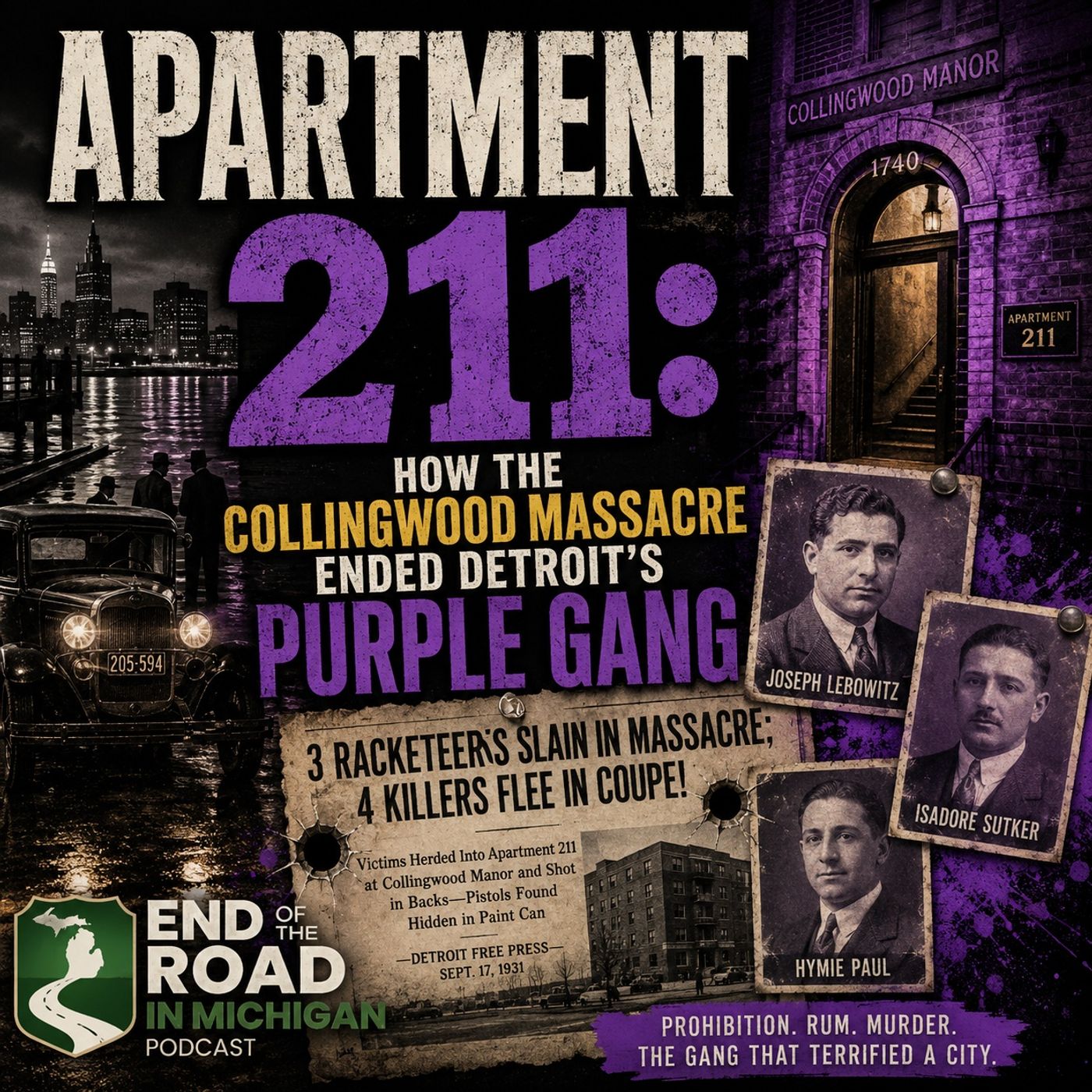
During Prohibition, Detroit’s location across from Windsor helped turn the Detroit River into a major liquor-smuggling route. From that underworld came the Purple Gang, a violent criminal group tied to rum running, hijacking, extortion and murder.
This episode follows the gang’s rise and decline through newspaper accounts, with the Collingwood Manor Massacre of 1931 as the turning point that helped break its power.
The End of the Road in Michigan is a production of Thumbwind Publications
They Ran Like Mad: The 1908 Metz Fire and Northern Michigan’s Burning Year
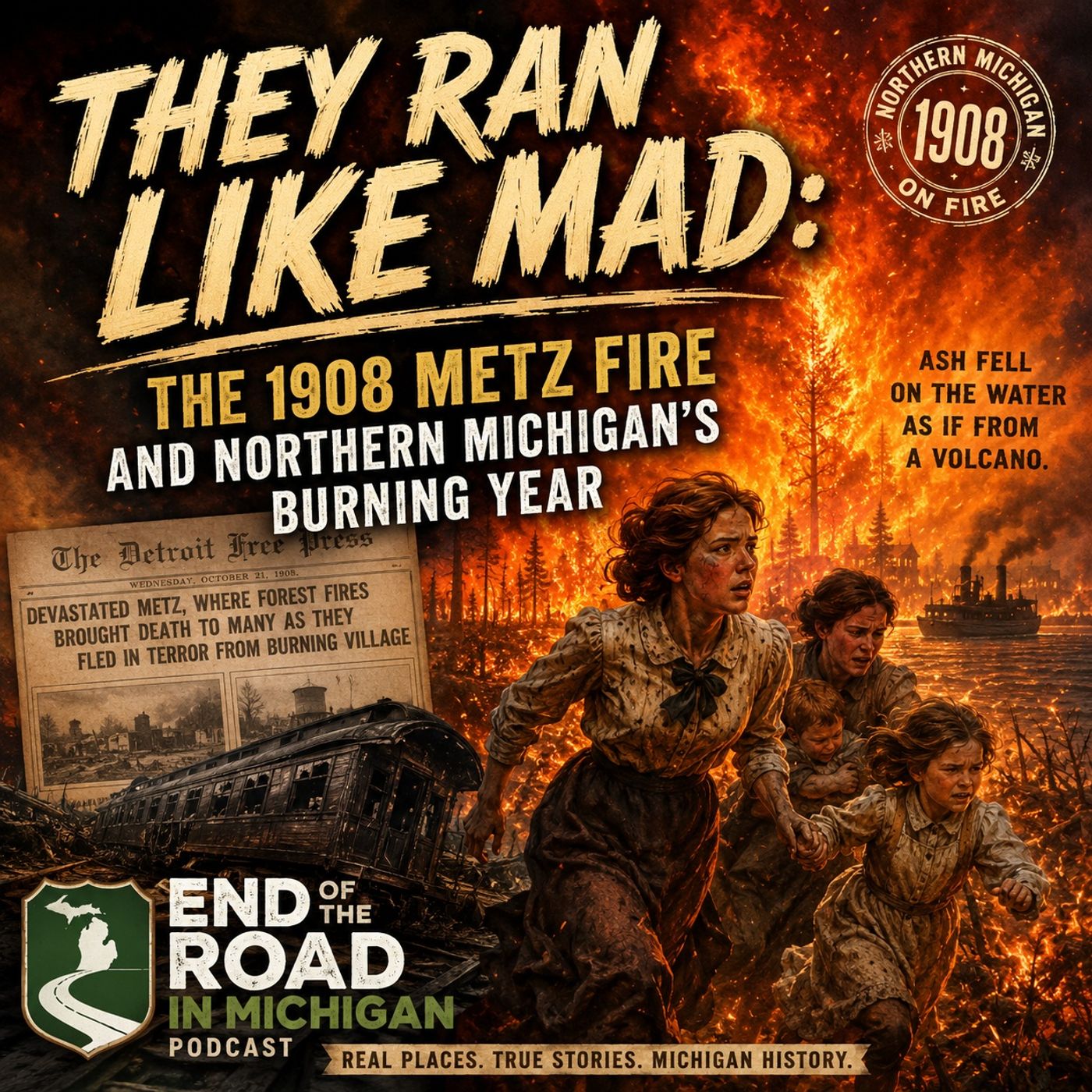
In October 1908, northern Michigan burned. The Metz Fire destroyed a village, killed dozens and left hundreds homeless.
At the same time, fires threatened communities near Alpena, Traverse City and Sault Ste. Marie, where ashes fell on the water “as if from a volcano.”
This episode follows the fire through newspaper reports and the firsthand escape account of Mildred Swan, a Bay City teacher who ran through burning orchards and fences to survive.
The End of the Road in Michigan is a production of Thumbwind Publications
The Day the Trolleys Stopped: Michigan’s Lost Interurban Age
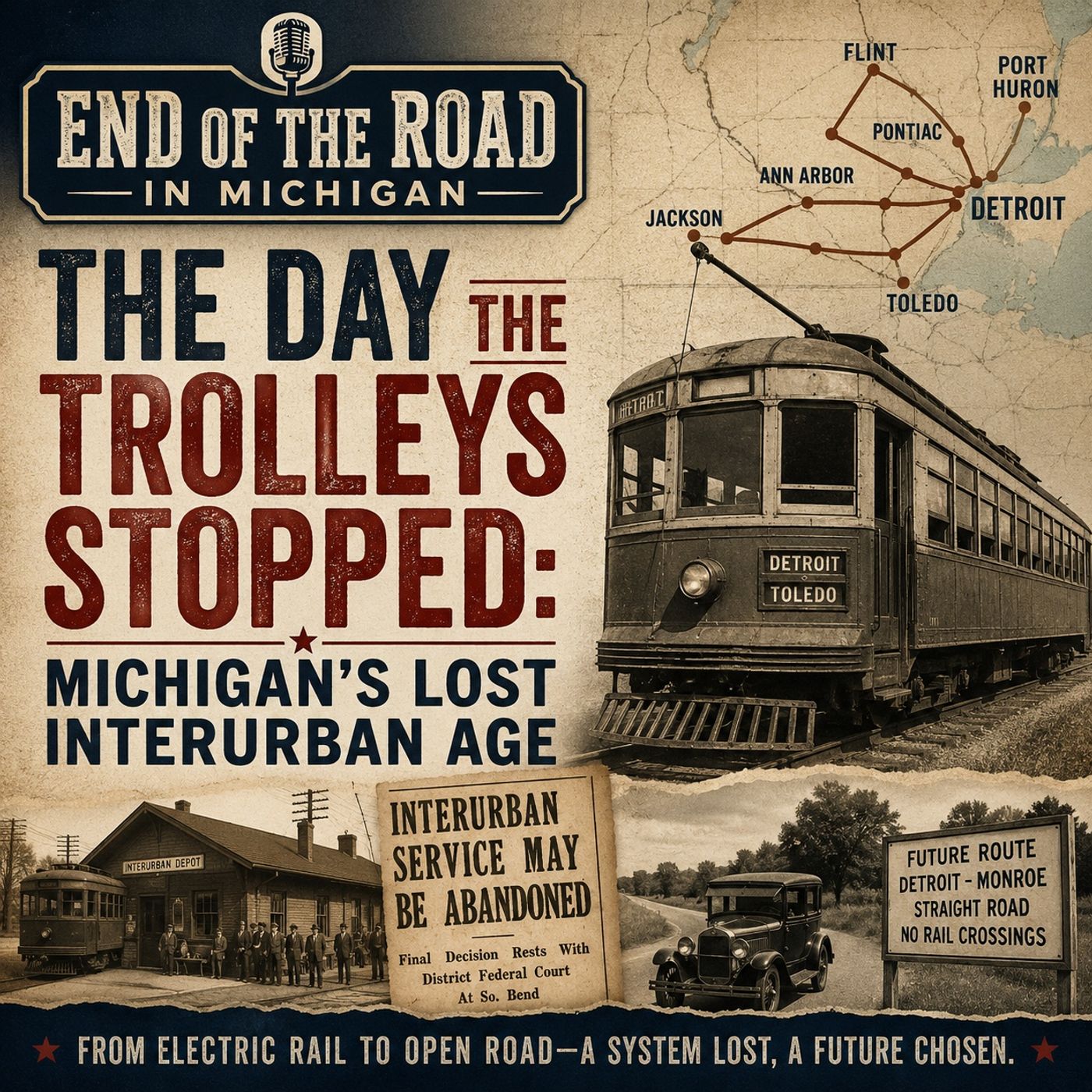
Michigan once had a broad electric interurban rail network that linked Detroit, small towns, farms, factories and lake resorts.
By the late 1920s and early 1930s, that system was collapsing under pressure from private automobiles, buses, rising costs and court-approved abandonments.
This episode follows the decline through newspaper accounts from Saginaw, Monroe and Berrien Springs, showing how electric rail gave way to Michigan’s road age.
The End of the Road in Michigan is a production of Thumbwind Publications
This episode includes AI-generated content.
The Men Who Didn’t Want to Leave: German POWs in Michigan
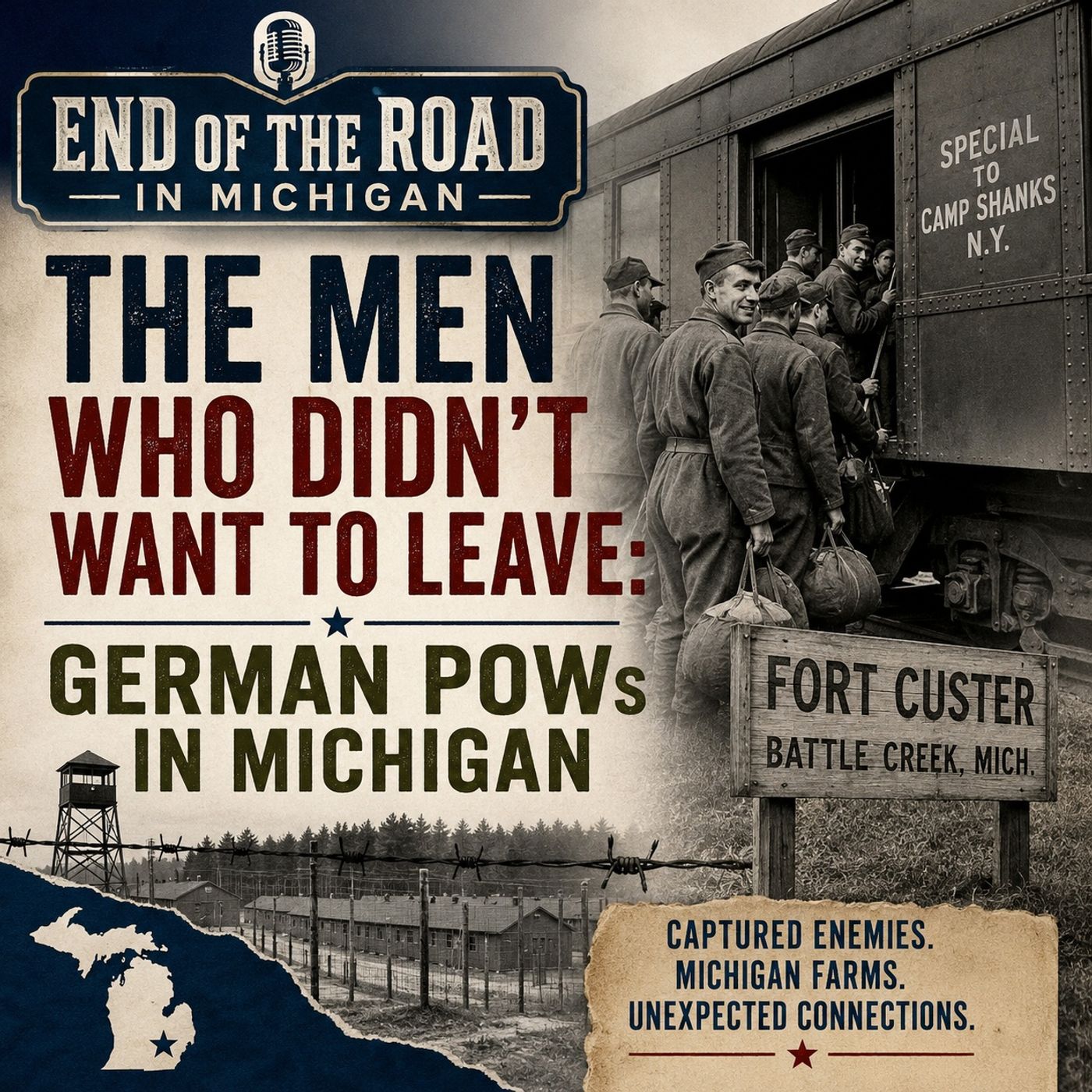
During World War II, more than 6,000 German and Italian prisoners of war were held in Michigan. They cut pulpwood in the Upper Peninsula, worked in fruit orchards, harvested crops, and helped fill wartime labor shortages.
This episode follows the final days of German POWs at Fort Custer and Camp Evelyn, using 1945–46 newspaper clippings and historical records to tell the story of enemy soldiers who came to Michigan as prisoners — and, in some cases, hoped to return one day as free men.
The End of the Road in Michigan is a production of Thumbwind Publications
The Gogebic Michigan Highwayman - The Last Stagecoach Robbery in North America
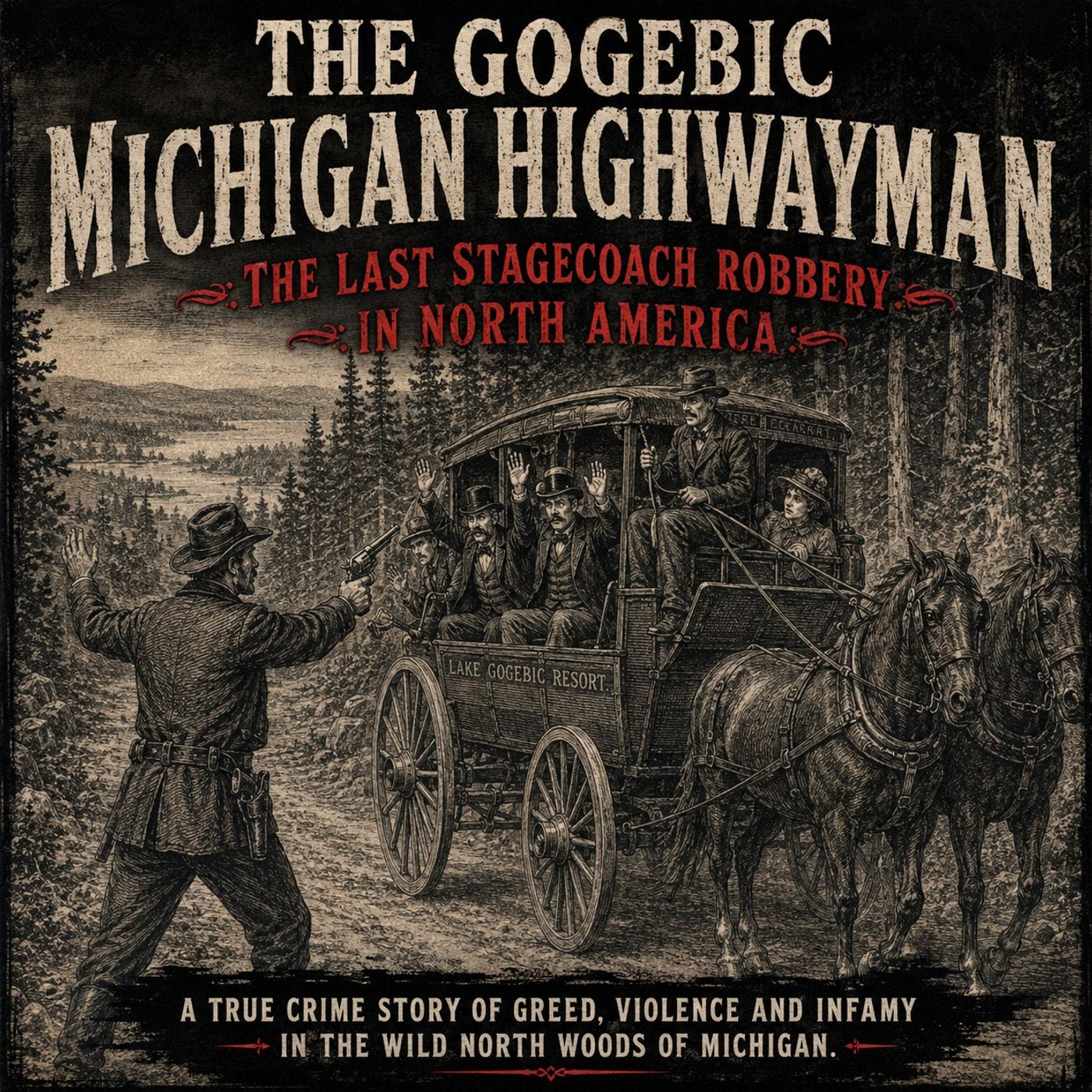
In the summer of 1889, wealthy tourists stepped off Milwaukee, Lake Shore & Western Railroad trains bound for the White House Inn on Lake Gogebic. What began as a peaceful journey through Michigan’s deep north woods quickly turned into one of the Upper Peninsula’s most shocking crimes.
A horse-drawn resort stagecoach carrying bankers and vacationers rolled along a lonely wilderness road when an armed gunman stepped from the trees. The robbery left one man dead, triggered fears of lynching in Gogebic County, and launched a manhunt that gripped newspapers across the Midwest. The suspect, Reimund Holzhey, became known as t...
The Two Eras of Interlochen Michigan
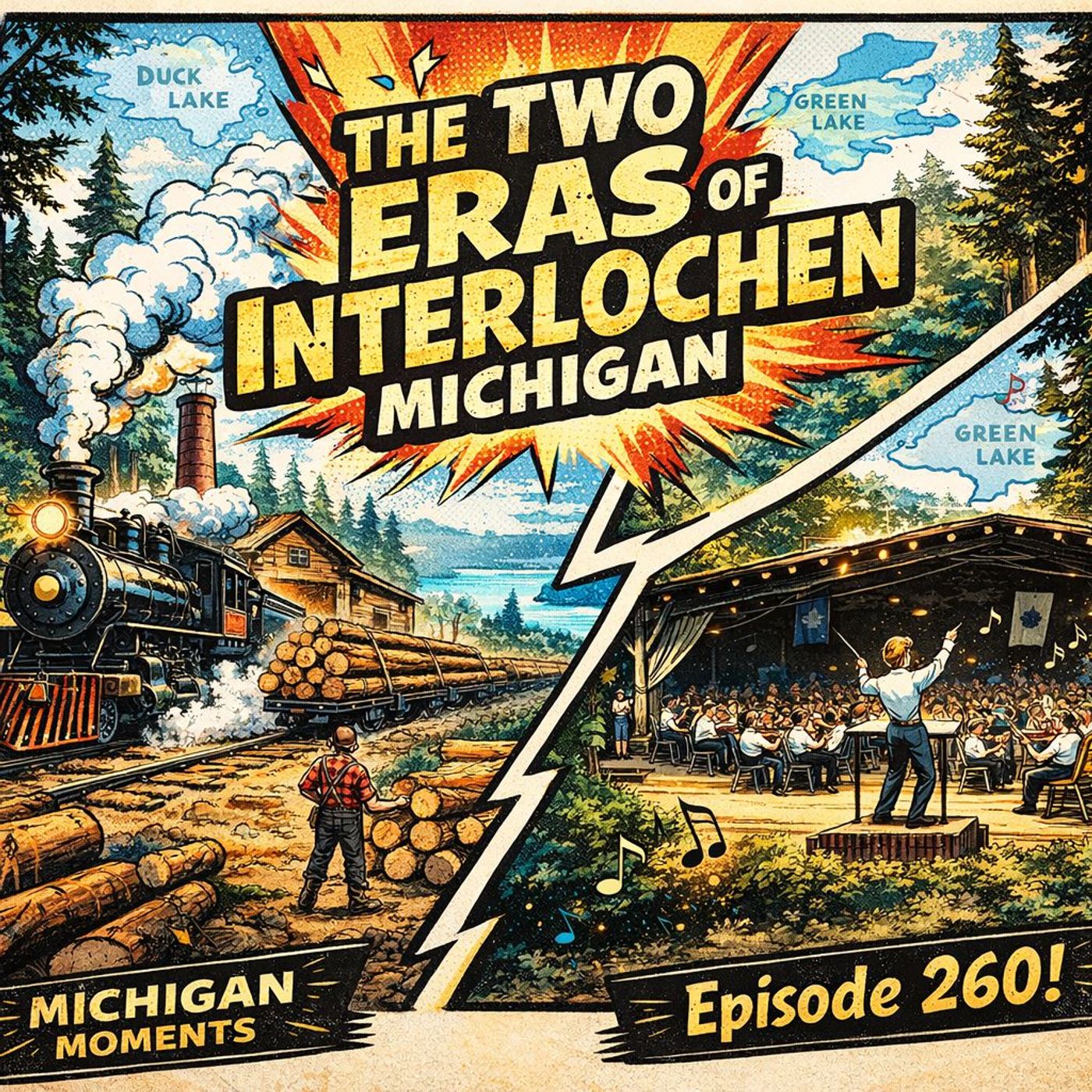
Interlochen, Michigan was once a timber town on a narrow strip between two lakes. In 1917 the state bought a stand of white pines to create Michigan’s first state park, saving the forest and the town’s future.
By 1928 conductor Joseph Maddy had brought the National Music Camp to Interlochen, and by 1962 the Interlochen Arts Academy opened as a boarding school for gifted artists.
Interestingly, it all grew from that one decision to spare the pines – a logging-era move that paved the way for music. Thanks for listening, please follow us for future episodes.
The En...
Steam, Smoke, and Sunday Excursions: Newberry’s Turn of the Century Transformation
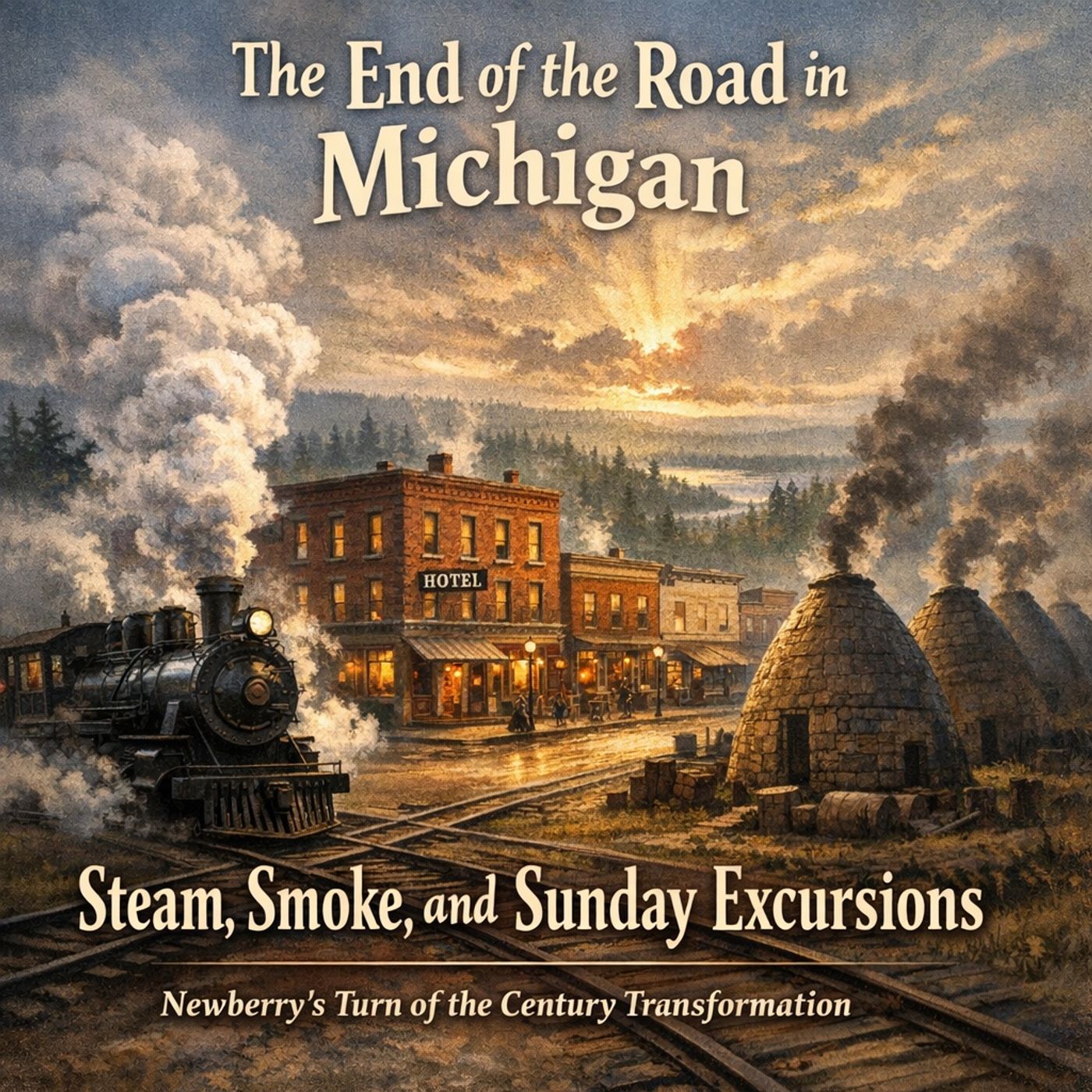
Newberry, Michigan rose with the railroads and the timber economy, then learned how to survive the long shift that followed. In this episode, we trace how a small Luce County town became both an industrial workhorse and a starting point for North Country travel.
From charcoal iron and logging payrolls to the steady presence of the state hospital and the early pull of Tahquamenon country, Newberry’s story is about adaptation without pretense. It’s a place shaped by winter, work, and the people who stayed when the boom years cooled.
The End of the Road in M...
Walled Lake, Michigan: Roller Coasters, Dance Floors, and a Lakeside Dream
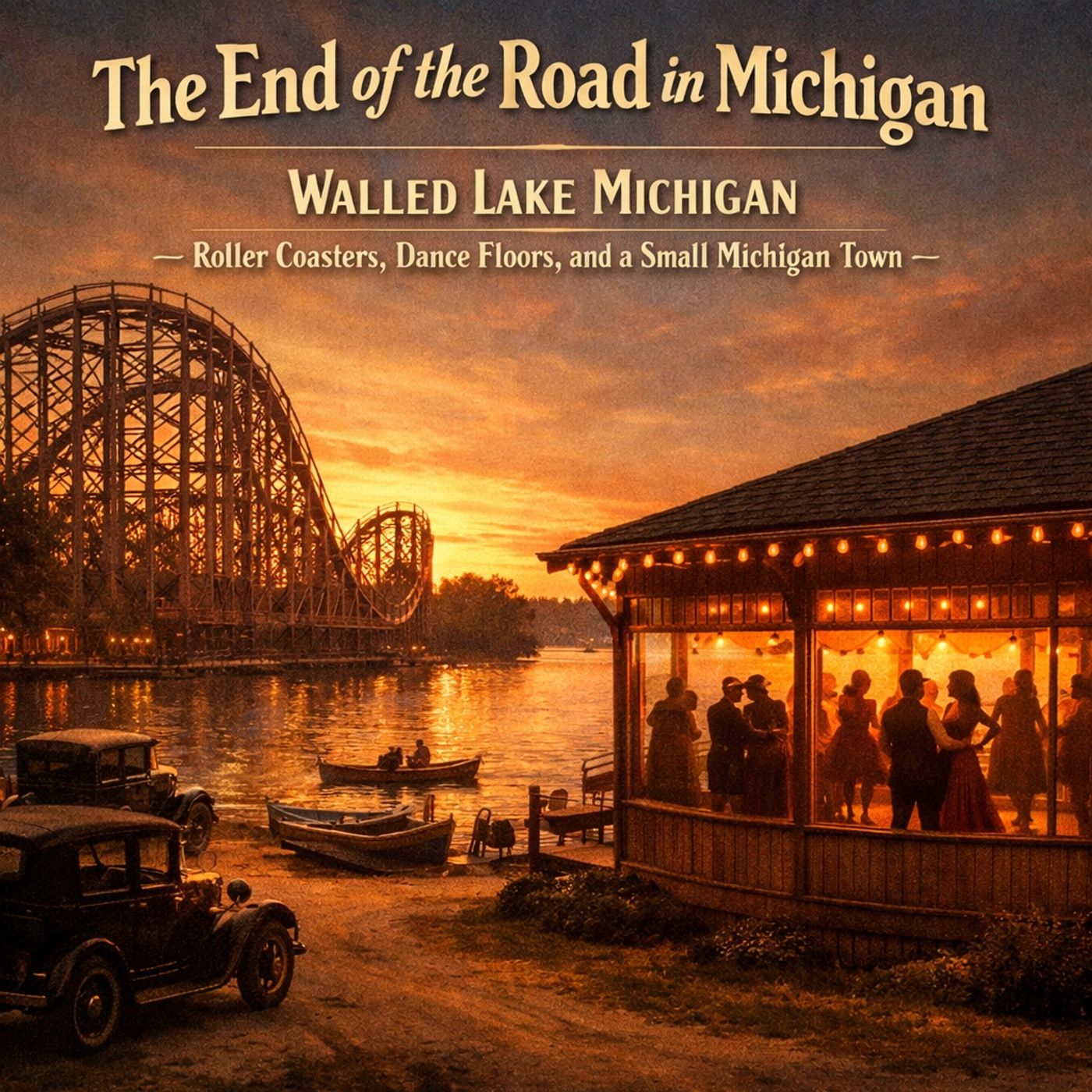
Walled Lake, Michigan — just 25 miles from Detroit — was once one of the Midwest’s most electric summer destinations.
In this episode of The End of the Road in Michigan, we step back to the early 20th century, when steam trains, Model Ts, and streetcars carried thousands to the first popular beach west of Detroit. What began as a quiet farming village transformed into a lakeside playground filled with dance halls, glowing pavilions, and the roar of the Flying Dragon roller coaster.
We tell the story of rival dance halls that packed nearly a thousand people onto polish...
Snow, Music, and Baseball: How Fort Brady Felt More Like a Town Than a Military Base at Sault Ste. Marie
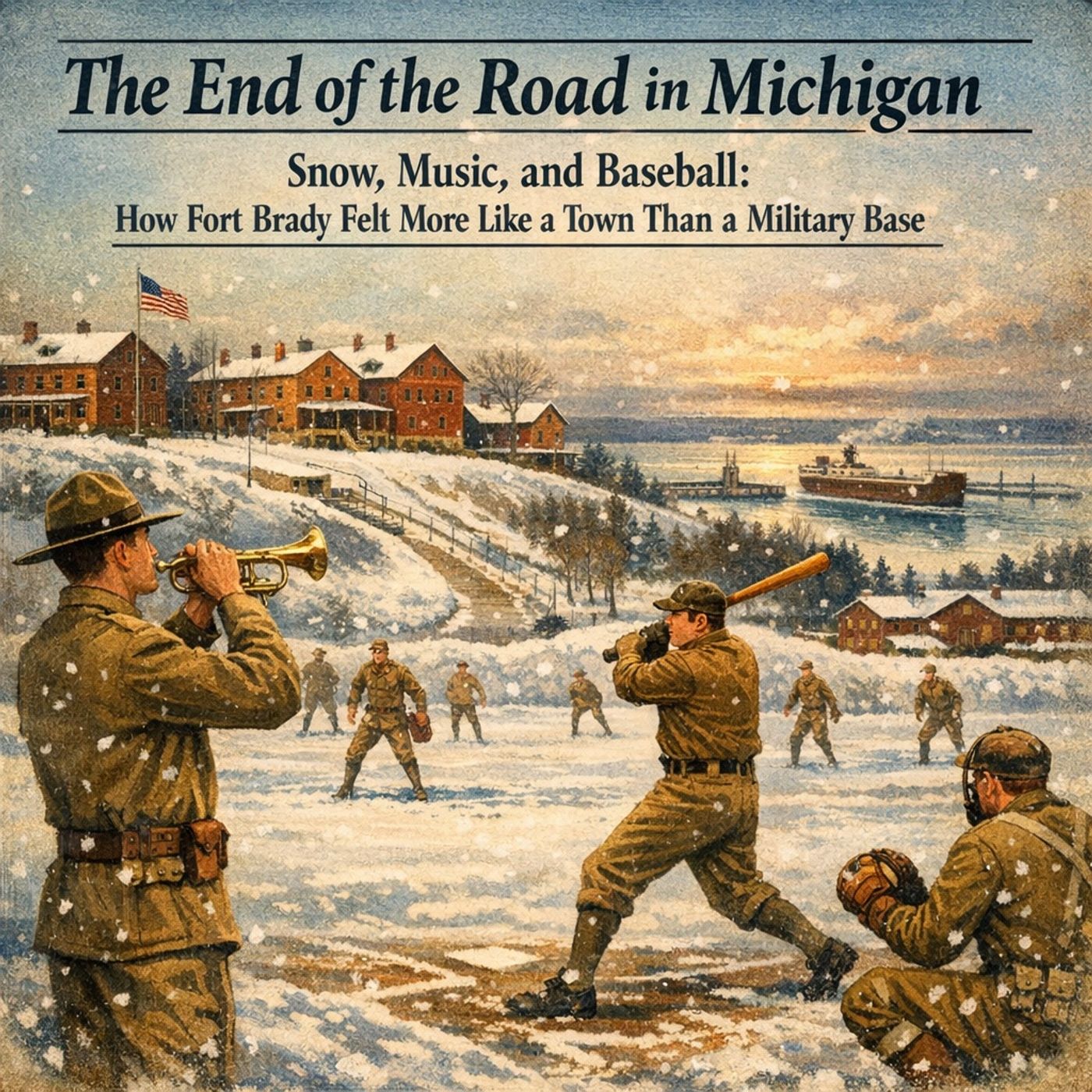
On a hill above the Soo Locks in Sault Ste. Marie, Fort Brady stood guard for more than a century. It never became a battlefield. It rarely made national headlines. Yet for decades, it shaped the lives of soldiers and the community around it.
In this episode of The End of the Road in Michigan, we step into the years between wars — when Fort Brady functioned less like a combat outpost and more like a northern town in uniform. Soldiers drilled at dawn, shoveled heavy snow in winter, played baseball in summer, and performed in post bands that ec...
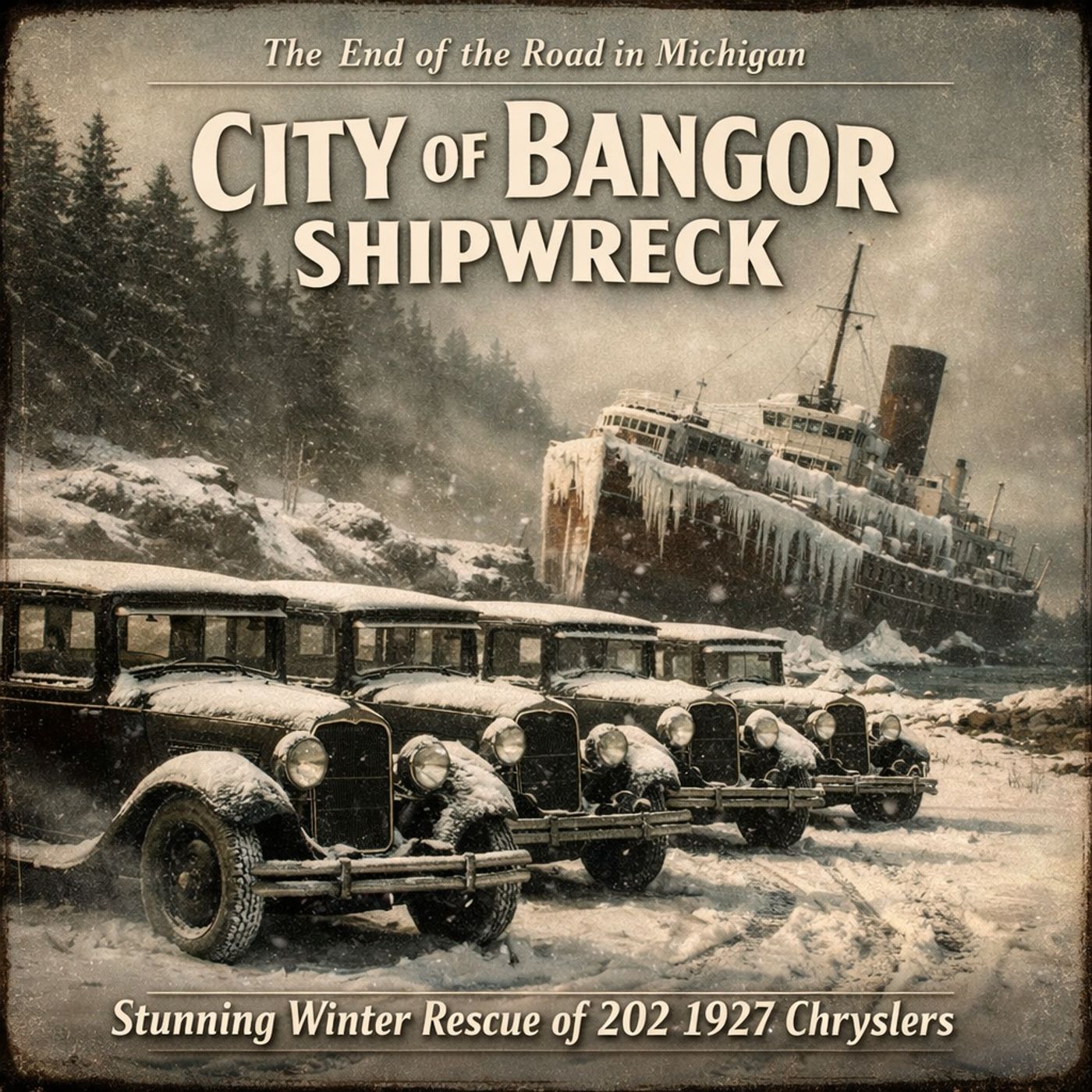
City of Bangor Shipwreck: Stunning Winter Rescue of 202 1927 Chryslers
The End of the Road in Michigan is a nostalgic journey to the far corners of the Great Lakes State—where highways thin, weather makes the rules, and history still feels close. Each episode tells a true Michigan story with the pace and detail of a classic historical documentary.
In Copper Harbor, Michigan, Lake Superior doesn’t just mark the edge of the map—it sets the terms. On November 30, 1926, the freighter City of Bangor ran aground near Keweenaw Point in a fierce storm, carrying a remarkable cargo: hundreds of brand-new 1927 Chrysler automobiles.
What followed was part re...
The House of David: Michigan’s Cult That Built an Amusement Empire (Then Lost It All)
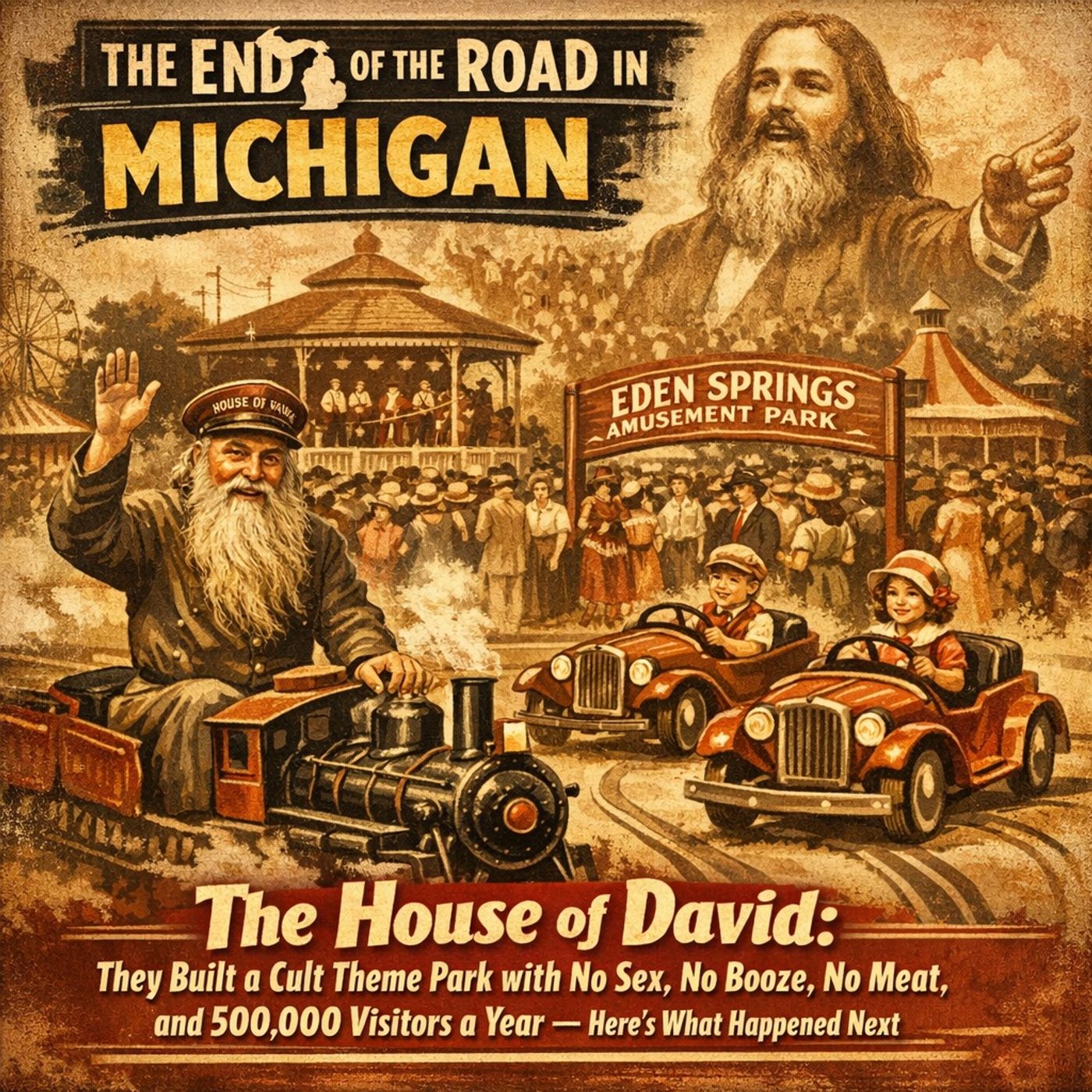
In this episode of The End of the Road in Michigan, we tell the bizarre true story of the House of David — a celibate, vegetarian religious commune in Benton Harbor that ran one of the most successful amusement parks in the Midwest. With long beards, a world-famous baseball team, miniature trains, and half a million visitors a year, they built an empire on joy and faith.
Then came scandal, a public trial, and a slow collapse.
How did a strict religious sect end up with a beer garden, a zoo, and nightly dance parties? And what fi...
Romeo, Michigan: When the Interurban Ran the Town — and Why It Vanished
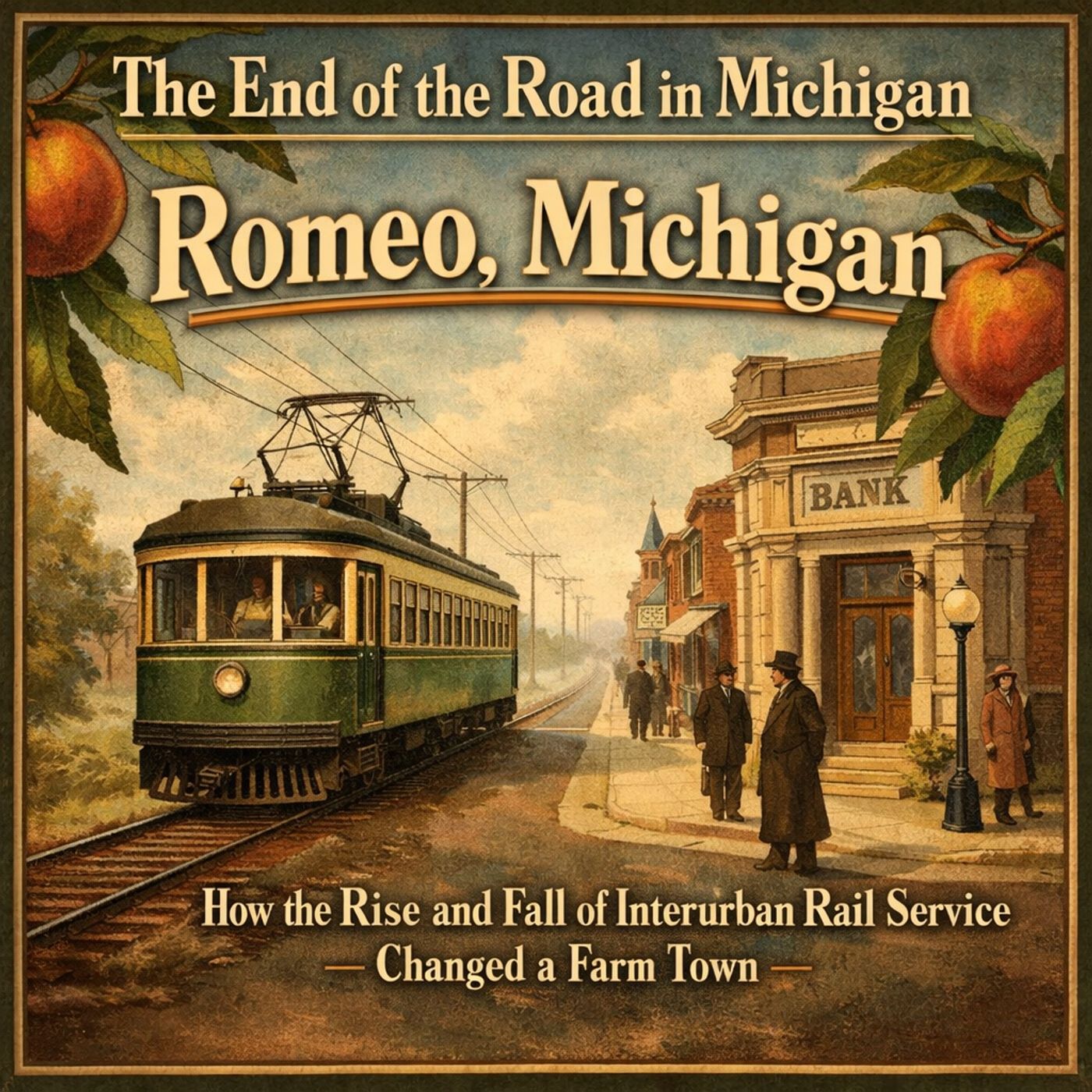
In the early 1900s, Romeo, Michigan, was a farm town with a surprisingly modern advantage: electric interurban rail service. It gave residents a way to reach jobs, shops, and neighboring communities on a timetable—years before most families owned reliable cars.
This episode follows the interurban era as it shaped daily life in Romeo. We examine how scheduled public transportation affected downtown businesses, how it widened the market for farm communities, and why the system faded as cars, paved roads, and buses took over. It’s also a reminder that “progress” did not always mean better public options.
Grand River Tales: The History of Farmington, Michigan
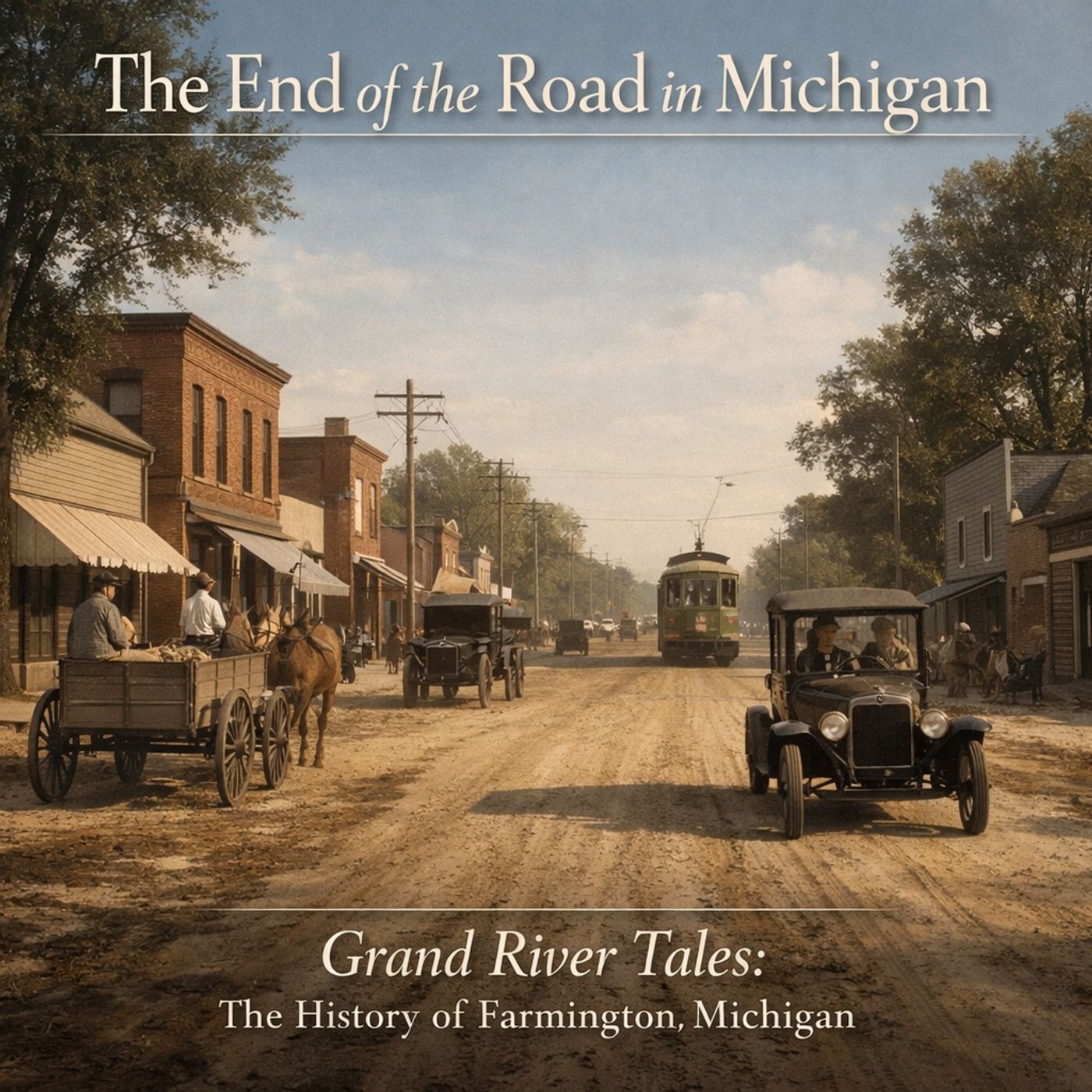
Long before Farmington became a suburb, it was a stopping point on one of Michigan’s most important roads. This episode traces Farmington’s story from the late 1800s through the early 20th century, when Grand River Avenue carried farmers, rail traffic, interurban cars, and travelers moving between Detroit and the interior of the state.
Using historic descriptions and first-hand accounts, we look at the hotels, mills, churches, schools, and power plants that shaped daily life between 1890 and 1940. This was a town built around movement—goods coming in, people passing through, and a community adjusting to modern life one de...
Fort Brady - Soldiers in the Snow
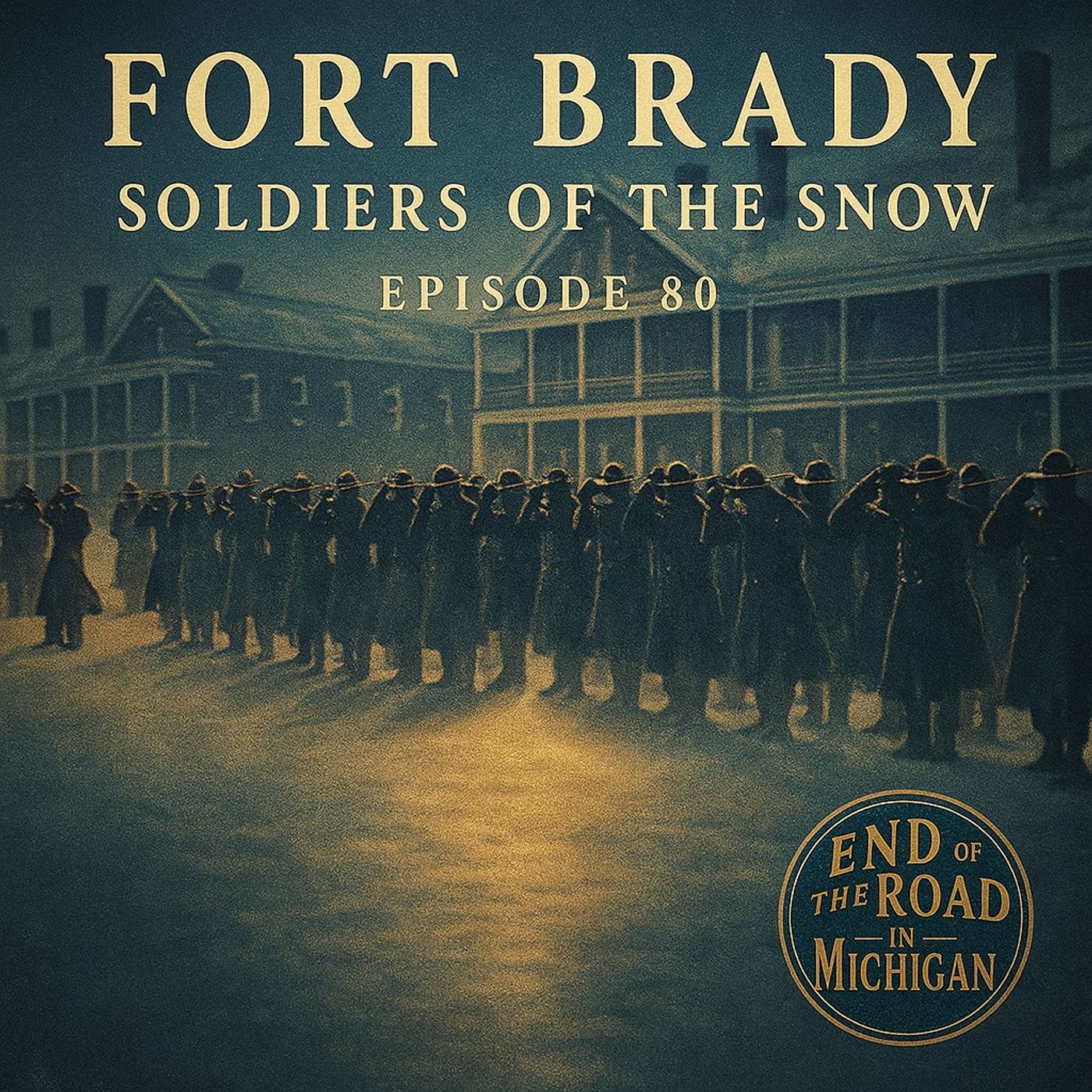
Explore the captivating story of Fort Brady, Michigan, from 1900 to 1941. This video looks at the historic U.S. Army fort in Sault Ste. Marie, Michigan, where soldiers guarded the Soo Locks and endured brutal winters. You’ll see vintage photographs of troops clearing deep snow, playing baseball on the parade field, and marching to a military band.
Fort Brady was built to protect American territory, but life at the post included everyday friendships and pastimes. Learn how the fort grew in the early 1900s with new barracks and officers’ houses that hosted summer training camps, and even had its...
Pontiac’s War – The Fire That Swept the Great Lakes
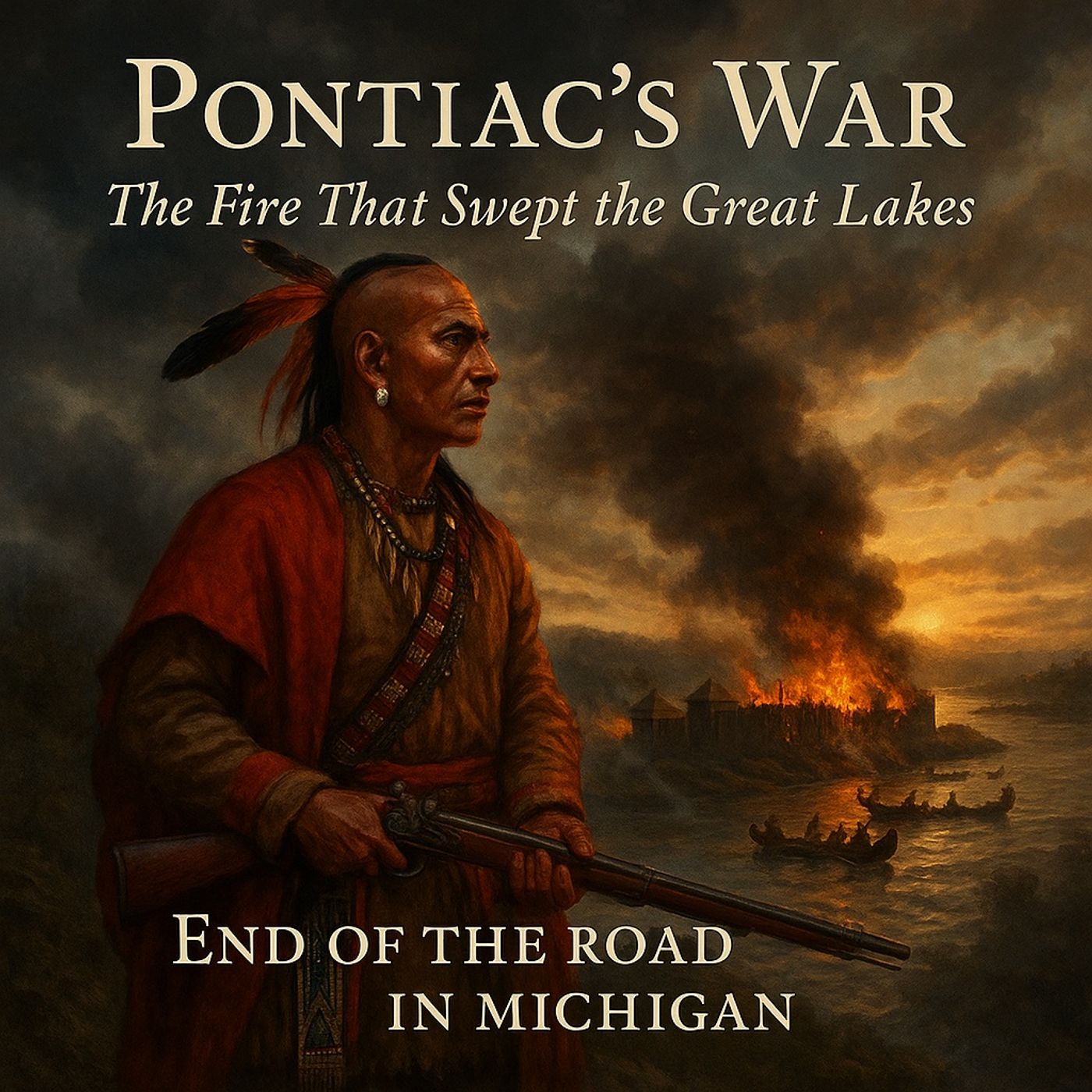
In 1763, the Great Lakes erupted in rebellion. The war between Britain and France had ended, but peace never reached the frontier. When British officers replaced French traders at forts like Detroit and Michilimackinac, Indigenous nations faced an empire that dismissed their alliances and restricted their trade.
The result was a sweeping uprising led by an Odawa war chief named Pontiac — a conflict that reshaped both Michigan and North America. This ten-minute episode of End of the Road in Michigan takes listeners to the forests and rivers where Pontiac’s alliance struck back against British control. From the five-month sieg...
The Curse of the Schooner Augusta, The Pariah of the Great Lakes
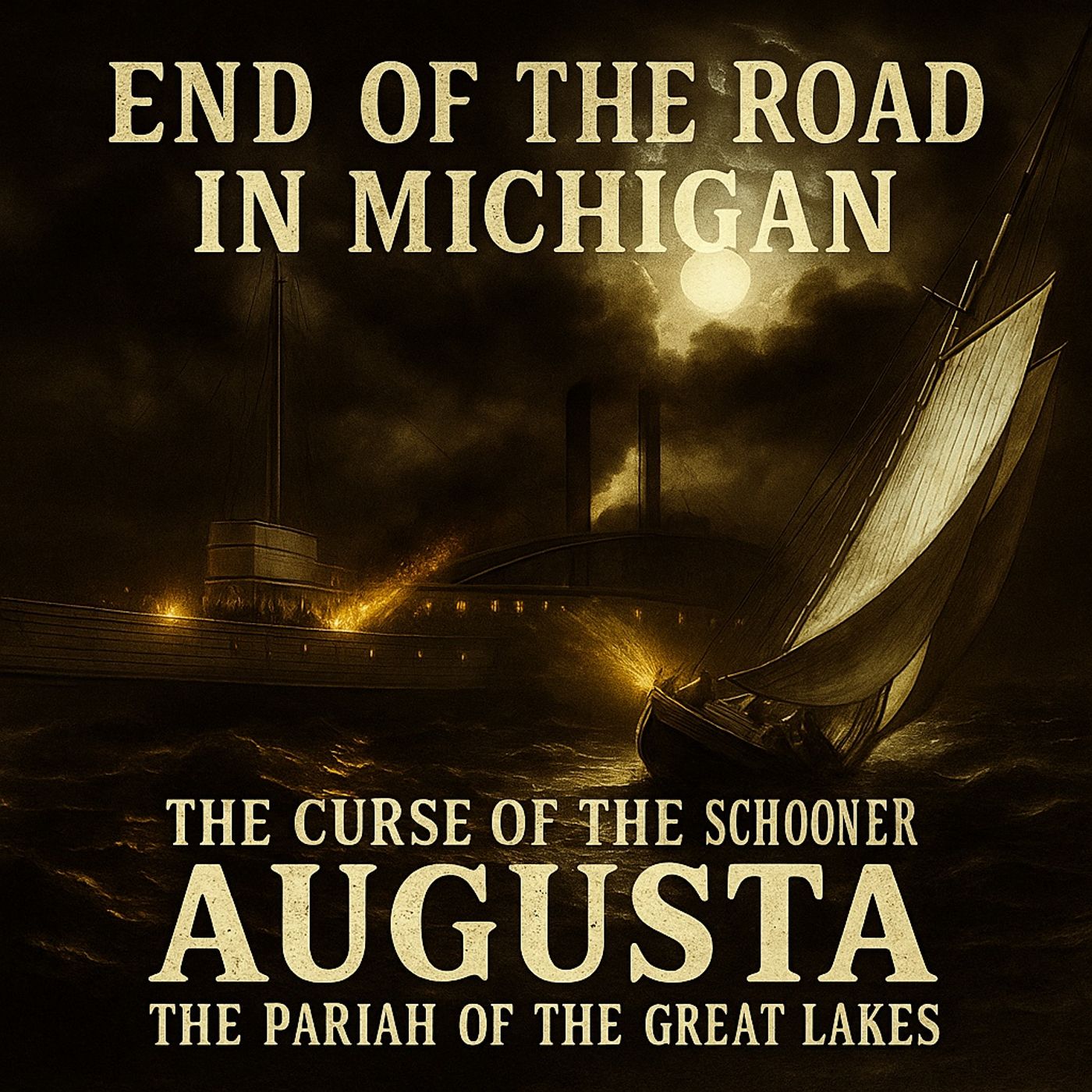
On September 8, 1860, the sidewheel steamer Lady Elgin collided with the schooner Augusta off Winnetka, Illinois, sending more than 300 passengers into the frigid waters of Lake Michigan. While the disaster became one of the deadliest shipwrecks in Great Lakes history, much of the blame focused on the Augusta.
Branded reckless, cursed, and unlucky, the schooner soon earned a reputation as a pariah of the inland seas.
This episode of End of the Road in Michigan traces the tangled story of the Augusta—its role in the tragedy, the bitter legal battles that followed, an...
Inside Spikehorn Meyers’ Wild Bear Camp in Harrison, Michigan
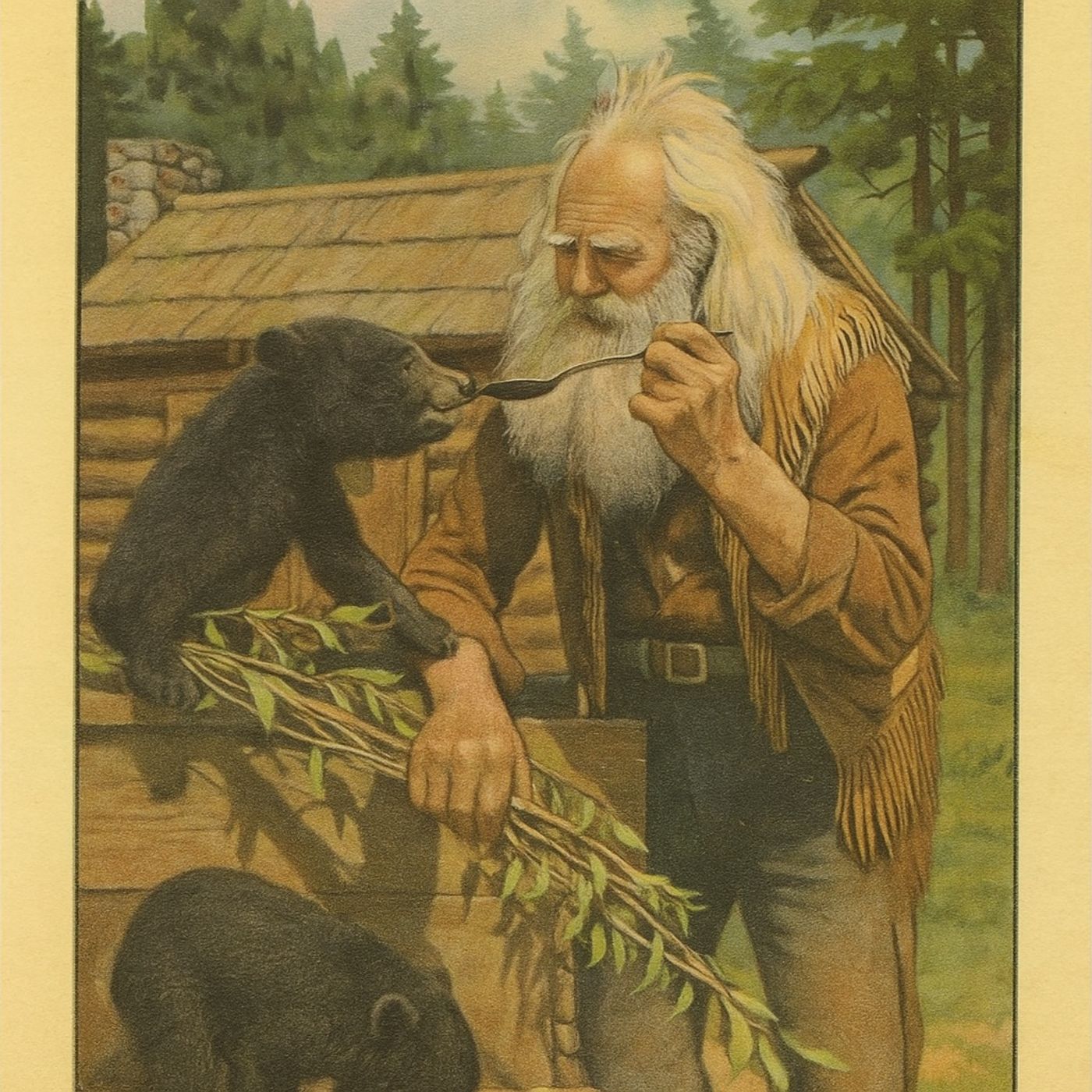
The Bear Man of Harrison, Michigan
In the 1930s and 1940s, motorists driving through Harrison, Michigan, often stopped at a roadside attraction unlike any other: Spikehorn Meyers’ Bear Den. Here, an eccentric old woodsman dressed in buckskin invited families to feed, pet, and even shake hands with live black bears. For nearly three decades, John “Spikehorn” Meyer turned his rustic camp into a legendary stop along US-27.
Visitors gasped as bears sipped soda from glass bottles and nibbled popcorn from their hands. Spikehorn became both a beloved folk hero and a thorn in the...
Beaver Island, Michigan – Kingdom, Fishermen, and the Fight to Survive
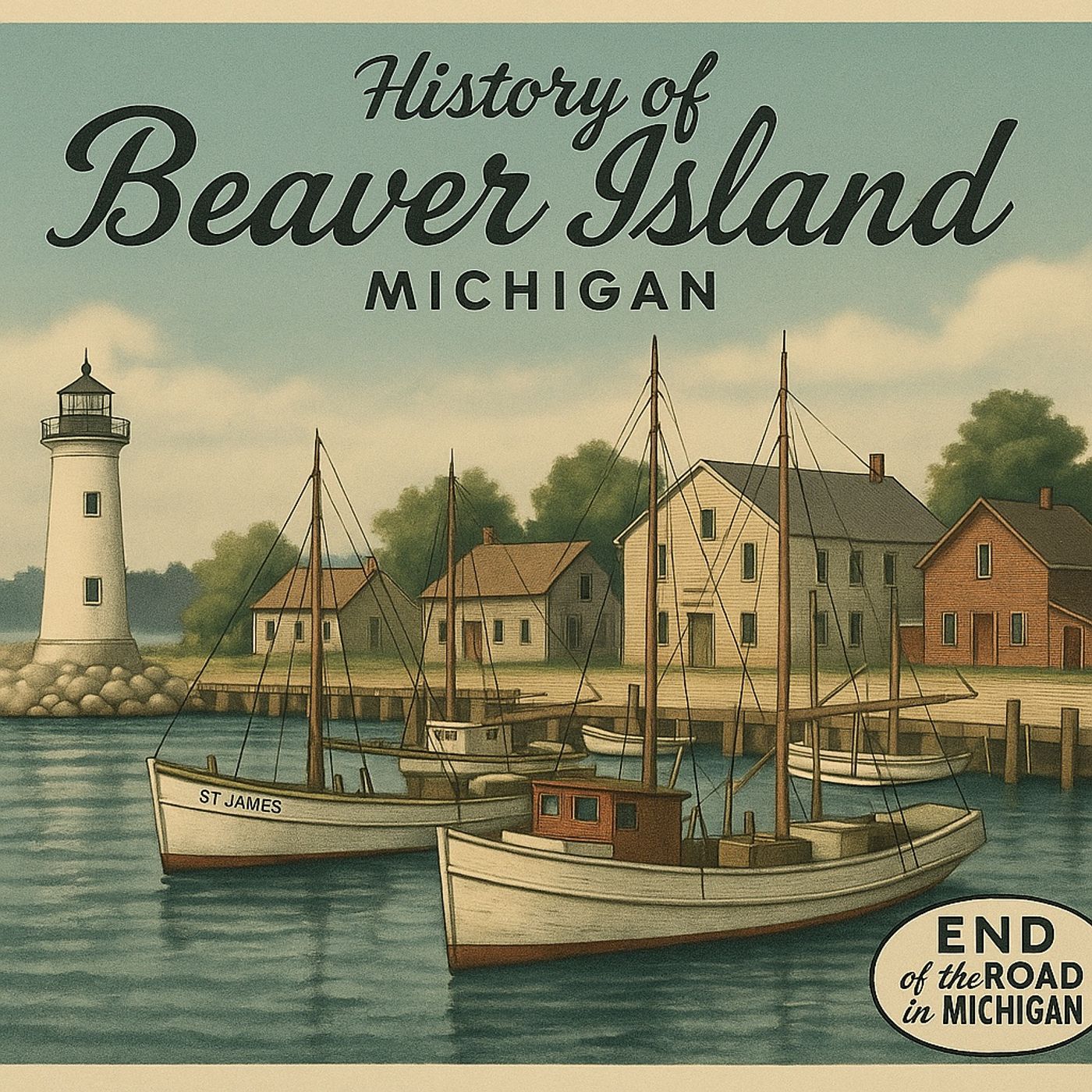
In this episode of End of the Road in Michigan, we journey to Beaver Island — the largest island in Lake Michigan and the only place in America that once had a king. From 1848 to 1856, James Jesse Strang ruled here as a self-proclaimed monarch, building roads, homes, and a newspaper before his dramatic assassination at the St. James docks.
We explore the Irish fishing community that reclaimed the island, the rise and fall of its Great Lakes fishing dominance, and the daring rescues of lighthouse keepers and the U.S. Coast Guard.
The story continues wi...