Science Magazine Podcast

Weekly podcasts from Science Magazine, the world's leading journal of original scientific research, global news, and commentary.
Did meat or fruit give people big brains, and protecting bison diversity using ancient DNA
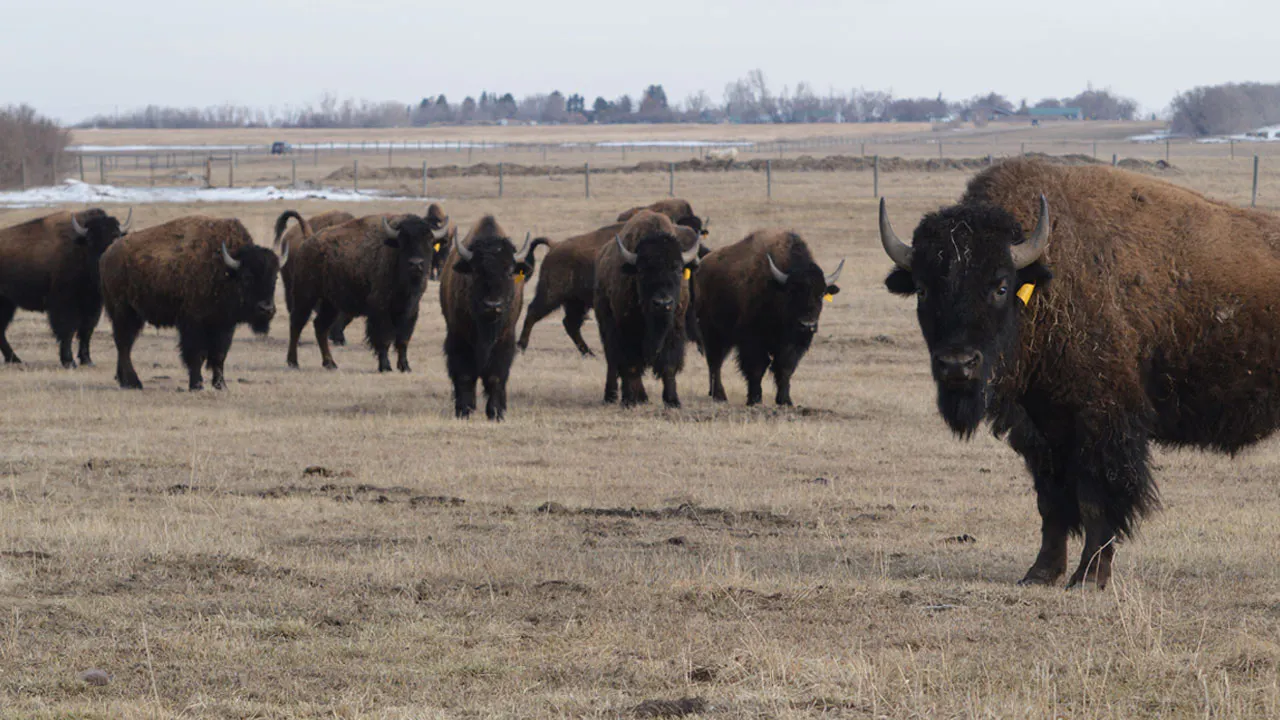
First up on the podcast, Deputy News Editor Michael Price discusses the history of the North American bison population, its decline, and resurrection—and links to Indigenous cultures. He’s joined by University of California, Santa Cruz evolutionary molecular biologist Beth Shapiro and Greg Wilson, a wildlife ecologist with Parks Canada. They talk about their Science paper on the genetic diversity of modern bison after near extermination during European colonization. Shapiro and Wilson also explain how these findings can be used to inform conservation efforts.
Next on the show, Jennie Brand-Miller, professor emeritus in the School of Life...
AI’s influence on society, measuring muscles, and a Crick biography

First up on the podcast, we catch up with Celina Zhao, a staff reporter for Science’s AI In Science reporting initiative. She talks with host Sarah Crespi about artificial intelligence’s knack for finding legal loopholes and how philosophers are navigating conflicts of interest around advising companies on AI.
Next on the show, it’s hard to figure out how much force a muscle is exerting without sticking invasive probes into the body. Christopher Bird, a Ph.D. candidate in the School of Biomedical Sciences at the University of Queensland, discusses a new way to use ultraw...
Death in a gene-editing trial, and insect larvae surviving in deep waters

First up on the podcast, freelance science journalist Brendan Borrell talks about his work reporting on the previously undisclosed death of a 6-year-old girl in a gene-editing clinical trial in China and the reasons her parents came forward.
This story was produced in collaboration with Retraction Watch and supported by the Science Fund for Investigative Reporting.
Next on the show, Producer Meagan Cantwell talks with Evan McKenzie, a researcher at the University of British Columbia, about an insect that evolved to avoid predators by modifying its respiratory system to withstand high pressure at depth.
<...Health care in Malawi after USAID’s end, and a rocky exoplanet with an atmosphere

First up on the podcast, we continue our coverage of the fallout from cuts to the U.S. Agency for International Development (USAID), this time focusing on how one of the largest recipients of aid is coping 18 months later. Contributing Correspondent Catherine Offord talks about her trip to Malawi and the efforts to strengthen their health infrastructure in the wake of funding shocks.
Next on the show, Collin Cherubim, Ph.D. candidate in the Earth and Planetary Sciences Department at Harvard University, discusses what it means to find helium escaping from the atmosphere of a rocky planet...
Owl wars and the immune system’s memory

First up on the podcast, Contributing Correspondent Warren Cornwall goes on an owl hunt in the woods of Northern California. After surviving logging and habitat destruction in the 1990s, the endangered Northern spotted owl has put conservationists in a bind: In order to protect the spotted owl, the only solution may be shooting barred owls.
Next on the show, looking back at the first 10 years of the journal Science Immunology. Editor Seth Thomas Scanlon explores how the field has changed since the inception of the journal and talks about a special series of reviews on immune memory. <...
How Antarctica got its ice sheets, and what happens when geopolitical relationships turn chilly in the Arctic

First up on the podcast, relationships turn chilly in the polar research haven of Svalbard in Norway. Senior International Correspondent Richard Stone joins host Sarah Crespi to discuss the impacts of geopolitical shifts on the scientific output of this region so important to the study of climate change.
Next on the show, producer Meagan Cantwell talks with Thomas Gernon, a geologist at the University of Southampton, about how ice sheets formed in Antarctica during a time when the temperatures were relatively warm.
This week’s episode was produced with help from Podigy.
About th...
Cracking color vision, U.S. science policy changes, and a trailblazing biography

First up on the podcast, ScienceInsider editor Jocelyn Kaiser joins host Sarah Crespi to discuss big policy stories from the past month, including a proposal from President Donald Trump’s administration to increase the involvement of politicians in grantmaking.
Next on the show, Science Senior Editor Michael Funk joins to discuss a trio of papers on the light-detecting proteins responsible for color vision.
Ohashi et al., Science 2026 Peng et al., Science 2026 Schmidt et al., Science 2026Finally, in our books segment for this month, host Angela Saini talks with science writer Georgina Ferry, who wrote a bi...
An electronic nose that detects spoiled chicken, and wolves make a spectacular comeback in Europe

First up on the podcast, wrangling wolves in Europe. After near extermination in much of the continent, wolf numbers have surged up to about 20,000 individuals. Contributing Correspondent Gretchen Vogel joins podcast host Sarah Crespi to discuss the conflicts that have risen as the wolf population grows.
Next on the show, Ph.D. student Carla Bassil talks about designing an e-nose that can hone in on important food smells such as chicken that has gone bad or the presence of allergens including peanuts.
Finally, in a sponsored segment from the Science/AAAS Custom Publishing Office, Erika...
How childhood environments shape the brain, and how susceptible is the Atlantic Ocean’s current to climate change?

First up on the podcast, producer Kevin McLean talks with Staff Writer Paul Voosen about the latest on the Atlantic Meridional Overturning Circulation, or AMOC. Researchers have long been concerned that global warming could cause a collapse in the AMOC, which would trigger dramatic cooling in Northern Europe. But recent data and models suggest the AMOC may be more resilient than previously thought.
Next on the show, Scott Marek, assistant professor in the Mallinckrodt Institute of Radiology at Washington University School of Medicine, talks with host Sarah Crespi about brainwide association studies (BWAS) for childhood brain development...
Will AI replace astronomers, how healthy are ultraprocessed foods, and a peek behind the scenes of ‘The Normals’

First up on the podcast, freelance science journalist Joshua Sokol talks about the intense discussion happening in the astrophysics community as artificial intelligence and machine learning become increasingly powerful—could “astronomer” stop being a job one day?
Next on the show, as the Trump administration makes moves to regulate ultraprocessed foods, host Sarah Crespi talks with Faidon Magkos, a professor in obesity and metabolism in the department of nutrition, exercise, and sports at the University of Copenhagen, about what studies say about their health effects.
Finally this week, a behind-the-scenes look at our recent limited series...
Disembodied human brains, immortal bits of sea cucumber, and fame in Galileo’s time

First up on the podcast, a company is using whole brains—maintained with specialized life support—to study new drugs. Freelance science journalist Sara Reardon joins host Sarah Crespi to talk about the advantages and ethical considerations of keeping brains intact but inactive.
Next on the show, when some lizards lose their tails, they might regenerate new ones. But what happens to the old tail? Whereas a castoff lizard tail quickly decomposes, this isn’t the case for the castoff tube feet of the sea cucumber, Psolus fabricii. Sara Miller Jobson, a Ph.D. student at the Memori...
USAID cuts linked to violence, unexpected parallels between humans and bacteria, and how to rule the world
First up on the podcast, Senior International Correspondent Richard Stone joins host Sarah Crespi to discuss the surprising commonalities between our immune systems and the tools bacteria use to defend themselves against viruses. These unexpected parallels have become rich ground for researchers investigating new molecular biology tools and model systems for immune research.
Next on the show, Dominic Rohner, a professor of economics at the Geneva Graduate Institute and University of Lausanne, talks about the impact of cuts in international aid on violent conflict in Africa. His team harnessed the natural experiment of the U.S. Agency...
Fighting deepfakes, and using bacteria to deliver medicine inside the body

First up on the podcast, Meagan Cantwell produced a segment with Contributing Correspondent Kai Kupferschmidt on the fight against deepfakes. Kupferschmidt talks with Hany Farid, professor at the University of California, Berkeley, about the never-ending battle against fake imagery and why Farid is not giving up.
Next on the show, building a tough, bio-compatible capsule for engineered bacteria. Tetsuhiro Harimoto talks about the challenges of keeping living bacteria inside a hydrogel capsule and the advantages of using engineered bacteria as sensors and medicine dispensers inside the body. (Harimoto completed this work as a postdoc at Harvard University...
A team effort to save a giant fish, the power of moonlight, and how scientists can navigate a tough political environment

First up on the podcast, along Brazil’s Juruá River, local residents have been working with scientists to manage a giant fish called the arapaima—affecting the land, the people, and the economy. Contributing Correspondent Warren Cornwall joins host Sarah Crespi to talk about this collaborative effort.
Next on the show, how moonlight affects nocturnal animals. Carlos Camacho, a researcher at the Doñana Biological Station, talks about the Moon-inflected habits of a nighttime foraging bird, the red-necked nightjar. His team found that the extra light provided by the full Moon allows these birds to consume more insect...
Watching a spiders’ heart beat, epigenetic ethics, and what science biographies reveal about fame

First up on the podcast, Online News Editor David Grimm shares a batch of fun stories with podcast host Sarah Crespi—from spider hearts racing when traffic gets loud to a disease-preventing house. Staff Writer Adrian Cho hops in to help discuss the possibility of black holes without singularities at their center.
Next on the show, epigenetics has become a hot topic in pop science but the ethical conversation is not keeping up. The idea that parents can pass down epigenetic marks from environmental toxins or trauma to their children—without changes in DNA—has been around for de...
Cleaning up uranium mining, and how the heart avoids cancer

First up on the podcast, freelance science and environmental journalist Quentin Septer joins host Sarah Crespi to talk about a controversial uranium mine getting fast-tracked in South Dakota. Septer chatted with locals, scientists, and regulators to learn more about the geology of the region and the promise of cleanup after the miners go home.
Next on the show, looking at cells that don’t get cancer. Giulio Ciucci, a postdoctoral researcher at the International Centre for Genetic Engineering and Biotechnology, talks about the infrequency of heart cancer and how the mechanical load that heart cells endure makes th...
The normals | Episode 3

The final of a three-part limited Science Podcast series that looks at the history of normal human subjects in research
In episode two, we heard what happened to the normals program after church volunteers came to the U.S. National Institutes of Health’s Clinical Center—and were surprisingly happy despite going through sometimes-painful procedures. In the decades to follow, the program got bigger as government funding expanded and started to recruit more broadly, stepping away from specific religious groups toward recruiting from colleges, universities, and unions.
In this episode, we hear about how normal human...
How to keep quantum computers cool, whether prediction markets harm public health, and podcasting on podcasting

First up on the podcast, quantum computers require extremely low temperatures—less than 1°C away from absolute zero. But getting down to those temperatures has usually required dilution fridges using the extremely rare and increasingly expensive isotope helium-3. Freelance science journalist Zack Savitsky joins host Sarah Crespi to discuss up-and-coming technologies that can drive down temperatures while staying helium-3–free.
Next on the show, Nizan Packin, a professor of law at the Zicklin School of Business at Baruch College, talks about prediction markets as a public health threat. Early on, prediction markets were proposed as a way to ma...
The Normals | Episode 2
Last time on The Normals, we learned that in the 1950s, the National Institutes of Health (NIH) wanted to recruit many healthy volunteers for basic research. Two peace churches, the Mennonites and the Church of the Brethren, had an excess of healthy human volunteers. The “Normals” recruited from these Anabaptist churches were surprisingly happy, even as they went through sometimes painful procedures.
In this follow-up episode, we hear about how the sources of normal human subjects changed in the 1960s and why NIH researchers felt they needed to expand their search for normal people. We also learn about...
A chimpanzee ‘civil war,’ and NASA plans for nuclear propulsion

First up on the podcast, freelance science journalist Hannah Richter joins host Sarah Crespi to discuss NASA’s plans to send a nuclear-powered spacecraft to Mars in less than 3 years. Having not launched a fission reactor to space in more than 60 years, the organization faces many technical and bureaucratic hurdles to make that deadline.
Next on the show, Aaron Sandel, associate professor in the Department of Anthropology at the University of Texas at Austin and co-director of the Ngogo Chimpanzee Project, reports this week in Science on what looks like a chimpanzee civil war. The unprecedented violent sp...
The Normals | Episode 1
How do we know what's normal in a person? In the early 1950s, the National Institutes of Health (NIH) set out to do something unprecedented. It wanted to start studying normal humans on a grand scale. It had pretty much everything in place: It had the building, it had recruited all of these amazing researchers—it was the healthy human bodies NIH didn't have. How do we know what’s normal in a person? In the early 1950s, the U.S. National Institutes of Health (NIH) set out to do something unprecedented. It wanted to start to study normal huma...
Resolving the dispute over the speed of the expanding universe, and seeking new drug targets for cognitive dysfunction

First up on the podcast, a new path to calculating the Hubble constant. This value for the universe’s speed of expansion is typically determined in one of two ways, one favored by cosmologists, the other by astronomers. But the resulting values from these methods are consistently different. Staff Writer Daniel Clery joins host Sarah Crespi to discuss how reappearing bursts from deep space, lensed by gravity, could resolve the dispute over the speed of the expanding universe.
Next on the show, freelance producer Elah Feder talks with Mauro Costa-Mattioli, principal investigator at Altos Labs’ Institutes of Scie...
Resurrection plants, Project Hail Mary, and the trouble with sycophantic AI

First up on the podcast, Deputy News Editor Martin Enserink talks about so-called resurrection plants. These specialized plants can survive up to 95% water loss, whereas most plants struggle when their water levels dip below 60%. We also hear from Jill Farrant, a professor of molecular and cell biology at the University of Cape Town, about her work dissecting the desiccation survival pathways in resurrection plants and how they might be repurposed to protect crop plants from drought.
Next on the show, we’ve all heard of chatbots praising their users for asking the most basic of questions. This bi...
Rethinking the peopling of the Americas, and the best ways to get groundwater back

First up on the podcast, we discuss a finding that’s likely to reignite debate over how humans first spread through the Americas. In the late 1990s, a site in southern Chile called Monte Verde forced archaeologists to adjust their views of the peopling of South America because it dated to about 14,500 years before present, which challenged the prevailing idea of when human inhabitants appeared on the continent. Contributing Correspondent Lizzie Wade joins host Sarah Crespi to discuss new results published in Science that suggest Monte Verde is nowhere near that old.
See the paper and related co...
What Alaska’s eroding coastline says about Earth’s future, and how Yellowstone ravens use their smarts to find wolf kills

First up on the podcast, freelance journalist Evan Howell traveled to Cape Blossom, Alaska, where the receding coastline has revealed an ancient trove of glacial ice that may have survived for 350,000 years—making it the oldest ice in the Northern Hemisphere. Now researchers just need to figure out how to date it.
Next on the show, tracking wolves and ravens in Yellowstone National Park shows the birds don’t follow the wolves in hope of a meal, but instead remember and revisit frequent wolf kill sites. Matthias-Claudio Loretto, assistant professor in the Research Institute of Wildlife Ecology at t...
An alleged nuclear blast may reignite weapons testing, and who owns the Moon

First up on the podcast, a peek into the roiling seas of U.S. science policy.
ScienceInsider Editor Jocelyn Kaiser talks about shifting leadership at the National Science Foundation and the Centers for Disease Control and Prevention as well as a dip in funding rates by the National Institutes of Health. Staff Writer Robert F. Service covers proposed restrictions on access by international researchers and students to the National Institute of Standards and Technology. Contributing Correspondent Warren Cornwall talks about the Department of Energy’s rush to loosen radiation exposure standards. Senior International Correspondent Richard Stone discusses why an...Tropical birds’ ‘silent spring,’ and mapping people’s brains during surgery

First up on the podcast, producer Meagan Cantwell talks to Contributing Correspondent Warren Cornwall about his visit to Brazil, where he observed firsthand what it takes for researchers to understand why bird populations in the Amazon and beyond are shrinking.
Next on the show, Raouf Belkhir, an M.D.-Ph.D. student at the University of Pittsburgh School of Medicine and Carnegie Mellon University, joins host Sarah Crespi to discuss his Science Advances paper on a newly refined way to map awake patients’ brains during neurosurgery.
This week’s episode was produced with help from Podi...
Matching sounds to shapes, and stories from the AAAS annual meeting

First up on the podcast, Newsletter Editor Christie Wilcox, Associate Online News Editor Michael Greshko, and intern Perri Thaler share their experiences from the AAAS annual meeting in Phoenix.
Christie recorded on location with David Rand regarding his prize-winning Science paper on using a large language model to combat conspiracy theories. Check out the live version of his team’s Debunk Bot.
Michael chats with host Sarah Crespi about the foggy outlook of science in the United States as funding levels and graduate positions decline, and the bright sunshine of young students presenting science posters.
...Building better working dogs, and watching a black hole form

First up on the podcast, more than half of all dogs going through service animal training don’t make it to graduation. Producer Kevin McLean journeys with Online News Editor David Grimm to Canine Companions, one of the biggest organizations in the United States for training working dogs. At the facility, they meet puppies in preparation and learn about the behavioral testing and genetics that could be used to improve service animal schooling.
Also appearing in this segment:
Emily Bray, assistant professor in the College of Veterinary Medicine at the University of Arizona Brenda Kennedy, chief ve...Engineering safer football helmets, and the science behind drug overdoses

First up on the podcast, host Sarah Crespi and Staff Writer Adrian Cho talk football and the latest science behind helmets engineered to reduce head injuries. Have better materials and testing led to fewer concussions and chronic traumatic encephalopathy in players?
Next on the show, more than 100,000 people die from opioid overdoses in North America per year. Although much study has gone into addiction research, less attention has been paid to the biological details of overdose itself. John Strang, a professor in the National Addiction Centre at King’s College London, joins the podcast to discuss the qu...
Shielding astronauts from cosmic rays, and planning the end of fossil fuels

First up on the podcast, how do we protect astronauts when they leave the shelter of Earth’s protective magnetic fields and face the slow, constant bombardment of space radiation? Freelance science journalist Elie Dolgin joins host Sarah Crespi to discuss what we know about the damage from high-velocity particles and the research being done to curb their biological toll.
Next on the show, modeling the fall of fossil fuels during the decarbonization of energy systems, with civil engineer and environmental sociologist Emily Grubert and historian and engineer Joshua Lappen, both at the University of Notre Dame. Th...
Tracking falling space debris via sonic booms, and getting drunk off your own microbes

First up with Jennie Erin Smith, Science’s new senior biomedicine reporter, we delve into: autobrewery syndrome, when microbes inside the human gut make too much alcohol; how doctors can use a public repository, the Mexican Biobank, to guide patient care; and preliminary findings that surgery on the brain’s plumbing shows promise for Alzheimer’s disease.
Next on the show, it’s tough to calculate when and where deorbiting spacecraft might enter the upper atmosphere and then eventually hit the ground. Benjamin Fernando, a seismologist and planetary scientist at Johns Hopkins University, has shown that sonic booms cr...
Reversing ecological destruction in the Galápagos, and finally mapping Antarctica’s surface

First up on the podcast, freelance science journalist Sofia Quaglia talks about her visit to the Galápagos archipelago and how researchers there are working to restore the islands to their former ecological glory.
*Note this episode has been updated to reflect that the Ecuadorian government is not responsible for primarily funding these efforts.
Next on the show, Antarctica’s deep ice coating obscures the hills and valleys on its surface, making the continent’s response to climate change one of the biggest unknowns in predicting sea level rise over the next century. Helen Ockenden, a gla...
The real da Vinci code, and the world’s oldest poison arrows

First up on the podcast, scholars are on a quest to find Leonardo da Vinci’s DNA. With no direct descendants, the hunt involves sampling the famous polymath’s papers, paintings, and distant cousins. Contributing Correspondent Richard Stone talks with host Sarah Crespi about what researchers hope to learn from Leonardo’s genes and the new field of “arteomics.”
Next on the show, new evidence for poisoned arrows from 60,000 years ago complicates our picture of hunting during the Pleistocene. Sven Isaksson, a professor of archaeological science at Stockholm University, joins the podcast to discuss the discovery of poisonous...
Looking for continents on exoplanets, and math is hard for mathematicians, too

First up on the podcast, the best images of exoplanets right now are basically bright dots. We can’t see possible continents, potential oceans, or even varying colors. To improve our view, scientists are proposing a faraway fleet of telescopes that would use light bent by the Sun’s gravity to magnify a distant exoplanet. Staff Writer Daniel Clery joins host Sarah Crespi to discuss where to aim such a magnificent telescope and all the technological pieces needed to put it together.
Next on the show, expert voices columnist and Johns Hopkins University mathematician Emily Riehl discusses her...
This year’s biggest breakthrough and top news stories

First up on the podcast, Online News Editor David Grimm joins host Sarah Crespi to talk about this year’s best online news stories—top performers and staff picks alike. Together they journey the scientific gamut, from bird feeders’ influence on hummingbird beak evolution to the use of “artificial spacetimes” to guide tiny robots through their environments.
Next on the show, a discussion of this year’s pick for Breakthrough of the Year with producer Meagan Cantwell and News editor Greg Miller. They also touch on some other top finds from this year, including the first confirmed Denisovan sk...
Hunting asteroids from space, and talking to pollinators with heat

First up on the podcast, we’ve likely only found about half the so-called city-killer asteroids (objects more than 140 meters in diameter). Freelance science journalist Robin George Andrews joins host Sarah Crespi to discuss the upcoming launch of NASA’s Near-Earth Object Surveyor, an asteroid hunter that will improve our ability to look for large objects that might crash into Earth, particularly those hiding in the Sun’s glare.
Next on the show, freelancer producer Elah Feder talks with Wendy Valencia-Montoya, an organismic and evolutionary biology Ph.D. candidate at Harvard University, about heated conversations between plants and th...
Grappling with declining populations, and the future of quantum mechanics

First up on the podcast, Science celebrates 100 years of quantum mechanics with a special issue covering the past, present, and future of the field. News Contributing Correspondent Zack Savitsky joins host Sarah Crespi to talk about a more philosophical approach to quantum physics and the mysterious measurement problem.
Next on the show we have Anne Goujon, program director at the International Institute for Applied Systems Analysis in Laxenburg, Austria. She talks about her Expert Voices column on the uncertain future of demography and how the field is grappling with new theories on what happens after the global...
When we’ll hit peak carbon emissions, and macaques that keep the beat

First up on the podcast, when will the world hit peak carbon emissions? It’s not an easy question to answer because emissions cannot be directly measured in real time. Instead, there are proxies, satellite measures, and many, many calculations. Staff Writer Paul Voosen joins host Sarah Crespi to discuss how close we are to the top of carbon mountain and the tough road to come after the peak passes.
Vani Rajendran, senior researcher in the cognitive neuroscience department at the National Autonomous University of Mexico’s Institute of Cellular Physiology, talks about macaques that can keep the...
A headless mystery, and a deep dive on dog research

First up on the podcast: the mysterious fate of Europe’s Neolithic farmers. They arrived from Anatolia around 5500 B.C.E. and began farming fertile land across Europe. Five hundred years later, their buildings, cemeteries, and pottery stopped showing up in the archaeological record, and mass graves with headless bodies started to appear across the continent. Contributing Correspondent Andrew Curry talks with host Sarah Crespi about what this strange transition might mean.
Next on the show, Editor for Life Sciences Sacha Vignieri discusses recent dog research published in Science, including tracing the movement of dogs alongside ancient hu...
