Interpreting India

In Season 5 of Interpreting India, we continue our exploration of the dynamic forces that will shape India's global standing. At Carnegie India, our diverse lineup of experts will host critical discussions at the intersection of technology, the economy, and international security. Join us as we navigate the complexities of geopolitical shifts and rapid technological advancements. This season promises insightful conversations and fresh perspectives on the challenges and opportunities that lie ahead.
Export Controls, Sanctions, and Trusted Partnerships
Agathe points to three drivers behind the new technology partnerships: the tech and AI race, the fragmentation of the global economy between a U.S.-led and a China-led bloc, and the difficulties of multilateralism. Middle powers like India are the swing states in that picture, which is why bigger powers want deals with them. On unpredictability, she says export controls on a U.S. frontier AI model showed that closed models come with an off switch, while Chinese models are open weight. Rare earths are a different case, because adaptation is possible, and Norway is now the top...
Nuclear Weapons in Space
This episode is part of our curtain raiser series ahead of the tenth edition of the Global Technology Summit, Carnegie India’s flagship annual event, co-hosted with the Ministry of External Affairs, Government of India, to be held in New Delhi from December 2 to 4, 2026.
Vipin begins with the shift he saw while serving at the Pentagon: military competition in space was probably inevitable with the rise of China, and the U.S. and its allies are far more dependent on space than Russia is. That asymmetry, he says, is the only way a nuclear weapon in orbit ma...
India, China, and the U.S. in the Age of the Technology Race
This episode is part of our curtain raiser series ahead of the tenth edition of the Global Technology Summit, Carnegie India’s flagship annual event, co-hosted with the Ministry of External Affairs, Government of India, to be held in New Delhi from December 2 to 4, 2026.
Since 1990, the West’s share of the global economy has fallen from roughly 60 percent to just under 40 percent. While China has driven much of that shift, Cable argues that India will dominate the next generation of this transition. He presents three scenarios for what comes next: a reinvented global West that incorporates rising powe...
Subsea Cables, AI Infrastructure, and Africa's Connectivity Gap
Jane opens with a framing that runs through the entire conversation: for Africa, the subsea cable story is not primarily about geopolitics. It is about connecting citizens and translating that connectivity into economic participation. Less than 40% of Africans use the internet, and while infrastructure investments are significant, the benefits tend to concentrate in urban hubs like Nairobi, Lagos, and Cape Town, while rural populations, women, and landlocked countries remain underserved. The 2024 cable cut that affected ten African countries brought into sharp focus just how fragile the system is. Africa has only one dedicated cable repair vessel for the entire...
India, Australia, and the Critical Minerals Opportunity
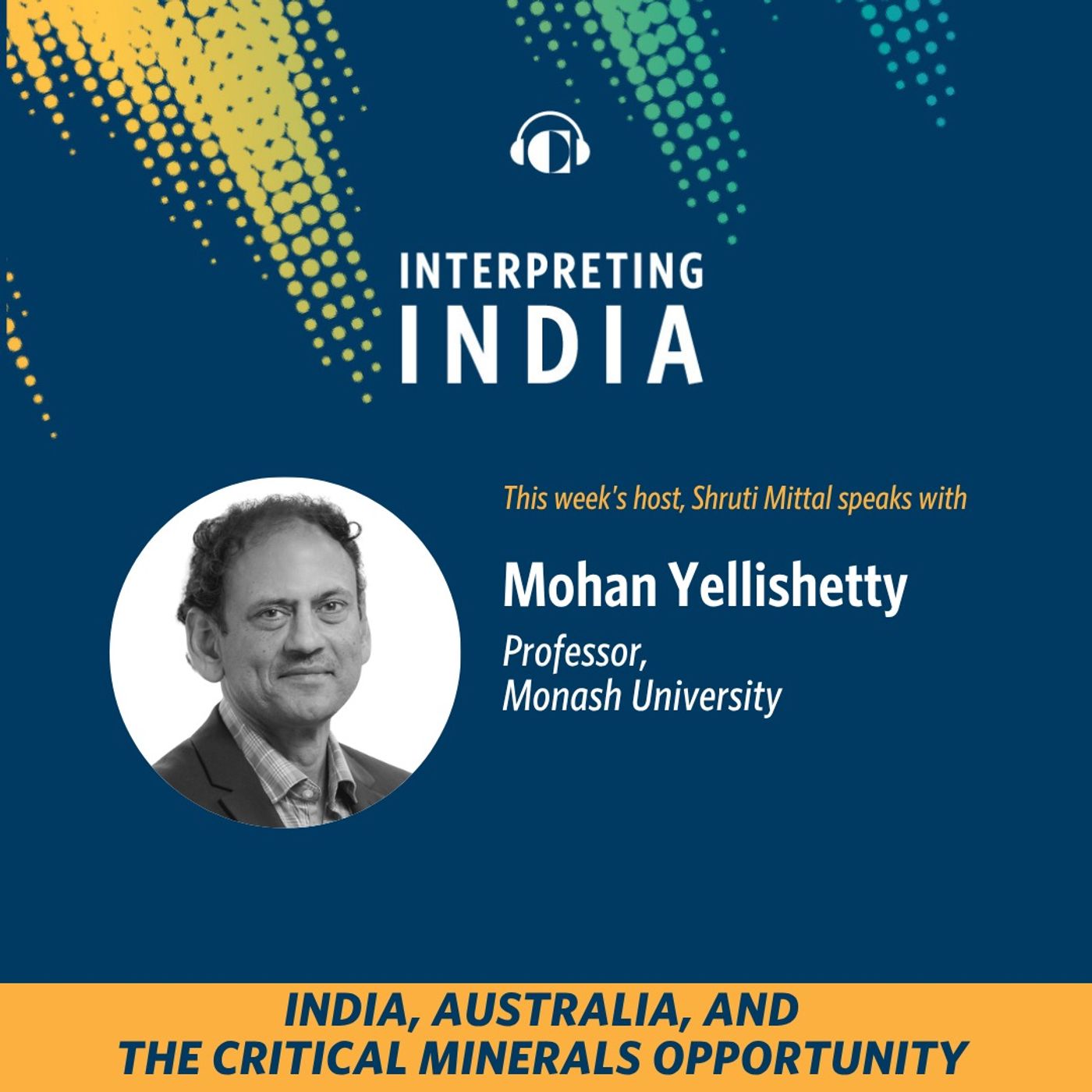
The conversation opens with a useful baseline on both countries. Australia has world-class mining equipment, technology, and services capabilities, and its mining sector contributes roughly 10 to 15 percent of GDP, yet it remains predominantly a raw material exporter with limited domestic demand. India has a large and growing demand for minerals to fuel its manufacturing ambitions, a vast talent pool, and competitive labour and energy costs, but has historically underinvested in systematic exploration, reserve creation, and processing relative to its long-term needs. The complementarity is clear, but Professor Yellishetty is equally clear about what is missing: while government-to-government and university-to-university...
Chokepoints, Economic Warfare and India's Strategic Options
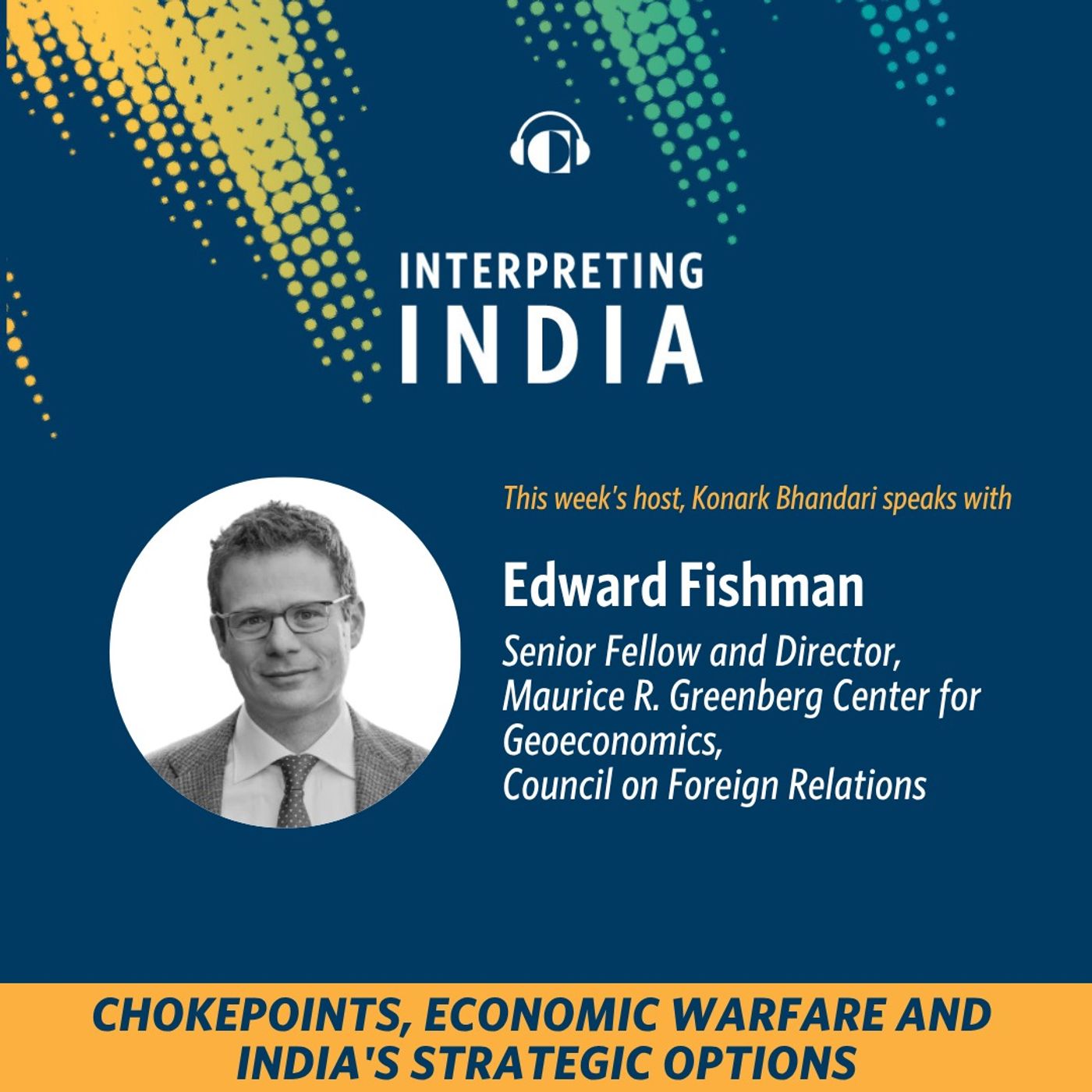
Edward lays out three criteria for what makes something a genuine choke point: dominant market share, difficulty to substitute, and the ability to weaponize it with asymmetric impact, hurting the adversary far more than yourself. All three are needed.
The U.S. dollar is involved in 90% of foreign exchange transactions. China refines 90% of the global supply of rare earths. Nvidia designs 85% of advanced AI chips. These are all choke points. Canada's dependence on the U.S. market, on the other hand, is not, because imposing embargo-level tariffs on Canada would be just as damaging to the U...
India's AI Ambitions and the Road to Viksit Bharat | AI Summit Special
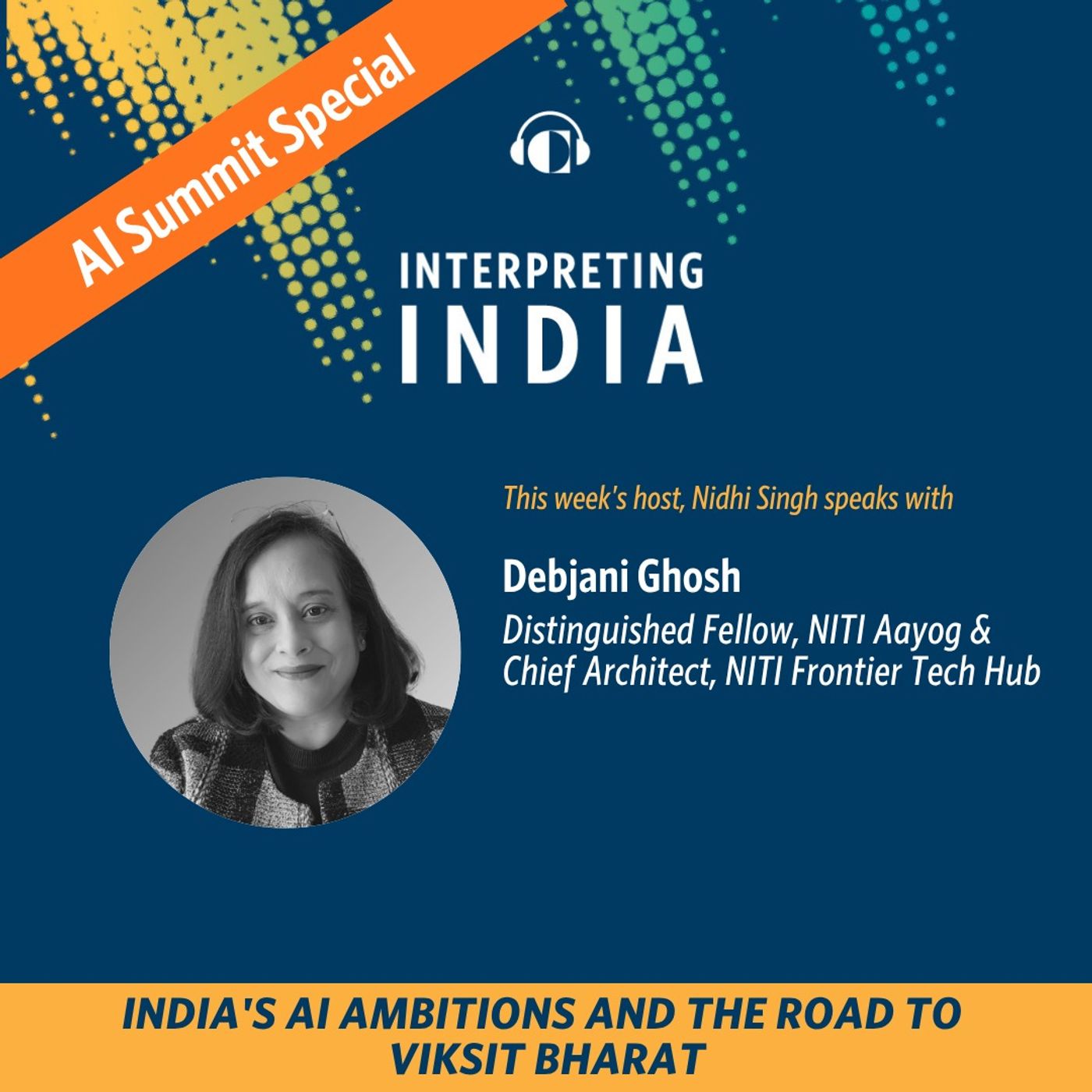
This is the final episode of our special series on the India AI Impact Summit, examining the conversations, decisions, and debates that are shaping global AI governance.
This episode explores:
India has a clear North Star in Viksit Bharat 2047, but what will it actually take to get there and what role does AI play? Should India focus on diffusing AI or building its own frontier research capability, and is that even the right way to frame the question? What did the working group on AI for Economic Growth and Social Good set out to do, and...Did India's AI Summit Get Safety Right? AI Summit Special
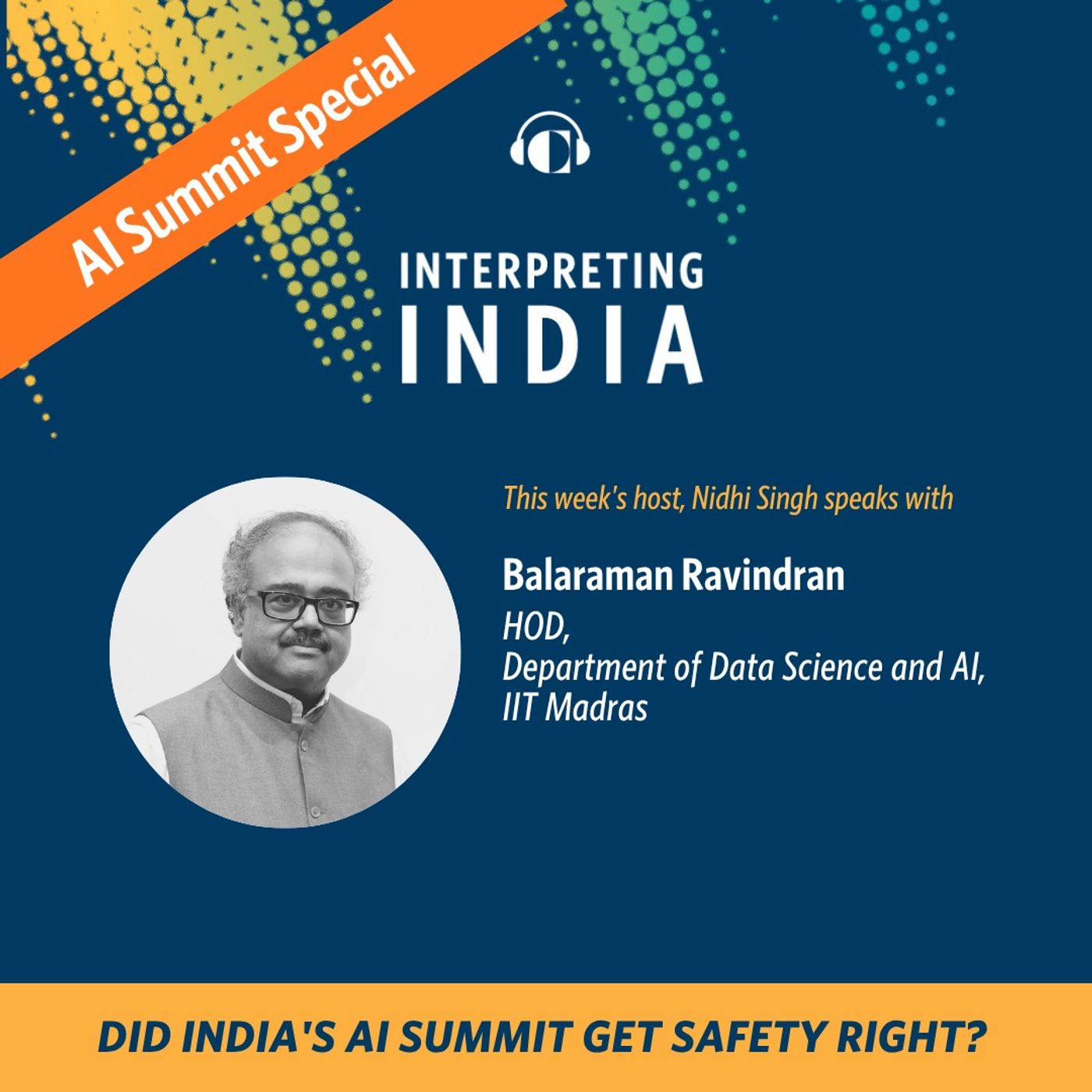
This episode is part of our special series on the India AI Impact Summit, examining the conversations, decisions, and debates that are shaping global AI governance.
Professor Ravindran addresses early on the perception that the India summit sidelined safety. More than 60% of the summit's events and discussions were focused on safety, trust, and cross-border collaboration. The framing shifted, and deliberately so. When the summit came to the Global South, leading with existential risk, rather than the very real opportunity AI presents to improve healthcare, education, and public services for hundreds of millions of people, would have been...
Subsea Cables, Trusted Networks, and India's Strategic Opportunity
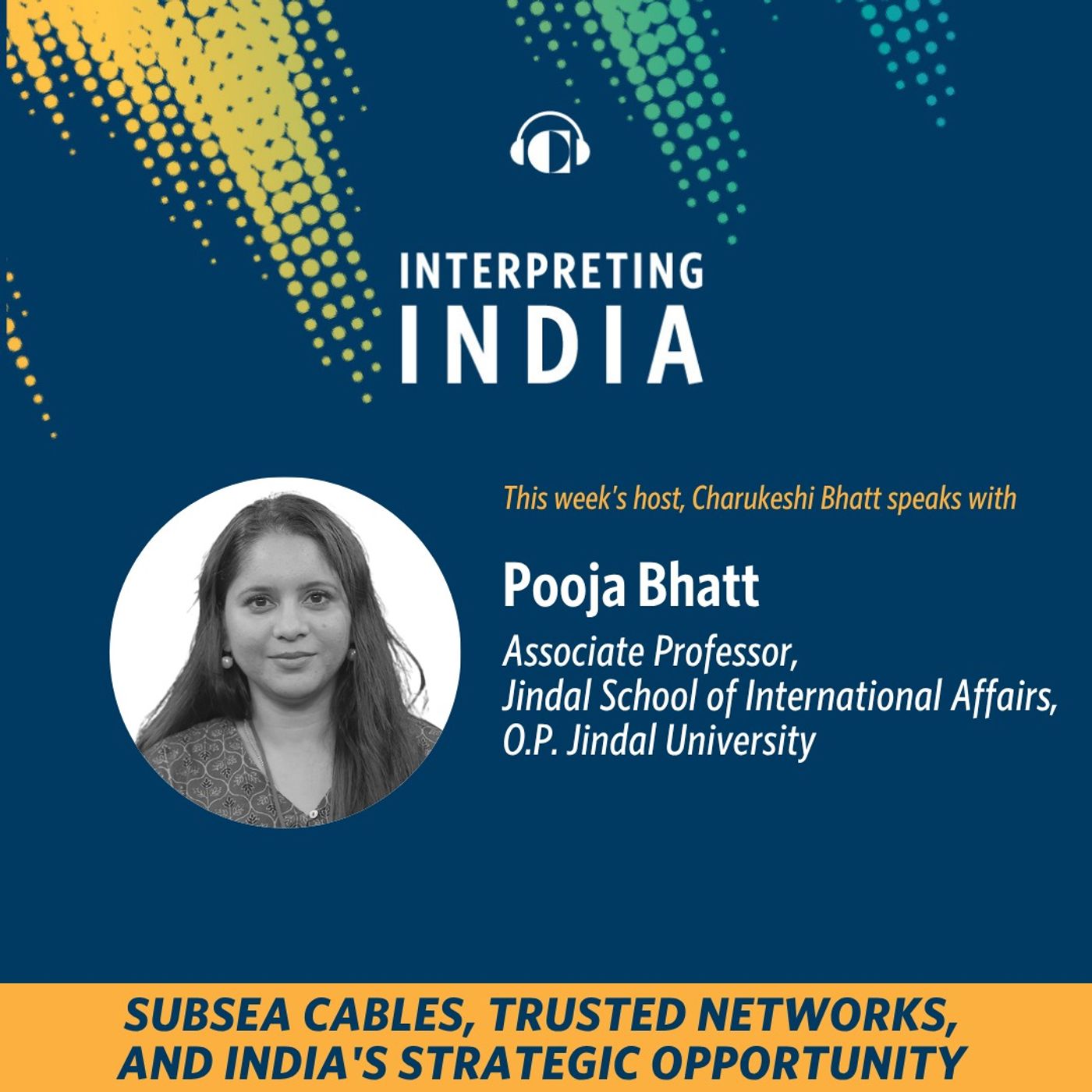
Pooja opens with a mismatch that frames the entire conversation. India consumes around 20% of global internet traffic but accounts for just 2% of global subsea cable infrastructure. Even with the expansion of landing stations currently underway, the gap between India's digital ambitions and its physical cable footprint is significant. Part of this is historical: cable infrastructure was concentrated in Mumbai and Chennai, and building it out is prohibitively expensive. Part of it is structural: the raw materials, the technology, and crucially the cable-laying ships that make all of it possible are controlled by a very small number of countries.
<...AI Literacy and the Future of Work in India
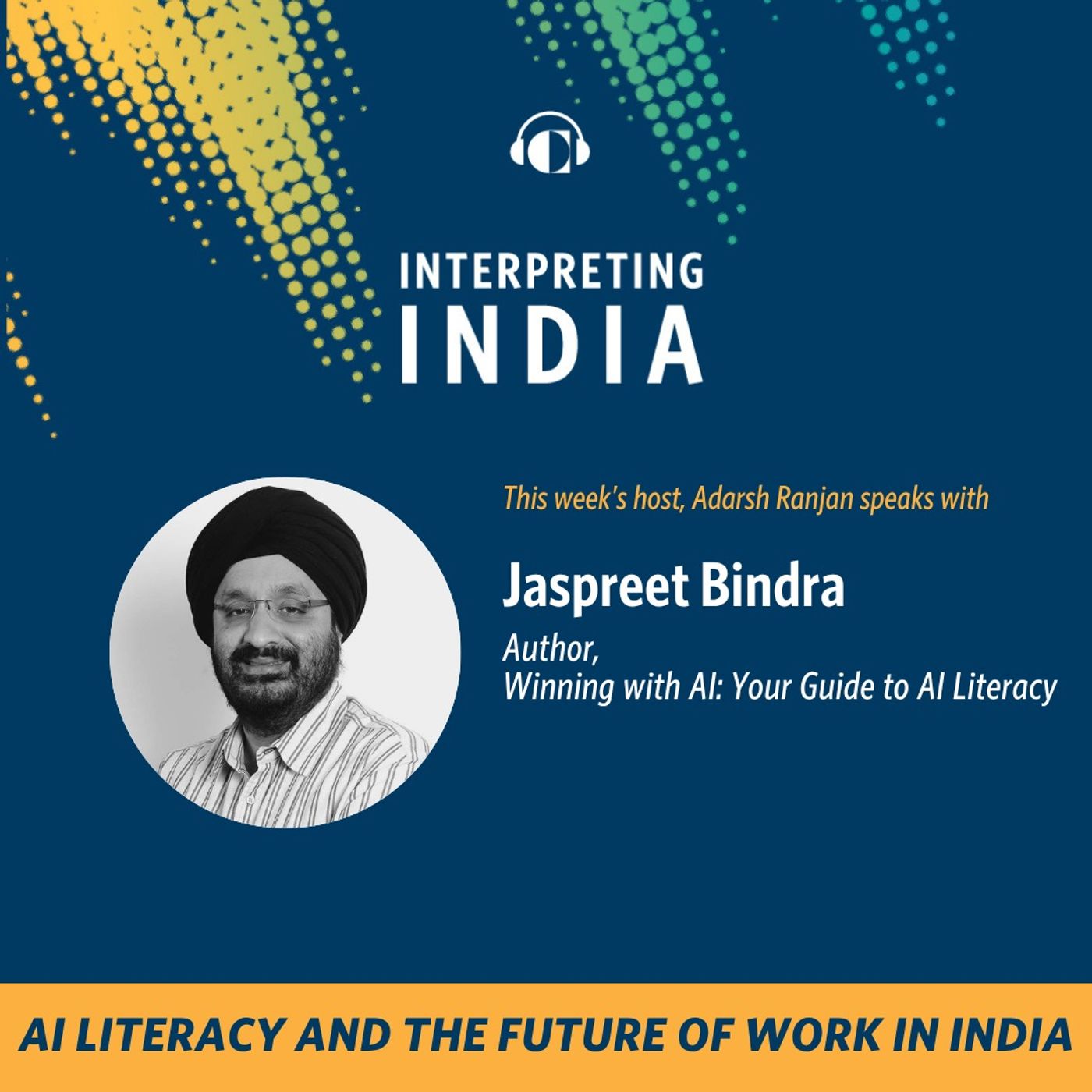
Jaspreet's framing for the AI and work debate is worth staying with. He is not dismissive of disruption: he thinks AI will destroy certain jobs, create new ones, and the rupture will be real. But he pushes back on the idea that job destruction is the right frame. The more useful question, he argues, is what happens to workers, and the answer to that depends almost entirely on whether people develop the skills to move into the roles that AI creates rather than the ones it displaces. His reference point is the IT sector itself, an industry born out...
Can AI Resources Be Democratized? AI Summit Special
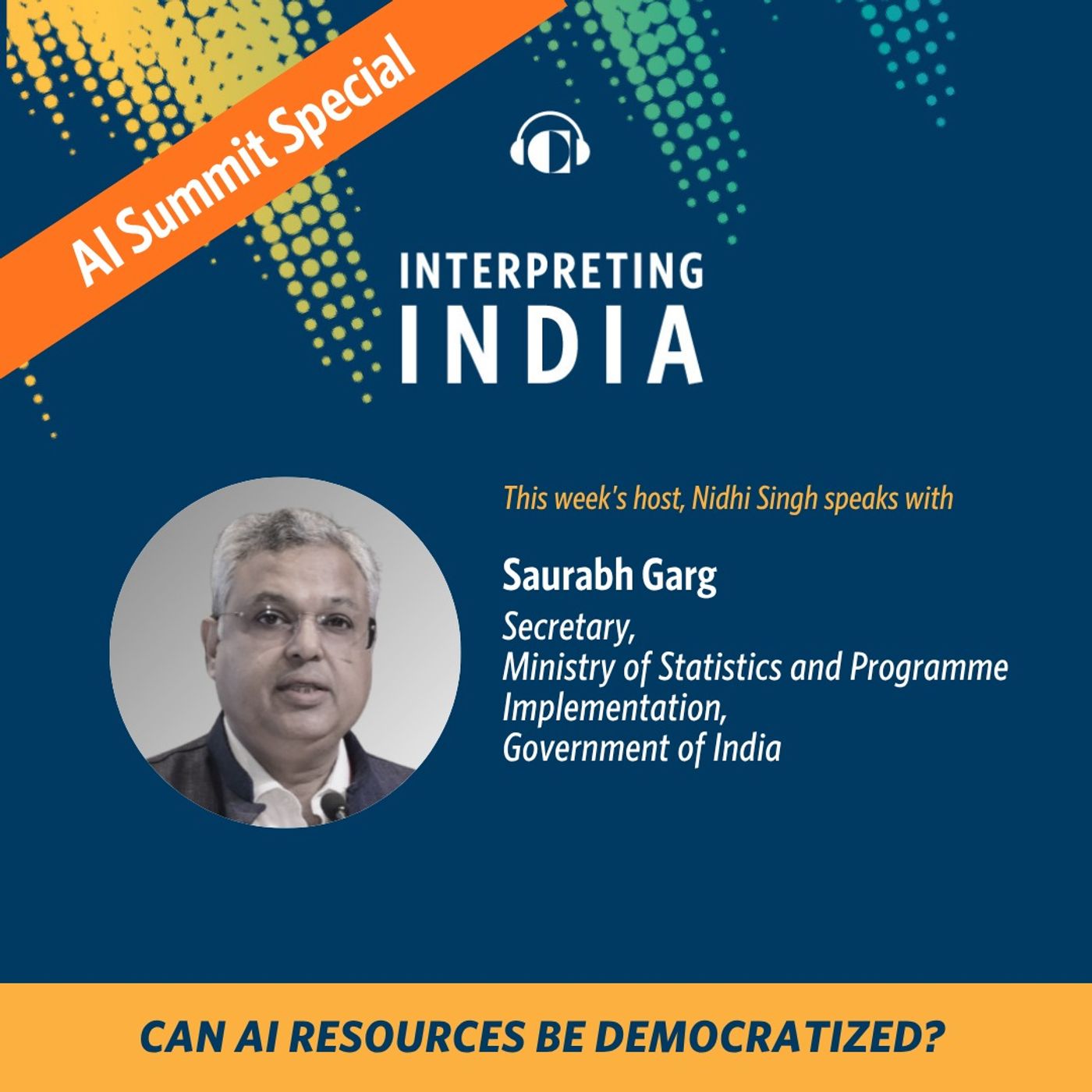
This episode is part of our special series on the India AI Impact Summit, examining the conversations, decisions, and debates that are shaping global AI governance.
The working group was designed from the start to be bottom-up rather than top-down. Rather than starting from the positions of countries already leading in AI, the agenda was shaped through consultations, bilateral discussions, and deliberate outreach beyond official channels. The concerns that emerged were consistent: uneven concentration of compute, limited access to quality data, dependence on external platforms, and the risk that much of the global south would not be...
Space Security in the Age of AI
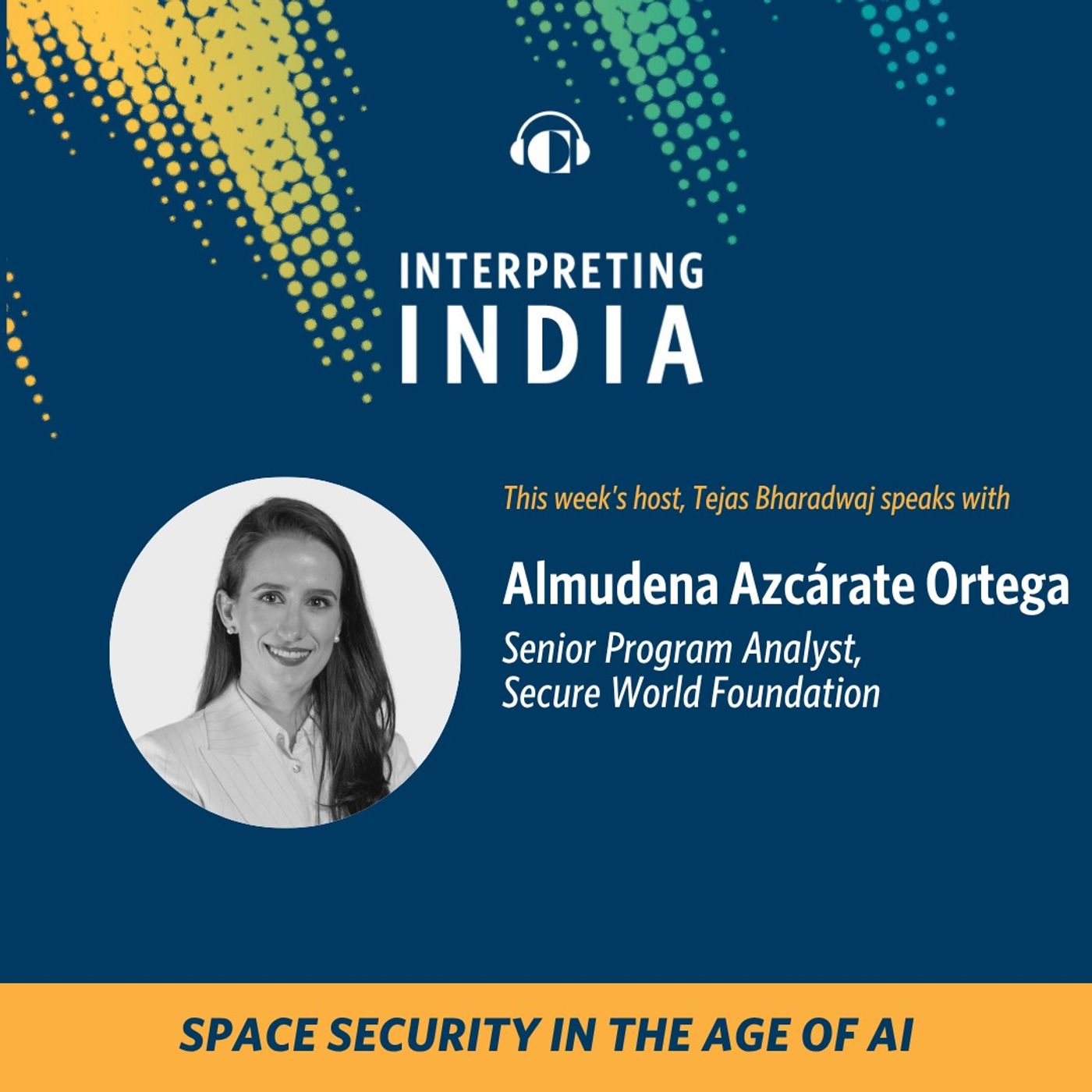
Almudena opens with a distinction that anchors the entire conversation: space security, unlike space safety, is about intentional harm. It concerns deliberate attempts to disrupt, deny, or destroy space systems and the services they provide, and it is discussed not in Vienna at COPUOS but in forums like the Conference on Disarmament and the UN General Assembly's First Committee in Geneva. AI, she argues, is not new to space systems, having been slowly integrated since the late 1990s for data processing and autonomous operations, but its implications for security are only beginning to surface in multilateral discussions.
...
An African Perspective for Building AI for Global South | AI Summit Special
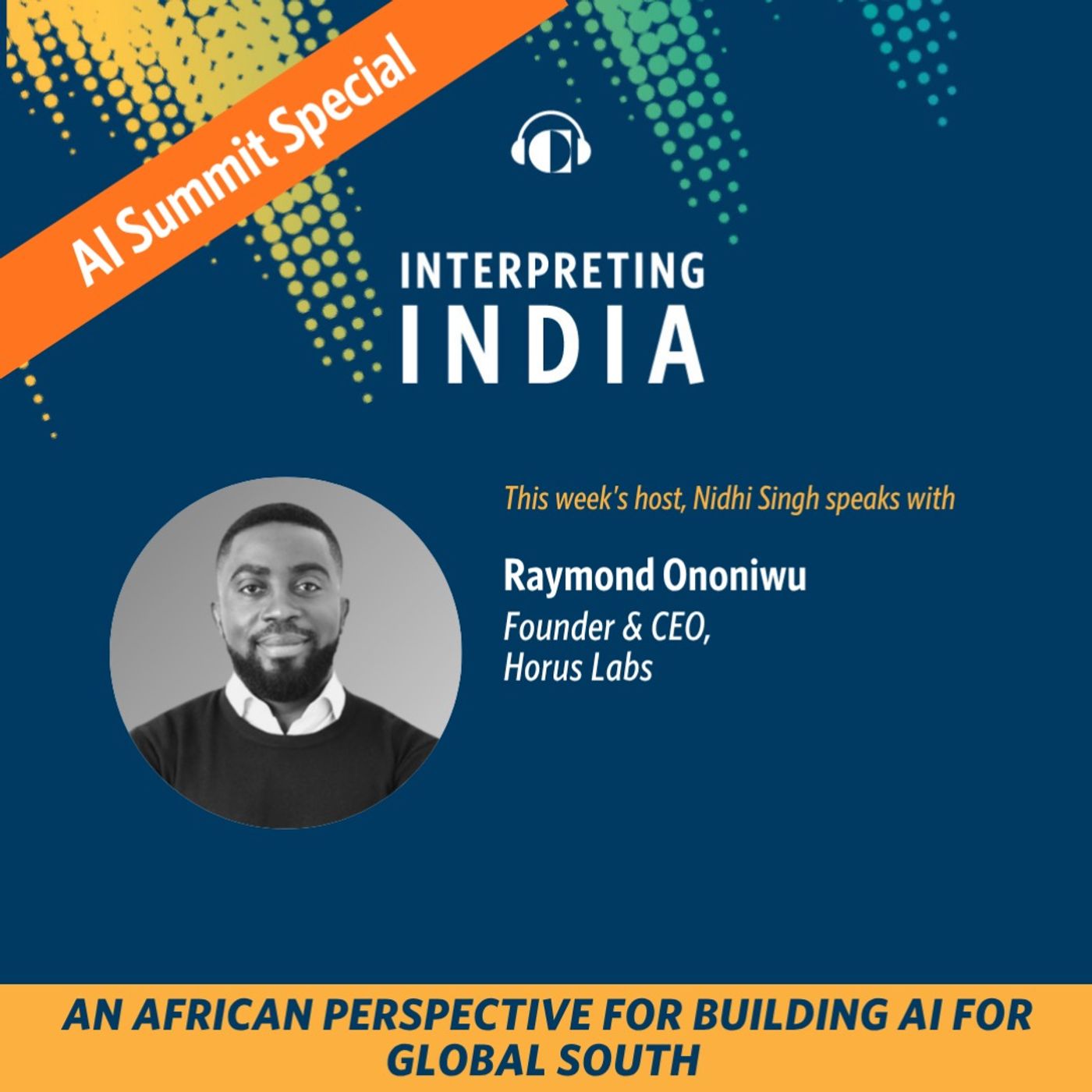
This episode is part of our special series on the India AI Impact Summit, examining the conversations, decisions, and debates that are shaping global AI governance.
Raymond draws a distinction early in the conversation that shapes everything that follows: training and inference are not the same thing, and conflating them is leading a lot of countries to make expensive mistakes. Training, he says, is like building the engine. Inference is running the transport system every single day. Most countries do not need to build the engine. What they need is airports, roads, and reliable infrastructure that gets...
The India-EU Trade Deal: What It Delivers and What It Doesn't
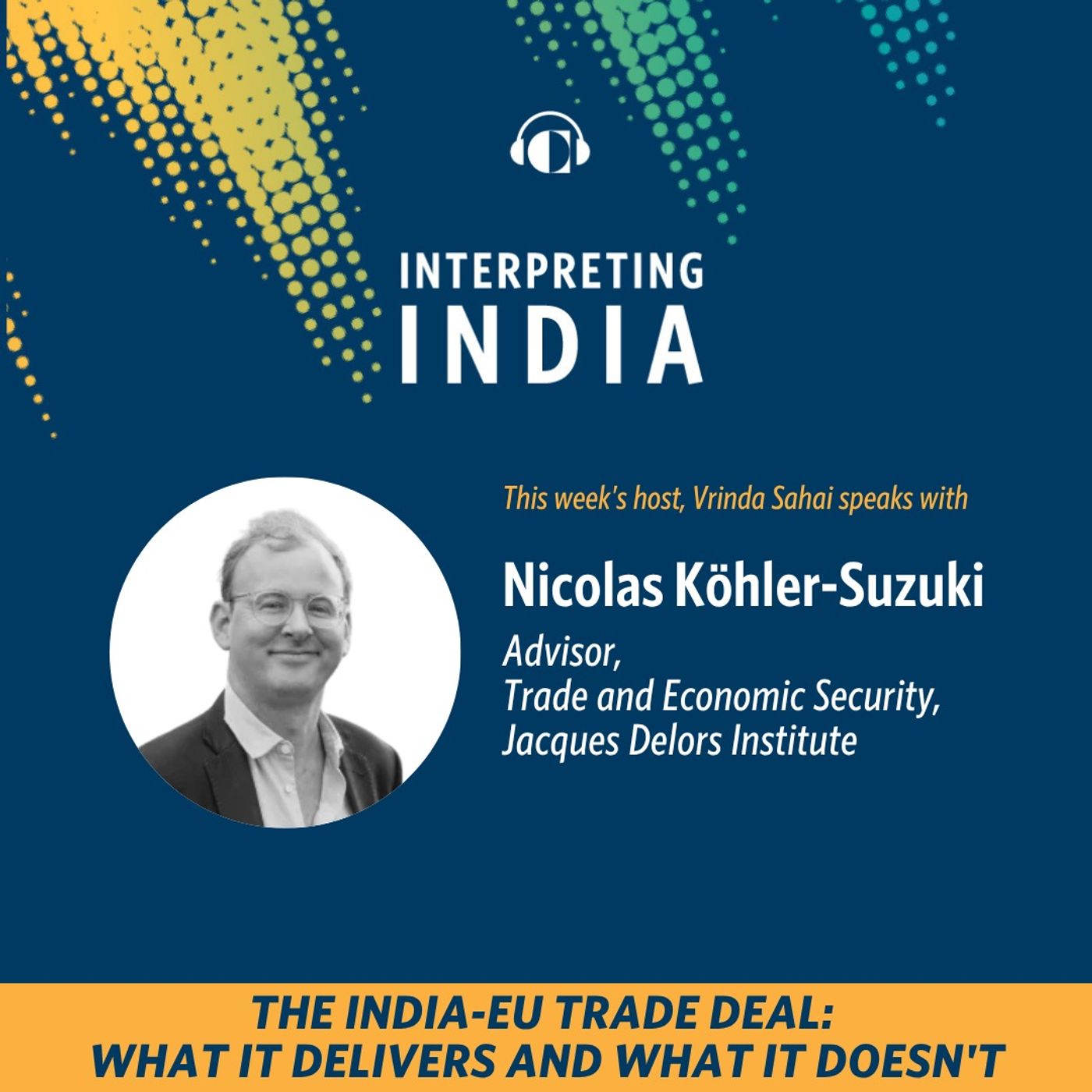
For most of the last decade, a trade deal between India and the EU seemed unlikely. The nudge came as the world changed around both. Nicolas points to three converging forces: the pressure of US tariffs under Trump, which gave both sides political incentive to show they had other partners; the shared interest in reducing dependence on China for critical supply chains; and India's loss of GSP preferential treatment in the EU from January this year, which created a very concrete economic urgency on the Indian side. Together, these forces did what years of diplomatic goodwill could not.
<...From Bletchley Park to Delhi and What Comes Next | AI Summit Special
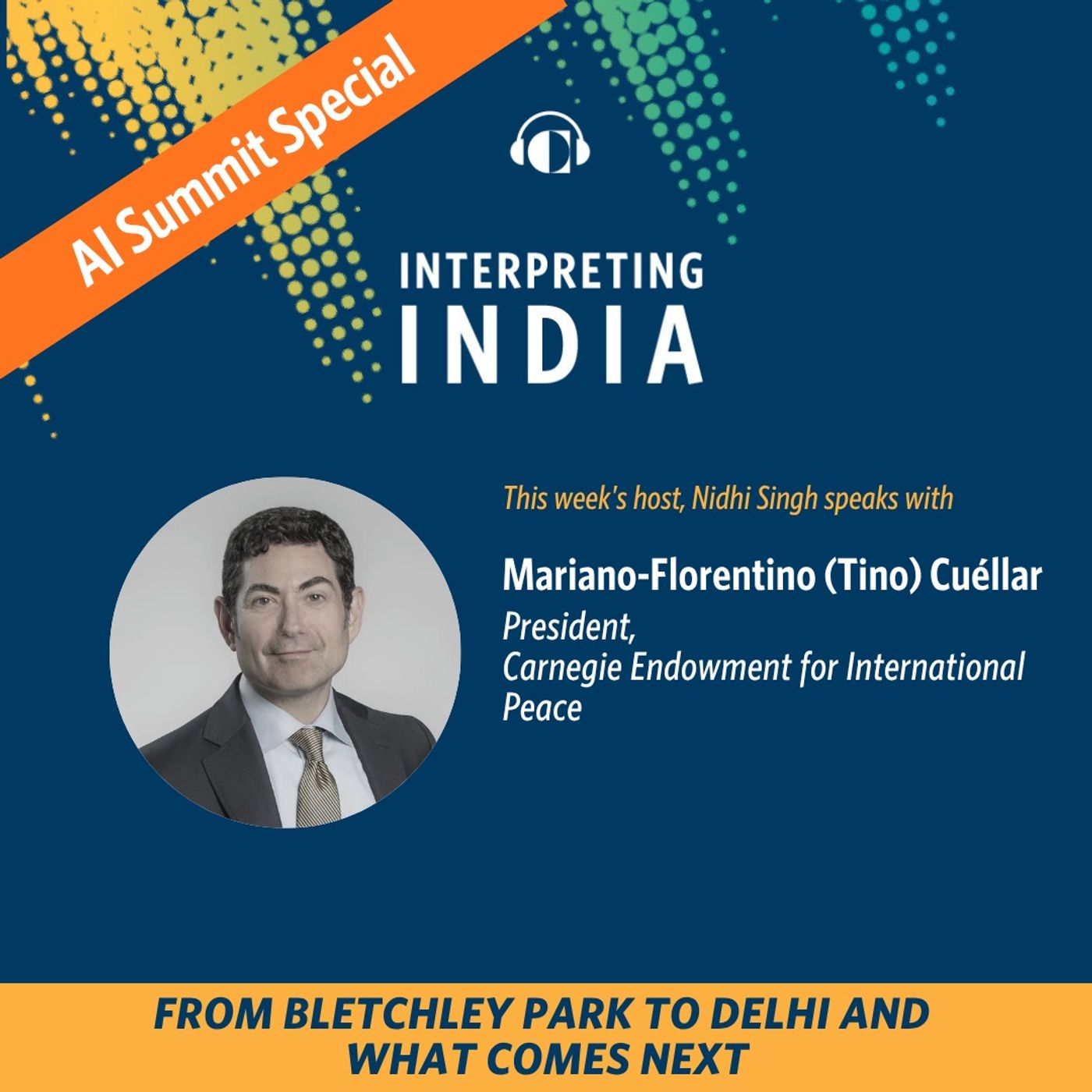
This episode is part of our special series on the India AI Impact Summit 2026, examining the conversations, perspectives, and debates that are shaping global AI discourse.
Tino has been in the room at all four AI summits, and his account of how the conversation has evolved is both candid and grounding. Bletchley Park, he says, was about putting AI on the agenda as a matter of global significance. Seoul was about bringing the private sector formally into that conversation. Paris marked a pivot towards economic opportunity, reflecting a growing recognition, particularly in Europe, that being seen only...
Data, AI, and the Laws Trying to Keep Up
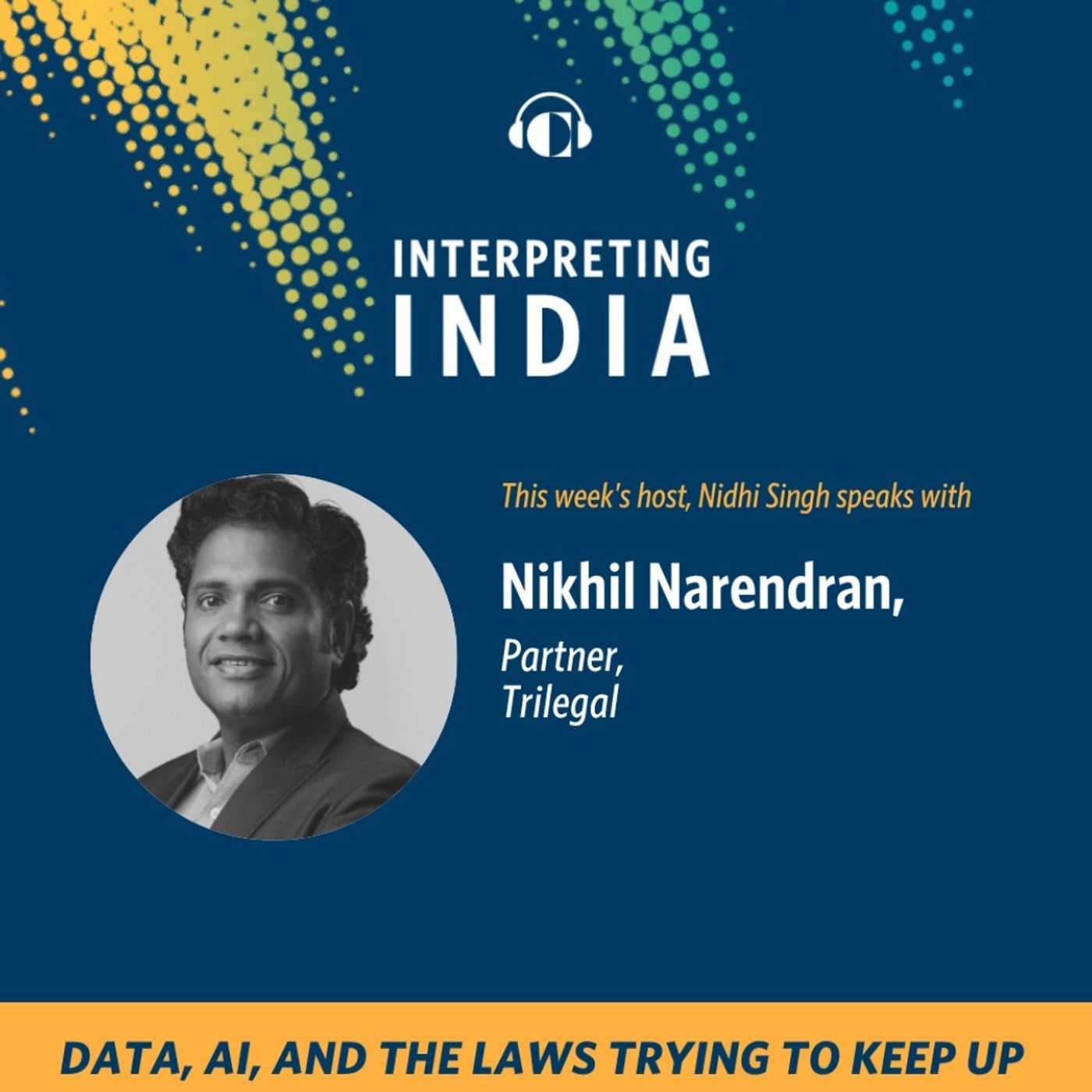
The conversation begins with a close look at India’s data protection regime, particularly the DPDP Act and its emphasis on consent. Nikhil challenges the perception that the law is overly consent-driven, pointing to a range of exemptions and alternative legal bases for processing data. At the same time, he highlights gaps in enforcement and deterrence, arguing that the current framework may struggle to address large-scale misuse of data or systemic harms.
On AI governance, Nikhil makes a case that India does not need a sweeping, EU-style AI law, at least not yet. Given India's legislative pace, en...
Inside the Iran Conflict: Power, Strategy, and India’s Balancing Act
The conversation begins with a look at where the conflict stands today and how Iran has managed to absorb significant military pressure while still responding in a measured way. Dharmendra explains how the conflict has expanded beyond immediate borders, affecting energy flows and drawing in multiple countries, while also reinforcing a sense of internal unity despite economic strain.
It then turns to Iran’s internal system, where different power centres, from the political leadership to the security establishment, continue to function together even under pressure. The episode also reflects on the role of nationalism, suggesting that even in...
Recalibrating BRICS: India’s Moment in a Fragmented World
The episode begins with a reflection on Brazil’s 2025 BRICS presidency, which emphasized continuity with the bloc’s original reformist agenda—particularly the push for reform of global financial institutions and greater representation for emerging economies. While Brazil focused on trade facilitation, climate finance, and taxation cooperation, progress on deeper monetary coordination and mechanisms such as the Contingent Reserve Arrangement remained limited.
Ana Garcia also notes the gap between expectations and reality within BRICS. Despite its growing geopolitical visibility, the bloc has struggled to develop unified responses to global crises and remains economically imbalanced, with intra-BRICS trade heavil...
Deciphering the “Mother of All Trade Deals”: The India–EU FTA
Kumar frames the India–EU FTA as a deal India needed, not one it merely chose, arguing that with the multilateral trade system weakened, FTAs have become the practical route to secure market access and signal openness to investment. He places the EU among India’s “$100 billion club” trading partners and explains why this agreement fills a gap India cannot realistically close with China, and cannot replicate with the United States in the form of a full FTA.
On timing, he calls the early 2010s a missed opportunity but notes that current geopolitical conditions have raised India’s value fo...
AI Adoption Journey for Population Scale: The UCAF Framework
AI progress is often measured by the number of pilots launched, but this episode argues the real unit of progress should be how many AI use cases are reliably in production and embedded into everyday systems. Shalini Kapoor distinguishes AI innovation (models, chips, and breakthroughs) from AI adoption, emphasizing that adoption is frequently harder because it demands institutional integration, behavior change, and clear accountability—especially when AI advice affects livelihoods, health outcomes, or legal decisions.
Tanvi Lall explains “pilot purgatory” as the frustrating middle state where use cases never move beyond controlled deployments. She shares how recurring barrie...
Scarcity, Sovereignty, Strategy: Mapping the Political Geography of AI Compute
As AI systems grow more powerful, the computational infrastructure behind them has become a strategic resource, one that is unevenly distributed across the world. This episode takes a deep look at the three layers of compute sovereignty: where data centers are located, who owns them, and who manufactures the chips that power them. Zoe explains how access to compute has quickly shifted from a technical issue to a core question of economic resilience and sovereignty.
The conversation unpacks new research showing how few countries actually host advanced AI-relevant data centers, and how global dependencies on companies like...
Cybersecurity in Outer Space: A Growing Concern
The conversation explores how cybersecurity is integral to space operations, drawing parallels with traditional air defense strategies. Blount discusses the historical context of cybersecurity in space, the role of international law, and the challenges posed by non-state actors. He emphasizes the need for a holistic approach to cybersecurity that includes both space-based and terrestrial components, and the importance of international cooperation in addressing these challenges.
Blount warns of the increasing threats from cyber-attacks on space assets and the need for robust legal frameworks to ensure accountability and security. He calls for the development of comprehensive cybersecurity strategies...
Unbundling AI Openness: Beyond the Binary
The episode challenges the familiar “open versus closed” framing of AI systems. Sharma argues that openness is not inherently good or bad—it is an instrumental choice that should align with specific policy goals. She introduces a seven-part taxonomy of AI—compute, data, source code, model weights, system prompts, operational records and controls, and labor—to show how each component interacts differently with innovation, safety, and governance. Her central idea, differential openness, suggests that each component can exist along a spectrum rather than being entirely open or closed. For instance, a company might keep its training data private while making its...
India’s Air Defense After Operation Sindoor: Lessons and the Road Ahead
India’s air defense has transformed from sparse radars in the 1960s to a multilayered network anchored by the Integrated Air Command and Control System (IACCS), linking radars, interceptors, and layered missile systems into a cohesive shield. Air Marshal Diptendu Choudhury underscores how decades of preparation, constant operational readiness, and the stress test of Operation Sindoor demonstrated the value of Army–Air Force integration and cost-effective counters to drones and missiles. He emphasizes that air defence is no longer just about protection—it is about extending reach into adversary airspace and enabling India’s offensive air power to operate with con...
Military AI and Autonomous Weapons: Gender, Ethics, and Governance
The episode opens with Bhatt framing the global stakes: from drones on the battlefield to AI-powered early warning systems, militaries worldwide are racing to integrate AI, often citing strategic necessity in volatile security environments. Mohan underscores that AI in conflict cannot be characterized in a single way, applications range from decision-support systems and logistics to disinformation campaigns and border security.
The conversation explores two categories of AI-related risks:
Inherent risks: design flaws, bias in datasets, adversarial attacks, and human–machine trust calibration.Applied risks: escalation through miscalculation, misuse in targeting, and AI’s role as a forc...Beyond Superintelligence: A Realist's Guide to AI
The episode begins with Kapoor explaining the origins of AI Snake Oil, tracing it back to his PhD research at Princeton on AI's limited predictive capabilities in social science domains. He shares how he and co-author Arvind Narayanan uncovered major methodological flaws in civil war prediction models, which later extended to other fields misapplying machine learning.
The conversation then turns to the disconnect between academic findings and media narratives. Kapoor critiques the hype cycle around AI, emphasizing how its real-world adoption is slower, more fragmented, and often augmentative rather than fully automating human labor. He cites the...
Navigating the Open v. Closed Source AI Debate with Kailash Nadh

The episode opens with an in-depth discussion about the value of open source as a model of development and how the definitional contours of open-source AI differ from those of traditional open-source software. The discussion also explores the characteristics and challenges that distinguish open-source AI models from conventional software development approaches.
The discussion goes on to address recent strategic shifts in the AI industry towards more open development, sparked by developments like DeepSeek's open-source R1 model and leaked internal assessments suggesting that open-source communities may be outpacing tech giants.
The discussion also explores the complex...
Interpreting China: From the LAC to Taiwan – Mapping China’s Assertiveness

In this conversation, Aadil Brar and Saheb Singh Chadha examine how China's strategic behavior across the India-China border, Taiwan Strait, and South China Sea reflects a broader effort to create regional influence and redefine border security under Xi Jinping. Aadil explains how Beijing frames these actions as issues of national sovereignty, using military presence and political rhetoric to entrench its claims.
They explore the “chain reaction” thesis, which suggests that China prepares for simultaneous tensions on multiple fronts in anticipation of external responses—especially in the event of a Taiwan contingency. This perspective, Aadil argues, helps explain China’...
Interpreting China: The People’s Liberation Army—Reforms and Challenges

Saheb and Suyash begin by laying out where the PLA stands today in terms of its strengths, weaknesses, and the factors driving its evolution. While the PLA has made major strides in modernizing across land, air, sea, space, and cyber, it still struggles with issues like deep-rooted corruption, a lack of well-trained personnel, and delays in meeting its own ambitious goals.
The discussion dives into how the PLA is preparing for a potential Taiwan contingency through new mobilization efforts, localized recruitment (especially in border regions like Tibet), and more frequent joint military exercises. Suyash argues that despite...
Interpreting China: The Economy and its Impact on Foreign Policy

In this conversation, Saheb and Amit examine the three major structural dilemmas facing China’s economy: a persistently low domestic consumption rate of around 40 percent of GDP, making China an outlier among large economies; the Chinese state’s reluctance to adopt fiscal stimulus due to its ideological opposition to welfarism; and a sharp slowdown in real estate investment that has had ripple effects across the broader economy. They also discuss how China’s enduring trade surpluses, particularly with the U.S., EU, and India are generating international pushback. Despite high trade volumes, Amit highlights the limited nature of Chinese invest...
Securing Space: Opportunities for U.S.-India Cooperation in a New Strategic Frontier

The conversation delves into the shifting contours of global space governance, touching on the rise of dual-use technologies, the importance of transparency and norms in space activities, and the need for trusted partnerships. Samson outlines how India and the U.S. can work together to ensure space remains a stable and secure domain, citing examples from recent dialogues and space exercises.This episode underscores the importance of rules-based order in space and the benefits of integrating space cooperation into broader diplomatic frameworks of both countries, including under the Quad and the U.S.-India strategic tech and defence partnership.<...
India's Defence Industry: The State of Play

Episode Notes
Lt Gen P. R. Shankar outlines the evolution of India’s defense industry and how it is nurturing a growing ecosystem of indigenous production. He highlights that India’s armed forces have always been adequately equipped for national defense, the key question being whether it can develop a defence industry that would enable it to act as a regional power.
The discussion explores the historical structure of India’s defence sector, traditionally dominated by public sector organizations such as the Defence Research and Development Organisation (DRDO). It traces the gradual but significant entry of pri...
The Missing Pieces in India’s AI Puzzle: Talent, Data, and R&D

Anirudh Suri outlines the current AI landscape, discussing how the U.S. and China dominate the AI space while other nations, including India, strive to carve their own niches. The discussion focuses on India's AI strategy, which has emphasized well on compute resources and the procurement of GPUs. However, Suri argues that India's AI ambitions will remain incomplete unless equal emphasis is placed on talent, data, and R&D.
Key challenges in these areas include the migration of top AI talent, the lack of proprietary data for Indian researchers, and insufficient investment in AI R&D. The...
Trade, Tariffs, and Technology: U.S.-India Relations in Trump’s Second Term

Peter Harrell outlines the Trump administration's evolving approach to tariffs and their implications for U.S.-India trade relations. The discussion covers the impact of proposed reciprocal tariffs, which could significantly affect Indian exports, and explores opportunities for India to leverage cooperation with the U.S. on Chinese overcapacity as a strategic bargaining tool.
The conversation also delves into India’s EV policy aimed at attracting Tesla, its semiconductor supply chain challenges amid U.S. scrutiny of Chinese exports, and the potential for India to benefit from a collective tariff approach with the U.S. and the EU...
Trump 2.0: Navigating the India-U.S. Relationship in a New Era

This episode explores the trajectory of India-U.S. relations as Donald Trump embarks on his second term as president. Arun K. Singh provides a detailed analysis of the highs and lows during Trump’s first administration. He highlights major milestones like the revival of the Quad, the recognition of India as a major defense partner, and the Strategic Trade Authorization-1 that enabled advanced technology access. Simultaneously, he addresses challenges such as tariffs, trade deficits, and immigration policies that strained the partnership.
Looking ahead, the discussion focuses on the implications of Trump’s "America First" approach, the complexities of U...
Syria in Transition: Regional Dynamics and India's Interests

This episode unpacks several critical issues shaping the future of Syria and its broader regional impact. Gaddam Dharmendra provides a historical context to Syria’s crisis, beginning with the Arab Spring, the civil war, and the consolidation of Bashar al-Assad’s regime with the support of Iran and Russia. He sheds light on the structural weaknesses in Syria's economy and governance that led to its fragmentation and the rise of Hayat Tahrir al-Sham (HTS) as a significant player in the ongoing political transition.
The conversation also delves into the role of international actors in shaping Syria’s future...
Bridging East and West: India’s Pursuit of Stability Amid China, Russia, and U.S. Dynamics

This episode unpacks several key issues that shape India’s role on the global stage. As India navigates the path to re-establishing stability along its contested border with China, Gokhale and Varma analyze what the recent BRICS Summit outcomes and new patrolling agreements mean for India-China relations. They also explore the broader implications of India’s balancing act between the U.S. and Russia, especially in the context of the Ukraine crisis and India’s role as a potential communicator.
The conversation touches on India's long-term approach to its partnership with the U.S., considering the upcoming U.S. e...
India's Lunar Exploration: Past, Present, and Future with Jatan Mehta

India's lunar exploration journey began with Chandrayaan-1, which marked a significant milestone in 2008 by becoming the first Indian mission to orbit the moon. This mission also contributed to the discovery of water ice on the moon, catalyzing renewed global interest in lunar exploration. India has since built on this success with subsequent Chandrayaan missions, most recently Chandrayaan-3, which achieved a successful soft landing on the moon.
In this episode, Jatan Mehta discusses the strategic importance of lunar exploration for India and how Chandrayaan-3 has provided India with a solid foundation for future missions. He emphasizes that while...
The U.S.-India Partnership Under Modi and Biden with Arun K. Singh

The Modi-Biden era is characterized by a profound deepening of ties between India and the U.S., with significant cooperation in critical and emerging technologies, enhanced defense partnerships, and strengthened diplomatic ties. Arun K. Singh discusses initiatives such as the iCET and the INDUS-X, which bolster the partnership, particularly in high-tech sectors like artificial intelligence, biotechnology, and defense. The conversation also covers strategic challenges and alignments, particularly concerning China and the broader Indo-Pacific region.
Throughout the episode, Singh articulates the nuanced shifts in policy and perspective shaping the relationship since the early 2000s. From nuclear agreements to...
Europe’s China Policy with Janka Oertel

There has been a significant transformation in Europe-China relations over the past decade, with a shift from economic optimism to cautious de-risking. While Europe has sought partnerships with China, particularly in industrial and technological sectors, there are increasing concerns about economic dependencies that may be leveraged by Beijing for political gain. The Russia-Ukraine war has further complicated the dynamic, as China’s support for Russia has created divisions within Europe regarding how to engage with China moving forward.
In this episode, Janka Oertel explains the key drivers behind Europe’s changing relationship with China and the ongoing deba...
