Maxwell Institute Podcast

The World Is God’s Home, and Christ Is God’s Homecoming
In this reflection on Isaiah 60, Rosalynde Welch explores homecoming as a scriptural image for the gathering of Israel, the Savior’s return, and God’s desire to dwell among his people. Tracing seven moments of divine presence—from Eden to the Restoration—she invites readers to see the world as God’s home and Christ as its homecoming.
Dr. John White's Conversion to The Church of Jesus Christ of Latter-day Saints
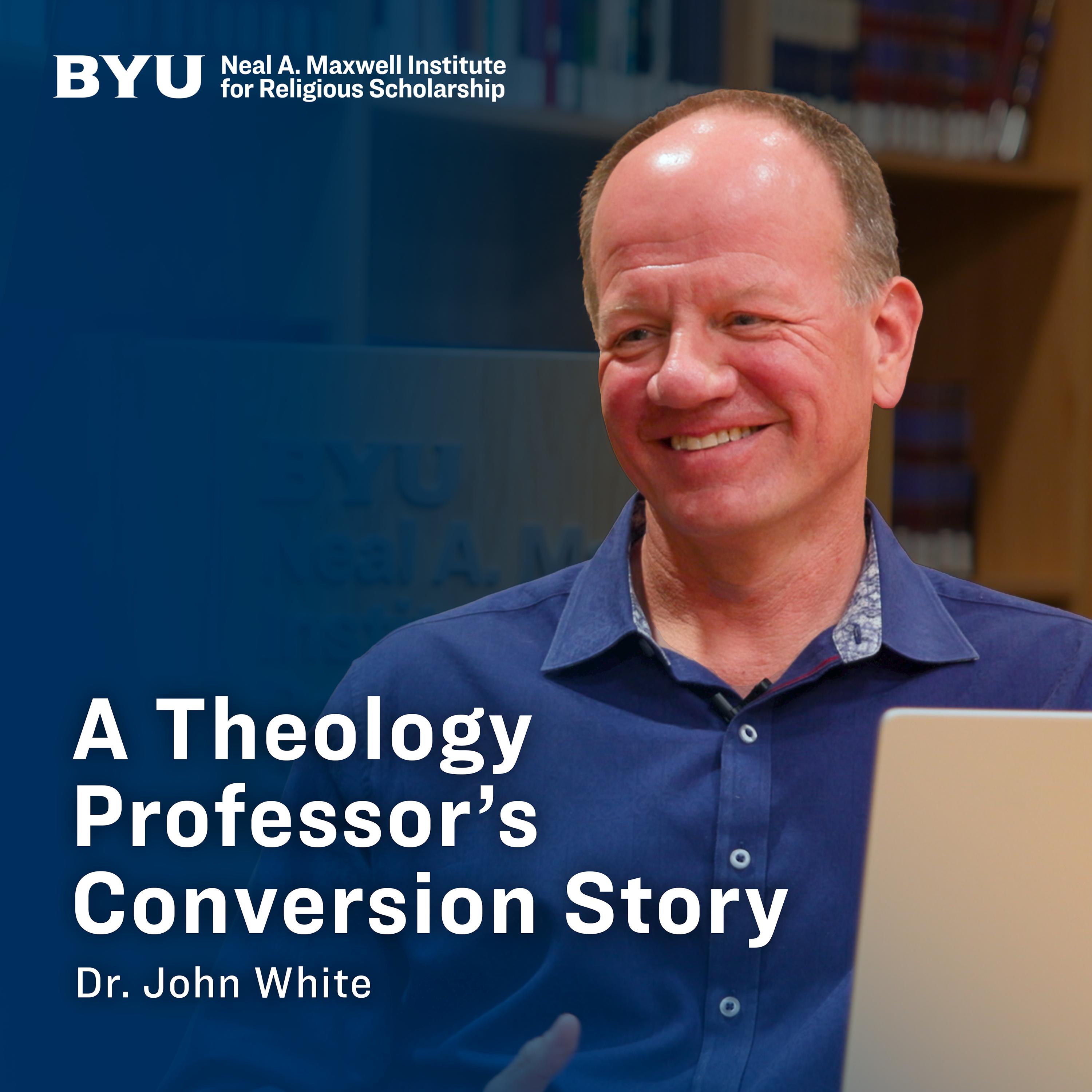
Dr. John B. White is a visiting research fellow at The Neal A. Maxwell Institute for Religious Scholarship at Brigham Young University. He previously spent 14 years as a professor of practical theology and ethics, where he also directed the Graduate Chaplaincy Program and co-founded the Faith & Sports Institute. He earned a PhD in theological ethics from the University of Edinburgh, and his work focuses on moral theology, character formation, embodiment, discipleship, and moral agency.
In this conversation with Rosalynde Welch, John shares the experiences that led him to join The Church of Jesus Christ of...
He Is Near That Justifieth Me
Katie Paxman reflects on Isaiah 50–57, exploring shame, divine nearness, Christ’s redeeming work, and the hope of restoration.
True and False Creation in Isaiah 40–49
Morgan Davis explores how Isaiah 40–49 contrasts God’s true creation with human-made idols and what that contrast teaches about self-deception, repentance, and God’s enduring care.
Another Cheer for Poetry in the Scriptures
J. B. Haws reflects on Isaiah 35, President Gordon B. Hinckley’s words at Neal A. Maxwell’s funeral, and poetry’s unusual power to offer hope and consolation.
Shaping Up Isaiah
Joseph M. Spencer examines the structure of Isaiah 1–12 and how its shape, reflected in the Book of Mormon, reveals a story of covenant, disaster, promise, and redemption.
Ecclesiastes Has a Public Relations Problem
Philip Barlow explores Ecclesiastes, its poetic form and pessimistic outlook, and what its realism, skepticism, and uncertainty can contribute to Latter-day Saint faith.
The Latter-day Saint Graduate Student, with Spencer Fluhman
This is Episode 1 of Faith in Every Footnote, a mentorship podcast for graduate students. All 10 episodes of the series can be found on the Faith in Every Footnote show on Apple Podcasts, as well as on Spotify and YouTube.
As a preview of the series, this episode is being shared on the Maxwell Institute Podcast. In this inaugural episode of Faith in Every Footnote, Spencer Fluhman, historian and former director of the Institute, joins Rosalynde Welch, Shawn Tucker, and graduate student co-host Noah Adams to discuss what it means to be a disciple-scholar. Together, they exp...
Introducing Faith in Every Footnote¹
This episode of the Maxwell Institute Podcast features the trailer for Faith in Every Footnote, a separate ten episode podcast miniseries from The Neal A. Maxwell Institute for Religious Scholarship. Listen to and follow Faith in Every Footnote on Apple Podcasts
Faith in Every Footnote is a mentorship podcast for graduate students navigating the challenges of academic life while strengthening their faith in Jesus Christ.
Hosts Rosalynde Welch and Shawn Tucker, alongside student hosts Noah Adams and Lara Buckwalter, sit down with leading scholars for candid conversations about faith, doubt, family...
For Such a Time as This
Rosalynde Welch reflects on Psalm 102, showing how lament can become praise and deepen discipleship amid suffering.
Praying the Psalms
Thomas B. Griffith reflects on Psalm 69 and the difficult psalms of complaint and vengeance, exploring how honest, inherited prayers can deepen discipleship, reshape the heart, and strengthen a believer’s relationship with God.
Prayer for Every Weather
Kim Matheson reflects on the Psalms as prayers for every human season, showing how lament, fear, anger, gratitude, and praise can all draw us toward God.
The Theology of Bristlecone Pines
Steve Peck reflects on Job, suffering, creation, and ancient bristlecone pines to consider how God’s world can humble, unsettle, and enlarge our search for meaning.
For Such a Time as This
Rosalynde Welch reflects on Esther through a 1985 Relief Society performance by her mother, showing how scripture takes on new meaning as each generation interprets, performs, and applies it to its own time.
Once Lost, Religious Authority Is Hard to Rebuild
Rosalynde Welch examines Ezra and Nehemiah as a story of rebuilding religious authority through scripture, covenant renewal, temple worship, and the people’s renewed trust in God.
On Bended Rules
Morgan Davis reflects on Uzziah, Hezekiah, and Passover to explore the difference between prideful presumption and humble covenant-seeking when imperfect circumstances complicate obedience.
A Prophet Named Huldah
Morgan Davis reflects on the prophet Huldah’s crucial role in 2 Kings 22, where her prophetic witness confirmed the authority of the rediscovered book of the law and helped shape Josiah’s reforms. Though often overlooked, Huldah stands as a significant figure in the formation of biblical faith and sacred history.
What Are Miracles For?
In this essay on 2 Kings 2–7, Philip Barlow reflects on Elisha’s miracles and asks what miracles are for, how we should understand them, and what place they ought to have in a life of faith.
Zeal and the Still Small Voice
Morgan Davis reflects on Elijah’s encounter with the still small voice in 1 Kings 19, exploring how God’s quiet instruction challenges zeal, violence, and spiritual overconfidence. In a world often drawn to loudness and certainty, Elijah’s story invites us to listen again for the voice of perfect mildness.
Lessons From Life’s Complex Stories
Avram Richard Shannon reflects on the complex story of David, Bath-sheba, and Uriah, inviting readers to seek moral and spiritual lessons from scripture without oversimplifying the lives of real people.
Abigail in Between
In this reflection on 1 Samuel 25, Kristian Heal explores Abigail’s courageous peacemaking between David and Nabal and invites readers to consider how Christ can transform foolishness, resentment, and offense into wisdom, reconciliation, and peace.
Saul Among the Prophets
Kristian Heal considers Saul’s calling, the Spirit’s role in shaping Israel’s leaders, and the deeper theological debate over kingship in the books of Samuel. Drawing on Deuteronomy, Judges, and later texts, he explores what Saul’s rise and decline reveal about covenant responsibility, prophetic authority, and the kind of king Israel was meant to have.
The Beauty and Risks of Costly Love
Rosalynde F. Welch explores the book of Ruth through the lens of “costly love,” considering the beautiful and complicated ways Orpah, Ruth, and Boaz each respond to need, loyalty, and covenant. The article asks what faithful self-giving looks like when sacrifice is both spiritually powerful and morally risky.
Longing for a Better Way
J. B. Haws examines the story of Gideon in Judges, highlighting its moral tension and unanswered questions. This reflection invites readers to consider how faith, power, and human weakness intersect—and why these ancient stories leave us longing for a higher, more Christlike way.
“As I Was with Moses”
Scott Esplin reflects on Joshua’s calling to succeed Moses and the Lord’s promise, “As I was with Moses, so I will be with thee.” This essay explores how faith in God’s constancy helps us move beyond comparison and find courage in our own callings.
“Hear, O Israel“
Andrew Reed reflects on Moses’s final teachings in Deuteronomy, highlighting covenant remembrance, holiness, care for the poor, prophetic succession, and trust in God’s promises.
Perceiving the Wild Abundance of the Wilderness
In the wilderness of Numbers, suffering and abundance exist side by side. Robbie Taggart explores how God’s grace can feel both daily and overflowing—and how our ability to perceive divine abundance, even in hardship, shapes whether we wander in despair or awaken to the promised land already before us.
Beginning Again
What does it mean to begin again? Drawing on Exodus 35–40 and Leviticus, Jennifer Champoux shows how ancient patterns of covenant and cleansing reveal Christ’s power to offer renewal, healing, and fresh starts.
Student Spotlight, with Melissa Jensen and Sam Petersen
Two research assistants at the Neal A. Maxwell Institute for Religious Scholarship at Brigham Young University join Rosalynde F. Welch to reflect on the questions, ideas, and mentorship that shaped their work. Melissa Faith Jensen shares what her study of miracles in the Book of Mormon taught her about divine help, faithful action, and the way scripture shapes how we see God at work in our lives. Sam Petersen explores Joseph Smith’s teachings on sacred matter, pointing to a vision of the world in which material things can hold deep spiritual meaning.
Together, they discuss disciple sc...
God’s Trustworthiness and Becoming a Kingdom of Priests
In Exodus 19–20, God invites Israel into a covenant relationship built on trust, not transaction. Avram Shannon explores how this covenant was meant to shape Israel into “a kingdom of priests” and what that vision means for us today as we learn to trust God—before we even know what He will ask.
The Hidden Depths of Easter: Connecting Passover and Resurrection
In this classic Maxwell Institute Podcast episode, Kristian Heal explores the profound connections between Easter, Christian tradition, and the Old Testament, emphasizing the importance of understanding the historical and spiritual significance of the resurrection. Guests share personal insights, theological reflections, and cultural experiences that deepen faith and appreciation for Easter's meaning.
Exodus 15 and the Practice of Praise
What does it mean to praise God—and why does it matter? In this episode, Rosalynde Welch explores the powerful poetry of Exodus 15, the “Song of the Sea,” where Moses, Miriam, and the Israelites respond to deliverance with music, dance, and exultant praise. Drawing on scripture, poetry, and theology, she suggests that praise is more than a commandment or a ritual—it is a way of seeing the world. From the chaos of the sea to the quiet rhythms of modern worship, this reflection invites listeners to reconsider praise as the natural response to divine glory—something woven into creation itself and...
“And when your children ask you”: Reflections on Exodus 12:26
In this week’s Old Testament Reflection, Kristian Heal explores the meaning and power of the question posed in Exodus 12:26: “And when your children ask you…” Drawing on the Exodus story, Heal reflects on what he calls the Bible’s tradition of prophetic audacity—the insistence that God is mightier than any empire, obstacle, or fear. This episode considers how story and ritual work together to sustain faith across generations. In Exodus 12, narrative gives way to law, memory becomes embodied in ritual, and parents are charged with passing on the reasons for hope through a culture of questions and answers. From Passove...
From End Times to Sacred Time
What happens when children ask, “Why do we do this?” In this reflective episode, Kristian Heal explores Exodus 12:26 and the powerful relationship between story, ritual, and memory in the life of faith. From the dramatic deliverance of Israel in the Exodus to the quiet, repeated practices that keep that story alive across generations, this episode considers how sacred traditions are designed not just to remember the past—but to shape the future. Heal examines how narrative and ritual work together to sustain hope, especially in moments of uncertainty, and how a culture of questioning and answering becomes essential to passing faith...
Saviors before Sinai: Lessons from the Childhood of a Prophet in Exodus 1–6
The story of the Exodus begins not with miracles or plagues, but with acts of quiet courage. In this Old Testament Reflection on Exodus 1–6, Rosalynde Welch explores the network of women who ensure the survival of the infant Moses—midwives, a mother, a sister, a princess, and a wife—each acting at great personal risk to preserve a life that will one day help liberate a people. Welch reflects on how these early chapters of Exodus reveal a deeper pattern in sacred history: God’s saving work often unfolds through “small-s saviors,” ordinary men and women who cooperate to protect life, resist...
Chosenness, Recognition, and Reconciliation
In this study of Genesis 42–50, Kristian Heal explores themes of chosenness, favoritism, recognition, and reconciliation in the Joseph narrative, examining how hidden identity, repentance, and divine providence shape the theological meaning of the story.
Book of Mormon Ethics
What if your daily scripture study is actually ethical training? In this episode Rosalynde Welch sits down with editor and scholar Dr. Courtney Campbell to unpack Moral Visions: Ethics and the Book of Mormon (edited with Kelly Sorensen). They take the Book of Mormon seriously as an ethical text: not just a list of dos and don’ts, but a set of moral visions that shape who we are, how we live together, and what kind of communities we build.
Campbell and Welch walk through three big moves in the book: how the Book of Mormon teaches (th...
Four Readings from Genesis 37–41
How should we read the story of Joseph in Genesis 37–41? This essay examines four distinct approaches—ancient Jewish narrative expansions, early Christian typology, Latter-day Saint restoration readings, and contemporary biblical scholarship—to reveal the richness and complexity of scripture across time.
Interfaith Friendship, featuring Dr. Andrew Reed
In this interview, Rosalynde Welch and Andy Reed explore the impact of the information age on religious understanding, the importance of religious literacy, and how interfaith engagement can foster mutual respect and reduce conflict. Andy Reed shares insights on navigating religious diversity, the role of authentic sources, and practical steps for fostering deeper interfaith relationships.
Key Topics
Impact of the information age on religious understandingKrister Stendahl's three rules of interfaith engagementThe importance of authentic sources and insider voicesMoving beyond religious tolerance to mutual encouragementThe role of religious literacy in reducing conflictLimping into the Dawn: Reflections on Genesis 32 by Kim Matheson
Jacob’s nighttime wrestle in Genesis 32 ends not in triumph, but in a limp—and a blessing that changes everything. Kim Matheson explores how weakness, ambiguity, and encounter with God prepare Jacob for reconciliation in ways his cleverness never could.
