Terrestrials
Welcome, nature lovers, to the home of the Terrestrials podcast and family-friendly Radiolab episodes about nature. Every other week, host Lulu Miller will take you on a nature walk to encounter a plant or animal behaving in ways that will surprise you. Squirrels that can regrow their brains, octopuses that can outsmart their human captors, honeybees that can predict the future. You don’t have to be a kid to listen, just someone who likes to see the world anew. You’ll hear a range of nature stories on this podcast. Sometimes these will be brand new Terrestrials episodes, full of o...
The Night Flyer: How Bats sPOOkily Revive Forests (Replay)
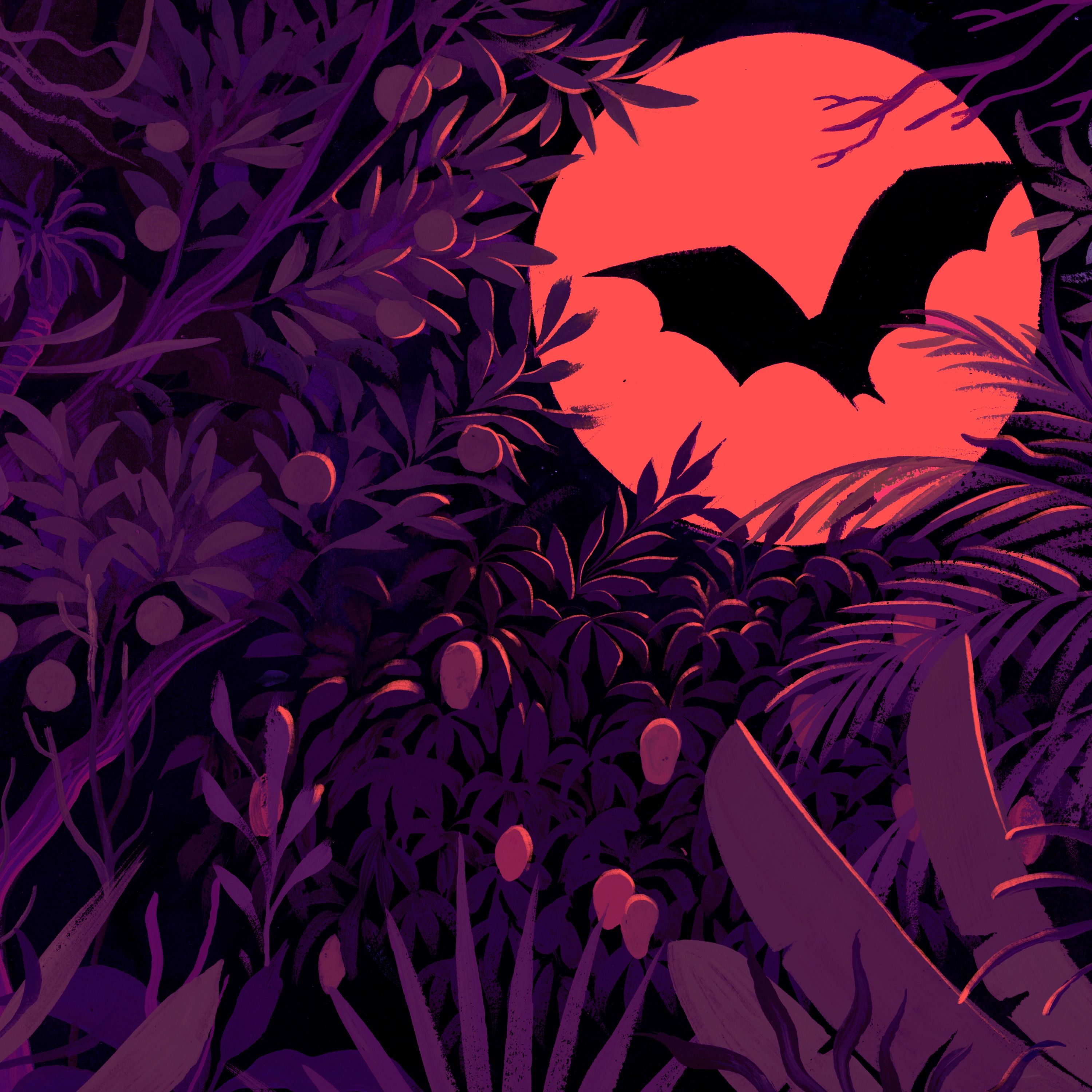
This Halloween, we’re going to the dark side. Deep in the darkest tropical forests, some of the world’s most elusive bats hang upside down in their winged sleeping bags. On a quest to find one of these flying mammals, Producerbud Ana ventures into a Puerto Rican forest and the back corridors of the American Museum of Natural History with Dr. Angelo Soto-Centeno. Why? Because while they may be scary and look kinda like Dracula, with their sharp fangs and beady eyes, these bats hold something crucial for humanity - the ability to repair entire ecosystems after some of t...
The Scarecrow: Scaring Birds with Mary Roach
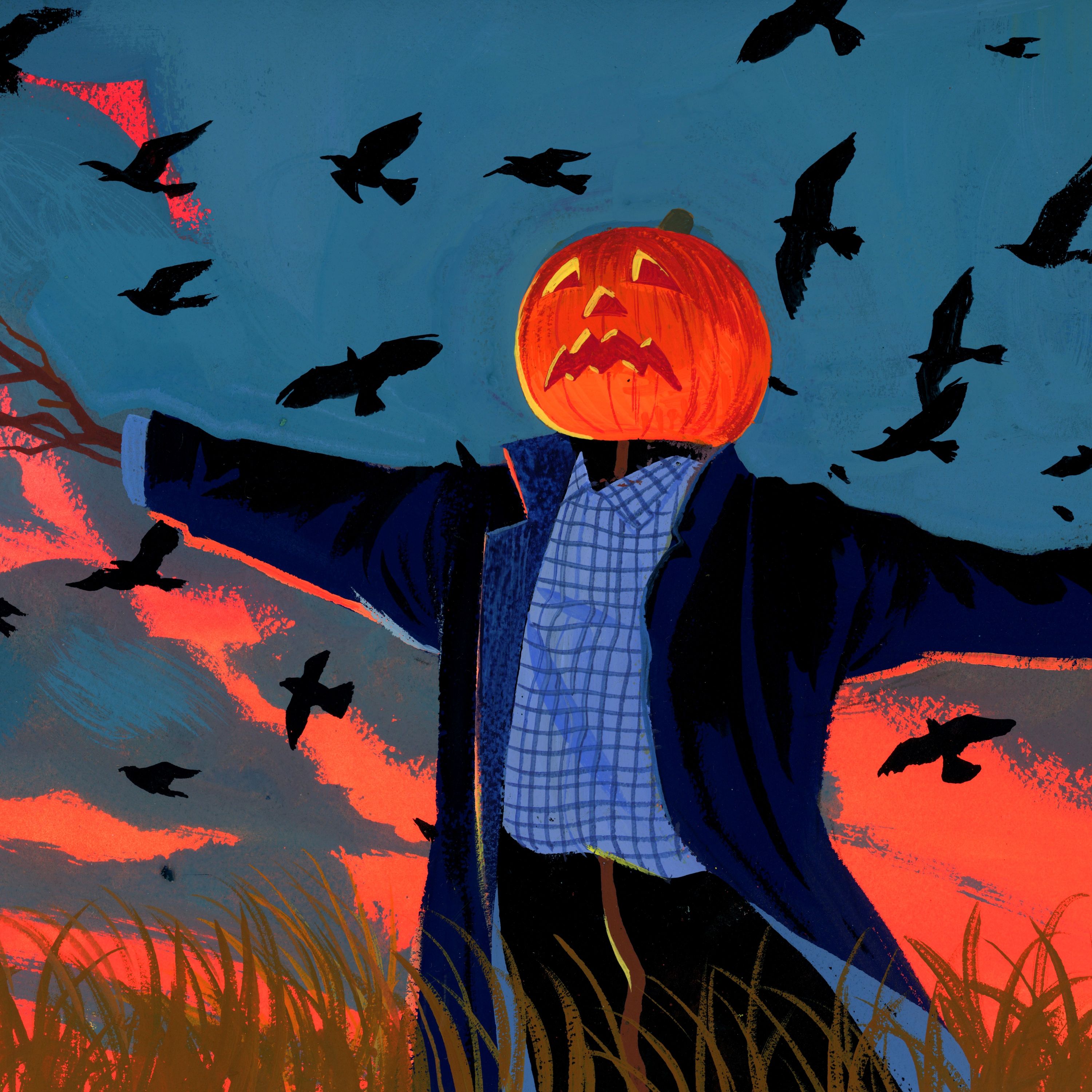
It’s an epic humans-versus-birds showdown in this follow-up to last week’s crows episode! Ever since humans started farming, birds have been eating our crops. And for centuries, we’ve been trying to figure out how to frighten them away.
Science writer Mary Roach walks Lulu and Radiolab’s Latif Nasser through the long and surprising history of humans scaring away birds: scarecrows, fake owls, taxidermied hawks, robotic falcons, even animatronic bears with flashing eyes. But none of it works for long. The birds are too smart for our tricks. Until one day in Ohio, a wildlife...
The Goths: Befriending Clever Crows
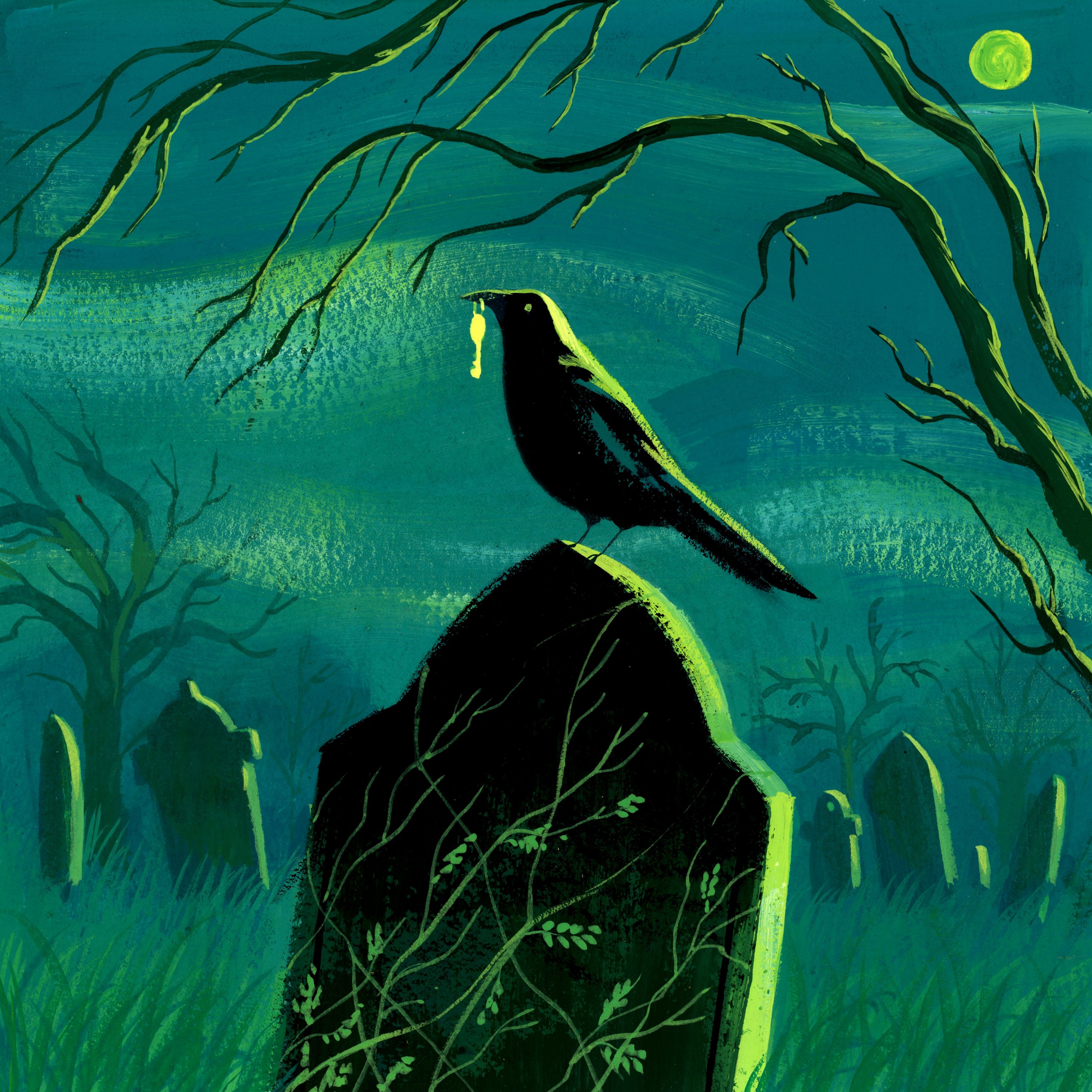
Spooky season is upon us and so we are bringing you a tale of Halloween’s eeriest avian mascot.
Emma Terry is friends with basically everyone in her town. She personifies a rainbow—she has bouncy blonde hair, sparkly cat-eye glasses, and a closet full of bright colors. But for the last decade, she's been trying to befriend the one creature that seems like the opposite of her vibe: the cemetery-lurking, ominous crow.
The more Emma observed and read about crows, the more their morbid reputation seemed… off. She learned crows drop nuts into crosswalks so car...
The Hideout: A Monarch Butterfly Mystery
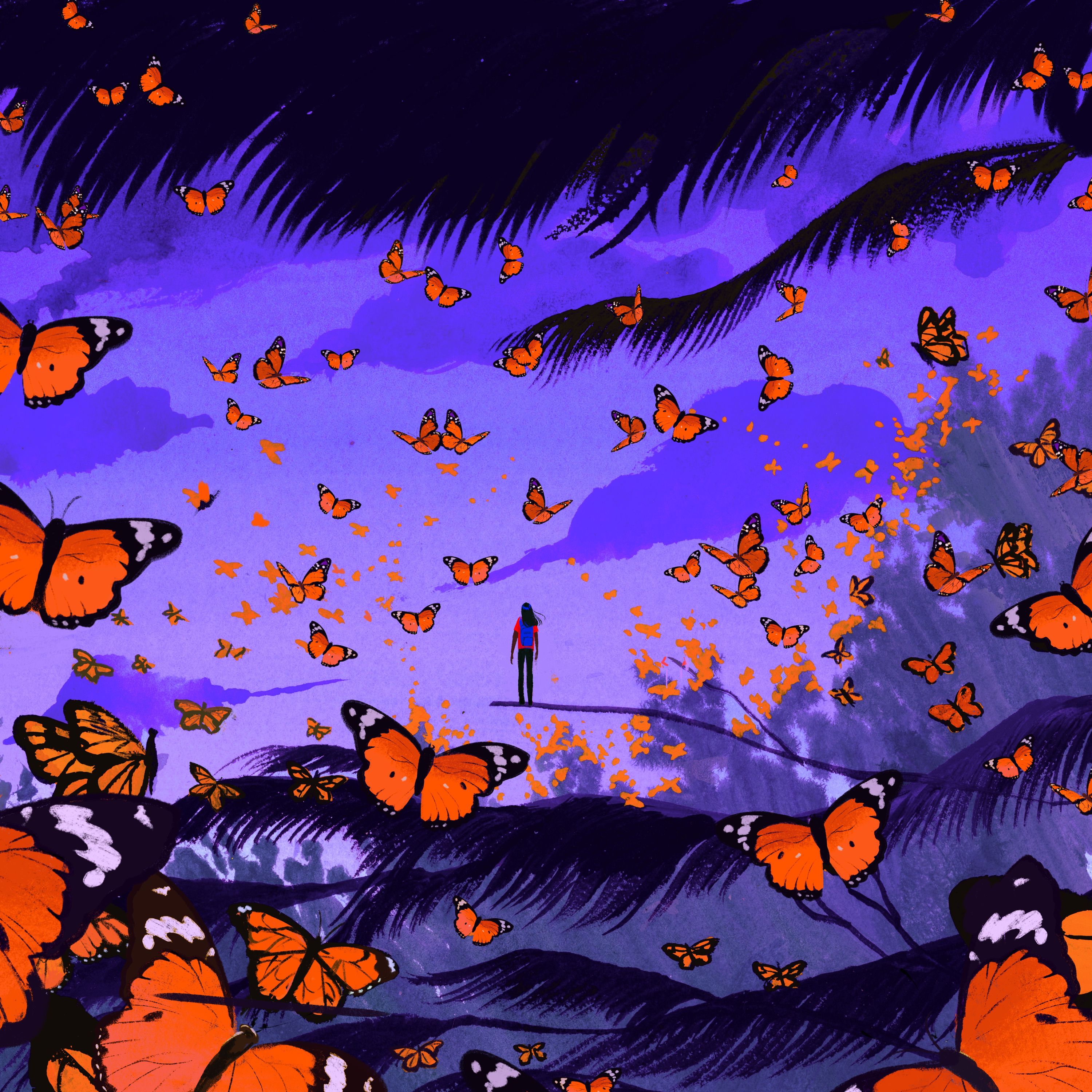
As the leaves begin to change and the air cools, monarch butterflies disappear from our skies and journey …where? The mysterious migration of this iconic butterfly stumped scientists for decades. Until an intercepted message on a butterfly wing led them to the isolated mountains of central Mexico to find the ancient monarch oasis where these butterflies cluster by the millions. It’s here we meet Estela, who grew up around this extraordinary phenomenon and explains that the real mystery isn’t where the monarchs are going but, actually, how??
The answer involves poisonous-tasting caterpillars, supergenerations of buff butterfli...
The Snow Beast: A Mystery Animal (Replay)

Today we bring you a story stranger than fiction. In 2006, paleobiologist Natalia Rybczynski took a helicopter to a remote Arctic island near the North Pole, spending her afternoons scavenging for ancient treasures on the ground. One day, she found something the size of a potato chip. Turns out, it was a three and a half million year old chunk of bone. SPOILER ALERT BELOW.
Keep reading if you’re okay with us spoiling the surprise.
It’s a camel! Yes, the one we thought only hung out in deserts. Originally from North America, the camel trot...
The Wallowers: A Buffalo Comeback Story
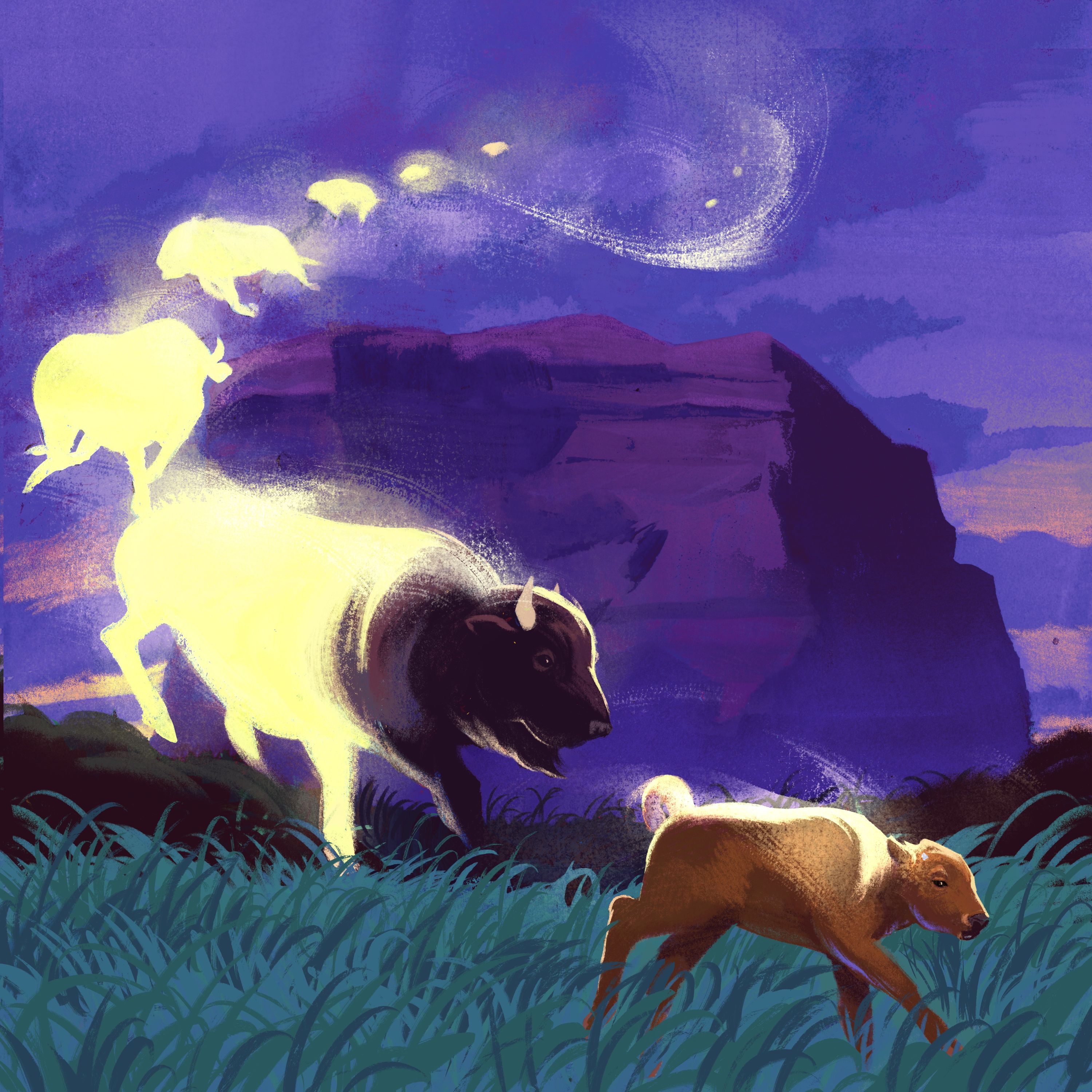
Ervin Carlson grew up on the Blackfeet Reservation in Montana hearing stories about buffalo (aka American bison) who once roamed the land by the hundreds of thousands. These giant beasts weighed up to 2000 pounds, were almost 7 feet tall, and had two curved horns so sharp they could even buck away grizzly bears. And they were ecosystem engineers! Just by grazing and rolling in the dirt, they brought new life to the land.
But Ervin had never seen one. Not in the wild. To him, buffalo were a thing of the past. Because in the 1800s, as America...
Celestials: A Bedtime Snail Story Experiment
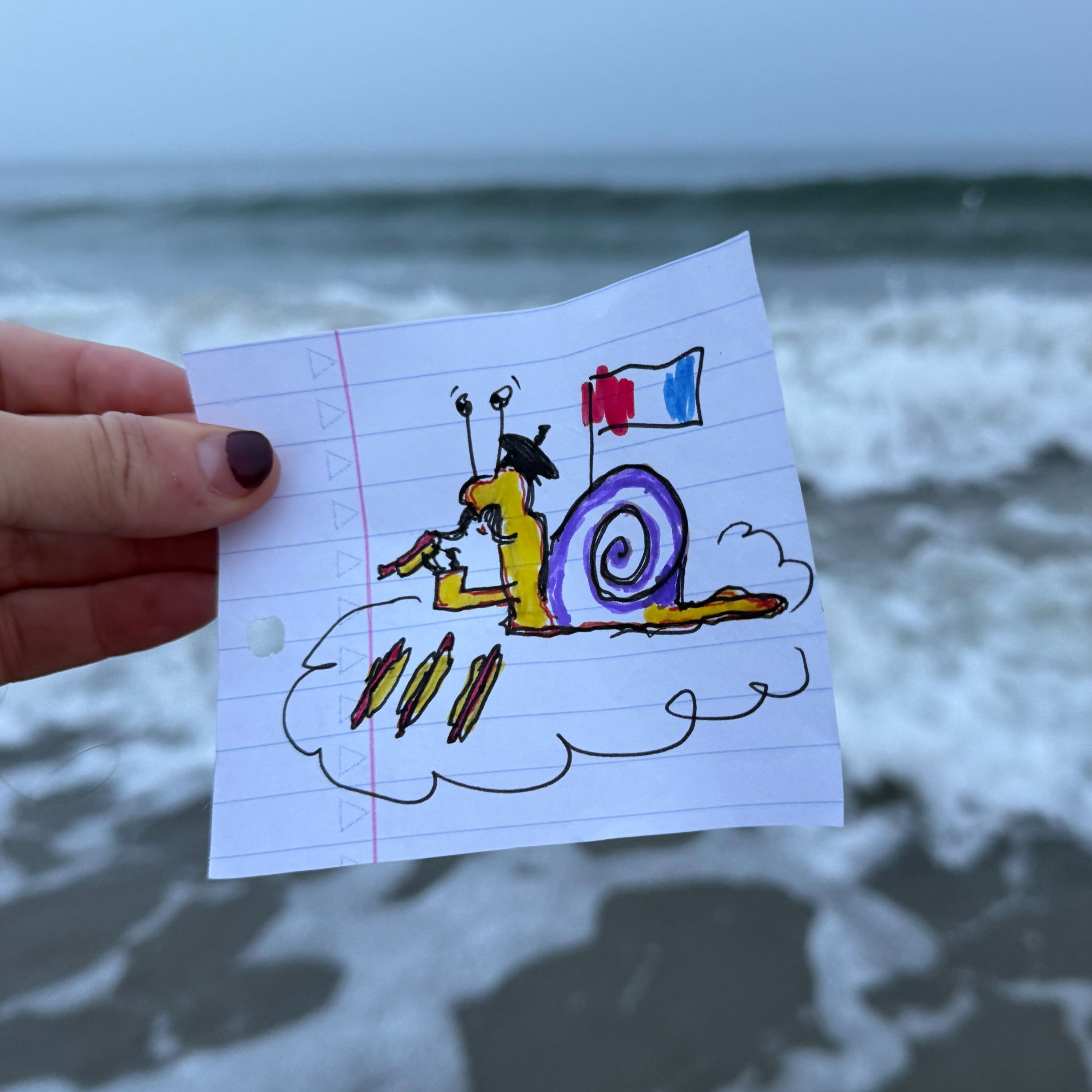
Meet François Tranquille. He's a snail. He's French. And this is the first episode of a little experiment we're calling Celestials: Bedtime Stories from Terrestrials. Restful tales, bedtime meditations, and the occasional lullaby, designed to help you drift off to sleep. Like Terrestrials, it's about a creature here on Earth. Unlike Terrestrials, it wanders away from the world of facts, towards someplace dreamier.
In our very first Celestials pilot, Monsieur Tranquille tries his hand — er, antennae — at helping you slooowww doooowwwn.
We're experimenting with a few more of these this year, and we'd love your...
The Fuzzy Ruckus: The Power of Lichen (Replay)

Artist Ashley (Ash) Eliza Williams was so shy growing up that they found it hard to speak to people. Instead, they withdrew from the world of humans and found comfort in the forest, where they spent hours exploring, scavenging, and collecting — eventually discovering lichen. They began painting portraits of lichen’s wild, colorful, and fuzzy shapes.
In time, Ash learned that lichen is actually a composite organism, a mixture of two species — algae and fungi — working together to live. This idea originally challenged evolutionary theory so much that scientists didn’t believe it. But lichen had much more to teac...
The Jimothy: Seattle Raccoon Steals Hearts
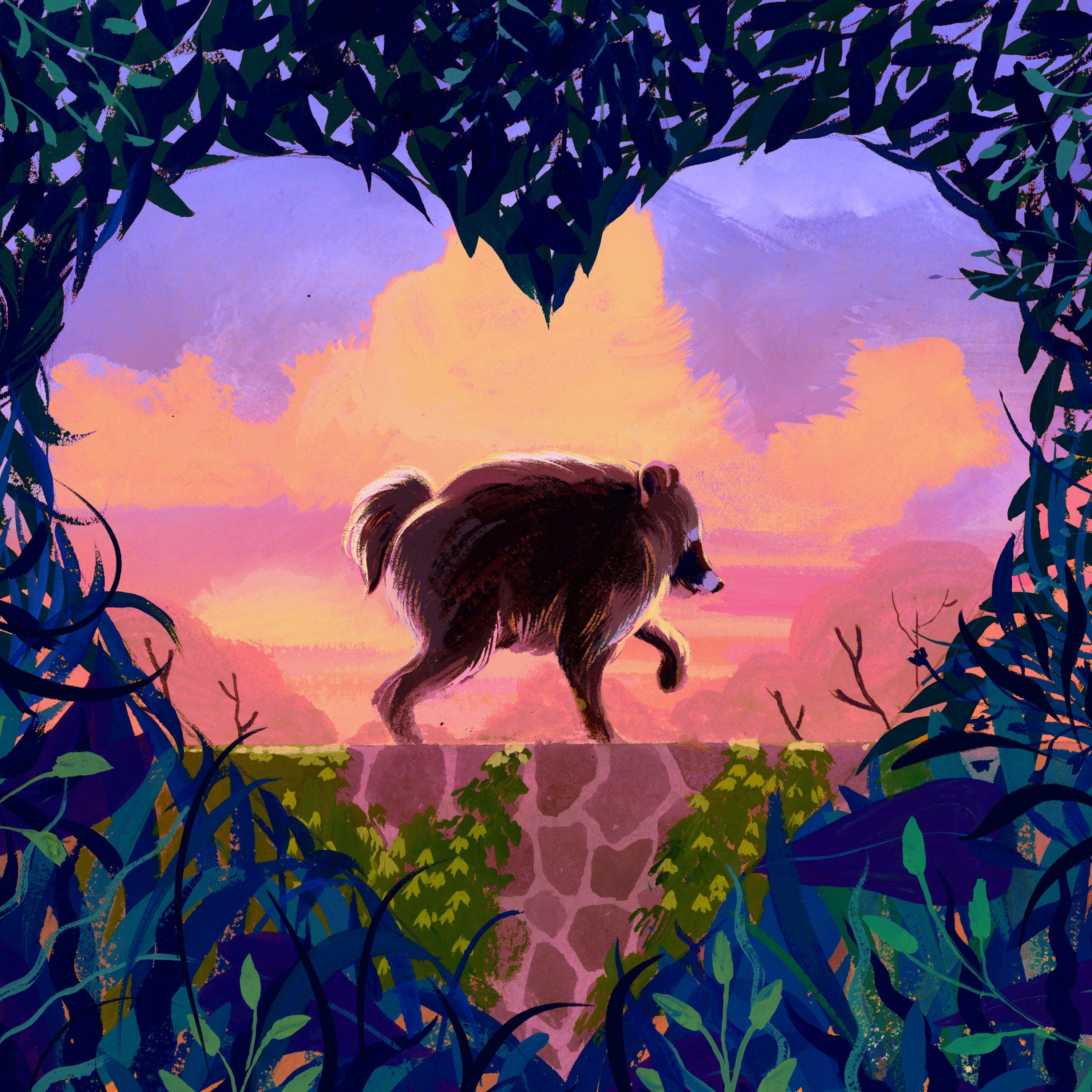
If you’ve been on the internet recently, you might’ve heard of Jimothy—a raccoon from Seattle who went viral. Jimothy t-shirts, murals, tattoos, and tribute songs popped up across the country. We wanted to understand why this raccoon had captured so many hearts, so we spoke to one of the first people who spotted him: Ben Trammell.
One night in Seattle, Ben was watching a raccoon family walk along his backyard fence when he saw a tiny, scruffy, hunched-over raccoon with stiff front legs and a short puffball of a tail instead of the usual long...
Dung Beetles from Just the Zoo of Us
It’s summer break! So, while Terrestrials takes a summer breather,, we’re bringing you a show that we really love. It’s called Just the Zoo of Us, and it’s produced by Ellen and Christian Weatherford, a married couple with a shared love of telling stories about this wonderful planet!In every episode, they rate a different animal on three qualities - effectiveness, ingenuity, and aesthetics. In this episode, they’re tackling the DUNG BEETLE, a beetle that loves… poop. It's a story that will take us to incredible places - beetles in boots, in hats, in planetariums...
The Charmer: King Cobras' FANGtastic Powers
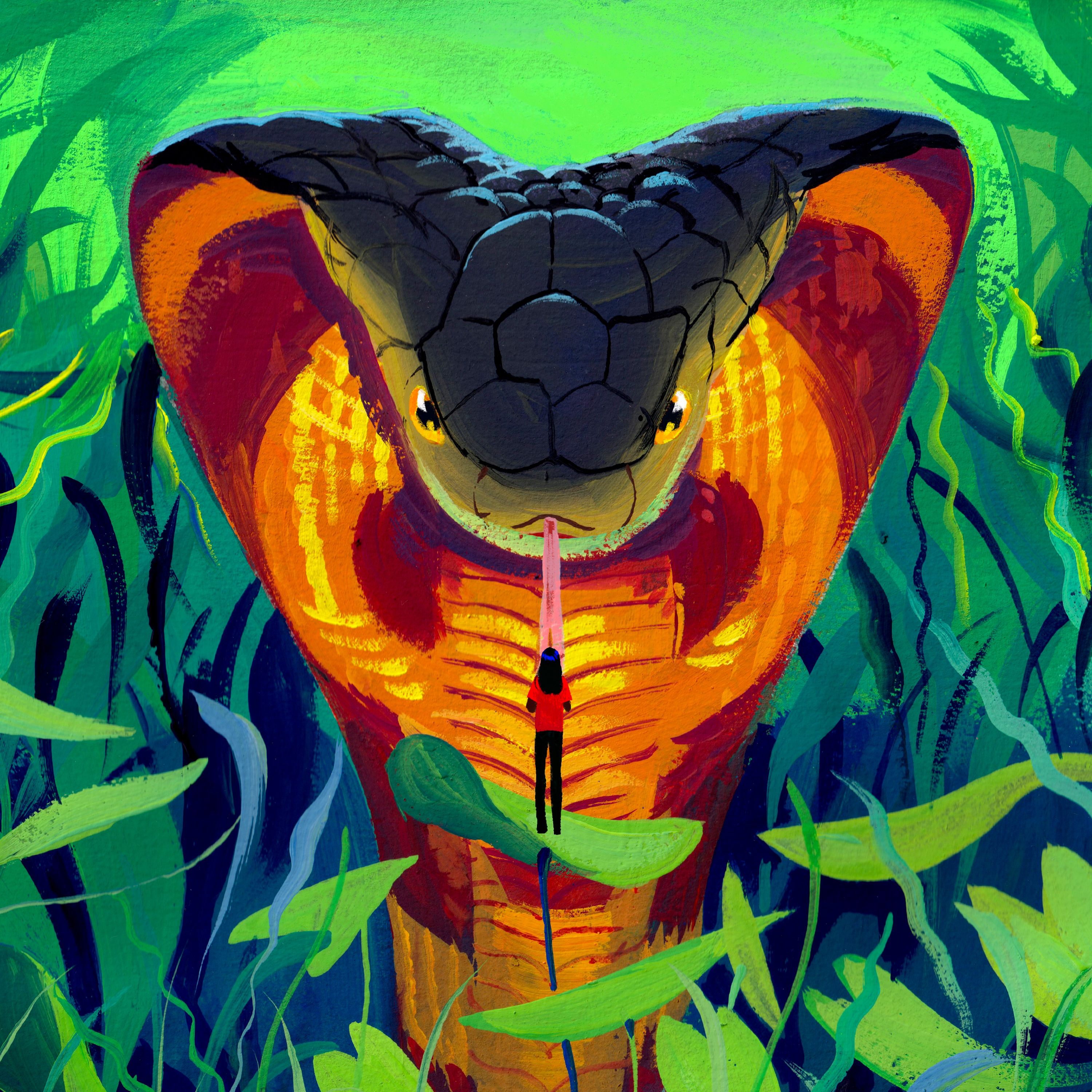
Lulu has been terrified of snakes all her life. But strangely, her oldest son has been obsessed with them since he was two. So to understand his fascination, she called a snake expert who might also be one of the least afraid people on Earth: Gowri Shankar Pogiri.
As a kid in Bangalore, India, Gowri was his neighborhood's resident snake-catcher — wrangling seven-foot snakes and motorcycling into the sunset with the serpent draped around his neck so he could release it back into the wild. In college, he'd skip school to look at snakes for hours at the zoo...
The Travelers Update: A Moon Tree Grows in New York
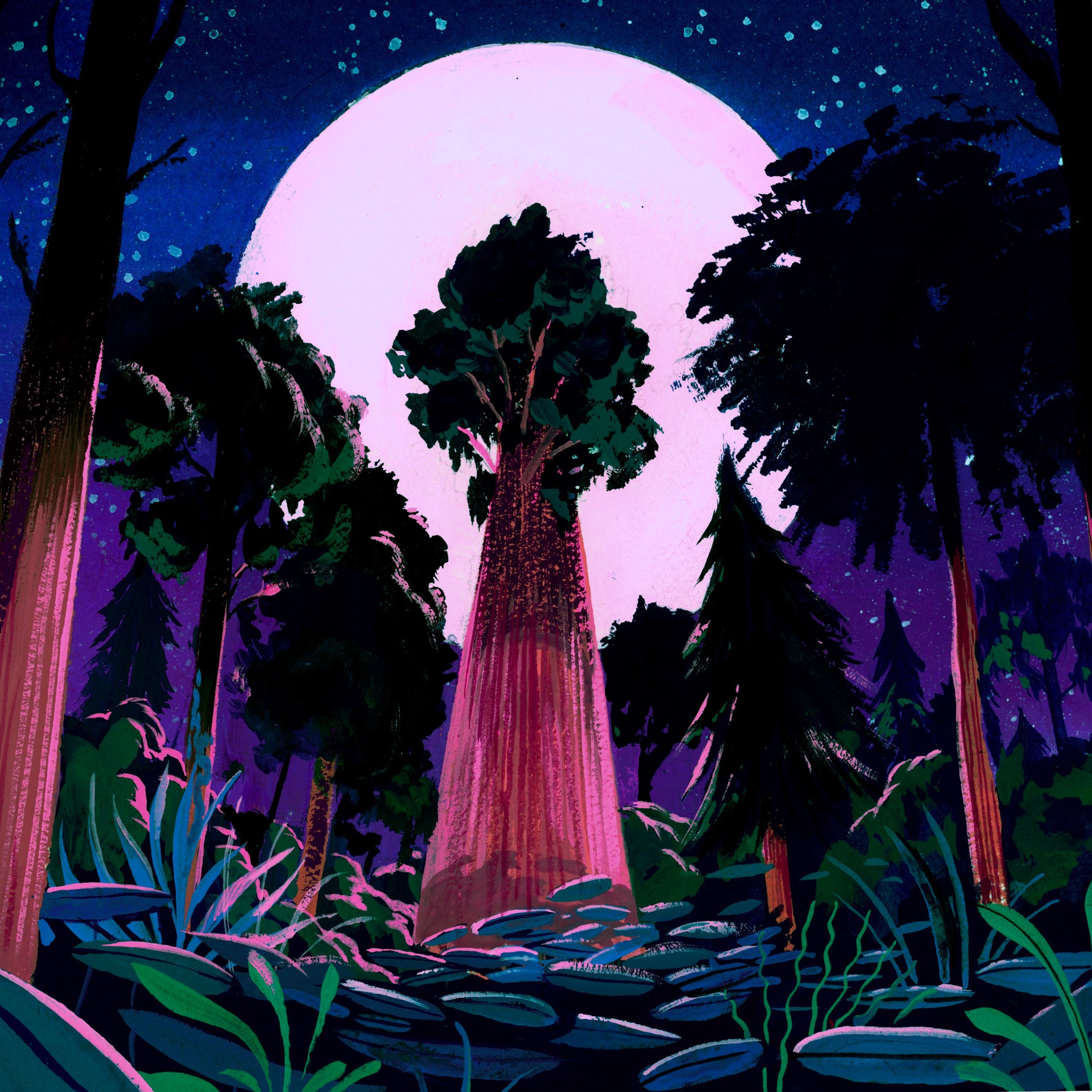
The director of horticulture at Madison Square Park, Stephanie Lucas, spends her days caring for over 300 trees in the heart of New York City. One day in 2022, she saw a callout from NASA giving away seeds that had traveled to the moon. This would be the crown jewel of the park! She and her team worked hard on their application, submitted it, and then waited for two years. Eventually they gave up. Until one day, Stephanie got a call from NASA telling her to check her spam inbox. A week later, a cardboard box arrived at the park.
The DADventure: Wild Animal Dads from Owl Monkeys to Seahorses
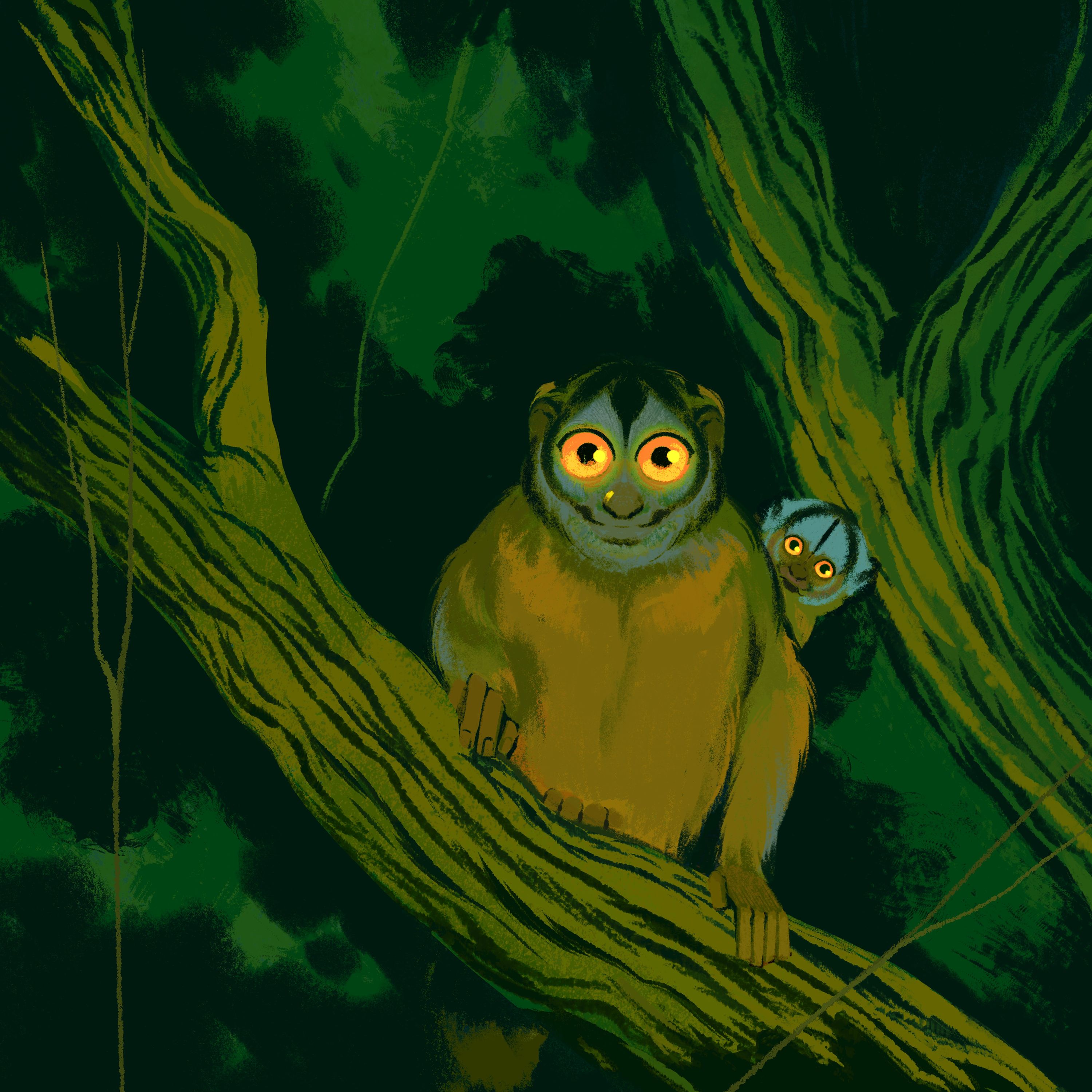
What does it really mean to be a dad? In the animal world, fathers have long been painted as aggressive or absent. At best providers and protectors, but certainly not caregivers. And yet for every tale of a lion or chimp dad eating its own young (yikes!), there’s another creature who tells a sweeter story.
Two HUMAN dads bring us on this DADventure: Dr. Eduardo Fernandez-Duque, who has spent decades studying owl monkey dads in the forests of Argentina, and Michael Feigelson, who once worried he wasn't cut out for the softer side of parenting.
Th...
BIG CATS 2: Leopards & Jaguars (2 Fast, 2 FURious)
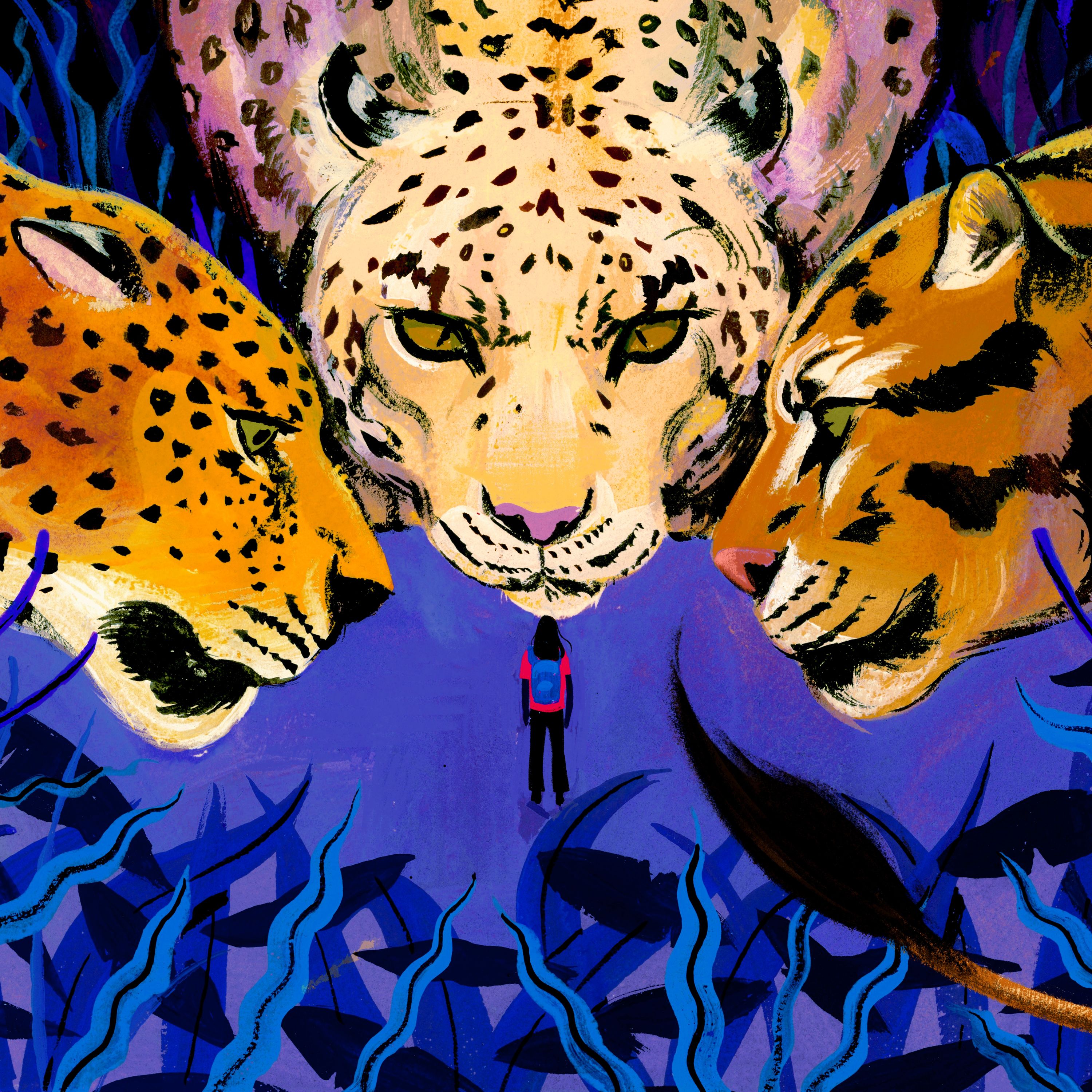
We're back with PURR-T TWO of our big cats journey, and this time, we’re heading even deeper into the cat-iverse.
We travel to India, where conservationist Shatrunjay Pratap Singh introduces us to leopards that live among shepherds and ancient temples. Then we head to Colombia, where biologist Laura Lisbeth Jaimes Rodriguez helps us track one of the most mysterious cats on Earth: the jaguar. We meet shapeshifting shamans, forest guardians, and cats so secretive that some scientists spend years studying them without ever seeing one. Finally, we meet the ghost cat of the mountains—the snow leopa...
BIG CATS: Lions, Tigers & Roars (Oh My!)
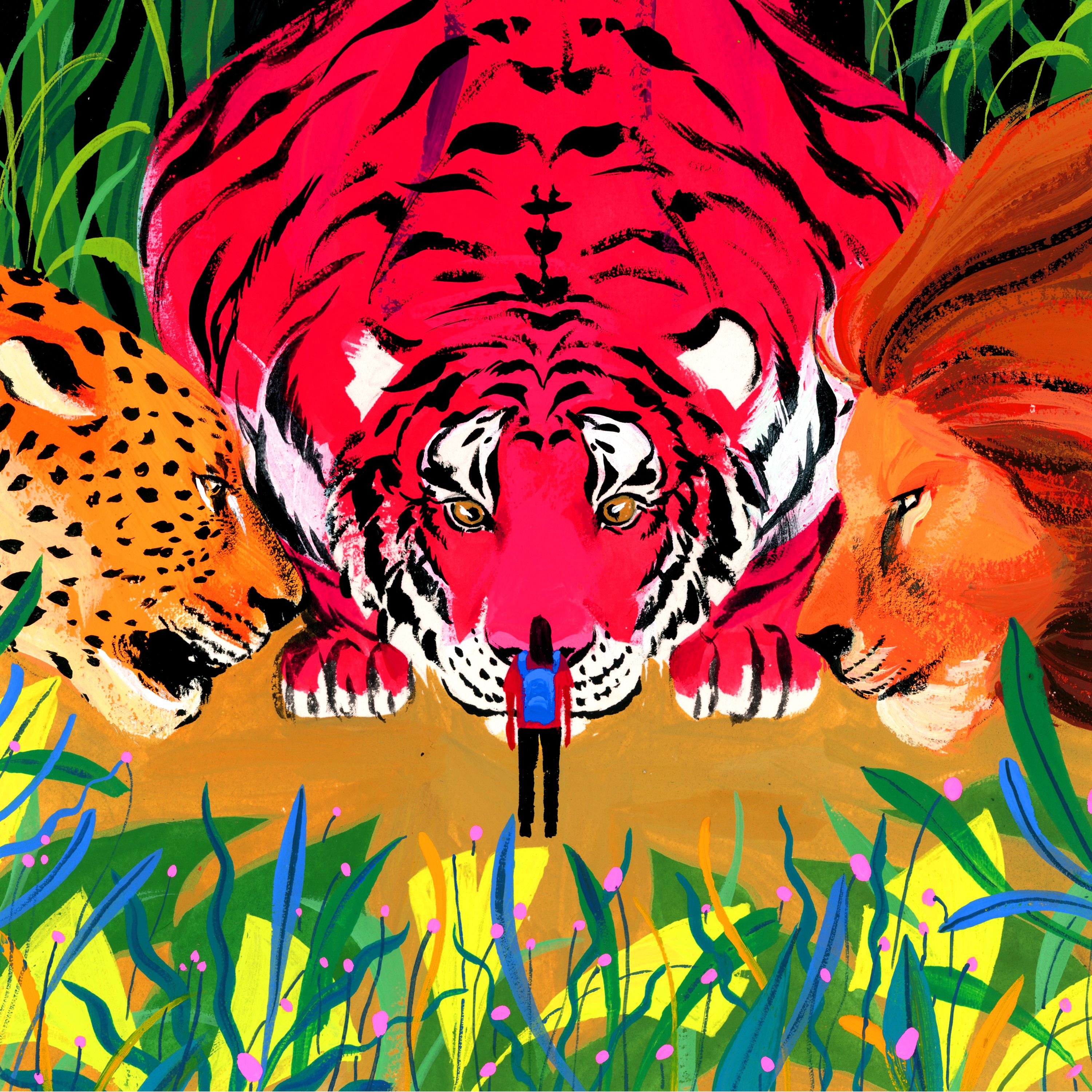
Big cats are our most requested animal, but Lulu doesn’t really want to make an episode about them! . She thinks lions, tigers, and their feline cousins are the bullies of the animal kingdom. So Songbud Alan and Producerbud Ana set out to change her mind.
We head to the Bronx Zoo where big cat expert Luke Hunter introduces us to tigers that cough up furballs and wrestle crocodiles, and lion prides built around mothers, sisters, and grandmothers, who roar not just to intimidate, but to call out to their family. Along the way, we play a gam...
The Wicked Smoocha: Anglerfish Break A World Record
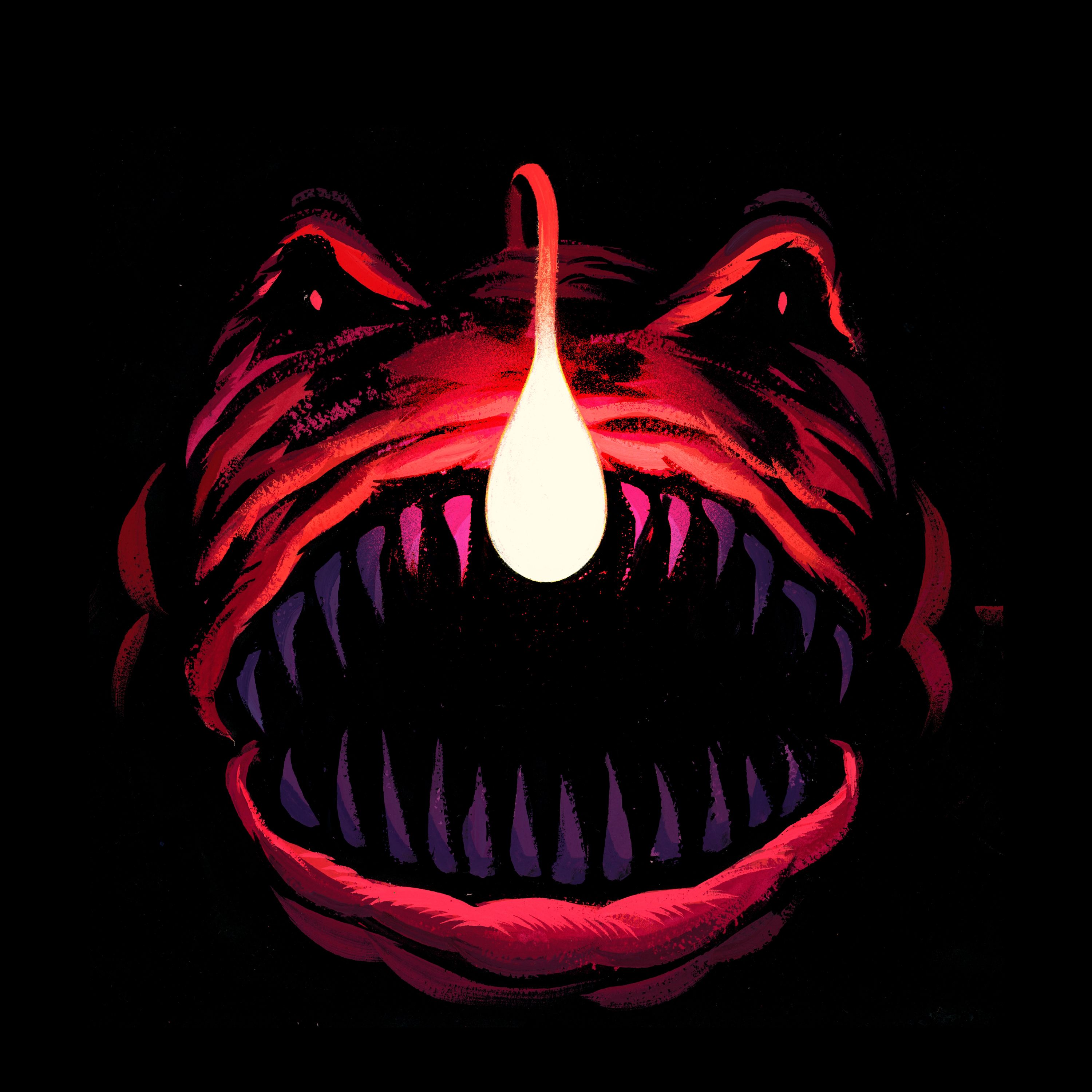
In the depths of the ocean, a tiny male anglerfish catches a scent and follows it through the darkness. Eventually he finds a glowing, toothy female with a bacterial lightbulb on her head. He kisses her… and never lets go. Their bodies permanently fuse, merging bloodstreams, flesh, and digestive tracts.
Radiolab correspondent Molly Webster brings us the wild story of this eternal kiss. We dive deeper into glowing lures, bioluminescent bacteria, and the biology of two creatures becoming one.
Plus, Alan tells us about the time he broke a world record, and marine biologist Dr. Ko...
The Forest Fairy: Aphids Reveal Hidden Harmonies
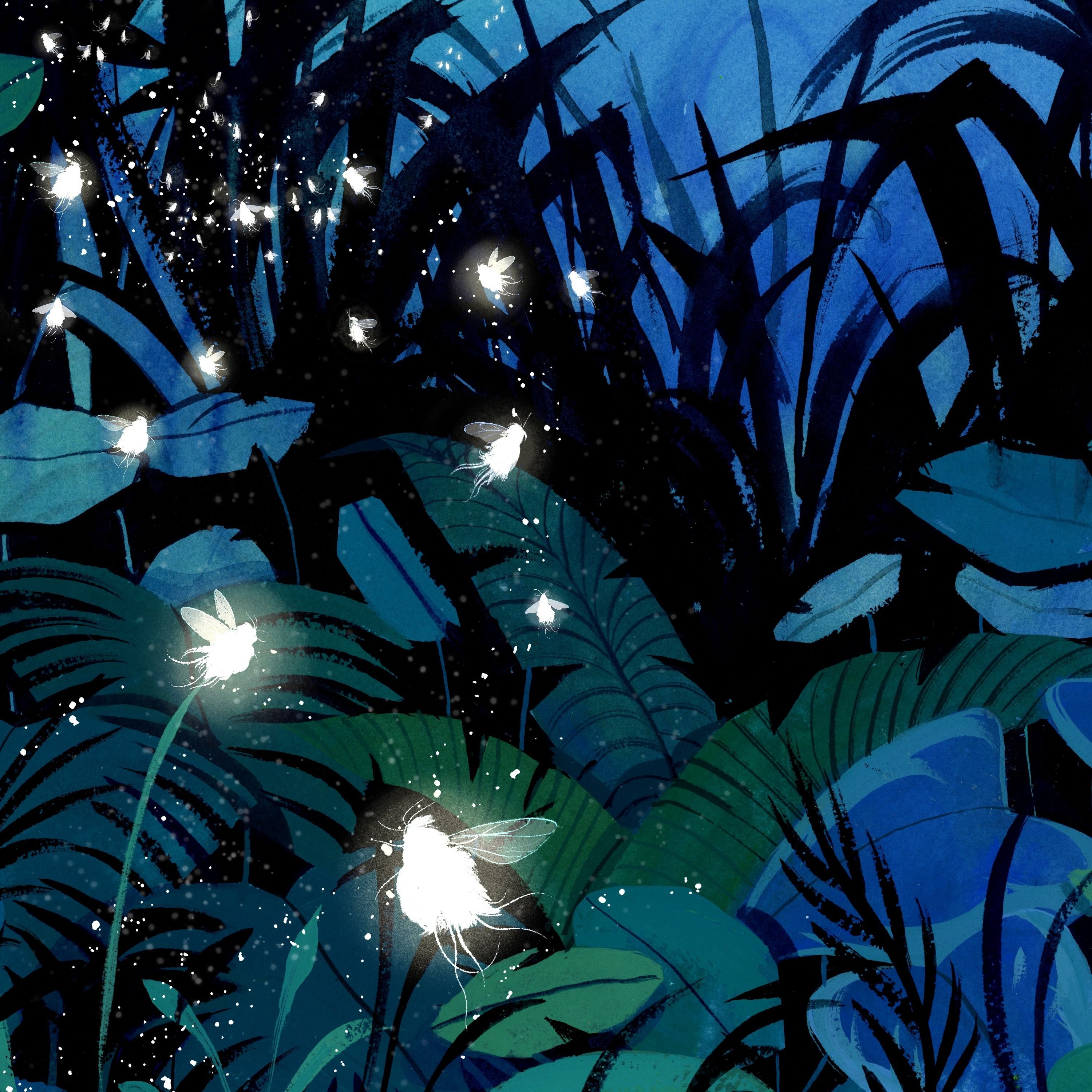
Amy Ray (whose music you might know from the Indigo Girls) was on a walk in the Georgia woods with her dogs when she passed a tree branch and saw hundreds of tiny, white, fluffy creatures doing a synchronized stadium wave. She was mesmerized.
Turns out, she was looking at woolly aphids - small, defenseless bugs who have somehow figured out how to survive everything the forest throws at them. Resident Bug Correspondent Dr. Sammy Ramsey explains how: from the army of ants fighting their battles, to their power to clone themselves over and over, to their s...
The Greeting: Yo-Yo Ma's Humpback Whale Experiment
As one of the most famous cellists of all time, Yo-Yo Ma has spent a lot of time playing music inside. But a few years ago, he decided to take the cello out of the fancy concert halls and into nature, bringing our very own Producerbud Ana along for the ride!
That brings us to humpback whales. Like Yo-Yo, humpbacks are musical. They communicate through melodies, clicks, grunts, whispers, and bellows. Human beings still don’t fully know what the whales are saying to each other, but for Yo-Yo it sounds just like cello music. So, he had...
The Red-Eyed Mascot: Loon Resilience in Minnesota
What do loons have to do with courage and community? In January, we received a letter from two sisters in Minnesota - Jude and Mo. They wrote to us because their city was experiencing a lot of unrest, with immigration agents arresting members of their community and protests ringing loud in the streets as people tried to protect their neighbors. And in the middle of it all, an unexpected symbol began appearing on storefronts, stickers, and even as tattoos: the black and white, migrating waterbird known as the loon. Jude and Mo were curious: why are loons a good s...
The Snowball: Extreme Squirrels in the Arctic (Replay)

Middle schooler, Aanya, has an up-close encounter with a squirrel in the school yard, which leads her to an obsession with one of North America's most common critters. She tells host Lulu Miller all about the overlooked superpowers of squirrels, including one squirrel who lives way up in the Arctic, where the weather gets so cold the squirrels who live there drop their body temperatures down below freezing and somehow, miraculously, survive.
Host Lulu travels to Alaska to meet one of these squirrels as it sleeps, and Lulu talks with biologists Dr. Kelly Drew and Dr. Brian...
The Snoozer: Penguin Slackerzzz Rule
How rested would you feel if you took 10,000 naps a day? Chinstrap Penguins in Antarctica spend their days taking MICRONAPS, each around 4 seconds long. To learn why, Lulu meets one (played by Songbud Alan), who explains how micronaps help them conserve energy and protect their babies from “sky pirates”! Then, in a badgermania, penguin scientists Dr. Eric Wagner and Dr. Dee Boersma answer your questions! Why are penguins black-and-white? Why is their poop pink? What might they dream about? And we learn that what may look like laziness… turns out to be an evolutionary superpower.
Don’t sleep on t...
Build-A-Dragon (Replay)
On February 17, in places like China, Malaysia, Korea and Chinatowns across the globe, dragons will rise in the form of massive puppets. Today we bring you a special Terrestrials episode on dragons to understand what they have to do with the New Year, what the dragon myth means, and explore the tiny chance that dragons could have ever been real.
First, we meet Mr. Lu Dajie, one of China's most renowned dragon dancers, who tells us about the significance of dragons in China. Then producer bud Ana and song bud Alan ask whether there’s any chance tha...
The Portal: Groundhogs Lead Us Into an Underrealm of HOLES
Holes are full of a whole lot of nothin'. Pure, hollow emptiness. At least that’s what Songbud Alan thought before he fell down a rabbit hole of, well, HOLES! In honor of Groundhog Day, he takes Lulu to a fossil-filled pit behind a Chick-fil-A to dig up 66-million-year-old treasure, and deep down to an underwater hole where blobs of colorful microbes reveal a time when Earth’s days were only 6 hours long. We discover eyeless cave fish, fall into a sinkhole of Corvettes, and go house hunting for the perfect animal hole to cozy up in... which leads us t...
The Spellbook: Ancient Recipes for Animals
Where do animals come from? That's something people have been trying to explain for thousands of years. And for a while, scientists and philosophers believed that any ol' person could create creatures if they just had the right recipe. A touch of sand, maybe a drop of blood and POOF: you could create life. That idea was believed to be true for generations until one brave scientist decided to look more closely at an unlikely bug and change the course of science forever. Lulu calls up our biology correspondent, Dr. Avir Mitra, to solve this ancient mystery.
...
The Present: A Gift from our Furry Friends

To celebrate New Year’s Day, there are all kinds of traditions. Some people eat black eyed peas for good luck, some list out resolutions. But here at Terrestrials, we are taking a cue from the wisdom of pets, who are so, so, so good at sleeping. After a short preamble from Lulu, we’ll turn the microphone over to listeners’ furry friends snoring and snoozing in various positions, places, and locations. The piece will be largely wordless, with some narration from listeners describing their pets, and sound designed as a sort of meditation to rest.
HEY GR...
The Slowpoke: How Sloths Grow Invisibility
Sloths are the slowest mammals on Earth. How can a creature that moves so slowly survive in a world that moves so fast? Zoologist Lucy Cooke helps us rethink everything we know about sloths and their slowness. We follow a sloth named Nacho from a rainforest to a nightclub, trek deep into mangrove swamps to find a rare pygmy sloth and uncover the secret that allows sloths to evade even the deadliest predators. Hint: it has to do with a special kind of invisibility.
For more, check out Lucy’s A Little Book of Sloth and her slo...
The Bridge: How Rainbows Connect Worlds
What is a rainbow? An optical illusion? Or a thing out there in the world? For centuries, cultures around the world believed that rainbows were bridges - pathways to gods and to the afterlife. Then in 1665, during a plague, a young Isaac Newton made a discovery that changed everything : sunlight is made of many colors. He counted 7. But artists, poets and curious children weren’t convinced. How could a rainbow only have seven colors? Their skepticism led to a far stranger discovery that would revolutionize how we understand the universe. - In the end, we learn that rainbows are kin...
A Podcast Turducken: With Wow in the World, Terrestrials and Circle Round
Lulu is hosting a holiday meal. She’s invited the characters from her extended kids podcast family - Wow in the World and Circle Round - for an epic kids podcast crossover special. It’s a potluck of stories and on the table is a turducken. Yes, a turkey stuffed with a duck stuffed with a chicken. Each show brings a wild story about one of these creatures. We learn about a chicken’s unexpected journey back home, a duck mystery in the middle of the Arctic Ocean and an indigenous folktale about how the turkey got its gobble, culmina...
The Hybrid: A Miracle Mule

In the game of life, every species is like an action figure. You got your dogs and your dung beetles, your bald eagles and your blueberries. And for a long time scientists believed it was pretty much impossible for those action figures to mix and make a new kind of action figure that was able to have its own babies (dog beetles? Baldberries? Nah). But, today we tell the story of a four-legged beast in Kentucky whose existence is upending scientific beliefs. If you want a big fat SPOILER, here it is: the creature in question is a mule...
The Night Flyer: How Bats sPOOkily Revive Forests
This Halloween, we’re going to the dark side. Deep in the darkest tropical forests, some of the world’s most elusive bats hang upside down in their winged sleeping bags. On a quest to find one of these flying mammals, Producerbud Ana ventures into a Puerto Rican forest and the back corridors of the American Museum of Natural History with Dr. Angelo Soto-Centeno. Why? Because while they may be scary and look kinda like Dracula, with their sharp fangs and beady eyes, these bats hold something crucial for humanity - the ability to repair entire ecosystems after some of t...
Maggies: The Healing Power of Baby Flies
Maggots are disgusting, right? Lulu has a hard time even saying the word maggot.
But in this episode, we’re asking you to join us in setting our “ick” aside. If you stick with us, we promise that you’ll go from thinking these bugs are the grossest things ever to actually kinda liking them. Maybe even loving them.
ER doctor Avir Mitra leads us down a rabbit hole of scientific discovery, explaining how these revolting critters have a history - and future - of saving human limbs and lives. Plus, a musical lesson in wound trea...
The Travelers: How Moon Trees Hide Among Us
In 1971, a red-headed, tree-loving astronaut named Stu ‘Smokey’ Roosa was asked to take something to the moon with him. Of all things, he chose to take a canister of 500 tree seeds. After orbiting the moon 34 times, the seeds made it back to Earth. NASA decided to plant the seeds all across the country and then… everyone forgot about them. Until one day, a third grader from Indiana stumbled on a tree with a strange plaque: "Moon Tree." This discovery set off a cascading search for all the trees that visited the moon across the United States. Science writer, and our ve...
The Builders: How Beavers Mend Our Planet
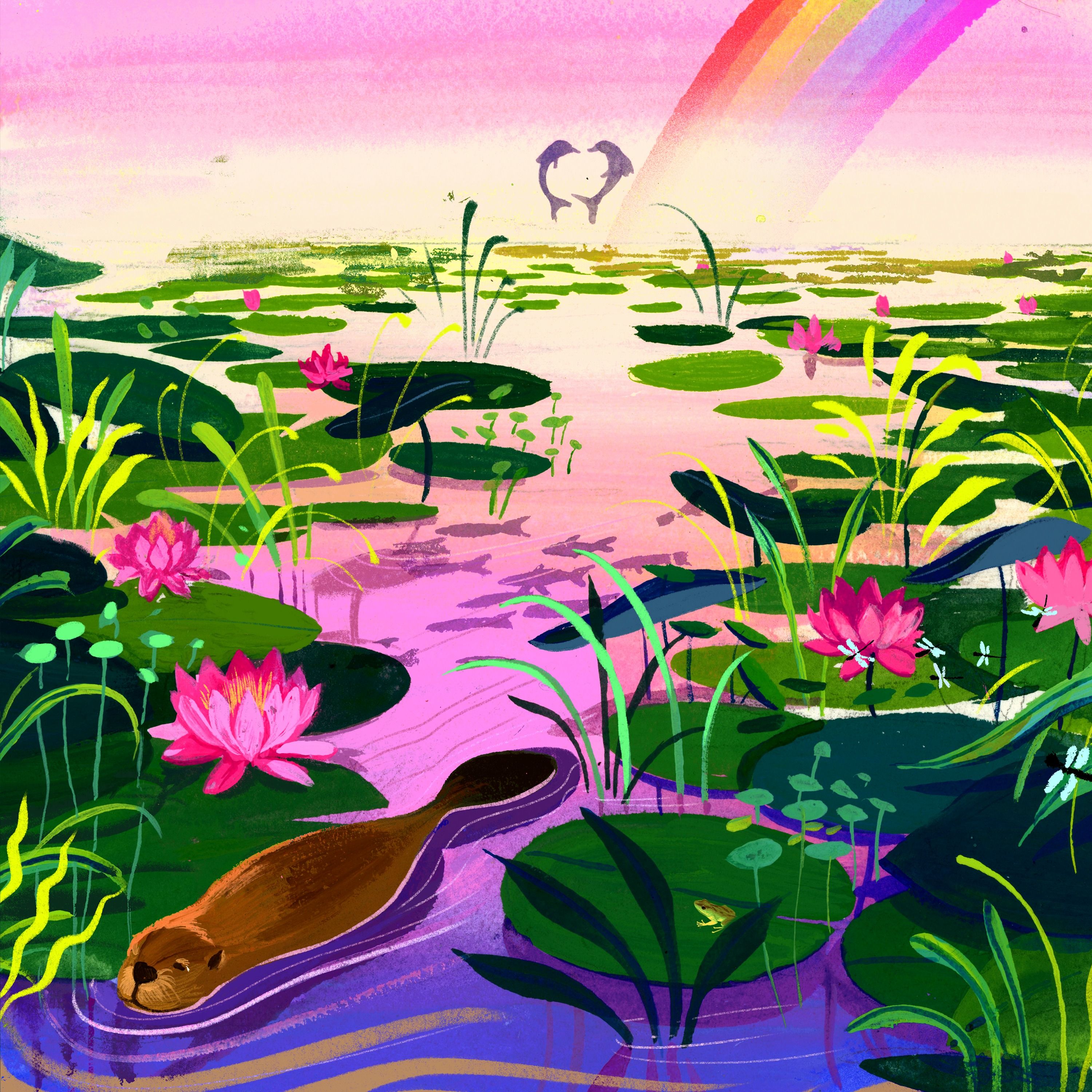
Few mammals have a bigger positive impact on the planet than the beaver. With its bright orange buck teeth, the creature is an expert engineer that brings life wherever it waddles and even fights fires. Our story begins in the Bronx river, once known as the “open sewer” of New York City. After some humans decide to clean it up, we meet one of the river’s residents - José the beaver. We learn about the US government parachuting beavers out of planes into the mountains. And finally head to California where we discover how one beaver family saved acres of...
The Unimaginable: How Gravitational Waves (Literally) Rocked Our World

Over a billion lightyears ago, in the darkness of outer space, a collision of black holes sent out a fleet of invisible waves that were headed right toward planet Earth. The waves were so powerful they could ripple spacetime but most people on Earth didn't believe the waves were real. SPOILER ALERT: The waves are called gravitational waves and…they are real! Astrophysicist Dr. Wanda Díaz Merced tells the story of what happened when they hit Earth in 2015 and how scientists came to learn to use senses beyond eyesight to detect the waves. We also learn from Dr. Sta...
PIZZA BFF

Pizza is one of the world’s most beloved foods. But as much as we love the way it tastes, the secrets of its ingredients are even yummier to discover. We explore the surprising sounds tomatoes make when they’re stressed, how wheat became integral to human survival and how mold is sometimes... delicious? This episode also features live tap-dancing, mind-melting cheese facts and what might be the Songbud’s catchiest song yet.
Special thanks to Little Island for having us. If you’re in NYC, go check them out. It’s free to wander around, there are hidden m...
The Horseshoe Crab's Secret

We’re back with an episode from the Radiolab archive. Horseshoe crabs have been around for a long time. They outlived the dinosaurs, survived all mass extinctions and witnessed the sprouting of the Earth’s first trees. The secret to their longevity? Their baby blue blood. Which has been saving both their lives and ours.
Lulu and Radiolab co-host, Latif Nasser, head to one of these bleeding facilities to learn how horseshoe crab blood became indispensable for modern medicine. And how this vampirish relationship humans have with the crabs might also be crucial to keeping them alive.
Ter...
The Mastermind: An Octopus Heist
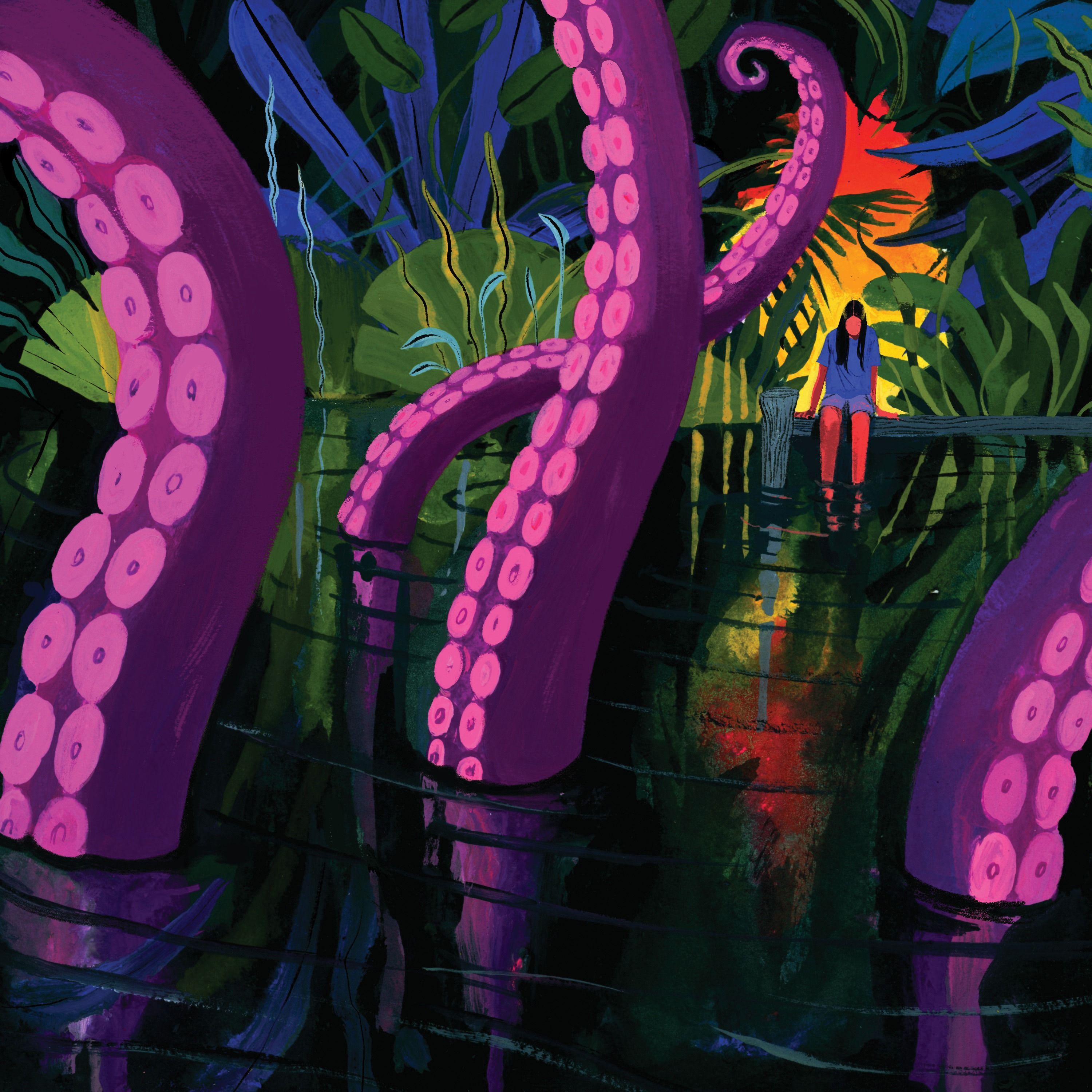
A color-changing creature many people assumed to be brainless outsmarts his human captors. SPOILER: The creature is an octopus! Author Sy Montgomery tells the story of one octopus named Inky who makes us question who we consider intelligent (and kissable) in the animal kingdom.
Learn about the storytellers, listen to music, and dig deeper into the stories you hear on Terrestrials with activities you can do at home or in the classroom on our website, Terrestrialspodcast.org.
Find MORE original Terrestrials fun on Youtube.
And badger us on Social Media: @radiolab and #TerrestrialsPodcast
...Crabtacular! A deep dive into the Hudson River

Today, we splash into the Hudson River Park with our Songbud to meet all kinds of crabs. With Siddartha and Carrie from the Hudson River Park, Alan puts on waterproof rubber overalls, gets his hands dirty in the river and dives into the secret lives of Hudson crabs.
Plus, CRAB WEEK is going on right now in New York City! It’s an annual shell-ebration that highlights the crabs of the Hudson River. Scuttle by for crabtastic activities throughout the park all week long! You’ll have the opportunity to try your hand at some crabby crafts, learn...
CHOWDA: A Souper Fascinating Tale

Today we’re bringing you a live episode we taped in Boston. It’s about clam chowder. We’re sharing it now because we’re doing ANOTHER LIVE SHOW at Little Island in NYC on August 6th + 7th - and that one’s about PIZZA! The show’s free. There will be pizza. Join if you’re in NYC (or make this the reason you visit). Check out all of our other performances here.
Lulu is a Bostonian who has never had clam chowder. Read that again. For some reason it always felt gross to her. So as an extreme...
The Sea Troll: An Everlasting Shark?

The Greenland shark is ugly. Its eyes look cloudy and dead. Its snout and fins are stubby. Its meat is poisonous. And that may be part of why most people have overlooked these sharks for so long. But there was a rumor circulating among Greenland villagers that this deepsea dweller could survive for centuries. Scientist John Steffensen went on a hunt to see if this was true and discovered that the Greenland shark can live for more than 500 years, making it the longest living vertebrate on the planet. Biologist Steve Austad explains how the shark avoids death for so...