Eternalised

In Pursuit of Meaning.There is much darkness in the world. My purpose in life is to be a small light that shines for others.This channel is human-made, not AI-generated.Support the channel to help keep it alive (thank you!)https://www.patreon.com/eternalisedhttps://ko-fi.com/eternalisedLinks:Begin your journey: https://www.patreon.com/eternalised
NIETZSCHE: The Übermensch (Overman)

Nietzsche’s Übermensch (Overman) is among the most important of his teachings. The appearance of the overman most famously occurs in Thus Spoke Zarathustra. He is declared as “the meaning of the earth”. The overman is the ultimate form of man, he is one who overcomes nihilism by creating his own values and focusing on this life, not the afterlife.
He puts all his faith in himself as an autonomous creator and relies on nothing else. He is the pinnacle of self-overcoming, to rise above the human norm and above all difficulties, embracing whatever life throws at you. He...
The Psychology of The Man-Child (Puer Aeternus)

The term puer aeternus is Latin for eternal boy. Carl Jung used the term in the exploration of the psychology of eternal youth and creative child within every person.
It is an archetype, and like all archetypes, has both a positive and a negative side. It can bring the energy, beauty and creativity of childhood into adult life, or thwart self-realisation and doom us to both unrealistic adolescent fantasies and experiencing life as a prison.
The puer is the man-child who refuses to grow up, take responsibility, and face life’s challenges, he expects other pe...
The Psychology of Fairy Tales

Fairy tales fascinate us and give us a sense of warmth and home-coming that comes from the mythical realm of the imagination, a necessary complement to our everyday life. We are fundamentally story-telling creatures, and there is much we can learn by reflecting on the fairy tales heard in childhood. They seem almost magical because they connect us with emotions deeply buried within that cannot find expression in outer life, because as we grow up, the world of imagination is shunned by our peers, considered as unproductive and good for nothing.
Fairy tales can provide us with...
Mental Illness as a Crisis of Meaning in Modern Society

Modern society has seen a massive spike in mental illness. Why could this be? We will be exploring the characteristics of modernity and associate it with the rise of mental illness through the crisis of meaning in modern society. Modernity is characterised by a sense of disorientation. The mass neurosis of modern times is the “unheard cry for meaning”.
👑 Become a Patron
Access exclusive material and deeper studies
https://www.patreon.com/eternalised
⭐ Or become a YouTube Member
https://www.youtube.com/channel/UCqos1tl0RntucGGtPXNxkkA/join
—
Support the work
NIETZSCHE: The Will to Power

The will to power is one of the most fundamental concepts in the philosophy of Friedrich Nietzsche. It is also one of his most complex concepts as it was never systematically defined in his works, leaving its interpretation open to debate.
The central point revolves around gaining power over oneself, not others. It is the expression of self-overcoming, becoming who you truly are.
This video intends to shed light on this concept, tracing all the way back from his psychological insights of the "desire for power'" to the conception of "will to power", as well...
Lovecraftian Cosmicism | Existentialism, Absurdism and Nihilism

H.P. Lovecraft was an American writer who is known for his creation of what became the Cthulhu Mythos and the creator of the literary philosophy known as Cosmicism, emphasising the Cosmic Horror of the unknown and the insignificance of human beings in the vast realms of space and time.
This video explores the peculiar philosophy of Cosmicism and its similarities with Absurdism, existentialism, and nihilism, three movements that arose from the human experience of anguish and confusion stemming from the Absurd, ultimately diverging to different perspectives on life.
Check out @NihilisticRealism
—
Why Modern Society Feels So Empty, Lonely, and Anxious
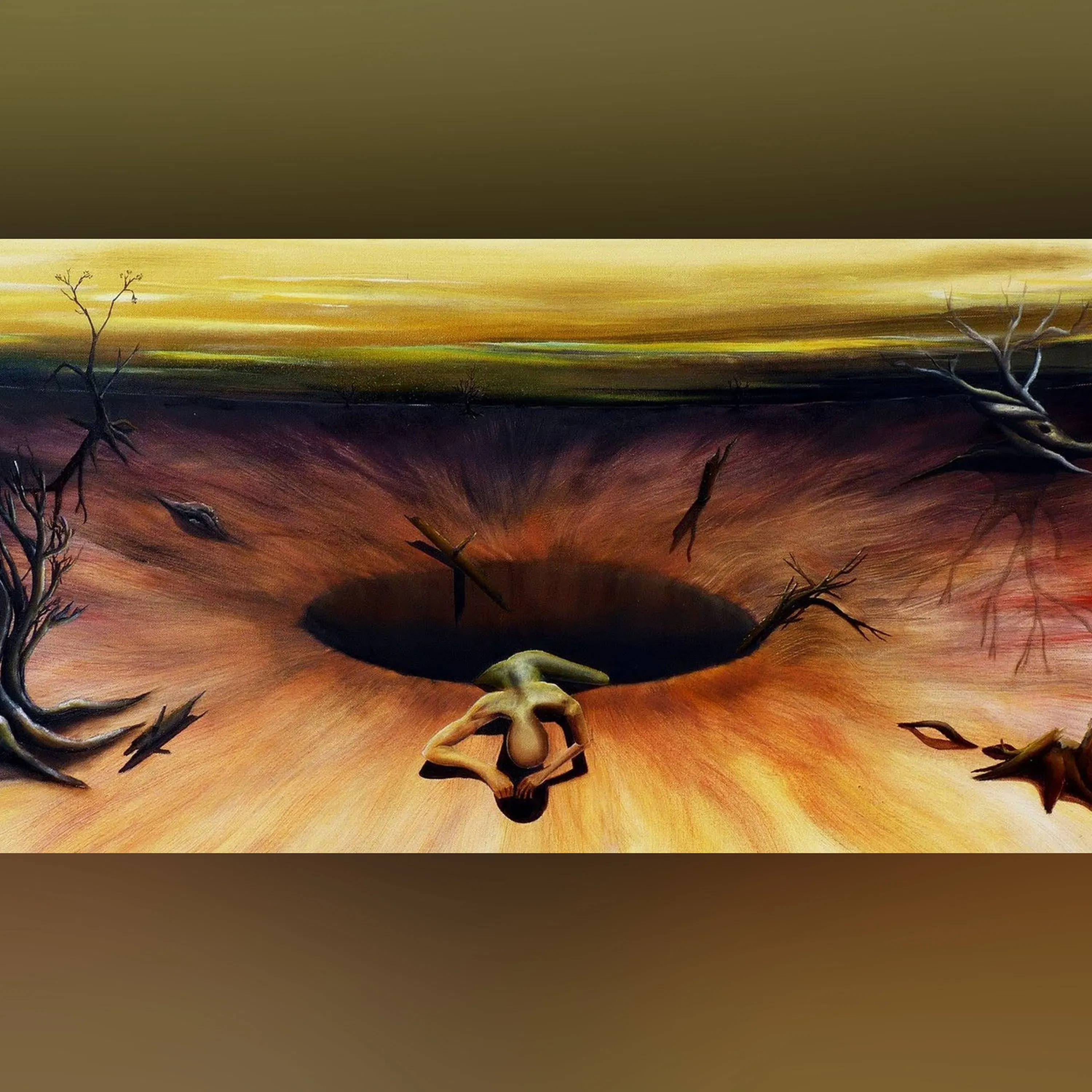
Loneliness, emptiness, and anxiety – these are the main complaints American existential psychologist Rollo May encountered over and over from his patients. In 1953, May published Man’s Search for Himself, in which he explores these problems – that are perhaps more relevant than ever in our modern age.
When society can no longer give us a clear picture of our values and standards, of what we are and what we ought to be, we are then thrown back on the search for ourselves. This is one of the few blessings of living in an age of anxiety. To venture causes...
How Marcus Aurelius Mastered His Mind - Stoicism

The Meditations by Marcus Aurelius remains one of the great works of spiritual and ethical reflection, as well as one of the key works of Stoicism.
It is perhaps the only document of its kind ever made, the private thoughts of the world’s most powerful man. Today Marcus Aurelius is considered as the quintessential Stoic.
The Meditations can be best seen as “spiritual exercises” written as reflections against the stress and confusion of everyday life, a sort of self-help book. He had clearly no expectation that anyone but himself would ever read his Meditations. It see...
The Quest for the Holy Grail (The Self)

The Quest for the Holy Grail has fascinated the Western consciousness for a long time. It epitomises the true spirit of Western man and is, in many ways, the myth of Western civilisation. It is a perennial and timeless pattern that expresses fundamental concerns of the human condition.
The Holy Grail is a mysterious object guarded by a king in a hidden castle. It has been described as a cup, dish, or a magical stone that can provide healing powers, immortality, eternal youth, and unlimited nourishment. It represents the fulfilment of the highest spiritual potentialities in human...
Carl Jung and The Collective Unconscious
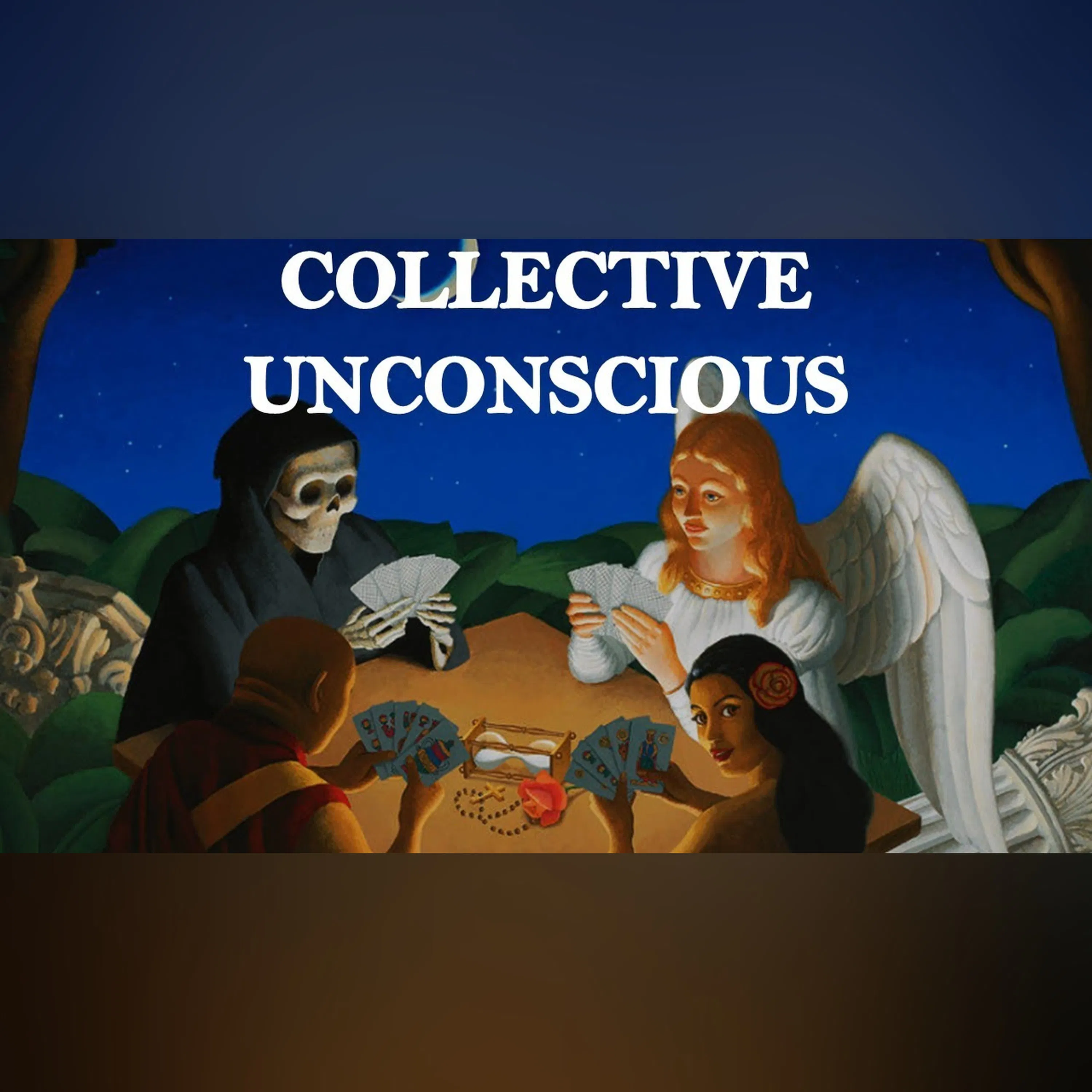
Carl Jung’s collective unconscious is one of his most well-known (and controversial) concepts. The collective unconscious is the aspect of the unconscious mind which manifests inherited, universal themes which run through all human life. He came upon the idea in a dream.
The collective unconscious does not owe its existence to personal experience and consequently is not a personal acquisition, while the personal unconscious is made up essentially of contents which have at one time been conscious but which have disappeared from consciousness through having been forgotten or repressed. The personal unconscious consists of complexes, while th...
Journey to Hell - The Path to Self-Knowledge

Hell is understood as the archetype of ultimate suffering. It is no imaginary place, but rather a state of consciousness that we all experience at some point in our lives. Hell is an unavoidable journey in life. In ancient mysteries or rituals of passages, the hero must descend into a dark place in order to give birth to a new consciousness and gain access to a new stage of life. It is the most profound psychological death and rebirth of the self.
We will be exploring the journey into hell as the path to self-knowledge, self-transformation, and...
The Psychology of The Wise Old Man

The Wise Old Man or Sage is an archetype that is recognised by almost everyone, be it in stories, games, movies, or everyday life. In myth he is often shown as one living in isolation, meditating and living a simple life deep in a forest, in the mountains, or in other uninhabited places. The Wise Old Man is a lover of wisdom, and uses his experience to guide others. He is portrayed as a mysterious person or a wizard, in contact with nature and the numinous and unseen forces that permeate our existence.
The Wise Old man...
The Philosophy of Existential Despair

The Russian existentialist philosopher Lev Shestov is known for his “philosophy of despair” or “philosophy of tragedy”. For Shestov, the sources of philosophy were the human tragedy, the horrors and sufferings of human life and the sense of hopelessness.
Tragedies take place in the depth of the human soul, where no eye can reach out to see. Consequently, He saw the beginning of philosophy starting not with knowledge, not with wonder, but with despair.
Despair is what he considers a “penultimate knowledge”, that is, a preliminary step that we must acknowledge, in order to progress towards some...
How to Philosophise with a Hammer: Nietzsche in a Nutshell

Twilight of the Idols or How to Philosophise with a Hammer is one of Nietzsche’s last books, written in 1888. As Nietzsche was starting to become recognised, he felt that he needed a short text that would serve as an introduction to his thought.
In a letter, he wrote: “This style is my philosophy in a nutshell – radically up to criminal.” The book offers a lightning tour of his whole philosophy, preparing the way for The Anti-Christ, a final assault on institutional Christianity, which would be the first part of his Revaluation of All Values. Which, unfortunately, he could...
The Dark Philosophy of Cosmicism - H.P. Lovecraft

Lovecraft's dark philosophy of cosmic horror is known as Cosmicism, which focuses on the insignificance of humanity and its doings at the cosmos-at-large, in contrast to the anthropocentric philosophies in which many find intellectual reassurance. This form of non-anthropocentrism is crucial to the philosophy of Cosmicism.
The question of the meaning of life was better left unanswered. Cosmicism is a type of extreme existentialism, as it brings up the uncertainty about the role of humanity in the uncaring universe, an existential crisis on a large scale.
Lovecraft embraces the truth of reality. Things are important...
The Dark World of Franz Kafka

Franz Kafka's dark world deals with existentialist themes such as alienation, anxiety, disorientation and the absurd. His work is so original that the term Kafkaesque was coined to describe the nightmarish and bizarre atmosphere of his work. Throughout his works we see the strange dream-like mixture of perplexity and embarrassment play out, and the notion of a grand organisation with its incomprehensible bureaucratic system that hovers invisibly over each helpless individual, taking complete control over one's life.
👑 Become a Patron
Access exclusive material and deeper studies
https://www.patreon.com/eternalised
⭐ Or become a You...
Carl Jung’s Man and His Symbols Explained

Man and His Symbols is the last work undertaken by Carl Jung before his death in 1961. The principle aim of “Man and His Symbols” is an introduction to Jung’s work and ideas.
It is an examination of man’s relation to his own unconscious, emphasising the importance of dreams in the life of the individual.
The book was first published in 1964 and is divided into five parts, four of which were written by Jung’s closest associates in the world of analytical psychology.
One of the most important part of the whole book is hi...
The Psychology of Angels

Angels have fascinated human consciousness since the beginning of time. The word angel derives from the Greek angelos, which is the default translation of the Biblical Hebrew term mal’ākh (literally “messenger”). The angel is a messenger between God and mankind.
Whether we talk about angels, daimons, djinns, fairies, or any other of such beings, they all hold something in common, despite their difference in appearance, namely, they are all archetypal images of the same fundamental pattern, the archetype of the ethereal being. These spirits coexist with us; they just exist at another level of reality.
As t...
The Psychology of The Wounded Healer

The wounded healer refers to the capacity to be at home in the darkness of suffering and there to find germs of light and recovery. It is the archetype at the bottom of all genuine healing procedures. As long as we feel victimised, bitter and resentful towards our wound, and seek to escape from suffering it, we remain inescapably bound to it. This is neurotic suffering, as opposed to the authentic suffering of the wounded healer which is purified. The wound can destroy you, or it can wake you up. As Carl Jung wrote, "The doctor is effective only...
The Psychology of Projection

Projection is a psychological fact that can be observed everywhere in the everyday life of human beings. It is an unconscious mechanism where one ascribes one’s own motivations, thoughts, feelings, and desires that are unacceptable to oneself, while attributing them to others. It is a misalignment of the inner and outer world, because what one is inwardly, one will see outwardly.
To really know who we are, we must concern ourselves with correcting such misjudgements. Many people will cling to them with every fibre of their being, because if one accepts correction, one may fall into a...
The Stranger Explained: Life, Death, and the Absurd - Albert Camus

The Stranger or The Outsider is a 1942 novel by French author Albert Camus. Though it is a work of fiction, it is often cited as an example of Camus’ philosophy of Absurdism.
The Stranger has had a profound impact on millions of readers. Through the story of an ordinary man unwittingly drawn into a senseless murder on an Algerian beach, Camus explored what he termed "the nakedness of man faced with the absurd."
⭐ Support this work on Patreon: https://www.patreon.com/eternalised
📺 Support this work on YouTube: https://www.youtube.com/channel/UCqos1tl0Rntu...
Notes from the Underground: Dostoevsky’s Darkest Mind

Notes from the Underground is a novel published by Dostoevsky in 1864. It remains as one of the most important works of existentialist literature. In this work Dostoevsky attempts to justify the existence of individual freedom as a necessary part of humankind.
The novel consists of two parts. The first one, titled simply “Underground” is told through an unnamed narrator, known as the Underground Man. This part serves as an introduction into the mind of the Underground Man. The second part of the novel is called "Apropos of the Wet Snow”, where he begins to recount his troubled past e...
Philosophy: The Love of Wisdom | A Guide to Life

Philosophy is a mode of life, an act of living, and a way of being. Modern philosophy has forgotten this tradition, and philosophical discourse has all but overtaken philosophy as a way of life. Philosophy is not just an intellectual discipline, which can get abstract and divorced from the real world, but is most importantly a way of life that teaches us how to best live our lives.
Philosophy is a mode of existing in the world, which has to be practiced at each instant, and the goal of which is to transform the whole of the...
Carl Jung on the Soul of Modern Man

Modern Man in Search of a Soul was published in 1933 and is a comprehensive introduction to the thought of Carl Jung. The writing covers a broad array of subjects such as gnosticism, theosophy, Eastern philosophy and spirituality in general.
The first part of the book deals with dream analysis in its practical application, the problems and aims of modern psychotherapy, and also Jung’s theory of psychological types. The middle part addresses his beliefs about the stages of life and Archaic man. He also looks at the differences between his theories and those of Sigmund Freud.
Synchronicity: Meaningful Patterns in Life
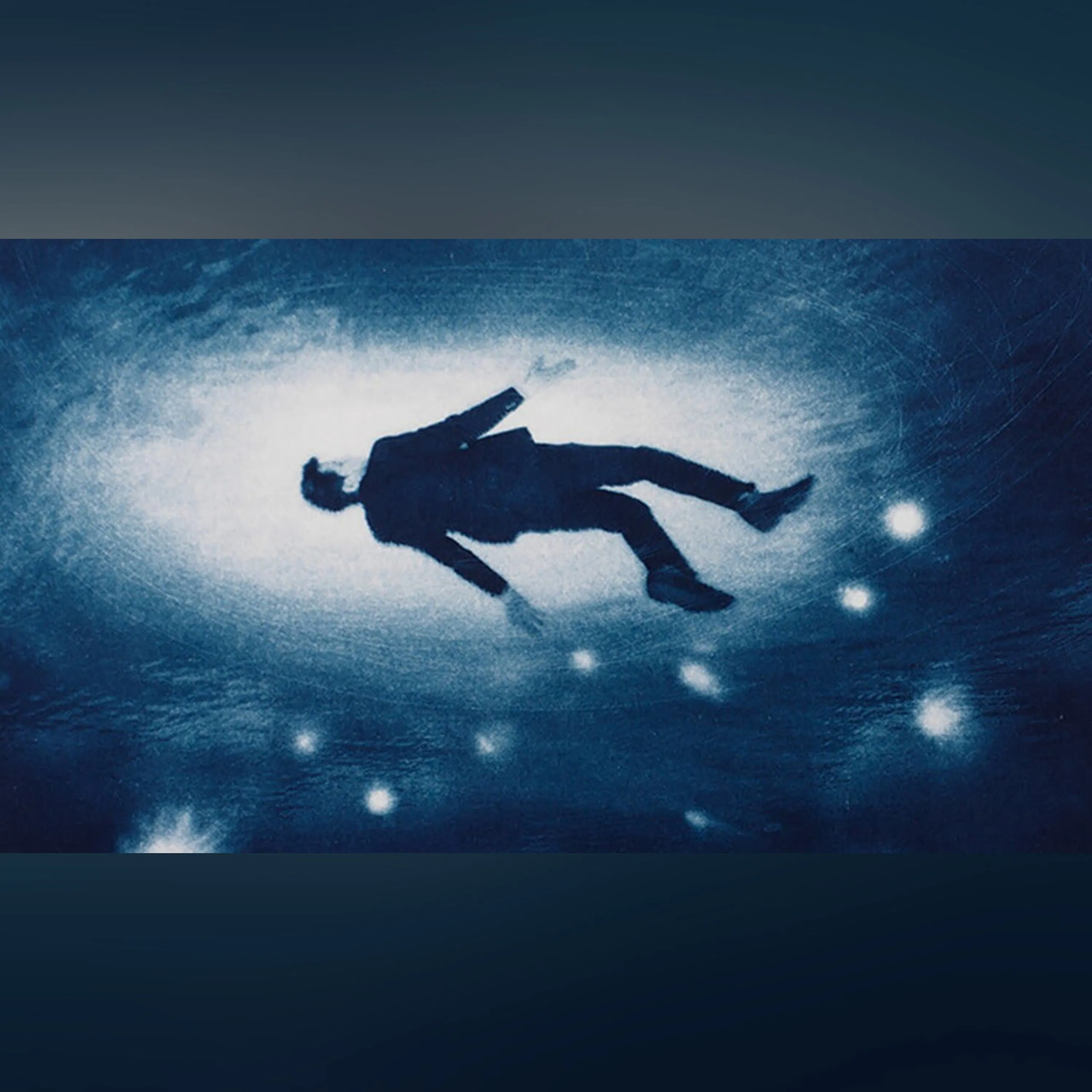
Synchronicity is a term coined by Carl Jung which describes meaningful patterns or meaningful coincidences of outer and inner events that cannot be causally linked. It occurs when an inwardly perceived event (dream, vision, premonition, thought or mood) is seen to have a correspondence in external reality: the inner image has “come true”, bringing meaning to your life.
When Jung was investigating the phenomena of the collective unconscious, he kept on coming across “coincidences” that were connected so meaningfully, that they broke all statistical probabilities. The culmination of his investigations is covered in his work: Synchronicity: An Acausal...
Hermeticism: The Ancient Wisdom of Hermes Trismegistus

The legendary figure of Hermes Trismegistus (Hermes Thrice Great) is the inspiration for the spiritual teachings known as Hermeticism. He is a syncretism (joining) of the Greek deity Hermes, the winged messenger of the Gods, and his Egyptian counterpart, the Ibis-headed moon god Thoth.
The Way of Hermes involved altered states of consciousness in which practitioners went through a training regime that involved luminous visions, spiritual rebirth, cosmic consciousness, and union with the divine beauty of universal goodness and truth to attain the salvational knowledge known as gnosis.
👑 Become a Patron
Access exclusive material and...
The Psychology of a Criminal: Dostoevsky’s Masterpiece

Dostoevsky’s Crime and Punishment first published during 1866, remains the most widely known Russian novel as well as one of the greatest achievements in world literature.
The book is disguised as a murder mystery, in which the reader knows from the start who has committed the crime. This in-depth exploration of the psychology of a criminal is at the heart of the novel, delving deeply into psychological punishment.
The main themes include alienation, suffering, morality, faith (or the God-man, Jesus Christ) and the “extraordinary man” (or the man-God), as well as the philosophical themes of nihili...
The Nightmare of Total Equality - A Warning to The World

In Harrison Bergeron, Kurt Vonnegut Jr. describes the nightmare of total equality, a society in which equality is finally achieved, but at the cost of freedom and individuality. One’s utopia is another’s dystopia.
We’ll be exploring the increasing promotion of equality to the point of it being absurd as a consequence of the “unheard cry for meaning” that plagues modern society. The modern age is characterised by a sense of disorientation of not knowing what to do with one’s life. Nietzsche’s foresaw nihilism as an inevitable consequence of the Death of God, where God is r...
Death Smiles at Us All: All We Can Do Is Smile Back

What is the meaning of death? It is the unequivocal and permanent end of our existence. Most people unconsciously repress the idea of their death, as it is too horrifying a notion to think about.
Some are perhaps not so horrified of the idea of death, but rather the pain associated before one’s death, or the death of loved ones. We live entirely unique lives with complete different experiences, but we all share one common fate: Death. This is what links all of us together. Death smiles at us all and all we can do is sm...
Active Imagination: Confrontation with the Unconscious

Active imagination is a technique developed by the Swiss psychologist and psychiatrist Carl Jung. He considered it the most powerful tool to access the unconscious and for achieving wholeness of personality.
Jung discovered this method between the years of 1913 and 1916, a period of disorientation and intense inner turmoil which he called his confrontation with the unconscious. He searched for a method to heal himself from within, through the power of the imagination. Active imagination is a dialogue with different parts of yourself that live in the unconscious. In some way it is similar to dreaming, except that...
The Psychology of Animals

Animals have been an integral part of human existence since our earliest origins. They are deeply ingrained within us and play a crucial role in the unconscious. In various religions, animals are revered as gods. Swiss psychiatrist and psychologist Carl Jung frequently remarked that animals embodied the divine aspect of the human psyche. He wrote a bold statement for a thinker of his era, "Even domestic animals, to whom we erroneously deny a conscience, have complexes and moral reactions.”
We belong to the animal kingdom, and knowing this is part of the individuation process, the journey towards wh...
In Pursuit of Meaning: Finding Purpose in Everyday Life

I believe that philosophy, psychology, religion, and art, create the most profound dialogue to understanding human existence. The true meaning of philosophy is the love of wisdom applied to daily life, the art of living.
Thanks to @AfterSkool for creating the wonderful animation in this video. Make sure to subscribe to them:
https://www.youtube.com/channel/UC1KmNKYC1l0stjctkGswl6g
This video is part of the biggest philosophy collaboration series on this platform (to date) organised by @SeekersofUnity. Check out the full compilation:
https://www.youtube.com/watch?v=vDRzt8TU998...
KIERKEGAARD: How To Avoid Boredom and Maximise Happiness

In Either/Or, Kierkegaard dedicates a chapter on the problem of boredom and the difficulty of maintaining happiness, and proposes his solution for it through the aesthetic sphere of existence.
To explain how one avoids boredom, the aesthete’s worst enemy, he proposes “crop rotation” as an attempt at a theory of social prudence. It is a sort of science of seeking pleasures characteristic of the reflective aesthete, and not mindlessly doing it as an unreflective aesthete, such as the legend of Don Juan.
This method can be done extensively or intensively. The aesthete proposes the in...
How Facing Nothingness Can Transform Your Life

Nothingness is generally considered to be analogous with death and extinction which every healthy living instinct wants to avoid. Many find the notion of nothingness unfathomable.
Japanese philosopher Keiji Nishitani, however, was convinced that the way out of nihilism, that which renders meaningless the meaning of life, could only be reached by gazing into the abyss itself.
Nishitani understands human existence as consisting in three fields: consciousness, nihility and emptiness. Nihility is as part of the fabric of reality as Being is, it is relative nothingness, and emptiness is absolute nothingness, where the “absolute negation” as t...
Existentialism in 10 Minutes

What is Existentialism? Existentialism is a philosophy that explores the problem of human existence, with an emphasis on the individual who starts in an apparently meaningless world, and who seeks to create meaning in a world without inherent meaning.
Existentialism is most commonly associated with several 19th and 20th century philosophers: Søren Kierkegaard, Friedrich Nietzsche, Fyodor Dostoevsky, Martin Heidegger, Jean Paul Sartre, and Albert Camus.
Many of these thinkers never used the term “existentialist” to describe themselves, some of them even rejected the label, while others accepted it. What they did share is a commo...
The Psychology of Personality Types (Know Yourself)

We all have a particular personality type, and at the same time, we are all unique. To partake in the journey of discovering who we truly are, it is necessary for us to know our true and authentic personality. The quest to know ourselves allows us to better understand the complexity and intricacies of the human condition, improve our relationship with ourselves, with others, and with the world.
Carl Jung’s model of typology is not a system of character analysis, nor is it a way of labelling oneself or others. Much as one might use a co...
The Dream Artist Nobody Knows About

Few artists have so powerfully evoked the uncanny otherness of the unconscious like Swiss artist Peter Birkhäuser. His unknown dream paintings were met with blank incomprehension, and were not well-received by the art community of the time, but, viewed today, his vivid paintings bear striking testament to the disruptive and transformative reality of individuation, the purpose of Jungian psychology, which is to seek wholeness of personality by bringing one's unconscious contents into reality.
After a midlife crisis, Birkhäuser dedicated himself exclusively to bringing these unconscious images into reality. Just how hard this struggle with himself mu...
The Psychology of Astrology

The Swiss psychiatrist and psychoanalyst Carl Jung studied astrology for over 40 years, and was primarily interested in the way astrology could help to explore the psyche. For Jung, astrology represents the sum of all the psychological knowledge of antiquity. The notion of seeing mythic narratives through patterns in the heavens is one of the earliest attempts to link the outer world with the inner world.
The well-known Hermetic dictum, “As above, so below,” is key to astrology. It is the idea that man (the microcosm), is influenced by the universe (the macrocosm). That is to say, truths abou...
Sigmund Freud in 10 Minutes

Sigmund Freud was a neurologist most popularly known as the founding father of psychoanalysis. He popularised and structured the concept of “the unconscious”.
Some of his most popular concepts include: id, ego and super ego, Oedipus complex, free association, repression, libido and the psychosexual stages of development.
📨 Free newsletter: https://eternalisedofficial.com/subscribe
⭐ Support this channel: https://www.patreon.com/eternalised
📺 YouTube Member Perks: https://www.youtube.com/channel/UCqos1tl0RntucGGtPXNxkkA/join
☕ Donate a Coffee: https://ko-fi.com/eternalised
📘 PayPal https://www.paypal.com/paypalme/eternalisedofficial
🛒 Official Merch: https://eternalised.creator...
The Present Age: Kierkegaard’s Warning About Our Hollow Times

The Present Age was published in 1846 by Søren Kierkegaard. He discusses the philosophical implications of a society dominated by mass media, foreseeing the rise of twenty-four hour news and social media, it examines the philosophical implications of a culture of endless, inconsequential commentary and debate – a society eerily similar to our own.
While a revolutionary age is an action of action, the present age is one of understanding and reflection, without passion. It is the age of advertisement and publicity. Nothing ever happens but there is immediate publicity everywhere, as well as an age of anticipation whe...
