Engineering Gone Wrong
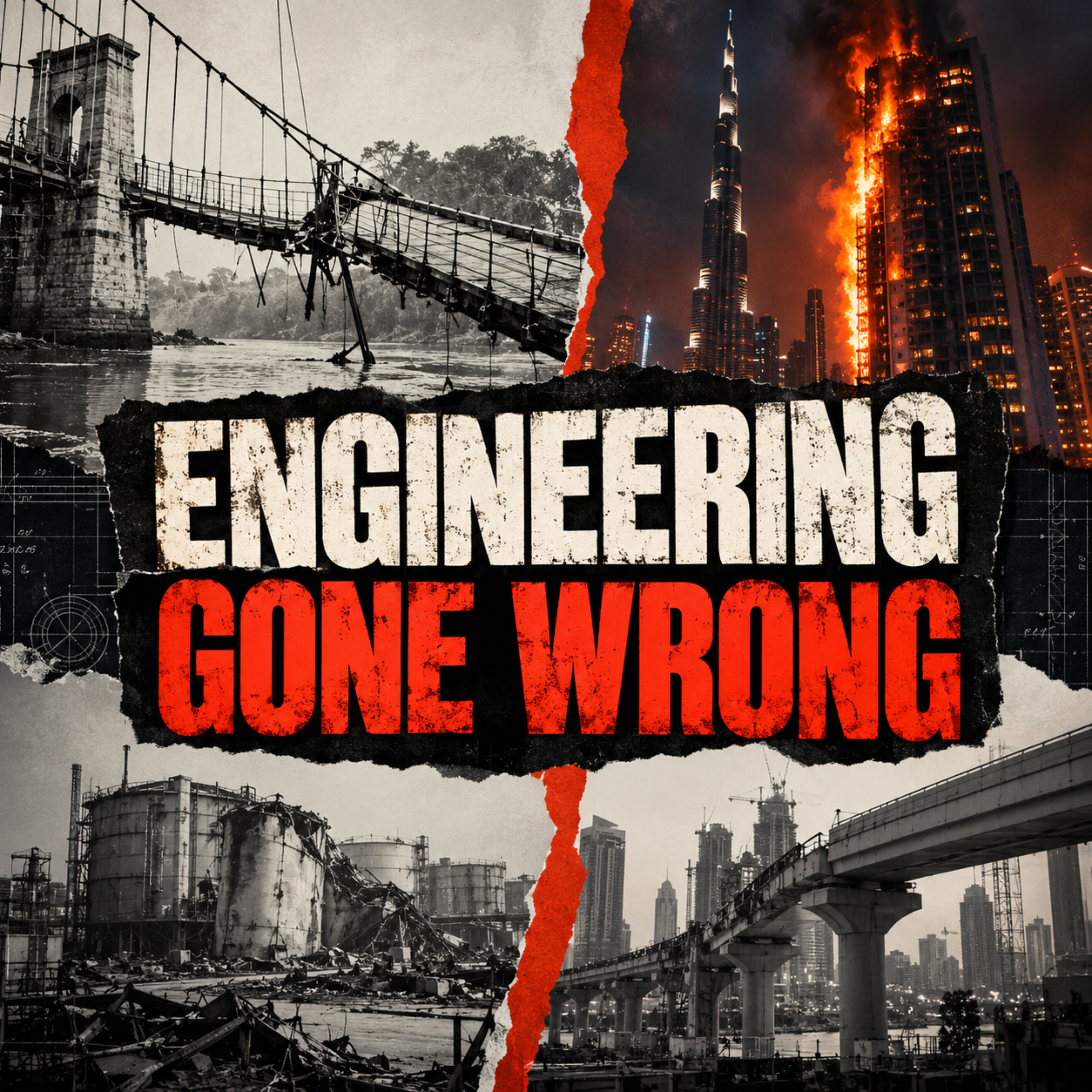
Engineering Gone Wrong looks at real disasters from India and the Middle East and asks a simple question: what actually went wrong? From collapsing bridges to industrial accidents and failures hidden inside everyday infrastructure, each episode traces the decisions made before disaster struck: the materials chosen, the warnings missed, the corners cut, and the engineering that should have stopped it. Because most disasters don’t begin with one dramatic mistake. They begin much earlier, with decisions that seemed small at the time.
Episode 3: The Night Bhopal's Safety Systems Failed
In the 3rd episode of Engineering Gone Wrong, we head to Bhopal, India, where a pesticide plant became the site of one of the deadliest industrial disasters in history.
On the night of December 3rd, 1984, a toxic gas leak turned a sleeping city into a catastrophe.
How did a chemical plant's safety systems fail so completely? What caused the toxic gas leak? And could the disaster have been prevented?
Episode 2: The Fire That Almost Upstaged the Fireworks
On New Year’s Eve 2015, a 63-story luxury hotel in Dubai caught fire just hours before the world-famous Burj Khalifa fireworks. As flames raced up nearly 40 floors, spectators struggled to tell the difference between a spectacular light show and a real disaster.
In Episode 2 of Engineering Gone Wrong, Aditya investigates the Address Downtown fire and the deceptively simple material choice behind it: aluminium composite panels with a highly flammable plastic core. From cost-cutting and construction decisions to repeated skyscraper fires and changes in fire safety regulations, this episode explores how a building can be structurally sound yet da...
Episode 1: The Bridge That Reopened Four Days Too Early
In the first episode of Engineering Gone Wrong, we head to Morbi, Gujarat, where a 143-year-old suspension bridge had just reopened after months of renovation.
Four days later, what happened made headlines across the country.
How does a bridge that stood for more than a century fail just days after being repaired? What went wrong behind the scenes? And could it have been prevented?
