Sitcom Science
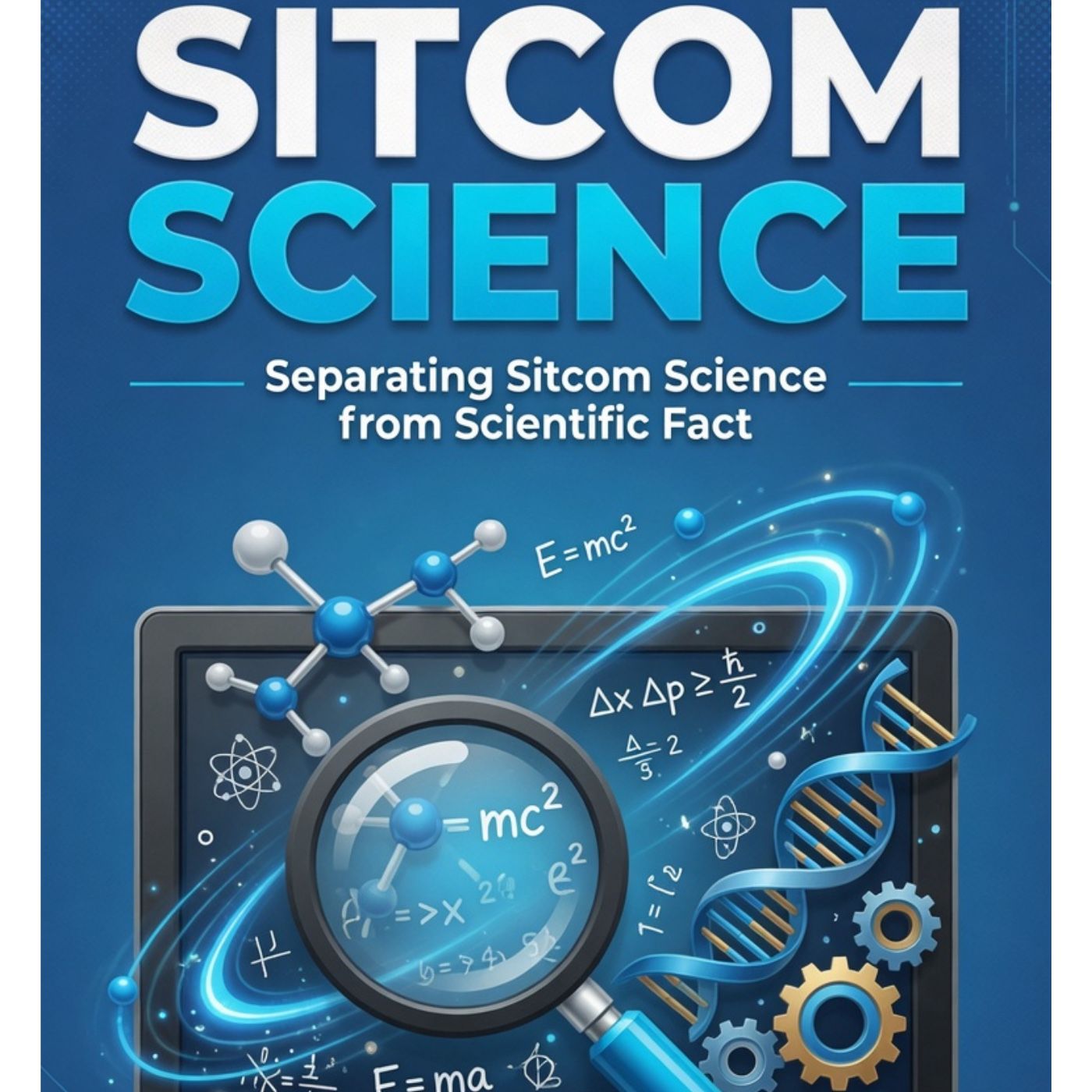
Sitcom Science explores the strange, surprising, and occasionally ridiculous science hiding inside our favorite television comedies—and the real world around us. Could something Sheldon Cooper said actually be scientifically correct? Was George Costanza right about double-dipping? Could a bizarre invention from The Simpsons really work? Each episode begins with a curious question, memorable television moment, or seemingly impossible scientific claim and follows the evidence wherever it leads. From psychology, medicine, biology, and evolution to physics, space, technology, and the wonderfully weird behavior of animals, Sitcom Science separates what sounds ridiculous from what science says might actually be true.
Friendsgiving: What the Friends Thanksgiving Episodes Teach Us About Chosen Family
Friends aired a Thanksgiving episode in nine of its ten seasons, and nearly every one is about what happens when the family you choose sits down at the same table. In this episode, we use those stories to explore the psychology of chosen family, why friendships matter more as we age, and why holiday tables pull people back into old roles and rivalries. Along the way, we look at where the word Friendsgiving actually came from, and why it wasn't the show.
Goldfinger: Can Painting Your Entire Body Gold Really Kill You?
In the 1964 James Bond classic Goldfinger, a woman is discovered dead after her entire body has been covered in gold paint, supposedly because her skin could no longer breathe. But does human skin actually need access to air to keep us alive? We examine cutaneous respiration, body temperature regulation, chemical toxicity, and the physiological consequences of covering the skin with paint. The science reveals why one of Hollywood’s most memorable deaths is based on a medical misconception, although certain types of body paint can still pose genuine health risks.
Death in Paradise: Can a Murder Weapon Still Have Fingerprints After Months Underwater?
In the British detective series Death in Paradise, the tropical waters surrounding Saint Marie provide an ideal setting for criminals hoping to dispose of evidence. But would throwing a murder weapon into the Caribbean actually eliminate its fingerprints? Drawing on FBI research demonstrating that identifiable prints can survive underwater for up to 70 days, this episode examines the real science behind a classic television crime mystery.
Breaking Bad: Could Hydrofluoric Acid Really Dissolve a Human Body?
In Breaking Bad, Walter White instructs Jesse Pinkman to use hydrofluoric acid to dispose of a body, but Jesse makes a disastrous mistake involving an upstairs bathtub. The result is one of the series’ most unforgettable scenes, as the acid supposedly destroys human tissue, plumbing, and even the floor beneath it. But could hydrofluoric acid actually dissolve an entire human body, and is it as chemically destructive as the show suggests? We examine the chemistry of acids, the unusual toxicity of fluoride, the biology of chemical burns, and why the real dangers of hydrofluoric acid are considerably different from Hollywood’s de...
Did Better Call Saul Get the Physics of a Shaken Soda Can Right?
In Better Call Saul, Howard Hamlin demonstrates an unusual trick for opening a shaken soda can without spraying its contents everywhere. His explanation involves centrifugal force and carbon dioxide bubbles, but does the physics actually support his claim? We examine carbonation, bubble nucleation, pressure changes, and scientific experiments to determine whether Howard’s technique works or is simply another convincing television illusion.
Gilligan’s Island — Can You Survive by Drinking Coconut Water Instead of Fresh Water?
Stranded on a tropical island without a reliable source of fresh water, could Gilligan and the Skipper survive by drinking coconut water? Although coconut water contains fluid and important electrolytes, its high potassium and relatively low sodium content make it an imperfect replacement for ordinary drinking water, especially during prolonged heat exposure. We examine how the kidneys regulate hydration, why electrolyte balance matters, and what happens when someone relies on coconut water as their primary source of fluids.
Better Call Saul: Could a Stroke Leave You Conscious but Unable to Speak?
In Breaking Bad and Better Call Saul, Hector Salamanca remains mentally aware of his surroundings but is largely unable to speak or move, communicating through a small bell attached to his wheelchair. Could a stroke really leave someone trapped inside their own body while preserving their ability to think, understand language, and experience emotions? We explore locked-in syndrome, brainstem injuries, aphasia, and the remarkable neurological systems responsible for consciousness and communication. The science reveals why losing the ability to speak is not necessarily the same as losing the ability to think.
SpongeBob SquarePants and the Krabby Patty: Why Does a Burger Taste Better When It’s Grilled?
What makes a Krabby Patty irresistible, and why does cooking a burger transform its flavor? Using SpongeBob SquarePants as our starting point, we explore the Maillard reaction, the chemical interaction between amino acids and sugars that produces hundreds of flavor and aroma compounds. We also examine why temperature, moisture, and cooking methods determine whether a burger develops a delicious brown crust or simply turns gray.
The Truth Serum Myth: Can Chemistry Force Someone to Tell the Truth? From Marvel's Ant-Man to the CIA's MKULTRA
In Ant-Man and the Wasp, True Lies, and Alias, truth serum seems capable of making even the most determined person reveal their secrets. But can chemicals actually force someone to tell the truth, or do they simply interfere with the brain's ability to think clearly? This episode investigates sodium thiopental, scopolamine, and the neuroscience of chemically altered consciousness, alongside the CIA's real-life MKULTRA experiments. From Hollywood interrogation scenes to secret government research, we uncover why truth serum remains one of science's most persistent myths.
Amnesia with a Blunt Instrument: Can a Second Blow to the Head Really Restore Your Memory?
In Gilligan's Island, a blow to the head can erase someone's memory, while another perfectly timed impact miraculously restores it. Movies like The Bourne Identity and countless soap operas have made sudden memory loss one of Hollywood's favorite medical mysteries. But what actually happens inside the brain during a concussion, and can physical trauma selectively erase someone's identity while leaving everything else intact? This episode explores traumatic brain injuries, hippocampal function, retrograde and anterograde amnesia, and why a second head injury is far more likely to worsen neurological damage than reverse it.
The Voltage Trap: Why Frankenstein’s Creature Would Never Wake Up
A heavy switch slams forward. Spark gaps erupt with blinding blue light. The massive surgical table descends from the open skylight, and Victor Frankenstein famously bellows: “It’s alive!”
Mary Shelley published Frankenstein in 1818, inspired by the galvano-electric experiments of Luigi Galvani and Giovanni Aldini, who made severed frog legs and executed convicts twitch using electrical currents. In cinema, reanimation looks simple: connect the anatomy, introduce high-voltage electricity, restart the pulse, and consciousness returns.
In clinical neuroscience, that leap collapses entirely.
Breaking Bad Science: Can Teeth Really Explode Like Popcorn in a Fire?
In Breaking Bad, investigators examining the remains of Gus Fring’s destroyed meth laboratory suggest that extreme heat caused a victim’s teeth to pop like popcorn, making identification impossible. But can human teeth actually explode when exposed to intense heat? This episode of Sitcom Science explores the chemistry of tooth enamel, the physics of thermal expansion, and how forensic scientists identify severely burned human remains. We separate Hollywood drama from real forensic science to discover whether Walter White’s destructive cleanup was as effective as the television series suggests.
Breaking Bad’s Giant Magnet: Can Criminals Really Destroy Digital Evidence?
In Season 5 of Breaking Bad, Walter White and Jesse Pinkman attempt to destroy incriminating evidence by using an enormous electromagnet against a laptop inside a police evidence room. But could this actually work, and how difficult is it to permanently destroy digital evidence? This episode explores electromagnetism, computer forensics, and the surprising ways investigators can recover information from damaged electronic devices. We also examine the psychology of evidence destruction and why criminals frequently overestimate their ability to eliminate traces of their actions.
Breaking Bad: Could a Chemistry Mistake Really Create Mustard Gas?
In Breaking Bad, Walter White warns that a mistake in a makeshift laboratory could produce deadly mustard gas. But can an ordinary chemical reaction accidentally create one of history’s most notorious chemical weapons? In this episode of Sitcom Science, we explore the chemistry of toxic gases, the terrifying history of mustard gas, and the science behind dangerous laboratory accidents. We also examine how Breaking Bad connects chemistry to medicine, military history, criminal investigations, and the psychology of Walter White.
The Thundermans: Could Max Really Send Someone Flying With a Sword?
In The Thundermans, Max performs an extraordinary sword maneuver that sends his opponent flying through the air. But could a real sword fighter generate enough force to launch another person with a single movement? In this episode of Sitcom Science, we explore torque, leverage, angular momentum, and the surprising physics behind one of Max Thunderman’s most spectacular moves.
Can Cold Water Really Cause Shrinkage? The Science Behind George Costanza’s Famous Claim
In one of Seinfeld’s most memorable moments, George Costanza desperately explains that cold water causes shrinkage, but was he actually describing a legitimate physiological phenomenon? We explore how the human body responds to cold temperatures, including blood vessel constriction, muscle contraction, and the mechanisms that protect core body temperature. From thermoregulation to human anatomy, we investigate whether George was scientifically correct or simply making excuses.
Can Soldiers Really Have GPS Trackers Implanted Under Their Skin? Hollywood vs. Science
Hollywood loves the idea of elite soldiers and secret agents carrying tiny GPS tracking devices implanted beneath their skin, allowing their handlers to locate them anywhere on Earth. From military thrillers to spy movies, these invisible trackers seem like the ultimate surveillance technology, but could they actually work? In this episode of Sitcom Science, we examine the physics of GPS, the limitations of implanted electronics, and how military personnel are really tracked during dangerous missions. The truth reveals why Hollywood's favorite tracking technology is far less practical than it appears.
Could You Survive Being Trapped in a Freezer? The Science of Cold Exposure
Sitcoms have turned getting trapped in a walk-in freezer into a classic comedy setup, but in real life, prolonged cold exposure can become a serious physiological emergency. In this episode of Sitcom Science, we use The Office as our jumping-off point to explore what happens when the human body is suddenly exposed to extreme cold. We examine vasoconstriction, shivering, thermoregulation, and the progression toward hypothermia. Most importantly, we ask the question television rarely answers: how quickly would your core temperature actually fall?
Was Sheldon Right? Can You Really Train Your Friends Like Lab Rats?
Sheldon Cooper discovers that chocolate can accomplish what conversation apparently cannot: changing another person’s behavior. But beneath the joke is a genuine principle of behavioral psychology known as operant conditioning. So could you actually shape a friend’s behavior with rewards without them realizing what you’re doing?
Was George Costanza Right? The Surprisingly Gross Science of Double-Dipping
Seinfeld turned double-dipping a chip into one of television’s funniest social crimes. But beneath the comedy was a surprisingly legitimate scientific question: does taking a second dip actually contaminate the bowl? Researchers have put the question to the test, and George Costanza probably would not have liked the results. The science suggests that Timmy’s outrage may have been more justified than we thought.
Smart Underwear, 32 Daily Farts, and the Race to Map the Human Gut
Sheldon starts eating Brussels sprouts to extend his lifespan. The diet gives him severe gas. He first mistakes the pain for appendicitis and tells Leonard he thinks his appendix is about to burst—then farts loudly and concludes it was the sprouts. Later, after he falls down the stairs while trying to jog with Penny, she helps him up and he farts in her face. His follow-up line is: “If it makes you feel any better, Thursday is no longer cruciferous vegetable night.”
The device, developed at the University of Maryland by Brantley Hall and colleagues, is the first...
Are we close to a real world with a Jurassic Park
Why Did Sheldon Dress Up as the Doppler Effect?
One of Sheldon’s most unforgettable Halloween costumes wasn’t a superhero or a monster—it was the Doppler Effect. Was the costume scientifically accurate, and what exactly is the Doppler Effect anyway? In this episode, we’ll discover why every time an ambulance speeds past you, you’re actually hearing one of physics’ coolest phenomena.
Was Sheldon Right? Episode 3: Are Multivitamins Just Expensive Urine?
One of Sheldon’s funniest one-liners is that multivitamins are nothing more than “expensive urine.” Is that just sitcom sarcasm, or is there real science behind the joke? In this episode, we dive into nutrition research, learn when vitamins actually help, and discover why the answer is much more interesting than a simple yes or no.
Was Sheldon Right? Episode 4: Can You Really Make a Glowing Fish Night-Light?
Sheldon proposes creating a night-light by inserting glowing jellyfish DNA into a fish—but is that science fiction or real genetic engineering? In this episode, we explore fluorescent proteins, genetically modified animals, and the surprising history of fish that really do glow. The science behind Sheldon’s strange idea helped transform biological research, although it probably would not illuminate your bedroom.
Was Sheldon Right? Episode 2: Did Evolution Make Women Better at Hearing a Baby Cry?
Did evolution really make women more sensitive to high-pitched sounds so they’ll wake up when a baby cries? In this episode, we separate a clever sitcom one-liner from decades of research in evolutionary psychology, neuroscience, and parenting. The answer is more fascinating—and much more nuanced—than the television version.
Was Sheldon Right? Episode 1: Can Two Millimeters Really Make You Trip?
Could a stair that’s only two millimeters taller than the rest actually make someone fall? In this episode, we explore the surprising science of how your brain learns patterns while walking and why even tiny changes in stair height can throw off your stride. It’s a fun look at biomechanics, psychology, and engineering that proves reality is sometimes stranger than sitcoms.
Was Sheldon Right?, the podcast where we separate sitcom science from scientific fact.
The Immortal Freeze: How Arctic Ground Squirrels Cheat Death Every Winter
Every autumn, Arctic ground squirrels do something no other mammal on Earth can survive: they let their bodies freeze. This episode unpacks the extraordinary physiology behind supercooling, from the molecular scaffolding that keeps ice crystals from forming in living tissue to the brain changes that make weeks of near-death possible. If you have ever wondered where biology ends and the genuinely miraculous begins, this is the episode.
Why Diet Soda is Secretly a Tooth’s Worst Nightmare
You might think opting for a sugar-free soda saves your smile from destruction, but bizarrely, the dental truth is flipped completely on its head. This episode breaks down the strange science of chemical chelation, revealing how the extra citric acid hidden in diet drinks aggressively binds to the calcium in your mouth, stripping it away. Tune in to find out why a calorie-free fizzy drink can actually melt your protective enamel faster than its sugary counterpart.
Enigmatic Orbs: The Enduring Mystery of Ball Lightning
Ball lightning manifests as luminous, spherical objects that appear during thunderstorms, floating unpredictably and defying conventional explanations of atmospheric electricity. Despite centuries of eyewitness reports and some instrumental recordings, scientists have yet to reach consensus on its formation or persistence. This episode explores historical accounts, leading scientific theories, and recent research illuminating one of nature’s most bizarre phenomena
Flawless Deception: The Bizarre Evolution of Koala Fingerprints
How did a marsupial that separated from the human evolutionary line 100 million years ago develop fingerprints identical to our own? This episode dives into the bizarre phenomenon of convergent evolution, exploring how koalas independently grew loops, whorls, and arches to master their arboreal environments. Uncover the underlying biomechanical necessity of dermal ridges and how nature engineered a near-perfect human replica on the paws of a tree-dwelling mammal.
The Shrimp That Shoots Suns: Inside the Loudest Snap in the Ocean
A creature smaller than your finger can generate temperatures rivaling the surface of the sun—without fire, fuel, or fury. This episode dives into the physics-defying snap of the pistol shrimp, where sound becomes shockwaves and bubbles collapse into flashes of light. It’s a story where biology meets extreme physics—and where one tiny claw rewrites what we think animals are capable of.
Time Crystals: The New Phase of Matter That Defies Conventional Physics – Quantum Breakthrough Explained
Scientists have created time crystals — a revolutionary new phase of matter that repeats in time without consuming energy. This episode explores the quantum principles, experimental realizations, and groundbreaking implications for quantum computing and non-equilibrium physics. A clear, evidence-based examination of one of the most exciting frontiers in modern science.
The Wood Wide Web: How Trees Share, Signal… and Steal
Beneath every forest lies a hidden network where trees share nutrients, send warnings, and sometimes steal from one another. This episode explores the “Wood Wide Web,” the role of powerful “mother trees,” and the darker side of cleptoparasitism. It’s a story of cooperation, competition, and the fragile balance that keeps entire ecosystems alive.
Death Defied: The Life Cycle of the Jellyfish That Never Dies
In the depths of the ocean lives a creature that can technically live forever by rewinding its own biological clock. By transforming from a mature adult back into a polyp, the immortal jellyfish bypasses the natural end of life, starting its journey over again and again. Join us as we uncover how this unique survival mechanism works and why it remains one of the greatest mysteries of marine biology.
What does space smell like?
A couple has baby from a 30 year old frozen embryo
BEE VENOM POSSIBLE BREAST CANCER CURE TREATMENT
FOUR BRITISH SPECIAL FORCES OPERATORS MAKE EVEREST HISTORY WITH A NOVEL METHOD
WHAT IS THE TOUGHEST MATERIAL
