Navigating Dementia
Navigating Dementia is a weekly podcast for anyone caring for someone with dementia, family and professional caregivers alike. Host Carlyn Lenfestey, a physical therapist and dementia care specialist with 25 years of clinical experience, uses real stories and everyday moments to show that behavior is never the problem. It's always the signal. Each episode teaches one meaningful insight through her Wheel of Function Framework™, delivered like a conversation over coffee, not a lecture. There is always a better way.
Dementia and Cognition: Why Everyday Tasks Become Harder
Before you break another task into five careful steps, ask the question that actually changes things: is breaking it down helping her brain, or asking it to do more?
In this episode, Carlyn goes back to a story from the adult day program, a woman who could not get out of her chair. Standing in front of her and walking through it step by step, "scoot forward, bring your feet back, lean forward, push, stand," made her more stuck with every instruction. But walking over, holding out a hand, and saying "come with me" gave her a...
Why Physical Function in Dementia Isn't Just About Strength
Before you decide someone "just can't do this anymore," ask the question that actually changes things: what's different about this moment, not this person?
In this episode, Carlyn tells the story of a woman at an adult day program who had the hardest time getting out of a chair. Staff would walk her through it step by step, scoot forward, feet back, lean forward, push, stand, and the more instructions she got, the more stuck she became. But if Carlyn simply held out her hand and said "come with me," she had a much better chance of...
Why Dementia Behavior Is Never Just About the Task
Before you label another moment "just agitation" or "a behavior problem," ask the question that actually changes things: what might this person be feeling right now?
In this episode, Carlyn tells the story of a resident in long-term care who kept ending up on the floor, not from a stumble, not from a lost transfer, just a sudden trip to the floor, usually right after a loud noise. No reaching, no sliding, no lost balance, nothing about it looked like a normal fall. The pattern didn't make sense until Carlyn learned what was underneath...
Why Dementia Behavior Doesn't Make Sense (Until You Look at the Senses)
Before you label another moment "just the dementia," ask the question that actually changes things: what is this person's brain actually taking in right now?
In this episode, Carlyn tells the story of a resident in long-term care who kept ending up on the floor, and the evaluation that turned up nothing: strong legs, steady balance, a normal gait. The falls didn't make sense until she started asking a different set of questions, not just how he was falling, but where and when. What she found in his room became the doorway into the first spoke of...
Why Does Dementia Information Feel So Scattered and Overwhelming?
Before you take another course or read another article, ask the question that actually changes things: how does this all connect?
In this episode, Carlyn tells the story of a dementia course she took in Nashville almost ten years before she ever started A Better Way, and the question that followed her home afterward: she believed everything she'd just learned, so why couldn't she picture how any of it fit together? That question sat with her through years of treating patients and leading family workshops, watching good, true information pile up in disconnected pieces instead of one...
Why Won't Any Dementia Strategy Work Anymore?
Before you try another redirect or distraction, ask the one question that actually changes things: what's going on?
In this episode, Carlyn tells the story of a husband in one of her support groups who'd tried everything, redirecting, distracting, reassuring, validating, and still felt like nothing worked. That conversation cracked open a shift in how she thinks about every hard moment in dementia care.
The strategies most of us are taught (redirect, distract, validate, reassure) aren't wrong. But handing them out before understanding what's actually happening is like a physical therapist prescribing exercises before ever...
Why Does Someone With Dementia Try to Go to Work? Learning to Read the Signal
Everyone around him called it confusion. Carlyn came to see it differently, and that shift changed everything.
In this first episode of Navigating Dementia, Carlyn shares the story that started it all: her grandfather Steve, a small-town shopkeeper in Limestone, Maine, who spent his mornings getting dressed for work, for a store that had burned down years before.
That shift in perspective became the foundation for A Better Way: Dementia Care Solutions. It's the story behind why this show exists, and why Carlyn believes behavior is never the problem, it's always the signal.
...
A Personal Welcome: There Has to Be a Better Way
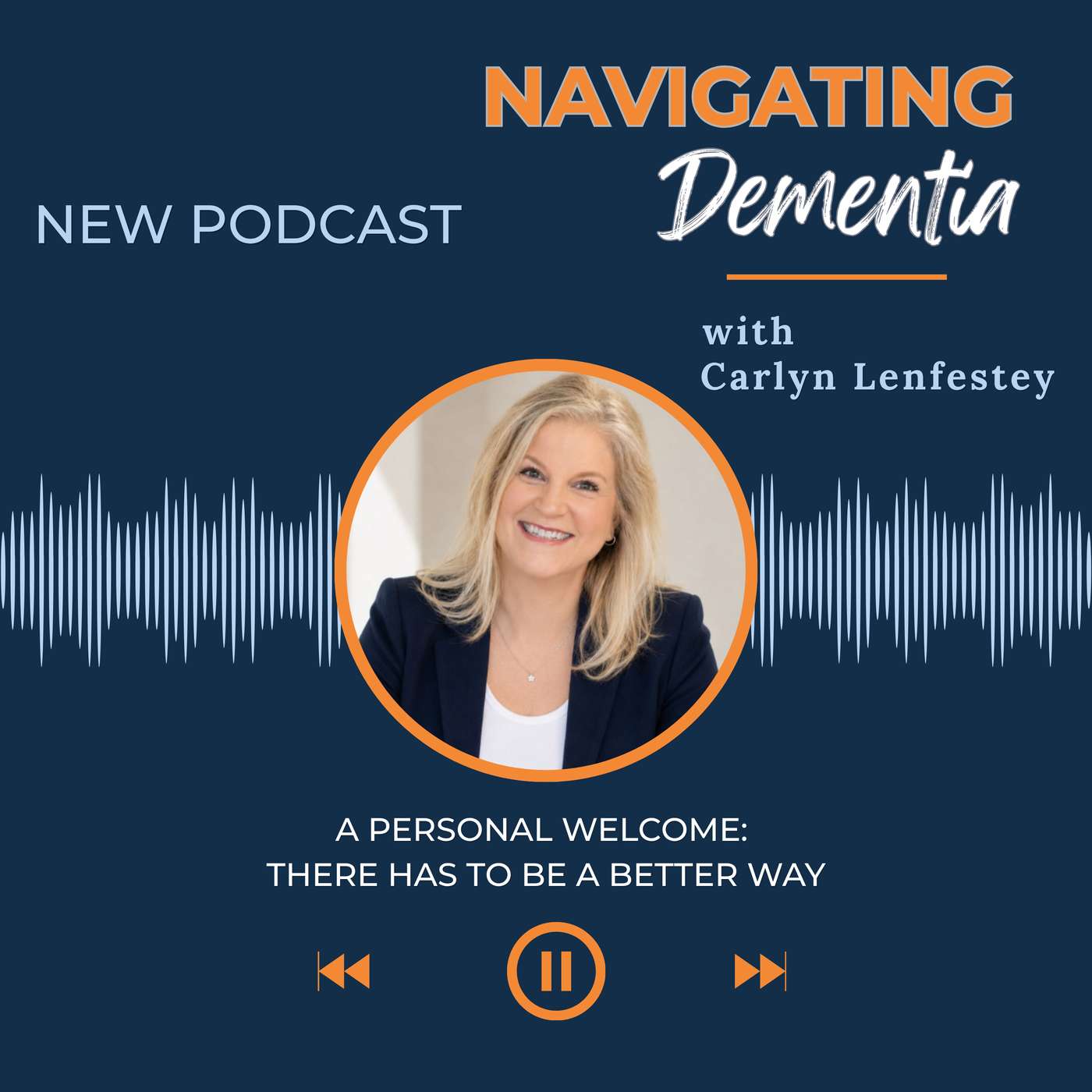
Welcome to Navigating Dementia.
If you've ever found yourself thinking, There has to be a better way, you're in the right place.
Most care partners are not looking for more information. They're looking for someone to help them make sense of what they're seeing. When dementia changes the way a person thinks, communicates, or responds to the world around them, it can leave you feeling overwhelmed, uncertain, and wondering if you're doing enough.
You are not alone.
Join physical therapist, dementia educator, and coach Carlyn Lenfestey each week for practical guidance...