Hidden History

Every story has two sides — the one we’re told, and the one history tried to hide.Hidden History takes you beyond the surface of famous events and forgotten moments, uncovering the untold stories that shaped our world.From lost civilizations to mysterious inventions, from silent heroes to dark conspiracies — every episode reveals a truth that time tried to bury.Step into the past. Discover what was never meant to be known.You can listen and download our episodes for free on more than 10 different platforms:https://linktr.ee/Hidden_History
The Windover Bog: Secrets of the 8,000-Year-Old Brain
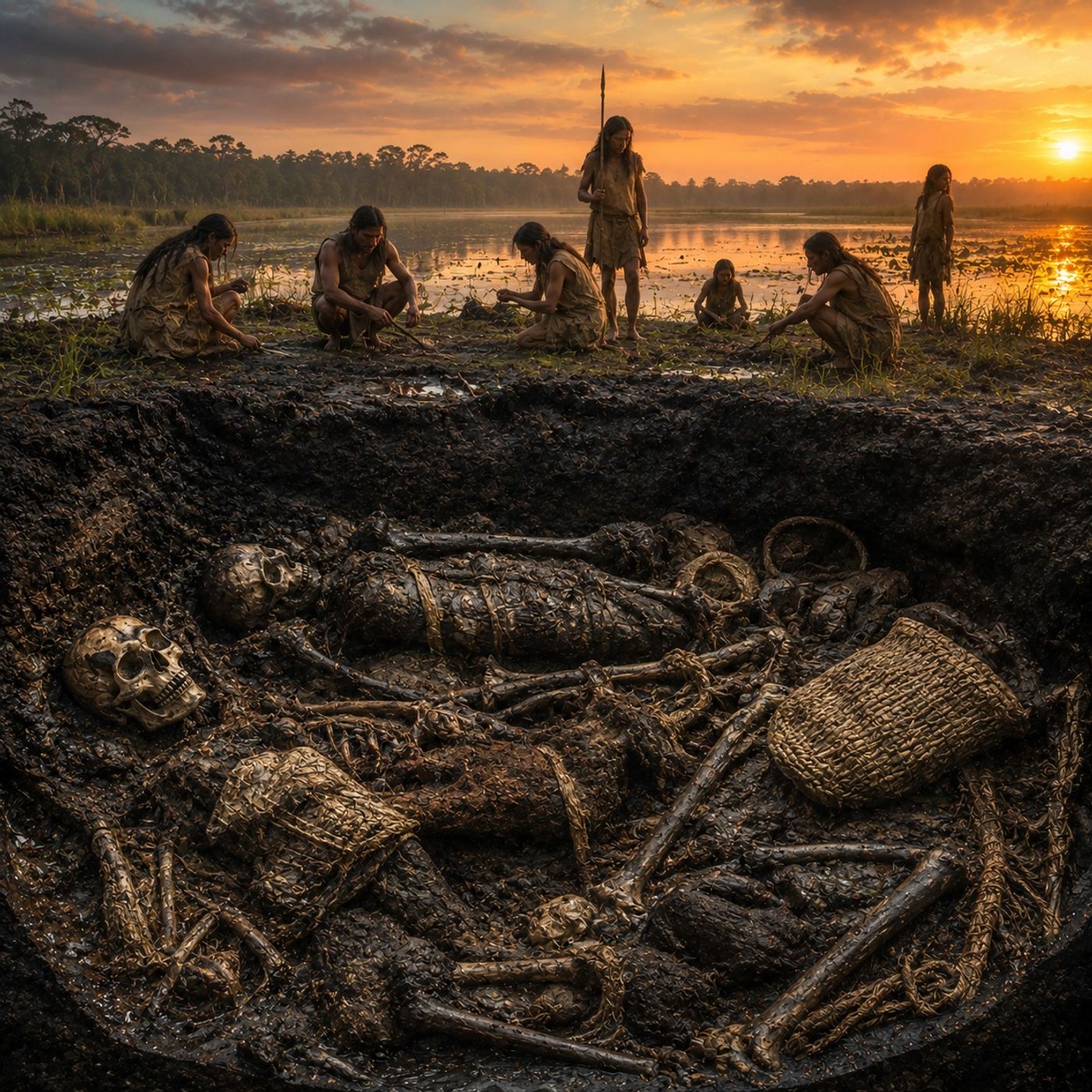
The Windover bog in Florida has revealed one of the most extraordinary archaeological windows into prehistoric North America. More than 160 individuals were discovered remarkably preserved in an oxygen-free peat environment, dating back roughly 7,000 to 8,000 years. Some remains were so well preserved that researchers recovered intact human brains, ancient DNA, and remarkably old textiles.
Scientific analysis has revealed that these early hunter-gatherers were far more sophisticated than the traditional image of Stone Age societies suggests. They developed complex burial practices, cared for injured and disabled members of their community, and demonstrated a level of social organization and...
The White Mouse: Nancy Wake and the French Resistance
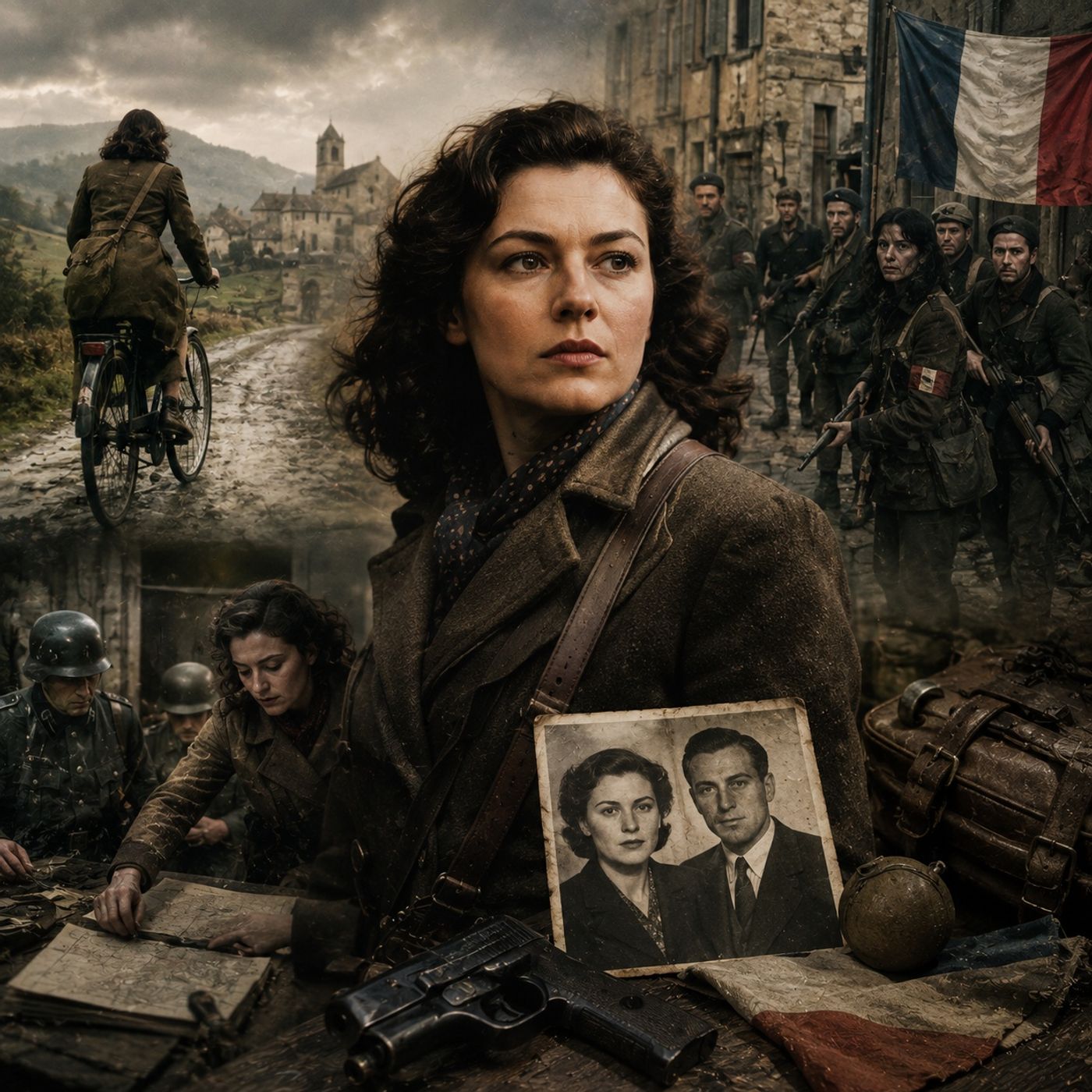
Nancy Wake was one of the most remarkable resistance fighters of World War II, transforming from a journalist and socialite in France into a fearless operative hunted by the Gestapo. Known by the codename “The White Mouse,” she worked with the French Resistance before receiving specialized training in sabotage, weapons, and guerrilla warfare from the British.Wake repeatedly demonstrated extraordinary courage under extreme danger. In one of her most remarkable escapes, she traveled hundreds of kilometers by bicycle through enemy-controlled territory to deliver a vital message and reconnect with Allied forces. Later, she returned to France and helped organize and...
The Architectural Mystery of the Château de Chambord
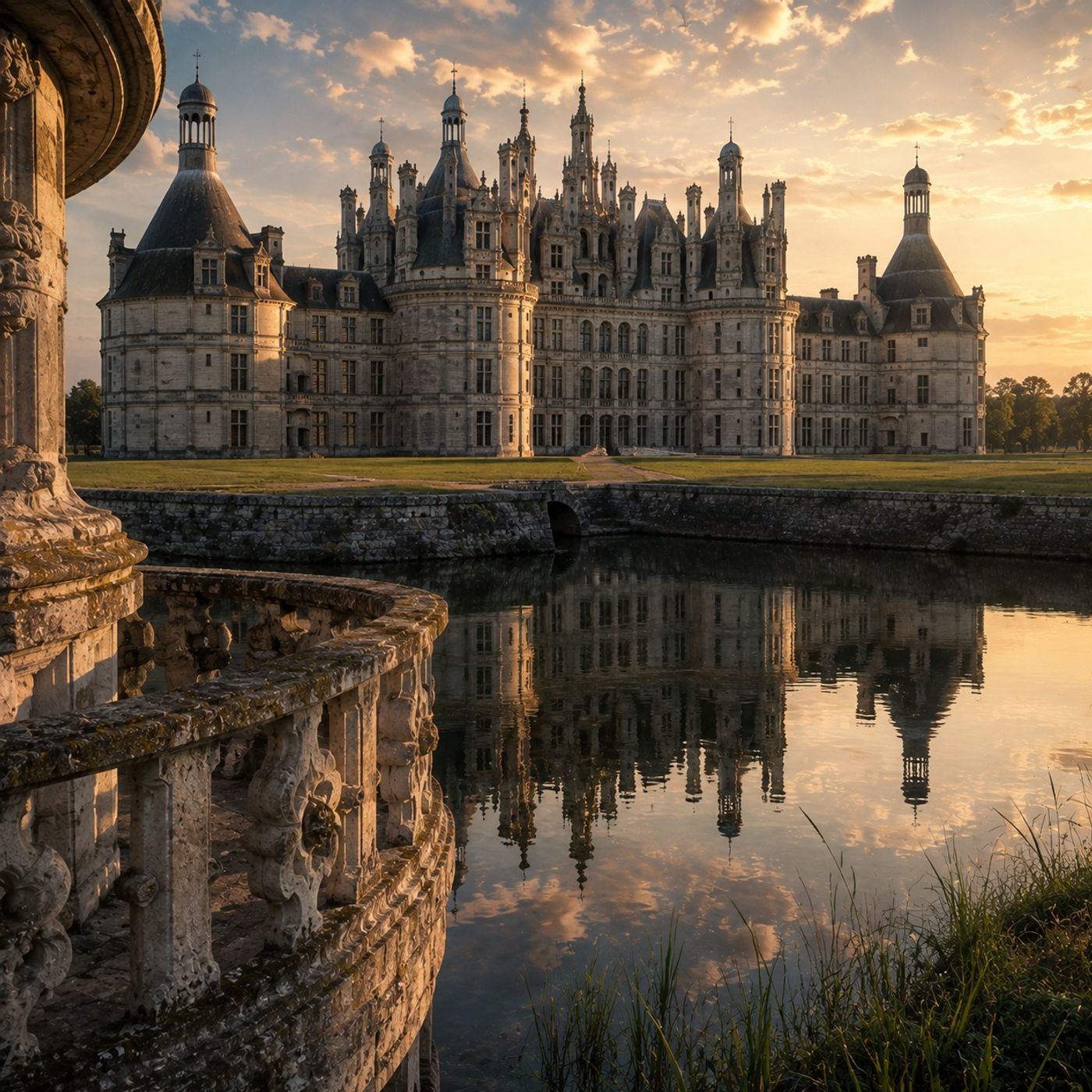
The Château de Chambord stands as one of the most extraordinary architectural achievements of the French Renaissance, born from the ambitious vision of King Francis I. Built as a monumental hunting residence, the castle combined French Gothic traditions with revolutionary Renaissance ideas, creating a structure whose complexity continues to fascinate architects and engineers.At the heart of Chambord is its famous double helix staircase, allowing two people to ascend and descend without ever meeting. The castle's remarkable symmetry and intricate design have also fueled long-standing speculation about the influence of Leonardo da Vinci, whose ideas are believed to h...
The Bone Breakers: Koa Warriors and the Fall of Cook
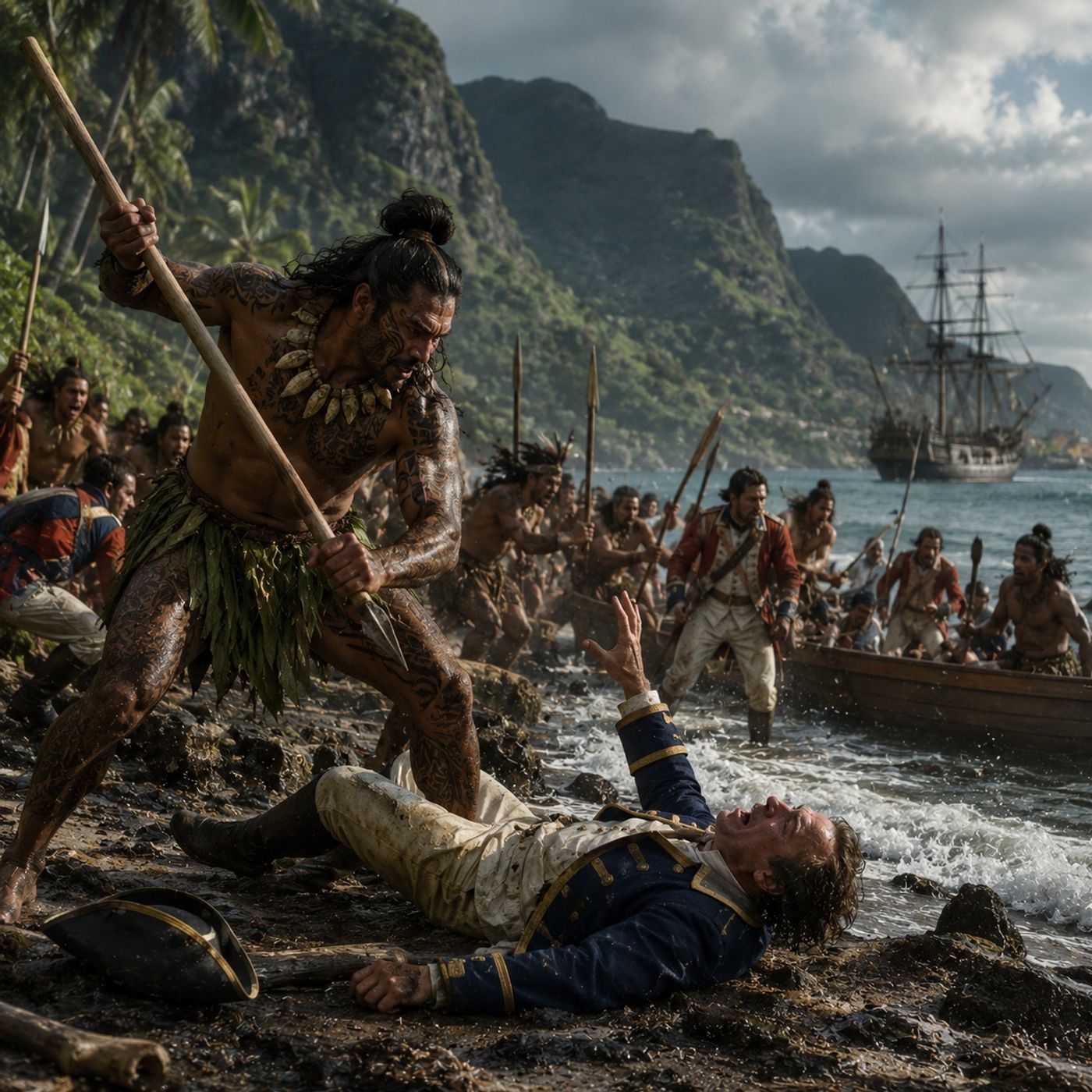
The Koa warriors of Hawaii were a highly skilled warrior class whose martial traditions played a crucial role in the turbulent history of the islands during the 18th century. Their story reached a dramatic turning point when Captain James Cook arrived in Hawaii and was initially welcomed under the belief that he was connected to the god Lono.
As cultural misunderstandings and tensions grew, the relationship between Cook's expedition and the Hawaiians deteriorated. Strategic maneuvering and provocative actions helped push the situation toward a violent confrontation at Kealakekua Bay. The Koa warriors used specialized weapons, close-quarters...
Sunken Fortunes: Searching for Australia’s Lost Treasure Ships
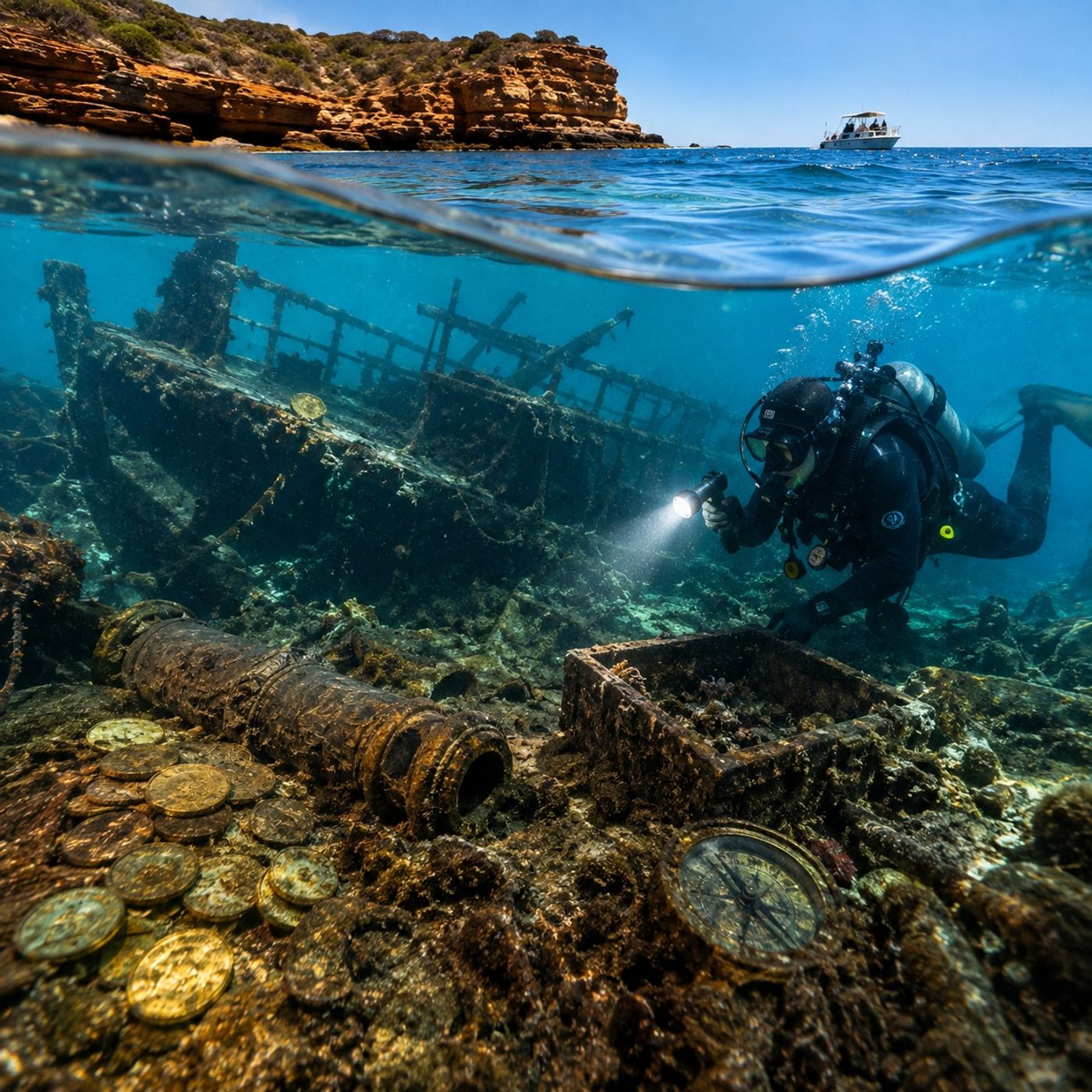
Australia's coastline is a vast underwater graveyard, hiding thousands of shipwrecks and centuries of lost history beneath its waters. From the earliest Dutch and English voyages to ships carrying valuable cargo, countless vessels disappeared along the treacherous coast, leaving behind scattered artifacts and unanswered mysteries.Divers continue to explore these underwater sites in search of legendary wrecks and lost treasures. Their discoveries range from cannons and navigational equipment to Spanish silver coins and other remnants of long-forgotten voyages. Some wrecks, such as the Batavia and the Pandora, reveal stories far darker than simple maritime accidents, exposing mutinies, violence, and...
The Bloody Revenge of 47 Ronin
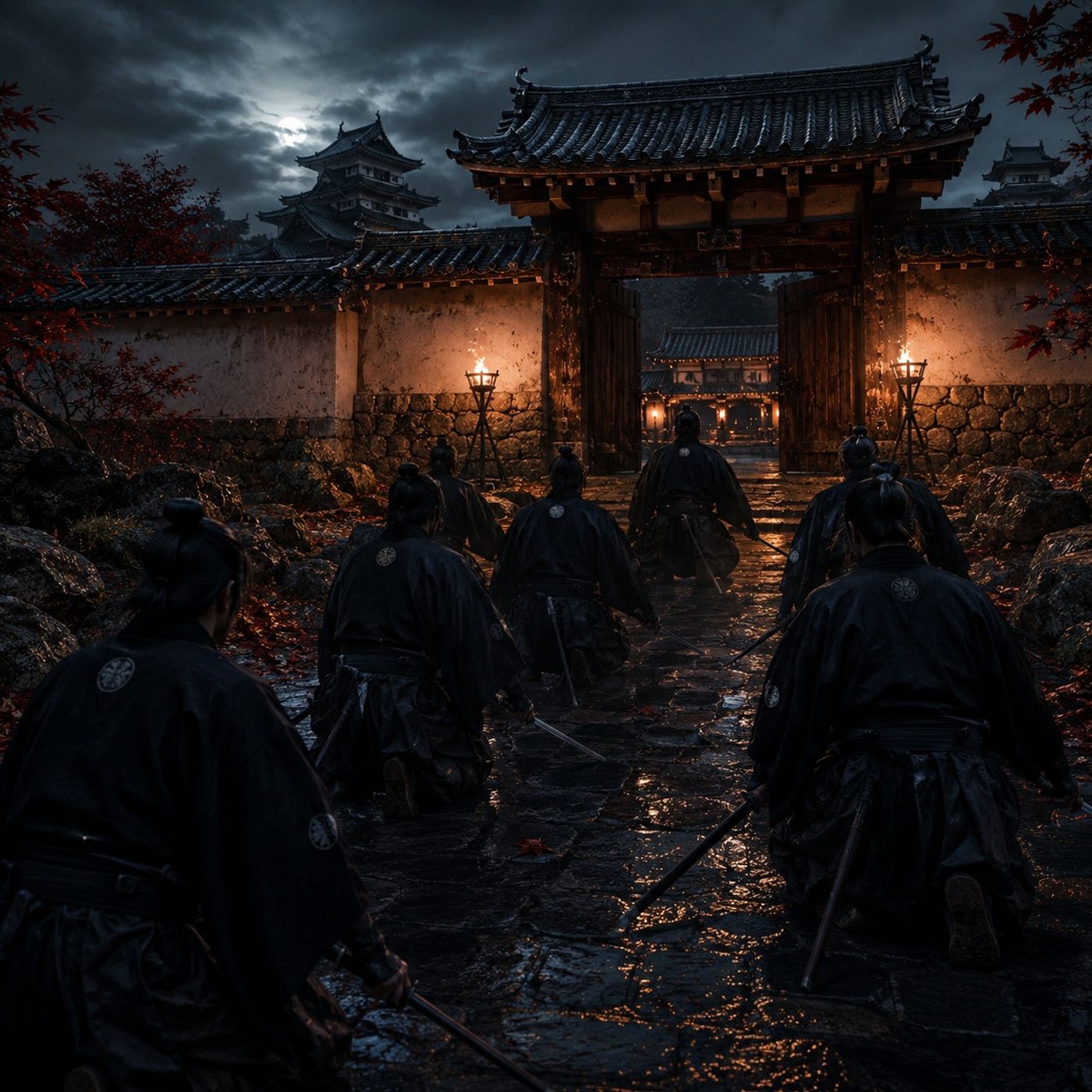
The legendary story of the 47 Ronin is one of the most famous tales of loyalty, revenge, and honor in Japanese history. After their master, Lord Asano, was forced to take his own life, his followers were left without a lord and became ronin. Rather than accepting their master's death, they devoted themselves to a carefully planned mission of vengeance against Lord Kira.Led by Oishi Yoshio, the ronin spent years deliberately disguising their intentions. They scattered, lived ordinary lives, and allowed Kira to believe that they had abandoned any desire for revenge. Behind this deception, however, they were patiently...
The 102 Minute Timeline of 9/11

September 11, 2001, unfolds through a tense reconstruction of the terrorist attacks that changed the world forever. As air traffic controllers struggle to understand the sudden disappearance and hijacking of multiple aircraft, American Airlines Flight 11 and United Airlines Flight 175 are diverted toward New York City.
The episode captures the desperate communications from the aircraft, including the crucial information provided by flight attendant Betty Ong, before the attacks on the World Trade Center and the Pentagon. It also follows the chaotic military response and the courageous passengers aboard United Airlines Flight 93 who fought back against the hijackers.
<...
The Night of Tears: Eagle Warriors and the Spanish Clash
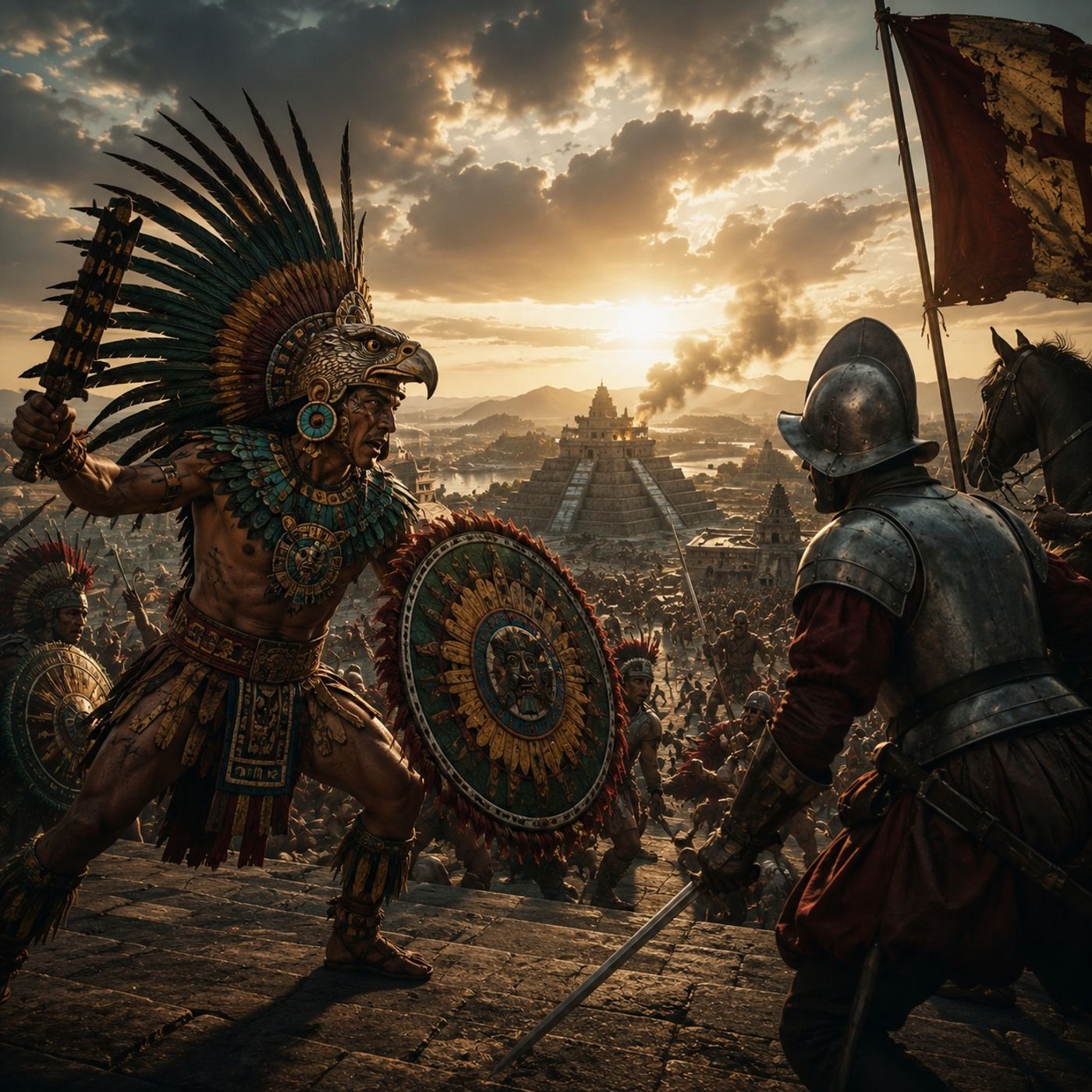
The Aztec Eagle Warriors were among the most elite fighters of the Aztec Empire, shaped from an early age through rigorous military training and a culture that placed enormous value on courage, discipline, and battlefield achievement. Armed with devastating obsidian-edged weapons, they were trained not only to kill but also to incapacitate and capture opponents for ritual sacrifice.Their military culture was put to the ultimate test during the Spanish invasion. One of the most dramatic moments came during La Noche Triste, when Aztec forces launched a powerful counterattack against Hernán Cortés and his men, inflicting a ma...
How Iga Ninja Outlasted the Samurai
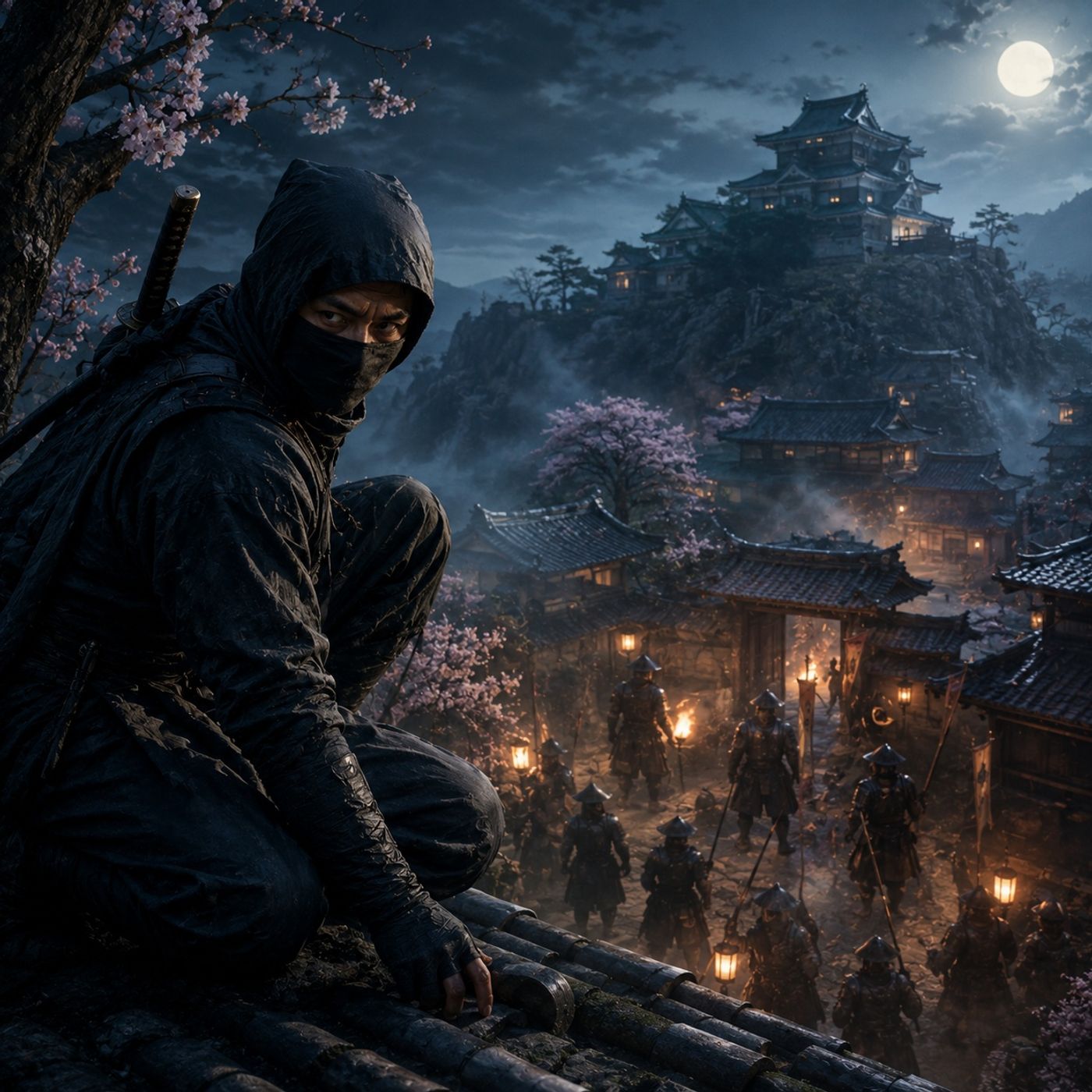
The Iga ninja, or Shinobi, were among the most skilled practitioners of unconventional warfare in feudal Japan. Operating from the mountainous region of Iga, they developed expertise in espionage, infiltration, sabotage, reconnaissance, and psychological warfare—methods that many traditional samurai considered dishonorable but which could be decisive on the battlefield.Rather than confronting enemies through conventional combat, the Shinobi relied on stealth, deception, speed, and an intimate knowledge of their surroundings. Their ability to gather intelligence and strike unexpectedly made them valuable to powerful warlords seeking advantages that conventional armies could not provide.One of the most famous figures as...
Nazi Prisoners Who Forged the British Pound
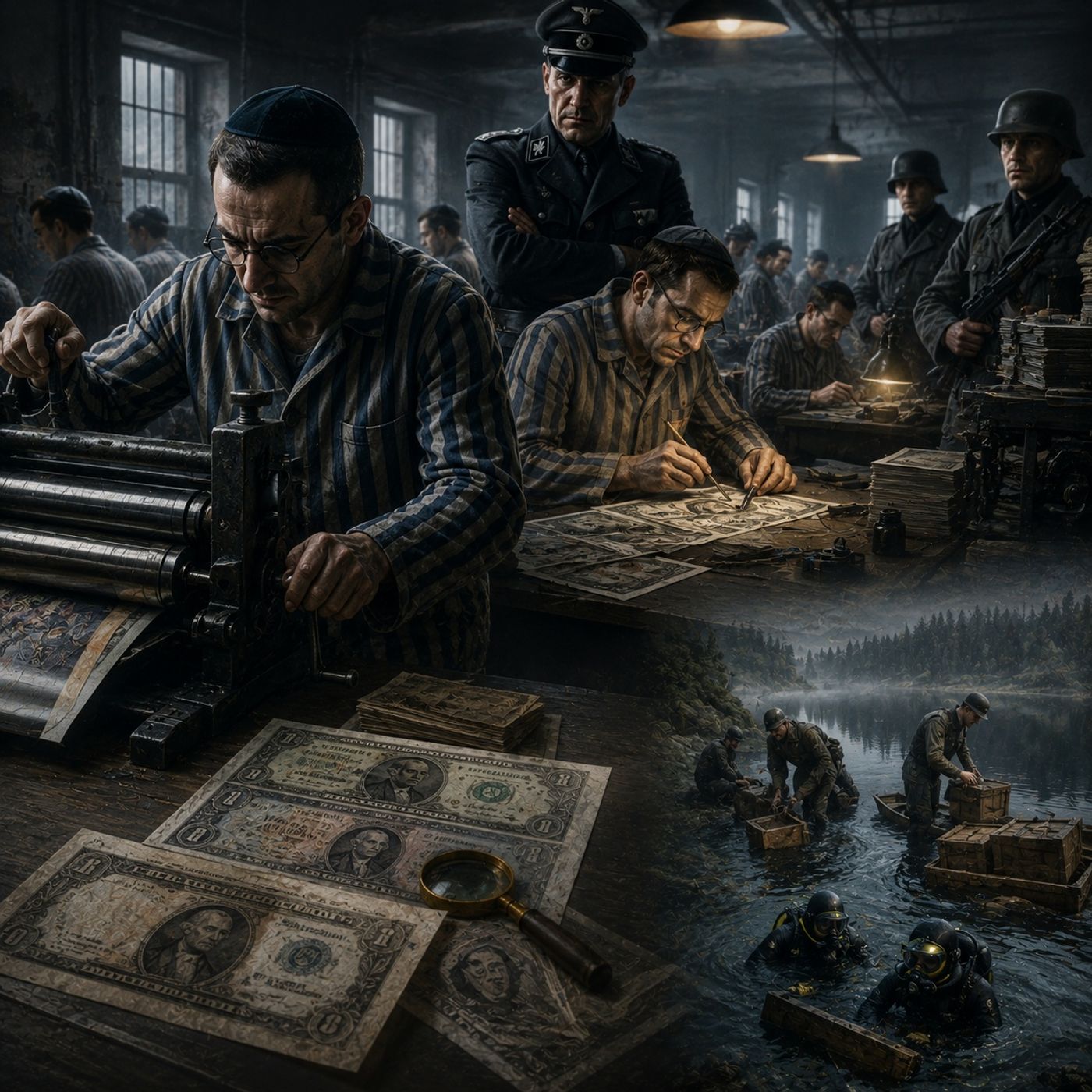
Operation Bernhard was one of the most extraordinary and disturbing counterfeiting operations of World War II. The Nazi regime developed the scheme with the intention of flooding Britain with high-quality forged banknotes, destabilizing its economy and creating financial chaos.
To produce the counterfeit currency, the SS selected Jewish prisoners with specialized skills and transferred them from concentration camps to Sachsenhausen. Forced to work under horrific conditions and under constant threat of execution, these prisoners used their knowledge of printing, engraving, and design to manufacture millions of forged notes.
The operation eventually evolved beyond...
How Arminius Destroyed Three Roman Legions
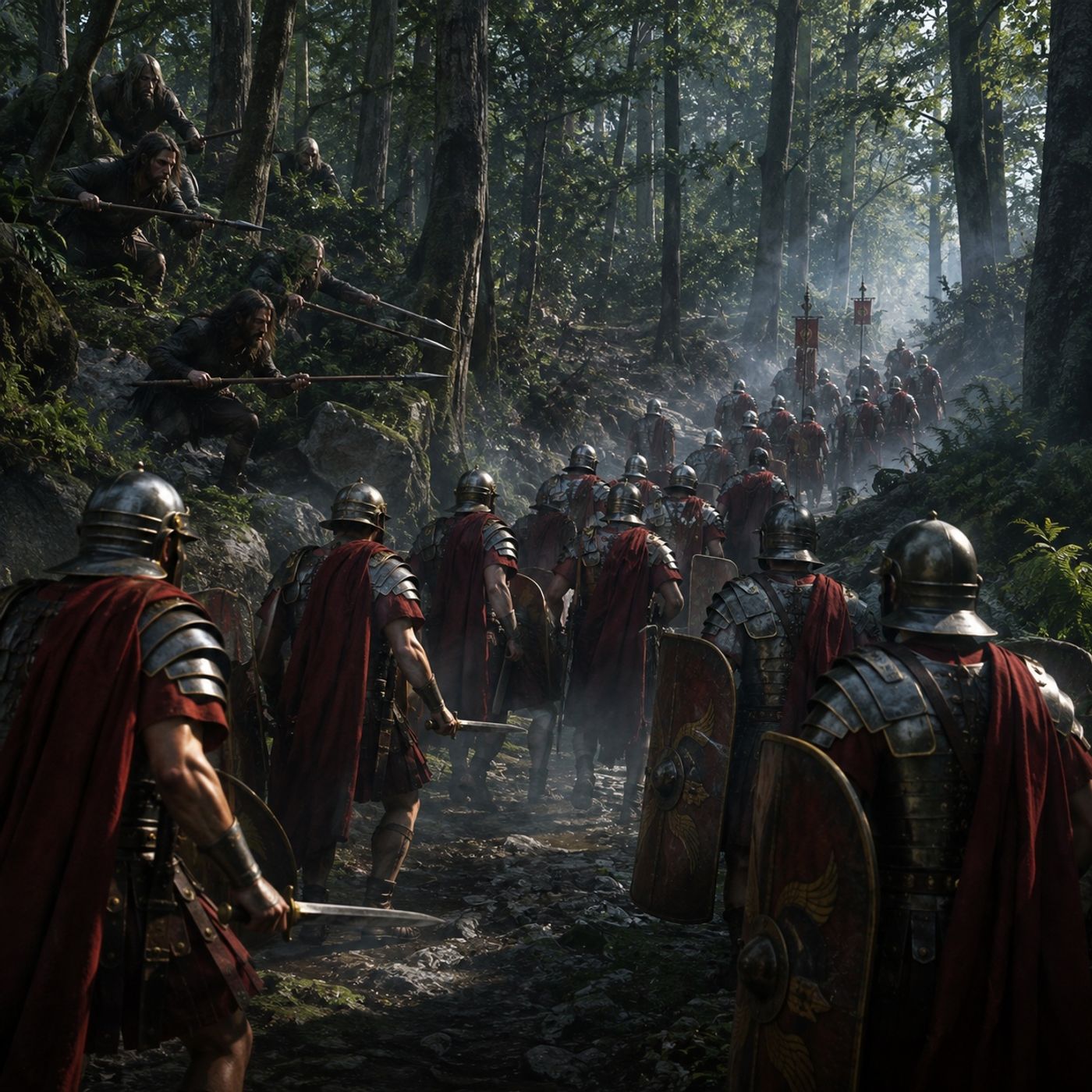
The Battle of the Teutoburg Forest was one of the most devastating defeats suffered by the Roman Empire, when three Roman legions were drawn into a carefully prepared ambush deep in unfamiliar Germanic territory.
At the center of the Germanic resistance was Arminius, a highly capable leader who understood Roman military methods from personal experience. He used the warriors’ knowledge of the landscape, combined with stealth, camouflage, night fighting, and psychological warfare, to turn the environment itself into a weapon.
The Romans found themselves trapped in difficult terrain as Germanic fighters attacked from co...
Iron and Amanita: The Rise of the Viking Berserker
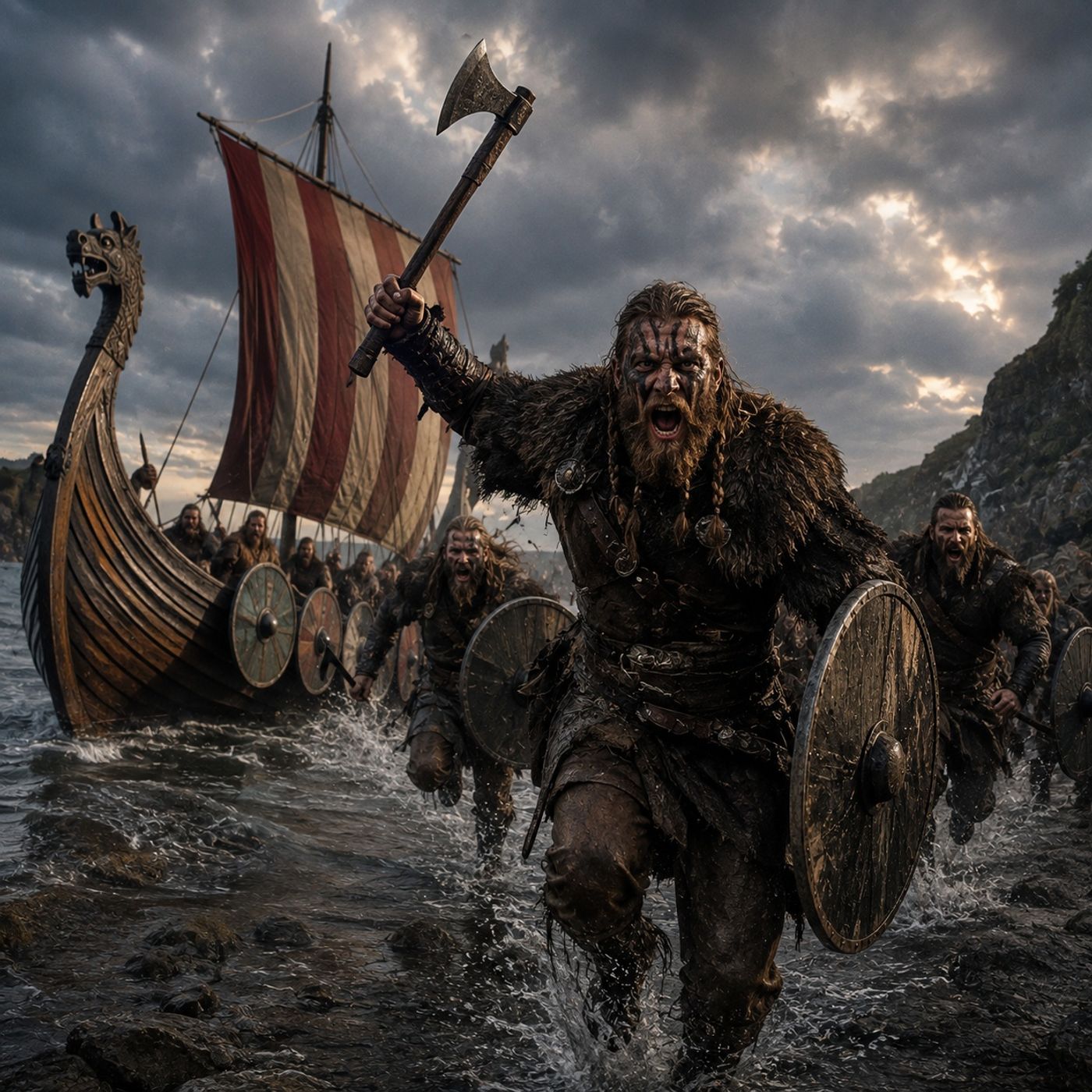
Viking Berserkers were among the most feared warriors of the Norse world, surrounded by stories of extraordinary strength, violence, and seemingly uncontrollable battle fury. These elite fighters were said to enter powerful trances before combat, adopting the behavior and symbolism of wild animals while preparing themselves for battle. Some theories suggest that altered states may have been connected to ritual practices or psychoactive substances, although the exact nature of the Berserker trance remains uncertain.
Their reputation was supported by the wider military power of the Viking world. Advanced longships allowed Norse warriors to strike coastal settlements...
The Varangian Guard: Harald Hardrada and the Empire’s Elite Warriors
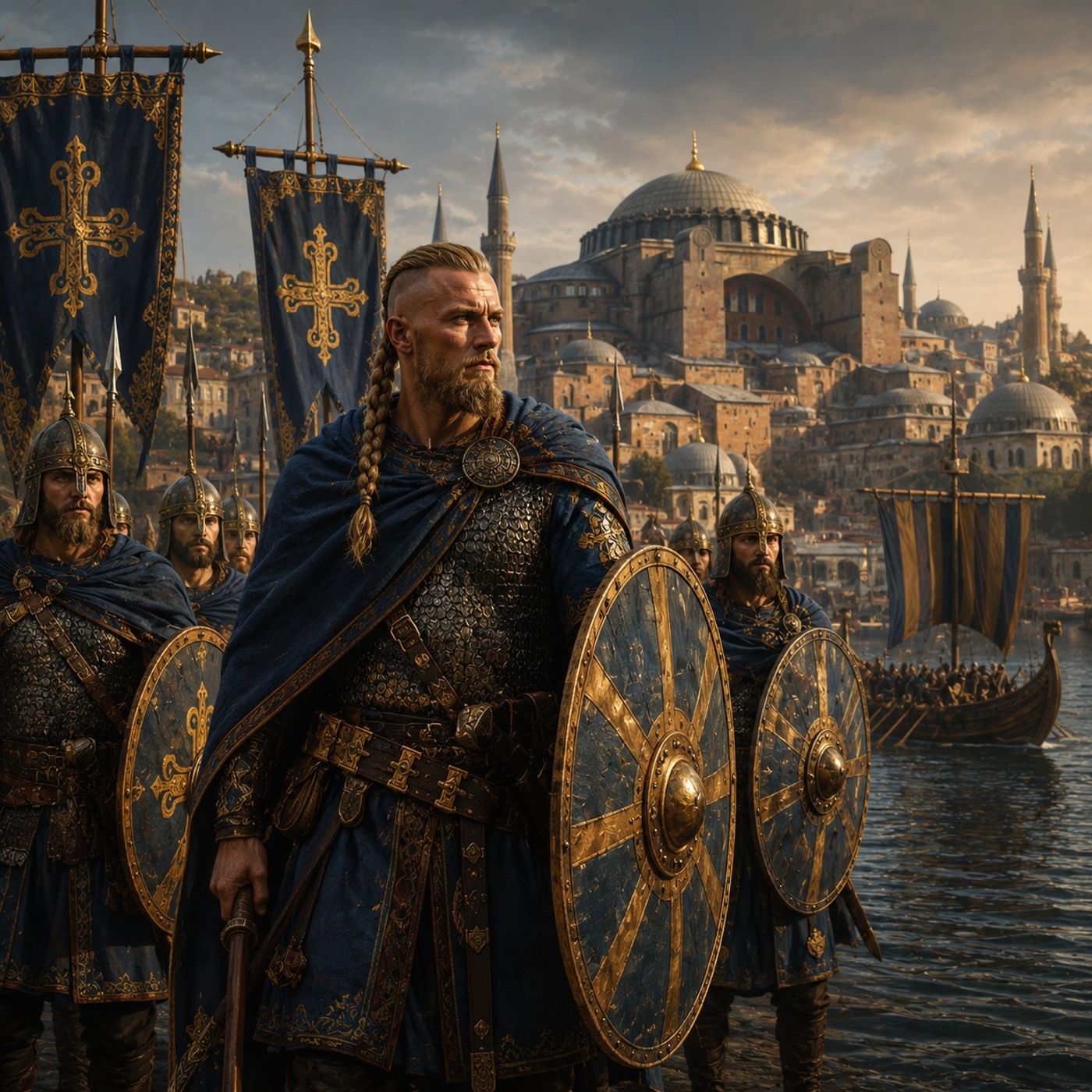
The Varangian Guard was one of the most formidable military units of the Byzantine Empire, formed largely from Viking warriors who traveled east in search of wealth, adventure, and opportunity. Rather than remaining independent raiders, these Norsemen became highly disciplined soldiers who served as the personal bodyguards and elite shock troops of Byzantine emperors.
Their reputation was built on extraordinary physical strength, battlefield ferocity, and, above all, loyalty. Far from simply relying on brute force, many Varangians developed sophisticated military skills and adapted to the complex warfare of the Byzantine world.
Among the...
Debt of the Devil: The First Holocaust Reparations

After the Holocaust, the newly established State of Israel faced enormous economic challenges while thousands of Jewish survivors were living in severe poverty. At the same time, Germany was struggling to confront the consequences of the genocide committed under the Nazi regime. Against this painful background, an unprecedented idea emerged: negotiating financial compensation between the victims and the nation responsible for their persecution.
Prime Minister David Ben-Gurion and West German Chancellor Konrad Adenauer pursued the negotiations despite fierce opposition. Many Jews considered any payment from Germany to be “blood money” and believed that accepting compensation was mora...
The Stateless Refugee Who Mapped Capitalism

Karl Marx remains one of the most influential and controversial thinkers in modern history, and his ideas continue to provoke debate in a world still struggling with economic inequality. His analysis of capitalism, class conflict, wealth concentration, and economic crises has gained renewed attention, particularly after the global financial crisis of 2008.
The legacy of Marx is interpreted very differently around the world. In China, he remains an important ideological figure, while in Europe and elsewhere, activists and former financial professionals continue to debate whether his criticism of capitalism offers useful insights into today's economic system.<...
The Fatal Ambition of Alexander the Great
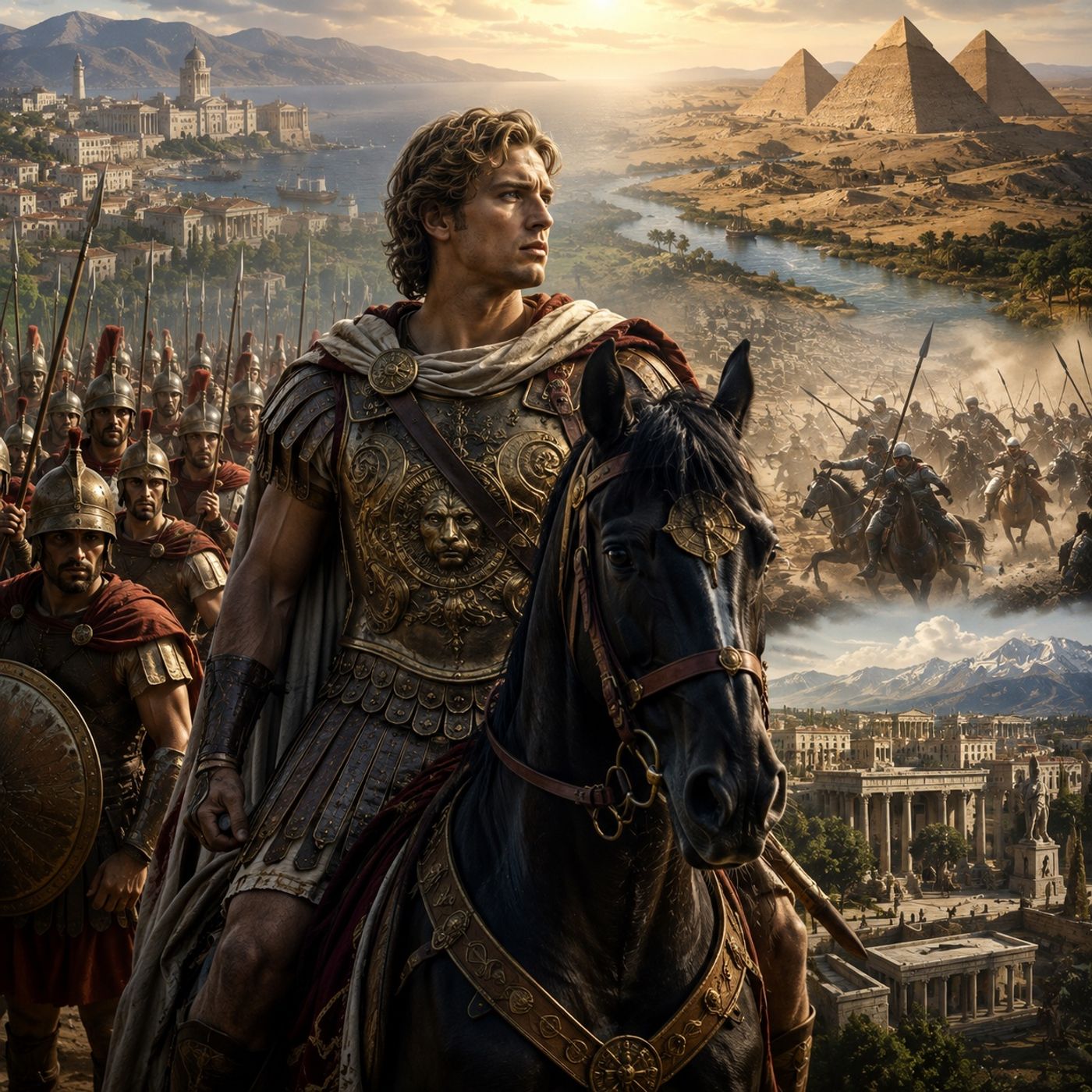
Alexander the Great rose to power with an extraordinary combination of ambition, military talent, and an almost relentless desire for conquest. Born the son of King Philip II of Macedonia, he inherited a highly organized army and a long-standing rivalry between the Greek world and the Persian Empire. But Alexander would take that legacy far beyond anything his father had achieved.
Over roughly twelve years of campaigning, Alexander defeated armies across Asia and built one of the largest empires the ancient world had ever seen. His victory at Gaugamela demonstrated his remarkable strategic ability, particularly his...
How Mesoamerican Cities Engineered Their Own Downfall
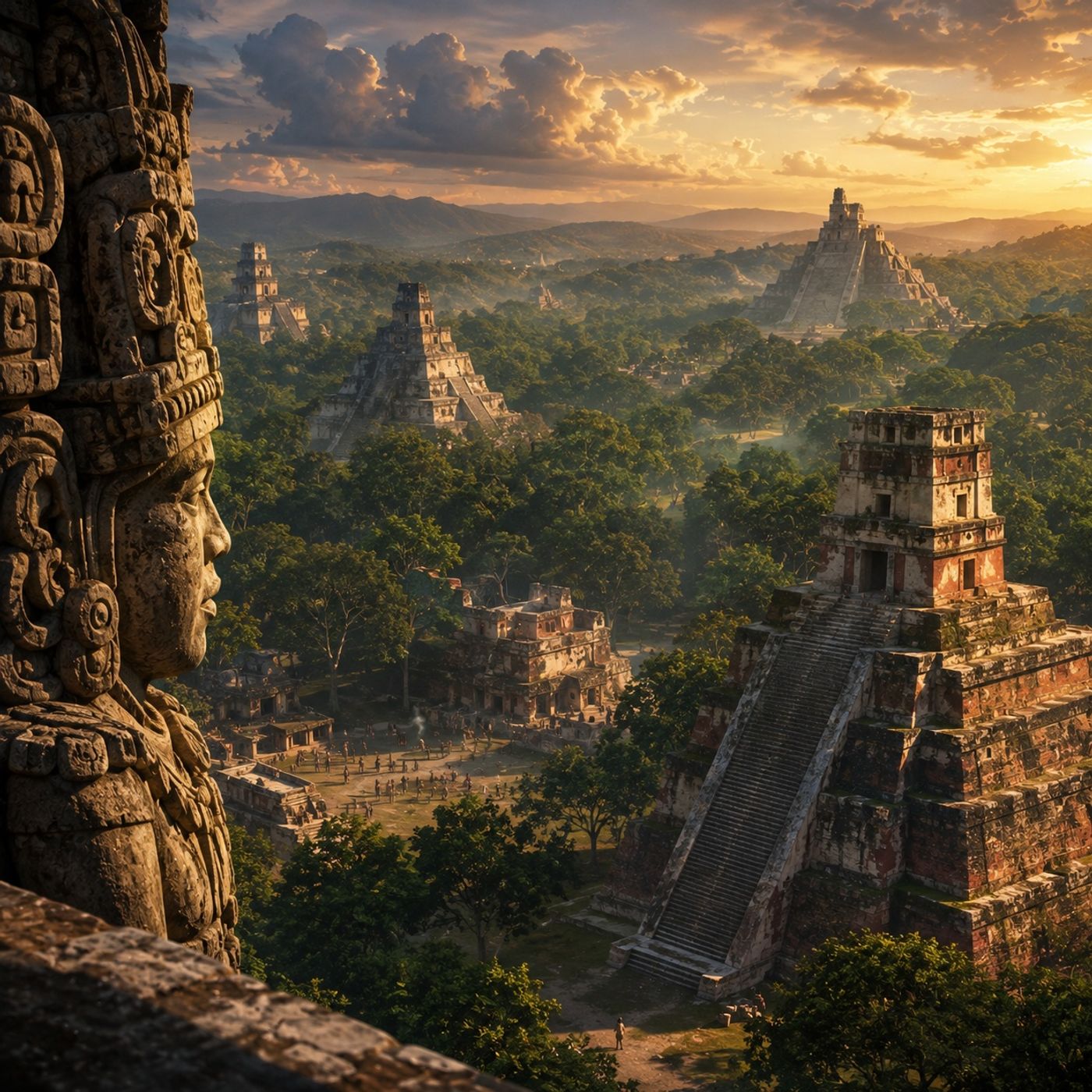
Chichén Itzá, Tikal, and Teotihuacán stood among the greatest cities of ancient Mesoamerica, transforming the landscape with monumental architecture, advanced astronomy, sophisticated water systems, and powerful religious institutions. Their enormous temples and urban centers were not simply places to live—they were carefully designed displays of political and divine authority.
These civilizations were also deeply connected. Extensive trade networks, military campaigns, and shared religious traditions allowed ideas, technologies, and cultural practices to spread across vast distances. Modern archaeological technology, particularly LiDAR, has revealed that these cities were far larger and more densely populated than previ...
The Nine Day Hunt for the Bismarck
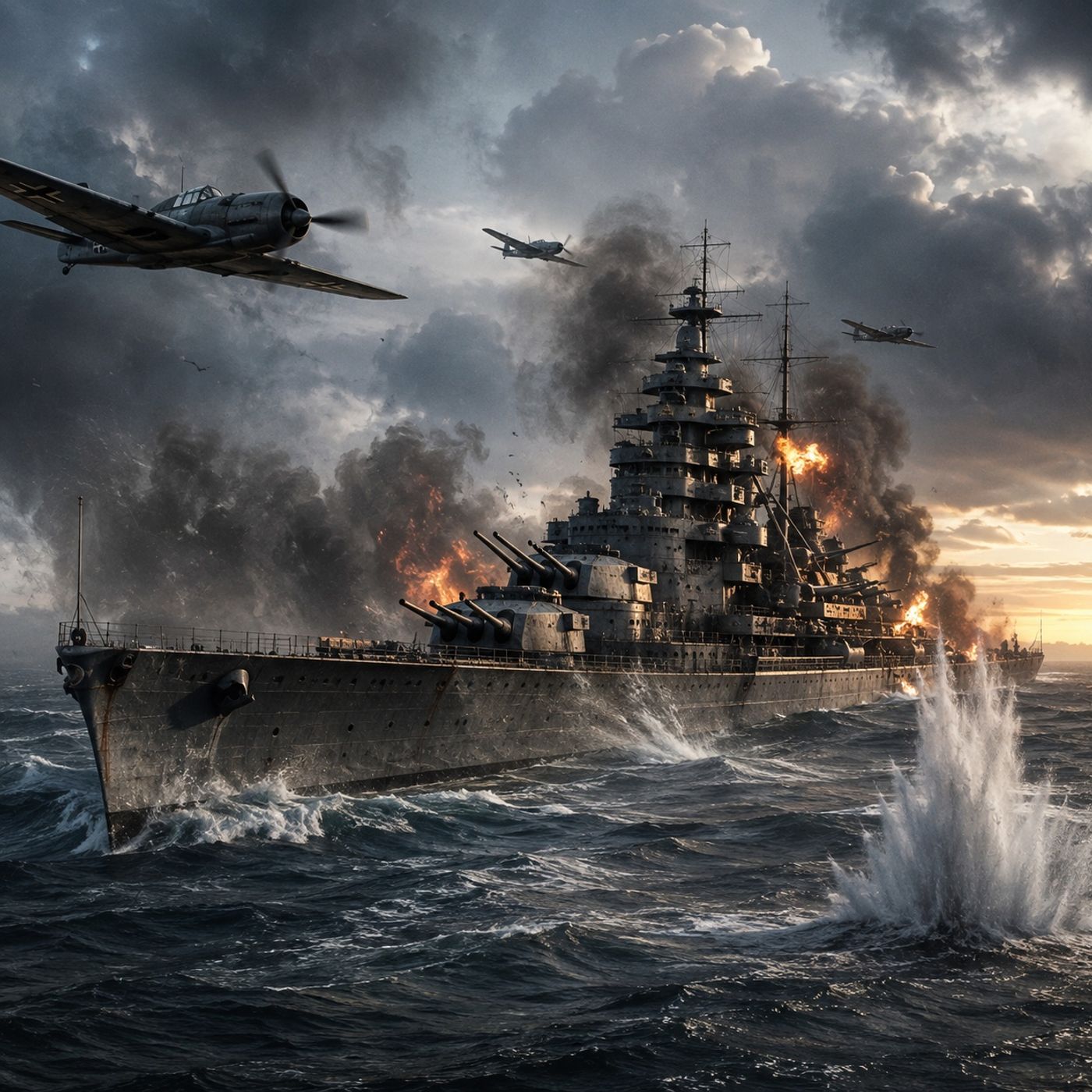
The Bismarck was one of the most feared battleships of World War II, and its first major operation in 1941 quickly became one of the most dramatic naval pursuits in history. Designed to threaten vital British supply lines, the massive German battleship demonstrated its destructive power by engaging the British fleet and sinking the legendary HMS Hood in a devastating confrontation.
The loss of the Hood triggered an enormous British hunt for the Bismarck. Warships, aircraft, and radar were brought together in a relentless effort to locate and stop the German battleship before it could escape into...
The Blade and the Ghost: Origins of the Assassins
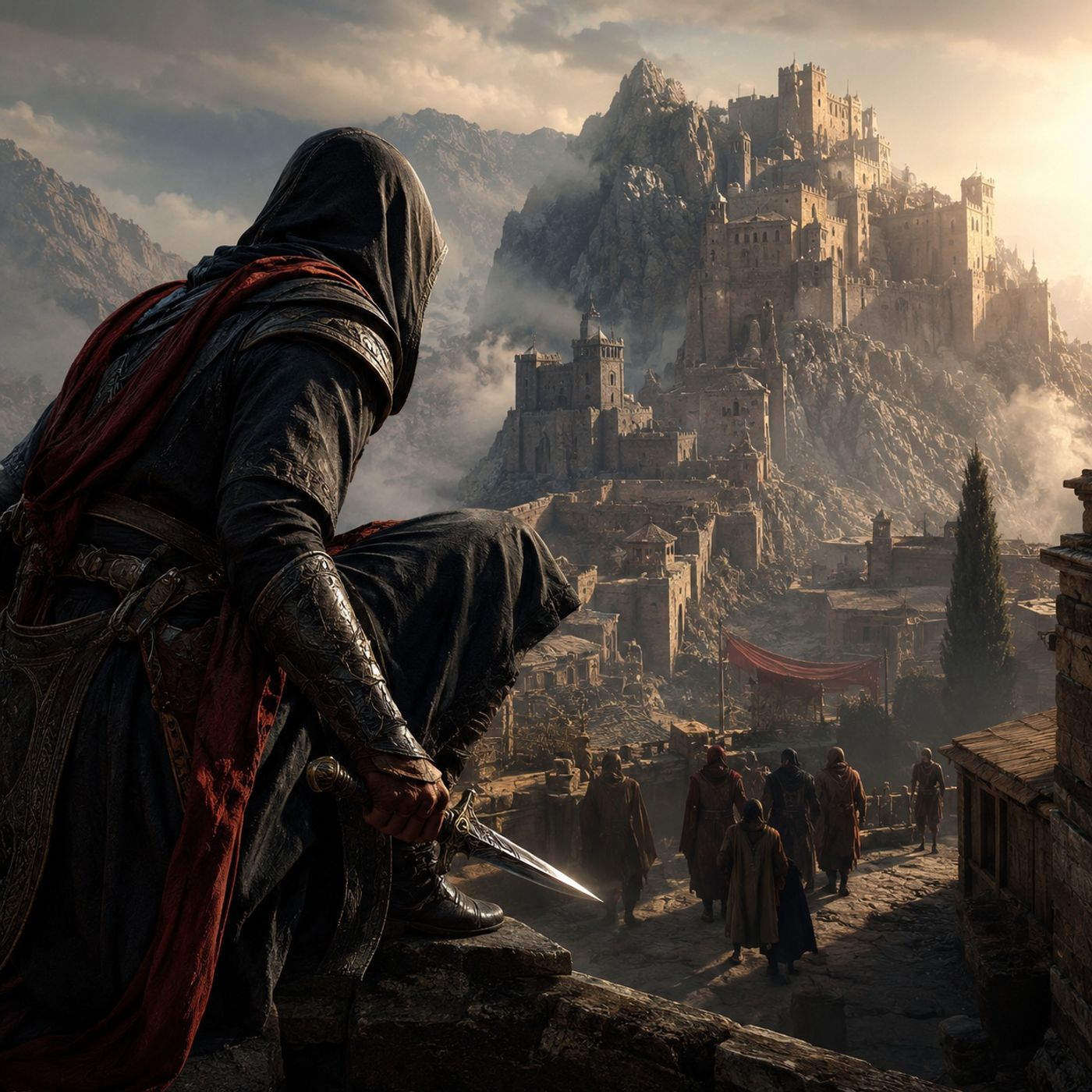
The Ismaili Assassins emerged from a persecuted Shiite minority surrounded by powerful enemies, forcing them to develop an unconventional way of surviving. From mountain fortresses such as Alamut, they built a network that relied not on massive armies, but on intelligence, patience, secrecy, and carefully planned strikes.
Rather than fighting large battles, their warriors specialized in infiltrating enemy territories, adopting disguises, gathering information, and sometimes spending months or even years getting close to their targets. Their preferred weapon was the dagger, allowing them to carry out precise attacks against influential political and military figures while creating...
How Sparta turned children into weapons
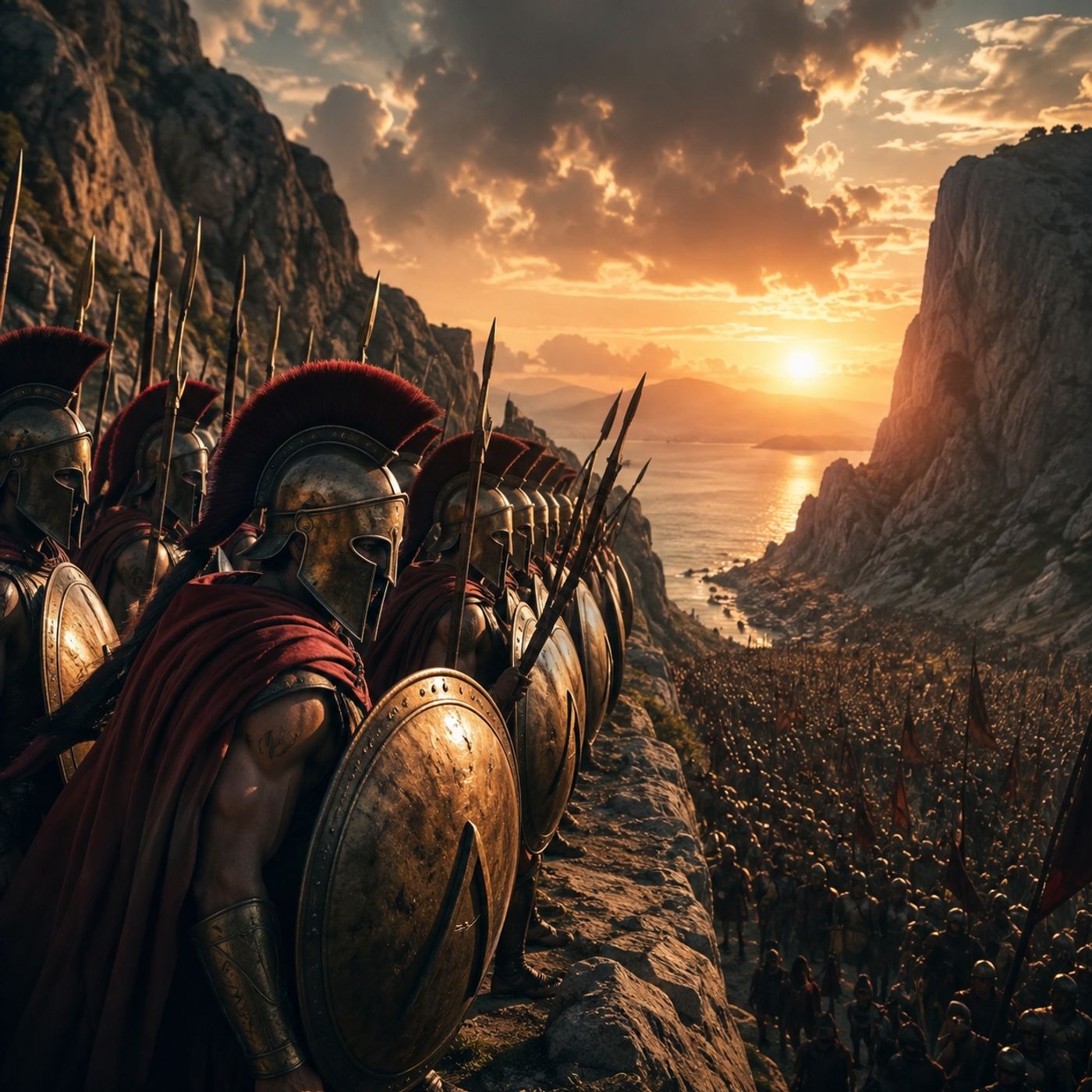
The legendary stand at Thermopylae begins with the brutal training that shaped Spartan warriors from childhood. Raised under a relentless military system, they were conditioned to endure pain, survive with limited resources, move with discipline, and fight without fear. This harsh upbringing transformed them into some of the most formidable soldiers of the ancient world.
When the enormous Persian army invaded Greece, a small force of Spartans and their allies took position at the narrow pass of Thermopylae. Their greatest advantage was not numbers, but discipline and the devastating efficiency of the phalanx. In the confined...
Sicarii: The Shadow Assassins of Judea
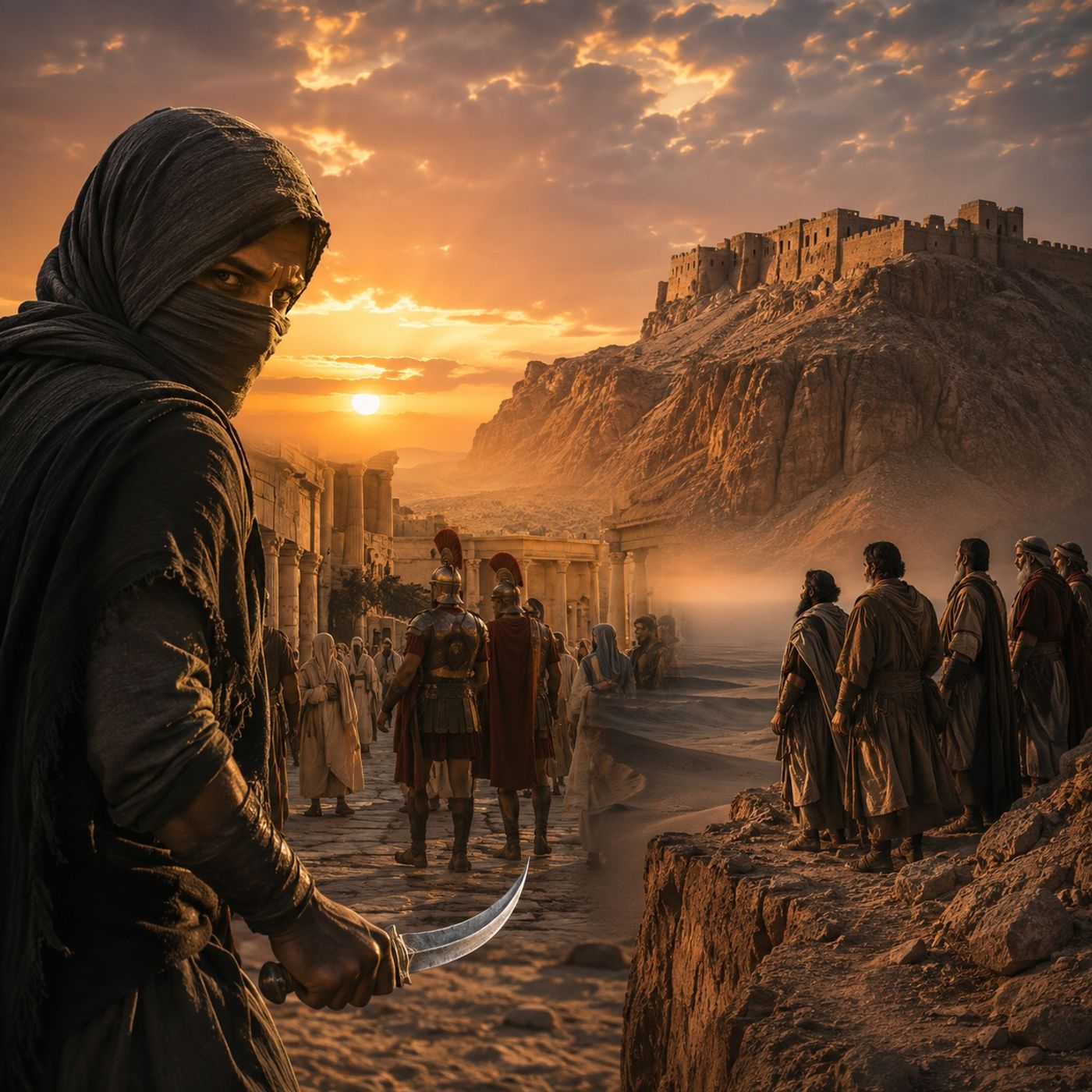
The Sicarii were a radical group of Jewish militants who emerged in first-century Jerusalem under Roman occupation. Driven by an uncompromising belief that only God had the right to rule, they turned assassination into a weapon of resistance, using concealed curved daggers to attack Roman authorities and Jewish collaborators in crowded public places.
Their strategy went beyond killing individual targets. Fear, intimidation, and psychological warfare became central to their campaign, helping create an atmosphere of instability that contributed to the wider Jewish revolt against Rome. But internal divisions and military defeats eventually pushed the Sicarii away...
What the Mud Remembers About Britain
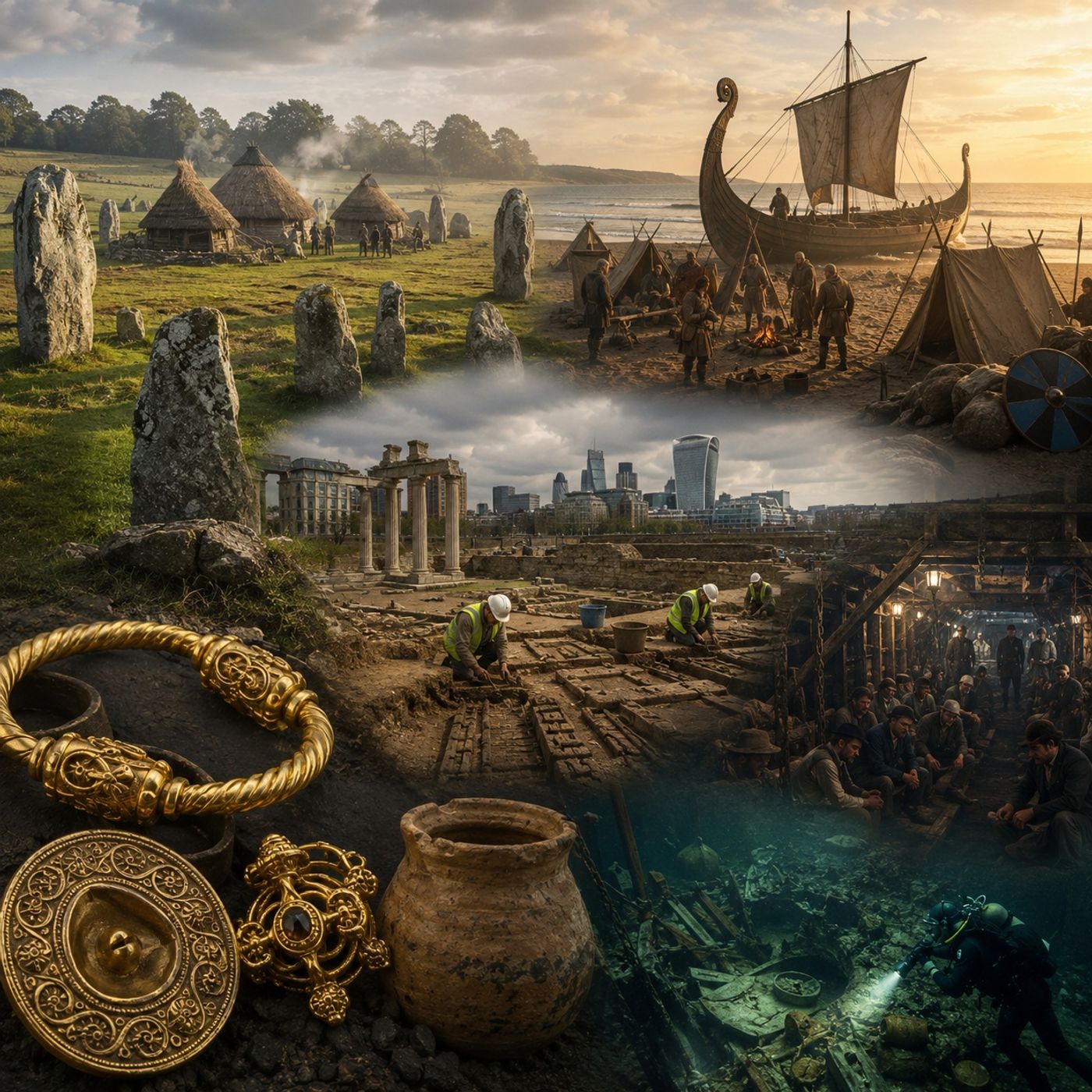
Across Britain, archaeologists are uncovering discoveries that are transforming our understanding of the country’s past. At Avebury, evidence suggests that the famous stone circles were not simply isolated ritual monuments, but places where people actually lived and interacted. In Repton, the remains of a Viking winter camp reveal how Norse forces established themselves on English soil, while spectacular Iron Age gold jewelry from Staffordshire points to strong connections between Britain and continental Europe.
In London, the remarkable Bloomberg excavation uncovered thousands of artifacts, including ancient writing tablets that provide an unusually personal glimpse into the ev...
From Famine to Empire: The Viking Age Expansion
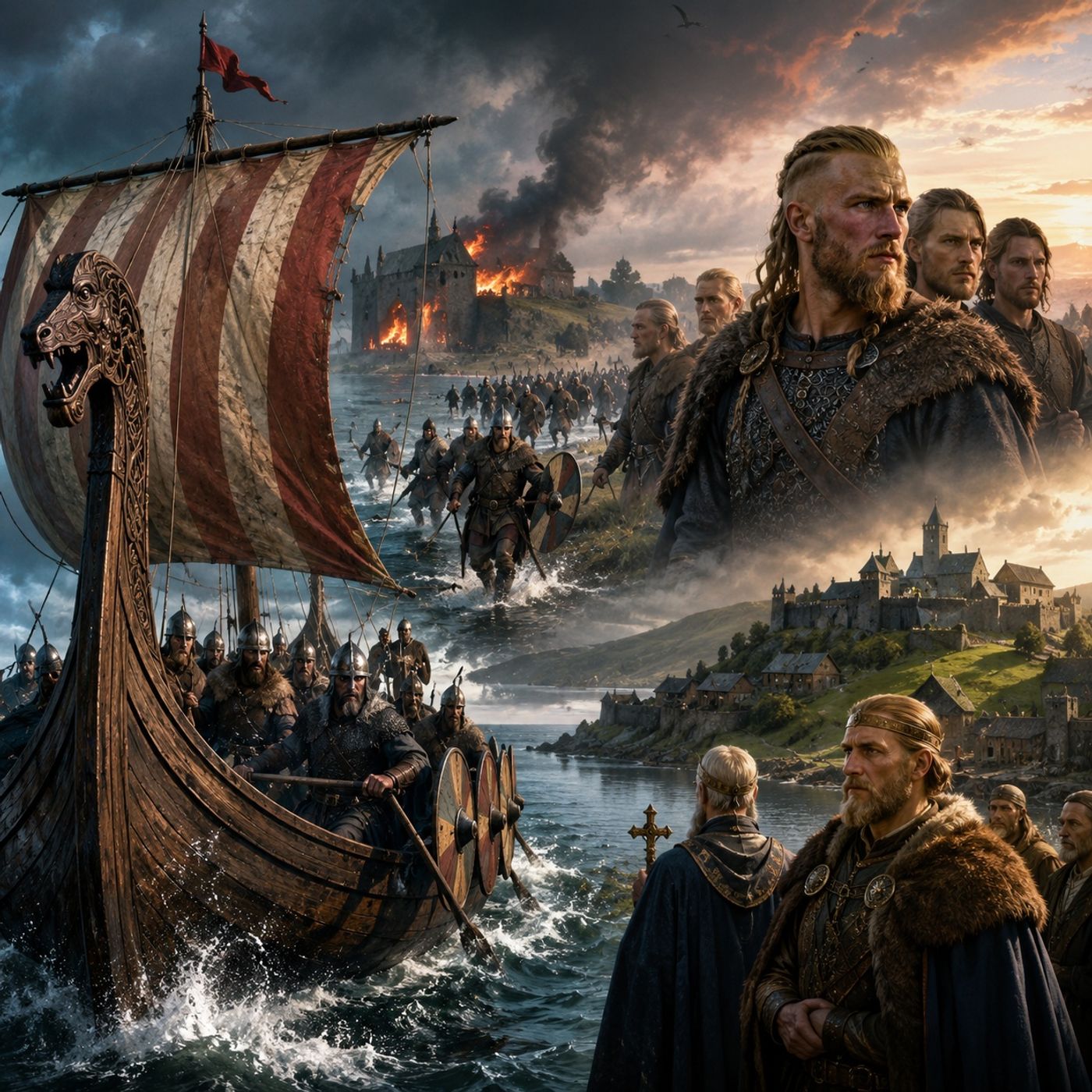
The Viking Age began with a struggle for survival. Facing limited resources, famine, and a harsh Scandinavian environment, Norse communities developed new ways to expand their influence beyond their homeland. The invention of the shallow-draft longship transformed their world, allowing them to cross open seas, navigate rivers, and launch devastating raids against wealthy and poorly defended settlements such as Lindisfarne.
But the Vikings were far more than raiders. Over time, temporary attacks evolved into permanent settlements across England and Europe, creating powerful political territories and eventually transforming the Vikings from wandering warriors into rulers and statesmen...
Ghosts and science found King Arthur's grave
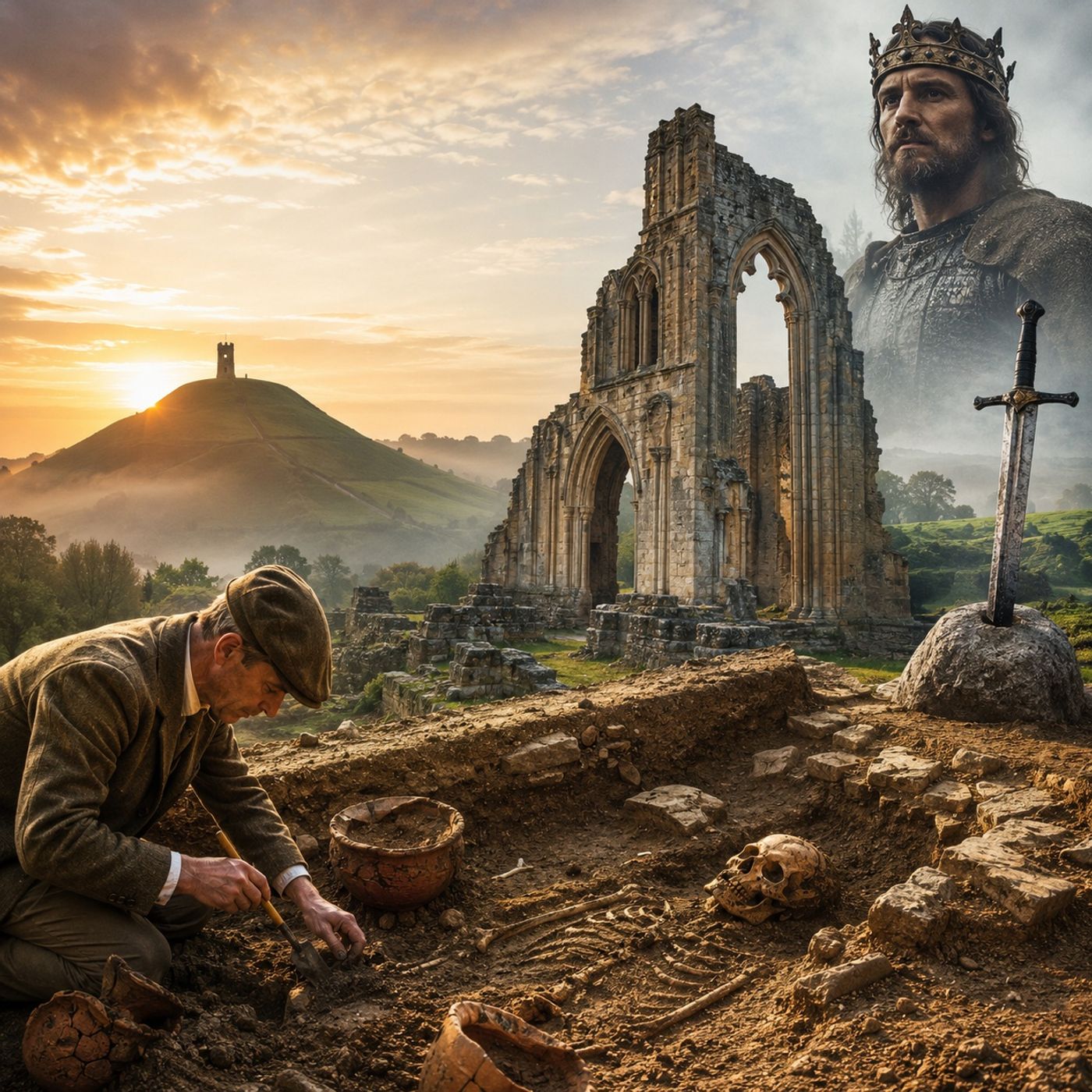
The search for the historical King Arthur takes us deep into the ruins of Glastonbury Abbey and the legendary landscape of Avalon. In the early 20th century, archaeologist Frederick Bligh Bond believed hidden mathematical patterns and even psychic communication could reveal secrets buried beneath the ruins. His unconventional methods eventually cost him his position, but the mystery continued under Arthur Raleigh Radford, who approached the site through careful archaeological investigation.
Radford uncovered sixth-century Mediterranean pottery, revealing that Glastonbury was a sophisticated and internationally connected settlement during the Dark Ages. He also discovered an empty grave that...
The Iron Trio: The Rise and Fall of WW2 Dictators
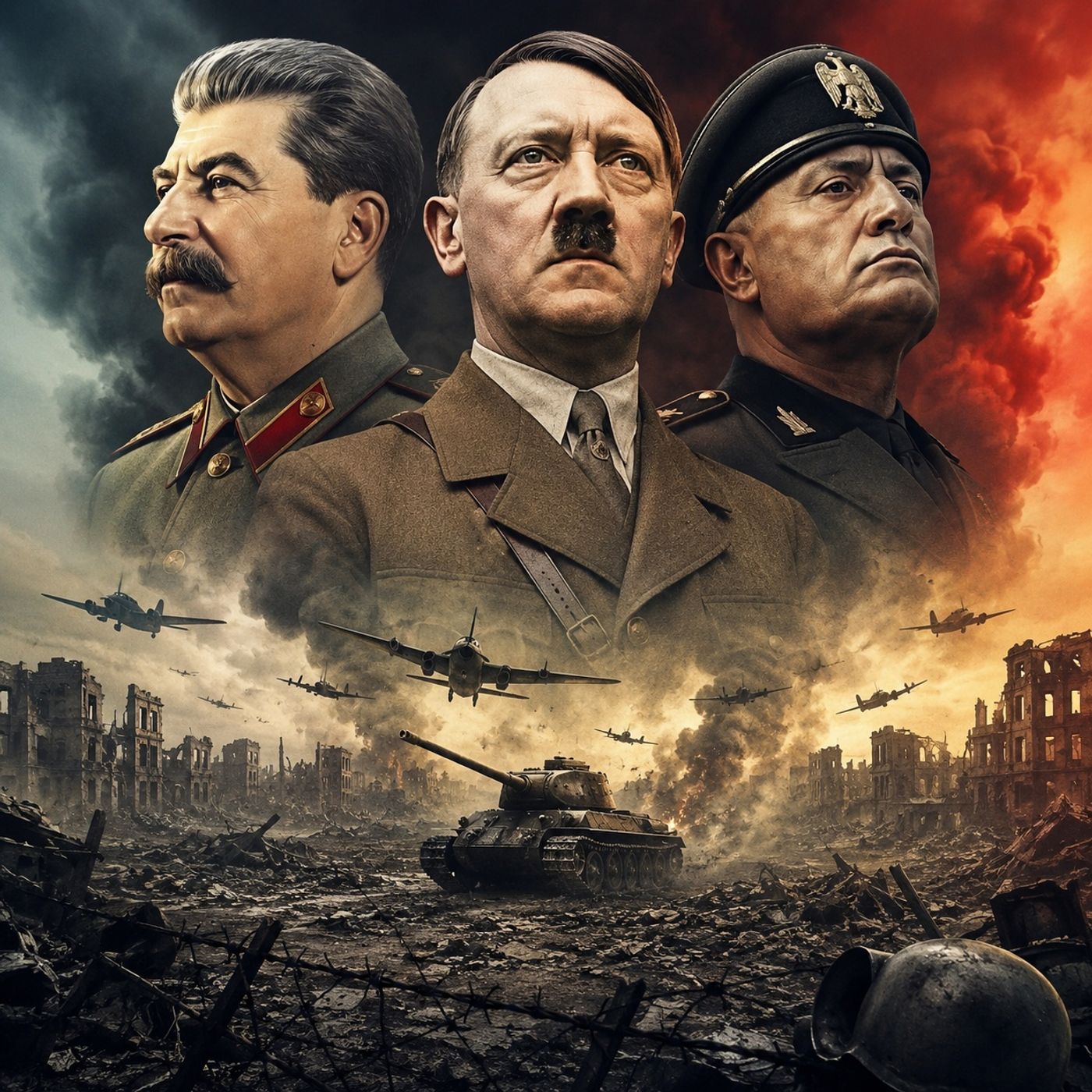
The twentieth century witnessed the rise of three of history’s most infamous dictators: Stalin, Hitler, and Mussolini. Emerging during a time of economic crisis and widespread despair, they used fear, propaganda, and extreme ideologies to gain control and build powerful regimes centered around their personal rule.
Their ambitions reshaped Europe, creating new alliances and rivalries that eventually led to the outbreak of World War II. From the formation of the Rome-Berlin Axis to the temporary agreement between Nazi Germany and the Soviet Union, shifting political strategies defined a turbulent era marked by conquest and betrayal....
The soil tells a different story
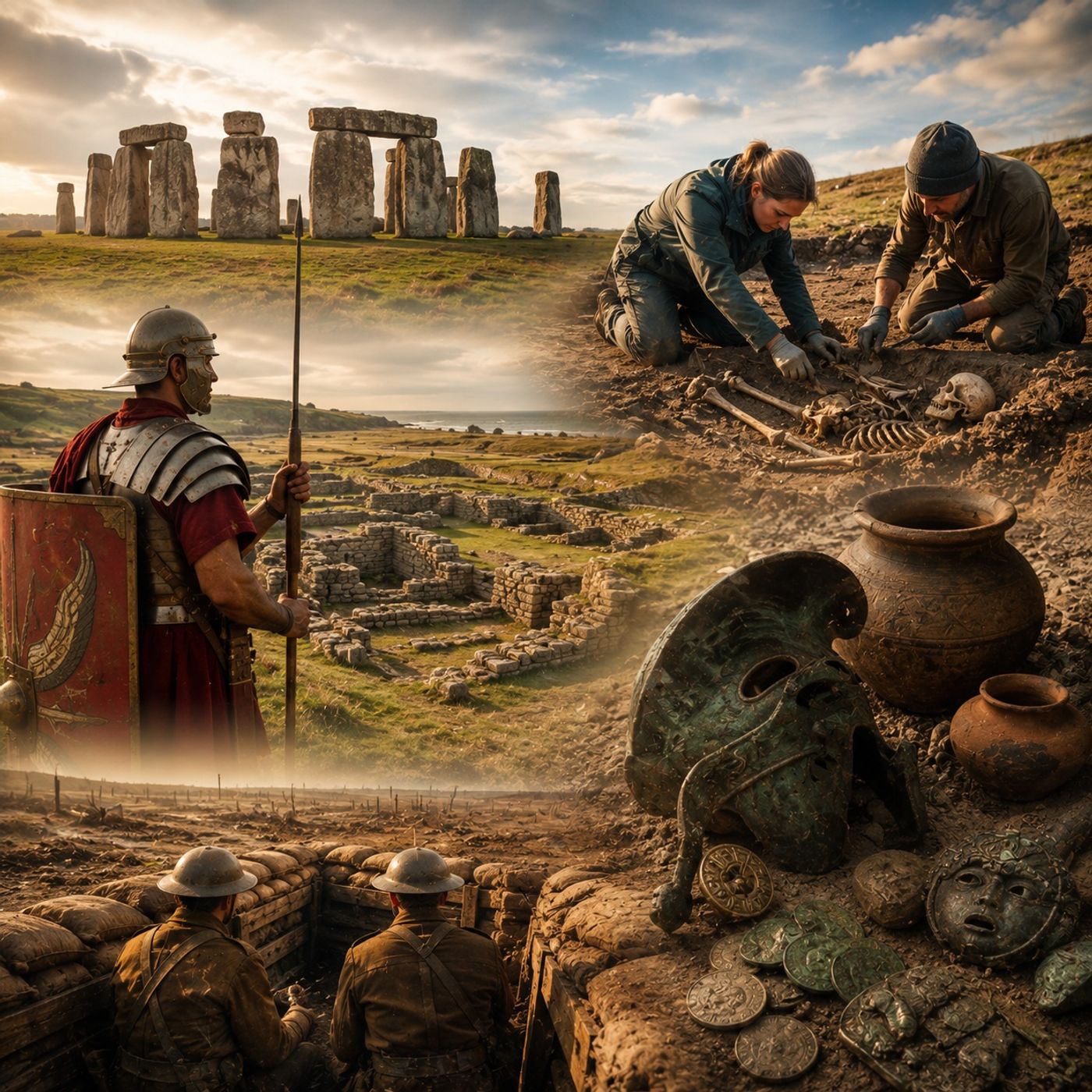
Across Britain, archaeologists continue to uncover forgotten chapters of the past, revealing how people lived, fought, traded, and adapted across thousands of years. From prehistoric monuments and ancient settlements to medieval objects and wartime remains, each discovery adds a new piece to the story of the nation’s history.
Excavations have uncovered remarkable evidence, including massive Neolithic structures near Stonehenge, hidden Iron Age treasures, and traces of Roman military campaigns. Other discoveries reveal the complexity of post-Roman communities, showing that trade, craftsmanship, and cultural exchange continued long after the fall of the empire.
Ev...
The Warship That Refused to Die
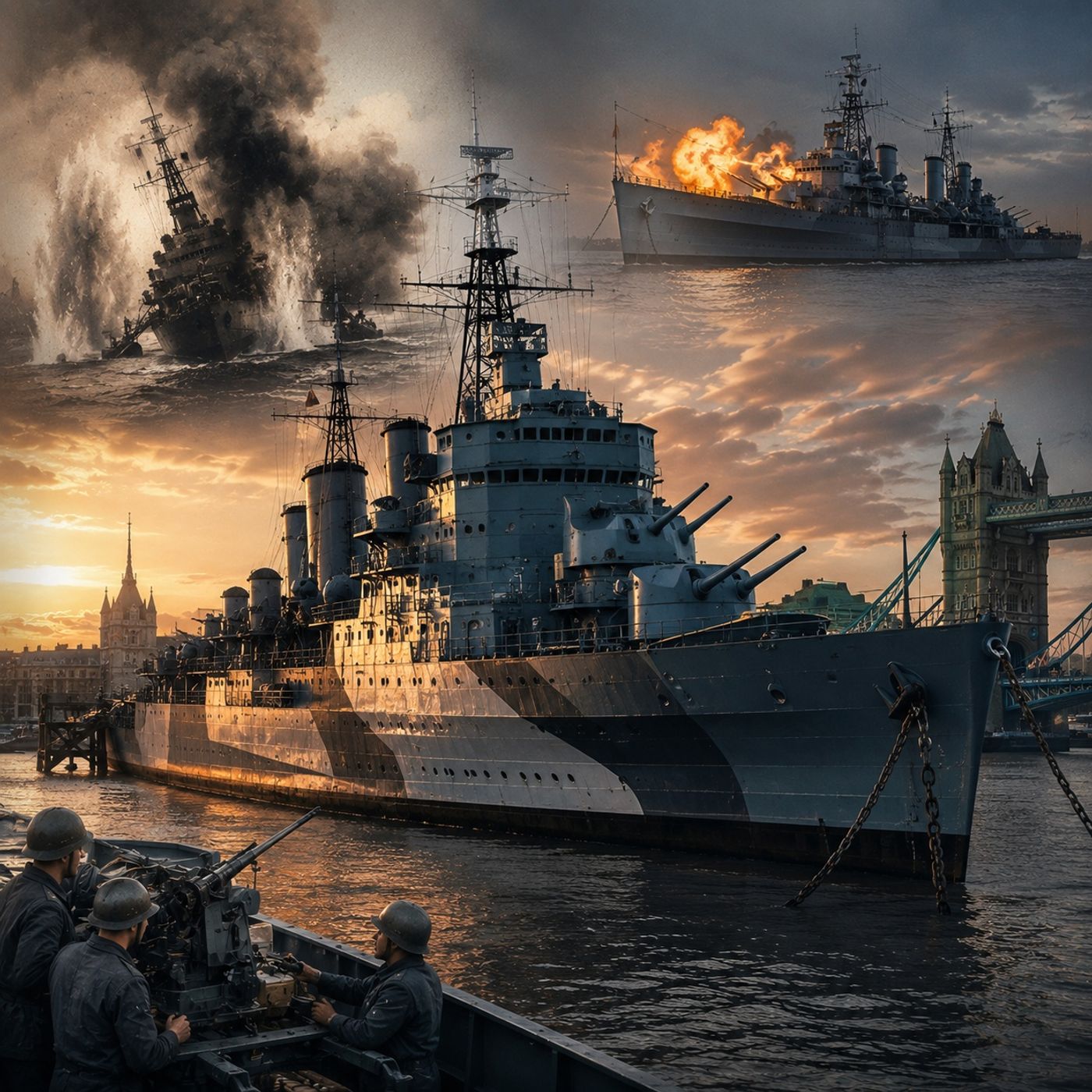
HMS Belfast remains one of the most remarkable surviving symbols of Britain’s naval history, carrying the story of courage, survival, and service through some of the most dangerous moments of World War II.
Launched in 1938, the cruiser faced destruction early in its career after a devastating encounter with a German magnetic mine left it badly damaged and close to being retired. After extensive repairs and major technological upgrades, including advanced radar systems, HMS Belfast returned to active duty and became a key part of vital Arctic convoy missions and the operation that helped defeat the Ge...
The Nazi Collapse in Vivid Color
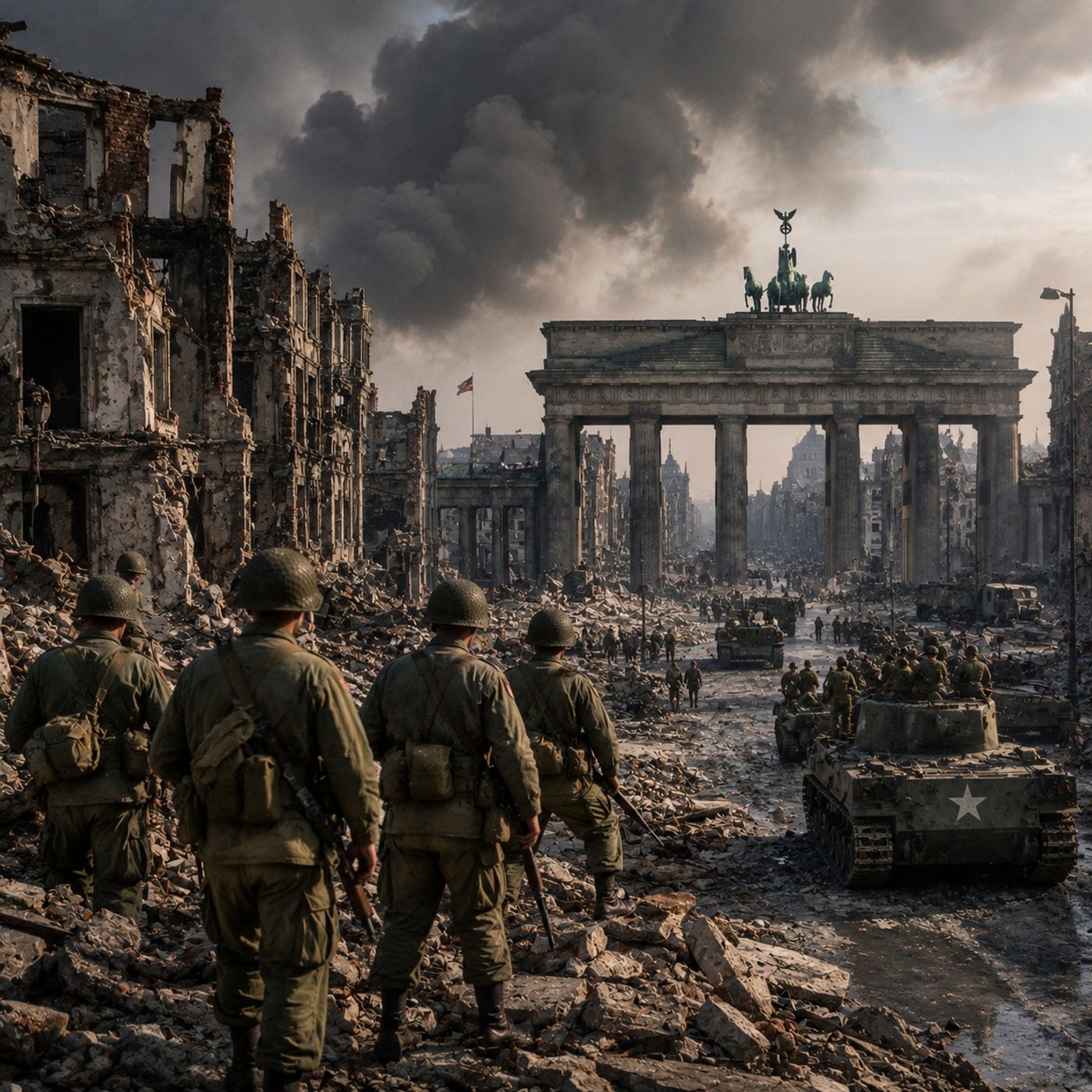
Rare color footage captured the dramatic final collapse of Nazi Germany as American camera teams followed the Allied advance across Europe. Through the lens of Hollywood director George Stevens and military records, the story reveals the destruction of German cities, the final battles, and the uncertain moments when a nation moved from war toward surrender.
The fall of cities such as Aachen and Cologne showed the contrast between desperate Nazi resistance and civilians who were exhausted and ready for the fighting to end. The capture of the Remagen bridge over the Rhine became a crucial turning...
Ivan the Terrible's Lost Golden Library
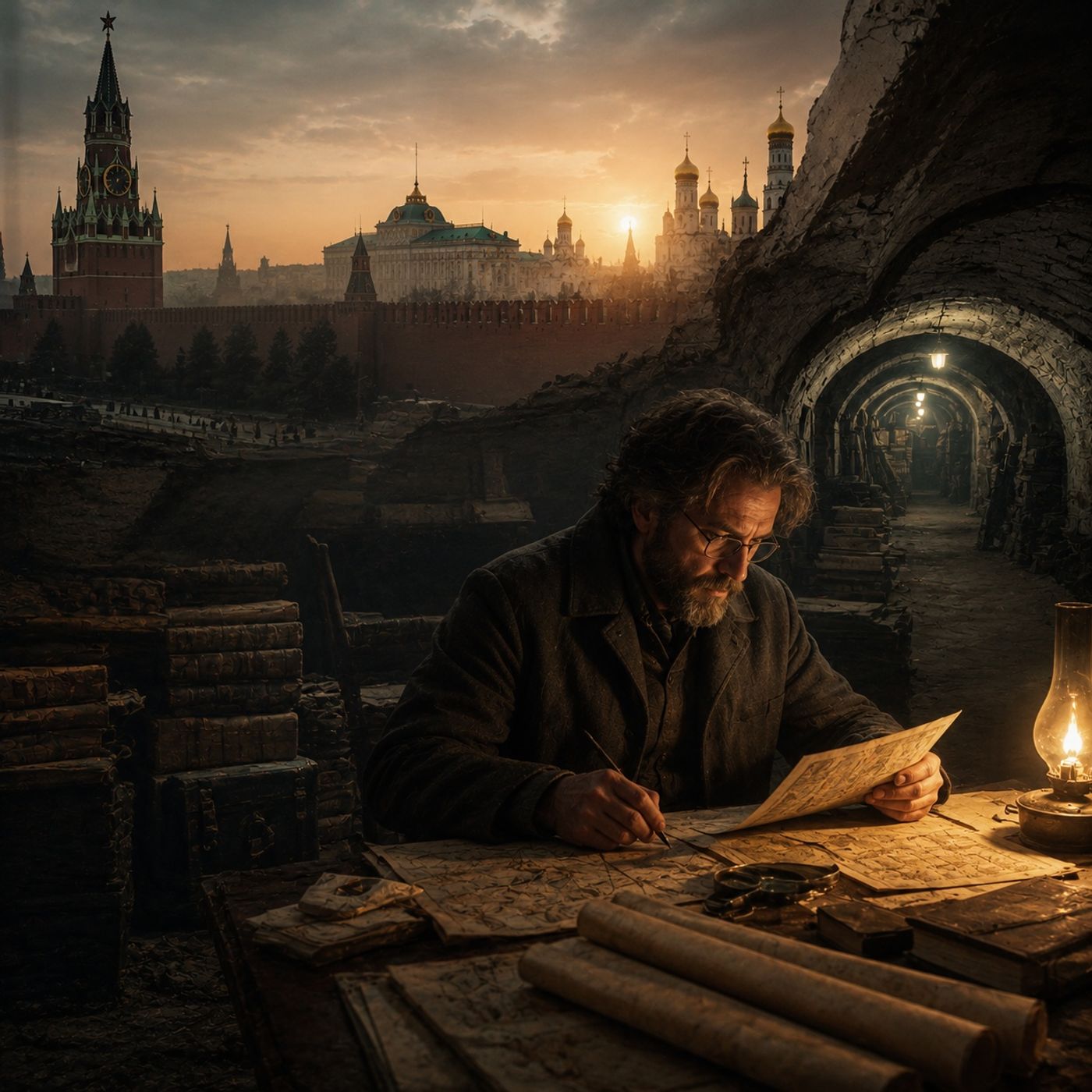
For decades, archaeologist Ignati Stellitki pursued one of history’s greatest mysteries: the lost library of Ivan the Terrible. According to legend, this hidden collection contained priceless works from the ancient Greek and Roman worlds, preserved somewhere beneath the depths of the Kremlin.
Driven by historical clues and a discovered catalog describing the library’s contents, Stellitki dedicated his life to proving that the legendary archive was real. His search took him through some of Russia’s most turbulent periods, where he faced political obstacles under both the imperial government and the harsh rule of Stalin.
The Americans at the Elbe: The Demise of Nazi Germany
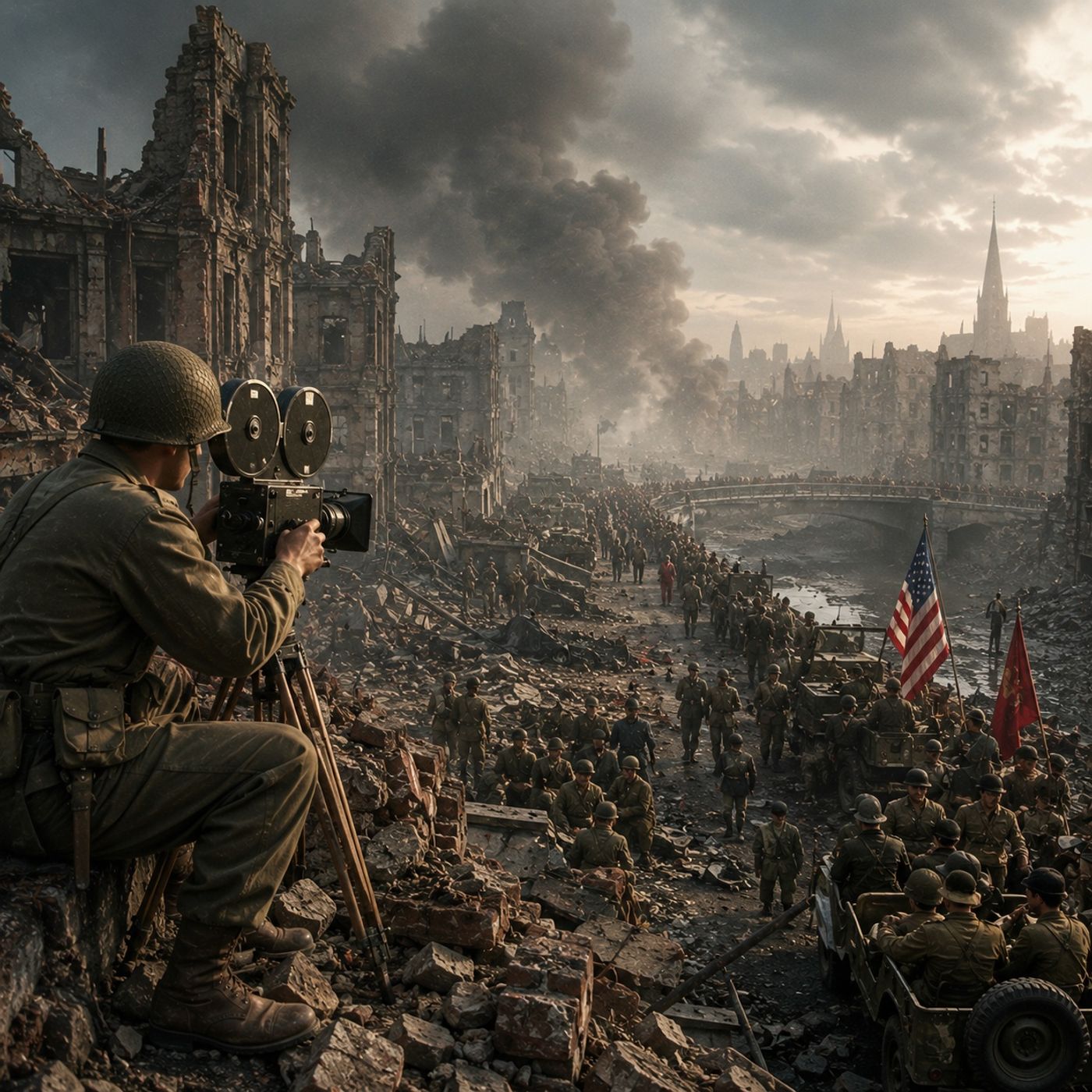
In the final weeks of World War II, American camera crews followed the Allied advance across a collapsing Nazi Germany, capturing one of the most dramatic transitions in modern history. Led by Hollywood director George Stevens, these teams recorded the final battles, the defeat of German forces, and the devastating aftermath left behind by years of war.
Their footage revealed the horrors discovered inside liberated concentration camps, where survivors faced starvation, suffering, and unimaginable conditions. It also documented the immense humanitarian crisis involving prisoners of war and displaced civilians searching for survival in a shattered continent.<...
The Curse of Montezuma's Gold
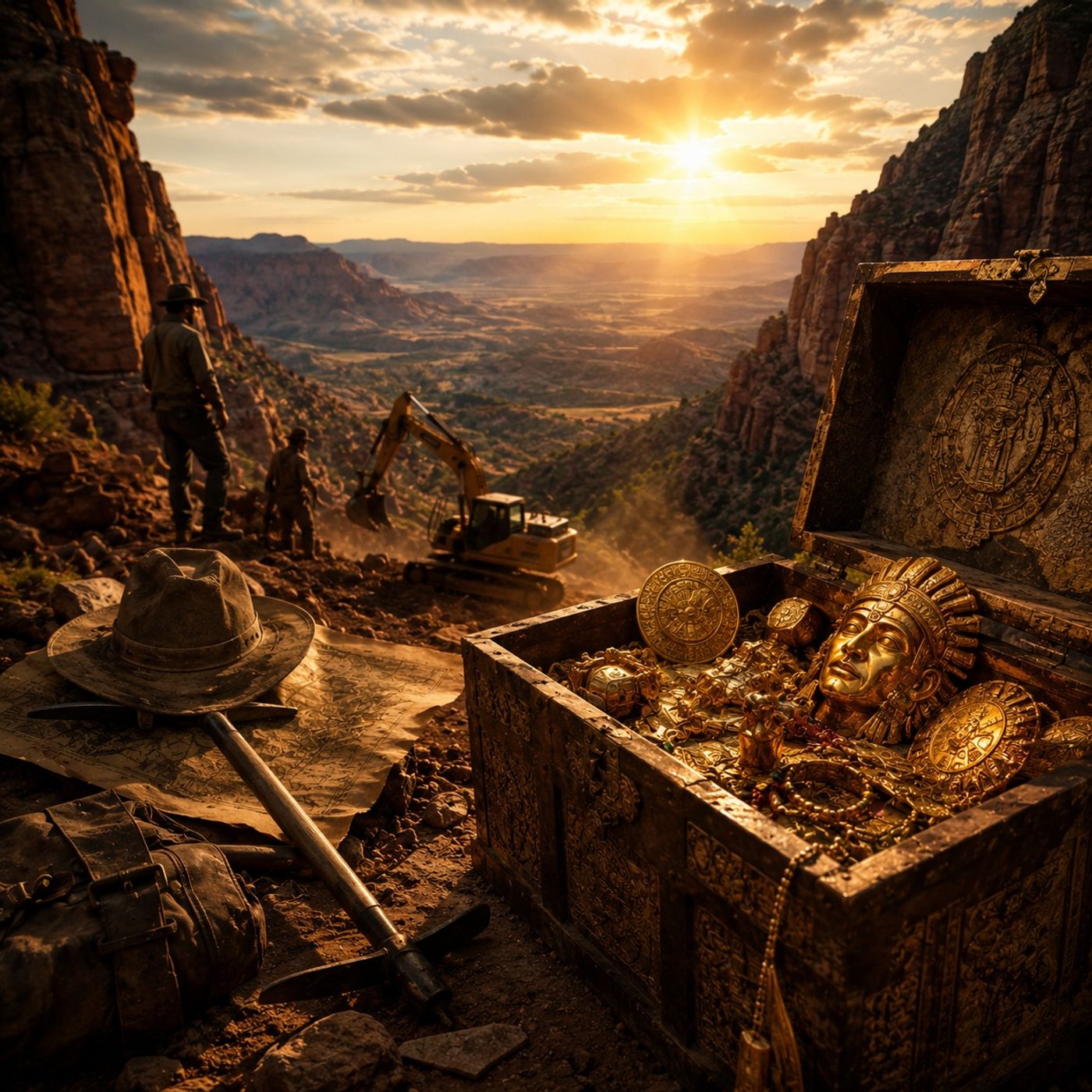
For more than a century, explorers, treasure hunters, and adventurers have searched for the legendary lost gold of the Aztec emperor Montezuma, believed by some to be hidden somewhere in the rugged landscapes near Kanab, Utah.
The mystery began with visions, ancient maps, and mysterious clues that inspired entire expeditions into remote canyons. Generations of treasure seekers followed different leads, using everything from traditional excavation methods to modern machinery, ancient artifacts, and underwater exploration in hopes of uncovering the forgotten riches.
Along the way, they discovered traces of the past but never found...
The lobster that rewrote history
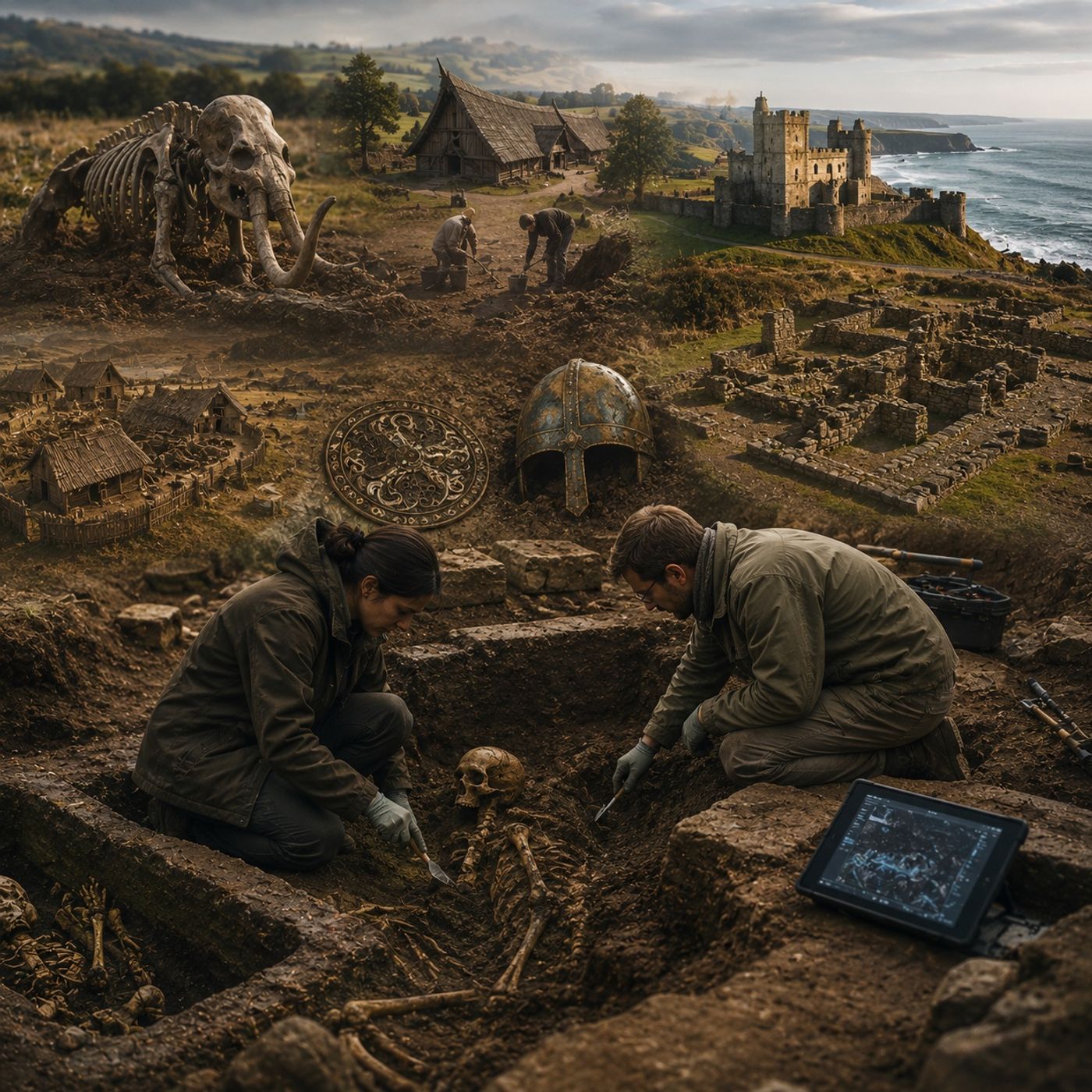
Across Britain, beneath fields, coastlines, and ancient landscapes, archaeologists continue to uncover hidden chapters of human history. From the remains of Ice Age animals to long-lost settlements and royal residences, each discovery reveals how people lived, adapted, and shaped the world around them.
Using advanced techniques such as digital mapping, scientific analysis, and DNA research, experts are transforming fragments of the past into detailed stories of ancient communities. Excavations uncover everything from Mesolithic homes and Anglo-Saxon burial sites to Viking gathering places and Roman trading centers, offering new insights into identity, technology, and everyday life.<...
HMS Victory: The Ship that Ruled the Waves
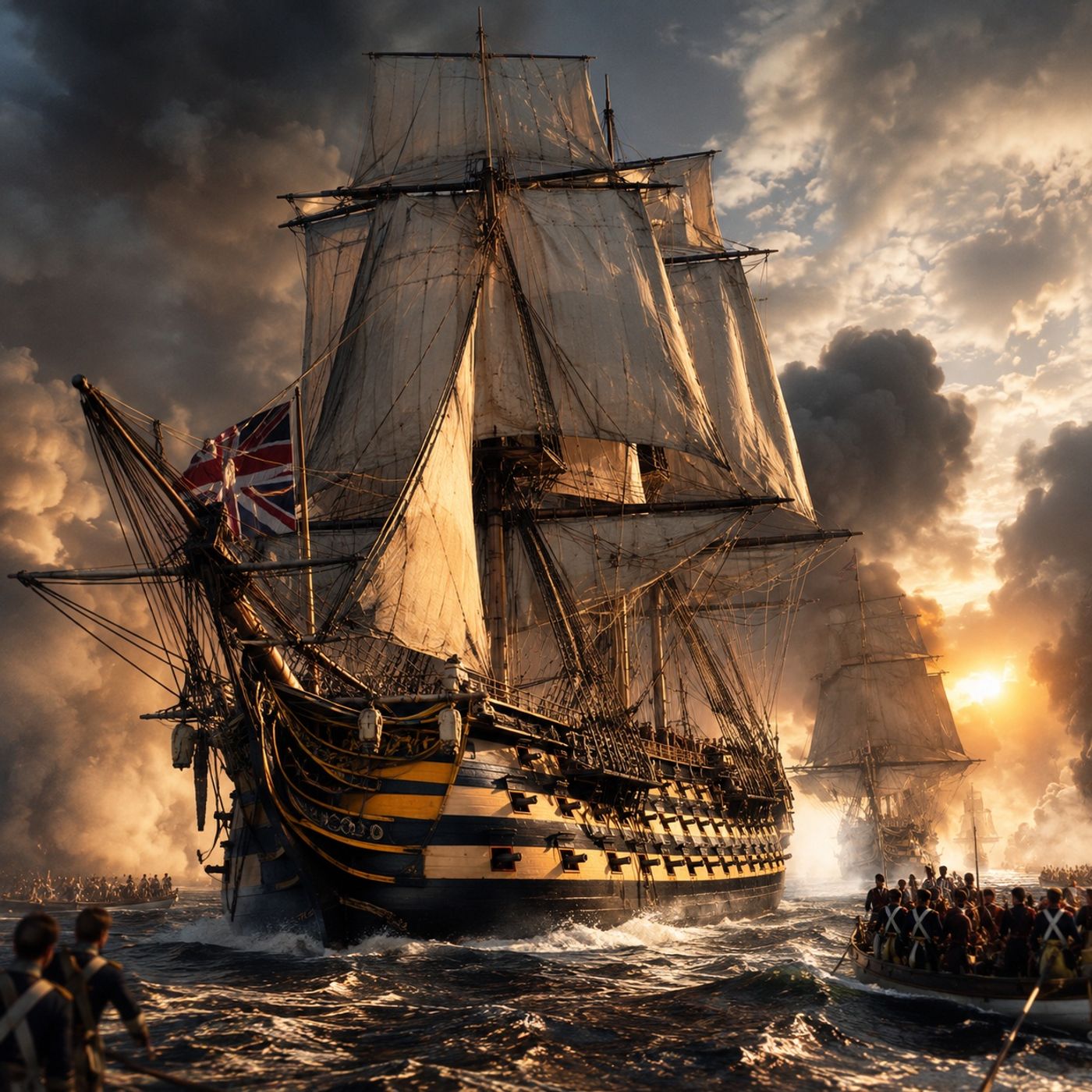
HMS Victory stands as one of the most legendary warships in history, a symbol of British naval power and a vessel that played a defining role in one of the greatest sea battles ever fought. Built as a massive 100-gun ship of the line, she faced an uncertain future before being restored and returned to active service.
Under the command of Admiral Horatio Nelson, HMS Victory became the centerpiece of the Battle of Trafalgar, where bold tactics and exceptional leadership helped secure a historic victory against the combined French and Spanish fleets. The battle came at...
Germany's 1945 Collapse in Vivid Color
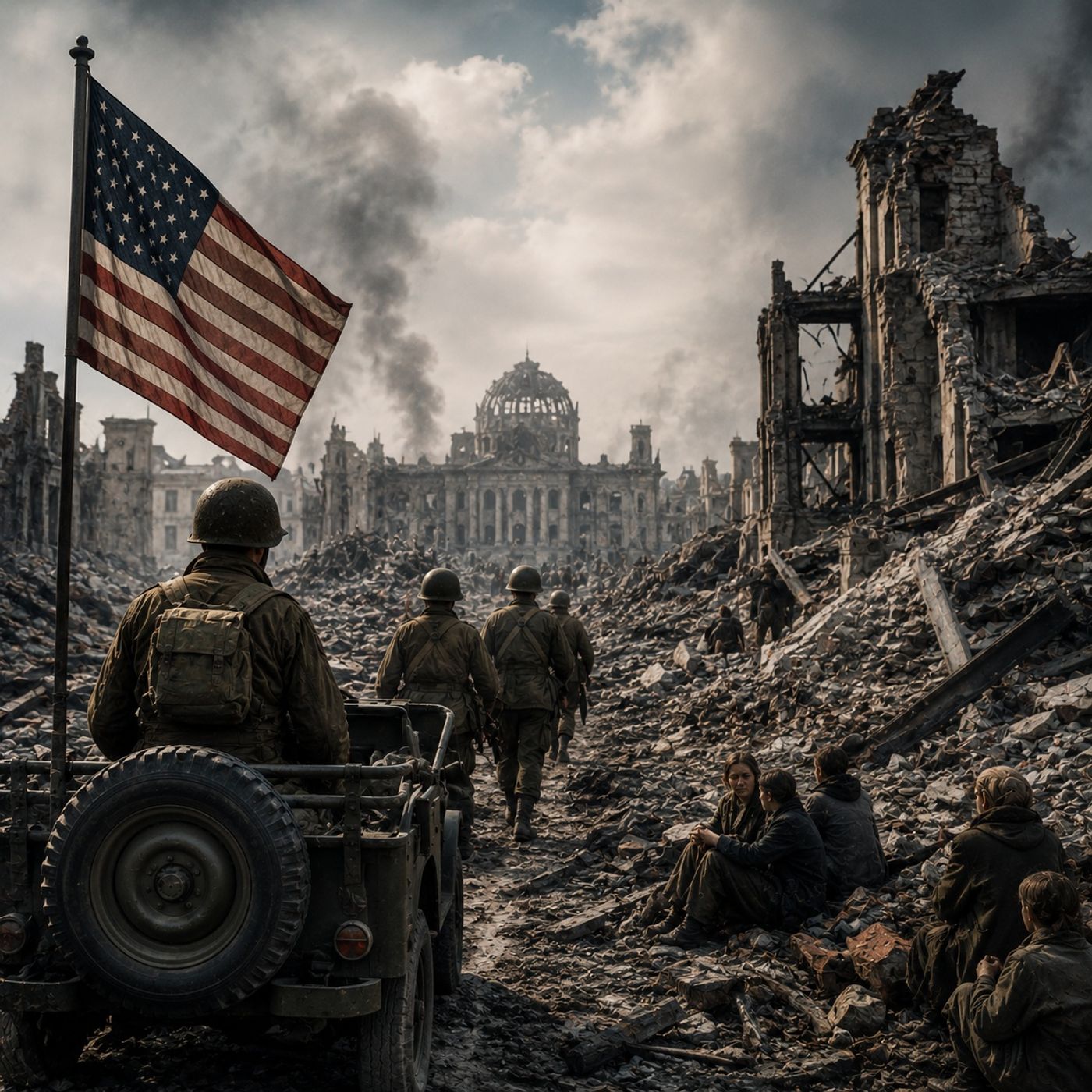
As World War II came to an end, rare color footage captured the dramatic collapse of Nazi Germany and the uncertain days that followed. The recordings reveal the final battles across devastated cities, the liberation of concentration camps, and the shocking aftermath faced by Allied soldiers as they entered a defeated nation.
From the ruins of Nuremberg to the surrender of Munich, the images show the destruction of the Third Reich’s power, the discovery of abandoned military projects, and the beginning of a new era under Allied occupation. Beyond the battlefield, the story explores the em...
Egyptian mummy in Joan of Arc's jar
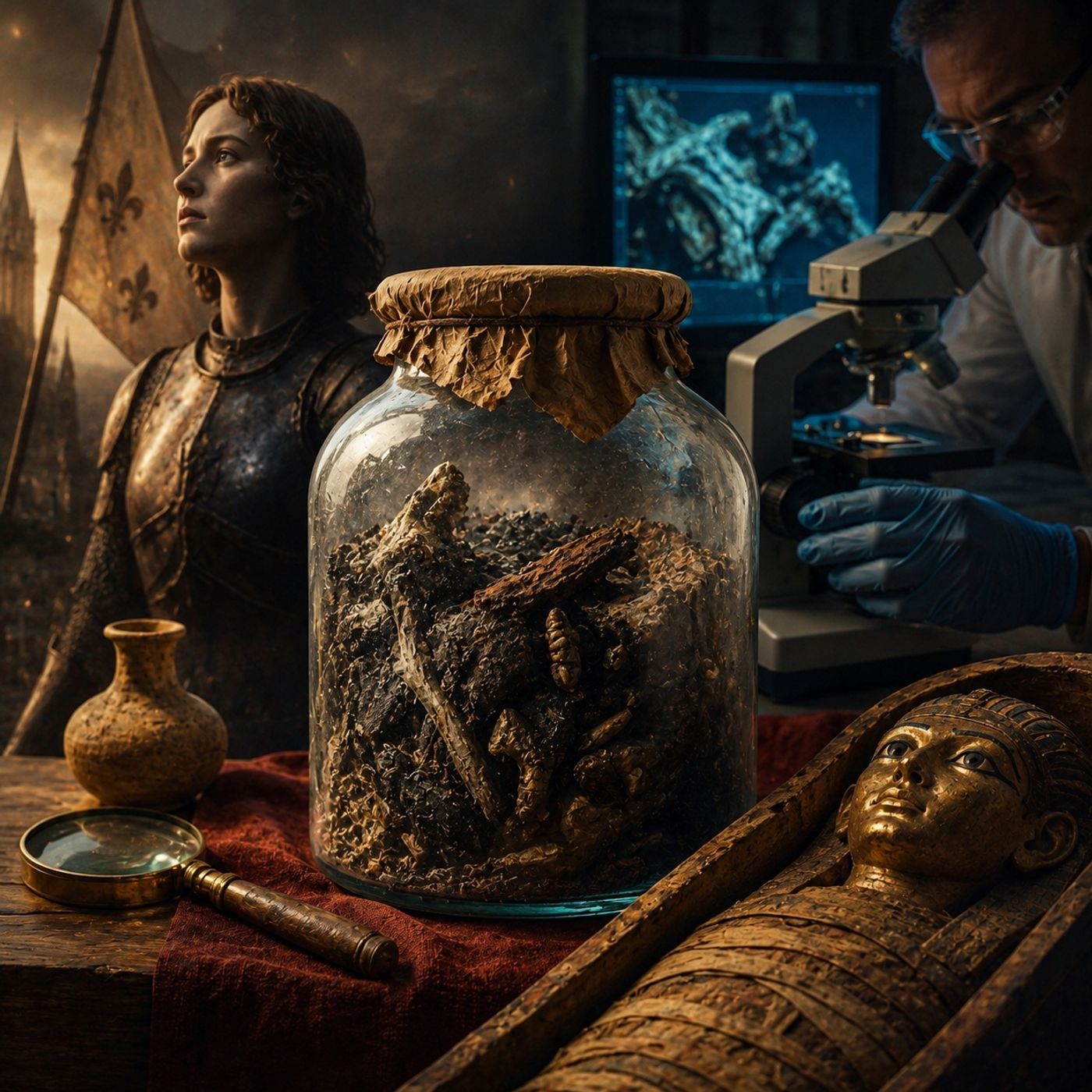
For centuries, a mysterious jar containing what were believed to be the remains of Joan of Arc carried the weight of a powerful legend. But when modern forensic science examined the relics, a very different story emerged.
Researchers used advanced techniques, including scientific testing and detailed analysis, to uncover the truth behind the blackened bone fragments. Instead of showing evidence of a medieval execution by fire, the remains revealed clues pointing to another origin. Their unusual condition, unexpected scent, and further examination showed that the fragments came from an ancient Egyptian mummy, dating back long before...
The Copper Scroll: John Allegro’s Hunt for Temple Gold
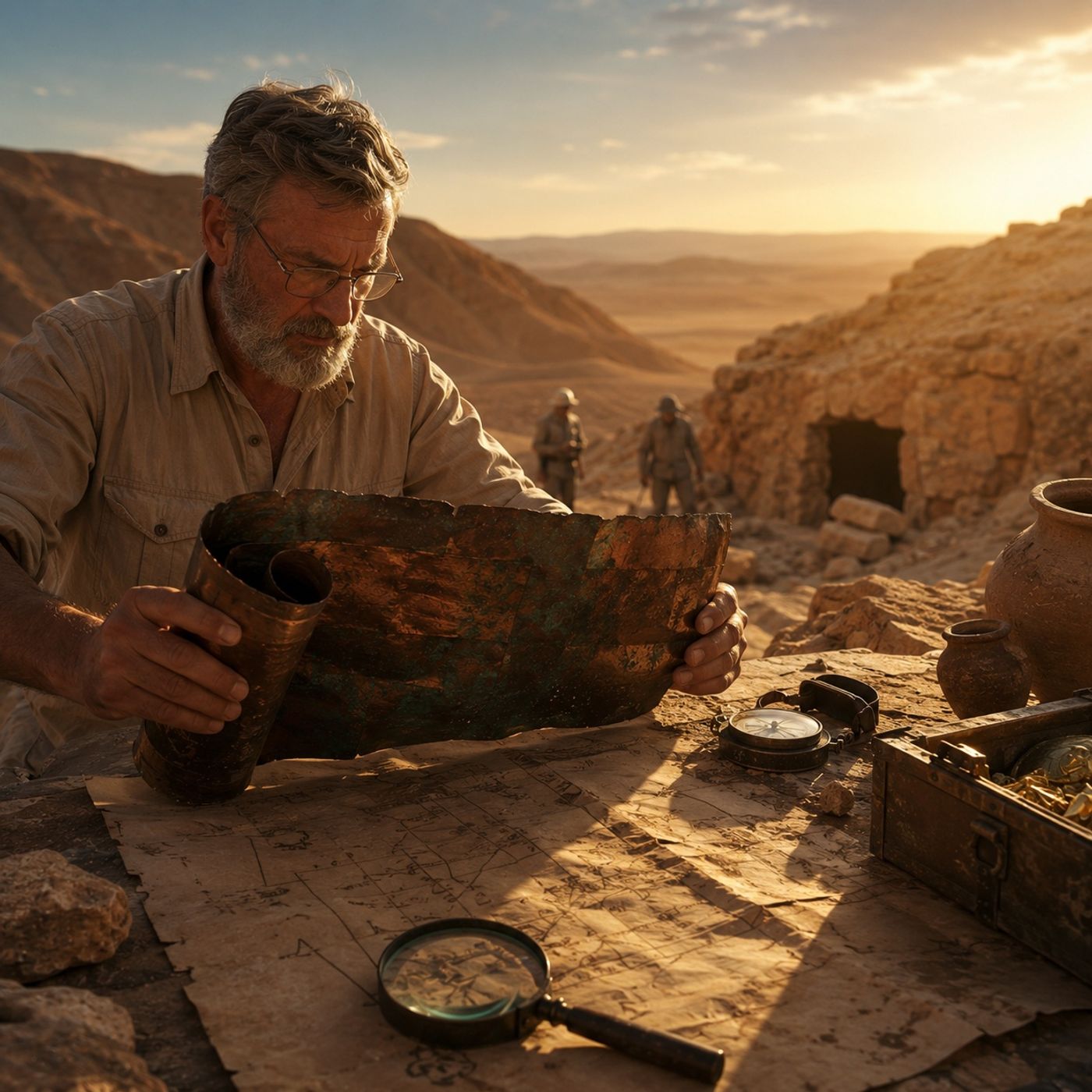
John Allegro devoted his life to uncovering the truth behind the Copper Scroll, a mysterious artifact unlike any other. Engraved on pure copper, the scroll appeared to be a detailed treasure map listing vast amounts of gold and silver hidden away during ancient times. While most scholars dismissed it as fiction, Allegro believed it was a real historical record.
Driven by this belief, he launched multiple expeditions into the desert, following the scroll’s clues to ancient sites and hidden caves. Despite his efforts, the treasure was never found, and his work was met with skepticism an...
The Hunt for the Kruger Millions
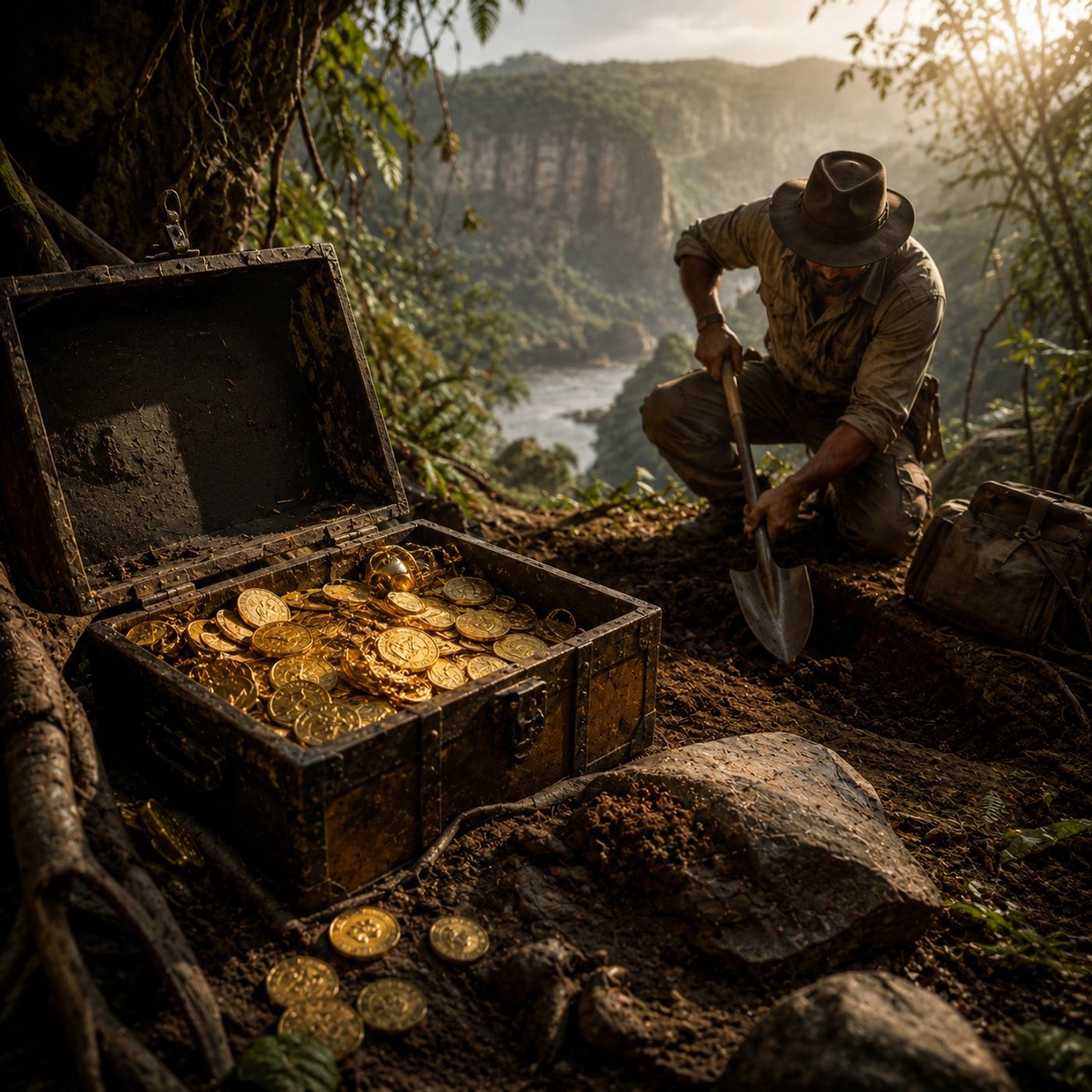
The story dives into a long-standing legend of hidden gold, said to have been secretly buried during a time of الحرب and uncertainty. According to the tale, a vast fortune vanished into the wilderness, sparking decades of speculation about where it might lie.
As the narrative unfolds, it becomes clear that the truth is far more complex. Instead of a single massive treasure, the gold was likely dispersed—used to settle debts or hidden in small amounts by individuals trying to protect their wealth. Yet scattered discoveries of coins over the years kept the legend alive, convincing many th...
The Misfit Mummy: Forensic Science and Ancient Secrets
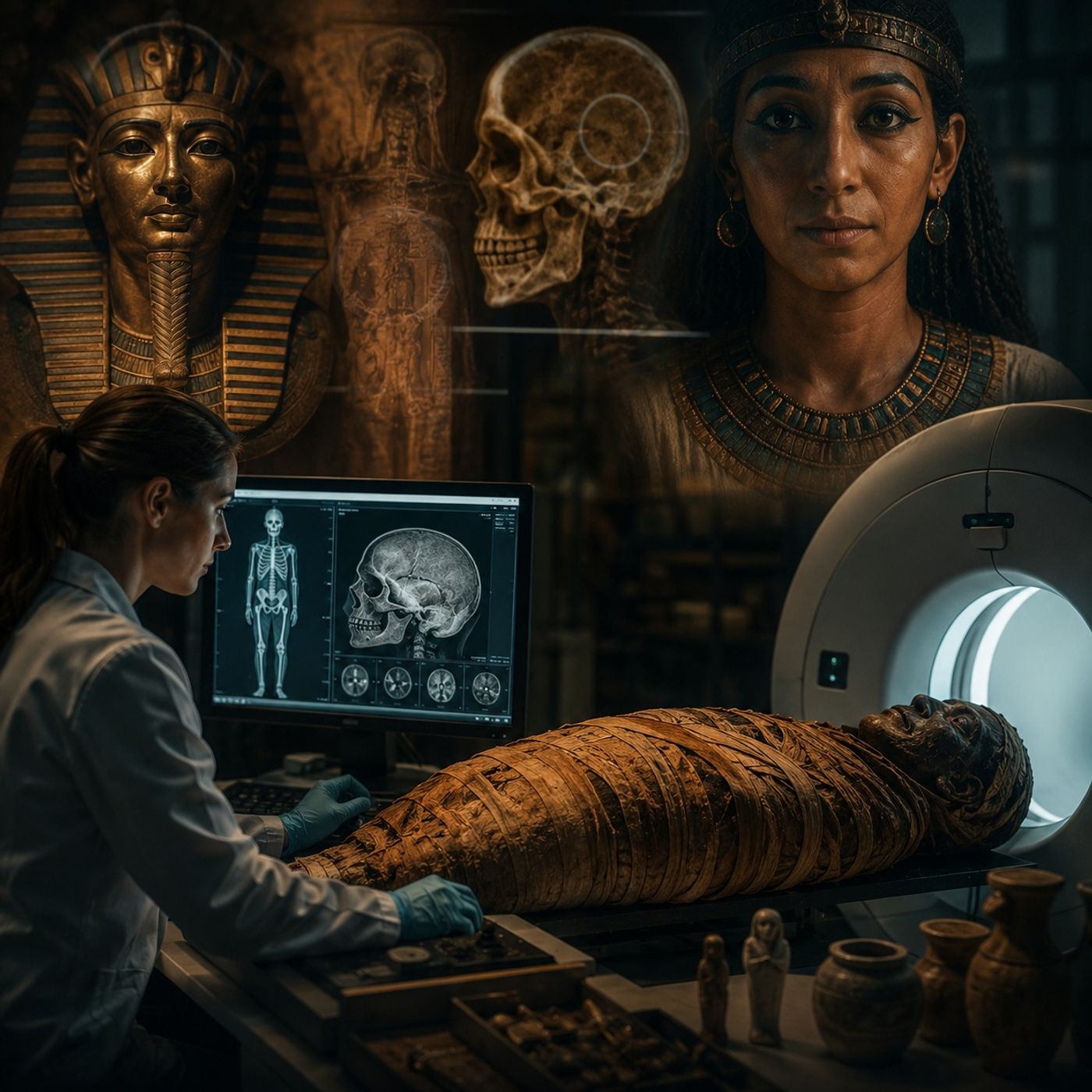
The story explores how modern science is unlocking the secrets of ancient mummies, revealing truths that remained hidden for thousands of years. Using advanced technologies, researchers can look beneath wrappings and artifacts to uncover the real identities of the individuals—determining their age, health, and even social status, regardless of what their burial inscriptions claim.
Through detailed scans and chemical analysis, scientists piece together clues about how these people lived and died. Subtle traces in preserved materials can indicate whether someone belonged to a royal class, held a spiritual role, or suffered from serious illness. In so...
The Lost Treasure Tombs of the Ancient Maya
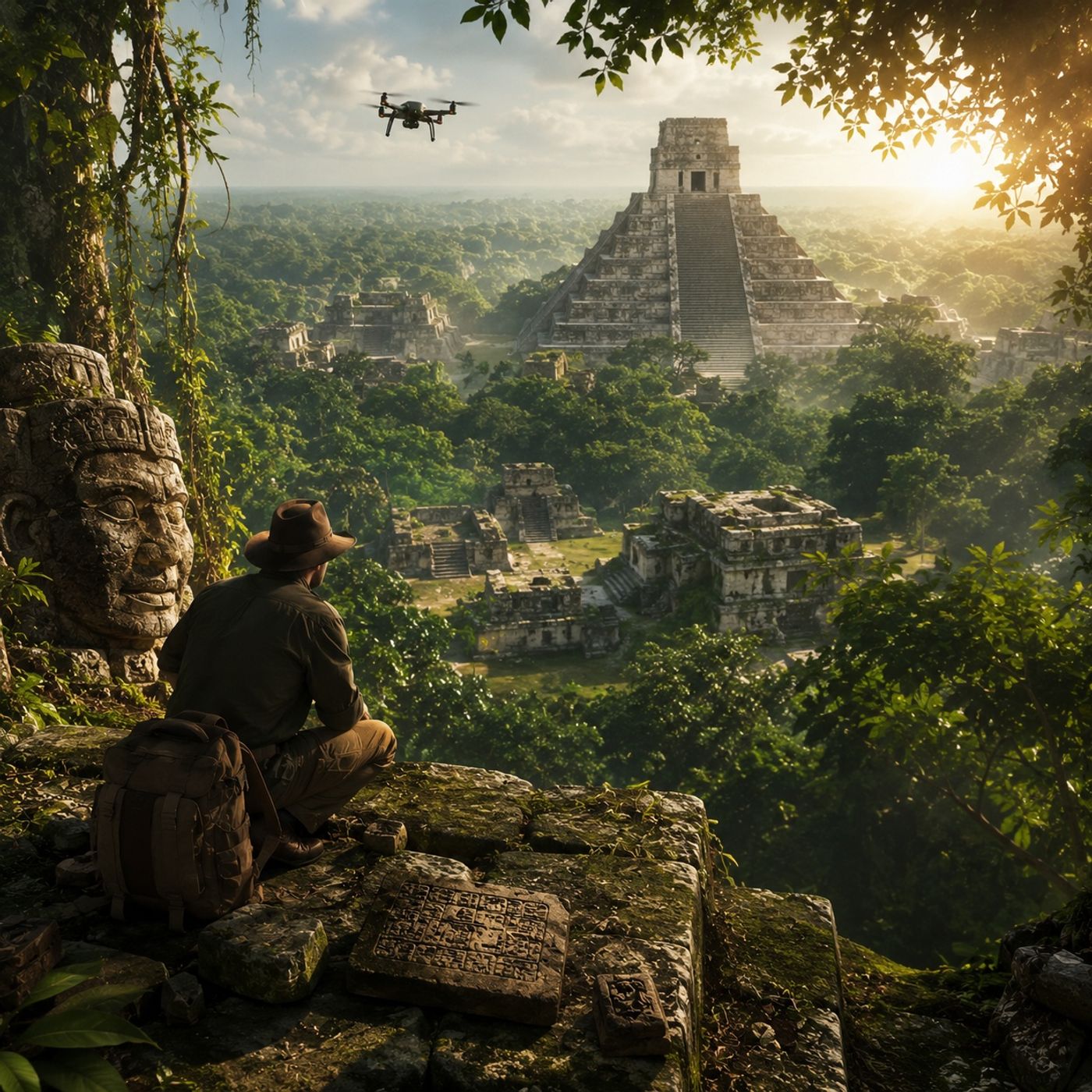
The story uncovers the remarkable world of an ancient civilization that once thrived deep within the jungles of Central America. Using advanced modern technology, researchers are now revealing vast hidden cities, royal tombs, and complex urban networks that had remained concealed for centuries beneath dense vegetation.
Through the decoding of intricate writing systems and the study of finely crafted artifacts, a picture emerges of a highly organized society ruled by powerful dynasties. These people achieved extraordinary advancements in astronomy, architecture, and engineering, building monumental structures and developing precise ways to track time and the movement of...
How Hitler Dismantled German Democracy
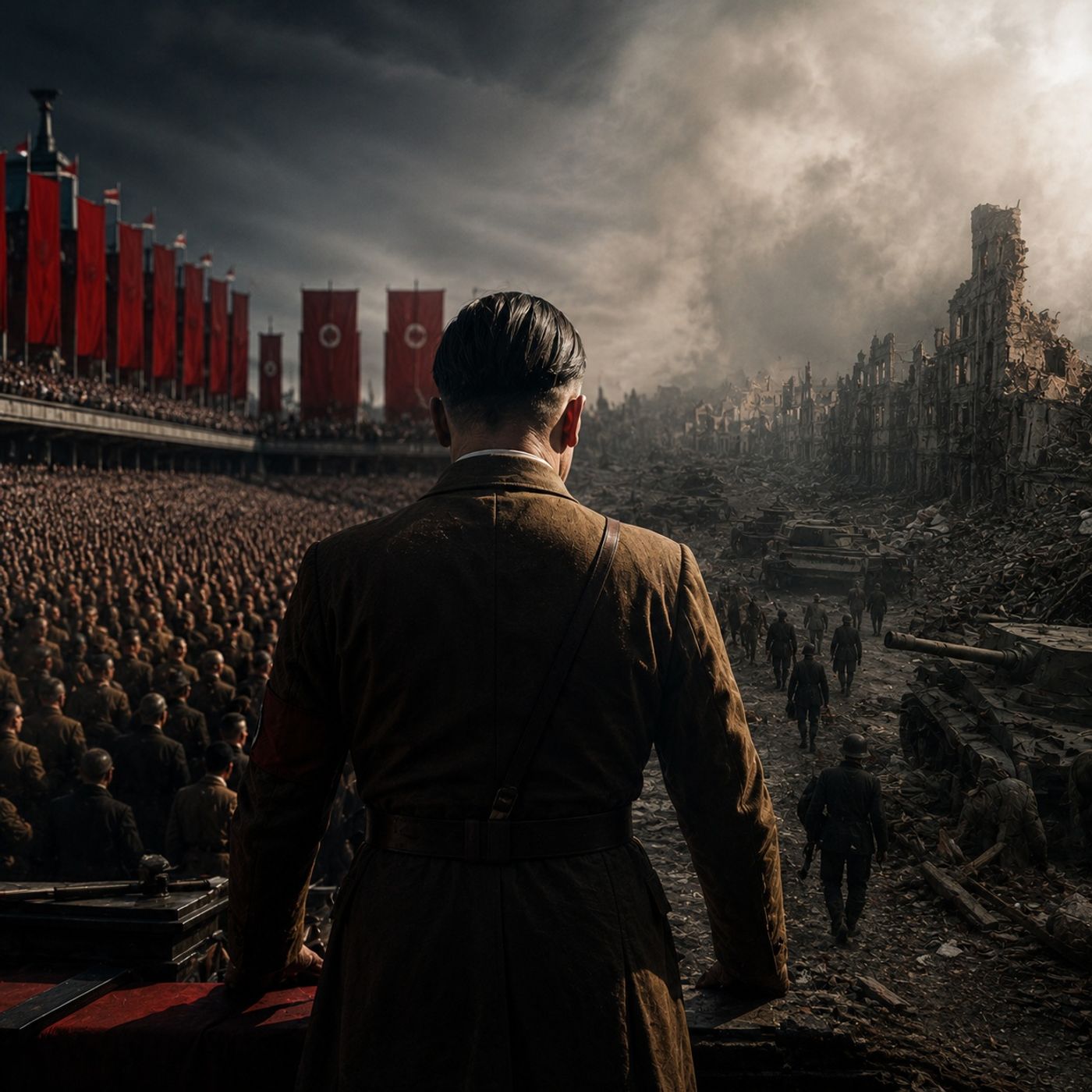
The story traces the rise of a man who turned personal struggle and national crisis into a path toward absolute power. Emerging from the aftermath of a devastating war, he capitalized on economic hardship and public anger, offering a vision of restored pride and unity that drew widespread support.
His early political efforts were marked by failure, but he used that setback to refine his ideology and strengthen his influence. Through powerful messaging and calculated strategy, he gradually dismantled democratic systems, replacing them with a regime built on control, fear, and unwavering loyalty.
...