Don’t Miss That Radiology ⭐
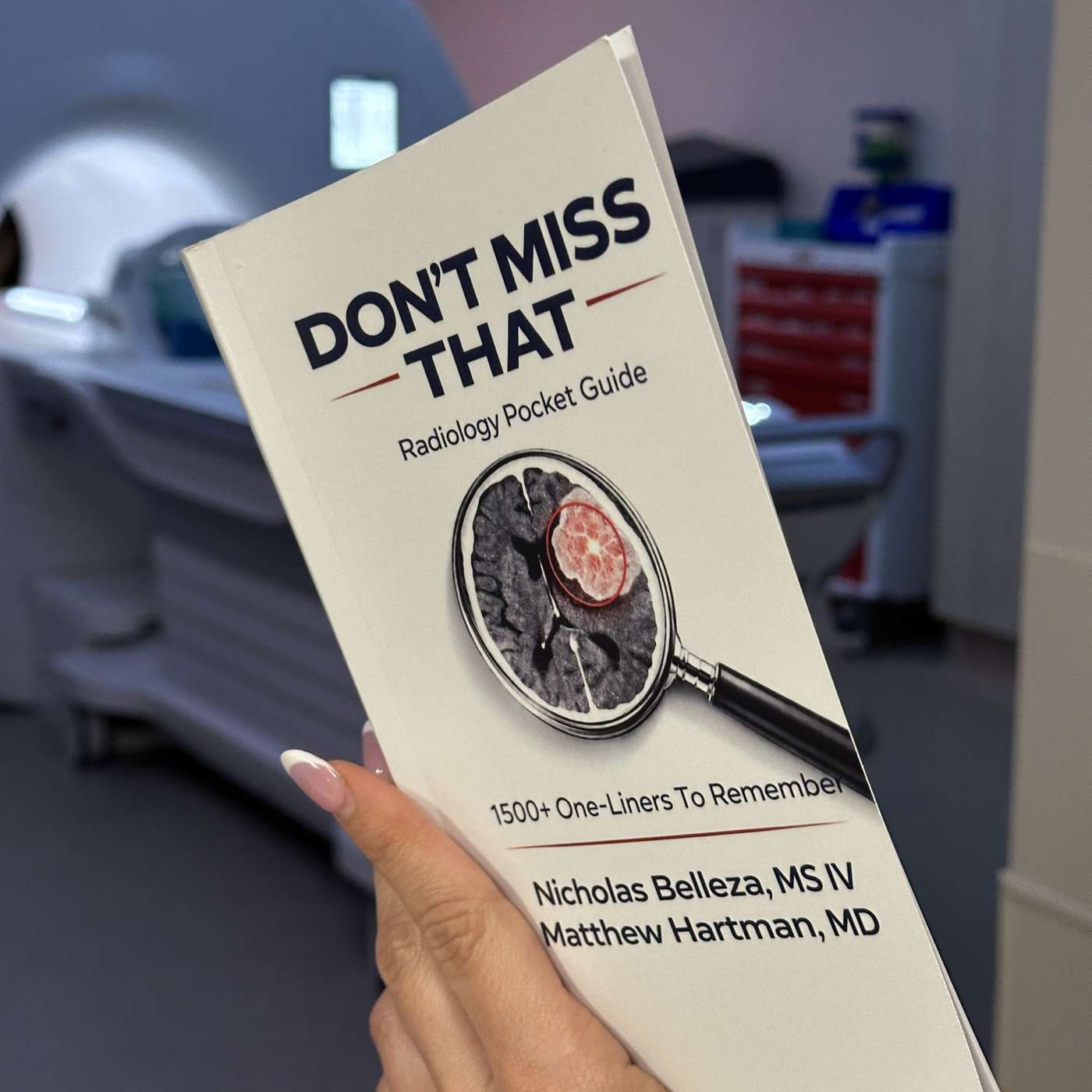
Learning radiology doesn’t have to be overwhelming. Don’t Miss That Radiology delivers high-yield imaging pearls, classic radiology signs, board-style questions, and real-world cases in short, easy-to-understand episodes. Whether you’re a medical student, resident, PA, NP, or healthcare professional, you’ll learn practical imaging concepts you can apply immediately. Hosted by Dr. Matthew Hartman, radiologist, educator, and creator of Radiology 101, this podcast focuses on the findings you don’t want to miss.
Episode 10: Ultrasound Basics – The Fundamentals Every Medical Student Should Know
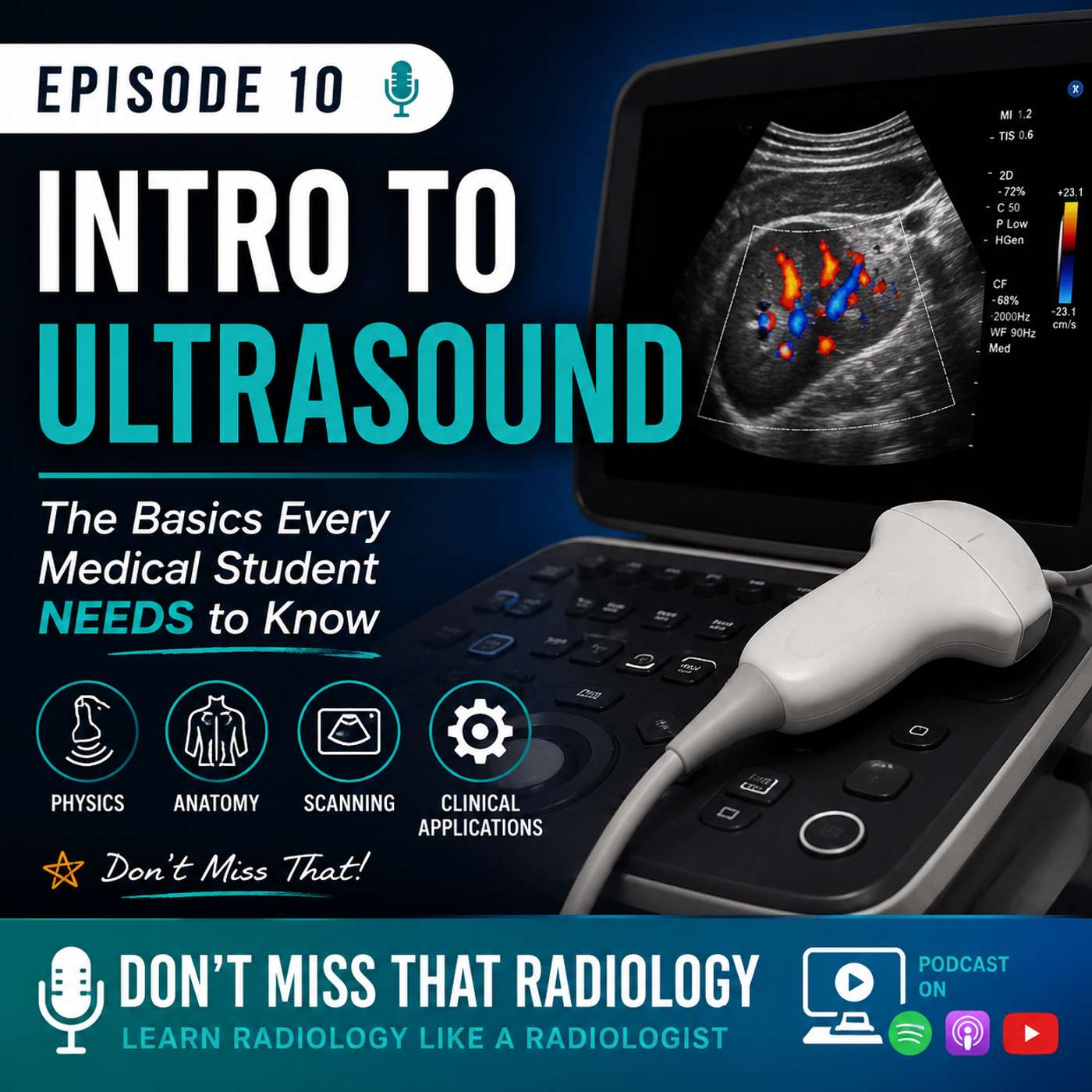
Episode 10: Ultrasound Basics – The Fundamentals Every Medical Student Should Know
Ultrasound is one of the most powerful bedside imaging tools in medicine—but it can be intimidating when you’re first starting out. In this episode of Don’t Miss That Radiology, Dr. Matthew Hartman breaks down the essentials every medical student and resident should know before picking up a probe.
You’ll learn:
* Basic ultrasound physics made simple
* How image orientation works
* Common probe types and when to use them
* Hi yield anatomy
* C...
Episode 9: How to Read an Abdominal CT (Part 1) | Don’t Miss That Radiology ⭐
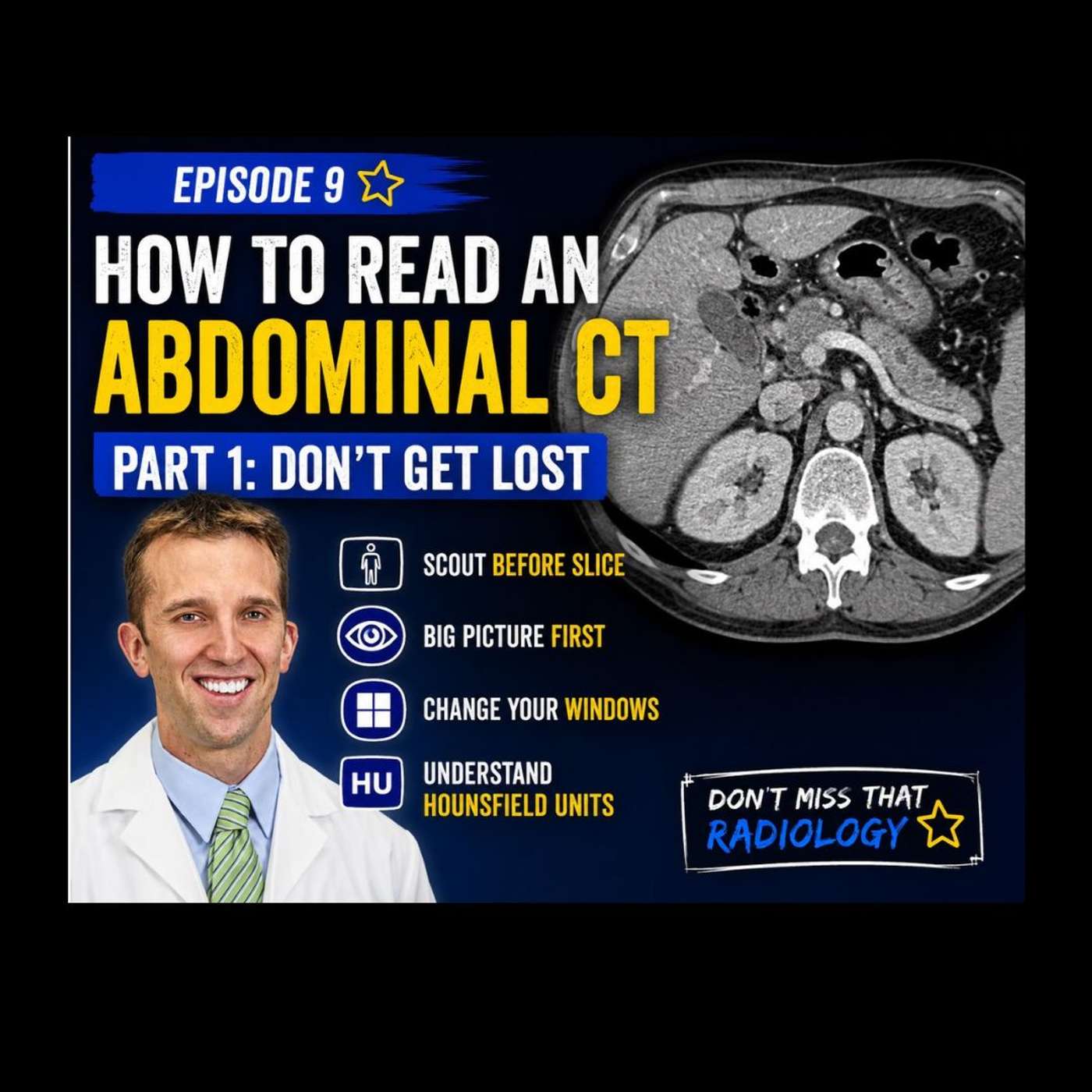
Episode 9: How to Read an Abdominal CT (Part 1) | Don’t Miss That Radiology ⭐
Opening an abdominal CT for the first time can feel overwhelming—but it doesn’t have to.
In this episode, Dr. Matt Hartman walks through a real contrast-enhanced abdominal CT using the same systematic approach he uses every day as a practicing radiologist. Rather than jumping straight to the diagnosis, you’ll learn how a consistent search pattern helps uncover important findings without getting lost.
In this episode you’ll learn:
✅ Why the clinical indication mat...
Ep 8: How to Study Radiology | 10 Principles Every Medical Student Should Know
How to Study Radiology | 10 Principles Every Medical Student Should Know
How do you actually study radiology?
After working with hundreds of medical students and residents, I’ve noticed something: the students who become great radiologists aren’t necessarily the ones who memorize the most—they’re the ones who develop a system.
In this episode of Don’t Miss That Radiology, I’ll share the 10 principles I teach students to build confidence, recognize patterns, and think like a radiologist.
In this episode you’ll learn:
⭐ Start with the b...
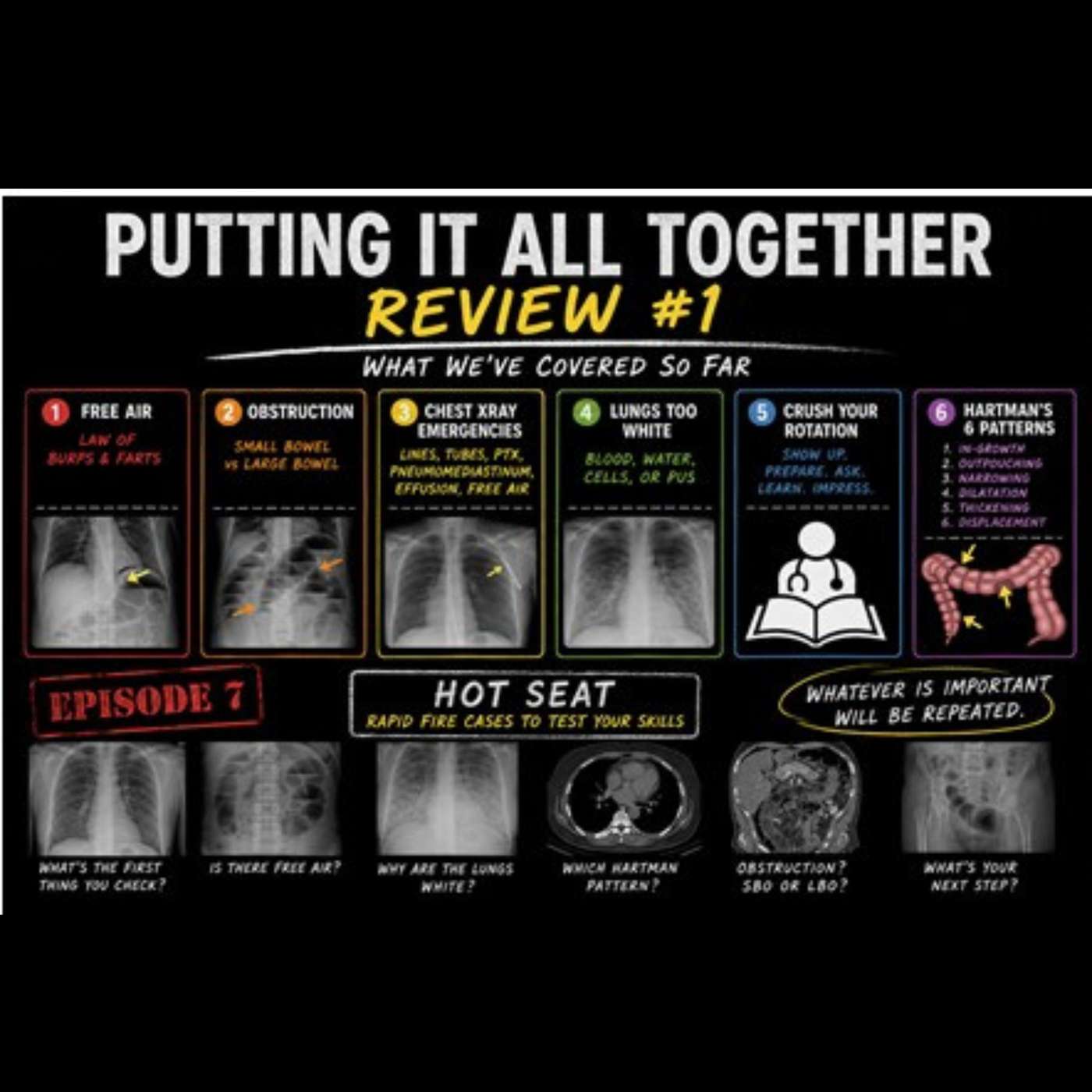
🎙️ Episode 7: Putting It All Together – Review #1
Ep 6--Hartman 6 Patterns of Tubular Pathology | Stop Memorizing Diseases. Start Recognizing Patterns
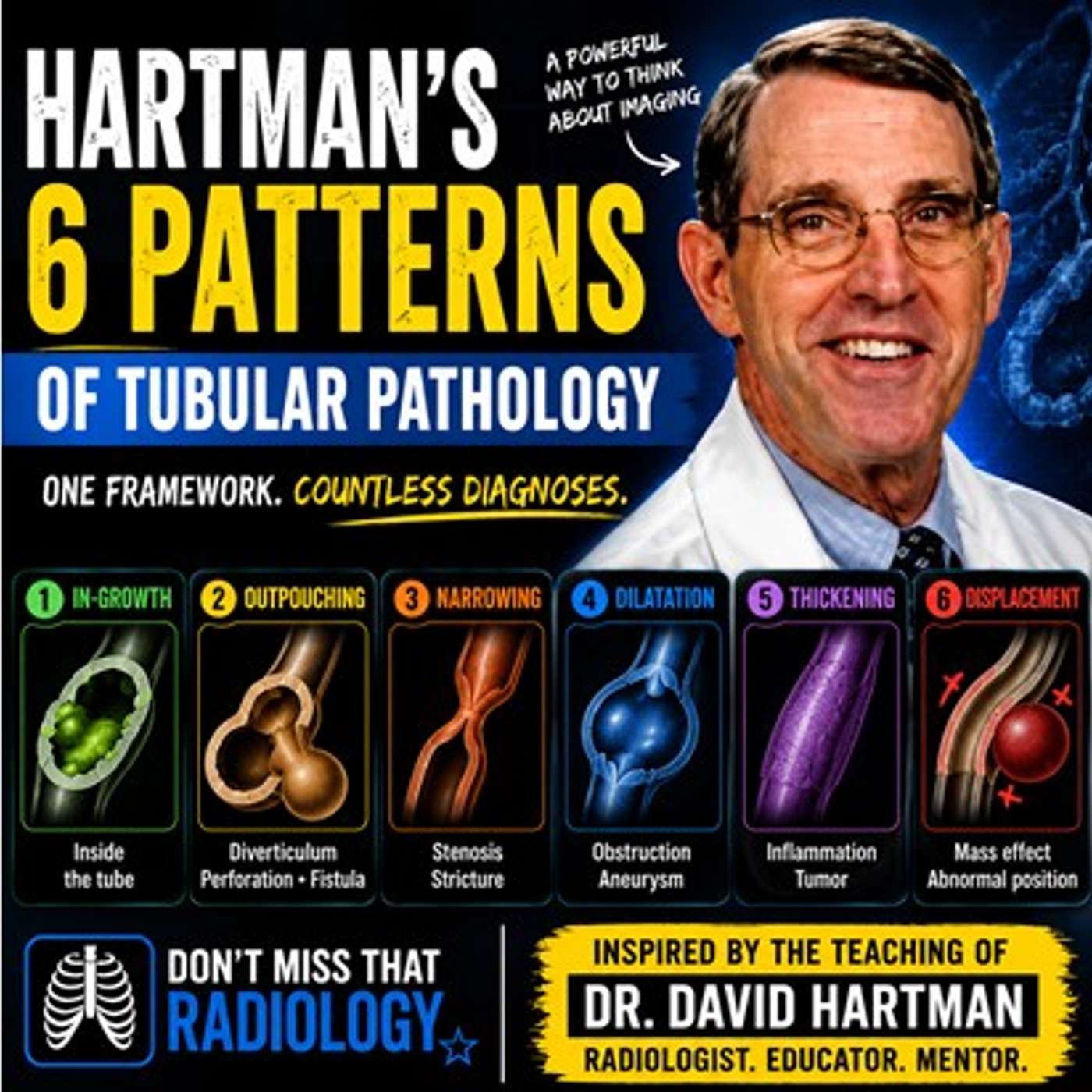
Hartman’s 6 Patterns of Tubular Pathology | Stop Memorizing Diseases. Start Recognizing Patterns.
What if almost every disease affecting a tubular structure could be understood using just six basic patterns?
In this episode of Don’t Miss That Radiology, Dr. Matthew Hartman introduces one of the most powerful frameworks in radiology education: Hartman’s 6 Patterns of Tubular Pathology.
Originally developed and popularized by Dr. David Hartman, this approach teaches you to recognize imaging patterns rather than memorize endless lists of diseases. Whether you’re evaluating the bowel, esophagus, bile ducts, ureters, blood vessels...
July 1: How to crush your radiology rotation
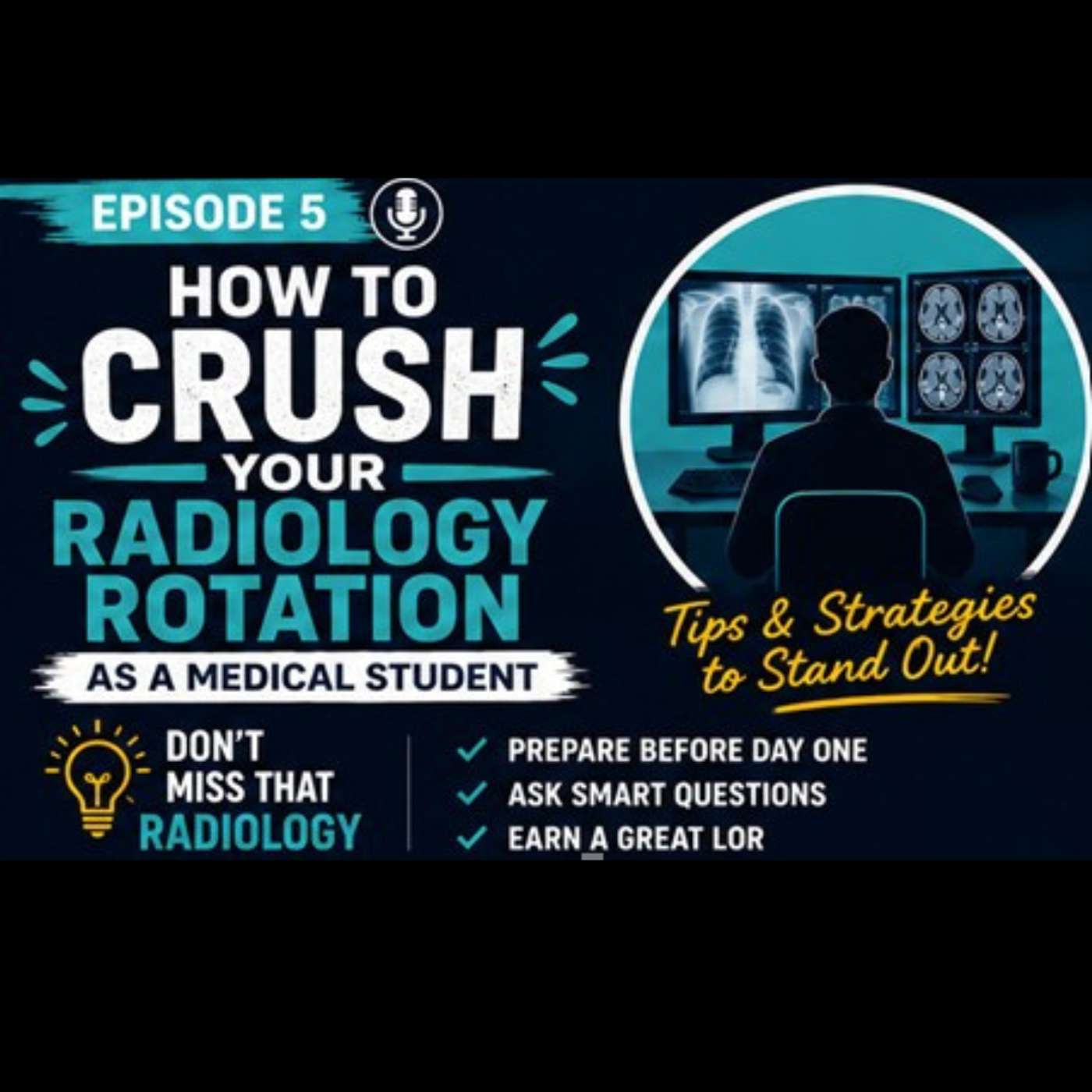
🎙️ Episode 5: How to Crush Your Radiology Rotation as a Med Student
It’s July, and thousands of medical students are starting their radiology electives and audition rotations. In this episode, we shift from reading images to learning how to stand out on the rotation (though I'll throw in a pearl about XGPN).
You’ll learn practical strategies that can make a lasting impression—from the importance of being early and being well dressed and attentive. We will also go over common mistakes that can hurt your evaluation. We’ll discuss how to work effectively with residents and...
Don't Miss That--Radiology of why the lungs are so white? Blood, water, cells or pus!
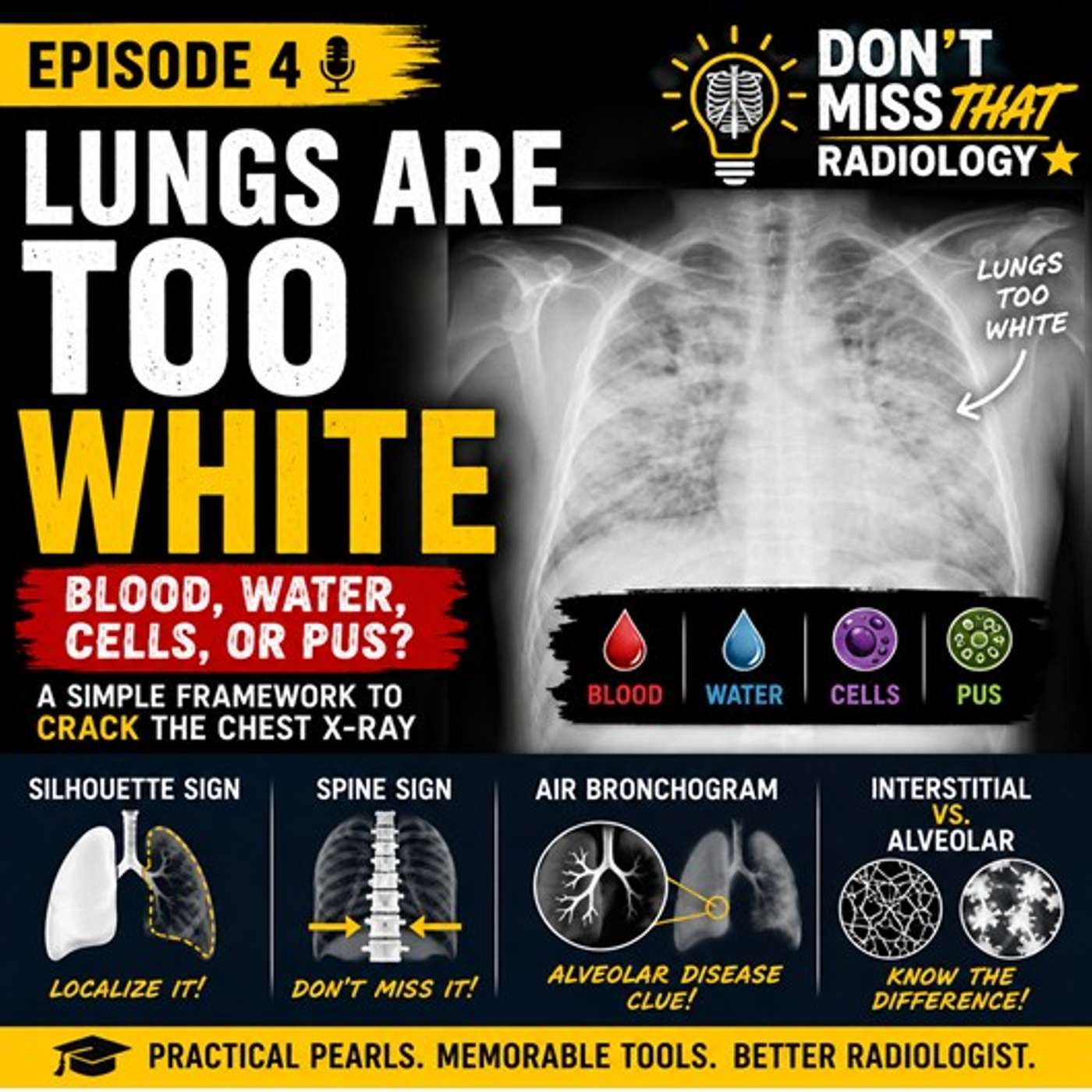
Episode 4: Why Are the Lungs Too White? Blood, Water, Cells, or Pus?
Why do lungs look too white on a chest X-ray? In this episode of Don’t Miss That Radiology ⭐, you’ll learn a simple framework to quickly narrow the differential: blood, water, cells, or pus.
We’ll build a practical approach to chest X-ray interpretation by covering:
The Silhouette Sign – localize disease by determining which normal borders disappear.The Spine Sign – recognize lower lobe pathology that can be easy to miss.The Air Bronchogram Sign – understand what it tells you about alveolar...Don't Miss That--Chest X-Ray Emergencies
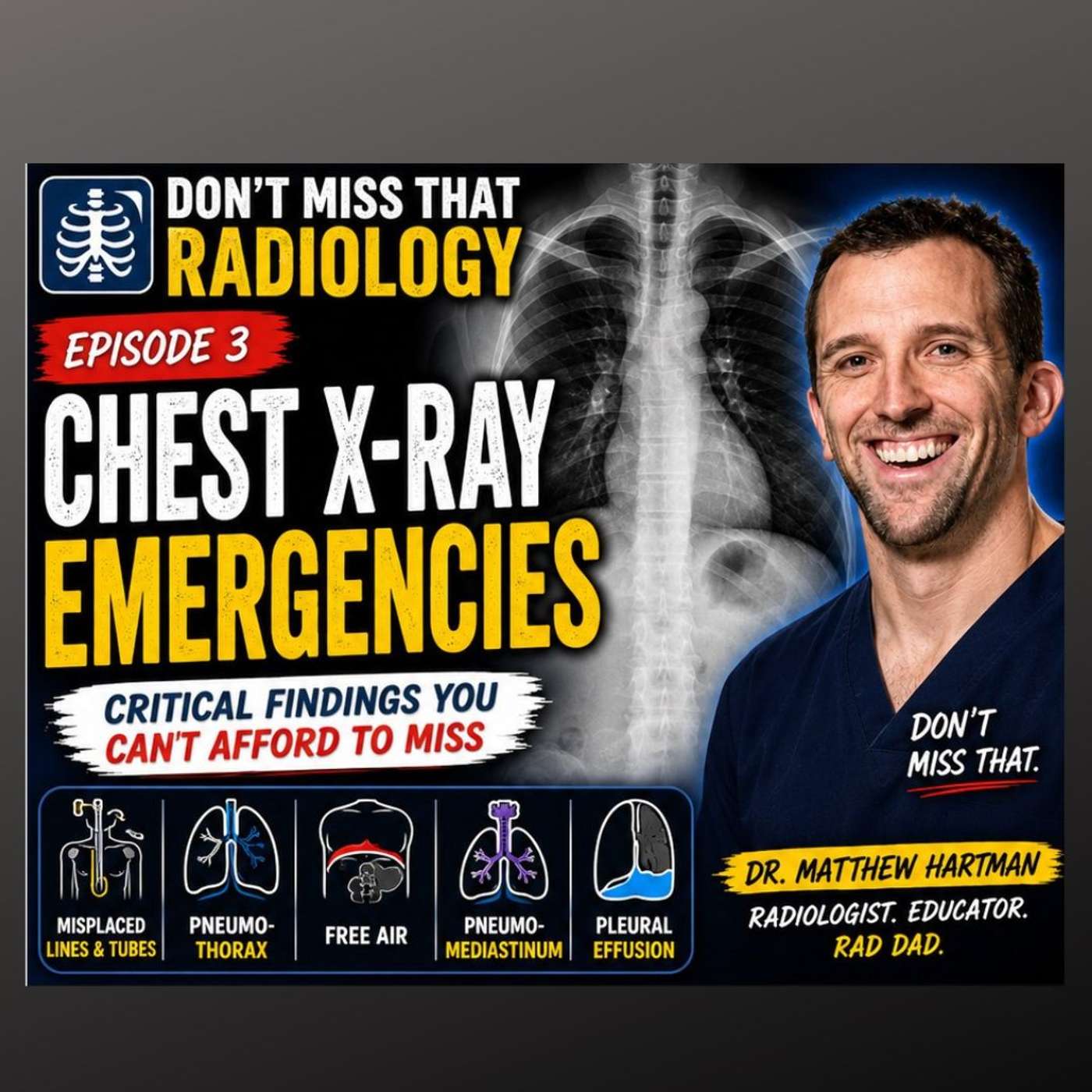
Episode 3: Chest X-Ray Emergencies – Don’t Miss These Critical Findings
Some chest X-rays can’t wait. In this episode of Don’t Miss That Radiology, Dr. Matthew Hartman reviews the life-threatening findings every medical student, resident, and clinician should recognize before the patient leaves the imaging department.
In this episode you’ll learn:
✅ How to identify misplaced lines and tubes✅ Recognize a pneumothorax before it becomes a tension pneumothorax✅ Detect free air under the diaphragm and know when it signals a surgical emergency✅ Recognize pneumomediastinum and understand its key imaging clues✅ Identify pleural effusions an...Don’t miss that—radiology of bowel obstruction and ileus
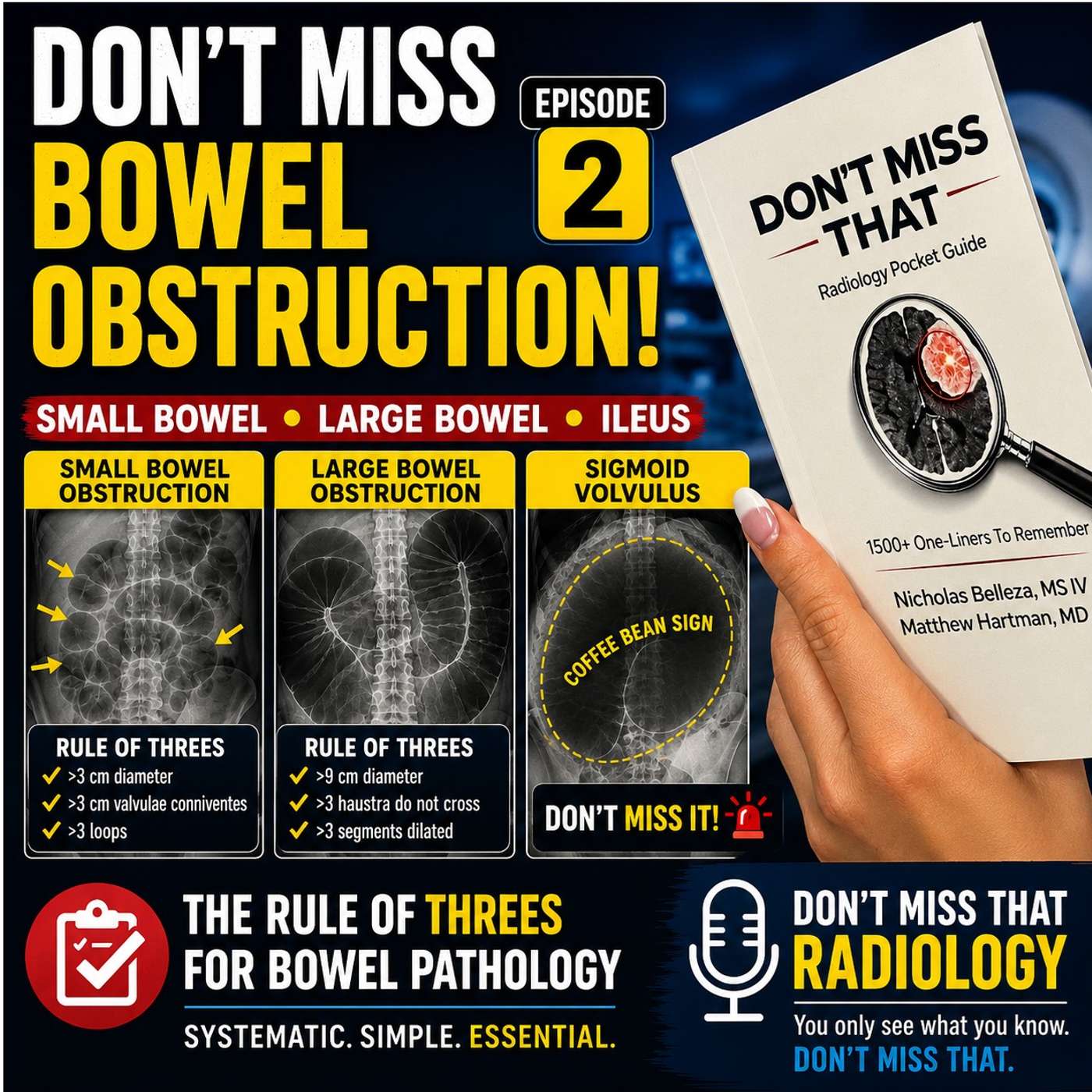
Episode 2: Don’t Miss That Bowel Obstruction! 🚨
Small bowel obstruction or large bowel obstruction? In this episode of Don’t Miss That Radiology, Dr. Matthew Hartman walks you through a practical, step-by-step approach to abdominal radiographs using the Rule of Threes to quickly recognize bowel pathology.
You’ll learn how to:
✅ Differentiate small bowel from large bowel obstruction
✅ Apply the Rule of Threes to bowel dilation
✅ Recognize the classic coffee bean sign of sigmoid volvulus
✅ Identify imaging clues that should never be missed
✅ Build a systematic search pattern for abdominal X-ray...
Law of Burps and Farts: A Simple Way to Find Free Air on Radiology
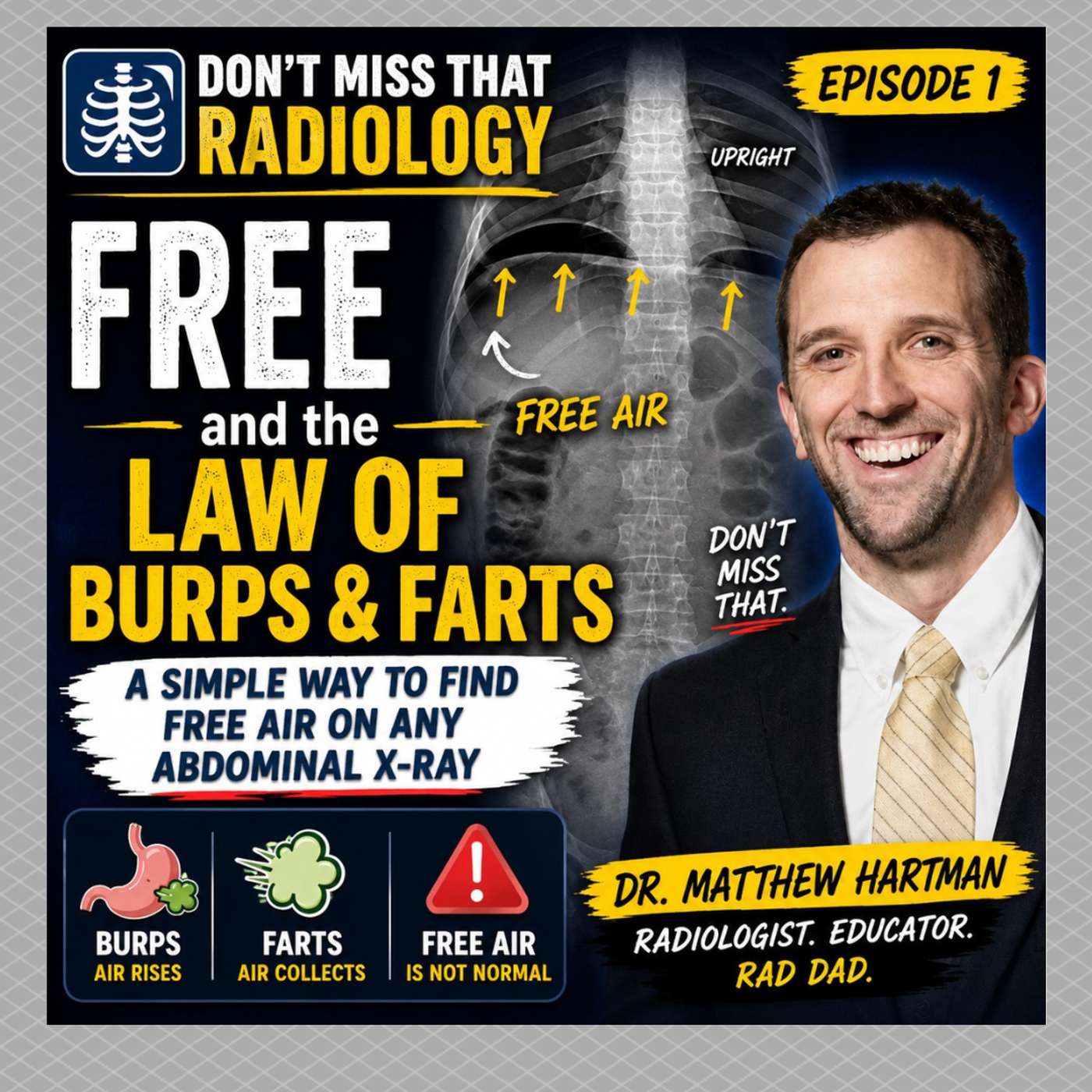
Don’t Miss That Radiology ⭐ | Episode 1: The Law of Burps and Farts (Free Air Detection)
Looking at abdominal X-rays doesn’t have to be intimidating. In this first episode of Don’t Miss That Radiology, Dr. Matthew Hartman introduces a simple, memorable approach to identifying free intraperitoneal air using the “Law of Burps and Farts.”
You’ll learn:
✅ A systematic approach to every abdominal radiograph using Stones, Bones, Mass, and Gas✅ How patient positioning changes the appearance of free air✅ The “Law of Burps and Farts”—an easy way to remember where...