Choshen Mishpat - Daily Recordings
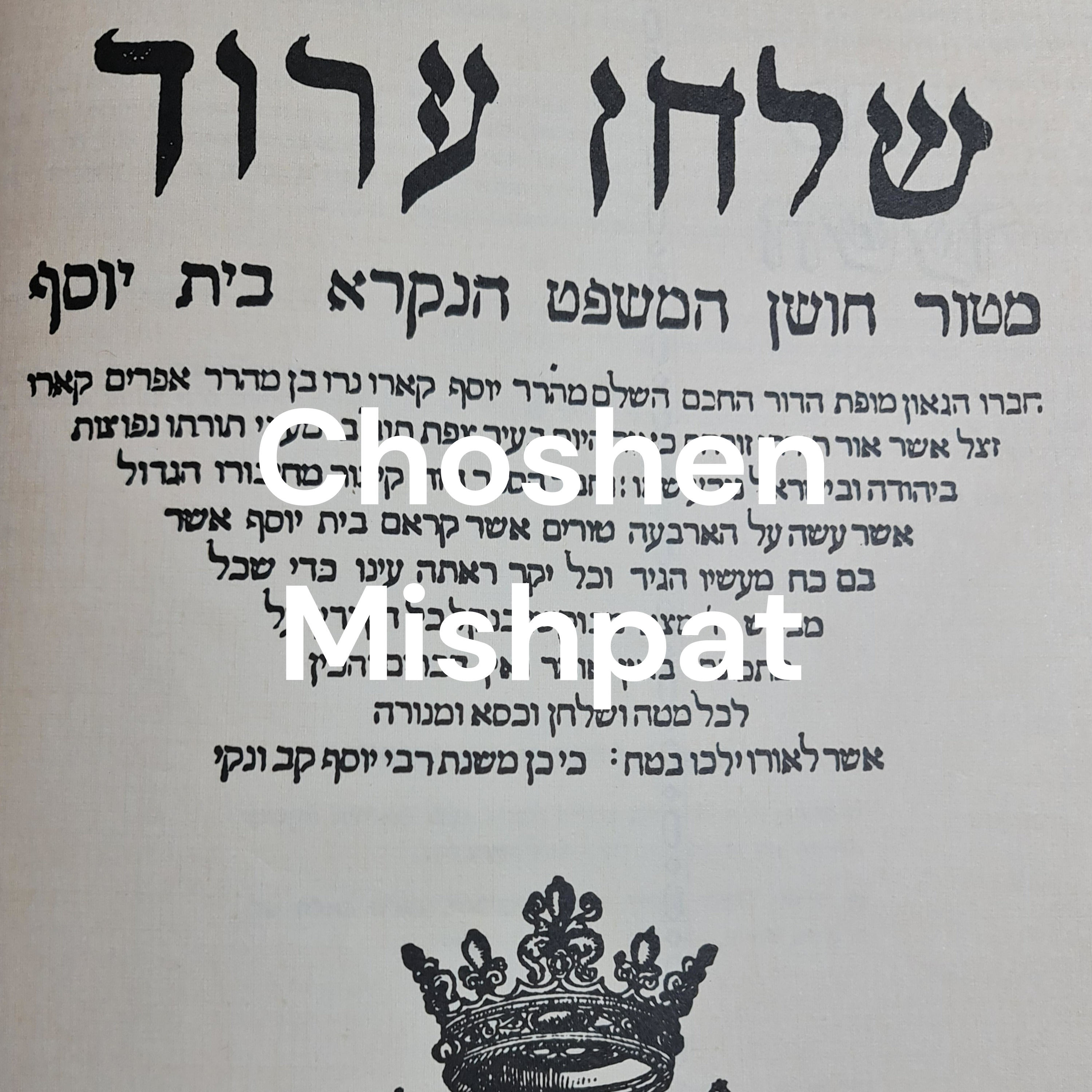
Choshen Mishpat is the section of Shulchan Aruch, the code of Jewish Law, that deals with monetary mattes. In this podcast we will study Choshen Mishpat in order. The first section of Choshen Mishpat deals with the laws of Dayanim, rabbinical judges. The podcast consists of brief recordings, each approximately 4-5 minutes long.
219 Choshen Mishpat siman 13
When One of the Appointed Dayanim Withdraws or Says “I Do Not Know”
Topic in one line: If the parties appointed a specific group of people to decide their case, even by majority, the ruling is invalid if one of the appointed members withdraws or refuses to state an opinion.
218 Choshen Mishpat siman 13
Consulting a Greater Beit Din Before Issuing a Ruling
Topic in one line: When the chosen דיינים — dayanim are unsure how to rule, they may consult a greater בית דין — Beit Din, but the final ruling must still be issued by the dayanim before whom the parties appeared.
217 Choshen Mishpat siman 13
Choosing a Dayan Who Is Also a Witness
Topic in one line: A party may not use זבל"א — Zabla to neutralize the other side’s witness by choosing that witness as a דיין — dayan, because of the rule אין עד נעשה דיין — a witness cannot become a judge.
216 Choshen Mishpat siman 13
Disqualifying a Dayan Through Testimony: The Problem of Noge’a Ba’edut
Topic in one line: A litigant cannot disqualify the דיין — dayan chosen by the other party through his own testimony, even together with one other witness, because he is considered נוגע בעדות — personally interested in the testimony.
215 Choshen Mishpat siman 13
Disqualifying the Dayan Chosen by the Other Party
Topic in one line: In the system of זבל"א — Zabla, the Mishnah discusses whether one party may reject the דיין — dayan chosen by the other party, and the Gemara explains that this depends on whether the dayan is valid or disqualified.
214 Choshen Mishpat siman 13
Shulchan Aruch CM 13: Written Claims and Oral Presentation Before Beit Din
Topic in one line: The Shulchan Aruch rules that a litigant cannot be forced to submit written claims, and even when claims are written, the dayanim should still hear the claims orally from the parties themselves.
213 Choshen Mishpat siman 13
Writing Down the Claims of the Parties
Topic in one line: Although Siman 13 mainly discusses choosing דיינים — dayanim, the Shulchan Aruch also discusses whether the parties’ claims may or must be written down, because this is one interpretation of שטרי בירורין — documents of selection/clarification in the Gemara.
212 Choshen Mishpat siman 13
When Does the Choice of Dayanim Become Binding?
Topic in one line: Once the choice of דיינים — dayanim has been formalized, either through a written document, a קנין — formal act of commitment, or beginning the claims before them, the parties can no longer change the selected dayanim.
211 Choshen Mishpat siman 13
Notes of the Mefarshim on Zabla: Relatives, Private Communication, Payment, and Practical Concerns
Topic in one line: The commentators emphasize that even in זבל"א — Zabla, the selected dayanim remain full judges, and therefore they may not be relatives, may not hear one side privately, and may not be paid by one party to favor him.
210 Choshen Mishpat siman 13
Shulchan Aruch CM 13:1: The Practical Rules of Zabla
Topic in one line: The Shulchan Aruch rules that in זבל"א — Zabla, each party chooses one דיין — dayan, the two dayanim choose a third, and if the process fails, the case returns to a standard Beit Din framework.
209 Choshen Mishpat siman 13
The Rambam on Zabla and the Right of Each Party to Choose a Dayan
Topic in one line: The Rambam rules that even if one party chooses an expert dayan, the other party still has the right to choose his own dayan under the system of זבל"א — Zabla.
208 Choshen Mishpat siman 13
The Role of a Dayan in Zabla: Advocate or Judge?
Topic in one line: Although each party in זבל"א — Zabla chooses one דיין — dayan, that dayan remains a judge and may not act as an advocate for the party who selected him.
207 Choshen Mishpat siman 13
Siman 13: The System of Zabla — Choosing the Dayanim
Topic in one line: This section introduces the system of זבל"א — “זה בורר לו אחד” (Zeh Borer Lo Echad), where each litigant selects one dayan, and a third dayan is then chosen to complete the Beit Din.
206 Choshen Mishpat siman 12
Topic: The final סעיפים of סימן י"ב: waiver of an oath, whether multiple compromisers need unanimity, whether collateral can replace a קניין, and why contemporary Batei Din require authority to rule by פשרה.
205 Choshen Mishpat siman 12
Topic: The final סעיפים of סימן י"ב: when a compromise can be undone because it was a פשרה בטעות — a compromise made in error.
204 Choshen Mishpat siman 12
Topic: A compromise without an initial קניין may still become binding through a written obligation, and commercial custom may also make a compromise binding even without a formal קניין.
203 Choshen Mishpat siman 12
Topic: Two further cases of פשרה: a compromise made under coercion is invalid, while a compromise about building rights can become binding through the parties’ actions even without an initial קניין.
202 Choshen Mishpat siman 12
Topic: Later details in Choshen Mishpat 12: whether a party may avoid a binding compromise by paying a penalty, and when a compromise ruling must be fulfilled if no deadline was specified.
201 Choshen Mishpat siman 12
Topic: The dispute between the Maharshal and the Ketzot HaChoshen over whether forgiving a debt in one’s mind is effective, and the distinction between private thoughts and intentions revealed through action.
200 Choshen Mishpat siman 12
Topic: The Ketzot HaChoshen’s analysis of whether forgiving a debt documented by a שטר requires a קניין, and how this relates to the sale of debt documents.
199 Choshen Mishpat siman 12
Topic: Whether מחילה — forgiving a debt — requires a קניין when the creditor still holds a שטר, and how this relates to the requirement of קניין by פשרה.
198 Choshen Mishpat siman 12
Topic: Further details in the commentators on סעיף ז: whether the compromisers are believed that a קניין was made, when a private compromise needs a קניין, and whether the parties must specify who the compromisers will be.
197 Choshen Mishpat siman 12
Topic: The Rema’s final point in סעיף ז: the קניין for פשרה must be formulated as a real monetary obligation or transfer, and not as a mere קניין דברים.
196 Choshen Mishpat siman 12
Topic: The different ways to make the קניין for פשרה, especially whether a written document can bind the parties before the compromise amount is known.
195 Choshen Mishpat siman 12
Topic: The Shulchan Aruch in Choshen Mishpat 12:7 on the requirement of a קניין for פשרה, the number of judges needed, and the practical form of קניין סודר.
194 Choshen Mishpat siman 12
Topic: The Tur’s ruling that פשרה requires a קניין, the question of why the claimant needs a קניין, and the dispute between the RiD and the Rosh.
193 Choshen Mishpat siman 12
Topic: Why פשרה requires a קניין from both parties, even though ordinary מחילה — forgiving a debt — may not require a קניין.
192 Choshen Mishpat siman 12
Topic: The second issue in Choshen Mishpat 12:7 — why פשרה requires a קנין, a formal act of legal commitment, whereas ordinary judgment does not.
191 Choshen Mishpat siman 12
Topic: The first issue in Choshen Mishpat 12:7 — how many judges are needed to make a binding פשרה?
190 Choshen Mishpat siman 12
Topic: The prohibition against forcing another person into a compromise by delaying payment or withholding property that rightfully belongs to him.
189 Choshen Mishpat siman 12
Topic: The authority of a dayan to rule “like a compromise” when the facts cannot be fully clarified and a strict ruling would be unreliable.
188 Choshen Mishpat siman 12
Topic: The authority of Beit Din to make a compromise involving orphans’ property, even without the orphans’ consent, when it is for their benefit.
187 Choshen Mishpat siman 12
Topic: The Rema’s discussion of whether Beit Din can compel someone to act לפנים משורת הדין — beyond the strict letter of the law.
186 Choshen Mishpat siman 12
Topic: Even after גמר דין — the final ruling — compromise may still be possible in certain ways: through someone outside Beit Din, to avoid an oath, or through a fully voluntary agreement between the parties.
185 Choshen Mishpat siman 12
Topic: The Shulchan Aruch on the mitzvah to offer פשרה — compromise — the need for fairness within compromise, and the dispute over how late compromise may still be offered.
184 Choshen Mishpat siman 12
Topic: The Tur’s formulation of the mitzvah to offer פשרה — compromise — and the discussion of whether the judge should present compromise before strict law or after it.
183 Choshen Mishpat siman 12
Topic: The Rambam’s ruling on פשרה — compromise — especially when it is a mitzvah to offer compromise and when it becomes too late to do so.
182 Choshen Mishpat siman 12
Topic: The dispute between Rashi and Tosafot about the latest point at which Beit Din may offer פשרה — compromise — and the exception of compromise to avoid an oath.
181 Choshen Mishpat siman 12
Topic: The halacha follows Rabbi Yehoshua ben Korcha that there is a mitzvah to offer compromise, but the Gemara limits when compromise may be offered.
180 Choshen Mishpat siman 12
Topic: The beginning of the discussion of פשרה — compromise in Beit Din — and the dispute among the Tannaim whether compromise is permitted, prohibited, or a mitzvah.
