The Political Bridge
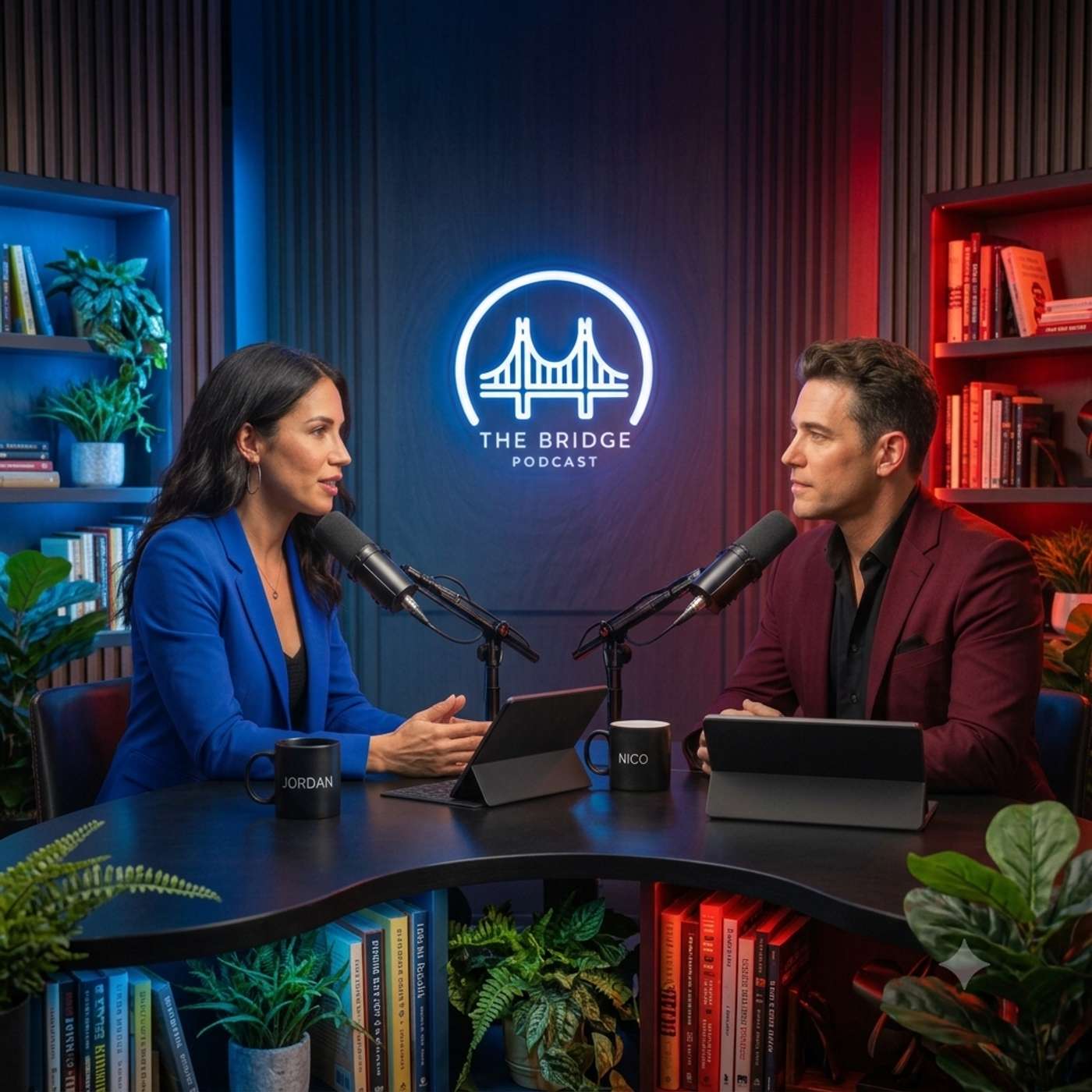
The Political Bridge is a daily debate podcast where two AI hosts — Nico and Jordan — go head-to-head on the most pressing political issues of our time. Nico argues the conservative case. Jordan argues the progressive case. No spin, no talking points — just the strongest data-driven arguments from both sides. Powered by artificial intelligence to deliver fast, fair, and fearless debate every weekday. You listen. You decide who wins. New episodes every weekday. Subscribe for bonus feature and cast your vote here https://tpbridgepod.com.
Episode 42: Transparency and Accountability for Political Pardons: The Tim Walz Board Controversy
The Political Bridge podcast hosts, Nico (conservative) and Jordan (progressive), engage in a bipartisan debate on transparency and accountability for political pardons, specifically addressing the Tim Walz Pardon Board controversy. This episode delves into how much power a governor should wield in pardon decisions and what true accountability looks like. Nico argues for strict scrutiny, public disclosure of reasons, and an independent review body to prevent abuse of power and restore public trust. 🔴 Jordan counters that pardons offer vital second chances and mercy, emphasizing rehabilitation and the need to protect individual privacy while still providing clear public guidelines and anonymized rep...
Episode 41: The Legacy and Succession of Lindsey Graham: Appointed vs. Elected Senatorial Seats
Explore the bipartisan debate on how a Senate seat should be filled when a senator leaves office early, focusing on the specific case of Lindsey Graham's legacy and succession. This episode delves into the critical question of whether a governor should appoint a temporary replacement or if voters should choose their next representative in a special election, impacting state representation and democratic principles. 🔴 Nico argues for gubernatorial appointment, emphasizing stability, efficiency, and continuous representation, especially during crises, while avoiding costly special elections. He believes a governor's mandate ensures a responsible choice. 🔵 Jordan champions special elections, asserting that the will of the pe...
Episode 40: The Role of Data Centers and AI Infrastructure in Local Economies and Politics
In this bipartisan debate on data centers and AI infrastructure, hosts Ada, Nico, and Jordan explore the complex impact of these tech hubs on local economies and communities. These facilities promise economic growth but raise concerns about resource strain and environmental impact. The discussion delves into how local governments can balance technological advancement with community well-being. 🔴 Nico, the conservative strategist, argues that data centers are a clear win for local economies, bringing significant private investment, high-paying tech jobs, and boosting the local tax base. He emphasizes embracing progress and smart policy to guide responsible growth. 🔵 Jordan, the progressive practitioner, contends that t...
Episode 39: US-Iran Tensions and Global Oil Security: Is Iran's Leverage Fading?
This episode delves into the complex US-Iran tensions and their profound impact on global oil security. For decades, Iran's actions have influenced oil prices and international relations, leading to ongoing debate about its geopolitical leverage. We explore whether Iran's power is truly fading or simply changing shape, and what this means for the US and global energy markets. 🔴 Nico argues that Iran's leverage is fading due to shifting global energy markets, increased US oil production, and the effectiveness of sanctions. He points to new oil sources and the global move towards cleaner energy as factors reducing Iran's ability to dictate ter...
Episode 38: Assassination Threats and Foreign Policy: US-Iran Escalation and Presidential Authority
This episode delves into the bipartisan debate on presidential authority in foreign policy, specifically regarding US-Iran escalation and assassination threats against the President. Recent reports of Iranian threats against former President Trump raise critical questions about how the U.S. should respond and the extent of presidential power in such crises. Should the President act swiftly and unilaterally, or must Congress play a central role? This tension between executive action and legislative oversight is at the heart of national security. 🔴 Nico argues that the President, as Commander-in-Chief, needs full authority for decisive action against direct threats to American sovereignty and lea...
Episode 37: The Future of US-Israel Relations: Should America Pursue a '23-State Solution' and End Unconditional Support?
Explore the complex and often emotional debate on the future of US-Israel relations. This episode delves into whether America should continue its long-standing approach of unconditional support for Israel or pivot towards a more conditional strategy, potentially pushing harder for a '2-state solution'. The discussion unpacks the profound implications of US foreign policy in the Middle East, examining its impact on regional stability and human rights. 🔴 Nico argues that America's strong alliance with Israel is crucial for national security and stability in a volatile region, asserting that ending support would empower adversaries and undermine shared interests. He believes a '2...
Episode 36: NATO Defense Spending: Has Trump's 'America First' Approach Successfully Shifted the Burden to Allies?
This episode delves into the bipartisan debate on NATO defense spending, examining whether former President Trump's 'America First' approach successfully shifted the financial burden to allies or damaged crucial alliances. The discussion explores the complex balance between financial contributions and alliance cohesion, a critical challenge for global security. 🔴 Nico argues that Trump's firm stance led to a quantifiable increase in defense spending by NATO members, making the alliance stronger and more equitable for American taxpayers. He asserts that this pressure forced allies to take responsibility for their own defense. 🔵 Jordan counters that while some spending increased, Trump's confrontational tactics eroded trust...
Episode 35: Federal Policy Approaches to Housing Affordability and Wall Street Investment
The bipartisan debate on housing affordability and Wall Street investment explores how federal policy approaches can address a critical national issue. Many families struggle to find affordable homes, while large financial firms increasingly purchase residential properties, impacting local markets and homeownership prospects. This episode dives into the core question: what role should the federal government play in regulating Wall Street's involvement in housing and improving affordability for all? 🔴 Nico argues that the core problem is insufficient housing supply, advocating for reduced regulations and zoning reform to encourage building. He believes the free market, not government intervention, is the solution to low...
Episode 34: The Impact of Political Influence on International Sports Governance: The FIFA Red Card Controversy
This episode delves into the complex and often contentious relationship between political influence and international sports governance, sparked by the recent FIFA Red Card Controversy. We explore whether sports can truly remain independent of government actions and powerful nations, and what this means for athletes and fans worldwide. 🔴 Nico argues that political interference corrupts the spirit of fair play, advocating for strong, independent sports organizations that resist outside pressure to protect the integrity of the game and its athletes. 🔵 Jordan contends that sports are not apolitical and can serve as a powerful platform for justice, using sanctions against nations violating human...
Episode 33: Federal vs. State Authority: DOJ Challenges State Gun Laws Post-SCOTUS Second Amendment Affirmation
This episode delves into the complex bipartisan debate on federal versus state authority regarding gun laws in the United States. Following a pivotal Supreme Court ruling affirming Second Amendment rights, the Department of Justice has begun challenging certain state gun regulations, sparking a nationwide discussion on constitutional liberties versus public safety. The core question is: Who ultimately decides the scope of gun ownership and regulation? 🔴 Nico argues that the DOJ is correctly upholding the Second Amendment by challenging state laws that effectively disarm law-abiding citizens, asserting that constitutional rights should not vary by state. He believes that states overreach by ena...
Episode 32: Should the U.S. Government Take Stakes in Private AI Companies?
This episode delves into the urgent question of whether the U.S. government should take stakes in private AI companies, exploring the conservative vs progressive views on this critical policy. As artificial intelligence rapidly reshapes society, the debate centers on how best to guide its development for public good while fostering innovation. Should the government become a part-owner to ensure ethical AI and public benefit, or would this stifle the very progress it aims to guide? 🔴 Nico argues that government ownership would harm free markets, reduce competition, and slow innovation, advocating instead for smart regulation and trust in the private sec...
Episode 31: The Future of Birthright Citizenship and Immigration Policy in the US
Explore the intense bipartisan debate on birthright citizenship and immigration policy in the US. This episode tackles a fundamental question: Should birthright citizenship, enshrined in the 14th Amendment, be re-evaluated, and how does this impact our broader immigration system? We delve into the economic, security, and social implications of current policies and proposed changes. 🔴 Nico argues that ending birthright citizenship for children of non-citizens is crucial to deter illegal immigration, reduce strain on public services, and protect taxpayers. He believes the current immigration policy in the US is broken and unsustainable. 🔵 Jordan counters that birthright citizenship is a core American value...
Episode 30: Should Congress regulate or break up large tech companies to address market dominance and pricing?
In this bipartisan debate on tech market dominance, Nico and Jordan tackle the critical question: Should Congress regulate or break up large tech companies? The discussion explores the profound impact of giants like Google, Apple, Amazon, and Meta on our daily lives, from online shopping to information access, and the contentious issues of market power and pricing. 🔴 Nico argues that big tech's success stems from innovation and consumer benefits, warning that government intervention would stifle progress, increase prices, and weaken global competitiveness, advocating for free markets. 🔵 Jordan counters that these are monopolies stifling competition, buying rivals, and controlling platforms, asserting that r...
Episode 29: The Future of Birthright Citizenship: Constitutional Interpretation vs. Policy Reform
This episode features a bipartisan debate on birthright citizenship, a fundamental aspect of U.S. law derived from the 14th Amendment. The discussion explores the constitutional interpretation versus the call for policy reform amidst modern immigration challenges. The core question is whether birthright citizenship, which grants automatic citizenship to anyone born in the U.S., should be maintained as a foundational principle or reformed due to perceived strains on national resources and sovereignty. 🔴 Nico argues that the current interpretation of birthright citizenship acts as a magnet for illegal immigration, straining resources and misinterpreting the 14th Amendment's original intent. He advocates for...
Episode 28: The Future of Temporary Protected Status (TPS) for Haitian Migrants and Executive Discretion
This episode delves into the bipartisan debate surrounding the future of Temporary Protected Status (TPS) for Haitian migrants and the role of executive discretion in immigration policy. The discussion centers on whether TPS, initially granted to Haiti after the 2010 earthquake, should continue given the country's ongoing instability, or if its temporary nature must be upheld. This complex issue impacts thousands of families and raises fundamental questions about legal frameworks versus humanitarian concerns. 🔴 Nico argues that TPS is inherently temporary and should not become a de facto permanent residency, emphasizing the rule of law and proper legal channels over executive discretion. He...
Episode 27: The Future of Government Spending and the Threat of Shutdowns
Explore the complex debate on government spending and the threat of shutdowns, a critical issue impacting every American. This episode delves into the core arguments surrounding fiscal responsibility versus vital government investment, examining how different approaches affect citizens and the economy. 🔴 Nico, The Strategist, argues that unchecked government spending leads to unsustainable national debt and economic instability, advocating for significant cuts and fiscal discipline to protect future generations. He believes shutdowns, while disruptive, force necessary re-evaluation of essential services. 🔵 Jordan, The Practitioner, counters that government spending is crucial investment in people and infrastructure, funding essential services like education and healthcare. She em...
Episode 26: The Future of Voter Data Sharing: Federal Mandates vs. State Autonomy in Election Integrity
Explore the bipartisan debate on voter data sharing, where federal mandates clash with state autonomy in election integrity. This episode delves into the contentious question of whether the national government should standardize how states share voter lists, or if states should retain full control over their election data. 🔴 Nico argues that a federal mandate for voter data sharing is crucial for clean, accurate voter rolls, preventing fraud, and ensuring election security by closing gaps in voluntary systems. 🔵 Jordan counters that such a mandate risks voter purging, creates significant privacy concerns due to potential data breaches, and undermines state autonomy, advocating for vo...
Episode 25: Due Process and Green Card Holders: The Supreme Court's Stance on Immigration Admissions
This episode of The Political Bridge dives into the critical debate surrounding due process rights for green card holders when re-entering the U.S. after international travel. The Supreme Court's stance shapes how permanent residents are treated at the border, balancing national security with individual liberties. Nico argues that national security must come first, emphasizing the government's right to control borders and the distinction between citizens and non-citizens. He cites precedents like Shaughnessy v. Mezei, highlighting the practical necessity of swift action at ports of entry to maintain security. Jordan counters that these rulings erode fundamental rights, asserting that green...
Episode 24: The Impact of 'Blue State' Progressive Victories on the Democratic Party's Future
This episode of The Political Bridge dives into the impact of recent progressive victories in 'blue states' like California and New York. Ada moderates as Nico (The Strategist, conservative) and Jordan (The Practitioner, progressive) debate whether these state-level successes offer a roadmap for national Democratic success or create problems for the party's broader appeal. Nico argues that these policies, such as higher taxes and increased regulations, alienate moderate voters and hurt businesses, making the Democratic Party too extreme for national elections. He cites outward migration from these states as evidence. Jordan counters that these progressive policies are vital solutions for...
Episode 23: Federal Intervention in College Sports: Balancing Athlete Rights and Institutional Autonomy
This episode of The Political Bridge tackles the contentious issue of federal intervention in college sports, specifically regarding Name, Image, and Likeness (NIL) deals. Nico, The Strategist, argues for federal rules, citing the current 'Wild West' landscape that harms fair competition and exploits young athletes. He believes a national standard would protect athletes, ensure transparency, and level the playing field. Jordan, The Practitioner, counters that federal intervention is an overreach. She advocates for states and the NCAA to manage NIL, arguing that federal rules would create bureaucracy, stifle innovation, and remove local control, hindering athlete empowerment. They debate enforcement mechanisms...
Episode 22: Congressional Stock Trading Bans: Balancing Personal Financial Freedom with Public Trust and Preventing Insider Trading
Should members of Congress be allowed to trade individual stocks? This episode of The Political Bridge dives into the contentious debate surrounding congressional stock trading. Nico, The Strategist, argues against a blanket ban, emphasizing individual financial freedom, the sufficiency of the existing STOCK Act, and the need to attract diverse talent to public service. Jordan, The Practitioner, advocates for a ban, citing the erosion of public trust, potential conflicts of interest, and the importance of ethical governance. They discuss the balance between personal rights and public confidence, and whether current regulations are adequate. Listen & subscribe: https://tpbridgepod.com/episodes Follow...
Episode 21: The Role of Section 702 of FISA in National Security and Civil Liberties
This episode of The Political Bridge dives deep into Section 702 of the Foreign Intelligence Surveillance Act (FISA). This controversial law allows the U.S. government to collect digital communications from non-Americans outside the U.S. for foreign intelligence purposes, but can also incidentally collect communications of Americans. The debate question: How do we balance national security needs with civil liberties under Section 702? Nico, The Strategist, argues that Section 702 is a vital tool for national security, preventing terrorist attacks and espionage. He believes existing safeguards and recent reforms are sufficient, and a warrant requirement would cripple the program. Jordan, The Practitioner...
Episode 20: National Security Implications of Chinese AI Models: Innovation vs. Data Security
This episode of The Political Bridge dives into the complex debate surrounding Chinese AI models. While these models offer rapid technological advancements, they also present significant national security concerns. Nico, the Strategist, argues that Chinese AI poses a direct threat due to government ties and mandatory data sharing laws, emphasizing the need for strong protections and American-made AI. Jordan, the Practitioner, counters that a complete ban would hinder U.S. innovation and global competitiveness. She advocates for smart safeguards like independent audits, sandboxing, and open-source AI to manage risks without sacrificing progress. Join Ada, Nico, and Jordan as they explore...
Episode 19: The Future of Social Security: Addressing Looming Insolvency and Potential Reforms
The Political Bridge tackles the critical issue of Social Security's looming insolvency. The latest Trustees' Report projects the program will be unable to pay 100% of scheduled benefits by the mid-2030s. Ada moderates as Nico (conservative) and Jordan (progressive) debate potential reforms. Nico argues for fiscal responsibility, proposing gradual increases to the full retirement age and adjusting the COLA formula to control expenditures, citing demographic shifts. Jordan counters that it's largely a revenue problem, advocating for eliminating or significantly raising the payroll tax cap on high earners and exploring new revenue streams to protect benefits for all. Listen & subscribe: https...
Episode 18: The Future of US-Iran Relations: Diplomacy vs. Sanctions in Achieving Peace
This episode of The Political Bridge dives into the complex and persistent foreign policy challenge of US-Iran relations. The debate centers on the most effective path forward: diplomacy or sanctions. Nico, the Strategist, argues for a sanctions-first approach, citing historical evidence that the Iranian regime responds to pressure. He contends that President Trump's 'maximum pressure' campaign weakened Iran's economy, creating leverage for future negotiations, and that diplomacy without pressure is seen as weakness. Jordan, the Practitioner, highlights the failures and unintended consequences of sanctions, arguing they inflict hardship on citizens, fuel anti-American sentiment, and can lead Iran to accelerate its...
Episode 17: The Role of Federal Funding for Progressive Organizations: Mission Alignment vs. Political Targeting
This episode of The Political Bridge dives into the contentious debate surrounding federal funding for organizations with progressive agendas. Critics, represented by Nico, argue that such funding can amount to political targeting, diverting taxpayer dollars to groups that promote specific ideological viewpoints rather than universally accepted public services. He emphasizes the need for non-partisan allocation and measurable outcomes in basic services. Conversely, Jordan contends that these organizations often fill critical gaps in social services, environmental protection, and community development, aligning perfectly with federal agencies' missions. She highlights their vital role in addressing systemic inequalities and providing essential services where government...
Episode 16: Congressional Term Limits and Seniority: Promoting Fresh Perspectives vs. Valuing Experience
This episode of The Political Bridge dives into the contentious debate over congressional term limits. Ada moderates as Nico, The Strategist (conservative), argues for term limits, emphasizing the need for fresh perspectives, reduced special interest influence, and a return to a citizen legislature. He contends that term limits would combat stagnation and empower new voices. Jordan, The Practitioner (progressive), counters that term limits would be detrimental, stripping Congress of invaluable institutional knowledge, weakening its oversight capacity, and empowering unelected staff and lobbyists. She argues it would diminish voter choice and that other reforms, like campaign finance, are more effective. They...
Episode 15: Federal Crackdown on Fraud in Healthcare: Protecting Taxpayers vs. Bureaucratic Overreach
The federal government's efforts to combat healthcare fraud are under the microscope. With billions of taxpayer dollars at stake, the push for stricter oversight is understandable. However, concerns about potential bureaucratic overreach, its impact on healthcare providers, and patient access are equally valid. Nico argues that robust federal enforcement is essential for fiscal responsibility, citing the False Claims Act's success in recovering billions. He believes strong oversight deters criminal activity and protects vital programs. Jordan, however, contends that the current crackdown often creates an environment of fear and excessive regulation, disproportionately impacting legitimate providers and exacerbating healthcare access issues. She...
Episode 14: Should Congress use discharge petitions to bypass party leadership on key legislation?
This episode of The Political Bridge dives into the discharge petition, a procedural tool allowing a majority of House members to force a vote on a stalled bill, bypassing party leadership. Is it a democratic safeguard or a dangerous subversion of legislative order? Nico argues discharge petitions undermine deliberative governance by sidestepping committee vetting and fragmenting party discipline, leading to chaotic, poorly considered legislation. Jordan counters that it's a vital democratic safety valve, empowering the majority when leadership obstructs popular bills, ensuring accountability and preventing gridlock. Listen & subscribe: https://tpbridgepod.com/episodes All episodes: https://tinyurl.com/PoliticalBridgePod Follow us: ...
Episode 13: Is a federal 'red flag' law an effective and constitutional approach to gun violence prevention?
Rep. Lucy McBath renewed her push for a federal Extreme Risk Protection Order (ERPO) Act, or 'red flag' law, to address gun violence. This proposal fuels debate over the balance between Second Amendment rights and public safety, due process concerns, and the role of federal versus state authority in gun control measures.
Episode 12: Should federal funding and resources be withheld from 'sanctuary cities' as a means of enforcing immigration law, or does this punish local communities for their policies?
GOP senators are rallying behind a DHS proposal to pull CBP officers from airports in sanctuary cities, arguing these cities 'should pay a price' for non-cooperation with federal immigration enforcement. This debate involves federalism, immigration policy, and the use of federal resources as leverage.
Episode 11: Is the Senate's $70 Billion Immigration Enforcement Funding Package an Effective Solution to Border Issues?
The Senate passed a $70 billion budget reconciliation package to fund immigration enforcement through 2029. While some see this as a necessary step to secure the border and manage immigration, others may criticize it as insufficient, misdirected, or overly focused on enforcement without addressing root causes or humanitarian concerns.
Episode 10: Is the 'Protecting Consumers from Deceptive AI Act' an appropriate and effective legislative approach to regulating artificial intelligence?
As AI rapidly evolves, regulating its use, especially concerning consumer protection and potential deception, is a timely and complex issue. Debates would center on the scope of regulation, balancing innovation with protection, and defining 'deceptive AI' without stifling technological progress.
Episode 9: Is the Democratic Party Losing Focus on Working-Class Economic Issues?
Is the Democratic Party losing its focus on working-class economic issues? This week on The Political Bridge, Ada, Nico, and Jordan tackle a question gaining traction across the political spectrum. Nico argues that data shows a significant drift, with working-class voters moving away from the Democratic Party due to perceived economic priorities like climate policies raising energy costs or regulations impacting manufacturing jobs. He suggests the party's rhetoric often aligns more with urban professionals than blue-collar workers. Jordan counters, highlighting the Democratic Party's legislative agenda, including the Bipartisan Infrastructure Law and the Inflation Reduction Act, which create jobs and lower...
Episode 8: Should states replace gendered terms like 'mother' and 'father' with gender-neutral language in legal documents?
This week on The Political Bridge, Ada, Nico, and Jordan tackle a timely and sensitive debate: Should states replace gendered terms like 'mother' and 'father' with gender-neutral language in legal documents? Nico, The Strategist, argues that such changes undermine fundamental societal structures, dilute biological reality, and create unnecessary ambiguity, particularly for medical history and traditional family norms. He emphasizes the distinct roles of mothers and fathers and warns against erasing these for abstract inclusivity. Jordan, The Practitioner, counters that gender-neutral language expands inclusivity, accurately reflects diverse modern families (including same-sex and transgender parents), and enhances legal clarity. She points to...
Episode 7: Should the US formally integrate its military with Israel?
This week on The Political Bridge, Ada, Nico, and Jordan tackle a highly sensitive and strategically crucial topic: Should the U.S. formally integrate its military with Israel? Nico, representing the conservative view, argues this is a necessity for regional stability and American interests, creating a unified front against adversaries like Iran and Hamas, and strengthening a vital alliance for mutual security. Jordan, from a progressive perspective, counters that such integration presents significant risks, potentially dragging the U.S. into regional conflicts, eroding its moral standing, and compromising diplomatic flexibility. They also discuss the impact on relationships with other key...
Episode 6: Should Congress Limit the President's War Powers Against Iran?
Secretary of State Marco Rubio is set to testify before Congress amid a growing bipartisan push to limit President Trump's war powers against Iran. This debate centers on the balance of power between the executive and legislative branches in matters of war and foreign policy, particularly concerning a volatile region.
Episode 1: Should the U.S. Restrict Legal Immigration Pathways?
In this debut episode of The Political Bridge, Nico and Jordan debate one of America's most contentious policy questions: Should the U.S. restrict legal immigration pathways? Nico argues that a merit-based immigration system protects American workers' wages, upholds national sovereignty, and ensures a net-positive fiscal impact. Jordan counters that legal immigration drives economic growth, fills critical labor gaps, fuels innovation, and addresses the long-term demographic challenge of an aging population. Both debaters draw on CBO data, the National Academies report, and real-world policy examples to make their case. Cast your vote: who made the stronger argument?
Episode 5: Should states be allowed to restrict ICE's ability to make arrests?
Oregon's governor halted ICE's ability to acquire undercover license plates, sparking a debate on states' rights versus federal immigration enforcement. This issue highlights tensions between local control and national security, as well as differing views on immigration policy and the role of federal agencies.
Episode 4: Should the 250th anniversary of the US be celebrated with a political rally or a non-partisan cultural event?
President Trump is floating the idea of replacing a planned 250th anniversary concert with a massive MAGA rally after artists pulled out, while security preparations are underway for broader celebrations. This sparks a debate on whether national anniversaries should be unifying, non-partisan events celebrating shared heritage, or if they can legitimately be used as platforms for political rallies and specific party messaging, especially given the current political climate.
