TED-Ed

TED-Ed’s mission is to create lessons worth sharing. Feed and expand your curiosity with our award-winning animated shorts - published on YouTube and available with supplemental learning materials on ed.ted.com. Want to suggest an idea for a TED-Ed animation, nominate an educator or animator? Visit our website at: http://ed.ted.com/get_involved. Consider backing us on Patreon. By doing so, you directly support our nonprofit mission to create free, high-quality educational content: https://www.patreon.com/teded For more information on using TED-Ed content for commercial purposes (e.g. employee learning, in a film, or in...
The myth of Ireland's two greatest warriors - Iseult Gillespie

Dive into the Irish myth of Táin Bò Cuailnge, where Queen Meadhbh of Connaught seeks to capture the fabled brown bull of Ulster.
--
Cú Chulainn, hero of Ulster, stood at the ford at Cooley, ready to face an entire army single handedly— all for the sake of a single bull. The army in question belonged to Queen Meadhbh of Connaught. Enraged at her husband’s possession of a white bull of awesome strength, she set out to capture the fabled brown bull of Ulster at any cost. Iseult Gillespie details the Irish myth Táin Bò...
The history of the world according to corn - Chris A. Kniesly

Trace the 9,000 year old history of the domestication of corn, or maize, and its effects on global agriculture.
--
Corn currently accounts for more than one tenth of our global crop production. And over 99% of cultivated corn is the exact same type: Yellow Dent #2. This means that humans grow more Yellow Dent #2 than any other plant on the planet. So how did this single variety of this single plant become the biggest success story in agricultural history? Chris Kniesly investigates the rise of this wonder-crop.
Lesson by Chris A. Kniesly, directed by Artrake...
Teachers need real feedback - Bill Gates

Until recently, many teachers only got one word of feedback a year: "satisfactory." And with no feedback, no coaching, there's just no way to improve. Bill Gates suggests that even great teachers can get better with smart feedback -- and lays out a program from his foundation to bring it to every classroom.
Talk by Bill Gates.
Learn more about your ad choices. Visit megaphone.fm/adchoices
Ugly History: The Khmer Rouge's deadly campaign - Timothy Williams

Dig into the era of the Khmer Rouge in Cambodia, which perpetuated a genocide that killed a quarter of the country’s population.
--
From 1975 to 1979, the Communist Party of Kampuchea ruled Cambodia with an iron fist, perpetrating a genocide that killed one fourth of the country’s population. Roughly one million people were executed as suspected political enemies or due to their ethnicities, and another million died of starvation, disease, or overwork. How did this happen? Timothy Williams details the rise of the Khmer Rouge.
Lesson by Timothy Williams, directed by Héloïse...
How to spot a pyramid scheme - Stacie Bosley

Learn the techniques and tricks that pyramid schemes use to recruit new members and how to avoid being fooled yourself.
--
In 2004, a nutrition company offered a life-changing opportunity to earn a full-time income for part-time work. There were only two steps to get started: purchase a $500 kit and recruit two more members. By 2013, the company was making $200 million. There was just one problem -- the vast majority of members earned less than they paid in. Stacie Bosley explains what a pyramid scheme is and how to spot one.
Lesson by Stacie Bosley, d...
grammar rules you can break today - Arika Okrent

Take a look at 3 English language grammar rules to find out where they come from and if you actually need to follow them.
--
Grammatical rules have caused heated debate in various regions and languages for centuries. But while we know people take grammar seriously, what’s less clear is, why? Where do these seemingly random rules come from, and which, if any, actually matter? Arika Okrent takes a closer look at three famous examples from the English language that have been the source of numerous grammatical arguments.
Lesson by Arika Okrent, directed by...
Unveiling TED-Ed: Lessons Worth Sharing

TED-Ed's mission is to capture and amplify the voices of great educators around the world. We do this by pairing extraordinary educators with talented animators to produce a new library of curiosity-igniting videos. You can nominate a teacher, nominate an animator or suggest a lesson here: http://education.ted.com
Subscribe to http://www.youtube.com/user/TEDEducation
Learn more about your ad choices. Visit megaphone.fm/adchoices
Evolution in an Urban Center

Using newts, coyotes and mice, Jason Munshi-South shows how animals develop genetic differences in evolution, even within an urban city.
"Evolution in a Big City" was animated by the TED-Ed Animation Team (Jeremiah Dickey, Biljana Labovic, Celeste Lai, Kari Mulholland and Franz Palomares)
View the full lesson: http://ed.ted.com/lessons/evolution-in-a-big-city
Learn more about your ad choices. Visit megaphone.fm/adchoices
How many universes could there be? - Chris Anderson
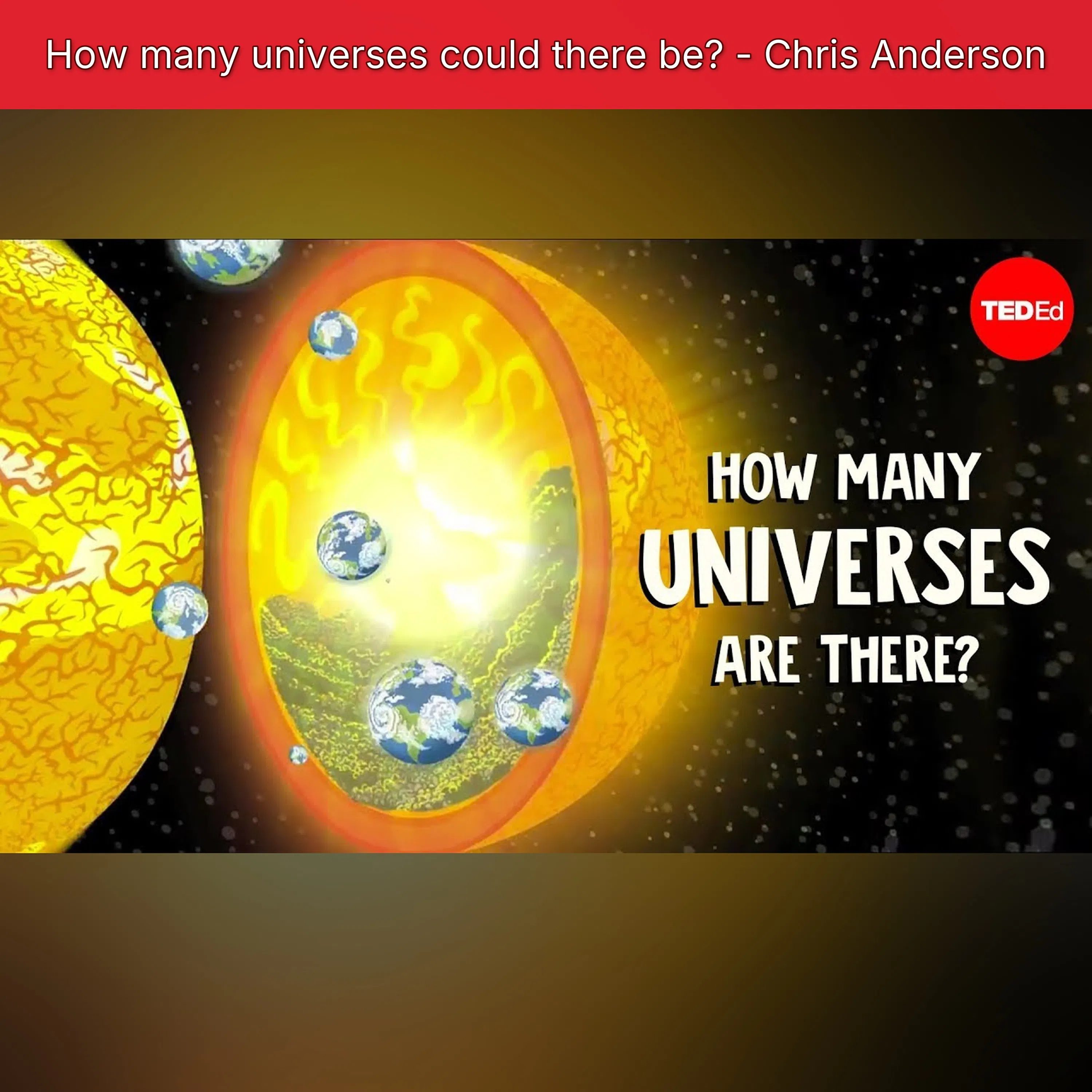
View the full lesson: http://ed.ted.com/lessons/how-many-un...
The fact that no one knows the answer to this question is what makes it exciting. The story of physics has been one of an ever-expanding understanding of the sheer scale of reality, to the point where physicists are now postulating that there may be far more universes than just our own. Chris Anderson explores the thrilling implications of this idea.
Lesson by Chris Anderson, animation by Andrew Park.
Learn more about your ad choices. Visit megaphone.fm/adchoices
Technology's epic story - Kevin Kelly

In this wide-ranging, thought-provoking talk, Kevin Kelly muses on what technology means in our lives -- from its impact at the personal level to its place in the cosmos. (Filmed at TEDxAmsterdam.)
Talk by Kevin Kelly.
Learn more about your ad choices. Visit megaphone.fm/adchoices
Deep ocean secrets and wonders - David Gallo

In the deepest, darkest parts of the oceans are ecosystems with more diversity than a tropical rainforest. Taking us on a voyage into the ocean -- from the deepest trenches to the remains of the Titanic -- marine biologist David Gallo explores the wonder and beauty of marine life.
Learn more about your ad choices. Visit megaphone.fm/adchoices
Mysteries No One Knows the Answers to

In the first of a new TED-Ed series designed to catalyze curiosity, TED Curator Chris Anderson shares his boyhood obsession with quirky questions that seem to have no answers.
Learn more about your ad choices. Visit megaphone.fm/adchoices
How straightforward ideas lead to scientific discoveries

Adam Savage walks through two spectacular examples of profound scientific discoveries that came from simple, creative methods anyone could have followed -- Eratosthenes' calculation of the Earth's circumference around 200 BC and Hippolyte Fizeau's measurement of the speed of light in 1849.
Learn more about your ad choices. Visit megaphone.fm/adchoices
The fundamentals of space-time: Part 3 - Andrew Pontzen and Tom Whyntie

View full lesson: http://ed.ted.com/lessons/the-fundamentals-of-space-time-part-3-andrew-pontzen-and-tom-whyntie
View part 1: http://ed.ted.com/lessons/the-fundamentals-of-space-time-part-1-andrew-pontzen-and-tom-whyntie
View part 2: http://ed.ted.com/lessons/the-fundamentals-of-space-time-part-2-andrew-pontzen-and-tom-whyntie
In the first two lessons of this series on space-time, we've dealt with objects moving at constant speeds, with straight world lines, in space-time. But what happens when you throw gravity into the mix? In this third and final lesson, CERN scientists Andrew Pontzen and Tom Whyntie explore what gravity means for space-time -- or rather, what space-time means for gravity.
Lesson by Andrew...
Cloudy with a chance of joy - Gavin Pretor-Pinney

You don't need to plan an exotic trip to find creative inspiration. Just look up, says Gavin Pretor-Pinney, founder of the Cloud Appreciation Society. As he shares charming photos of nature's finest aerial architecture, Pretor-Pinney calls for us all to take a step off the digital treadmill, lie back and admire the beauty in the sky above.
Talk by Gavin Pretor-Pinney.
Learn more about your ad choices. Visit megaphone.fm/adchoices
How do snakes consume animals so much bigger than they are? - Niko Zlotnik

Explore how snakes evolved, and find out how their jaw-dropping anatomy allows them to take down prey several times their size.
--
Since slithering onto the scene some 150 million years ago, evolving length and limbless-ness out of their ancestral lizard forms, snakes have diversified rapidly. Their noodly bodies and flexible heads granted them access to novel places and prey. And today, there are nearly 4,000 snake species, spanning habitats high and low. Niko Zlotnik explores how snakes evolved into incredible predators.
Lesson by Niko Zlotnik, directed by Anna Benner.
Support Our Non-Profit...
Can you outsmart the fallacy that fooled a generation of doctors? - Elizabeth Cox

Dig into the false cause fallacy, which assumes that one event causes another, and learn how to distinguish between correlation and causation.
--
It’s 1843, and a debate is raging about one of the most common killers of women: childbed fever— no one knows what causes it. One physician has observed patients with inflammation go on to develop childbed fever, and therefore believes the inflammation causes the fever. What's the problem with this argument? Elizabeth Cox explores the false cause fallacy and how to dissect claims with skepticism.
Lesson by Elizabeth Cox, directed by T...
The big-beaked, rock-munching fish that protect coral reefs - Mike Gil

Discover the quirky creature known as the parrotfish, and the key role it plays in keeping coral reefs healthy and thriving.
--
As the sun rises over a quiet coral reef, one animal breaks the morning silence. Named for its vibrant scales and beak-like teeth, the parrotfish devours a particularly crunchy breakfast: rocks. Why would any creature take bites out of the seafloor? Mike Gil explores how these quirky and flashy foragers play a key role in defending the essential coral reef ecosystem.
Lesson by Mike Gil, directed by Franz Palomares.
...
Stories: Heritage of who we are - Awele Makeba

View full lesson: http://ed.ted.com/lessons/stories-legacies-of-who-we-are
Storyteller and educator Awele Makeba combines performing arts and history to tell a powerful story from the American civil rights movement.
Learn more about your ad choices. Visit megaphone.fm/adchoices
A choreographer's compositional process in real time - Wayne McGregor

We all use our body on a daily basis, and yet few of us think about our physicality the way Wayne McGregor does. He demonstrates how a choreographer communicates ideas to an audience, working with two dancers to build phrases of dance, live and unscripted, on the TEDGlobal stage.
Talk by Wayne McGregor.
Learn more about your ad choices. Visit megaphone.fm/adchoices
The strengths and weaknesses of acids and bases - George Zaidan and Charles Morton

View full lesson: http://ed.ted.com/lessons/the-strengths-and-weaknesses-of-acids-and-bases-george-zaidan-and-charles-morton
Vinegar may have a powerful smell, but did you know it's actually a weak acid? In the chemical economy, acids actively give away their protons while bases actively collect them -- but some more aggressively than others. George Zaidan and Charles Morton use the currency of subatomic particles to explain this unseen exchange.
Lesson by George Zaidan and Charles Morton, animation by Karrot Animation
Learn more about your ad choices. Visit megaphone.fm/adchoices
How we conquered the deadly smallpox virus - Simona Zompi

View full lesson: http://ed.ted.com/lessons/how-we-conquered-the-deadly-smallpox-virus-simona-zompi
For 10,000 years, humanity suffered from the scourge of smallpox. The virus killed almost a third of its victims within two weeks and left survivors horribly scarred. But Simona Zompi commends the brave souls -- a Buddhist nun, a boy, a cow, a dairymaid and physician Edward Jenner -- who first stopped the spread of this disastrous disease, to make us smallpox-free today.
Lesson by Simona Zompi, animation by Augenblick Studios.
Learn more about your ad choices. Visit megaphone.fm/adchoices
How to grow a glacier - M Jackson

Explore the ancient methods of growing glaciers, the homemade bodies of ice used as water sources, and how they can be used to combat climate change.
--
In the 13th century, Genghis Khan embarked on a mission to take over Eurasia, swiftly conquering countries and drawing them into his empire. But, legend has it that there was one obstacle that even he couldn’t overcome: a towering wall of ice, grown by locals across a mountain pass. M Jackson explores the ancient methods of growing glaciers and how they can be used to combat climate ch...
Michael Green: Why we should build wooden skyscrapers

Building a skyscraper? Forget about steel and concrete, says architect Michael Green, and build it out of ... wood. As he details in this intriguing talk, it's not only possible to build safe wooden structures up to 30 stories tall (and, he hopes, higher), it's necessary.
Talk by Michael Green.
Learn more about your ad choices. Visit megaphone.fm/adchoices
Whatever happened to acid rain? - Joseph Goffman

Discover what causes acid rain, and how scientists were able to largely eliminate this major environmental threat.
--
In 1963, scientists studying Hubbard Brook Experimental Forest made a shocking discovery. Their most recent rainfall samples were nearly 100 times more acidic than usual; which could destroy the area’s ecosystems in a matter of decades. What was causing this deadly rainfall? And what could be done to stop it? Joseph Goffman details how scientists transformed this major threat into a minor issue.
Lesson by Joseph Goffman, directed by Nick Hilditch.
Support Our Non-Profit Mi...
Write daily, even if it's dreadful | Think Like A Musician

Singer, songwriter, and producer Breland shares insights into the creative process of songwriting and how to build your skills.
--
"Think Like A Musician" connects you with working musicians who want to help the music-curious and music-passionate hone and share the gift of music with the world. Part interview, part animated course, our second season "Think Like A Songwriter" features artists sharing their insight on the ins and outs of fine-tuning your songwriting and crafting timeless, memorable music.
Each episode features free supplemental learning materials developed by Education Through Music (https://etmonline.org) — a...
Mental health for all by mobilizing all - Vikram Patel

Nearly 450 million people are affected by mental illness worldwide. In wealthy nations, just half receive appropriate care, but in developing countries, close to 90 percent go untreated because psychiatrists are in such short supply. Vikram Patel outlines a highly promising approach -- training members of communities to give mental health interventions, empowering ordinary people to care for others.
Talk by Vikram Patel.
Learn more about your ad choices. Visit megaphone.fm/adchoices
How did detectives unravel the case of the bloody motel? - Theodore E. Yeshion

Learn more at https://brilliant.org/TedEd
--
Scanning the crime scene, Officer Stone sees a disorderly room, visible red-brown stains and a partial shoe track— all hinting at a bloody struggle. After calling in a team to inspect, photograph, sketch, measure, and collect all the evidence, the investigators apply Luminol. So, what is Luminol and why is it used at crime scenes? Theodore E. Yeshion shines a light on the investigative tool.
Lesson by Theodore E. Yeshion, directed by Raghav Arumugam, Jagriti Khirwar.
This video made possible in collaboration with Br...
Is marijuana bad for your brain? - Anees Bahji

Explore how marijuana’s two main active compounds, THC and CBD, affect your brain and body, and what risk factors to watch out for.
--
In 1970, marijuana was classified as a schedule 1 drug in the United States: the strictest designation possible, meaning it was completely illegal and had no recognized medical uses. Today, marijuana’s therapeutic benefits are widely acknowledged, but a growing recognition for its medical value doesn’t answer the question: is recreational marijuana use bad for your brain? Anees Bahji investigates.
Lesson by Anees Bahji, directed by Anton Bogaty.
Ani...
The dark legacy of the Paris Catacombs - Stephanie H. Smith

Take a tour of the vast, underground network of the Paris Catacombs, and find out how this 18th century cemetery came to be.
--
For centuries, Parisians had buried their dead in the Cemetery of the Innocents. By the 18th century, the grounds had become overcrowded — spewing foul odors across the city. Residents worried that it posed a public health threat, and petitioned the government for a solution. But where could they move millions of remains? Stephanie H. Smith explores the vast, underground network of the Catacombs.
Lesson by Stephanie H. Smith, directed by...
Inside the Egyptian revolution - Wael Ghonim

Wael Ghonim is the Google executive who helped jumpstart Egypt's democratic revolution ... with a Facebook page memorializing a victim of the regime's violence. Speaking at TEDxCairo, he tells the inside story of the past two months, when everyday Egyptians showed that "the power of the people is stronger than the people in power."
Talk by Wael Ghonim.
Learn more about your ad choices. Visit megaphone.fm/adchoices
How the heart actually pumps blood - Edmond Hui

View full lesson: http://ed.ted.com/lessons/how-the-heart-actually-pumps-blood-edmond-hui
For most of history, scientists weren't quite sure why our hearts were beating or even what purpose they served. Eventually, we realized that these thumping organs serve the vital task of pumping clean blood throughout the body. But how? Edmond Hui investigates how it all works by taking a closer look at the heart's highly efficient ventricle system.
Lesson by Edmond Hui, animation by Anton Bogaty.
Learn more about your ad choices. Visit megaphone.fm/adchoices
Can you solve the cheating royal riddle? - Dan Katz

Practice more problem-solving at https://brilliant.org/TedEd/
--
You’re the chief advisor to an eccentric king who needs to declare his successor. He wants his heir to be good at arithmetic, lucky, and above all else, honest. So he’s devised a competition to test his children, and ordered you to choose the winner. The future of the kingdom is in your hands. Can you find the worthiest successor? Dan Katz shows how.
Lesson by Dan Katz, directed by Artrake Studio.
Animator's website: https://www.artrake.com
Sign up f...
How the world’s tallest skyscraper was built - Alex Gendler

Discover the engineering innovations that made building Burj Khalifa, the world’s tallest skyscraper, possible.
--
In 2004, construction began on a new building in Dubai, promising a revolutionary design that would dwarf the rest of the world’s skyscrapers. Five years later, the 828-meter Burj Khalifa was complete, surpassing the previous record-holder by over 60%. What innovations allowed for such a huge leap in height? Alex Gendler digs into the architecture of this unprecedented project.
Lesson by Alex Gendler, directed by WOW-HOW Studio.
Support Our Non-Profit Mission
----------------------------------------------
Support us on P...
How pandemics travel

Dig into the history of pandemics to learn how viruses and disease spreads and what we can do to stop future outbreaks.
--
In our increasingly globalized world, a single infected person can board a plane and spread a virus across continents. Mark Honigsbaum describes the history of pandemics and how that knowledge can help halt future outbreaks.
Lesson by Mark Honigsbaum, directed by Patrick Blower.
Animator's website: http://www.patrickblower.com
Educator's website: http://www.markhonigsbaum.co.uk
Sign up for our newsletter: http://bit.ly/TEDEdNewsletter
...
Why are airplanes slower than they used to be? - Alex Gendler

Why aren’t commercial flights getting faster? Dig into the technological and environmental problems facing supersonic flight.
--
In 1996, a British Airways plane flew from New York to London in a record-breaking two hours and fifty-three minutes. Today, however, passengers flying the same route can expect to spend no less than six hours in the air — twice as long. So why, in a world where everything seems to be getting faster, have commercial flights lagged behind? Alex Gendler details the problems facing supersonic flight.
Lesson by Alex Gendler, directed by Zedem Media.
S...
What's below the tip of the iceberg? - Camille Seaman

View full lesson: http://ed.ted.com/lessons/what-s-below-the-tip-of-the-iceberg-camille-seaman
It's a well-known fact that the majority of an iceberg lies below the surface -- but just as stealthily hidden are their fascinating qualities. Traveling the seas, teeming with life, and sometimes even making a noise called "bergie seltzer," there's so much more than meets the eye. Camille Seaman gives homage to these icy isles.
Lesson by Camille Seaman, animation by Bottomless Well Films.
Learn more about your ad choices. Visit megaphone.fm/adchoices
The enigma of the bat genome - Emma Teeling

In Western society, bats are often characterized as creepy, even evil. Zoologist Emma Teeling encourages us to rethink our attitude toward bats, whose unique and fascinating biology gives us insight into our own genetic makeup. (Filmed at TEDxDublin.)
Talk by Emma Teeling.
Learn more about your ad choices. Visit megaphone.fm/adchoices
Don't insist on English! - Patricia Ryan
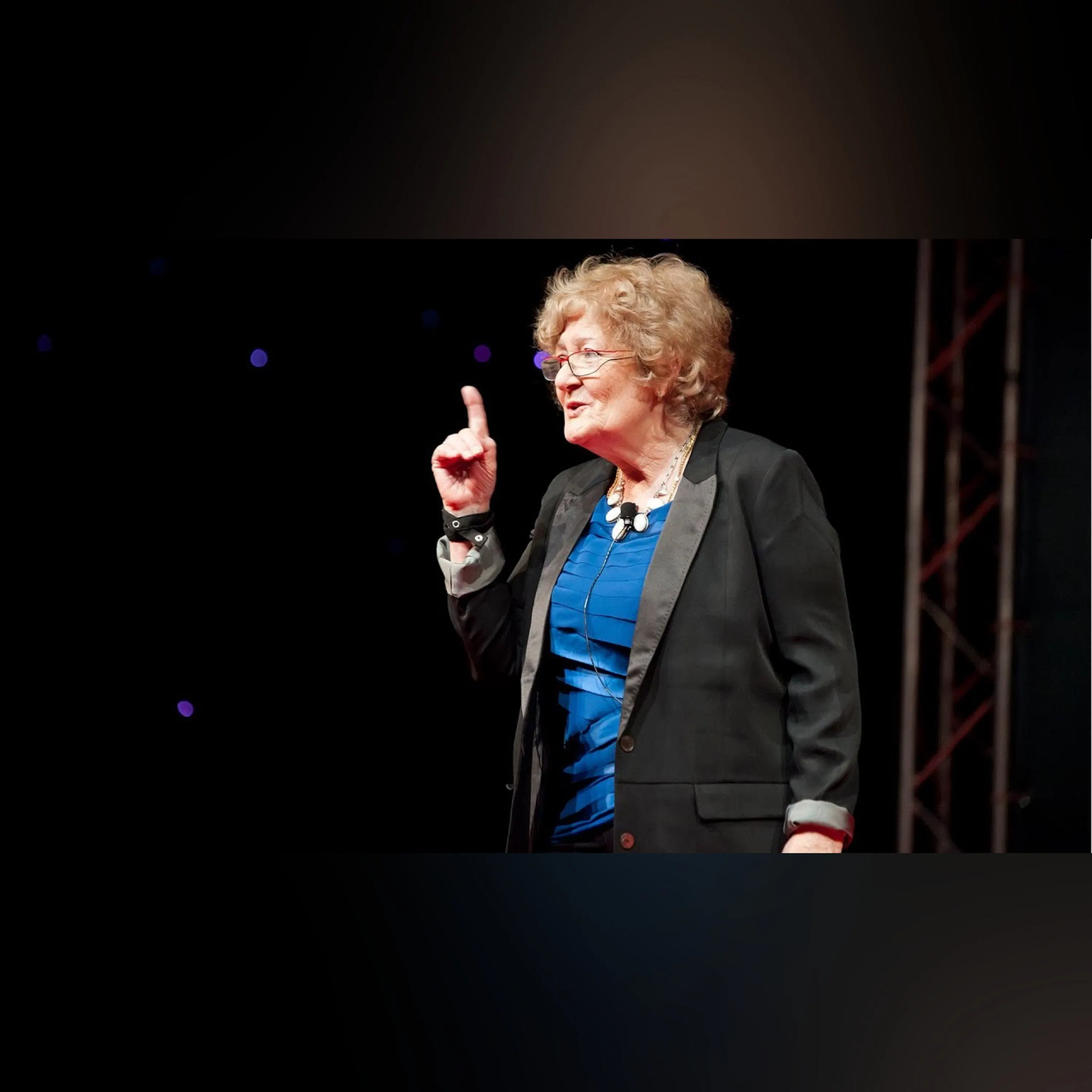
In her talk, longtime English teacher Patricia Ryan asks a provocative question: Is the world's focus on English preventing the spread of great ideas in other languages? (For instance: what if Einstein had to pass the TOEFL?) It's a passionate defense of translating and sharing ideas. (Filmed at TEDxDubai.)
Talk by Patricia Ryan.
Learn more about your ad choices. Visit megaphone.fm/adchoices
Why are earthquakes so hard to predict? - Jean-Baptiste P. Koehl

Take a look at the theories behind why earthquakes occur, what makes them so hard to predict and the warning system technologies we rely on today.
--
In 132 CE, Zhang Heng presented his latest invention: a large vase he claimed could tell them whenever an earthquake occurred for hundreds of miles. Today, we no longer rely on pots as warning systems, but earthquakes still offer challenges to those trying to track them. Why are earthquakes so hard to anticipate, and how could we get better at predicting them? Jean-Baptiste P. Koehl investigates.
Lesson by...