In Our Time
Spanning history, religion, culture, science and philosophy, In Our Time from BBC Radio 4 is essential listening for the intellectually curious. In each episode, host Misha Glenny and expert guests explore the characters, events and discoveries that have shaped our world. History fans can learn about pivotal wars and societal upheavals, such as the rise and fall of Napoleon, the Sack of Rome in 1527, and the political intrigue of the Russian Revolution. Those fascinated by the lives of kings and queens can journey to Versailles to meet Marie Antoinette and Louis XIV the Sun King, or to Ancient Egypt to meet...
Particle Accelerators

Misha Glenny and guests discuss the machines that are described as the world’s largest experiments: Particle Accelerators. A famous example of a Particle Accelerator is the Large Hadron Collider, a device which stretches for nearly 30km, deep beneath the ground in a tunnel between France and Switzerland. This enormous scale enables the particles within to be propelled to incredible speeds, reaching almost the speed of light before they smash together. The resulting debris offers insights into the fundamental building blocks of our universe, such as the Higgs Boson Particle. These Colliders are international scientific projects costing billions of pounds, bu...
Archive: Erasmus
One of the most celebrated thinkers of the Renaissance, Erasmus (c1466-1536) is best known for his works of classical and religious scholarship, and for his infamous theological dispute with Martin Luther (1483-1546) over free will and the Church. In this archive episode, first released in February 2012, Melvyn Bragg and guests discuss Dutch humanist scholar Desiderius Erasmus. Erasmus was widely seen as the greatest classical scholar of his age, having translated and edited numerous Latin and Greek texts. Above all though, he was a religious scholar who published important editions of the Bible which expunged many corruptions to the texts...
Thomas More's Utopia
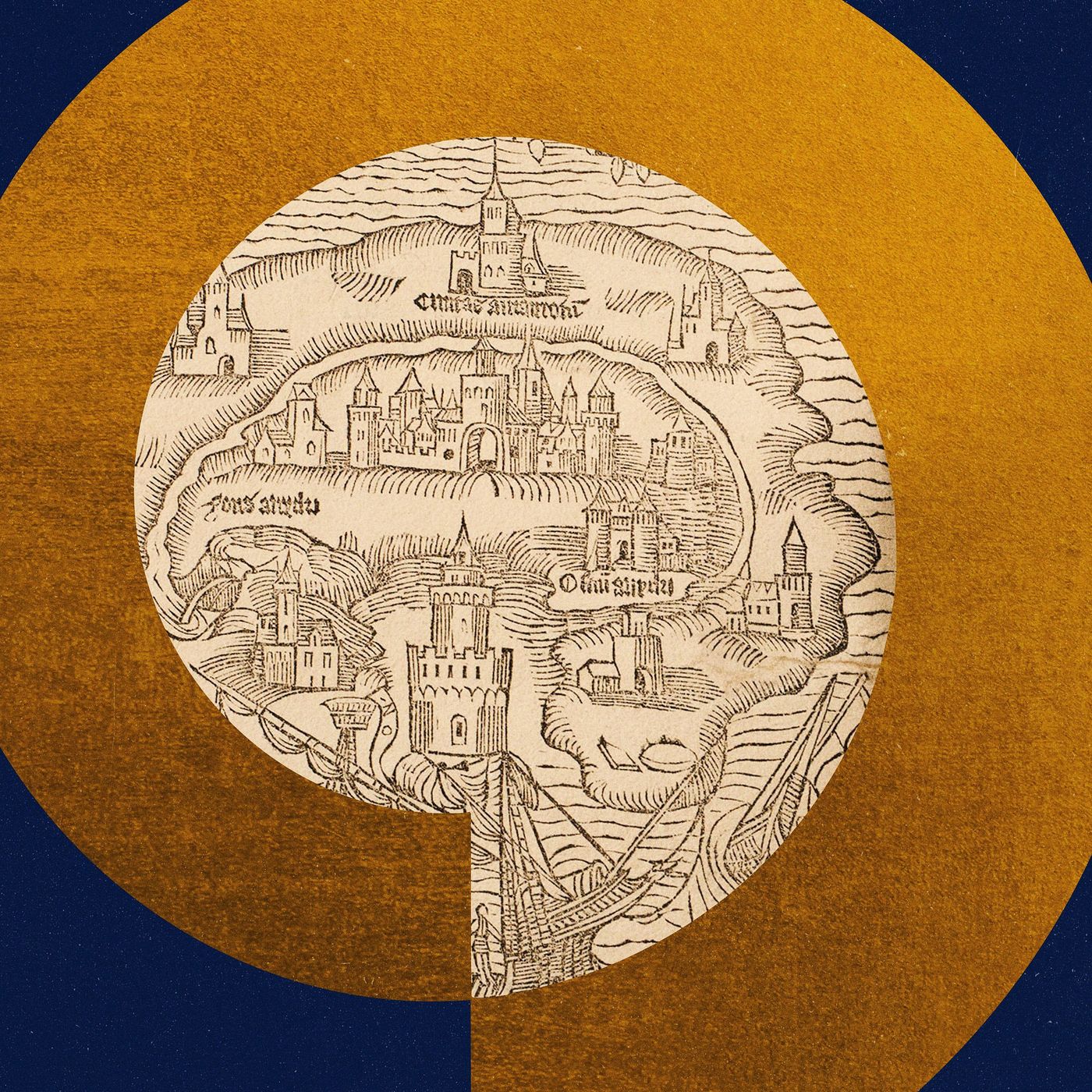
In 1516, the publication of one small book would coin a new word and give rise to centuries of literature, theory, and thought. In his most influential work, the lawyer and Tudor politician Thomas More (1478-1535) described a seemingly perfect – but entirely fictional – island called Utopia. In 1535, less than two decades after writing the book, More was executed for refusing to accept King Henry VIII as supreme head of the church of England. Misha Glenny and his guests discuss why More’s exploration of service and the ideal state has been read as a blueprint for society, a scathing satire, and as a t...
Archive: The Measurement of Time

Misha Glenny chooses the first of his archive picks - bringing back classic conversations from the In Our Time archive, every Monday. Humans have tried to calculate, regulate, and measure time for thousands of years: from systems based on tracking sunrise and sunset, to the invention of increasingly precise mechanical alarm clocks and astrolabes. In this archive episode, first released in March 2012, Melvyn Bragg and guests discuss the methods used to measure time throughout human history. Early civilisations used the movements of heavenly bodies to tell the time, but in the ancient world there were also sophisticated timekeeping devices such...
Archive: Trinity
Misha Glenny delves in to the In Our Time archive to select ten episodes for listeners to revisit. His final choice is the Trinity, an episode first released in March 2014. The idea that God is a single entity, but one known in three distinct forms - Father, Son and Holy Spirit - has been a central belief for most Christians since the earliest years of the religion. The doctrine was often controversial in the early years of the Church, until clarified by the Council of Nicaea in the late 4th century. Later thinkers including St Augustine and Thomas Aquinas recognised...
Archive: Emma
Misha Glenny delves in to the In Our Time archive to select ten episodes for listeners to revisit. His ninth choice is the episode on Jane Austen’s novel Emma, first released in November 2015. Austen described her leading character as "a heroine whom no-one but myself will much like." Emma is one of Austen’s most popular novels and arguably her masterpiece, a brilliantly sparkling comedy of manners published in December 1815 by John Murray, the last to be published in Austen's lifetime. This followed Sense and Sensibility (1811), Pride and Prejudice (1813) and Mansfield Park (1814), with her brother Henry handling publication of Nort...
Archive: The War of 1812
Misha Glenny delves in to the In Our Time archive to select ten episodes for listeners to revisit. His eighth choice is The War of 1812, which was first released in January 2013. Melvyn Bragg and his guests discussed the conflict between America and the British Empire sometimes referred to as the second American War of Independence. In June 1812, President James Madison declared war on Britain, angered by the restrictions Britain had imposed on American trade, the Royal Navy's capture of American sailors and British support for Native Americans. After three years of largely inconclusive fighting, the conflict finally came to an...
Archive: Rosalind Franklin
Misha Glenny delves in to the In Our Time archive to select ten episodes for listeners to revisit. His seventh choice is the pioneering scientist Rosalind Franklin (1920 - 1958), first released in February 2018. During her distinguished career, Franklin carried out ground-breaking research into coal and viruses but she is perhaps best remembered for her investigations in the field of DNA. In 1952 her research generated a famous image that became known as Photograph 51. When the Cambridge scientists Francis Crick and James Watson saw this image, it enabled them the following year to work out that DNA has a double-helix structure, one of...
Archive: Plato's Republic
Misha Glenny delves in to the In Our Time archive to select ten episodes for listeners to revisit. His sixth choice is Plato's Republic, an episode first released in June 2017. Is it always better to be just than unjust? That is the central question of Plato's Republic, written in c380BC. Plato applied this question both to the individual and the city-state, considering earlier and current forms of government in Athens and potential forms, in which the ideal city might be ruled by philosophers. The Republic is arguably Plato's best known and greatest work, a dialogue between Socrates and his...
Trailer - In Our Time
In Our Time returns for a new series with host Misha Glenny.A world class seminar, every week. In Our Time explores the ideas, people and discoveries that have shaped our world, spanning history, philosophy, religion, science, literature, art and culture. On Thursdays, hear brand-new episodes with Misha Glenny and leading academics. On Mondays, discover Misha's Archive Picks: classic conversations from the In Our Time archive, originally presented by Melvyn Bragg. Recent episodes have featured topics as wide-ranging as the Roman Arena, Handel's Messiah, John Keats, On Liberty and the Mariana Trench, bringing expert insight to pivotal events, influential thinkers...
Archive: Empress Dowager Cixi
Misha Glenny delves in to the In Our Time archive to select ten episodes for listeners to revisit. His fifth choice, first released in May 2024, is the Empress Dowager Cixi, the woman who, for almost fifty years, was the most powerful figure in the Chinese court. Cixi (1835-1908) started out at court as one of the Emperor's many concubines, yet was the only one who gave him a son to succeed him and who also possessed great political skill and ambition. When their son became emperor he was still a young child and Cixi ruled first through him and then...
Archive: Plate Tectonics
Misha Glenny delves in to the In Our Time archive to select ten episodes for listeners to revisit. His fourth choice, first released in January 2008, explores how the science of plate tectonics revolutionised our understanding of the planet on which we live. America is getting further away from Europe. This is not a political statement but a geological fact. Just as the Pacific is getting smaller, the Red Sea bigger, the Himalayas are still going up and one day the Horn of Africa will be a large island. This is the theory of plate tectonics, a revolutionary idea in 20th...
Archive: Hatshepsut
Misha Glenny delves in to the In Our Time archive to select ten episodes for listeners to revisit. His third choice, first released in November 2014, is the Egyptian pharaoh Hatshepsut, whose name means 'foremost of noble ladies'. She ruled Egypt from about 1479 - 1458 BC and some scholars argue that she was one of the most successful and influential pharaohs. When she came to the throne, Egypt was still recovering from a period of turbulence known as the Second Intermediate Period a few generations earlier. Hatshepsut reasserted Egyptian power by building up international trade and commissioned buildings considered masterpieces of Egyptian...
Archive: Coffee
Misha Glenny delves in to the In Our Time archive to select ten episodes for listeners to revisit. His second choice, first released in December 2019, is the history and social impact of coffee. From its origins in Ethiopia, coffea arabica spread through the Ottoman Empire before reaching Western Europe where, in the 17th century, coffee houses were becoming established. There, caffeinated customers stayed awake for longer and were more animated, and this helped to spread ideas and influence culture. Coffee became a colonial product, grown by slaves or indentured labour, with coffea robusta replacing arabica where disease had struck, and...
Pockets (from Here For The History)
To the frustration of many, a lot of women’s clothes don’t have pockets. But why on Earth is that the case? Especially when men’s clothing seems to be full of pockets.On Here For The History, Alice Loxton and Ben Henderson track the tumultuous and muddy history of women’s pockets. From capacious beginnings, through many fashion changes, to suffragette campaigning and societal expectations.Alice and Ben unpick the surprising moments of pocket history that have contributed to the inconsistency of these sewn-in marvels today.If you enjoy this episode, you can find more episodes of Here For The...
Archive: Aphra Behn, pioneering playwright and spy.
Widely regarded as the first professional woman writer in English literature, Aphra Behn (1640-1689) is best known for her plays and her novel Oroonoko, she's been an inspiration to countless writers across the ages.This archive episode, first released in October 2017, was selected as part of a ten-episode series by Misha Glenny. In the episode, Melvyn Bragg and guests discuss the life and times of Behn, who made her name and her living as a playwright, poet and writer of fiction during the Restoration. Virginia Woolf wrote of her: 'All women together, ought to let flowers fall upon the grave...
Seashells
Misha Glenny and guests discuss a familiar feature of our beaches: seashells, from their astonishing shapes and patterns that teach us about Earth’s oceans, to the ways that humans have treasured shells throughout history. Seashells appear in the mythologies of countless cultures across the world - think of Botticelli’s Venus emerging from a giant scallop shell, Vishnu's sacred horn panchajanya, or the Aztec god Quetzalcōātl’s talisman cut from a conch shell. The urge to collect shells seems to be as old as our species. We’ve used them as decoration, currency, and musical instruments. But shells aren’t jus...
Vigée Le Brun
Misha Glenny and guests discuss the French portrait painter Élisabeth Vigée Le Brun (1755 - 1842). From her teens she delighted her high society subjects in and around Paris, notably Marie Antoinette who she painted around 30 times, and she invariably found ways to show her sitters at their best. Some critics were affronted that she, a young woman, dared paint at all and, when they saw how good her portraits were, some spread a rumour that surely this could not really be her work and she must have had a secret male lover finishing her portraits in a studio. The French Re...
The Delian League
Misha Glenny and guests discuss the origins and evolution of an alliance which transformed the geopolitics of the classical world: the Delian League. Since the start of the 5th Century BCE, city states across Greece had been fighting a series of armed conflicts in the Greco-Persian Wars. After the defeat of a second Persian invasion in 478 BCE, a league of cities across Greece came together and formed a new alliance led by Athens. That alliance is now known as the Delian League, after the island of Delos where it was established. In the following decades, Athens used the Delian League...
Machado de Assis
Misha Glenny and guests discuss one of the towering figures of Brazilian and world literature, Machado de Assis (1839 - 1908). He was the descendant of slaves and built his career while slavery was still in place in Brazil (abolished 1888) and many of his characters were from the slave-owning class who were also the readers of his books. At the time, those readers were delighted to see themselves represented and it was only later in the 20th Century that critics realized just how much Machado was satirising them. While he brings 19th Century Brazil vividly to life, Machado's works transcend time and...
The Global Story - The soft power superpower, with Roman Mars

As 4th July approaches, we think you’ll like this episode of The Global Story. All week, The Global Story podcast is exploring the surprising and often hidden ways the US has shaped the modern world. Roman Mars – the host of 99% Invisible and the new BBC series A History of the United States in 100 Objects – joins as a guest to set out his theory of how the US used design to shape the world in its image.If you like this episode, find the special collection ‘US and the World at 250’ in The Global Story. If you’re in the UK, listen o...
The Evolution of Trees
Misha Glenny and guests discuss the earliest evidence we have of the existence of trees and how even plants we might have on windowsills or as vegetables in gardens can and do, in the right conditions, evolve into trees. Since their emergence around 400 million years ago after low lying plants started to develop stronger stems and grow taller and more upright, trees have transformed our planet, so creating ecosystems, altering the atmosphere and setting the stage for the world as we know it today. With Jenny McElwain 1711 Chair of Botany at Trinity College Dublin and Director of Trinity Botanic GardensChristopher...
The Welsh Marches
At the Hay Festival, Misha Glenny and guests discuss the impact of the Norman invasion on the people and land of Wales and across the modern border with England in what became known as The Welsh Marches, march being a term for a militarized borderland. Hay was one of the first Marcher lordships. Even before 1066, William the Conqueror knew that he would have to subdue the Welsh if he were to control the English and he allowed more and more Norman warlords to establish virtually their own private kingdoms in these Marches. Later some of the Lords were to use...
The Levellers
Misha Glenny and guests discuss the group which came to be known as the Levellers and emerged during what would become arguably one of the bloodiest and most turbulent periods of English history. After the First English Civil War, the Levellers started calling for reforms to achieve legal and social equality. They pushed for a new constitution, extended franchise, popular sovereignty, and religious toleration. To do this, the Levellers pioneered the use of pamphlets and petitions, as well as taking to the streets in their thousands to demonstrate wearing their signature sea-green ribbons and sprigs of rosemary. To some they...
The Garamantes
Misha Glenny and guests discuss an ancient civilisation who lived over 2000 years ago in the southwest of modern-day Libya. During prehistoric times, the Sahara Desert was greener and even had large lakes, but for the last 5000 years it has been a hyperarid environment. Extreme swings of temperature and limited surface water might make the Sahara seem like an inhospitable place to live, but an ancient people in North Africa known to us as the Garamantes thrived there. Following descriptions of the Garamantes in Roman and Greek texts, the Garamantes have often been seen as pastoral nomads, or as tribal barbarians...
Joseph Roth
Misha Glenny and guests discuss one of the great writers on Central Europe after the first world war and on the dying of the old orders with the collapse of the Austro-Hungarian empire. As a German speaking Jew from Brody in the north-eastern edge of that Empire, which was then in Galicia, next in Poland and is now in Ukraine, Roth (1894 - 1939) was to spend his short life moving first to Lviv then to Vienna and finally to Paris via Berlin without ever finding a settled home. Roth explored the loss of homeland and anticipated the dangers of the new...
Cybernetics
Misha Glenny and guests discuss cybernetics – the field of study which gave us the prefix ‘cyber’ and helped lay the foundations for the information age. After the Second World War, cybernetics emerged as the study of communication, feedback, and control in both animals and machines. Cybernetics was first defined in 1948 by the American mathematician Norbert Wiener (1894-1964) and aimed to find a shared universal language which could be used across disciplines. The name drew on an Ancient Greek word for steersman, the person who stands at the helm of a ship to steer or govern its course. Cybernetics saw the world...
Indian Indentured Labour
Misha Glenny and guests discuss how, after the abolition of slavery in the British Empire in 1833, sugar planters recruited workers from India to replace or compete with their formerly enslaved labourers. Over the next 90 years, more than a million people in India travelled under five year contracts of indenture across the empire from Guyana to Trinidad to Mauritius and Fiji and colonies in between. These indentured labourers were to share vivid accounts of deception and abuse, especially in the early decades. From the outset there were critics and opposition gained pace with Gandhi and others in South Africa arguing the...
M.C. Escher
Misha Glenny and guests discuss the work of Maurits Cornelis Escher (1898-1972), the graphic artist and printmaker best known for his impossible buildings, paradoxical perspectives, and repeating geometric patterns. Born in Leeuwarden and trained as a printmaker, Escher visited the Alhambra in Granada and found inspiration in the tessellating shapes of Islamic art. Through his career he went on to create some of the most famous images of the twentieth century and has been called a one-man art movement. After his work was exhibited in a 1954 conference, Escher’s work also caught the eye of mathematicians who appreciated his intuitive ge...
Handel's Messiah
Misha Glenny and his guests discuss the most famous oratorio of George Frideric Handel (1685-1759) and his librettist Charles Jennens (1700-1773). For his libretto, Jennens drew from Old and New Testament texts: prophecies about the coming of Jesus, the Messiah, the nativity, the suffering of Christ and his death and the Day of Judgement and redemption for all. Handel's Messiah had its premiere in 1742 in a secular Dublin music hall to great acclaim with a packed audience and Handel continued to adapt his Messiah for later performances, often shaping the work to the choirs or individual singers available. Messiah proved...
The Spanish-American War 1898
Misha Glenny and guests discuss a turning point in world affairs in 1898 that left Spain greatly reduced as an imperial power and the US the owner of the Philippines, Guam and Puerto Rico, with a significant influence over the newly independent Cuba where the war broke out. The US had been eyeing Cuba for decades, waiting for the right moment and the right kind of action, and in April 1898 intervened in the long-running fighting on the island for independence from Spain. With a much stronger navy it was a very uneven battle and the US soon triumphed over Spanish forces...
Silicon
Misha Glenny and guests discuss the physics, biology and chemistry of the element silicon which is at the heart of some of the most useful and beautiful objects on the planet. While it is still being created throughout the universe, the silicon we have here was made billions of years ago in dying stars. In its compounds we have long used silicon for glass and, more recently, purified silicon has become the foundation of modern electronics. Perhaps less appreciated is the role silicon compounds play in the biology of life on Earth, on the levels of carbon dioxide in the...
Dadaism
Misha Glenny and guests discuss the provocative artistic phenomenon that first startled audiences in 1916 in Zurich. There, at the Cabaret Voltaire at the Holländische Meierei on the Spiegelgasse, Emmy Hennings and Hugo Ball and others gathered on a small stage, sometimes dressed in cardboard, often performing nonsense poems. This was the start of Dada, a spirit more than a movement which spread to other cities in Europe during the war. In part the Dadas (as they called themselves) were protesting against the inevitability of constant wars on the continent and in part this was an artistic experiment around the a...
Archaea
Misha Glenny and guests discuss one of the most remarkable scientific discoveries of the 20th century: the archaea microorganisms. In the 1970s the American microbiologist Carl Woese (1928-2012) realised that the tiny bacteria-sized organisms he was studying were not actually bacteria but from an entirely different branch of the tree of life. It became clear that archaea, as he named them, share aspects of the cells in all plants and animals even if they often live in places where other life struggles including salty lakes, acidic pools, under the sea bed and in the gut. While aspects of what followed...
Margaret Beaufort
Misha Glenny and guests discuss the woman who, as a child bride, became mother to the boy who would eventually become the first king in the Tudor dynasty. Lady Margaret Beaufort (c1443-1509) was twelve when she married Edmund Tudor, half his age, and gave birth to their son Henry when she was thirteen and Edmund was already dead from the plague. Margaret Beaufort made it her life's work to protect Henry during the Wars of the Roses, which had begun soon before his birth and, as many more obvious successors to the crown died or were killed in the...
The Columbian Exchange
Misha Glenny and guests discuss the exchange of cultures and biology across the Atlantic and Pacific after 1492. That was when Columbus reached the Bahamas, a time when Europe had no potatoes, tomatoes, sunflowers or, arguably, syphilis in its most virulent form; the Americas had no cattle, bananas, sugar cane or smallpox. The lists of what was then exchanged are long and as these flora, fauna and diseases moved between continents, their impact ranged from transformation to devastation. In parts of the Americas, European viruses helped kill over 90 percent of the population. In parts of Europe, Africa and Asia populations boomed...
John Keats
Misha Glenny and guests discuss the short life and lasting works of Keats (1795-1821), who in one year wrote some of the most loved poems in English. Among these are Ode to a Nightingale, Ode on a Grecian Urn and Ode on Melancholy. That most productive year began in autumn 1818, when Keats had been stung by some reviews labelling him an uncouth Cockney who should go back to his former work as an apothecary, work he had left for poetry only two years before with the encouragement of enthusiastic friends. Just over two years later, Keats was dead in Rome...
The Code of Hammurabi
Misha Glenny and guests discuss the laws that Hammurabi (c1810 - c1750 BC), King of Babylon, had carved into a black basalt pillar in present day Iraq and which, since its rediscovery in 1901 in present day Iran, has affirmed Hammurabi's reputation as one of the first great lawmakers. Visitors to the Louvre in Paris can see it on display with almost 300 rules in cuneiform, covering anything from ‘an eye for an eye’ to how to handle murder, divorce, witchcraft, false accusations and more. The Code of Hammurabi, as it became known, made such an impression in Mesopotamia that it was copi...
Henry IV Part 1
Misha Glenny and guests discuss one of the most successful of Shakespeare's plays in his own time. Written with no Part 2 in mind as 'Henry the Fourth', the play explores ideas about who can be a legitimate ruler and why, and how anyone can rightly succeed to the throne. This was an especially pressing question for his Tudor audience as Elizabeth I had named no successor. Playwrights, banned from openly discussing the jeopardy her subjects faced, turned to these themes of power, legitimacy and succession in distant and recent history. When Shakespeare combined this relevance with the vivid characters of...
The Roman Arena
Misha Glenny and guests discuss the countless venues across the Roman Empire which for over five hundred years drew the biggest crowds both in the Republic and under the Emperors. The shows there delighted the masses who knew, no matter how low their place in society, they were much better off than the gladiators about to fight or the beasts to be slaughtered. Some of the Roman elites were disgusted, seeing this popular entertainment as morally corrupting and un-Roman. Moral degradation was a less immediate concern though than the overspill of violence. There was a constant threat of gladiators being...
