Market Insider

Business insight and market data are everywhere. Few step forward when it matters. Hosted by Siyamak Khorrami, this show brings together CEOs, investors, and economists who have operated under real constraints. Drawing on Khorrami's background as a business operator and editor, each conversation builds a record of how leaders assess conditions and commit to direction.
Today’s AI Boom Through a Dot-Com Veteran’s Eyes | Paul Meeks

Nearly four years into the artificial intelligence (AI) data center buildout, the scale of the spending has drawn comparisons with the dot-com boom. How well does a crash from a quarter century ago help explain the risks today?
Part of that spending runs through builders who have to borrow to do the work. Those financing needs add another layer of uncertainty to spending plans already under intense scrutiny.
Paul Meeks, who ran the world’s largest technology fund through the dot-com collapse, explains which parts of that comparison hold up today and which ones mislead. He...
America’s Factory Comeback Takes More Than Investment | Harry Moser

Companies are on pace to announce a record number of U.S. manufacturing jobs through reshoring and foreign investment this year, according to a Reshoring Initiative projection using data through September. So how much of that investment is actually turning into jobs?
A factory announcement is only the beginning, for the companies behind it and the communities waiting on the hiring. Whether the work is coming back from places like China or arriving with foreign companies, the added production still has to hold its own against imports.
Harry Moser held leadership roles in manufacturing before...
What Trump Accounts Could Mean for Children | John Micha

Trump Accounts opened in July, granting American children an investment account in their own names. Some start with seed money, including a $1,000 Treasury deposit for eligible children born from 2025 through 2028.
Setting money aside in a child’s name and preparing that child to manage it are separate concerns. For families, the stakes include both the money a child brings into adulthood and whether that child is ready to make decisions about it.
Dr. John Micha is a Newport Beach gynecologic oncologist who says he managed his medical group’s pension himself for two decades. He open...
How the Hotel Business Has Changed Since COVID | Donald Wise

A higher nightly rate looks like a win for the hotel charging it. Behind the front desk, insurance and labor costs can climb just as fast as the rate. So what does a room’s price reveal about the health of the business charging it?
Travelers expect their stay to be worth the price. Keeping costs down while maintaining that experience creates difficult choices for hotel owners, even when people are still traveling.
Dr. Donald W. Wise, co-founder and chairman of Turnbull Capital Group, works on hotel transactions and financing. In this conversation, he examines wh...
What’s Happening With Fuel? | Skip York & Ronald Stein

Diesel prices reached record highs across most major economies this fall, prompting emergency stock releases and efforts to restore Russian diesel exports. At home, a major refinery planned for Brownsville, Texas, is not yet producing fuel. How much relief can emergency measures provide, and where does replacement fuel come from when refining falls short?
Securing more crude oil alone does not put more fuel on the market. That depends on how quickly domestic refineries or imports can add supply.
Skip York, chief energy strategist at Turner, Mason & Company, examines what the current measures can cover...
The Economics Behind Russia’s War | Andrei Illarionov

Years of sanctions and Ukrainian strikes on refineries inside Russia have put pressure on its economy. Yet Russia remains able to keep fighting. What actually sets the limit on how long it can sustain this war?
Paying for a war and producing for it are separate requirements, and assessing one does not settle the other. The war’s duration also matters for Europe’s funding commitments to Ukraine, and refinery damage puts pressure on fuel supplies and prices inside Russia.
Andrei Illarionov, former chief economic adviser to Russian President Vladimir Putin and senior analyst for Russ...
China’s Exports Are Booming. Why Is Demand at Home Weak? | Charlene Chu

China’s exports are growing strongly this year, but demand at home remains weak. Fixed-asset investment fell 7.2 percent in the first eight months of 2026, and retail sales rose just 0.4 percent in August. Why aren’t strong exports translating into stronger spending and investment?
This weakness is also reaching parts of the economy that usually cushion a slowdown. For businesses around the world that sell into China, that split matters as much as the export figures themselves.
Charlene Chu, senior analyst at Autonomous Research, has spent years tracking China’s economy and financial system. She examines what t...
How Higher Borrowing Costs Are Changing Housing Construction | Jim Righeimer
Higher borrowing costs are putting pressure on new home construction and apartment buildings financed at lower rates. What does that mean for how much housing actually gets built?
Builders and apartment owners face different constraints. Builders are deciding how many new homes to construct, while apartment owners carry financing costs on buildings already completed. Advertised prices and rents tell only part of that story.
Jim Righeimer, CEO and co-founder of Arbor Capital Partners, develops land and sells finished lots to some of the country’s largest publicly traded home builders.
His work in la...
What Trucking Shows About a Split Economy | Craig Fuller

Trucks hauling steel and other heavy materials for large industrial projects are in demand, while the everyday goods people buy are moving in smaller volumes. For many households, the economy already feels a little off. What is this pattern saying that the usual numbers might miss?
Spending figures and shipment volumes measure different things. What consumers spend does not, on its own, show how much they are buying.
Craig Fuller, founder and CEO of FreightWaves, has spent his entire life around the trucking industry. His company tracks how goods move and what it costs to...
Why Home Prices Kept Rising as Mortgage Rates Climbed | Barry Habib

National home prices rose in July even as mortgage rates climbed over the spring and summer. Mortgage rates have moved higher since, and the Fed raised its benchmark rate in September. How much more pressure can home prices absorb?
Higher rates squeeze buyers, but borrowing costs alone don’t explain why prices have held. What has kept prices up is being tested again. Buyers still face expensive borrowing with no certainty that waiting will bring lower prices.
Barry Habib, founder and CEO of Highway and a member of Fannie Mae’s board, examines why home pric...
What Changes When Manufacturing Moves Back to America? | Wayne Cochran

Bringing manufacturing back to the United States means confronting the costs that helped send it overseas. After tariff changes in April 2025, pallet maker RM2 could no longer sustain its operation in Juárez, Mexico. Yet moving home to America meant absorbing those costs—and redesigning the factory so American wages and inputs could work.
Wayne Cochran spent decades helping companies including Motorola and Intel move manufacturing offshore. As CEO of RM2, he led the move the other way. On Market Insider, he walks us through the math behind that decision and why a supply chain rebuilt at hom...
Why Higher Oil Prices Complicate the Fed’s Inflation Fight | Edward Dowd

Inflation has picked up again this year, with higher energy prices tied to the war with Iran pushing headline readings higher. On Sept. 16, the Federal Reserve raised rates for the first time since 2023. What happens when a policy aimed at prices meets an economy that may be less able to absorb higher borrowing costs?
Not all inflation reaches the economy in the same way. When pressure begins with energy rather than with stronger demand, the policy response can carry risks that a single inflation reading does not reveal.
Edward Dowd, founding partner at Phinance Technologies...
Why the Diesel Market Is Still Tight | Andrew Lipow

When the Strait of Hormuz closed during the Iran conflict, oil and diesel prices rose as markets tried to judge how long the disruption would last. Futures may reflect hopes for an end to the fighting, and the price consumers ultimately face is tied to more than the crude oil benchmark.
The pressure on prices may outlast the event that set it off. Even if oil prices respond quickly to signs of relief, the path back to more stable fuel costs remains harder to read.
Andrew Lipow, president of Lipow Oil Associates, has more than...
Central Banks Are Buying Gold, so Why Does Demand for the Dollar Keep Rising? | Daniel Lacalle

Central banks keep adding gold to their reserves while Treasury yields stay elevated, feeding a familiar explanation that the dollar is being debased and the world is rotating away from it. But if that read is right, why does demand for dollar assets remain near historic highs?
The tension becomes harder to explain when similar pressure appears in government bond markets outside the United States. What looks like a story about a single currency may point to a broader shift in how markets view sovereign debt.
Daniel Lacalle, chief economist at Tressis and a fund...
What It Would Take to Rebuild US Textile Manufacturing | Robert Antoshak

Tariffs are changing the economics of textile and apparel sourcing, while companies are spreading production to places such as Vietnam, Mexico, and other markets. China is no longer the same default it once was. But does that mean textile manufacturing is actually moving in a lasting way?
The answer is more complicated than comparing tariff rates or factory wages. Cost still matters, but other parts of the production structure can change the calculation when companies decide where to invest and source.
Robert Antoshak, managing partner at Gherzi Americas, has spent more than four decades across...
AI Is Still Booming. What Is the Market Pricing In? | Michael Khouw

AI spending is still expanding, and some chip companies tied to the buildout are producing unusually strong profits while their stocks trade at modest earnings multiples. On the surface, that looks reassuring.
But the companies in this buildout don’t all carry the same kind of risk. Similar-looking valuations can sit on top of very different business conditions. That gap is where the market gets harder to read.
Michael Khouw, a YieldMax Strategist and former floor trader, has lived through several major market cycles and remains net long with significant technology exposure. He joins us to...
AI Is Driving a Power Buildout. Will the Forecasts Hold? | Scott Ebeling

Electricity demand is rising as artificial intelligence (AI) data centers seek enormous amounts of power and manufacturers look to expand production in the United States. But the pressure on the grid is not as simple as whether the country can produce enough electricity.
The harder issue is timing. Adding demand and adding usable power do not happen on the same schedule. The costs that follow can affect hyperscalers very differently from the businesses and households already relying on the system.
Scott Ebeling, head of energy strategy at BOX Energy Solutions, joins us to explain what...
What the Market Shows Before Big Positions Become Public | Jason Bodner

Markets can look one way in the news while institutional money is moving in another direction. Large investors often build positions gradually, making their activity difficult to see while those trades are still underway. So what can money flows reveal before those positions become public?
Spotting unusual activity is one thing. Understanding what that activity actually means is harder, especially when the same market signals can point in different directions.
Jason Bodner spent years on Wall Street brokering institutional block trades, where part of the job was executing orders without letting the price run away...
Iran Is Escalating. The Economic Stakes Go Beyond Oil | Bijan Kian

Iran is facing renewed economic and military pressure, with the Strait of Hormuz again at the center of concerns over oil and global trade. The immediate focus is escalation, but underneath it is another question: how long can this pressure continue, and what is it actually accomplishing?
The instinct is to read this as a straightforward pressure campaign that either works or it doesn’t. But the costs don’t fall evenly, and the economic costs of the confrontation become harder to assess once the pressure extends beyond sanctions alone.
Bijan Kian joins us to exam...
AI Is Changing What Job Applications Mean | Douglas Wetzel

AI is becoming part of both sides of hiring at a time when the job market is already difficult for many applicants. Job seekers are using it in the application process, while employers are testing it to handle growing applicant pools. What is all of that automation actually doing to hiring?
The process may be getting faster without becoming easier to read. As more steps between an application and an interview are handled by technology, employers and job seekers are left trying to understand what an application actually tells them.
Douglas Wetzel, founder and CEO...
Why Bigger IPOs Are Coming And What They’re Really Worth | Aman Verjee

The IPO market spent years running well below its earlier highs. Now SpaceX has gone public at a valuation near $2 trillion, Anthropic could follow, and more private technology companies are lining up behind them. After years of limited activity, investors are again being asked what these companies are worth.
The obvious comparison is the late 1990s, when technology spending and valuations climbed together before the dot-com crash. But today’s artificial intelligence (AI) cycle is being financed and used very differently, even as the amount of money going into it keeps growing. That makes the comparison less st...
America Needs More Electricity. What Will It Cost? | Rob Gramlich

U.S. electricity demand was largely flat for decades. Now the outlook has shifted as data centers and other large users seek more power from a grid that plans years in advance. Who absorbs the cost of meeting demand the system did not see coming?
Electricity rates already face pressures that have little to do with the current demand surge. Much of the grid is aging, while severe weather and costly equipment are increasing the cost of maintenance.
New demand adds to those pressures, leaving regulators and utilities to decide not just how to serve...
AI Is Driving the Market; The Buildout Is a Different Story | Louis Navellier

Artificial intelligence stocks have swung sharply this summer, which brings an older question back into focus. How much of the boom behind them is actually getting built, and what stands between an announced data center and a working one?
That answer is not contained in the stock prices, or even in the strong earnings now coming through. What decides it sits outside the market, in conditions that have to be cleared before anything gets powered on. The indexes can obscure that picture too, since the strength they show sits in a narrow slice of the market.
<...China Is Pulling Ahead in Global EV Markets; Can the Big Three Catch Up? | Stephen Ezell
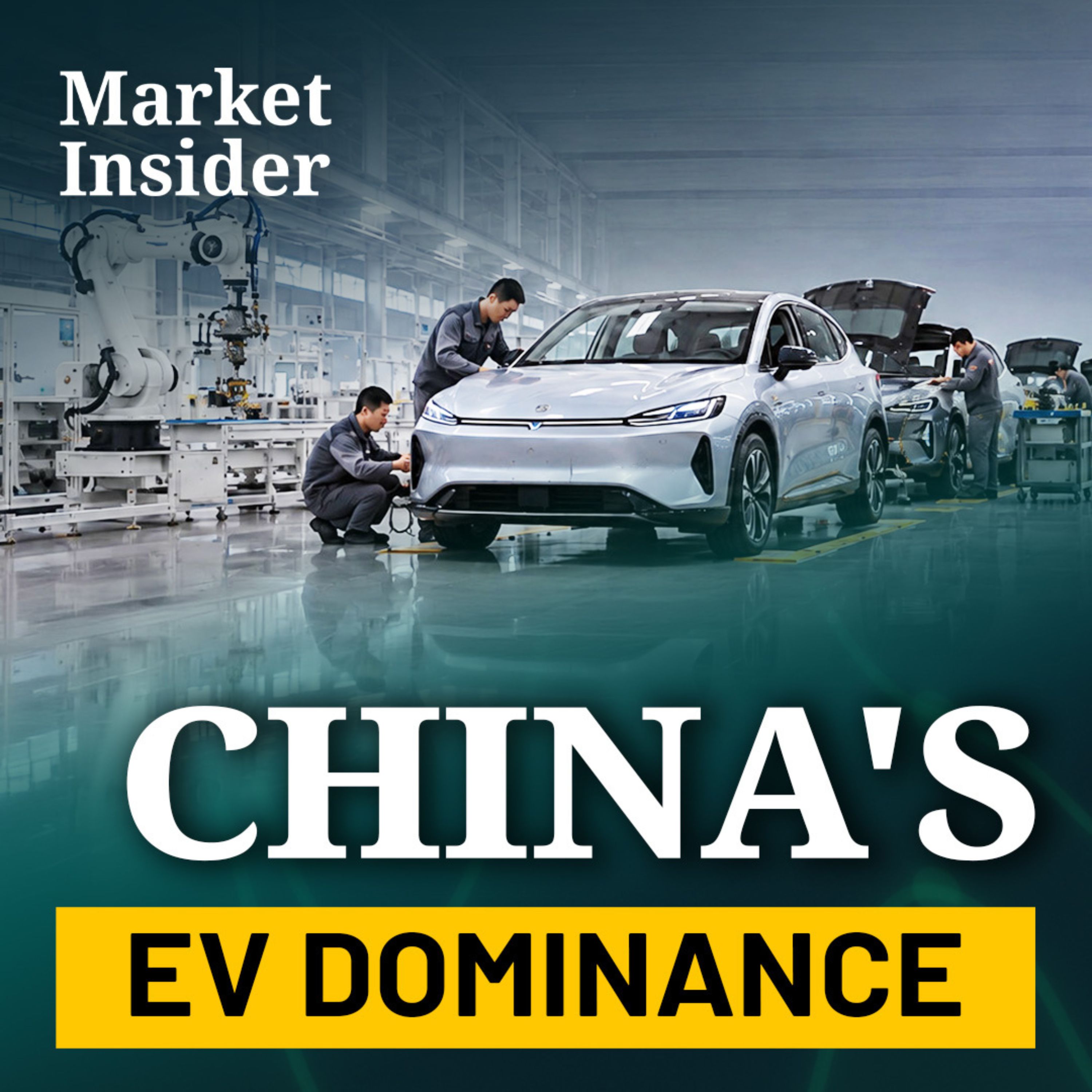
Chinese automakers are gaining ground in markets from Europe to Southeast Asia and Latin America. Meanwhile, the Big Three are leaning harder into the large trucks and SUVs that remain highly profitable at home, while reducing their exposure in some overseas markets. The next decade will test how well that home-market strategy holds up.
From inside the U.S. market, the logic makes sense: build what sells and stick with the vehicles that make the most money. But the competitive gap with China runs on more than the price of any single car, making the global contest...
The Biggest AI Stock Moves May Not Tell the Whole Story | Kevin Mahn
AI stocks are making some of the biggest moves in the market right now. One jumps 15 percent after earnings, then days later another falls 15 percent, leaving anyone with AI exposure trying to understand what those moves are actually saying.
Investors are split between two views: this is the top, or the run has barely begun. But the biggest moves may not be the clearest signal, and the volatility many investors read as a warning may be measuring something other than the health of the trade itself.
Kevin Mahn, president and chief investment officer of Hennion...
Wall Street Veteran on Why Japan’s Yen Matters to US Markets | Mark Malek

The United States just stepped into the Japanese yen market, turning what can look like a distant foreign-exchange story into a much larger question for American markets. Why did Washington care enough about a move in the yen to get involved?
The connection runs deeper than the exchange rate. For years, conditions in Japan and the United States were linked through a channel most households had little reason to notice. Now that channel is under strain, reaching parts of the U.S. economy most people would never connect to the yen.
Mark Malek, chief investment...
Why the Housing Shortage Story Doesn’t Add Up | Jon Brooks

For years, the housing debate has rested on one message: America does not have enough homes. Tight supply, the argument goes, will keep prices moving higher. Yet in several fast-growing markets, sales are weakening, and inventory is rising. Nevertheless, local households still cannot afford what is available.
That contradiction matters because housing gets treated as one national market even when conditions run in very different directions by region. A single national number can bury what is happening on the ground, leaving buyers and sellers with a story that may not match the market in front of them.<...
AI Power Demand Is Rising. Can the Grid Build Fast Enough? | Joshua Rhodes

Artificial intelligence is driving a new wave of electricity demand after years of relatively flat growth. In Texas, requests from data centers and other large users now far exceed what the grid can add on the timelines developers are seeking. Building enough power is one challenge. Doing it fast enough is another.
Power plants and the equipment connecting them to the grid take far longer to build than the projects requesting electricity. That mismatch is changing how grid operators assess large connection requests and decide what the system can support.
Joshua Rhodes, a research scientist...
If the Fed Raises Rates, What’s the Price? | Eric Swanson

Inflation has come off its peak, but the path back to the Federal Reserve’s 2 percent target remains unsettled. Longer-term rates are climbing, and markets are moving away from the rate cuts many homebuyers and businesses had anticipated. That leaves a harder question: Could the Fed raise rates before inflation is fully under control?
For borrowers, higher financing costs can arrive before the Fed makes a formal decision. Those costs affect spending and hiring before officials decide what comes next.
Eric Swanson, professor of economics at University of California–Irvine, has spent years studying monetary poli...
China’s Manufacturing Boom Comes With a Warning | William Yu

Chinese EVs and other manufactured goods are reaching Europe and Latin America at prices that are putting pressure on domestic producers. The United States has largely kept Chinese EVs out through tariffs. From the outside, the pattern can appear to be evidence that China is pulling ahead in advanced manufacturing.
But the same expansion can take on a different meaning when viewed from within China’s economy. The scale of the boom may be concealing strains that export growth alone cannot resolve. What looks like industrial strength abroad may reflect a more troubled economic system at home.
...What Wall Street Might Be Missing About the New Fed Chair | Robert Hetzel

Wall Street is spending the summer trying to read one man’s mind. A new chair now runs the Federal Reserve, and every desk is guessing which way interest rates move next. With the economy looking steady, it can feel as though the difficult part is over.
Robert Hetzel, former Senior Economist at the Federal Reserve Bank of Richmond, has seen how quickly a settled view of the economy can become unreliable. The next test may arrive before markets have enough evidence to know that the outlook has changed.
After more than four decades inside th...
What’s Holding Back Oil Prices Now? | Matt Smith

The Strait of Hormuz has been severely disrupted for more than four months, and crude is still trading in the $80s. Meanwhile, diesel at the U.S. pump has passed $5 a gallon and has outpaced crude since the crisis began. If the world’s biggest oil choke point remains this constrained, why isn’t the oil price showing more of the strain?
The market has adapted, but with fixes that were never built to last. The bill is already arriving somewhere other than the price of crude.
Matt Smith directs commodity research at Kpler, a firm...
Why Home Prices Aren’t Falling Even as Buyers Disappear | Jim Righeimer

Housing prices remain high even as demand softens and builders slow activity. There is talk of a housing shortage. Some builders aren’t building because they don’t see the demand.
In this episode, we speak with Arbor Capital Partners CEO Jim Righeimer, a developer who works closely with builders. He tells us what’s happening in the housing market and whether it’s the right time to invest in housing.
*Views expressed in this video/article are opinions of the author and do not necessarily reflect the views of California Insider.
Iran War Update: What the Cease-Fire Doesn’t Resolve
An Iran war cease-fire is now in place, but the conditions that produced this war were building long before the first strike. Iran’s leadership has operated on a consistent internal logic for 47 years, and no diplomatic agreement addresses what is actually driving the instability from within. What does that pattern tell us about whether any deal holds?
Foreign policy analyst Lisa Daftari examines the behavioral record of a regime under pressure and why the internal conditions inside Iran may outlast whatever is agreed to from the outside.
Views expressed in this video are the op...
