The Phoenician League
The world is in the middle of a financial reorganization unlike anything seen in generations. The Age of Paper Wealth is ending. Real assets are reasserting themselves. And the investors who understand what's actually happening — beneath the headlines — are positioning accordingly. The Phoenician League is a weekly podcast hosted by Joe Withrow, founder of the Phoenician League investment strategy group. Each episode goes deep on macroeconomic themes, real asset investing, and the history and stories behind the forces shaping our financial world. Joe draws on his background in corporate banking and investment research to cut through the noise and give you...
AI Stock Selloff — Why Asset Allocation Makes You Financially Bulletproof

AI stocks just had their longest losing streak since 2008. In this solo episode, Joe Withrow uses the selloff in artificial intelligence (AI) stocks to ask a better question than "what will the market do next?" The better question is why you should care at all.
The selloff comes down to debt and interest rates. Big tech is on pace to spend roughly $700 billion this year building AI data centers, much of it borrowed. CoreWeave, which rents out computing power to AI firms, sits at the center of it, and one of its bonds hit a yield of...
There Is No Alternative But Inflation — Neal McSpadden on the Cantillon Effect, Inflation Taxes, and Hard Money
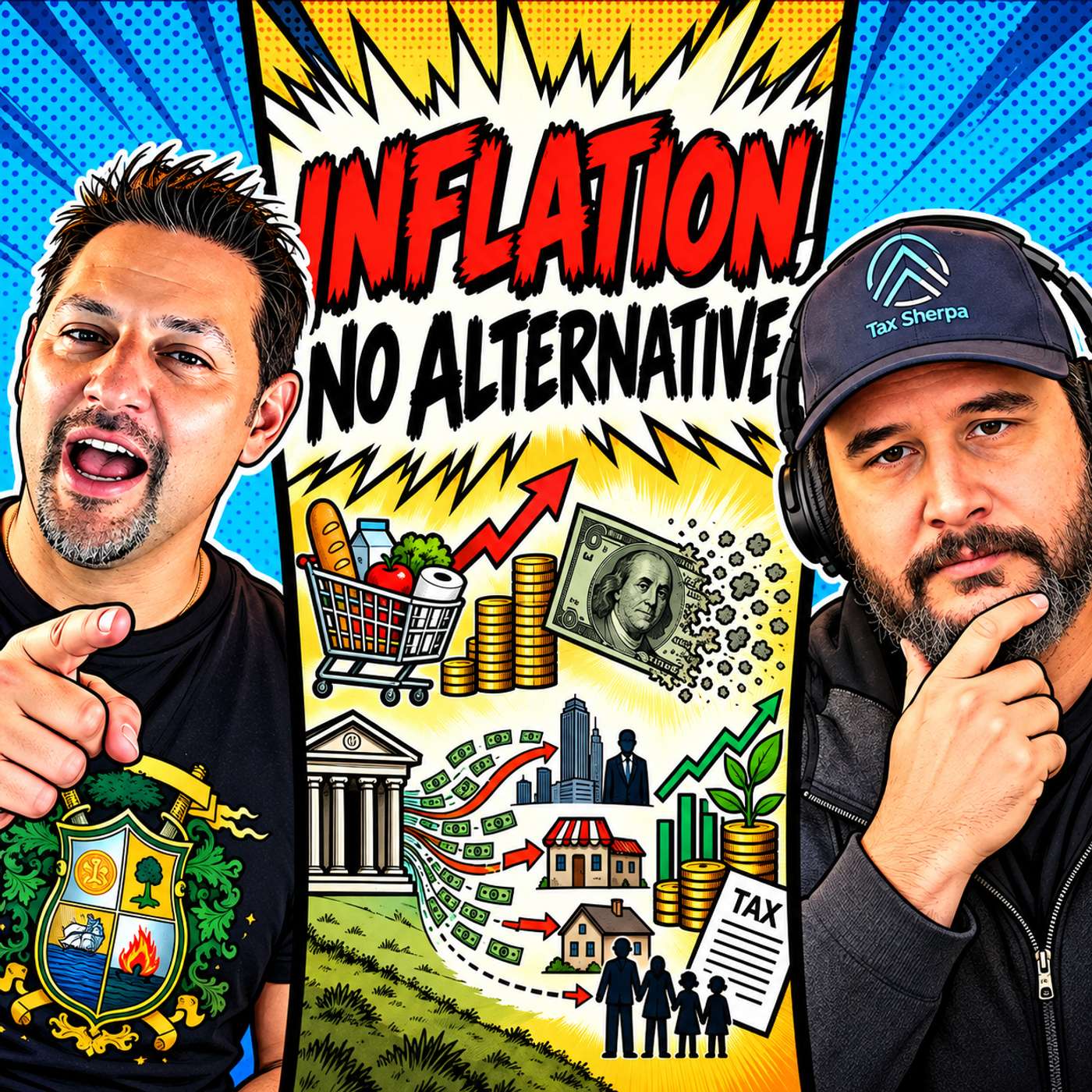
You can't save your way out of inflation, and the tax code makes you pay on it anyway. In this guest episode, Joe Withrow talks with Neal McSpadden of Tax Sherpa about the ideas in Neal's article, "There Is No Alternative But Inflation."
Neal argues that savings and investing are two different things, and that in a system where the money supply grows every year, cash can't keep up. He explains the Cantillon effect, how new money benefits whoever receives it first, and why the COVID stimulus checks showed it in real time. He then walks through...
Structural Inflation Is Here to Stay — and the President Just Said So

President Trump told TIME magazine that "certain levels of inflation will also pay off that debt very rapidly." In this short solo episode, Joe Withrow uses that remark to argue that the U.S. is heading toward structural inflation rather than a clean fiscal fix. If the government cannot balance the budget or seriously reduce the debt, inflation becomes the path of least resistance.
Joe contrasts the campaign rhetoric about balancing the budget and cutting waste with the reality that Congress has shown no political will to make the tough spending decisions. That leaves inflation or default...
The Inaugural Phoenician League Investment Summit: 16 Independent Experts, One Incredible Week
Most investors are still building their portfolios for an economic era that's already dead. Joe Withrow announces the inaugural Phoenician League Investment Summit — a free, four-day event running October 6th through 9th, bringing together sixteen independent operators to lay out a complete playbook for building and protecting wealth outside the old sixty-forty model.
The week runs in a deliberate sequence: Day One covers foundations with Paul Rosenberg on the structural shift reshaping the Western world, Marc Tancer of South Florida Bullion on the fundamentals of gold, Wesley Schlemmer on where Bitcoin stands today, and the Remnant Finance te...
The Ex-Lehman Trader's Case Against Index Funds: Jared Dillian on The Awesome Portfolio
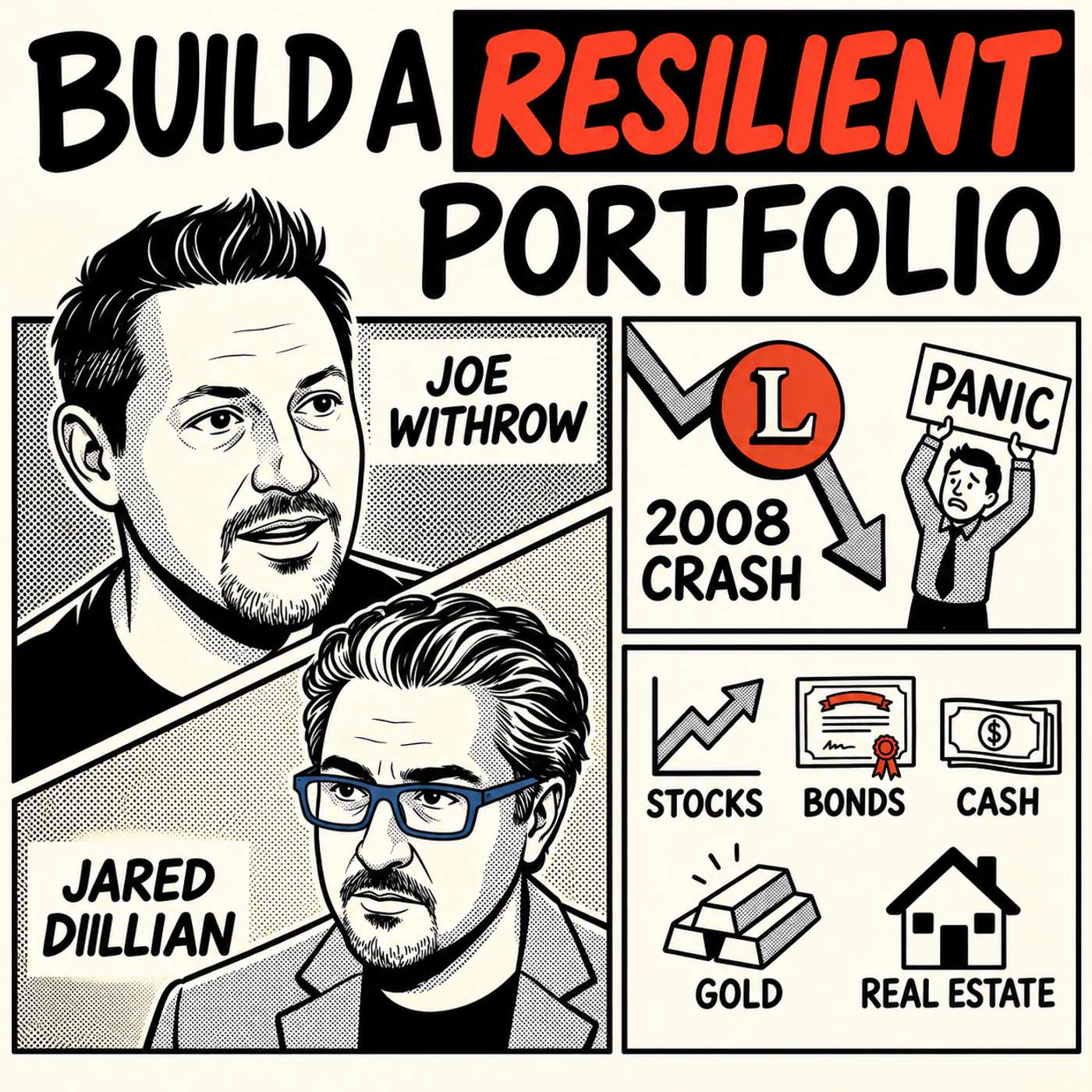
Jared Dillian ran Lehman Brothers' ETF trading desk right up until the firm collapsed in September 2008 — then launched his own research letter a month later. Joe sits down with Dillian, editor of The Daily Dirt Nap and author of the new book The Awesome Portfolio, to talk through what he saw inside a dying Wall Street firm and the five-asset allocation strategy he built in response: 20% each in stocks, bonds, cash, gold, and real estate, rebalanced once a year.
Jared opens with the view from inside Lehman as it died — management insisting the firm would turn it arou...
Quality Over Quantity: Private Credit, Hedge Fund Risk & the True Test of Your Capital (with Hans Toohey of Remnant Finance)
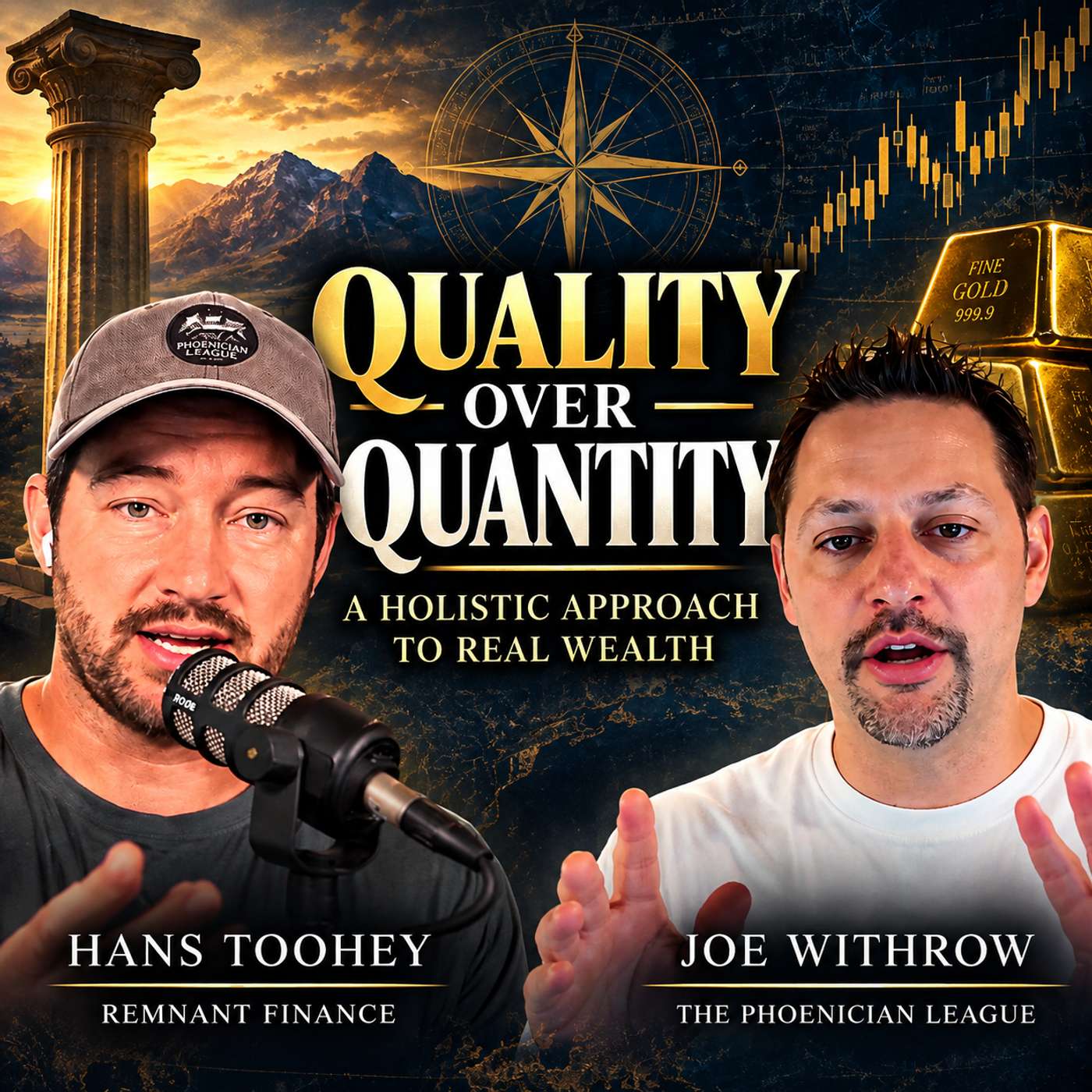
Private credit was a $250 billion niche a decade ago. Today it's a $2-3 trillion market — and most of it sits on the exact same balance sheets as your 401(k), your pension, and your index fund. Joe joins Hans Toohey on the Remnant Finance podcast for a conversation that starts as a breakdown of the private credit market and turns into a full framework for judging whether your capital actually protects you, or just looks good on a statement.
Joe and Hans unpack how a decade of zero interest rate policy built a shadow lending market now facing a...
The Fed's Bluff — Kevin Warsh, Jackson Hole, and the End of Forward Guidance
Fed Chair Kevin Warsh stood at the podium in Jackson Hole and told the room almost nothing — no rate commitment, no signal on what would move him either way, just a quietly Hayekian "our knowledge just doesn't extend that far." Within minutes, the two-year Treasury yield hit a one-month high, rate-hike odds nearly doubled, and gold and Bitcoin both sold off — over a speech that essentially said we can't predict the future.
Joe Withrow argues that's not indecision, it's an institutional era ending: Warsh already ended forward guidance months ago (a call Joe made back in Episode 12), and m...
How to Actually Build Wealth With Real Estate (with Ron Phillips of Lineage)

Why has real estate only posted a negative year seven times in the last 77 years?
Joe sits down with Ron Phillips, founder of Lineage (formerly RP Capital), who traces his path from a fired sales director with no money to a landlord forced into the rental business by a 2004 HUD rule change — and how that accident became a company that has helped clients buy over a billion dollars in investment real estate. Ron breaks down why the team around a property matters more than the property itself, the leverage math that turns modest appreciation into double-digit returns, an...
The All-In Bet: NVIDIA's $500 Billion Financing Package and the Real Case for AI Infrastructure

NVIDIA just assembled a $500 billion financing package alongside six of the largest pools of private capital on the planet — for a company generating roughly $50 billion in free cash flow a quarter. Joe uses that tension to break down both sides of the AI infrastructure debate: the bear case (hyperscaler capex approaching $700 billion this year, vendor financing and circular debt, data center securitization drawing 2008 comparisons) and the bull case (real cloud revenue growth near 40%, multi-year contracted backlogs).
Then Joe makes the argument nobody else is making — that Silicon Valley, corporate America, and the federal government are all in on t...
Alexander Hamilton, the American System, and How a Professional Poker Player Became a Libertarian
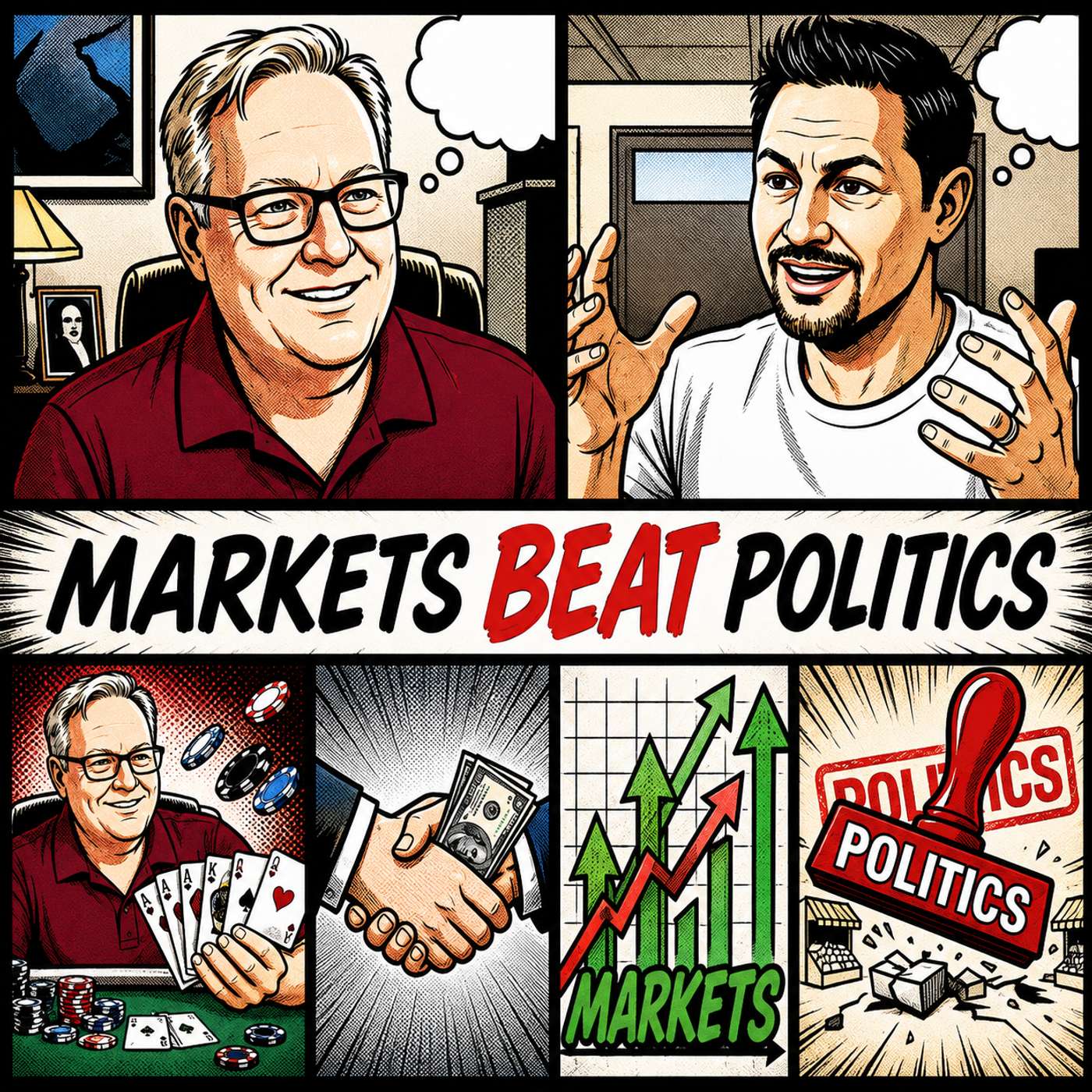
What did Alexander Hamilton actually believe about sound money and central banking — and how does a professional poker player end up embracing libertarian philosophy? Joe sits down with Adam Haman, who walks through his years as a professional poker player, the psychology and probability that shaped his thinking, and how that world became the on-ramp to his first political awakening as a libertarian. Adam argues technical analysis is really the study of market psychology, not just math — a thread that carries straight into the heart of the episode.
From there, Adam and Joe dig into the American Syst...
The Cold Card Bug That Drained 2,000 Bitcoin — And the Real Story of the Bitcoin Block Size Wars
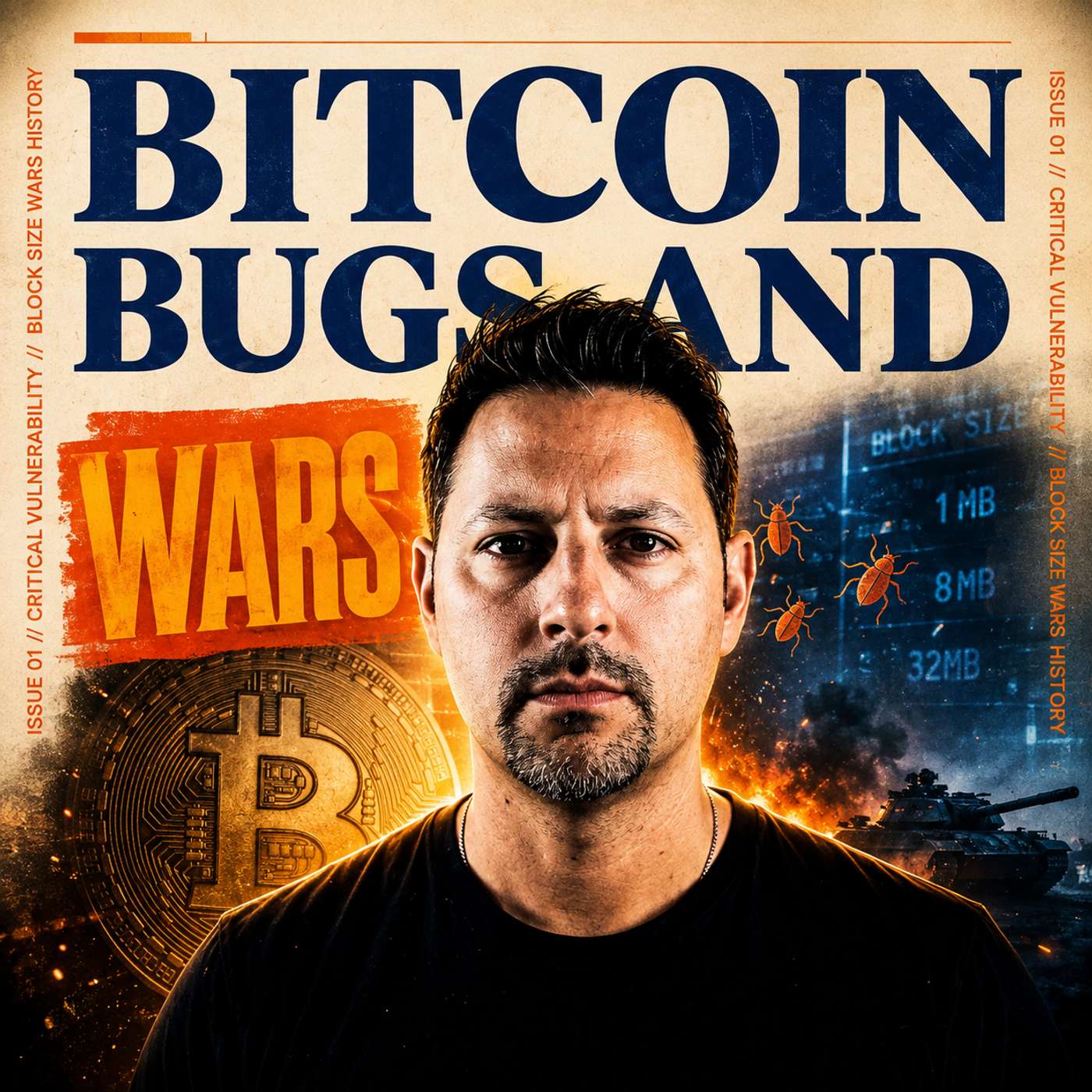
A hardware wallet bug just drained roughly 2,000 Bitcoin from people who thought they'd done everything right. Joe breaks down what actually happened with Cold Card's firmware, what a genuinely secure self-custody setup looks like today — pairing a device like SeedSigner with Sparrow Wallet and a personal Bitcoin node — and why owning a hardware wallet is never the same thing as having a secure setup.
From there, Joe makes the case that Bitcoin was built to be peer-to-peer digital cash, not just a thing to hold and never touch, pointing to small businesses and local economies already proving that...
The 3,000-Year-Old Secret Behind Warren Buffett's Fortune — And Who Funds America's Rebuild
Warren Buffett didn't get rich by picking stocks. Joe thinks that's the biggest misunderstanding about the most famous investor alive — and the real secret behind his fortune is a three-thousand-year-old idea that goes back to Joe's own Phoenician ancestors, loading ships in the ancient Mediterranean.
In this episode, Joe picks up a question left open last month: Fed Chairman Kevin Warsh has called the central bank's $6.7 trillion balance sheet "bloated" and signaled he intends to shrink it. If the Fed steps back as the economy's permanent source of liquidity, who actually funds a generational rebuild — the factories, the...
The Kingdom of God Is In Your Midst — What Jesus Actually Meant About Money and Independence
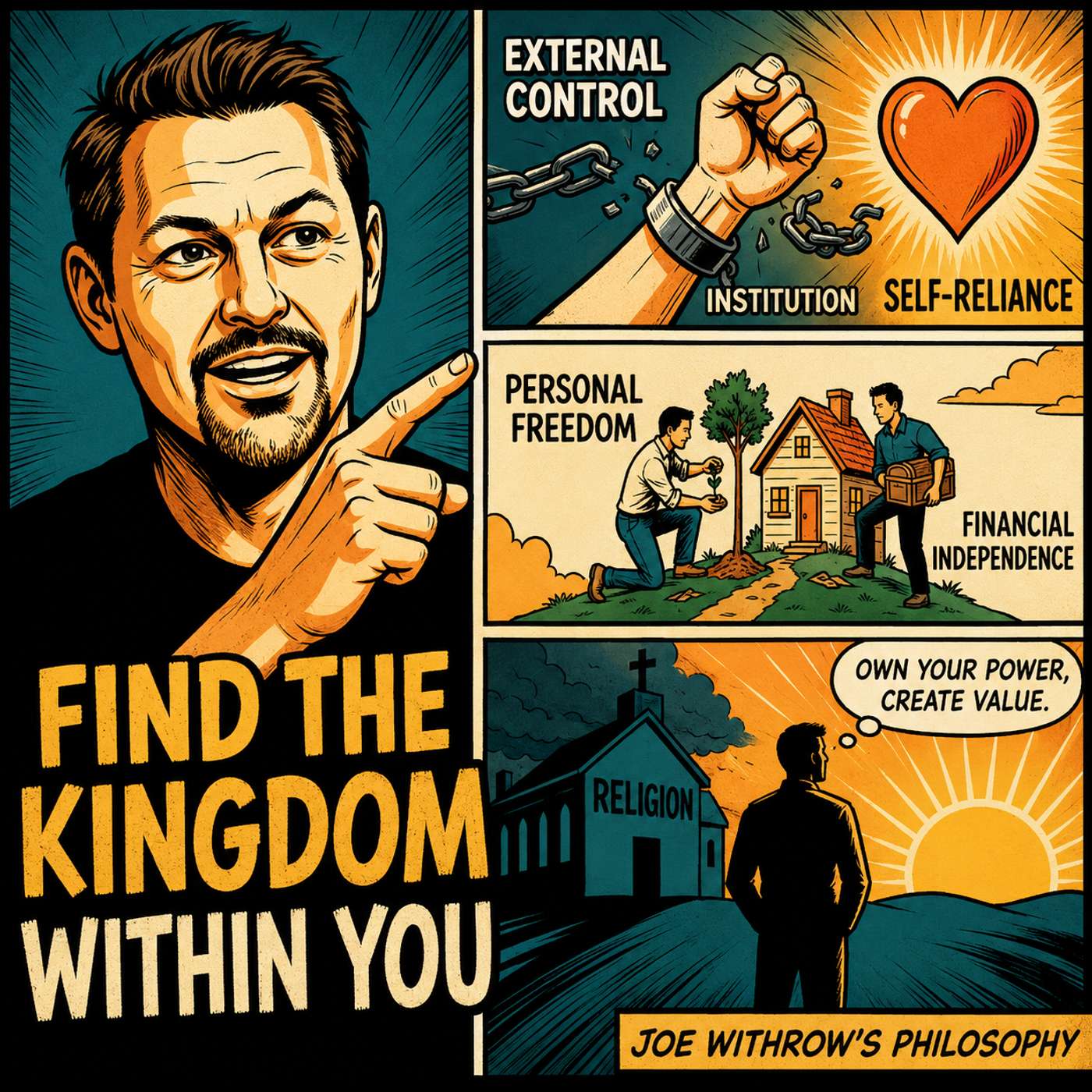
There's a moment in the Gospel of Luke where a group of Pharisees corners Jesus on a road between Samaria and Galilee and asks him a loaded question: when is the kingdom of God coming? To everyone standing there — the religious establishment, the crowd, the Roman soldiers watching from a distance — that wasn't an abstract question. It meant a king, an army, and a date when the Romans would be driven out of Jerusalem.
In this episode, Joe steps away from the usual finance and economics beat to dig into how Jesus answered that trap, and why that...
Why Kevin Warsh Just Put Marc Andreessen in Charge of Fixing Inflation
Two weeks ago, Joe told listeners that new Fed Chairman Kevin Warsh isn't a Keynesian — that Warsh had said, in public, that inflation is a choice. This week, Warsh named the people running his five internal Fed task forces, built to challenge fifty years of institutional orthodoxy. The most interesting name on the list isn't an economist at all — it's Marc Andreessen, the Netscape co-founder and Andreessen Horowitz venture capitalist, tapped to lead the task force on AI, productivity, and jobs.
Joe walks through why that pick is a real signal about which theory of inflation this Fed...
The Hollowing — How Financialization Quietly Ate the American Economy
Picture Detroit in 1950 — the fourth-largest city in America, nearly two million people, assembly lines running day and night, and a high school diploma enough to buy a house, a car, and a comfortable life. Now picture it today: a 61% population collapse since that peak, and roads, water mains, and power infrastructure that generation built sitting largely untouched for decades.
Joe Withrow asks the obvious question: capital doesn't just vanish, so where did the wealth that built those cities actually go?
In this episode, Joe completes a three-part turn he's been tracking since Episode 11. Joe walks thr...
The Fed Chairman Who Isn't a Keynesian — Kevin Warsh and the Regime Change at the Fed

Something big is happening to the American economy right now, and most people haven't noticed it yet. Five decades of Keynesian economic policy are being repudiated.
For more than half a century, the people running the most powerful financial institution in the world shared one worldview — the economy is a machine to be managed from the top down, government spending stimulates growth, and inflation just happens like the weather. That was the consensus.
Then Kevin Warsh became Chairman of the Federal Reserve and promised "regime change." Joe Withrow assumed, like most people, that just meant cutt...
The American System Comeback — Hamilton, Bessent, and the New Investment Thesis

In 1791, Alexander Hamilton wrote that every nation ought to possess within itself all the essentials of national supply. Last week, the sitting Treasury Secretary of the United States quoted those exact words at the Economic Club of New York — the same institution where JP Morgan once had a table, and where the men who designed the Federal Reserve laid their plans. Scott Bessent titled his speech "American Economic Statecraft in the 21st Century." He said explicitly that globalization and financialization are being reversed. That's not a policy adjustment. That's a repudiation of 113 years of financial architecture.
In th...
Financially Bulletproof — The Five-Pillar Blueprint for the New Financial Era

In 1752, Benjamin Franklin helped found the first insurance company in America. It wasn't a government program. It wasn't a corporation run by distant professionals. It was a group of Philadelphia property owners who pooled their resources to protect each other — self-directed, community-driven, built on real assets and real relationships. Joe Withrow argues that model is not nostalgia. It's the template for what serious investors need to build today.
The last three episodes built the case for why the inherited financial architecture no longer fits the world we're in. Episode 7: the four-decade era of falling rates and cheap mo...
An End Run Around the Fed: Bitcoin as Money, the 21 Million Hard Cap, and the Coming Institutional Wave

In 2012, Joe Withrow clicked a link on a political forum, read about Bitcoin for twenty seconds, and closed the tab. Magic internet money? No thanks. It was trading at seven dollars. He walked away — and it ran 120x without him.
Two years later, Bitcoin came back across Joe's desk at $850 per coin, and he finally sat down to learn what he had dismissed. What he found wasn't a speculative asset. It was money — with its own peer-to-peer payment network built into the protocol, a hard cap of 21 million coins that cannot be changed, and the ability to send...
The Number Nobody Changed — Gold Remonetization and the New Financial Architecture
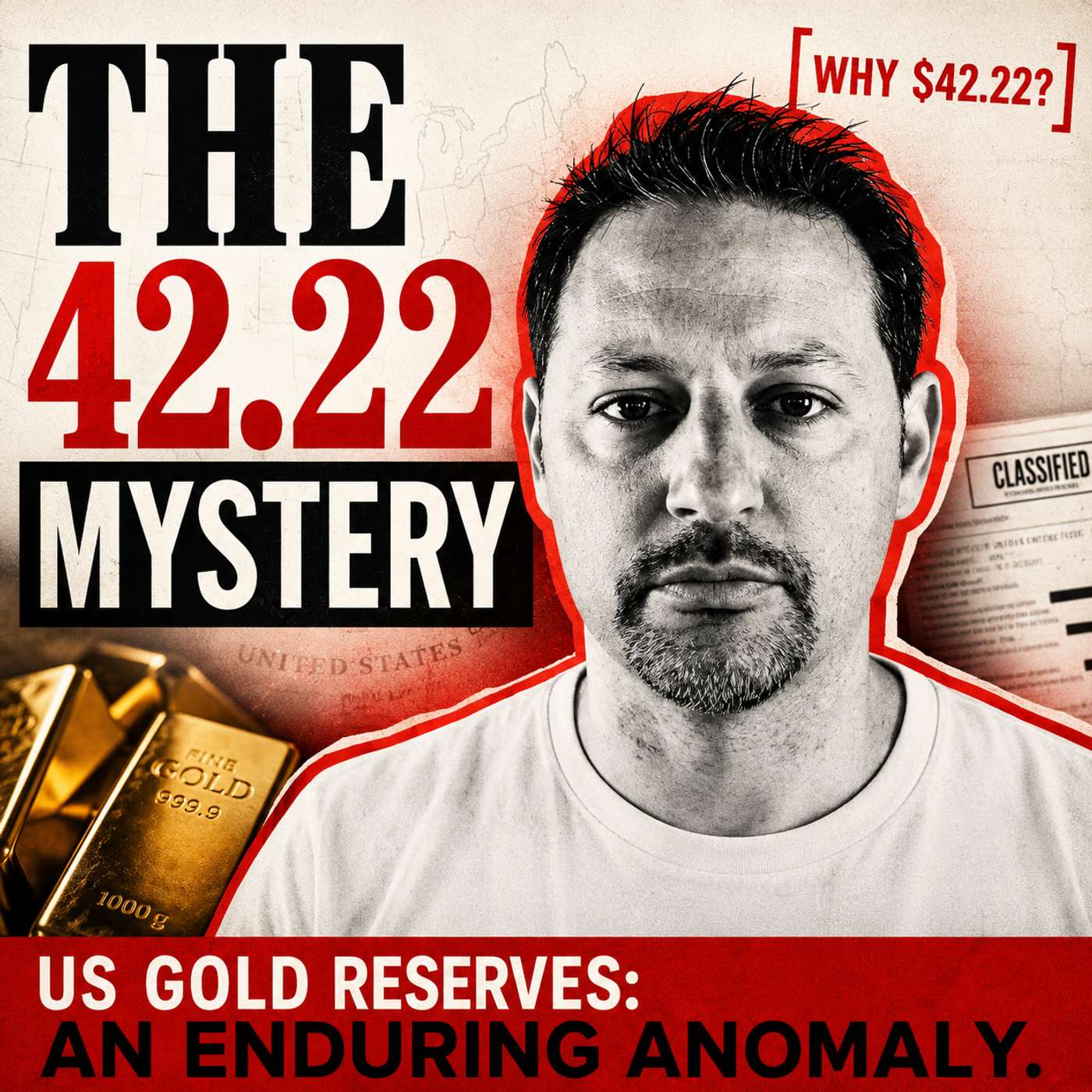
There is a number buried inside the US government's financial statements that almost nobody talks about. The US Treasury carries its gold reserves — 8,133 tonnes, the largest sovereign gold reserve in the world — at $42.22 per ounce on its books. That number hasn't changed since 1973. Gold is trading above $4,500. The gap between what's on the books and what's in the vault is more than $1.2 trillion. Someone made a choice to leave that number frozen. And understanding why that choice was made — and why it may be about to be revisited — tells you almost everything about the monetary era we're entering.
In thi...
The Unspoken Financial War — How LIBOR's Collapse Reshaped the World

For forty years, the global financial system ran on LIBOR — the London Interbank Offered Rate — a benchmark set daily by a handful of major global banks submitting their own estimates with no collateral, no verification, and every incentive to game the number. In 2012, the manipulation scandal broke wide open. The banks had been doing exactly that — for years — across hundreds of trillions of dollars in financial contracts. Regulators collected fines and moved on. But a small group at the Federal Reserve decided the architecture itself had to change.
What followed was a four-year project to replace LIBOR with SOF...
We Have It in Our Power — The Founding of the Phoenician League

In Episode 6, Joe Withrow tells the story he's been building toward across the entire series — how the destruction of something he helped build became the blueprint for something entirely new.
After years inside the investment newsletter industry, Joe had a clear picture of what the business couldn't do. Readers got a new stock recommendation every month, but no structure. No asset allocation. No guidance on the assets that actually build lasting financial security — gold, Bitcoin, real estate, mortgage notes, max-funded life insurance — because those assets don't have tickers. You can't put them in a newsletter. And no matter...
When a Public-Facing Company Gets Raided: An Insider Account

In Episode 5, Joe Withrow tells the story he's been building toward since the series began — what happened when the investment research company he helped build was taken public through a SPAC and everything changed.
After years inside Legacy Research working alongside some of the most respected minds in the financial publishing industry, Joe watched a reverse merger bring in outside operators who had no connection to the business, its mission, or its people. What followed was a slow-motion collapse: the founder pressured out, a new CEO installed, the company culture gutted, and hundreds of millions in shareholder va...
Breaking Into the Investment Research Industry

Friday evenings, a glass of whiskey, and a stack of research reports from the minds he admired most. Then one night he found an ad tucked inside the Bill Bonner Letter. They were looking for an analyst.
It took two phone interviews, a two-day visit to Delray Beach, and the willingness to leave his family behind for a year. But Joe said yes.
What followed was a real education. Working inside Legacy Research Group — alongside industry greats — Joe learned what professional investment analysis actually looked like from the people who built the industry. He became the...
Escape the Rat Race: Mountain Living, Real Estate, and Starting Over

Episode 3: Escape the Rat Race
After two episodes inside the corporate banking world, Joe Withrow makes his move.
In this episode, Joe shares what happened after he walked away from Bank of America's Special Assets Group — the decision to leave the city behind entirely, buy five acres at the end of a gravel road deep in the mountains of Virginia, and try to build something of his own.
What followed was a real education. A 1970s farmhouse full of surprises — including black snakes that, as Joe discovered, can climb straight up a chimney and...
Bank of America's Special Assets Group: An Insider Account

In Episode 2, Joe Withrow takes us inside Bank of America's Special Assets Group — and what he found there was worse than anything he saw at Wells Fargo.
After walking away from the loss mitigation department, Joe thought he'd landed his big break. A pristine downtown tower. An officer title. Real banking work — financial analysis, risk assessment, doing it by the book.
Then he submitted his first reports. The next morning, every single one came back rejected.
What the manager told him next — and what Joe was actually being asked to do to small busine...
The 2008 Mortgage Crisis: An Insider Account

In 2009, Joe Withrow was a young banker sitting inside Wells Fargo's loss mitigation department — in an obscure industrial park on the edge of town — watching the government and the banks quietly bury the 2008 mortgage crisis.
What he saw changed everything. Banks were rolling fees and penalties into modified loan balances, adding tens of thousands of dollars to mortgages on homes whose values were collapsing. Nobody was tracking loan-to-value ratios. And when Joe raised his hand and asked a basic question, his boss told him to keep his head down and his mouth shut.
This is wher...
The Age of Paper Wealth is Ending - Welcome to The Phoenician League

The age of paper wealth is ending. Real assets are reasserting themselves. Each week, Joe Withrow — founder of the Phoenician League and veteran of corporate banking and investment research — breaks down macro themes, real asset investing, and the history behind the forces reshaping our financial world. No hype. No consensus. Just straight thinking about money and markets.
https://phoenicianleague.com/
