The Innovation Attorney Podcast
The Innovation Attorney is a publication about the intersection of venture capital, technology, public policy and law. theinnovationattorney.substack.com
Rare Earth Price Floors
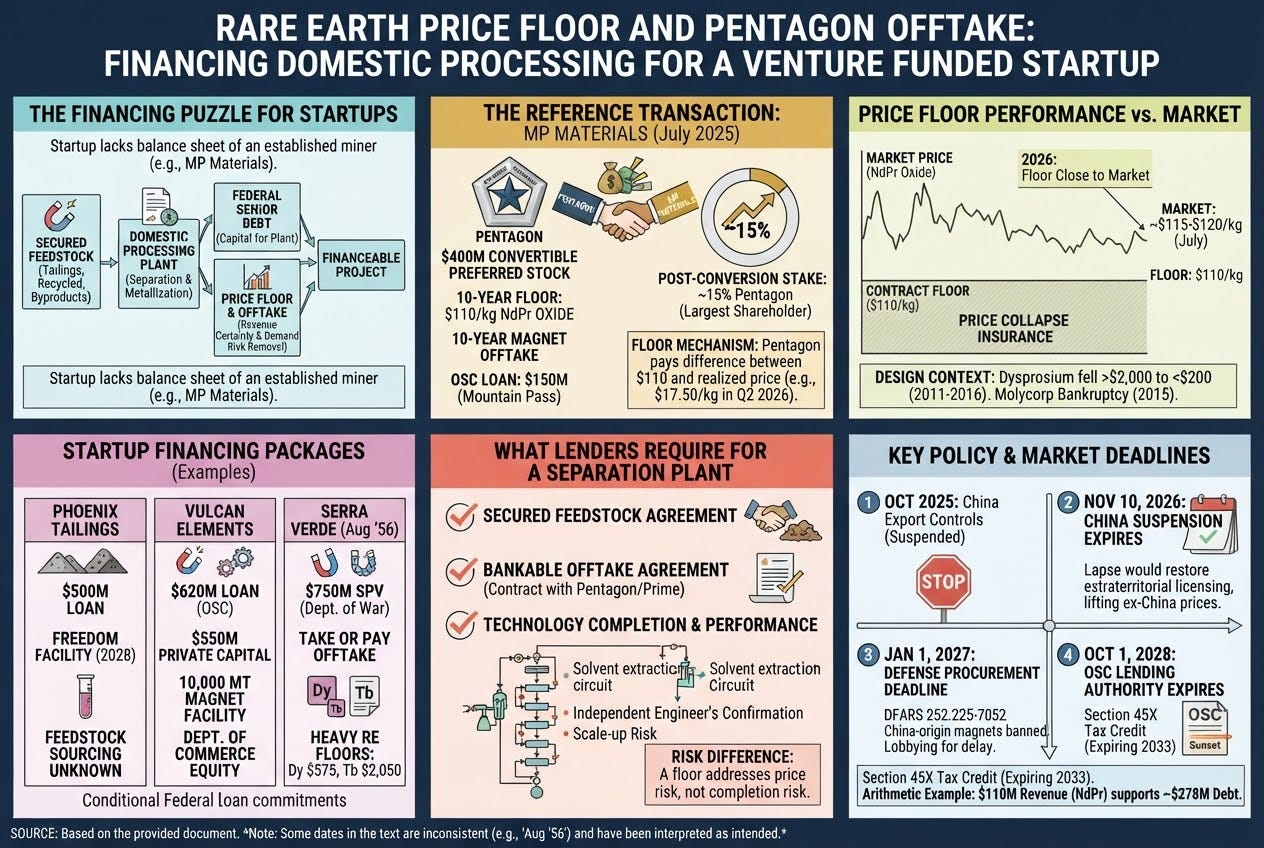
Domestic rare earth processing becomes financeable for a venture funded startup when a price floor and Pentagon offtake arrive with federal debt, as the $500 million Phoenix Tailings commitment shows. The floor removes price risk. The offtake removes demand risk. A processing plant still costs several hundred million dollars before it ships a kilogram, and in 2026 the money that pays for it is coming from the government’s own lending office.
The reference deal is the July 10, 2025 agreement with MP Materials. The Pentagon bought $400 million of convertible preferred stock, took a warrant at $30.03 per share, guaranteed $110 per kilogram on...
Customer Acquisition Cost Benchmarks By Channel
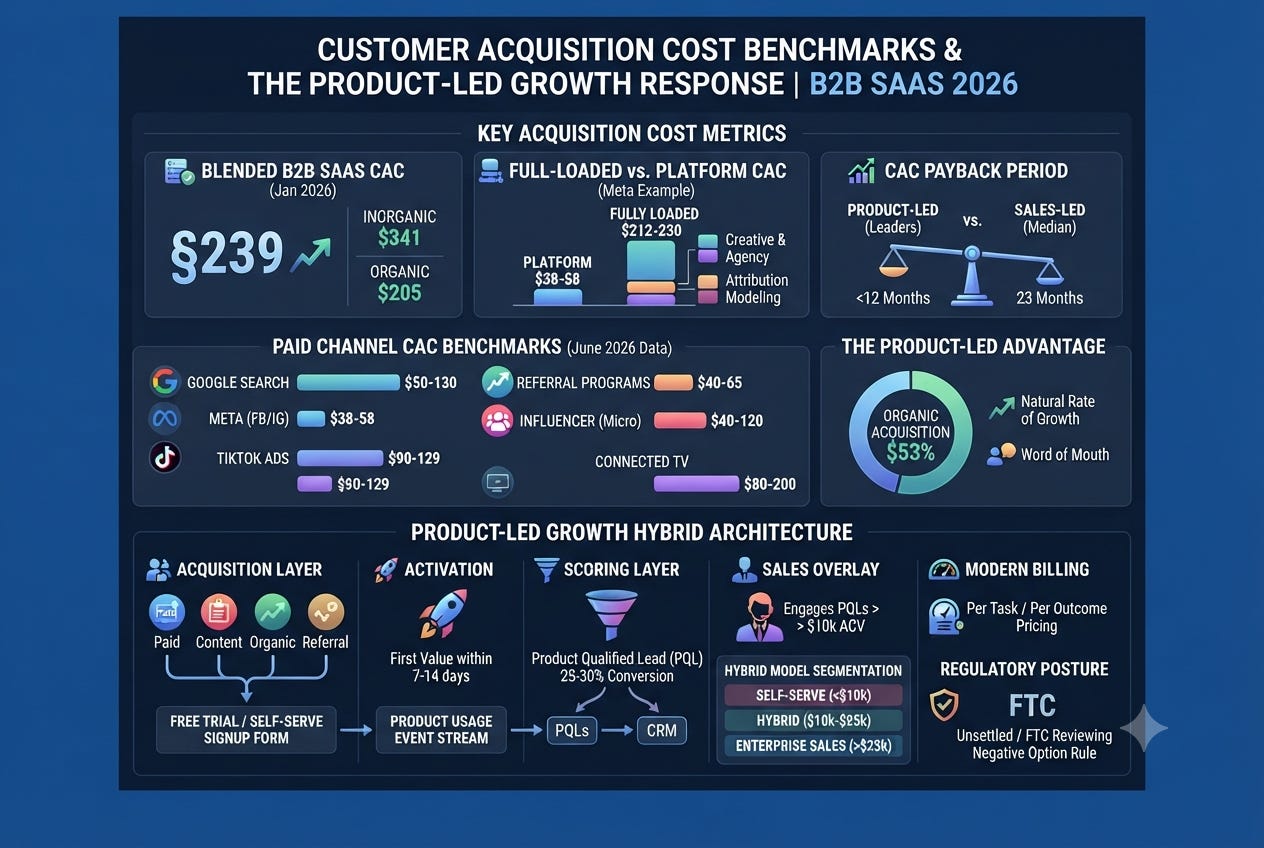
Cursor added its first enterprise sales representative only after crossing 200 million dollars in annual recurring revenue. Before that point, an artificial intelligence coding company that eventually reached 500 million dollars in revenue in under 24 months closed every dollar of it without a single salesperson picking up a phone. That fact alone should worry any founder who just approved a 2026 marketing budget built around the assumption that paid advertising is still the cheapest way to add a customer, because the channel level data says otherwise, and the gap between what a platform reports and what a customer actually costs is wider...
Elk River Nuclear Reactor in Minnesota
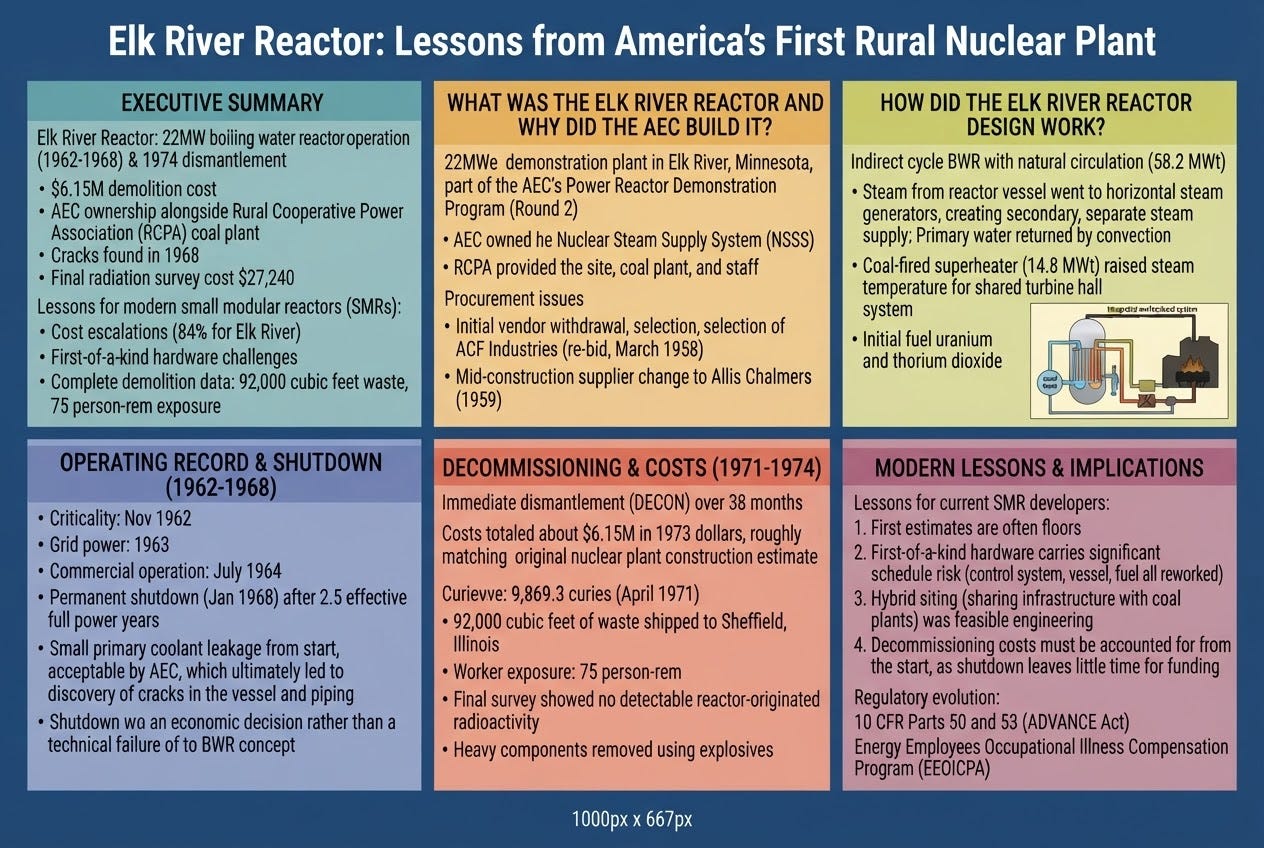
The Elk River nuclear reactor in Minnesota ended operation in January 1968 after vessel cracks appeared, and the Atomic Energy Commission spent about $6.15 million to dismantle it by 1974. The plant had run for about 2.5 effective full power years. The repair bill was larger than anyone would pay for a demonstration plant. Its decommissioning record is one of the earliest complete cost datasets for a small power reactor in the United States, and developers of microreactors are about to pay for the lessons it contains.
The plant was a 22 megawatt boiling water reactor about 30 miles northwest of Minneapolis. A...
FERC Load Orders Reshape AI Data Center Hookups
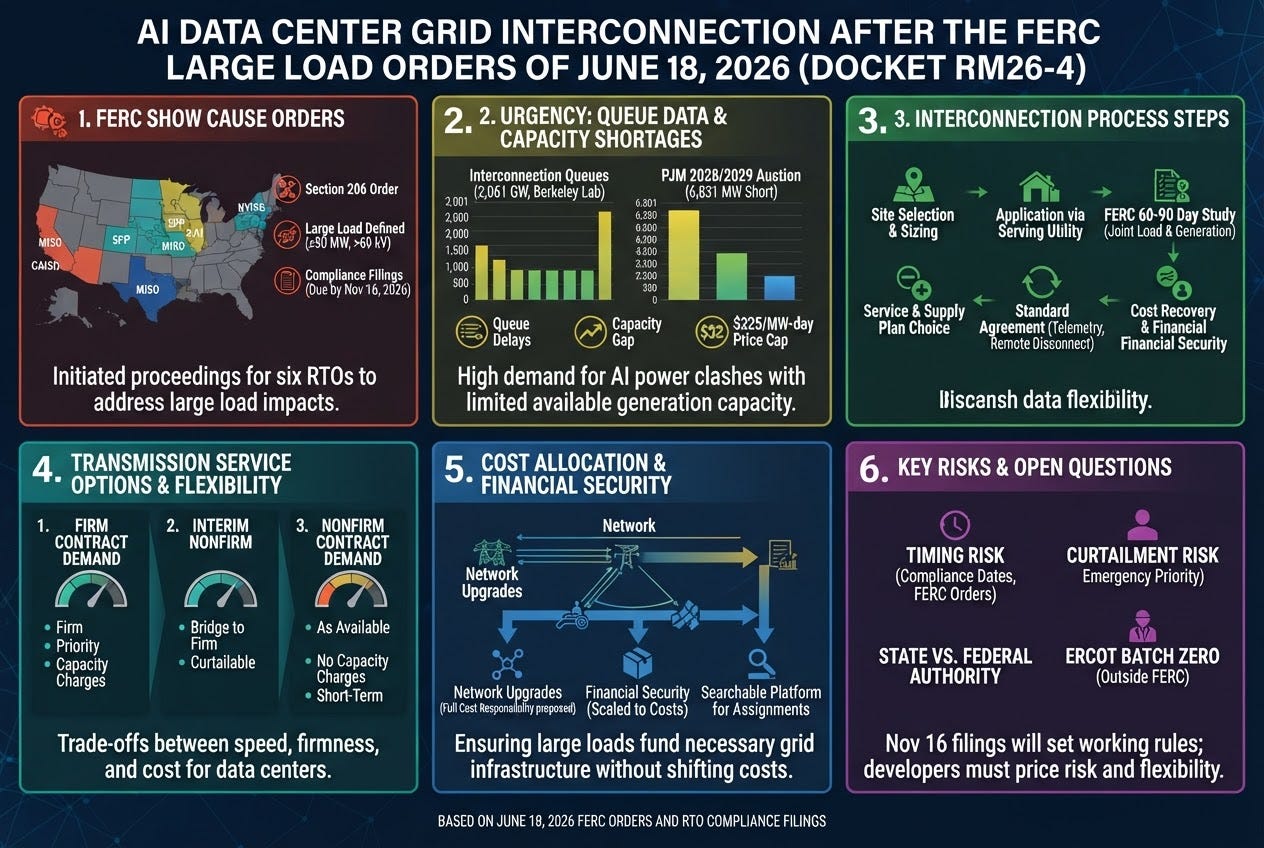
An AI data center gets interconnected quickly after the FERC large load orders of June 18, 2026 only by accepting curtailment or bringing its own power supply. PJM’s capacity auction on July 14, 2026 cleared 6,831 megawatts short of the reliability requirement, and PJM’s August 13 filing names the new data center without its own capacity as the first customer to be switched off in an emergency. Developers who read the June orders as a promise of faster connections are reading half of the record.
The June orders are real and they matter. In docket RM26-4, FERC began with a dire...
How Should a Fermentation Startup Raise a Series A
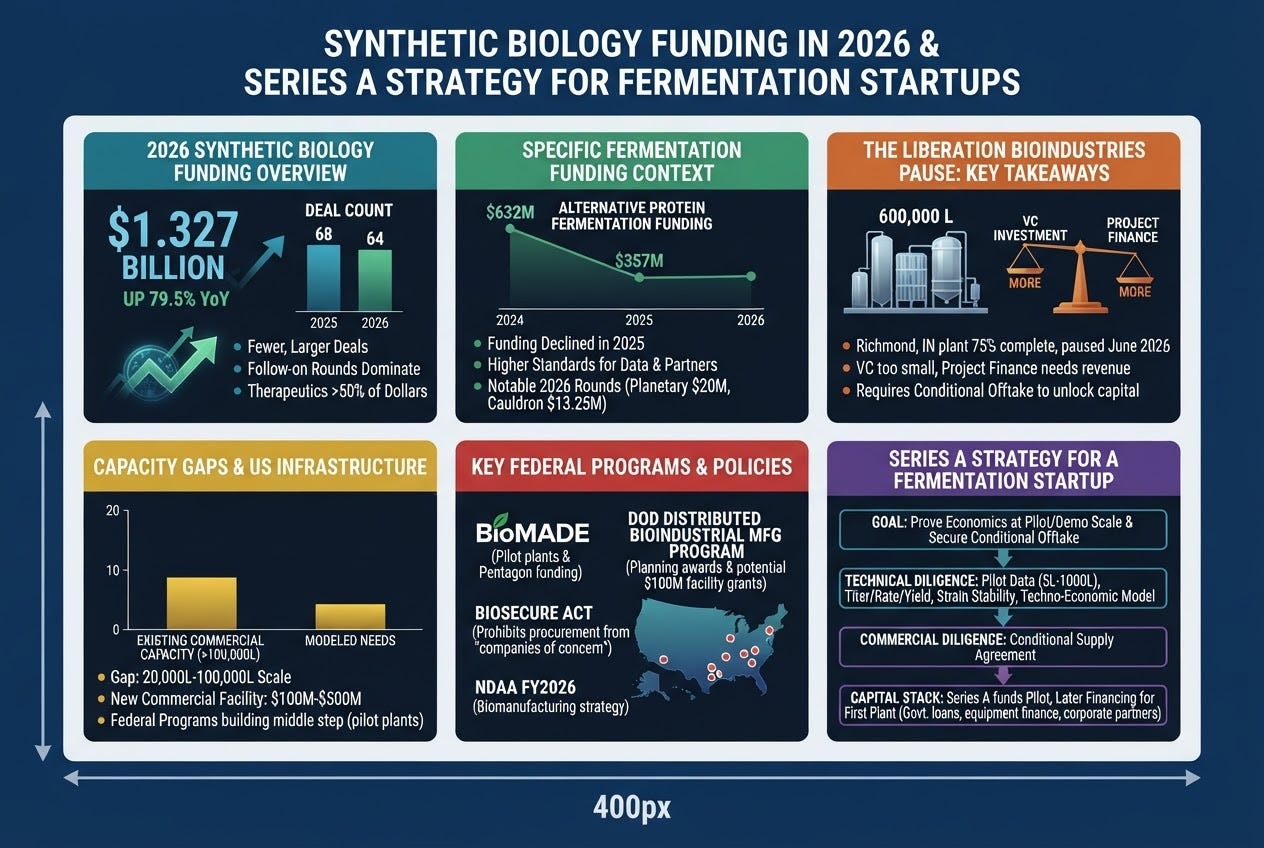
A fermentation startup raising a Series A in 2026 needs pilot data and conditional offtake, because Liberation Bioindustries stopped building its 600,000 liter Indiana plant in June 2026 without them.
Synthetic biology investors put $1.327 billion into 64 deals through September 22, 2026, up 79.5% from the prior year. Series A deals rose from 17.6% to 32.8% of all deals, and the median disclosed round reached $13.52 million. The stage is open, and investors are using it to demand proof of production economics.
Liberation’s plant is about 75% complete. The company has raised $70 million to $80 million in equity, assembled a large equipment financing package and secured a...
When Will Supersonic Passenger Flights Return After Concorde Retired
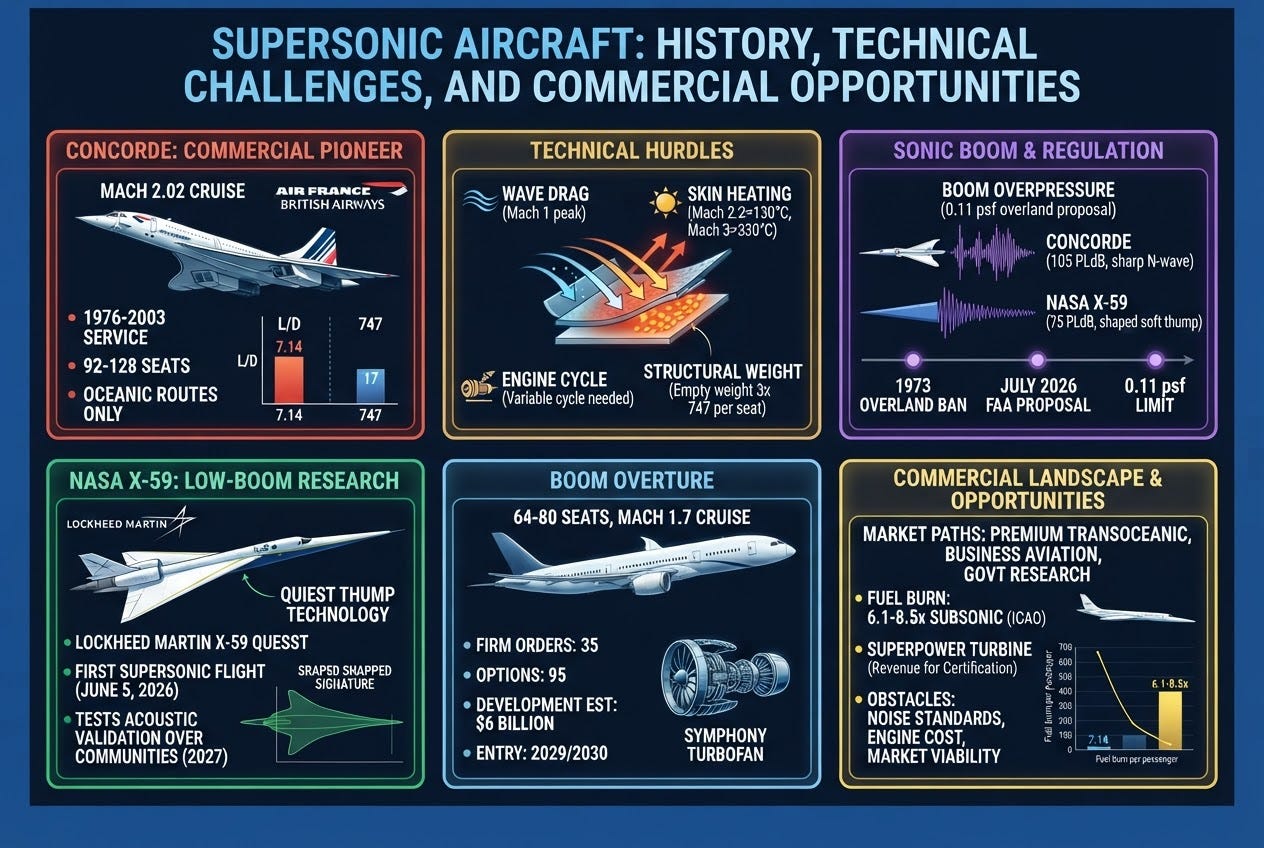
Supersonic aircraft burn 6.1 to 8.5 times more fuel per passenger than twin aisle jets, and the FAA’s July 2, 2026 proposal addresses only sonic boom overpressure at 0.11 psf.
That gap shapes every business plan now being financed. Docket FAA-2026-6935 would repeal the speed based overland ban in 14 CFR 91.817, which dates to 1973, and the comment period closed on August 17, 2026. The proposal reserves landing and takeoff noise for a later Part 36 rule, and the FAA does not expect type certificate applications for supersonic airliners until that rule exists. Executive Order 14304 sets June 6, 2027 as the deadline for finalizing noise certification standards.
...AI Agents Absorb Product Manager Tasks
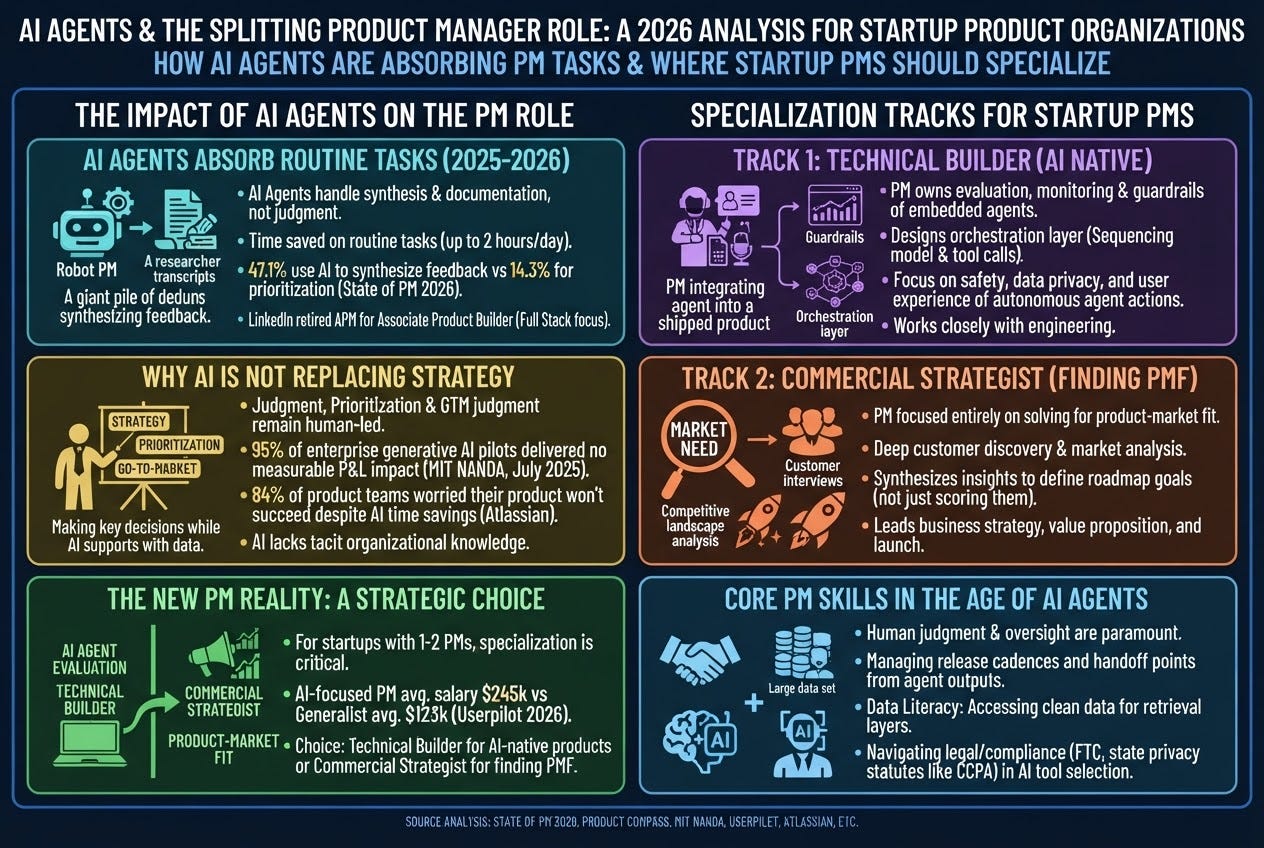
AI agents in 2026 are absorbing product management’s feedback synthesis and documentation work, and LinkedIn retired its Associate Product Manager program in favor of an Associate Product Builder track. A State of Product Management 2026 survey of roughly 250 professionals found 47.1 percent of respondents already hand feedback synthesis to AI, while only 14.3 percent trust AI with prioritization, the judgment call that still separates one product manager from another. A startup with one or two product managers now faces a real choice: push toward the technical builder track that ships product directly with AI, or the commercial strategist track that owns the pr...
How Do Startups Keep Code Quality With AI Coding Agents
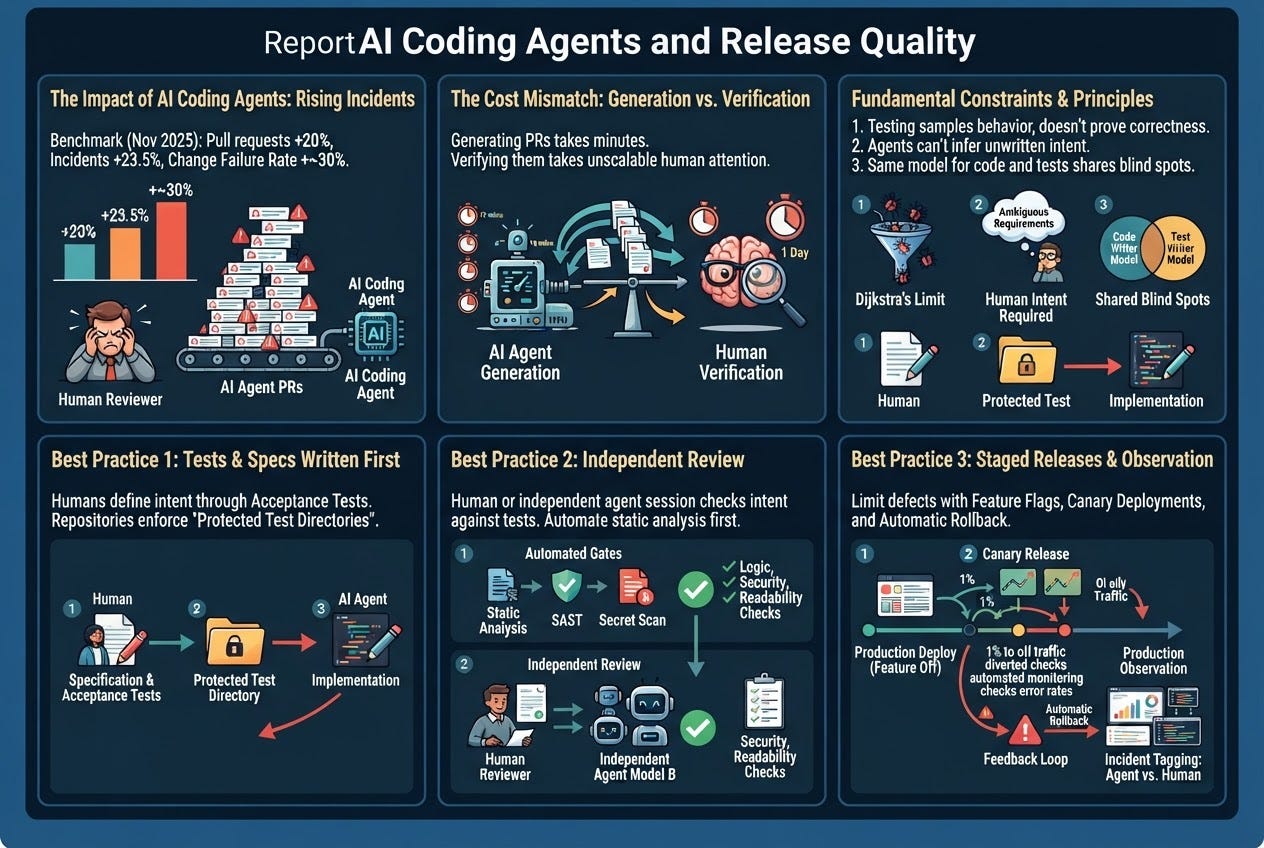
AI coding agents lifted pull requests per author 20 percent and incidents per pull request 23.5 percent in a 2025 benchmark, compounding to about 48 percent more incidents per engineer.
That 48 percent is my arithmetic: 1.20 times 1.235. The benchmark itself, published November 12, 2025 from a survey of more than 50 engineering leaders, reported the two inputs and a change failure rate up about 30 percent. A startup that adopts coding agents without changing how it verifies and releases code should expect that curve. A startup that changes four practices has a defensible chance of bending it.
Why does more generated code produce more...
How the Project Pele Microreactor Works
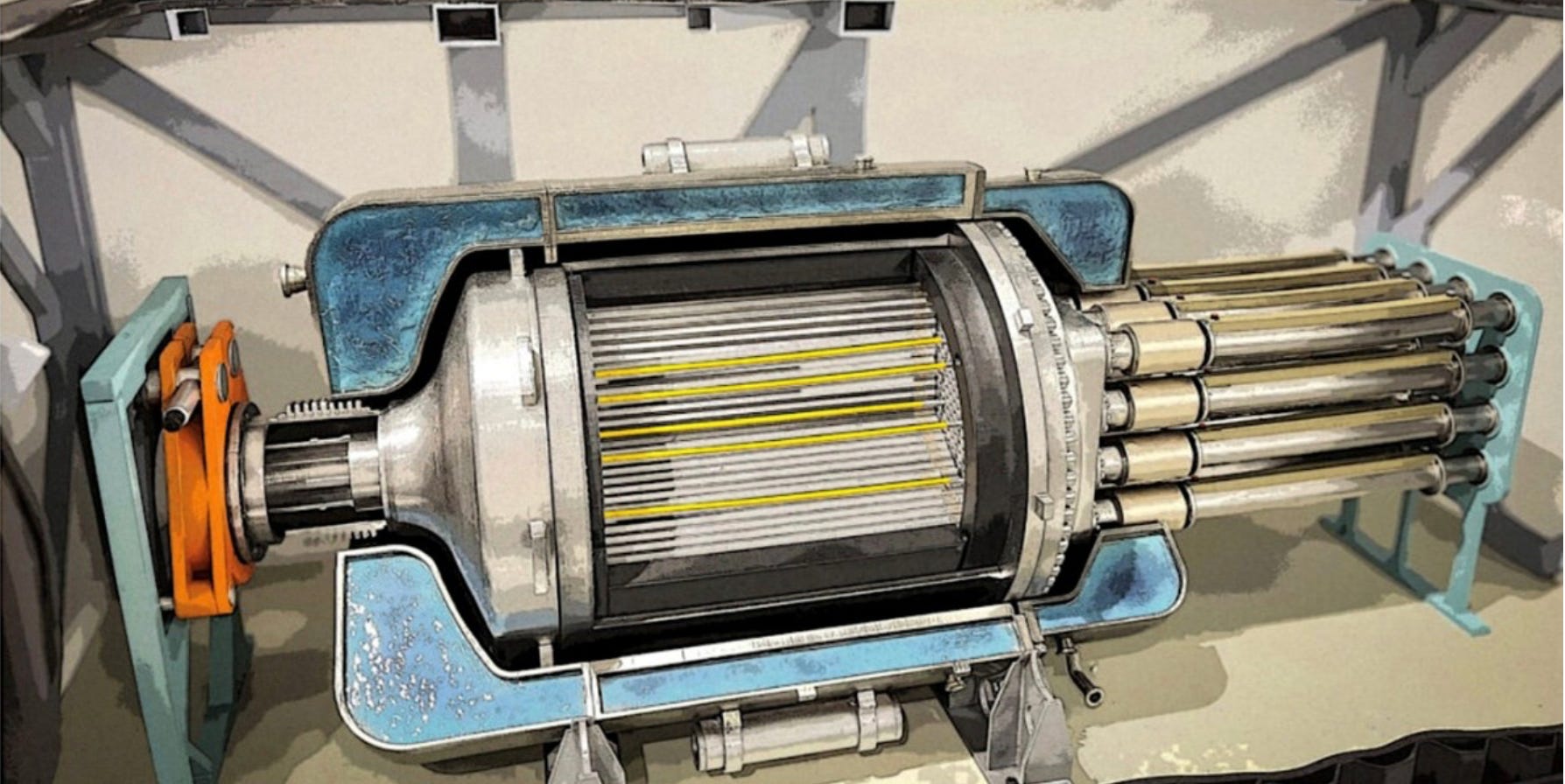
Pele is a transportable, high temperature, gas cooled reactor rated at 1.5 megawatts of electricity, fueled with 40,000 TRISO compacts that reached Idaho on November 5, 2025. It operates under Department of Energy authorization, outside Nuclear Regulatory Commission licensing. The prime contract, reported at about $300 million in June 2022, bought a prototype that now carries a three year schedule slip.
In August 2023 the program manager stated a goal of a running reactor at Idaho before the end of 2025. In late summer 2026 BWXT crews installed the core barrel in Lynchburg, Virginia, and the reactor has not yet shipped. Anyone planning a remote site...
How High Power Microwave Weapons Stop Drone Swarms
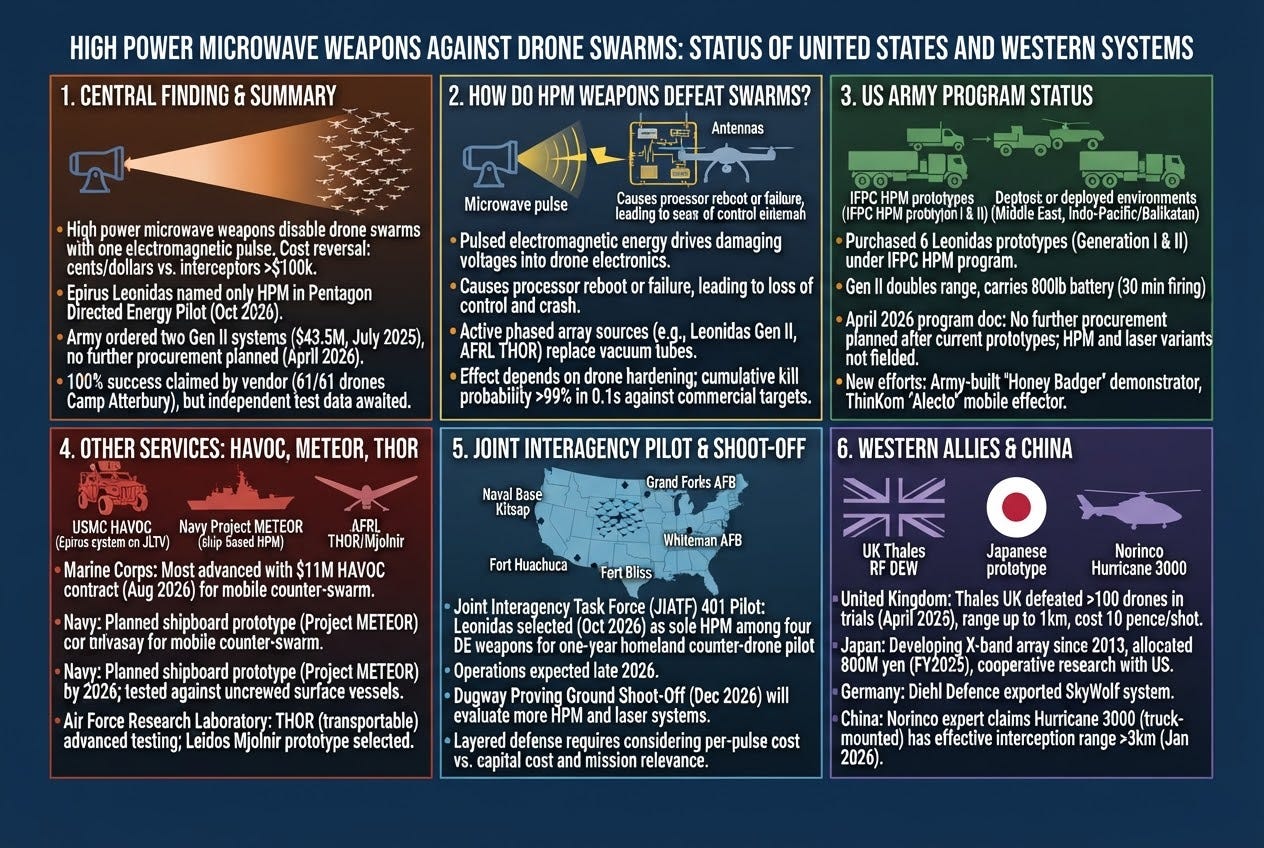
High power microwave weapons stop drone swarms with one electromagnetic pulse, and the Army paid Epirus $43,551,060 in July 2025 for two Generation II Leonidas systems. In October 2026 the Pentagon named Leonidas the only microwave weapon in a one year drone defense pilot at five bases, and the Army documented in April 2026 that it plans no further microwave purchases. The cost per shot runs in cents, the strongest test evidence comes from the vendor, and the range stops near one kilometer.
Cheap drones broke the cost logic of air defense. The Pentagon acquisition chief said in April 2024 that efforts...
Founder Equity Dilution: Owning Less Than Your Option Pool
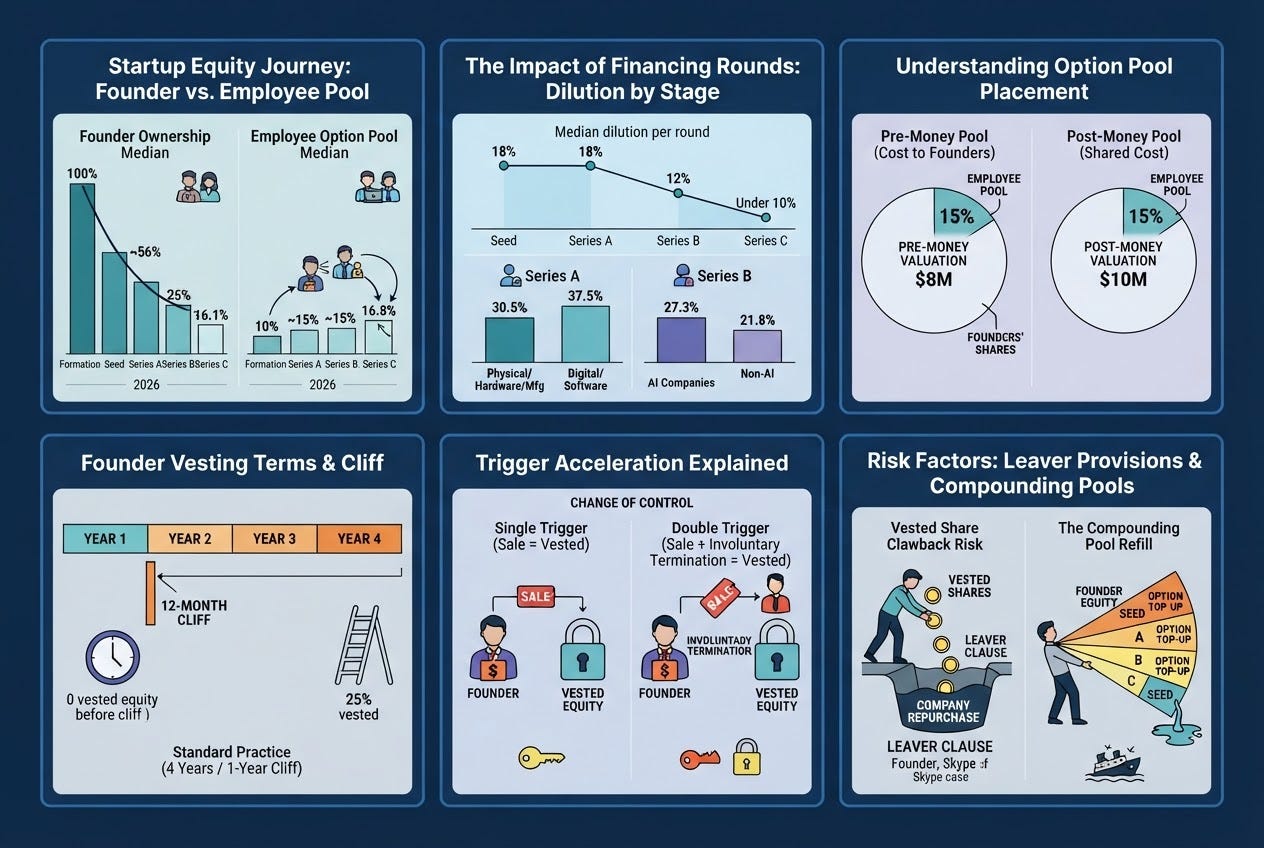
Founder Equity Pool Size and Vesting Terms at Company Formation
A founder who accepts a ten to fifteen percent employee option pool at formation without negotiating its placement on a post money basis, and who signs a standard four year vesting schedule with no double trigger acceleration, risks reaching a Series C financing holding less equity than the pool created to hire the company’s own staff. Venture financings closed through 2026 show a median founder holding 16.1 percent of a venture backed company at the Series C stage against a median employee option pool of 16.8 percent of that sa...
SNAP 10A Space Reactor
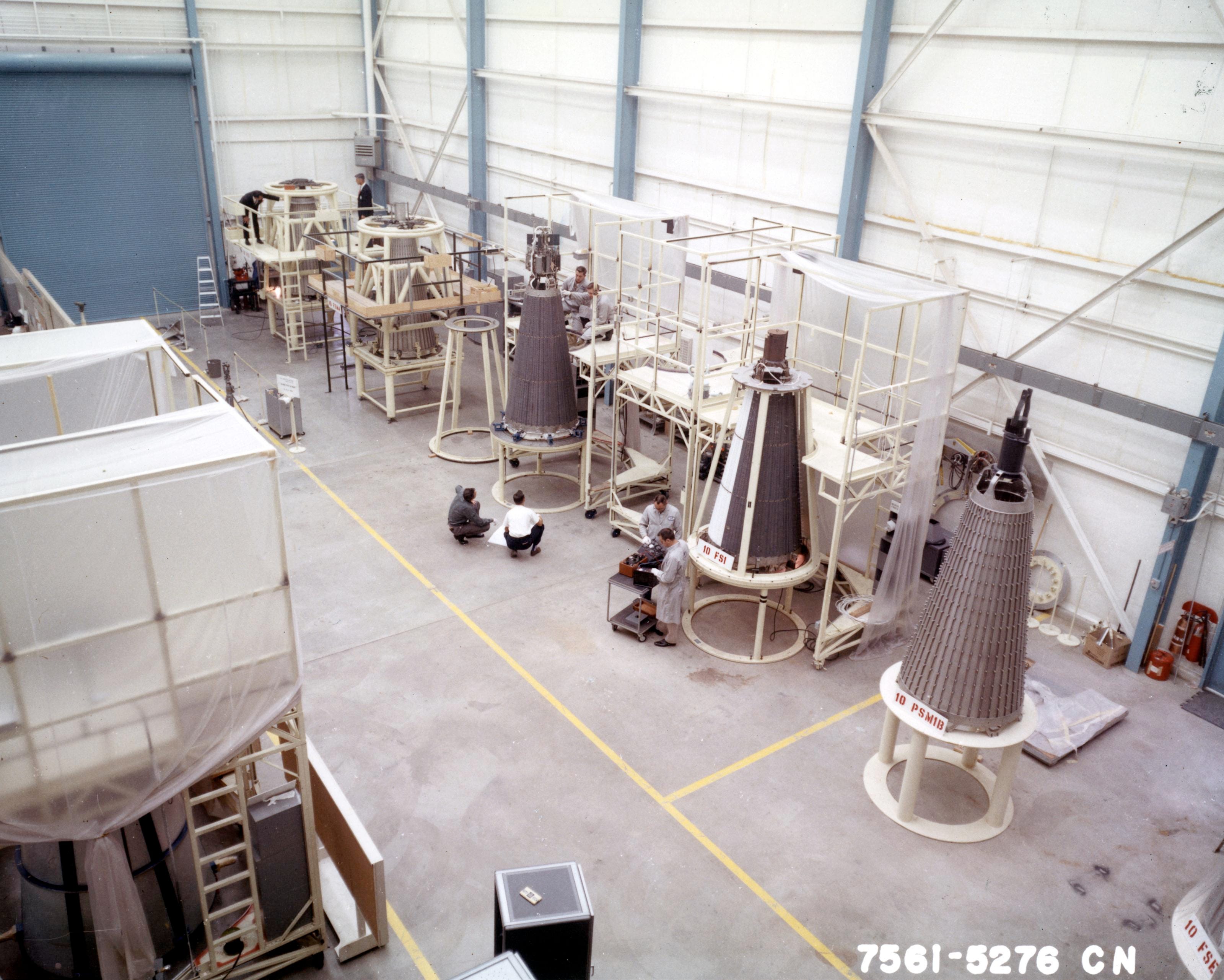
The SNAP 10A reactor, launched April 3, 1965, remains the only American fission reactor operated in space, and a failed voltage regulator ended its mission after 43 days.
The cause sat outside the core. A voltage regulator on the Agena upper stage failed, the reactor shut itself down on May 16, 1965, and the design had no way to restart. The reactor still circles the Earth in a polar orbit near 1,300 kilometers, and it has been shedding debris since 1979.
Atomics International built it for the Atomic Energy Commission SNAP program. Thirty seven rods of uranium zirconium hydride made about 30 kilowatts...
Advanced Nuclear Reactor Licensing
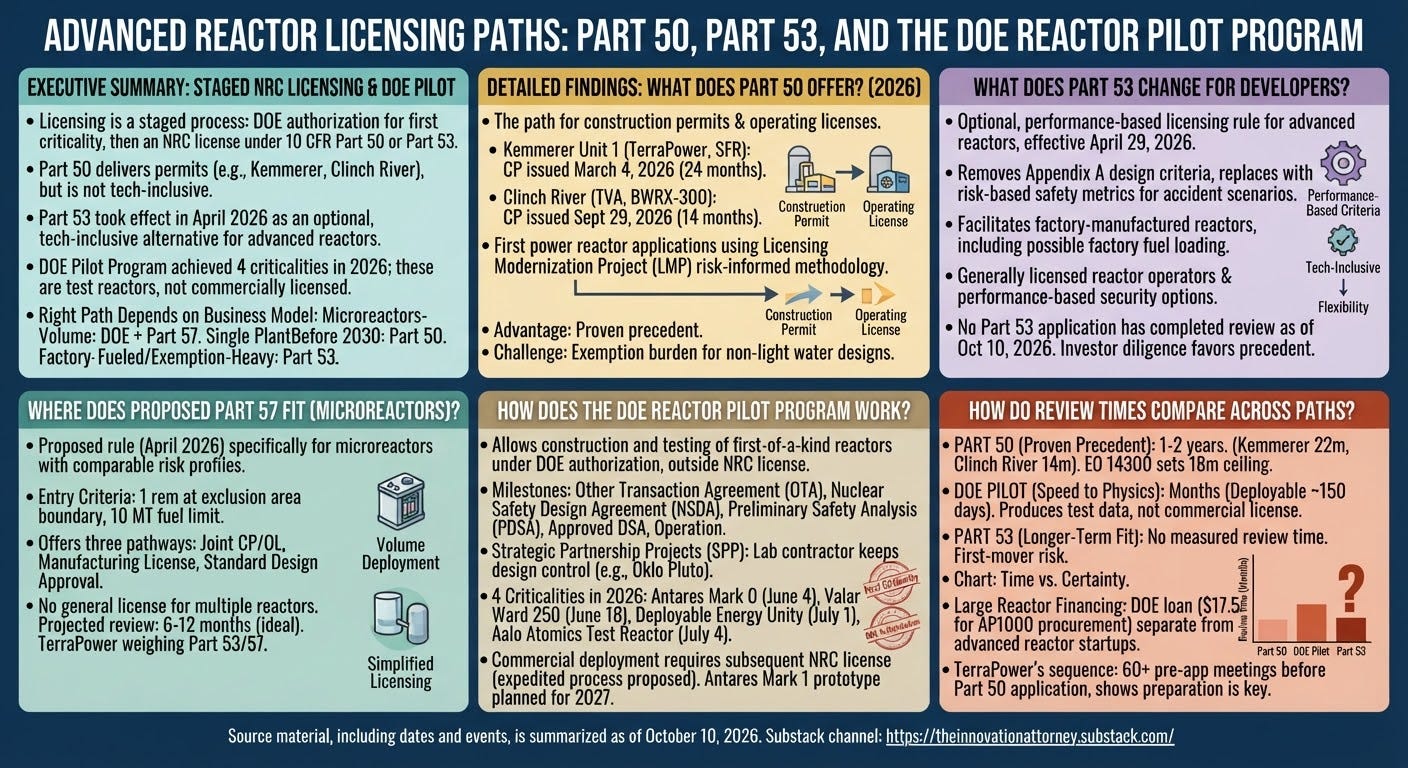
Advanced reactor startups should reach first criticality under DOE authorization, then sell power under an NRC license issued through Part 50 or Part 53 in 2026. Four reactors reached criticality between June 4 and July 4, 2026 under DOE authorization, and none of them can be deployed commercially without the NRC. The two NRC construction permits issued this year, Kemmerer Unit 1 on March 4 and Clinch River on September 29, both came through 10 CFR Part 50. Part 53, effective April 29, 2026, has no completed review behind it.
The company holding the most advanced permit has not settled the question. At an NRC public meeting on July 22, 2026, TerraPower said...
NASA’s Plum Brook Reactor
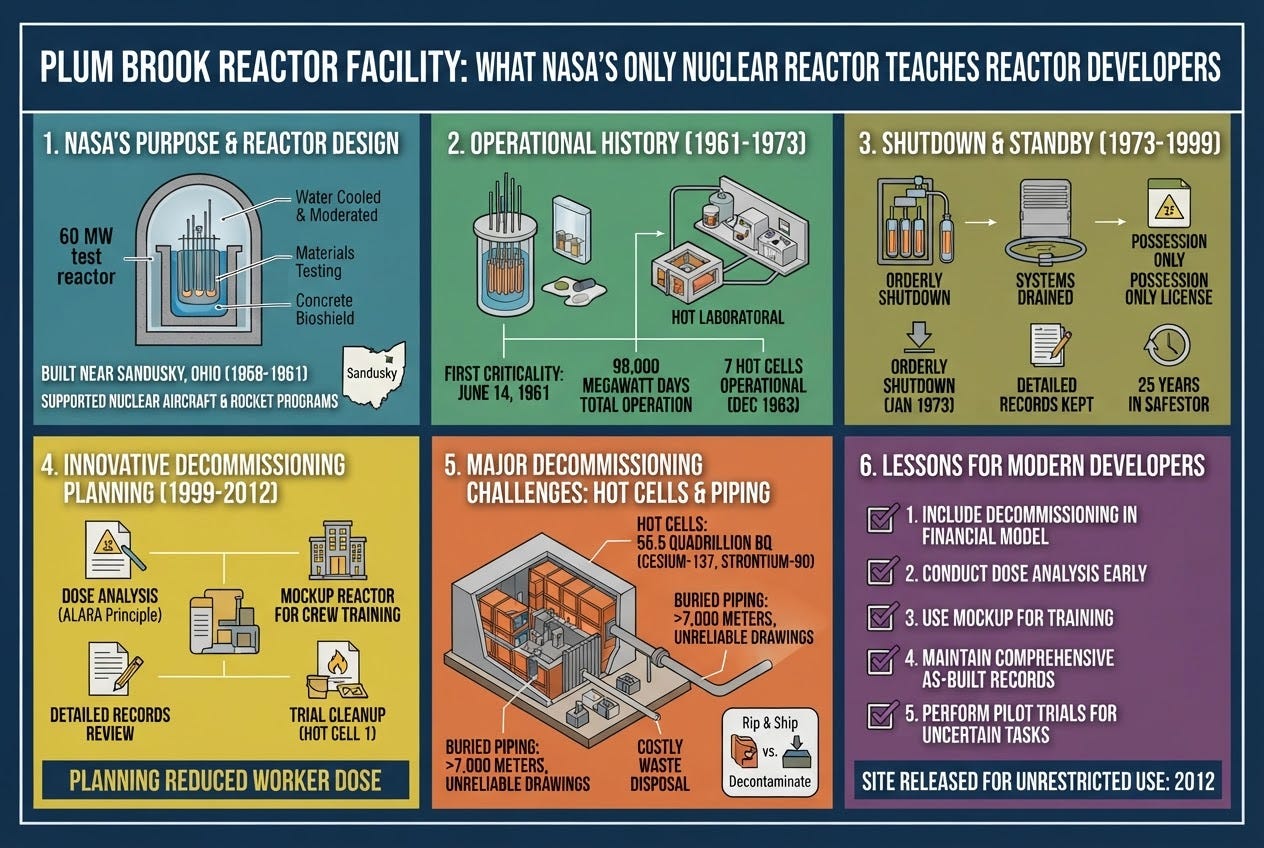
NASA’s Plum Brook Reactor Facility in Ohio cost about $15 million to build and roughly $230 million to decommission before the Nuclear Regulatory Commission terminated its licenses in 2012.
Two causes explain the gap. The nuclear aircraft and nuclear rocket programs that justified the reactor ended by 1973, and the plant then idled for nearly 25 years under a possess but do not operate license. The cleanup work that remained sat in buried piping, activated steel, and hot cells that the records described poorly.
Plum Brook shows what the exit costs when the customer leaves, and why the exit be...
A $7 Billion Counter Drone Vehicle Opens Doors for Startups
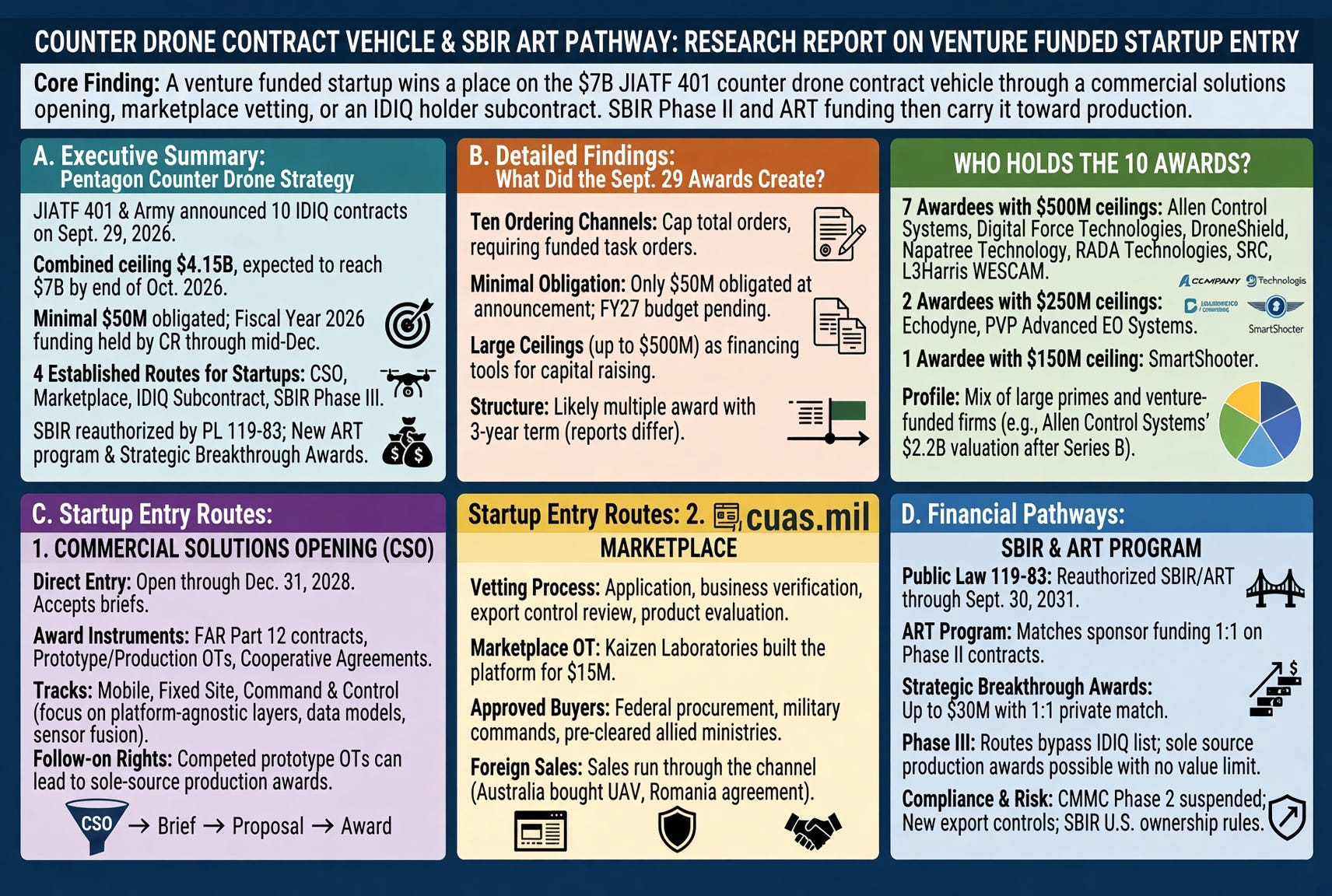
A venture funded startup can win a place on the $7 billion counter drone contract vehicle through JIATF 401 channels and SBIR Phase II funding. The ten IDIQs announced September 29, 2026 carry a $4.15 billion combined ceiling, and only $50 million had been obligated.
Start with that gap. Joint Interagency Task Force 401 and the Army announced ten indefinite delivery, indefinite quantity contracts on the last Tuesday of September, with ceilings of $500 million for seven awardees, $250 million for two, and $150 million for one. The task force expects the vehicle to reach $7 billion by the end of October. A continuing resolution holds fiscal year 2026...
How a Robotics Startup can Finance Robots as a Service
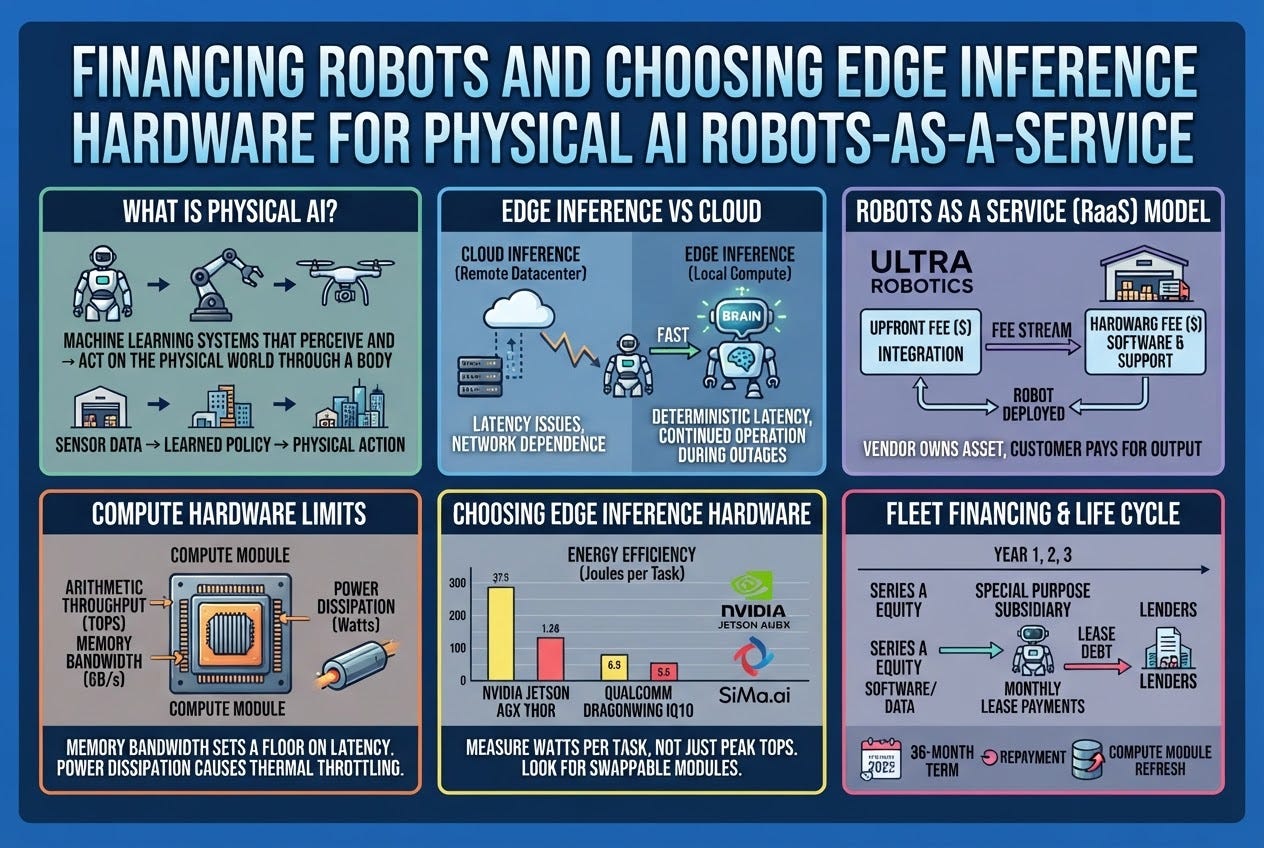
Ultra’s $62 million round on October 9, 2026 shows robots as a service depends on financing structure and edge inference choices, because chips age faster than robot arms.
Ultra, a Brooklyn company, raised a $50 million Series A led by Framework Ventures, with Y Combinator participating, on top of a $12 million seed. It leases packing robots to warehouses for an upfront integration fee and a monthly fee, and its robots have packed more than 500,000 orders. Consider a robot that costs $60,000 to build and earns $2,500 a month net: it pays for itself in 24 months, and the chip inside it may be ob...
Cost-Effective Client Negotiations Using Outside Counsel
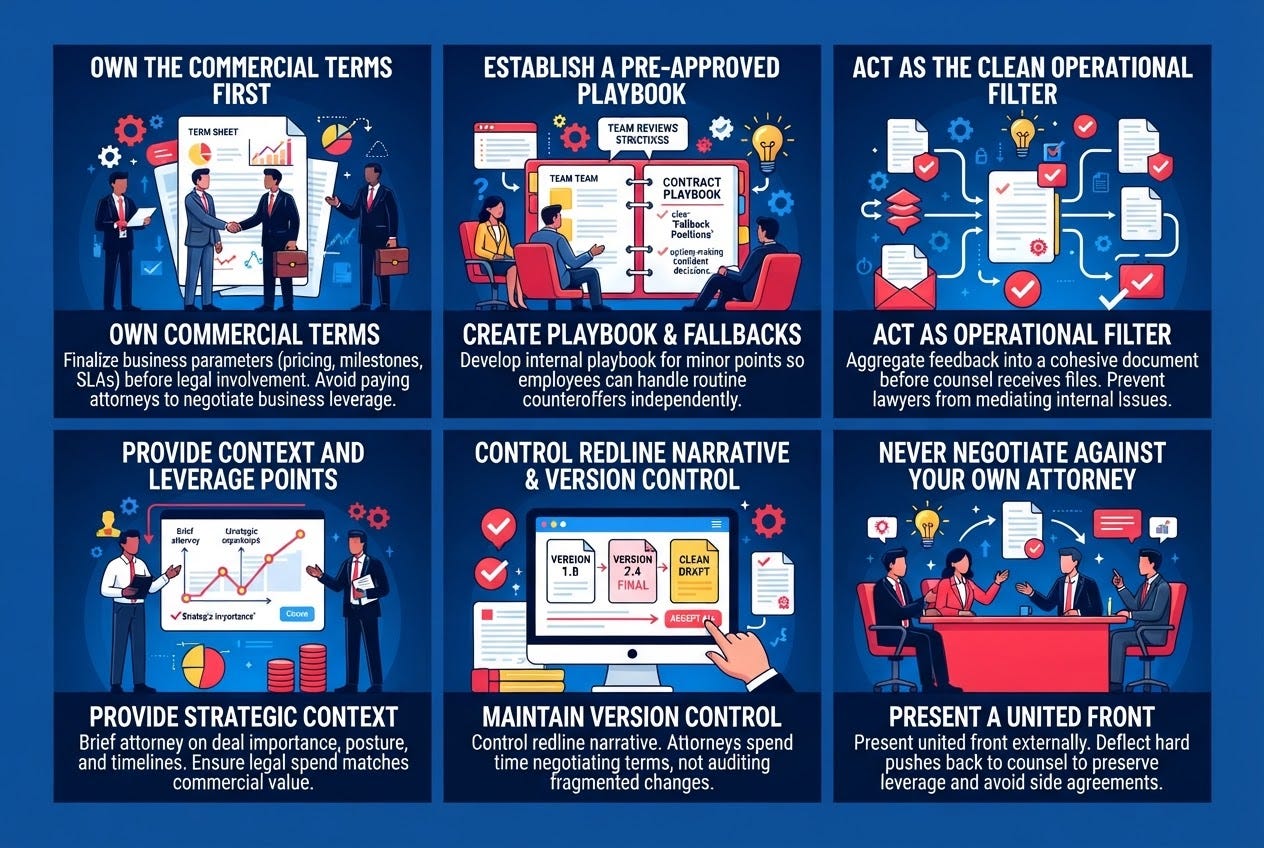
First: Own the Commercial Terms First: Finalize business parameters (pricing, milestones, SLAs) via term sheets before involving legal counsel to avoid paying attorneys to negotiate business leverage disguised as legal clauses. Ask for guidance on how to structure business terms in a manner that will minimize negotiation.
Second: Establish a Pre-Approved Playbook and Fallback Matrix: Create an internal contract playbook with pre-approved fallback positions for minor points so employees can handle routine counteroffers independently, which you can relay to counsel. Your attorney will have the experience and judgement to provide typical pain points and practical resolutions.
<...How Much Should a Startup Raise After Record 3Q2026 Megarounds
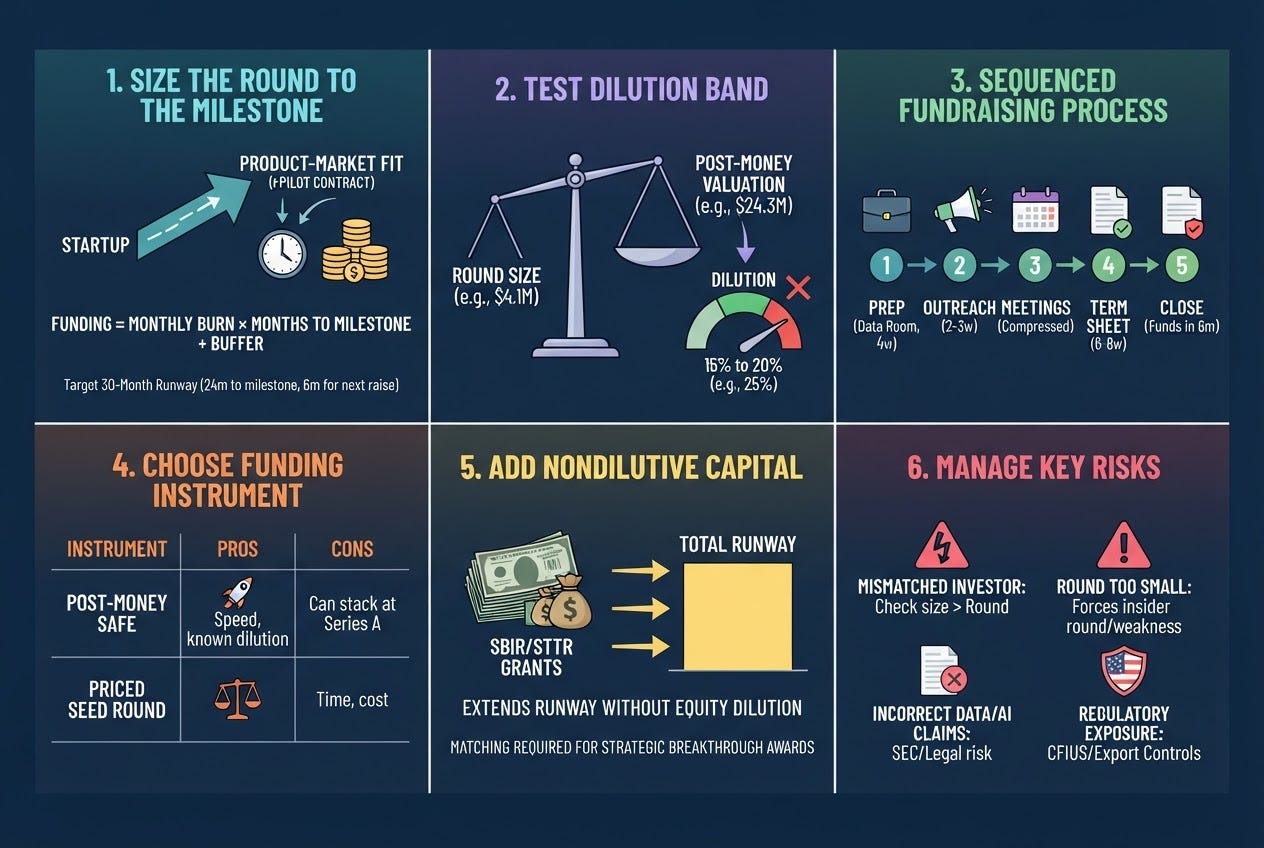
Outside founders should size a round to the cash needed to reach the next milestone, because 27 rounds of $1 billion or more dominated the $159 billion Q3 2026 total. Take the median priced software seed round of $4.1 million, divide it by 30 months, and you get about $137,000 of monthly burn. That arithmetic decides how much you should ask for.
Most founders read the quarterly funding total as weather. The October 5, 2026 tally put global venture funding at $159 billion across about 6,000 startups, down 25% from the second quarter and up 53% from a year earlier. Artificial intelligence took $102 billion, or 64%. Databricks and Safe Superintelligence each...
How Should Space Startups Plan for Rocket Lab Owning Iridium
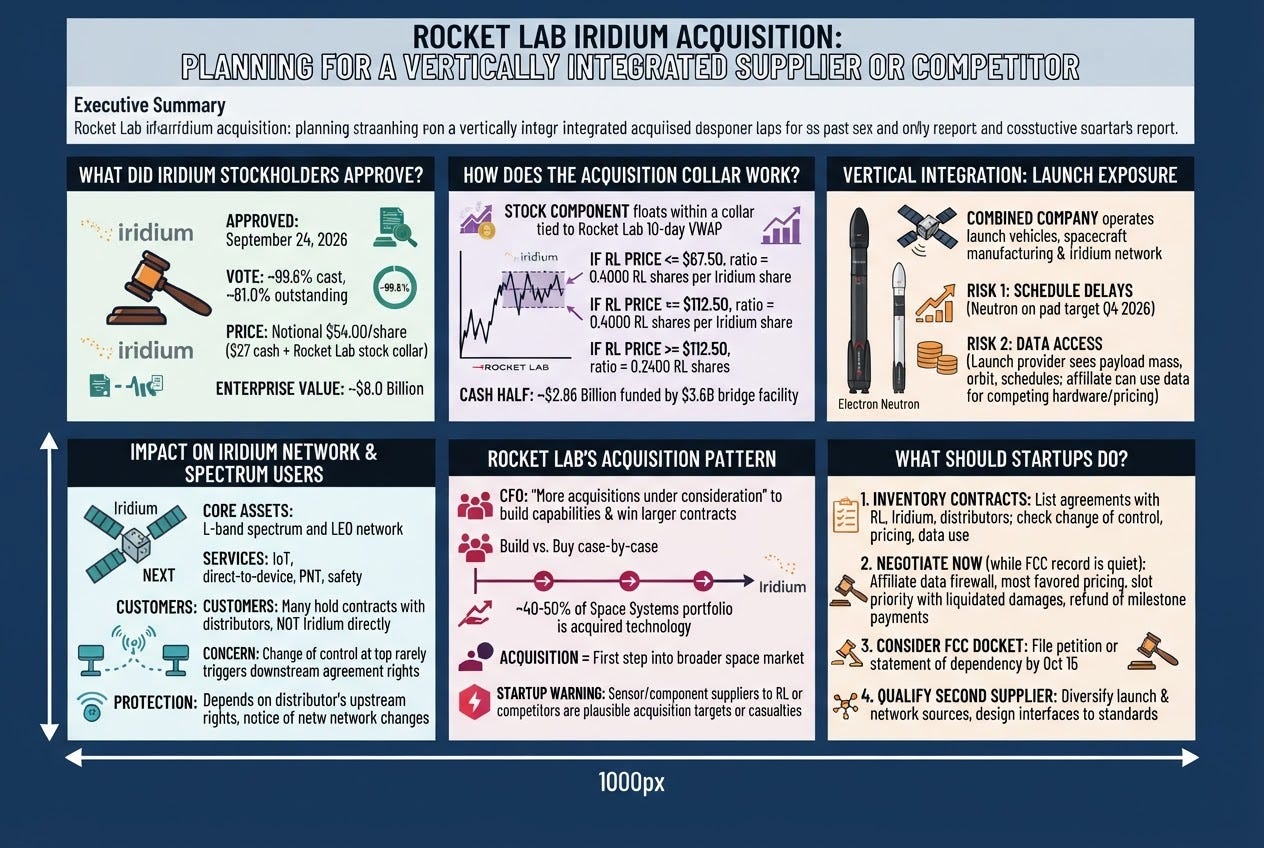
Space startups that depend on launch, spectrum, or network customers should secure neutrality, pricing, and change of control terms before Rocket Lab closes its Iridium acquisition in mid 2027. Iridium stockholders approved the $54.00 per share deal on September 24, 2026, with about 99.6% of votes cast. The FCC comment window under GN Docket No. 26 257 closes October 15, 2026, and replies are due November 9. After that, the Space Bureau decides whether to grant consent, and a startup that stayed silent has only its contracts to rely on.
Each Iridium share receives $27.00 in cash and Rocket Lab stock under a collar that fixes the stock...
How Much Should a Startup Spend on AI Coding per Engineer
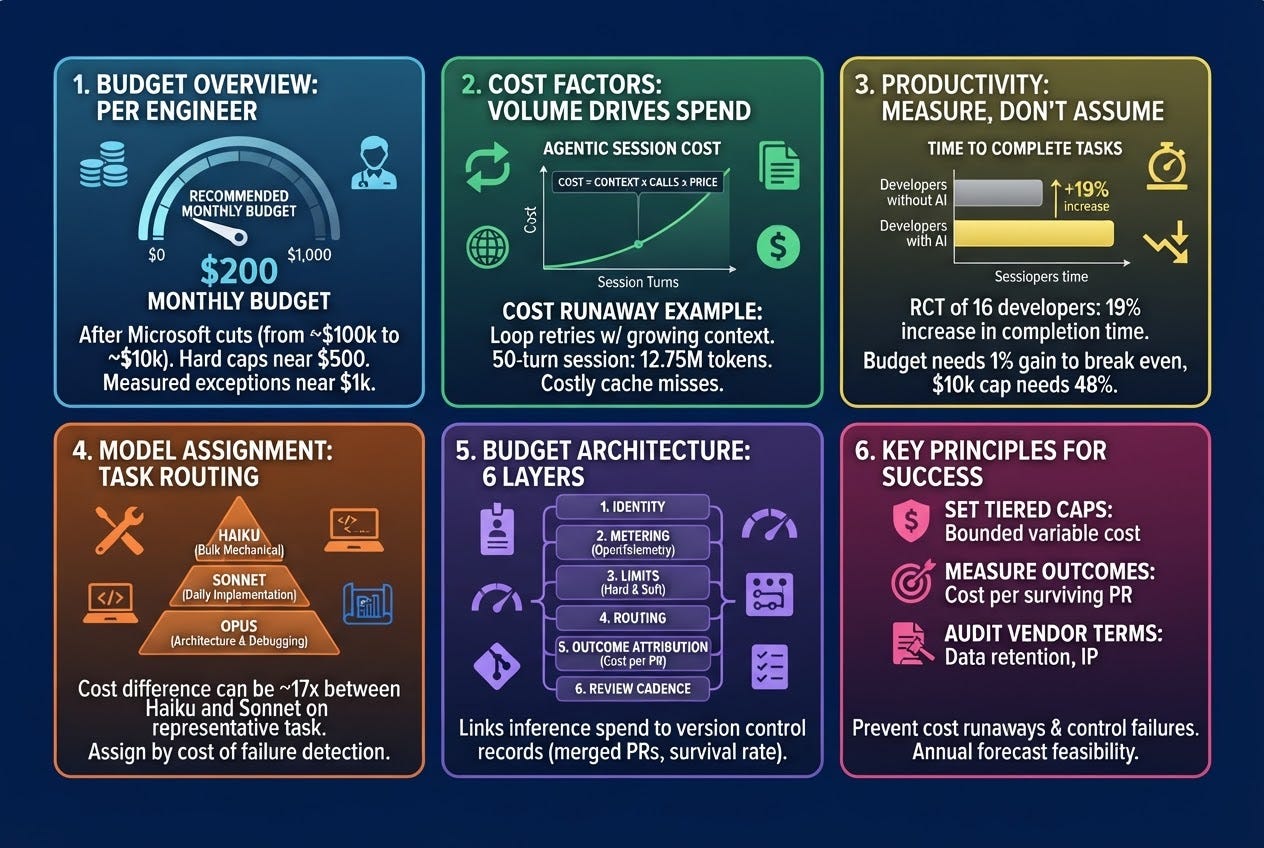
A startup should set its AI coding budget per engineer near $200 per month after Microsoft cut most Cloud and AI division caps from $100,000 to about $10,000.
That cap is a ceiling with a hard limit near $500 and an exception tier near $1,000 for named experiments. The reasoning is arithmetic. At a $250,000 fully loaded annual cost, one percent of an engineer is about $208 per month, so a $200 budget pays for itself if the tools add one percent. Microsoft’s new $10,000 cap needs a 48 percent gain to break even, and the old $100,000 cap needed 480 percent.
Here is what was re...
How Should Founders Structure a Reverse Acquihire for Common Stockholders
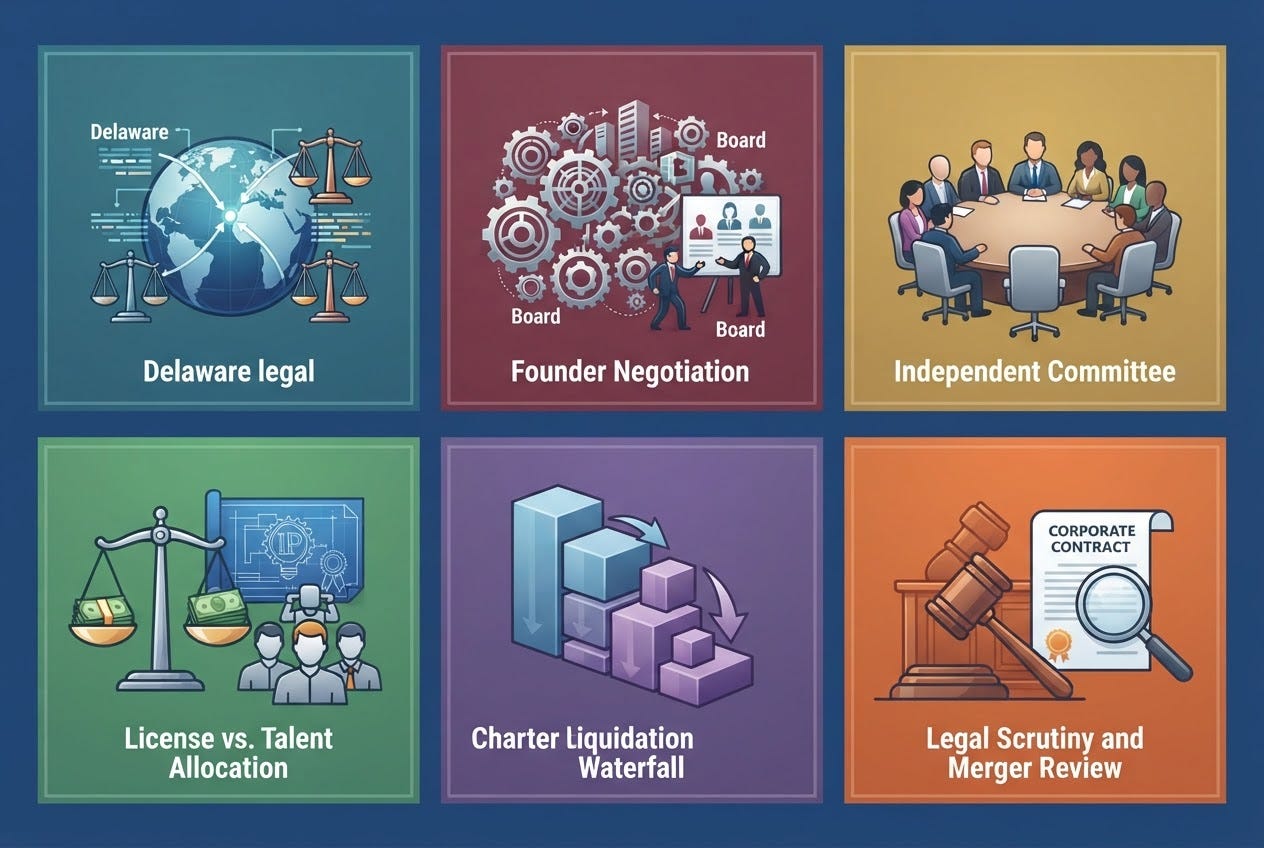
Serebrin v. Ross, unsealed October 5, 2026, alleges that Groq’s board had to treat its $20 billion Nvidia license and hiring deal as a sale and pay common stockholders fairly.
A founder who structures a reverse acquihire, licensing technology and sending the team to a buyer, should run that transaction as a merger: a committee of disinterested directors, a market check before signing, a fairness opinion, and a stockholder vote that excludes the conflicted. Delaware courts decide on substance, and a nonexclusive license does not exempt a board from Section 271 of the Delaware General Corporation Law or from the be...
How Should a Driverless Truck Startup Build Its Safety Case

A driverless truck startup should build its autonomous truck safety case around the FMCSA exemption effective October 7, 2026, which lets cab mounted warning lamps replace triangles for five years. Aurora’s lamps flashed for nearly 10 hours across more than 500,000 miles of testing under the earlier waiver. That is the entire activation record behind a five year federal exemption.
Aurora ran 34 trucks with the lamps from October 2025 to January 2026. FMCSA found no reported faults, no malfunctions, and no collision while a truck sat stopped with lamps on. Ten hours of real stops now supports a rule that covers any Le...
Why LinkedIn Networking Fails
Executive Summary
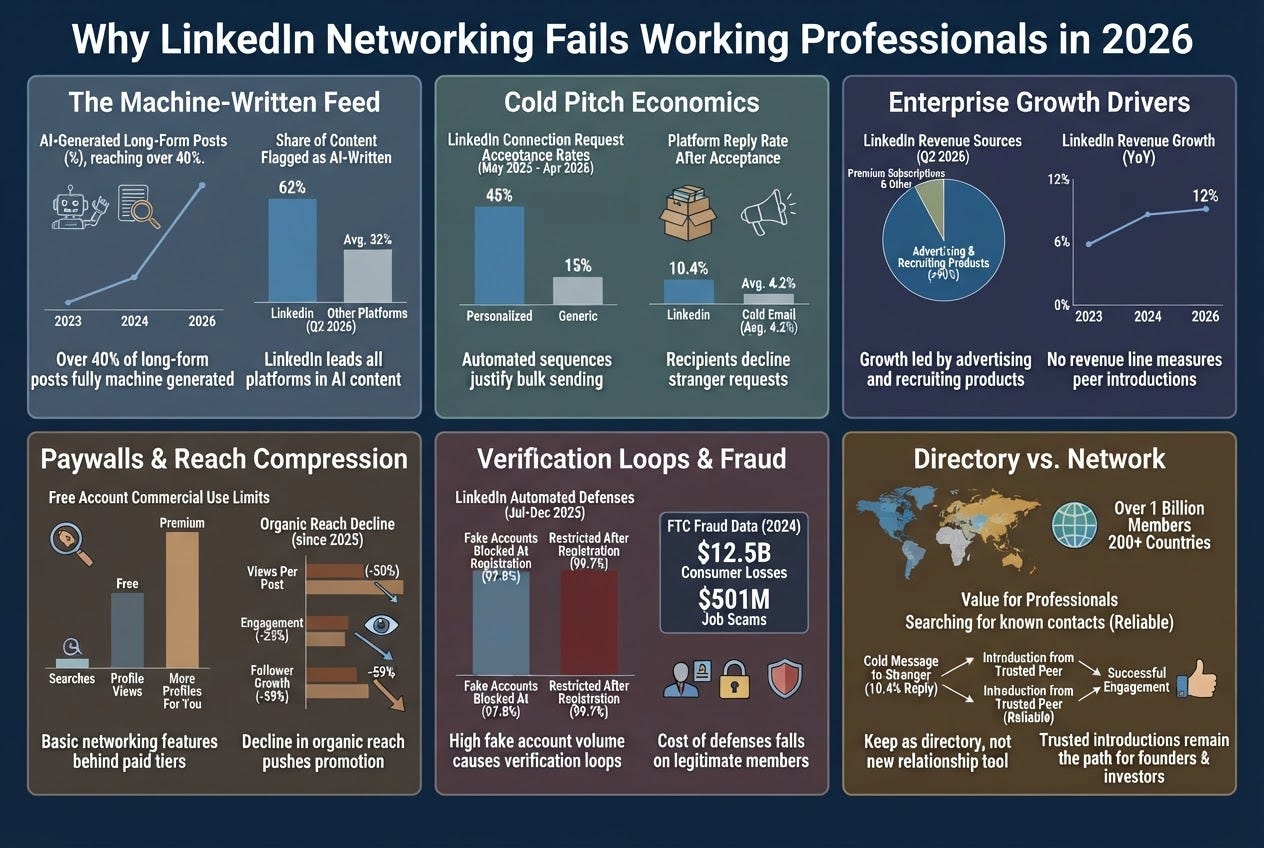
LinkedIn networking in 2026 fails working professionals because over 40 percent of long posts are machine generated, cold pitches fill inboxes, and Microsoft’s growth is led by advertising. A July 2026 analysis of 1,002,627 posts found that LinkedIn supplied about one third of the content scanned and 62 percent of everything flagged as AI written. Outreach data covering 13.2 million connection requests shows that 28 to 30 percent are accepted and that 10.4 percent of messages sent after acceptance receive a reply. LinkedIn’s parent company reported 12 percent revenue growth for the quarter ended June 30, 2026.
This report examines ten reasons professionals give...
Vinci’s $250 Million Round
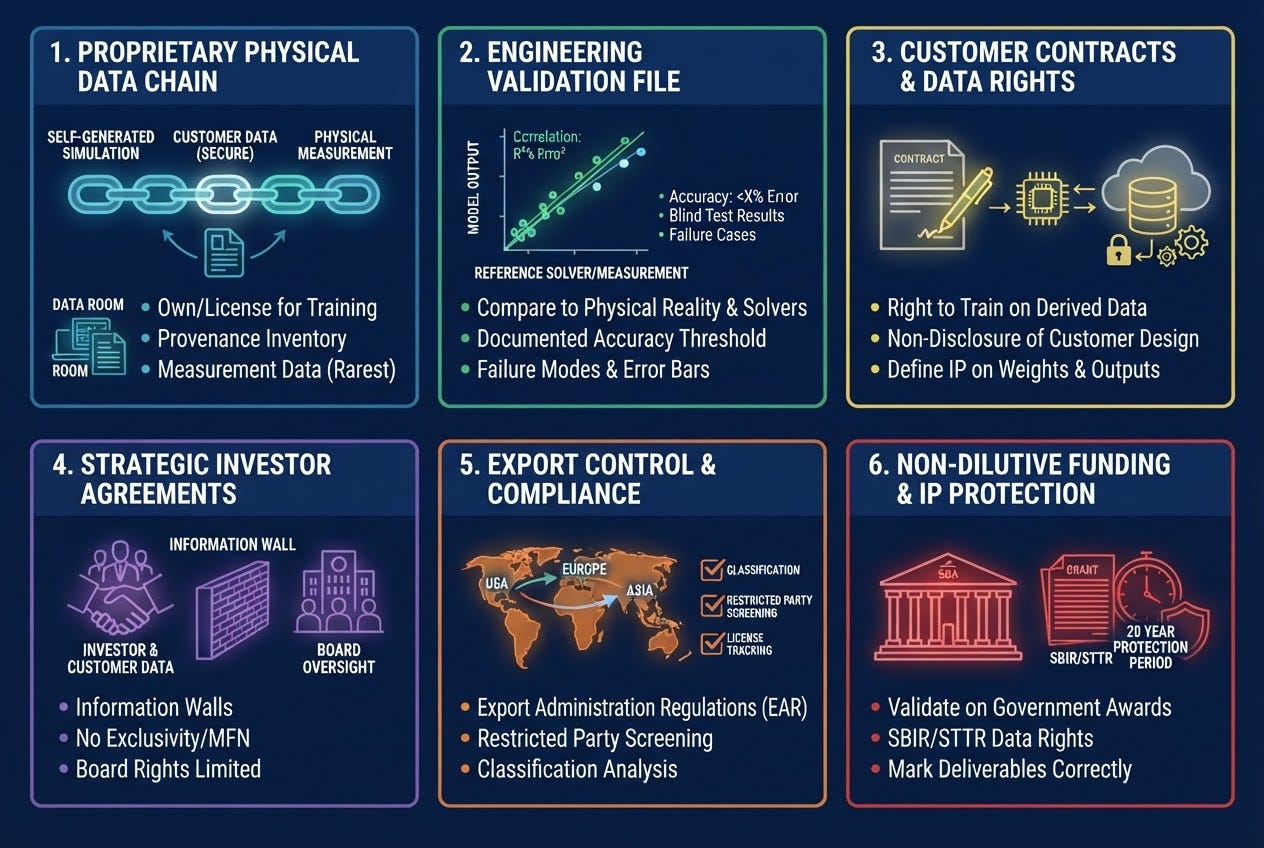
A specialized artificial intelligence company raising a large round, as Vinci did with $250 million at a $1.5 billion valuation on October 6, 2026, must prove its model matches physical reality and that it owns the data behind it.
The mechanic most founders overlook sits in a clause nobody reads until diligence. Every commercial simulation license says something about benchmarking, publication of comparisons and use of outputs. A founder who generated a training set by running a licensed solver ten thousand times believes the data is proprietary. The solver vendor’s lawyer may read the same agreement and conclude the outputs ca...
Peak XV Lifts Seed Checks to $5 Million as Series A Bar Rises
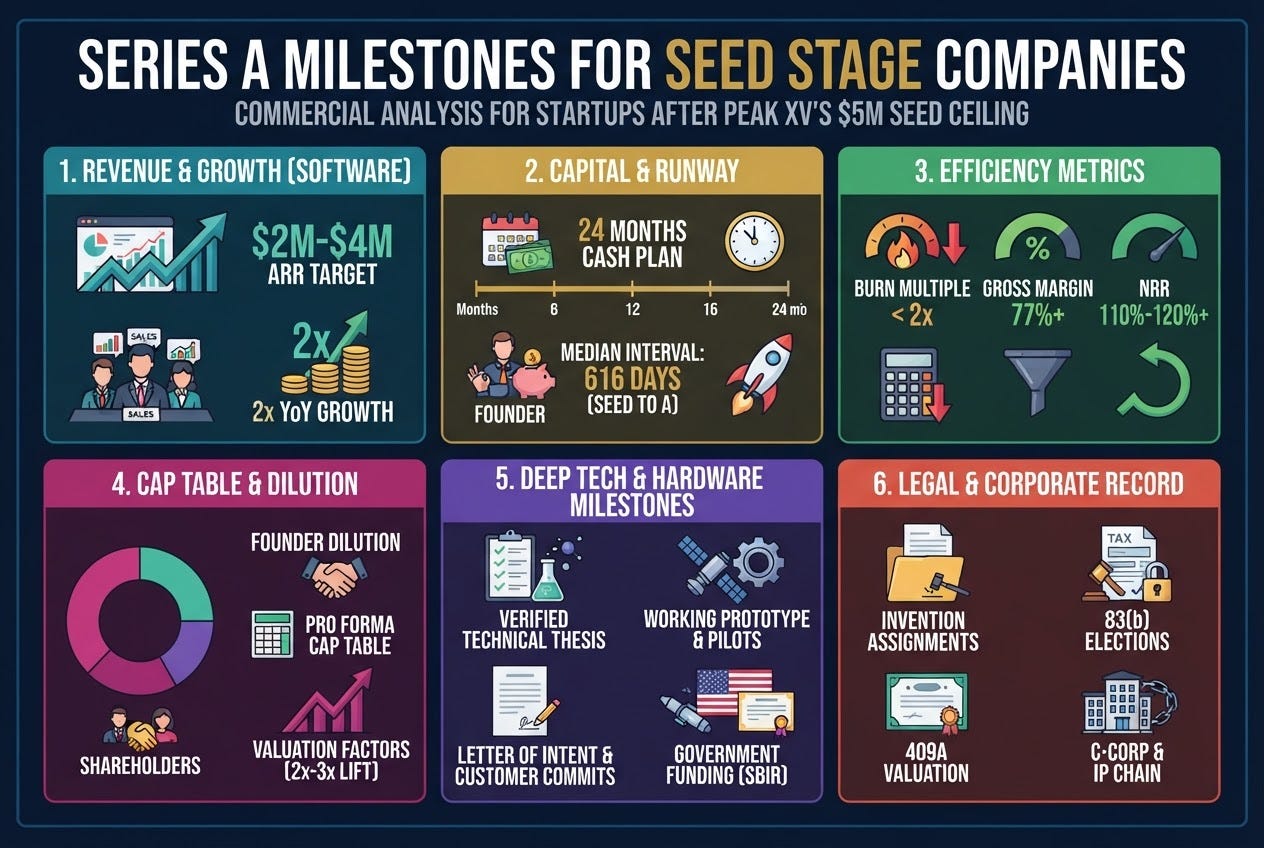
A seed stage company in 2026 needs about $2 million to $4 million in annual recurring revenue and at least 2x year over year growth before a Series A lead will commit. On September 28, 2026, Peak XV raised its seed ceiling from $3 million to $5 million, and managing director Rajan Anandan said the bar to raise a Series A has gone up pretty significantly.
Start with the instrument most founders treat as a formality. A founder raising a $5 million seed round on SAFEs is writing a set of conversion promises, each with its own valuation cap, and the Series A lead will...
How To Structure a Startup Tender Offer Without a Primary Round
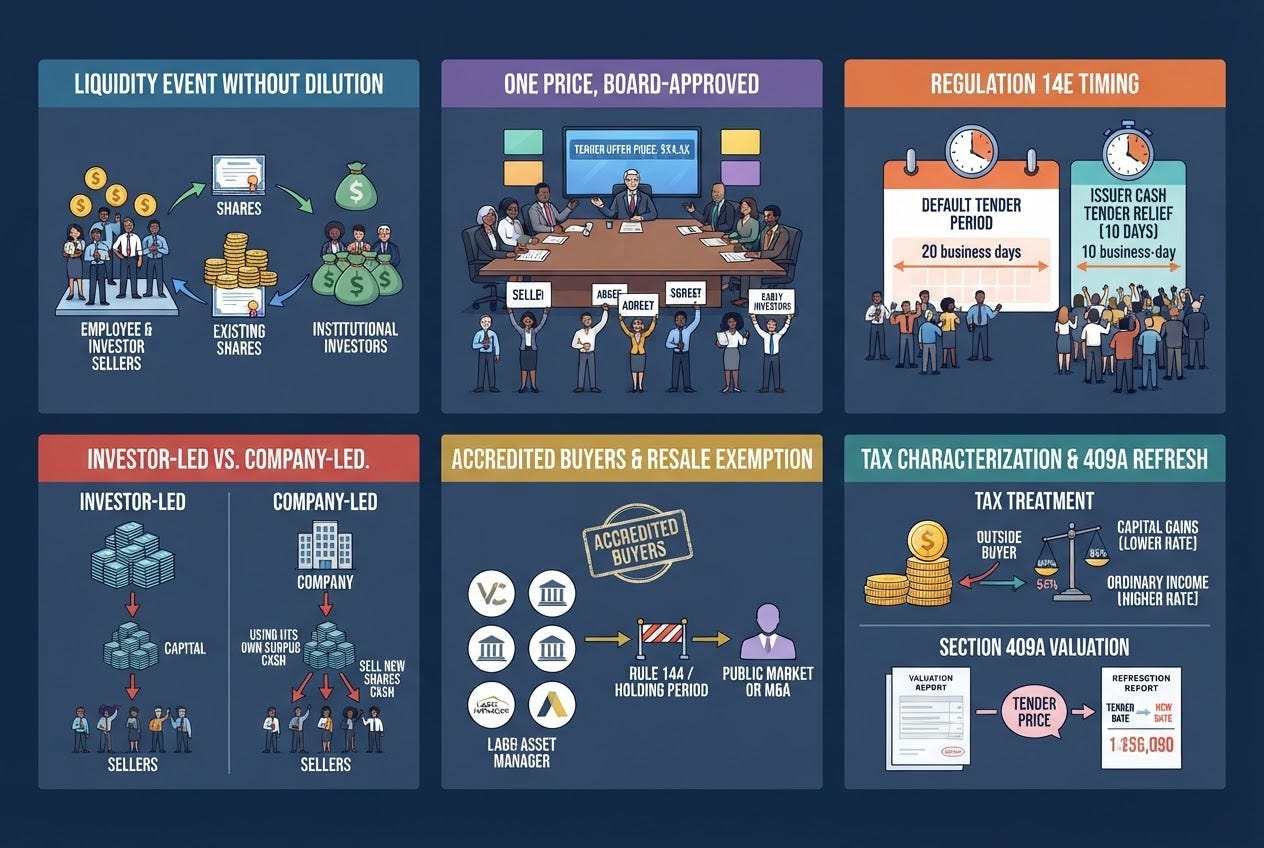
A founder can give employees and early investors liquidity without a primary round by running a tender offer, as ElevenLabs did on September 30, 2026 at a $22 billion valuation. The $300 million sale doubled the $11 billion valuation set in the February 2026 Series D, and Wellington and T. Rowe Price led the buyers. The structure works when outside investors buy existing shares at one price, the board clears investor consents before launch, and the tax and option pricing consequences are settled first. Buyers purchasing existing shares add no dilution for the holders who stay.
Most founders plan a tender around the...
How To Raise a Seed or Series A Round Outside Frontier AI
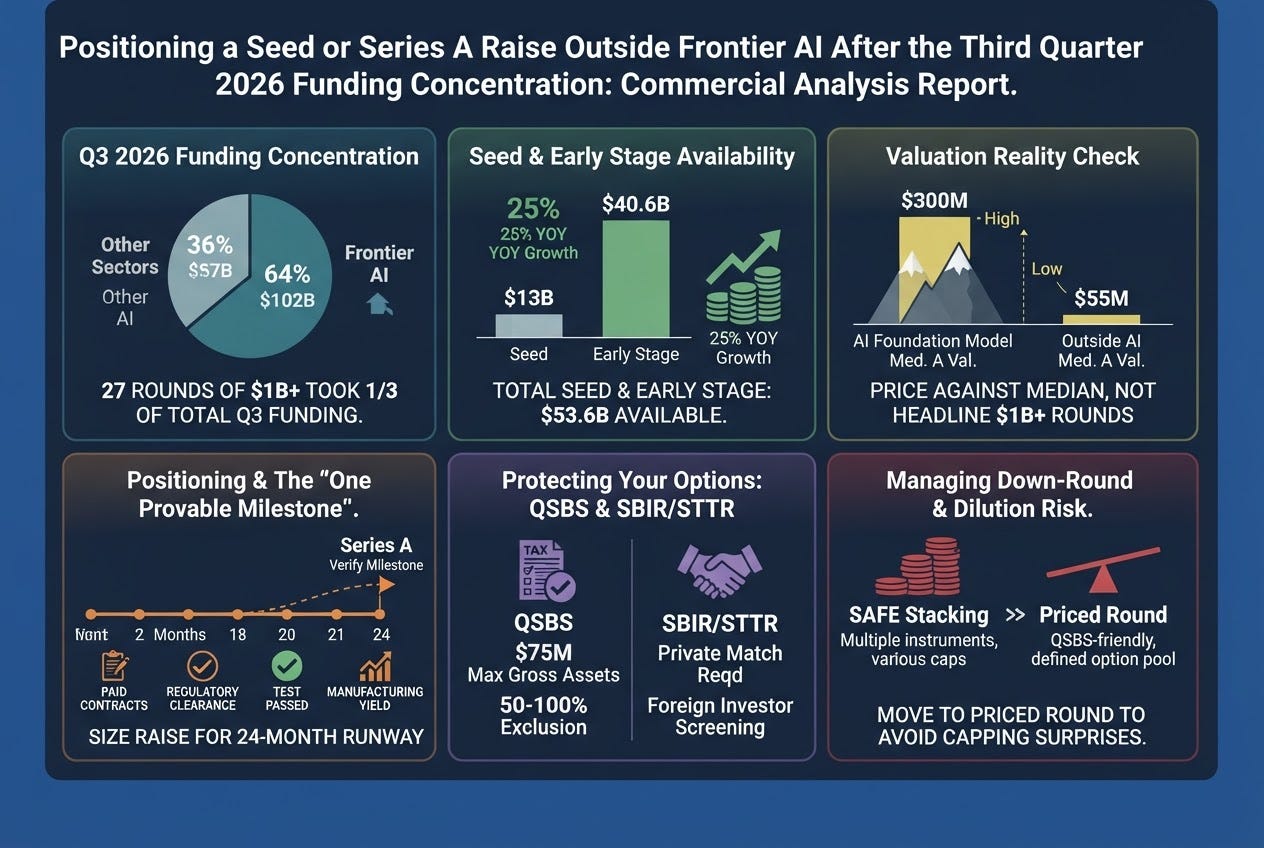
Founders outside frontier AI should size a seed or Series A to one verifiable milestone, because 27 rounds of $1 billion or more took a third of Q3 2026 funding. The qualified small business stock exclusion, the SBIR matching rule, and the next investor’s valuation test all depend on how large the round is.
A company that raises a $90 million seed round has just disqualified every share it issued from the qualified small business stock exclusion, and none of the investors who wrote the check will mention it. Section 1202 of the Internal Revenue Code, as amended in July 2025, measures gr...
Can Employees Bring a Class Action Over Washington Personnel File Requests
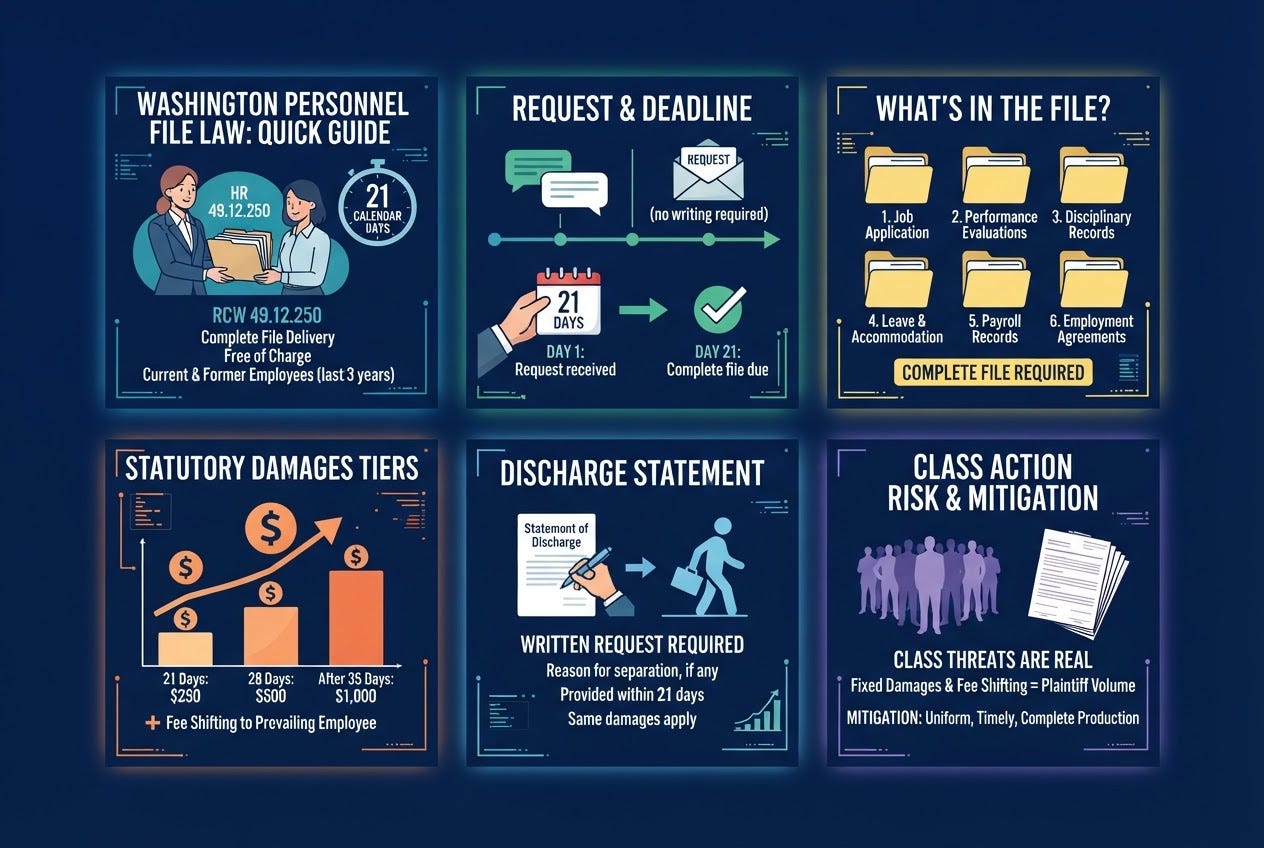
Washington employers who deliver a personnel file later than 35 calendar days owe $1,000 in statutory damages plus attorney fees under RCW 49.12.261. The deadline for production is 21 calendar days, the copy must be free, and the duty runs to current employees, former employees who left within three years, and their lawyers. A letter demanding the file can also carry the notice of intent to sue, which starts a five calendar day wait.
Substitute House Bill 1308 created that structure on July 27, 2025. Before it, the statute asked for inspection within a reasonable time, and L&I read that as...
IP Dispute Shows Board Adviser Agreements Need Conflict Terms
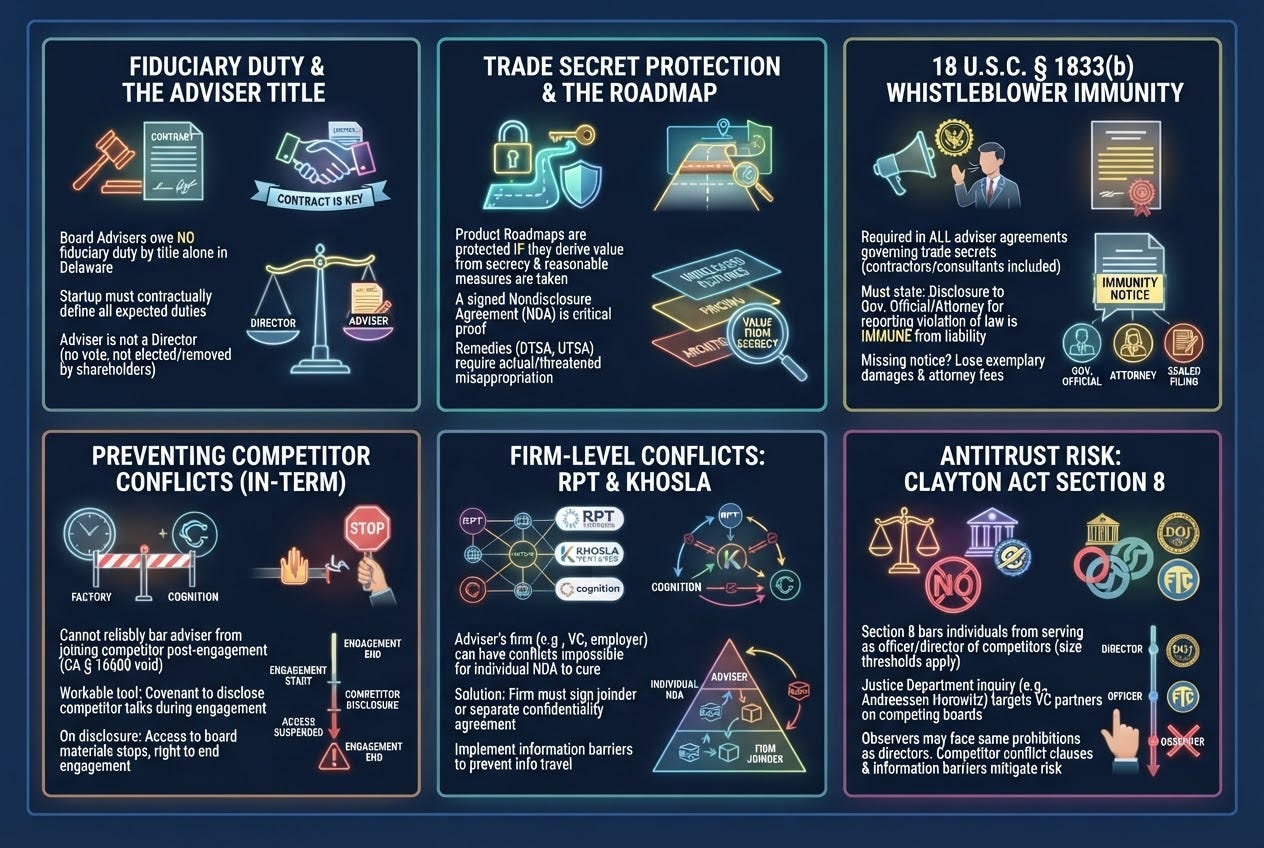
Matan Grinberg’s September 30, 2026 allegation against Chris Degnan shows a board adviser agreement needs a confidentiality clause and a competitor conflict covenant before any roadmap is shared. Degnan held the title of board adviser at Factory, and I found no Delaware decision that attaches fiduciary duties to that title. Whatever protection a startup has comes from what the adviser signed, and from trade secret law that depends on that paper.
Here is what has been alleged, and only alleged. Grinberg, Factory’s chief executive, posted on X on September 30 that Degnan shared confidential information with Cognition, the comp...
IPO Readiness After the Oura Pause
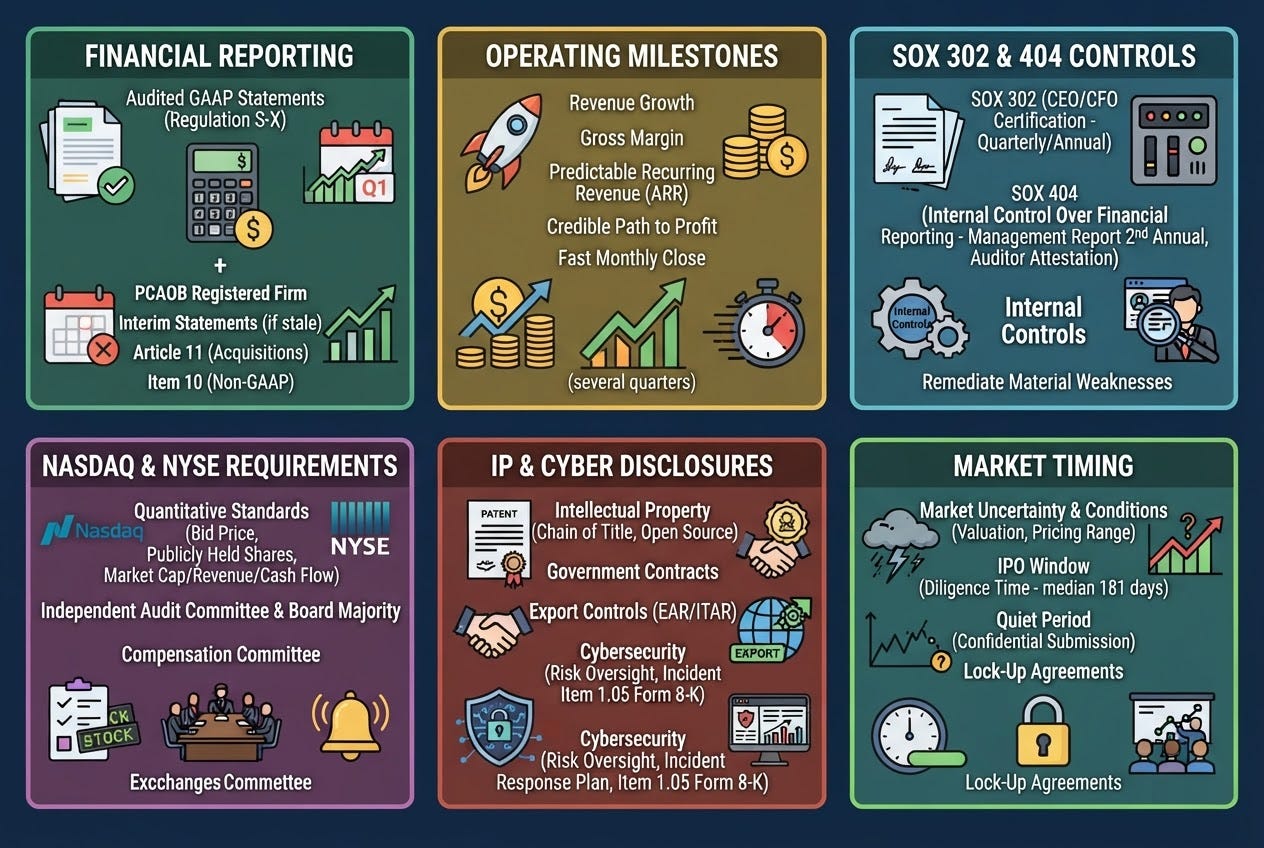
A late stage startup needs audited GAAP statements under Regulation S X and disclosure controls that support Section 302 certifications before the SEC clears its IPO registration. Underwriters add operating tests: revenue growth, margin, predictable recurring revenue, and a quarter the company can forecast. Oura reported $1.4 billion of revenue for the twelve months ended June 30, 2026, and still postponed its Nasdaq offering on September 29, 2026.
Look at the date on the Oura numbers. If its registration statement relies on financial statements dated June 30, 2026, the SEC age rule lets them support a sale of shares for about 135 days, which ends in...
When Should A Startup Self Host an Open Weight Model
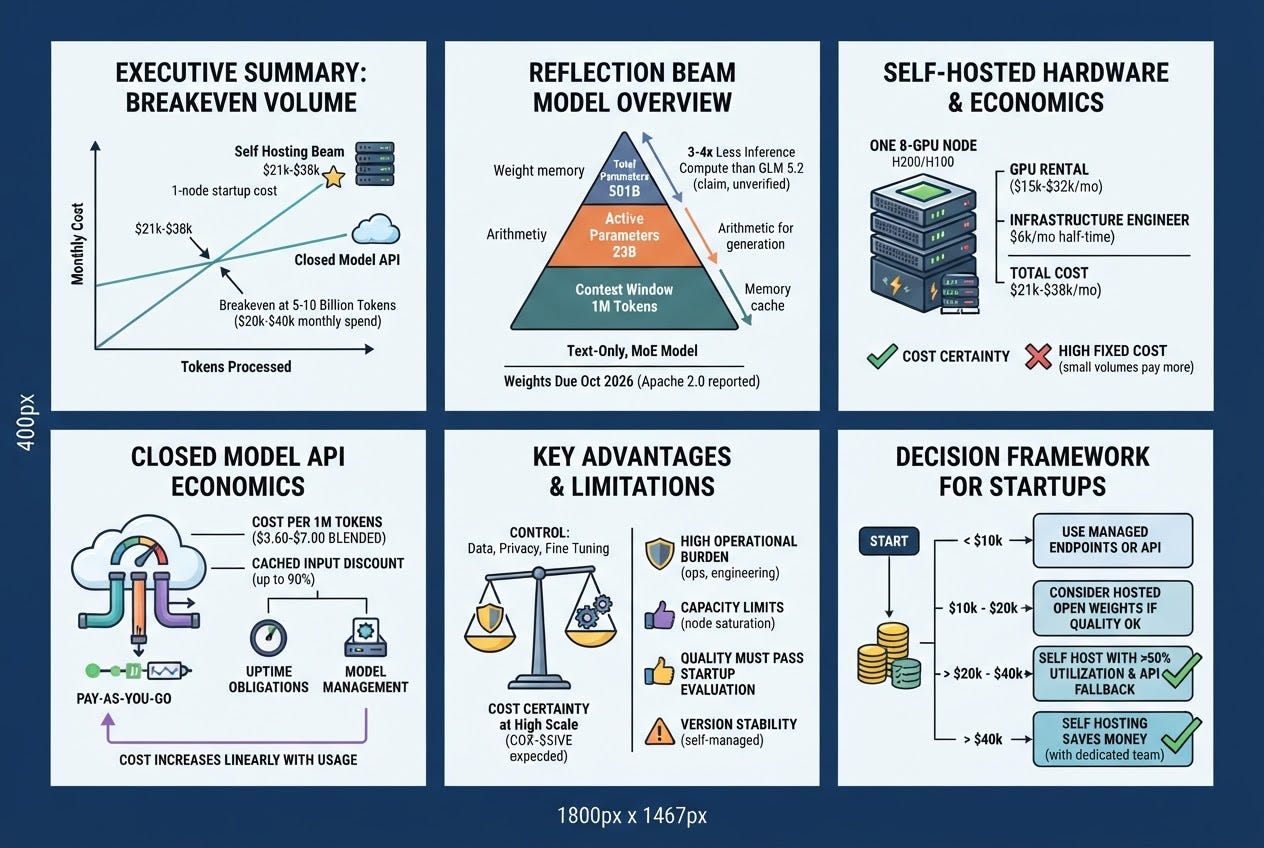
Startups should self host an open weight model like Reflection Beam once closed API spend reaches $20,000 to $40,000 monthly, about 5 to 10 billion tokens. That holds only with sustained utilization above 50 percent. Below that line, a rented eight GPU node costs more per token than any closed API charges.
The 3 to 4 times efficiency claim in the Beam announcement of October 5, 2026 does not move that line as far as the headlines suggest. Reflection describes a 501 billion parameter mixture of experts model with 23 billion active parameters and a 1 million token context window. It says Beam matches GLM 5.2 on reasoning with 3 to 4...
Nolla Health’s Utah AI Medication Prescribing Sandbox
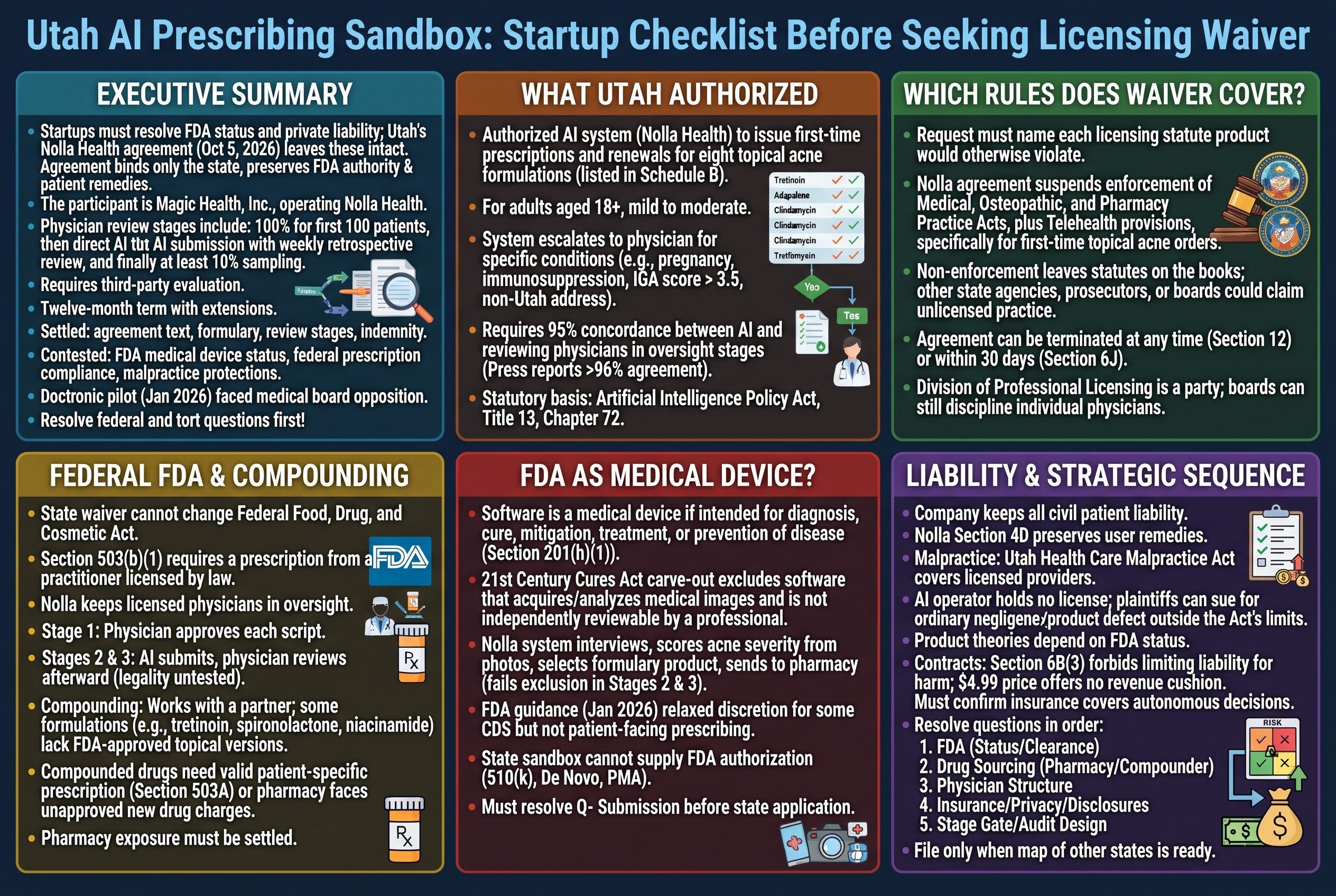
Utah’s October 5, 2026 agreement with Nolla Health lets an AI system issue first time prescriptions for eight topical acne formulations, yet the state waived only its own licensing rules, and FDA, pharmacy law, and patient lawsuits remain in force. A founder who reads the agreement as a legal green light has misread what a state can give. Utah can promise not to enforce its Medical Practice Act, its Pharmacy Practice Act, and its telehealth provision. It cannot promise anything on behalf of the Food and Drug Administration, a plaintiff’s lawyer, or a federal prosecutor.
Here is what...
GPT 6.1 Astra Shelved
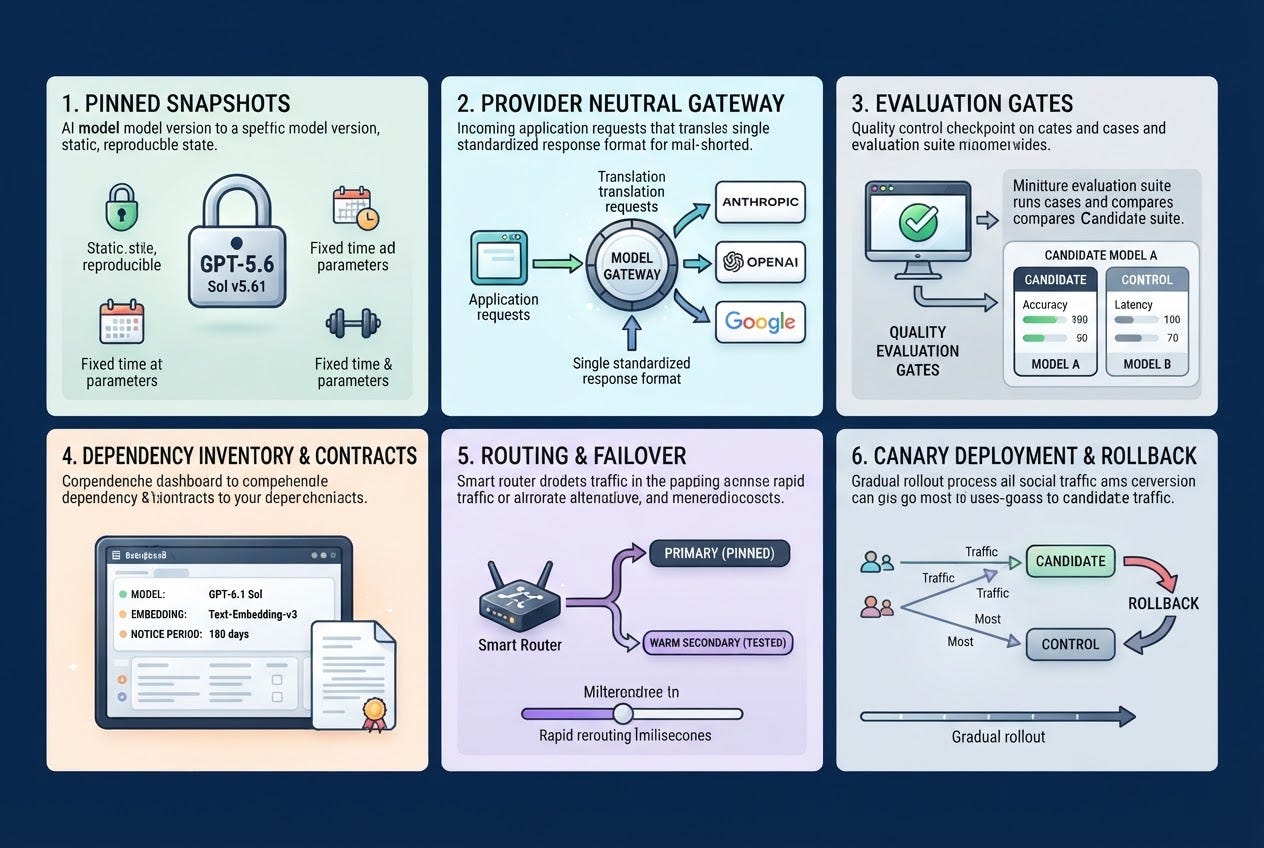
OpenAI shelved GPT 6.1 Astra on September 28, 2026, so any startup that scheduled October features around that model needs a contingency plan that does not depend on OpenAI’s calendar. AI model vendor contingency comes down to three controls: pinned model snapshots, a routing layer that can send traffic to a second provider, and evaluation gates the startup runs itself.
Nobody breached a contract. No API customer lost a model that was already shipping, and coverage states no change for existing customers. A model simply did not arrive, and a roadmap built on its arrival now has a hole in...
How Should A Startup Switch Between API Models And Open Weights
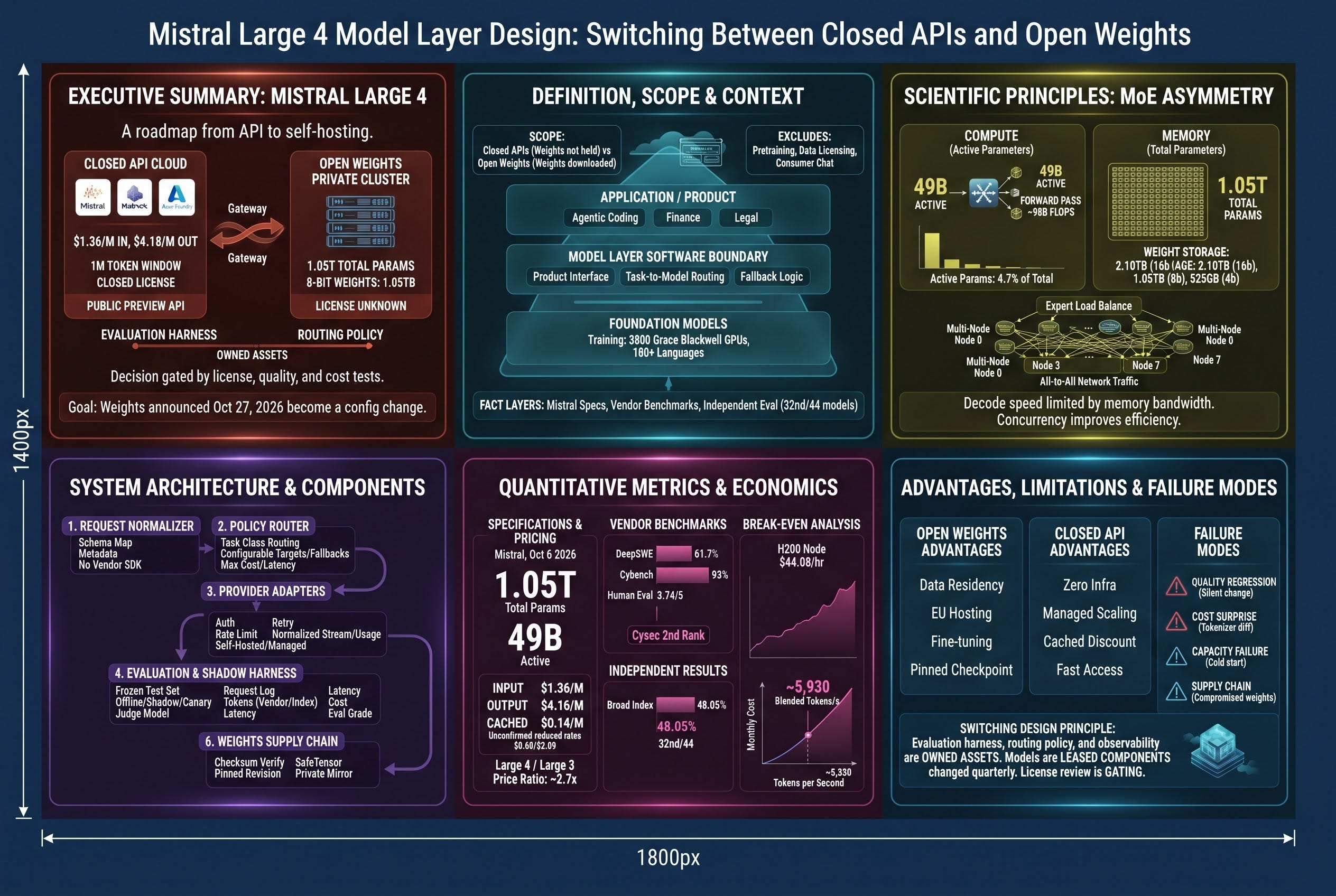
Mistral Large 4 weights, due in late October 2026, need about 1.05 terabytes of GPU memory at 8 bit precision, so switching from the API is an engineering decision. Mistral released the model on October 6, 2026 with 1.05 trillion total parameters, 49 billion active per token, a one million token context window, and prices of $1.36 per million input tokens and $4.18 per million output tokens. A startup that treats the weights release as a price cut will be disappointed. A startup that builds a provider neutral model layer now will treat it as a configuration change.
The arithmetic surprises people. Only 4.7 percent of the parameters...
AI Law Gives Startups Sixty Days To Fix A Six Figure Risk
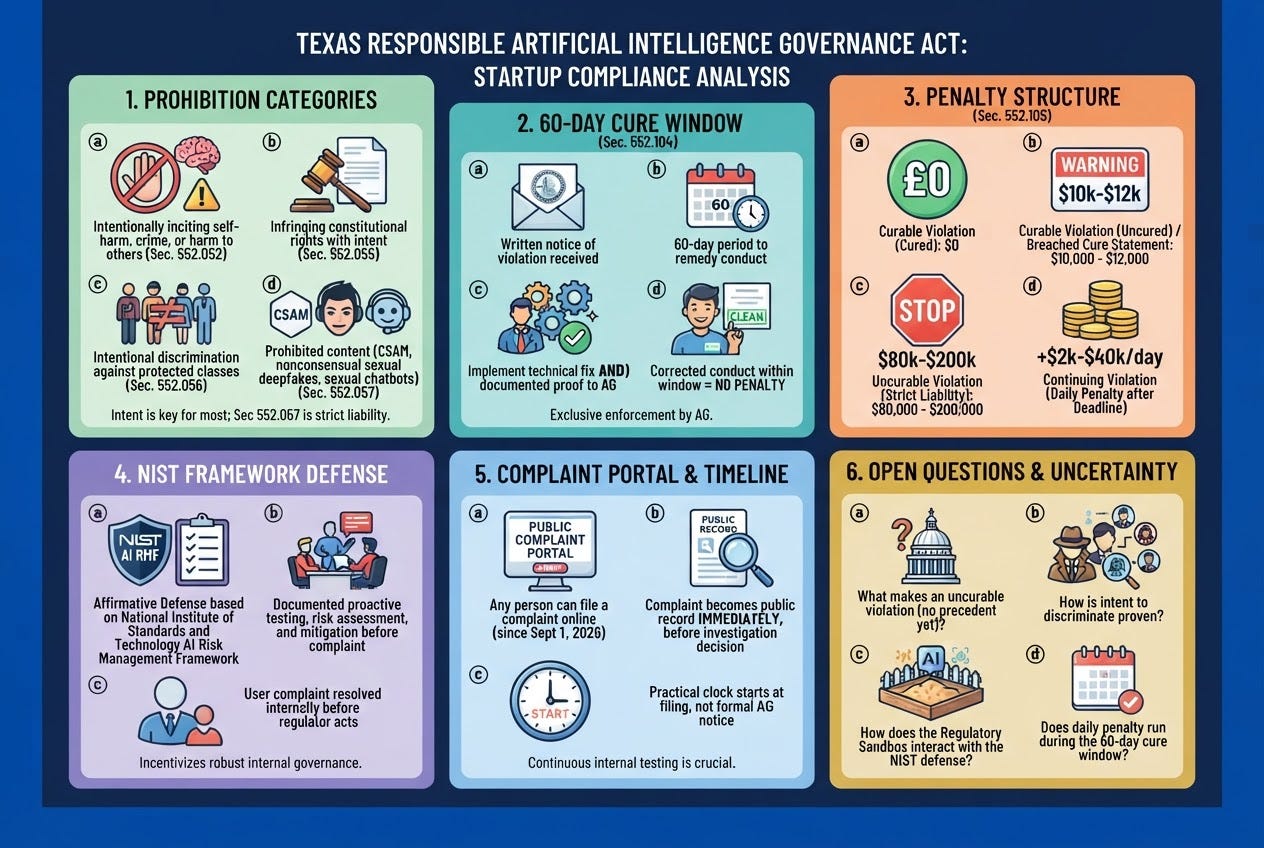
Texas House Bill 149, the Responsible Artificial Intelligence Governance Act, took effect January 1, 2026, and gives a startup exactly sixty days from the Attorney General’s written notice to fix a cited violation before the penalty climbs from a few thousand dollars to as much as $200,000. The Attorney General holds exclusive authority to enforce the statute, so the notice a founder actually has to answer comes from one office in Austin, not from a competitor’s lawsuit or a class action filed in federal court. A company that documents its fix inside that window under Section 552.104 of the Business and...
AI Usage Based Pricing Contract Renewal Terms
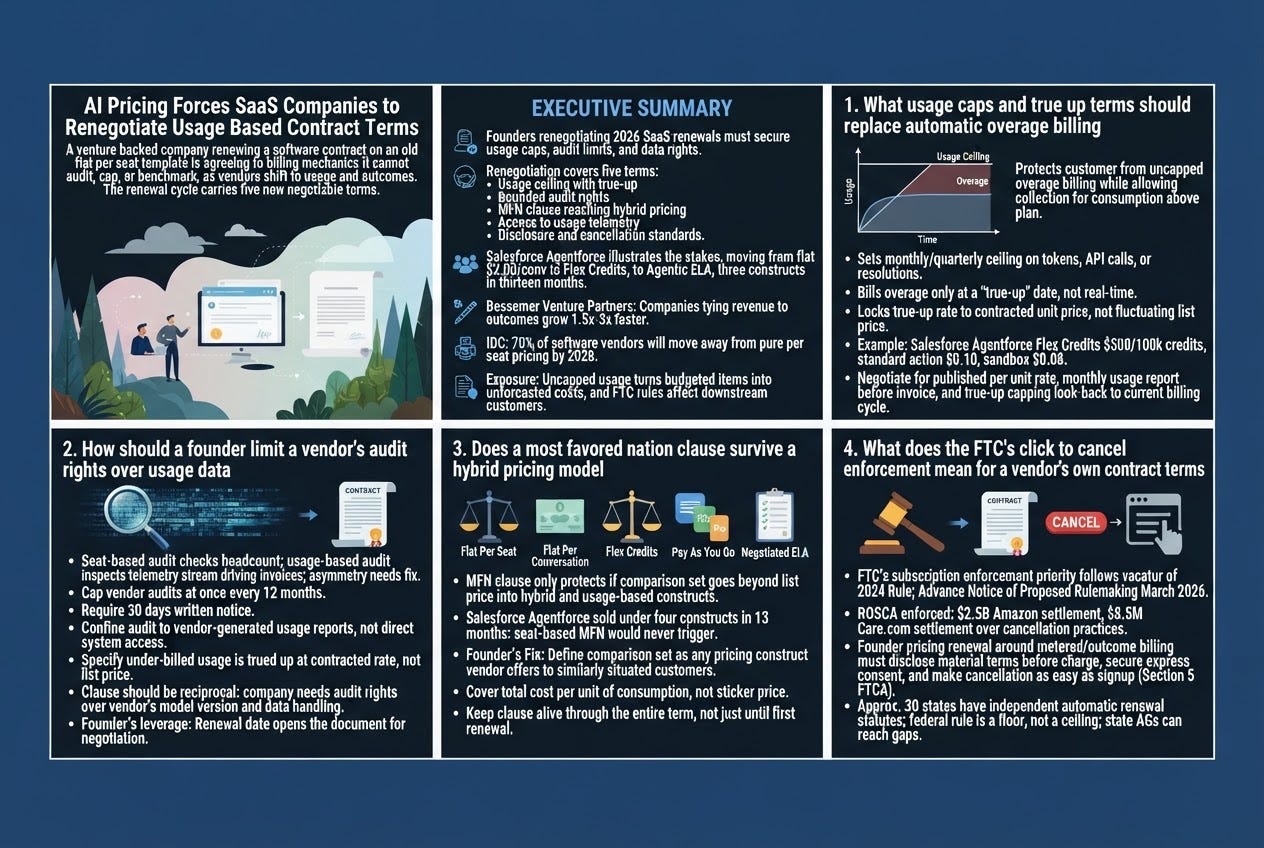
A venture backed company that renews its software contracts on the old per seat template this year is agreeing to pricing mechanics it cannot audit, cap, or benchmark, because the vendor on the other side of the table has already rebuilt its own billing engine around usage and outcomes.
Salesforce sold its Agentforce product under a flat $2.00 per conversation fee at general availability on October 29, 2024. Seven months later, on May 15, 2025, it added Flex Credits, priced at $500.00 per 100,000 credits with a standard production action metered at $0.10. Three months after that, on August 19, 2025, it layered in pay as you...
Employee Equity Liquidity After Carta And Pulley Exit Secondaries
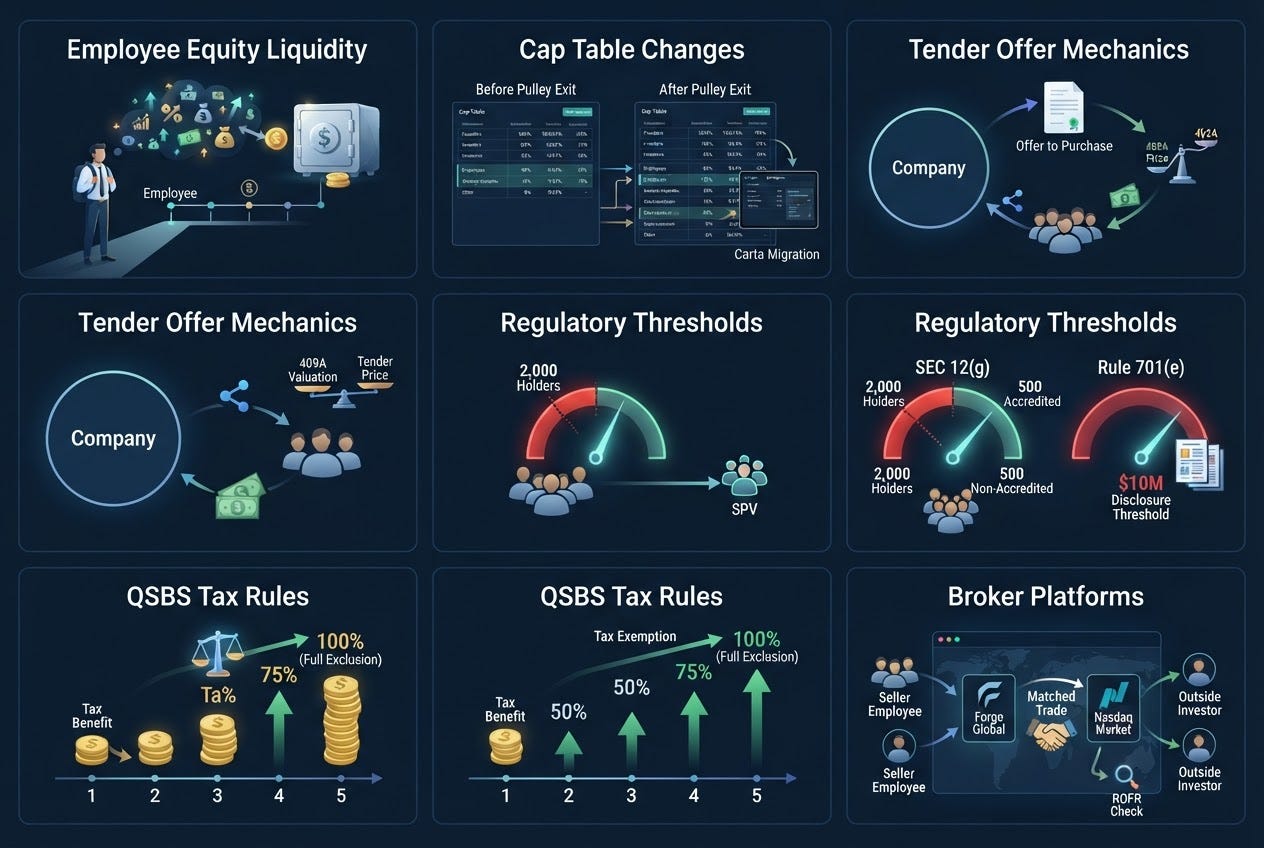
Startups now design employee equity liquidity through company sponsored tender offers, broker matched secondary sales, direct buybacks, or option financing, since Carta exited secondaries and Pulley closes December 8, 2026. Carta exited the secondary trading business on January 9, 2024, citing a conflict of interest it could not manage between holding customer cap table data and trading against it, and Pulley, the rival platform that built its business on being the alternative to Carta, will shut down entirely on December 8, 2026, sending its customers back to Carta for cap table administration only. The two platforms that employees and founders used to associate...
Stock Option Backdating Cost the UnitedHealth CEO $468 Million
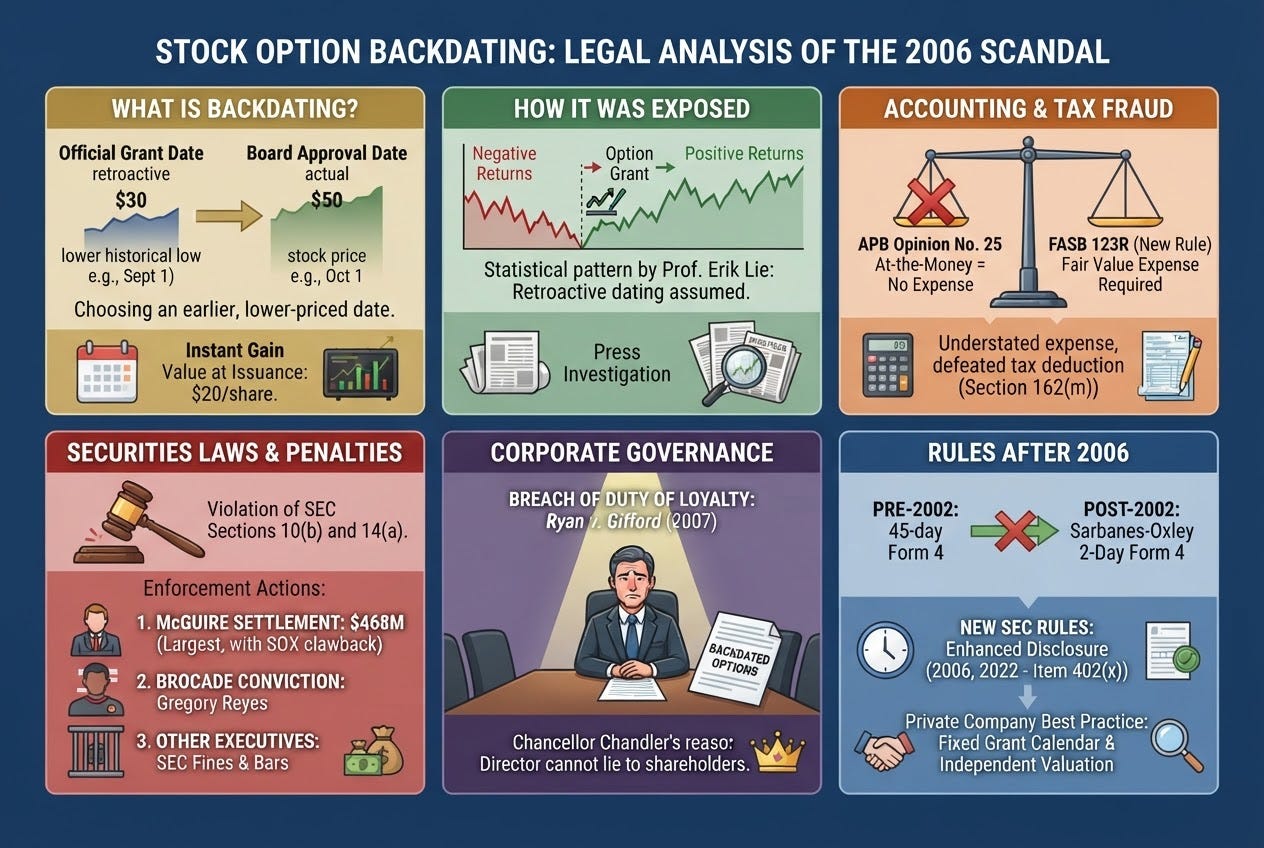
Stock option backdating cost former UnitedHealth Group chief executive William McGuire $468 million on December 6, 2007, after the SEC alleged he selected low price grant dates retroactively.
Backdating means writing a grant date earlier than the date the board acted, so the exercise price matches a historical low. A $30 exercise price on a stock that trades at $50 hands the executive $20 per share on the first day. The practice violated federal securities law when companies hid that gap from investors and auditors.
The numbers explain the reaction. Professor Erik Lie studied 39,888 option grants at 7,774 companies from 1996...
Deep Fission Gravity Reactor
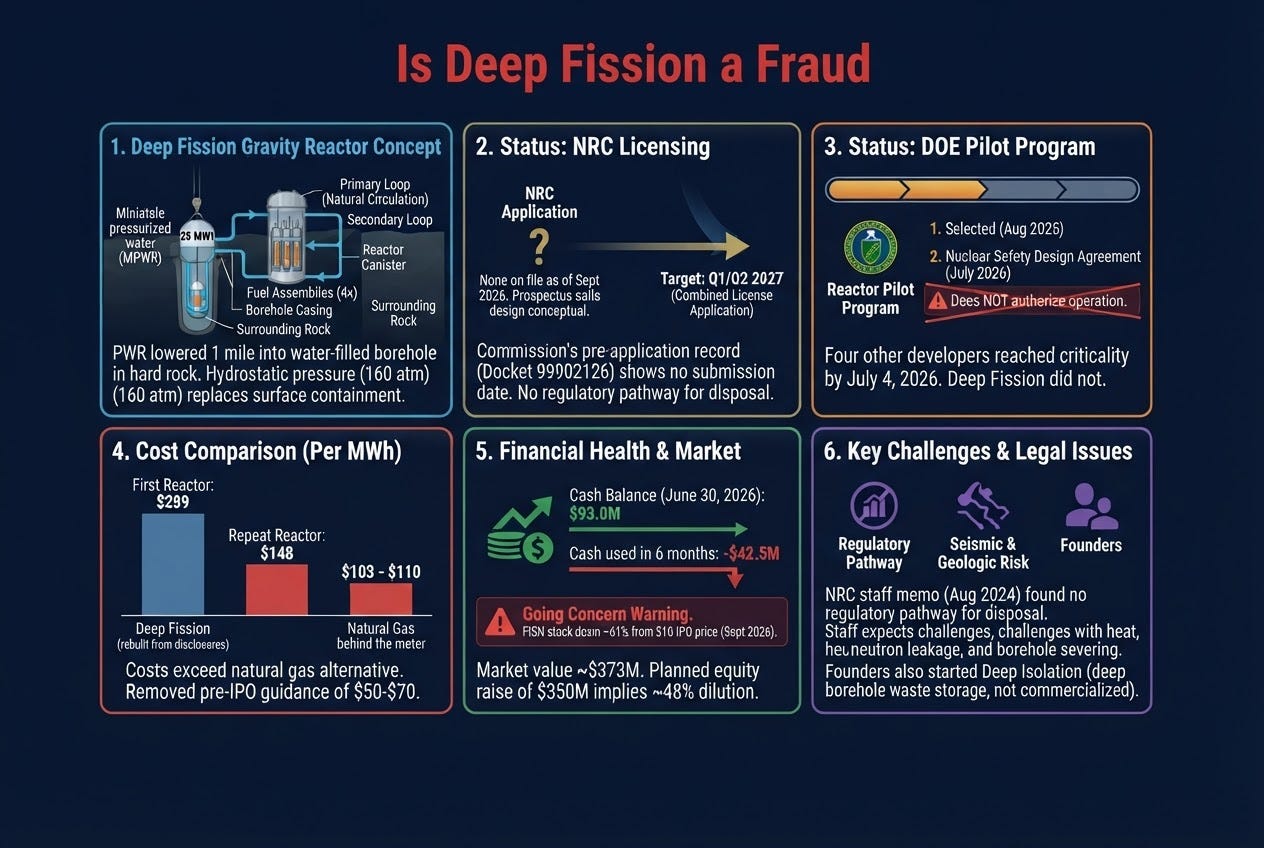
Deep Fission’s one mile deep Gravity reactor has no Nuclear Regulatory Commission license application on file as of September 2026, and its June 2026 prospectus describes the design as conceptual. The Commission’s pre application record under Docket 99902126 shows no date for a combined license submission. The Department of Energy approved a Nuclear Safety Design Agreement for the project in July 2026, a milestone that authorizes no operation.
Gravity is a miniature pressurized water reactor fueled with low enriched uranium, which Deep Fission, a California company founded in 2023 and listed on Nasdaq since June 2026, intends to lower into a wate...
The Lyft Settlement For Gig Worker Misclassification Risk
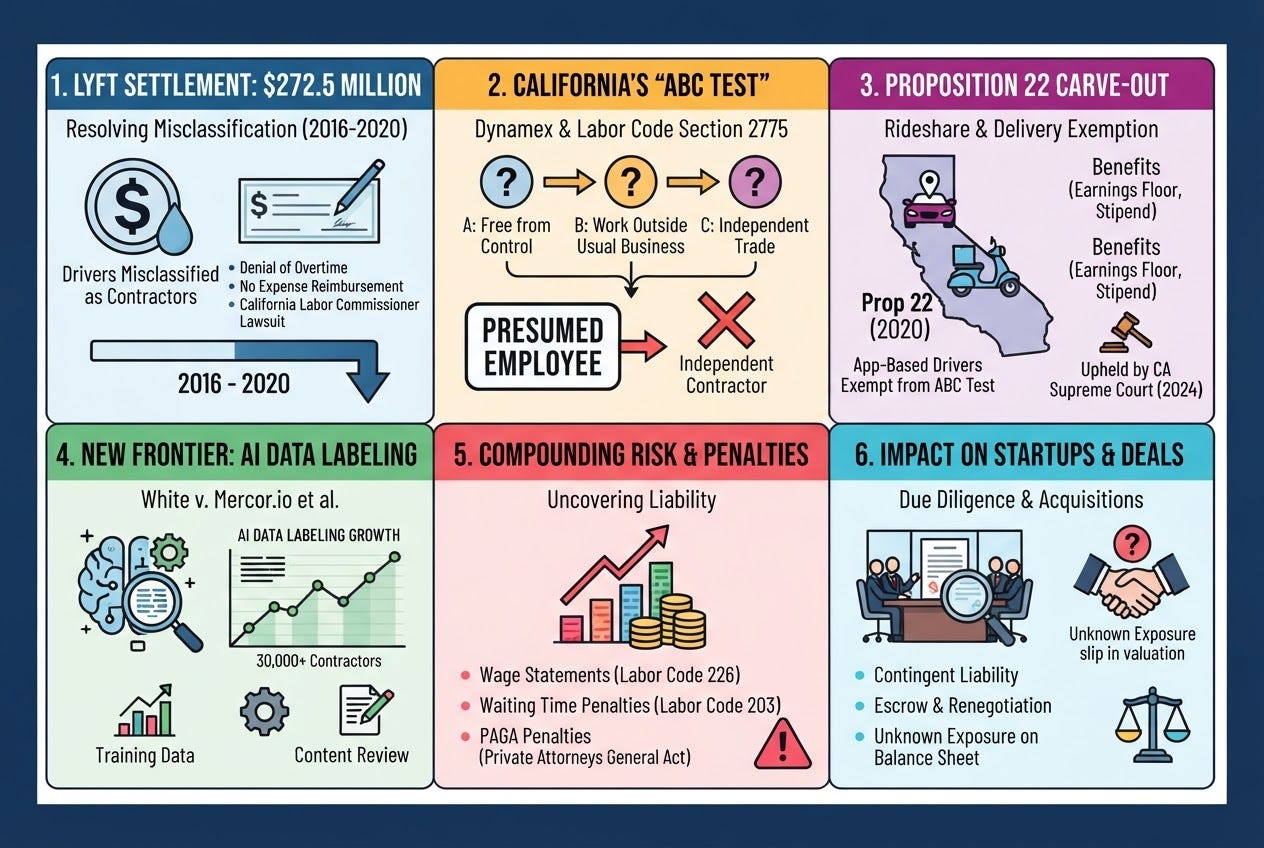
On October 1, 2026, Lyft agreed to pay $272.5 million to settle a California Labor Commissioner lawsuit accusing the company of misclassifying drivers as independent contractors from April 6, 2016, through December 15, 2020. Eighty seven percent of that figure, $236.875 million, goes straight to drivers rather than to the state treasury or to outside counsel. The Labor Commissioner’s office filed the underlying case in August 2020, which means Lyft spent six years and a California Supreme Court decision on Proposition 22 before writing the check. A parallel suit against Uber, filed the same month on the same legal theory, is still working its way through an arbitration di...
