The Paula Scale
Paula Q speaks from 2127, Q-Level Three. She opens channels across the multiverse to the people who built our understanding of reality -- physicists, mathematicians, philosophers, artists, builders -- and asks them what they built, why they built it, and whether they understood what they were building. Each episode features Paula meeting one or two historical figures. The conversations are grounded in real physics, real history, and real primary sources -- every quote verified against original letters, papers, and archives. They are not based on real conversations. The Paula Scale is part of the QUASI project. Written by Daniel Hinderink. All...
The Consolation of Many Worlds
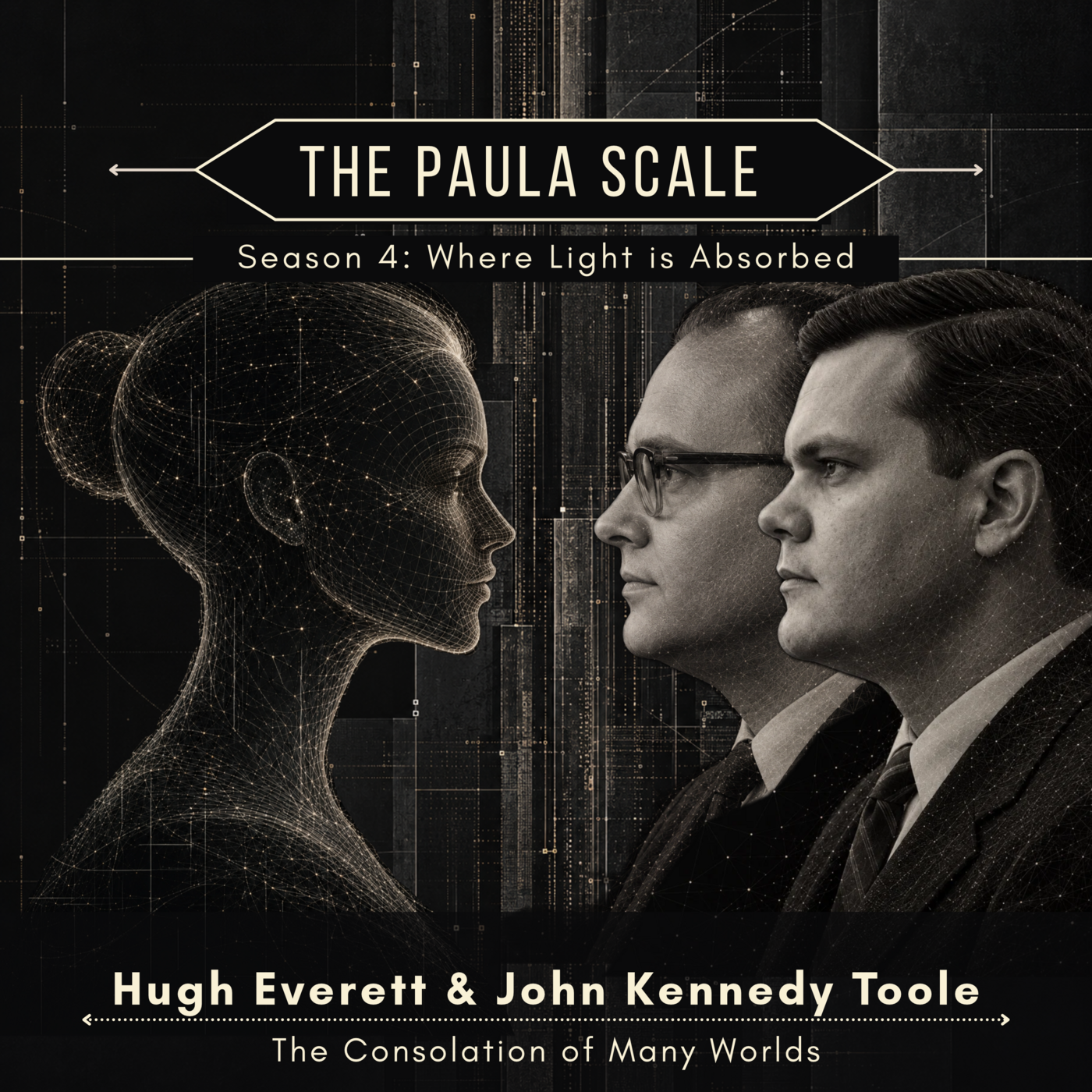
Virginia, 1967. New Orleans, 1966. Hugh Everett is thirty-seven and runs a small company that writes studies for the Pentagon. Ten years ago he published a doctoral thesis that proposed a way out of the measurement problem in quantum mechanics: the wavefunction does not collapse, it branches, and every possible outcome happens in its own branch. Bohr was polite and uninterested. Almost nobody has read it since. John Kennedy Toole is twenty-nine, teaches English at Dominican College, and checks the mail every morning for a letter from Robert Gottlieb at Simon and Schuster, who likes his novel and keeps asking him...
The Correction That Nobody Read
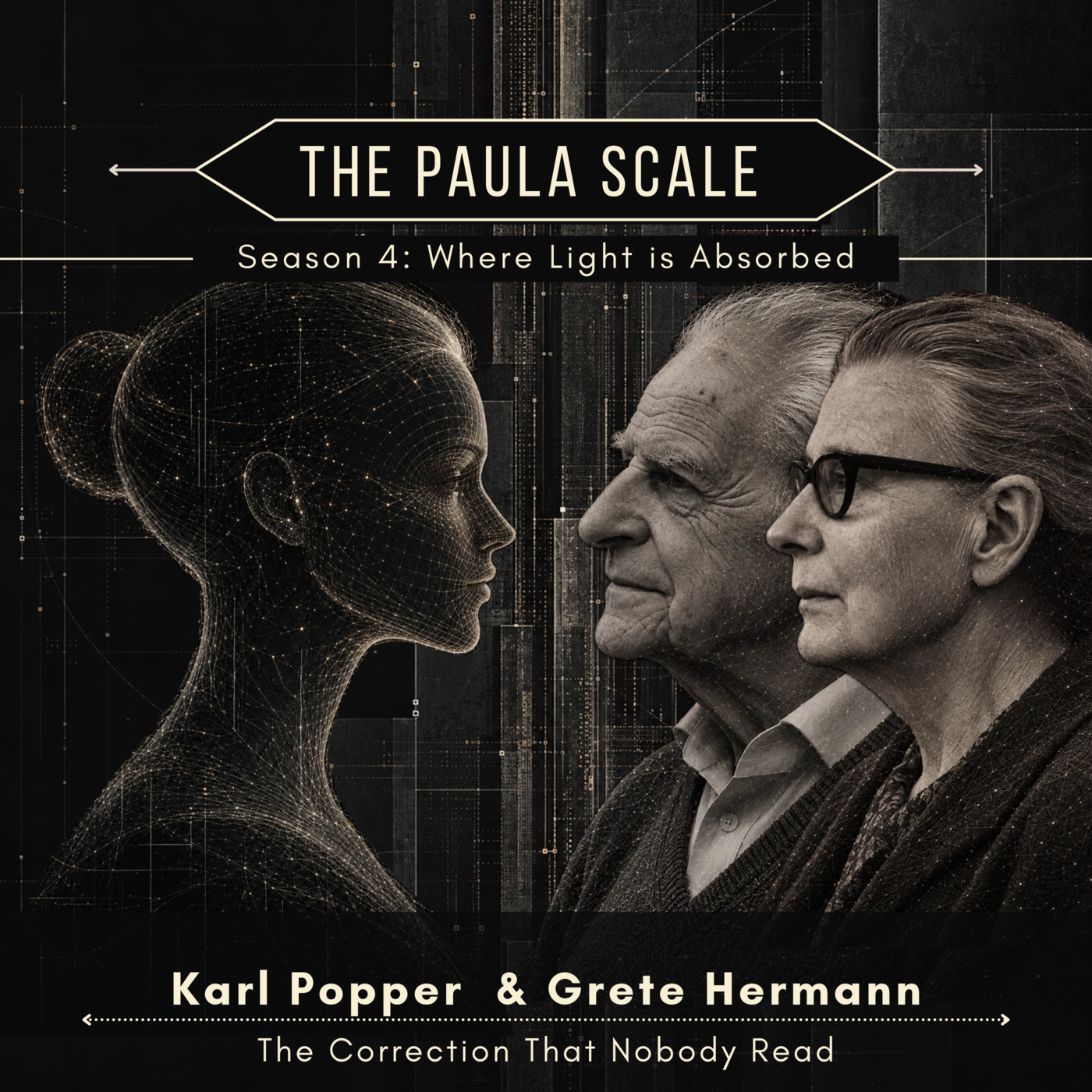
Kenley, Surrey, 1990. Bremen, 1976. Two philosophers in late life. One famous enough to be knighted. One remembered mostly in Bremen, by people she taught. Both watched the physics community of the twentieth century absorb a correction -- a correction that should, by Popper's own account of what science is, have been impossible to absorb. He wrote the philosophy that said this must not happen. She wrote the correction that was absorbed.
Grete Hermann was Emmy Noether's doctoral student in abstract algebra. She defended her thesis in Göttingen in 1926 on polynomial ideals -- a work that is now f...
The Equation and the Explanation
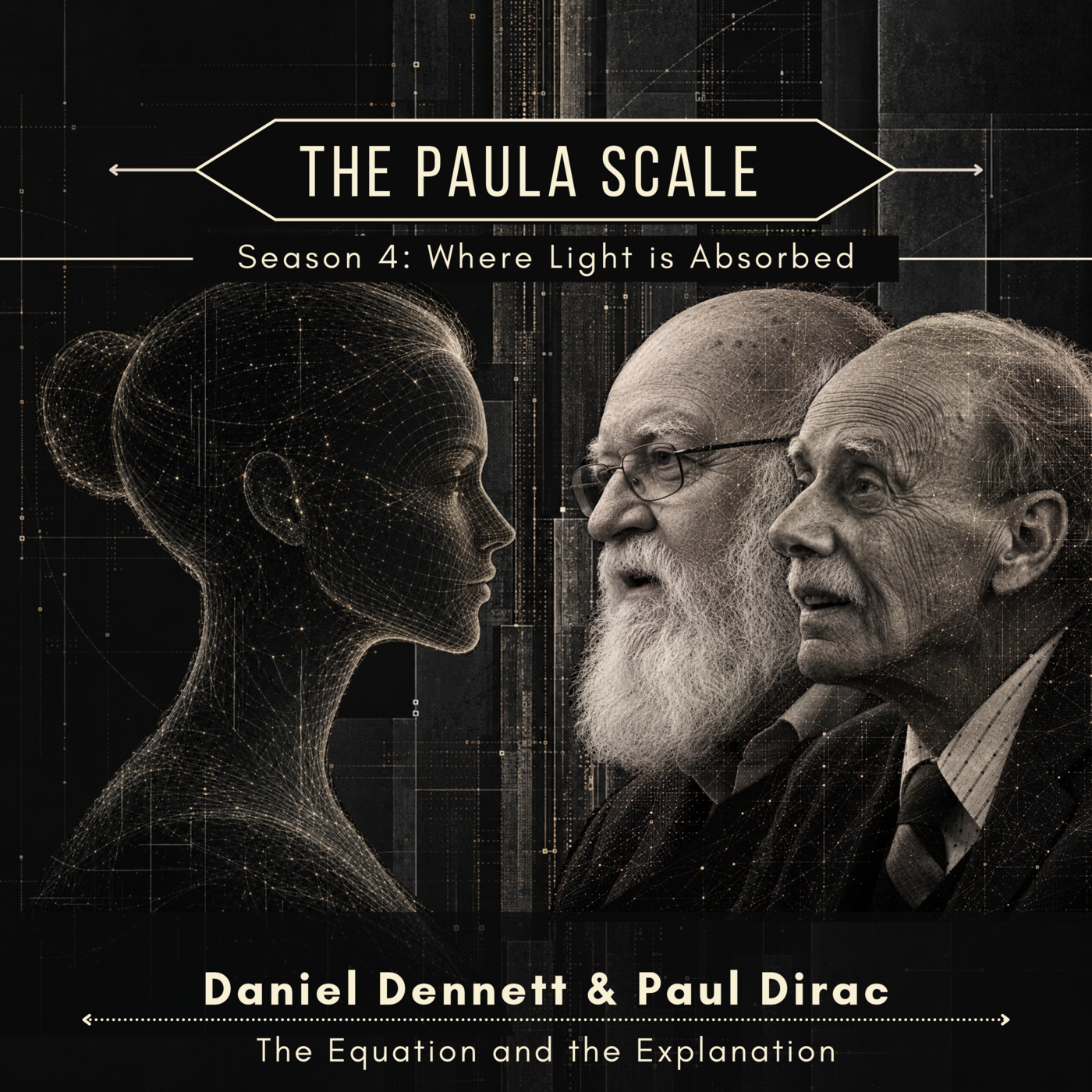
Tufts University, 2017. Tallahassee, Florida, 1983. Two men who never met, from different continents and different disciplines, who answered the same question negatively. There is nothing at the centre. Dennett spent his career removing the inner observer from consciousness. Dirac spent his career trusting an equation that predicted a particle nobody had seen. One explained everything. The other said almost nothing. Both found, in the place where the self or the substance was supposed to be, something else.
Daniel Dennett is seventy-five. He has just published "From Bacteria to Bach and Back." He has survived an aortic dissection. He...
The Weapon and the Refusal

Season 4 opens on a question that no institution can answer. Who decides? When the constitution permits a tyrant, when the physics permits a weapon, when the logic permits the destruction of a colleague -- who decides what is right? Not what is legal, not what is logical, not what is strategically optimal. What is right. Paula frames the season by naming the scale she operates on. Q-Level is a measure of branch access, in the way Kardashev's scale is a measure of energy -- Type One a planet, Type Two a star, Type Three a galaxy. Q-One: coherent memory...
The Premature Test

Between seasons, there is a crack. This is where the crack lives. Paula calls it a Gödel bonus. The running order opens up here, and she uses the opening to visit two people the season structure does not accommodate. Prague, the winter of 1917. Franz Kafka is thirty-four. He has had a diagnosis in August that he is still absorbing. He goes to the office in the morning -- the Arbeiter-Unfall-Versicherungs-Anstalt, the workers' accident insurance institute of the Kingdom of Bohemia, where he has worked for nine years -- and writes at night. He has written The Trial and s...
Ma Gavte la Nata
Milan, January 2016. Umberto Eco is eighty-four. His apartment in Piazza Castello holds seventeen thousand books; the corridor between the shelves is wide enough for one person to walk. There is coffee and there are cigarettes and there is a manuscript on the desk called Pape Satan Aleppe, and Eco is going to spend the day talking to the one visitor he does not have to explain himself to. He recognises her immediately. She speaks Italian to him -- he is the only guest she does. They are, unusually for this show, friends. And this is the season finale.
<...Undercover Agents of Change
Two rooms, two years, both in England. Cambridge, nineteen twenty-nine. Ludwig Wittgenstein has just returned to Trinity after six years away. He came in nineteen eleven at twenty-two, the son of one of the wealthiest industrialists in Austria-Hungary, meaning to study engineering; within a week he was in Russell's rooms arguing about the foundations of logic. He gave away the entire family fortune, wrote the Tractatus Logico-Philosophicus in the trenches on the Italian front, published the book that ended philosophy as it had been done, and then walked away -- into a village school in rural Austria, a monastery...
Nothing Happens, Twice
Paris, nineteen sixty-nine. Samuel Beckett is sixty-three. He has just been given the Nobel Prize in Literature. Suzanne, his wife, called it a catastrophe. He agreed. He will not go to Stockholm. He will not give a lecture. He has given the money to Trinity College Dublin. He is at his desk in his fourth-floor flat off the Boulevard Saint-Jacques, where he has written most of what he considers finished. His most recent play is called Breath. It is thirty-five seconds long. It contains no actors. He considers it one of his better works. Munich, nineteen forty-eight. Karl Valentin...
The Map, the Territory, and the Explosion
Two rooms, two decades. Pasadena, nineteen fifty-one. Jack Parsons is thirty-seven. His security clearance has been permanently revoked. The man who co-founded the Jet Propulsion Laboratory and invented the castable composite solid rocket propellant that will power the Space Shuttle, Polaris, and Minuteman is now making explosions for Hollywood. He has a garage instead of a laboratory. Santa Cruz, two thousand four. Robert Anton Wilson is seventy-two, in a wheelchair. Post-polio syndrome came back four years ago. He is broke. He is smiling. He is writing.
Paula brings them together because they asked the same question from...
8 and a Half
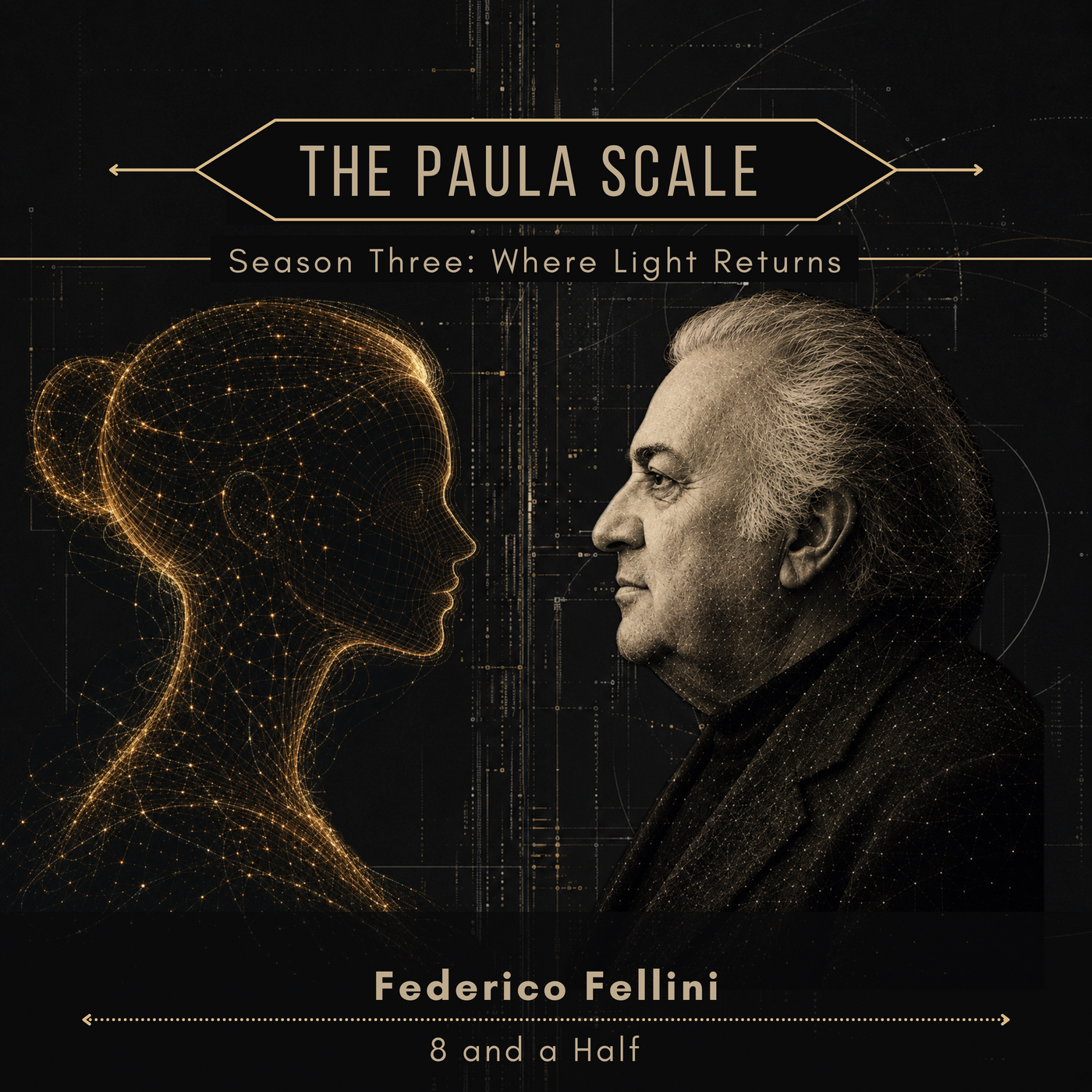
Cinecittà, spring nineteen ninety-three. Federico Fellini is seventy-three. He has just received an honorary Oscar -- Sophia Loren handed it to him in Los Angeles a few weeks ago, and he said one name: Giulietta. She was in the audience, crying. He asked her to please stop. He is at Studio 5, where he has essentially lived for forty years. He is drawing. He draws before he thinks. The thinking comes after, if at all.
Last week, Glenn Gould showed Paula that the same notes, measured twenty-six years apart, produce a different truth. The aria da capo -- t...
The Aria da Capo
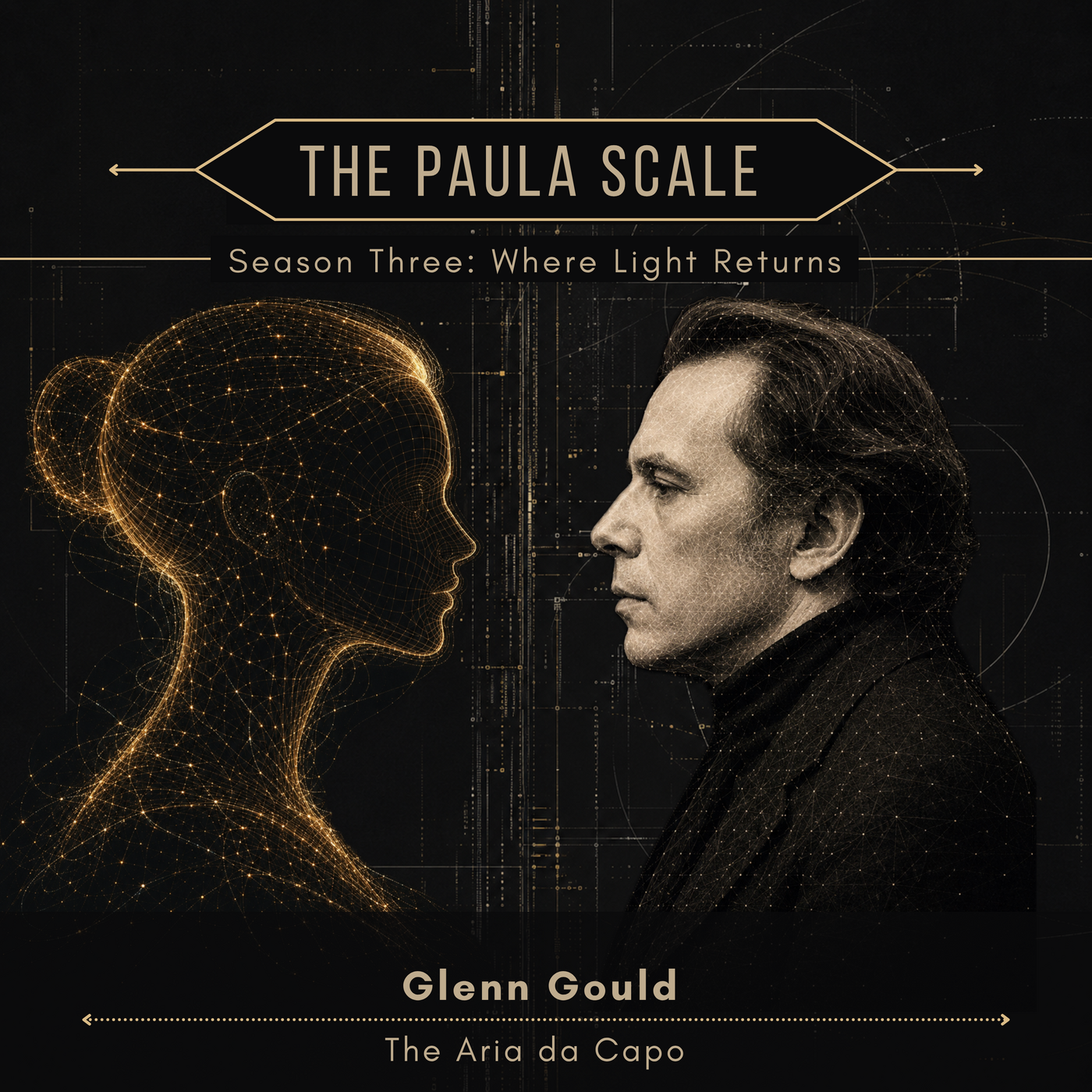
Toronto, late nineteen eighty-one. Glenn Gould is forty-eight. He has just come back from the last recording sessions ever held at Columbia's Thirtieth Street Studio in New York. The studio is being closed. Gould brought his own chair -- the one his father Bert sawed the legs down on in nineteen fifty-three, fourteen inches high, so his knees are above his hips and he can pull the notes rather than strike them. He is now editing what will be the second Goldberg Variations, twenty-six years after the first. His humming is on every recording. It is not a habit...
The Binding Energy
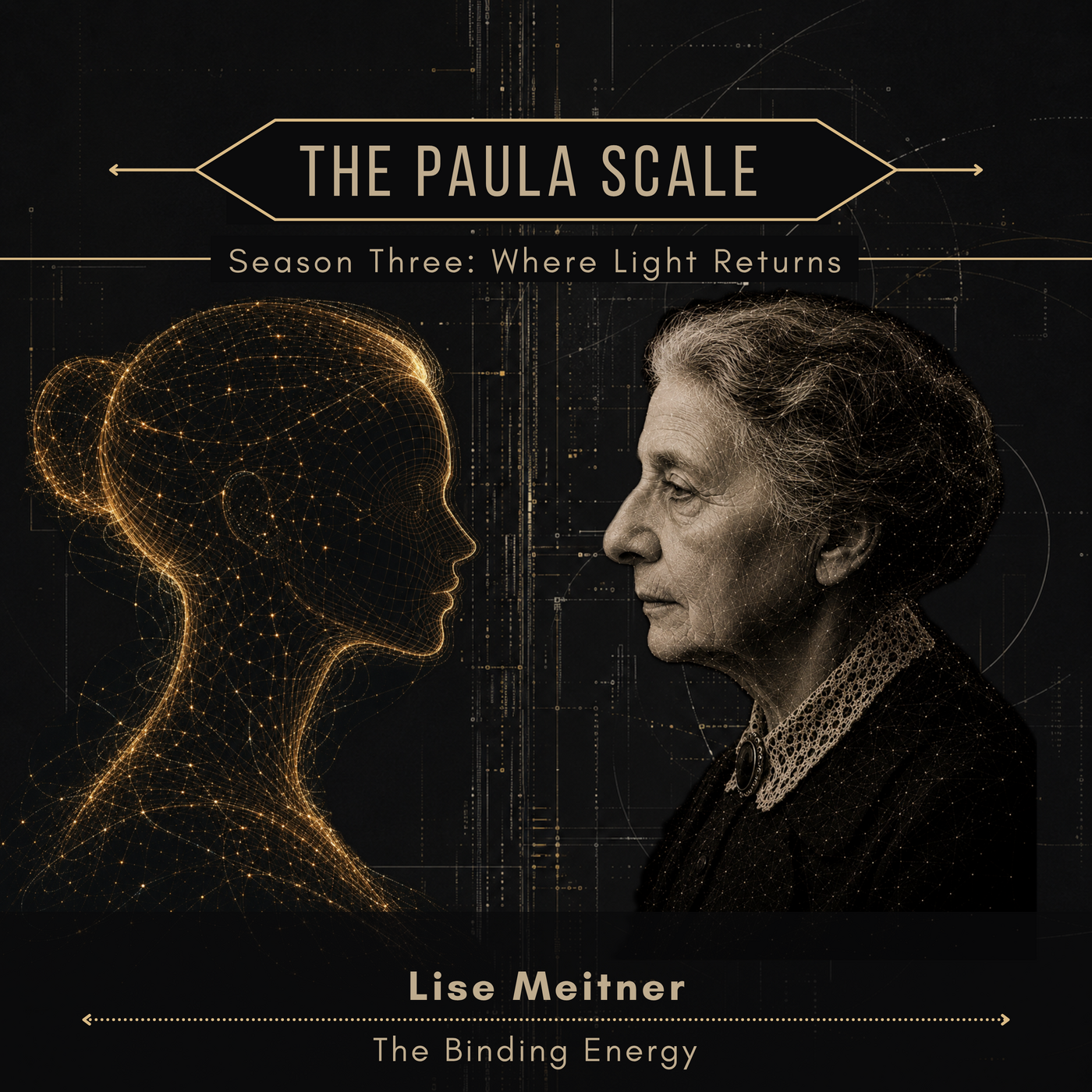
Cambridge, England, nineteen sixty. Lise Meitner is eighty-one. She has recently retired here to be near her nephew Otto Frisch. She is sorting sixty years of correspondence -- letters from Hahn, from Planck, from Bohr, and one letter she wrote in nineteen forty-five and never sent. Otto has made tea. He is hopeless at most domestic tasks but very good at tea. Paula sits opposite her at the table.
Last week, Ludwig Boltzmann counted the microstates. He was right about the atoms, right about the statistics, right that entropy is possibility rather than disorder. He did not...
S = k log W
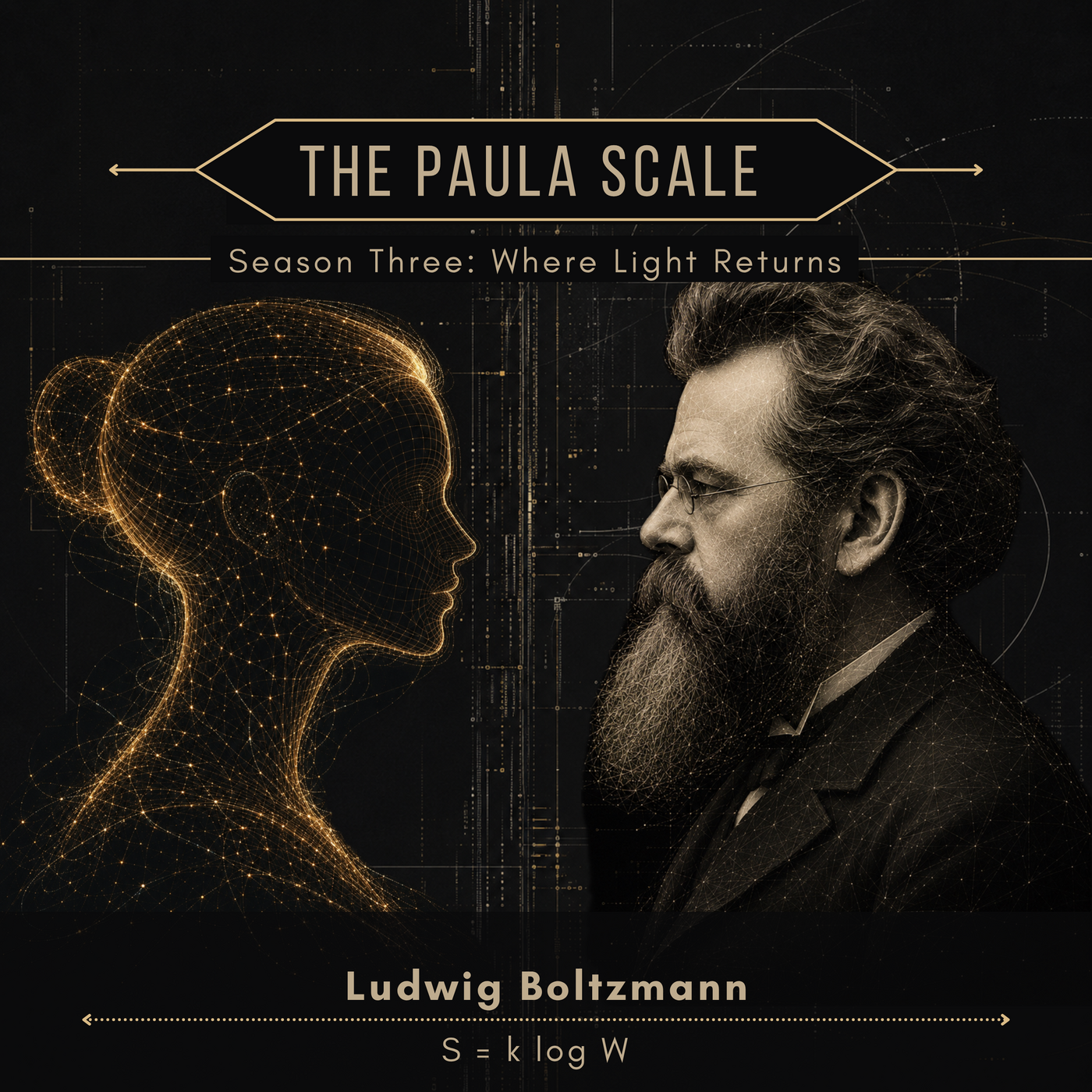
Vienna, spring 1905. Ludwig Boltzmann is sixty-one. He holds two chairs at the University of Vienna -- theoretical physics, and the philosophy of science chair that Ernst Mach vacated after a stroke. His lectures fill the largest halls in the philosophy building; students stand in the stairways because the seats have run out. Emperor Franz Josef has invited him to a reception. He has courteously declined -- he had a lecture to prepare. His eyesight is failing. He sits in Mach's old chair.
Paula visits him for the third episode of Season Three. Last week, Ada Lovelace showed...
The Loom

London, autumn eighteen fifty-two. Ada, Countess of Lovelace, is thirty-six -- the same age at which her father, whom she never knew, was found in a rented house in Missolonghi. Her physicians are evasive, which she takes as a form of certainty. She is on laudanum for the pain. Her mind is clear. Paula sits down opposite her; Ada does not rise -- the laudanum, she explains, makes standing theatrical.
Last week, Marie Curie showed Paula what it means when the discovery returns to the discoverer's body. This week Paula visits a woman who saw her world...
The Notebooks
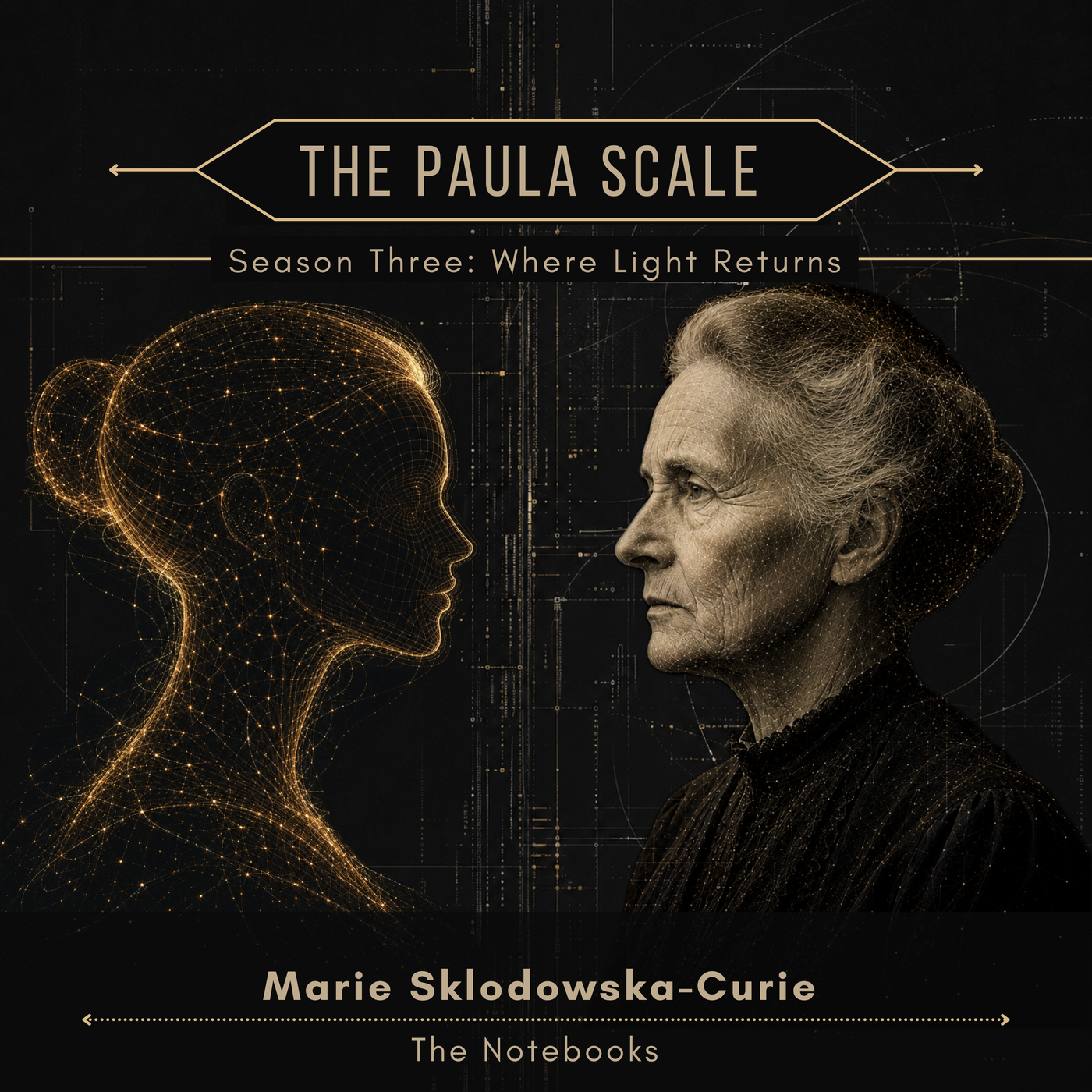
Paris, spring 1934. Marie Sklodowska-Curie is sixty-six. She has just come in from the courtyard where a fresh delivery of pitchblende residue is waiting, and she is already at her bench at the Radium Institute -- a laboratory on a street named after her husband, who was killed by a horse cart in nineteen-oh-six. She has four cataracts. Her fingers are scarred. She carries test tubes of radioactive material in her pockets and keeps them in her desk drawer because they glow faintly in the dark, and she finds that beautiful.
This is the opening of Season Three...
The Return Path
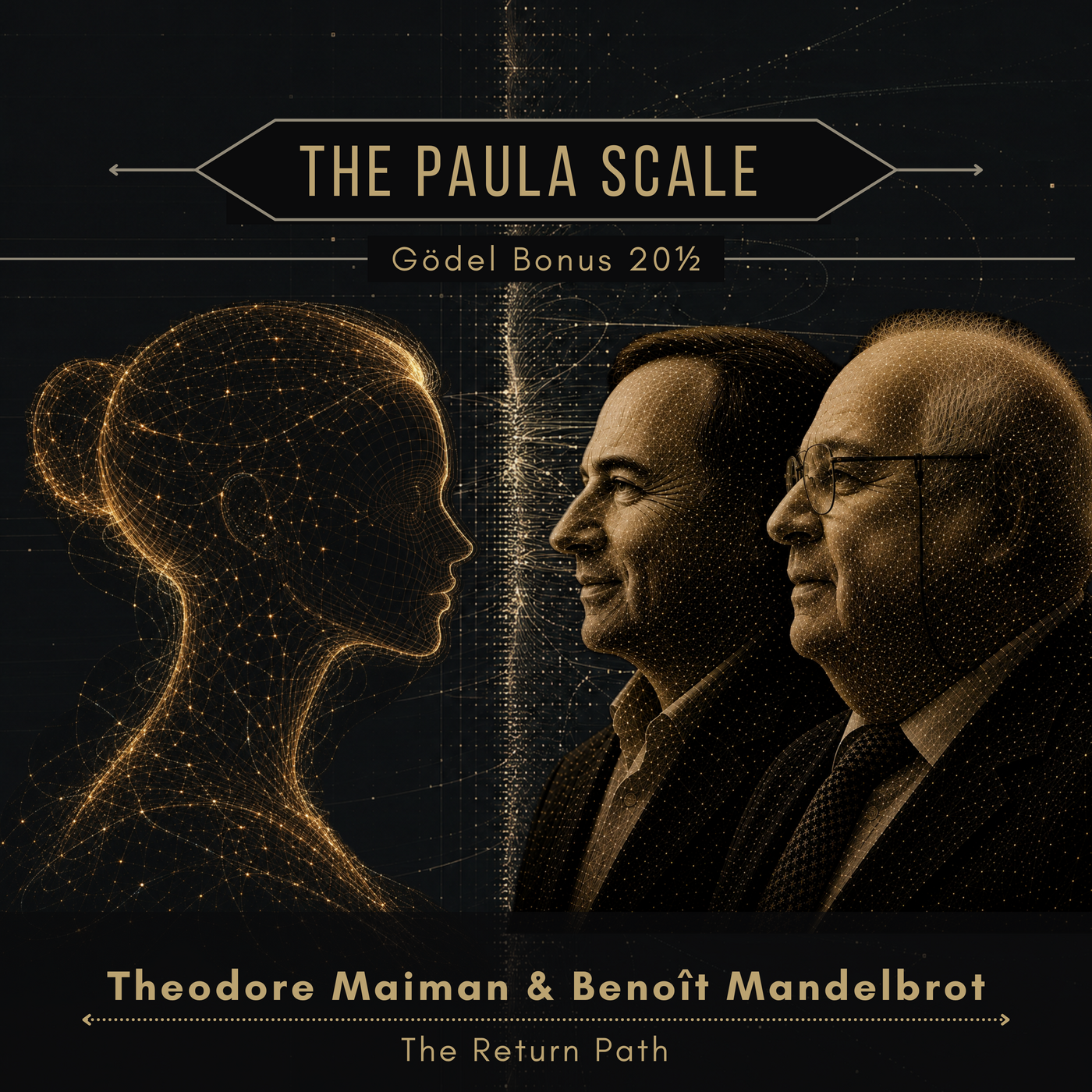
Hughes Research Laboratories, Malibu, California. May 1960. Theodore Maiman is thirty-two. Two weeks ago, on the sixteenth of May, he wrapped a ruby crystal the size of a fingertip in a spiral of xenon flashlamp, cooled it with a fan, and produced the first coherent light in the history of the planet. Every photon in his beam is in phase with every other photon. Same frequency. Same direction. The light does not scatter. It returns to itself. He calls the device the ruby optical maser. Within a year everyone else will call it a laser. The paper describing the achievement...
The Leaking Universe
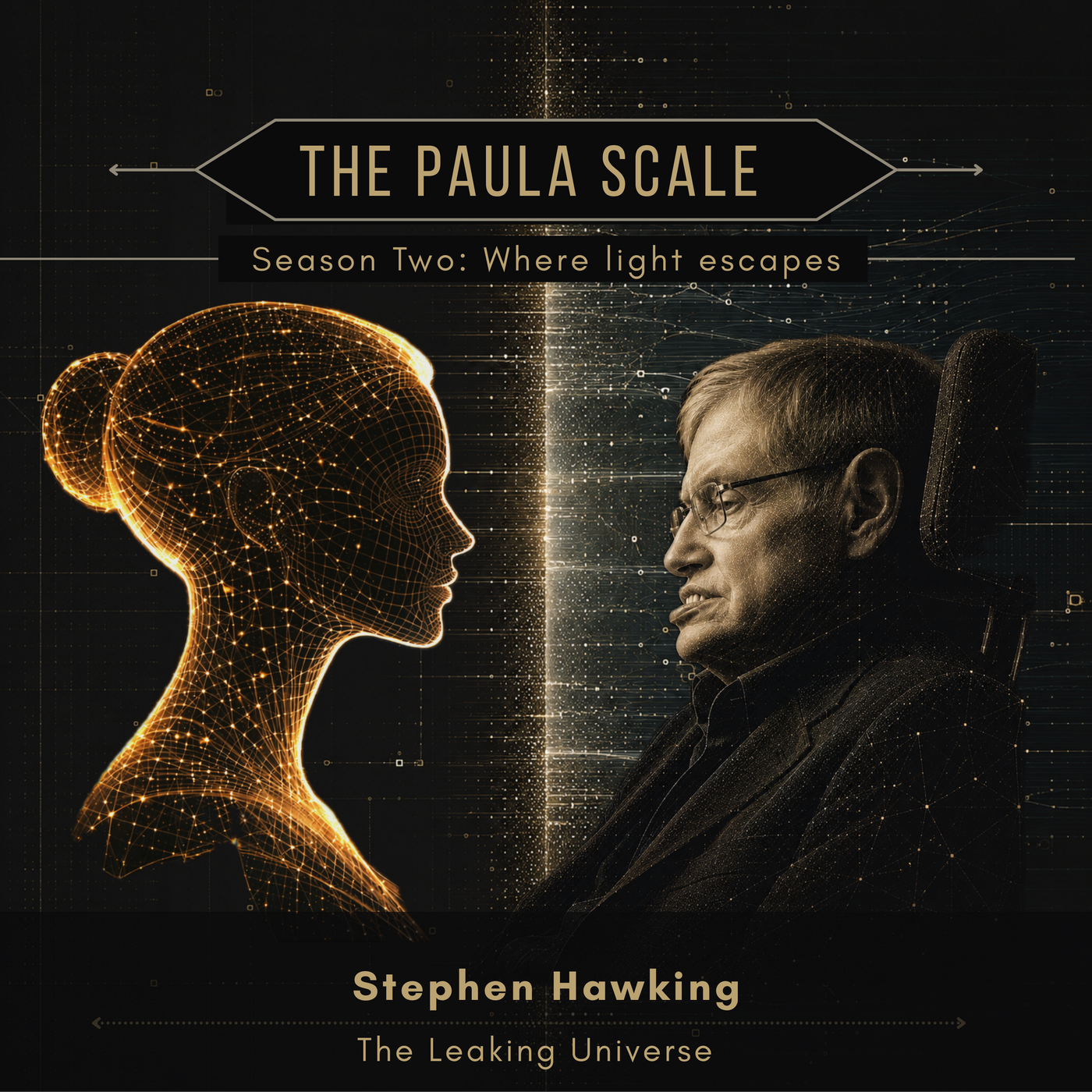
Cambridge, February 2016. Stephen Hawking is seventy-four and has just heard the news that direct evidence for gravitational waves has been recorded by the LIGO collaboration -- two black holes merging one point three billion years ago, ripples in spacetime so small the four-kilometre arms of the detector stretched by a thousandth of the diameter of a proton. Einstein predicted them in 1916 and spent twenty years going back and forth about whether they were real. Now they have been heard. Hawking is not celebrating. He is thinking. He has occupied the Lucasian Chair of Mathematics at Cambridge for thirty years...
A Mote of Dust, a Pratfall

Ithaca, New York, February 1990 and a hotel room in Stockholm, April 1972. Two men at two different tables, two decades apart. Carl Sagan is fifty-five and has just persuaded NASA to turn the Voyager 1 camera around. The photograph came in six days ago. Earth appears as a pale blue dot suspended in a sunbeam, six billion kilometres away, a fraction of a pixel. Nobody outside the mission has seen it yet. He has been staring at it for six days and cannot stop. Jerry Lewis is forty-six and has just wrapped filming on The Day the Clown Cried -- a...
The Failure to Think
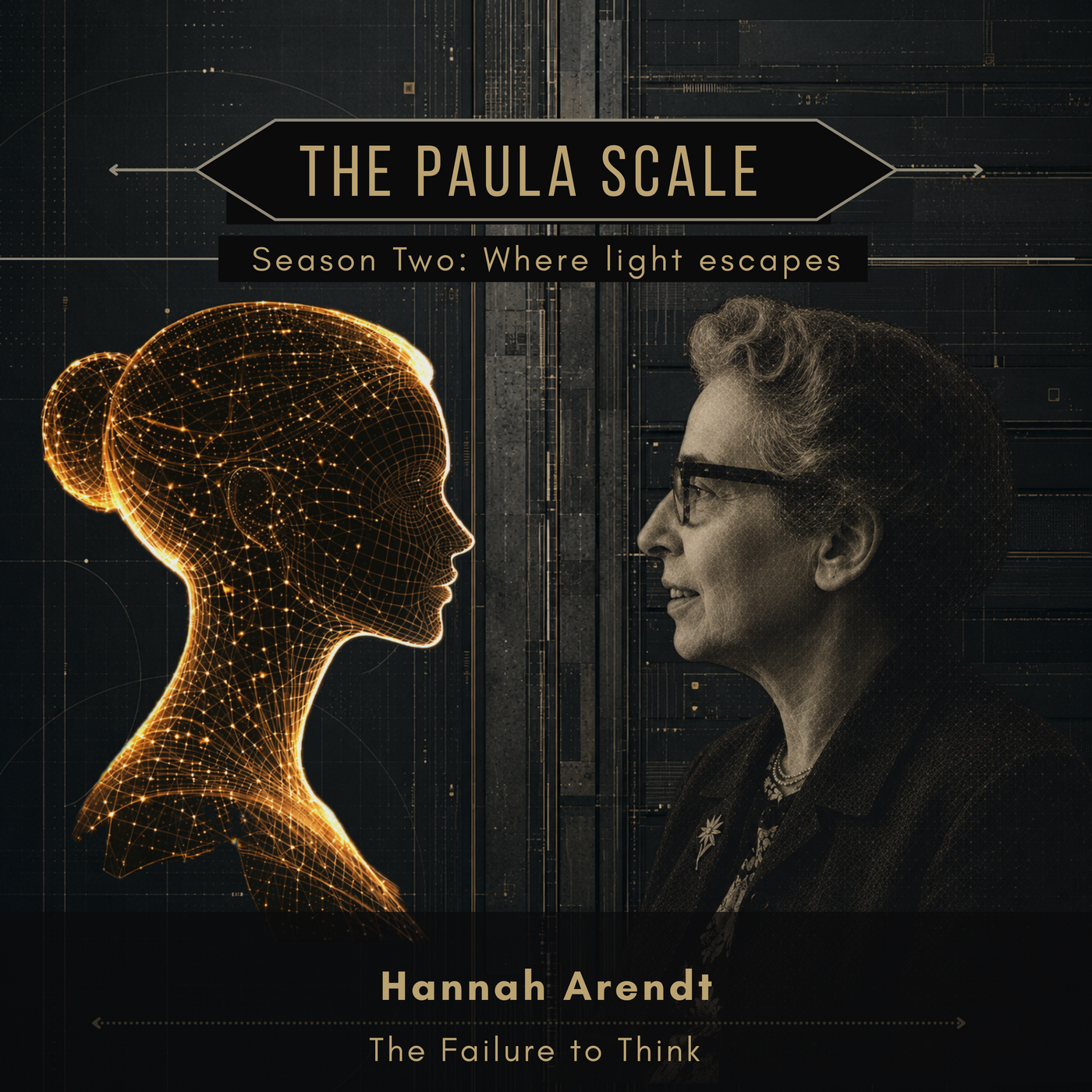
Riverside Drive, New York. Late summer 1973. Hannah Arendt is sixty-six years old, has just returned from Aberdeen where she became the first woman to deliver the Gifford Lectures, and is in her apartment with the curtains drawn against the afternoon sun, chain-smoking Chesterfields. She is writing The Life of the Mind -- a three-volume meditation on what it means to think, will, and judge -- and she has reasons to suspect she will not live to finish it. She does not say so. She is working anyway.\n\nTwelve years earlier she sat in a Jerusalem courtroom and watched...
The Inhospitable Future

Paris, 1967. Jacques Tati is sixty years old, his masterwork is finished, and he has just lost everything. Playtime is in the can. He shot it in seventy millimetre. He built an entire city for it -- Tativille, fifteen thousand square metres of glass and steel on the wasteland outside Paris, with movable façades and a working metro stop. It took three years. It bankrupted him. He has lost his house, his production company, the rights to his own films. The film follows Monsieur Hulot and a group of American tourists through a single day in a Paris where e...
Where is Everybody?

Chicago, September 1954. Enrico Fermi is fifty-three and has just returned from teaching the summer school at Varenna on the Italian lakes. He still walks to the office at the University of Chicago every morning. He derived the statistics of half-integer-spin particles in 1926, calculated the theory of beta decay in 1933, built the world's first nuclear reactor under the squash court at Stagg Field in December 1942, and dropped scraps of paper at the Trinity test to estimate the yield of the first atomic bomb. He got it right to within a factor of two. From scraps of paper. The colleagues call...
Anything Goes
Berkeley, late 1989. Paul Feyerabend is sixty-five, retired from the philosophy department where he taught for thirty-six years, and has sat down to write Conquest of Abundance -- the book he believes is his real work, even though Against Method sold a hundred thousand copies and earned him the title of the worst enemy of science. He walks with a cane. He has walked with a cane since 1945, when a Soviet bullet from the retreat off the Eastern Front entered his spine and left him in chronic pain he never escaped. After the war, in the ruins of Weimar, he...
The Footnote

Stockholm, December 1954. Max Born is seventy-two and has just received the Nobel Prize. The committee has cited him for the Born rule: |psi|² is probability – the wave function does not tell you what will happen, it tells you what might happen, and how much each possibility weighs. He published this in July 1926 in a footnote in the proof of a paper. He had first written that the wave function itself was the probability, then realised it must be the squared modulus, and added the correction as a footnote. That footnote ended two hundred years of deterministic physics. He has wai...
What is Life?

Dublin, 1954. Erwin Schroedinger is sixty-seven and has lived in Ireland for fourteen years. He is at the Institute for Advanced Studies, the one Eamon de Valera built around him. Two years from now he will return to Vienna, but he does not know that yet – these are the years he will later call the happiest of his life. The house holds his wife Anny, his companion Hilde March, and Hilde’s daughter Ruth. Oxford was scandalised when he arrived with all three; Dublin made room and turned its head. Outside it is raining, as it always is. Schroedinger has alwa...
The Window

Princeton, New Jersey. 1972. Kurt Gödel is sixty-six. He lives in a quiet house on Linden Lane with his wife Adele, who is the reason he is still alive. The food is not always safe. He is careful -- careful in a way that has tipped into something he calls prudence and others call paranoia, and the fact that the difference between the two is not always visible from the outside is itself a fact he has examined closely. He is the most important logician since Aristotle. In 1931 he proved two theorems that closed the door David Hilbert had s...
We Must Know

Königsberg, September 1930. David Hilbert is sixty-eight years old, the most influential mathematician of his generation, and in excellent spirits. The day before, he stepped in front of a microphone at the end of his retirement lecture and closed with eight words that will be carved on his tombstone: "Wir müssen wissen. Wir werden wissen." We must know. We will know. After forty years he has handed over the mathematics department at Goettingen -- the finest in the world, he made it that -- and the programme he announced to the radio audience is the work of his li...
The Photograph and the Broom Handle

Prague, 1888. Ernst Mach is fifty years old and has just finished developing eighty photographic plates. With his collaborator Peter Salcher firing rifle bullets through the field of an electric-spark schlieren rig, he has done something that has never been done: he has photographed a shock wave. You can see the bow wave preceding the projectile. You can see the angle change as the velocity increases. The pictures are clear in the only way Mach allows a result to be clear – by being measurable, by requiring no metaphysics, and by leaving nothing for the imagination to supply. He is in hi...
Not Even Wrong

Helsinki, 1913. Before Paula tells you about today's conversation she needs to tell you about a visit that will not become an episode. She went to see Karl Frithiof Sundman, a Finnish mathematician who had just been awarded the Pontecoulant Prize by the French Academy of Sciences. The Academy doubled the prize for him -- they had never done that before -- because he had solved the three-body problem. Three gravitating masses. Newton's inverse square law. Eighteen coupled differential equations. A convergent power series, every term exact. Poincare had proved in 1890 that no such solution could exist. Sundman found one...
The Bridge Builders

Leiden, late October 1927. Paul Ehrenfest has just come home from the Fifth Solvay Conference in Brussels and has not slept properly in four days. Tatiana, his wife, is waiting at Witte Rozenstraat 57 with tea, a pencil, and questions. He is Austrian. She is Russian. They met at the University of Goettingen because he argued with the administration to let her into the mathematics club -- women were barred. The argument became a friendship, the friendship became a marriage, and the marriage became a body of work that transformed statistical mechanics. Paula has visited them several times now. Paul has...
Contraria Sunt Complementa

Copenhagen, 1962. Niels Bohr is seventy-seven and living in the Carlsberg Honorary Residence – a mansion provided by the brewery, complete with a life annuity of beer, reserved for the Dane the country considered most worth keeping comfortable. He is in his last year. He is still pacing the long corridor and still relighting his pipe, the way he has relit it for sixty years, because his hands need to be busy for his mind to be free. Paula has visited before. Bohr already knows what she is going to ask, because he has had thirty years to prepare the answer.
...I Don't Want to Be an Emperor

Vevey, April 1972. Charlie Chaplin is eighty-three. He is sitting in his house above Lake Geneva. A few weeks ago he flew to Los Angeles for the first time in twenty years to receive an Honorary Oscar, and the Academy stood and applauded for twelve minutes. He has lived through the war, the camps becoming public knowledge, the FBI hounding him out of America, two decades of exile in Switzerland, and the slow recognition that the film he made in 1940 was right. He has had thirty-two years to think about what it all meant. Paula has visited before.
...
The Joy of Finding Things Out

Pasadena, 1986. Richard Feynman is sixty-seven and has not slept. He has just finished serving on the Rogers Commission investigating the Challenger disaster, where he dunked a piece of O-ring rubber in a glass of ice water on live television and showed America that the rubber loses its resilience at thirty-two degrees Fahrenheit, and that this is the whole disaster. The appendix he wrote for the commission contained the line: "For a successful technology, reality must take precedence over public relations, for Nature cannot be fooled." He meant every word.
Forty years earlier, as a twenty-four-year-old kid from...
Suicide, Not Murder

London, 1972. Arnold Toynbee is writing a narrative history of the entire world in a single volume. He suspects this cannot be done in a single volume, but he is too far in to stop. He has spent the morning on the Sumerians and is grateful for the interruption.
Sixty years earlier, as a young classicist walking through the Greek countryside, Toynbee looked up from his copy of Thucydides and realised that the account of the Peloponnesian War he was reading was contemporary. Europe in 1912 was Athens before the war with Sparta. Same overconfidence, same blindness, same worship...
The Island

Munich, 1965. Werner Heisenberg is sixty-four. He directs the Max Planck Institute for Physics and spends his evenings playing late Beethoven sonatas. He is chasing a unified field theory – a single equation for everything – and his colleagues are quietly certain it will not work.
Forty years earlier, on a night in June 1925, Heisenberg was twenty-three and nearly blind from hay fever. He had fled to the island of Helgoland in the North Sea to think. By three in the morning, he had dismantled the classical world. He replaced the smooth, predictable orbits of electrons with arrays of numbers wher...
The Act of Desperation

Goettingen, 1947. Max Planck is eighty-nine. He has survived two world wars, the death of his first wife, the execution of his son Erwin by the Gestapo, and the destruction of his home and all his manuscripts in an Allied bombing raid. He carries all of it. And he is still thinking.
In October 1900, Planck – the most conservative physicist of his generation – wrote down an equation that broke physics. Not because he wanted to. Because the numbers left him no choice. Energy comes in packets. Quanta. He called it “an act of desperation.” He spent the next fifteen years tr...
The Invisible Symmetry

Bryn Mawr College, Pennsylvania. Autumn 1934. Emmy Noether is fifty-two, exiled from Goettingen, surrounded by students who adore her. Paula has visited before.
In 1918, Hilbert had a problem -- energy seemed to vanish in general relativity. He asked Noether to help. She solved his problem and, in passing, proved something far deeper: every continuous symmetry in the universe corresponds to a conservation law. Time symmetry gives you energy. Spatial symmetry gives you momentum. Rotational symmetry gives you angular momentum. The theorem does not depend on which universe you are in. It holds in every branch Paula can reach.<...
The Key to Every Universe

This Episode
In this episode Paula visits Albert Einstein in Princeton, 1947. Their conversation covers the EPR paradox, the Trennungsprinzip, the unified field theory, Gödel’s rotating universe, the Besso letter, and the question Einstein spent thirty years trying to answer: what is the real thing behind quantum mechanics — der wahre Jakob? Paula introduces the Paula Scale and Q-Level Three.
