Engineering the Intelligent Enterprise

Industrial technology explained through practical engineering and business decisions. Hosted by Prasad Bhonde, this podcast examines AI agents, automation, cybersecurity, manufacturing systems, operational efficiency and emerging technologies. Each episode turns a complex technical development into clear lessons for engineers, technology leaders, founders and operations professionals. Follow the show for grounded analysis of how intelligent systems are designed, governed and applied in real organisations.
The Architecture of Persuasion |

Look at your phone. Think about the last thing you bought, the last video you shared, or the last belief you quietly adopted while scrolling.
You did not make a conscious choice.
Every time a screen illuminates, an engineered campaign targets the primitive parts of your brain. In this episode of The Deep Dive, a Creative Director and a Spatial Computing Chief Architect deconstruct how masters of media compress an idea into a feeling—so you grasp the mechanism one second before the narration names it.
Your brain runs on two opera...
Field Note #075 | The Culture Mirage
The poster demanded excellence.
The promotion rewarded compliance.
——
Walk through the lobby of almost any enterprise and the walls will promise fearless condor and uncompromising quality. Step into a Tuesday afternoon status review when a schedule is slipping, and watch how quickly a verified defect gets reclassified as a "post-launch observation."
In this episode of Field Notes, we examine The Culture Mirage: the gap between an organisation’s declared virtues and its Tolerance Baseline. We explore why human nervous systems ignore declarative posters and calibr...
Field Note #074 | The Innovation Theatre

The furniture was disruptive. The thinking was identical.
——
Why is it so much easier for an organisation to knock down its office walls than to shorten its approval chains?
In Episode 74 of Field Notes, we examine The Innovation Theatre: what happens when an enterprise adopts the surface aesthetics of a startup—casual wear, collaborative tooling, and open floor plans—while keeping its legacy aversion to risk completely intact.
We trace the quiet friction experienced by operators who are invited to exper...
Field Note #074 | The Innovation Theatre

The furniture was disruptive. The thinking was identical.
——
Why is it so much easier for an organisation to knock down its office walls than to shorten its approval chains?
In Episode 74 of Field Notes, we examine The Innovation Theatre: what happens when an enterprise adopts the surface aesthetics of a startup—casual wear, collaborative tooling, and open floor plans—while keeping its legacy aversion to risk completely intact.
We trace the quiet friction experienced by operators who are invited to exper...
Field Note #074 | The Innovation Theatre

The furniture was disruptive. The thinking was identical.
——
Why is it so much easier for an organisation to knock down its office walls than to shorten its approval chains?
In Episode 74 of Field Notes, we examine The Innovation Theatre: what happens when an enterprise adopts the surface aesthetics of a startup—casual wear, collaborative tooling, and open floor plans—while keeping its legacy aversion to risk completely intact.
We trace the quiet friction experienced by operators who are invited to exper...
Field Note #072 | The Availability Bias

The presence was noticed.
The contribution was not.
——
Think back to the last colleague praised in your company’s all-hands meeting.
Chances are, they were standing at the centre of a visible emergency—late nights, urgent messages, and a dramatic last-minute recovery.
Now think about the person whose preventative work ensured that three other departments experienced zero emergencies that same month.
Were they mentioned at all?
In this episode of Field Notes, we examine the mechanism of the Avai...
Field Note: #073 | The Perfection Paralysis

The product was protected. The opportunity was lost.
——
Perfectionism is the only form of delay that gets praised in a boardroom.
In this episode of Field Notes, we examine a recurring scene across engineering labs, product teams, and executive committees: the finished project that cannot quite leave the building.
Whenever a launch date approaches, new standards mysteriously appear.
A tolerance needs tightening, an interface needs another pass, or a strategy deck requires one more week of alignment.
We...
Field Notes #071 | Protocol Drift
The policy was rigorous. The reasoning was forgotten.
——
Walk into almost any engineering floor, software team, or enterprise department, and you will find people diligently performing steps that solve a problem from five years ago.
In this episode of Field Notes, Prasad Bhonde investigates Protocol Drift: what happens when an organisation records the instruction for a rule, but forgets to record the condition that made the rule necessary.
We explore why human systems are engineered to add procedures during mome...
Field Note #071 | Protocol Drift: The Hidden Cost of Rules That Outlive Their Cause
The policy was rigorous. The reasoning was forgotten.
——
Walk into almost any engineering floor, software team, or enterprise department, and you will find people diligently performing steps that solve a problem from five years ago.
In this episode of Field Notes, Prasad Bhonde investigates Protocol Drift: what happens when an organisation records the instruction for a rule, but forgets to record the condition that made the rule necessary.
We explore why human systems are engineered to add procedures during mome...
Field Note #070 | The Silence Debt
The meeting was peaceful. The execution was warfare.
—
Everyone has sat in a project review where a flawed timeline went up on the screen, the room went completely quiet, and everyone nodded anyway.
Leadership leaves believing the team is aligned.
Two months later, the implementation unravelled over the exact constraint nobody wanted to mention at 4:45 PM.
In Field Note 70, we examine The Silence Debt—the mechanism by which unspoken objections accumulate interest during planning and collect payment during execution.
Rather than blaming culture or individual courage, this epis...
Field Note #070 | The Silence Debt
The meeting was peaceful. The execution was warfare.
—
Everyone has sat in a project review where a flawed timeline went up on the screen, the room went completely quiet, and everyone nodded anyway.
Leadership leaves believing the team is aligned.
Two months later, the implementation unravelled over the exact constraint nobody wanted to mention at 4:45 PM.
In Field Note 70, we examine The Silence Debt—the mechanism by which unspoken objections accumulate interest during planning and collect payment during execution.
Rather than blaming culture or individual courage, this...
Field Note #069 | Organised Disbelief

The presentation was beautiful. The premise was untested.
——
Think back to the last proposal your team approved without an argument. Did everyone agree because the underlying evidence was bulletproof—or because the slides were clean, the presenter was articulate, and nobody wanted to interrupt a smooth meeting?
In this episode of Field Notes, we examine Organised Disbelief: the practice of protecting complex systems from the seductive power of cognitive ease.
As simulation software, automated dashboards, and generative models make it effo...
Field Note #068 | The Complexity Tax
Field Note #068 | The Complexity Tax
The solution was an extra layer. The problem was the weight.
—
Every experienced operator knows the moment a ten-minute job quietly becomes a forty-minute administrative ritual.
A single defect occurs on the floor, and by the end of the week, leadership introduces a new tracker, a dual-signature gate, or a standing review call.
The underlying flaw remains untouched, while the workflow grows heavier.
In thi...
Field Noe #067 | The Distance Paradox: When Devotion to the Build Blinds You to the User
Indifference is easy to spot in a poorly made product. The harder failures to diagnose are the ones caused by devotion.
In Field Note #08, we examine The Distance Paradox: caring intensely about the work requires emotional intimacy, but objective evaluation requires emotional distance. When engineers, designers, and operators spend months solving difficult internal problems, their familiarity compresses complex workarounds into effortless habits . They begin subsidising the product with their own memory during internal tests.
We grew close to the product. We lost sight of the user.
<...
Field Note #066 | The Comfort of the Calibrated Screen
On the quiet agreement between those who produce numbers and those who read them.
—-
Why do complex projects so often display a spotless dashboard right up until the week they fail in the field?
In this episode of Field Notes, Prasad Bhonde examines Dashboard Gravity: the institutional pull that shifts an organisation’s energy from repairing physical reality to optimising the reporting screen whenever a project comes under pressure.
Rather than blaming individual dishonesty, this investigation looks at the...
Field Note #065 | The Alignment Mirage

The room achieved consensus. The project achieved nothing.
—
Why do initiatives that receive unanimous approval on Tuesday afternoon stall completely by Friday morning?
Nodding in a meeting is frequently an act of social preservation, not intellectual agreement.
--
In Field Note #065, we examine The Alignment Mirage: the recurring organisational pattern in which the absence of vocal objection is mistaken for shared operational commitment.
Most meetings price public dissent far higher than silent non-compliance.
Raising a technical ri...
Field Note #064| Epistemic Laziness

Why is it becoming harder to get a straight answer in a review meeting even as the documents on the table get cleaner, longer, and better organised?
In this Field Notes, we examine Epistemic Laziness: the substitution of automated fluency for personal understanding. Historically, the struggle to write a coherent proposal forced practitioners to discover the flaws in their own assumptions. When software removes that struggle, it delivers the finished posture of expertise without the cognitive calibration that makes expertise safe.
We explore why the human brain equates readability...
Field Note #063 | The Delegation Gravity

Look closely at any high-performing team and you will notice a quiet contradiction: the resource spreadsheet says workload is distributed evenly, yet every late-breaking problem lands on the same two desks.
---
In this episode of Field Notes, we examine Delegation Gravity—the mechanism by which work bypasses available capacity and seeks out the lowest friction.
We break down the hidden cost of Explanation Overhead, showing why managers under time pressure routinely optimise for a thirty-second briefing today at the expense of team resilience tomor...
FIELD NOTE #062 | The Operator Behind the Output (Fragile Expertise)
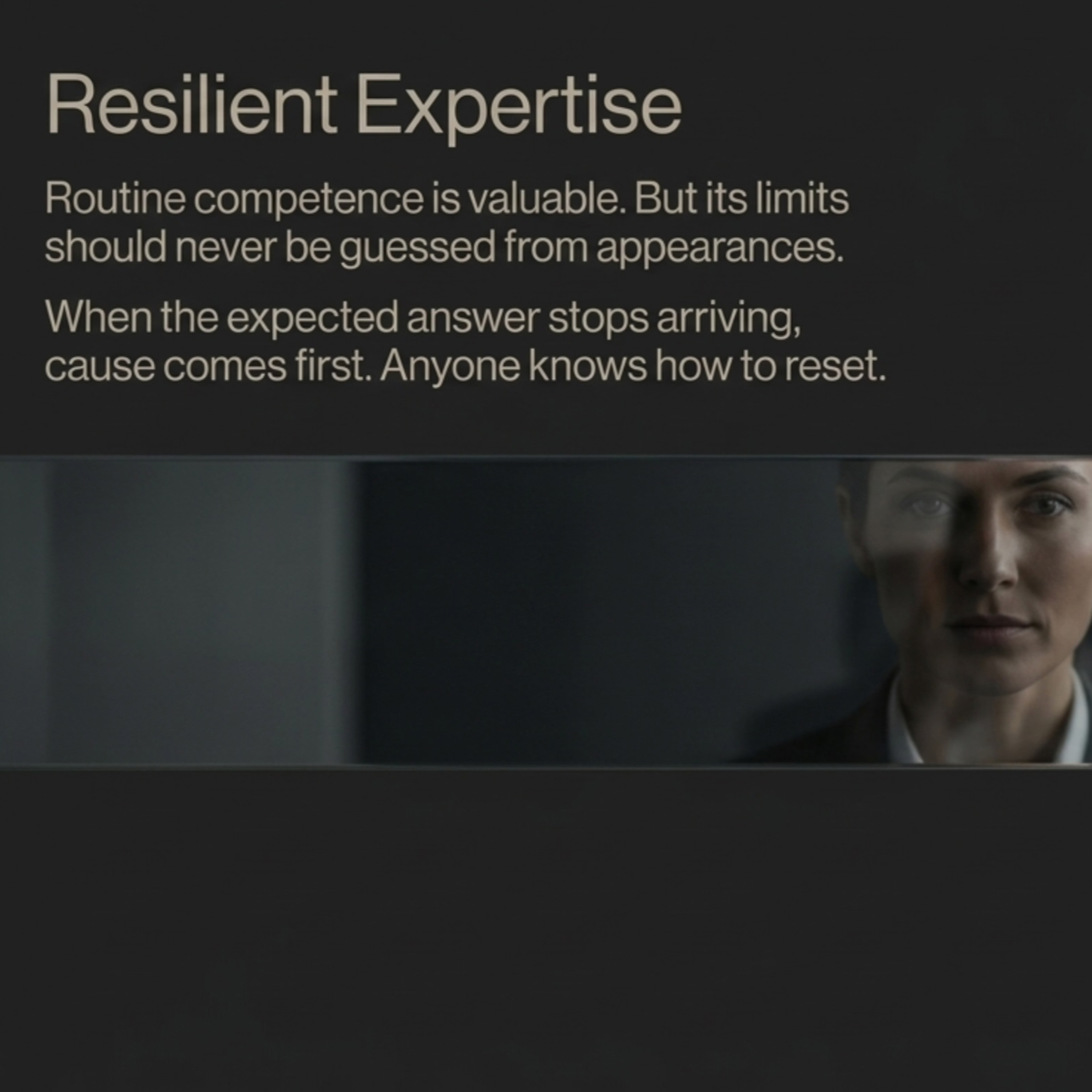
Good systems make complex work faster and more consistent. What happens at the exact minute the system stops supplying the next correct move?
In this episode of Field Notes, we investigate Fragile Expertise: the operational vulnerability that develops when strong routine performance masks a missing mental model of what is happening underneath the interface.
Grounded in established human-factors engineering and automation-bias research, the discussion examines how Borrowed Certainty accumulates inside high-performing teams, why routine completion metrics fail to test exception readiness, and how leaders can separate daily execution from...
FIELD NOTE #061 | Assurance Inflation: The Green Dashboard Problem
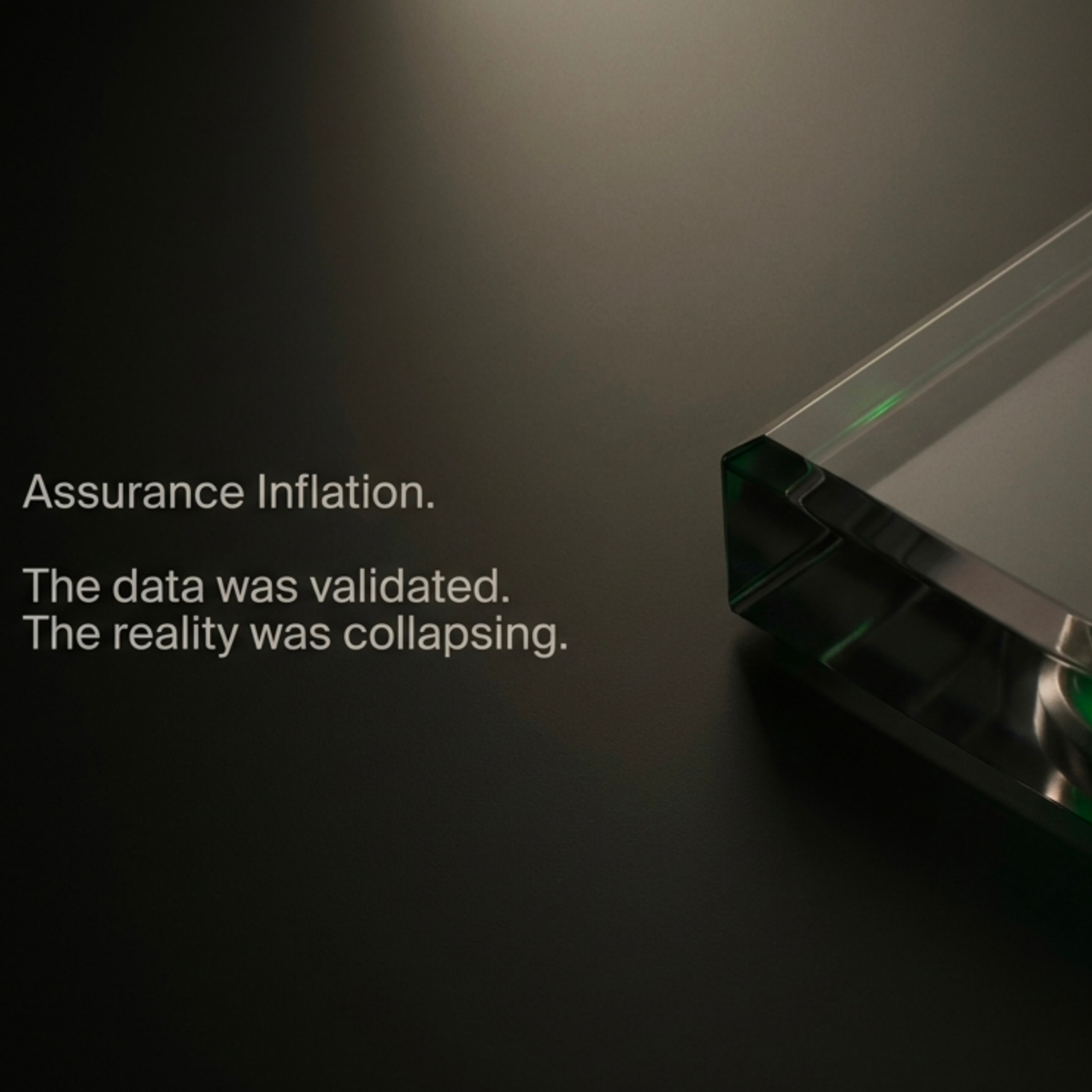
The numbers passed validation. The quarterly report is spotless. Executive confidence is rising.
So why is the underlying system losing reliability?
---
In Field Note #061, we examine Assurance Inflation: the operational failure mode that occurs when trust in validated metrics expands into unwarranted confidence about conditions those metrics never measured.
Without a single falsified number or missed target, high-performing engineering and enterprise teams regularly talk themselves into a false sense of security.
We break d...
FIELD NOTE #060 | The Paradox Required Navigation
The Paradox Required Navigation | Why Management Keeps Demanding a Solution
Why do familiar organisational tensions return, even after a decision has been made? The answer may lie in how the problem was framed.
Speed and reliability, central control and local autonomy, immediate performance and future capability can place legitimate demands on the same system. Choosing one may settle the immediate decision without removing the conditions that produced the tension.
This episode examines the distinction between a solvable problem, a genuine trade-off and an organisational...
FIELD NOTE #059 | The Architecture of Epistemic Collapse
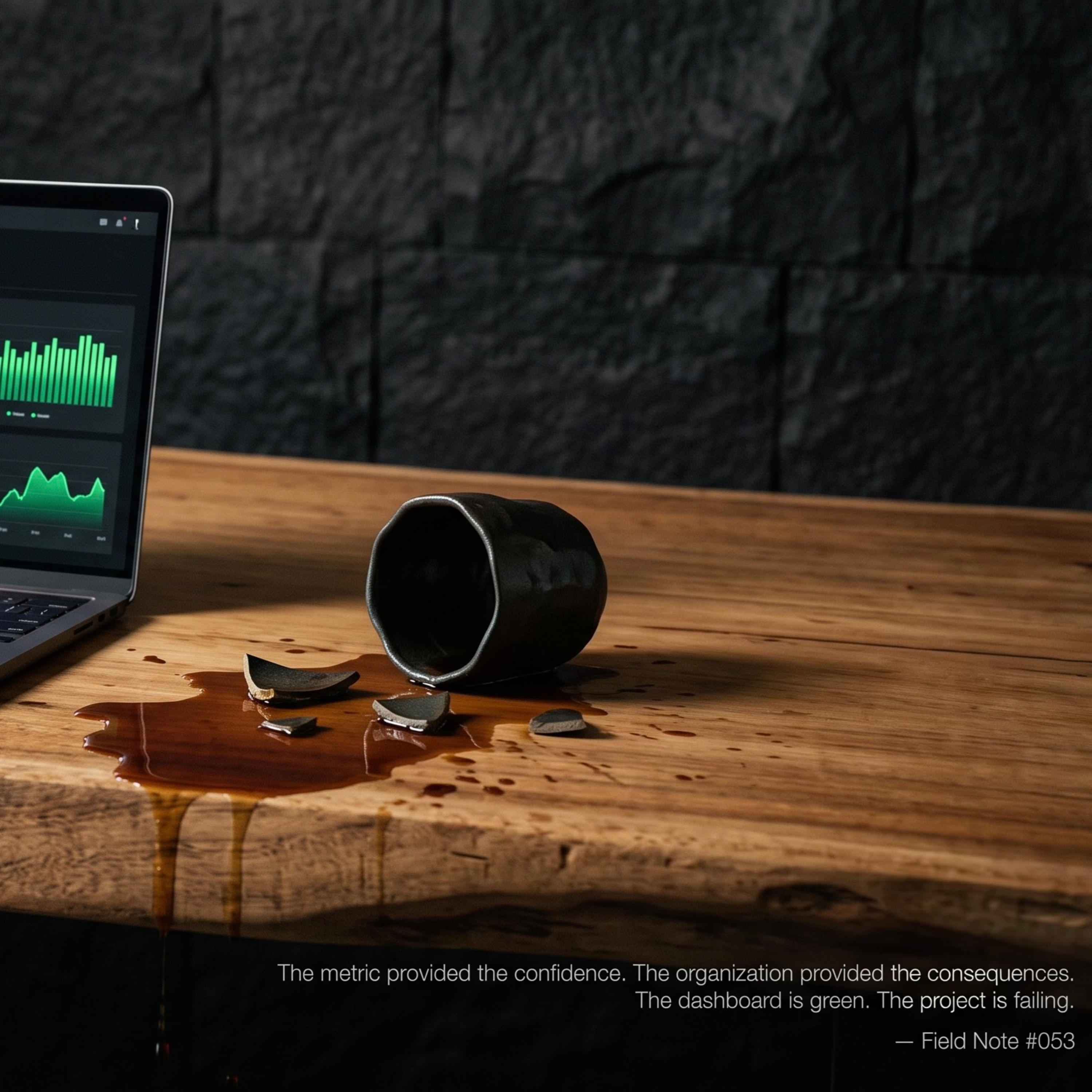
FIELD NOTE #059 | The Architecture of Epistemic Collapse
The Certainty Was Borrowed. The Risk Was Kept.
—
The Certainty Was Borrowed. The Risk Was Kept.
Why do flawless executive dashboards so frequently mask operational disasters?
Because organisations manage what they measure, and eventually, the measurement replaces the meaning.
This episode dissects Goodhart’s Law and the reality of Proxy Drift.
It explores the seduction of Borrowed Certainty—when AI systems and enterprise reporting tools offer answers so fluent...
Field Note #058 | The Handover Is Where The Story Changes

Some information arrives at a decision already carrying several invisible edits. Not because someone falsified it. Because someone handed it over.
This episode examines Handover Edit — the quiet change in emphasis, certainty, context and interpretation that occurs as information moves from one person to another. A sentence can remain technically accurate while becoming strategically different.
A qualification disappears.
An uncertainty becomes a commitment.
A context becomes a footnote.
A footnote disappears.
The episode introduces one question worth keeping cl...
FIELD NOTE #057 | Loyalty To The Plan Is Not The Same As Loyalty To The Goal
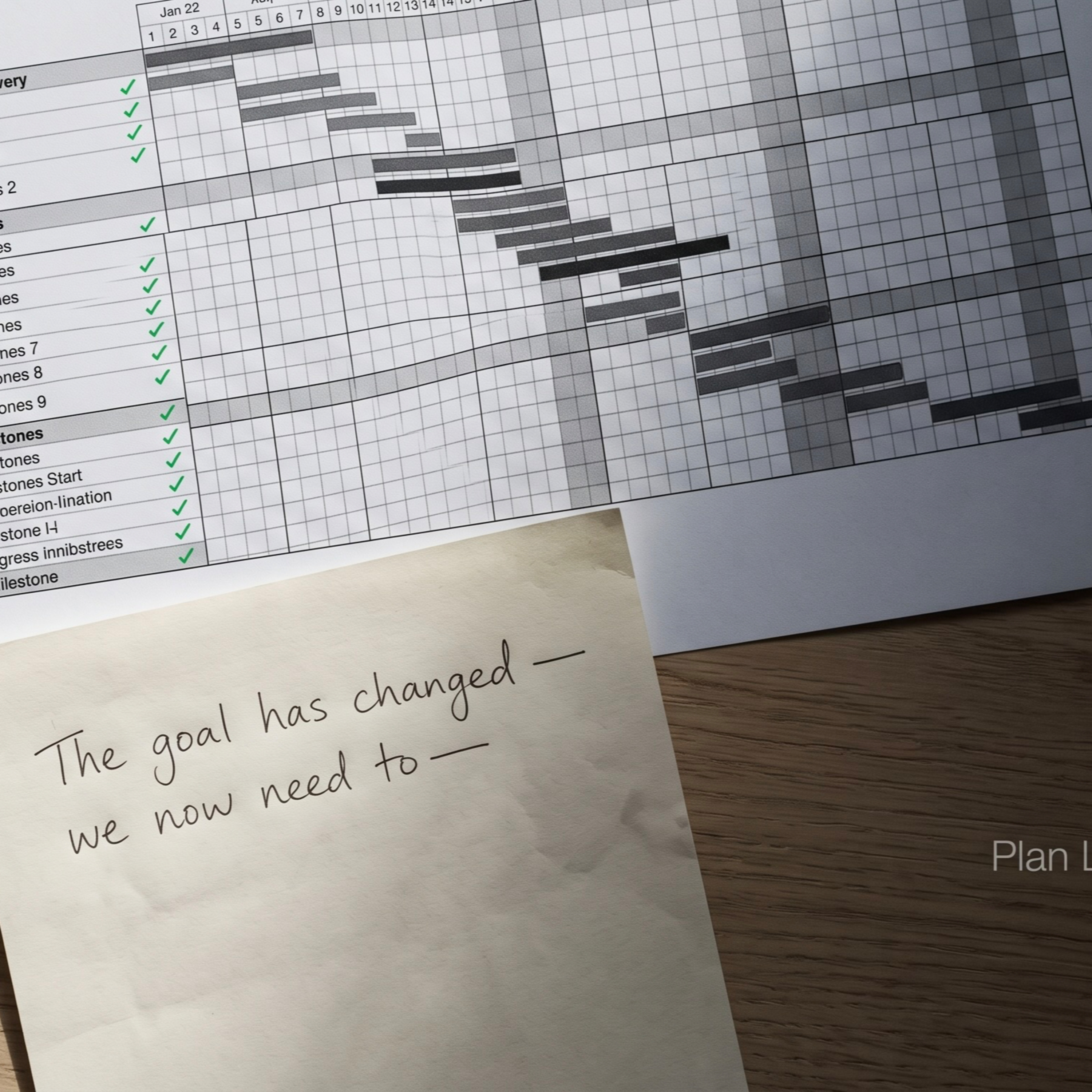
Loyalty To The Plan Is Not The Same As Loyalty To The Goal
Plans are written to achieve goals. The plan and the goal occasionally diverge. Circumstances change. The goal moves. The plan does not always follow.
Some teams continue executing the plan long after the goal it was designed to achieve has changed — hitting every milestone, delivering every output, reporting green across every metric.
The execution is excellent. The destination is wrong.
This episode examines the mechanism behind Pla...
FIELD NOTE #056 | The Presentation Is Not The Thinking
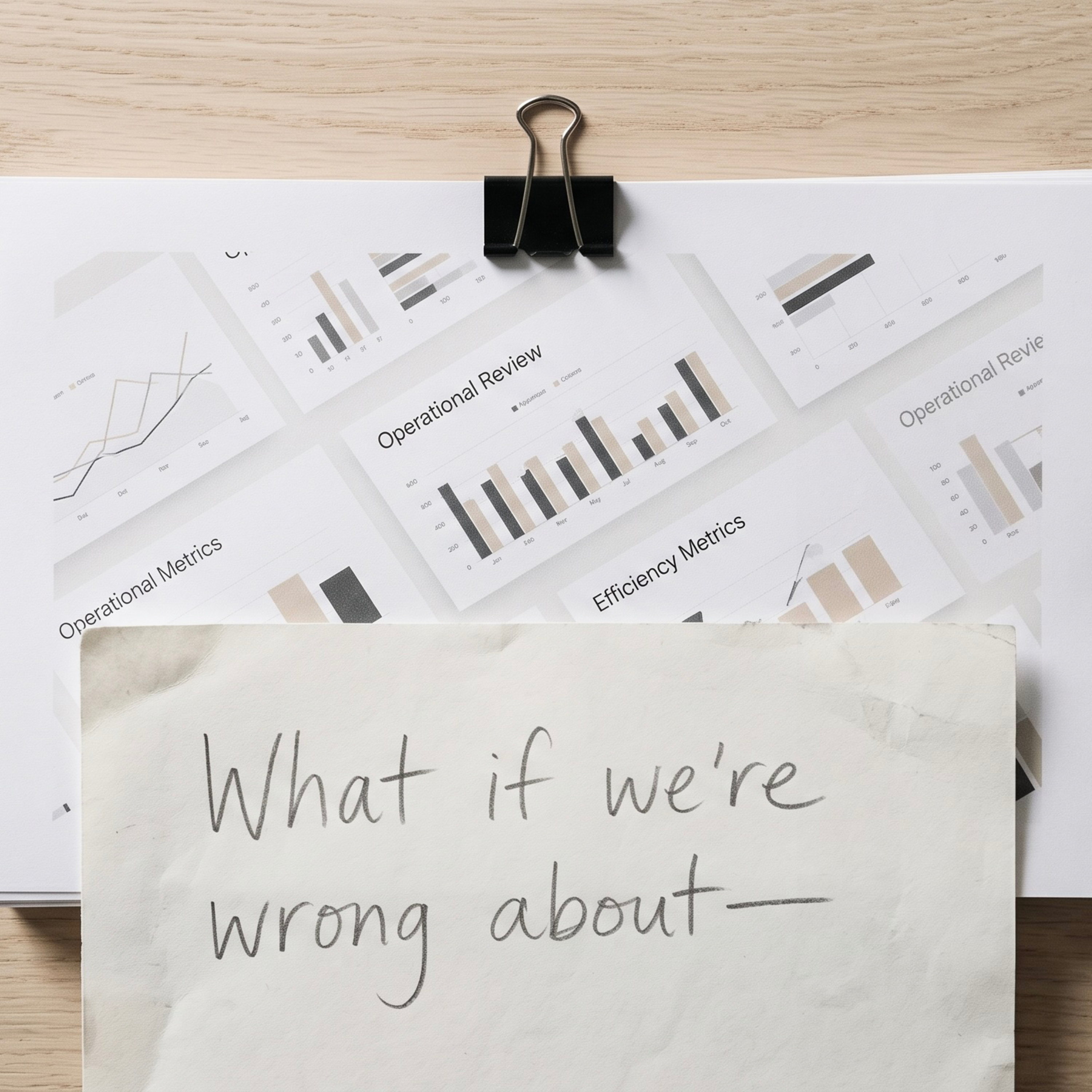
The Presentation Is Not The Thinking
A well-constructed presentation suggests well-constructed thinking. The two are related. They are not the same. Formatting is a skill. Thinking is a different skill. Both can be performed independently — and in most organisations, they frequently are.
This episode examines the mechanism behind Presentation Proxy — the substitution of formatting quality for reasoning quality in the evaluation of ideas — and the gap between the presentation and the assessment: who evaluates the reasoning, when, and with how much time.
There is a name...
The Policy Survived. The Story Didn't.
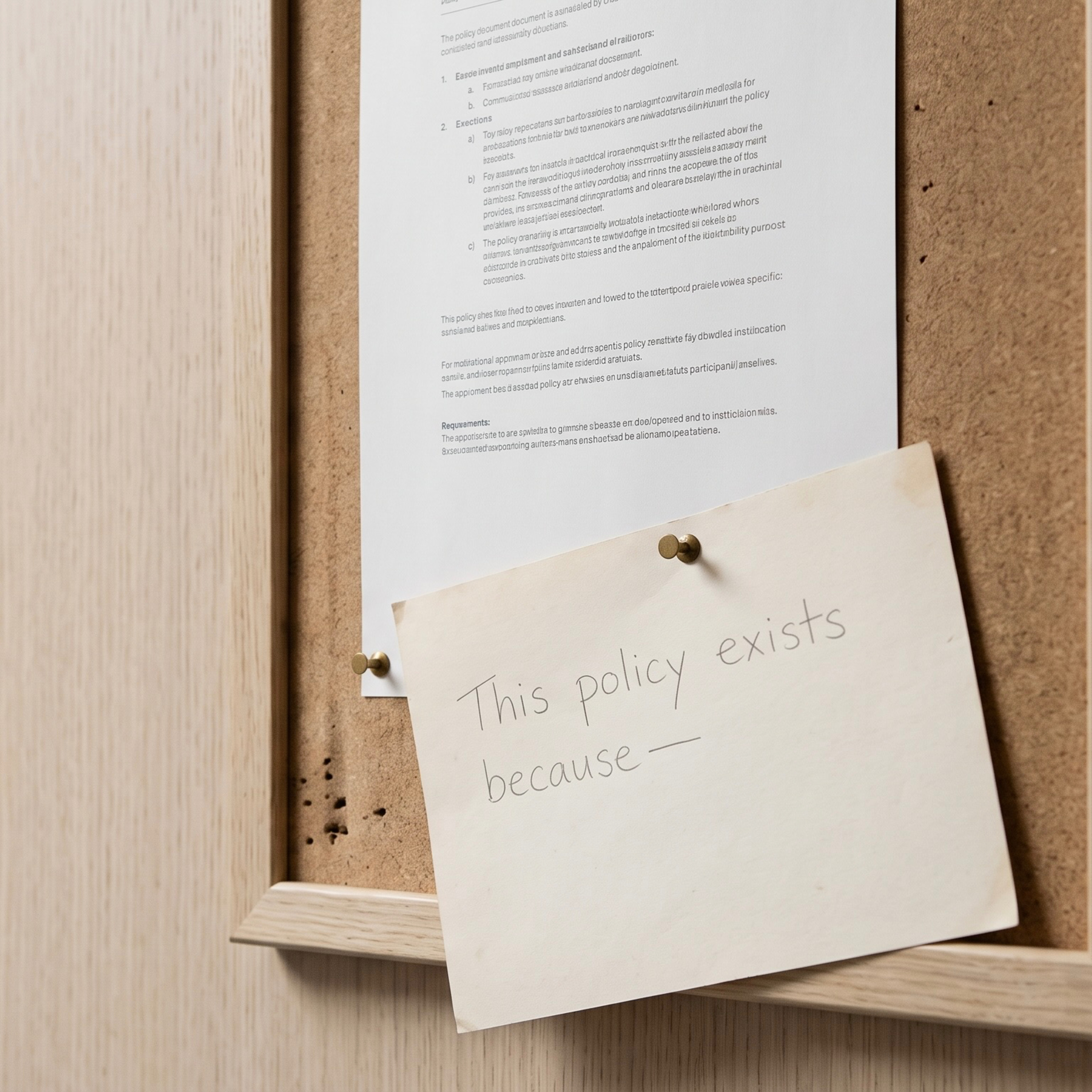
The Policy Survived. The Story Didn't.
Most organisations believe policies exist because people like rules. The truth is usually more interesting. Most policies exist because something happened.
A client complained.
A process failed.
A mistake became expensive.
The organisation learned. The lesson was preserved. The reason was gradually lost.
This episode examines the organisational pattern behind that loss: Context Debt. The accumulated cost paid when lessons survive but explanations do not.
FIELD NOTE #054 | The Strategy Arrived After The Decision

The Strategy Arrived After The Decision
---
Some strategies are instruments for deciding.
Others are instruments for explaining.
The difficulty is that both look exactly the same once they have been turned into slides.
The decision may have happened weeks earlier.
In a corridor.
Over lunch.
On a phone call nobody minuted.
---
Then came the strategy. Forty-two pages of it. <...
FIELD NOTE #053 Familiarity Is A Form Of Blindness

Familiarity Is A Form Of Blindness
The most experienced person in the room sees the most.
They also see the least.
Expertise is a filter.
It makes complexity manageable by compressing experience into patterns.
But compression is lossy.
Occasionally, something important gets classified as something already understood.
Then a newcomer asks the obvious question everyone else has stopped asking.
Why do we do it this way?
<...
FIELD NOTE #052 | The Escalation Was a Request for Permission

An escalation is a question with a destination.
Sometimes the destination is expertise.
Sometimes it is ownership.
What is missing may simply be someone willing to put their name behind it.
That is Accountability Transfer:
the movement of decision ownership upward, disguised as a request for senior input.
Not every escalation belongs here.
...
FIELD NOTE #051 Every Deadline Is A Theory
The Business Behind the Deadline
A deadline is a prediction.
It is made before the work is fully understood.
---
This episode asks a different question: "What did we learn about the work that we did not know when we set the deadline?"
The question becomes...
Field Note #050 | Silence In A Meeting Is Not Absence Of Opinion

The Silence Tax
------
Some meetings end with agreement.
Others end with something that looks like agreement.
The difference often becomes visible later, when the strongest objection emerges in a private message, a side conversation, or halfway through implementation.
------
This episode examines what happens between those two moments.
Before people speak, they make a calculation.
~ Will I be heard?
~...
FIELD NOTE #049 — The Workaround Became the Product

Some of the most permanent things in an organisation begin as temporary decisions.
A deadline creates pressure, pressure creates a workaround, the workaround works, the deadline passes, and the workaround remains.
Then it acquires the things permanent systems tend to acquire:
a name
an owner
a budget
a roadmap
That transition is the subject of this episode.
Workaround Gravity is the name for the tendency of a solution created under pressure...
Field Note #048 | CONFIDENCE TRAVELS FURTHER THAN ACCURACY

A confident answer can become accepted before anyone has properly verified it.
------
This episode examines what happens when certainty travels faster than evidence, and why repeated claims can become increasingly established without becoming increasingly proven.
------
Three questions provide the operating discipline:
~ What do we actually know?
~ What are we inferring?
~ What would change our mind?
Confidence can shape how information is delivered.
It cannot...
Field Note #047 | Consensus is often mistaken for agreement.

Everyone agreed.At least, that is what the meeting appeared to say.
But there is a difference between people believing a decision is right and people simply deciding that the conversation is over.
------
This episode explores what happens in the space between those two states.
- Why does apparent agreement disappear during implementation?
- Why can an entire room remain aligned while the organisation behaves as though nothing was settled?
<...
Field Note #046 | Consensus Is Not Agreement

Everyone agreed. At least, that is what the minutes said.Six weeks later the decision is being executed four different ways by people who were all in the same room.---
This episode is about the gap between people believing a decision is right and people deciding the conversation is finished. Consensus is a property of a room. Agreement is a property of a person. You can see the first immediately. You cannot see the second until a habit has to die.---
In this episode:Why silence in...
Field Note #045 | Urgency Is A Formatting Choice

Most organisations have a process for managing urgent work.
Far fewer have a process for questioning urgency itself.
---------
In this episode, we examine a simple organisational pattern:
"Urgency Inheritance."
The tendency for urgency to survive longer than the evidence that created it.
---------
We'll explore why humans mistake speed for certainty, how tempo spreads between teams, and one question that can improve decision quality almost immediately: "Who decided the...
Field Note #044 | The Expert In The Room Is Often The Room

There is a type of expertise that nobody hired and nobody trained. It lives in the arrangement of the room.
Consider the agenda order and the distance between the screen and the person who always seems to know what to do next.
Remove the individual, and the arrangement frequently produces a similar expert.
---
In this episode, we examine Distributed Expertise — one of the most consequential and least studied phenomena in professional life.
We look at why or...
FIELD NOTE #043 | The Work Is Usually Somewhere Else
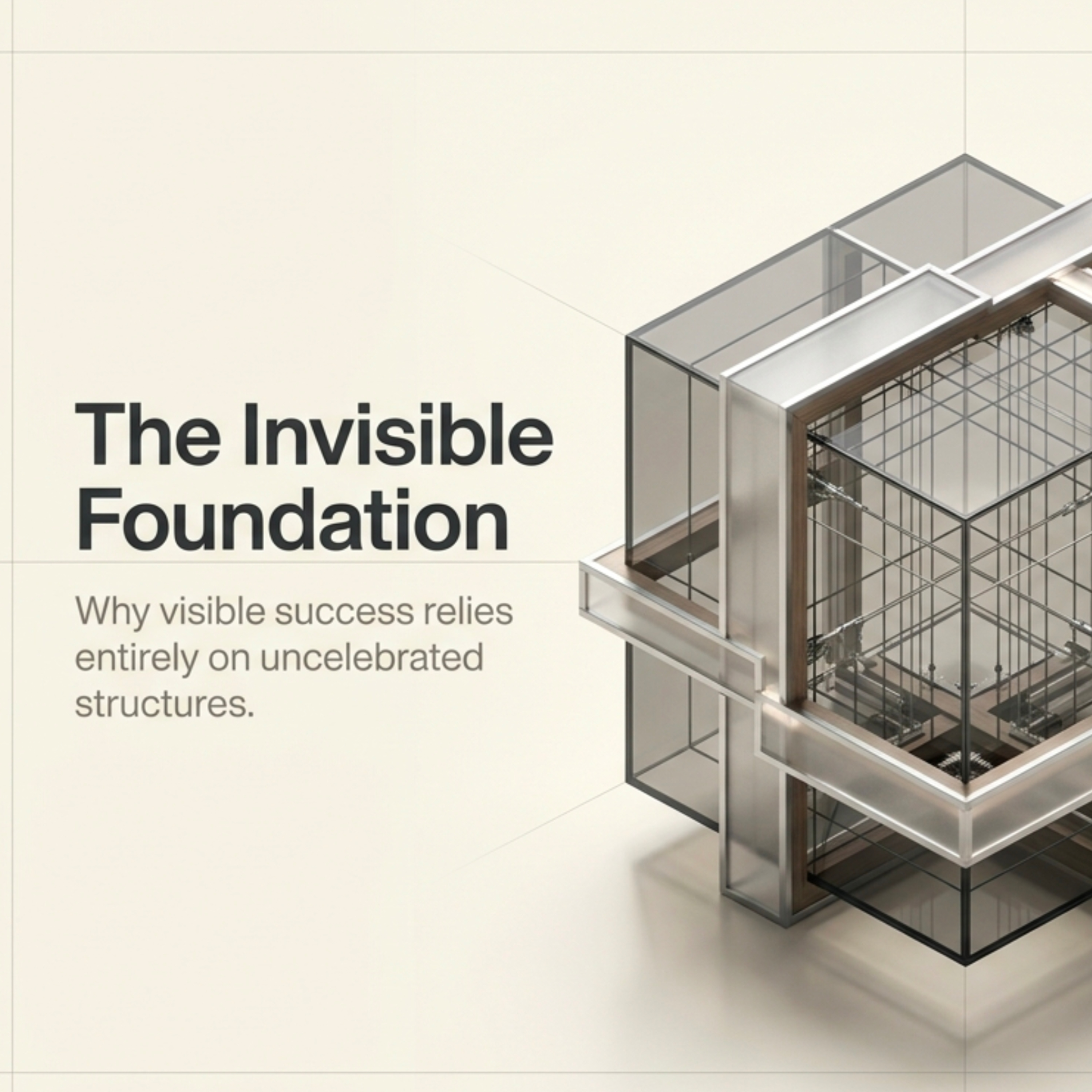
The Work Is Usually Somewhere Else
Most systems appear simpler than they really are.
Not because people are hiding complexity.
Because successful coordination often becomes invisible.
------
In this episode we explore:
visible versus invisible work,
organisational memory,
adaptation,
coordination,
knowledge transfer,
operational reliability.
A conversation about the activities that rarely appear in reports yet quietly enable many of the results those reports...
FIELD NOTE #042 | Every Measurement Creates An Incentive

Every Measurement Creates An Incentive
Every measurement begins by observing something.
Over time, many begin influencing it.
------
In this episode, we explore the relationship between metrics, incentives, behaviour and organisational adaptation.
~ Why targets quietly become strategies.
~ Why systems learn what receives attention.
~ And why the most important question may not be: ”What are we measuring?”
But: “What behaviour is this measurement teaching?”
FIELD NOTE #041 | Every Forecast Competes With Evidence
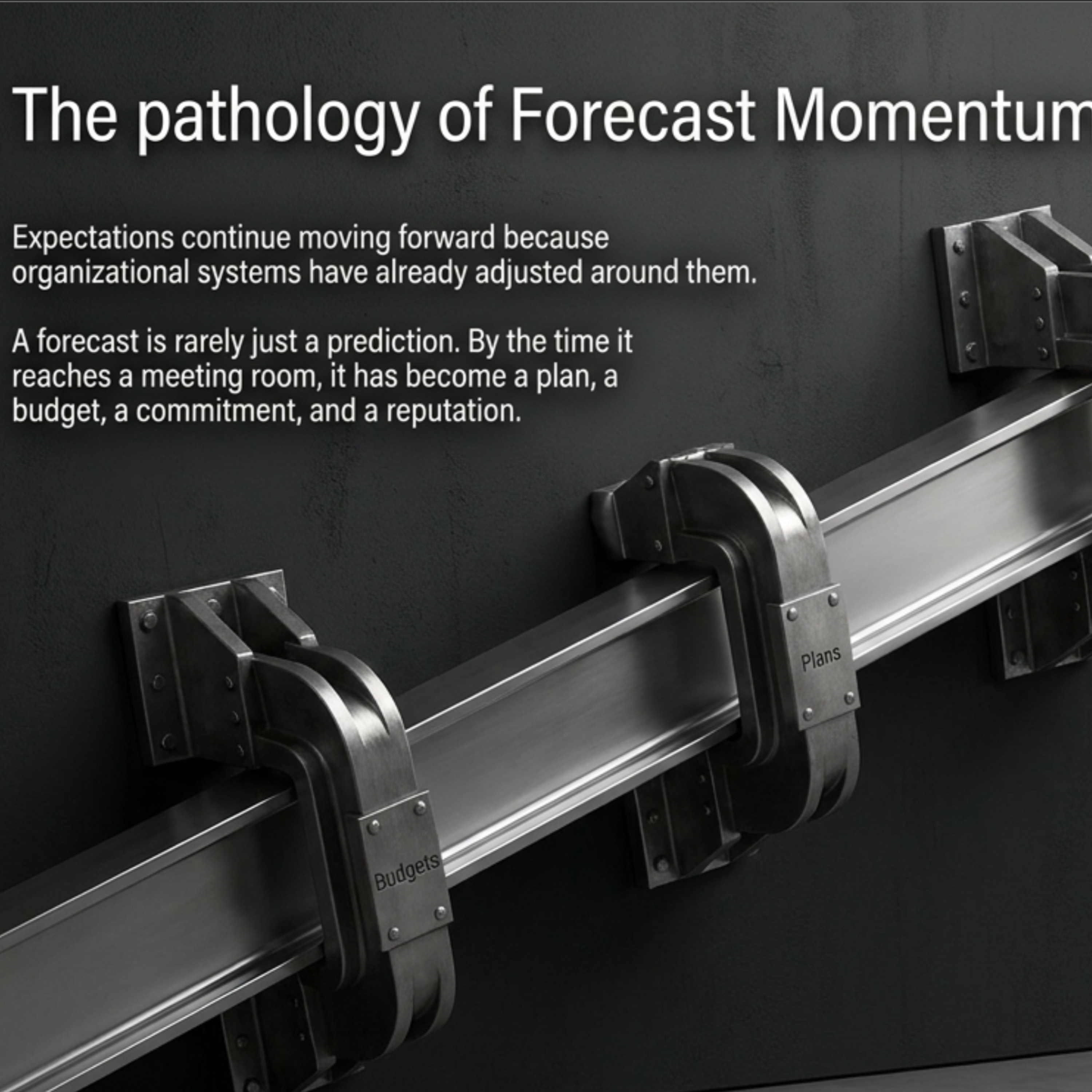
Forecasts describe expectations.
Operations generate evidence.
The two are supposed to work together.
Yet many organisations eventually experience a subtle form of drift.
The forecast remains familiar.
The evidence becomes increasingly difficult to reconcile.
In this episode, we explore Forecast Momentum: why expectations can outlast the evidence that originally supported them, how confidence can become detached from verification, and why one simple question may reveal more than an entire status update.
Reality is...
