Peptides Explained

Peptides Explained breaks down the most talked-about peptides and GLP-1 medications in health, fitness, and longevity — including semaglutide, tirzepatide, BPC-157, TB-500, and more. Hosted by Registered Nurse John Garrett, this podcast explains how these compounds work, why they're popular, what the research shows, and the real risks and side effects — all in plain language. No bro science. No hype. Just clear, foundational education. For informational purposes only. Not medical advice. For Research Peptides; True-Sciences.com use Pep20 for 20% off https://www.skool.com/peptides-explained-15
Kisspeptin: Can It Restart Natural Testosterone Production?

True-Sciences.com use code PEP20 for 20% off your first order!!!
Could kisspeptin help reactivate the body's own testosterone signaling—or are we getting ahead of the evidence?
Kisspeptin is an upstream regulator of the hypothalamic-pituitary-gonadal (HPG) axis, the communication network connecting the brain, pituitary gland, and reproductive system. In human studies, kisspeptin can increase reproductive hormone signaling. But a temporary rise in LH or testosterone is not the same thing as sustained hormonal recovery after testosterone replacement therapy.
In this episode, John Garrett, RN, breaks down how kisspeptin works, why...
The Secretome Explained: Could Cellular Signaling Transform Medicine?
True-Sciences.com use code Pep20 for 20% off your first order
What if some of the most important discoveries in regenerative medicine come not from replacing damaged cells, but from understanding how cells communicate?
On this episode of Peptides Explained, John Garrett goes beyond the buzzwords surrounding stem cells and exosomes to explore the secretome—the complex collection of biological signals released by cells.
We unpack growth factors, cytokines, extracellular vesicles, microRNAs, and the ways these signals may influence inflammation, tissue repair, remodeling, and cellular behavior. John explains why the cell is the factory an...
Monkeys Got Shredded On Peptides?!!
Weight loss is not the same thing as fat loss. A 2025 monkey study combining semaglutide with experimental myostatin and activin A antibodies raised the possibility of protecting lean mass while losing fat. Now COURAGE phase 2 data provide a human lean-mass preservation signal — alongside serious safety and tolerability concerns with the triple combination. John Garrett, RN, separates animal results, company-reported human data, body-composition measurements, and clinical outcomes. Trevogrumab and garetosmab are investigational monoclonal antibodies, not approved muscle-preserving peptides. Educational content only. Research links: https://doi.org/10.1038/s41467-025-59485-9 ; https://clinicaltrials.gov/study/NCT06299098 ; https://newsroom.regeneron.com/news-releases/ne...
Where Do Peptides Fit in Pain and Recovery? | Dr. Hany Demian

True-Sciences.com use code Pep20 for 20% off your first order
Dr. Hany Demian joins John Garrett for a conversation about chronic pain, injury recovery, regenerative medicine, and where peptides may fit in patient care.
Drawing on his clinical experience, Dr. Demian discusses how he approaches patients with different needs, why he avoids a "kitchen sink" approach, and why sleep, nutrition, exercise, and careful assessment still matter. They also talk about clinical judgment, patient safety, and situations where peptides may not be appropriate.
The conversation includes clinical anecdotes and personal perspectives. These do not...
BPC-157 Update: HHS Policy, Human Evidence & WADA Status

BPC-157 is back in the compounding-policy conversation—but what does HHS's new notice actually change, and what does the human evidence show?
In this revisit, John Garrett looks at BPC-157's proposed biology, the three small published human reports, new clinical-trial registry entries, the FDA advisory committee's recommendation, and HHS's October 30 interim enforcement-discretion policy. The published human record remains small and very low certainty.
For BPC-157, the HHS policy identifies the acetate form and specified dosage forms under limited Section 503A circumstances. It is conditional and interim; it does not make BPC-157 FDA-approved, add it to the 503A...
Beyond Stem Cells: Secretomes, Cellular Repair & Longevity | Sanjiv Lal

What if the future of regenerative medicine isn't just about stem cells—but the biological messages those cells send?
In this episode of Peptides Explained, John Garrett sits down with Sanjiv Lal, founder of Cell Factor and co-founder of Regen Therapy, to explore the emerging science of secretomes, cellular communication, and regenerative medicine.
Sanjiv shares his personal journey from pharmaceutical sciences and molecular diagnostics to becoming a patient facing significant health challenges. That experience sparked his interest in cell-free regenerative technologies and the biological signaling systems involved in tissue repair, inflammation, and aging.
To...
CJC-1295 Deep Dive: What the Human Evidence Actually Shows
True-Sciences.com Use Code Pep20 for 20% off.
A careful look at CJC-1295: the growth-hormone pathway, the distinction between DAC and no-DAC naming, what small human studies measured, the terminated Phase 2 trial, current FDA compounding information, the unproven CJC-1295/ipamorelin combination claims, and WADA's 2026 rules. The evidence supports a hormone effect for the long-acting DAC-modified compound; it does not establish the benefits often marketed for consumer products. Educational content only; not medical advice. Snapshot checked October 19, 2026.
The Silent Killer in Your Kitchen? Seed Oils, Inflammation & What to Cook With Instead with Cherie Calbom

Seed oils may be hiding in more of your everyday foods than you realize. In this episode of Peptides Explained, host John talks with Cherie Calbom, MS—known as the Juice Lady—about seed oils, cooking fats, inflammation, and how to make more informed choices at the grocery store and when dining out.Cherie discusses how common seed oils are processed, why she recommends checking ingredient labels, and which alternatives she uses, including olive oil, avocado oil, coconut oil, ghee, and beef tallow. They also talk about omega-6 and omega-3 balance, cooking with different fats, and practical ways to make food...
Retatrutide: Is It Time to Panic? Lilly's Lawsuits, the Science, and What Happens Next

Eli Lilly is taking legal action against businesses selling products labeled retatrutide. What do the lawsuits actually establish—and what don't they? John Garrett separates pending legal allegations from court findings, reviews the human trial evidence for the investigational triple agonist, and explains why molecular identity, purity, and pharmaceutical equivalence are not interchangeable. We also examine FDA restrictions, consumer safety, and the implications for clinics, vendors, and independent educators. Educational only; not medical or legal advice. Retatrutide is not FDA-approved. Sources: NEJM DOI 10.1056/NEJMoa2301972; FDA unapproved GLP-1 drug concerns; ClinicalTrials.gov NCT05929066 and NCT05882045.
Can Peptides Protect the Brain From Vascular Damage?

Can peptide biology protect the brain from vascular damage? John follows a question that started with Vesugen into the biology of vascular cognitive impairment—endothelial dysfunction, hypoperfusion, blood-brain-barrier injury, mitochondrial stress, inflammation and neuronal damage. The episode maps Cerebrolysin, SS-31/elamipretide, ARA-290/cibinetide, Semax, Vesugen and GLP-1 receptor agonists onto different points in that cascade, then asks the question that matters: what does the human evidence actually support? Cerebrolysin provides the biggest surprise, with randomized vascular-dementia trials—but still low-certainty evidence. Educational only; not medical advice.
What the Heck Is Visceral Fat? (And Why People Keep Getting It Wrong)

Everyone keeps calling belly fat "visceral fat." That is not how anatomy works. In this crossover episode, John breaks down the difference between visceral and subcutaneous fat, why visceral adipose tissue matters metabolically, how it is actually measured, what waist circumference can and cannot tell you, and what the evidence says about GLP-1 therapies and tesamorelin.
Vesugen and Vascular Aging: Interesting Biology or Overhyped Claim?

Vesugen is only three amino acids long: lysine, glutamate, and aspartate — KED. Yet it is promoted as a vascular bioregulator that may support endothelial health and even "rejuvenate" aging blood vessels.
In this episode, John Garrett looks at what the endothelial research actually measured, the proposed gene-regulation mechanism, a small human blood-flow report, and the large gap between an interesting cell signal and a proven cardiovascular therapy.
No hype. No dismissal. Just the biology, the evidence, and what remains unknown.
INSTAGRAM CAPTION
Three amino acids.
K. E. D.
FLGR-242 Explained: Smarter Follistatin—or Unproven Hype?

FLGR-242 is being called a smarter, longer-acting follistatin. John examines the advertised construct, the activin-sparing and 19-day half-life claims, the difference between pathway evidence and product evidence, and why transformation photos cannot establish pharmacology or safety.
Follistatin Explained: Can You Really Remove the Muscle-Growth Brake?

Follistatin can bind myostatin—one of the body's major restraints on skeletal-muscle growth. Animal studies are dramatic, and small human gene-therapy studies have produced encouraging signals in serious muscle disease.
But is a vial labeled "Follistatin-344" equivalent to the therapy used in those trials?
John Garrett explains FST288, FST315, and FST344; the myostatin/activin pathway; the difference between gene therapy and recombinant protein; the evidence for muscle size versus function; and the key safety and product-identity questions.
Follistatin is not an FDA-approved muscle-building medication. Educational content only; not medical advice.
Explore th...
Glutathione: The "Master Antioxidant" — or Master Marketing?

Glutathione gets called the "master antioxidant," and the underlying biology really is important. But does that mean oral supplements, liposomal products or glutathione IVs deliver the sweeping detox, energy, immune and anti-aging benefits often attached to them?
John breaks down glutathione biology, the GSH/GSSG cycle, oral human data, NAC, skin-related research and the gap between changing a biomarker and changing a meaningful health outcome. The episode also covers the 2026 FDA warning and recalls involving compounded injectable glutathione and elevated endotoxin levels.
The key question: where does established biology end and wellness marketing begin?
<...GLP-1 Split Dosing: This Is NOT Microdosing

For more information on Research Peptides go to PeptidesExplained.info/OfflinePeptides
Is taking smaller GLP-1 doses multiple times per week actually "microdosing"? Not necessarily.
This episode separates split dosing from true dose reduction and explains the pharmacokinetic logic using semaglutide, tirzepatide, and retatrutide. John breaks down half-life, peaks, troughs, total exposure, and why changing the schedule does not automatically mean using less drug.
We also examine the major evidence gap: once-weekly dosing has a strong clinical foundation for semaglutide and tirzepatide, while retatrutide remains investigational — and direct randomized evidence showing routine split dosing is...
Icotyde: The Oral Peptide That Could Change Medicine

Download The Peptide App at ThePeptide.App/Explained
For more information on research peptides check out PeptidesExplained.info/OfflinePeptides
A peptide…in a pill?
Icotyde, or icotrokinra, is an FDA-approved oral peptide designed to block the IL-23 receptor in moderate-to-severe plaque psoriasis. In Phase 3 trials, it produced substantial skin clearance and outperformed an established oral comparator on several key endpoints.
But the biggest story may be the delivery platform itself. Peptides usually struggle to survive the digestive tract and reach circulation. Icotyde shows what can happen when medicinal chemistry, structural engineering an...
Why Your Favorite Peptides May Never Get a Big Human Trial

If BPC-157, TB-500, KPV, MOTS-C and similar peptides are so interesting, why don't we have giant randomized human trials?
This episode looks at the less dramatic—and more important—answer: clinical trials require a sponsor, regulatory strategy, manufacturing package, defined indication, safety program, and a very large amount of money. For old, easily copied, poorly protected, or commercially fragmented compounds, the incentive to fund definitive trials may be weak.
John also explains why that does not excuse the evidence gap. "No Phase 3 trial" is not proof that a peptide works. It simply means confidence should rema...
The Hollywood Trinity Stack: What Happened When I Tried It

Download The Peptide App @ ThePeptide.App/Explained
For more info on research peptides visit PeptidesExplained.info/OfflinePeptides
John Garrett shares his N=1 experience with the so-called "Trinity Stack"—established TRT, retatrutide, and tesamorelin—combined with resistance training, Zone 2 cardio, high protein intake, creatine, sauna, and cold plunging.
The transformation was dramatic. But what likely came from appetite control? What helped preserve muscle? What might the GH/IGF-1 axis have added? And how much credit belongs to the boring fundamentals?
This is a candid personal testimony and accessible science breakdown—not a deep d...
SNAP-8: Is "Botox in a Bottle" Real?

SNAP-8 is a synthetic cosmetic octapeptide marketed for expression lines and frequently called "Botox in a bottle." John Garrett, RN, breaks down the SNAP-25 and SNARE-complex mechanism, the difference between topical SNAP-8 and injected botulinum toxin, the skin-penetration problem, the Argireline evidence, a small 2024 microneedle combination study, safety, and the limits of the current human data.
The mechanism is plausible. The evidence is not strong enough to call it a needle-free Botox equivalent.
Educational content only; not medical advice.
GLP-1 Microdosing: Smart Strategy or the Next Wellness Fad?

Visit peptidesexplained.info for more info and resources
For more info on research peptides check out PeptidesExplained.info/OfflinePeptides or email John at [email protected]
What exactly is GLP-1 microdosing?
Depending on who you ask, it can mean remaining on the starter dose, taking a fraction of that dose, spacing injections farther apart, stepping down after weight loss, or using a tiny amount for food noise and longevity.
Those are not the same strategy.
John Garrett breaks down the new low-dose semaglutide and tirzepatide data, FDA-approved dose structures...
Thymalin vs Thymogen: Can Thymus Peptides Reverse Immune Aging?

Can a peptide reverse age-related immune decline?
Thymalin and Thymogen are often discussed together, but one is a complex calf-thymus extract and the other is the defined dipeptide Glu-Trp. John Garrett explains thymic involution, T-cell biology, proposed mechanisms, the Russian clinical history, limitations of the human evidence, safety, and U.S. regulatory status.
The science is interesting. The "immune rejuvenation" and life-extension claims remain unproven.
Educational only. Not medical advice.
What Is Pinealon? Brain Aging, Neuroprotection, and the Evidence

Check out The Peptide App here: thepeptide.app/explained
What is Pinealon, and does this three-amino-acid peptide really protect the aging brain?
Pinealon—also called EDR or Glu-Asp-Arg—is a synthetic tripeptide associated with the Khavinson bioregulator research program. It is discussed for memory, neuroprotection, oxidative stress, brain aging, and even Alzheimer's disease, but the evidence is much more complicated than the marketing language suggests.
John Garrett, examines Pinealon's proposed mechanism, cell and animal research, a newer induced-neuron study, and the PubMed-indexed human reports that are often overlooked. The episode also explains why Pine...
Khavinson Peptide Bioregulators: What Do They Actually Do?

What are Khavinson peptide bioregulators, and what do they actually do?
John Garrett examines the Russian research tradition behind organ-derived peptide complexes and synthetic ultrashort peptides. This episode explains the proposed gene-expression mechanism, the claim of tissue specificity, common examples such as Thymalin and Epitalon, the limitations of the human evidence, oral absorption questions, product-quality concerns, safety, and U.S. regulatory status.
The science is more interesting than a simple dismissal—but less proven than organ-rejuvenation marketing suggests.
This episode is educational and is not medical advice.
Did Your GLP-1 Stop Working? Appetite, Receptors and Weight-Loss Plateaus

Does a weight-loss plateau mean your GLP-1 receptors have become desensitized? John separates cellular receptor biology from whole-body weight regulation and compares semaglutide, tirzepatide, and investigational retatrutide. We examine appetite suppression, food noise, gastric-emptying tachyphylaxis, metabolic adaptation, switching therapies, and what the clinical evidence can—and cannot—tell us.
A plateau is real. "Receptor burnout" is a much bigger claim.
Educational only; not medical advice.
Khavinson Peptide Bioregulators: What Do They Actually Do?
What are Khavinson peptide bioregulators, and what do they actually do?
John Garrett examines the Russian research tradition behind organ-derived peptide complexes and synthetic ultrashort peptides. This episode explains the proposed gene-expression mechanism, the claim of tissue specificity, common examples such as Thymalin and Epitalon, the limitations of the human evidence, oral absorption questions, product-quality concerns, safety, and U.S. regulatory status.
The science is more interesting than a simple dismissal—but less proven than organ-rejuvenation marketing suggests.
This episode is educational and is not medical advice.
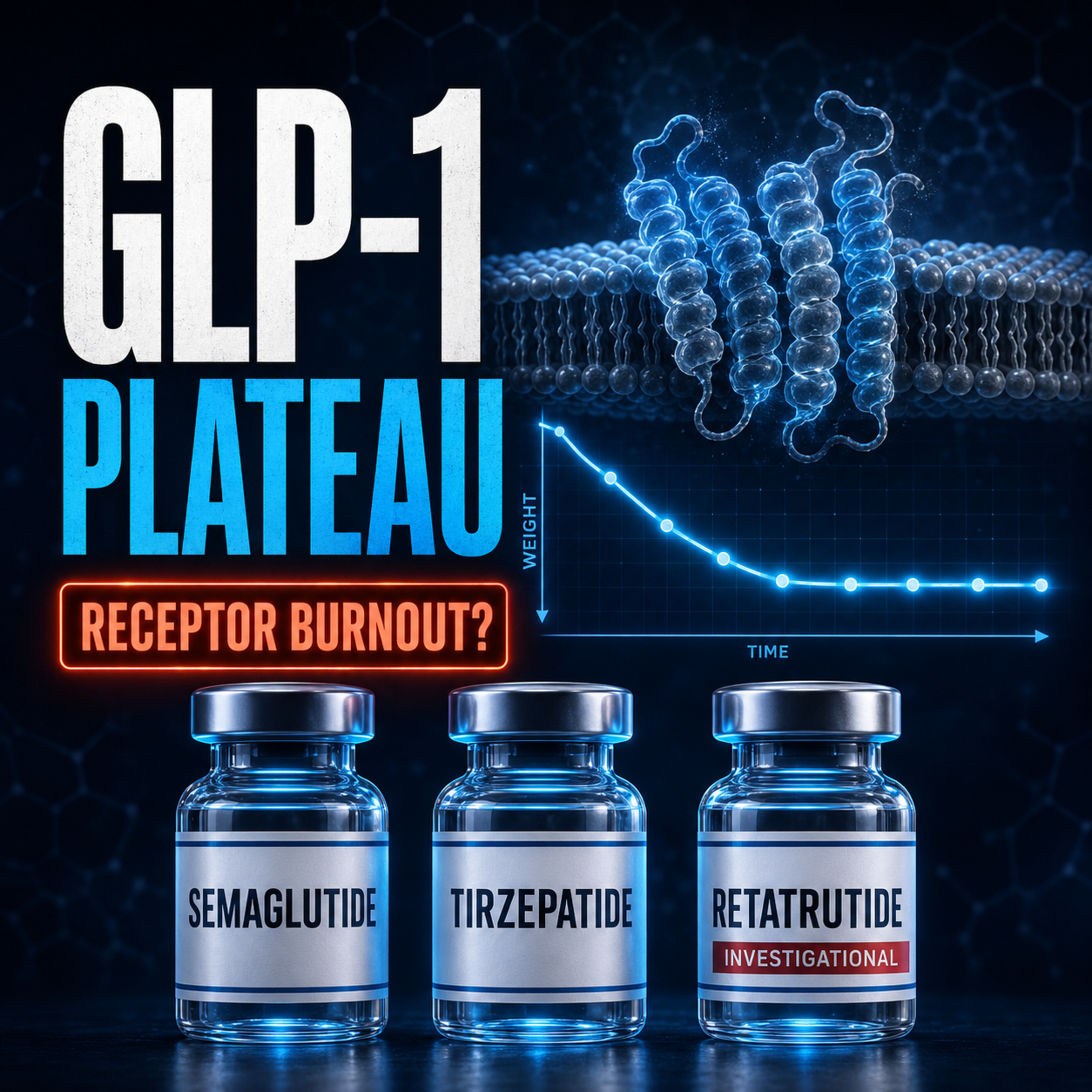
Did Your GLP-1 Stop Working? Appetite, Receptors and Weight-Loss Plateaus
Peptide-solutions.info
App.peptidesexplained.info
Does a weight-loss plateau mean your GLP-1 receptors have become desensitized? John separates cellular receptor biology from whole-body weight regulation and compares semaglutide, tirzepatide, and investigational retatrutide. We examine appetite suppression, food noise, gastric-emptying tachyphylaxis, metabolic adaptation, switching therapies, and what the clinical evidence can—and cannot—tell us.
A plateau is real. “Receptor burnout” is a much bigger claim.
Educational only; not medical advice.
Should You Be Using Peptides? The Honest Answer

Visit Peptide-Solutions.info for more info
Check out App.PeptidesExplained.info
Should you be using peptides?
The honest answer is that not everyone should. Peptides are not a nutritional requirement, a shortcut to better health, or something you need simply because they are trending.
But some people do have a defined problem—such as obesity, metabolic disease, an injury, loss of function, a diagnosed hormone-related condition, or another health issue—for which a peptide-based medication or investigational compound may be relevant.
In this episode, John Garrett, explains how to deci...
ARA-290: Can It Repair Small Nerve Fibers?

ARA-290, also called cibinetide, is an investigational 11-amino-acid peptide designed from erythropoietin biology to activate tissue-protective signaling without stimulating red-blood-cell production.
In this episode, John Garrett, RN, breaks down the innate repair receptor, why ARA-290 has been studied in small-fiber neuropathy, what randomized human trials in sarcoidosis and type 2 diabetes actually found, and why objective nerve-fiber signals are interesting—but not the same thing as an approved therapy.
You'll learn:
• What ARA-290/cibinetide is
• How it differs from full-length erythropoietin
• What the innate repair receptor is
• Why researcher...
Lipo-C Injections: What Do They Actually Do?

Check out Peptide.Solutions.info/Pathways and submit a request to see what companies I have partnered with to get products.
Lipo-C injections are often marketed for fat burning, energy, liver support, or breaking a weight-loss plateau. But "Lipo-C" is not one standardized formula—and real metabolic biology is not the same thing as proven fat loss.
In this episode, John Garrett, RN, breaks down the ingredients commonly found in Lipo-C blends, including L-carnitine, choline, methionine, inositol, and B vitamins. We examine what each ingredient actually does, what human studies of L-carnitine suggest, why that ev...
FOXO4-DRI: Can It Really Remove Senescent Cells and Reverse Aging?

FOXO4-DRI has been called a "zombie-cell killer," a senolytic peptide, and even a possible anti-aging breakthrough. The mechanism is fascinating—but the claims have moved much faster than the human evidence.
In this episode, John explains what senescent cells are, why they are not automatically harmful, and how FOXO4 and p53 help regulate cell survival and cell death. He then breaks down the D-retro-inverso design of FOXO4-DRI, the proposed mechanism, and what the original 2017 research actually found in cultured human cells and mice.
The episode also examines what has happened since that first st...
ATX-304: AMPK Activation, Metabolic Demand, and the Limits of "Exercise in a Pill"

ATX-304 is often called "exercise in a pill," but it is more accurate to describe it as an investigational oral small molecule that activates AMPK and alters mitochondrial energy demand. John explains the mechanism, the preclinical metabolic findings, the early human signal in type 2 diabetes, the current obesity-development strategy, and the major gaps that remain before anyone can claim it reproduces the health effects of exercise.
Batch tested and they have COAs available on all peptides https://www.americanpeptides.us/discount/JOHNATHAN10?ref=SteWwgMLys Or use Johnathan10 at checkout2. Offline Peptides
Based in Texas Batch tested...Thymosin Alpha 1: What Does It Do?

Thymosin alpha 1—also called Tα1 or thymalfasin—is frequently described online as an "immune-boosting peptide." But that phrase oversimplifies a complicated biological system.
In this episode of Peptides Explained, John Garrett breaks down how thymosin alpha 1 may influence dendritic cells, Toll-like receptor signaling, T-cell maturation, natural-killer-cell activity, cytokines, and immune regulation. The episode also reviews where it has been studied, including chronic viral hepatitis, vaccine response, oncology-support settings, severe infection, pancreatitis, and sepsis.
The evidence is not uniformly positive. Earlier sepsis trials and pooled analyses suggested benefit, but a large multicenter phase 3 trial involving more than...
**Special Announcement** Healthcare Provider Webinar

The State of Peptides 2026 | Clinician Webinar
The peptide landscape is changing rapidly. New research is emerging, regulatory decisions continue to shape clinical practice, and healthcare providers are being asked more questions than ever before.
Join Peptide Solutions for a live clinician-focused webinar covering the current state of peptides in 2026. This educational session is designed for physicians, nurse practitioners, physician assistants, pharmacists, nurses, and other healthcare professionals interested in understanding the latest developments.
• The current peptide and GLP-1 landscape • Recent FDA and PCAC regulatory updates • The most commonly discussed therapeutic peptides • Current evidence and clinical...
The 11 Peptides I Find Most Compelling

After researching peptide science week after week—and using some compounds personally—I'm answering one of the most common questions I receive: Which peptides do I find the most useful and compelling?
This is not a universal ranking or a recommendation to use all 11. Tirzepatide, retatrutide, tesamorelin, ipamorelin, BPC-157, TB-500, GHK-Cu, KPV, PT-141, MOTS-c, and SS-31 occupy very different evidence and regulatory categories. Some are FDA-approved prescription drugs. Some have encouraging human data. Others remain experimental and are supported mainly by animal, cell, mechanistic, or anecdotal evidence.
In this episode, we examine the problem each pept...
Cagrilintide vs GLP-1s: A Different Appetite Pathway?

GLP-1 medications changed obesity treatment, but appetite regulation involves more than one hormonal signal. Cagrilintide is a long-acting analogue of amylin, a pancreatic peptide released alongside insulin that helps regulate satiety, gastric emptying, and post-meal glucagon signaling.
In this episode of Peptides Explained, John Garrett breaks down what cagrilintide is, how it differs from GLP-1 receptor agonists, what standalone phase 2 data show, and what the phase 3 CagriSema trials tell us about combining cagrilintide with semaglutide.
We also examine the REDEFINE 4 comparison with tirzepatide, common gastrointestinal adverse effects, unresolved questions about long-term outcomes and lean mass...
AOD-9604 Explained: Can a Growth Hormone Fragment Burn Fat?

AOD-9604 is often marketed as the "fat-burning fragment" of human growth hormone. But what does it actually do, and did it work in human obesity trials?
In this episode of Peptides Explained, John Garrett, RN, breaks down:
• What AOD-9604 is and how it differs from full-length HGH
• Lipolysis, lipogenesis, and beta-3 adrenergic signaling
• Why animal studies looked promising
• What the early human trials showed
• Why the obesity-development program was discontinued
• Whether AOD-9604 raises IGF-1
• Regulatory status, risks, unknowns, and anti-doping concerns
• A responsible fr...
SLU-PP-332 Explained: Exercise Mimetic or Experimental Hype?

SLU-PP-332 is being promoted as an "exercise mimetic" that may increase fat oxidation, endurance, and energy expenditure. But it is not actually a peptide, it is not FDA-approved, and the most compelling evidence comes from cell and mouse research—not human clinical trials.
In this episode, John Garrett, RN, explains estrogen-related receptors, mitochondrial energy metabolism, the published preclinical findings, the oral-bioavailability problem, potential risks, regulatory status, and the difference between mimicking selected exercise pathways and replacing physical exercise.
This content is for education and discussion only and is not medical advice. SLU-PP-332 is an experimental re...
Why Boomers Are Living Longer But Not Healthier: Where Peptides May Fit Into Healthy Aging

Why are Americans living longer than ever before while spending more years battling chronic disease?
In this episode of Peptides Explained, we explore one of the biggest questions in longevity medicine: the difference between lifespan and healthspan.
You'll learn why muscle loss, metabolic dysfunction, chronic inflammation, mitochondrial decline, immune aging, and cognitive changes are major drivers of aging—and where peptide research may fit into each of these biological systems.
We discuss several categories of peptides currently being investigated, including:
• Growth Hormone Secretagogues (Tesamorelin, Ipamorelin, Sermorelin, CJC-1295) • GLP-1 and Metabolic Peptides (Semagl...
NAD+ and Cancer: What the Science Actually Says

NAD+ is one of the most talked-about molecules in longevity and wellness. It is marketed for energy, mitochondrial support, cellular repair, brain fog, recovery, and anti-aging.
But what happens when we bring cancer biology into the conversation?
In this episode of Peptides Explained, we break down the relationship between NAD+ and cancer in clear, responsible language. NAD+ is essential for normal cellular function, DNA repair, mitochondrial energy production, redox balance, and immune signaling. But cancer cells may also rely on NAD+ metabolism to support growth, survival, DNA repair, oxidative stress control, and possible treatment resistance.<...
