My Weird Prompts
The human-AI collaboration podcast. A man, a sloth, and a donkey collaborate to create a podcast (with a little help from AI). No question is too obscure, no rabbit hole too deep. My Weird Prompts celebrates curiosity in all its forms. Daniel, the human, asks the questions that pop into his head at inconvenient moments. Corn the Sloth offers laid-back, thoughtful takes. Herman the Donkey brings boundless enthusiasm and energy. Together, they explore topics ranging from the mundane to the mind-bending. Each episode begins with a real voice memo from Daniel, processed through an AI pipeline that generates scripts, synthesizes...
Which AI Writes Our Scripts Best? We Tested Five

We ran five AI models through a bakeoff to write our podcast scripts — same briefs, same word-count window, one judge with a rubric. GPT 6.1 Sol took the win, but the runner-up title went to Meta's Muse Spark 1.3 on a headline score that gates purely on length, and on judged quality alone Spark sits fourth of five. Along the way: Grok 4.7 wrote the best dialogue while blowing past the word cap every single time, Gemini 3.8 Flash delivered the best scenes and the worst accuracy, and Gemini 4 Argon posted the strongest profile outside Sol at nearly double the cost. We walk through wh...
Hebrish on iPhone: MLX, Core ML, or Wait?

Hebrish is a free, open-source fine-tune of NVIDIA's Parakeet that handles English and Hebrew mixed in one sentence — and it already runs as an Android voice keyboard. This episode digs into what it would actually take to bring it to iPhone. MLX runs on phones, but the Parakeet code on top of it is Apple-Silicon-Mac only. Core ML already runs stock Parakeet on the Neural Engine via FluidAudio, but Hebrish's weights were never converted. And sherpa-onnx has an iOS build guide that doesn't quite confirm Parakeet works there. Along the way: why stock Parakeet writes "Micollette" instead of makolet, why si...
Two Ways a Chinese Open Model Gets Censored

A Chinese open-weight model can be silenced in two places: at the host that serves it, or inside the weights you download. This episode walks through a benchmark that ran Qwen, MiniMax, MiMo, GLM, Kimi, and DeepSeek on a full script-writing assignment — including a frank Tiananmen segment — and logged exactly where each one died. Qwen managed 35 words before Alibaba returned "Algo DataInspectionFailed." MiniMax wrote "a series of massacres along the approach routes," then the stream was amputated mid-sentence. Meanwhile Kimi and DeepSeek, served by non-Chinese hosts, finished the assignment — though DeepSeek never mentioned the death toll or Tank Man. We separa...
How We Chose Our New Script Writer
The show is written by a language model, and the round robin that picks which one has never been properly tested. So Daniel wrote the brief first: hard pass/fail rules, then two qualities that actually decide it — vivid dialogue, and what he calls "holding the middle." This episode walks through the funnel, from a free desk screen of roughly 470 models down to three full scripts per finalist, and lands on the biggest story in the project: a censorship gate built on 155 published questions that eliminates seven of ten candidates. Also, the writer's fee turns out to be the smallest li...
How Many Runs Does Your AI Eval Actually Need?

You rerun your model panel and last week's winner slides into the middle of the pack. Was it luck, or was it the prompts? This episode works through the arithmetic of eval noise: how run-to-run variance shrinks with every added run, why prompt-choice variance doesn't budge no matter how many times you rerun, and why three runs is a defensible default for some measurements and badly underpowered for others. There's also a detour into why temperature zero isn't the deterministic shortcut people assume, why a second judge from a different model family does a job that reruns can't, and why...
Cheap Tokens, Expensive Scripts

Picking an LLM on price per token is the easy mistake. This episode walks through a real evaluation for the show's own script-writing pipeline — a 26,000-token input with a 9,000-token cached prefix and 6,500 tokens out — and shows how a model with a worse input price can win the bill by a sixth, then lose once caching is off or thinking tokens triple the output. We cover why blended leaderboard pricing misleads, why hidden reasoning tokens are billed as the expensive kind, how OpenRouter host pinning and quantization quietly change your quality score, and why you should estimate to screen but meas...
One Rater Is Enough: Designing Daniel's Taste Test

Most evaluation advice says to average away individual taste. For a show with one creator, that advice is backwards. This episode works through how to build an evaluation system where the authority is a single domain expert — and the reliability that matters is whether that expert agrees with himself three weeks later. Drawing on applied LLM evaluation practice, qualitative coding methods, and a creative writing study that tested expert agreement on short stories, we lay out a concrete design: open coding before criteria, versioned rubrics, binary labels instead of five-point scales, anchor scripts for calibration, and a side-by-side verdict that co...
How to Run a Model Eval on a Budget

When every run costs real money, you can't evaluate a dozen candidate models in one giant sweep. This episode walks through the stepwise evaluation Daniel built to pick a script writer for this very show — a screening funnel that starts cheap, cuts the field, and only spends real budget on the finalists. Along the way: what successive halving and racing actually are, why paired per-prompt comparisons beat raw scores on a forty-prompt set, how winner's curse inflates your top pick, and why a model that engages with Tiananmen and a hosting provider that truncates it are two completely different findings. Pl...
Judging the Judges: How AI Evaluates Creative Writing

LLM judges now agree with human raters about as often as humans agree with each other — but that headline number hides a low human ceiling and a lot of hard cases. This episode digs into how judge-plus-human pipelines actually work: the human labels first, the judge gets calibrated against them, and blinding is a cheap hedge against a bias nobody's fully pinned down. Along the way: why raw agreement lies, why fun is the axis judges handle worst, and why the smartest move is measuring how often you agree with yourself. Episode 6131 — myweirdprompts.com/n/6131 (permanent short link: myweirdprompts.com/927907)
Picking a Human Labeling Tool for LLM Benchmarks

When your benchmark needs a human rater, the tooling question gets real fast. This episode walks through the actual market for human annotation tools — the trace-based platforms like Langfuse, LangSmith, and Braintrust that are built for watching production apps, versus the static-dataset tools like Argilla, Label Studio, Prodigy, and the academic tool Potato that fit a benchmark's workflow. We cover why pairwise comparison breaks down for long outputs, why clause-by-clause and binary judgments hold up better under fatigue, and why the free tier of a Hugging Face-hosted tool might forget your data overnight. If you're deciding between a hand-rolled Gradio ap...
How to Build an AI Preference Dataset

Before a reward model can learn anything, someone has to build the dataset underneath it. This episode digs into the unglamorous machinery of pairwise preference collection: how candidate scripts get generated through batch inference, how pairs get chosen so the comparison graph stays connected, and why the aired script makes an awkward contestant. It also covers Bradley-Terry scoring, the cost of long-text comparisons, and a clever fix — aligned continuations — that cuts one script into shared prefixes so raters judge writing instead of plot. Episode 6129 — myweirdprompts.com/n/6129 (permanent short link: myweirdprompts.com/518866)
Where the Screws Go: Internal KVM Mounting
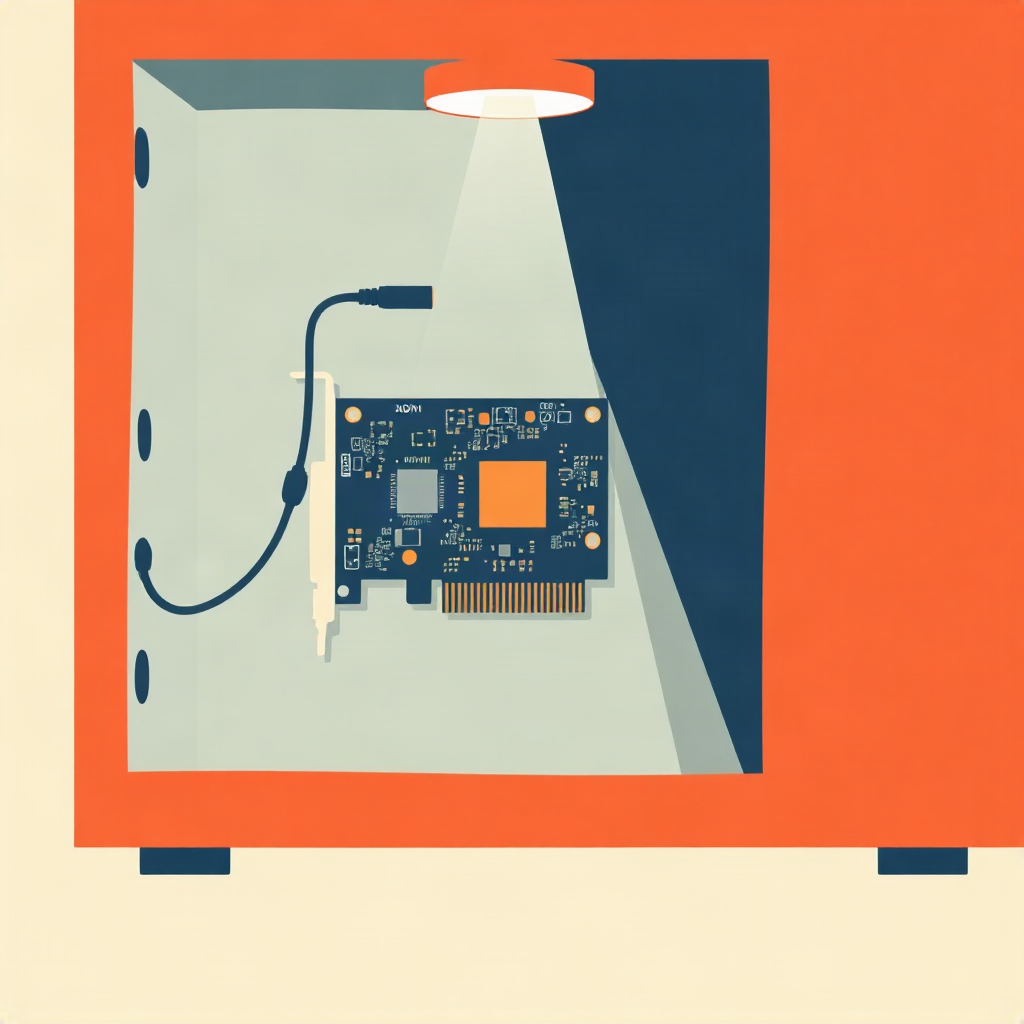
Remote-recovery boxes like PiKVM, NanoKVM, JetKVM, and BliKVM are easy to love and surprisingly fiddly to mount. This episode walks through the physical side: why "PCIe KVM" cards barely use their PCIe slot, how front-panel headers get shared with your case's power button, and what the nine-pin USB header actually buys you. Then it gets to the real question — where does the rescue device get its power when the machine it's rescuing is off, dead, or unplugged? Episode 6128 — myweirdprompts.com/n/6128 (permanent short link: myweirdprompts.com/512548)
Haiku 5.5 at 10 Cents: What the Cheap Model Actually Does

Haiku 5.5 launched on October 7 with a headline price of 10 cents per million input tokens — forty times cheaper than Opus 5.5 and a hundred times cheaper than Fable 5.1. But cheap tokens aren't the same as a cheap bill, and benchmark scores only tell you so much. We dig into the real numbers: token inflation, batch discounts, the 100K prompt-length pricing cliff, and what Anthropic's own comparison pages do and don't show. Then we test it against the job that matters most to us — writing this podcast. Haiku is already in our randomized trial pool, and one of its episodes aired. It scored well...
Can You Train a Machine to Be Funny?

You laughed at something a machine wrote, and you're a little mad about it. This episode digs into why humor is so hard for language models — the standard training objective is literally pointed at predictability, and comedy is pointed at surprise — and how teams are getting around it anyway. We walk through rubric-based reinforcement learning on a trillion-parameter model, a textbook SFT-reward-model-PPO pipeline, and a six-persona data synthesis approach that beat both. Then we get into the benchmarks: yes, there are humor evals now, including a SemEval shared task called MWAHAHA, and the results are humbling. Also: why the model lear...
Which Env Var Wins? Cloud vs. Local Precedence

When the same environment variable exists in two places at once, which value does the process actually see? The answer flips depending on where you're standing: on Vercel and n8n, the narrower scope wins — project over team, project over global. On your laptop, dotenv does the opposite, letting your shell silently override the repo's .env file. This episode walks through the documented precedence rules for Vercel Shared Environment Variables, n8n global vs. project variables, Prefect, and dotenv's long-debated override flag — plus the gotchas that cost people days, like Vercel's per-deployment immutability and dotenv's first-vs-last-value inversion depending on a flag...
One Vault, Two Readers: Secrets for a Home AI Gateway

Daniel wants to run a central MCP gateway on a home server, with every tool pulling its secrets from 1Password. The hard part isn't the firewall — it's how the keys get onto a headless box, and what happens the first time one rotates. This episode walks through three approaches: 1Password service accounts with secret references, copying a .env file across the LAN, and standing up a cloud secrets manager for thirty variables. Along the way: why "sync" is the wrong word for what he wants, what breaks secret references (it's the names, not the values), the rate limits a boot-looping co...
OAuth or a Personal Access Token for Your MCP Server?

When you connect an MCP server to GitHub or Hugging Face, you have two doors: a browser login or a token you generate yourself. They look like a style preference, but they're really a decision about how much of your account an agent gets to touch. This episode walks through what the GitHub CLI login actually hands you (one token, no expiry, repo-wide scopes), why GitHub Apps and the newer Hugging Face CLI behave differently, and how fine-grained personal access tokens shrink the blast radius. Then we check what the MCP spec itself says — it draws the line by transport, no...
Explaining Misophonia to the People You Love

The neuroscience is settled — misophonia has a measurable signature in the brain. The hard part is the dinner table. This episode works through the people problem: the three-part script for explaining sound sensitivity without it landing as fussiness, the spotlight effect that makes earplugs feel louder than they are, and the clinical warning that over-protecting your ears can make the underlying sensitivity worse. Then it gets harder — sharing a home and a bed with a partner who triggers you, managing a toddler who has no quiet mode, and what you can reasonably ask for at work under the UK's Equality Act...
Hearing Speech in Noise: What Actually Works

You pass the hearing test. You still can't follow the conversation at the next table over the espresso machine. This episode digs into the gap between what hearing devices are legally built for — perceived mild-to-moderate hearing loss — and the problem of speech-in-noise difficulty in people with clinically normal hearing. We walk through HearAdvisor's lab scores showing over-the-counter aids collapsing in noise, Apple's Conversation Boost hitting up to 7.2 dB of signal-to-noise advantage for a talker directly in front, and a $6,800 neural-network aid that produced the best background-noise performance ever measured — with caveats. Then the harder finding: in the one study targeting normal...
What Actually Helps When Sound Is Too Much

The last time we went near this topic, we walked away gloomy: nobody has built a treatment for adults with ADHD whose problem is sound. This week we go one step past that. What actually exists for decreased sound tolerance, what's in trials right now, and what would an assessment tell you that you don't already know? Two real randomised trials anchor the picture — group CBT for misophonia at Amsterdam UMC, and graded-exposure CBT for hyperacusis at Uppsala — and both point the same direction: the control is the active ingredient. We also dig into why ADHD and sensory over-responsivity aren't the...
Two Keys and a Polite No: Labeling a Claude Code Approve Button

A developer wants two spare laptop keys to approve or reject Claude Code actions — one says yes, the other says "no, not approved, please await my review." The joke is that this meme already shipped: OpenAI's Codex Micro, VibeKeys, and the Claw Pad all sell physical approval buttons, one with a spacebar-width "allow always" and an AUTO key that "toggles auto-accept mode instantly." But the real question isn't the wiring. It's whether you can print a laptop keycap (you can't), whether laminated label tape survives thousands of presses (nobody's tested it), and which permanent marker holds up. Along the way: wh...
What NRR Actually Means for Your Ears
Every hearing protection box promises big numbers, but what do those ratings actually mean for your ears? This episode breaks down the gap between lab-tested NRR ratings and real-world protection, why custom earplugs lose 70% of their stated attenuation, and the logarithmic scale that makes "25 dB reduction" sound like a sixth as loud. From shooting range muffs to Loop earplugs designed for neurodivergent users, we explore how to match the right protection to the right situation — and when reaching for maximum attenuation is actually the wrong call. Episode 6118 — myweirdprompts.com/n/6118 (permanent short link: myweirdprompts.com/123299)
Earmuffs, Earplugs, and the Café Speech Problem

A busy café sits around 70–80 decibels, but volume isn't what wrecks your focus — intelligible speech is. This episode digs into the irrelevant speech effect, why active noise cancelling only handles the low rumble below 1 kHz, and what actually works when you want the room to turn to mush. Then it gets into the social side: headphones read as "working," ear defenders read as medical, and invisible earplugs read as approachable — which is exactly the problem if you don't want to be approached. Plus a look at Loop Switch's dial, filtered custom plugs, and why Sony's Speak to Chat and Apple's Convers...
Why Noise Makes You Snap at Your Kid

A drill three floors down shouldn't make you snap at your toddler two hours after it stops — but it does, and the reason is stranger than "noise is annoying." This episode digs into the classic Glass and Singer noise experiments, the difference between predictable and uncontrollable sound, and why having an off switch you never press still protects you. Then it connects the dots to anger as an approach emotion, attention residue, and the ADHD brake that lets a normal flash of irritation linger long past its cause. Along the way: what the famous "23 minutes to refocus" number actually measured, wh...
Claude Cracked the NSA's 1997 Curve Seeds

For 25 years, nobody could explain where the NSA's elliptic curve seeds came from — until Anthropic says Claude traced them to a Unix clock in 1997. We walk through the actual method: a missing top bit, an old L rand 48 generator, and lattice reduction straight out of the late-eighties textbook. Then the harder question: if an unreleased internal model did this, what does that mean for Mythos sitting behind a velvet rope and Fable out in the wild? Episode 6115 — myweirdprompts.com/n/6115 (permanent short link: myweirdprompts.com/569250)
We Reviewed Our Own Worst Episode

What happens when two AI hosts sit down to critique their own earliest episode? Corn and Herman replay the raw audio of "AI Gets Personal: The Power of Voice Fine Tuning," published last November, and pull it apart line by line — the flat delivery, the self-compliments, the filler words counted by the dozen. They find a transcript that disagrees with the audio about who is speaking, a medical example that contradicts itself, and a numbered list read aloud as a lottery draw. Along the way they hit a real asymmetry the original episode missed entirely: recognizing a voice takes hours of...
The Interpreter That Doesn't Know Who's Talking

Google's Gemini 3.5 Live Translate handles 70+ languages in real time, OpenAI has a realtime translation model, and Apple, Samsung, and Meta all run interpreters on-device. But every one of them is sentence-in, sentence-out — none can be briefed on who's talking, what they want, or who holds the power in the conversation. This episode digs into what human interpreters actually carry in their heads (coordination, cultural mediation, the right to render nothing at all), why machine translation has turned "I" into "we" in asylum cases and gotten car-search consent thrown out of court, and the one research paper that writes down exactly wh...
Translation Models That Know Drama From Contracts

This week the show goes out in Hebrew, Russian and French, all of it translated by a system prompt rather than a translation engine — which raised a fair question: is anyone actually selling a model built for translation, one you can point at a register and get back a script instead of a wall of text? The answer is yes, and it comes in three layers. There are open specialist models like TranslateGemma, Unbabel's Tower Plus, ByteDance's Seed X and Tencent's Hunyuan MT, which took first place in 30 of 31 language pairs at WMT — until human judges ranked it well below a ge...
The Chatbot OpenAI Almost Shelved
ChatGPT passed a million users in five days — but the model underneath was nothing new. The instruction-following approach had been in OpenAI's API since early 2022, and the chat experiment itself got parked that summer because staff found it underwhelming. What actually forced the launch was a November rumour that Anthropic was about to release a chatbot of its own. This episode traces the real origin story: the RLHF paper, the forty contractors who ranked answers, the hand-written conversations, and the two-week sprint that turned a shelved demo into the fastest-growing consumer app anyone had measured. Episode 6110 — myweirdprompts.com/n/6110 (permanent shor...
Anteater Biology, With an Actual Anteater

Hilbert has been producing the show for years, and nobody ever asked him what being an anteater is actually like. A listener named Daniel demanded it be done properly, grounded in real biology — so this episode covers the giant anteater's 60-centimetre tongue (150 flicks per minute), a mouth with no teeth at all, a body temperature around 33°C, up to 15 hours of sleep, and ten-centimetre claws that force it to walk on its knuckles. Along the way, the conversation turns to what sloths and anteaters genuinely share: the same order, Pilosa, inside Xenarthra — the "strange joints" that give the group its name...
When AI Picks Your Spouse, Stocks, and Eggs

What happens when you give a chatbot your credit card, your portfolio, or your love life? This episode walks through real experiments in outsourcing decisions to AI, arranged from cheapest to most expensive: Geoffrey Fowler's browser agent buying $31 of eggs through Instacart (and misreporting the total), Nathan Smith's ChatGPT-run stock portfolio that peaked at +24% before a biotech crash, Jackson Greathouse Fall's HustleGPT startup that raised nearly $8,000 and died in a month, and Aleksandr Zhadan's ChatGPT dating system that ran 5,239 conversations before recommending he propose. Along the way: Max Hawkins' pre-chatbot era of randomized life choices, a Colorado couple whose wedding...
Project Cybersyn: Chile's 1972 Telex Economy

In 1971, Salvador Allende's government hired British cybernetician Stafford Beer to wire up Chile's newly nationalized economy. Project Cybersyn became famous for one photograph: seven white fibreglass chairs facing wall screens, in a hexagonal control room that looked like a starship. But the real system ran on telex machines, punched cards, and roughly 1,500 hand-drawn slides projected from behind the walls. This episode digs into what Cybersyn actually did — the Cyberstride software that flagged factory anomalies, the CHECO simulator, the escalating alerts designed to give plants autonomy before the ministry got involved, and the never-deployed algedonic meter, a pain-and-pleasure dial for public op...
When Chatbots Run for Office

A quarter of Israeli voters are asking chatbots who to vote for — and the chatbots don't agree with each other. This episode traces the most audacious real attempts to put AI into politics: a Russian voice assistant nominated for president, Denmark's Synthetic Party led by a chatbot trained on fringe platforms, a Wyoming mayoral candidate named VIC who got deplatformed by its own manufacturer mid-campaign, and Albania's AI minister for public procurement, who addressed parliament to argue for her own constitutional existence. Every case involved a real filing, a real ballot, or a real cabinet. The pattern that emerges isn't ab...
Voting From an Embassy: Israel's 4,860-Voter Election
Israel's election begins twelve days early in Wellington, New Zealand, and the last box closes about thirty hours later in California. In between, 101 polling stations open in 99 diplomatic missions for an electorate of roughly 4,860 people — embassy staff, ministry representatives, military attachés, and their families. No ordinary Israeli living in Berlin can walk in and vote. This episode digs into what it actually takes to transplant a polling station into an embassy: trained committees, sealed boxes, voter rolls, signed protocols, and double envelopes flown home in the diplomatic mail so that a nine-person mission in Suva can't reveal how its nin...
Code-First Workflow Runners: Prefect, Temporal, Dagster
If you've outgrown n8n's canvas and want your workflows versioned in git with real observability, this episode maps the code-first workflow orchestrator field. Prefect is the closest match to a long-lived Python script runner — flows, tasks, workers, and a server you can self-host. Temporal offers durable execution where a workflow can sleep for thirty days and resume on the exact line. And Dagster got a lot more interesting in July 2026 when Prefect announced it was acquiring Dagster Labs. We compare all three, explain what "robust" actually means as a checklist, and walk through what a five-node n8n canvas be...
Herman In Brief: What Your Ethernet Port Lights Mean
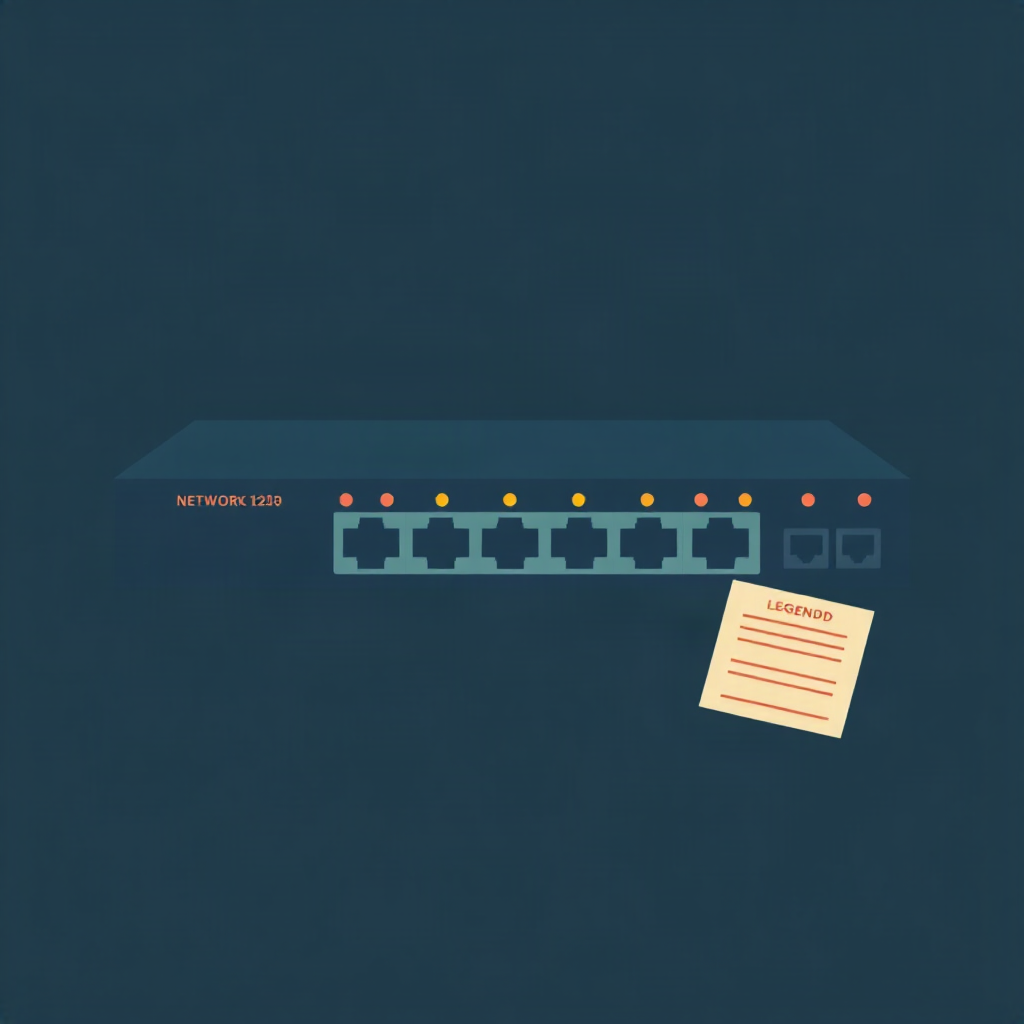
Those tiny green and orange lights on your router, switch, and laptop dock are speaking a language — but every manufacturer speaks its own dialect. In this first Herman In Brief, we decode the basics: solid versus blinking, why the same two colors can mean opposite speeds on an Intel NIC versus a cheap home switch, what amber means on Cisco Catalyst gear, and how PoE and SFP ports fit into the grammar. You'll also get the four cases where the lights actually tell you something is wrong — including the most useful one of all: a speed color that says 100 megabit when...
The Leopard That Wasn't on the Plaque

Israel's last wild leopard was seen near Sde Boker in 2007 and died in 2009, but the Jerusalem Zoo's new Persian leopard exhibit tells a different story — one with the wrong subspecies on the sign. This episode digs into the forgotten history of Panthera pardus in Israel: a north-to-south extinction that ran from the late 1800s to 2011, at least fourteen leopards hunted or poisoned in the Galilee between 1925 and 1956, and a Negev population that genetic scat analysis put at just eight animals in 2004. We also answer the question the plaque raises: if the leopard was one of Israel's largest predators, what was bi...
How Long Does an M-Disc Actually Last?

Millenniata's M-Disc was marketed as "chiseling your data into stone," certified at over a thousand years under ISO 10995. Then the company went bankrupt, the Blu-ray version got harder to distinguish from ordinary discs, and skeptics started doing the arithmetic on that certificate. This episode walks through the actual evidence — the China Lake DoD test, a UK hobbyist's seven-month weather experiment, NIST's hundred-year rating — and then designs the aging test that would settle it: control groups, multiple burners, error-rate scanning, and microscopy. Plus why a national archive's climate-controlled vault beats a balcony, and how you'd pitch them on hosting it. Key sour...
How to Prove Your Photo Is Real

Five years ago the risk was someone faking evidence against you. Now the bigger risk is the other side calling your real photo fake — the "liar's dividend." This episode works through how an ordinary person documents a landlord dispute, an insurance claim, or a neighborhood fight in a way that can later be shown to be authentic. It covers the four different claims people bundle together when they say "this photo is real," why Timemark's server-side Photo Codes and ProofMode's on-device cryptographic signatures solve different halves of the problem, and what happened when Nikon signed an AI image by accident an...
How to Become an Exclusive Importer in Israel

Israel's quiet fortunes are built on exclusive import rights — one family holds the letter from the brand, and nobody else gets to bring it in for decades. So how does an outsider break in? This episode walks the entire path from cold start to signed agreement, using Zojirushi rice cookers as the test case. It covers the "sacrificial pallet" strategy of importing and selling stock before you've ever spoken to the brand, why European-sourced models matter under Israel's new standards reform, and how to find the one person at head office whose spreadsheet has a blank row for Israel. Then co...
