LYF3 B3 LYF3N
Life has a way of shaping us through our experiences—both the beautiful moments and the painful ones. Here on Lyf3 B3 Lyf3N, we have honest conversations about mental health, emotional healing, trauma, relationships, self-awareness, personal growth, and the journey toward becoming the healthiest version of ourselves.This isn’t about having all the answers. It’s about asking the questions that help us understand ourselves a little better. Whether you’re healing from childhood wounds, navigating difficult relationships, learning to set boundaries, or simply trying to make sense of your emotions, you’re not alone.Each episode explores real-life...
What Healing Looks Like
Welcome back to Lyf3 B3 Lyf3N Podcast
I’m just popping in to let y’all know that I have a brand-new series kicking off called What Healing Looks Like.
We’ll be talking about how healing can feel uncomfortable before it feels freeing, grieving people who are still alive, family estrangement, and walking away without hating anyone.
We’re also getting into why healing doesn’t require reconciling with everybody, why forgiveness and restored access are not the same thing, and how to heal without the apology you deserved.
We’ll talk...
Why Every Generation Keeps Repeating the Same Story Understanding Generational Trauma, Family Patterns, and the Power to Choose a Different Legacy
Families pass down both healthy and unhealthy patterns.
Children learn primarily through observation and repetition.
Familiar patterns often feel "normal," even when they're unhealthy.
Breaking generational cycles begins with awareness and intentional choices.
Every generation has the opportunity to leave a healthier legacy than the one it inherited.
The Family Member Everyone is Afarid to Confront
In many families, there is one person everyone tiptoes around—the person whose anger, disrespect, or unpredictable reactions keep everyone silent. This one person’s emotions can control an entire family, why the person who finally speaks up is often blamed, and the difference between keeping the peace and protecting dysfunction.
We also explore what healthy confrontation can look like, including setting boundaries, limiting access, walking away from harmful conversations, and choosing emotional and physical safety.
You can love your family while still telling the truth. Finding your voice does not mean you are creating divi...
The Silent Hatred Nobody Talks About (Jealousy • Favoritism • Passive Aggression • Competition • Emotional Neglect)
Not every family conflict involves yelling.
Sometimes the deepest wounds come from what is never said.
The cold shoulder.
The comparison.
The favoritism.
The sarcastic comments.
The sibling rivalry that never ends.
The emotional neglect that gets mistaken for "that's just how our family is."
Today's conversation isn't about labeling families as hateful.
It's about understanding the quiet resentment and unhealthy patterns that can grow when love, attention, and validation don't feel equally available.
Take a few quiet moments...
Loyalty at the Cost of Truth When "Family First" Becomes Harmful
Loyalty is one of the greatest values a family can teach.
It creates trust.
Commitment.
Belonging.
Support during difficult seasons.
But what happens when loyalty stops protecting people...
And starts protecting unhealthy behavior?
Today's conversation is about understanding the difference between healthy family loyalty and loyalty that asks people to sacrifice their peace, their voice, and sometimes even their well-being.
Addicted to More Than Substances
When we hear the word addiction, most of us immediately think about alcohol or drugs.
But families can become addicted to more than substances.
Some become addicted to chaos.
Some become addicted to conflict.
Some become addicted to rescuing everyone.
Some become addicted to control.
Today's conversation is about understanding how unhealthy patterns become normal inside a family—and how generations can mistake dysfunction for love.
Take a few moments this week to reflect.
What pattern kept repeating in my family?Was someone always re...When the Hurt Comes From Inside the Family (Incest, Molestation & Betrayal)
Some conversations are difficult.
Not because they shouldn't happen.
But because they've been avoided for far too long.
Today's episode is about one of the deepest betrayals a family can experience—when the people who should have provided safety become the source of harm, or when the family protects the person who caused the harm instead of protecting the person who was harmed.
This episode isn't about shame.
It isn't about blame toward survivors.
It's about breaking the silence and understanding the family dynamics that allow abuse to...
The Family Secret Everyone Protected "Why Families Hide Painful Truths and the Cost of Silence"
Families often confuse privacy with secrecy.Secrets are frequently protected to preserve image, avoid shame, or escape painful realities.Children learn what can and cannot be discussed by watching the adults around them.Silence can become a generational pattern that keeps wounds from healing.Healthy families make room for truth because truth creates the possibility of repair.
Today's conversation is about what happens when protecting the family secret becomes more important than protecting the people living inside the family.
Every family has a story. But not every family tells the whole story.
Some stories are...
The Roles We. Ever Chose
Families don’t just pass down traditions.
They also pass down expectations.
Without realizing it, many children are assigned roles that help keep the family functioning. These roles aren’t chosen—they’re developed as children adapt to the environment around them.
Today’s conversation isn’t about putting people into boxes. It’s about understanding how family systems often encourage certain roles to maintain balance, even when that balance isn’t healthy.
Summary
Family roles often develop as children adapt to the needs of the family system.Roles can provide stabilit...When Accountability Doesn't Exist
Some families don't ignore harmful behavior. They explain it.
"He didn't mean it." "That's just how she is." "You know how your father gets."
"She's had a hard life." "He was drinking." "Just let it go."
Over time, accountability disappears—not because people don't see what's happening, but because the family learns to protect the behavior instead of the people affected by it.
Today's conversation is about understanding how that dynamic shapes an entire family.
Families without accountability often justify harmful behavior instead of addressing it.Excuses can become a wa...The Family Rules Nobody Ever Said Out Loud
Summary
Every family has spoken and unspoken rules.Children learn those rules by observing what is rewarded, ignored, or punished.Many family rules are passed down through generations as survival strategies.Healing begins by recognizing which rules still serve us and which ones no longer do.Reflection Questions
What unspoken rule shaped your childhood the most?What happened when someone broke that rule?Which family rule do you want to leave behind?Lyf3_B3_Lyf3n
Yeah…
They gave us scars…
But they don’t get to write the ending…
Nah…
This the healing season…
Let’s ride…
(Verse 1)
Grandma cried but never told us why.
Daddy learned to fight before he learned to cry.
Mama wore a smile while her soul ran dry.
Now we all inherited storms from the sky.
Look…They said, “Keep the peace…”So I kept quiet.
They said,“Blood is blood…”So I stayed loyal.
They said,“Respect your e...
"Avoidance" Running without Moving
Sometimes the greatest distance we travel isn’t physical—it’s emotional.
In this episode, we explore how avoidance can become a survival response that quietly shapes our lives. Avoidance isn’t always walking away from problems. Sometimes it’s staying constantly busy, endlessly scrolling, overworking, laughing instead of crying, or distracting ourselves so we never have to sit with difficult emotions.
We’ll talk about:
What emotional avoidance really looks likeWhy our minds develop avoidance as a form of protectionThe hidden cost of constantly escaping uncomfortable feelingsHow unprocessed emotions eventually surface in our thoughts, bo...When Silence Became Your Safe Place
Many people assume being quiet means being emotionally distant. In reality, shutting down is often a survival response learned in environments where expressing emotions didn’t feel safe. This episode explores how silence can become protection, how it follows us into adulthood, and how healing begins by reclaiming our voice at our own pace.
Key Takeaways
Shutting down is often a trauma response—not a personality flaw.Silence can become a survival strategy when emotions are criticized or ignored.Your nervous system may still react to old dangers, even when you’re safe today.Healing doesn’t requir..."When Keeping Everyone Happy Is Hurting You" People Pleasing
People pleasing is often mistaken for kindness, but it can be a trauma response rooted in fear. When love, acceptance, or safety once felt conditional, we may learn to put everyone else’s needs before our own. This episode explores how people pleasing develops, why setting boundaries can feel uncomfortable, and how healing begins by recognizing that your worth isn’t based on keeping everyone happy.
What You’ll Learn
The difference between genuine kindness and people pleasingHow childhood experiences can shape people-pleasing behaviorsWhy saying “no” often feels uncomfortable or guilt-inducingHow people pleasing affects identity, relationships, and self-w...Hyper-Independence “I Don’t Need Anybody… Or Do I?”
Hyper-independence is a maladaptive form of independence that goes beyond healthy self-reliance. Unlike normal independence, which allows individuals to ask for help when needed, hyper-independent people believe they must manage everything on their own and often avoid relying on others, even in situations where assistance would be beneficial.
It is typically a trauma response, often developing in childhood when a person experiences neglect, abuse, or parentification, where they are forced to take on adult responsibilities prematurely.
The primary causes of hyper-independence include:
Childhood trauma: Emotional neglect, abuse, or unsafe environments teach children that they...Trauma Responses We Call Personality. Introduction
Have you ever wondered why you struggle to trust others, put everyone else’s needs before your own, shut down during conflict, or constantly seek reassurance? What if these aren’t personality flaws—but survival responses developed through life’s difficult experiences?
In this season of Trauma Responses We Call Personality on Lyf3 B3 Lyf3N, we’ll explore the hidden ways trauma can shape our thoughts, behaviors, relationships, and sense of self. Through honest conversations, we’ll uncover the “why” behind these patterns and discuss practical steps toward healing.
Whether you’re just beginning your healing journ...
The Version of You Built From Survival

What if the person you’ve become isn’t who you truly are—but who you had to become to survive?
In this episode, we explore how childhood wounds, trauma, disappointment, abandonment, and emotional pain can shape our adult personalities. We discuss emotional numbness, trust issues, hyper-independence, overworking, and why peace often feels uncomfortable when you’ve spent years living in survival mode.
This episode isn’t about blaming yourself for how you’ve coped. It’s about understanding how survival protected you, while recognizing that survival was never meant to become your identity.
If you’ve ev...
Married… But Emotionally Single

Marriage can look healthy from the outside while quietly falling apart on the inside. In this episode, we explore what it means to feel emotionally alone while still sharing a life with your spouse. We discuss how surface-level communication, emotional neglect, busy schedules, and unresolved resentment slowly replace intimacy. If you’ve ever wondered how two people can sleep in the same bed yet feel like strangers, this conversation is for you.
Together, we’ll examine how emotional distance develops, why many couples become roommates instead of partners, and practical ways to rebuild emotional safety before disconnection beco...
HEALING THE CHILD THAT KEEPS FIGHTING IN YOUR MARRIAGE
Why do some arguments feel bigger than the situation?
Why does a delayed text feel like rejection?
Why does criticism feel personal?
Why do certain conflicts trigger emotions that seem impossible to control?
In this episode we explore how childhood wounds silently follow us into adulthood and shape the way we love, communicate, trust, and respond inside our relationships.
Many marriages aren’t struggling because love is gone.
They’re struggling because unresolved pain is still present.
Together we’ll discuss: • Childhood trauma and relationship patterns...
When Loyalty Starts feeling Like Control
Exploring the difference between healthy boundaries, emotional accountability, and controlling behavior inside relationships.
Topics
When hurt turns into monitoringFear disguised as protectionEmotional safety vs emotional ownershipWhy some people struggle with independence in marriageHow unresolved betrayal changes communicationMain Question
“At what point does protection become control?”
“Love should feel safe… not supervised.”
TOO MANY VOICES "soundtrack"

emotional pressuremental overloadrelationship confusionoutside voices becoming louder than love
a marriage slowly drowning in noise.
Not rage. Not chaos.
Just emotional exhaustion.
"Too Many Voices" soundtrack

emotional pressuremental overloadrelationship confusionoutside voices becoming louder than love
a marriage slowly drowning in noise.
Not rage. Not chaos.
Just emotional exhaustion.
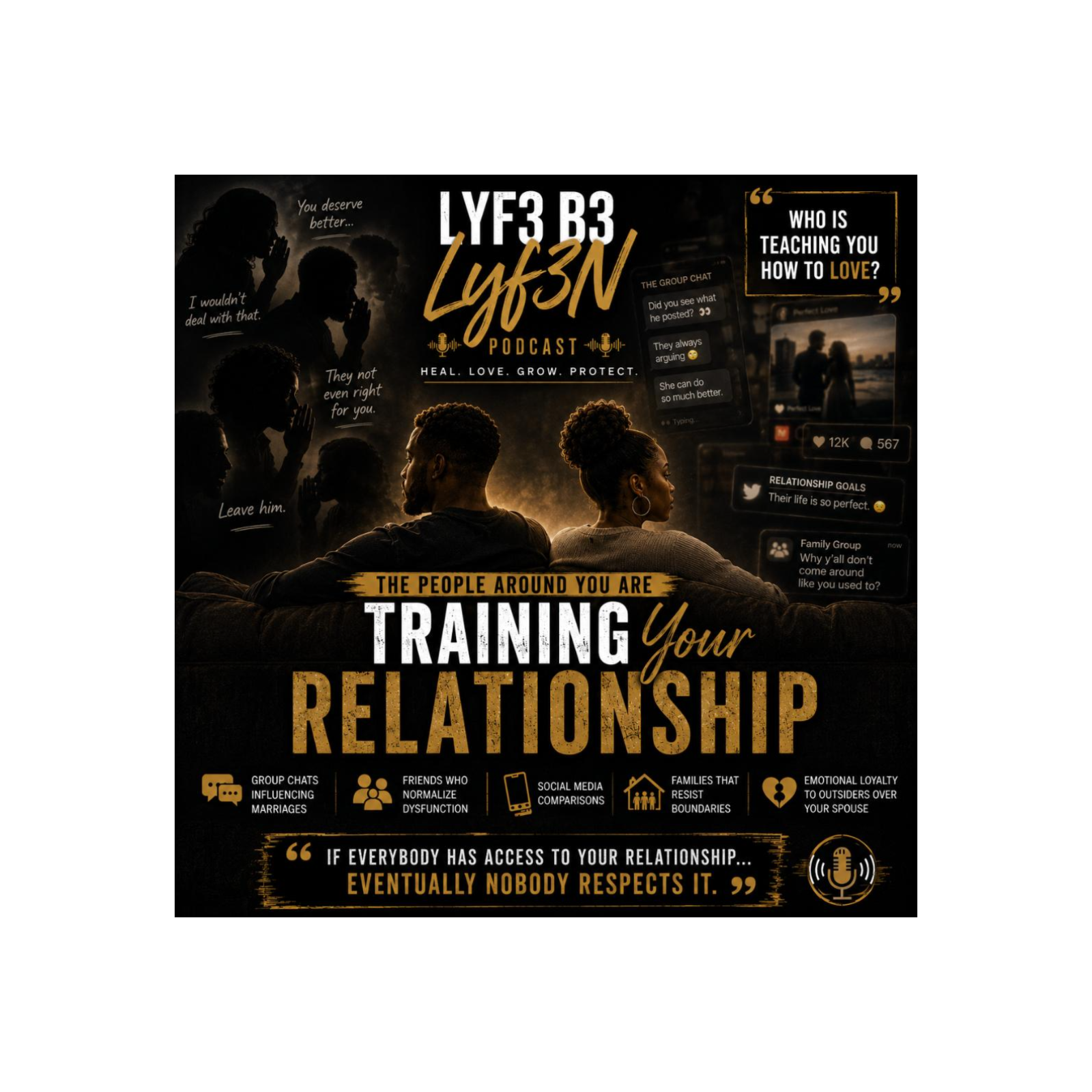
The People Around You Are Training Your Relationship
Main Message
Whether we realize it or not, people around us silently train how we love, communicate, argue, forgive, and respond inside relationships.
Key Talking Points
Group chats shaping relationship opinionsFriends /Family normalizing toxic behaviorSocial media comparison cultureFamilies resisting relationship boundariesChoosing outsiders emotionally over your spouseImportant Discussion Angles
1. Group Chat Culture
Some conversations slowly poison relationships without people realizing it.
2. Social Media Comparisons
People compare real relationships to curated internet moments.
3. Dysfunction Becoming Normal
Constant exposure to unhealthy behavior can...
Saving Your Marriage From Outsiders’ Luggage
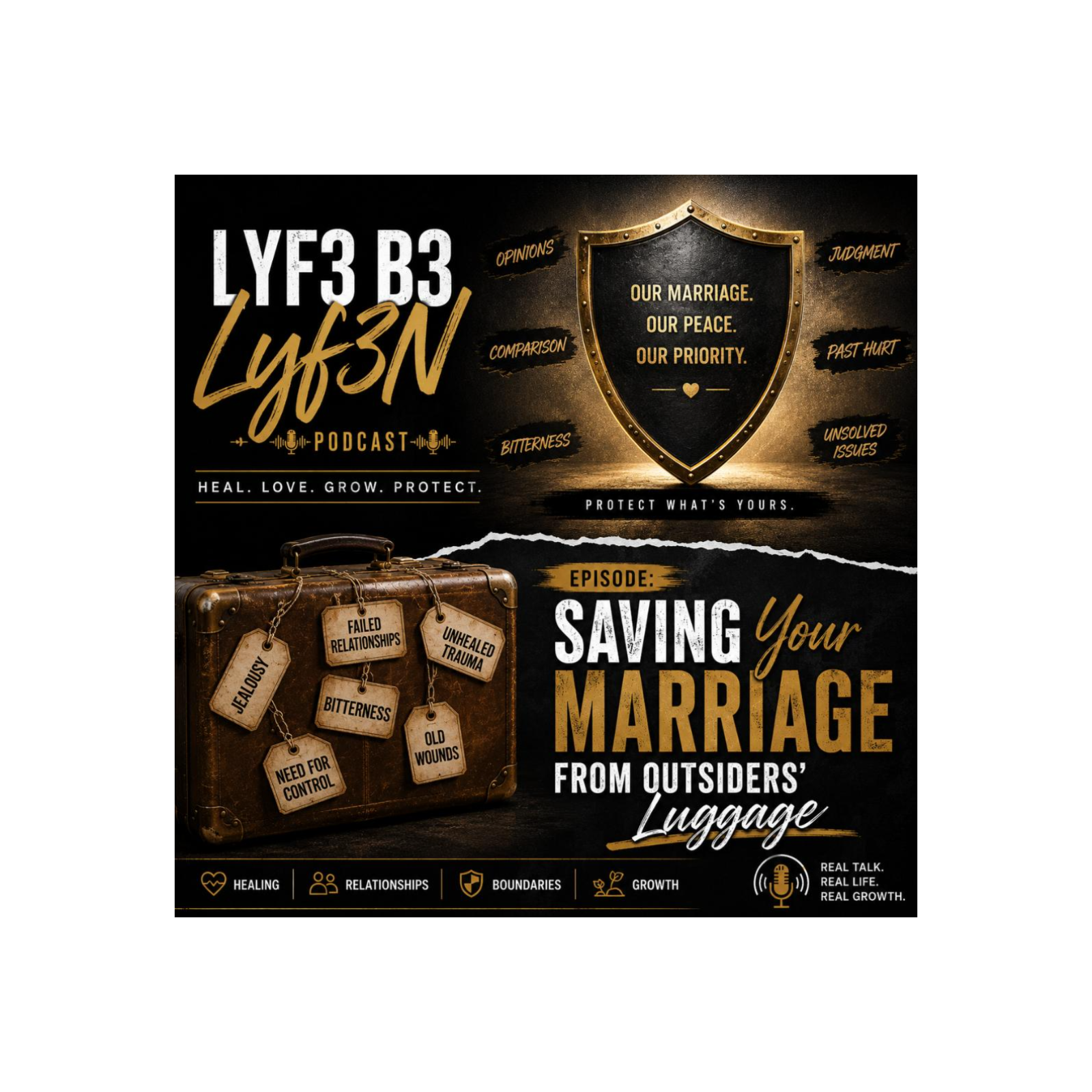
“Everybody carrying something… but not everybody should unpack it in your marriage.”
Because if two people don’t intentionally protect what they built…life will always send people willing to unpack their baggage inside it. And eventually…you stop fighting each other’s pain…and start fighting each other.
Main Message
Not everybody around your relationship is helping it grow. Some people bring unresolved pain, opinions, jealousy, and dysfunction into marriages that were never theirs to control.
Key Talking Points
Outsiders projecting their failed relationships onto yoursFamily members overstepping bou...Re-Parenting Yourself

Re-Parenting Yourself | Love After Neglect Series
This episode focuses on healing by learning to give yourself what you may not have consistently received growing up.
What We Cover:
• What re-parenting yourself actually means • Recognizing the inner child and unresolved emotional wounds • Learning to validate your own feelings and needs • Replacing self-criticism with self-compassion • Setting boundaries that protect your peace • Unlearning survival patterns and emotional shutdown • Allowing yourself to receive love, support, and care
Key Message:
Healing is not about changing the past.
It’s about changing how you...
Learning What Healthy Love Actually Looks Like

Learning What Healthy Love Actually Looks Like
This episode focuses on redefining love—moving away from what felt familiar and learning what is actually healthy.
What We Cover:
• Emotional safety—feeling safe to express yourself without fear or judgment • Consistency vs intensity—why stable love matters more than emotional highs and lows • Boundaries—knowing what you accept and what you don’t • Mutual respect—balanced effort, not one-sided giving • Letting go of overgiving and people-pleasing • Learning to receive love, not just give it
Key Message:
Healthy love is not confusing, inconsistent...
Breaking Family Cycles

This episode focuses on moving from awareness to action—how to stop repeating unhealthy emotional and relationship patterns.
• Choosing emotional awareness instead of reacting on autopilot
• Understanding triggers and where they come from
• Parenting differently by creating emotional safety and support
• Allowing expression instead of dismissing feelings
• Setting boundaries and refusing unhealthy patterns
• Letting go of generational behaviors that no longer serve you
Abandonment The Love That Wasn’t There

In this episode, we explore how abandonment—both physical and emotional—shapes the way we experience love, connection, and relationships.
Abandonment isn’t always about someone leaving. Sometimes it’s about someone being present… but not emotionally available. Other times, it’s the absence of a person altogether. Either way, the impact can leave lasting beliefs about self-worth, trust, and what to expect from others.
This episode breaks down how abandonment connects directly to neglect and how both influence adult relationship patterns.
Why We Chase Emotionally Unavailable Partners

In this episode, we explore how childhood emotional neglect shapes the way we understand and experience love as adults.
When emotional needs are not consistently met growing up, children still form beliefs about love—but those beliefs are often rooted in absence rather than connection. Instead of learning that love is safe, supportive, and freely given, many learn that love must be earned, maintained, and proven.
How Neglect Teaches the Wrong Version of Love

In this episode, we explore how childhood emotional neglect shapes the way we understand and experience love as adults.
When emotional needs are not consistently met growing up, children still form beliefs about love—but those beliefs are often rooted in absence rather than connection. Instead of learning that love is safe, supportive, and freely given, many learn that love must be earned, maintained, and proven. Focus Topics:
• Love must be earned
• Overgiving
• Fear of asking for emotional support
The Children Who Raised Themselves

In this episode of the Love After Neglect series, we explore the experience of children who had to grow up emotionally too soon, emotionally independent children, the impact of parentification, and what it means to become “the strong one” in a family.
We talk about how children who raise themselves often grow into adults who are dependable, resilient, and capable — but may also struggle with receiving support, asking for help, or feeling safe enough to be vulnerable in relationships.
When your Needs were Ignored as a Child

Podcast Series: “Love After Neglect”
A series about how childhood emotional neglect shapes the way we give, receive, and struggle with love as adults.
Key Discussion Points
Difference between abuse vs emotional neglect Growing up in homes where:emotions weren’t discussedproblems were ignoredlove existed but connection didn’tDoing Therapy… But Refusing the Healing
In this episode, we talk about what happens when trauma goes unhealed inside a marriage—and how it begins to affect not just the person carrying it, but the spouse who loves them.
This conversation explores the reality of being in therapy without truly healing—when sessions become a performance instead of a practice, and therapeutic language is used to explain pain rather than repair it.
We discuss:
How unhealed trauma shows up as defensiveness, control, shutdown, or chaosWhat it looks like when a spouse is “doing therapy for show”Being more attached to chaos th...Loving Someone Through Trauma Without Losing Yourself
This solo episode explores the emotional toll of being the primary support system for a loved one dealing with layered trauma, addiction-related grief, and mental health challenges. It addresses how pain often gets redirected toward the closest partner, why empathy can quietly turn into endurance, and how boundaries are essential—not harmful—to love.
Listener Reflection Questions:
Where have I been absorbing pain that isn’t mine to carry?What does emotional safety look like for me right now?Have I confused endurance with love?What boundary might I need to nam...Marriage Loyalty and Belonging

When Love Exists but Loyalty is Missing, can a marriage Survive?
Love isn’t always loud. Sometimes it’s quiet, enduring, and deeply committed—yet still unsupported.
In this episode of Marriage Loyalty and Belonging, Sp3ak-N-OuTLoud opens an honest conversation about marriage, loyalty, and belonging, and the emotional cost of staying in relationships where protection is absent. This is not a story of blame—it’s a story of truth, boundaries, and healing.
Through personal reflection, Sp3ak-N-OuTLoud explores:
The difference between love and loyalty in marriageWhat it feels l...