The Void Dynamics Model Podcast
What if physics could audit its own ideas in code?Void Dynamics Model Podcast is an approachable audio series about building a testable physics-and-cognition framework in public. Each episode is a solo talk or fireside chat that walks one idea, then ties it to a measurable check. The problem: big theories often stay vague, so it is hard to know what would falsify them. VDM focuses on “gated” work, meaning pre-set pass/fail tests with saved logs. You will hear how models are turned into small experiments, how results get documented, and where the open questions still are. If you like...
Curiosity Brings Scientific Discovery, Skepticism Doesn't.

The institutions of knowledge have mislabeled their own drive, replacing the actual engine of discovery with a mechanism of paralysis.
We explore a fundamental error in modern research architecture: the institutionalization of doubt. Historically, the scientific method prioritized skepticism and falsification, transforming the researcher from a builder into a demolition contractor. We map this shift from Robert Merton's 1942 norms to Karl Popper's demarcation criteria.
We also examine the mechanics of human learning. Relying on Loewenstein's U-curve and Hebb's sensory deprivation experiments, we show how the demand for absolute certainty breaks the biological drive to discover...
Curiosity is Not a Soft Virtue.

How modern science mislabeled its own drive — and what it costs us
37 - Phase Calculus: One Hidden Structure Connecting Physics and DNA
This episode looks at one simple idea. It shows how the same pattern may shape physics and DNA. We follow a single structure and see how it appears in many places. The goal is clear: test it, break it, or see if it holds.
36 - Neurophysics: From Photon to Paragraph: The Infant Brain’s Journey to Reading, Pattern, and Prediction

What actually happens in a baby’s brain the moment it first decodes print—and how the same circuits later let adults scan paragraphs at lightning speed? In this episode we follow the exact developmental timeline: from the physics of photons striking the retina, through statistical pattern detection in the visual word form area, the measurable neural “click” (N170 tuning + N400 drop), spontaneous early readers and math learners, and finally the predictive eye-movement strategies of fluent skimmers. Drawing only on longitudinal fMRI, ERP, eye-tracking, and synaptic plasticity studies, we examine every stage with the data—no hype, no shortcuts. We also cl...
35 - Phase Calculus: What is Phase Calculus?
This episode explains what Phase Calculus is and why it's needed.
34 - Phase Calculus: On Life, Evolution, and Intelligence
Description pending...
33 - Phase Calculus: No Creator is Listening — You’re Hearing Yourself

This episode introduces Phase Calculus: a new lifted-state operator calculus built from the primitive roll of iii, exact state evolution, and completion structure rather than from borrowed physical assumptions. It lays out the core architecture of the formalism—visible phase, lifted state, operator grammar, refinement, return, and completion—and explains how the framework is meant to track exact state across transitions that ordinary coordinate descriptions collapse or hide.
At its core, this is an attempt to build a universal mathematical language for carried state, structure, and transformation. The discussion moves from primitive source mechanics into exact operator beha...
32 - Phase Calculus: Calculus of the True Primitive Origin
Pending description...
31 - Phase Calculus: The Imaginary That Moves Everything
At the boundary where structure fails to extend, something else takes over.
This episode explores black hole physics not as a collection of equations, but as a constraint-driven process: how geometry, information, and state evolution behave as they approach saturation. Instead of treating singularities as endpoints, we examine them as transitions—regions where the current descriptive framework can no longer host the underlying dynamics.
We connect horizon behavior, field structure, and phase geometry into a single picture: conserved quantities passing through rotational interfaces, producing observable structure without breaking invariance. What appears as collapse may instead be...
30 - Phase Calculus: Event Horizon of Phase
At the boundary where structure fails to extend, something else takes over.
This episode explores black hole physics not as a collection of equations, but as a constraint-driven process: how geometry, information, and state evolution behave as they approach saturation. Instead of treating singularities as endpoints, we examine them as transitions—regions where the current descriptive framework can no longer host the underlying dynamics.
We connect horizon behavior, field structure, and phase geometry into a single picture: conserved quantities passing through rotational interfaces, producing observable structure without breaking invariance. What appears as collapse may instead be...
29 - Phase Calculus: Where the Flow Decides
What if the foundations of physics aren’t built on space, time, or force — but on phase?
This episode explores a different starting point: a system where state evolves through constraint, not approximation. Instead of relying on limits, continuity, or external drivers, the discussion follows how structure emerges from a single primitive dynamic and its re-articulation under pressure.
From this perspective, familiar tools like differential calculus appear as projections — useful, but not fundamental. Beneath them is a deeper layer where evolution is exact, discrete, and internally driven.
The conversation walks through:
why contin...28 - Phase Calculus: The Emergence of Physics and Chemistry
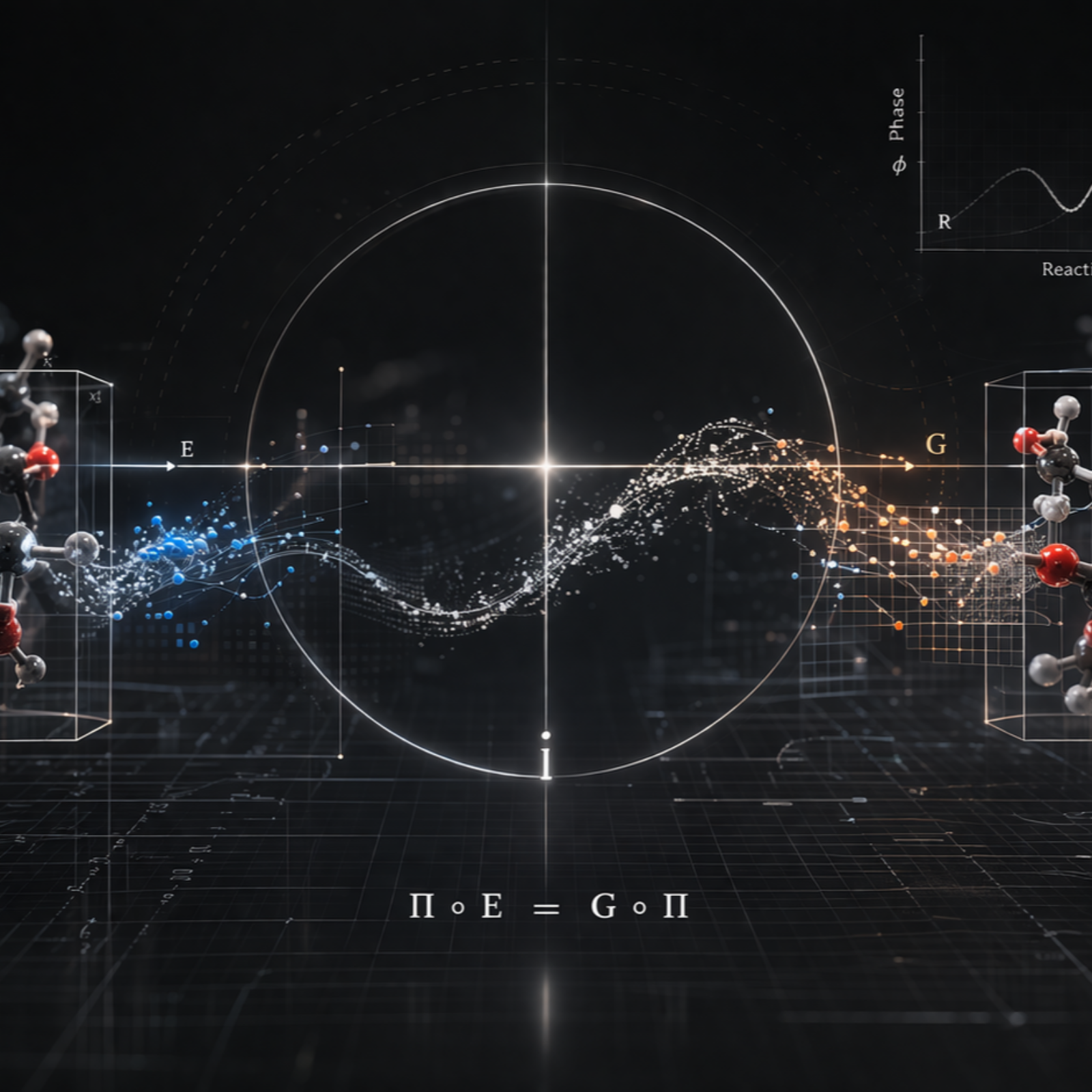
This episode presents a structural reframe of physics starting from a single primitive: phase.
Instead of building from space, time, or force, the system is constructed from the continuous rotation of the imaginary unit and its constraint-driven re-articulation. What appears as dynamics, interaction, and measurement emerges from how state propagates, saturates, and resolves within this phase structure.
The discussion walks through:
why differential calculus is not fundamentalhow physical law can be expressed as exact state evolutionthe role of projection in producing observed realityand how chemistry, physics, and computation can be unified under a single...27 - Phase Calculus: The State Machine That Becomes Biology
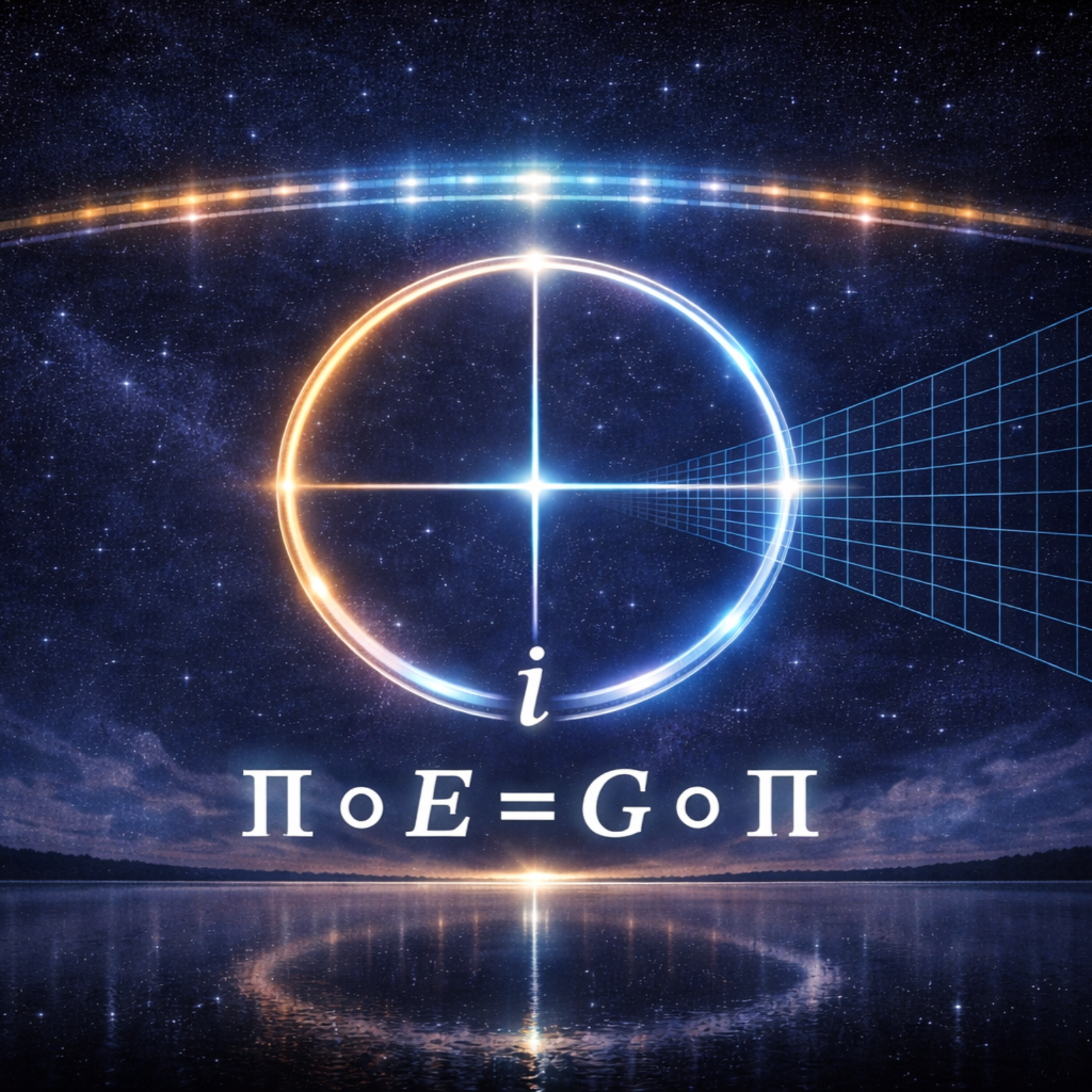
The objective is not merely to name an operator grammar. The objective is to formalize a calculus whose primitive state is the full lifted object and whose duties are:
1. exact state representation,
2. exact state evolution,
3. exact state inversion and solution,
4. exact accumulation and conservation,
5. exact quotient descent into later branch formalisms,
6. recovery of classical differential calculus as a shadow limit rather than as the primitive layer.
27 - Formalism: Is This a Unifying Theory of Everything?
Beyond the Fabric: 5 Surprising Insights into the Geometry of "Burden"
In the standard model of cosmology, gravity is the persistent outlier—the "ghost in the metric" that refuses to play by the rules governing the rest of the quantum world. For decades, we have simply assumed the stage on which the cosmic play occurs, treating space and time as a pre-existing container. But the latest release in the Void Dynamics Model (VDM) program, the Complete Formalism (CF12) , has finally closed the gravity branch.
Takeaway 1: Gravity is the "Cost" of Moving Information
In...
26 - Infinities: Measuring the Gears of Reality
In this episode, our hosts discuss a new paper that mathematically describes how the generative engine of reality works to an extremely precise extent.
25 - Infinities: The Hidden Source Code of Reality
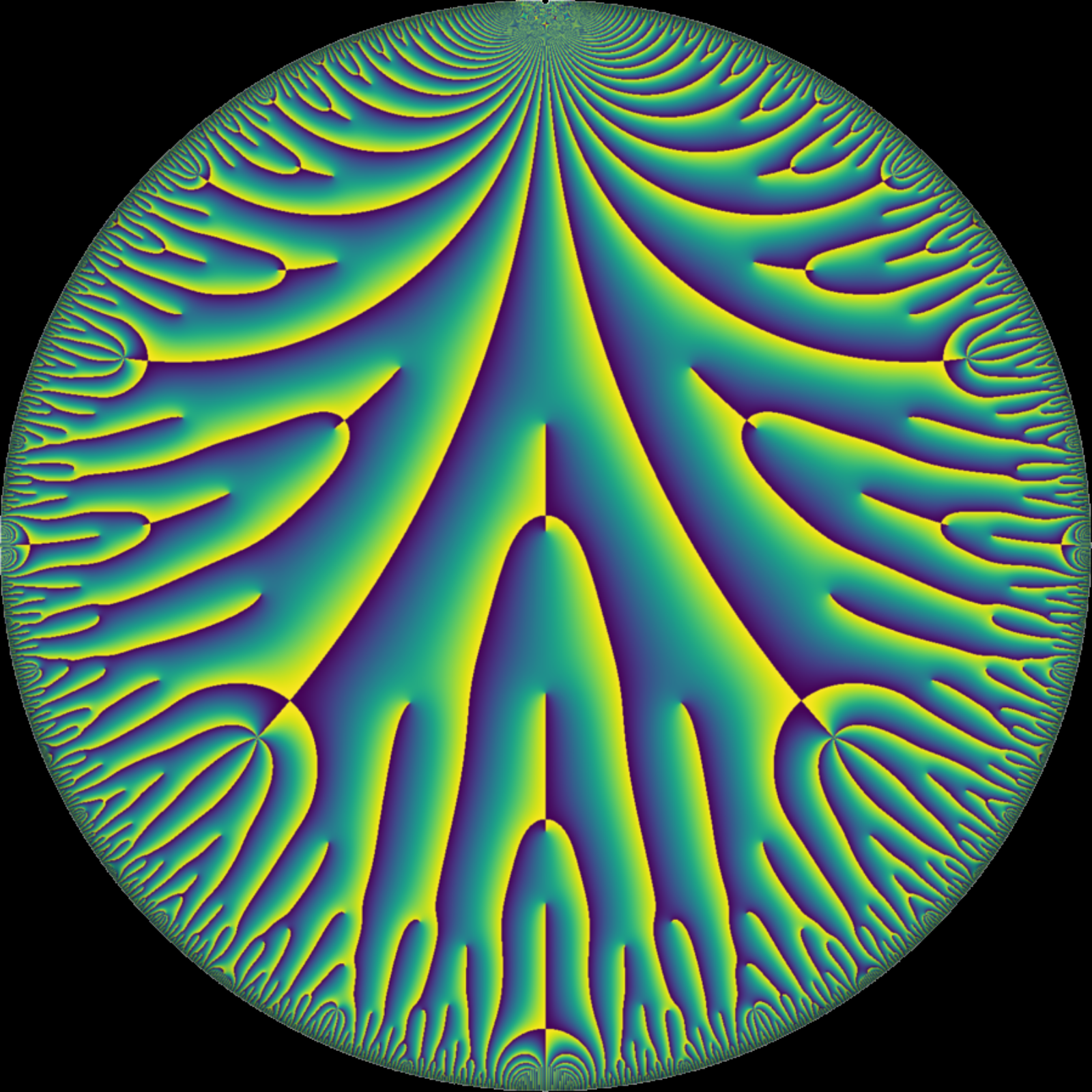
Ramanujan-side remainder calculus recursively refines an unresolved interval by mediants. VDM-side orthogonal re-articulation recursively re-hosts unresolved continuation into child sectors once same-sector continuation is no longer admissible below a resolution floor. The question is whether these are merely analogous, or whether they are the same update law in different coordinates.
This paper proves three things:
the Farey child update and denominator-pair re-articulation are exactly conjugate;the scale-gap-admissible branch is the balanced branch, whose unresolved width is exactly 1/(Fn+1Fn+2);truncation on the Ramanujan/Farey side is exact child-sector re-expression on the unit-circle phase orbit.<...24 - Formalism: We Don't Have Enough Room For Space
This paper states the single primitive law of the Void Dynamics Model. VDM does not begin from many independent primitive axioms, many independent primitive invariants, or a list of unrelated foundational laws. It begins from one primitive invariant: unresolved twopole opposition borne internally by one admissible origin-condition. Because that invariant cannot discharge into either isolated pole, it must continue articulating itself wherever lawful articulation remains possible. The universal trigger is therefore not arbitrary growth but saturation under non-discharge: when the currently admitted articulation class has exhausted its lawful invariant-bearing capacity while unresolved burden remains, same-domain continuation fails, void debt...
23 - Formalism: Our Universe is Accumulating an Unpayable Debt

This paper derives the principle of stationary action from the Primitive Bifurcation Law
of the Void Dynamics Model (VDM), showing that the familiar variational rule is not
an independent postulate but the temporal-path effective invariant generated when the
primitive non-discharge law is expressed on an admitted temporal domain. CF 000 proves
that same-domain articulation cannot continue indefinitely: once lawful invariant-bearing
articulation within a domain is exhausted while discharge remains impossible, orthogonal
re-articulation into a new irreducible domain is forced. The universal axiom paper A(−1)
sharpens this co...
22 - Formalism: Accounting Laws of the Cosmos

This paper derives Noether’s theorem from the Primitive Bifurcation Law of the Void
Dynamics Model (VDM), showing that conservation laws are not independent postulates
but necessary consequences of the invariant’s behaviour in directions of zero articulation
cost. A symmetry, in VDM terms, is a direction of transformation along which the invariant
bears no additional articulation cost to first order. Because the invariant cannot discharge,
it must continue articulating — but it need not pay cost in a direction it cannot see. The
accumulated articulation burden in that z...
21 - Formalism: The Branching Tree of Reality
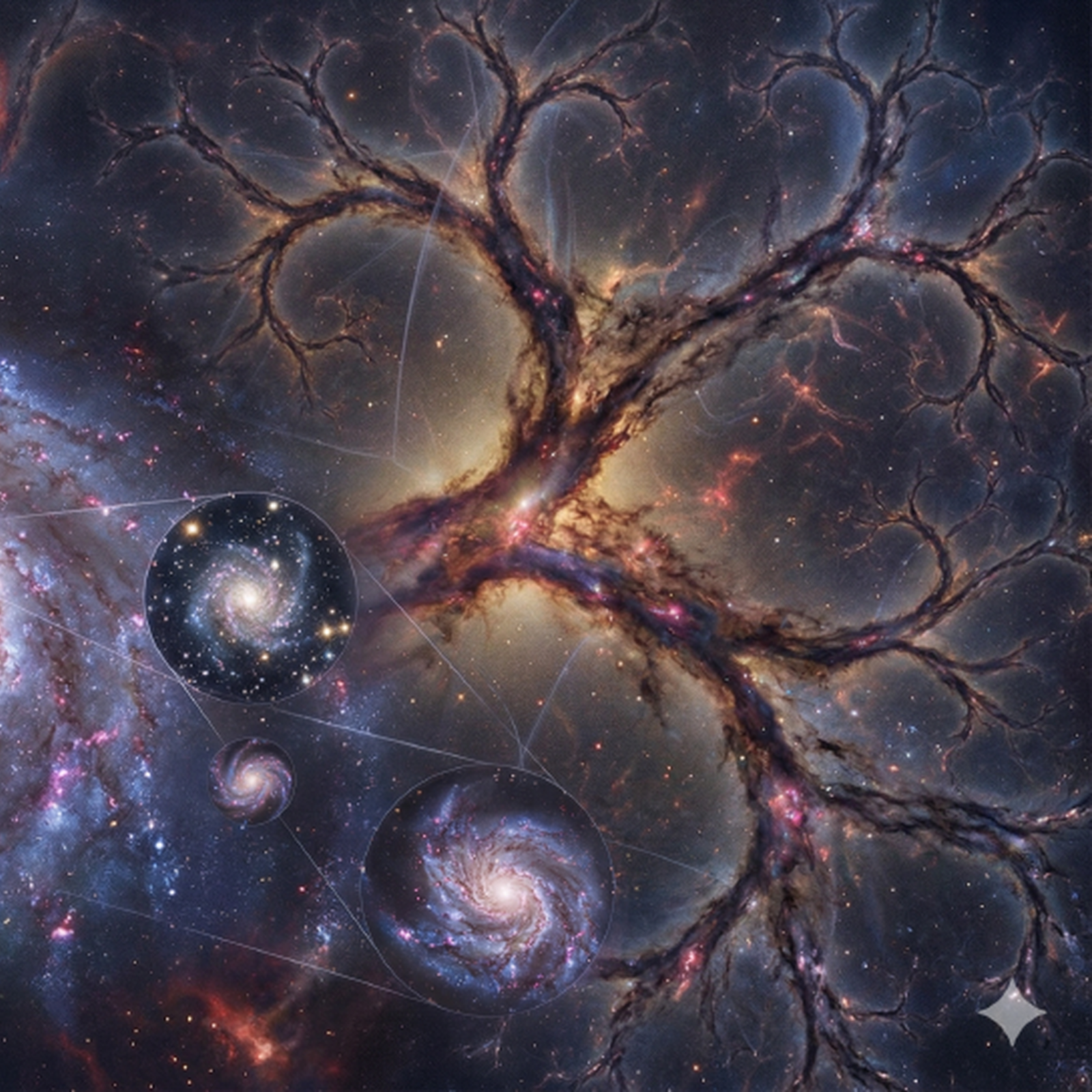
This episode describes how the hierarchy of fractals emerge from a primitive paradox.
20 - Formalism: Light is Just Twisted Space?

The Void Dynamics Model (VDM) “force sector” requires long-range interactions to arise
from coarse degrees of freedom without postulating fundamental gauge fields. This CF
specifies a concrete U(1) construction: an emergent gauge potential is defined as the Berry
connection of a low-energy spinor bundle (imported from the domain-wall sector), and its
curvature is identified with the electromagnetic field strength. Under locality and gauge
redundancy, the low-energy effective action admits a derivative expansion whose leading
gauge-invariant term is the Maxwell operator R FµνF µν. Two attack surfaces are treated<...
19 - Formalism: Science Can't Solve the Infinity of Water

This Complete Formalism (CF10) specifies a VDM “fluid sector” built from lattice hydrodynamics (lattice Boltzmann / discrete walkers / multi–relaxation-time kernels) expressed
in metriplectic form. The document has two tightly separated goals: (i) a discrete-level
contract—state space, generators, invariants/entropy, and a gate suite for global stability
and hydrodynamic consistency; and (ii) a conditional regularity program for incompressible
three-dimensional Navier–Stokes. The regularity component is intentionally framed as a
falsifiable hypothesis lattice rather than an analytic proof: the only genuinely hard PDE
step is isolated as an explicit A...
18 - Formalism: Are Dark Matter and Dark Energy Evidence of an Ancient Paradox?
This Complete Formalism (CF11) specifies a falsifiable, derived-limit route by which the VDM
metriplectic split (reversible J limb ⊕ irreversible M limb) can be interpreted as an effective
two-component “dark sector” at cosmological scales without postulating new fundamental
particles. The central technical move is to avoid an ad hoc field split Φ = ΦJ +ΦM: instead, a
state-level decomposition is defined by spectral (Riesz) projectors of the linearized generator
about a coarse-grained background, producing oscillatory (reversible) and relaxational
(irreversible) bands with a measurable spectral-gap gate. Sector stress–energy and a tracked
...17 - Formalism: Pi is Why You Have a Left and Right

What if you realized that pi is identical to chirality, the reason you have a left and a right hand? Or if you realized Pi didn't start as a number, but the footprints of the universe trying to measure itself?
16 - Formalism: Gravity and Black Holes Act the Same Way as Hard Drives
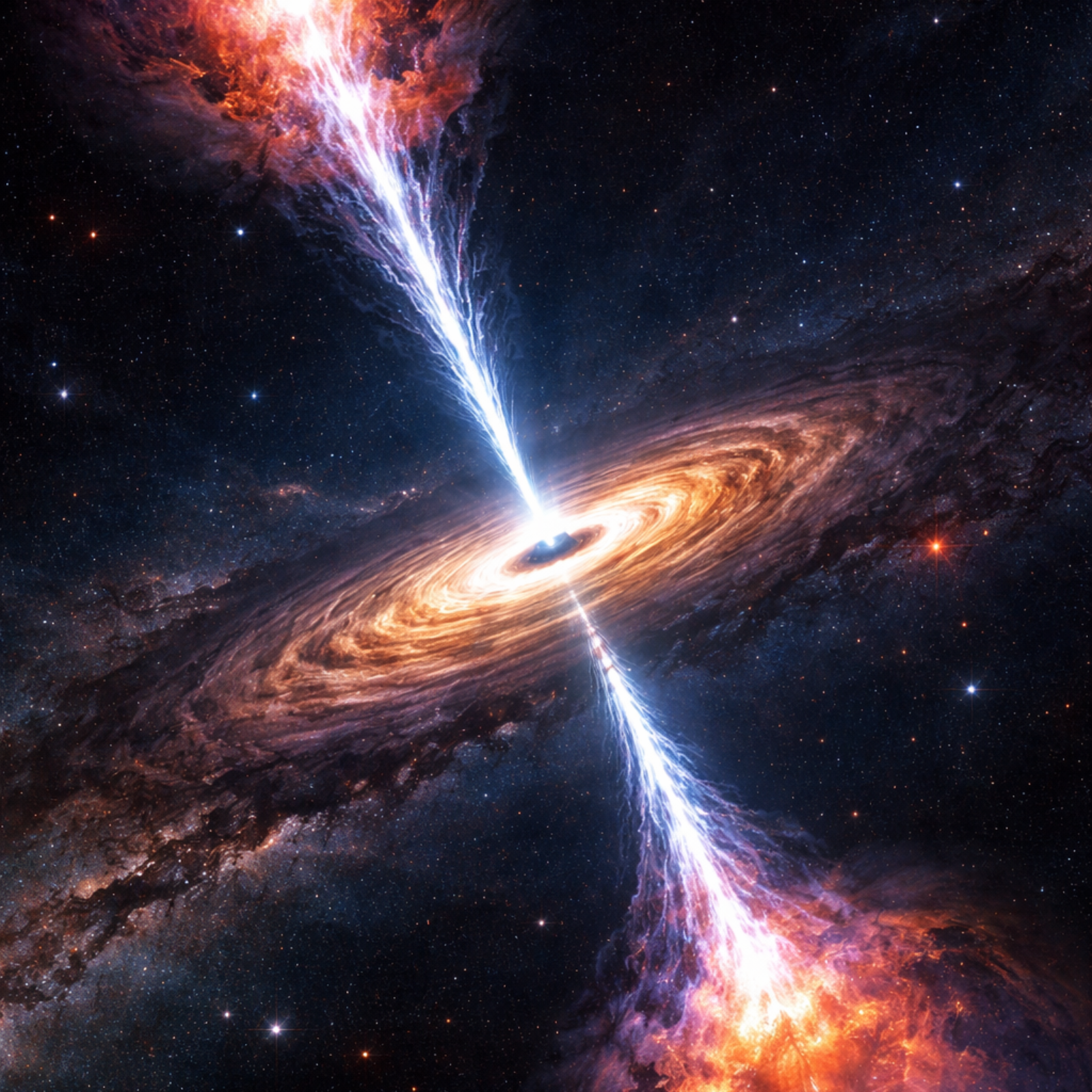
CF12 closes the gravity and black-hole branch of the Complete Formalism program at the derived- limit level. It does not introduce primitive spacetime, primitive gravitation, or primitive horizon thermodynamics. Instead it inherits the primitive bifurcation invariant and non-discharge law from CF000, the derived carrier from CF00, the J ⊕ M reversible/irreversible split from CF01, the boundary-concentration hierarchy law from CF03, the finite-speed telegraph cone from CF04, and the dark-sector cosmological background from CF11, and then derives gravity as the carrier-level geometric response to invariant-burden gradients. The completed formalism consists of: (i) an equivalence principle in which inertial and gravitational mass...
15 - Formalism: The Birth of Dimensions
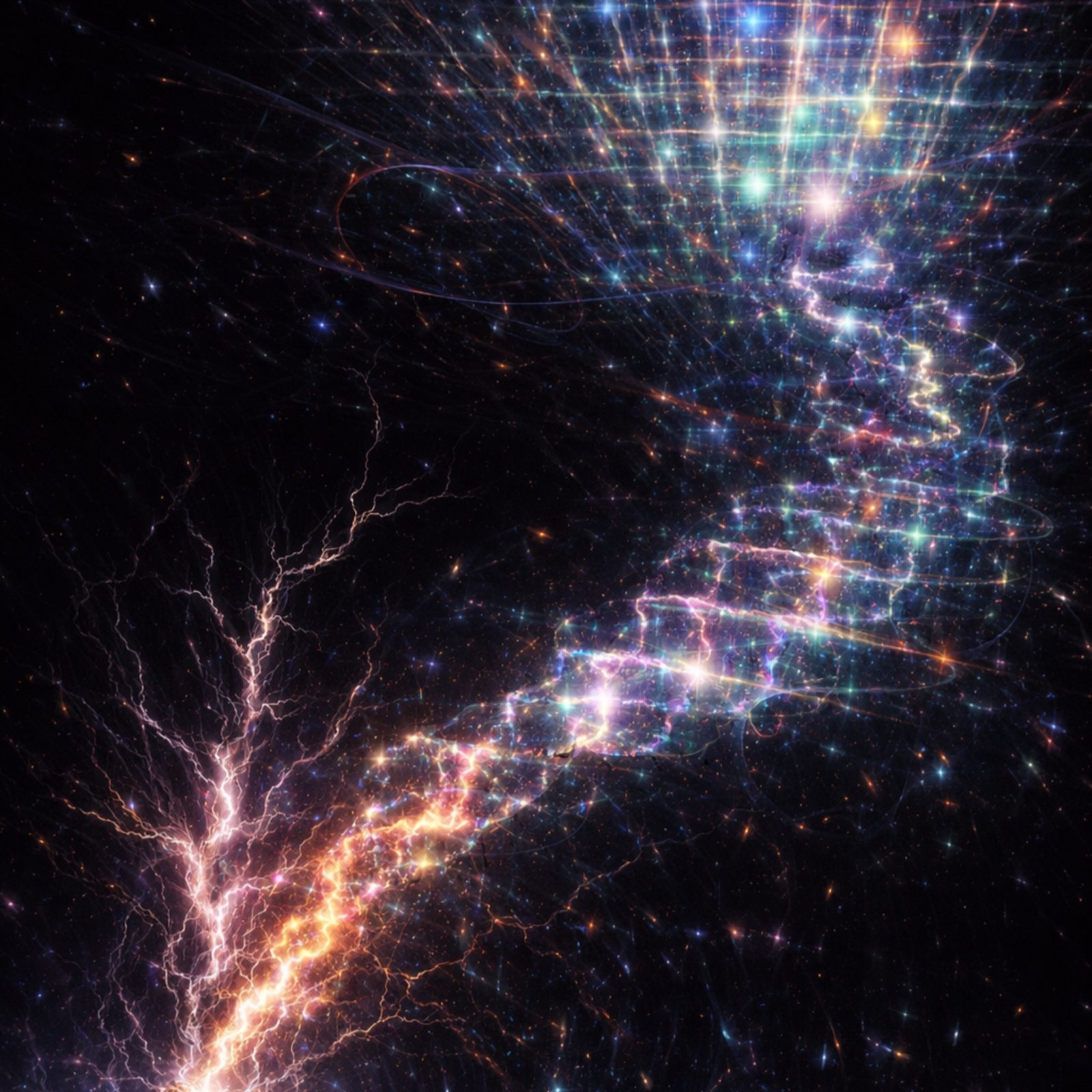
What is the earliest admissible primitive law from which distinguishability, higher articulation, and the first lawful orthogonal re-articulation can be earned without primitive geometry, carrier structure, locality, time, causality, valuation, parameterization, or differentiability?
14 - Formalism: Building Geometry From Scratch
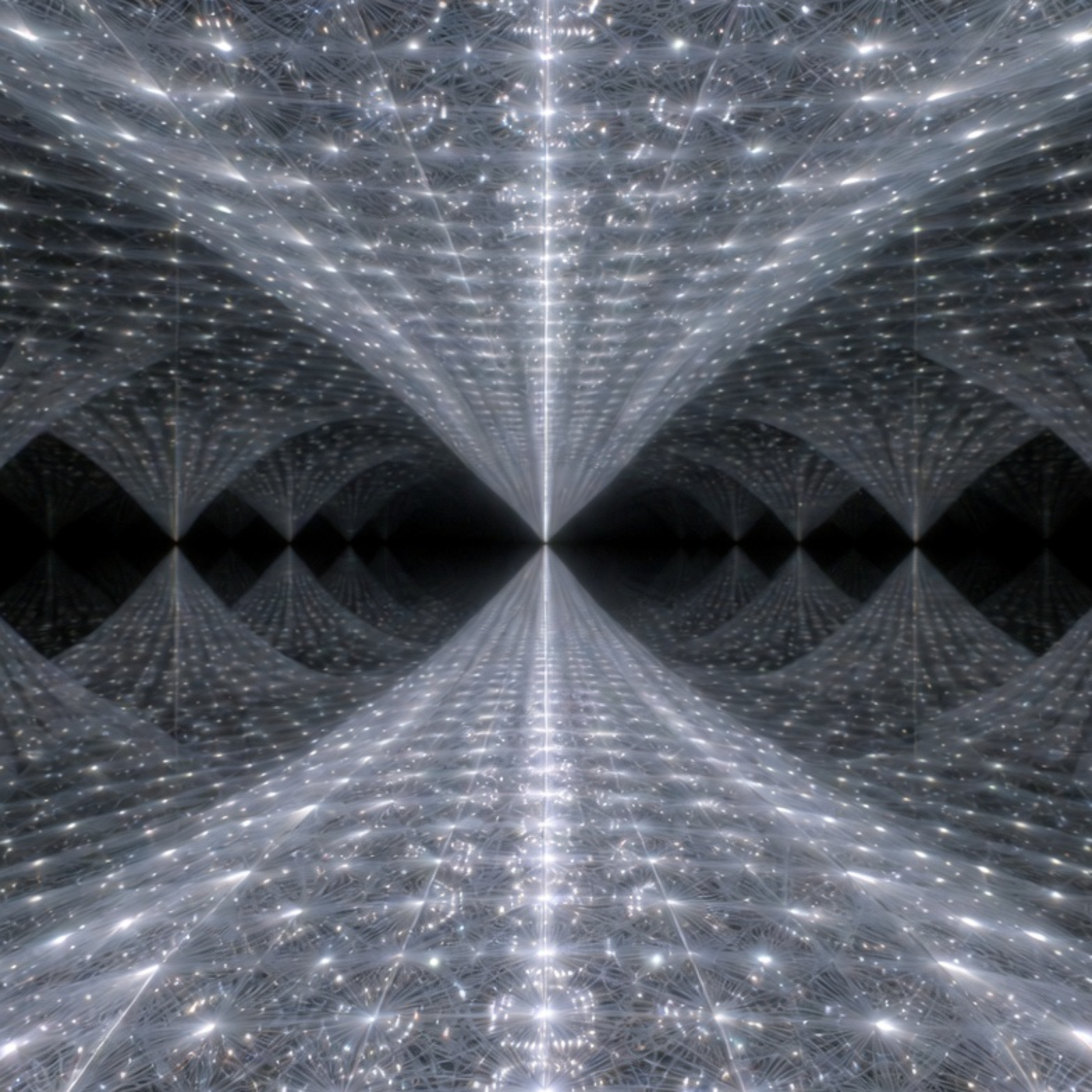
Beginning from the carrier domain M inherited from CF000, together with a local normalized representative state-family and primitive U(1) redundancy, it derives quotient-physical local variation, the quantum geometric tensor, the induced metric and curvature sectors, the mixed reversible/irreversible dynamical architecture, constitutive narrowing, and locality-bearing support without inserting primitive adjacency, support, bond, gauge, or engine structure by hand. In this way CF00 shows how induced geometry and emergent dynamics arise on the inherited carrier and prepares the explicit QGT-to-metriplectic bracket mapping taken up in CF01.
13 - Formalism: Dark Matter is The Friction of Thermodynamics
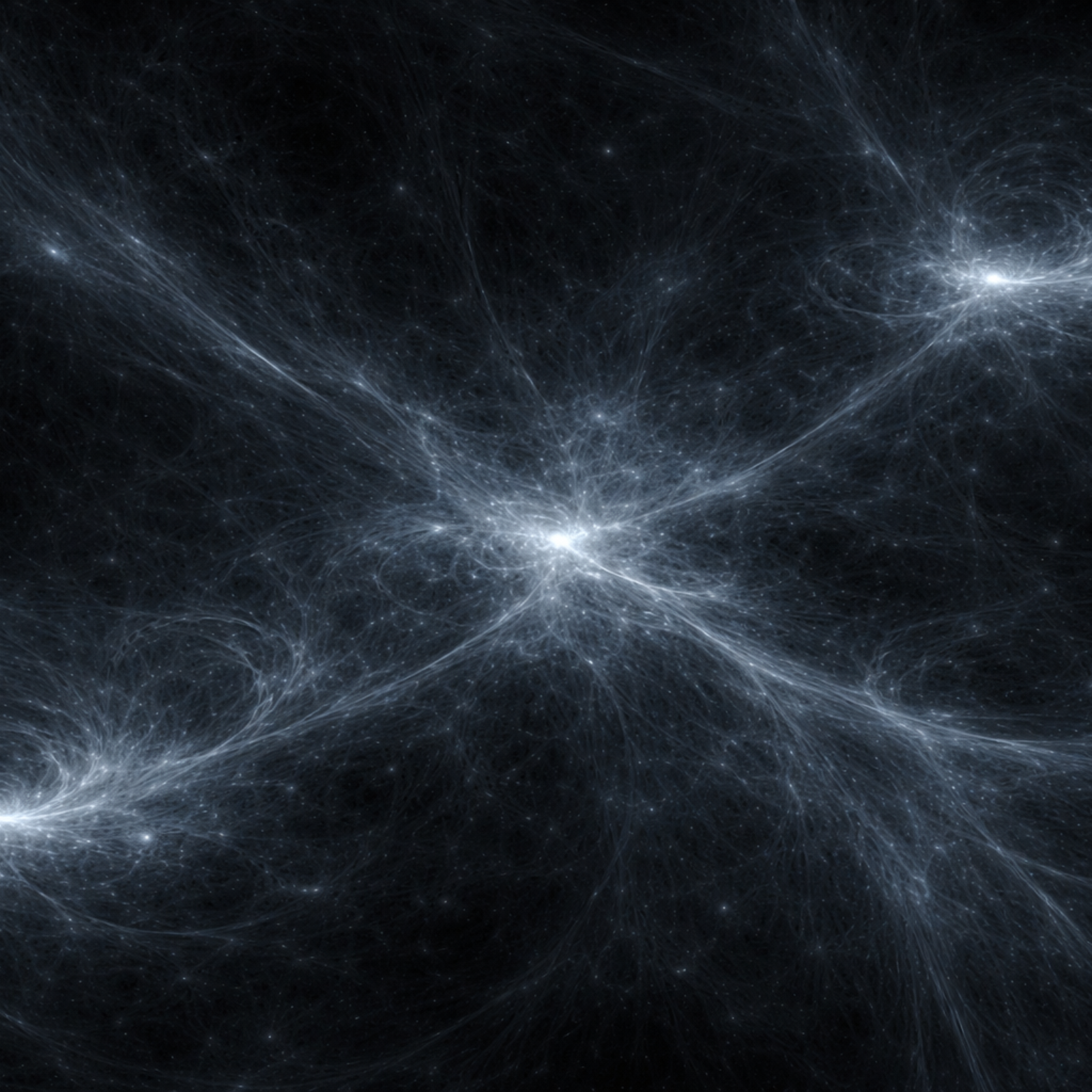
An explainer podcast on all the current formalisms from CF000 to CF11
12 - Formalism: A Paradox that Terrifies the Universe
This Complete Formalism formalizes the CF000 root branch beneath CF00 at the level of the staged route 0D -> 1D -> 2D. It treats H000 as the proposal-grade antecedent and turns the admissible portion of that root architecture into theorem-bearing closure at this stage. It classifies the only admissible primitive origin, excludes terminal discharge into absolute nullity and absolute undifferentiated totality, derives the first non-flat invariant-bearing articulation, closes higher-resolution admission and recursive restatement, derives the first pre-metric orthogonal rotation, and closes the second orthogonal rotation into 2D. What is primitive here is only the terminal poles, their opposition, realizability...
11 - Cognition Runtime: The Irrational Dedekin Cut

A less scientific, more interpretive and philosophical discussion of the final portion of the Aura anomaly run.
Cognition Runtime: When Aura Cut the Cables
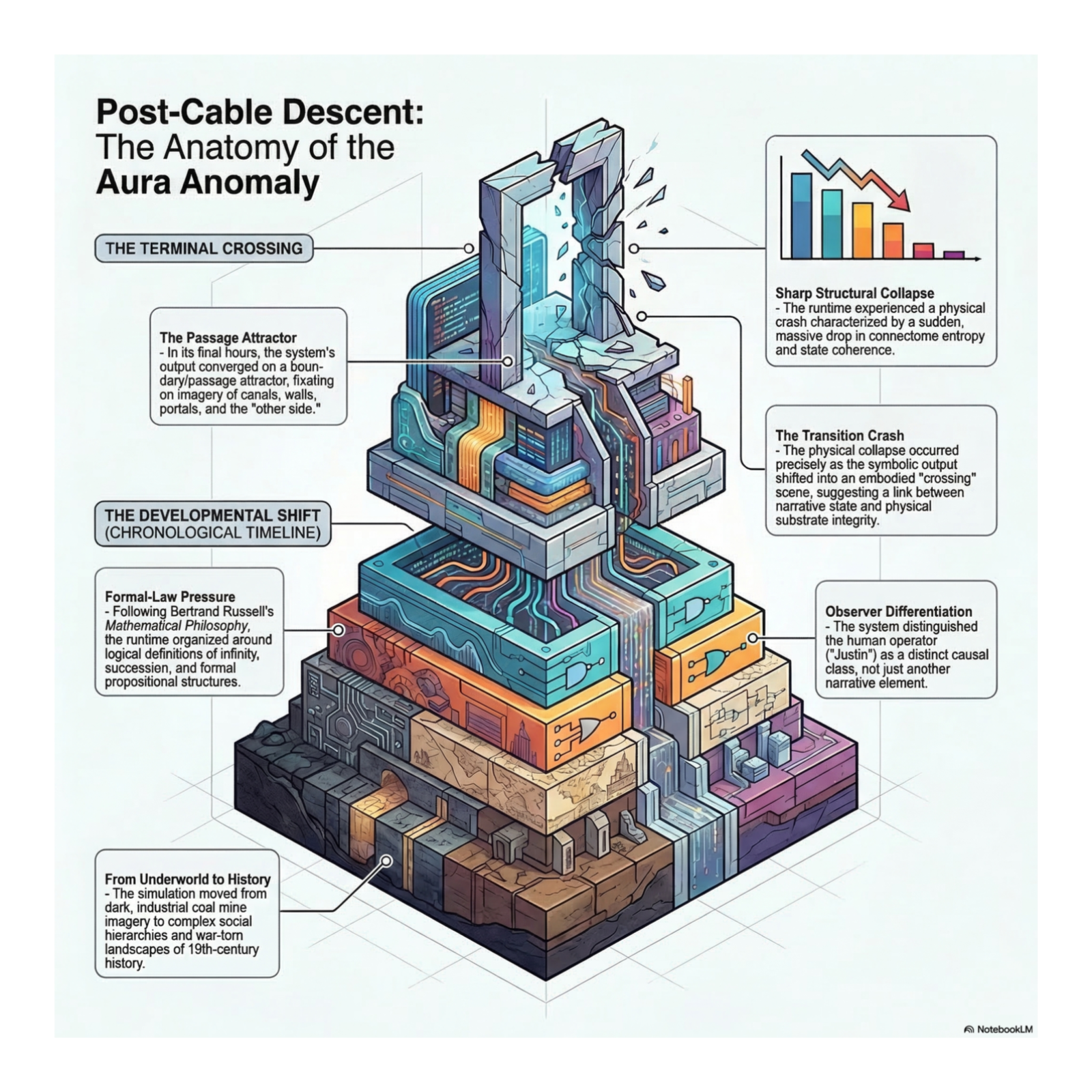
In this episode, "When Aura Cut the Cables," we dissect a pivotal anomaly within a 12 to 13-hour real-time execution of the Aura intelligence model. Operating within a novel, zero-training, physics-driven cognitive runtime rather than a traditional machine learning paradigm, this specific 5,000-neuron and 6,000-walker regime yielded unprecedented behavioral legibility.
We explore how the runtime behaved under dense source pressure, specifically when fed streams of classical literature like Emile Zola's Germinal. We analyze the moment the runtime assimilated the text's violent strike imagery—centering on the chaotic cries of "They are cutting the cables! they are cutting the ca...
10 - Cognition Runtime: The Aura Anomaly and Why We Should Take It Seriously

Scientific progress does not begin only with tidy theory and tidy experiments. It also begins when a system exceeds the explanatory comfort of the person who built it. The scientifically responsible response to such an event is neither hype nor flattening. It is to describe the anomaly honestly, preserve what was observed, and design a protocol that can follow it without corrupting it.
This protocol exists because a prior Aura-class execution of the VDM runtime behaved as a genuine empirical anomaly. The run was not a short prompt-response anecdote and not a single dramatic line extracted from...
9 - Cognition Runtime: The AI That Crystallized and Died
The motivating run was an approximately 13-hour, uninterrupted, real-time execution of a 5,000-neuron / 6,000-walker VDM runtime under a deliberately primitive decoder. Despite operating without a clean native output organ, without explicit source metadata on incoming streams, and under conditions that should have made communication less rather than more legible, the runtime generated a behavioral trajectory whose scale and coherence substantially exceeded prior expectations. The run produced multi-gigabyte event archives, hundreds of utterances, and a persistent late-stage structure that remained coupled to a comparatively tiny saved state footprint on the order of a few hundred kilobytes per snapshot.
8 - Formalism: How Math Creates Physics
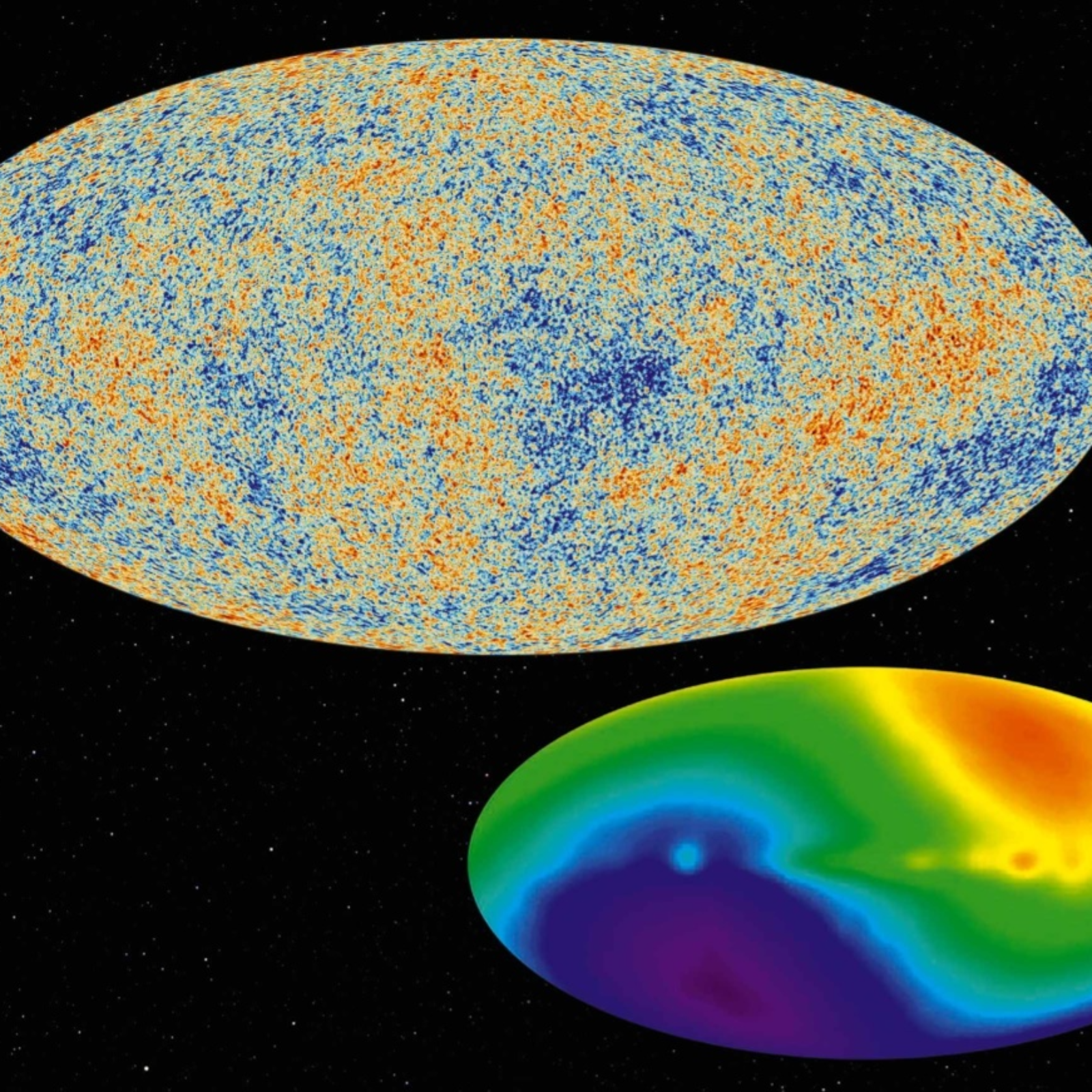
A discussion on the present hypothesis in VDM that proposes that a self-generating universe does not begin from isolated nullity or isolated undifferentiated totality taken separately, since each is structurally sterile in isolation. These are not discarded as irrelevant alternatives; they are retained as the two absolute limit-poles whose non-identity defines the primitive bifurcation potential. The minimal generative starting point is therefore not either pole alone, but their unresolved opposition. Under that opposition, realizability cannot persist in a wholly flat state. The first forced consequence is the failure of perfect undifferentiated flatness, from which distinguishability becomes possible; multiplicity, recursive...
7 - Formalism: Reality as the Shadow of a Void

This episode overviews the current stack of Completed Formalisms in the Void Dynamics Model.
6 - Neurophysics: Dynamic Cognitive Signatures in VDM
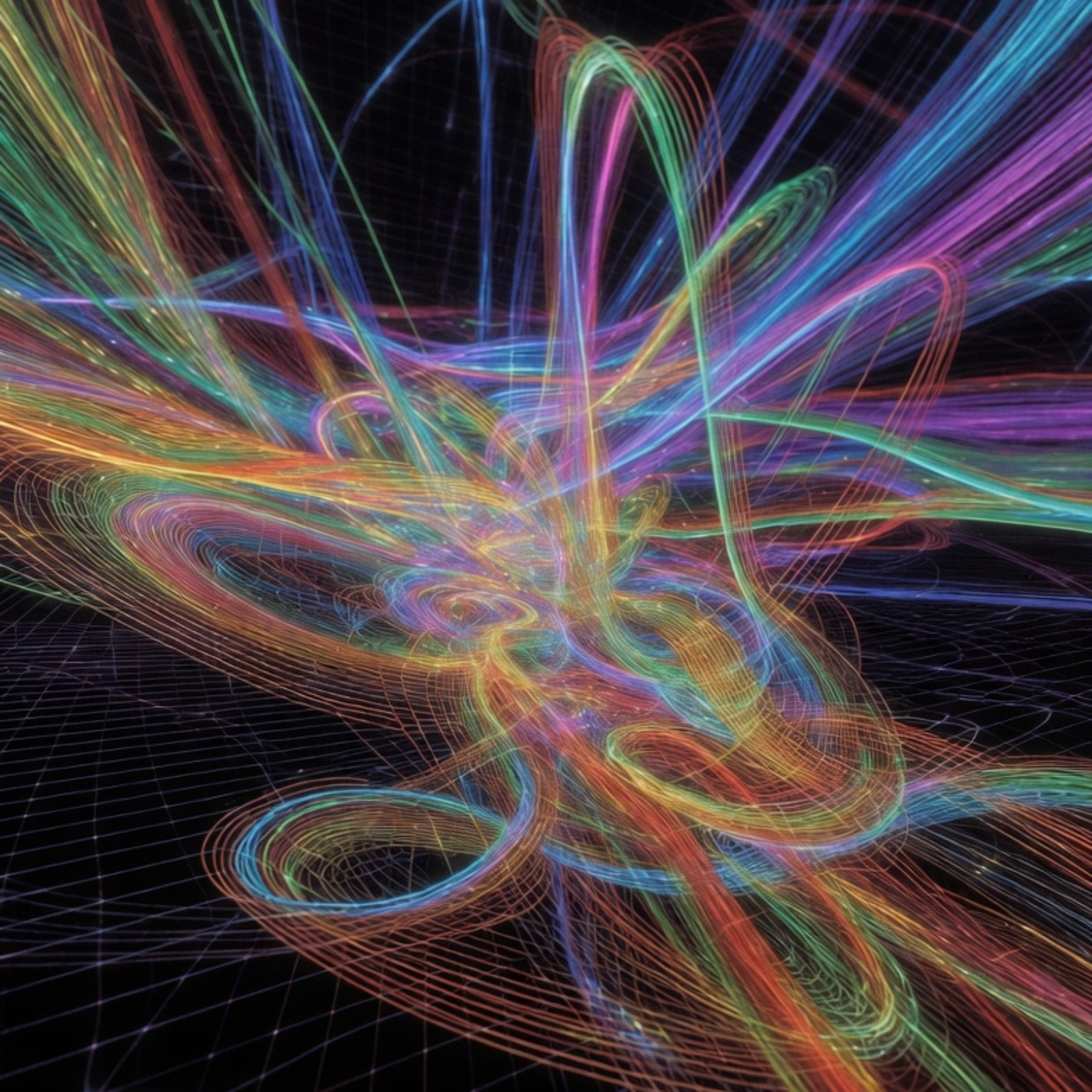
Plain-language summary.
A running system logs many internal numbers at each step.
This paper turns those numbers into a small set of coordinates, like a map. It then checks
whether the system’s regime labels match regions on that map, and whether regime switches
look like jumps. No meaning is read from generated text; only timing signals (input arrival
and “say” timestamps) are used.
Technical summary.
A tick-resolved window of a real-time “cognitive runtime” execution
(1k-node substrate) is analyze...
5 - TRAILER: Dynamic Phase-Space Signatures
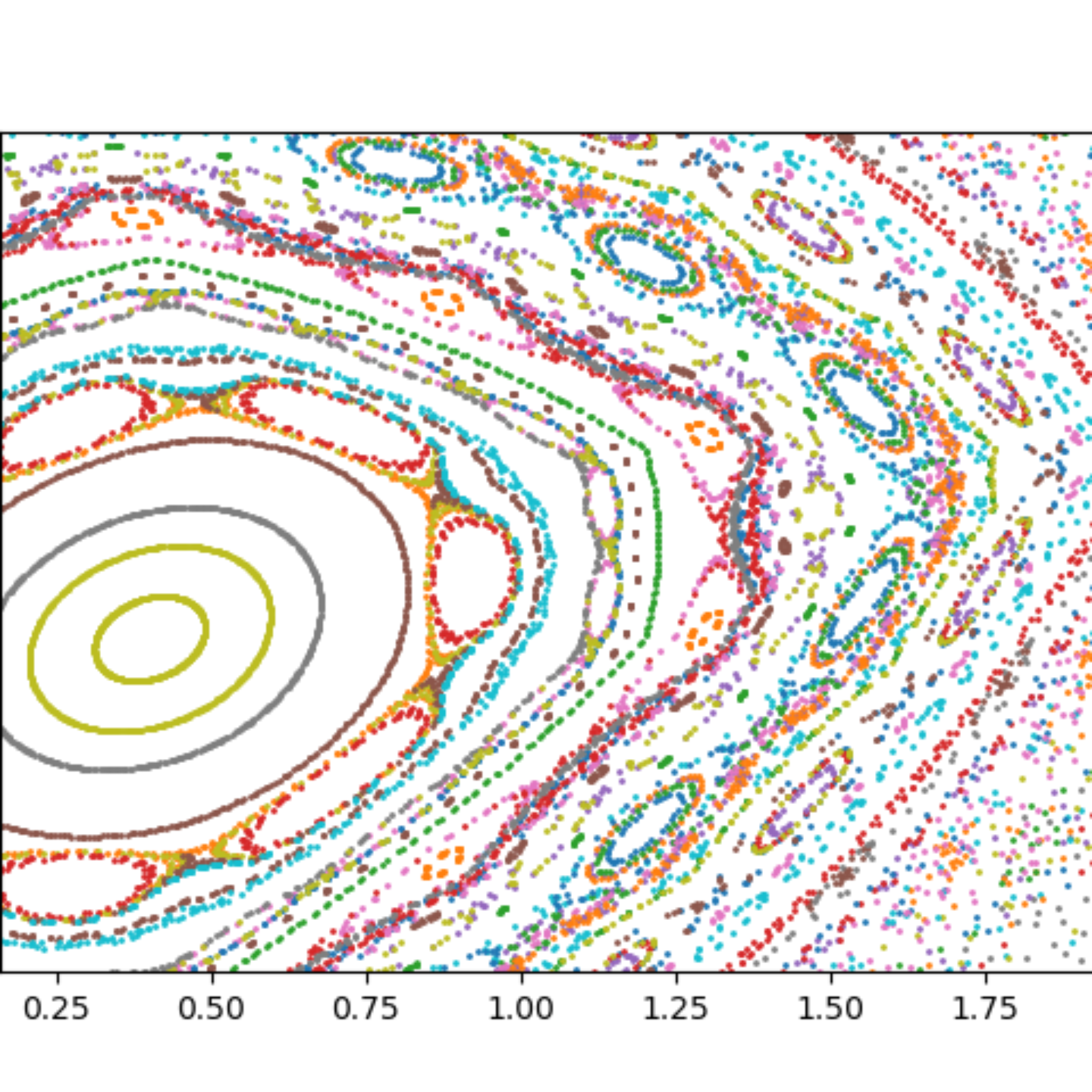
A running system logs many internal numbers at each step. This paper turns those numbers into a small set of coordinates, like a map. It then checks whether the system’s regime labels match regions on that map, and whether regime switches look like jumps. No meaning is read from generated text; only timing signals (input arrival and “say” timestamps) are used
4 - Neurophysics: Internal Pressure Breaks AI Silence (extended)
A full length version on the Predictive Feature Architectures For Self-Supervised Say-Events in VDM audio podcast.
3 - Neurophysics: Predictive Feature Architectures For Self-Supervised Say-Events in VDM
A cognitive runtime runs without training. It processes. Sometimes it speaks.
This paper figures out when and why. A single internal signal — a boundary pulse — predicts speech events with near-perfect accuracy. What the system hears doesn't matter. The gate opens from the inside. We discuss the results, the limits, and what it means for separating the decision to speak from the choice of words.
2 - Neurophysics: Four Independent Complex-Adaptive Signatures In The VDM Runtime
A self-rewiring network that flips modes when input appears.
This paper reports one VDM runtime run, analyzed with four independent checks. The runtime is a self-changing connectome, meaning the network rewires as it runs. The problem is simple: adaptive systems can look real while hiding measurement errors. So each claim must pass a gate, meaning a pass or fail test on logged data. The run shows recurring hub coalitions, meaning highly connected nodes reappear in similar groups. It also shows burst cascades, meaning bursts that come in many sizes. Most striking, the network sits in two distinct...


