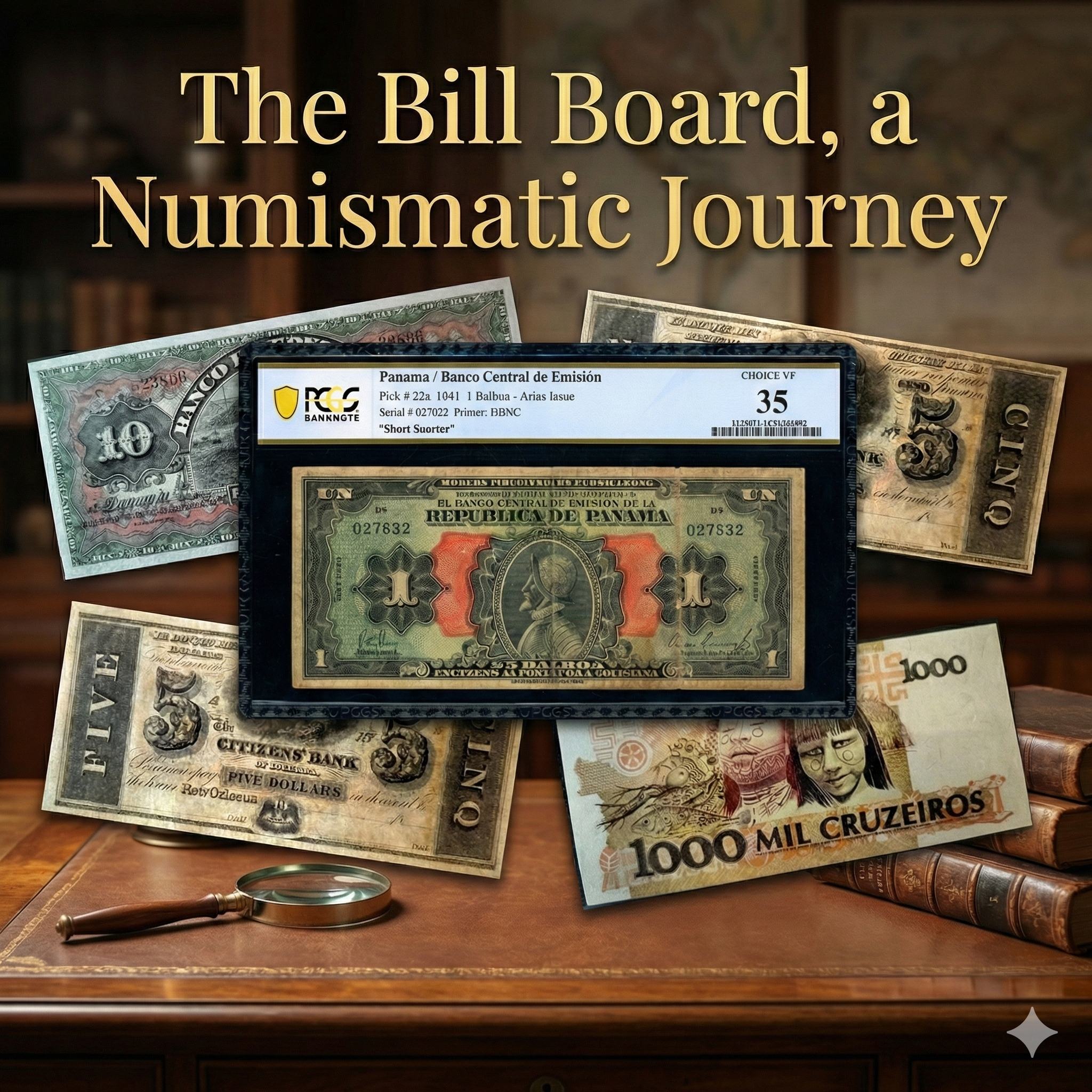
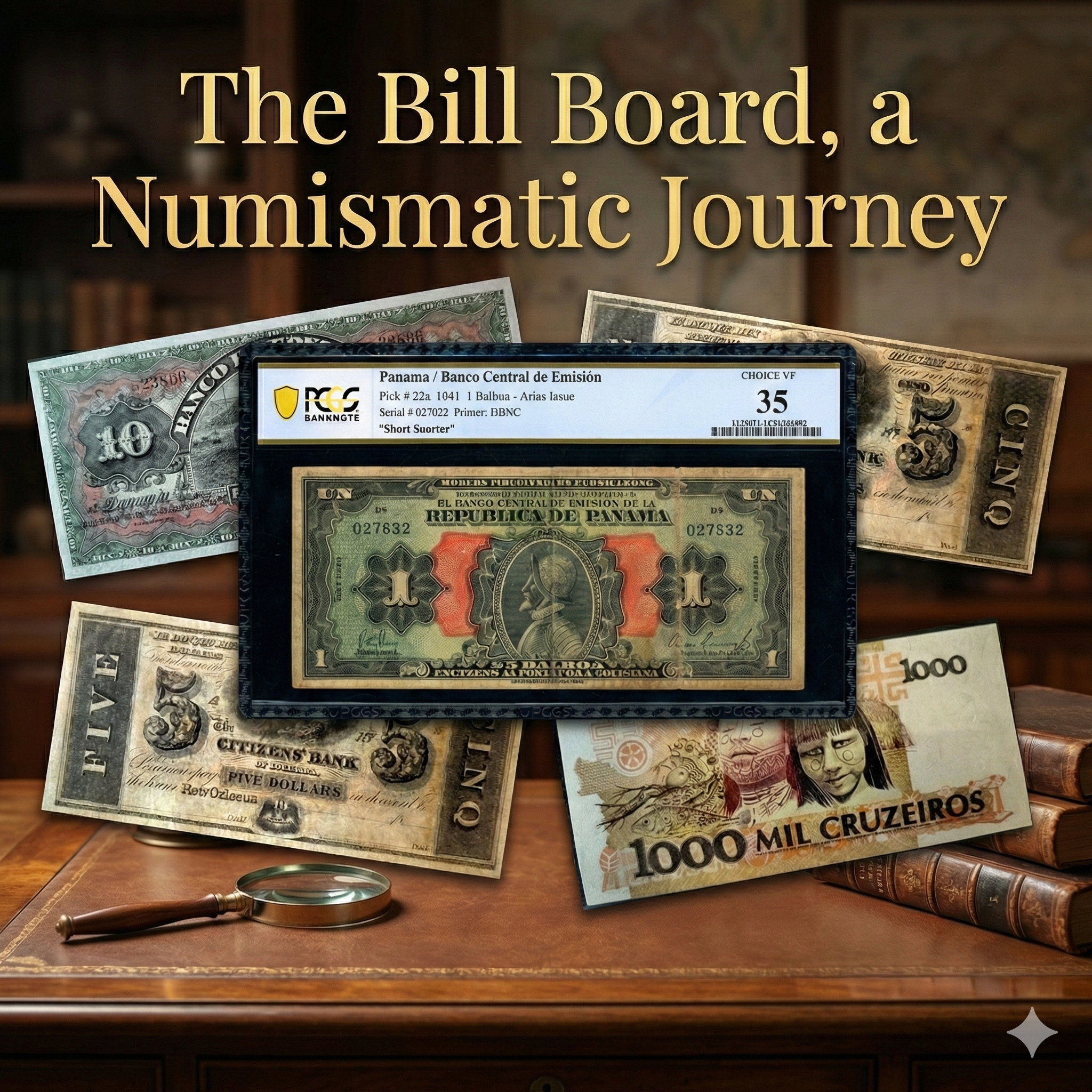
The Bill Board, a Numismatic Journey with Banknotes
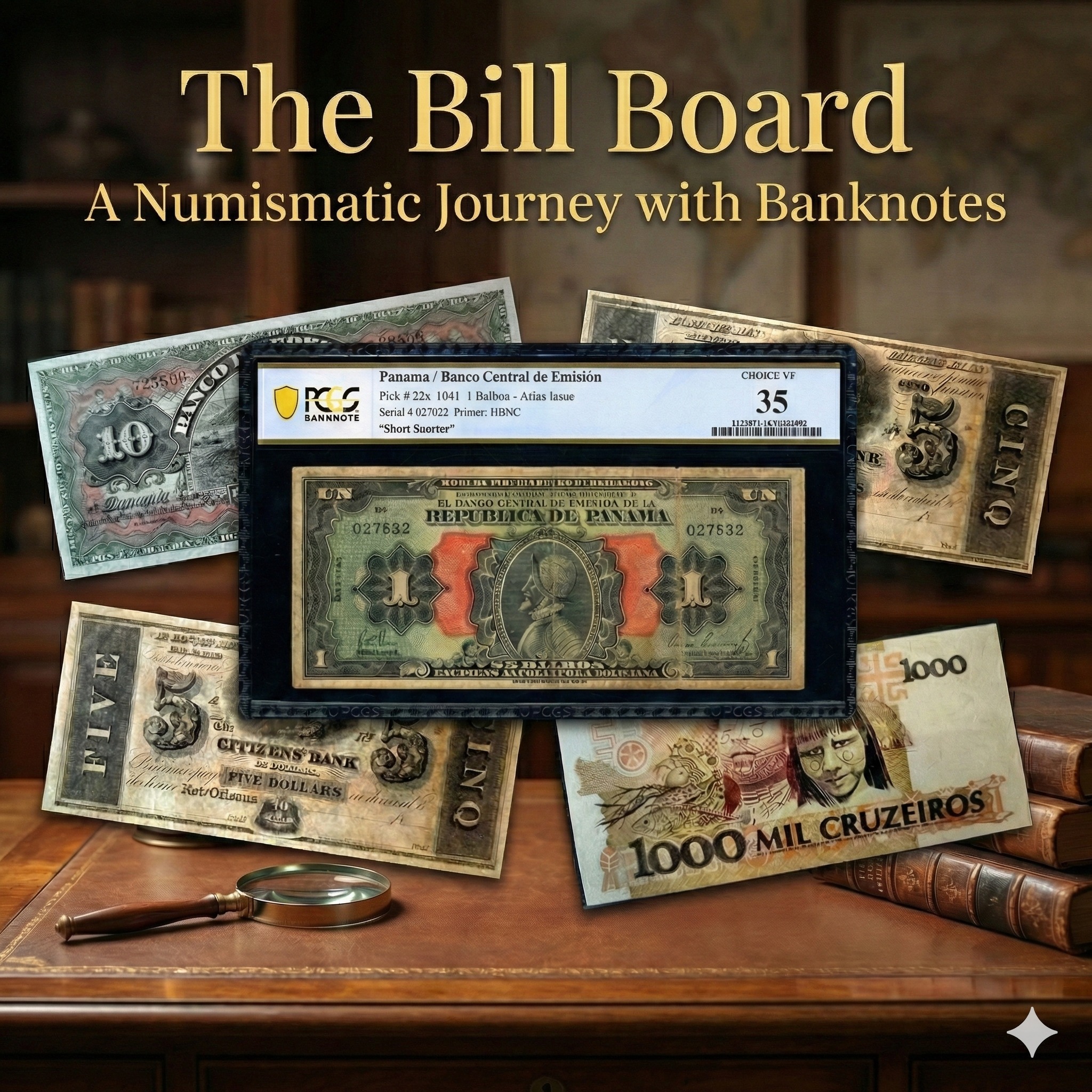
We will explore a wide number of topics, all dealing with banknotes. For individual banknotes, we will explore the history around the issuance of the banknote, including the series it belongs to, the images on the obverse and reverse, and their history, social, and numismatic implications. We will review all the key numismatic information, including the security details, the composition, serial and other identification numbers, and the latest market information. The goal is to appreciate what each banknote means and represents, not just the collecting value.
Mexico: The Power and the Money The Mexican Financial System 1876 to 1932
The Power and the Money The Mexican Financial System 1876 to 1932
Edited by Stephen Haber and David Brady
David Brady and Mathew D. McCubbins, Party, Process, and Political
Change in Congress
Jeffrey Bortz and Stephen Haber, The Mexican Economy, 1870-1930
Edward Beatty, Institutions and Investment
Jeremy Baskes, Indians, Merchants, and Markets
Mexico: El Banco Mercantil de Yucatán 10 Pesos (1904) Banknote Report
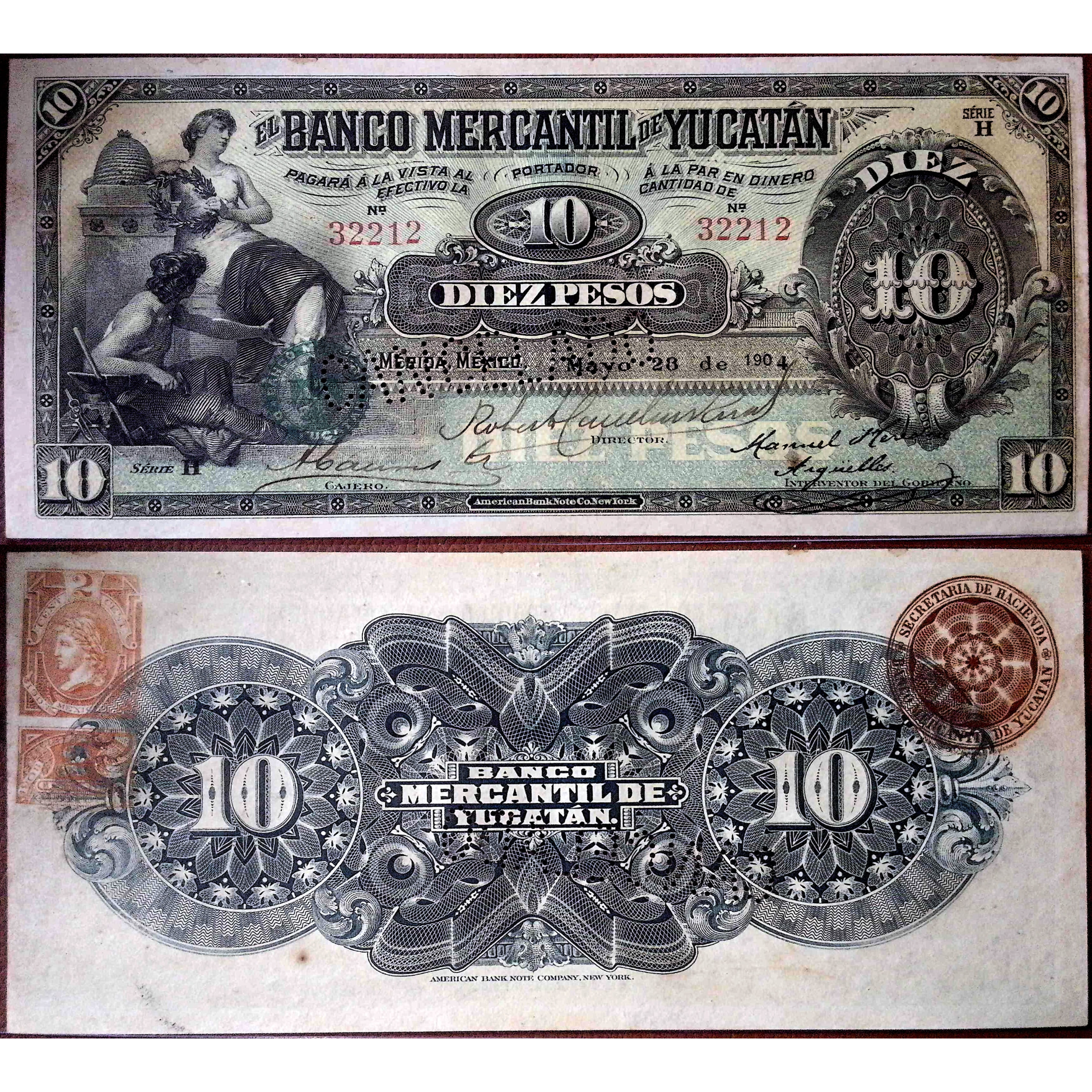
The State of Yucatan was distinct in the Mexican republic due to its immense concentrated wealth, making it one of the few regions capable of supporting multiple banks of issue simultaneously. The banking landscape was dominated by two primary, competing institutions: El Banco Yucateco and El Banco Mercantil de Yucatán.
El Banco Mercantil de Yucatán was established by a coalition of traditional Yucatecan businessmen and landowners. The financial backbone of this institution was the powerful regional trading house, Eusebio Escalante é Hijo. The founding board of directors was headed by Eulogio Duarte and included prominent regional fig...
Mexico: A Discussion of the Banking Reform of 1908
Resena de la Reforma Bancaria de 1908 Toribio Esquival Obregon y Joaquin de Monica Blanco
Mexico: José Yves Limantour and the Banking Dispute over Monetary Circulation (1897-1908) by Iliana Zárate
Jose Yves Limantour y la Disputa Bancaria por la Circulacion Monetaria (1897-1908) Iliana Zarate
José Yves Limantour: Served as Mexico's Secretary of Finance from 1893 to 1911 during the Porfiriato.Disputa Bancaria (Banking Dispute): Refers to the regulatory conflicts between the federal government and state banks over the right to issue banknotes, culminating in the 1905 monetary reform that established the gold standard in Mexico.The History of the American Banknote Company by William Griffiths
The book has illustrations, better source, I wanted to take a listen before I dive in
Mexico: República Mexicana Gobierno Constitutionalista 50 Pesos "Infalsificable" Banknote (1915)
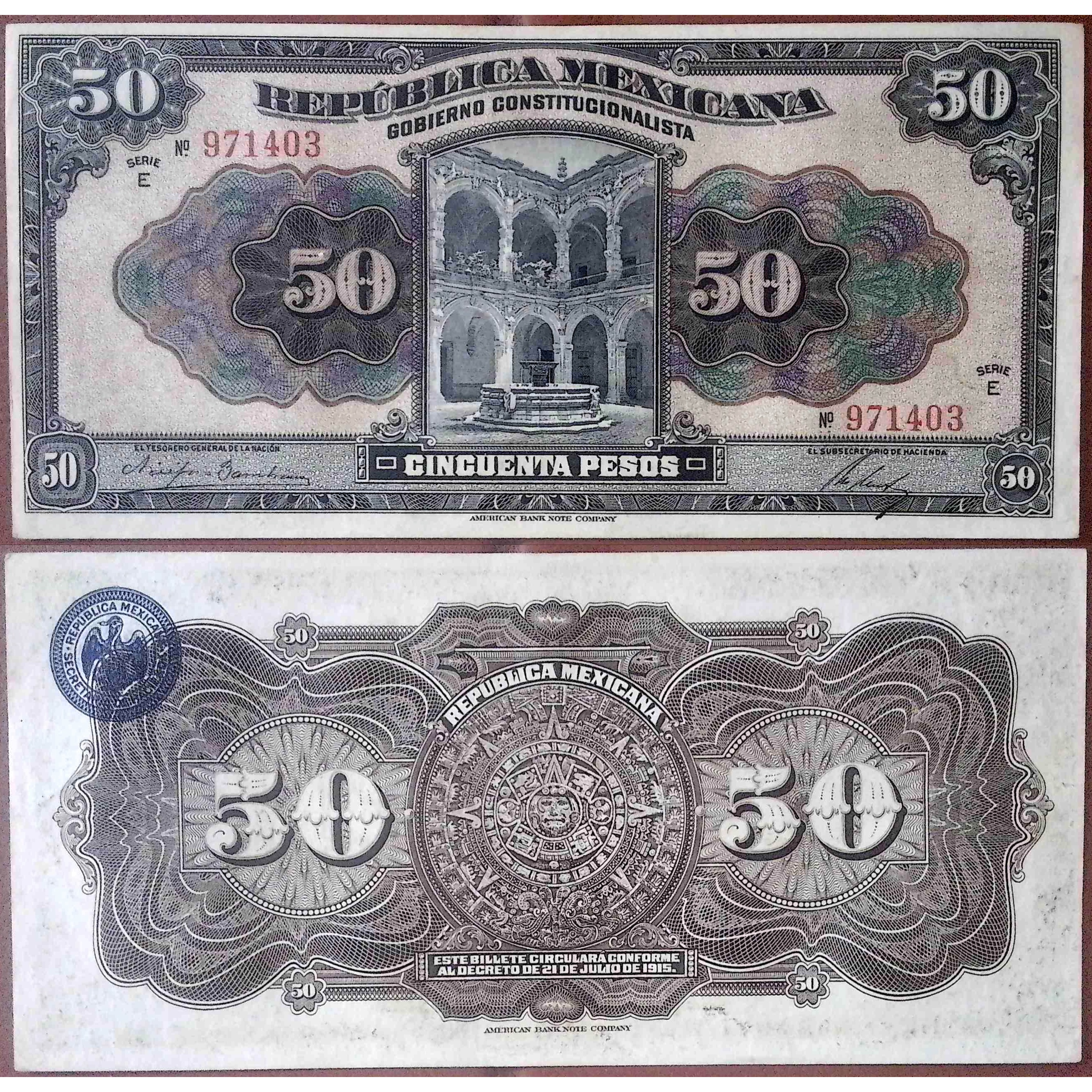
The 50 Pesos banknote of the Gobierno Constitucionalista, authorized under the decree of July 21, 1915, emerged as a direct result of Venustiano Carranza's consolidation of power during the Mexican Revolution1. Carranza's return to Mexico City and his establishment of a unified government were made possible by a series of decisive military victories engineered by General Álvaro Obregón. In the spring and summer of 1915, Obregón's Constitutionalist forces decimated Pancho Villa's División del Norte in the Bajío region, triumphing in the massive Battles of Celaya (April 1915), the protracted Battle of León or Trinidad (where Obregón notably lost his rig...
Mexico: Ejército Constitucionalista de México 10 Pesos Banknote (1914)
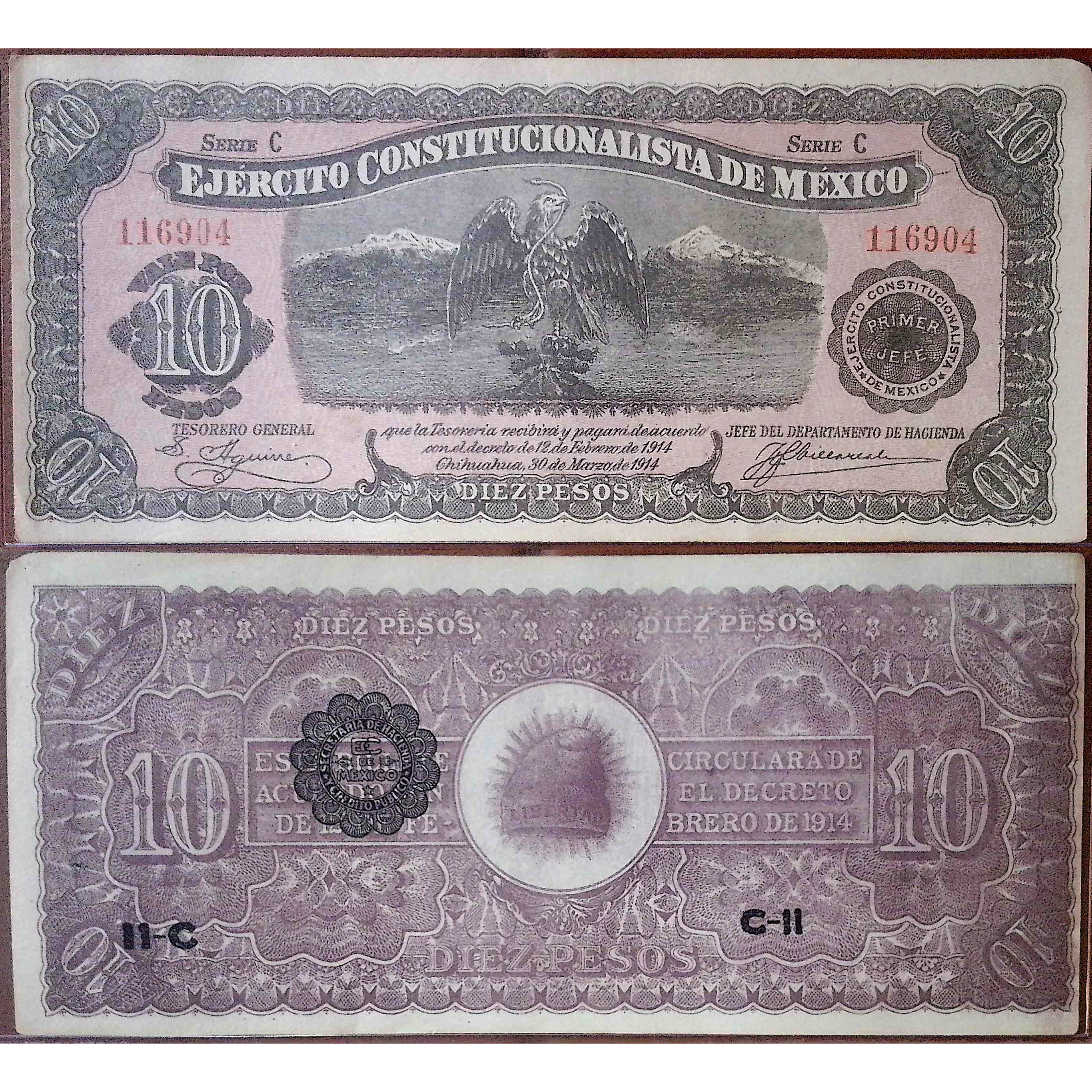
The issuance of the 1914 10 Pesos banknote by the Ejército Constitucionalista de México represents a critical intersection of military logistics, sovereign financial policy, and economic survival during the Mexican Revolution1.
To fund a massive, multi-front armed rebellion capable of defeating the entrenched federal army, Carranza faced an insurmountable logistical challenge. Financing a war required vast amounts of capital to procure food, clothing, livestock, and most importantly, arms and ammunition from international suppliers across the United States border. Requisitioning these supplies directly from the civilian populace through force or confiscation was politically untenable, as such actions would in...
Mexico: Comisión Reguladora del Mercado de Henequén 20 Pesos Banknote (1914)
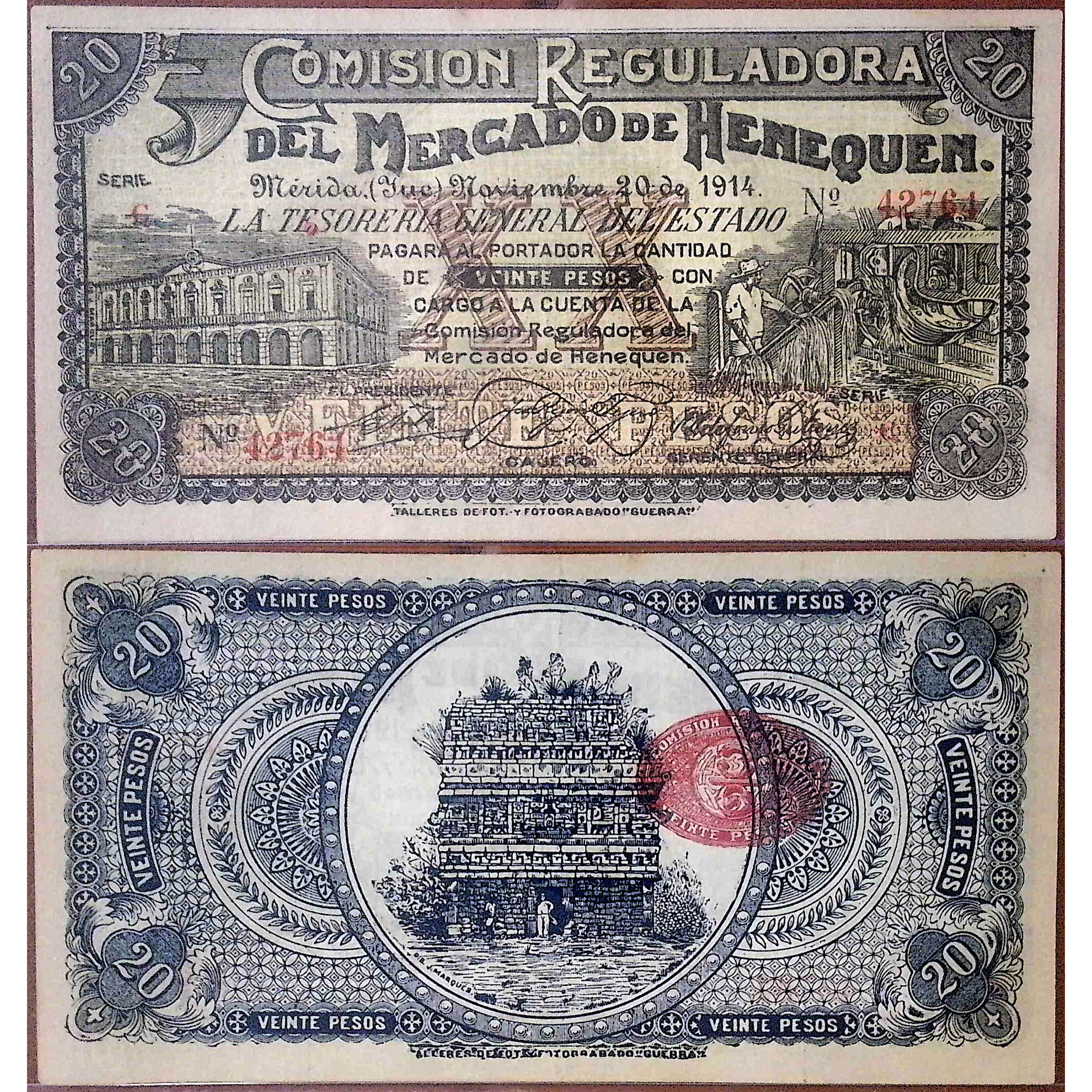
The 20 Pesos banknote issued by the Comisión Reguladora del Mercado de Henequén, bearing the printed date of November 20, 1914, represents a profound intersection of agricultural economics, military logistics, and regional sovereignty during the Mexican Revolution (1910–1920). To understand the issuance of this fiat currency, one must examine the collapse of the centralized Mexican monetary system. Following the ouster of President Porfirio Díaz and the subsequent assassination of Francisco I. Madero, the nation devolved into a fractured landscape controlled by competing military warlords. The federal banking apparatus ceased to function effectively, and hard metallic currency (gold and silver coinage) vanis...
Mexico: Comisión Reguladora del Mercado de Henequén 100 Pesos Banknote (1915)
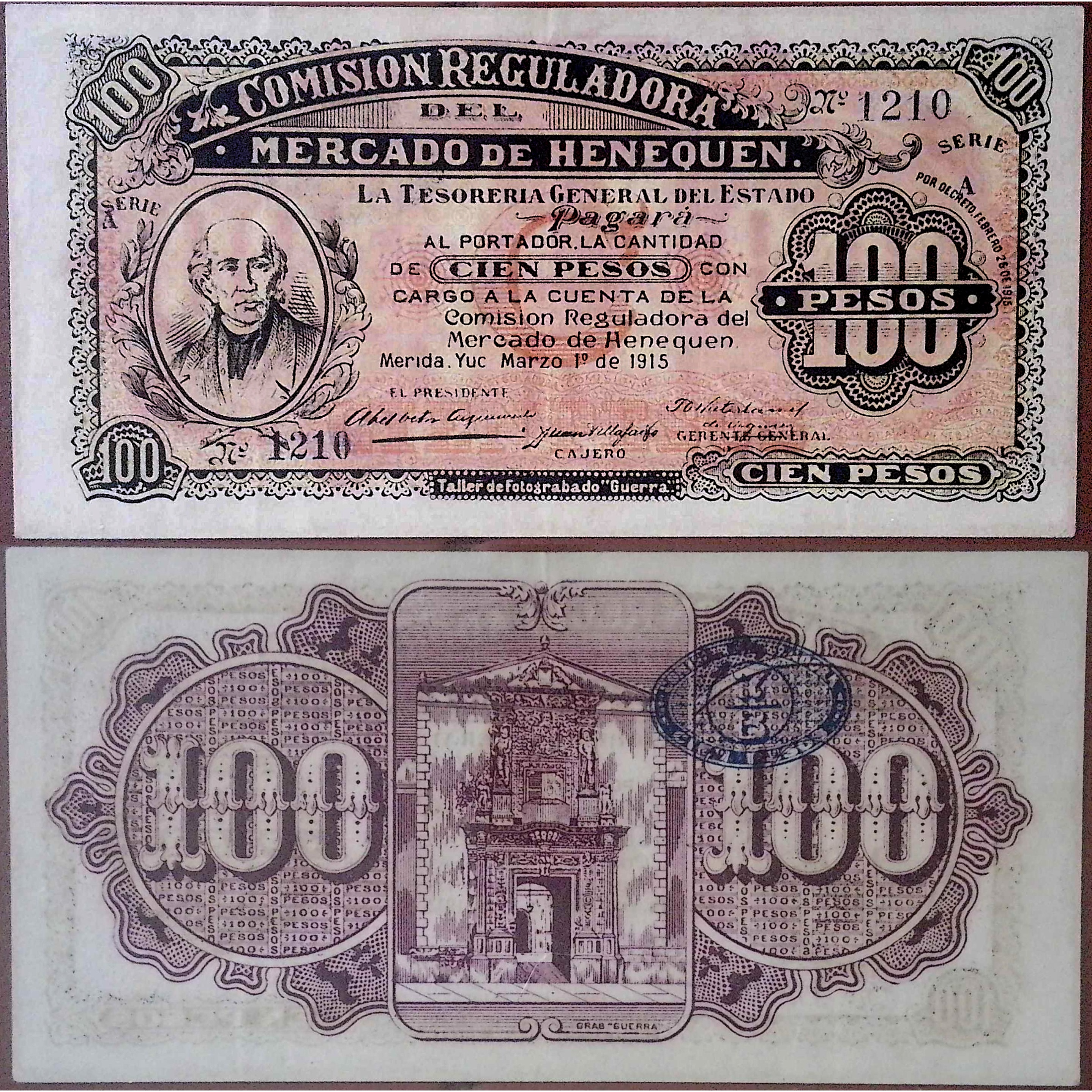
The 1915 100 Pesos banknote issued by the Comisión Reguladora del Mercado de Henequén serves as a significant historical artifact of the Mexican Revolution, representing an emergency monetary measure by the short-lived breakaway administration of Colonel Abel Ortiz Argumedo in Yucatán.
Designed to fund local military resistance against the Constitutionalist forces, the note features a portrait of Miguel Hidalgo y Costilla on the obverse and the architectural facade of the Casa de Montejo on the reverse, symbolizing regional identity and political legitimacy. Because the subsequent administration of General Salvador Alvarado systematically demonetized and destroyed this currency upo...
Mexico: El Banco del Estado de Chihuahua 5 Pesos Banknote(1914)
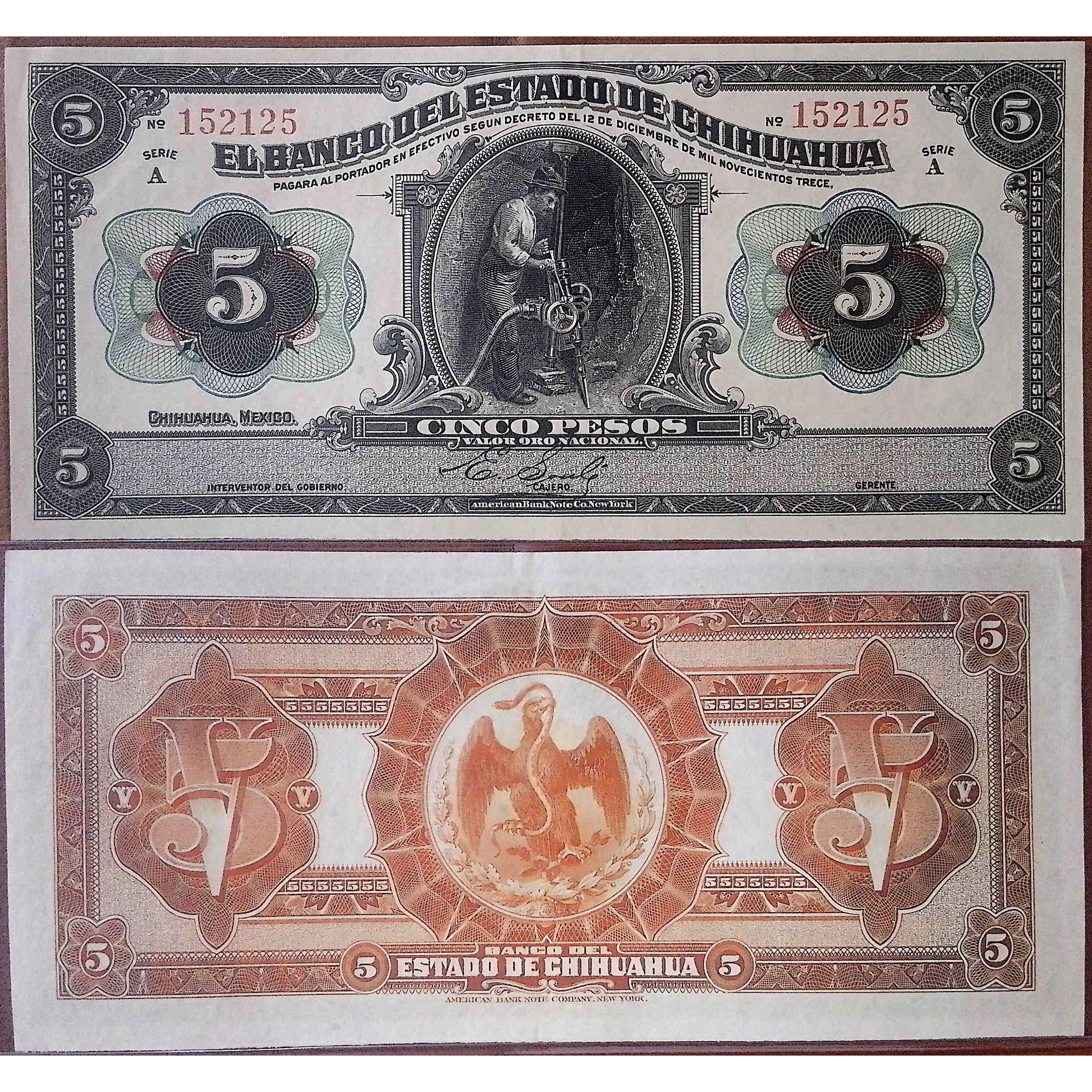
This podcast provides a comprehensive analysis of the 1914 5 Pesos banknote issued by El Banco del Estado de Chihuahua, an institution established by General Pancho Villa to stabilize the regional economy during the Mexican Revolution.
Although commissioned through the American Bank Note Company in New York to project fiscal legitimacy, the shifting military landscape meant the majority of these high-quality, intaglio-engraved notes remained in vaults, never reaching general circulation. Featuring an obverse vignette of a miner with a pneumatic drill and the Mexican National Arms on the reverse, these notes transitioned from revolutionary currency to a unique numismatic...
Mexico: A Comprehensive History of the Banco de Zacatecas by María Guadalupe Noriega Caldera
This academic work serves as a comprehensive doctoral dissertation that reconstructs the history of the Banco de Zacatecas between 1891 and 1916. The text investigates the transition from informal credit systems, dominated by the Church and merchant-lenders, to the establishment of a modern institutional banking framework under the Porfiriato regime. By utilizing a neoinstitutionalist approach, the author explores how legal reforms, specifically the 1897 Law of Institutions of Credit, shaped the bank’s organizational structure, its issuance of currency, and its administrative strategies.
The study provides a meticulous analysis of the local elite and business networks that controlled the bank, hi...
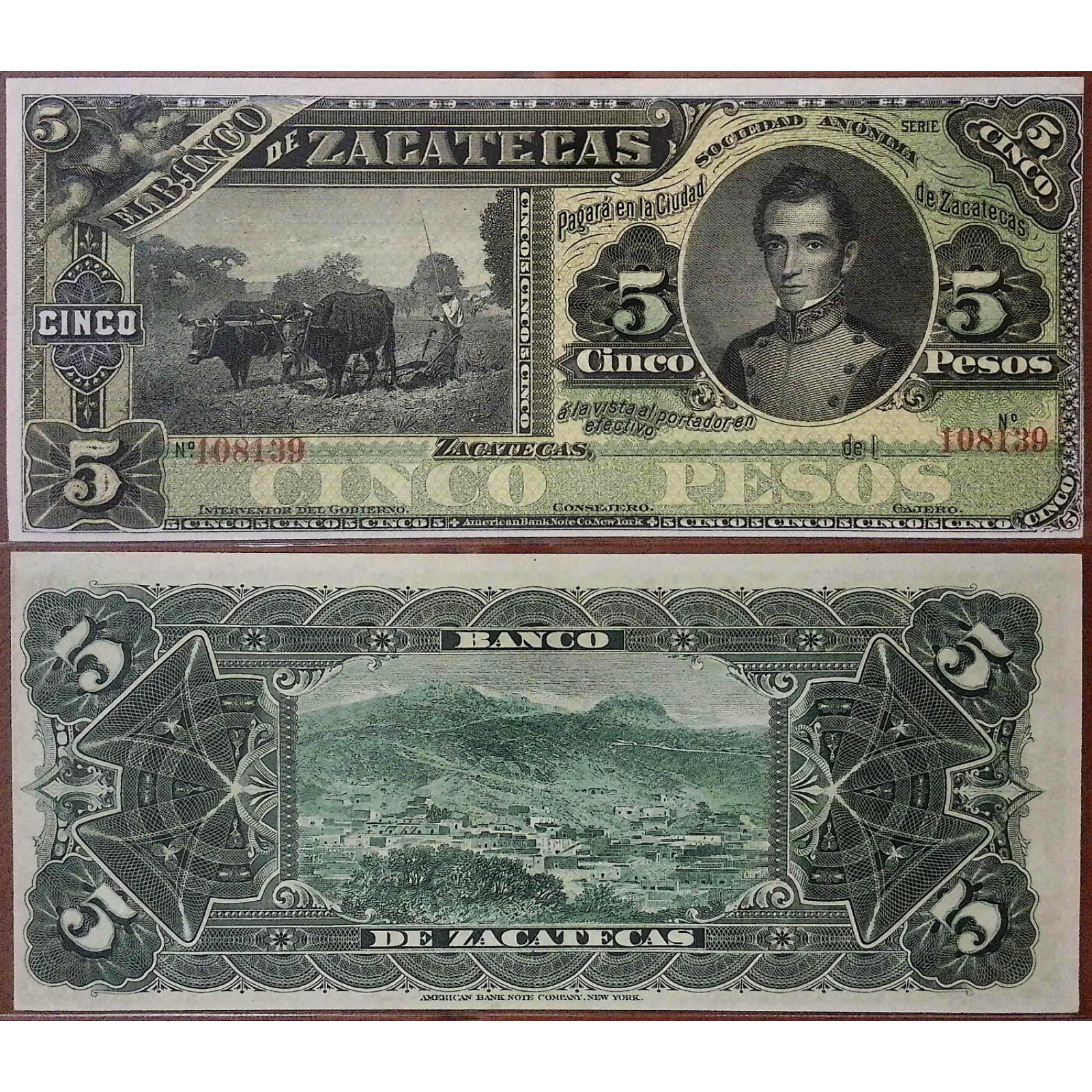
Mexico: El Banco de Zacatecas 5 Pesos Banknote
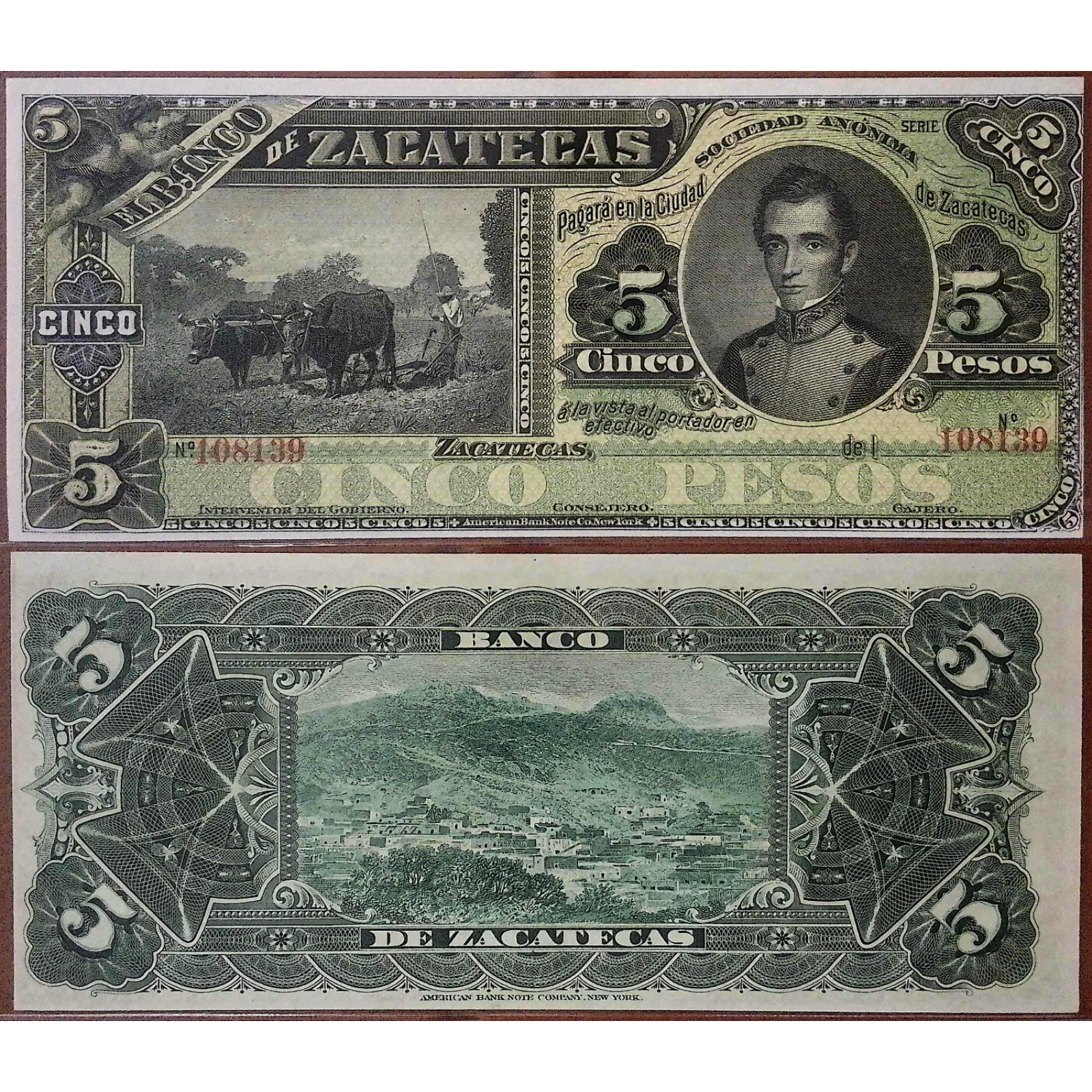
This podcast provides a comprehensive analysis of the El Banco de Zacatecas 5 Pesos banknote (Pick number P-S475r), detailing its historical context as an unissued remainder from a private bank operating during Mexico's Porfiriato era. It explores the institution's history, the economic and political climate surrounding its creation, and the subsequent impact of the Mexican Revolution on local banking. Furthermore, the report includes a technical and artistic examination of the banknote’s design—featuring Francisco García Salinas and the Cerro de la Bufa—as well as an evaluation of its security features, rarity, market valuation, and numismatic significance.
Mexico: El Estado de Chihuahua 50 Pesos Dos Caritas Series (1914)
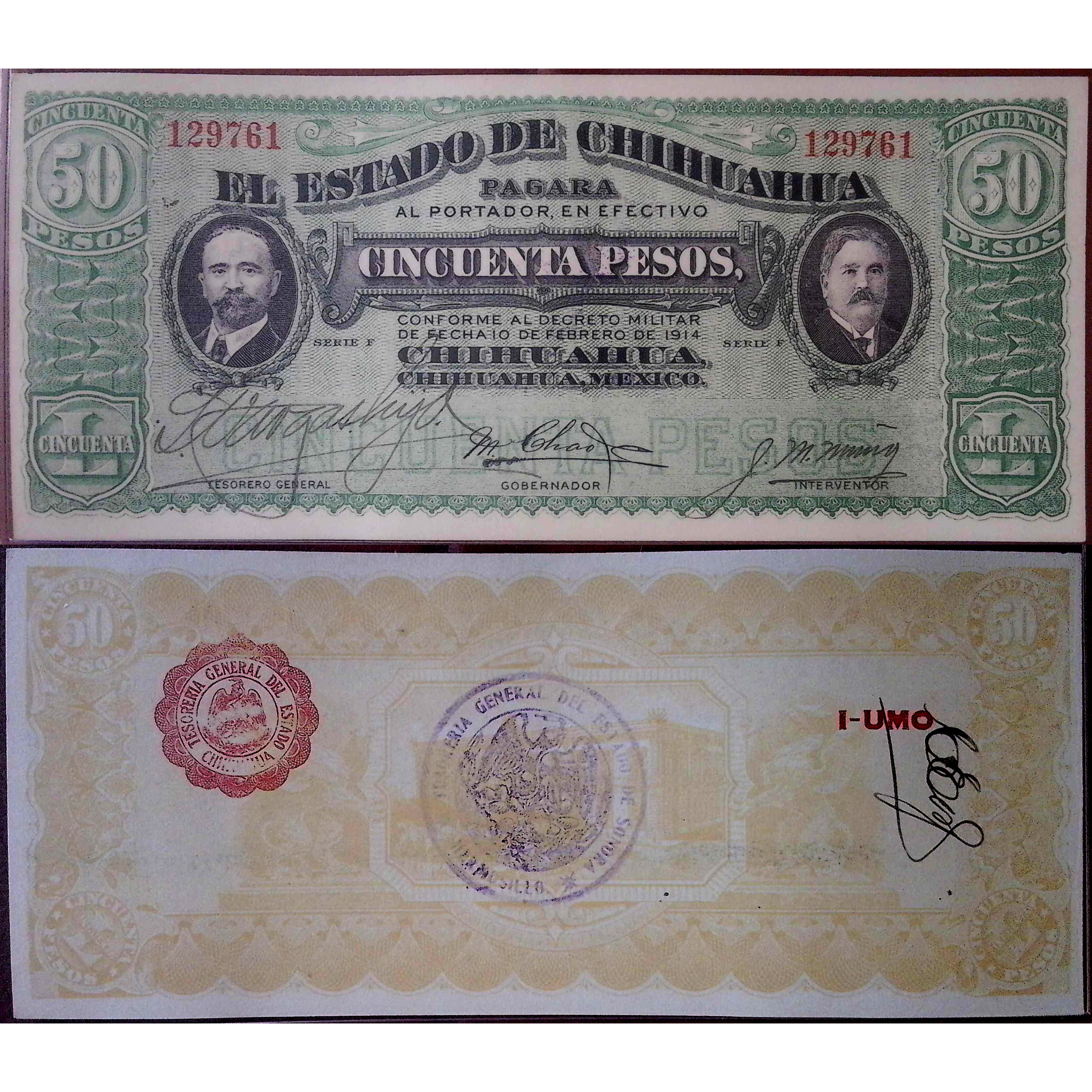
To fund his rapidly expanding military campaigns, purchase munitions from suppliers in the United States, and restore commercial functionality within the vast northern territories he controlled, Pancho Villa required a sovereign currency. Following the capture of Chihuahua City by the División del Norte in late 1913, the revolutionary government seized the assets, properties, and metallic reserves of the state's wealthy elite, utilizing these confiscated estates as the theoretical backing for a new fiat currency
The initial paper money issued by Villa's administration was produced locally and colloquially known as sábanas (bedsheets) due to their unusually large di...
Mexico: La Comision Monetaria (1916-1925)
To finance their respective armies, these regional warlords engaged in the unchecked printing of fiat paper money, military vouchers, and localized state emissions9. The proliferation of these competing, unbacked fiduciary instruments induced extreme hyperinflation, paralyzed interstate commerce, and caused metallic coinage to be entirely hoarded and withdrawn from circulation11. By early 1916, as the Constitutionalist faction under Carranza secured dominant political control, the national economy remained crippled by hundreds of millions of pesos in depreciated and heavily counterfeited revolutionary paper9. In a strategic declaration from Guadalajara in February 1916,
Venustiano Carranza issued a decree on April 3, 1916 (published formally on...
Mexico: Gobierno Provisional de Mexico 2 Pesos Banknote (1916)
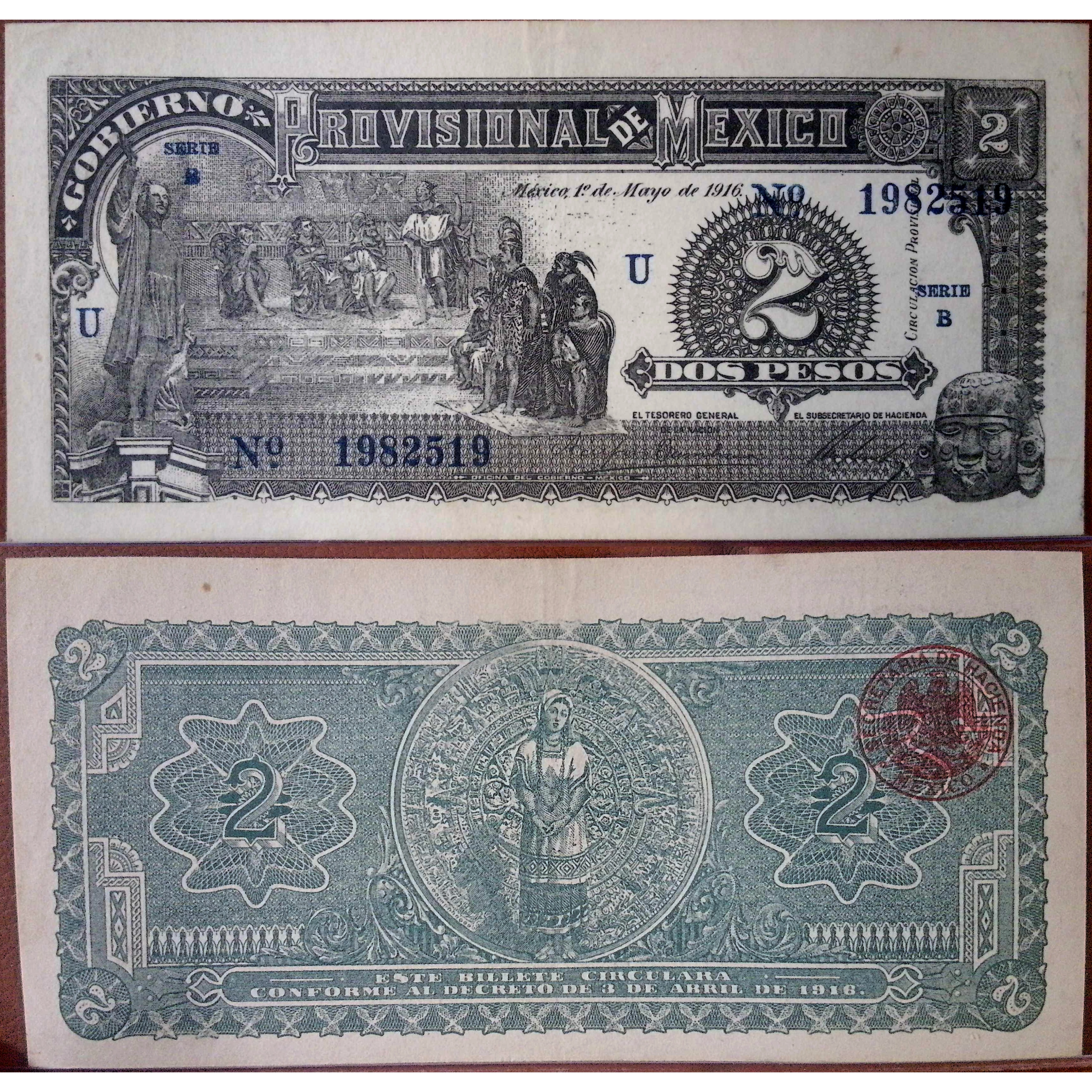
By late 1915, Venustiano Carranza's Constitutionalist faction had achieved military dominance over a majority of the republic. However, his government inherited an economy paralyzed by hyperinflation and a populace deeply distrustful of any paper currency. Recognizing that political legitimacy required monetary stability, the Carranza administration engineered a sweeping financial reform intended to unify the currency and restore public confidence.
First was the decree of July 21, 1915 setting forth the establishment of The Infalsificables (uncounterfeitables) series. Second, to orchestrate this massive macroeconomic transition, Carranza issued a foundational monetary reform decree on April 3, 1916, which established the Comisión Monetaria (Monetary Commission) and s...Mexico: Early policies on non-neutrality of money and confidence for economic growth, Alberto J. Pani: Monetary multipliers in Mexico, 1925-1940
For those deeply interested in monetary policy,.
The economic recovery of Mexico following the Great Depression was primarily driven by deliberate, expansionary internal policies spearheaded by Secretary of Finance Alberto J. Pani between 1932 and 1933. This analysis challenges the traditional historiographical view that recovery was a byproduct of the external sector (exports). Instead, it demonstrates that Pani’s recognition of the "non-neutrality of money"—the idea that monetary supply directly impacts the real economy—was the catalyst for growth.
By reversing the deflationary "Plan Calles" of 1931, Pani implemented a series of legal and financial reforms that restor...
Mexico: Why Mexico's 1916 unfalsifiable banknote failed by Monica Gomez and Luis Anaya
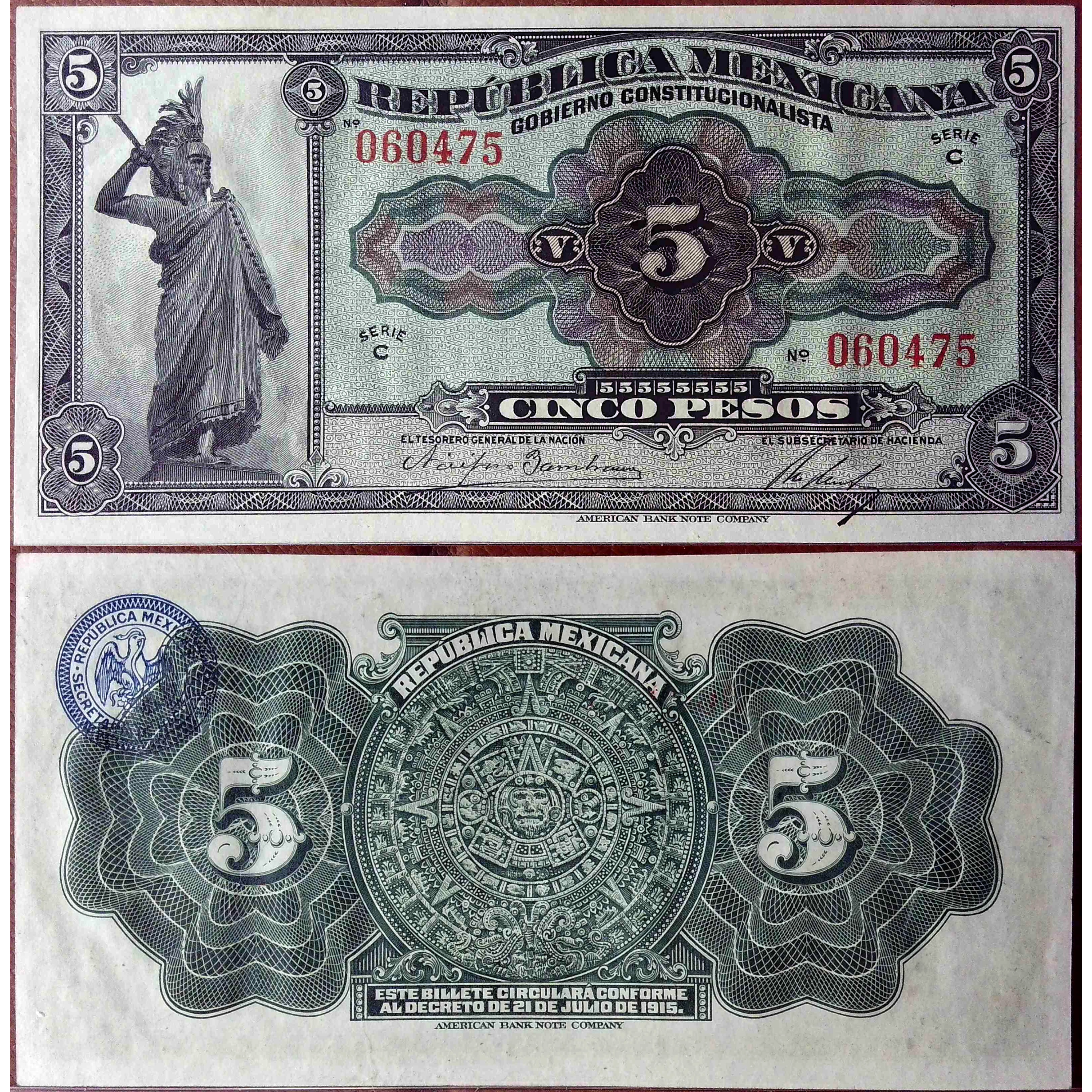
A review of the paper written by Monica Gomez titled Why Mexico's 1916 unfalsifiable banknote failed by Monica Gomez and Luis Anaya (El Infalsificable y el fracaso de la estabilización monetaria en el carrancismo. México, 1916)
In 1916, the Constitutionalist government of Venustiano Carranza attempted to resolve Mexico's monetary chaos through the introduction of a new paper currency known as the Infalsificable (Unfalsifiable). Intended to unify more than 20 disparate revolutionary issues and establish economic stability, the reform sought to move the country toward a mixed metallic-fiduciary regime.
The program ultimately failed within six months due to a...
Mexico: La Tresoria General del Estado de Oaxaco 5 Pesos (1916) Bonus History of Oaxaca
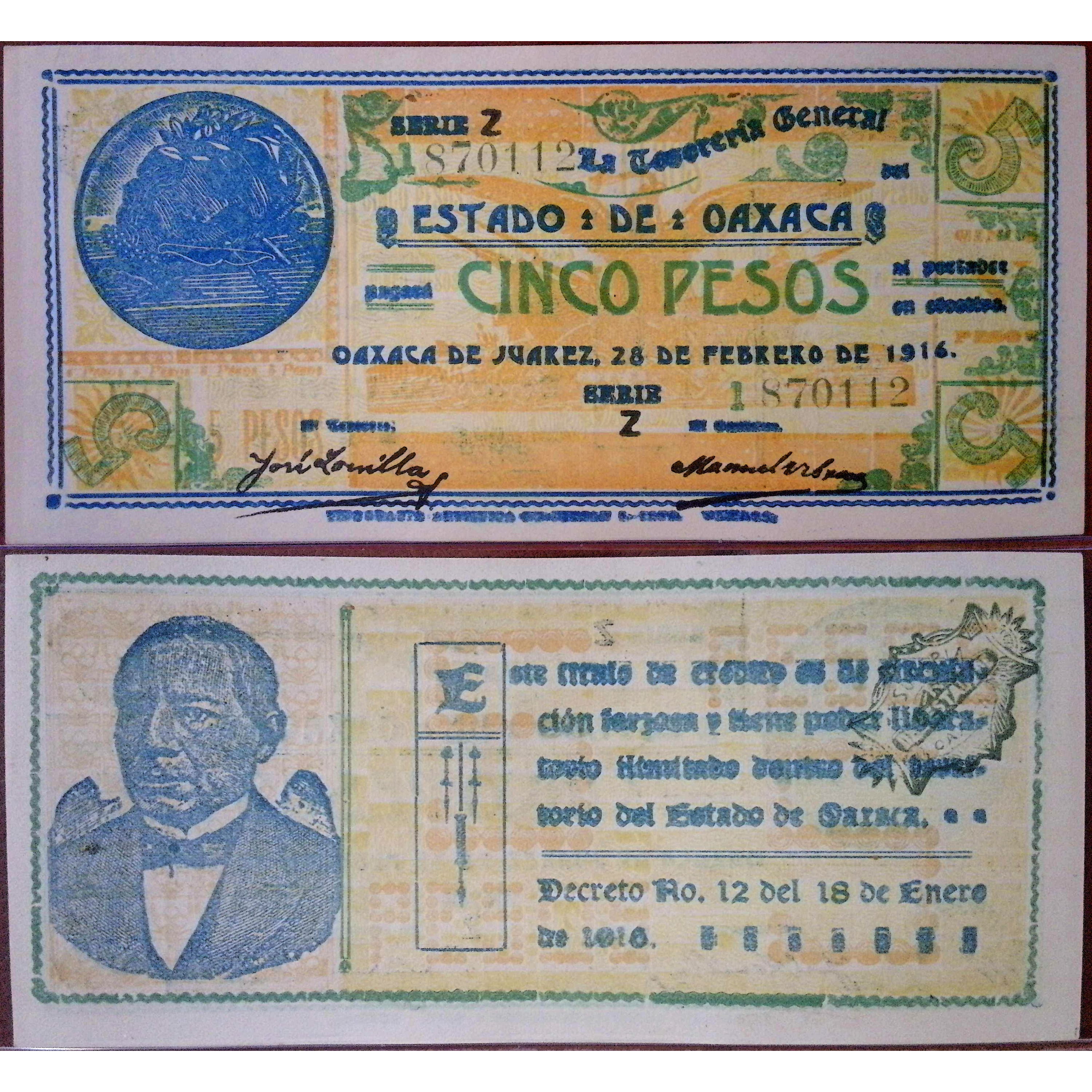
This has added content of the social, political and economic history of Oaxaca from 1850s to 1920s, as it is my first introduction to the state.
The study of regional Mexican currency during the decade-long civil conflict of 1910 to 1920 provides an unparalleled lens through which to view the macroeconomic collapse and political fragmentation of a modernizing nation. Among the most historically significant numismatic issues of this era are those originating from the State of Oaxaca. In 1915, to insulate itself from the factional violence tearing through the republic, the Oaxacan government declared state sovereignty.1 This political maneuver necessitated...
Mexico: The Presidential Succession of 1910 by Franciso Madero
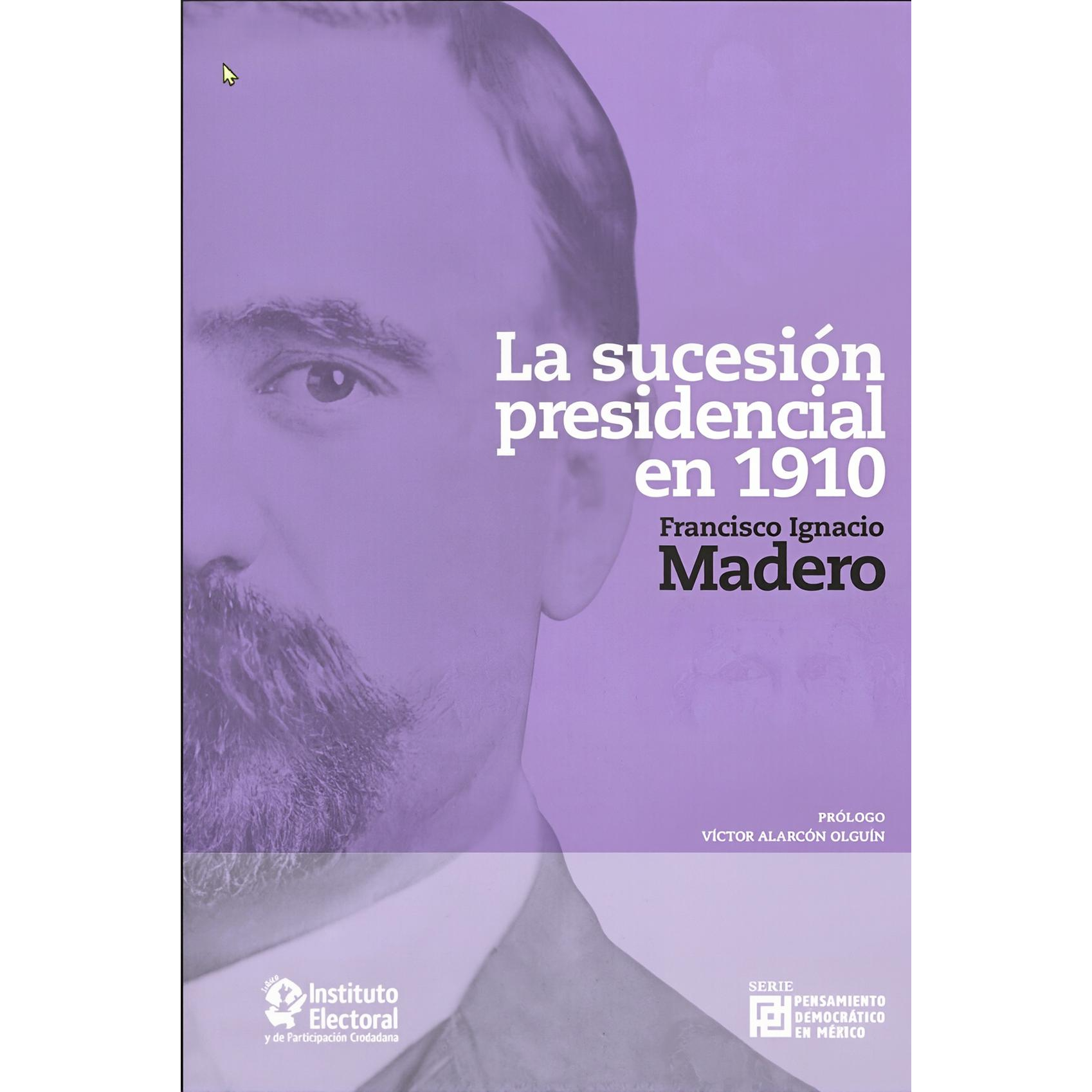
The 2012 publication by the Instituto Electoral y de Participación Ciudadana del Estado de Jalisco serves as both a historical preservation of Francisco I. Madero’s seminal work, The Presidential Succession of 1910, and a pedagogical tool for modern civic education. The text honors the legacy of Mexican democratic thinkers who challenged absolute power and militarism, arguing that their stoic defense of republican values laid the necessary groundwork for the country's current institutional legitimacy. Within the excerpts, Madero reflects on his own transition from an indifferent businessman to a revolutionary leader, fueled by a conviction that the Mexican people were rea...
Mexico: Banco Nacional de Mexico 5 Pesos Banknote (1910)
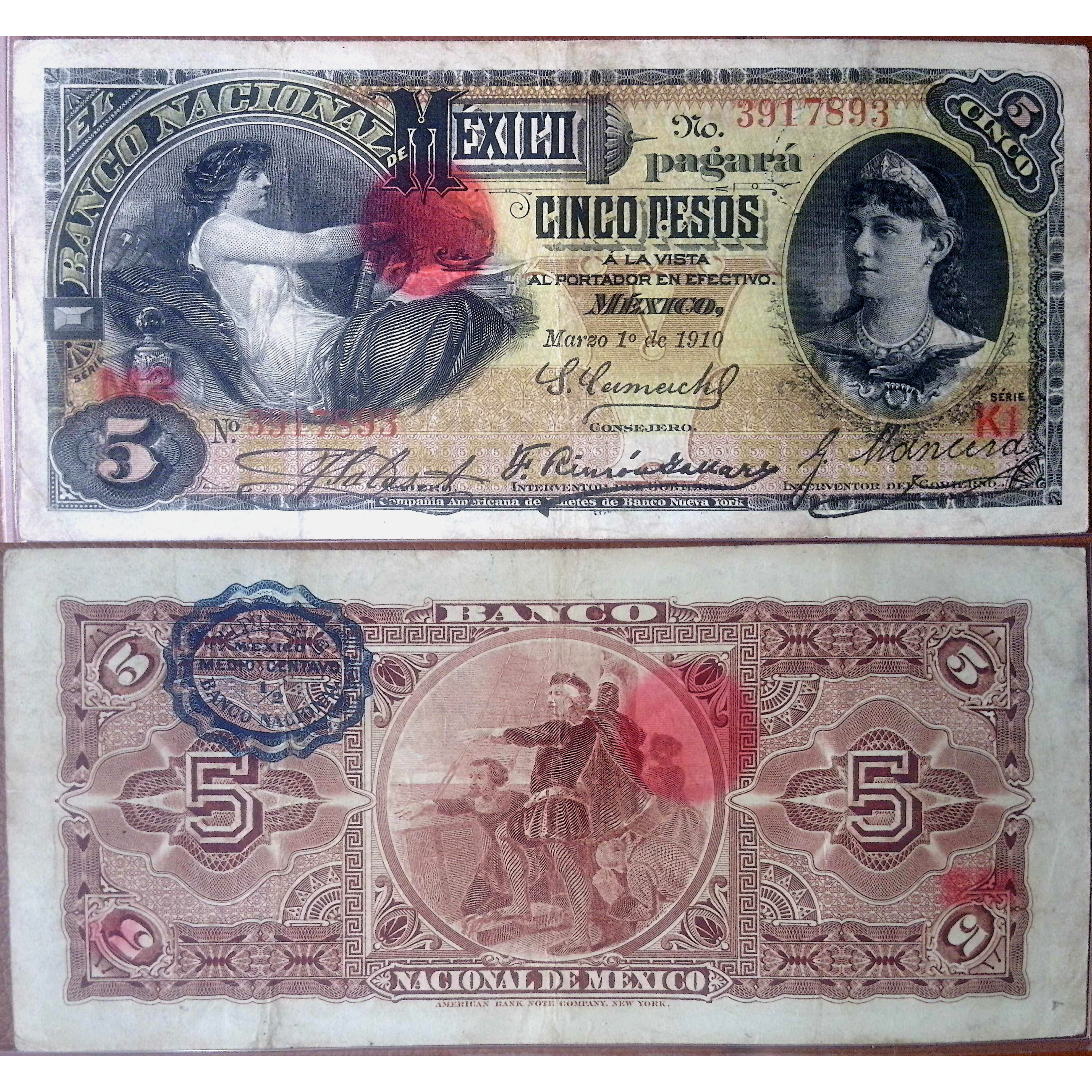
The 5 Pesos banknote issued by El Banco Nacional de México, dated March 1, 1910 (Pick number P-S257c), is a critical artifact of financial history that encapsulates the economic maturation, political centralization, and societal complexities of late 19th and early 20th-century Mexico. The issuance of this specific banknote was not an isolated event but rather the culmination of decades of legislative maneuvering designed to modernize a fractured and highly localized agrarian economy into a unified, capital-driven state capable of attracting foreign investment.
The legal framework authorizing the creation and continued circulation of these banknotes was firmly rooted in t...
Bermuda: Bermuda Monetary Authority 5 Dollar Polymer Banknote (2024)
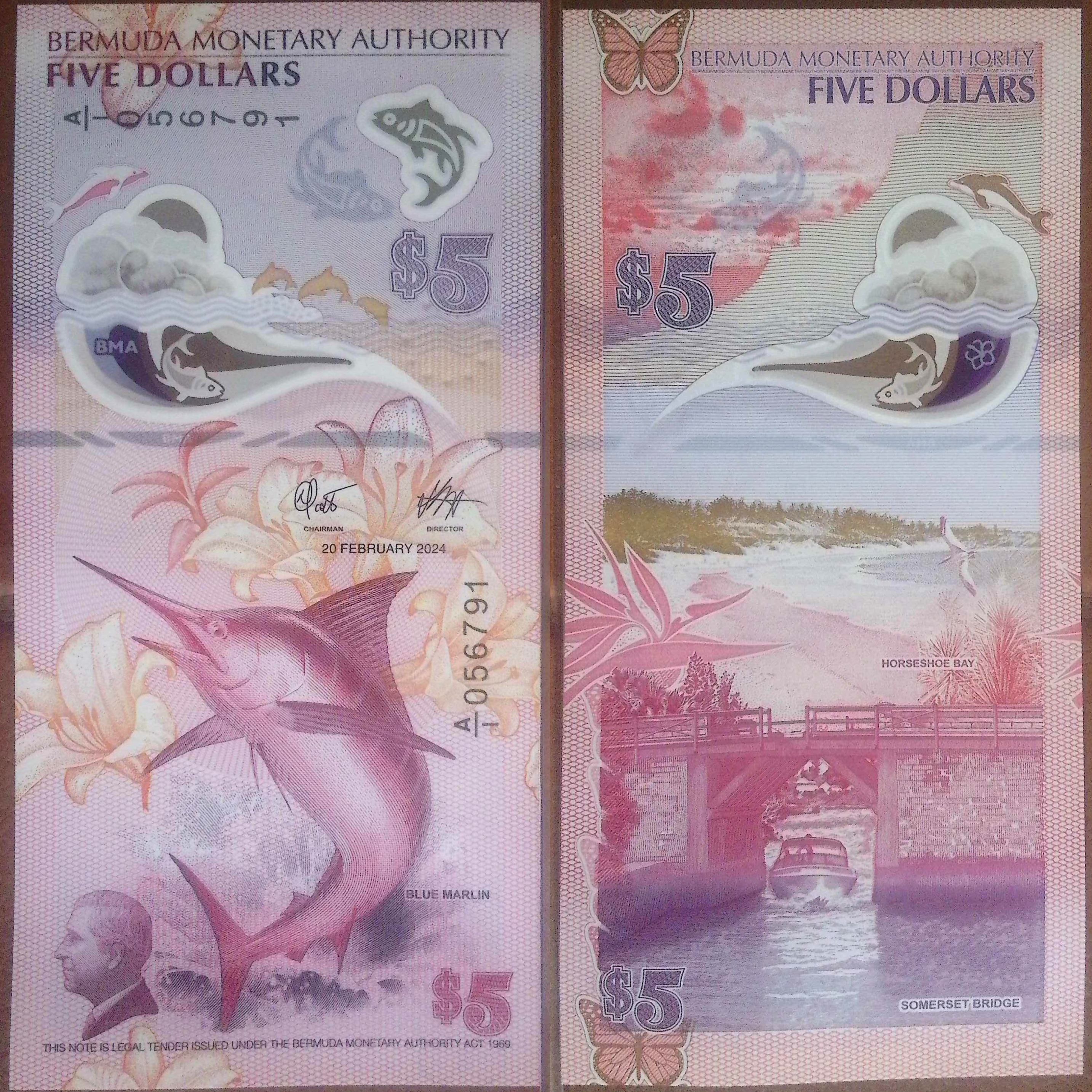
The Bermuda 5 Dollars banknote, formally introduced into circulation in the fall of 2024, represents a pivotal technological evolution for the territory's currency system. Operating under the legal framework of the Bermuda Monetary Authority Act 1969, the Bermuda Monetary Authority (BMA) retains the exclusive mandate to issue and redeem the island’s national currency. Under this legislative authorization, the BMA periodically updates the physical medium of exchange to ensure structural integrity and public confidence.4 The 2024 issuance is a direct exercise of this authority, shifting the physical currency from traditional cotton-paper substrates to modern SAFEGUARD® polymer.
The decision to redesign and iss...
Mexico: Carranza and Pancho Villa, A Review of the Relationship
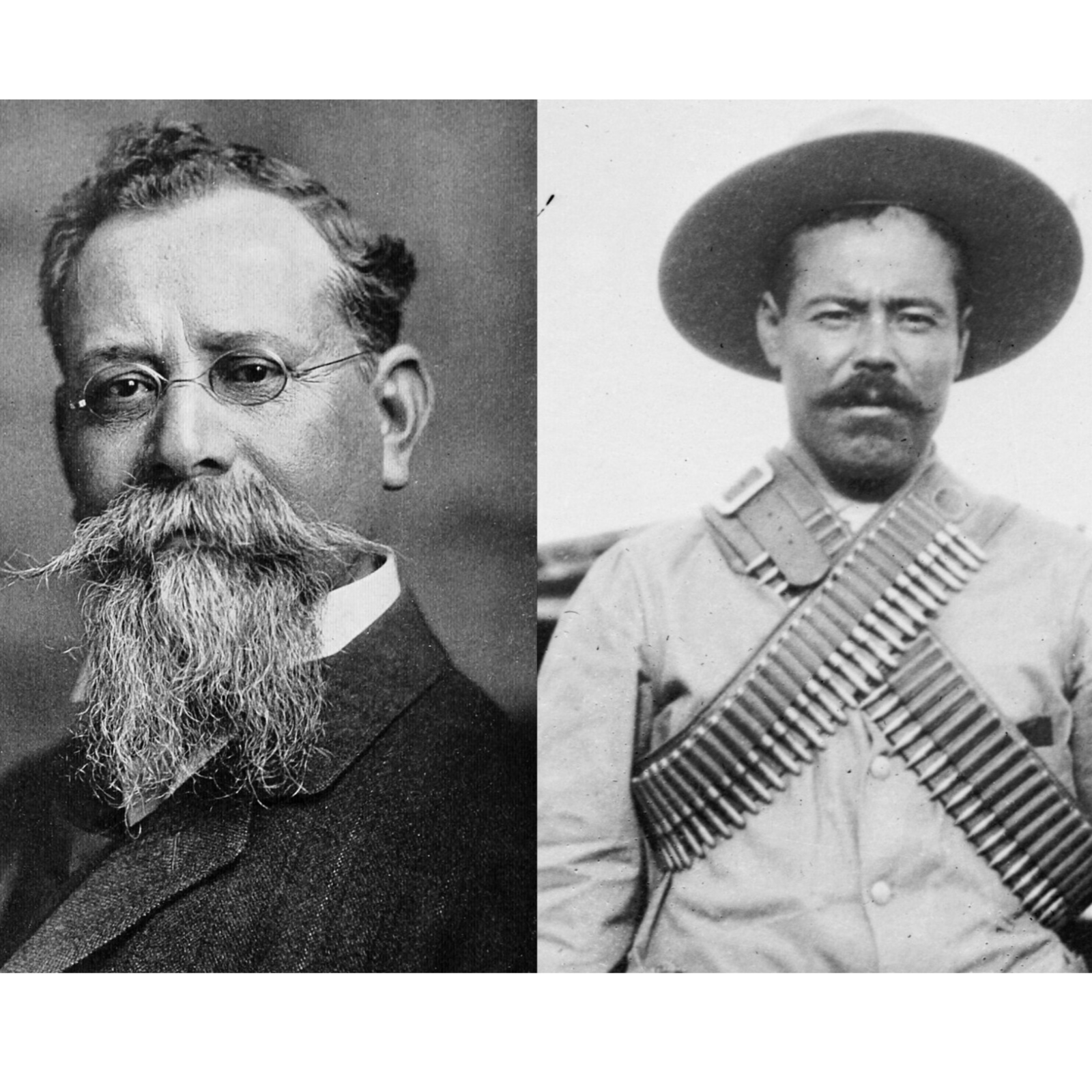
Exploring the relationship and history of the two men during the Revolution including the numismatic impact
Mexico: Govierno Constitutionalista de Mexico Monclova 1 Peso Banknote (1913)
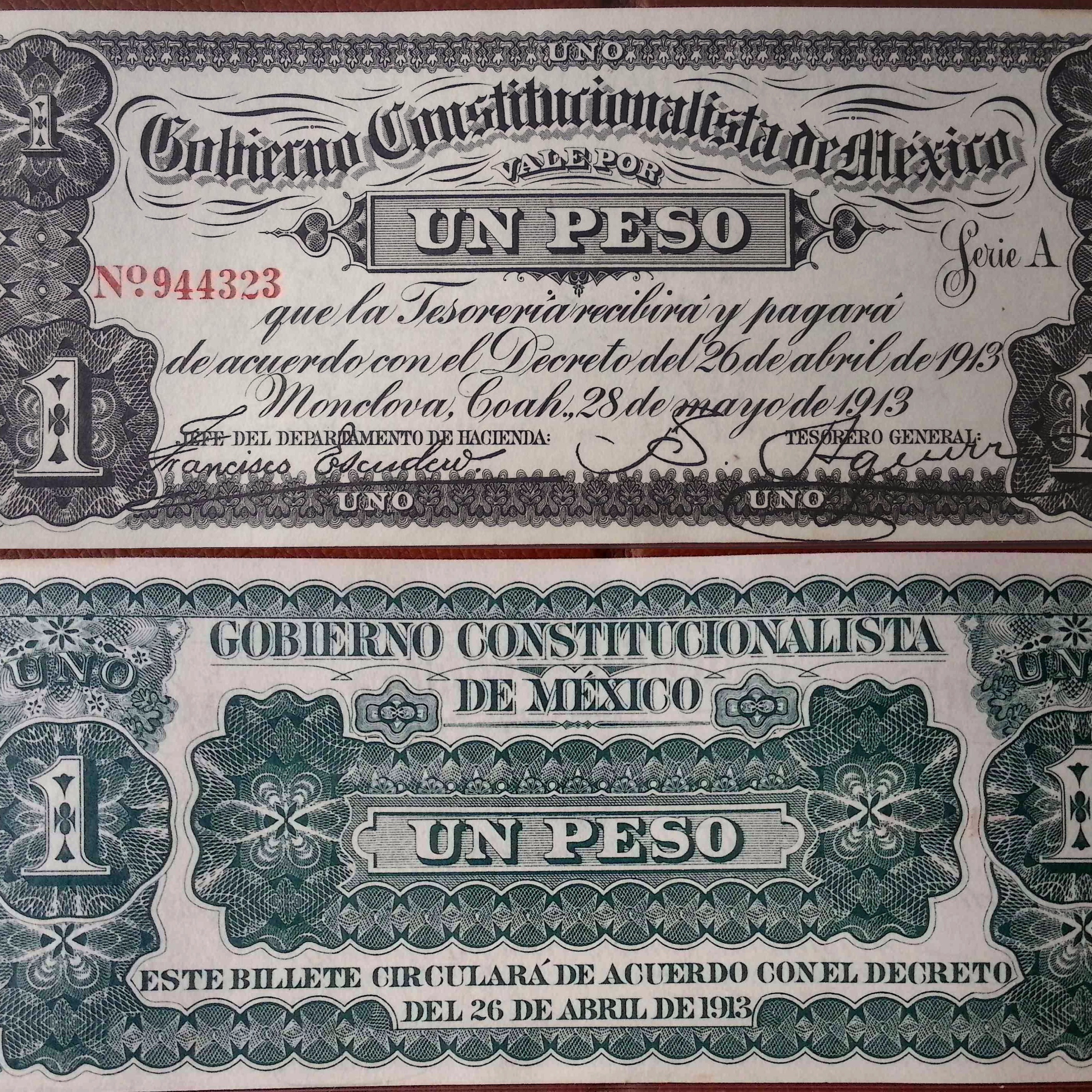
The introduction of the 1913 Monclova 1 Peso banknote represents a pivotal inflection point in the monetary and political evolution of modern Mexico. The creation of this currency was not born from an orderly macroeconomic policy, but rather from the desperate financial requirements of a burgeoning revolution. In February 1913, a period known as the "Ten Tragic Days" (La Decena Trágica) culminated in the assassination of the democratically elected President Francisco I. Madero and Vice President José María Pino Suárez. Following this, General Victoriano Huerta seized control of the federal government in Mexico City, establishing a military dictatorship.
Ve...
Bulgaria: Bulgarian National Bank 200 Leva Banknote (1951)
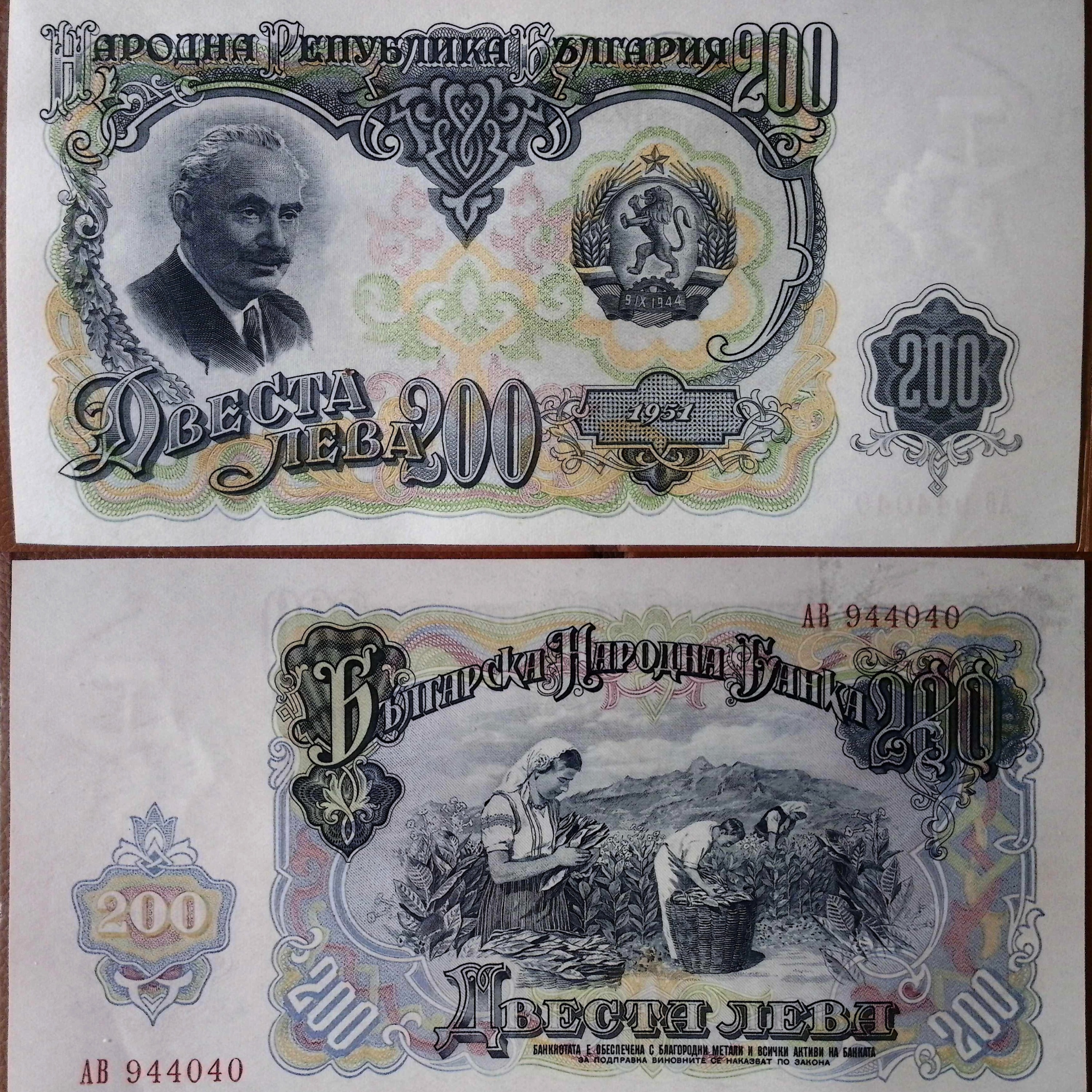
The subject of this podcast is the Bulgaria 200 Leva banknote, dated 1951 and issued by the Bulgarian National Bank (Българска Народна Банка). Bearing the Pick number P-87a, this banknote serves as a primary mechanism of economic control and state propaganda utilized during the early years of the People's Republic of Bulgaria.
The early 1950s represented a period of radical transformation for the Bulgarian economy. The transition from a market-based system to a centralized command economy necessitated entirely new financial instruments, culminating in the drastic monetary reform of May 1952.2 This report analyzes the historical backdrop, the issuing authority, the visual and technical specificati...
Uganda: Bank of Uganda 20,000 Shillings Banknote (2010
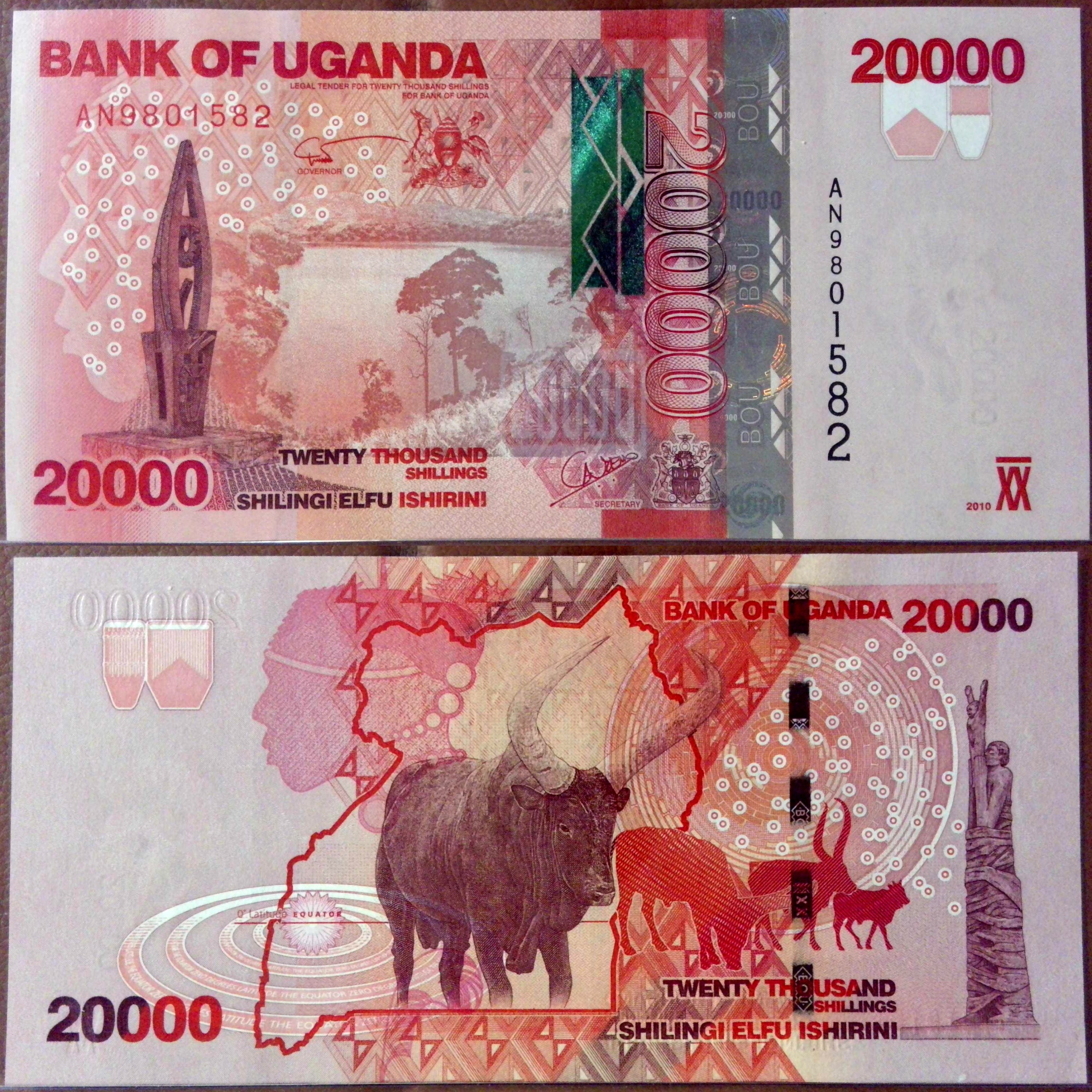
The subject of this podcast is the Uganda 20,000 Shillings banknote, specifically the iteration introduced in May 2010 as a core component of a nationwide currency redesign. This document provides a thorough examination of the banknote, encompassing the economic and institutional history of its issuance, a biographical review of its signatories, a breakdown of its thematic imagery, and an analysis of its anti-counterfeiting architecture.
Furthermore, this report includes a visual assessment of the specific physical specimen provided in the attached image (Serial Number AN9801582), alongside an evaluation of its current numismatic market valuation based on third-party grading population reports...
Guinea: Banque Centrale de la Republique de Guinee 500 Guinean Francs (1985)
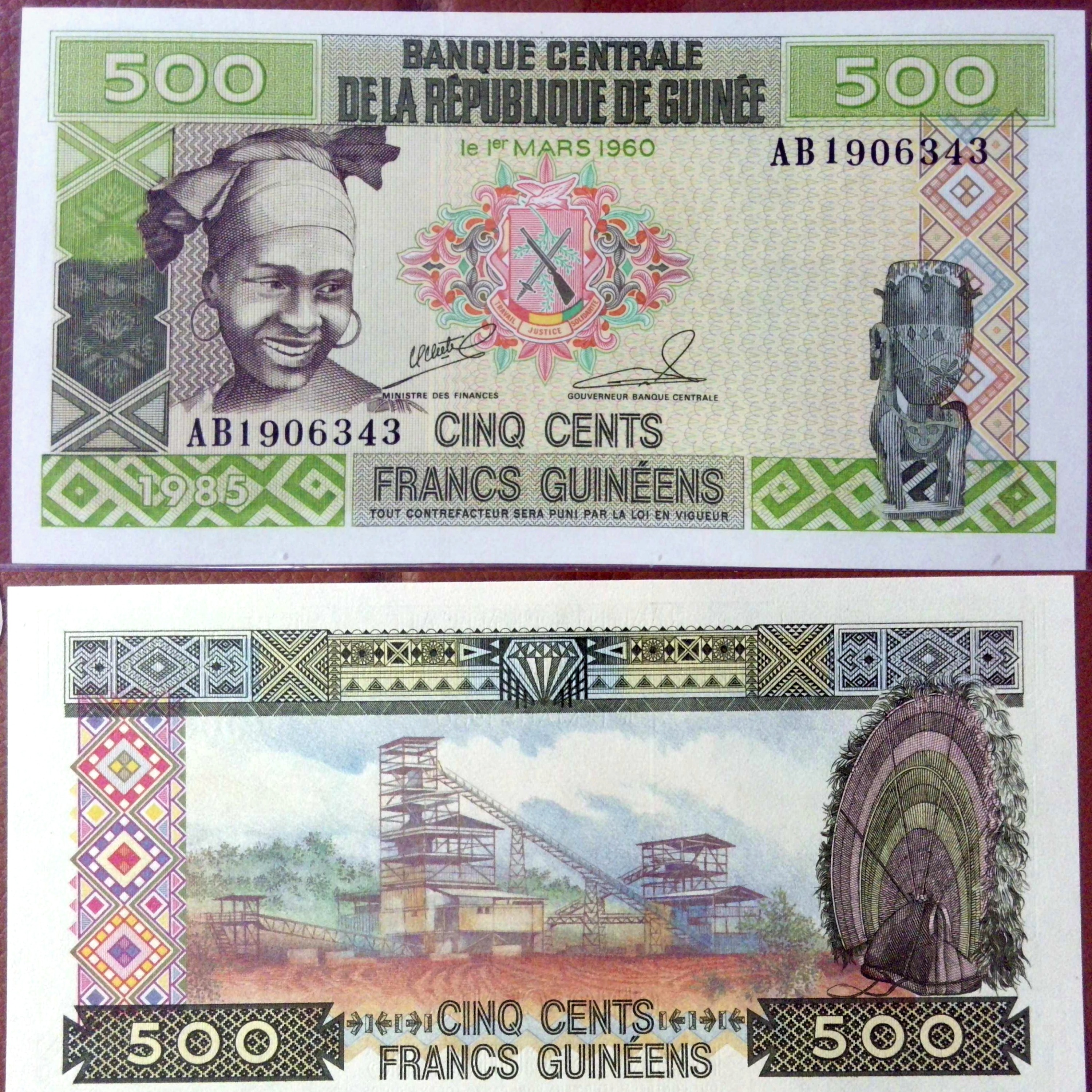
The analysis of the Guinea 500 Francs banknote of 1985, specifically the example bearing serial number AB 1906343, requires a deep examination of the monetary, political, and cultural shifts occurring in West Africa during the late twentieth century. This specific banknote operates as a primary documentary record of a nation transitioning from a centrally planned, isolated socialist economy toward a structure of macroeconomic liberalization overseen by international financial institutions.
The issuance of the 1985 Guinean Franc series represents one of the most critical monetary reformations in the post-colonial history of the Republic of Guinea. To grasp the rationale behind the creation...
Mexico: The Monetary Reforms from 1931 and 1932 en Mexico (Eduardo Turrent Diaz) A Review

From the paper: Las Reformas Monetarias de 1931 y 1932 en Mexico by Eduardo Turrent Diaz.
South Africa: South African Reserve Bank 100 Rand Banknote (2005 Upgraded Series)
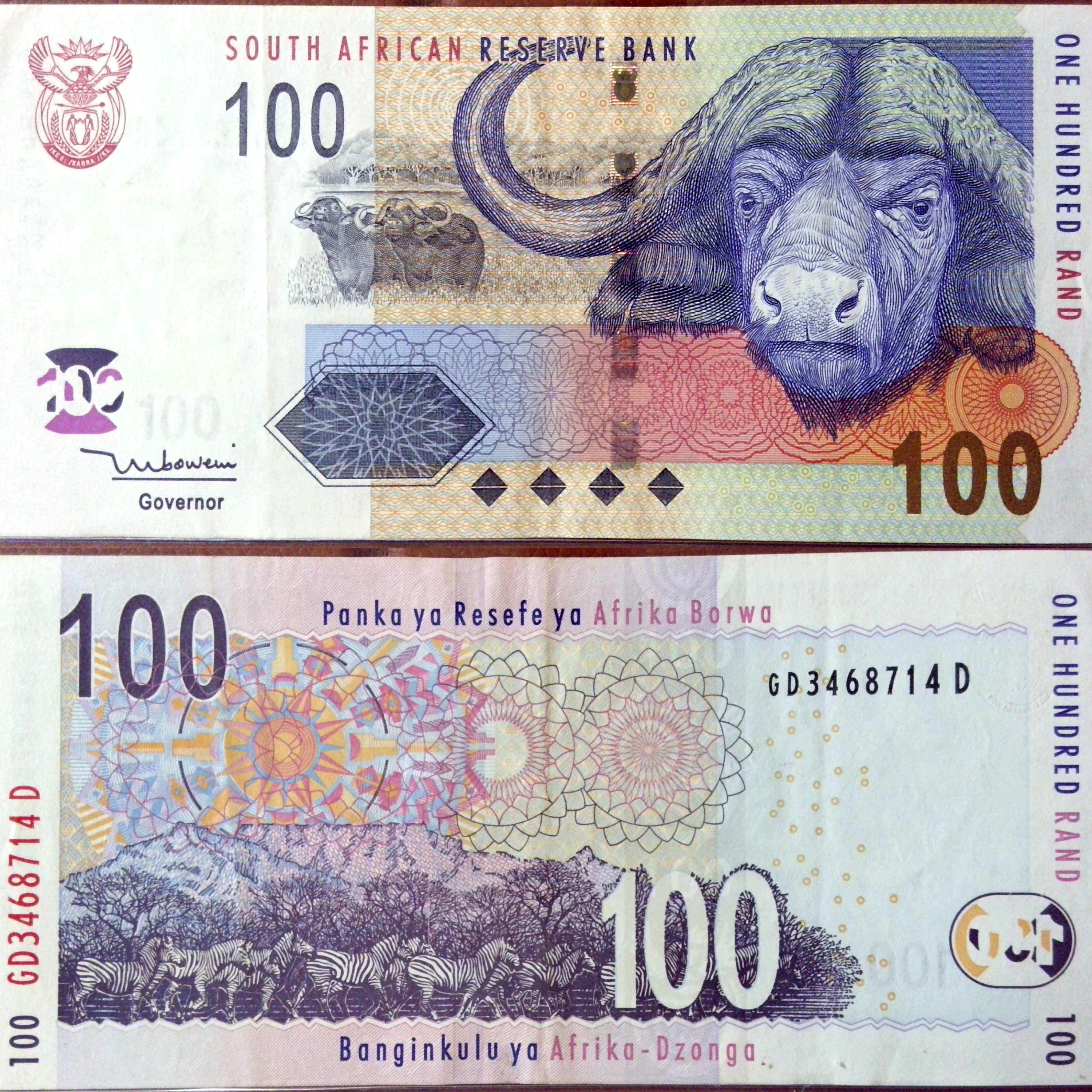
The subject of this analytical report is a South Africa 100 Rand banknote, issued as a constituent of the 2005 upgraded currency series authorized and distributed by the South African Reserve Bank (SARB). A visual examination of the specific specimen provided in the reference imagery allows for a precise identification of its characteristics and immediate classification within the broader context of South African numismatics. The obverse of the banknote features the signature of Tito T. Mboweni, who served as the Governor of the South African Reserve Bank, thereby classifying this specific piece under the numismatic reference Pick number 131a (P-131a).<...
Myanmar: Central Bank of Myanmar 10,000 Kyats Banknote (2015)
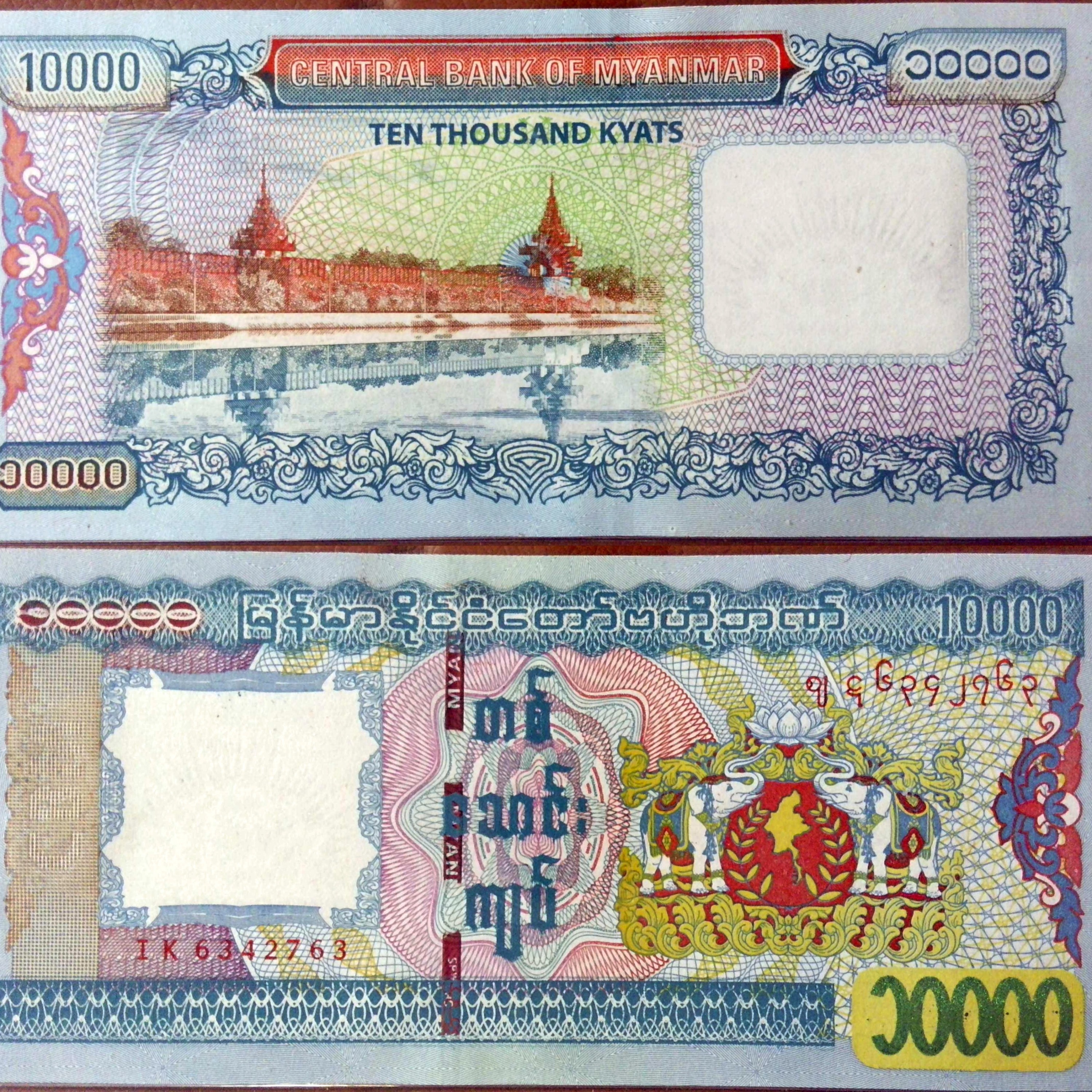
The subject of this podcast is the Myanmar 10,000 Kyats banknote, specifically the upgraded security variant issued by the Central Bank of Myanmar (CBM) in 2015. Assigned the standard reference Pick Number P-84 and Numista identifier N# 223488, this banknote represents an evolution in Myanmar's modern fiat currency system.
An analysis of the specific visual evidence provided in the accompanying image confirms this is the 2015 issue, bearing the alphanumeric serial number IK 6342763 on the obverse. The introduction of this specific variant was driven primarily by a necessity to prolong the circulation life of the existing high-denomination banknotes and to institute...
Hong Kong (China): The Hong Kong and Shanghai Banking Corporation 50 Dollar The Lion Series Banknote (1993)
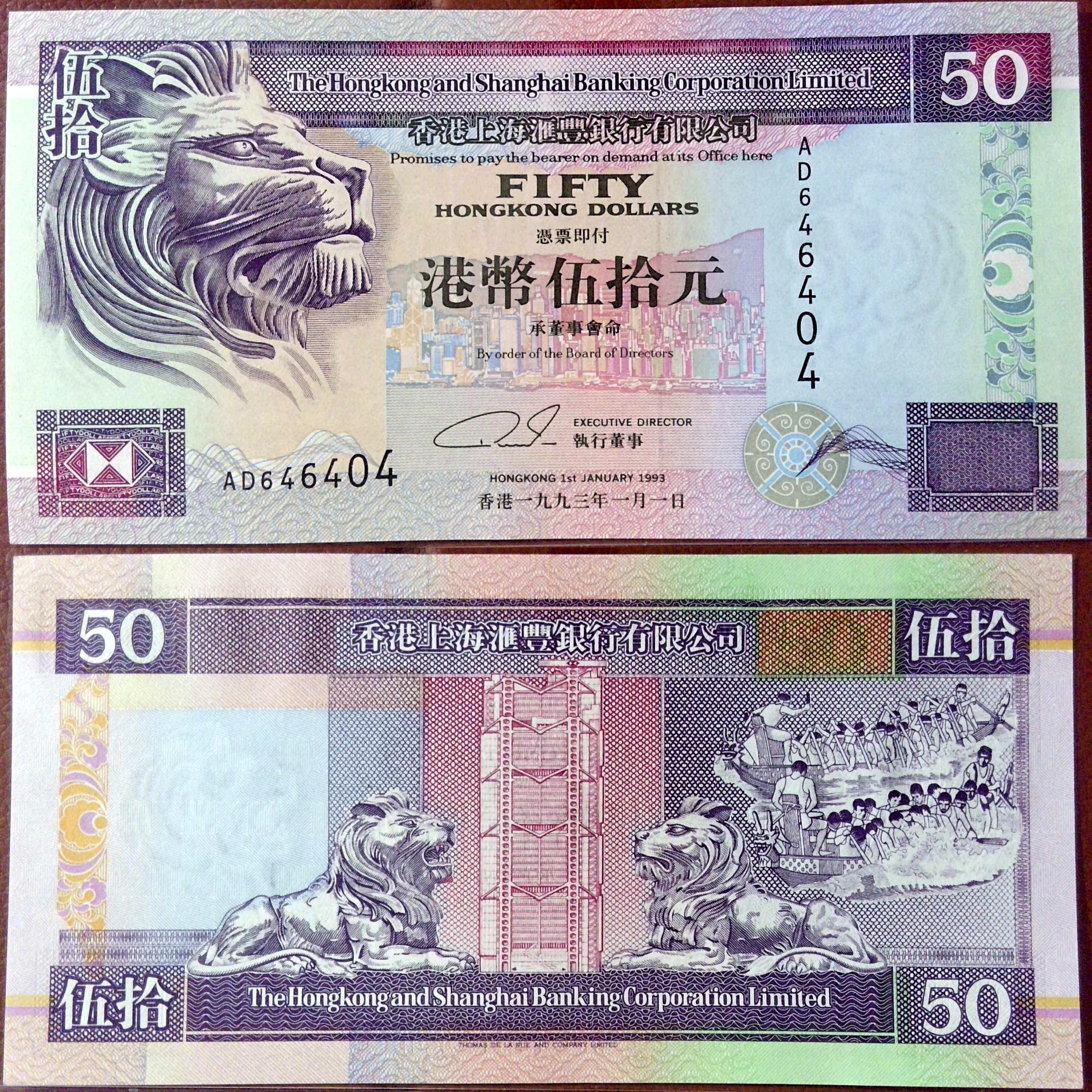
The 1993 banknote series was conceptually driven by the mandate to remove explicitly British colonial iconography from the local financial system prior to the 1997 handover.2 Previous banknote iterations, particularly the 1985-1992 series, prominently featured the British Royal Coat of Arms and references to the British Crown.1 The 1993 series deliberately excised these symbols, replacing them with localized imagery that emphasized the distinct cultural and architectural identity of Hong Kong. The new design language prioritized regional flora, local landmarks, and historical cultural events over imperial heraldry.2 Furthermore, this era marked a structural shift in the denomination hierarchy; the Hong Kong government assumed...
Trinidad and Tobago: Central Bank of Trinidad and Tobago 50 Dollars Polymer Banknote (2015 Issue)
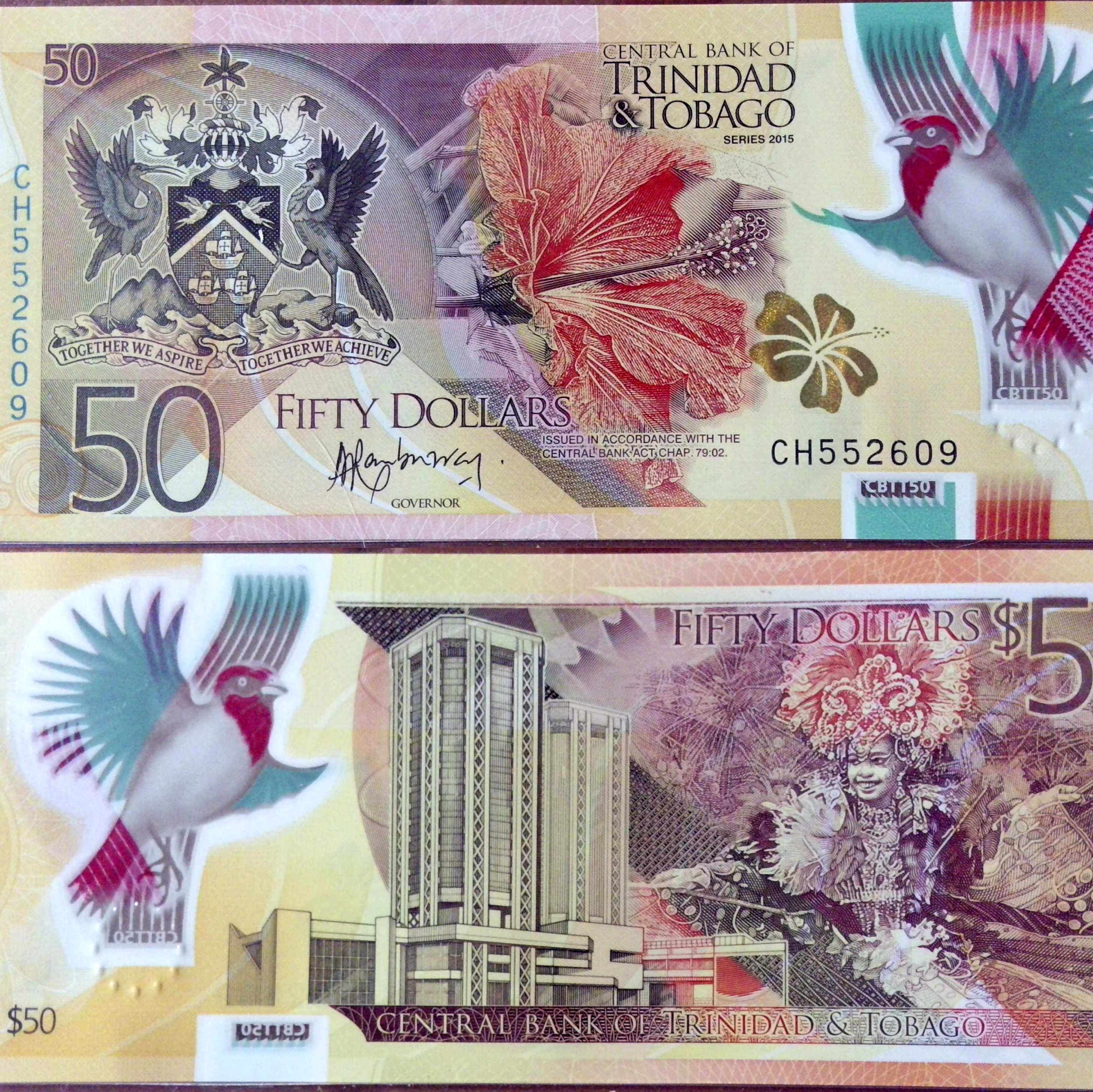
The transition of a national currency from traditional cotton-based paper to advanced polymer substrates represents a profound operational, economic, and cultural shift for any issuing authority. The subject of this analytical report is the 50 Dollars banknote issued by the Central Bank of Trinidad and Tobago in 2015, specifically the variety bearing the signature of Governor Alvin Hilaire and the serial number CH552609.1
Printed entirely on the Safeguard® polymer substrate developed by the British security printing firm De La Rue, this specific denomination occupies a pivotal position in the monetary history of the Caribbean.3 As the first standard circulation p...
Canada: Bank of Canada 20 Dollar Scenes of Canada Series (1979)
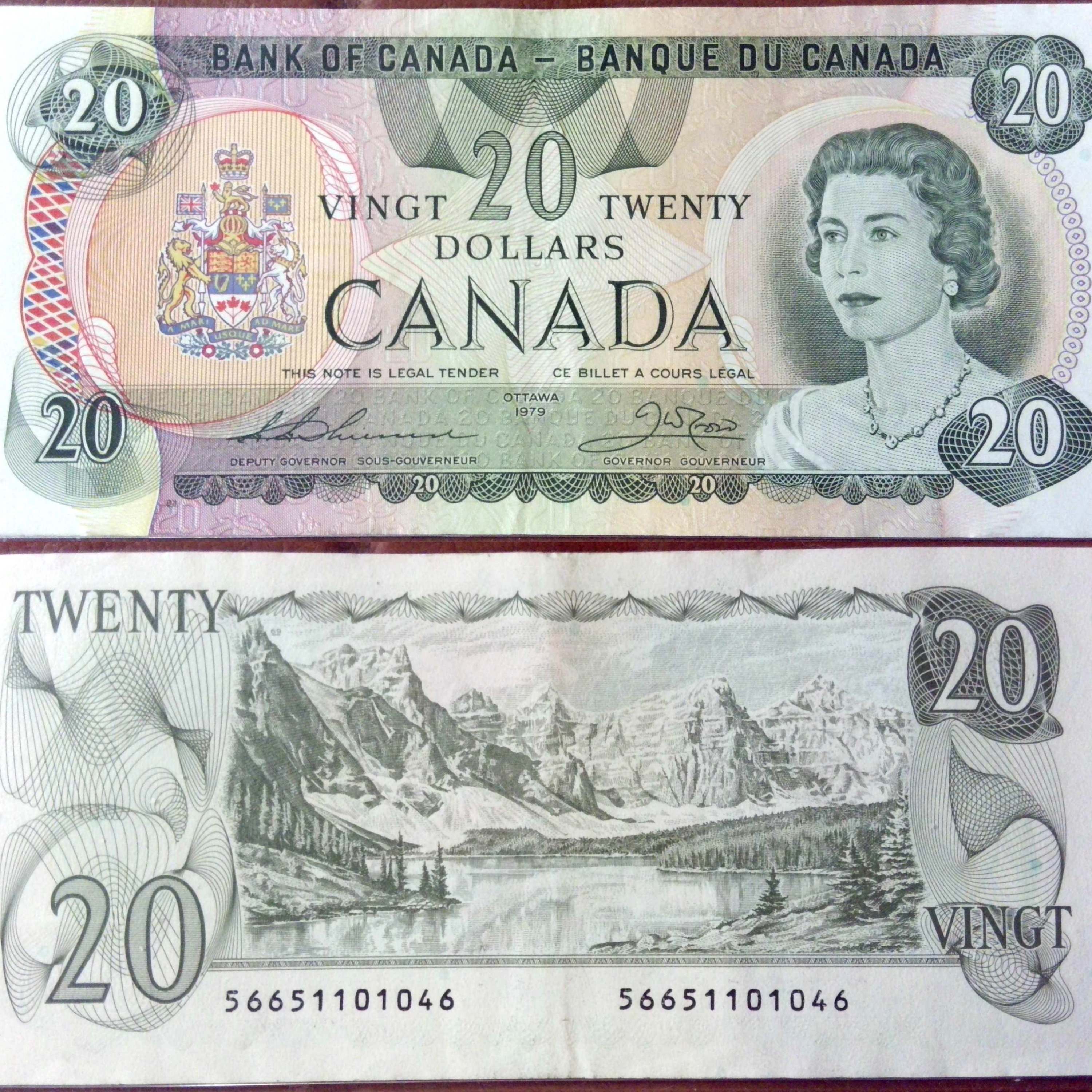
The history of Canadian currency is a chronicle of the nation’s evolving identity, technological advancement, and economic maturation. Within this timeline, the "Scenes of Canada" series, issued between 1969 and 1979, stands as a pivotal chapter that bridged the traditionalist designs of the mid-20th century with the automated, high-security requirements of the modern era. This report provides an exhaustive numismatic analysis of a specific artifact from this period: the 1979 modification of the twenty-dollar banknote. The primary subject of this analysis is a circulated specimen identified by the serial number 56651101046.
Through a detailed examination of this note, we ca...
Philippines: Central Bank of the Philippines 500 Piso First Polymer Series Banknote
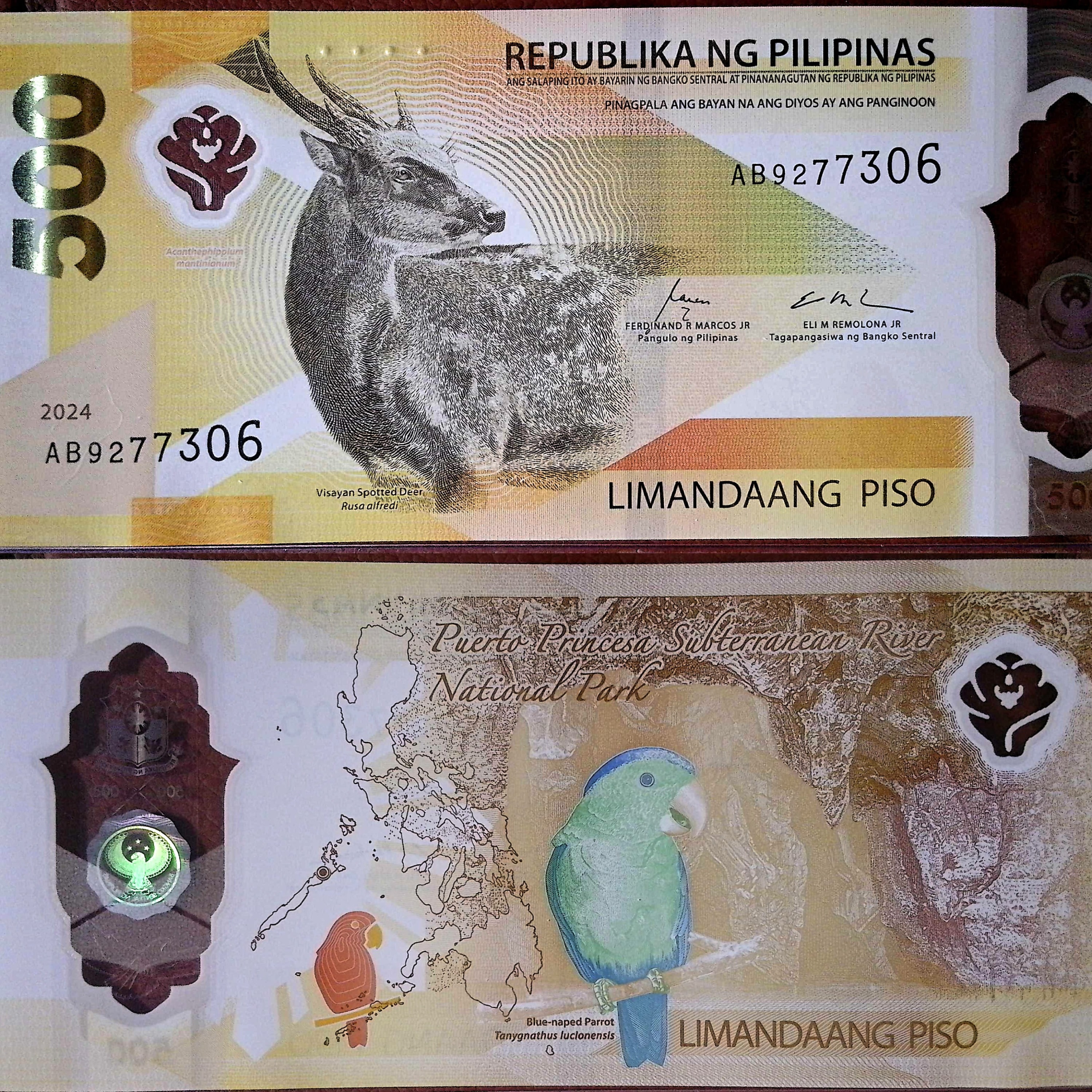
The 500 Piso polymer banknote, part of the First Philippine Polymer (FPP) series released by the Bangko Sentral ng Pilipinas (BSP) in December 2024, represents a significant modernization of the Philippine currency.
Designed to replace traditional cotton-abaca notes with a more durable, secure polymer substrate, the banknote features a thematic shift away from political figures toward endemic Philippine flora and fauna, specifically the Visayan spotted deer and the Acanthephippium mantinianum orchid on the obverse, and the Puerto Princesa Subterranean River and blue-naped parrot on the reverse.
his transition, aligned with global central banking standards, incorporates advanced security...
Philippines: Central Bank of the Philippines First Polymer Banknote Series: 100 Piso (2024)
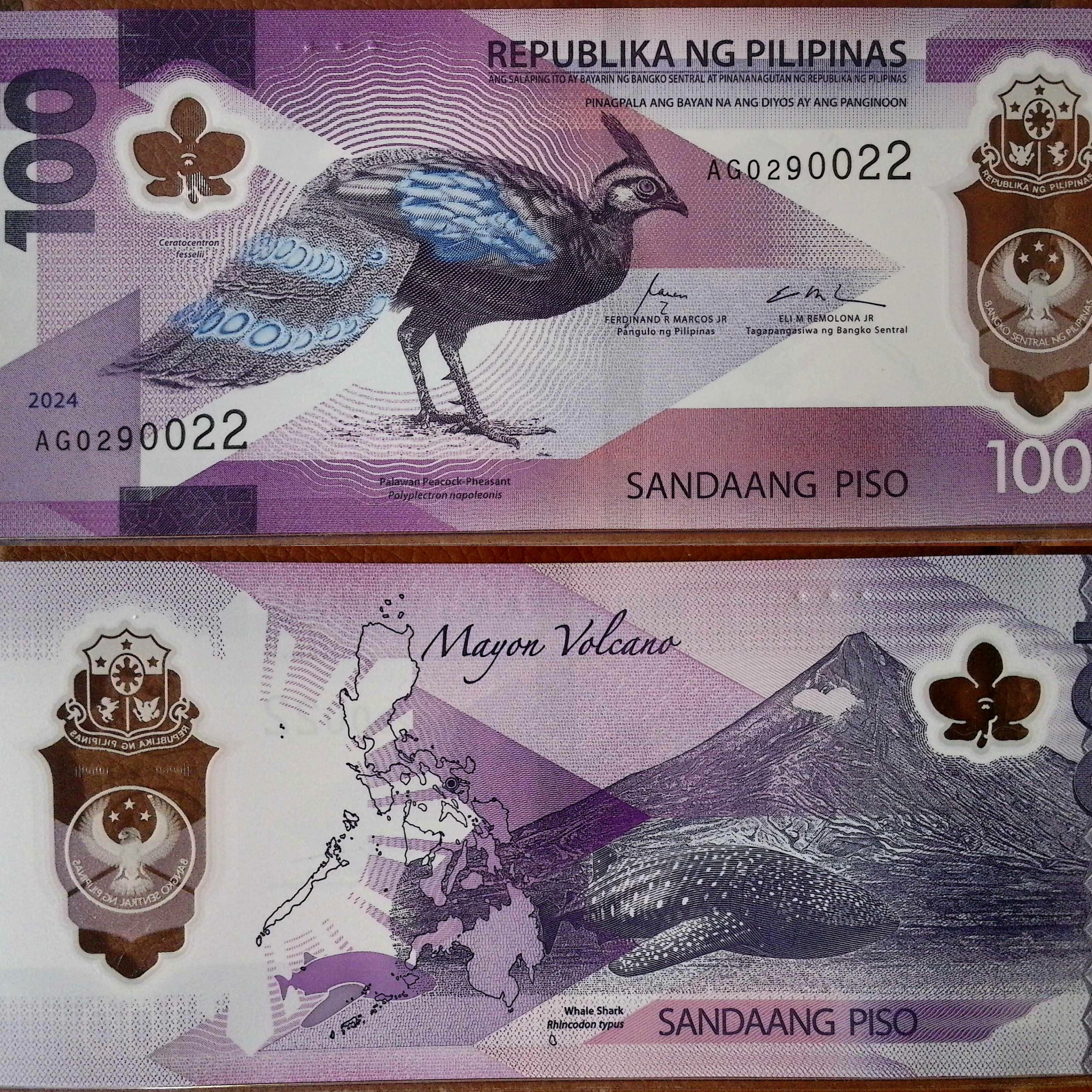
The 2024 100 Piso polymer banknote is a key component of the Bangko Sentral ng Pilipinas’ (BSP) First Philippine Polymer Banknote Series, designed to modernize the nation's currency by improving security, durability, and hygiene compared to traditional cotton-abaca paper notes. Featuring apolitical imagery centered on Philippine biodiversity—specifically the Palawan peacock-pheasant and the Ceratocentron fesselii orchid on the obverse, and Mayon Volcano and the whale shark on the reverse—the series reflects a strategic shift toward environmental conservation and national heritage. Produced by Note Printing Australia using advanced Guardian™ polymer substrate technology, the note incorporates sophisticated anti-counterfeiting features such as clear windows...
Yugoslavia: National Bank of Yugoslavia 500 Dinara Banknote (1963)
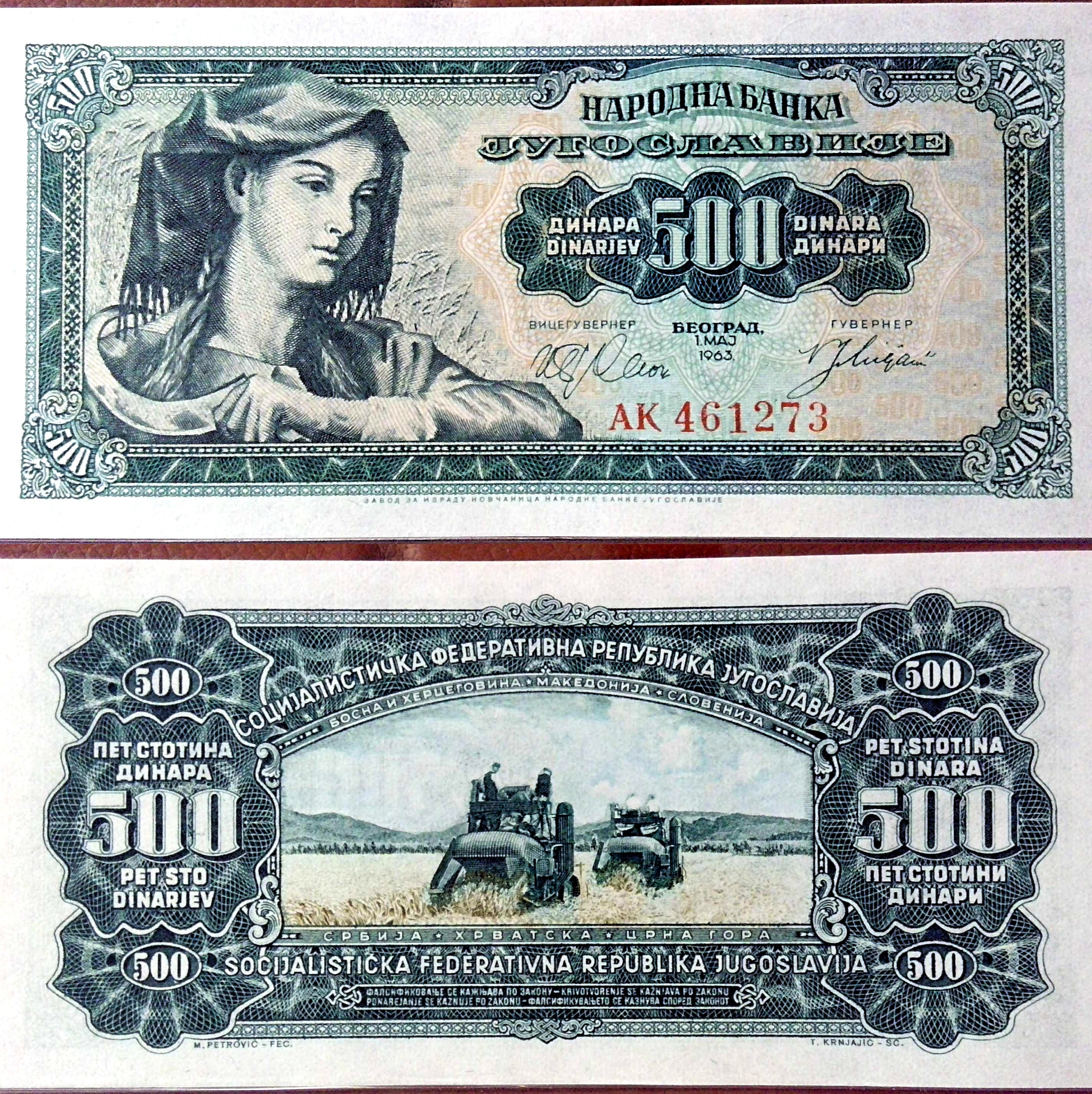
The 1963 Yugoslavia 500 Dinara banknote, bearing serial number AK 461273, is a banknote from the Socialist Federal Republic of Yugoslavia. Issued on May 1, 1963, this note reflects the nation's 1963 constitutional shift toward workers' self-management and industrial modernization.
Designed by Miodrag Petrović, it features a peasant maiden representing agrarian history on the obverse and mechanical harvesters on the reverse symbolizing technological progress. Signed by Governor Nikola Miljanić and Vice-Governor Isak Sion, this Federation Dinar series note remains a readily available collectible for numismatists interested in Cold War-era Balkan economic history.
China: People's Bank of China 20 Yuan Year of the Dragon Commemorative Banknote (2024)
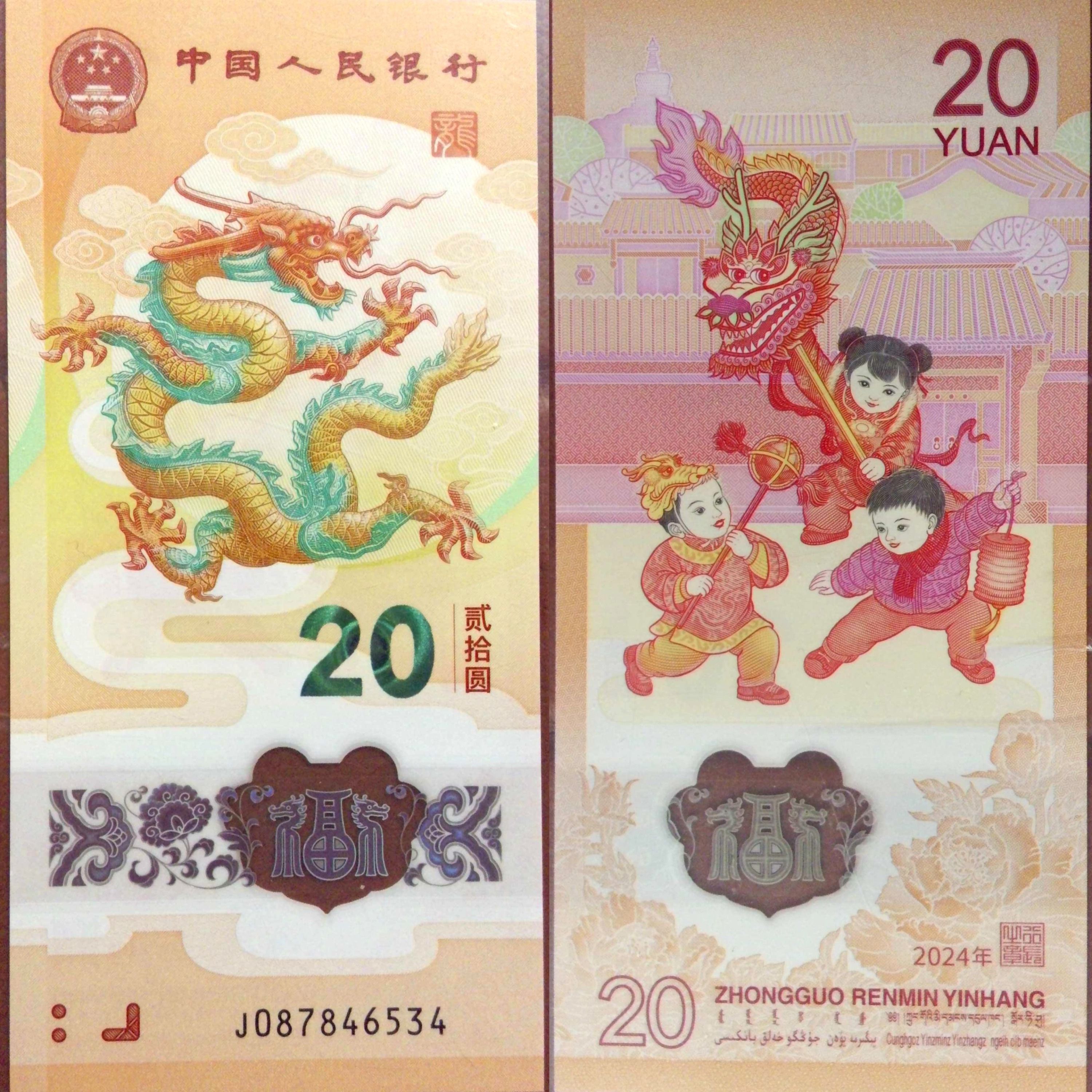
The 2024 People's Bank of China 20 Yuan "Year of the Dragon" polymer commemorative banknote represents a significant technological and cultural achievement, marking the inaugural release of a 12-year Lunar Zodiac series. Authorized by Governor Pan Gongsheng to celebrate the 2024 Year of the Dragon, this legal tender serves as both a cultural touchstone and a platform for China's domestic currency printing advancements, utilizing a proprietary polymer substrate and sophisticated optical security features like the LiveColor® holographic window. While issued with a 100-million-unit mintage and generally found in Uncirculated condition, the banknote is highly valued by collectors for its aesthetic design, historical s...
China: People's Bank of China 20 Yuan Year of the Horse Commemorative Banknote (2026)
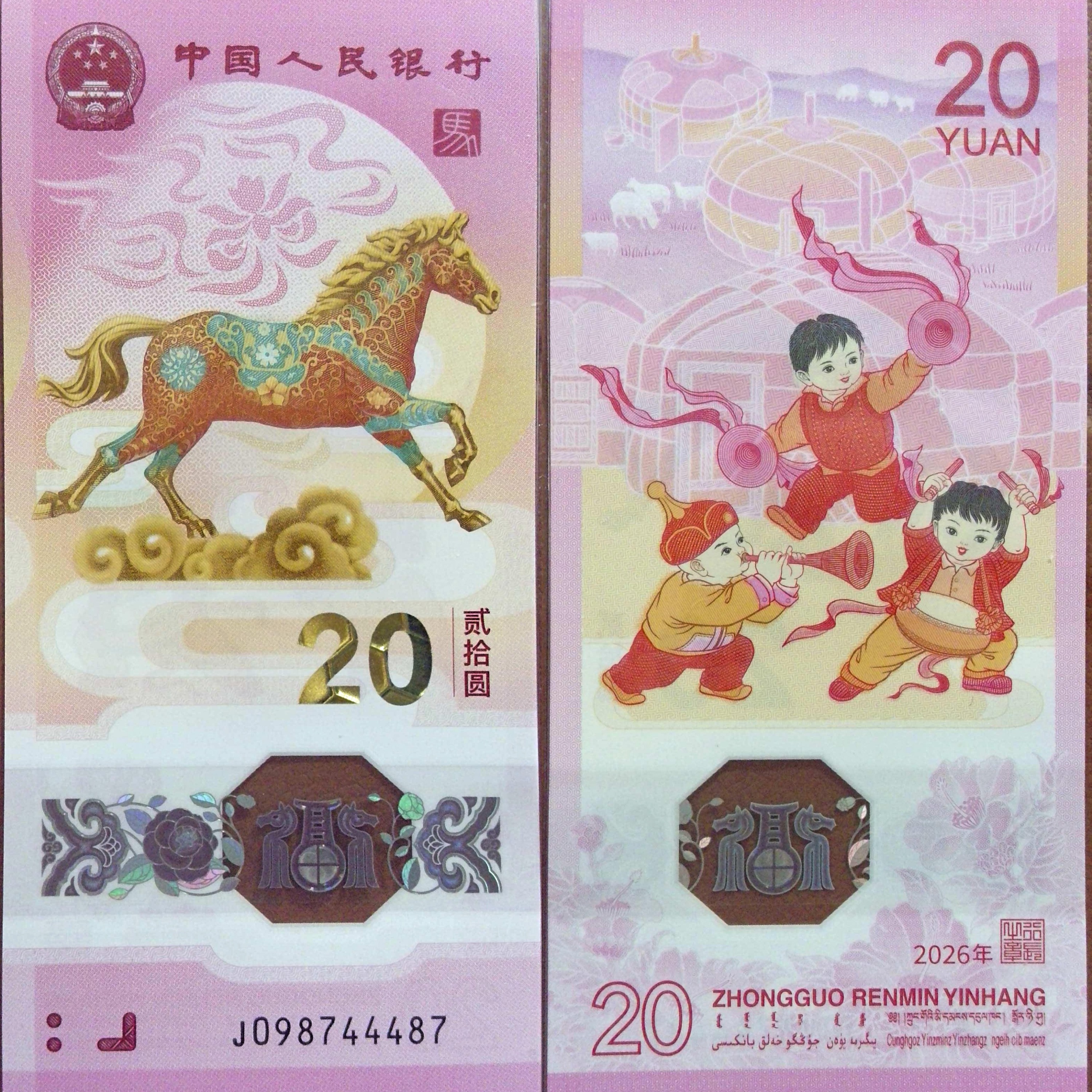
This podcast provides a comprehensive numismatic analysis of the 2026 People's Republic of China 20 Yuan commemorative banknote, issued by the People's Bank of China to celebrate the Lunar Year of the Horse. The note carries deep historical and cultural significance, embodying the "dragon-horse spirit" of perseverance and success while honoring traditional Spring Festival customs. Technically, it serves as a showcase for advanced anti-counterfeiting measures, including a biaxially oriented polymer substrate, SPARK Optical variable ink, and complex dynamic holography. Within the Chinese numismatic market, the banknote is a highly sought-after collectible, with its value driven by a limited mintage of 100 million...
China: The People's Bank of China 20 Yuan Year of the Snake Commemorative Banknote (2025)
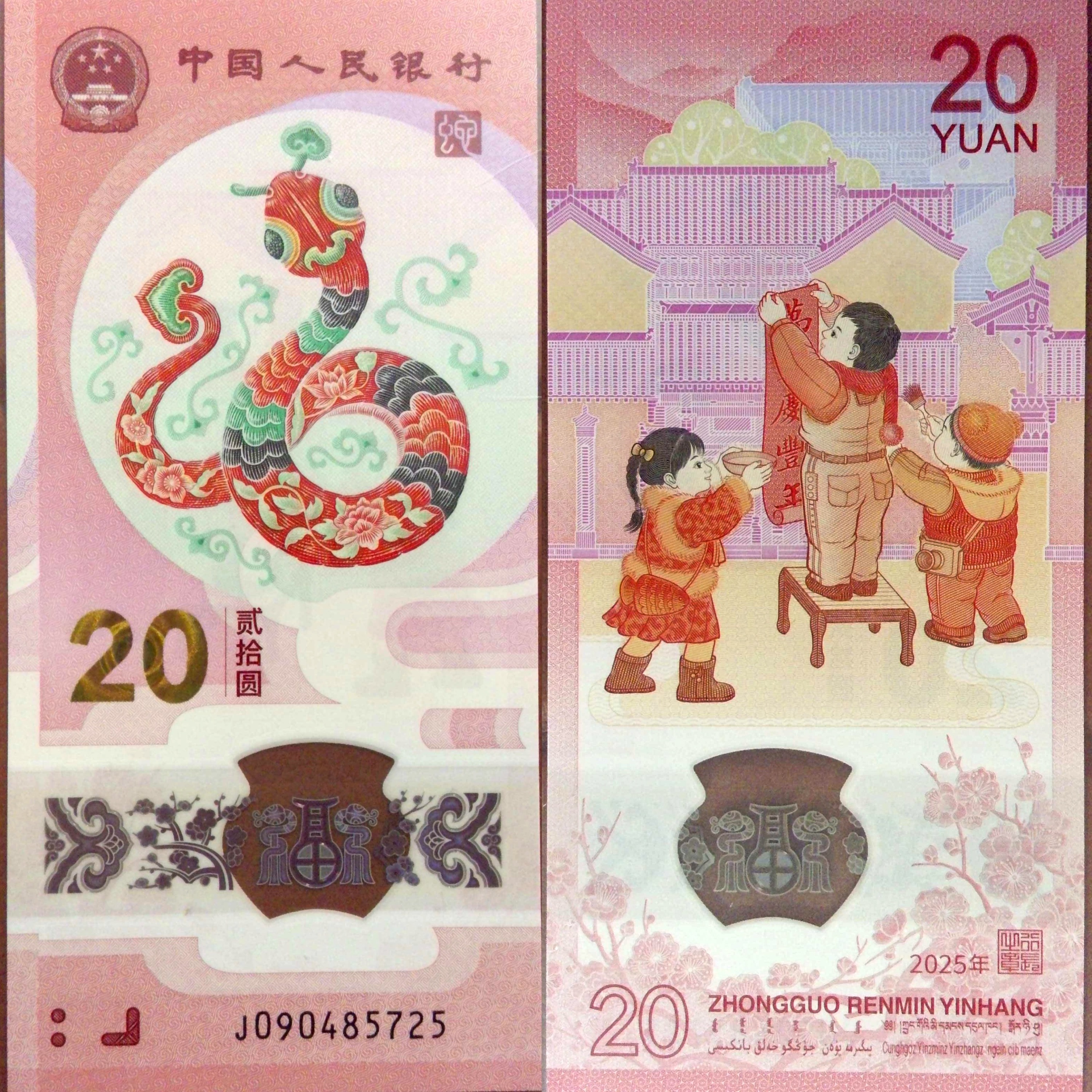
The People's Bank of China (PBOC) formally announced the introduction of the 2025 Year of the Snake 20 Yuan commemorative polymer banknote on December 9, 2024.1 Operating as an official legal tender commemorative issue rather than a private or fantasy release, the banknote entered public distribution on January 3, 2025.1 This issuance represents a continuation of the Chinese central bank's strategic transition toward utilizing advanced polymer substrates for special circulating currency, specifically focusing on celebrating the traditional Chinese lunar zodiac calendar.
The decision to authorize and issue this specific banknote was codified under the regulatory framework of the PBOC, operating under official announcements...
Mexico: Banco de México 20 Pesos Familia AA (1976)
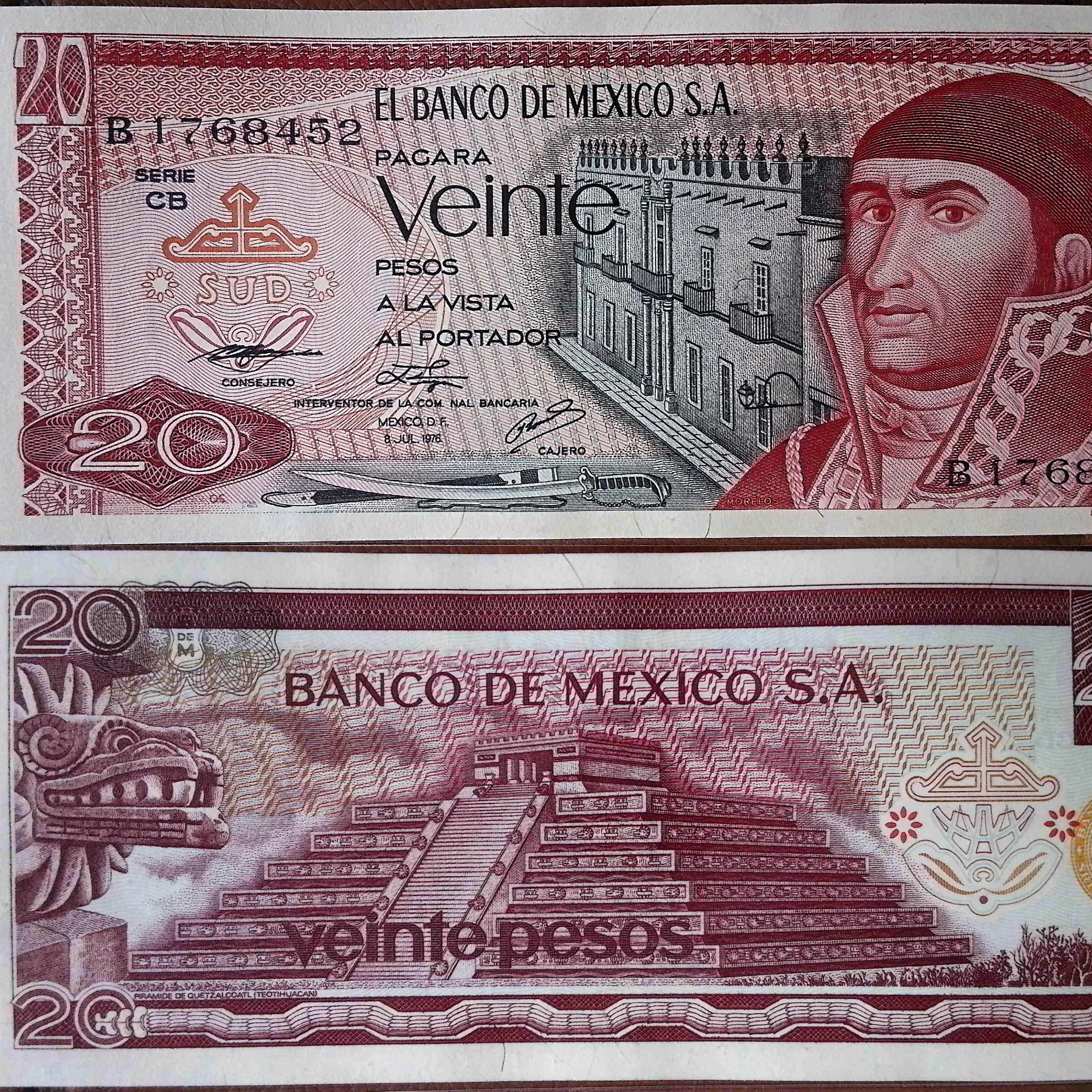
This podcast provides a comprehensive numismatic and historical analysis of the Banco de México 20 Pesos banknote, Serie CB, issued on July 8, 1976, classified as Pick 64c within the Familia AA series. The note's issuance is situated within the profound macroeconomic instability of the Echeverría administration, specifically the policies of 'Desarrollo Compartido' and the resulting inflation that culminated in the severe peso devaluation just weeks after the note's decree date. The design, produced domestically by the Fábrica de Billetes, reflects a state-sponsored commitment to 'Indigenismo,' synthesizing post-colonial republican values through the portrait of Independence hero José María Mor...
Germany: Reichsbank 1000 Mark Reichsbanknote (1910)
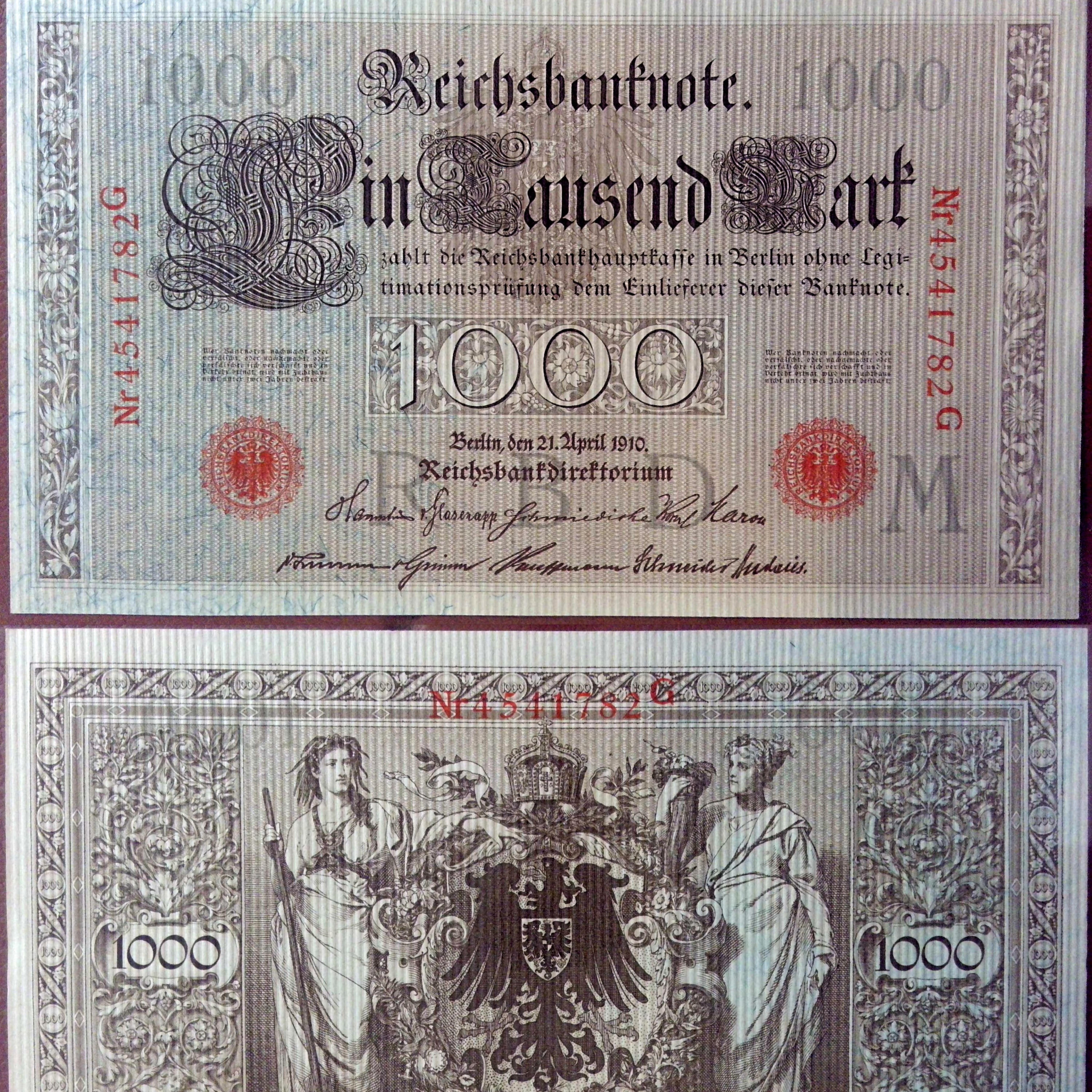
The issuance of the 1000 Mark Reichsbanknote on 21 April 1910 represents a critical intersection of economic policy, imperial ambition, and financial architecture during the height of the German Empire. To understand the significance of this specific banknote, one must examine the macroeconomic framework of Wilhelmine Germany.
In 1910, the German Empire operated under the classical gold standard, a monetary system where the national currency was directly pegged to physical gold reserves.1 Following the unification of Germany in 1871, the fragmented monetary systems of the various independent German states were consolidated into a single national currency, the Mark (often retrospectively referred to...
