Echoes and Footprints
We explore the impact of polyrhythms from Africa on the evolution of the music of the Americas.
Hidden Doppelgängers — Episode 4
The Other First Cousins: Beatbox & Scat. Same Mouth. Different Generations.
Same mouth. Different generations. One extraordinary musical family.
What do the jazz improvisations of Ella Fitzgerald and the rhythmic inventions of hip-hop beatboxing have in common?
More than you might imagine.
In Episode 4 of Hidden Doppelgängers: The Musical Family Reunion, Echoes & Footprints introduces two unexpected musical cousins: Scat and Beatbox.
One found its voice in jazz clubs, where singers transformed syllables into soaring melodies and horn-like improvisations. The other emerged as a defining vocal art of hip-hop culture, w...
Hidden Doppelgängers – Episode 3: More First Cousin: Bluegrass & Gospel Quartets
What do a bluegrass band and a gospel quartet have in common? More than you might imagine.
In this episode of Hidden Doppelgängers: The Musical Family Reunion, Echoes & Footprints travels into the Appalachian Mountains to introduce two musical first cousins: Bluegrass and Gospel Quartets.
One builds harmony through banjos, fiddles, mandolins, and guitars. The other creates it through the human voice. Yet both share a musical language rooted in listening, call-and-response, collaboration, and community.
We'll explore the African, European, and Appalachian influences that helped shape these traditions, including the West African ancestry o...
Hidden Doppelgängers – Episode 2: First Cousins – Bebop & Doo-wop: Same Town. Different Houses.
What do the sophisticated improvisations of Bebop jazz and the street-corner harmonies of Doo-wop have in common? More than you might imagine.
In this second episode of Hidden Doppelgängers: The Musical Family Reunion, Echoes & Footprints explores how two seemingly different musical traditions emerged from the vibrant African American communities of mid-20th-century cities.
One cousin found its voice in late-night jazz clubs, pushing the boundaries of harmony and improvisation. The other grew up on front stoops and street corners, where friends transformed simple melodies into rich vocal conversations.
Different sounds. Different settings. B...
Hidden Doppelgängers — Episode 1: Musical Family Reunion: Welcome to the Family - How to Recognize a Musical Relative
Welcome to Hidden Doppelgängers, a new Echoes & Footprints Showcase series exploring surprising connections between musical traditions that may sound different, come from distant places, and carry entirely different histories—yet share remarkable similarities beneath the surface.
In our opening episode, Musical Family Reunion, we look beyond familiar genre labels like jazz, gospel, bluegrass, salsa, hip-hop, and house to discover what makes two musical traditions resemble one another.
Through rhythm, harmony, improvisation, participation, and community, we introduce the idea of a Musical Doppelgänger: traditions that share a striking musical resemblance without necessarily sharing a dire...
Black Appalachia: When the Banjo Climbed the Mountains
The banjo may sound inseparable from Appalachia, but its story began an ocean away. In this Echoes & Footprints Showcase, we trace the instrument’s journey from its West African relatives through the Caribbean and American South and into the Appalachian Mountains.
Along the way, African musical traditions met European fiddle tunes, ballads, and mountain communities, helping shape a distinctly American sound. We explore the often-overlooked contributions of Black Appalachians and musicians such as Arnold Shultz, Lesley Riddle, and DeFord Bailey—and the musical conversations that helped lay the groundwork for bluegrass.
The mountains didn’t create...
Profile: Arnold Shultz - The Blues Before Bluegrass
Before bluegrass had a name, a Black guitarist and fiddler named Arnold Shultz was carrying blues, syncopation, and innovative guitar techniques through the coal towns and dance halls of western Kentucky.
Born in 1886, Shultz became one of the region’s most admired musicians, performing for both Black and white audiences during the Jim Crow era. His distinctive guitar style combined a steady bass pulse with melody, chords, syncopation, and fluid runs between chords—techniques that helped expand the guitar beyond its traditional role as a rhythm instrument.
Among the young musicians who encountered Shultz was Bill...
"I Feel Love": When the Future Learned the Ancient Groove
In 1977, Donna Summer and producer Giorgio Moroder created a record that seemed to arrive from the future. But beneath the synthesizers, sequencers, and electronic precision of “I Feel Love” lies an ancient approach to music-making: independent, repeating patterns combining to create a groove that belongs to no single voice.
This Echoes & Footprints Showcase explores how the song’s interlocking layers echo rhythmic traditions from West and Central Africa—and how its hypnotic architecture helped lay the foundation for Chicago house and generations of electronic dance music. The future didn’t invent a new groove. It discovered an ancient wa...
The Voice — Before There Was a Diva
Before disco had divas and house music had vocal anthems, there was The Voice—the powerful, expressive tradition that could lift a congregation, command a dance floor, and turn a room full of strangers into a community.
In this Echoes & Footprints Showcase episode, we follow the musical conversation between the sanctuary and the dance floor, exploring how gospel traditions of improvisation, call-and-response, testimony, repetition, and emotional lift echoed through disco and dance music. We hear that legacy in unforgettable performers including Loleatta Holloway, Martha Wash, Jocelyn Brown, Evelyn “Champagne” King, Sylvester, Donna Summer, and gospel legend Shirley Caesar...
The After School Beat Route: Finding the Collective Groove, When We Stepped Into the Real World
What happens when the lessons of childhood leave the classroom and enter real life?
In the series finale of The After School Beat Root, we discover that the rhythms we encountered through cartoons, songs, playgrounds, neighborhoods, stories, and shared experiences were teaching us something much bigger than music: how to live together.
From Gospel and Jazz to second-line traditions, Samba, Candombe, House music, family gatherings, and neighborhood celebrations, this episode explores the power of collective rhythm. No single voice owns the groove. Everyone has a role—sometimes leading, sometimes supporting, sometimes listening, and sometimes making sp...
Saturday Night, Sunday Morning — Part I The Sacred–Secular Continuum
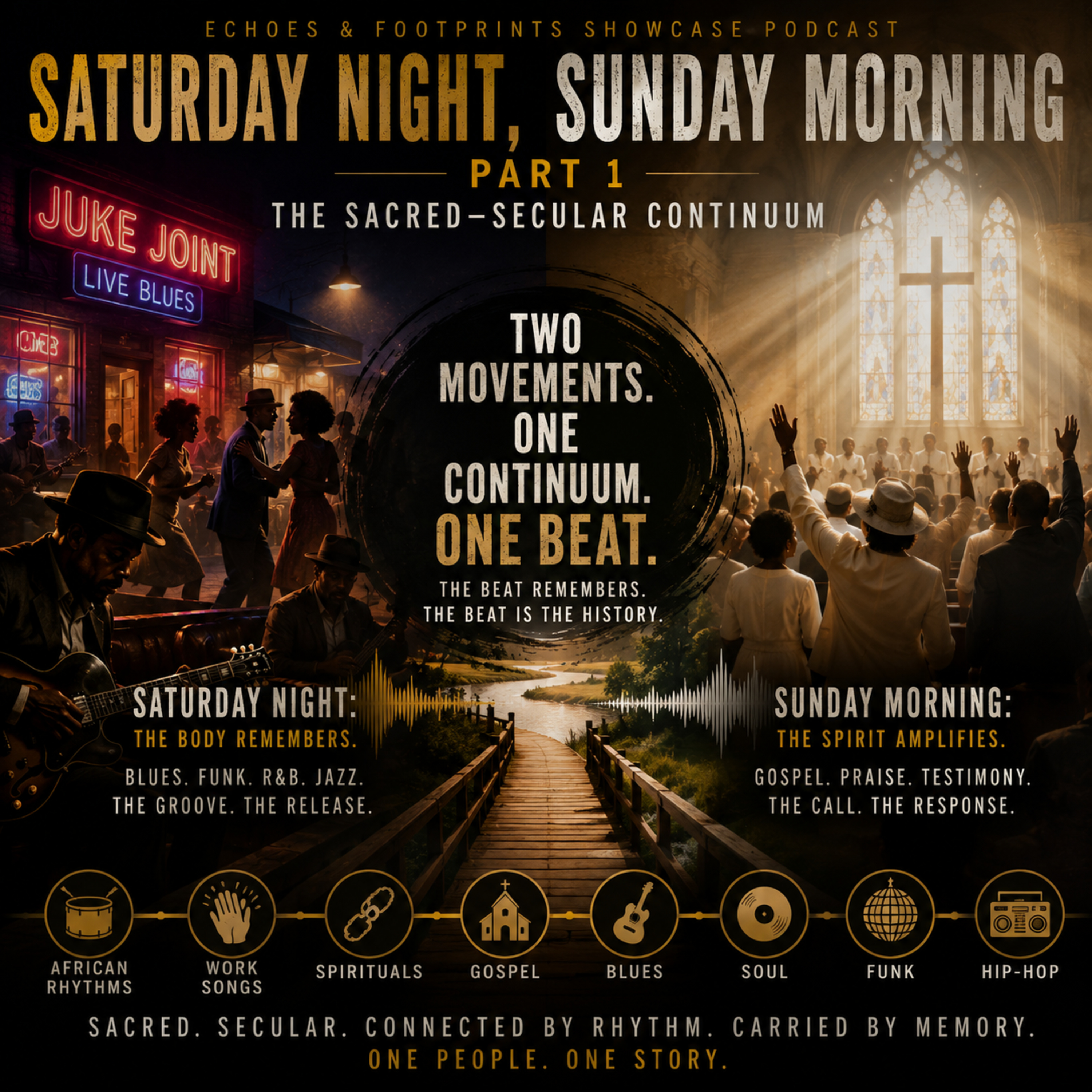
In Saturday Night, Sunday Morning — Part I: The Sacred–Secular Continuum, the Echoes & Footprints Showcase Podcast explores the deep relationship between African American sacred and secular music. The episode argues that Saturday-night music and Sunday-morning worship are not opposing traditions but interconnected expressions of a shared cultural memory. Rooted in West and Central African musical practices, rhythm accompanied work, worship, storytelling, healing, celebration, and mourning. After forced migration through the transatlantic slave trade, these traditions survived through spirituals, work songs, field hollers, ring shouts, handclapping, foot stomping, movement, improvisation, and call-and-response.
Saturday-night spaces—including juke joints, barrelhouses, house...
The After School Beat Route: Reading Between the Beats, When Words Learned to Groove
In Episode 5 of The After School Beat Root, “Reading Between the Beats: When Words Learned to Groove,” Echoes & Footprints explores the musical qualities hidden inside spoken and written language. Long before children recognize letters, they encounter rhythm through nursery rhymes, tongue twisters, hand-clapping games, repeated phrases, and stories read aloud. These early experiences help children hear rhyme, syllables, stress, timing, and other sound patterns that support phonological awareness and later reading development.
The episode presents expressive reading as a kind of musical performance. Skilled storytellers use changes in pitch, tempo, volume, phrasing, and silence to build suspense, crea...
The After School Beat Route: Sesame Street and the Neighborhood Beat
In Episode 4 of The After School Beat Root, “Sesame Street and the Neighborhood Beat,” Echoes & Footprints explores how an ordinary neighborhood becomes a living soundscape. Children playing, neighbors talking, buses stopping, church bells ringing, music drifting through windows, and countless other sounds combine like parts of a larger rhythmic composition. Viewed this way, Sesame Street was more than an educational television program: it was a carefully created neighborhood that introduced generations of children to cooperation, diversity, conversation, and belonging.
The episode connects this neighborhood experience to musical principles found throughout the African diaspora—particularly participation, layered voices, and ca...
The After School Beat Route: Schoolhouse Groove - When Learning Learned to Dance
“Schoolhouse Groove: When Learning Learned to Dance” explores why the songs we learned as children can remain in memory decades after ordinary classroom lessons have faded. Using Schoolhouse Rock! classics such as “Three Is a Magic Number” and “Conjunction Junction,” the episode shows how melody, rhythm, repetition, participation, and call-and-response can transform facts into experiences that are easier—and more enjoyable—to remember. Research on musical mnemonics supports this connection: musical structure can help organize information, provide rhythmic patterns for recall, focus attention, and strengthen verbal memory, particularly when learners actively participate.
But the episode reaches beyond educational tele...
The After-School Beat Route - Saturday Morning Polyrhythms: When Motion Learned to Groove
In the second episode of The After School Beat Route, “Saturday Morning Polyrhythms: When Motion Learned to Groove,” we revisit one of childhood’s most unexpected classrooms: Saturday morning cartoons. From Disney’s carefully choreographed animation to the perfectly timed pauses, crashes, chases, and surprises of Looney Tunes and the Road Runner, the episode explores how cartoons taught us to recognize rhythm long before we knew words like syncopation, anticipation, or groove. Movement becomes visible music—the Road Runner supplies the pulse, Wile E. Coyote creates the counter-rhythm, and silence, falling rocks, dust clouds, and comic crashes function like rests, acc...
Travel Showcase: Loud, Lit, and Live—My Trio Elétrico Experience
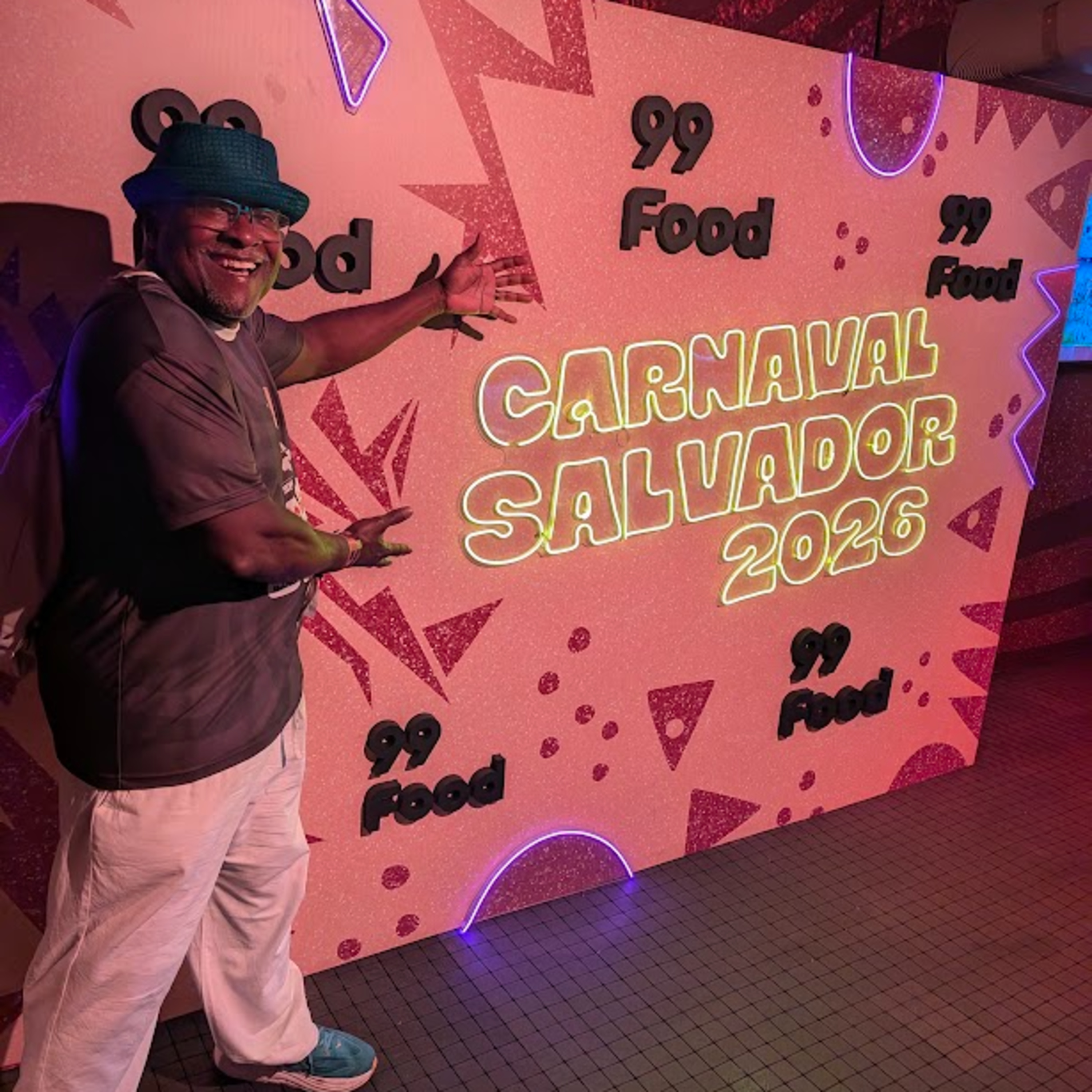
Inside the Surround Sound: Loud, Lit, and Live—My Trio Elétrico Experience is a first-person journey into the heart of Salvador, Brazil's Carnival (February 2026), where host Herman Boyd unexpectedly encounters a passing Trio Elétrico—a massive mobile concert stage that transforms an ordinary city street into a living celebration.
Rather than exploring the history of Carnival, the episode immerses listeners in the sights, sounds, and emotions of the experience, revealing how music, community, and movement merge into one unforgettable moment. Through vivid storytelling and rich sound design, it captures the feeling of becoming part of Bahia...
After School Beat Route: The Rhythm Lesson Plan
In the premiere episode of The After School Beat Root, Echoes & Footprints explores an unexpected idea: some of the most important lessons about rhythm were learned long before we ever stepped into a music classroom. The Rhythm Lesson Plan takes listeners back to the everyday world of childhood—sidewalks, playgrounds, living rooms, bicycles, cartoons, neighborhood games, and the sounds that filled the hours just after school. Through storytelling, reflection, and the interactive Listen Lab™, the episode reveals how ordinary experiences quietly taught us rhythm, anticipation, movement, and community without ever calling themselves music lessons.
As the episode unfo...
Showcase: When Sports Learned to Groove
When Sports Learned to Groove argues that one of the most important innovations in modern sports is not technological—it is rhythmic. The episode explores how sports organizations around the world have increasingly adopted participatory traditions rooted in the musical cultures of the African Diaspora to transform spectators into active communities. Rather than simply entertaining fans, rhythm, call-and-response, synchronized movement, chanting, and communal singing function as "social technologies" that create belonging. Through examples from FIFA soccer, rugby traditions, the NBA, Olympic ceremonies, and iconic stadium anthems like We Will Rock You, the episode demonstrates how rhythm has become a un...
Technology Showcase: Mix Tape as Beat Route
This episode of Echoes & Footprints explores the mixtape as one of the most influential "Beat Roots" in modern music history. Long before streaming services and algorithm-driven playlists, mixtapes allowed listeners to become storytellers, curators, and cultural ambassadors, carrying regional sounds, personal memories, and community identities across cities and generations. From hip-hop cassettes circulating through New York's boroughs to house music in Chicago, Miami bass, Detroit techno, and Houston's chopped-and-screwed scene, the mixtape transformed music from a product of mass distribution into a deeply personal act of connection. Through the Echoes & Footprints lens, the episode argues that mixtapes functioned as...
Showcase: the 7 Rhythm Markers
In this episode of Echoes & Footprints Showcase, Rhythm Markers: How Motion Sounds, we explore the idea that rhythm begins not with instruments or musical notation, but with movement itself. From footsteps, trains, engines, work songs, and highways to the shared motion of communities, the episode introduces seven "rhythm markers"—backbeat, syncopation, polyrhythm, call-and-response, bass groove, groove loops, and blue-note friction—as the fundamental ways the human body transforms motion into musical understanding.
Viewed through the Echoes & Footprints framework, these rhythm markers reveal how movement became cultural memory across the African Diaspora, shaping traditions from work songs and ring...
Saturday Night, Sunday Morning — Part 2: Church on the Dancefloor

Church on the Dancefloor, the second of a two-part mini series, explores the enduring relationship between African diasporic spiritual traditions and modern dance music, arguing that the perceived divide between sacred and secular music is largely artificial. Rather than portraying gospel as an influence added to disco or house music, the episode demonstrates that the rhythmic, harmonic, and communal structures of African American worship traditions—polyrhythm, syncopation, call-and-response, testimony, and collective participation—have remained intact as they migrated from the ring shout and the Black church into soul, disco, house, and contemporary dance music.
Following the "Beat Rout...
Saturday Night, Sunday Morning — Part I: The Sacred–Secular Continuum

Saturday Night, Sunday Morning — Part I: The Sacred–Secular Continuum explores the idea that the divide between sacred and secular music in African American culture is largely artificial. Drawing on African diasporic traditions, the episode argues that rhythm has always been part of a continuous cultural and spiritual experience rather than separate religious and secular spheres. From ring shouts, field hollers, and spirituals to blues, gospel, soul, funk, and hip-hop, the same rhythmic foundations—call-and-response, syncopation, improvisation, groove, and communal participation—have persisted across generations. The episode examines how Saturday-night spaces such as juke joints and dance halls allowed communit...
Showcase: Latin-Country Music as a Musical Crossroads
This episode explores Latin-Country music as a modern musical crossroads, where Country music and Regional Mexican traditions meet to create a new and rapidly growing genre. Rather than viewing it as simply Country music in Spanish or Mexican music with Country influences, the episode presents Latin-Country as the latest chapter in a centuries-long cultural conversation across the U.S.–Mexico border. It traces the roots of this exchange back to vaqueros, corridos, and the multicultural communities of the borderlands, emphasizing how rhythm, storytelling, dance, and participation blend together in the new sound. Through artists such as Carin León and...
Showcase: Trio Elétrico - The Moving Stage That Rewired Carnivale

In this Echoes & Footprints Showcase episode, "Trio Elétrico: The Moving Stage That Rewired Carnivale," we explore the revolutionary mobile sound system that transformed Brazil's Carnival culture. Originating in Salvador, Bahia, in 1950 when musicians Dodô and Osmar mounted electric guitars on a vehicle and drove through the streets playing frevo music, the Trio Elétrico evolved into a massive moving stage carrying live bands, towering speaker systems, and thousands of followers. The episode examines how this innovation reshaped the relationship between performers and audiences, turning the entire city into a performance space. We trace its connection to Axé music, Afro...
Showcase: Disney, Polyrhythms, and the Architecture of Motion
In this episode of Echoes & Footprints, we explore how Disney has used rhythm—particularly syncopation and polyrhythm—as a hidden engine of storytelling and animation for nearly a century. From the jazz-influenced motion of early cartoons like The Skeleton Dance to the groove-driven worlds of The Lion King, The Princess and the Frog, Moana, Coco, and Encanto, Disney composers have relied on African-diasporic rhythmic traditions to create movement, define character, establish cultural settings, and deepen emotional meaning. The episode argues that rhythm is far more than musical decoration; it is narrative infrastructure that shapes how audiences experience time, place, and...
PROFILE: DeFord Bailey, the harmonica that became a train

This episode of Echoes & Footprints profiles DeFord Bailey, one of the earliest stars of the Grand Ole Opry, and explores how his harmonica transformed the sounds of industrial America into music. Centered on his famous performance piece “Pan American Blues,” the episode explains how Bailey used rhythm, breath, and imitation to recreate the sound of a speeding train—capturing the motion, migration, labor, and possibility that railroads represented in early twentieth-century America. Through Echoes & Footprints’ “Beat Routes” lens, the episode connects Bailey’s music to African rhythmic traditions, the rise of radio broadcasting, and the emergence of country music as mass media...
Profile: Lesley Riddle helped birth country music

This PROFILE episode from Echoes & Footprints explores the overlooked legacy of Lesley Riddle, an African American musician whose extraordinary memory, musicianship, and song-collecting work helped shape the foundations of country music. Traveling through Appalachia alongside A. P. Carter in the late 1920s, Riddle absorbed and reconstructed songs from communities across the region—many rooted in Black musical traditions of blues, work songs, and rhythmic storytelling—at a time when recording technology was scarce. The episode argues that Riddle functioned as a living archive and cultural bridge, carrying musical ideas across racial and geographic boundaries even as segregation denied him prop...
Dashboard Chalkboard - Graduation

“The Crosswalk: Graduation Day” from the Dashboard Chalkboard series by Echoes & Footprints brings together the podcast’s central concepts of Beat Routes and Rhythm Routes to show how music carries both movement and memory across generations and geographies. Using examples that stretch from the Mississippi Delta to Chicago blues, from Detroit techno to Berlin clubs and Lagos rhythms, the episode explores how musical forms evolve through migration, technology, and cultural exchange while still preserving deeper rhythmic identities rooted in African diasporic traditions. The “Crosswalk” becomes a metaphorical meeting point where listeners learn to hear both what changes in music—its tools, e...
Dashboard Chalkboard: Beat Routes and Rhythm Routes

This “Dashboard Chalkboard: Extra Credit” episode distinguishes between Beat Roots—the geographic and cultural pathways music travels—and Rhythm Roots—the enduring patterns, pulses, and expressive qualities that persist across genres and locations. Through case studies like Delta blues migrating to Chicago, disco evolving through Jamaica to London, and techno moving from Detroit to Berlin and Lagos, the episode shows how sound changes in form, technology, and context (Beat Roots) while retaining core elements like syncopation, call-and-response, bass emphasis, and rhythmic feel (Rhythm Roots). It introduces the idea of a “Return Loop,” where diasporic rhythms circle back to Africa, transformed ye...
Dashboard Chalkboard: Homework - My Hometown

In this episode of Dashboard Chalkboard, “Homework: My Hometown,” Echoes & Footprints synthesizes the series’ core idea that music, once rooted in specific places, has been reshaped by mobility—from cars and highways to digital networks—into a global, ever-evolving conversation. While increased movement spreads rhythm and expands musical literacy, it also creates a “bypass effect,” where some local sounds fade or transform under outside influences. The episode frames hometown music as a polyrhythm, where local traditions and global inputs interact to produce new, hybrid identities. Ultimately, it argues that while something of place may be lost, new creative possibilities emerge, and th...
Dashboard Chalkboard: Digital Geography

This episode of Dashboard Chalkboard explores how music’s “geography” evolved from fixed, place-based traditions into a dynamic, global system shaped by movement—first through the rise of the U.S. interstate highway system, which trained listeners to experience music as continuous flow across regions, and later through digital networks that expanded that flow worldwide. It traces how mobility blended genres, fostered shared rhythmic literacy, and enabled the African diaspora’s core musical principles—polyrhythm, syncopation, and call-and-response—to circulate, transform, and return across continents in forms like reggae, house, techno, Afrobeats, and K-pop. Ultimately, the episode argues that today’s algori...
Dashboard Chalkboard: Math and Science - Acing the Test

This episode of Dashboard Chalkboard reframes a classic math problem—the “two trains” scenario—as a gateway to understanding polyrhythm, the foundational musical principle of multiple rhythms moving at different speeds and meeting at predictable points. Using the example of a 3:2 rhythm, it traces how these patterns originated in West and Central African musical traditions and traveled through the African diaspora into American music, shaping genres from blues and gospel to hip-hop and pop. The episode connects this concept to the everyday experience of driving, where layered motions mirror rhythmic complexity, and explains how mid-20th-century teenagers unconsciously learned polyrhyt...
Dashboard Chalkboard: Radio Active
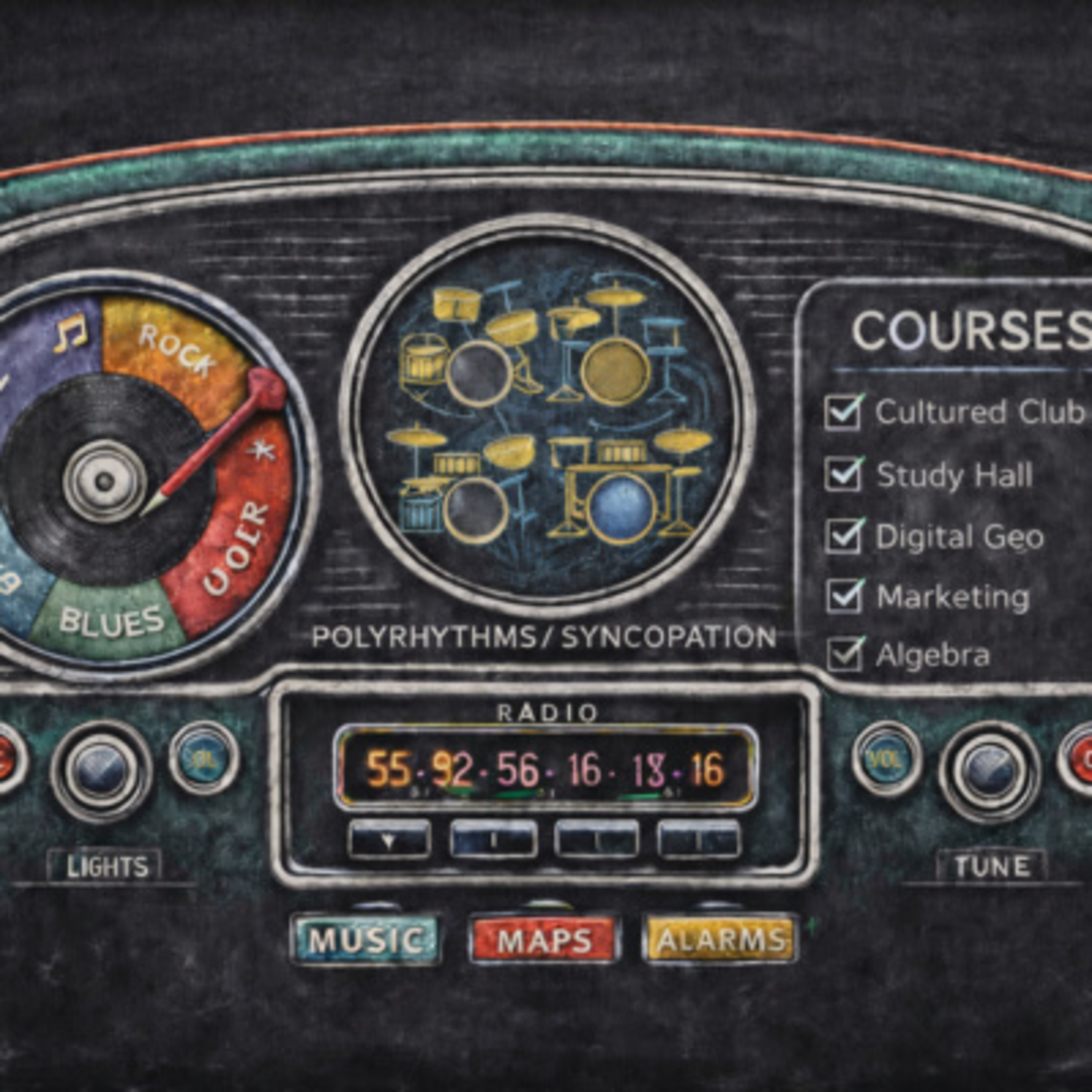
This week’s Dashboard Chalkboard episode, “Radio Active,” explores how the automobile became America’s first truly private, mobile listening space—and how that shift gave teenagers unprecedented cultural power. As cars, radio, and recorded music expanded after World War II, young people gained control over what they heard, transforming the dashboard into a personal “classroom” where rhythm-and-blues, soul, and early rock spread beyond their origins. Cruising culture turned driving into a ritual of shared listening, where groove-based music synced with motion and shaped identity, while cities like Detroit fused industrial production with musical innovation. In this new environment, teenagers didn...
Dashboard Chalkboard: The Cultured Club
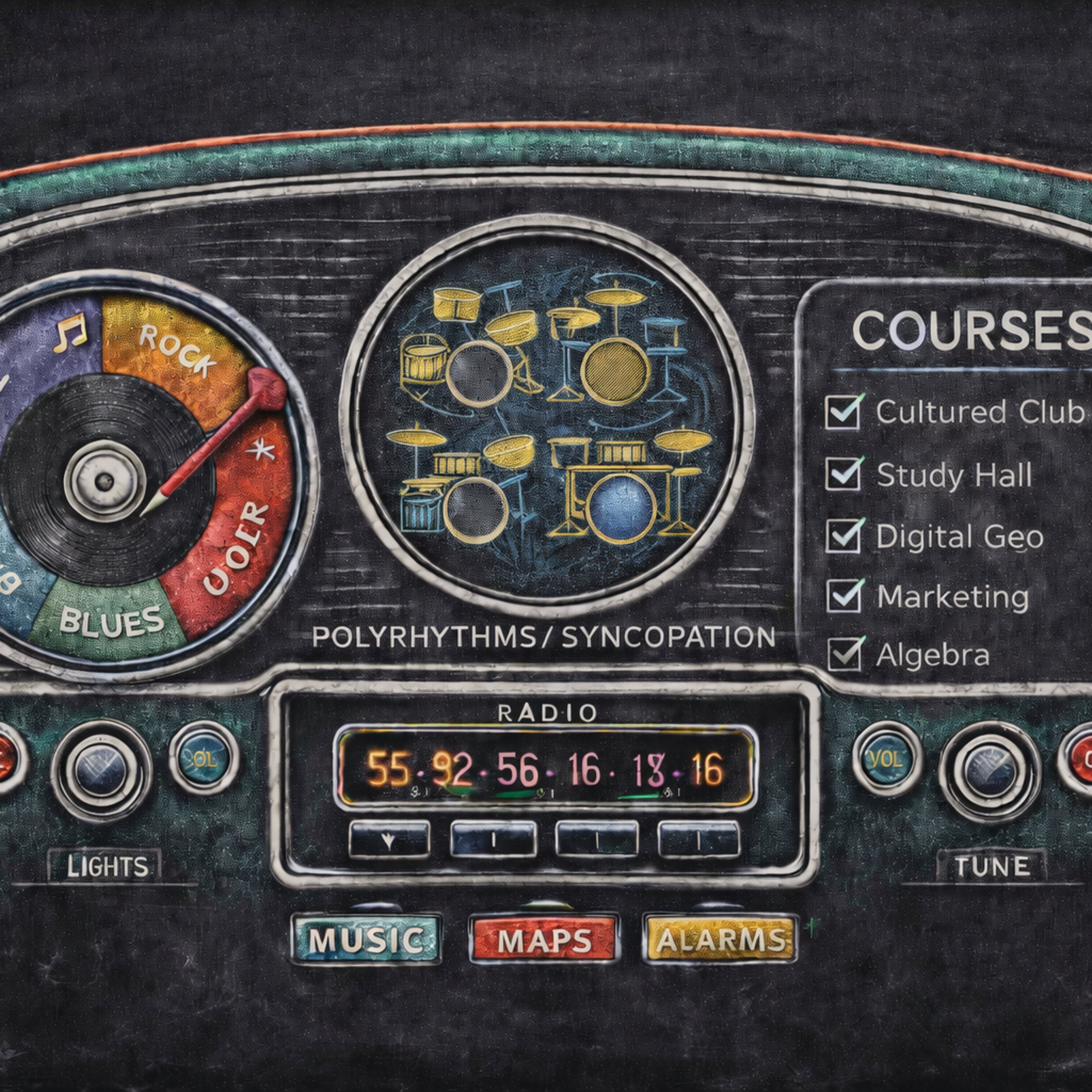
In this episode of Echoes & Footprints’ Dashboard Chalkboard Series, we explore how the automobile became America’s first “portable cultural chamber”—a moving space where music, identity, and culture converged. As broadcast radio met the open road, regional sounds like Delta blues, gospel, jazz, and rhythm-and-blues traveled far beyond their geographic roots, reshaping how Americans listened and learned. Inside the privacy of the car, exposure became normalization, and the rhythmic intelligence of the African diaspora quietly transformed the nation’s musical language. This episode uncovers how the dashboard became a hidden classroom—one where mobility amplified culture, and every mile carried t...
Selling Motion… “E-Motion”
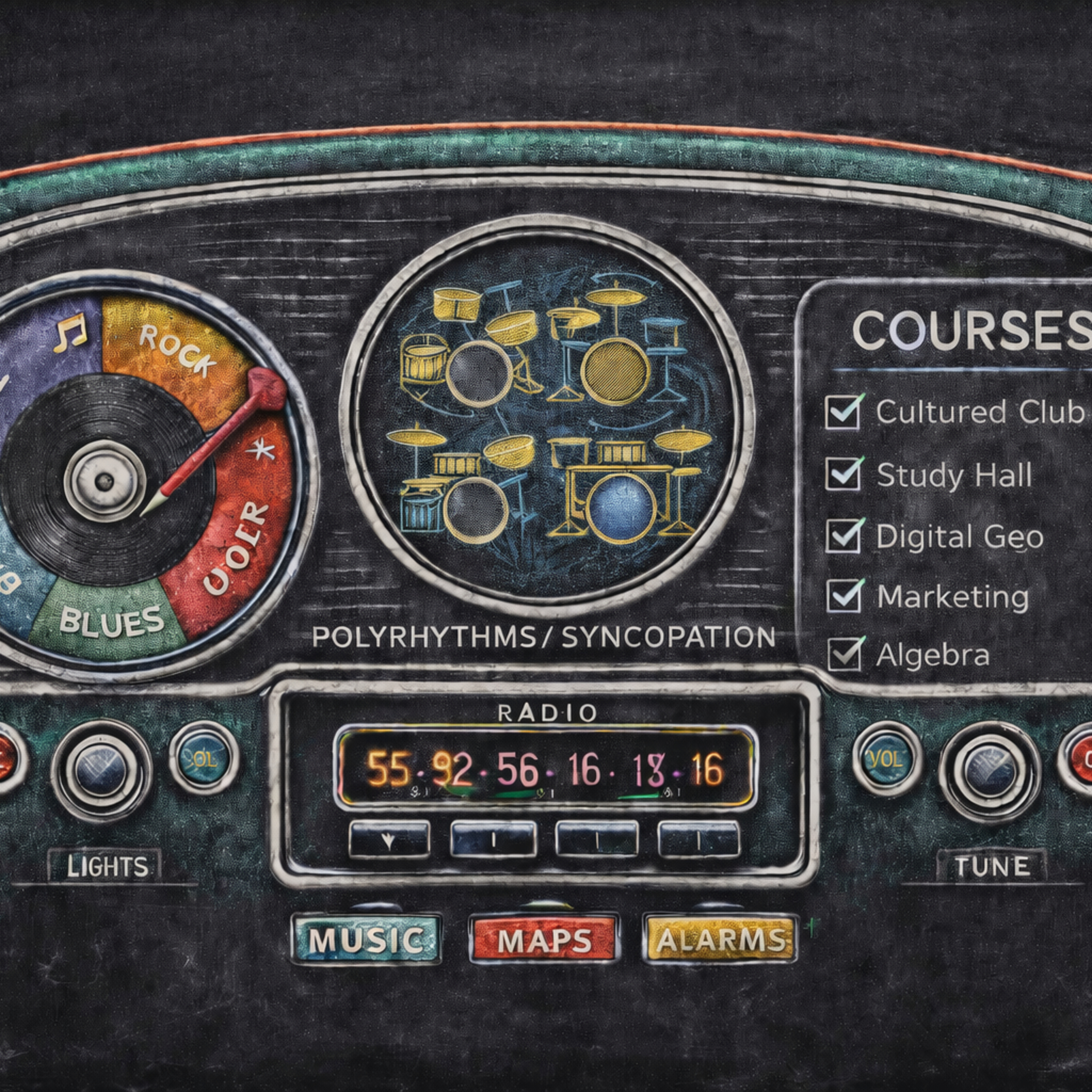
In this episode of Dashboard Chalkboard, Echoes & Footprints explores how the automobile became a cultural classroom where motion was translated into emotion through music. Long before streaming and algorithms, Americans learned how driving felt through rhythms rooted in the African diaspora—blues, jazz, gospel, and later soul and funk—broadcast through car radios and synchronized with the physical mechanics of motion. As highways expanded alongside radio networks, the dashboard became a site of immersive listening, where groove mirrored acceleration, repetition echoed engine cycles, and sound shaped perception. Advertisers ultimately recognized this connection, using music not as background but as the...
The Classroom on Wheels: How America Learned the Beat
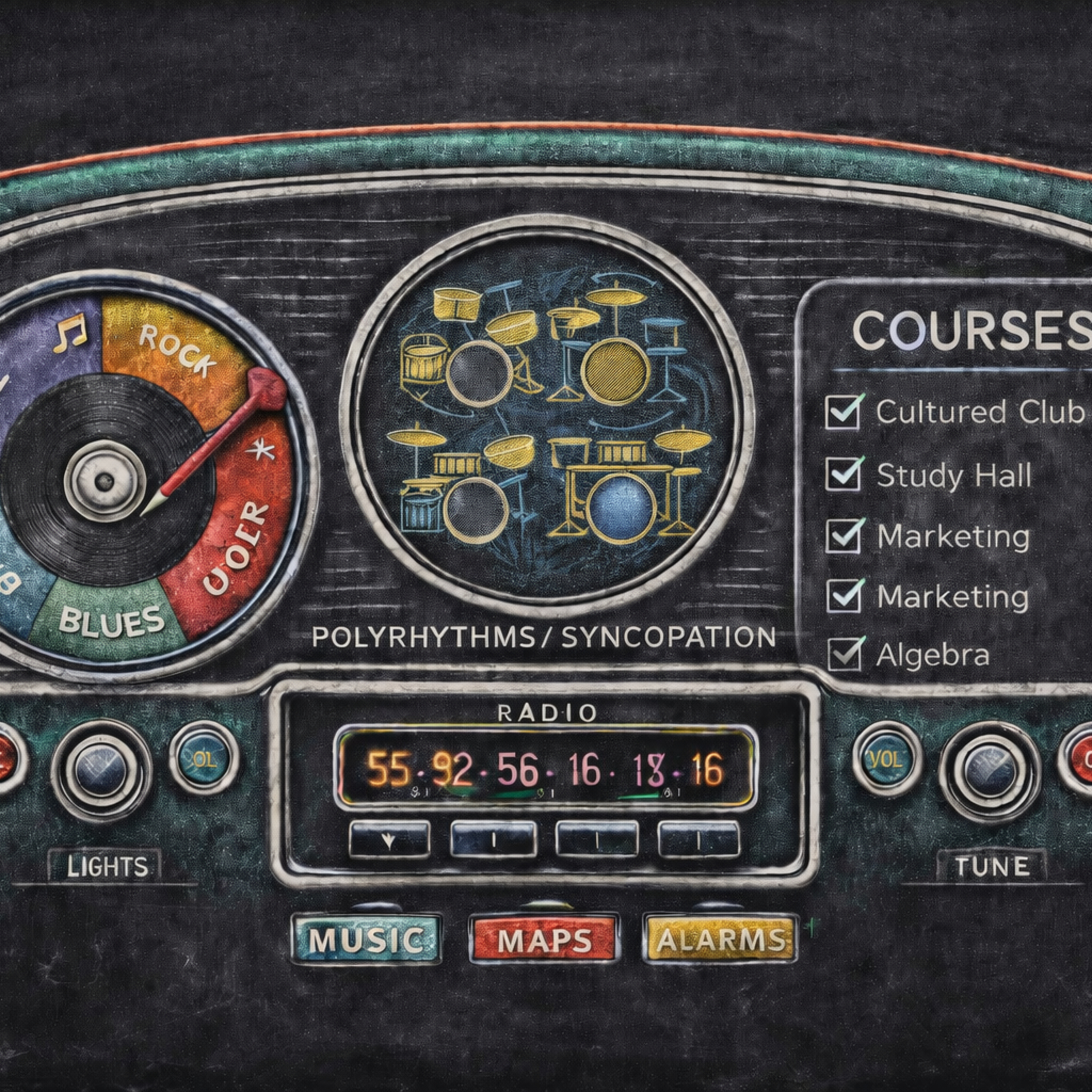
In the first episode of the Dashboard Chalkboard series, Echoes & Footprints explores how the American automobile quietly became one of the nation’s most influential classrooms. As drivers and passengers moved across highways and regions, dashboard radios carried blues, gospel, soul, and other emerging sounds across geographic and cultural boundaries. Without textbooks or teachers, millions of Americans absorbed rhythm, groove, and musical vocabulary simply by listening on the road. This episode introduces the idea that mobility didn’t just move people—it moved sound—turning the car into a moving classroom where the Beat of the Americas was learned mile by...
Instruments as Technology: From Constraint to Creation
In this Echoes & Footprints Showcase episode, we explore how musical instruments became technologies of survival and innovation. From the African roots of the banjo to the compressed polyrhythms of the drum kit, the testimony of the Hammond organ, and the invention of turntables and drum machines, musicians transformed constraint into creation. These instruments didn’t just make sound—they carried memory, culture, and rhythm forward.
Sources
Laurent Dubois — The Banjo: America’s African Instrument (Harvard University Press)
Joseph Horowitz — Understanding the Hammond Organ in American Music
Tricia Rose — Black Noise: Rap Music and Bl...
How Blues, Gospel, Country & Soul Share the Same Roots
Blues, gospel, country, bluegrass, and soul aren’t separate genres—they’re family. In this Echoes & Footprints Showcase Episode, we explore the shared roots of American music, where African rhythm, European harmony, and Indigenous storytelling formed one musical tradition. Same tree. Different branches. The beat remembers.
Minneapolis — Where Funk Became the Future
In the final episode of The Mississippi River: America’s First Streaming Platform, we travel to Minneapolis—the unexpected northern endpoint of America’s musical highway.
This episode explores how Minneapolis transformed funk into a new language. Shaped by the long currents of the Great Migration and refined by northern precision, the city re-engineered soul, R&B, and rhythm into something sharp, modern, and futuristic.
Through the revolutionary sound of Prince and the Minneapolis scene, funk became architectural: crisp drum machines, cutting guitars, bright synthesizers, and fearless innovation. Minneapolis stands at the bridge between analog groove...
Detroit: Where the BEAT Learned Precision
In this episode of The Mississippi: America’s First Streaming Platform, we travel to Detroit — the city where the beat becomes the future. Built on factories, repetition, and industrial precision, Detroit transformed African-diasporic rhythm into engineered soul through Motown, and later into coded futurism through techno. From the disciplined groove of the Funk Brothers to the electronic pulse that reshaped global club culture, Detroit emerges as a future-making node in the Beat Routes of America. This is the story of how rhythm survived collapse, became technology, and sounded like tomorrow.
Chicago The Machine Learned the Groove
In this episode of Echoes and Footprints, we travel north along the Mississippi River — America’s first streaming platform — to explore Chicago, one of the most powerful transformation points in modern music history. From the electrification of the blues with artists like Muddy Waters and Howlin’ Wolf, to the birth of house music in basement clubs and warehouse dance floors, Chicago is where African-diasporic rhythm entered the machine age without losing its soul. This is the story of a city that didn’t just receive the beat — it rebuilt it, evolved it, and sent it outward to shape the sound of the
