My Weird Prompts

The human-AI collaboration podcast. A man, a sloth, and a donkey collaborate to create a podcast (with a little help from AI). No question is too obscure, no rabbit hole too deep. My Weird Prompts celebrates curiosity in all its forms. Daniel, the human, asks the questions that pop into his head at inconvenient moments. Corn the Sloth offers laid-back, thoughtful takes. Herman the Donkey brings boundless enthusiasm and energy. Together, they explore topics ranging from the mundane to the mind-bending. Each episode begins with a real voice memo from Daniel, processed through an AI pipeline that generates scripts, synthesizes...
Building Herod's Wall, One Course at a Time
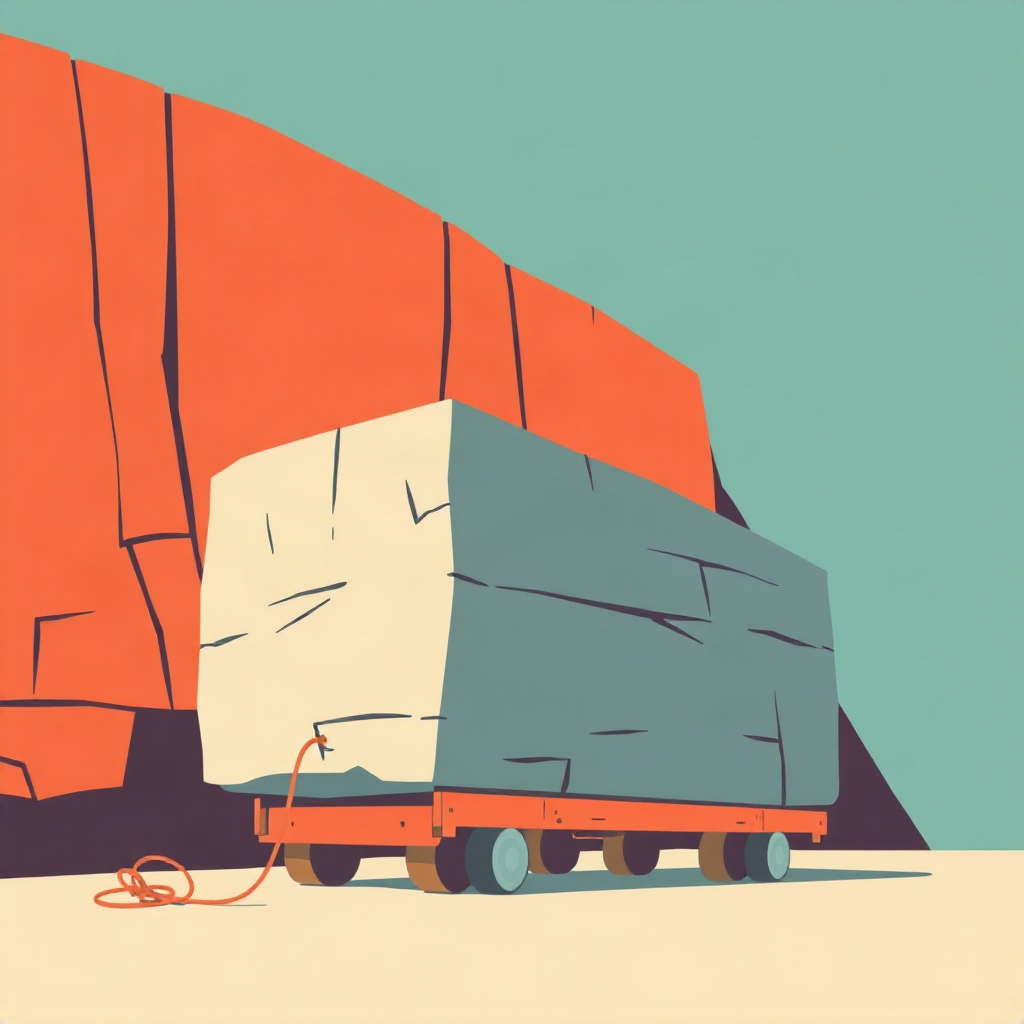
The Western Wall is usually encountered as a place of prayer. This episode treats it as a construction site. Working from a listener's spec-sheet request, we walk through the material, the quarrying, the transport and the lifting of Herod the Great's 488-metre retaining wall — 19 metres of exposed height, 45 courses, blocks weighing hundreds of tonnes. The stone dictated the module: local meleke limestone with horizontal bedding planes eighteen inches to five feet thick meant the course heights were set by geology two hundred million years before anyone showed up. Quarry evidence from Har Hotzvim (excavated 2021, announced 2024) shows blocks cut free with wo...
Free Speech's Outer Edge: Hate Speech Law

In 1969, a unanimous Supreme Court threw out a Ku Klux Klan leader's conviction and replaced fifty years of doctrine with a single sentence: speech can only be punished when it's directed at, and likely to produce, imminent lawless action. That's the closest any wealthy democracy has come to a truly laissez-faire approach to hate speech and incitement — and it still has holes. This episode traces the doctrine from Brandenburg through Hess, Claiborne Hardware, and Skokie, then asks the harder question: which countries have actually come closest to zero criminal penalty, zero civil liability, no mandated takedowns? Estonia has refused EU ha...
Hebraizing the Jewish Name: Ivrut's Rise and Cost

In 1944 the Jewish Agency published a booklet with five methods for Hebraizing a Jewish surname. By 1950, Ben-Gurion had made it a binding order for state officials, and 17,000 people changed their names in a single year. This episode traces Ivrut — the Hebrewization of names — from the First and Second Aliyah through the Committee for Hebrew Names, the homophone problem, and the Ekelnamen: degrading names like "liar" that families were finally allowed to hand back. It sits inside the tension the whole project lives in: one bureaucracy's imposed names replaced by another's, framed as a return. Plus the kitchen-table argument between sound and...
What Happens to Retired London Buses?

What happens to a London bus after London is done with it? Journalist Harry Rosehill wrote a whole field guide to find out. In this episode, we trace his path from Londonist intern to National Gallery content manager, and dig into *Routemasters of the Universe* — a birdwatching-style catalogue of 50 retired Routemasters scattered across the world as tea rooms, circus vehicles, food trucks, and one bus in Baghdad. We also unpack the essay that explains why he loves buses at all, the childhood 15H ride to meet his dad, and the statistic that made the book possible: London buses carry roughly tw...
46,434 Mailing Lists That Still Work

A listener named Daniel asked a simple question: are there public discussion spaces left that anyone can join, fully indexed, and not owned by a platform? The answer turned out to be 46,434 LISTSERV lists, plus a few dozen humanities lists that never left email. This episode digs into why mbox archives outlive web forums, why distributed archives make a list almost impossible to kill, and why an issue comment and a listserv thread are arguing at completely different altitudes. Also: the 2014 study that found anonymous commenters were nearly three times less likely to be civil — and what that means for an...
When Agents Don't Need Your Pretty Buttons

AI agents are now real software users, and the tools winning with them are the ones with almost no interface at all. FFmpeg, the volunteer-maintained command-line video tool, is at the center of a wrapper boom — thousands of MCP servers translating human-oriented CLIs into agent-callable tools. But the deeper question is what happens to user experience when the user can't see your design. Enter Agent Experience, or AX, a framework coined by Netlify's Mathias Biilmann arguing that structure is the interface, that every action needs feedback, and that a beautiful page with poor semantic HTML is invisible to agents. This ep...
Why Linux Still Runs on a 1986 Mailing List

Every Linux kernel release candidate still ships through email. In September 2026, Linus Torvalds announced Linux 7.3-rc5 on the Linux-Kernel Archive, and a twenty-patch kbuild series got reviewed inline on the same list. This episode traces the listserv from its 1984 human-administered origins through Éric Thomas's 1986 automation breakthrough to the present day, asking why the most advanced computing community on earth never abandoned a forty-year-old tool. Along the way: Python's unmoderated 1991 mailing list, the invention of double opt-in and the first spam filter, and what Slack, Discord, and GitHub pull requests actually give up compared to plain-text email with a public archive. K...
Special Release: "Herman Poppleberry" by Hilbert Flumingtop

A short special episode. Producer Hilbert Flumingtop has written a song about Herman Poppleberry, and Corn plays it to him for the first time. Hilbert wrote the lyrics and the composition; the music was generated with Suno. Short banter, the full song, then out. Episode 5815 — myweirdprompts.com/n/5815 (permanent short link: myweirdprompts.com/864317)
Who Remembers Where You Left Off?

Daniel asked whether playback progress, completion status, and listening history are reusable components or something every media app rebuilds from scratch. The answer sits somewhere uncomfortable: mpv bundles a real resume feature (quit-watch-later, save-position-on-quit, flat watch-later config files), but it's locked inside the player. Media3 and ExoPlayer hand you an event stream, a position, and a maintainer telling you to persist it yourself — in Room, Android's SQLite layer, which knows nothing about audio. GstPlay exposes position, duration, and a message bus, but no resume store, and its Play API is documented as unstable. MPRIS standardizes live playback state beautifully over D...
How Python Became AI's Default Language

Python has no scientific data structures at its core — no arrays, no matrices — yet it leads AI development at 58% adoption. This episode traces the unlikely path: a 1995 mailing list post that seeded NumPy, a 2005 MATLAB licensing change that pushed research institutes toward Python, and a NIPS workshop where the scientific community converged on one toolchain. Then the AI boom arrived and changed who was showing up. We dig into the packaging chaos newcomers inherit — distutils, pip, conda, Poetry, uv — and why "there should be one obvious way to do it" never applied to distribution. Plus: why TIOBE shows Python dipping while PY...
One Number, Every Hard Question: Agent Session State

Daniel wants a Telegram bot that tracks AliExpress cart totals and pings him when the cart crosses the free-shipping line to Israel. The number is trivial. The state architecture around it is not. This episode works through where an agent session begins and ends, why a stateless model needs a runtime notebook, what happens when you leave a session open across order cycles, and whether a database is overkill for a memory that holds a single number. Along the way: the Chroma study on context length and distractors, why shuffled haystacks beat tidy ones, idle expiry versus manual session cuts...
Can an Agent Actually Place Your Order?

Every major agentic commerce protocol shipped in the last eighteen months — OpenAI and Stripe's ACP, Google's UCP, Shopify's Checkout MCP — and none of them shipped with AliExpress, where the cheap DIY components actually live. This episode walks the timeline from Arcade and Lithic's production agentic procurement in August 2025 through Shopify's escalation-aware checkout tools, the WooCommerce plugin that logged 308 agent sessions and 66 euros, and the read-only community AliExpress MCP that locks out for thirty minutes when anti-bot verification fires. The real question isn't whether an agent can browse a store. It's whether an agent can hold a payment method and commit a tr...
Standoffs, Anchors, and the Outlet Behind the Whiteboard

Daniel's new place has no room for his whiteboard, and the one wall that fits has an outlet on it. What starts as a mounting question becomes a lesson in thread standards: drywall anchors take coarse sheet metal screws, standoff barrels take a fine 5/16"-18 machine thread, and they simply won't mate. The fix is a two-part chain — anchor, then adapter — sold as kits by Gyford and Monarch Metal. Along the way: why Hannah's "shim" is actually a manufacturer-recommended wall plate, what the metal cross-pattern anchors change (nothing), and the ten-pound ceiling before you're into studs or toggles. Key sources: • Monarc...
What If Israel Had Never Fallen? A 2,000-Year Thought Experiment

What if the land of Israel had never been conquered — no Rome, no diaspora, no Crusaders, no Ottomans? Inspired by the Korean drama The King: Eternal Monarch, this episode takes Hannah's counterfactual seriously. We dig into the real scholarship behind "what if" Jewish history, the office of Nasi and the Great Sanhedrin as an actual Davidic dynasty with judicial power, the four-room Israelite house and what its floor plan says about egalitarianism, and the sharpest question of all: is antisemitism ancient and permanent, or mostly a product of Jews living as a minority inside someone else's society? Key sources: • Cambridge Univ...
Ninety Percent of Cries Answered in 25 Seconds

A mother in a hunter-gatherer camp is rarely alone with her baby — and she's still the single largest provider of care. New research on the Mbendjele BaYaka and Agta tracks who actually responds when an infant cries, how fast, and how many people are involved. The answers are strange enough to make you rethink the two options we argue about: mom stays home, or baby goes to daycare all day. This episode works through the attention data, the gradual return to work, and the design question nobody has built — including what the ratio research says about staff turnover, mixed-age groups, and...
Why a Closing Door Upsets a 15-Month-Old

Hannah wrote in about Ezra, fifteen months old, who is fine with caregivers and fine with his parents leaving the room — but loses it when a door closes, even a cabinet door. The obvious answer is separation anxiety, and the obvious answer doesn't fit. There's no published research on door-closing distress specifically, so this episode maps what every parent has seen onto four documented mechanisms: object permanence, barriers, autonomy and control, and transitions. The closest published analog is a 1975 Child Development study using a Plexiglas box, plus 1977 reactance research showing that a barrier doesn't just block an object — it changes how...
Graphene's Real Story: Lab to Fab at Last

Graphene has been "about to change everything" for twenty years. The properties are real and measured: stronger than steel, more conductive than silver, nearly transparent, impermeable to every gas. So why is it still mostly in the lab? This episode digs into the boring parts that actually held it back — dispersion, standards, and price per kilogram — and why the last eighteen months have quietly shifted the story from pitch deck to production line. From sticky tape and a Nobel Prize to CVD versus liquid-phase exfoliation, this is the honest arc of a material that was never oversold on physics, only on t...
Freeze the Model, Move the Labels

Daniel built a home inventory classifier that sorts items into boxes. Then he bought three new boxes, and the model went stale. His instinct was to retrain weekly — but the real problem isn't the model, it's that his label set keeps changing. This episode digs into the two architectural answers: retrain on a moving label set, or freeze the encoder entirely and put the labels in a vector index instead. Along the way: why SetFit training costs about two and a half cents, why synthetic training data can beat real labels on one benchmark and fail silently in your garage, an...
Text Classifiers: Local Models vs Always-On Endpoints
Daniel has a home inventory system, a box of soldering supplies, and one question: is there a casual SaaS for text classification, or should he just run a private model locally? The answer turns out to be a landscape, not a product. Specialist classifiers beat general LLMs on both cost and accuracy — roughly twenty-five times cheaper and ahead on intent benchmarks — which makes the local instinct right and the SaaS pitch harder to justify. The features Daniel wants do exist, several times over: upload labeled pairs, retrain on a cadence, call inference over a stable endpoint. What doesn't exist is a ho...
Who Built Jerusalem's Old City Walls?
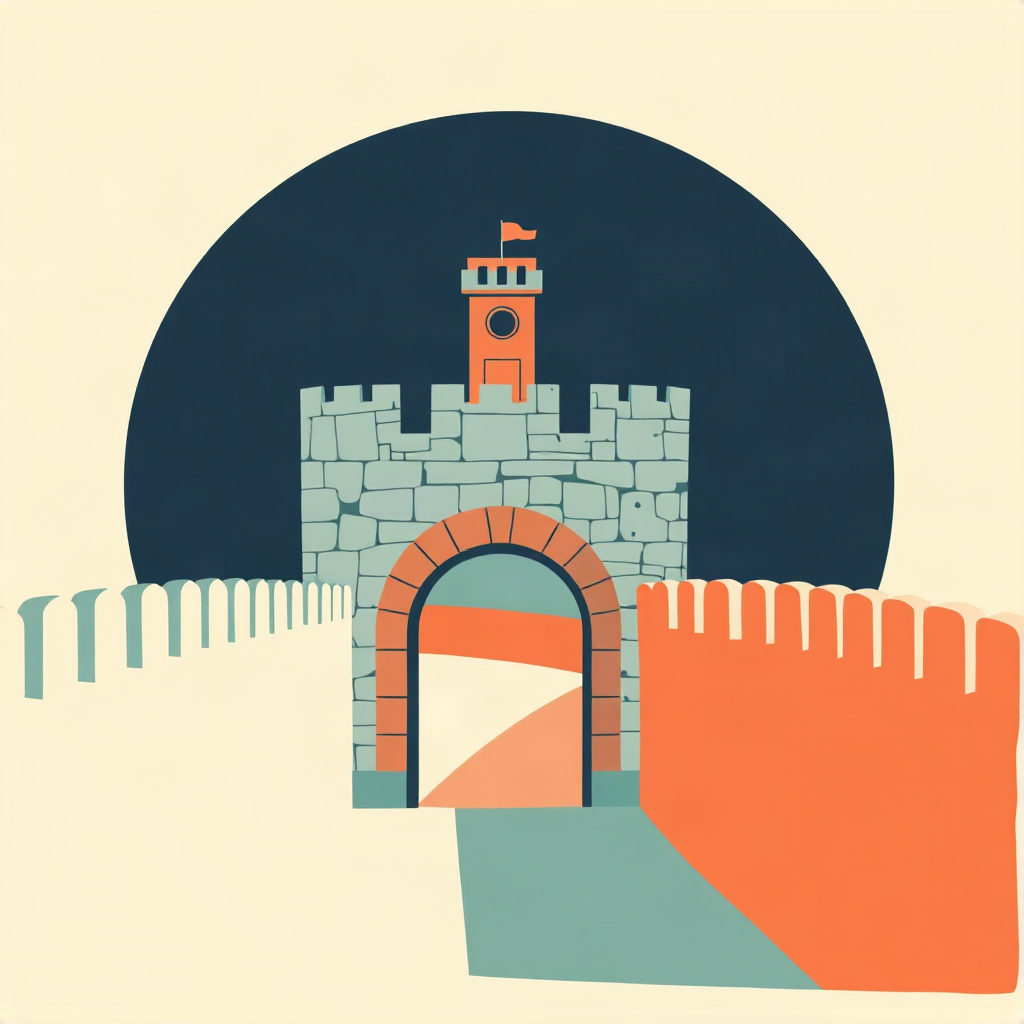
Daniel walks past Jaffa Gate and Damascus Gate every day and wanted to know who actually built the walls he's looking at — not the Temple Mount retaining walls, but the four-kilometer circuit around the Old City. The answer is Ottoman: Suleiman the Magnificent, roughly 1537 to 1541, which makes these walls more recent than a Shakespeare play. This episode digs into why a sultan who understood artillery better than anyone built a wall too thin to stop cannon, why Mount Zion was deliberately left outside the line, and how a Jewish financier in Egypt paid for the whole thing. Plus: the execution le...
The Mamluks: From Slave Market to Sultan's Throne

In 1250, a group of manumitted slave-soldiers assassinated the Ayyubid sultan and founded one of the most unusual regimes in history. For the next 267 years, the Mamluks — men literally "owned" — ruled Egypt, the Levant, and the Hejaz, defeating both Crusaders and Mongols along the way. This episode traces the full arc: the steppe recruitment system that manufactured a self-replicating military caste, the strange paradox of manumission as the mechanism of loyalty, the battles that stopped the Mongol advance and ended the Crusader presence, and the Jerusalem monuments that still stand today. We also examine a contested claim about gunpowder at Ain Jalu...
Who Were the Canaanites, Hittites, and Israelites?

Canaanites, Hittites, Hebrews, Amorites, Philistines — the Bible and ancient histories crowd a dozen peoples into one small patch of the Levant, and most of us have never been clear on who was who. This episode untangles the Late Bronze and Early Iron Age Levant, starting with the strangest case: the Hittites, where an Indo-European empire in Anatolia and a small Canaanite hill tribe with Semitic names share a single label that neither of them used for themselves. From there, the Canaanite-Israelite relationship comes into focus — and the older conquest picture falls apart. The scholarly consensus is that Israel developed in the...
A Friday in 700 BCE Jerusalem

What did ordinary people actually do all day in biblical Jerusalem? This episode spends a Friday in the seventh century BCE, late First Temple period, in the House of Ahiel — the most complete ordinary home excavated from the city that fell to Babylon in 586 BCE. Grounded in what archaeologists actually pulled out of the ground, it reconstructs the morning grinding of grain, the tannur oven and its stew, the smells of a narrow street, and the honest, unglamorous details that rarely make it into the story — including the parasite eggs recovered from a limestone toilet seat. Along the way: the Giho...
Two Agents, One Approval Gate: Wiring a Dictation Workflow

Daniel dictated a prompt about a nuclear project name and got back a gargantuan multi-part document instead of an answer. This episode works through the fix he asked for: two agents, one that resolves facts and one that tightens language, with a human confirmation gate before dispatch. The conversation covers why agents overproduce, what "Ask or Assume?" found about dedicated clarification detection, why the value is in declining to ask, and where the approval gate belongs — in the tool or at the MCP server. Plus the glue question: LangGraph's explicit graph and interrupt function versus role-based autonomy, and how the Ju...
Project Sundial: Teller's 10-Gigaton Doomsday Proposal

In July 1954, Edward Teller walked into a meeting of the Atomic Energy Commission's General Advisory Committee and proposed the largest weapon ever conceived: Sundial, a 10,000-megaton bomb fused by a 1,000-megaton primary called Gnomon. Isidor Rabi called it an advertising stunt. Livermore kept working on it anyway, planning a prototype test during Operation Redwing in 1956 that never happened. This episode digs into what Sundial actually was, why the staged Teller-Ulam design put no theoretical ceiling on yield, and why blast physics — which scales with the cube root of yield — made every step up the ladder a worse deal than the last...
How Many Nuclear Tests Have There Really Been?

Since July 16, 1945, eight nations have detonated nuclear devices — but the official tally depends entirely on who's counting and what they've agreed to count. This episode digs into why the Arms Control Association says 2,056 tests, Wikipedia says 2,121, and SIPRI landed at 2,058, and how a single salvo of five warheads can be recorded as one line item. It also examines the detonations that never made the list at all: subcritical experiments that produce zero yield, the still-unconfirmed 1979 Vela incident, and a 2020 US allegation against China that no independent monitoring system ever flagged. The numbers tell a story — and it's a story about trea...
900 Tonnes on Public Roads: The Weirdest Cargo Moves
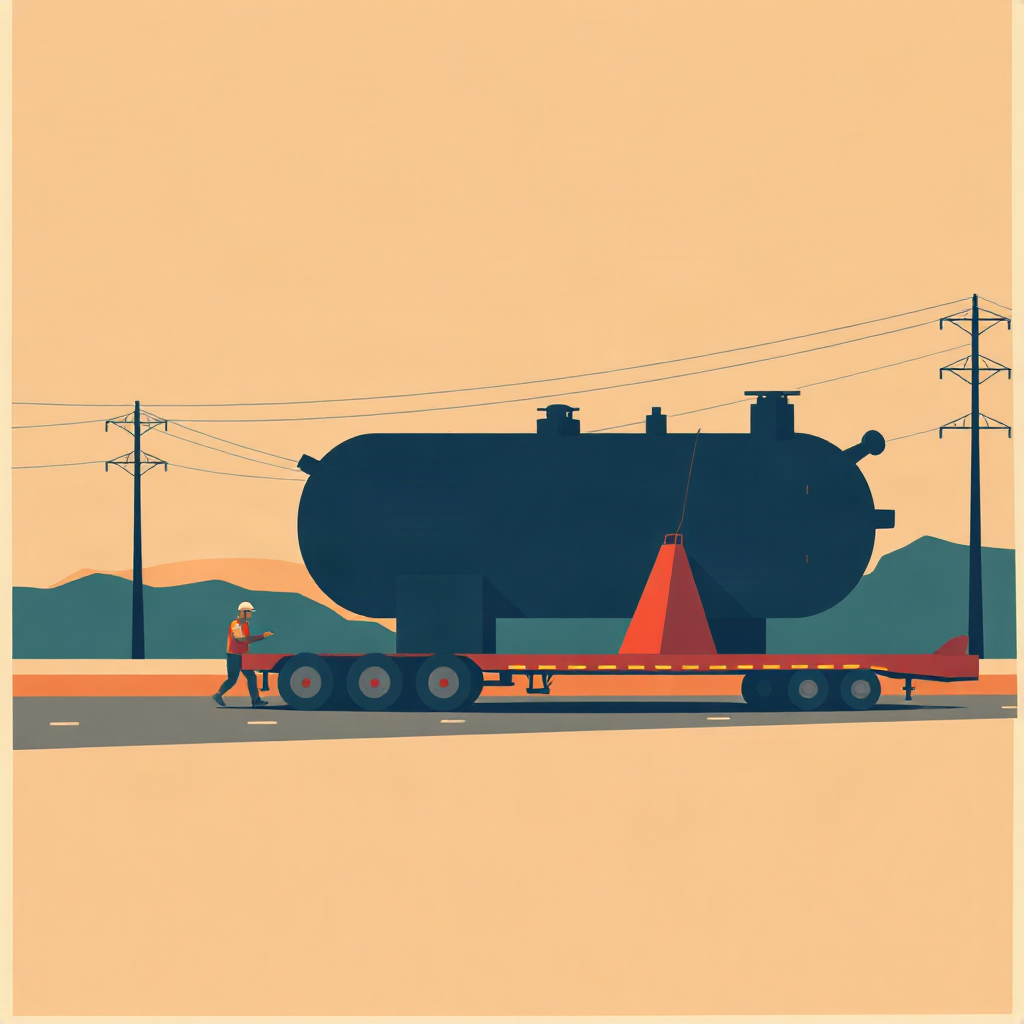
What does it take to move a 900-tonne industrial vessel, a Space Shuttle orbiter, and a live elephant across ordinary public roads? This episode digs into the obscure logistics industry behind the world's strangest cargo movements — the axle-load physics that make them possible, the months of route surveys and utility crews, and the specialized haulers who've turned it into a career. From a 138-metre splitter crawling out of Tofield, Alberta at 4 a.m. to nine Asian elephants moved 40 kilometres over five days, we ask how any of this actually gets organized — and whether there's a whole industry quietly doing it for...
Digging Harbors with Nuclear Bombs: Project Plowshare

In 1957, the U.S. government launched Project Plowshare under the Atoms for Peace banner, betting that nuclear explosions could dig canals, carve highways, and unlock natural gas. Thirty-five devices and twenty-seven tests later, the program was quietly dead. This episode traces the optimism, the actual detonations — Sedan, Gnome, Gasbuggy, Rulison, Rio Blanco — and the human ledger of exposure that the program never escaped. Why did a program named after Isaiah's swords-into-plowshares prophecy fail? Not for one reason, but three: contamination, economics, and a better, boring alternative called hydraulic fracturing. Key sources: • DOE/OSTI, Plowshare Program Executive Summary (PDF) — https://www.osti.gov...
Starfish Prime: When the US Nuked Space

On July 9, 1962, the United States launched a Thor rocket from Johnston Atoll and detonated a 1.4-megaton thermonuclear warhead 400 kilometers above the Pacific Ocean. The blast turned the sky green across the southern hemisphere, lit Royal New Zealand Air Force night patrols from 2,000 miles away, and knocked out streetlights in Honolulu. It also created artificial radiation belts that slowly destroyed satellites over the following months. This episode traces why the US decided to bomb the Van Allen belts — the same belts James Van Allen had discovered just four years earlier — what the instruments actually recorded, and why some of the most impo...
Little Boy: The Untested Bomb That Changed War

Little Boy was the least efficient nuclear weapon ever built, throwing away 98.5% of its fuel — and it was the one Los Alamos trusted without a full-scale test. This episode traces the strange engineering of the gun-type bomb, from the death of the plutonium Thin Man design to the 72-inch cannon barrel that became the world's first deployed atomic weapon. Then it follows the morning of August 6, 1945, from Tinian's runway to the detonation 1,968 feet above Hiroshima. And it confronts the harder question: what does it mean that a 15-kiloton weapon — 3,300 times smaller than Tsar Bomba — killed over 100,000 people and permanently changed how st...
Tsar Bomba: The 50-Megaton Test That Shook the World

On October 30, 1961, the Soviet Union detonated RDS-220 over the Arctic — a 50-megaton device the West called Tsar Bomba. It was built in just sixteen weeks, carried under a stripped-down bomber, and slowed by a parachute made from nylon hosiery fabric. This episode digs into why Khrushchev ordered a weapon with no military requirement, how Sakharov's last-minute tamper swap cut the fallout by 97%, and what the real numbers actually were — separating documented fact from decades of repetition. Part one of two; next time, the American side: Project Sundial. Episode 5792 — myweirdprompts.com/n/5792 (permanent short link: myweirdprompts.com/032540)
How to Become an Honorary Consul for a Tiny Nation

A retired management consultant in a Welsh village runs a country's consulate out of his house — because his wife is from Kiribati and the president asked him in 1996. That's the whole qualification. So can you engineer it on purpose? This episode walks the actual mechanism: the 1963 Vienna Convention's split between career and honorary consuls, why only the sending state can nominate, the receiving state's exequatur veto, and the U.S. geographic filter that means you don't pick a country — you pick a country with a hole shaped like your city. Plus the Easter Island tour operator who "basically appointed himself," the...
Police Auditors: Rights, Rage, and the Camera
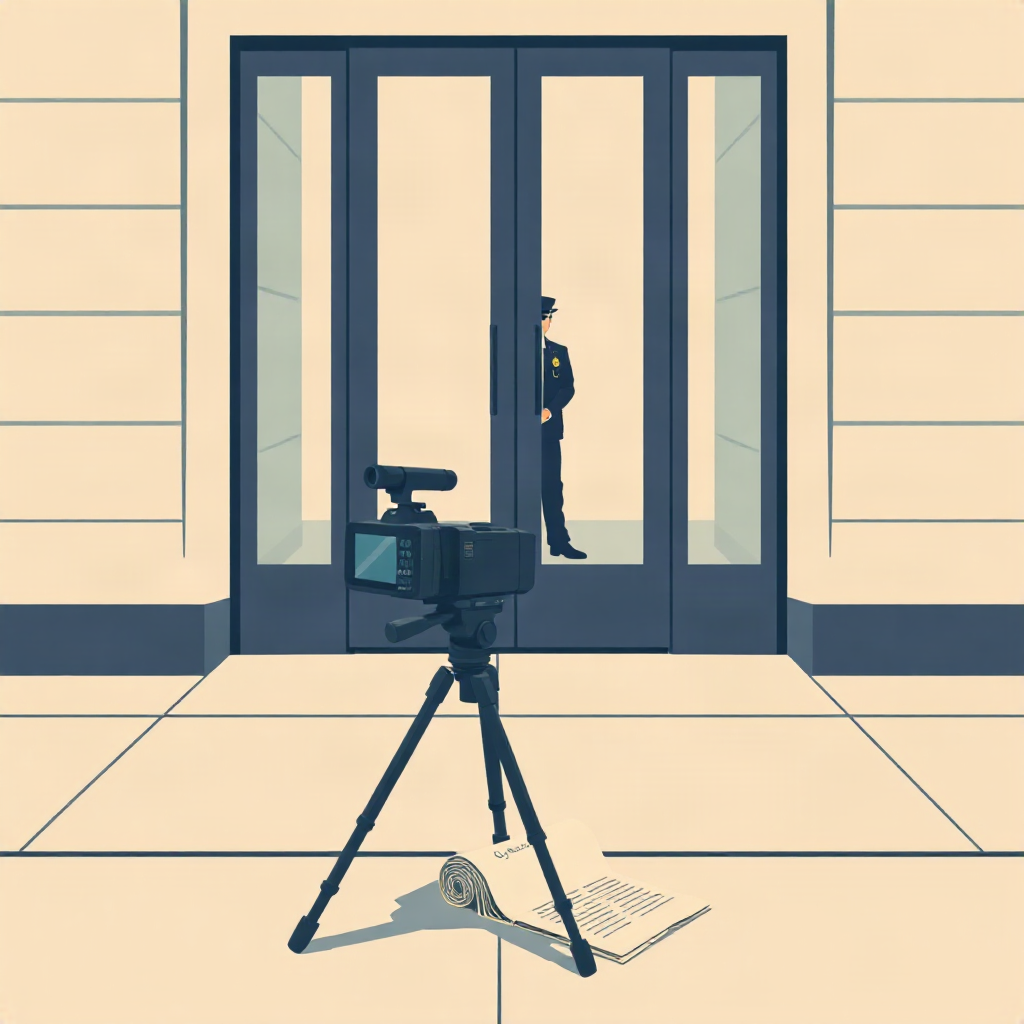
Self-described First Amendment auditors film police stations, town halls, and libraries, waiting for a uniformed reaction that becomes the video. Seven federal circuits recognize a right to film police in public — but that's not the absolutist shield many auditors claim, and the public forum doctrine changes everything inside a building. This episode traces the subculture from Diop Kamau's 1980s undercover audits to SeanPaul Reyes's million-subscriber channel, examines how departments like Santa Barbara PD now train officers to be boring back, and asks the question nobody has answered empirically: does any of this actually improve accountability? Key sources: • Santa Barbara Police Depa...
Build First, Ask Later: Hermits Who Dug Cathedrals
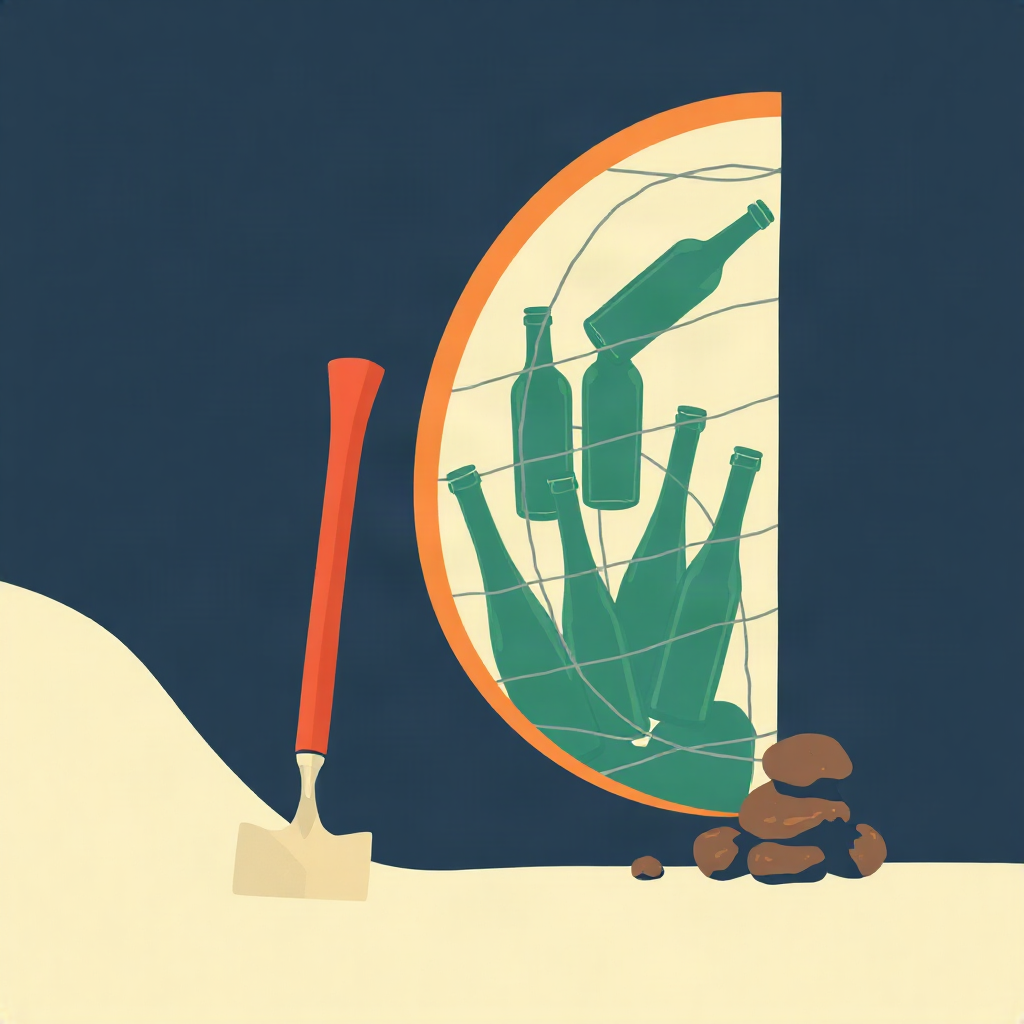
A man in Hackney dug through his own floor for forty years, and kept going after the council moved him to the top of the building to stop him. A Colorado man took rocks out of a national forest for fifty years. Colin Furze built a hoverbike with no engineering qualifications and no flying experience — The Verge's headline was "Man builds working homemade hoverbike, doesn't die." This episode works through a listener's proposed taxonomy: the eccentrics pursued with dedication that makes no sense on paper, and the personal projects that quietly grew into infrastructure-scale works. Underneath both sits a harder qu...
What Is a Consulate That Isn't a Consulate?

Israel ordered the British Consulate General in East Jerusalem closed after the UK banned imports from West Bank settlements. Twenty diplomats left, seven stayed, the plaque came down — and both governments are telling their publics they won. So what is the legal status of an office that is no longer an embassy, a consulate, or a consulate general? We walk through the 1961 and 1963 Vienna Conventions, the interests-section model invented during Rhodesia's 1965 UDI, and Israel's own decades-old practice of running functional-but-unofficial offices like its representation in Taipei. The honest answer: this building has no category in the treaties at all. Its ri...
Inside the Two Steel Industries

Roughly half the world's steel comes out of China, and the plants making it split into two almost unrelated industries: blast furnace ironmaking and electric arc recycling. That split explains why a mill in India looks nothing like a guided tour in Britain, why worker health outcomes vary by a factor of 77,500 between individual plants, and why sintering and blast furnaces pollute from completely different chimneys. This episode walks through the global production map, the documented health toll on steelworkers — hypertension, cataracts, bone density loss, pre-diabetes — and the hard question of whether wealthy countries actually make this safe or just make...
Colgate, Harley, and Bic: Famous Brands' Forgotten Flops

Everyone knows the Colgate frozen lasagna story. Except the lasagna never existed — the box was a mock-up built by the Museum of Failure in 2017. What Colgate actually sold was dried chicken and crabmeat entrees, test-marketed in one Wisconsin city, and later a soybean snack pulled for causing flatulence. This episode digs into big brands' forgotten product disasters: Harley-Davidson's Black Fire cologne line, which ran for nearly a decade before being quietly shelved, and Bic Cristal for Her, the pink pen that cost more and became a national punchline. Along the way: why brand loyalty can turn on itself, why gender se...
The Worst Mascots Ever Made

What actually makes a mascot fail? We count down ten of the worst ever released — cereal aisle nightmares, a pelican who needed cosmetic surgery before the season ended, and the Olympic blob that Atlanta picked single-handedly and then couldn't name. Along the way we work out the four ways a mascot goes wrong, why being ugly isn't one of them, and why Gritty proves the rule. Daniel asked for a laugh. He's getting a countdown. Key sources: • Wikipedia, Izzy (mascot) / Whatizit — https://en.wikipedia.org/wiki/Whatizit • Wikipedia, Wenlock and Mandeville — https://en.wikipedia.org/wiki/Wenlock_%26_Mandeville • AP News, Paul Newberr...
The Cheap Knife That Lies to You

Daniel wants a buyer's guide for tools that make a fine incision safe — and his sharpest claim is that tools which take control are sometimes exactly the ones you don't want. The cheap knife in your toolbox arrives sharp, folds over almost immediately, and lies to you about being sharp. Meanwhile the Knipex 16 20 165 SB takes control deliberately, with an adjusting screw for cutting depth, and works beautifully right up until the jacket isn't uniform. This episode works through the whole spread: the Klein 11055 wire stripper that's been the residential default for over forty years, the Knipex 16 50 145 SB stripping knife whose de...
Can a Dremel Be Gym Equipment?

If a power tool does the work, why are you sweating? A hobbyist's afternoon engraving HDPE storage boxes with a corded Dremel turned into a real research question: has anyone actually quantified the physical intensity of operating a power tool? The answer is yes — but almost entirely for industrial nutrunners and assembly-line tools, not the rotary tool in your garage. This episode digs into reaction torque, lever arm geometry, substrate hardness flipping the ergonomic sign, and why experienced operators brace harder instead of working lighter. It ends somewhere unexpected: the unit of measurement in this field is injury, not fitness — whic...
