Top Traders Unplugged
Top Traders Unplugged is where the world’s best investors come to share how they think - not just what they trade. Hosted by Niels Kaastrup-Larsen, the show goes deep into systematic trend following, global macro, and the principles that drive long-term success. No forecasts. No fads. Just real conversations with hedge fund managers, economists, authors, and allocators - revealing the timeless ideas, mental models, and risk frameworks behind robust performance. If you're building resilient portfolios, allocating capital, or simply looking to cut through the noise - this is your edge. Clear thinking. Deep insights. Real experience. 🎧 New episodes weekly. Explo...
TTU153: Why Investors Keep Getting Trend Following Wrong ft. Patrick Welton

Niels Kaastrup-Larsen and Alan Dunne are joined by Welton Investment Corporation founder Patrick Welton to explore what four decades in markets have taught him about trading, risk and managing other people’s money. Pat shares lessons from his encounters with Paul Tudor Jones and John Henry before explaining why taking outside capital fundamentally changes a manager’s responsibility. They discuss the real sources of trend following returns, why managers can damage their edge by listening too closely to clients, and whether replication and multi-strategy funds have changed the landscape. They also explore capacity, changing market regimes and why investor beha...
SI419: What Happens When AI Starts Building the Portfolio ft. Nick Baltas

Alan Dunne is joined by Nick Baltas to discuss a strong period for trend following and what the latest research says about adapting systematic strategies to changing markets. They examine whether volatility can help determine how quickly trend models should react, and why Nick remains skeptical of relying on regime triggers with limited statistical evidence. The conversation then turns to agentic AI and a new framework for using specialized AI agents in asset allocation. Nick explores how agents could analyze macro regimes, challenge competing portfolio approaches and help investment committees make decisions faster, while also confronting problems around look-ahead...
OI24: Why Power Trading Is 10 Times Crazier Than Crypto ft. Cory Paddock

Moritz Seibert is joined by GBE Energy co-founder Cory Paddock for a look inside the unusual world of proprietary power trading. Cory explains how electricity markets combine weather, physics and economics, and why understanding supply and demand can create opportunities in markets where prices can change dramatically within minutes. They explore the psychology behind taking risk, why a handful of exceptional days can define an entire year, and the lessons Cory learned from his biggest wins and losses. They also discuss GBE’s approach to developing young traders and how AI is accelerating the process of turning raw talent in...
SI418: Why Markets Are More Alive Than We Think ft. Richard Brennan

Niels Kaastrup-Larsen and Richard Brennan explore what the science of complex adaptive systems can teach us about markets and trend following. Drawing on research from the Santa Fe Institute, they examine why markets may be better understood as evolving systems shaped by the participants within them rather than machines moving toward equilibrium. They discuss reflexivity, increasing returns and how trends can begin to reinforce themselves, before asking what this means for systematic investors. Along the way, Richard explains why backtests are evidence rather than promises, why taking profits too early can be costly, and why responding to markets may...
IL53: How Bonds Quietly Built the Modern World ft. Robin Wigglesworth
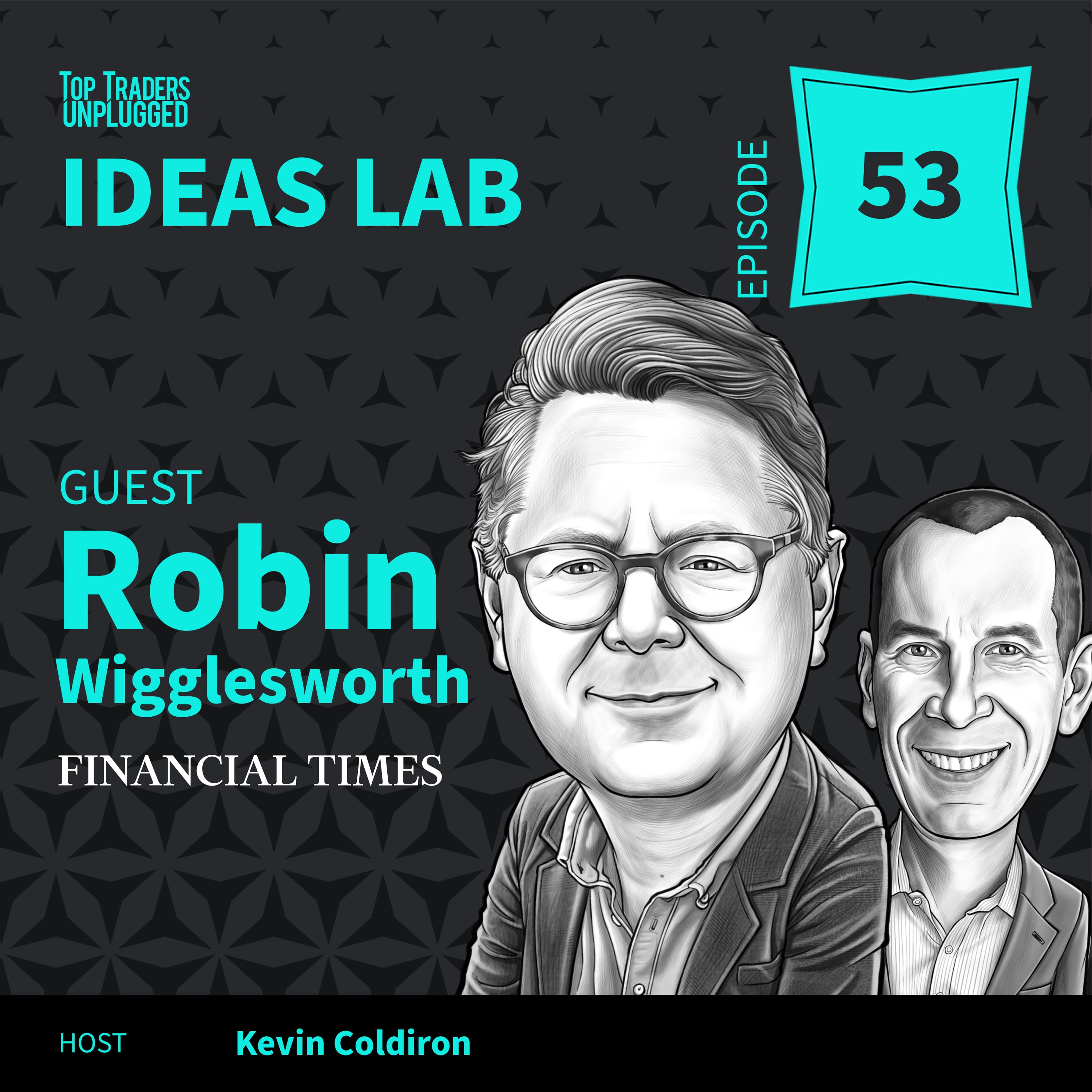
Today we talk with the editor of the Financial Times’ Alphaville blog, Robin Wigglesworth. Robin is the author of A Fabulous Debt - the Epic Story of How Bonds Built the Modern World. He tells the story of the bond market’s beginnings in Venice and how the ability to issue and trade bonds was an essential aspect of its rise to power. Robin explains why historically bond markets and democracy have gone hand-in-hand. Innovations in how bonds are structured and traded also have the ability alter market fundamentals and he explains how this happened with the US junk bond...
SI417: What Happens When AI Starts Trading the Markets ft. Rob Carver

Niels Kaastrup-Larsen and Rob Carver discuss a market that feels unusually calm despite growing pressure beneath the surface. They look at rising concerns around government debt and bond yields, recent changes to a major managed futures ETF, and why style drift matters for systematic investors. Rob explains why simplicity and robustness remain essential when building trading systems, and where discretion can and cannot fit into a systematic process. They also explore the risks of using AI in quantitative investing, whether AI-driven traders could change market behavior, and why adapting trend speed to volatility may be more complicated than it...
GM107: What If AI Actually Pushes Interest Rates Higher? ft. Matt Klein

Alan Dunne is joined by Matt Klein to discuss whether the excitement around AI is getting ahead of the economic reality. Matt explains why the parallels with the 1990s productivity boom may be misleading and why stronger productivity could actually push interest rates higher rather than lower. They explore the surge in AI investment, what rising bond yields really tell us about the economy, and whether US debt levels are as worrying as they appear. The conversation also turns to China’s enormous trade surplus, growing global imbalances, the prospect of European tariffs, currency intervention and what Kevin Warsh’s ne...
SI416: 137 Years of Trend: What the Evidence Really Shows ft. Yoav Git

Niels Kaastrup-Larsen and Yoav Git examine why trend following continues to endure despite decades of changing markets and persistent skepticism. They revisit AQR’s 137-year study of trend following, exploring diversification, volatility scaling and the behavioral and economic forces behind persistent trends. The conversation also turns to the mechanics of commodity markets, using the 2020 oil collapse to show how inventories, storage capacity and forced futures rolls can produce extreme price moves. Along the way, they discuss investor trust, systematic risk intervention, CTA implementation and why understanding market structure matters just as much as building the signal.
-----
...GM106: What Happens When the Debt Finally Matters ft. Marvin Barth

Marvin Barth joins Niels Kaastrup-Larsen and Cem Karsan for a wide-ranging debate about the Fed, inflation and the growing pressures on the US economy. Barth argues that central bankers have become too confident in models that cannot fully capture reality, while the conversation quickly turns to Kevin Warsh, Scott Bessent and the power of signaling in financial markets. From there, Cem and Marvin "clash" over austerity, debt monetization, populism and inequality before examining why inflation expectations may matter more than individual shocks. We round this super energetic conversation by exploring the coming historic El Niño, commodity disruptions and w...
SI415: Maybe This Is Just What Normal Markets Look Like ft. Alan Dunne

Niels Kaastrup-Larsen and Alan Dunne examine how a changing macro regime is reshaping markets and the role of trend following. They discuss unusual U.S. intervention in the yen, mounting sensitivity around Treasury yields, and questions surrounding Kevin Warsh’s communication and the Fed’s credibility. Alan identifies three fractures defining the new regime: persistent inflation, growing debt sustainability concerns, and the erosion of institutional norms. They also explore why trend following has performed differently this decade, particularly during periods of bond market stress, before comparing AQR and GMO’s strikingly different long-term return assumptions and what they imply for po...
IL52: Why Staying Calm Is the Ultimate Investing Edge ft. David Booth
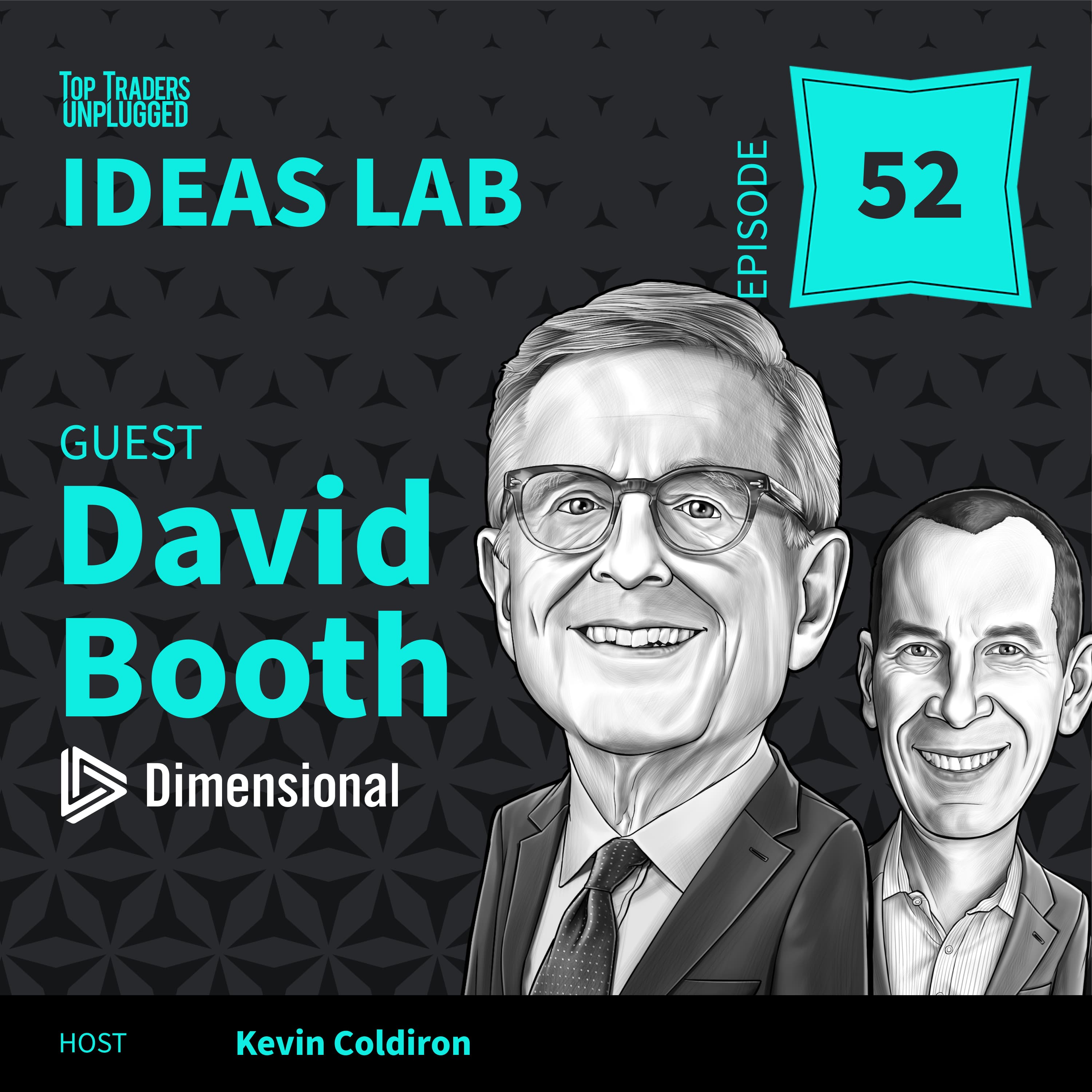
In today’s episode we talk with a pioneer of modern asset management, Dimensional Fund Advisors founder David Booth. David founded Dimensional in 1981 and it has since grown to over $1 trillion in assets, making it one of the most successful quantitative investment firms in history. We talk with him about his new book, Stay Calm: Learn to Embrace Uncertainty in Investing and Life. We discuss his early career working on both the world’s first index fund and the first active quant strategy developed by finance legends Fischer Black and Myron Scholes. David explains why successful investing involves embracing unce...
SI414: The Hidden Risks Beneath the Treasury Market ft. Mark Rzepczynski
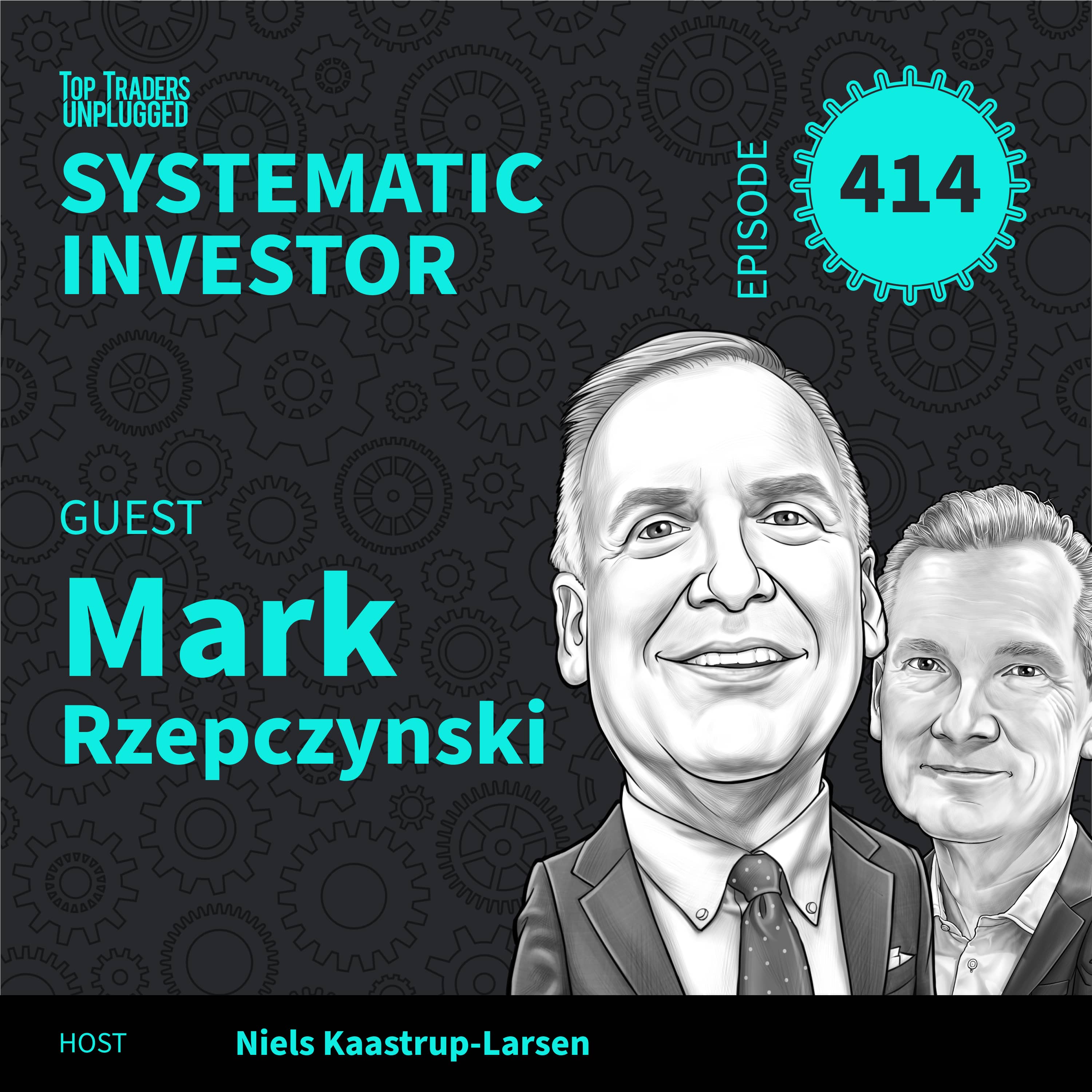
Niels Kaastrup-Larsen and Mark Rzepczynski examine the warning signs emerging beneath seemingly calm markets, from extreme single-stock moves and commodity shortages to growing strains in the U.S. Treasury market. They explore how leveraged hedge funds and basis trades have become increasingly important to Treasury liquidity, and why market plumbing can matter as much as price signals. The conversation then turns to the evolution of trend following, comparing different approaches to signals and position sizing, the benefits of combining methodologies, and why short-term trend strategies face structural challenges. Finally, Mark reflects on the legacy of quantitative trading pioneer Victor...
ALO38: Why the Old Rules of Diversification Are Changing ft. Mike Pyle
Alan Dunne is joined by Mike Pyle, Deputy Head of BlackRock’s Portfolio Management Group, to explore how a supply-driven world is reshaping markets and portfolio construction. They discuss the transition from the demand-constrained 2010s to an era defined by scarcity, fiscal activism, geopolitical shocks and the immense capital demands of AI. Pyle explains why bonds may no longer provide the diversification they once did, why hedge funds and market-neutral strategies are becoming increasingly important, and how portable alpha can separate beta from return generation. They also examine AI productivity, equity valuations and what should replace the traditional 60/40 portfolio.
...SI413: Why Trend Following Is More Than Crisis Alpha ft. Andrew Beer & Tom Wrobel
Niels Kaastrup-Larsen is joined by Andrew Beer and Tom Wrobel to examine a remarkable period for systematic investing. They discuss how CTAs have navigated volatile moves across equities, commodities, currencies and rates while preserving strong gains, and why diversification has been central to that resilience. The conversation explores leverage, the renewed interest in managed accounts and portable alpha, alongside the growing distinction between trend and non-trend strategies. They also challenge the traditional framing of CTAs as crisis alpha, debate whether greater complexity actually improves returns, and examine the difficulties investors face when selecting managers and benchmarking an industry where...
ALO37: Investing in the New World Order ft. Charles-Henry Monchau

Charles-Henry Monchau joins Alan Dunne to discuss how geopolitics, artificial intelligence and structural economic shifts are reshaping global investing. They explore the AI supercycle, the changing balance between the US, China and Europe, sovereign debt, inflation, commodities and the future of asset allocation. Charles explains why investors should focus on long-term structural themes rather than short-term market noise and why the biggest opportunities may lie beyond the current AI infrastructure boom. The conversation also examines Europe’s competitiveness, China’s innovation strategy and the risks that could define the next phase of the investment cycle.
-----
50...
SI412: Portable Alpha: Asking the Questions That Matter ft. Harry Moore
Niels Kaastrup-Larsen and Harry Moore explore the latest developments in trend following, the AI investment boom and why diversification matters most when markets come under pressure. They discuss CTA performance, market dispersion, portable alpha, cash efficient portfolio construction and the role of trend following during major market drawdowns. The conversation also examines how artificial intelligence is transforming quantitative research, the practical challenges of portfolio implementation and new research linking classic Turtle Trading principles to modern portfolio theory.
-----
50 YEARS OF TREND FOLLOWING BOOK AND BEHIND-THE-SCENES VIDEO FOR ACCREDITED INVESTORS - CLICK HERE
-----<...
ALO36: The Endowment Playbook for Long-Term Investing ft. Paul Chai

Paul Chai joins Alan Dunne to discuss what it takes to manage a perpetual investment portfolio designed to support future generations. As CIO of the Kansas State University Foundation, Paul explains how disciplined asset allocation, thoughtful manager selection and strong governance create resilient long-term results. The conversation explores endowment investing, private markets, hedge funds, portfolio construction and the importance of building a decision-making culture where diverse perspectives are encouraged. It is a wide-ranging discussion about investing with humility, managing uncertainty and creating an investment process that can endure through changing market environments.
-----
50 YEARS OF...
SI411: Why the Best Portfolios Are Built to Be Wrong ft. David Dredge & Richard Brennan
The future isn’t hidden. It hasn’t been written yet. That idea anchors this foundational conversation between Dave Dredge, Richard Brennan and Niels Kaastrup-Larsen, on what risk really means in markets. They challenge the mathematics behind modern portfolio construction, exposing how calm conditions can conceal leverage, how diversification can fail when it matters most, and why familiar measures such as volatility and Sharpe ratios often miss the forces that lead to permanent loss. From path dependency and complex adaptive systems to trend following, convexity and the geometry of wealth, this episode offers a different framework for investing under unce...
IL51: Why Most Recessions Are Completely Misunderstood ft. Tyler Goodspeed
Why do recessions happen? Tyler Goodspeed joins Kevin Coldiron to challenge some of the most deeply held beliefs in economics. Drawing on more than three centuries of data from the United States and the United Kingdom, he argues that recessions are rarely the inevitable consequence of excess or financial imbalances. Instead, they are often triggered by unexpected external shocks that are difficult to predict. The conversation explores why expansions do not simply die of old age, why recessions fail to cleanse the economy, and what policymakers and investors should focus on instead when preparing for an uncertain future.
<...SI410: The Next Evolution of Trend Following ft. Nick Baltas
Niels Kaastrup-Larsen and Nick Baltas explore how artificial intelligence, thematic investing and narrative momentum are beginning to reshape systematic investing. Alongside a review of recent CTA performance, they discuss new research on expanding trend following universes, defensive portfolio construction and portable alpha before taking a deep dive into the growing role of AI and thematic risk models. The conversation examines whether future investment signals may come from more than price alone and how systematic investors can combine traditional trend following with new sources of information without losing the discipline that has defined the strategy for decades.
-----<...
OI23: Why Capital Efficiency Is the Next Edge in Investing ft. Charlie McGarraugh
Charlie McGarraugh joins Moritz Seibert to discuss how systematic investing is evolving beyond traditional trend following. Drawing on experience from Goldman Sachs, crypto and machine learning, Charlie explains why adaptive portfolios, capital efficiency and smarter position sizing may become the defining advantages for the next generation of macro investors. They explore the rise of managed futures ETFs, China's growing futures markets, the trade off between diversification and simplicity, and why portfolio construction often matters more than finding the next predictive signal. It is a thoughtful conversation about where systematic investing may be heading next.
-----
50...
SI409: Why Trend Following Is Changing Faster Than Ever ft. Yoav Git
Markets are evolving in ways that few investors fully appreciate. Niels Kaastrup-Larsen and Yoav Git explore how changing market structure, the rise of retail options trading and new financial products are reshaping trend following. They discuss why short term strategies have become more challenging, whether single stock futures could open new opportunities, and what recent research reveals about narratives, thematic investing and diversification. Along the way they examine commodities, equity markets and the practical realities of systematic investing, offering a thoughtful perspective on how trend followers continue to adapt as markets become increasingly complex.
-----
50...
GM105: The Billion-Barrel Shock Has Not Arrived Yet ft. Adam Rozencwajg
More than a billion barrels of expected oil supply have been removed from the market. Yet prices suggest the danger has passed. Adam Rozencwajg joins Cem Karsan and Niels Kaastrup-Larsen to explain why that conclusion may be dangerously premature. The missing barrels have not disappeared from the equation. Their impact is still moving through tankers, refineries and inventories, hidden by reporting delays and China’s strategic response. From the limits of petroleum reserves to falling stockpiles, gold’s correction and the energy required to power AI, this episode examines a market caught between what prices are saying and what the...
SI408: Has Trend Following Changed Forever? ft. Alan Dunne
Markets continue to evolve, and so do the strategies designed to navigate them. Alan Dunne joins Niels Kaastrup-Larsen to explore why changes in market structure may have permanently altered short term trend following, and what that means for systematic investors. They discuss a fascinating new research paper on market microstructure, the changing role of liquidity, the rise of high frequency trading and why faster no longer necessarily means better. Along the way they examine the Federal Reserve's evolving communication strategy, the outlook for commodities, and why regime change continues to create both risks and opportunities for trend followers.
<...GM104: How the Dollar Quietly Took Over the World ft. Brendan Greeley
The US dollar has become so familiar that most investors rarely stop to ask how it became the world's dominant currency or why that dominance has endured. Brendan Greeley joins Alan Dunne to trace the dollar's remarkable journey from a silver coin in sixteenth century Europe to the foundation of modern global finance. Along the way they explore the hidden mechanics of money creation, the evolution of offshore dollars, the Federal Reserve's expanding role, and why the institutions supporting the dollar may matter far more than politics. It is a conversation that challenges many of the assumptions investors hold...
SI407: Why America Is Rewriting the Rules of Capitalism ft. Cem Karsan
Markets may be entering one of the most important regime shifts in decades. Cem Karsan joins Niels Kaastrup-Larsen to argue that the United States is moving away from traditional free market capitalism towards a far more strategic model where government, markets and technology become increasingly intertwined. They discuss why positioning continues to dominate market behaviour, the growing role of sovereign investment, the future of AI driven capital spending, and why the next major turning point may arrive after the US midterm elections. It is a conversation that challenges conventional market thinking and explores how politics, policy and capital are...
GM103: Why Optimism Could Be the Most Contrarian Trade ft. Pippa Malmgren

While much of the world is focused on geopolitical conflict, inflation and rising global tensions, Pippa Malmgren argues that a very different future may already be taking shape. Joining Niels Kaastrup-Larsen and Cem Karsan, she explores how artificial intelligence, advanced energy, shifting diplomacy and technological innovation could reshape the global economy and even reduce the risk of war. From the future of the US dollar and China to nuclear energy, robotics and non human intelligence, this conversation challenges conventional thinking and offers an unusually optimistic perspective on one of the most consequential periods in modern history.
-----<...
SI406: Why Uncertainty Is a Trend Follower’s Best Friend ft. Mark Rzepczynski
Markets rarely move in straight lines, but periods of uncertainty often create the biggest opportunities for systematic investors. Niels Kaastrup-Larsen and Mark Rzepczynski examine why geopolitical shocks, changing Federal Reserve leadership and shifting market regimes continue to shape trend following performance. They explore why only a handful of markets often drive returns, how diversification really works when correlations suddenly rise, and why managed futures have historically stood apart during periods of elevated volatility. Along the way, they discuss the future of monetary policy, economic data, AI driven productivity and what investors should watch as the second half of the...
IL50: Why Central Banks Are Losing Control of Inflation ft. Manoj Pradhan

Manoj Pradhan returns to Top Traders Unplugged to explain why the forces that kept inflation and interest rates low for decades are now reversing. Drawing on themes from The Great Demographic Reversal and his new book The Unanchored Central Banker, he argues that aging populations, labor shortages, rising fiscal deficits, and the changing role of central banks are creating a very different macroeconomic landscape. The conversation explores why demographics matter more than many models assume, whether AI can offset labor shortages, and why central banks may increasingly be forced to choose between controlling inflation and maintaining fiscal stability.
<...SI405: Why Most Trend Following Improvements Should Fail ft. Rob Carver
Trend following investors are constantly searching for ways to improve performance, but not every improvement survives contact with reality. Rob Carver joins Niels Kaastrup-Larsen to explore whether investors should chase the strongest trends, how different asset classes contribute to returns across market cycles, and why overfitting remains one of the biggest dangers in systematic investing. They also discuss the rise of AI generated trading strategies, the debate around perpetual futures, the changing role of economic data, and what diversification really means when markets become driven by a handful of dominant forces.
-----
50 YEARS OF TREND...
GM102: China Built a Trap. Germany Set It. America Fell In. Europe Is Next ft. Michael Pettis
Michael Pettis joins Alan Dunne for a wide ranging conversation on trade imbalances, globalization and the future of the world economy. Drawing on decades of research into China, Europe and financial history, Pettis argues that persistent trade surpluses are ultimately rooted in domestic income imbalances rather than national competitiveness. The discussion explores why China struggles to rebalance, why Europe may face its biggest challenge yet, and how US reindustrialization could reshape global trade. From Bretton Woods to modern tariffs, this episode offers a provocative framework for understanding the forces driving the next phase of the global economy.
...
SI404: When Trend Following Meets Equities ft. Eric Crittenden & Andrew Beer
Trend following has long promised and delivered diversification, crisis protection and uncorrelated returns. Yet many investors still struggle to hold it through difficult periods. In this conversation, Andrew Beer and Eric Crittenden explore why that gap exists and how combining trend following with equities may create a more durable portfolio. Together with Niels Kaastrup-Larsen discuss the rise of managed futures ETFs, the debate between simplicity and complexity in systematic investing, and why algorithmic discipline allows investors to act when intuition fails. The episode also examines portfolio construction, product design and the evolving role of alternatives in a changing investment...
UGO12: Why the Next Financial Crisis Could Change America Forever ft. Danielle DiMartino Booth

As Kevin Warsh prepares to take the reins at the Federal Reserve, a deeper question emerges: has the Fed reached the limits of what monetary policy can achieve? Cem Karsan sits down with Danielle DiMartino Booth to explore the growing tensions between inflation, debt, financialization, and political pressure. From the future of quantitative easing and Treasury market risks to the rise of populism and the long term consequences of decades of intervention, this conversation examines whether the United States is approaching a turning point that could redefine the relationship between markets, government, and the Federal Reserve.
-----<...
SI403: Trend Following in an Era of Geopolitical Risk ft. Marat Molyboga & Katy Kaminski
Geopolitical tensions, inflation shocks, and shifting market regimes are reshaping the investment landscape. Marat Molyboga and Katy Kaminski joins us to explore why managed futures have historically performed well during periods of geopolitical stress and why investors often misunderstand the role of crisis alpha in a portfolio. The conversation examines inflation driven market disruptions, diversification, short term versus long term trend following, portfolio construction, and the behavioural mistakes that prevent many investors from capturing the full benefits of trend strategies. It is a wide ranging discussion about risk, uncertainty, and adapting to a changing world.
-----
<...ALO35: Why Macro Investing Is Becoming More Systematic ft. George Patterson

How do quantitative investors adapt when markets, technology and macro regimes are constantly changing? In this conversation, Alan Dunne sits down with George Patterson, CIO of PGIM Quant Solutions, to explore the evolution of systematic investing from the 1990s to today’s AI driven landscape. They discuss regime detection, inflation risk, portfolio construction, machine learning, private markets, volatility overlays and the growing role of language models in investment research. George also shares insights from decades in quant investing, including lessons from Covid, the importance of model discipline and why communication skills matter as much as technical expertise.
...
SI402: Why Markets Can’t Stop Trending ft. Richard Brennan
What happens when markets stop behaving like machines and start behaving like living systems? In this episode, Richard Brennan joins Niels to explore passive investing, complex adaptive systems, volatility suppression, and the hidden forces reshaping modern market structure. From structured products and reflexive flows to demographics, trend following, and the fragile illusion of equilibrium, this conversation asks whether markets are becoming more unstable precisely because investors believe they have become safer. A thoughtful and layered discussion about why price discovery may be weakening, why trends persist, and why systematic strategies may be more relevant in a world increasingly shaped...
IL49: The Space Economy Is No Longer Science Fiction ft. Rainer Zitelmann
On this episode we are joined by Dr. Rainer Zitelmann, to discuss his book New Space Capitalism: The Entrepreneurial Path to the Stars. We discuss why government-funded space programs were initially successful but also why the future of space exploration, and the space economy, will be driven by private companies. Dr. Zitelmann explains what he believes to be the key driver of unlocking the economic potential of space and why it’s conceivable that ventures such as space tourism, orbital data centers and asteroid mining might be listed on the stock exchange. This is a conversation for everyone who wa...
SI401: Why Trend Following Wins in Chaos ft. Nick Baltas
The world of systematic investing is evolving fast, and in this episode Nick Baltas joins Moritz Seibert to explore the explosive growth of QIS strategies, the current state of trend following in 2026, and the challenges facing systematic investors in today’s macro environment. They discuss crowding risks in quantitative strategies, the recent collapse in commodity curve carry, and why some trend managers continue to outperform through broader diversification and alternative markets. The conversation also dives into execution alpha, AI driven research workflows, inflation risks, and the ongoing institutional demand for systematic macro strategies. A sharp and highly practical discussion fo...
GM101: When Passive Breaks the Market ft. Hari Krishnan & Cem Karsan
Hari Krishnan joins Niels and Cem for a deep exploration of what happens when markets become dominated by flows rather than fundamentals. Drawing on his new paper with Mike Green and Stefan Sturm, Hari explains why rising passive ownership may weaken price discovery, amplify concentration in mega-cap stocks and create conditions for reflexive instability. The conversation expands far beyond indexing, touching on volatility targeting, leverage, dispersion, inflation, government intervention and the growing dependence of the global economy on rising asset prices. Along the way, Cem and Hari debate whether policymakers can continue stabilizing an increasingly fragile system, what could...
SI400: When Crisis Alpha Hides in Plain Sight ft. Yoav Git & Rob Croce
This week, we are joined by Yoav Git and Rob Croce from Fidelity Investments for a deep dive into trend following, portfolio construction and execution in modern markets. The conversation explores why crisis alpha may come more from beta timing than market selection, the logic behind betting against beta, and how quantitative investors think about diversification, carry and relative value strategies. Along the way, the trio discuss Japan’s rising bond yields, momentum investing, execution risk during crises and even how ChatGPT helped solve a 60-year-old mathematical problem. This is a technical but highly practical discussion about how systematic in...