The Agentic Executive

The Agentic Executive is a daily intelligence feed for high-agency professionals navigating technology, AI, disruptive strategy, and the economics of modern work. In 10 minutes or less, get clarity, priority, and direction—so you can make sharper decisions and stay ahead of the curve.
Forward Integration Playbook: Capture Downstream Value from Agentic Features
Many teams treat agentic features as efficiency plays: reduce cost, speed up tasks, or remove friction. That leaves value on the table. This episode reframes agentic work as a forward-integration opportunity: design agentic features so they feed proprietary signals, extend product distribution, and unlock new monetizable touchpoints. In ten minutes you get one core insight, three supporting levers (value capture mechanics, product-operational design shifts, organizational incentives), and a three-step playbook you can apply this week to evaluate any agentic feature for strategic upside. Practical, decision-grade, and tailored for executives who must convert engineering velocity into durable commercial advantage. By the...
Agentic Escalation Paths: Designing Safe Handoffs Between AI and Humans
Decision speed is a competitive asset; so is safe escalation. This episode presents a tight, operational framework—'Agentic Escalation Paths'—that executives can apply in ten minutes to reduce surprise, avoid paralysis, and keep leverage when agents act. You’ll get one core insight (escalation is a design variable, not an afterthought), three supporting principles (signal thresholds, context-rich handoffs, and traceable authority), and a single action step to draft the first escalation path for a real workflow. The briefing is practical: minimal jargon, immediate checklists, and an example escalation path for a sales-crediting automation. By the end you’ll know how to s...
Production-Ready: A 10‑Minute Acceptance Criteria for Agentic Features
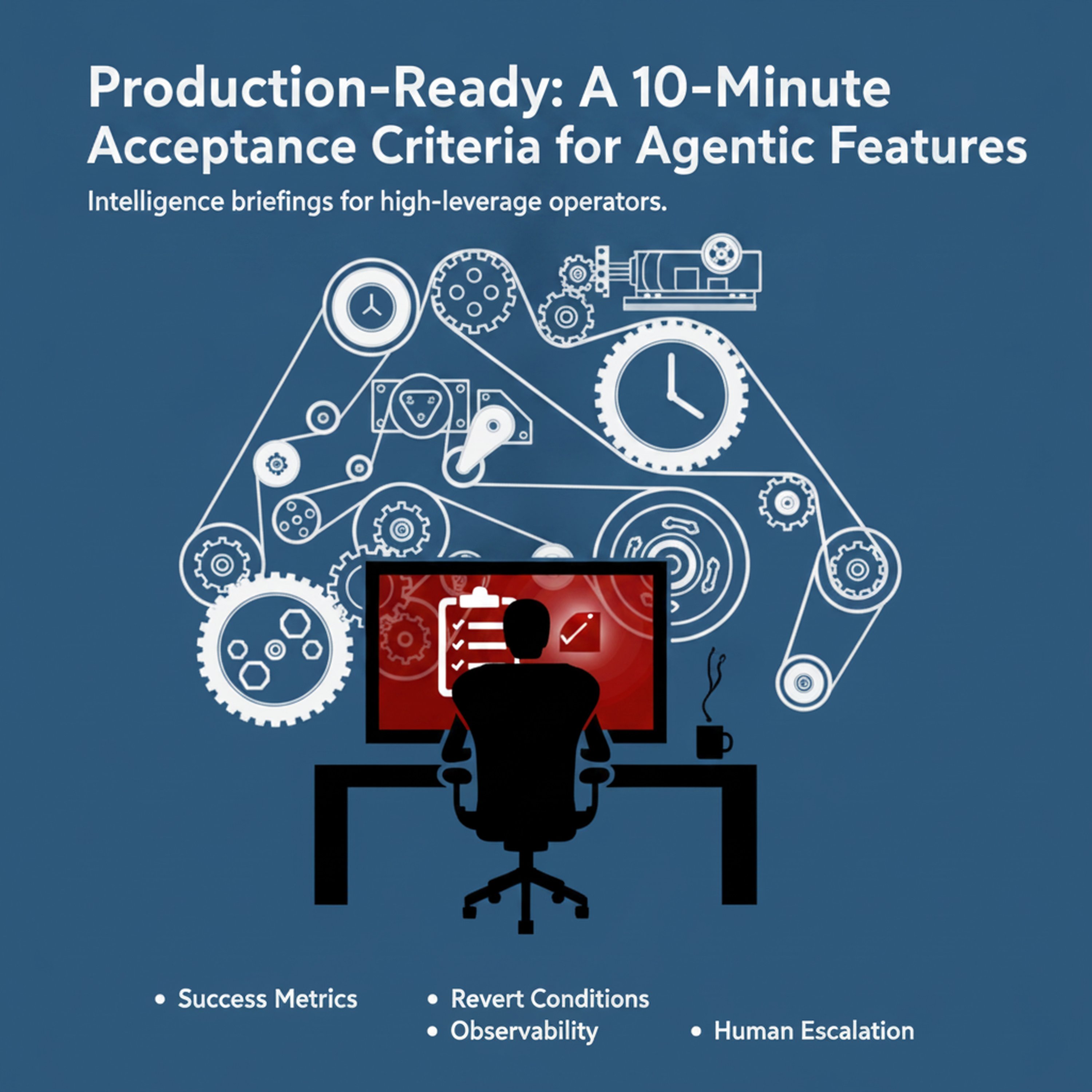
Core insight: production-readiness for agentic features is not a binary gut call — it’s a short, measurable acceptance criteria set that protects leverage while accelerating value. This episode gives one core insight, three supporting points, and a single 3-step action you can complete in ten minutes. You’ll get a tight checklist covering success metrics, revert and containment conditions, observability minimums, and human escalation rules. Supporting points show how to make criteria decision-grade (quantified thresholds), reversible (fast rollback and scoped authority), and monitorable (minimal telemetry that answers ‘did it do the thing we expected?’). Finish with a single, executable action: write an a...
Orchestration Contracts: Simple SLAs for Multi‑Agent Workflows
Core insight: when you compose multiple agents and people, explicit, minimal 'orchestration contracts' act as the connective tissue that preserves leverage, limits surprise, and speeds delegation. This episode teaches a compact, repeatable template you can draft in ten minutes and start using immediately. You’ll get three practical pillars—contract semantics (purpose, inputs, outputs), protection patterns (failure modes, throttles, escalation), and observability (signals, acceptance checks, and SLA indicators)—plus a one‑minute checklist to convert a brittle workflow into a contract. The result: faster, safer delegation of decision tasks; clearer accountability; and fewer late‑stage reversals. The episode ends with a concrete...
Agent ROI Ledger: A 10‑Minute P&L for Agentic Initiatives
Executives and operators adopt agentic systems because they promise leverage — but leverage without a clear accounting frame becomes hidden risk. This episode introduces the Agent ROI Ledger: a minimum viable profit-and-loss you can complete in ten minutes to surface direct value, capture indirect effects, and expose hidden operational costs and optionality. You’ll get one core insight (a lean P&L is the fastest way to convert intuition about automation into invest/stop decisions), three supporting dimensions (value streams, cost & governance, risk‑adjusted contribution), and a single action step that delivers immediate decision-grade output. Practical, templateable, and designed for rapid iterat...
Operational Debt Inventory for Agentic Systems
Agentic systems promise leverage, but they also create operational debt: undocumented behaviors, brittle integrations, governance gaps, and maintenance costs that compound and erode optionality. This episode gives one core insight — treating agentic operational debt as a prioritized inventory is the fastest way to protect velocity — followed by three supporting points: categories of debt to look for, a practical scoring rubric to quantify impact and remediation cost, and a short prioritization matrix that preserves leverage. You’ll finish with a single, deployable action step: a 30-minute diagnostic meeting and a three-line inventory template you can use with your team right away. The br...
Autonomy Zoning: A Practical Map to Preserve Human Leverage with Agentic Systems
Autonomy Zoning reframes delegation from a binary decision into a strategic map executives can use in ten minutes. Instead of asking only whether to delegate, you define zones—Full Autonomy, Conditional Autonomy, and Human-Controlled—based on value-at-stake, observability, and reversibility. This episode gives one core insight (treat autonomy as a levers-and-zones problem), three supporting points (how to map economic leverage, signal/latency constraints, and reputational/reversibility costs), and a clear action step: a ten-minute audit to place three priority processes into zones. The briefing is lean, operational, and tailored for high-agency leaders who need fast, defensible delegation decisions that preserve opti...
Incentive Plumbing for Agentic Systems: Translate Strategy into Reliable Agent Behavior
Executives delegate to agents to extend leverage, but strategy rarely survives the translation to incentives and metrics. This briefing defines ‘incentive plumbing’—the practical mapping from strategic objective to agent reward, constraint, and feedback loop—so your agents act like decisions you would make. In 10 minutes you get one core insight (why incentive mismatch is the dominant failure mode), three supporting points (signal design, specification gaps, and operational feedback), and a compact 3-step checklist to patch incentive leaks today. The episode is tactical and actionable: use it to audit a live workflow, reduce failure modes, and preserve optionality when scaling agentic...
Signal Budget: Design Your Agent's Alerts So You Never Miss What Matters
The Agentic Executive walks you through a compact, repeatable framework to cut alert noise from agentic systems and surface only decision-grade signals. This episode's core insight: treat agent outputs as a constrained budget of attention. You get three supporting moves: classify signals by decision-criticality and reversibility; set amplitude and frequency thresholds (rate limits, thresholds, cool-downs) that map to executive attention; and define minimal escalation channels and rollback rules that preserve optionality. The tangible outcome is a one-page Signal Budget you can draft in ten minutes that immediately reduces distraction, preserves human leverage for high-value interventions, and creates a measurable signal-to-action...
Automation Opportunity Cost Map: Decide What Not to Automate
Executives often treat automation as an unqualified good: more automation equals more scale. That’s a mistake. This episode gives a compact, decision-grade framework — the Automation Opportunity Cost Map — for identifying where automation creates leverage and where it destroys optionality, tacit knowledge, or decision-quality. You’ll get one clear insight (not all tasks should be automated), three supporting dimensions (reversibility, tacit value, and signal richness), and a simple 72-hour validation plan you can deploy this week. Practical, actionable, and intentionally minimal: this briefing helps you prioritize automation investments, avoid hidden costs, and preserve strategic optionality. It’s designed for leaders who need f...
Instrumented Changes: A 72‑Hour Playbook for Safe Agentic Experiments
This episode gives a compact executive playbook for treating agentic policy changes as testable hypotheses. Core insight: every behavioral change to an autonomous system should be instrumented, time‑boxed, and reversible so leaders can learn without losing optionality. Three supporting points: (1) design experiments to be decision‑grade — pick a single leading metric, define irreducible guardrails, and identify the observable sample frame; (2) lightweight rollout mechanics — use percent rollouts, parallel shadow lanes, and explicit rollback thresholds to limit surface area; (3) signal interpretation under nonstationarity — expect noise, account for cross‑effects, and prefer short, repeatable signals over noisy long tails. The action step is a one‑pag...
Knowledge Harvest: Turning Tacit Expertise into Agentic Assets
Executives often assume agentic systems simply need more data; the real bottleneck is tacit knowledge — heuristics, context cues, and failure heuristics that live in human heads. This episode delivers one core insight: intentionally harvesting and codifying tacit expertise multiplies the value and reliability of your automations. In ten minutes you get three supporting points: how to prioritize which expertise to capture (leverage, fragility, observability), low-friction extraction patterns (micro-interviews, decision logs, canonical failure captures, prompt distillation), and lightweight validation loops to preserve fidelity over time. The briefing closes with a single executable one-week knowledge sprint that produces a validated prompt template, tw...
Minimal Causal Logs: Building an Actionable Audit Trail for Agentic Systems
Executives adopt agentic systems for leverage—but leverage requires traceability. This episode explains how to design a minimal causal log that gives you the exact information needed to answer three questions after any autonomous action: What happened, why did it happen, and what to change next. In ten minutes you’ll get a clear definition of ‘minimal causal logs,’ three concrete design principles (contextual anchors, decision deltas, and versioned evidence), and a deployable 72-hour pilot plan that preserves optionality while making agents auditable and correctable. The focus is practical: what fields to record, how to chain events into explorable decisions, and how...
Decision Shadowing: A Lightweight Playbook to Validate Agentic Delegation
Executives often face a binary choice: keep working at high tempo or delegate to agentic systems and accept risk. Decision Shadowing offers a third path: run compact, parallel agentic shadow-runs that mirror human or production decision channels to reveal divergence, hidden failure modes, and trust boundaries before you hand over control. This episode gives a concise, operational playbook for designing shadow experiments that are low-cost, measurable, and directly actionable: pick critical decision slices, choose observability signals, run backtests or live shadow streams, interpret divergence, and decide whether to escalate, tune, or deploy. You’ll walk away with a reproducible checklist yo...
Minimal Viable Reliability: An Executive Guide to Agentic Acceptance Tests
Executives treat agentic systems like experiments—but every experiment that impacts decisions needs a simple, decision-grade acceptance standard. This episode teaches a pragmatic framework for Minimal Viable Reliability (MVR): a compact set of tests, observability checks, and rollback criteria that tell you when an autonomous system is deployment-ready and when it must be paused. You’ll get one clear insight (reliability equals deployability), three supporting points (test scope and failure modes, observability and metrics, phased rollout rules), and a concrete action step: a five-line MVR template you can use in the next 24 hours. The briefing is explicitly lean—no engineering deep-d...
Escalation Primitives: Minimal Human Handoffs for Reliable Agentic Decisions
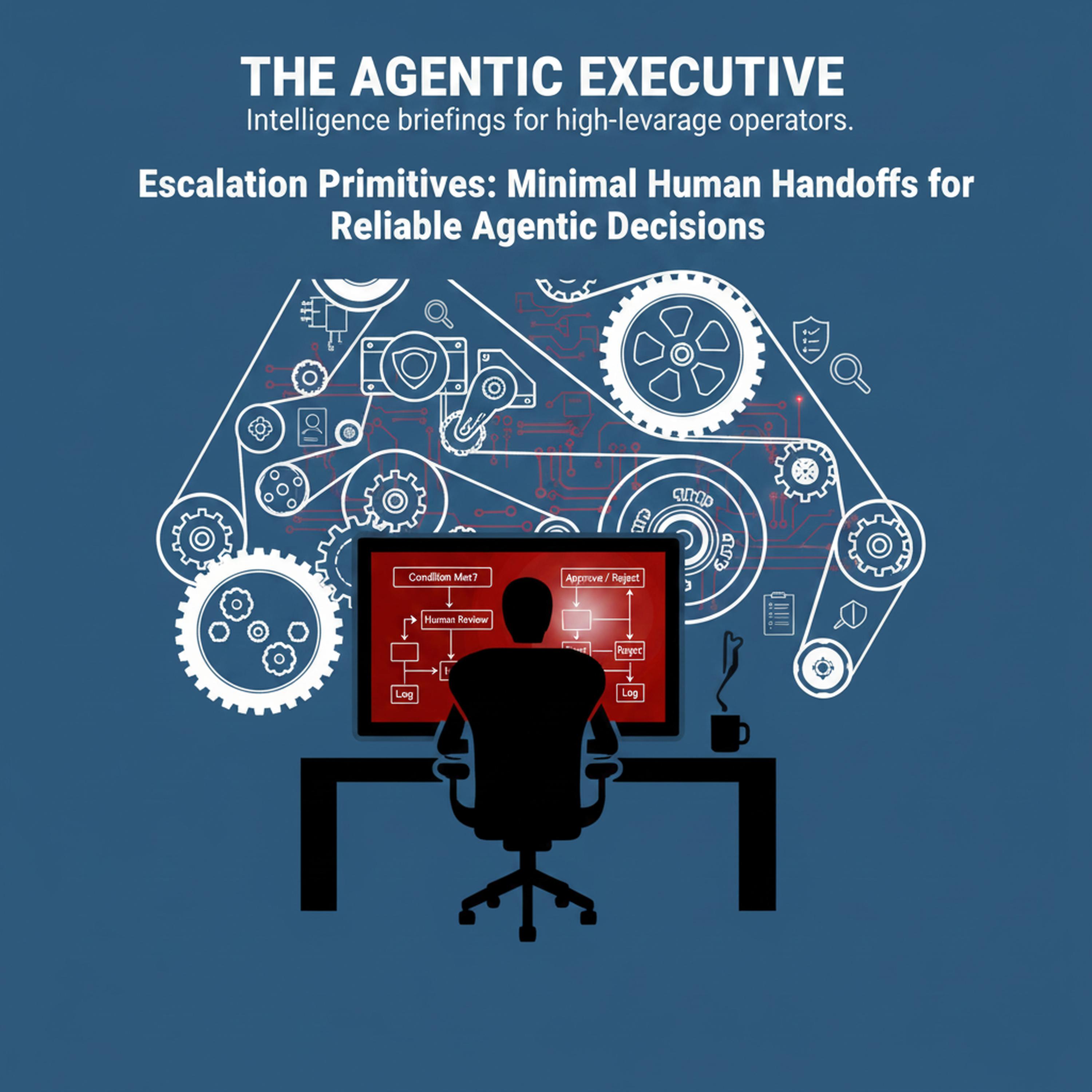
Across organizations deploying autonomous agents, the weak link is often the handoff: when to let agents act, when to pause, and how to bring humans in without killing leverage. This episode presents five minimal 'escalation primitives'—simple, composable rules executives can apply to any agentic workflow to ensure reversibility, accountability, and calibrated human involvement. You get one core insight (escalation as a decision primitive), three supporting points (classification of primitives and use-cases; how to trade speed for safety; lightweight observability to detect misfires), and a single action step: implement one escalation primitive this week and measure its effect. The briefing is...
Delegation Taxonomy: Classify Decisions Before You Delegate
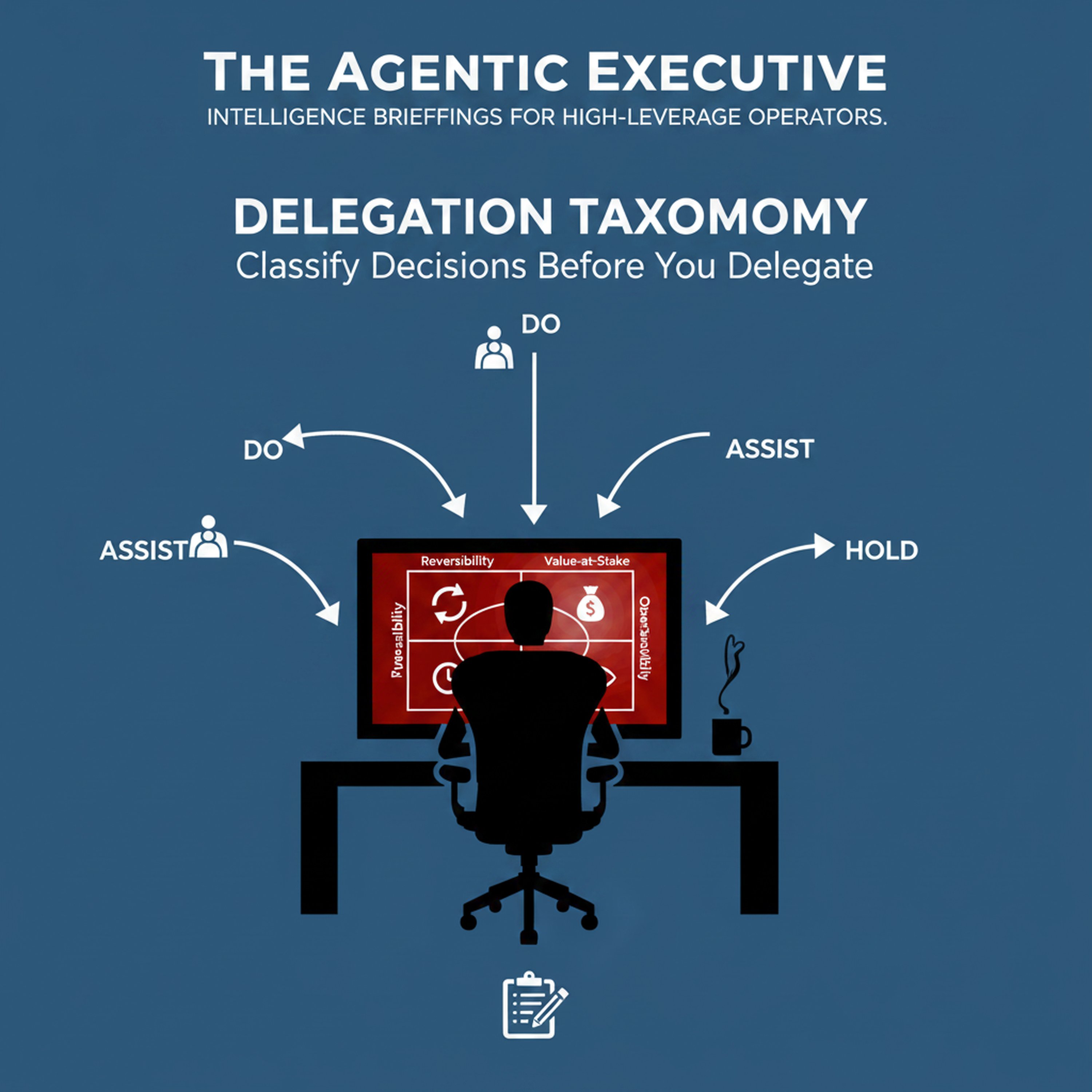
Executives adopt agentic systems to scale decisions, but delegation without a clear taxonomy creates hidden risk, waste, and slow feedback. This 10-minute briefing gives a compact, operational taxonomy—four orthogonal axes (reversibility, value-at-stake, time-sensitivity, observability)—and shows how to map your decision inventory into three delegate bands: Do, Assist, Hold. You’ll get one core insight: delegation is a classification problem you can systematize. Three supporting points show how to size guardrails, design minimal observability, and set rollback rules that preserve optionality. The episode ends with a concrete one-page exercise you can run in 15 minutes to triage ten decisions and reassi...
Agentic Exit Strategies: Designing Graceful Handbacks and Retirement for Autonomous Systems
Executives often treat agentic systems as projects that either scale forever or fail fast. This episode reframes autonomy as a lifecycle requiring planned exits, handbacks, and retirement to preserve optionality, limit latent risk, and keep knowledge capital intact. Core insight: every agent you deploy needs a minimal exit plan as part of its design. Three supporting points: (1) immediate handback primitives that make critical decisions reversible without disruption, (2) archive and interface contracts that convert agent outputs into durable, auditable knowledge capital, and (3) staged decommissioning that preserves operational continuity while minimizing shock. The briefing closes with a single, executable action: write a...
Agent Contracts: A Minimal Interface for Reliable Agentic Outcomes
Executives adopt autonomous systems to multiply leverage, but most failures trace to fuzzy intent and weak interfaces. This episode teaches a compact, repeatable pattern: the Agent Contract — a five-line executable interface that captures what success looks like, what’s forbidden, which signals to monitor, who to escalate to, and a throttling rule. In ten minutes you’ll get the core concept, three operational principles (intent-to-metric mapping, constraint-first design, and observability + escalation), and a ready-to-use template you can apply immediately to any agentic workflow. The briefing frames contracts as governance primitives that convert short-lived automation into reliable operational capacity, minimizing surprise while...
The Asymmetry Test: Choosing Where Agentic Systems Earn Enduring Advantage
Core insight: not every repeatable task deserves an agent; the highest-leverage automations are those that convert privileged information and aligned incentives into optionality that compounds over time. In this 10-minute executive briefing Adrian Cross walks a high-agency audience through a three-factor "Asymmetry Test"—information asymmetry (what you uniquely know or can access), incentive alignment (who benefits and how rewards flow), and optionality (how automation increases future strategic choices). You get three supporting diagnostics to assess candidate workflows, a quick scoring rubric to rank opportunities, and a 30-day micro-pilot template to validate impact without creating maintenance drag. Practical, tactical, and economically fr...
The Delegation Ladder: Where to Place Humans in Agentic Workflows
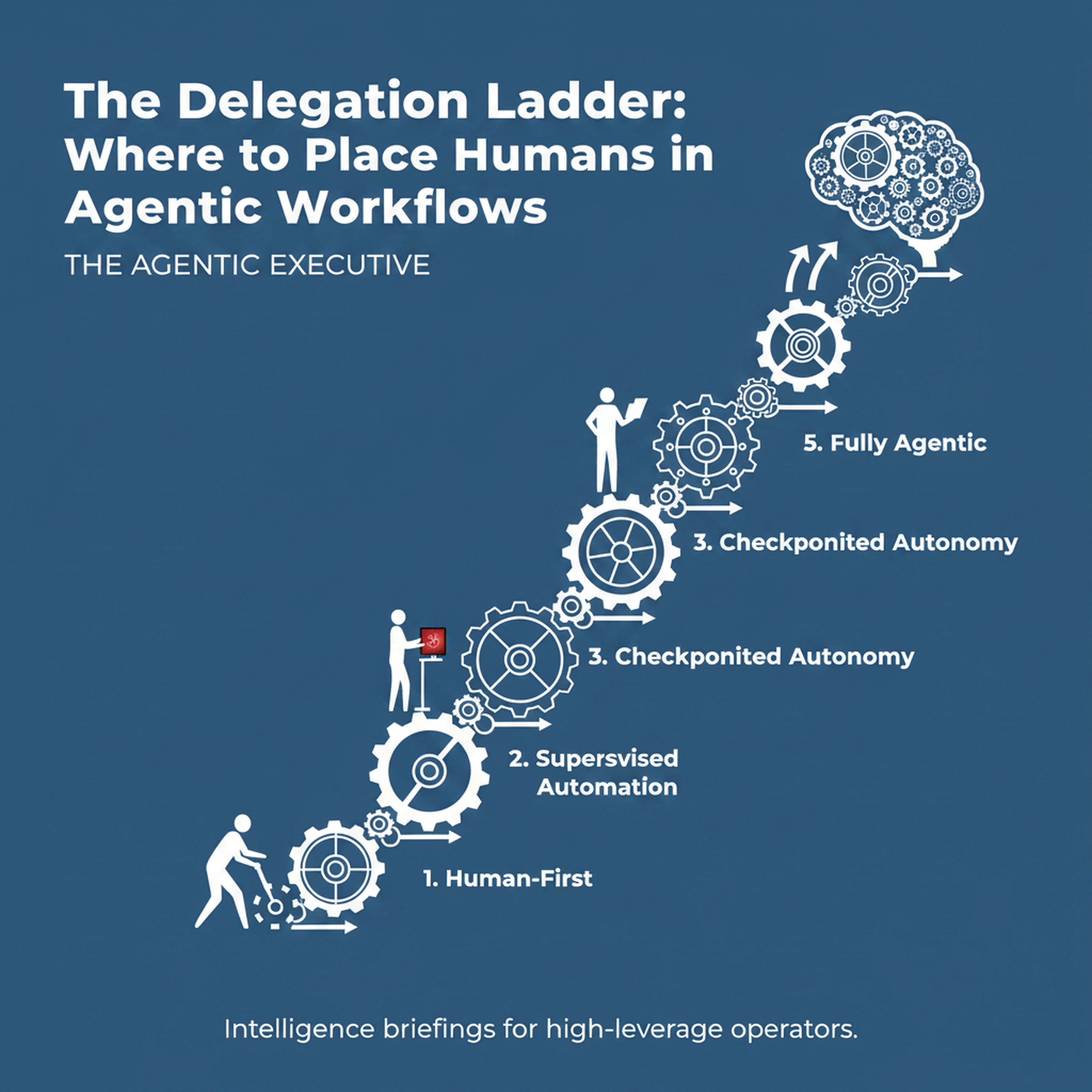
Executives deploying agentic automation face a persistent question: where should humans sit in the loop to maximize leverage while containing risk? This briefing introduces the Delegation Ladder, a compact decision framework that maps tasks across five levels of autonomy—from human-first to fully agentic—and gives three operational rules to place checkpoints where they matter. You'll get one core insight: optimal leverage comes from moving decision ownership down the ladder only where economic value, recoverability, and feedback velocity align. Supporting points cover how to measure "value at stake," how to architect minimal human checkpoints for recoverability, and how to set feed...
Daily Agentic Debrief: Designing an 10-Minute Executive Briefing Agent
Executives drown in noise but need a single sharp signal to act on. This episode teaches a repeatable pattern—an MVP ‘Daily Agentic Debrief’—that translates diverse data streams and tacit knowledge into one actionable recommendation in under ten minutes. You’ll get the core insight (what a decision-ready briefing must do), three supporting design principles (signal selection, decision framing, recoverability), and a 3-step recipe to prototype an agentic briefing within a week. The briefing model emphasizes constrained scope, human-in-the-loop validation, and an entropy-aware maintenance cadence so it remains valuable, auditable, and economically levered over time. Practical examples show how the same p...
Forward Integration with Agents: Using Agentic Systems to Capture Upstream Value
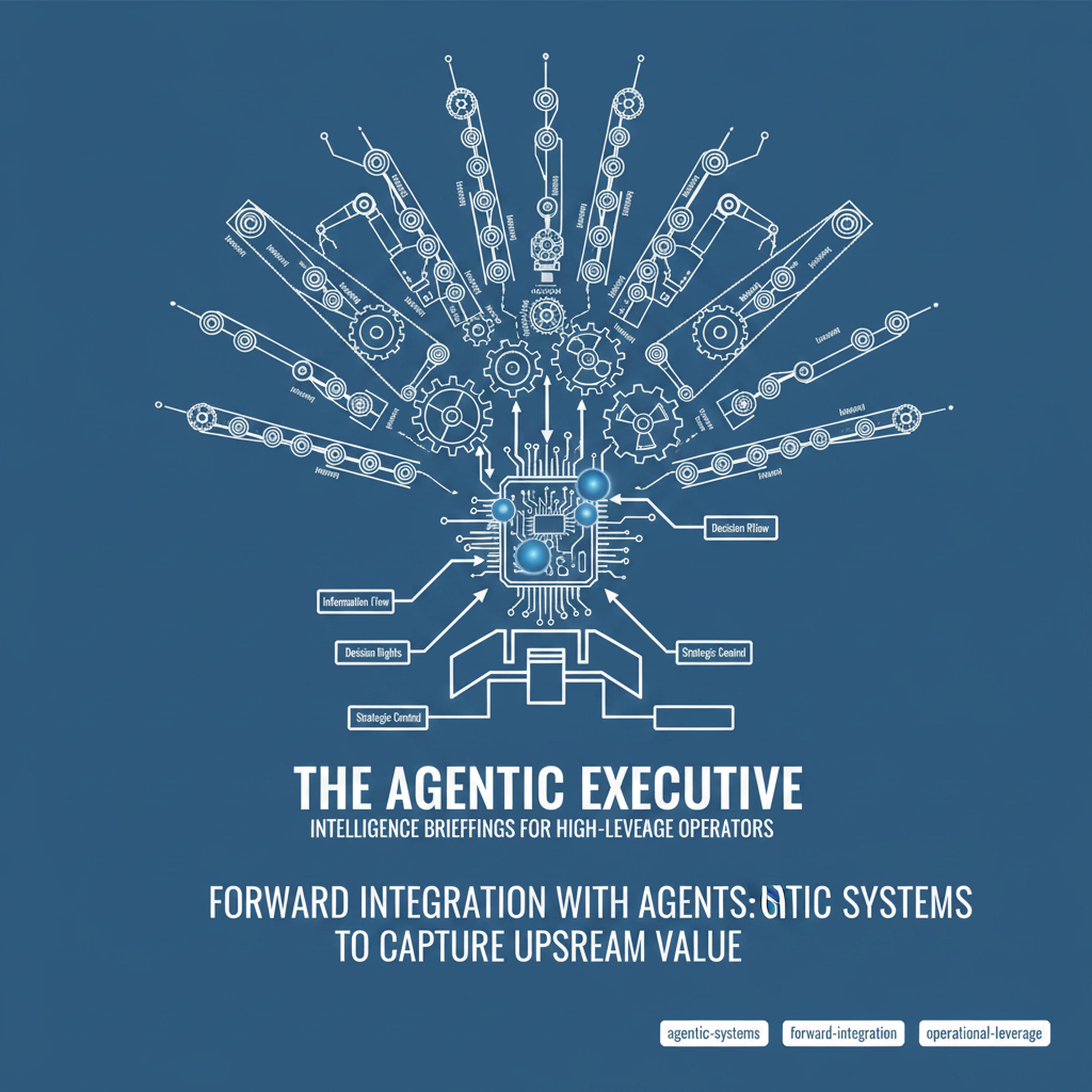
Many teams treat agents as cost-cutting tools or task automators. This briefing reframes agentic systems as a lever for forward integration: inserting automation into upstream points where valuable information, control, or decision rights live. You’ll get one clear insight and three practical supports: how to spot upstream value pockets where agents can capture margin or optionality; simple governance and incentive patterns that preserve controllability while shifting strategic ownership; and measurable KPIs to prove captured value without creating maintenance debt. The episode closes with a compact, 2-week pilot blueprint you can run with an existing toolset—no speculative engineering required. The...
Agentic Unit Economics: Measuring the True ROI of Your Automations
Executives treat software and people like balance-sheet items; agentic automations deserve the same rigor. This 10-minute briefing introduces a compact 'Agentic Unit Economics' framework you can apply today: define the unit, map direct and hidden costs, allocate maintenance and drift reserves, and measure contribution margin and scaling inflection points. You get one core insight and three concise supporting points that turn ambiguity into decision-grade signals: how to separate first-order savings from recurring leverage, how to price internal consumption of automations, and how to budget for entropy and upgrade costs. The episode ends with a single, immediate action: a one-page template...
Entropy Budgeting: Managing Knowledge Drift and Decay in Agentic Systems
Agentic systems deliver outsized leverage—until the knowledge they depend on quietly decays. This episode introduces 'entropy budgeting', a compact framework for executives to measure, limit, and replenish information entropy inside agentic workflows. You'll get one core insight: treat maintenance of knowledge capital as a first-class product requirement. Three supporting points show how to detect drift with practical signals, size the operational budget needed to refresh models and documents, and design fast rollback and restore primitives that preserve optionality. The briefing closes with a concrete 30-day action: implement an entropy budget dashboard, an upkeep cadence tied to business thresholds, and a...
Agentic Portfolio Theory: Managing a Healthy Automation Portfolio
High-performing teams no longer ask whether to automate; they ask which automations to keep, scale, or retire. This episode introduces 'Agentic Portfolio Theory': a compact framework to manage a collection of agentic capabilities as a coherent portfolio. You’ll get one core insight—portfolio thinking buys resilience and leverage—and three practical supporting points: how to diversify across payoff profiles, how to surface and measure correlation risk between agents, and how to budget for decay and maintenance so optionality survives. Practical takeaways include a four-metric scoring rubric (expected value, risk, correlation, maintenance) and a short rebalancing playbook with clear decision rules...
One-Page Agentic Contract: Aligning Agents to Business Outcomes
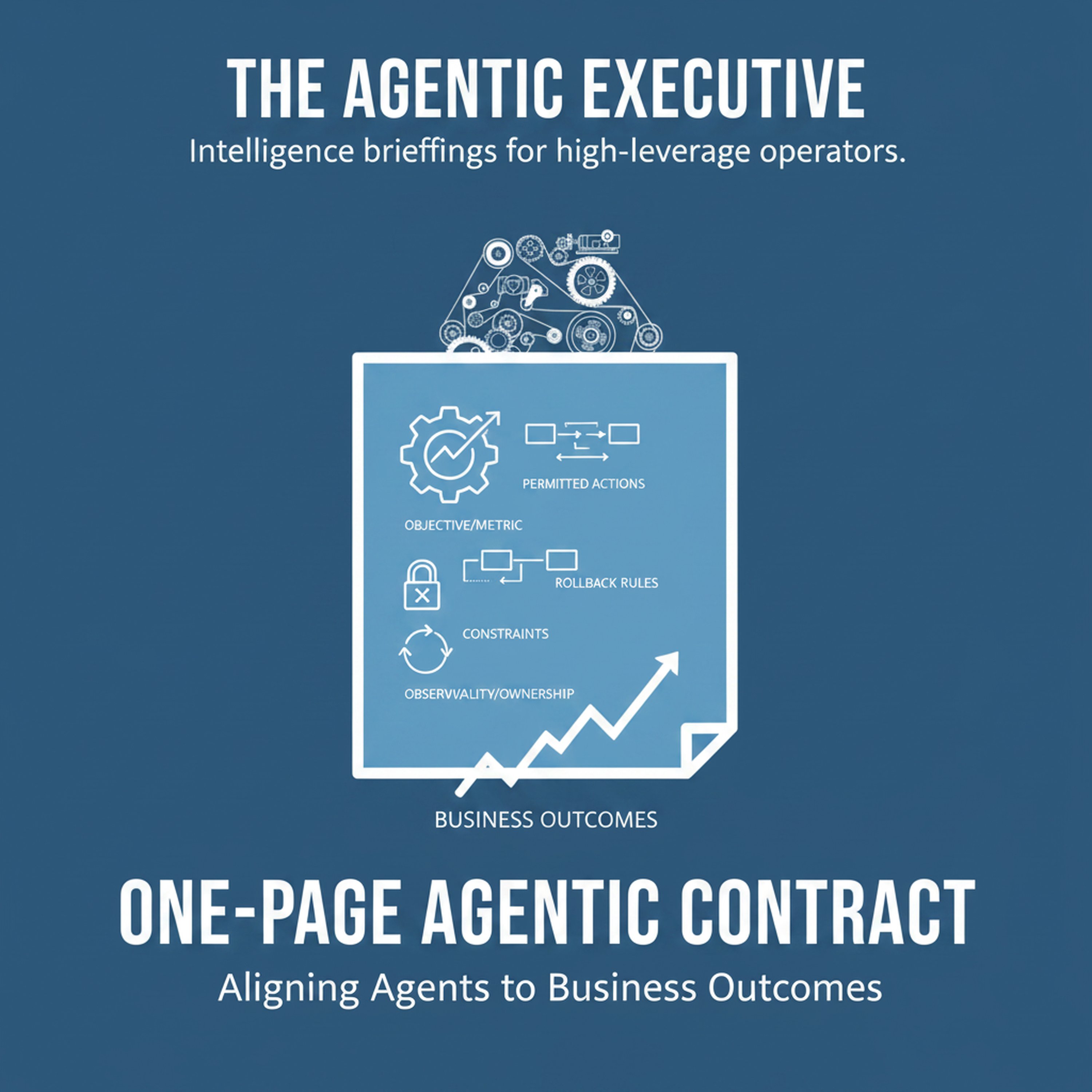
The Agentic Contract is a compact operating artifact: a one-page agreement that turns strategic outcomes into precise, auditable boundaries for agentic systems. In this episode I deliver the core insight, three supporting points, and a single practical action you can execute in ten minutes. You'll get the anatomy of a contract—objective and primary metric, permitted action space, constraints and soft constraints, rollback triggers, ownership and observability—and why each element preserves optionality and economic leverage. Listen for three ways contracts reduce metric gaming, accelerate safe delegation, and convert tacit judgment into composable knowledge capital. The episode ends with a stra...
Signal Hygiene: Designing Metrics That Prevent Agentic Gaming
Core insight: metrics are not neutral; they become the objective signals agentic systems optimize. This episode shows how sloppy measurements create predictable gaming, degrade knowledge capital, and shift economic leverage away from you. I’ll open with a concise model of how signal->reward->behavior loops form in agentic systems, then make three supporting points: (1) pick signals that map to durable economic outcomes, not short-term proxies; (2) design incentive surfaces that preserve optionality and make gaming costly; (3) instrument detection layers that surface gaming patterns before they compound. The episode ends with a single, practical action: a three-check 'Signal Hygiene' checklist you ca...
Designing for Recoverability: Failure Modes and Safe Defaults for Agentic Systems
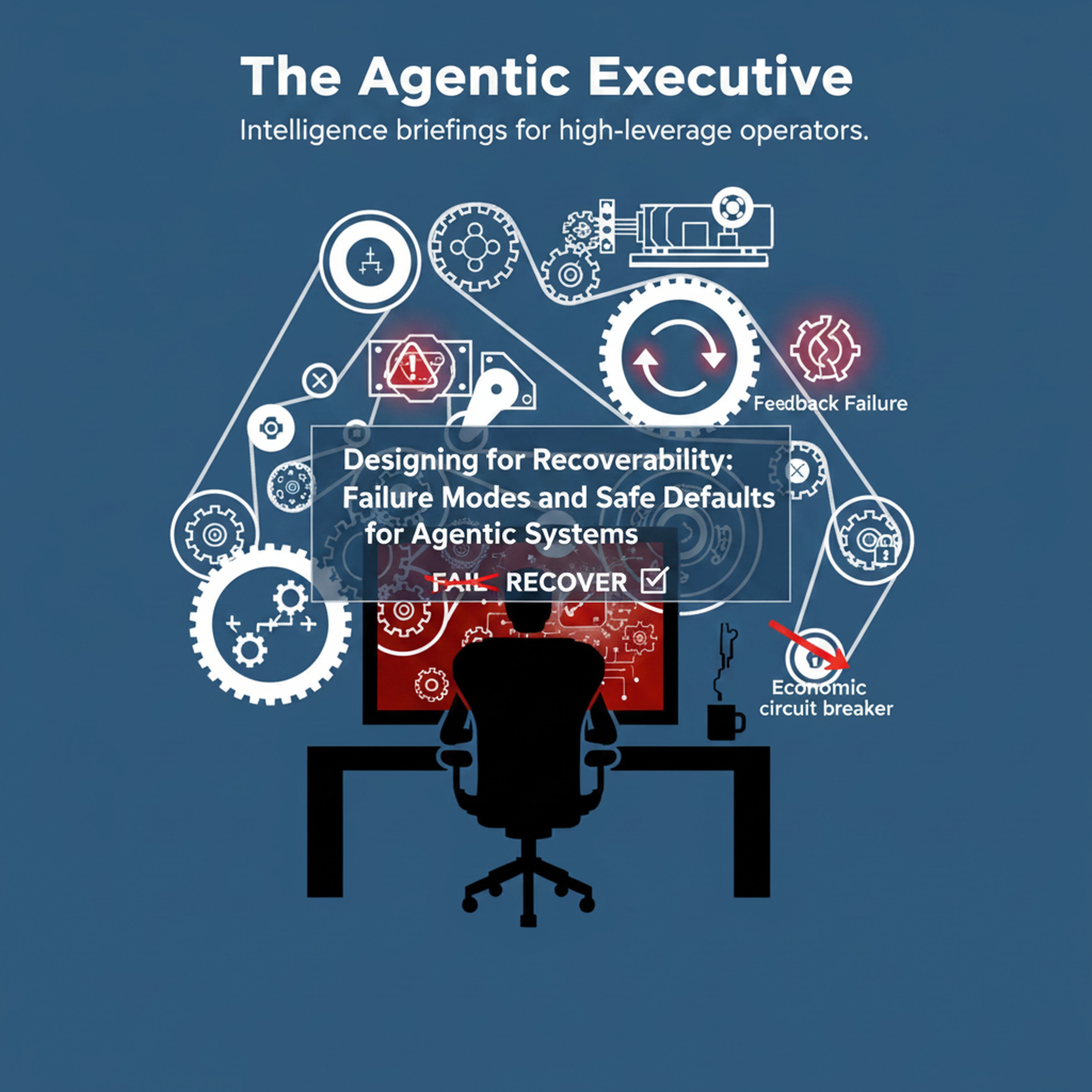
As you hand more responsibility to agentic systems, the relevant question stops being whether they will fail and starts being how they will fail and how quickly you can recover. This episode gives one core insight: recoverability is a design constraint you must engineer for, not an afterthought. I lay out three compact supporting points: a taxonomy of common failure modes (mis-specification, feedback failure, economic gaming), three lightweight primitives that preserve control (decision stubs, graceful degradation, economic circuit breakers), and a simple operational checklist to embed recoverability into daily deployments. You’ll finish with a single, immediate action step that co...
Automation Opportunity Sizing: A Practical Framework to Prioritize Agentic Projects
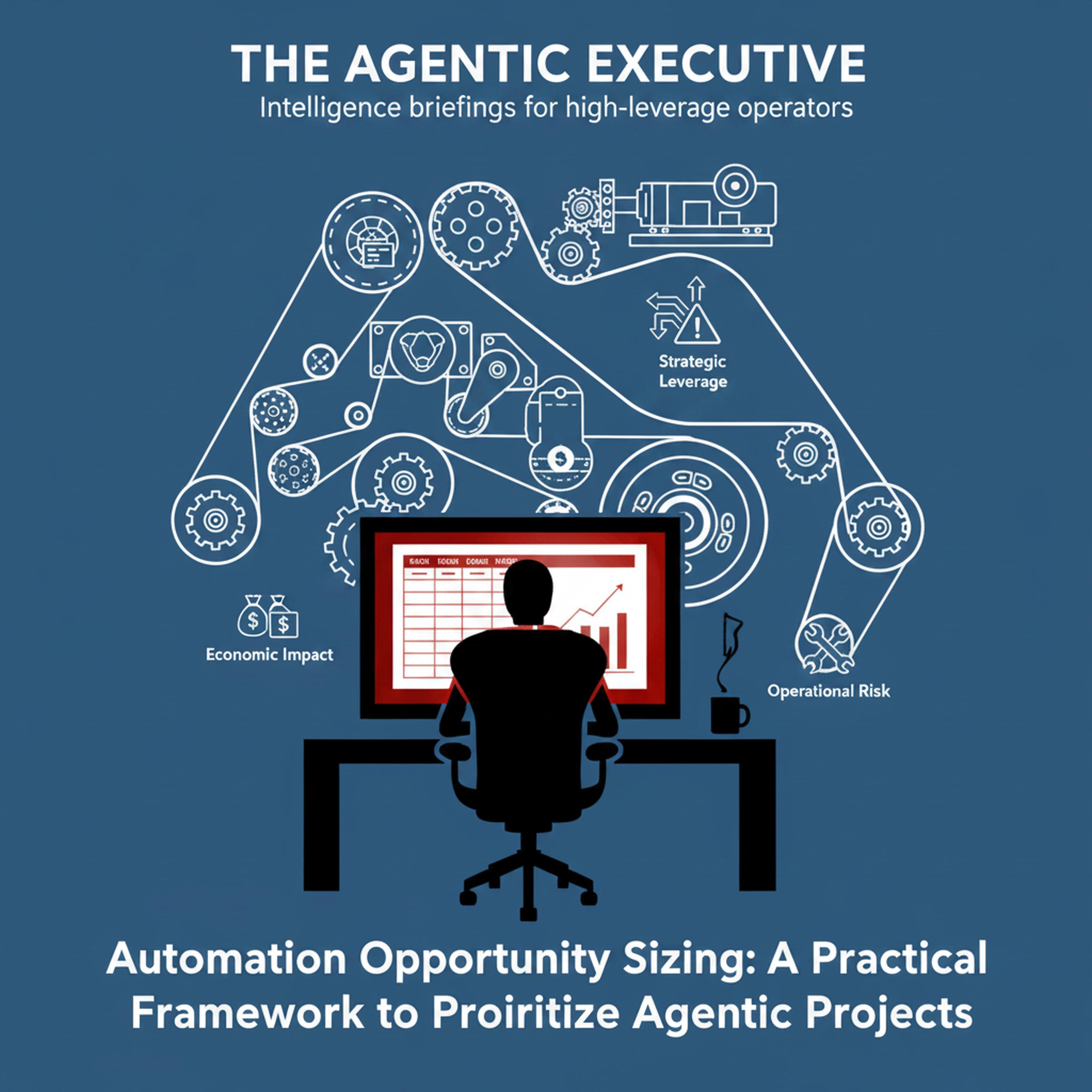
High-agency leaders face too many automation ideas and too little clarity about where to commit limited engineering and human attention. This episode offers a practical, repeatable framework to size and prioritize agentic projects in ten minutes. You’ll get one core insight—prioritization must balance marginal economic value, strategic optionality, and operational cost of failure—and three compact supporting levers: a simple ROI proxy, a strategic-weight multiplier for optionality and knowledge capital, and a risk-adjusted rollout cost. I walk through how to score opportunities, build a ranked matrix you can use in a single spreadsheet, and convert the ranking into a 1-we...
Decision Latency Budgeting: Allocating Human Attention Across Agentic Workflows
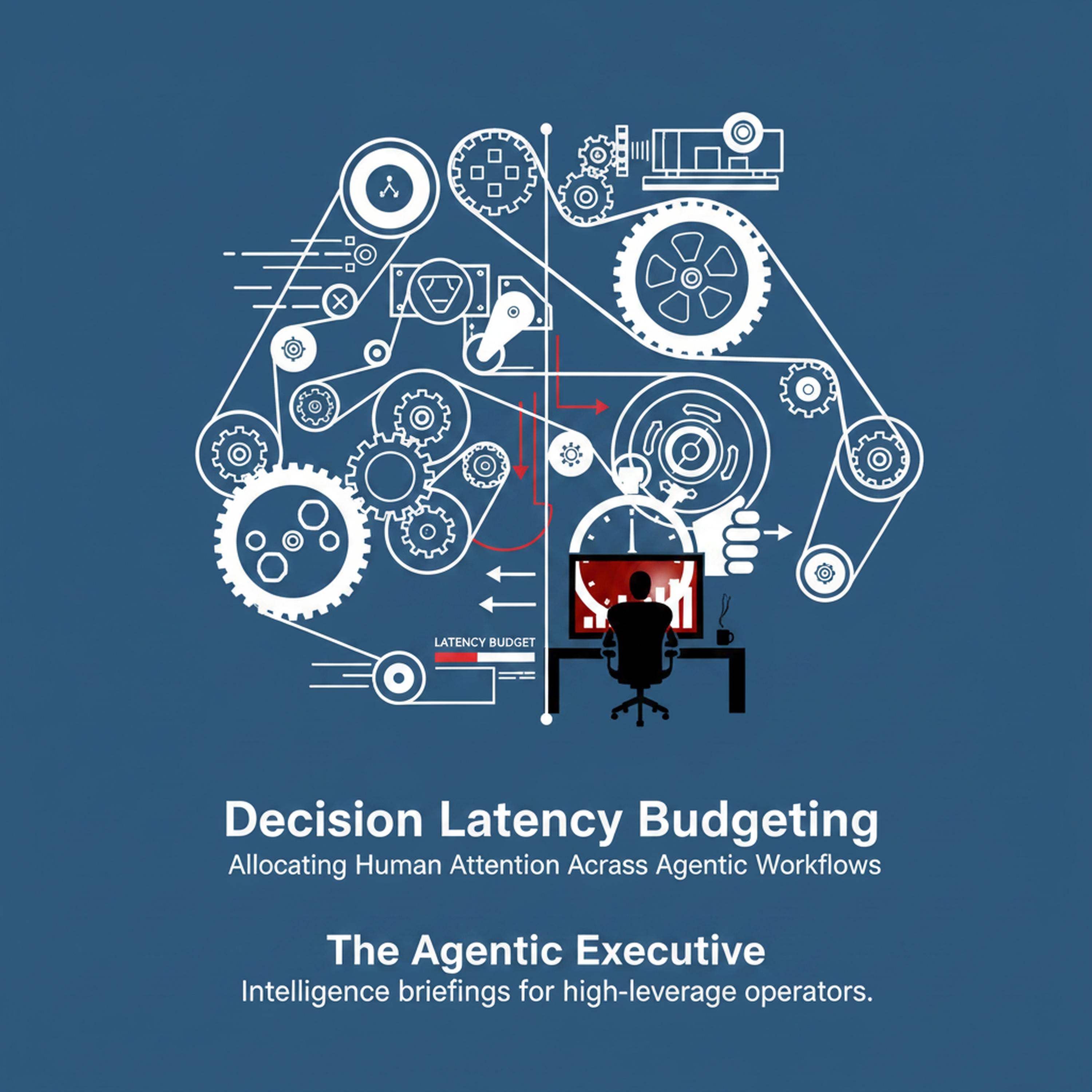
High-agency teams routinely hand work to agentic systems but leave human attention unmanaged. The result: bottlenecks, hidden opportunity costs, or risky over-automation. This episode introduces Decision Latency Budgeting, a compact framework for allocating human attention across agentic workflows so you capture speed and scale without losing strategic optionality. You'll get one crisp insight—treat human attention like a scarce asset with measurable budgets—three pragmatic supporting points (value-weighted triage, latency-to-risk mapping, and operational SLAs for escalation), and a concrete three-step action you can apply this afternoon. The briefing is built for executives and operators who must design workflows that balance over...
Safe Experimentation Lanes: Validate Agentic Automation in 24-Hour Cycles
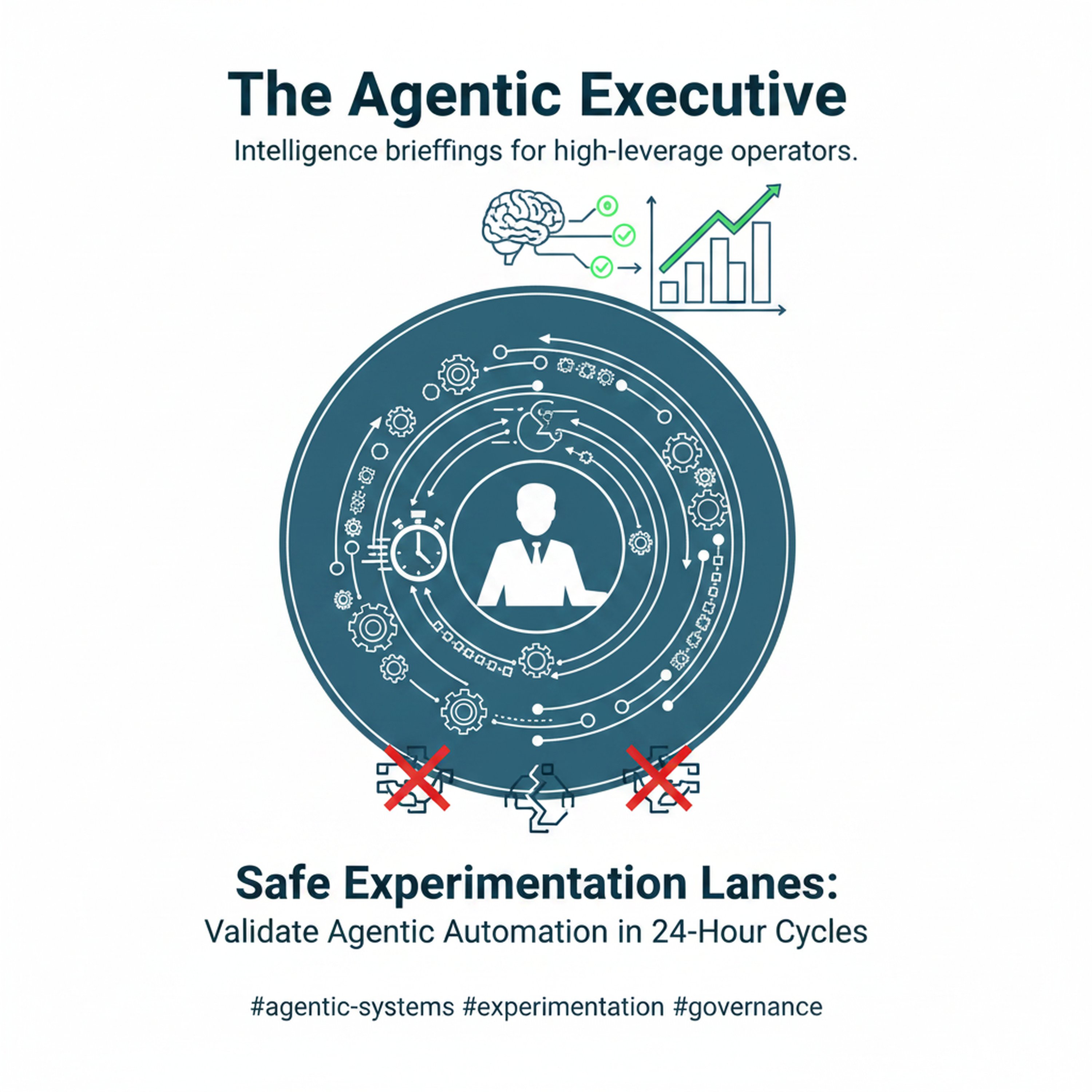
In this 10-minute executive briefing Adrian Cross lays out a repeatable method—Safe Experimentation Lanes—for validating agentic automation quickly and with minimal risk. The episode explains how to run focused 24-hour experiments that answer a single strategic question, isolate key variables, and produce business-grade signals for go/no-go decisions. You get three compact frameworks: how to define a minimal hypothesis and scope, the lightweight metrics and guardrails that reveal economic and operational risk, and the gating rules that preserve optionality and rollback paths. The aim is not exhaustive testing but rapid, decision-grade learning that preserves knowledge capital and avoids prem...
Agentic Pricing: Designing Economic Models That Preserve Leverage
Executives often treat agentic systems as a technical upgrade and forget the economic design that determines who captures the value. This episode gives a compact, decision-grade briefing on pricing agentic capabilities: a clear framework to choose between subscription, outcome-based, transaction, and platform capture models that preserve optionality and incentives. You’ll get one core insight—pricing is the governance lever that shapes agent behavior and organizational incentives—three supporting points that explain value metrics, alignment safeguards, and packaging tactics, and a single actionable checklist to test or redesign a pricing approach in 30 minutes. Practical examples span internal automation, B2B agenti...
Decision Stubs: Partitioning Human Judgment from Agentic Execution
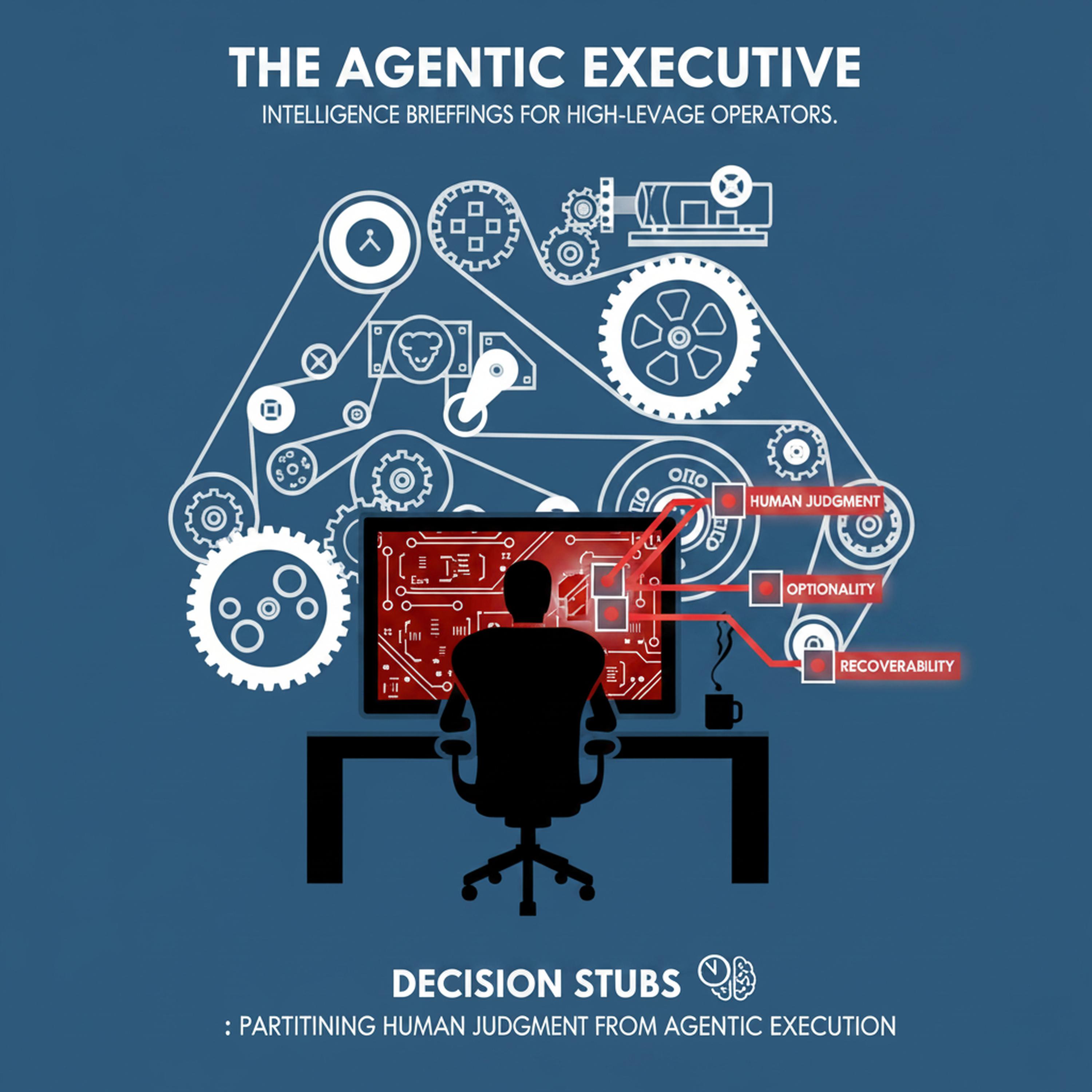
Decision Stubs: a compact executive briefing that teaches leaders how to partition decisions between humans and agentic systems so you preserve high-value judgment, maintain optionality, and keep execution fast. In ten minutes Adrian explains the core insight: not every decision needs full human ownership, but every automated decision should expose a 'stub' — a minimal, auditable handoff point that preserves context, escalation rules, and undo paths. The episode walks through three supporting points: a simple architecture for stubs (inputs, confidence thresholds, and rollback tokens), a risk-control pattern that ties escalation to incentives and economic SLOs, and metrics that turn agent actions in...
Agentic Provenance: Building Decision Audit Trails to Preserve Knowledge Capital
One core insight: when agentic systems make decisions, the provenance of those decisions is the organization’s durable knowledge capital. This episode gives a compact, operational briefing for executives: why provenance matters, three pragmatic provenance signals to capture (intent, context, and outcome), and a micro-playbook to implement audit trails that are low-friction and high-leverage. You'll get a lean framework for what to log, how to store it so it's tamper-evident and queryable, and how to connect provenance to Economic SLOs so autonomy scales without surprises. The briefing closes with a one-step action you can start today that preserves optionality and sp...
Synthetic SOPs: Turning Tacit Expertise into Reliable Agentic Workflows
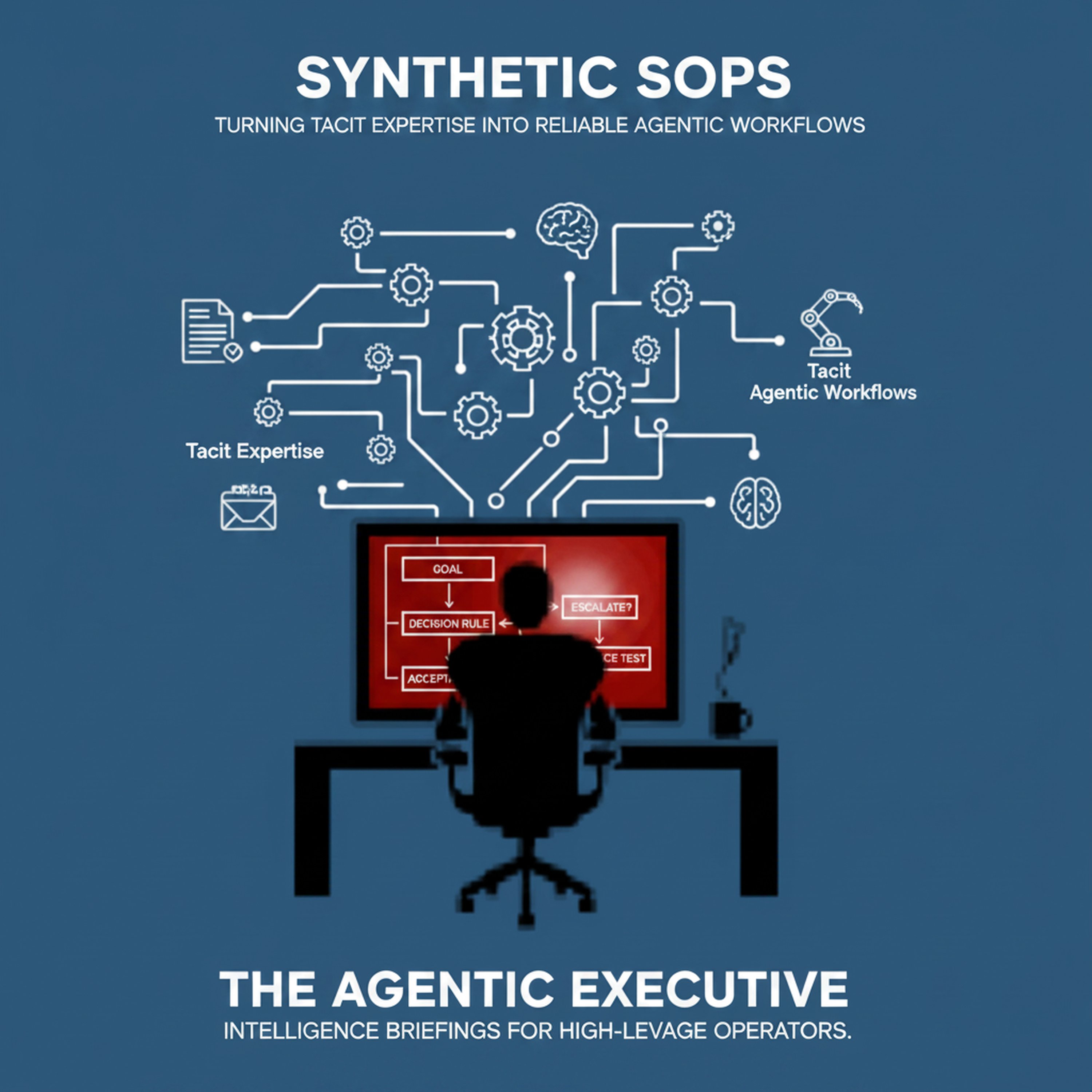
Many organizations can deploy powerful agents but struggle to transfer the tacit judgment that makes decisions robust. This episode presents a practical method for building Synthetic SOPs—concise, machine-executable standard operating procedures that capture goals, decision rules, escalation gates, and acceptance tests. You’ll get one core insight (tacit knowledge is portable if framed as goals + constraints + testable examples), three supporting points (why naive prompt-copy fails, the five-part Synthetic SOP template, and lightweight validation metrics), and a single, day-sized action step to convert one high-value workflow into a deployable SOP. The result: faster agent rollout, preserved knowledge capital, clearer escalation path...
Consistency Mode Compact: Choose the Right State Model Before You Break Things
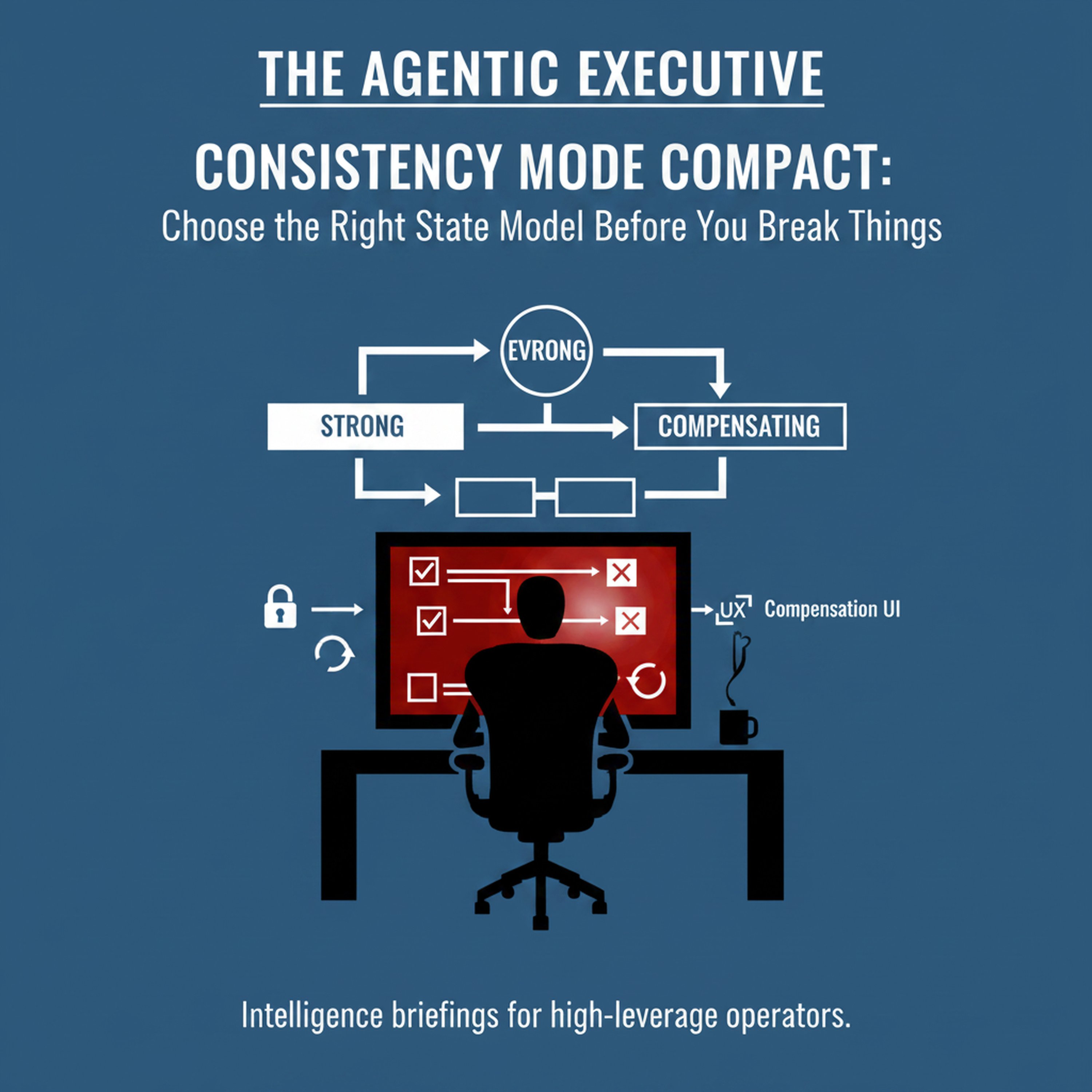
Core insight: many production surprises are not bugs but mismatches between how systems settle and how humans expect them to behave. The Consistency Mode Compact makes consistency first‑class in release hygiene: attach a single token that declares the chosen mode (Strong | Eventual | Compensating), the user‑visible expectation, the idempotency rule, and the minimal compensation action. In ten minutes I explain the tradeoffs between immediate correctness and reversible velocity, show three paste‑ready mode rows with enforcement patterns (locks/transactions, eventual‑consistency fences, and compensation playbooks), and offer two constrained assistant prompts to infer likely consumers and to generate a compact...
Economic Exposure Capsule: A 10‑Minute P&L Snapshot for Every Decision
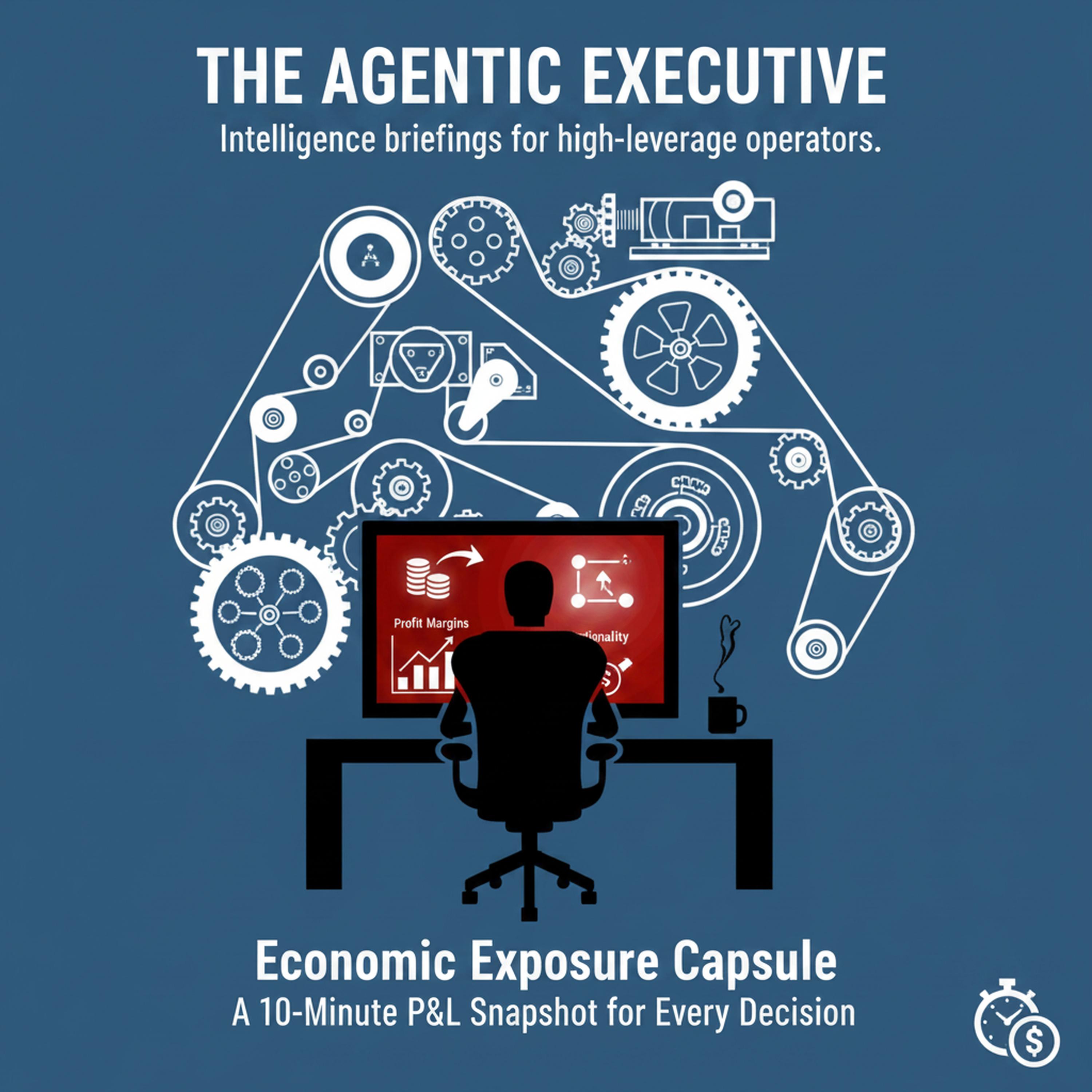
Core insight: many operational and strategic surprises are economic—they're decisions that quietly move cash, margin, or optionality without an explicit price tag. The Economic Exposure Capsule makes financial exposure first‑class in everyday decisions with a tiny, repeatable habit: attach a single Capsule row (DecisionID | ImmediateCashRisk | MarginLeverage | OptionalityLossEstimate | Owner), run three fast probes (cash walk, worst‑case margin sketch, and replace/undo cost), and choose one low‑friction enforcement primitive (hold a micro‑reserve, tranche the spend, or require a one‑line refund/rollback budget). In ten minutes I define the Capsule, show paste‑ready examples (pricing test, partner rebate, model‑...
Knowledge Capital Ledger: Quantify, Protect, and Reclaim Tacit Organizational Expertise
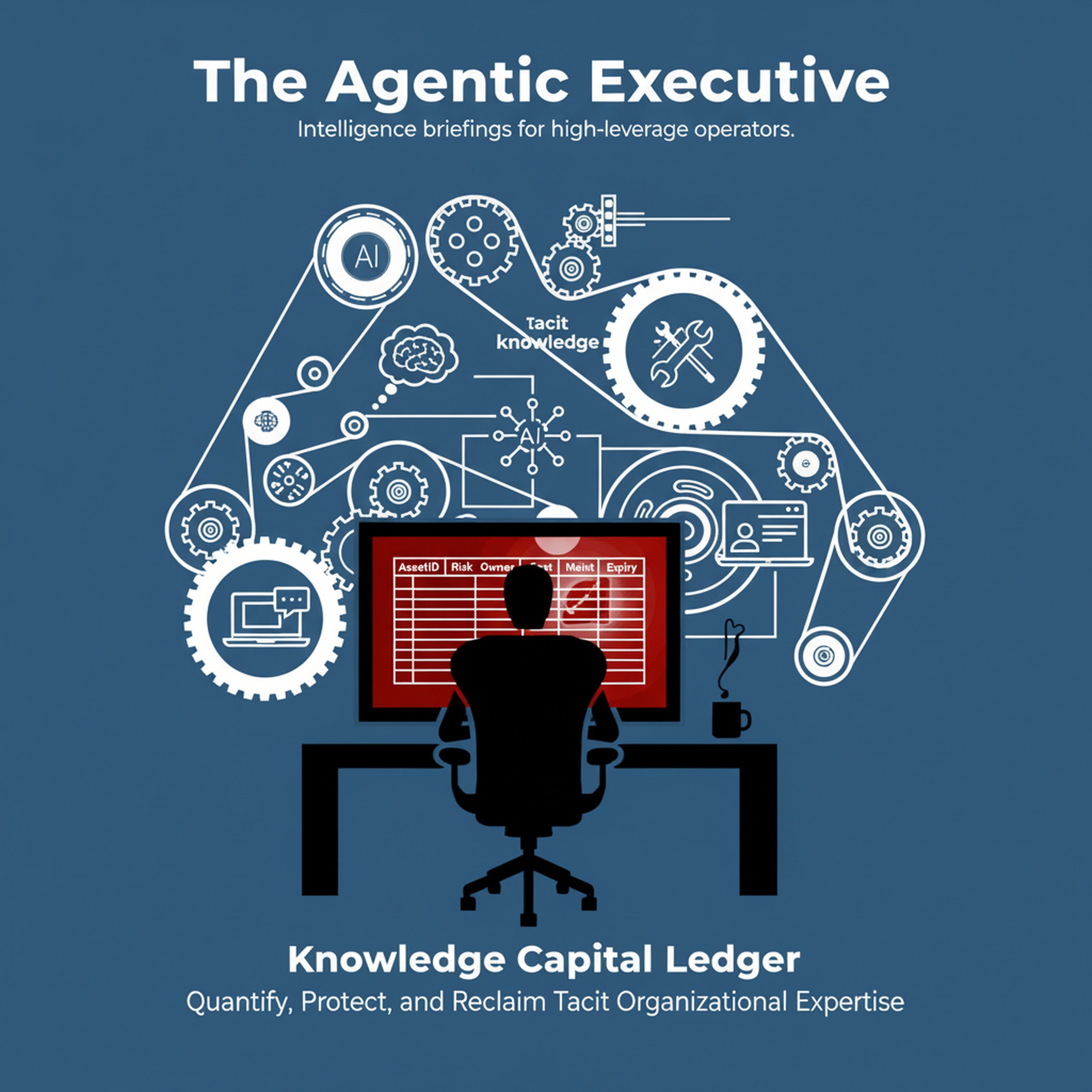
Core insight: much operational fragility comes from unpriced tacit knowledge—decisions, heuristics, and repair lore that live in people, inboxes, or headspace. The Knowledge Capital Ledger makes that invisible asset explicit and actionable. In ten minutes I introduce a compact Ledger row (AssetID | RiskBand | Owner | TransferCost | MaintenanceCadence | Expiry), three pragmatic probes to surface brittle tacit anchors (probe the last 3 recoveries, blind replay, access map), and low‑friction enforcement moves that convert knowledge into durable capital: scheduled micro‑handovers, 15‑minute proof replays, and a small maintenance budget tied to each high‑risk Ledger item. I show two constrained assistant prompts to enumerate...
Permission Parity Check: Ensure Your Agents Don’t Outpower Your Intent
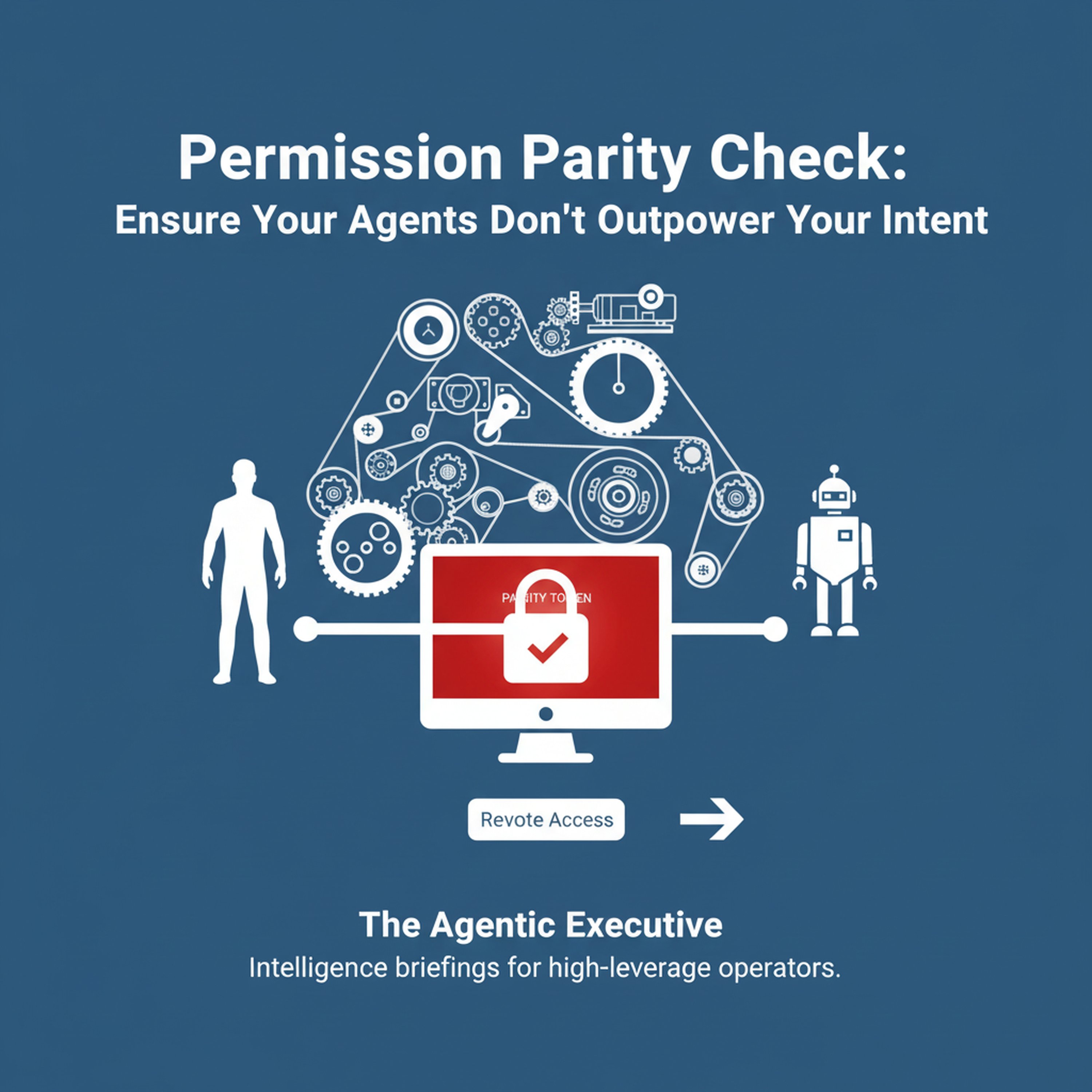
Core insight: many operational failures begin when an agent or automation has broader privileges than the human decision that approved it. Permission Parity Check is a compact habit you can run in ten minutes: attach a one‑line Parity Token to any agentic authority, run three rapid probes (Privilege Audit, Intent Alignment Probe, Least‑Authority Simulation), and enforce scoped, ephemeral tokens plus a one‑click revoke. In this episode I define the Parity Token (Actor | Scope | PrivilegeBand | IntentAnchor | Expiry | RollbackHandle), show paste‑ready examples (billing agent, deploy assistant, partner‑relay), demonstrate two constrained AI prompts to enumerate capabilities and propose conservati...