EP Edge Journal Watch: Cardiac Electrophysiology Research
Welcome to EP Edge Journal Watch, where cardiac electrophysiology meets evidence, precision, and perspective. Hosted by Dr. Niraj Sharma, this weekly podcast distills high-impact cardiovascular and Cardiac Electrophysiology and arrhythmia research into clear, clinically meaningful insights. Each episode goes beyond headlines and abstracts to uncover what new studies actually mean for patient care, decision-making, and the future of electrophysiology. What EP Edge Journal Watch stands for: Evidence-based practice Precision electrophysiology, arrhythmias analysis A forward-thinking, edge-driven approach to how we interpret and apply data in real-world clinical settings. Whether you’re an electrophysiologist, cardiologist, researcher, trainee, or allied health professional, EP Ed...
EP Edge® Journal Watch: Issue 41 October 2026: AF Ablation, PFA Coronary Safety, Smartwatches and LAA Closure
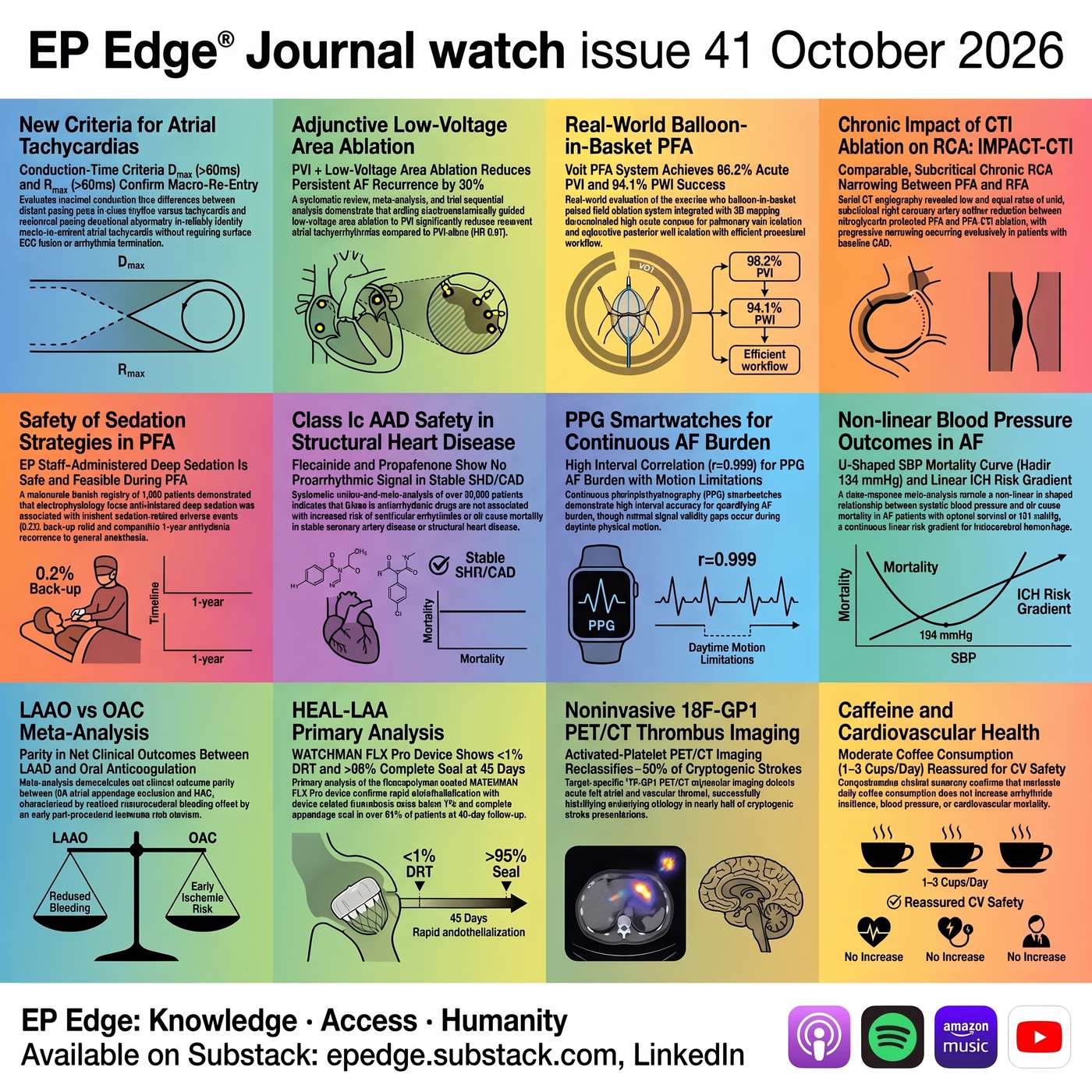
EP Edge® Journal Watch 41 | October 2026: AF Ablation, PFA Coronary Safety, Smartwatches and LAA Closure
When does a more extensive ablation strategy improve outcomes, how should we assess coronary safety after pulsed field ablation, and can wearable rhythm monitoring or left atrial appendage closure change clinical decisions?
In Issue 41 of EP Edge Journal Watch, Dr. Sharma examines atrial fibrillation treatment, procedural safety, rhythm monitoring, and stroke prevention. Four featured discussions explore low-voltage area ablation, the IMPACT-CTI study, smartwatch assessment of AF burden, and randomized evidence comparing left atrial appendage closure with oral anticoagulation. Shorter reviews connect t...
EP Edge® Journal Watch 40, October 2026: AF Ablation, Anticoagulation, Stroke Risk, GLORIA-AF, Stellate Ganglion Block, and ICD Outcomes
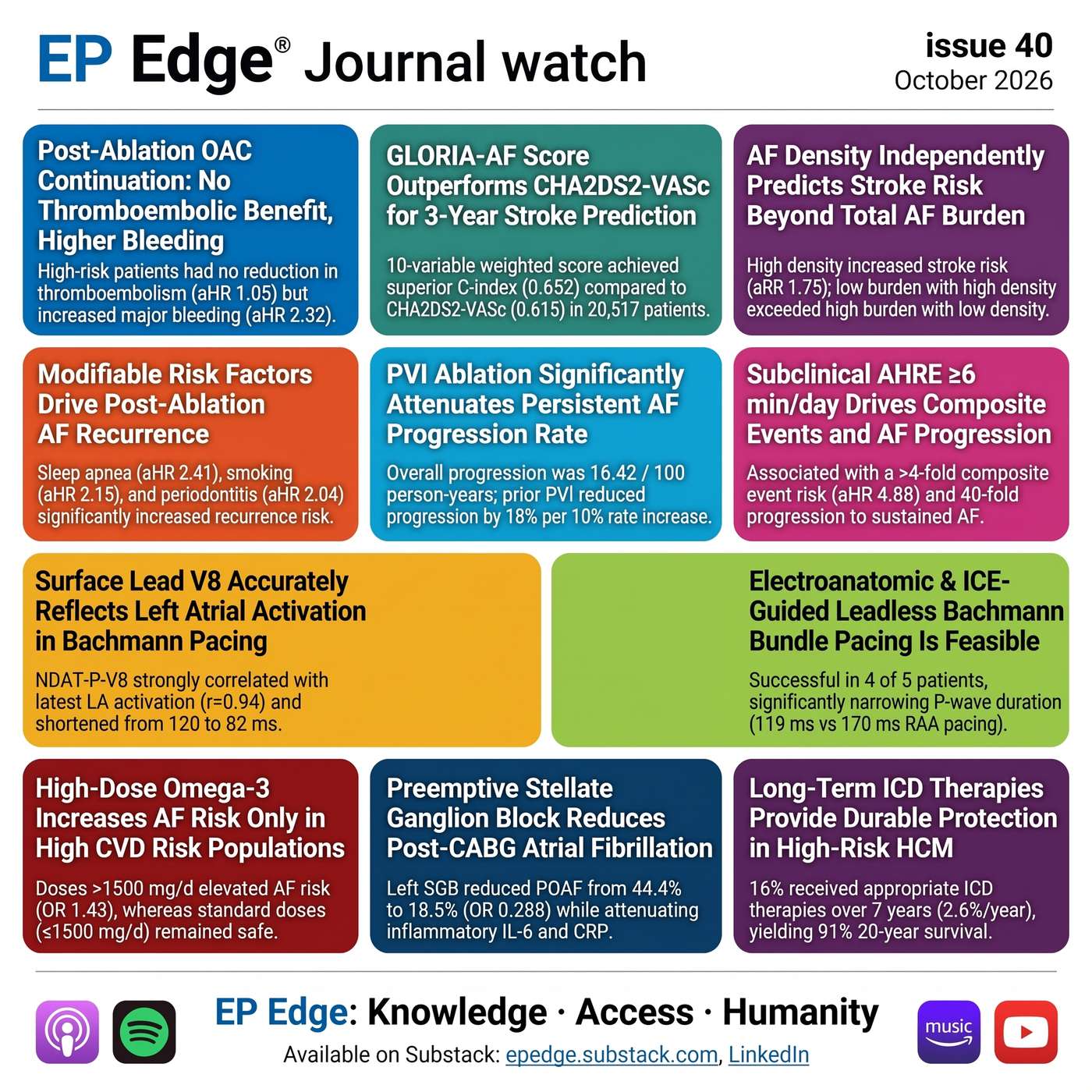
EP Edge® Journal Watch | Issue 40 | October 2026
Beyond AF Burden: Stroke Risk, Rhythm Progression, Atrial Pacing, and Sudden Death Prevention
Should oral anticoagulation continue after successful atrial fibrillation ablation? Does AF density provide better stroke-risk information than conventional burden measurements? Can the GLORIA-AF score improve thromboembolic risk prediction? And could autonomic modulation or advances in pacing and defibrillator therapy change electrophysiology practice?
In Issue 40 of EP Edge® Journal Watch, Dr. Sharma examines eleven research papers, with detailed analysis of five major studies and concise reviews of six additional publications.
The episode explores st...
EP Edge® Journal Watch 39 | October 2026: PIFPAF-PFA, Ablation Durability and Left Bundle Area ICD Leads
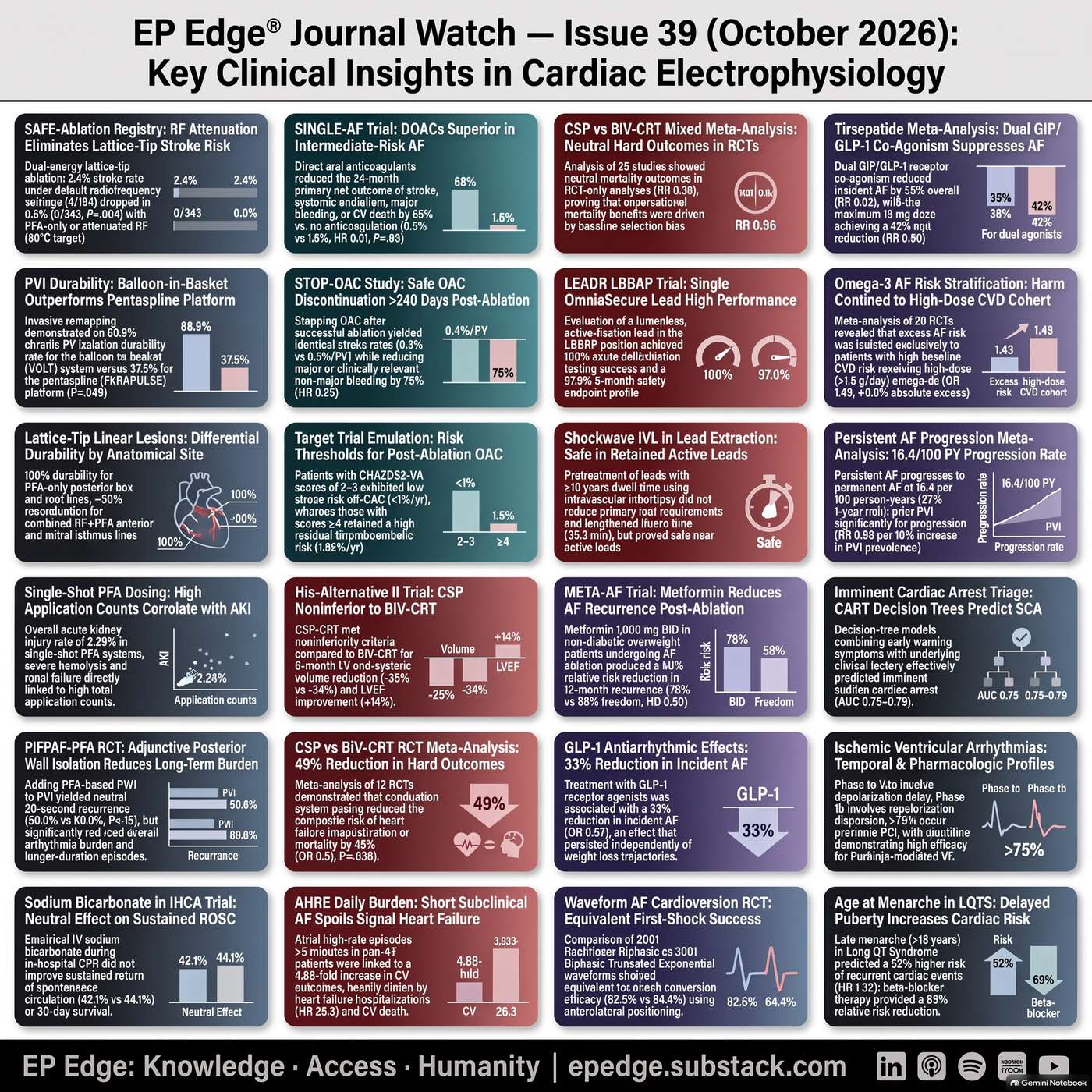
Should we add posterior wall isolation during pulsed field ablation for persistent atrial fibrillation? How durable are pulmonary vein isolation and additional atrial lines? Can a defibrillation lead placed in the left bundle branch area provide reliable early performance while simplifying device therapy?
Join Dr. Sharma for EP Edge® Journal Watch Issue 39, October 2026. We examine four papers in depth: PIFPAF-PFA, pulmonary vein isolation durability across pulsed field systems, invasive remapping of atrial lesion sets with a dual-energy lattice-tip catheter, and the LEADR LBBAP defibrillation lead study. We then give brief takeaways from twenty additional articles spanning AF a...
EP Edge® Journal Watch Issue 38 September 2026 with Heart Rhythm Society at HRX: AI ECG Interpretation, Wearable-Detected Ventricular Tachycardia, and LBBAP vs Deep Septal Pacing
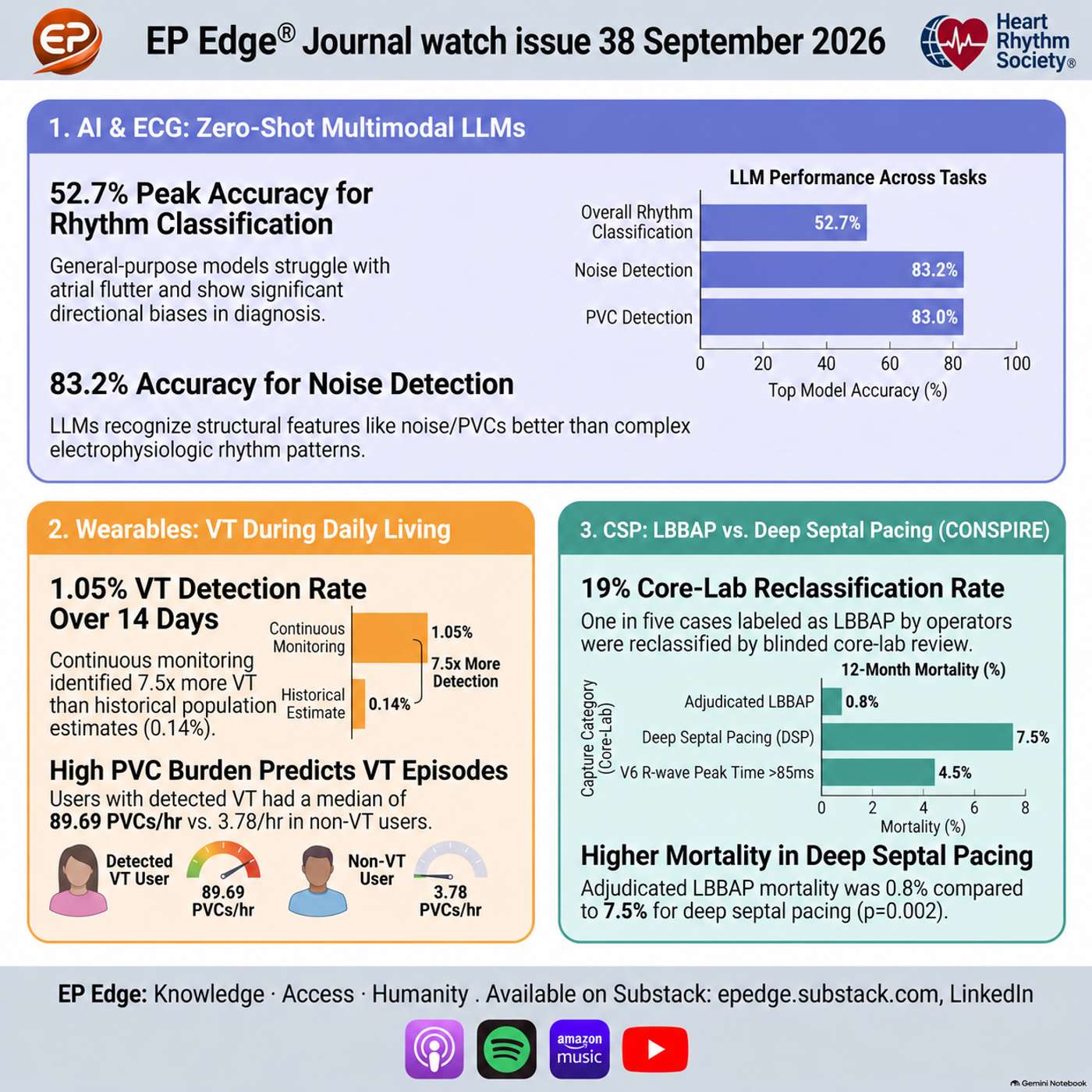
In this special EP Edge® Journal Watch Issue 38, recorded at HRX, with the Heart Rhythm Society Live 2026 in Atlanta, Dr. Niraj Sharma is joined by Dr. Michael Lloyd, Professor of Medicine at Emory University, for a focused discussion of three provocative studies with direct implications for contemporary cardiac electrophysiology.
First, they examine the emerging role of large language models and artificial intelligence in ECG interpretation. How accurately can off-the-shelf, zero-shot LLMs interpret electrocardiograms, and are currently available general-purpose AI models ready to participate in clinical ECG analysis?
The discussion then turns to ventricular tachycardia detected d...
EP Edge® Journal Watch 37: LAAO vs DOACs, PFA Stroke Risk, Wearable AF Monitoring, PVC Localization, and SGLT2 Sudden Death
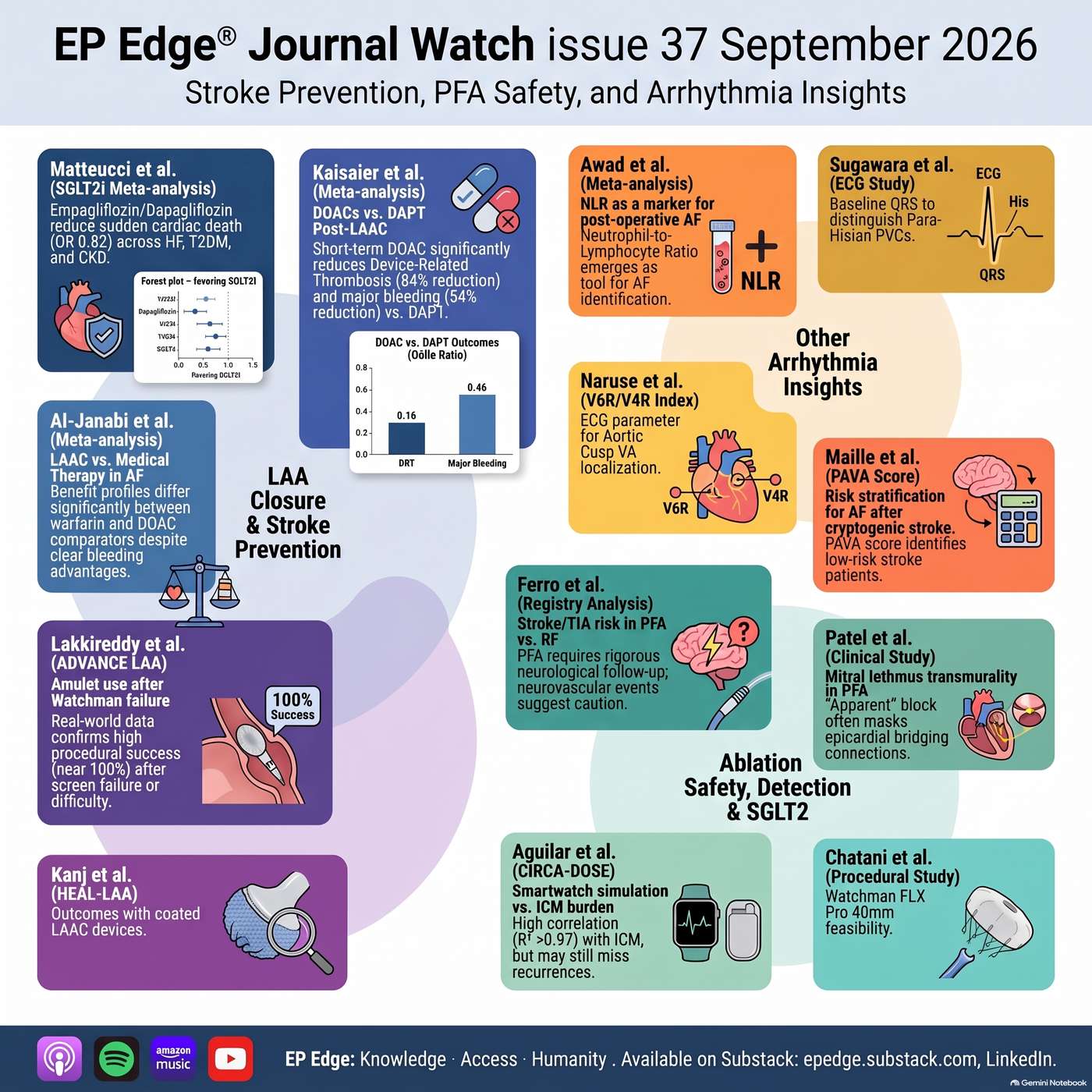
In EP Edge® Journal Watch Issue 37, September 2026, Dr. Sharma reviews 13 important studies in cardiac electrophysiology, with a focus on what the data actually mean for clinical practice. This episode goes beyond abstracts and headline results to examine why each study was performed, the clinical question investigators were trying to answer, the methodology used, the statistics behind the major findings, important limitations, and what the results may mean for electrophysiologists going forward.
This episode begins with a major theme in contemporary atrial fibrillation care: left atrial appendage occlusion and stroke prevention.
First, we examine the mechanistic s...
EP Edge® Journal Watch 36: ESC 2026, AF Ablation and Sham Trials | PVI-SHAM-AF, PFA-SHAM, SHAM-PVI, FlexPulse, NEXAF, IDEAL-AF, ENRICH-AF
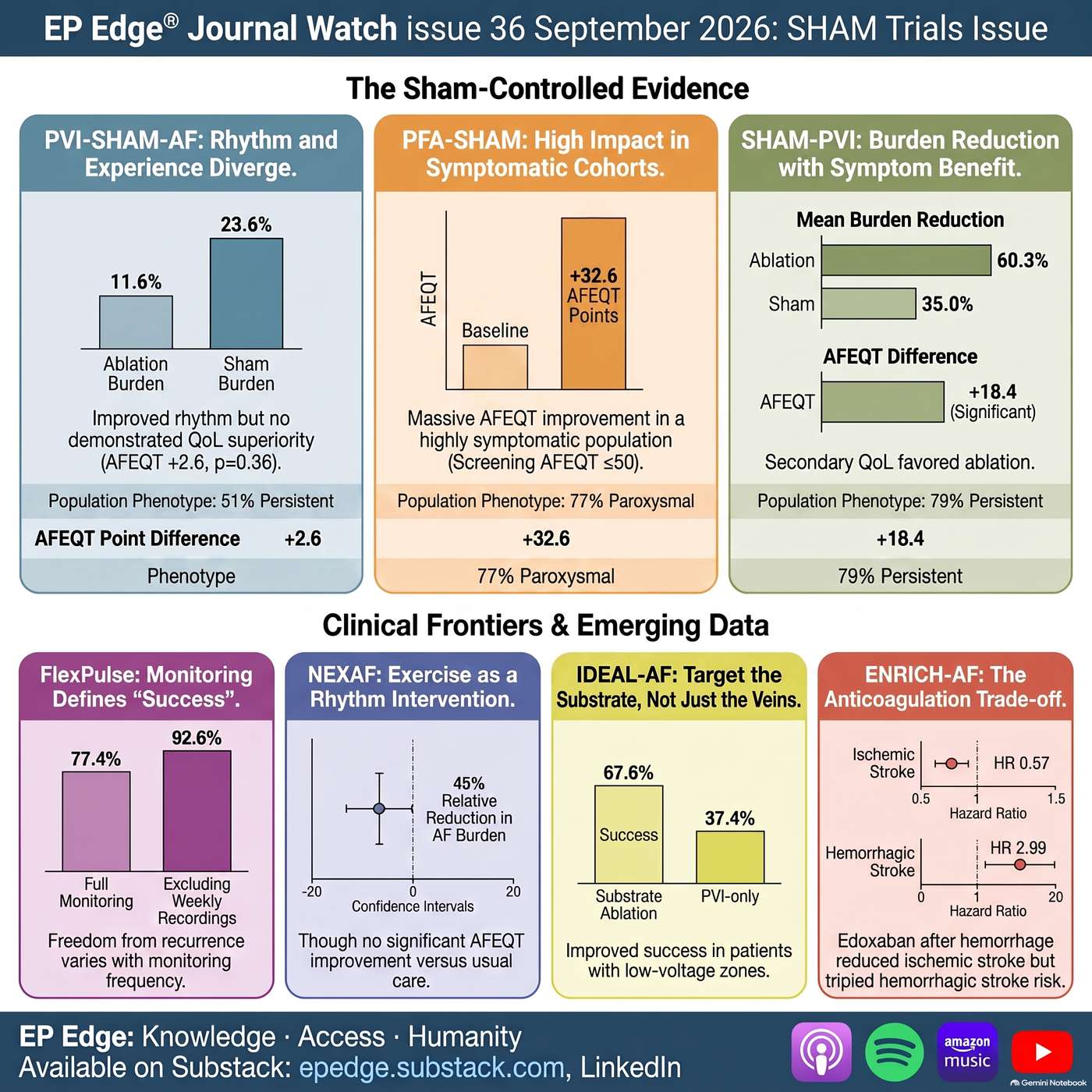
What defines successful atrial fibrillation ablation: fewer recurrences, lower AF burden, better quality of life, or all three? In this ESC Congress 2026 special issue of EP Edge Journal Watch, Dr. Sharma examines evidence from Munich, Germany, August 28–31, 2026, alongside previously covered sham-controlled trials to explore what meaningful patient benefit should look like.
PVI-SHAM-AF leads the discussion. Rolf Wachter and colleagues found lower sampled atrial fibrillation burden after catheter ablation, but no demonstrated superiority over sham on the primary Atrial Fibrillation Effect on Quality-of-Life (AFEQT) endpoint. We examine the primary result, the favorable sensitivity analysis, and why failure to de...
EP Edge® Journal Watch Issue 35: ESC 2026 Munich Special Edition | SINGLE-AF, CMR GUIDE, New HF Guidelines & Fifth Universal Definition of MI
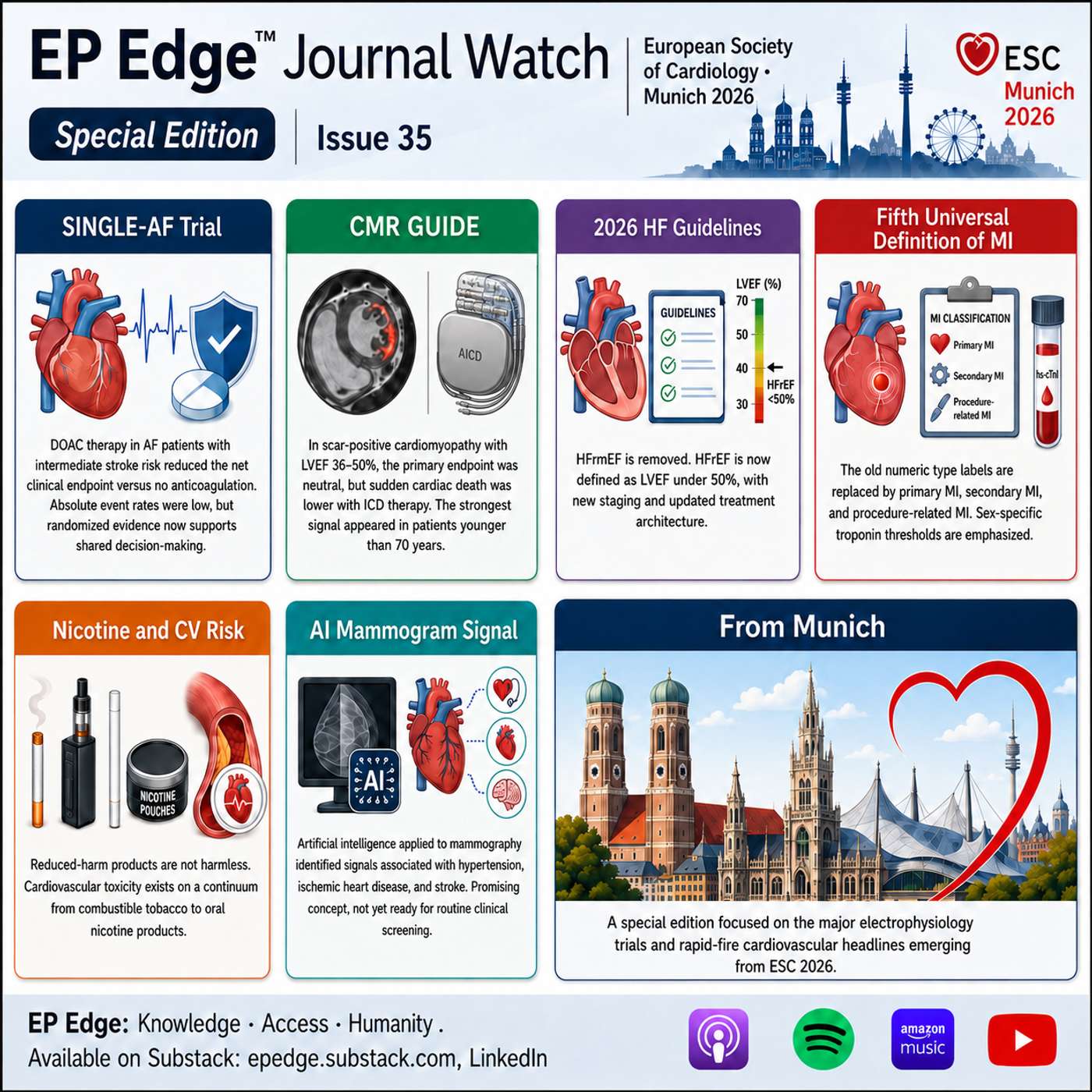
In this special edition of EP Edge® Journal Watch, Dr. Sharma reviews the major breaking cardiovascular and electrophysiology science presented at the European Society of Cardiology Congress 2026 in Munich.
The episode begins with two important electrophysiology trials that challenge familiar clinical thresholds.
First is SINGLE-AF, led by Daehoon Kim and colleagues and published in the New England Journal of Medicine in August 2026. The trial provides the first randomized evidence evaluating direct oral anticoagulation versus no anticoagulation in patients with atrial fibrillation at intermediate stroke risk. Dr. Sharma explains why this population has remained a clinical g...
EP Edge® × HRS: Rethinking the Defaults: AFib Ablation vs Antiarrhythmics, Flecainide Beyond CAST, and Physiologic Pacing
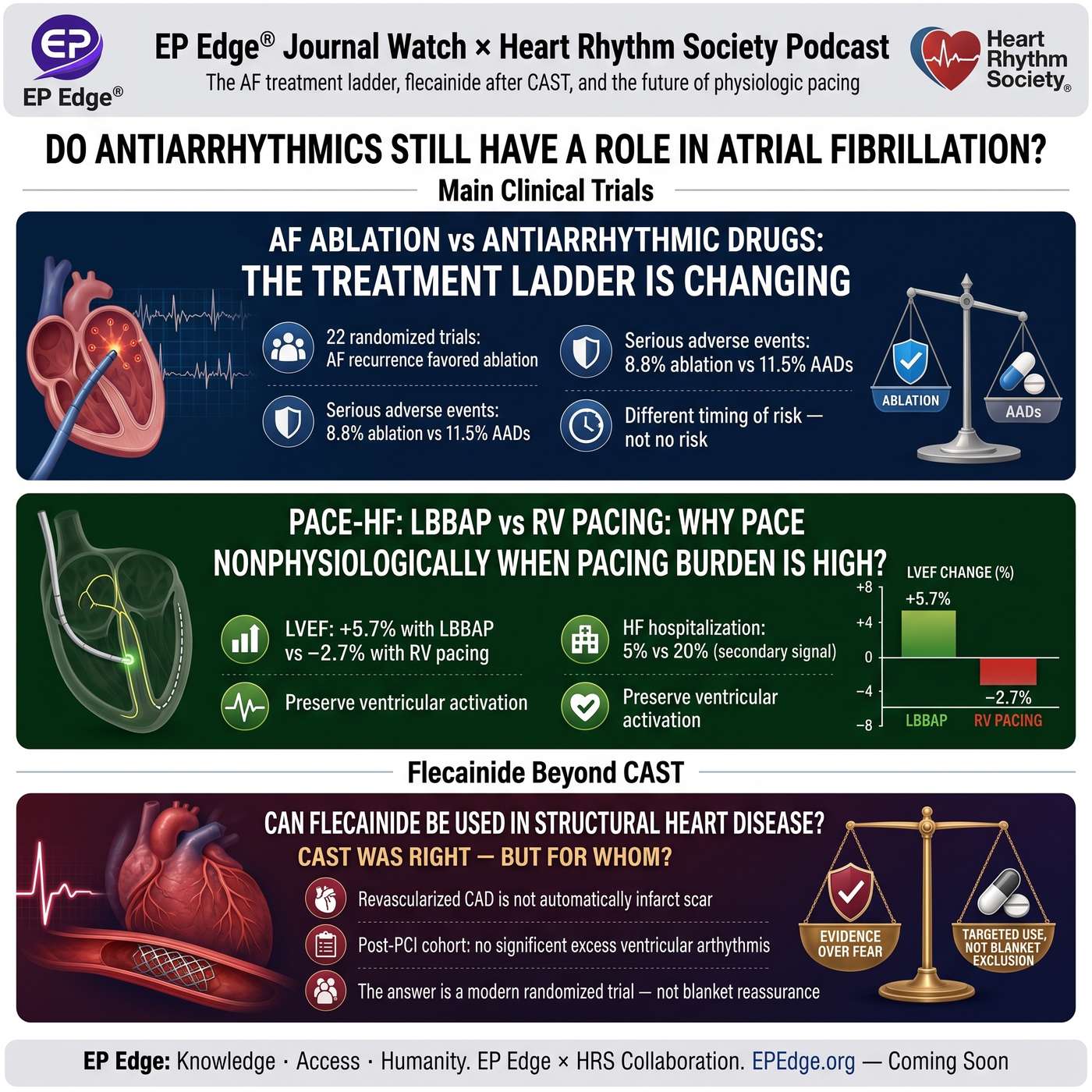
In this EP Edge and Heart Rhythm Society collaborative podcast, Dr. Niraj Sharma and Dr. Mike Lloyd examine new evidence challenging several long-standing assumptions in cardiac electrophysiology: when to choose catheter ablation over antiarrhythmic drug therapy for atrial fibrillation, whether left bundle branch area pacing should replace conventional right ventricular pacing in patients who require substantial ventricular pacing, and how broadly the lessons of CAST should continue to restrict flecainide and other Class Ic antiarrhythmic drugs.
The atrial fibrillation discussion brings together two complementary 2026 Heart Rhythm meta-analyses. Demy L. Idema and colleagues evaluated antiarrhythmic drugs versus catheter...
EP Edge® Journal Watch Issue 34 August 2026: ICD Shocks, Troponin, PFA Safety, LOSE-AF Weight Loss and POTS, Radiation Expose in the EP Lab
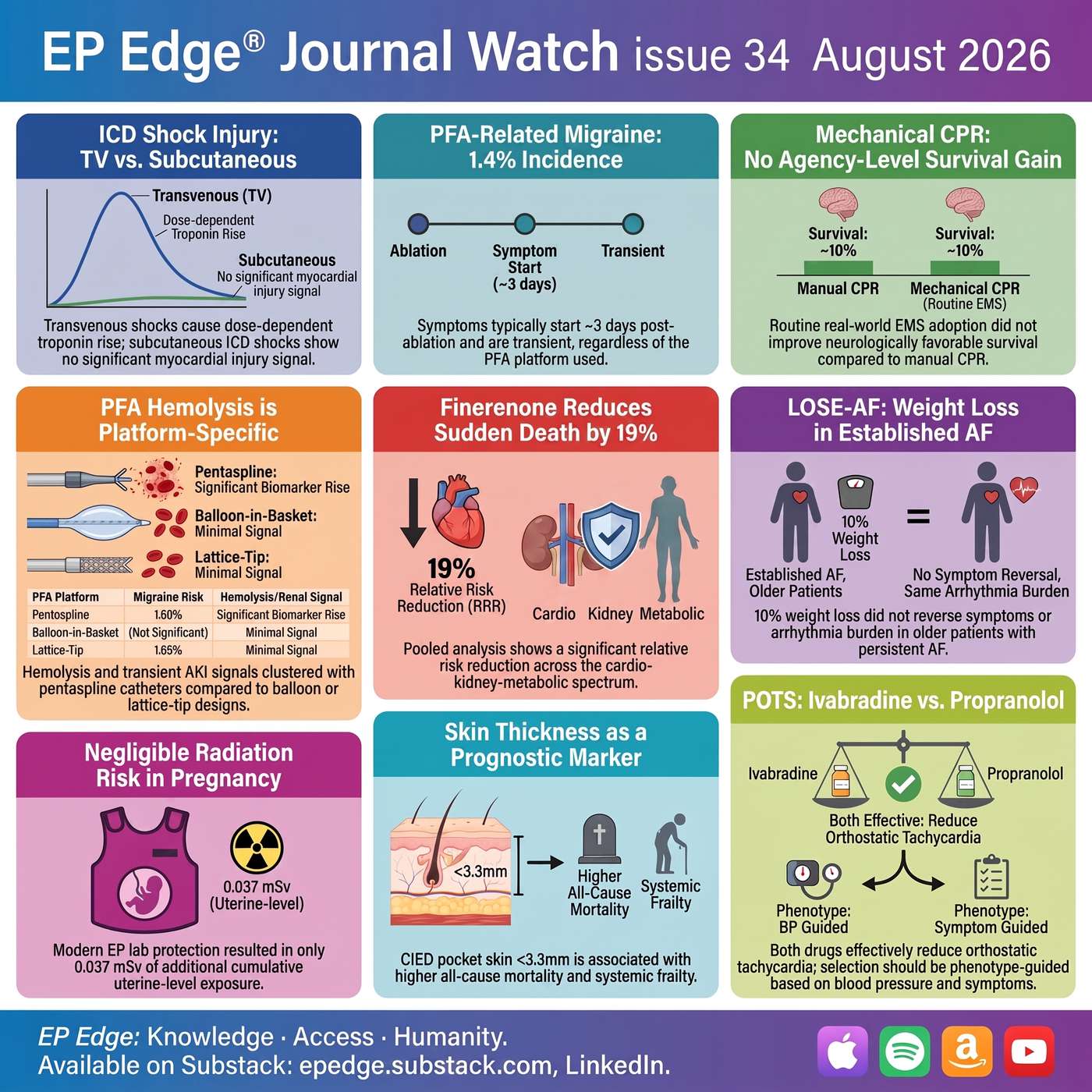
What can nine carefully selected studies teach us about the changing practice of cardiac electrophysiology?
In EP Edge® Journal Watch Issue 34, August 2026, Dr. Sharma provides a clinically focused review of emerging evidence across atrial fibrillation, pulsed field ablation, implantable cardiac devices, sudden death prevention, resuscitation, occupational radiation safety, and postural orthostatic tachycardia syndrome.
This episode examines whether transvenous and subcutaneous ICD shocks produce different patterns of myocardial injury; the incidence and clinical meaning of migraine following pulsed field ablation; whether routine mechanical CPR improves meaningful survival after out-of-hospital cardiac arrest; and why hemolysis and renal e...
EP Edge® Journal Watch Issue 33, August 2026: Anticoagulation After AF Ablation, PFA Safety, Lead Extraction and Sudden Death Risk
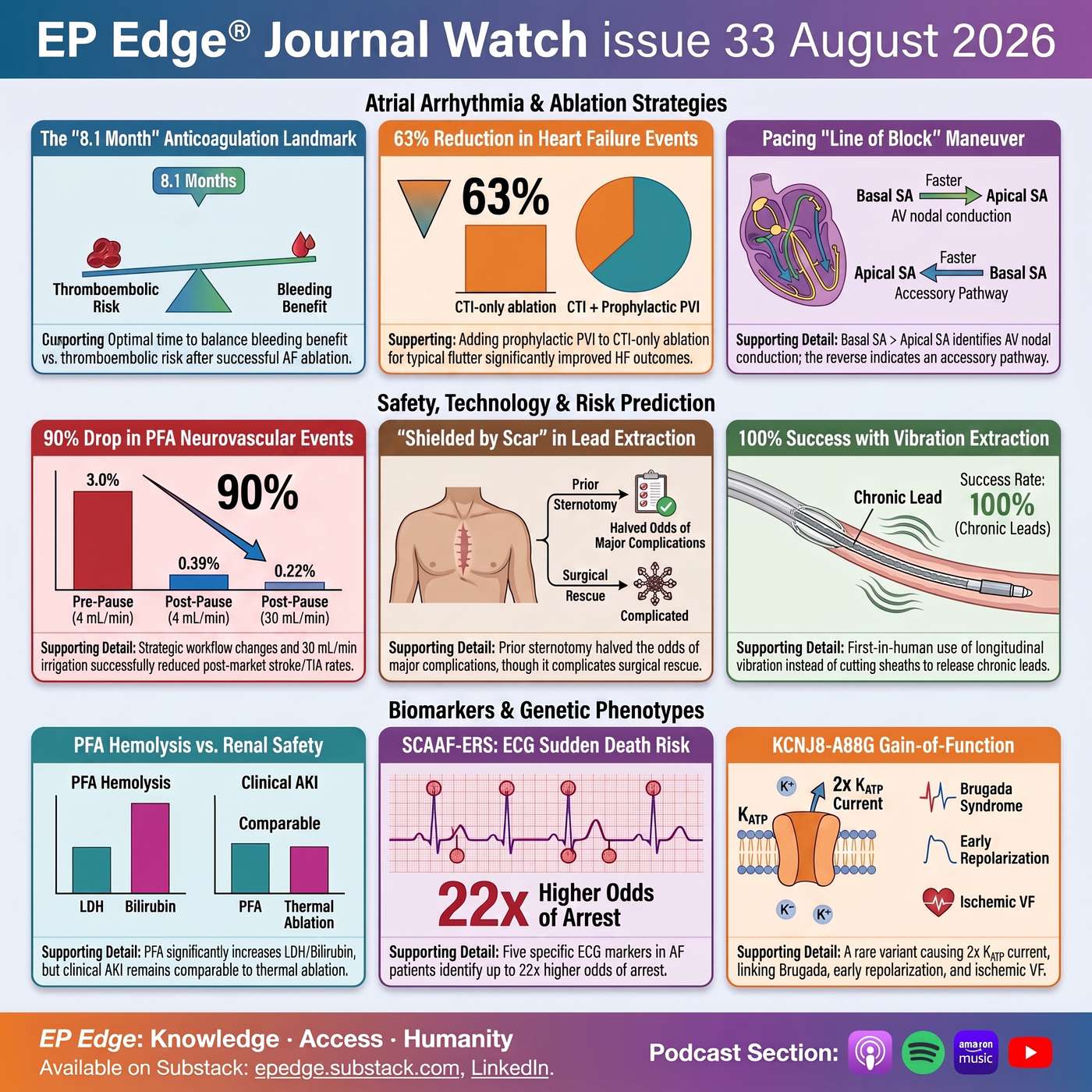
How long should anticoagulation continue after an apparently successful atrial fibrillation ablation? Should prophylactic pulmonary vein isolation be added during typical atrial flutter ablation in patients with heart failure? What do emerging data reveal about neurologic events, hemolysis, and renal safety with pulsed-field ablation?
In EP Edge® Journal Watch Issue 33, August 2026, Dr. Sharma provides a clinically focused and thought-provoking review of nine important cardiac electrophysiology studies published in Heart Rhythm and JACC: Clinical Electrophysiology.
This episode examines:
The proposed 8.1-month timing for oral anticoagulant discontinuation after successful AF ablation Prophylactic pulmonary vein isolation in pati...EP Edge® Journal Watch Issue 32 August 2026: AF Ablation Anticoagulation, Flecainide After CAST, AI-ECG & PFA Mapping
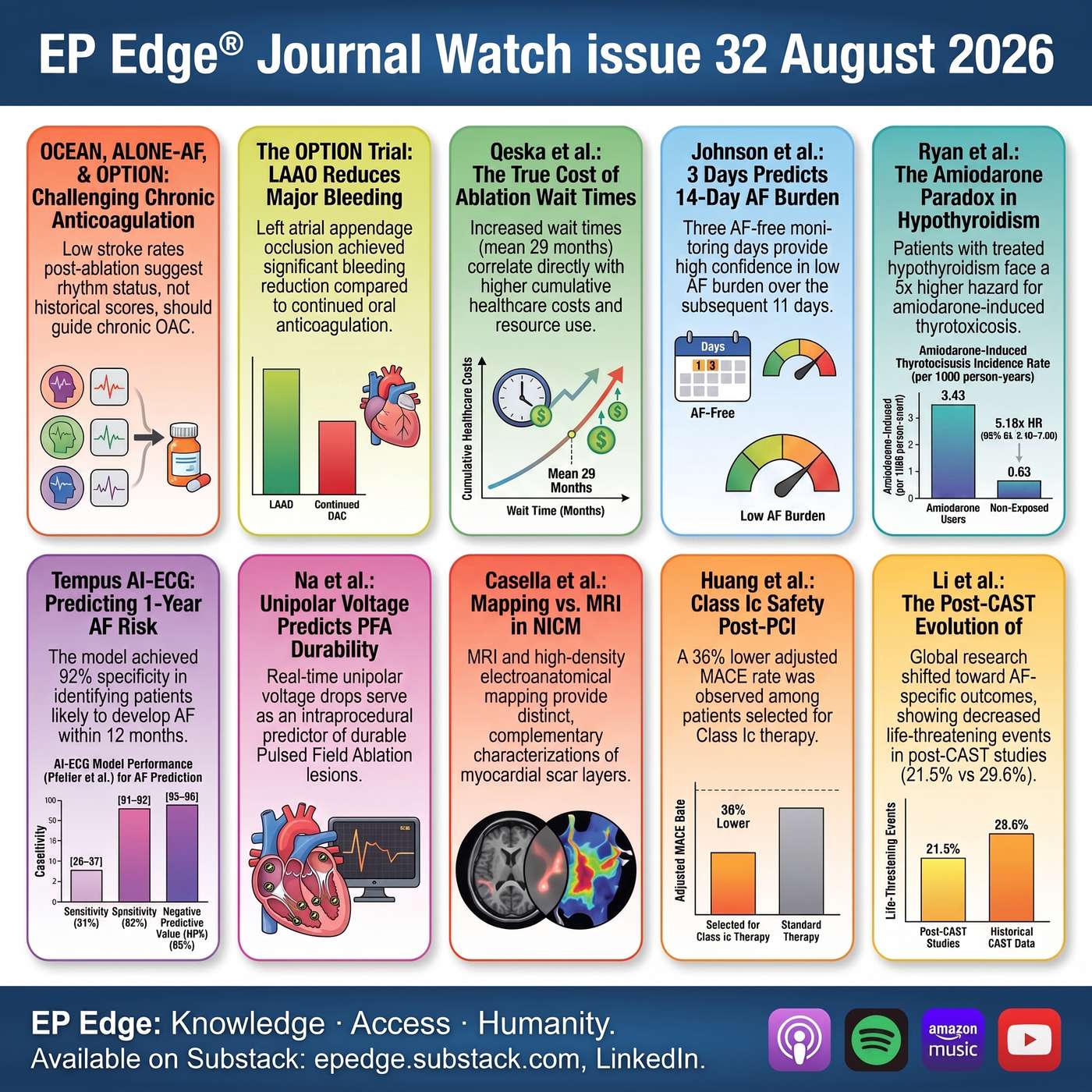
Can anticoagulation be safely discontinued after successful atrial fibrillation ablation? Is the traditional prohibition against flecainide in structural heart disease too broad or does CAST remain an essential warning? And can AI-enabled ECGs, unipolar voltage mapping, and cardiac MRI improve how we detect AF and characterize arrhythmic substrate?
In EP Edge® Journal Watch Issue 32, Dr. Niraj Sharma examines important electrophysiology research published in Heart Rhythm and JACC: Clinical Electrophysiology, translating the methodology, statistical findings, limitations, and clinical implications into practical insights for electrophysiologists and cardiovascular clinicians.
Topics include:
Discontinuing oral anticoagulation after AF ablationThe c...EP Edge® Journal Watch Issue 31, August 2026: Caffeine, Wine, Atrial Fibrillation, Pulsed-Field Ablation and Sudden Cardiac Death
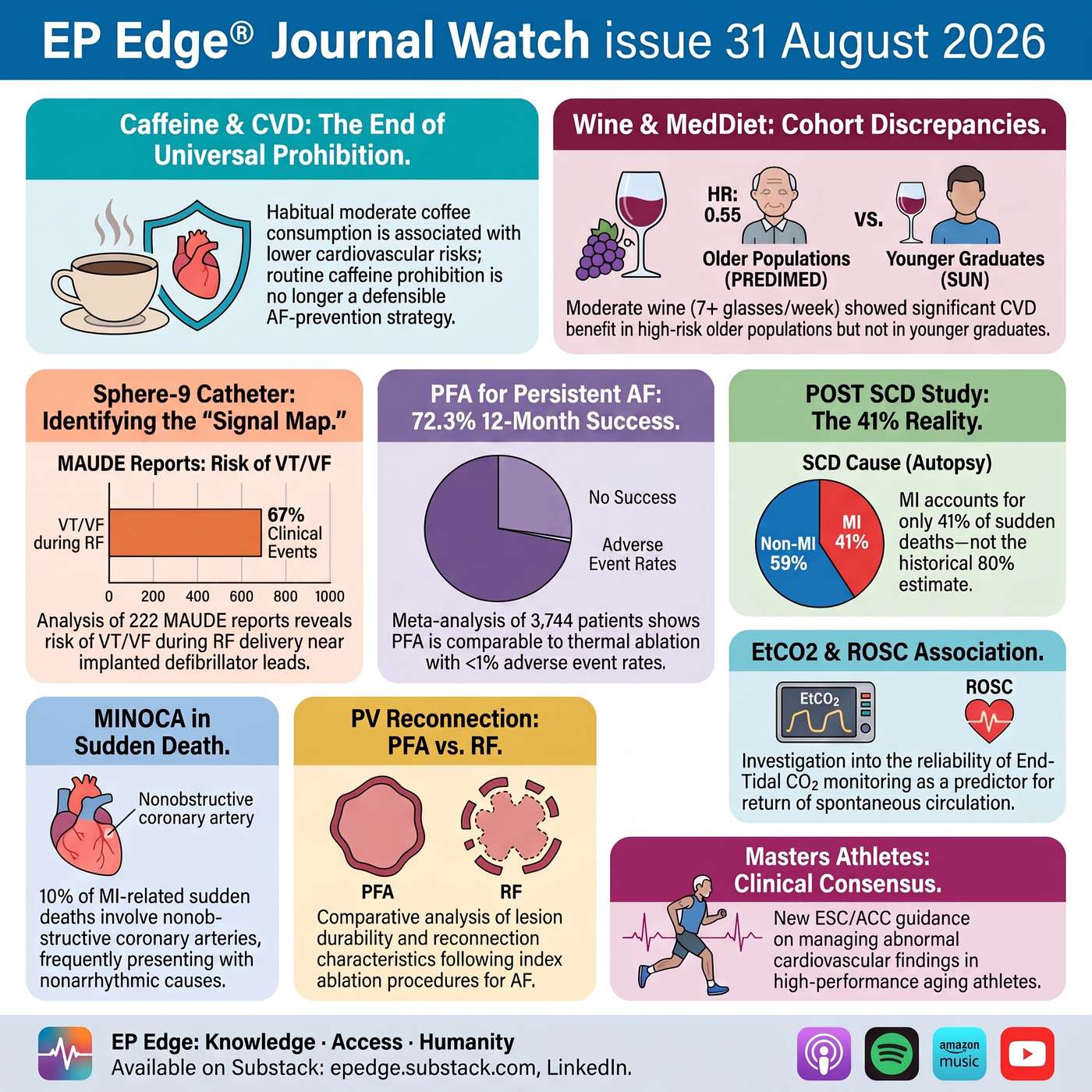
In EP Edge® Journal Watch Issue 31, August 2026, Dr. Sharma examine new evidence that challenges several familiar assumptions in cardiac electrophysiology.
Should patients with atrial fibrillation routinely stop drinking coffee? An American Heart Association scientific statement reviews the cardiovascular effects of caffeine, including randomized evidence showing a 39% lower risk of recurrent AF among habitual coffee drinkers who continued coffee after cardioversion. The discussion separates ordinary coffee consumption from energy drinks and concentrated caffeine while considering premature ventricular contractions, blood pressure, sleep, and individualized patient counseling.
The episode also investigates whether wine adds cardiovascular benefit to the M...
EP Edge® Journal Watch Issue 30: VISION AF, Pulsed Field Ablation Safety, PACE-HF and Conduction System Pacing | July 2026
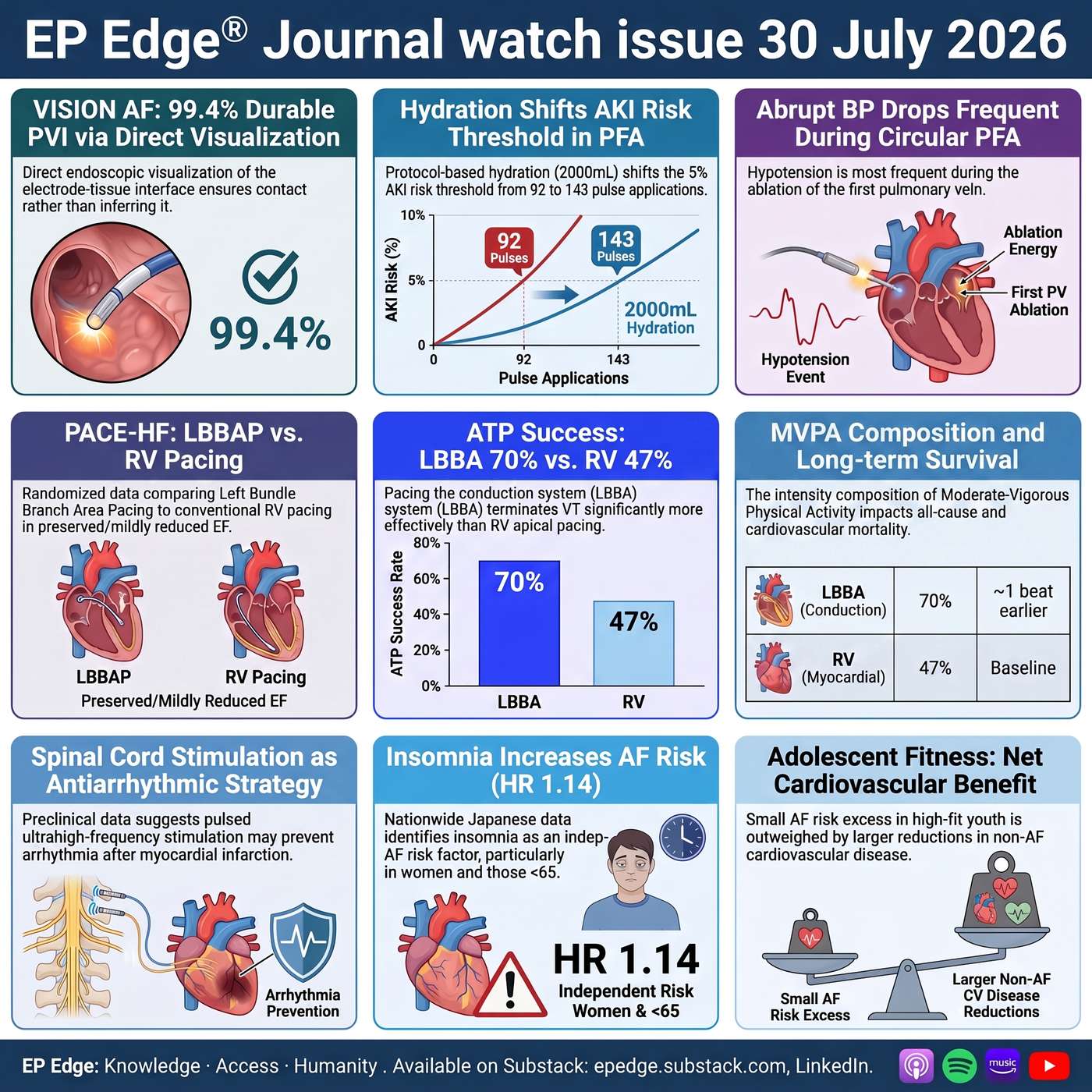
In EP Edge® Journal Watch Issue 30, July 2026, we explore the next phase of cardiac electrophysiology, from pulsed field ablation durability and physiologic pacing to neuromodulation, sleep, fitness, and lifetime arrhythmia risk.
We begin with the first-in-human VISION AF study, which evaluates an endoscope-enabled pulsed field ablation balloon that allows direct visualization of the electrode-tissue interface. Chronic invasive remapping provides a close look at pulmonary vein isolation durability and raises an important question: could seeing tissue contact become the next major advance in PFA workflow?
Two additional studies examine practical PFA safety signals. One evaluates hemolysis-associated ac...
EP Edge® Journal Watch Issue 29: Atrial Fibrillation Ablation vs Antiarrhythmic Drugs, CABANA Progression and Anticoagulation | July 2026
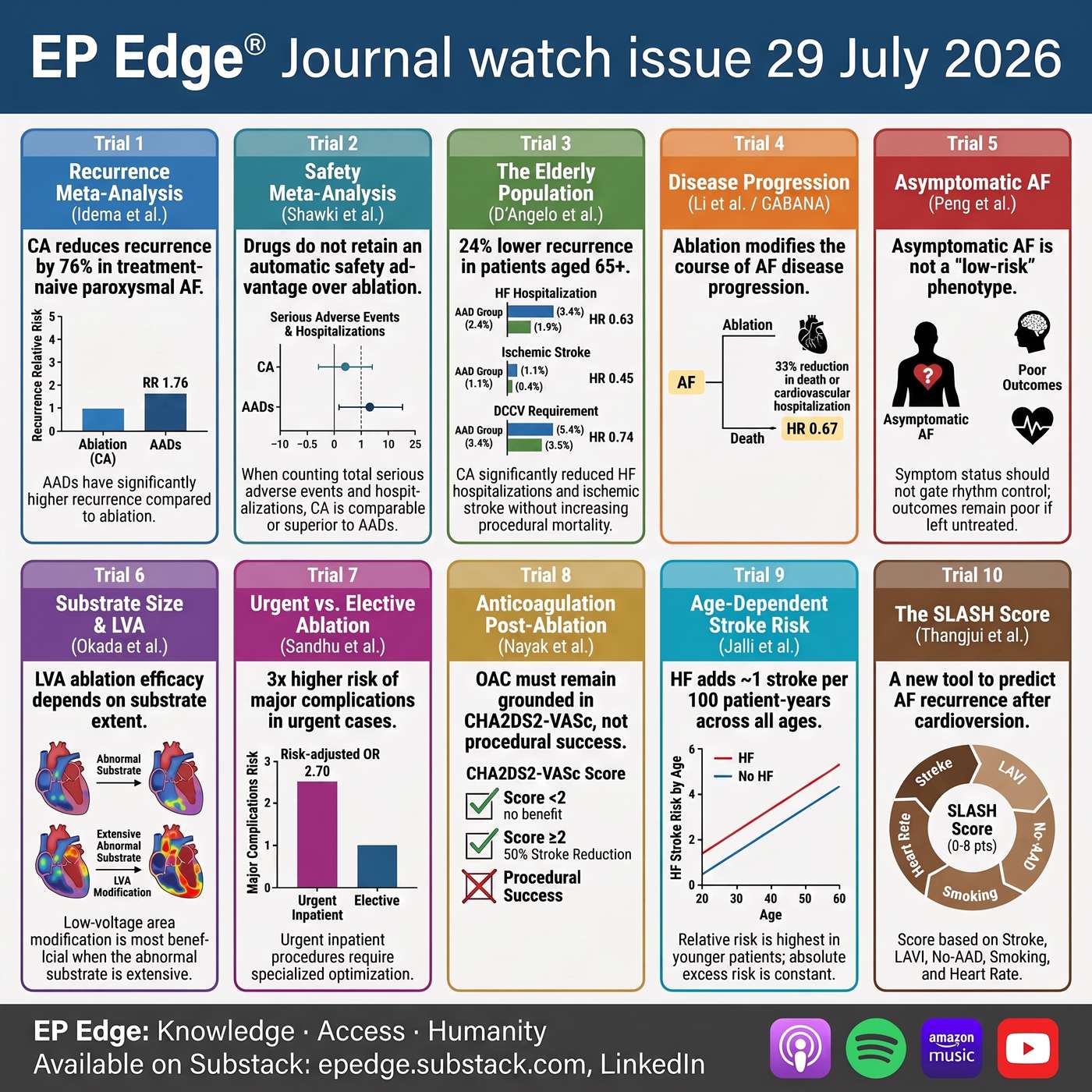
In EP Edge® Journal Watch Issue 29, July 2026, we examine the evidence reshaping contemporary atrial fibrillation management and the rapidly changing role of catheter ablation.
Two major meta-analyses compare catheter ablation with antiarrhythmic drug therapy, addressing rhythm efficacy, serious adverse events, hospitalization, treatment intolerance, and whether medications still deserve an automatic safety advantage. We also review real-world outcomes in older adults after prior antiarrhythmic drug exposure and ask whether another medication or catheter ablation is the more appropriate next step.
The episode then explores whether ablation can modify the natural history of AF. A CABANA analysis ev...
EP Edge × HRS Podcast: CT-Guided VT Ablation & LAA Closure Without AF: InEurHeart and OPINION, Caveolae, Alcohol and AFib, Pulse check and Afib Diagnosis
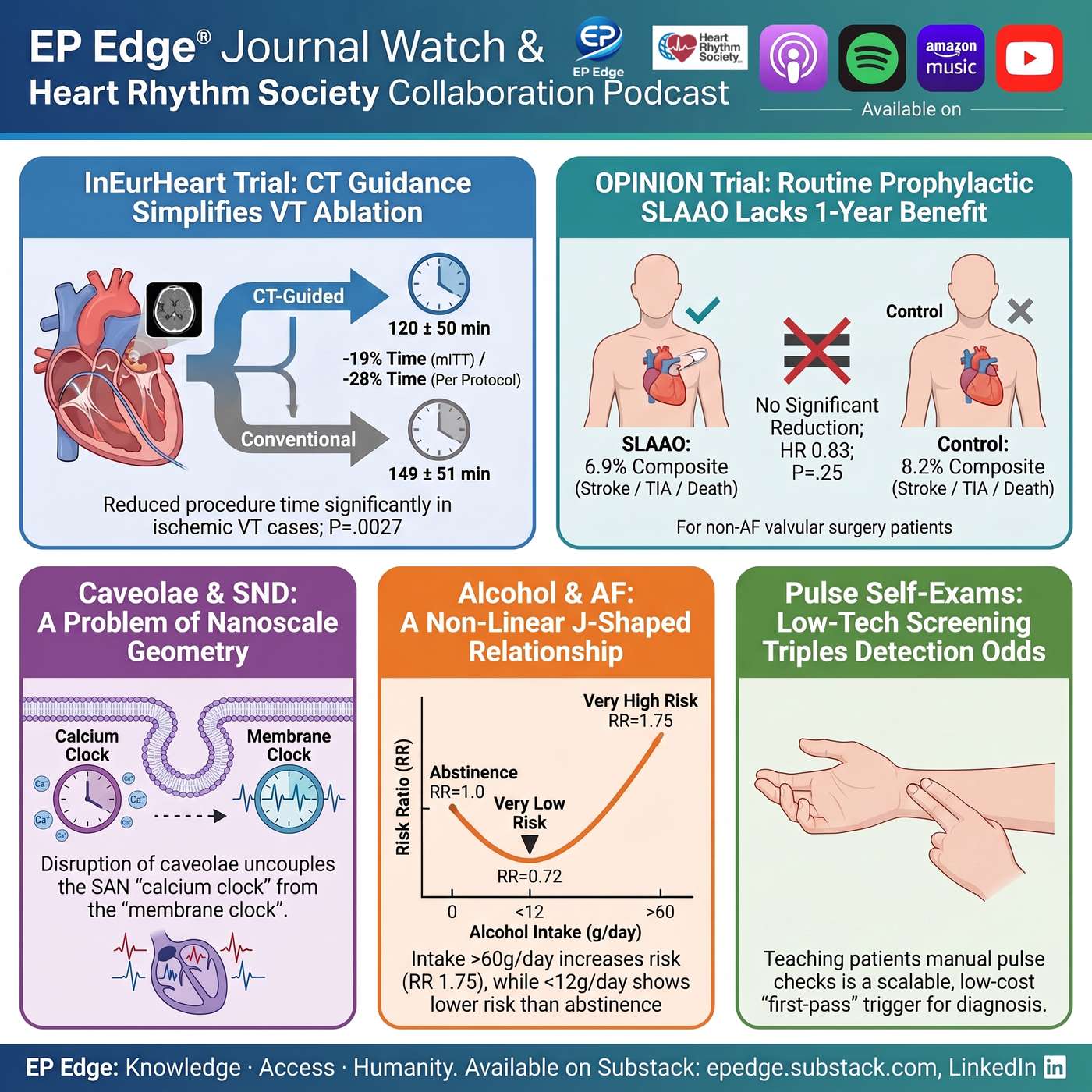
In this July 2026 episode of EP Edge Journal Watch, produced in collaboration with the Heart Rhythm Society (HRS), Mike Lloyd and Dr. Niraj Sharma review five studies with direct implications for contemporary cardiac electrophysiology practice.
The anchor trials are InEurHeart, a randomized comparison of computed tomography-guided versus conventional catheter ablation for post–myocardial infarction ventricular tachycardia, and OPINION, which evaluates prophylactic surgical left atrial appendage occlusion during valvular heart surgery in patients without known pre-existing atrial fibrillation. Using the workflow gains seen with pulsed field ablation in AF as context, the discussion asks whether preprocedural cardiac CT ca...
EP Edge® Journal Watch Issue 28, July 2026: Pulsed Field Ablation Goes Mainstream, LAAO vs DOACs, Non-PV Triggers, and LBBAP Lead Position
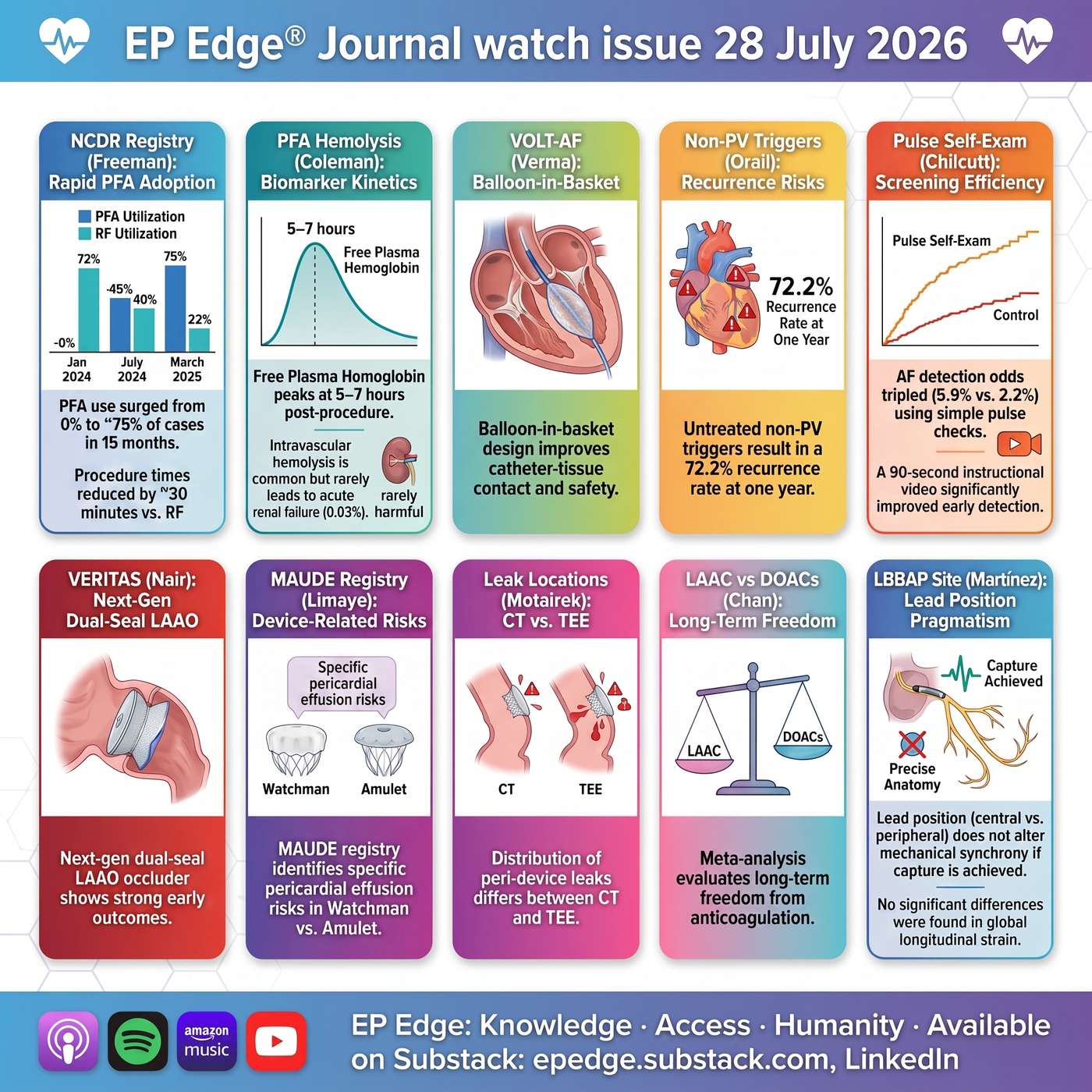
In EP Edge® Journal Watch Issue 28, July 2026, Dr. Sharma reviews a major month in cardiac electrophysiology, where new technology is being tested against real-world evidence. This episode covers the rapid commercial adoption of pulsed field ablation, the NCDR AFib Ablation Registry, the VOLT-AF IDE balloon-in-basket PFA study, PFA-related intravascular hemolysis, and the evolving role of non-pulmonary vein triggers in first-time AF ablation.
The issue also explores low-cost atrial fibrillation screening with pulse self-exam, next-generation left atrial appendage occlusion with the VERITAS Amulet 360 study, MAUDE registry safety signals for pericardial effusion after Watchman and Amulet, WATCHMAN peridevice leak a...
EP Edge® Journal Watch, Issue 27, June 2026: CT-Guided VT Ablation, PFA Safety, Posterior Wall Isolation, and AF Substrate Precision
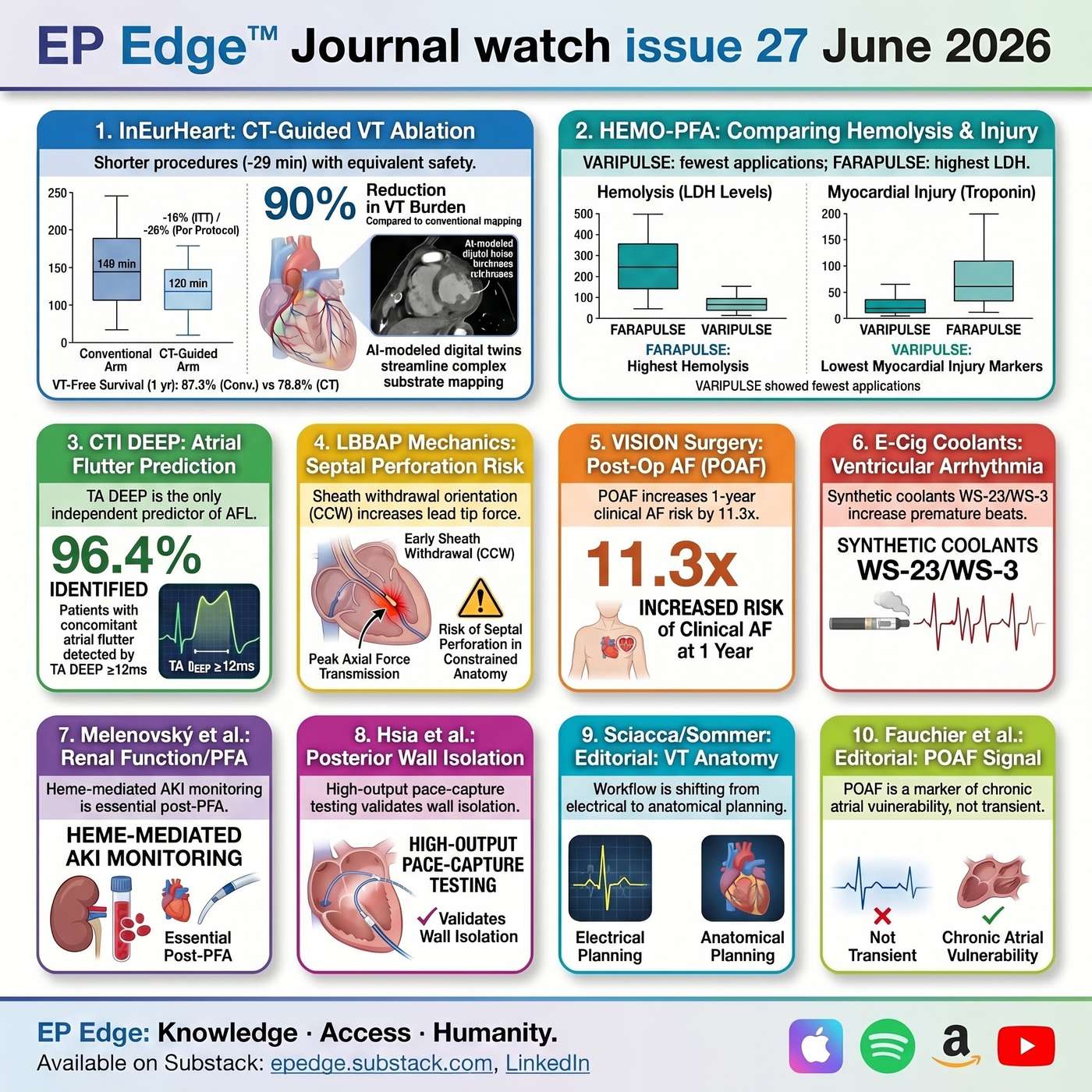
In this episode of EP Edge® Journal Watch, Dr. Sharma reviews the June 2026 Issue 27 newsletter, focusing on a central question in modern cardiac electrophysiology: how do we better match mechanism to intervention? This issue explores smarter procedural targeting, safer energy delivery, functional substrate assessment, and the evolving biology of atrial and ventricular arrhythmias.
The episode begins with the InEurHeart trial, a randomized study of CT-guided ventricular tachycardia ablation in ischemic cardiomyopathy. Dr. Sharma explains why preprocedural cardiac CT may help identify scar-related VT isthmuses, shorten procedure time, and create a more reproducible workflow, while also discussing why a...
EP Edge Journal Watch Issue 26, June 2026: PFA, LAAO, AF Ablation in Heart Failure, Myocarditis Risk and Sinus Node Biology
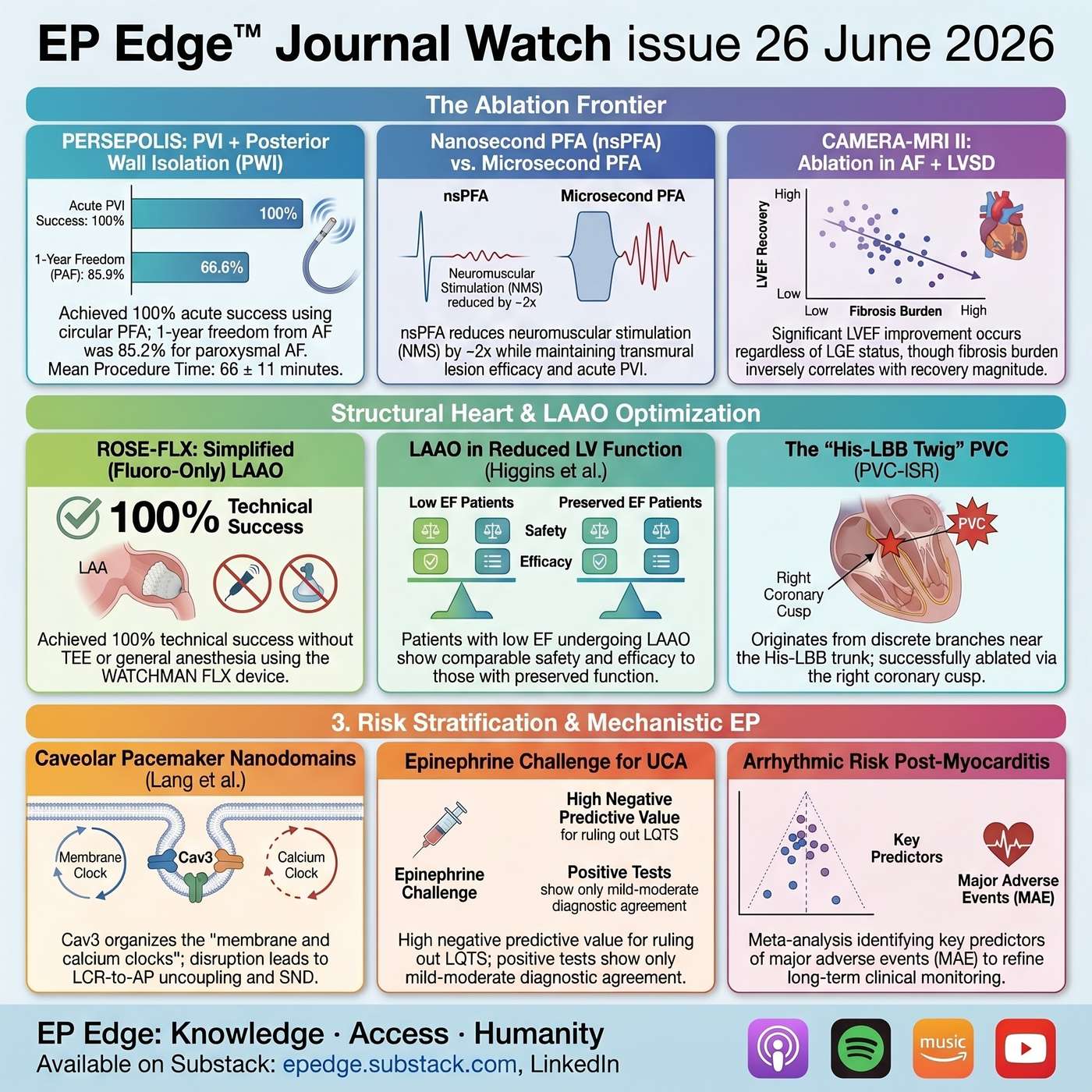
In this episode of EP Edge Journal Watch Issue 26, June 2026, Dr. Sharma reviews high-impact studies shaping contemporary cardiac electrophysiology, with a focus on smarter ablation strategies, safer left atrial appendage closure, post-arrest and post-myocarditis risk stratification, and the cellular biology beneath cardiac rhythm.
This episode covers pulsed field ablation beyond pulmonary vein isolation, including PVI plus posterior wall isolation in the PERSEPOLIS trial, and nanosecond pulsed field ablation as a potential strategy to reduce neuromuscular stimulation and improve procedural tolerance. Dr. Sharma also reviews catheter ablation for atrial fibrillation with left ventricular systolic dysfunction, focusing on CAMERA-MRI...
EP Edge Journal Watch Issue 25 June 2026: AF Ablation, Left Atrial Appendage Closure, PFA Workflow, ICD Battery Longevity & Device Tradeoffs
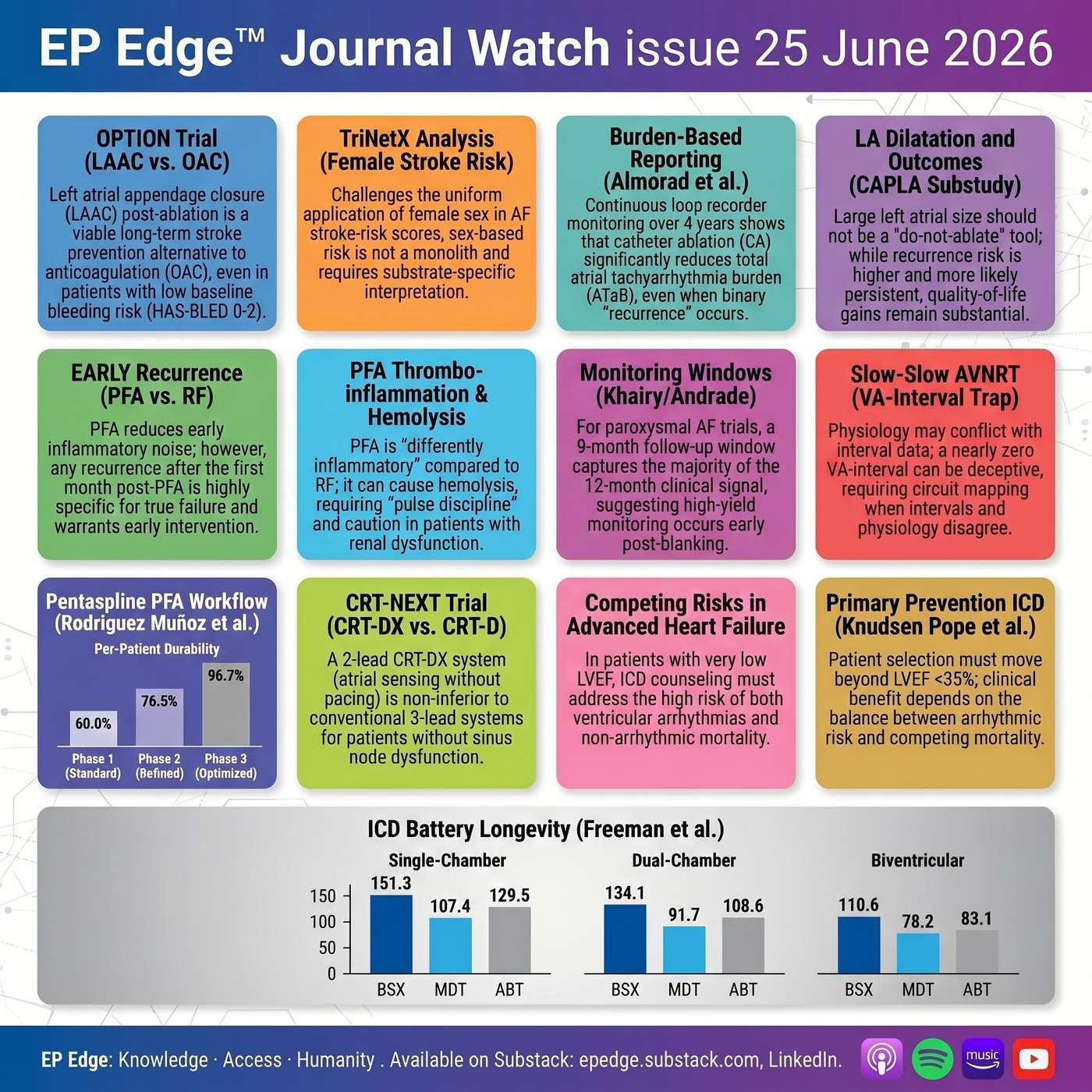
In EP Edge Journal Watch Issue 25, June 2026, Dr. Sharma reviews the most clinically relevant new studies in cardiac electrophysiology, with a focus on atrial fibrillation, stroke prevention, pulsed field ablation, ICD therapy, CRT strategy, and EP lab decision-making.
This episode is built around the theme “Beyond the Binary” — moving past simple endpoints like recurrence versus no recurrence, PFA versus RF, EF below 35%, or lead versus no lead. The data in this issue challenge how electrophysiologists think about ablation success, anticoagulation strategy, left atrial appendage closure, device selection, ICD longevity, and arrhythmia risk.
Topics covered include:
L...
EP Edge Journal Watch Issue 24 June 2026: AF Ablation in Heart Failure, VT Pulsed Field Ablation, Subcutaneous-ICD Shocks, Wearable Expansion, CABG AF, Genetics and GLP-1 Agonists
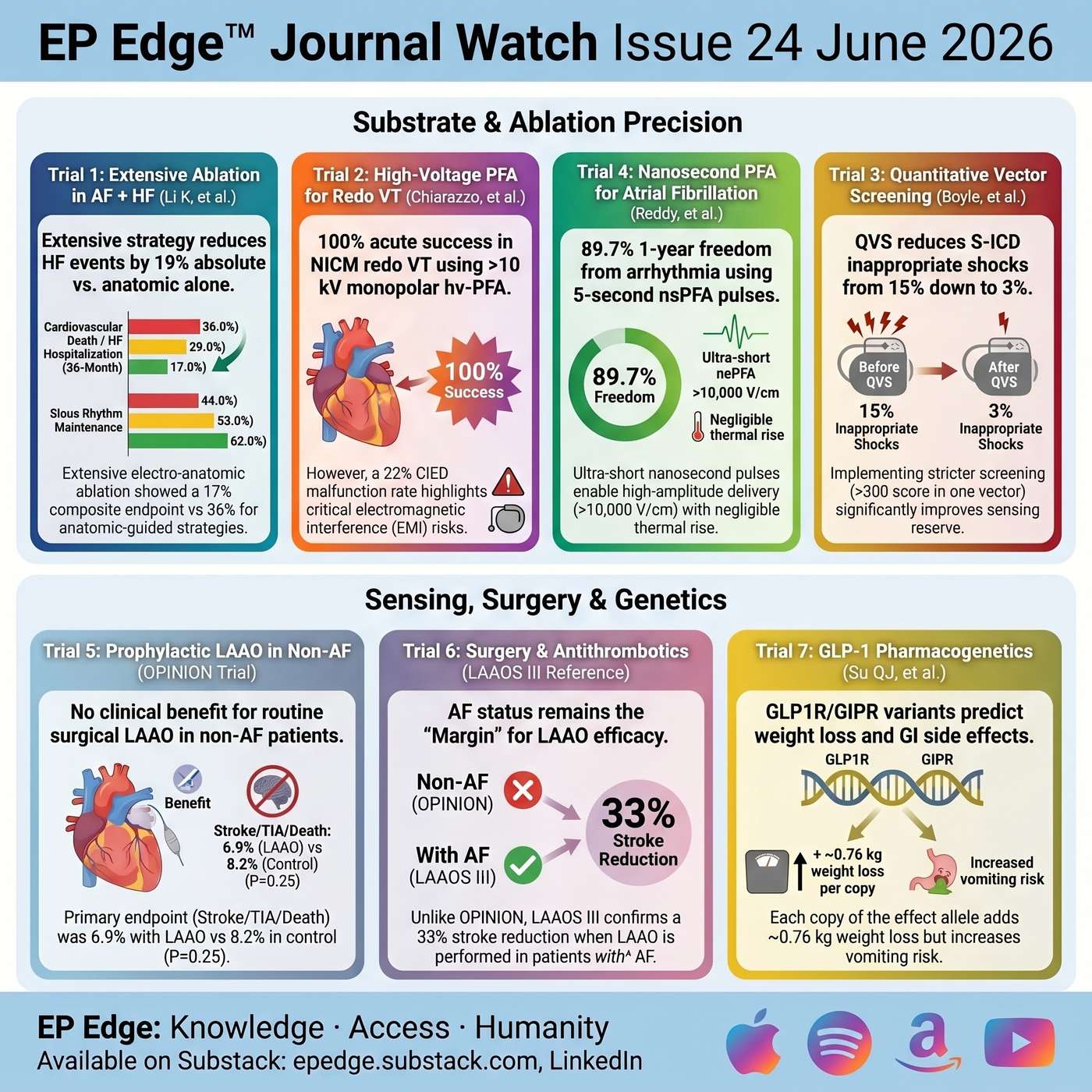
In this episode of EP Edge Journal Watch, Dr. Sharma reviews major electrophysiology and cardiology studies from Issue 24: Substrate, Sensing, Wearables, Surgery, and the Precision Turn. The central theme is precision EP: selecting the right patient, targeting the right substrate, interpreting the right signal, choosing the right antithrombotic strategy, and designing the right follow-up plan.
This episode begins with a randomized trial of persistent atrial fibrillation ablation in patients with heart failure, comparing anatomic-guided ablation, electrogram-guided ablation, and an extensive electrogram-anatomic strategy. The discussion focuses on why pulmonary vein isolation alone may be insufficient in selected patients w...
Inaugural EP EdgeTM Journal Watch with Heart Rhythm Society: AVANT GUARD, LAA Closure, OCEAN, and the ALONE-AF Cognitive Substudy
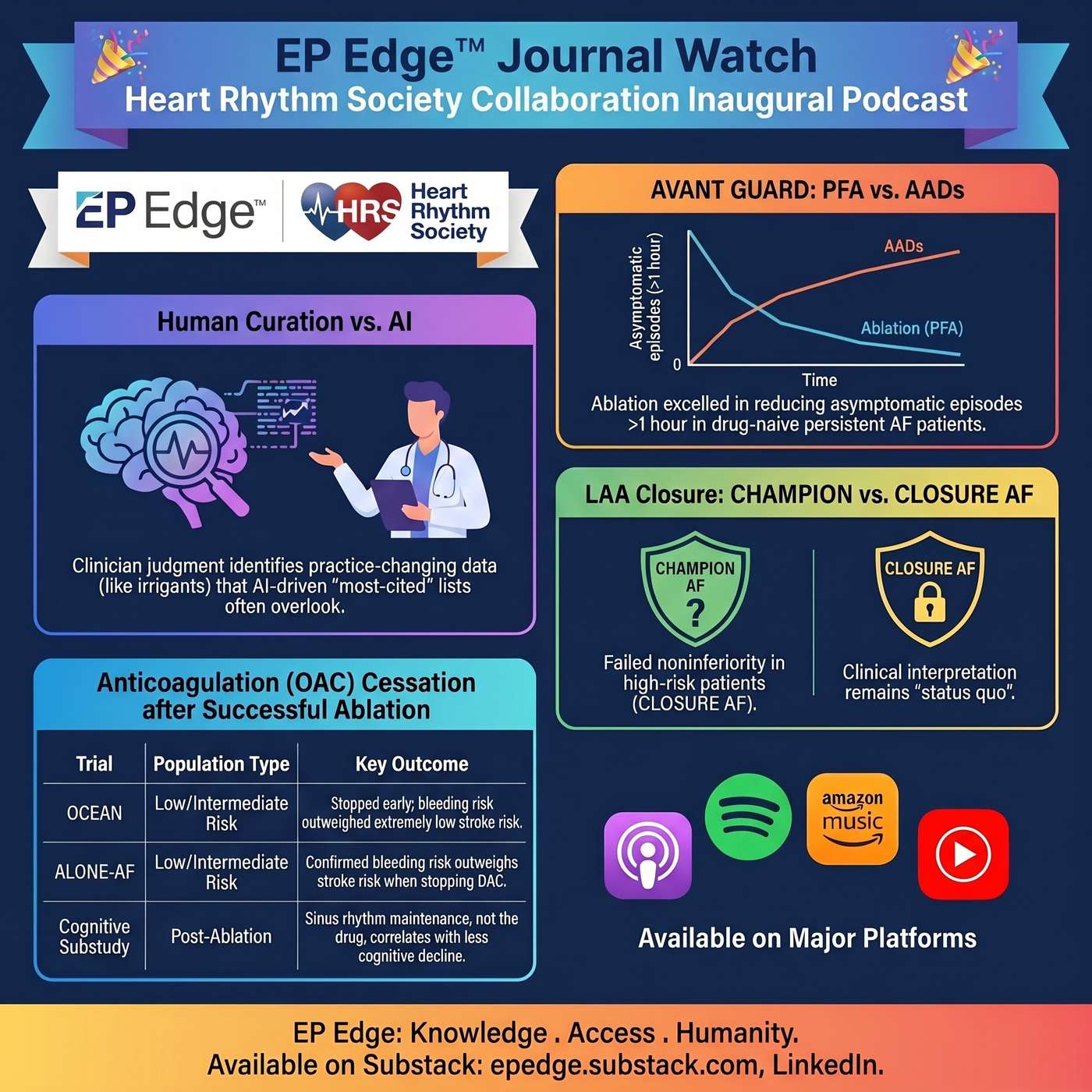
The inaugural EP Edge Journal Watch and Heart Rhythm Society collaboration is here.
In this first episode, Dr. Michael Lloyd from the Heart Rhythm Society Digital Education Committee joins Dr. Niraj Sharma, creator of EP Edge, to launch a new monthly format focused on the most clinically relevant literature in cardiac electrophysiology.
This is not a routine article summary. It is a practical, physician-led discussion of the studies that matter in the EP lab, in clinic, and at the bedside.
Electrophysiology literature is moving quickly. Important trials now appear across major journals, late-breaking...
EP Edge™ Journal Watch Issue 23 May 2026: PFA Durability, Posterior Wall Ablation, Outflow Tract PVCs, and Fitness as Substrate Modification
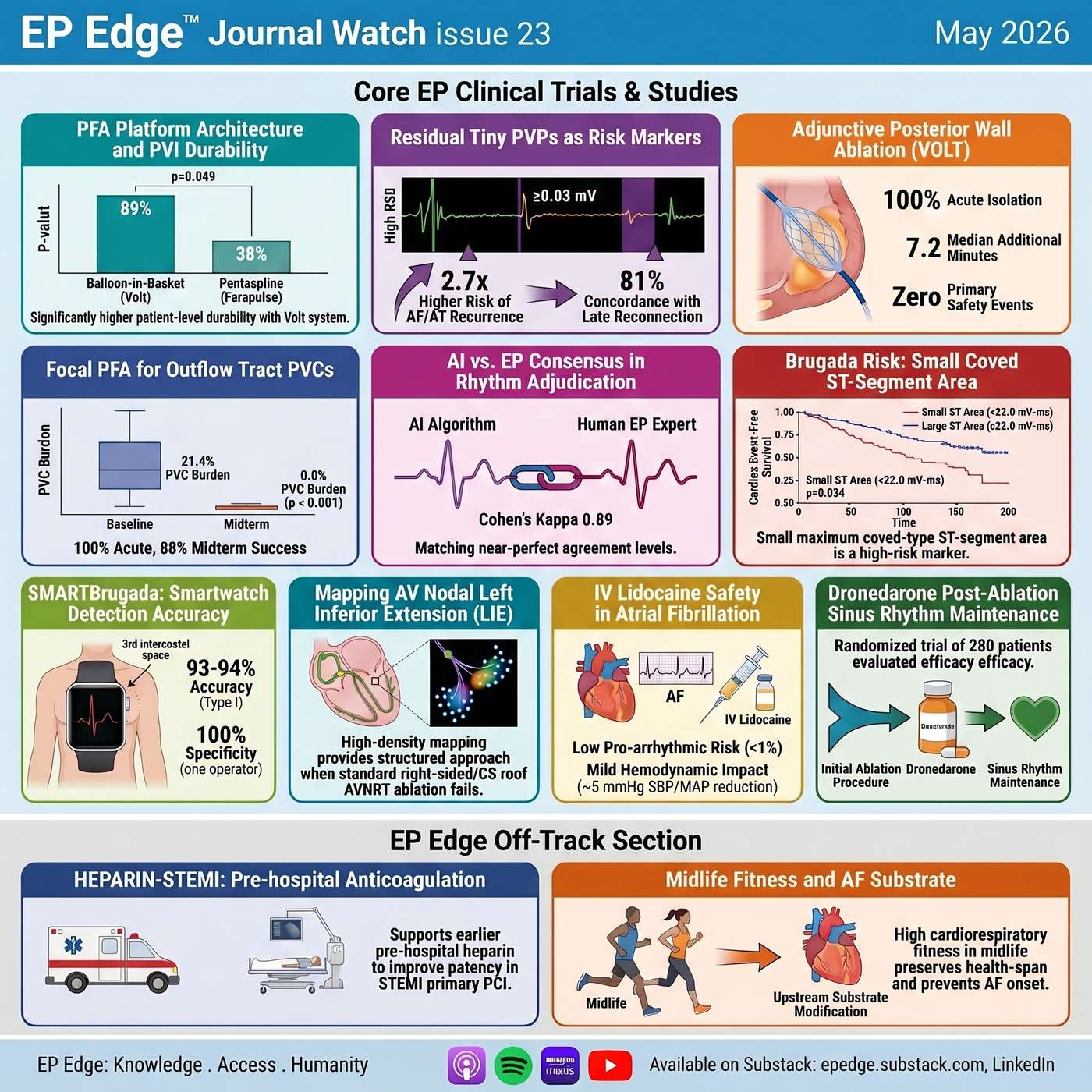
In EP Edge™ Journal Watch Issue 23, May 2026, Dr. Sharma reviews the latest high-impact electrophysiology and cardiology literature with a new focused format: four deep-dive studies and a rapid-fire review of the remaining trials.
This episode explores whether pulsed field ablation platform design affects pulmonary vein isolation durability, how balloon-in-basket PFA may change posterior wall ablation, and whether focal PFA is ready for outflow tract PVC ablation. The episode also includes an EP-Edge™ Off-track deep dive on midlife cardiorespiratory fitness and healthy aging, highlighting fitness as upstream cardiovascular substrate modification.
Rapid-fire discussions cover residual tiny pulmonary vein...
EP Edge Journal Watch Issue 22: PFA Safety, Lesion Durability, LAAO, Subcutaneous-ICD Testing & AF Ablation Success
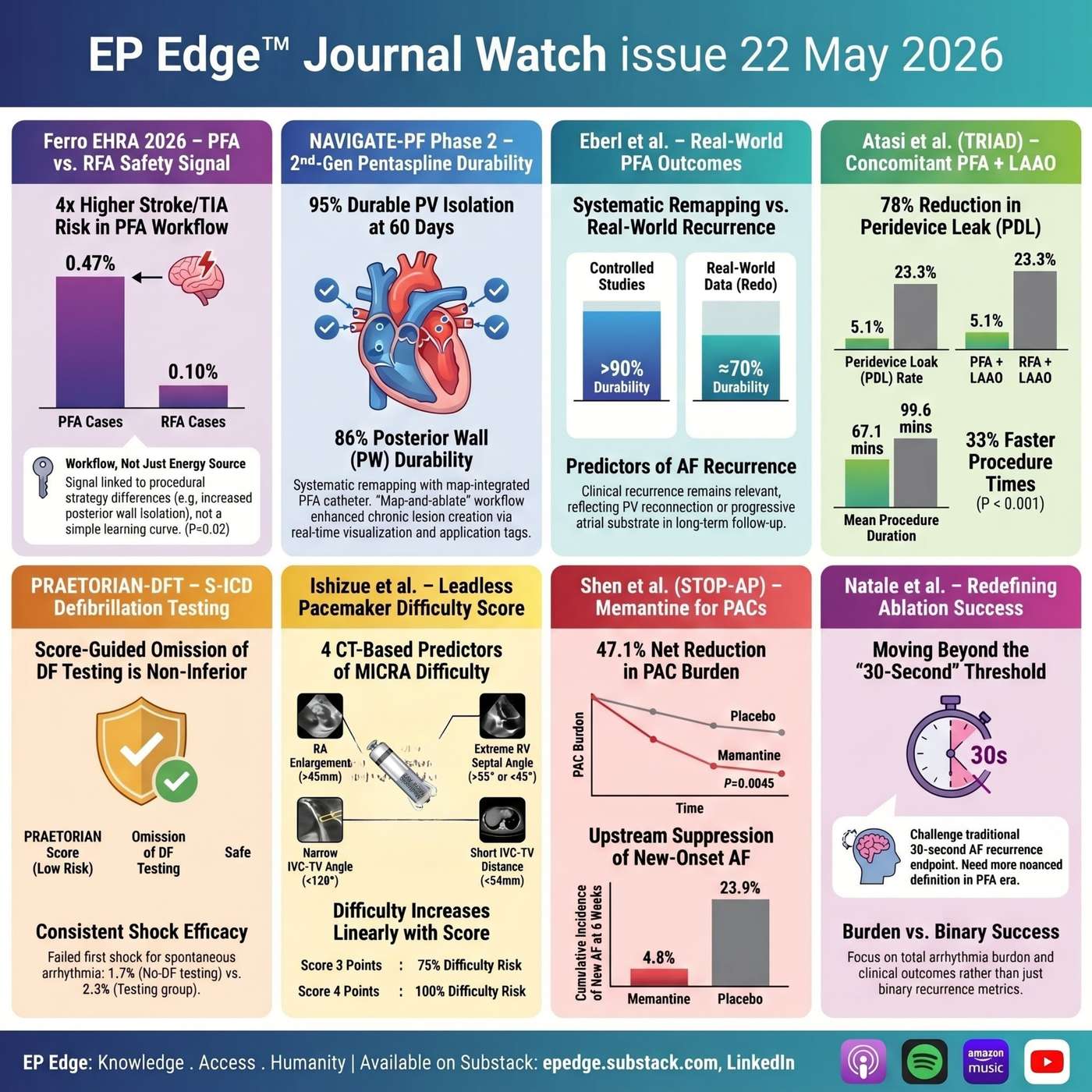
In this episode of EP Edge® Journal Watch, Dr. Sharma reviews Issue 22, May 2026, focused on the next phase of electrophysiology: pulsed field ablation safety, lesion durability, long-term AF recurrence, one-stop AF procedures, device simplification, PAC suppression, and the evolving definition of ablation success.
This issue begins with the Ferro EHRA 2026 real-world comparison of pulsed field ablation versus radiofrequency ablation for atrial fibrillation, highlighting why PFA safety should be interpreted by endpoint, workflow, platform, and lesion strategy rather than as a single global claim.
The episode then examines NAVIGATE-PF Phase 2, a systematic remapping study of a s...
EP Edge™ Journal Watch Issue 21 May 2026: AI-Guided AF Ablation, PFA/CIED Safety, VT Ablation, Cannabis and Arrhythmia Risk, HCM, HFpEF, RBBB, and Anticoagulation After AF Ablation
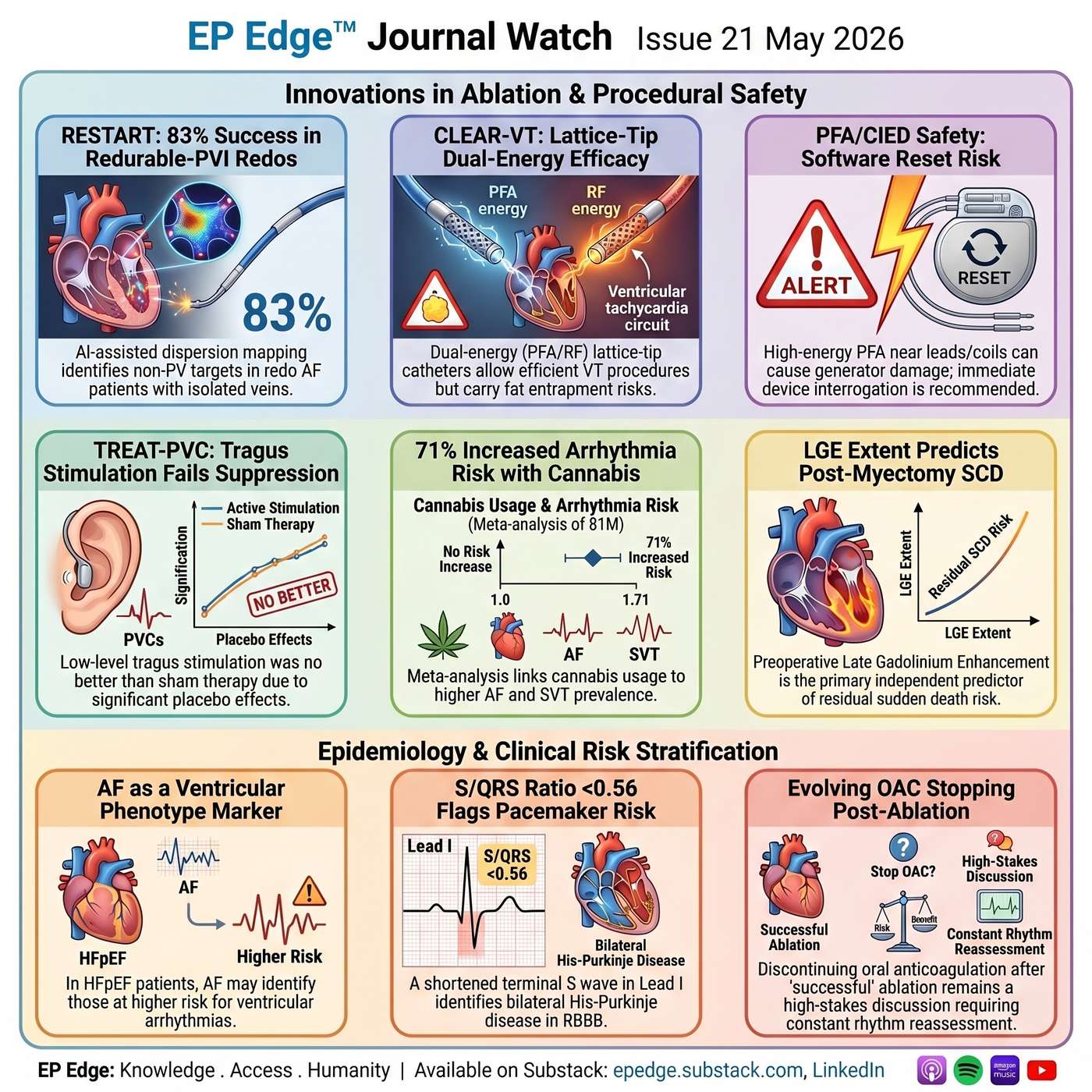
In this May 2026 episode of EP Edge™ Journal Watch, we review nine high-impact electrophysiology studies shaping contemporary EP practice. This issue covers AI-guided redo AF ablation, dual-energy lattice-tip ventricular arrhythmia ablation, pulsed field ablation safety in patients with cardiac implantable electronic devices, neuromodulation for PVC suppression, cannabis-associated atrial arrhythmia risk, sudden death risk after HCM myectomy, atrial fibrillation as a ventricular arrhythmia risk marker in HFpEF, post-ablation anticoagulation strategies, and a practical ECG marker for pacemaker risk in right bundle branch block.
1. RESTART Trial: AI-guided redo AF ablation in patients with isolated pulmonary veins
The RESTART tr...
EP Edge™ Journal Watch: AVANT GUARD Trial, PFA as First-Line Therapy for Persistent AF: Half the Story
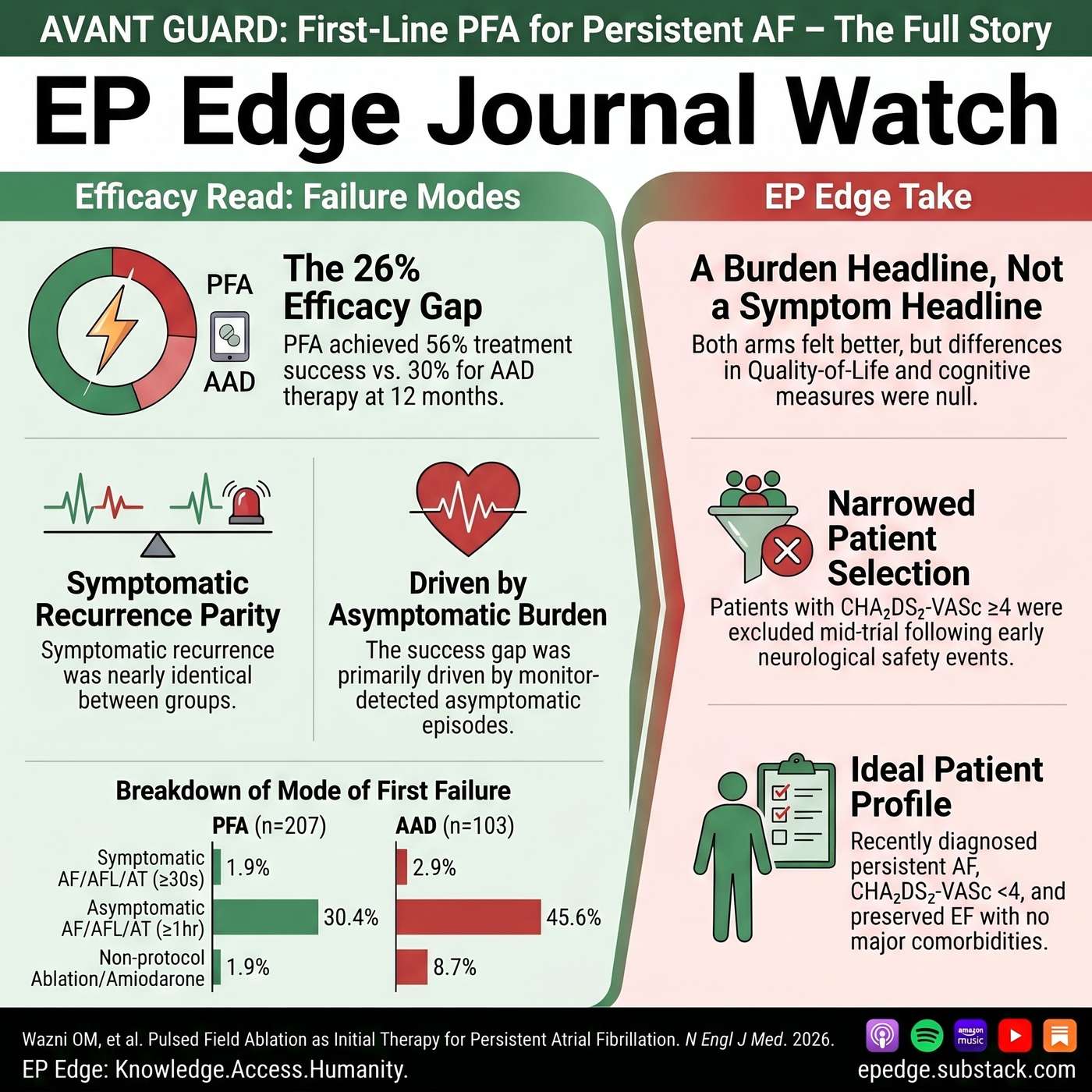
In this special HRS 2026 edition of EP Edge™ Journal Watch, Dr. Niraj Sharma takes a deep, clinically focused look at the AVANT GUARD trial, published in The New England Journal of Medicine, evaluating pulsed field ablation as initial therapy for treatment-naïve persistent atrial fibrillation.
AVANT GUARD delivered the headline many expected: first-line PFA reduced atrial arrhythmia recurrence and AF burden compared with antiarrhythmic drug therapy, with 12-month freedom from atrial arrhythmia of 56% versus 30%. But the story underneath is more complex.
This episode examines why AVANT GUARD may influence future AF guidelines while also requiring car...
EP Edge™ Journal Watch Issue 20: AF Screening, Pulsed Field Ablation, ICD Shocks, CRT in AF, and Anticoagulation After Ablation
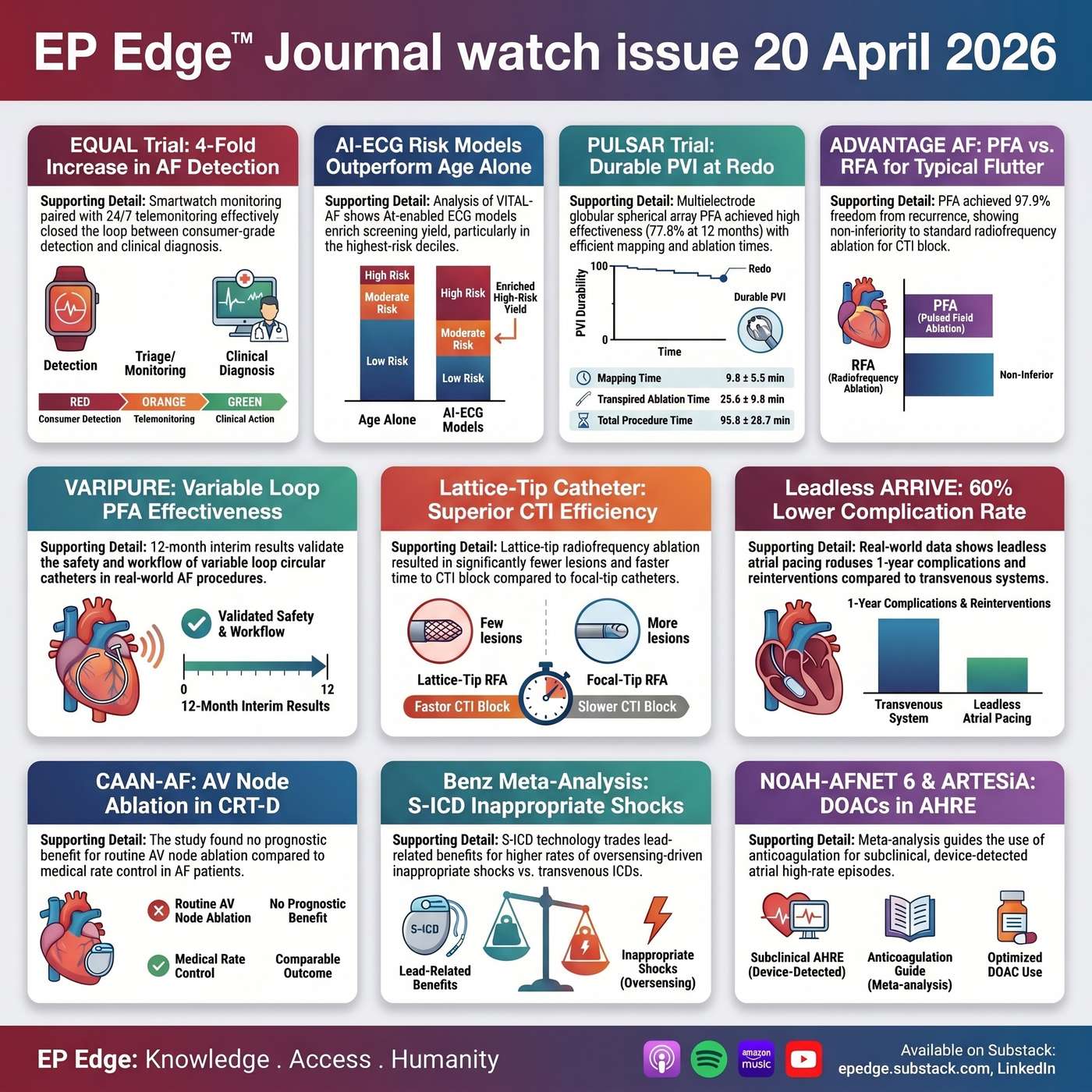
In this episode of EP Edge™ Journal Watch Issue 20, Dr. Sharma reviews some of the most clinically relevant new developments in cardiac electrophysiology, with a sharp focus on atrial fibrillation screening, pulsed field ablation expansion, device therapy trade-offs, and post-ablation anticoagulation strategy.
This issue examines how Apple Watch–based atrial fibrillation detection performed in a randomized trial, and whether wearable screening becomes truly useful only when paired with a real adjudication workflow. It also reviews AI-enabled ECG risk models for AF screening, highlighting how precision screening may outperform broad age-based approaches by identifying the patients most likely to b...
EP Edge™ Journal Watch Issue 19: Atrial Fibrillation Ablation, Conduction System Pacing, GLP-1 Therapy and Arrhythmia Risk
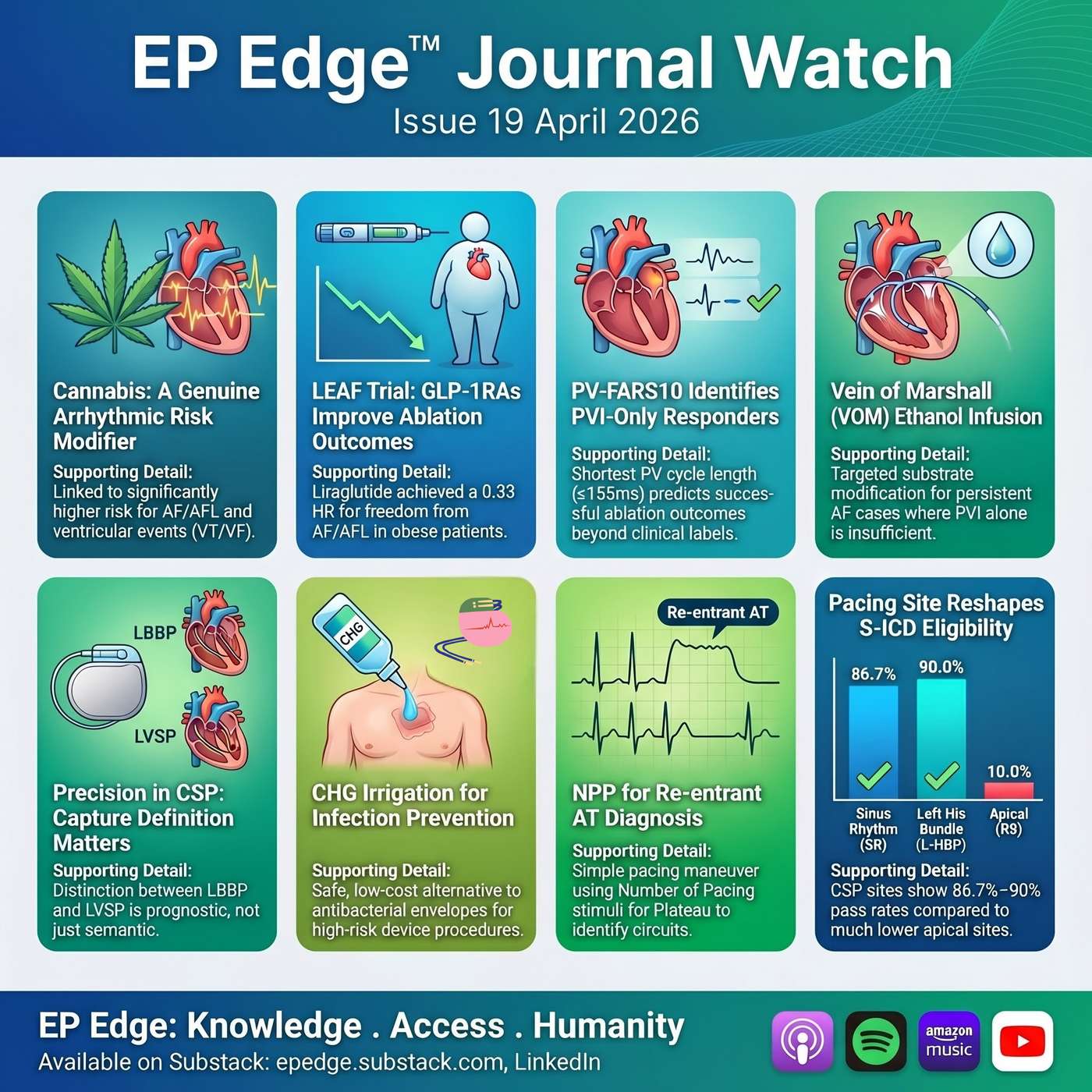
In EP Edge™ Journal Watch Issue 19, Dr. Sharma reviews the most important new studies in atrial fibrillation ablation, conduction system pacing, device therapy, and real-world arrhythmia risk. This episode covers a large multicenter analysis linking cannabis use with higher rates of atrial fibrillation, tachycardia, premature beats, and ventricular arrhythmias; the LEAF study on liraglutide and AF ablation outcomes in overweight and obese patients; and FARS-AF II, which suggests a pulmonary vein physiologic signal may help identify PVI-only responders better than traditional paroxysmal-versus-persistent AF labels.
The episode also examines the growing role of vein of Marshall ethanol infusion in...
EP Edge™ Journal Watch Special Edition: EHRA PFA Statement 2026 | What the New Guidance Means for AF Ablation

In this special edition of EP Edge™ Journal Watch, Dr. Sharma takes a focused, critical look at the 2026 EHRA/ESC scientific statement on pulsed field ablation for atrial fibrillation. This episode goes beyond a surface summary to examine what the new EHRA PFA statement adds to the field, where it is most useful in day-to-day electrophysiology practice, and where important evidence gaps still remain.
The discussion reviews the statement’s key themes, including PFA biophysics, platform heterogeneity, patient selection, procedural workflow, safety, training, and emerging applications. It also compares the EHRA statement with the 2026 HRS scientific statement, high...
EP Edge™ Journal Watch Issue 18 (April 2026): AF Cancer Signals, PFA Recalibration, EMBOL-AF, SMART-ALERT, LBBAP, and VT Rescue
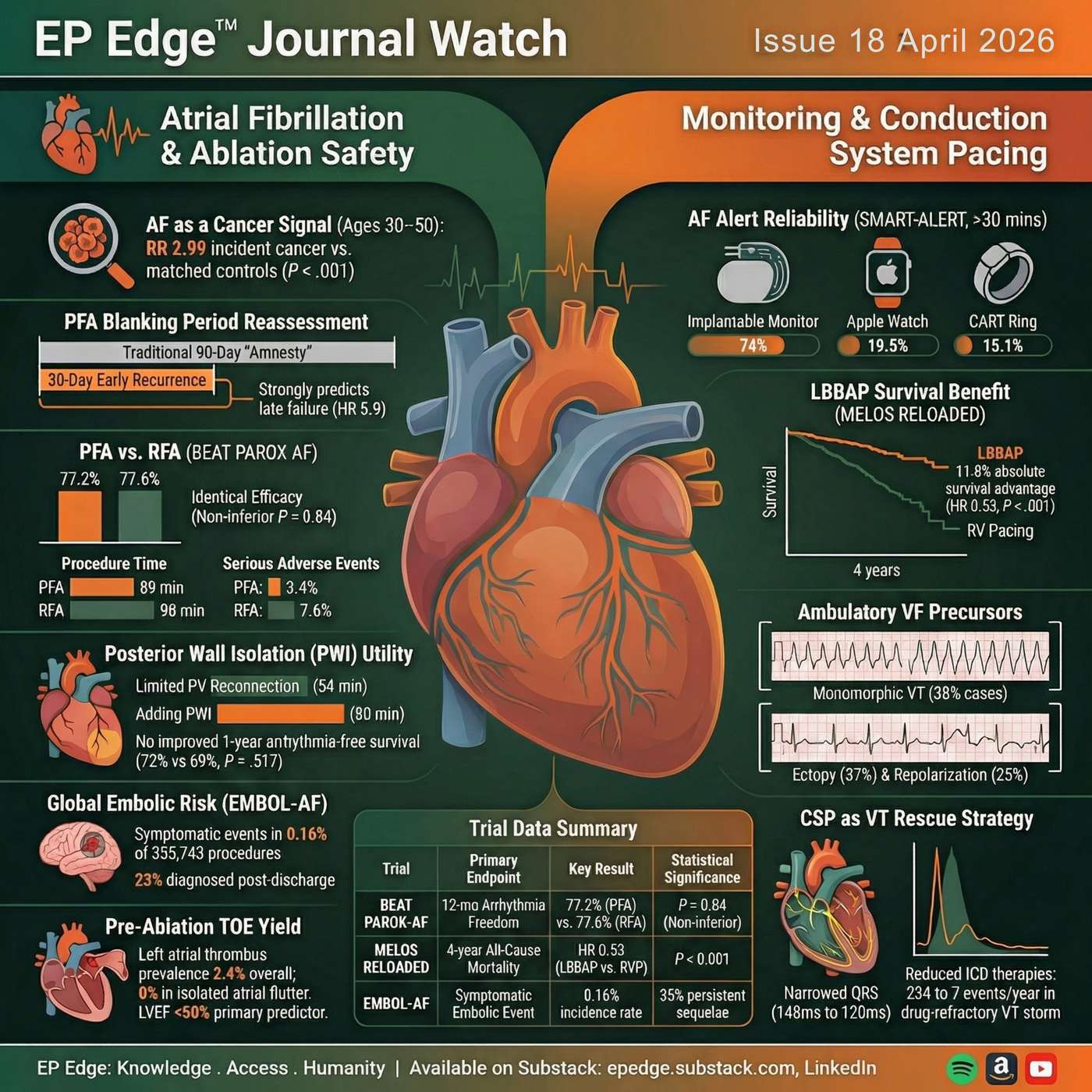
In EP Edge™ Journal Watch Issue 19 (April 2026), Dr. Niraj Sharma takes a high-level look at the latest developments in cardiac electrophysiology, with a sharp focus on atrial fibrillation, pulsed field ablation, embolic risk, physiologic pacing, and ventricular arrhythmia rescue strategies.
This episode moves beyond routine rhythm-control discussions and examines whether new-onset atrial fibrillation may serve as a marker of incident cancer, why the traditional 90-day blanking period after AF ablation may need reassessment in the era of pulsed field ablation (PFA), and what the BEAT PAROX-AF trial actually showed when PFA was tested head-to-head against optimized radiofrequency ab...
EP Edge Journal Watch Issue 17 April 2026: CLOSURE-AF, Left Atrial Appendage Closure vs Medical Therapy, CRT Pacing Trials, PFA Cerebral Emboli, and ViV-TAVR Pacemaker Risk
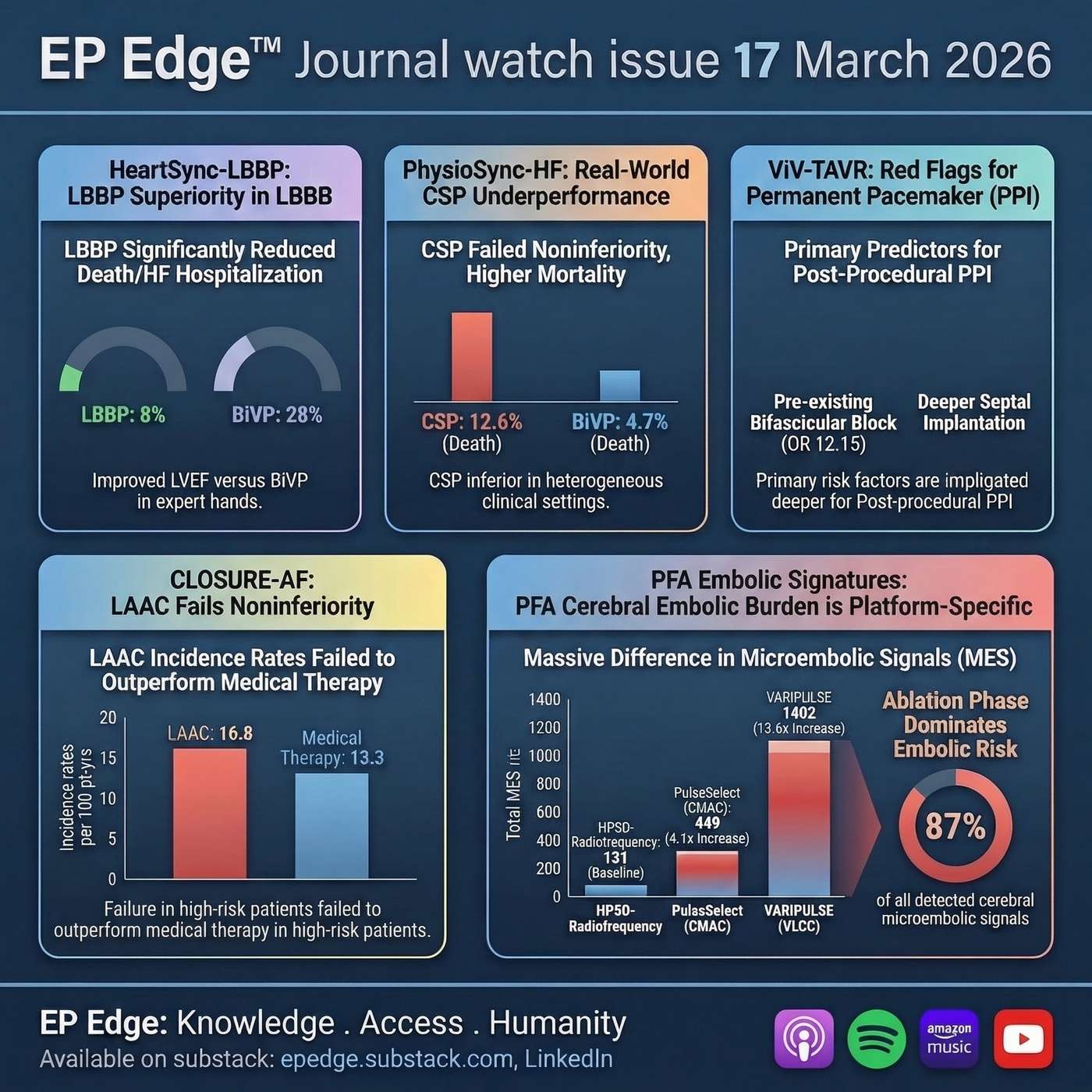
In this episode of EP Edge Journal Watch, Dr. Niraj Sharma reviews five clinically important studies spanning atrial fibrillation, structural heart intervention, heart failure pacing, and contemporary ablation safety. The episode opens with CLOSURE-AF, the randomized trial comparing left atrial appendage closure (LAAC) with physician-directed best medical therapy in older, high-risk patients with atrial fibrillation. The discussion examines whether LAAC can truly match or surpass modern anticoagulation-based care for stroke prevention, why the anticipated bleeding advantage did not clearly materialize, and how these findings should recalibrate clinical thinking around left atrial appendage closure and Watchman-era device strategies in 2026.
<...EP Edge™ Journal Watch Breaking News Special Edition: CHAMPION-AF, PRAGUE-17, and CLOSURE-AF — LAAC vs DOACs in Atrial Fibrillation
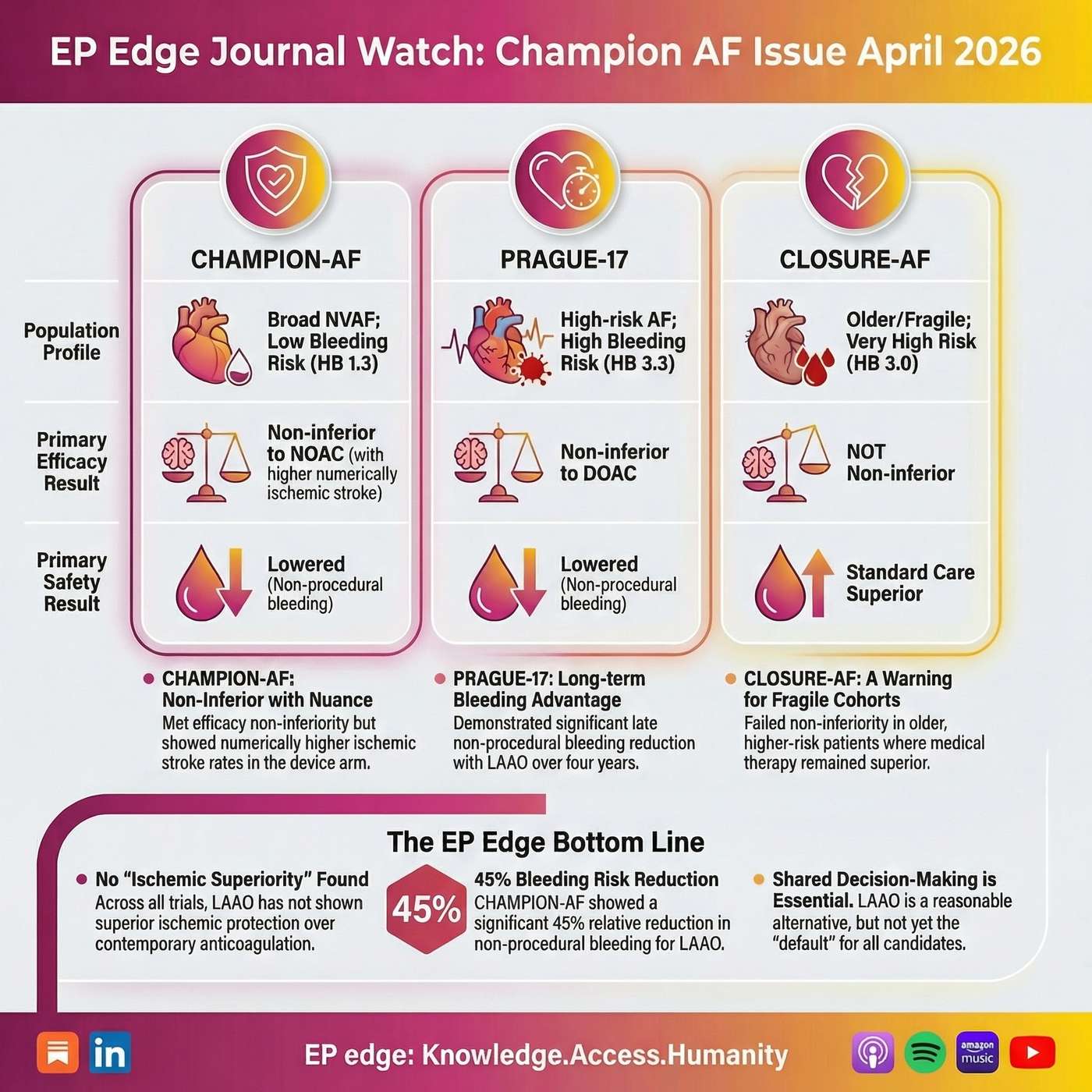
In this EP Edge™ Journal Watch Breaking News Special Edition, Dr. Niraj Sharma delivers an in-depth analysis of the CHAMPION-AF trial and places its findings in direct comparative context with PRAGUE-17 and CLOSURE-AF, three pivotal randomized studies shaping the modern debate around left atrial appendage closure (LAAC/LAAO) versus direct oral anticoagulants (DOACs) for stroke prevention in atrial fibrillation.
This episode goes well beyond a simple trial summary. It examines whether percutaneous left atrial appendage closure can truly challenge contemporary DOAC-first management in patients with nonvalvular atrial fibrillation, and whether the latest evidence justifies broader expansion of LA...
EP Edge Journal Watch Issue 16: 11 New EP Trials on AF Ablation, SVT, Anticoagulation, PFA Safety, VT Pacing, and OHCA
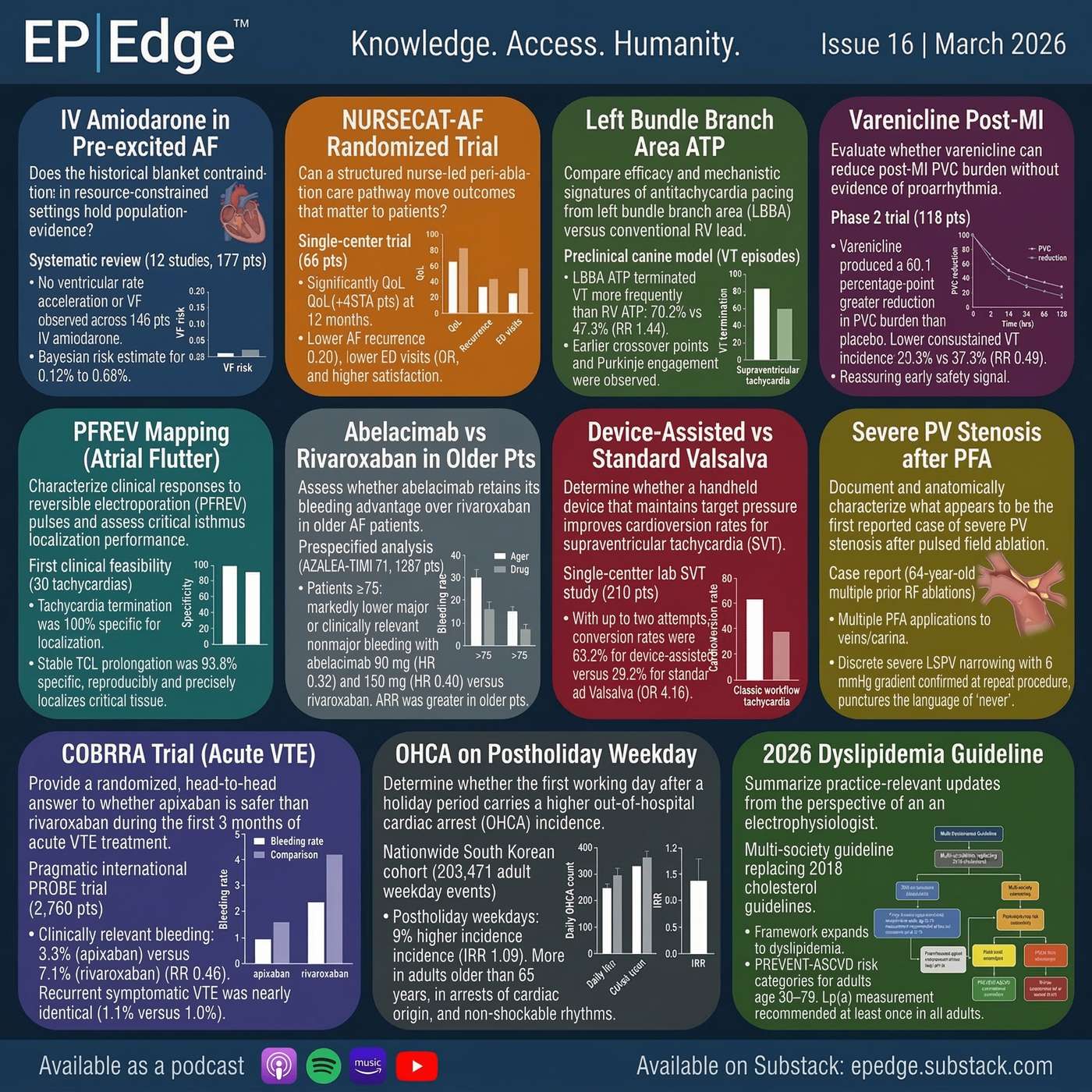
In this episode of EP Edge Journal Watch, Dr. Sharma reviews 11 important new studies shaping modern cardiac electrophysiology, arrhythmia care, and cardiovascular risk management. This March 2026 issue covers intravenous amiodarone in preexcited atrial fibrillation, the NURSECAT-AF randomized trial of nurse-led care after AF ablation, left bundle branch area antitachycardia pacing vs right ventricular ATP, varenicline for ventricular ectopy after myocardial infarction, and the first clinical experience with reversible electroporation mapping in atrial flutter.
The episode also examines abelacimab vs rivaroxaban in older patients with atrial fibrillation from AZALEA-TIMI 71, device-assisted vs standard Valsalva for supraventricular tachycardia, the first...
EP Edge™ Journal Watch Issue 15: PFA Recurrence, Bayesian AF Ablation, Non-PV Triggers, Diltiazem-DOAC Risk, and Stroke Prevention After AF Ablation
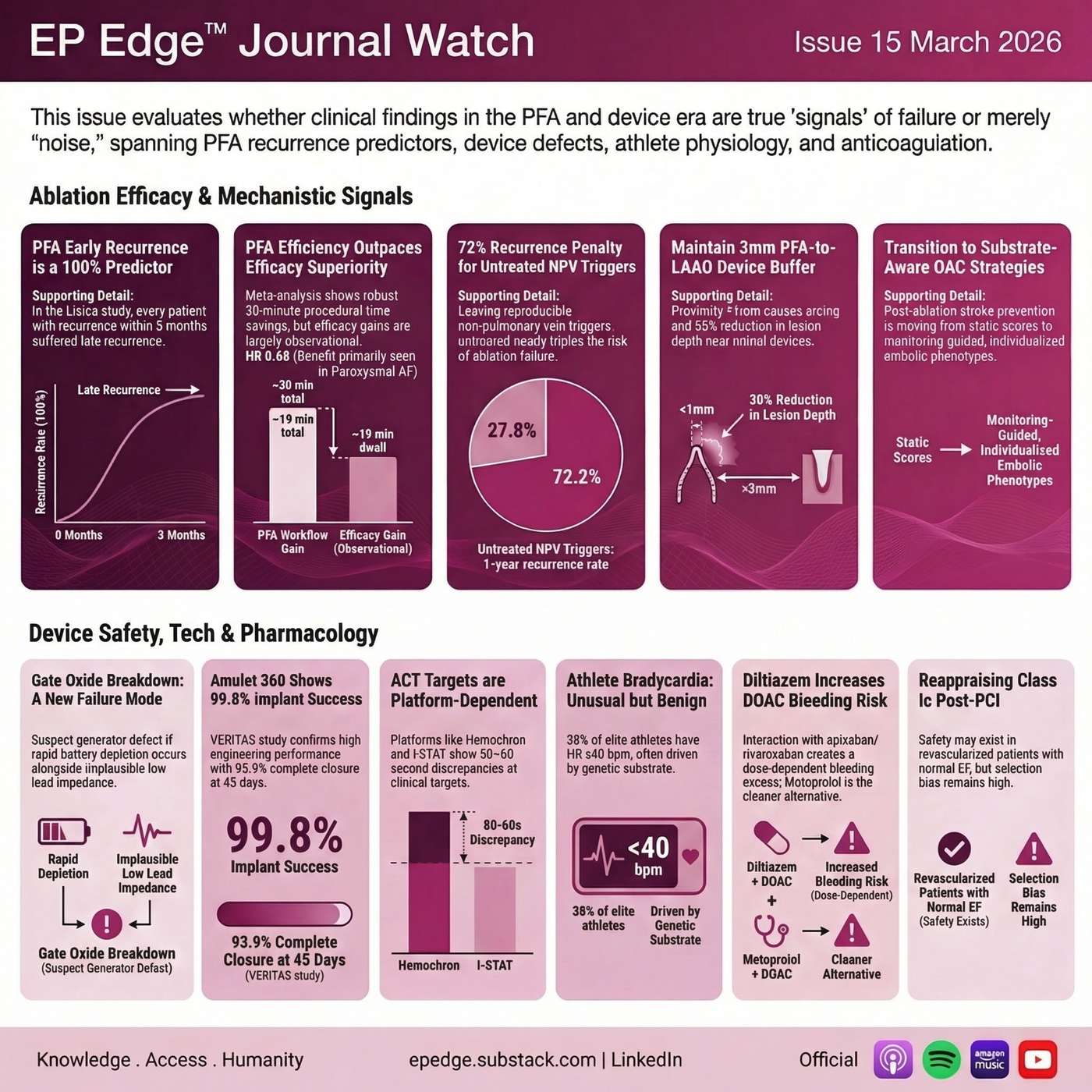
In EP Edge™ Journal Watch Issue 15, Dr. Niraj Sharma reviews some of the most important new studies in electrophysiology and atrial fibrillation management from March 2026. This episode explores whether early recurrence after pulsed field ablation (PFA) should still be viewed as part of a traditional blanking period or whether it may represent an early marker of later treatment failure. It also examines a Bayesian meta-analysis comparing PFA with thermal ablation, with practical discussion on what Bayesian statistics actually mean for clinicians and how probability-based interpretation may differ from standard p-value thinking.
The episode also takes a closer lo...
EP Edge Journal Watch #14 (March 2026): AF Ablation at the Extremes: Octogenarians, HFrEF PVI-Only, LAAC, PFA Hemolysis/AKI & Redo Timing
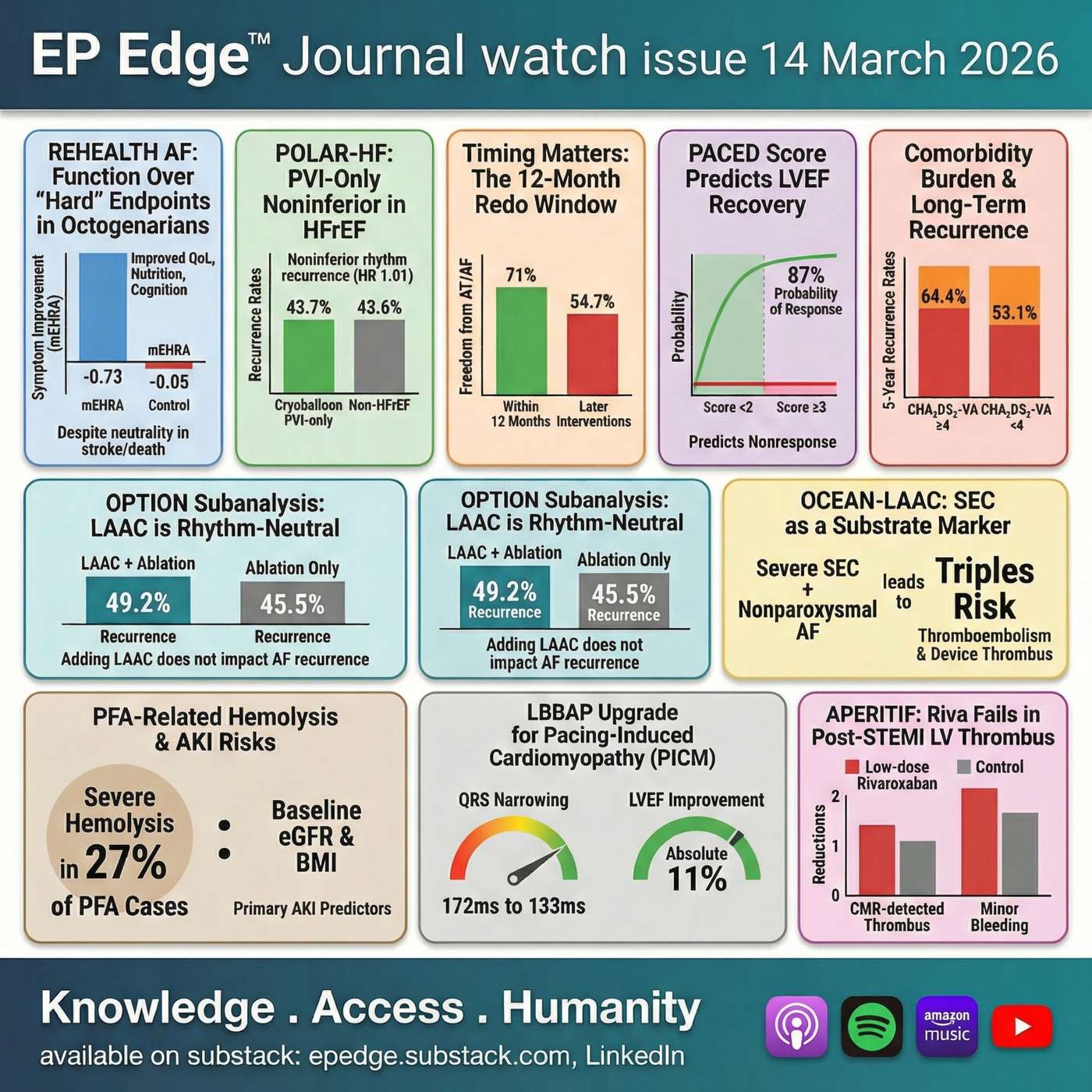
In EP Edge Journal Watch Issue 14 (March 2026), Dr. Niraj Sharma breaks down the most clinically “edge-case” decisions in contemporary electrophysiology—where ablation strategy, stroke prevention, and safety monitoring collide.
This episode covers:
AF ablation in octogenarians (REHEALTH AF): why the signal may be less about short-term hard outcomes and more about symptoms, function, and patient-centered endpoints.Heart failure + AF (POLAR-HF): the case for a standardized PVI-only approach in HFrEF—and when simplicity is the point.LAAC after ablation (OPTION subanalysis): whether left atrial appendage closure changes AF recurrence (and why rhythm success ≠ stroke immunity).Severe spontaneous echo contr...EP Edge Journal Watch Issue 13 (March 2026): Ultrashort AF, ILR Accuracy, Semaglutide + Ablation, PADIT, PCOS, LBBAP and Next-Gen nanosecond PFA (SCENA-AF)
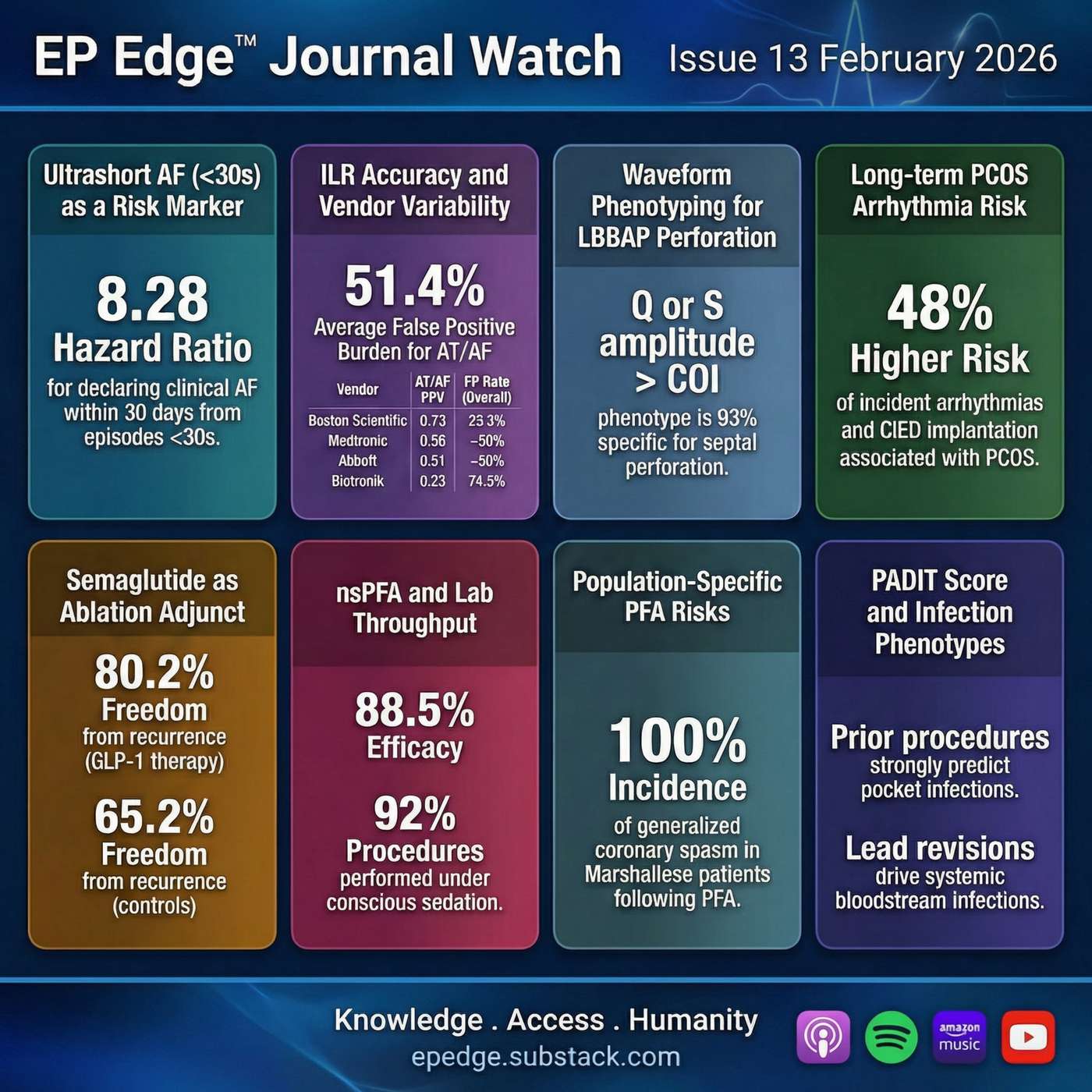
EP Edge Journal Watch — Issue 13 (March 2026) explores a core 2026 EP problem: signal detection (wearables, patches, ILRs) and energy delivery (next-gen PFA) are advancing faster than the clinical rules we use to interpret risk and outcomes.
In this episode, Dr. Niraj Sharma breaks down what’s clinically actionable, what’s methodologically fragile, and what should change practice now versus what needs better evidence.
Topics covered (high-level):
Ultrashort atrial arrhythmias (EP Edge™ Journal Watch: February 2026 Issue 12: AF Ablation “Success” Reframed: ADVENT-LTO 4-Year PFA Durability, 20-Year PVI Outcomes, Monitoring Rules, CIED Risks & PICM
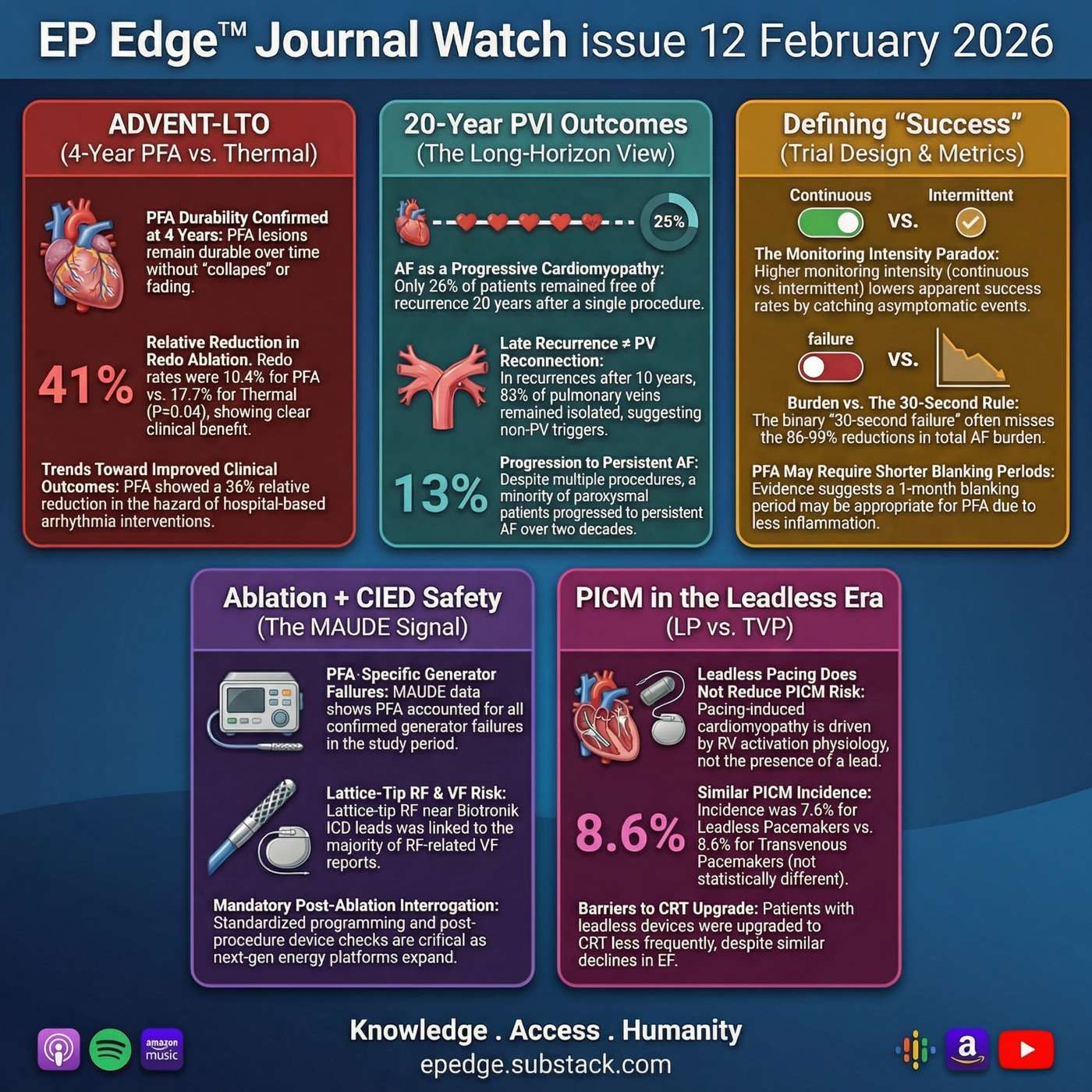
In this episode of EP Edge™ Journal Watch (Issue 12, February 2026), Dr. Niraj Sharma breaks down a deceptively simple question in atrial fibrillation (AF) ablation: what does “success” actually mean—at 1 year, 4 years, and 20 years? We start with ADVENT-LTO, the long-term extension of the randomized ADVENT trial, examining 4-year outcomes of pulse field ablation (PFA) vs thermal ablation—and why redo ablation and hospital-based interventions may matter more than a single headline p-value.
Next, we zoom way out with a 20-year pulmonary vein isolation (PVI) cohort, showing how AF behaves like a progressive atrial cardiomyopathy over decades—and why very late...
EP Edge™ Journal Watch (Special Edition): Feb 2026 HRS/EHRA Pulsed Field Ablation (PFA) Scientific Statement — Vote Counts, Safety Signals, and Real-World Workflow
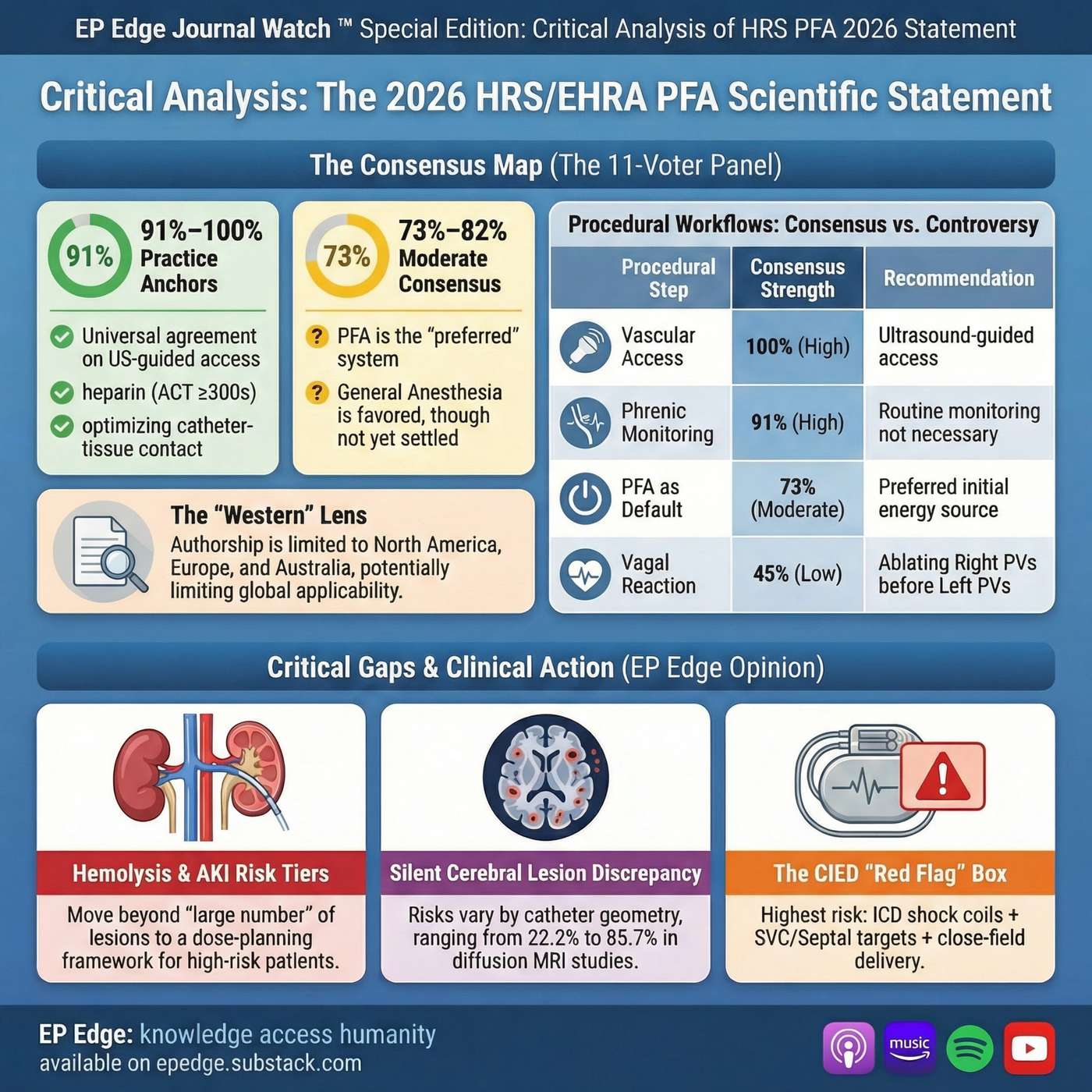
In this EP Edge™ Journal Watch Special Edition, we unpack the newly released 2026 HRS/EHRA Scientific Statement on Pulsed Field Ablation (PFA) and translate “consensus language” into practical, lab-ready decision-making. This isn’t a surface summary—it’s a critical appraisal of how the statement was built (including the 11-voter model), where the field is truly aligned, and where recommendations may outpace either the evidence base or global clinical reality.
final pfa statement
You’ll hear a Consensus Map that separates high-agreement anchors (e.g., access, anticoagulation, sheath discipline) from moderate-consensus workflow preferences (e.g., anesthesia mode...
EP Edge Journal Watch Issue 11 February 2026: Varipulse Safety Signal, ElectroPulse PFA, Farapoint CTI Ablation, Leadless Pacemaker Infection & EP Occupational Hazards
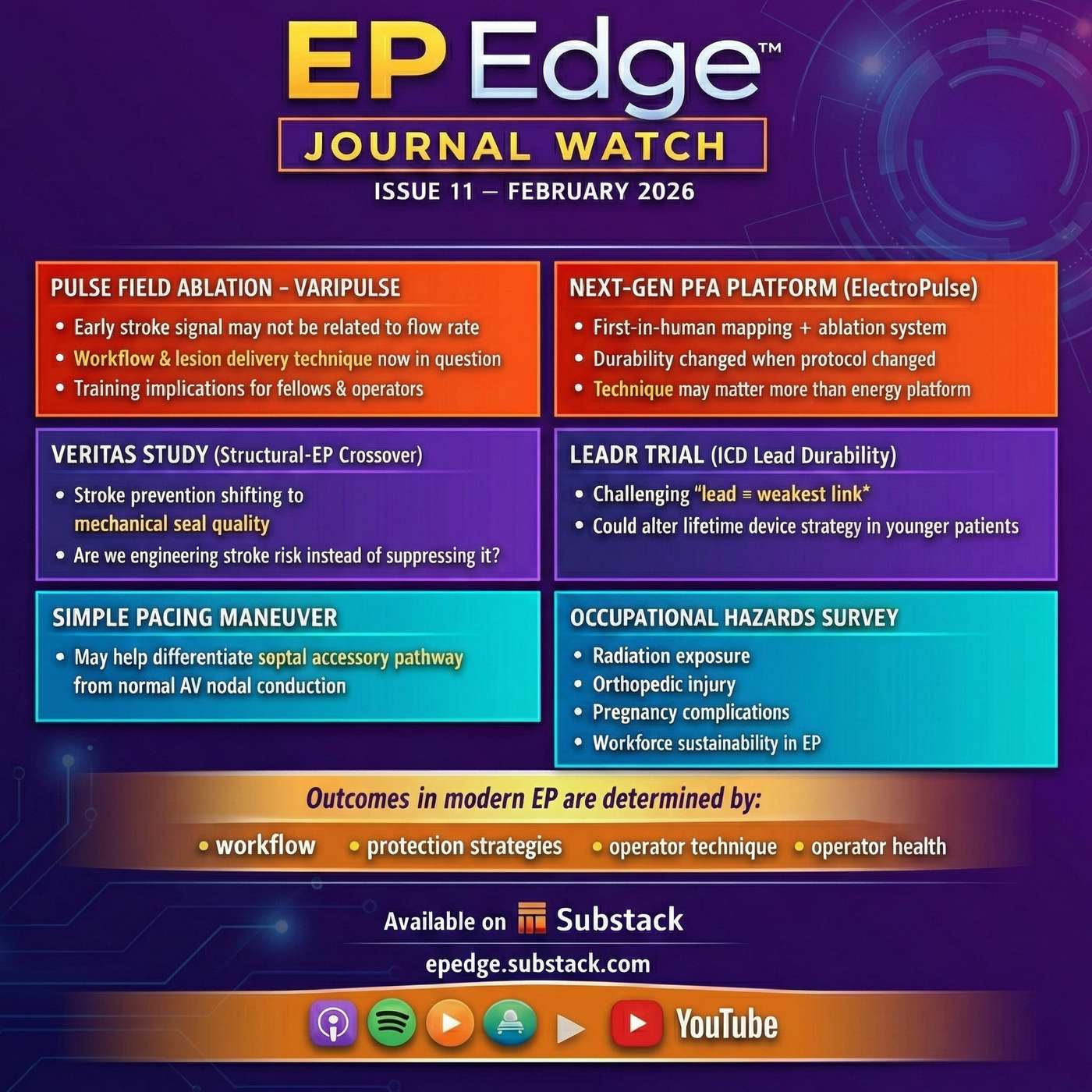
In this episode of EP Edge Journal Watch, we review several developments that directly impact modern electrophysiology practice — from pulsed field ablation safety to operator health. We begin with the real-world Varipulse experience, where early neurovascular events dropped dramatically after workflow modification and reduction of lesion stacking, highlighting that PFA success depends as much on procedural execution as on device design. We then discuss the first-in-human ElectroPulse mapping-ablation platform and what its early durability signals suggest about integrated catheter systems and standardized ablation protocols.
We next turn to right-sided ablation safety. The episode examines cavotricuspid isthmus pulsed fie...
EP Edge Journal Watch Issue 10, February 2026: Pulsed Field Ablation Durability, AF Ablation Outcomes, Wearable AF Detection, ICD and VT Insights
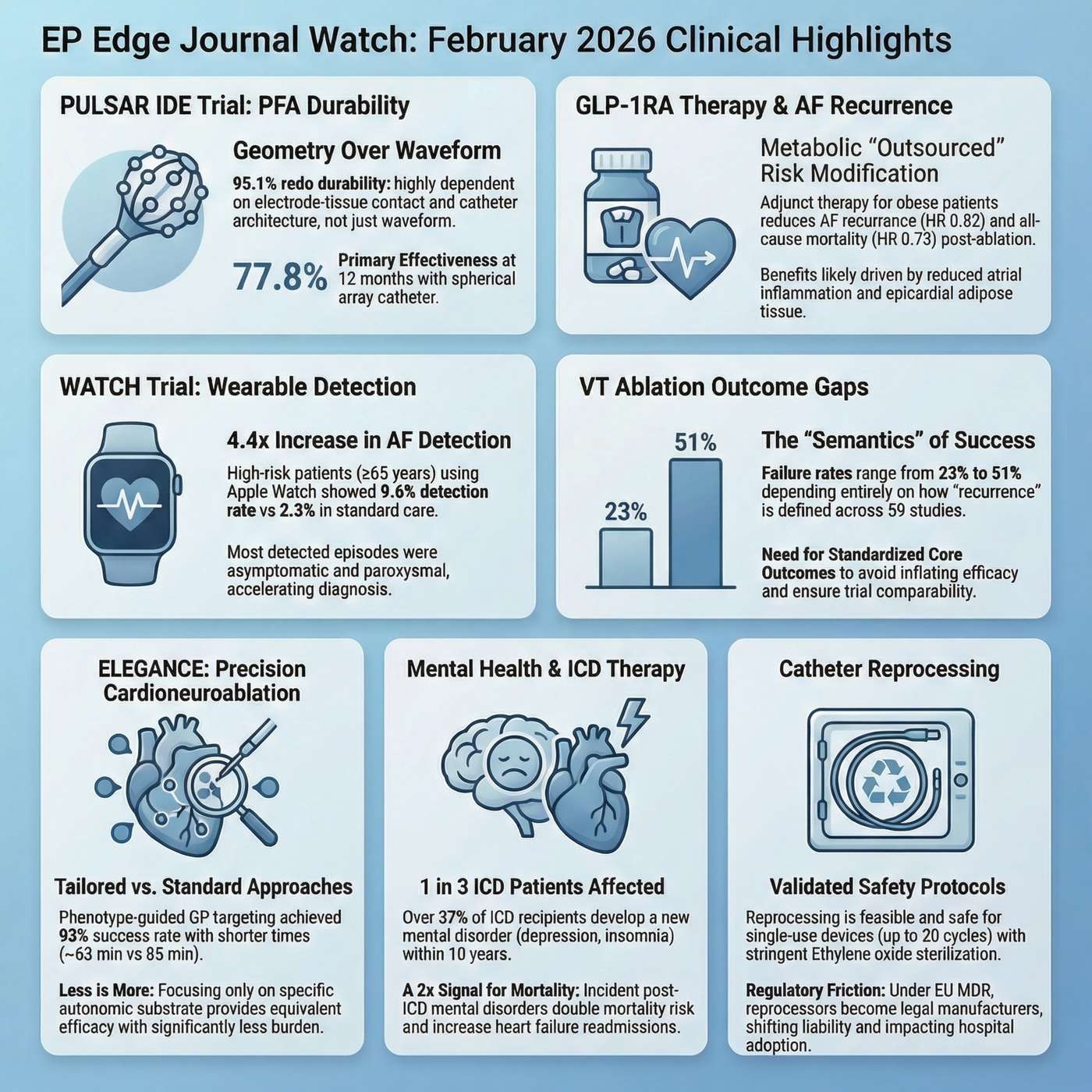
EP Edge Journal Watch: Feb 2026 Issue 10
In this episode of EP Edge Journal Watch, we examine the latest developments shaping the future of cardiac electrophysiology, with a focus on pulsed field ablation durability, atrial fibrillation ablation outcomes, wearable AF detection, ventricular tachycardia ablation endpoints, autonomic modulation, and ICD patient outcomes. Pulsed field ablation has rapidly transformed AF ablation due to its safety and efficiency, but long-term success depends on durable pulmonary vein isolation. We explore how next-generation catheter architecture, electrode geometry, and tissue contact optimization are redefining durability and advancing the effectiveness of catheter ablation for atrial...
EP Edge Journal Watch Special Edition: VOLT IDE One-Year Results in Context: ADVENT, ADVANTAGE-AF, AdmIRE, SPHERE-Per-AF & U.S. PFA Pivotal Trials

Pulsed field ablation (PFA) has rapidly reshaped atrial fibrillation ablation, but true clinical validation depends on durable one-year outcomes, not early feasibility or acute safety alone. In this EP Edge Journal Watch Special Edition, Dr. Niraj Sharma delivers a comprehensive, system-level analysis of the Abbott VOLT IDE one-year data, now completing the 12-month efficacy and safety landscape across major U.S. PFA platforms.
This episode critically reviews and contextualizes results from the VOLT IDE trial alongside other pivotal and near-pivotal studies, including ADVENT, ADVANTAGE-AF, AdmIRE, SPHERE-9 first-in-human, and SPHERE-Per-AF. The discussion spans paroxysmal, persistent, and advanced AF...