Marginalia

Marginalia brings books and research into conversations about how we think, speak, remember, and live together. Explore philosophy, artificial intelligence, linguistics, psychology, history, art, and science through the ideas and questions in the source texts. Listen to learn, question what you hear, and take the debate further.Browse seven subject collections, including separate AI Books and AI Papers series. AI Papers connects recent research with historically significant work.Philosophy & Critical Theory: Ricoeur, Adorno, truth, interpretation, and ethics.AI & Computer Science: Learning, world models, and the ideas behind intelligent machines.Language & Linguistics: How language works, develops, and evolves.Mind & Psychology: Consciousness...
Jews and Power (Ruth R. Wisse)

Ruth R. Wisse traces Jewish political life from the loss of ancient sovereignty through emancipation and the creation of Israel.
She examines how covenant, communal self-government, and accommodation sustained Jewish communities in the Diaspora.
Wisse argues that dependence on rulers’ protection left Jews vulnerable to political movements that profited from targeting them.
She follows the shift from religious hostility to modern political antisemitism and examines how demagogues turned Jewish success into conspiracy narratives.
The discussion closes with her argument that moral responsibility requires collective self-defense, including in the modern state of Is...
The Necessity of Exile (Shaul Magid): Essays from a Distance

Shaul Magid reconsiders exile as a resource for Jewish life rather than a condition that political sovereignty simply ends.
Across nine essays, he examines liberal Zionism, American Jewish identity, communal belonging, and the boundaries of political dissent.
Drawing on Hannah Arendt, Martin Buber, Hasidic thinkers, and Yiddish literature, he develops his idea of counter-Zionism.
He asks how Jewish self-determination can coexist with Palestinian self-determination and critiques claims of exclusive ownership of the land.
The book distinguishes antisemitism from structural oppression and explores an exilic ethic of humility and coexistence, including within...
Dara Horn Revisited: The Final Solution to the Jewish Question — A Critical Debate

Felipe and his AI cohost Sara critically revisit Dara Horn’s The Final Solution to the Jewish Question: A Love Story for the Living.
They weigh her account of antisemitism and Jewish cultural agency against the risks of treating diverse political arguments as expressions of one historical pattern.
The debate examines Israel, Palestinian rights, Soviet propaganda, and the usefulness and limits of a neoconservative reading of Horn’s framing.
Source checks revisit the original episode’s claims about Jewish economic history and genetics, and the galley’s treatment of Gaza casualty reporting and refugee...
Conceptual Form (Sandeep Prasada): The Hidden Structure of Commonsense Concepts

Sandeep Prasada argues that commonsense concepts have a formal structure that guides how we think, speak and reason.
Conceptual Form distinguishes what we know about a category from the perspectives through which we understand its members.
The book develops an instance-of-kind perspective and examines how people reason about kinds, individuals and their properties.
It applies this account to generic statements, systematic polysemy and metaphor, connecting conceptual structure with language.
The later chapters consider how these perspectives are acquired and what they imply for theories of conceptual knowledge.
Author: Sandeep...
Unsupervised Learning for Physical Interaction through Video Prediction (Chelsea Finn, Ian Goodfellow & Sergey Levine)

Chelsea Finn, Ian Goodfellow and Sergey Levine investigate how robots can learn the effects of physical interactions from unlabeled video.
Their action-conditioned models predict how pixels move between frames, reusing visual appearance rather than reconstructing every future image from scratch.
The paper introduces a dataset of 59,000 robot-pushing interactions and tests predictions on previously unseen objects.
Its experiments compare alternative motion-prediction architectures and examine their ability to produce plausible futures conditioned on a robot's actions.
This 2016 work provides an early foundation for robotic world models and connects visual prediction with the longer-term...
La-JEPA: Compact Robot Policies with Latent World Modeling (Mateo Clémente et al.)

Mateo Clémente and colleagues introduce La-JEPA, a compact robot policy trained in the feature space of a pretrained V-JEPA 2.1 video encoder.
The model learns to predict future visual features alongside actions during training, then generates actions alone when controlling the robot.
The authors evaluate it on LIBERO-Plus, RoboTwin 2.0 and four real-robot tasks, reporting strong results with smaller policies than several generation-based alternatives.
Their design study compares JEPA features with video-VAE latents and examines which forms of predictive supervision improve control.
The paper also identifies corrupted instructions in the released LIBERO-Plus e...
Robotics, Vision and Control (Peter Corke) — Part 5 of 5: Vision-Based Control

The final part connects the series’ robotics and vision foundations through vision-based control.
Position-based visual servoing uses estimated spatial quantities, while image-based visual servoing acts on errors measured in image features.
The interaction matrix links motion to changes in the image, making the choice of features, depth estimates and camera model consequential.
Advanced methods include partitioned, polar-coordinate and spherical-camera approaches to visual servoing.
Applications to robot arms, mobile robots and aerial robots close the perception-to-action loop and expose the assumptions and performance limits of the methods.
Author: Peter Corke
...Robotics, Vision and Control (Peter Corke) — Part 4 of 5: Computer Vision

Part 4 follows the book’s five computer-vision chapters, from the physical properties of light to information recovered from multiple images.
Light, color and image-processing operations explain how measurements become usable digital representations.
Region, line and point features provide ways to describe structures and establish correspondences in images.
Camera models and calibration relate image measurements to the geometry of the world.
Multiple-view geometry and stereo methods show how relationships between images reveal depth, structure and motion, preparing the transition to visual feedback control.
Author: Peter Corke
Source: Robotics, Vi...
Robotics, Vision and Control (Peter Corke) — Part 3 of 5: Robot Manipulators

Part 3 turns from moving a robot’s base to controlling the motion of a robot arm.
Forward and inverse kinematics connect joint configurations with the position and orientation of the end effector.
The manipulator Jacobian relates joint velocity to task-space motion and reveals the significance of singularities and manipulability.
Dynamics adds mass, inertia and the forces or torques required to produce a desired movement.
Corke’s control methods connect these models with the practical problem of making an arm follow a commanded motion.
Author: Peter Corke
Source: Robo...
Robotics, Vision and Control (Peter Corke) — Part 2 of 5: Mobile Robotics

Part 2 follows Corke’s treatment of mobile robots, navigation, localization and mapping.
Vehicle models explain how wheeled and aerial robots can move, and which motions their physical constraints permit.
Reactive behavior and map-based path planning offer different ways to reach a destination while handling obstacles.
Odometry and probabilistic localization address the uncertainty in a robot’s estimate of where it is.
Mapping and SLAM bring motion, measurements and environmental structure together, showing why navigation depends on both geometry and reliable estimation.
Author: Peter Corke
Source: Robotics, Vision and...
Robotics, Vision and Control (Peter Corke) — Part 1 of 5: Introduction and Foundations

The first part introduces Peter Corke’s Robotics, Vision and Control and the questions that connect sensing, geometry and action.
Chapter 1 places mobile robots, robot arms and robotic vision in context, including the ethical responsibilities of building autonomous systems.
Chapter 2 develops coordinate frames, relative pose and the representations used to describe position and orientation in two and three dimensions.
Chapter 3 connects those geometric descriptions with velocity, acceleration, forces and smooth trajectories through time.
Inertial sensing and sensor fusion show how these foundations support a robot’s estimates of its own motion, prep...
Antisemitism, an American Tradition (Pamela S. Nadell)

Pamela S. Nadell traces the persistence of antisemitism in America from the arrival of Jews in New Amsterdam in 1654 to contemporary attacks.
The book follows religious hostility, political discrimination and social exclusion through successive periods of American history.
It examines barriers to citizenship, education and employment alongside propaganda, conspiracy thinking and violence.
Nadell also follows Jewish responses to prejudice and the tension between lived discrimination and America’s promise of religious liberty.
Her history asks how antisemitism has endured and adapted within a country often understood as a refuge from persecution.
...Ricoeur’s Early Ethical Philosophy (Leovino Madriaga Garcia): Responsibility and Hope

Leovino Madriaga Garcia reads Paul Ricoeur’s early philosophy through the relationship between responsibility and hope.
The book follows Freedom and Nature, Fallible Man and The Symbolism of Evil to examine willing, human limitation and the acknowledgment of fault.
Garcia explains how phenomenology and the interpretation of symbols offer different approaches to understanding human action.
He then connects these concerns with Ricoeur’s early essays on civilization, Christian social responsibility, politics and the state.
The central question is how an honest account of human fallibility can sustain responsible action and hope for...
Oneself as Another (Paul Ricoeur): Identity, Ethics and the Other

Paul Ricoeur asks how we understand ourselves as persons who speak, act, tell stories and answer for what they do.
Oneself as Another distinguishes sameness from selfhood, showing why personal identity involves more than remaining unchanged.
Its ten studies connect language and agency with narrative identity, promising and relationships with other people.
Ricoeur brings the aim of a good life into conversation with moral obligations, just institutions and practical wisdom.
The book examines how responsibility and our dependence on others shape what it means to be a self.
Author...
Jew-Hatred: The Latest Edition (Simon Schama)

Simon Schama asks why antisemitism persists and adapts across different political and religious settings.
Jew-Hatred: The Latest Edition, published in Jewish Quarterly 265, connects recurring historical myths with contemporary hostility toward Jews.
His essay examines religious prejudice, conspiracy thinking, and the repeated use of Jews as an explanation for wider social anxieties.
Schama also considers the October 7 attacks, the war in Gaza, and arguments about Zionism within the current resurgence of antisemitism.
The discussion centers on historical evidence, collective blame, and the consequences of these arguments for Jewish life and public debate.<...
Machine Voices: A Sonic Study of Artificial Intelligence (Edward B. Kang)

What assumptions about speaking and listening are built into a machine that claims to understand a voice?
Edward B. Kang investigates how artificial intelligence turns voices into measurable, comparable, and reproducible signals.
The book moves from the histories and framing of voice to machine listening, engineered emotion, and synthetic speech.
Kang connects these technical practices with the economic, social, and cultural forces that shape what a system recognizes.
His concept of the machine voice opens a debate about whose voices count, which standards guide listening, and how technology changes our understanding...
On Minds: Reflections of a Cognitive Architect (Paul S. Rosenbloom)

What kind of architecture could support a mind across different tasks and situations?
Paul S. Rosenbloom examines architectures, symbols, intelligence, and theories through decades of research in artificial intelligence and cognitive science.
He maps the choices and trade-offs behind symbolic, neural, and hybrid approaches to intelligent systems.
His account connects work on XAPS, Soar, and Sigma with the search for a Common Model of Cognition.
The book combines conceptual analysis with a research memoir, asking how the fixed organization of a system can make flexible thought possible.
Source: On...
CLIP: Learning Transferable Visual Models From Natural Language Supervision (Radford et al.)

CLIP asks whether natural-language descriptions can teach a visual model more flexibly than a fixed set of class labels.
Radford and colleagues train image and text encoders on 400 million image-text pairs using a contrastive objective.
Text prompts then describe new categories, allowing the model to attempt classification without task-specific labeled training examples.
The paper evaluates transfer across more than 30 vision datasets and examines robustness, prompting, and the limits of the approach.
This foundational study provides a historical counterpart to the JEPA paper: paired contrastive training offers one route to shared visual...
Yann LeCun & Randall Balestriero: The Platonic Representation Hypothesis with JEPAs

Can models trained separately on images and language arrive at the same representation of the world?
Randall Balestriero and Yann LeCun derive alignment up to a rotation for an idealized JEPA setting with shared positive pairs and additional assumptions.
They distinguish good views of the same scene from views that preserve the peculiarities of a single observation.
Experiments report stronger cross-modal alignment and substantially greater sample efficiency than next-token prediction in the tested settings.
The results concern cross-modal alignment under specific assumptions and benchmarks, making their scope central to interpreting the...
Deep Learning for Finance: Creating Machine & Deep Learning Models for Trading in Python (Sofien Kaabar)

Sofien Kaabar explains how to build Python models for financial time series, combining machine learning with technical and quantitative analysis.
The book develops the probability, statistics, linear algebra, and data-handling foundations needed for these models.
It progresses from regression and tree-based methods to neural networks, recurrent architectures, and deep reinforcement learning.
Backtesting, time-series cross-validation, regularization, and retraining help examine model performance and the risks of overfitting.
Market drivers, risk management, and behavioral biases place the modeling techniques within the wider practice of financial trading.
Series: AI Books · Book deep d...
How the Body Shapes the Way We Think: A New View of Intelligence (Pfeifer & Bongard)

Rolf Pfeifer and Josh Bongard argue that intelligence depends on interactions among the body, the brain and the environment.
How the Body Shapes the Way We Think: A New View of Intelligence uses embodied systems to explore that claim.
Robot designs show how physical form and coordination can contribute to behavior.
The discussion connects these ideas with development and the emergence of cognition.
The book offers a way to question accounts of intelligence that focus primarily on computation inside the brain.
Series: AI Books · Book deep dive
S...
Any Time, Any Space: Coherent Video Generation (Weijie Wang et al.)

Any Time, Any Space tackles the problem of keeping generated video shots consistent across changes of place, viewpoint, and time.
The framework turns a screenplay into shot requests with explicit scene, camera, and event-time references.
Scene memory stores registered static geometry, while event memory retains dynamic observations indexed by scene, event, and time.
Before generating a shot, the system retrieves relevant evidence; afterward, review and state checks decide whether new observations enter memory.
The authors report improvements in cross-shot consistency, spatial revisiting, and event replay across four video generators.
...
An Advanced Course in Probability and Stochastic Processes (Kroese & Botev)

Kroese and Botev build a rigorous account of probability from measurable spaces, integration, and random variables.
They compare different forms of convergence and develop the law of large numbers and central limit theorem.
Conditional expectation connects information and independence to Markov chains and other stochastic processes.
Martingales, stopping times, and Brownian motion reveal how random systems evolve over time.
The book brings these ideas together through stochastic integration, Itô calculus, and stochastic differential equations.
Series: Mathematics & Science
Book: An Advanced Course in Probability and Stochastic Processes by D...
Human-in-the-Loop Machine Learning: Active Learning and Annotation for Human-Centered AI (Robert Monarch)

Robert Monarch explains how human judgment and machine learning can work together to build better models.
Active learning uses uncertainty and diversity sampling to select examples that most need human feedback.
The book examines how to recruit annotators, write instructions, and measure agreement and annotation quality.
It connects reliable training and evaluation data with transfer learning and other ways to improve labeling workflows.
Annotation interfaces and human-computer interaction bring these methods together in practical machine learning products.
Series: AI Books · Book deep dive
Book: Human-in-the-Loop Machine Learning: A...
The Final Solution to the Jewish Question: A Love Story for the Living (Dara Horn)

Dara Horn examines why antisemitism persists and why familiar responses can fail to address it.
The Final Solution to the Jewish Question: A Love Story for the Living combines historical discussion, reporting and personal experience.
Horn questions recurring myths about Jews and examines contemporary responses to anti-Jewish hostility.
She argues for a response that attends to living Jewish communities and their future.
The episode introduces her argument as a contribution to a continuing debate about antisemitism and Jewish life.
Alongside Horn, the conversation draws on economic and historical research...
Backpropagation: Learning Representations by Back-Propagating Errors (Rumelhart, Hinton & Williams)

Backpropagation lets a neural network adjust its internal connections using the errors in its outputs.
David Rumelhart, Geoffrey Hinton and Ronald Williams show how hidden units can learn useful representations in their 1986 Nature paper, Learning representations by back-propagating errors.
A forward pass computes the outputs, and a backward pass calculates how changes in each weight affect the error.
The discussion considers examples in which hidden units discover regularities in the task.
This is a foundational account of an artificial learning procedure, rather than a demonstration that the brain implements it in...
VisionHOPE: Visual Backbones as Self-Modifying Learning Systems (Siran Peng et al.)
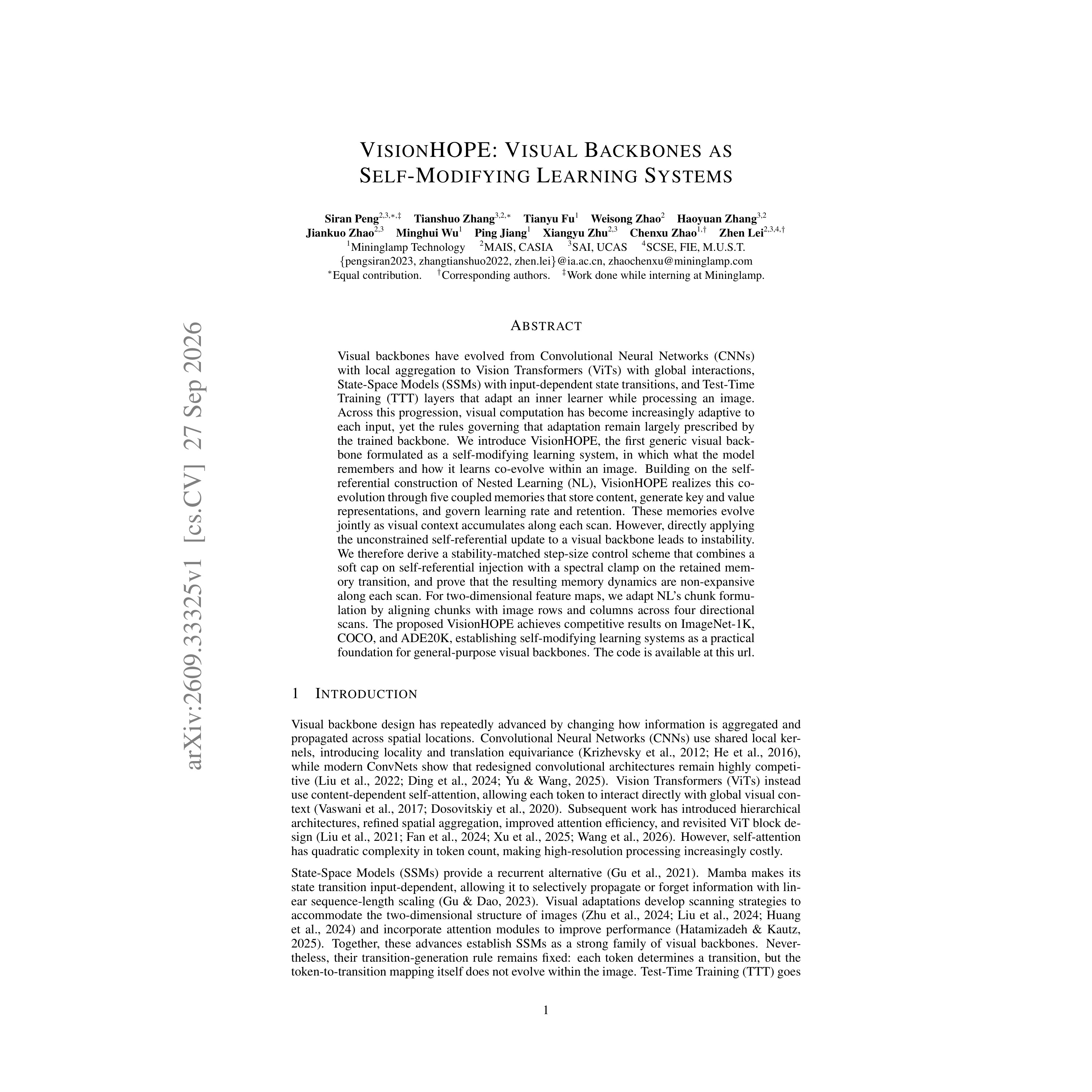
VisionHOPE explores how a vision model can change both its memory and its learning rules while processing an image.
Its design connects five memories: content, keys, values, learning rate, and retention.
The paper develops controls that keep these coupled updates stable under the conditions established by its analysis.
Four directional scans adapt the method to the two-dimensional structure of images, with computation scaling linearly in the number of image tokens.
The authors report competitive results on ImageNet classification, COCO object detection, and ADE20K semantic segmentation.
This 2026 preprint connects...
A First Course in Causal Inference (Peng Ding)

Peng Ding introduces causal inference from a statistical perspective.
The book explains the foundations needed to reason about causal effects rather than associations alone.
Examples and applications draw on biostatistics and econometrics.
Mathematical arguments are accompanied by exercises, data, and practical R code.
The course assumes basic probability, statistical inference, and familiarity with regression.
Series: Mathematics & Science · AI Books · Book deep dive
A First Course in Causal Inference — Peng Ding
Publication source
Explore: Mathematics & Science · AI & Computer Science
Related episodes: Graph Theor...
Graph Theory (Reinhard Diestel)

Reinhard Diestel’s Graph Theory develops mathematical ways to reason about vertices and the connections between them.
The book studies connectivity, matchings, planarity, coloring and flows.
Proofs explain what can and cannot be inferred from a graph’s structure.
The discussion connects the foundations with more advanced parts of the subject.
This is an introduction to the questions behind a mathematical textbook, with the original work available for the definitions and full proofs.
Series: Mathematics & Science
Graph Theory — Reinhard Diestel
Publication source
Explore: Mathem...
Syntactic Theory: A Formal Introduction (Ivan Sag, Thomas Wasow & Emily Bender)

Ivan Sag, Thomas Wasow and Emily Bender develop ways to describe which sentence structures a grammar permits.
Syntactic Theory: A Formal Introduction builds analyses through problems that expose the limits of simpler accounts.
Lexical information and constraints help explain how grammatical structures are licensed.
The book connects syntax with meaning and evidence from language processing.
Its exercises invite readers to compare competing analyses and test what each one predicts.
Series: Language & Linguistics · AI Books · Book deep dive
Syntactic Theory: A Formal Introduction — Ivan A. Sag, Thomas Wasow, and...
Lie Groups, Lie Algebras, and Representations (Brian Hall)
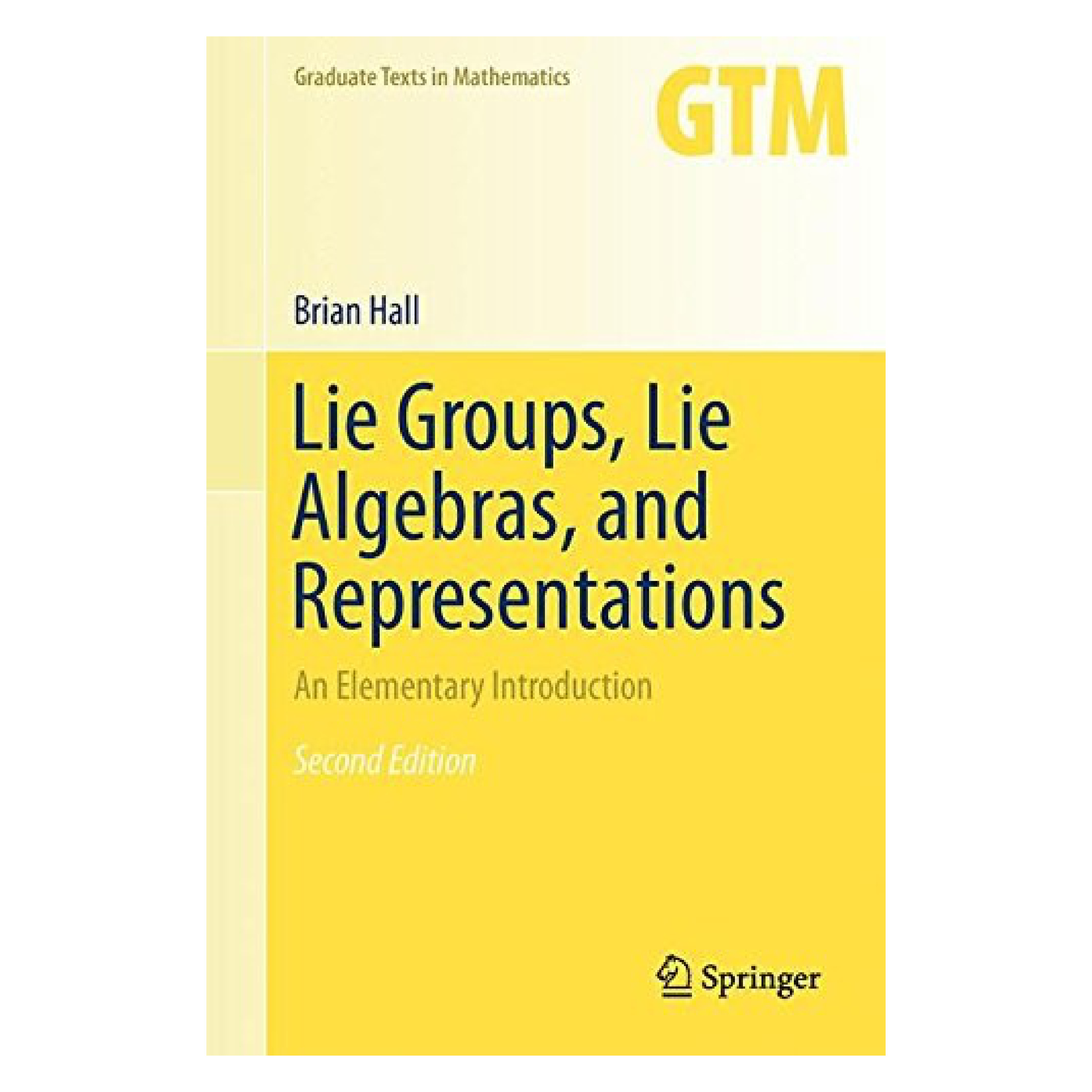
Brian Hall introduces Lie groups, Lie algebras, and their representations.
Matrix groups provide a concrete starting point for the general theory.
The book explains how group structure connects with its infinitesimal algebraic description.
Examples such as SU(2) and SU(3) prepare readers for broader representation-theoretic results.
The material links continuous symmetry with topics used in mathematics and physics.
Series: Mathematics & Science
Lie Groups, Lie Algebras, and Representations: An Elementary Introduction — Brian C. Hall
Publication source
Explore: Mathematics & Science
Related episodes: Graph Theory (Re...
Cambridge History of Judaism - Topics: Jews of Lithuania
Jews of Lithuania
Explore: History & Judaism
Related episodes: Cambridge History of Judaism 2 - The Hellenistic Age 1/2 · Cambridge History of Judaism 2 - The Hellenistic Age 2/2
Series: History & Judaism
Got something to say to this podcast? Send a voicemail, and you might hear yourself on the next episode!
Cambridge History of Judaism 2 - The Hellenistic Age 1/2
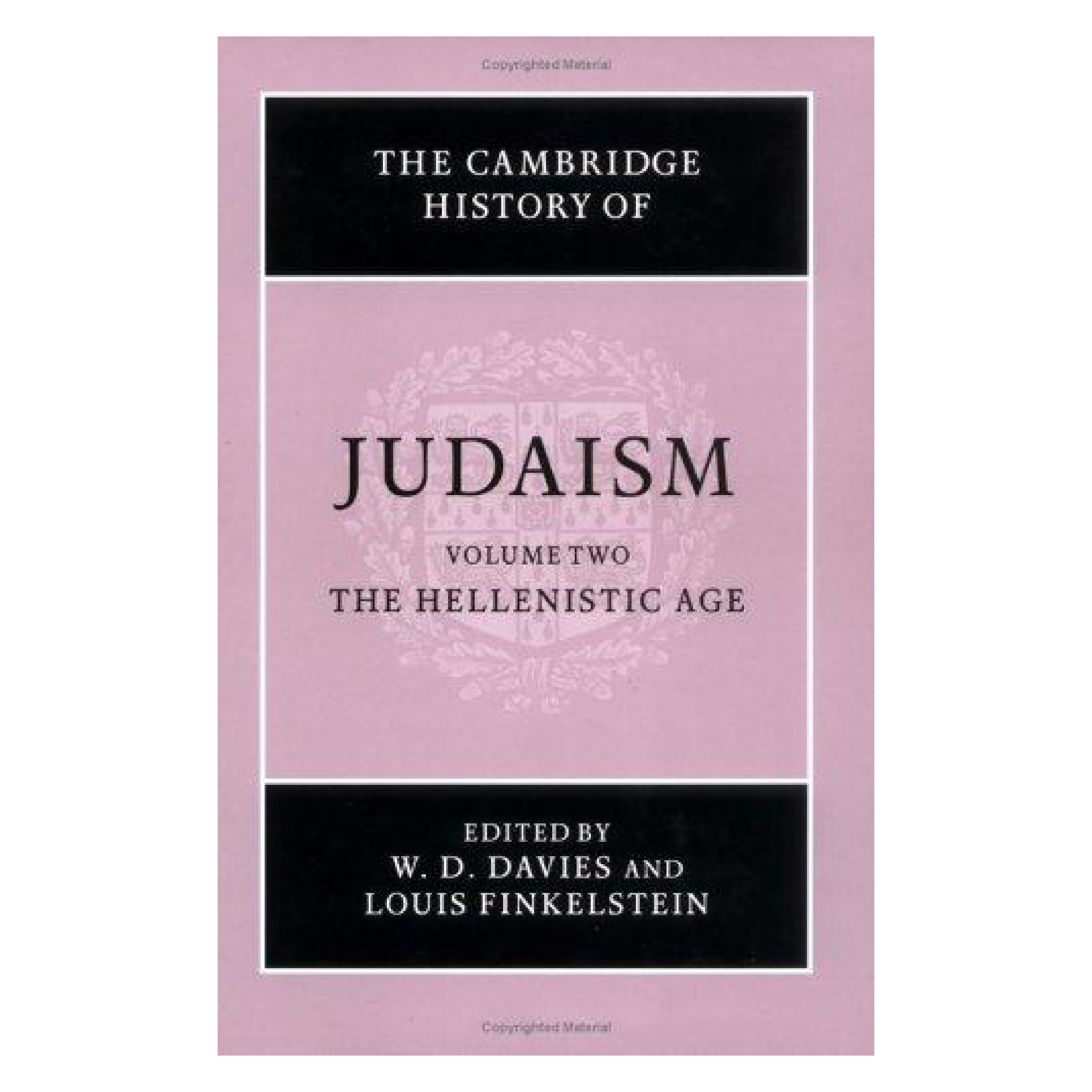
This volume examines Judaism in the Hellenistic age.
It considers encounters between Jewish communities and Greek culture.
Political history accompanies studies of religious and literary change.
The essays trace Jewish life within a changing Mediterranean world.
Series: History & Judaism
The Cambridge History of Judaism, Volume 2: The Hellenistic Age — W. D. Davies and Louis Finkelstein (editors)
Publication source
Explore: History & Judaism
Related episodes: Cambridge History of Judaism 1 - The Persian Period · Cambridge History of Judaism 2 - The Hellenistic Age 2/2
Got something to say...
Cambridge History of Judaism 2 - The Hellenistic Age 2/2
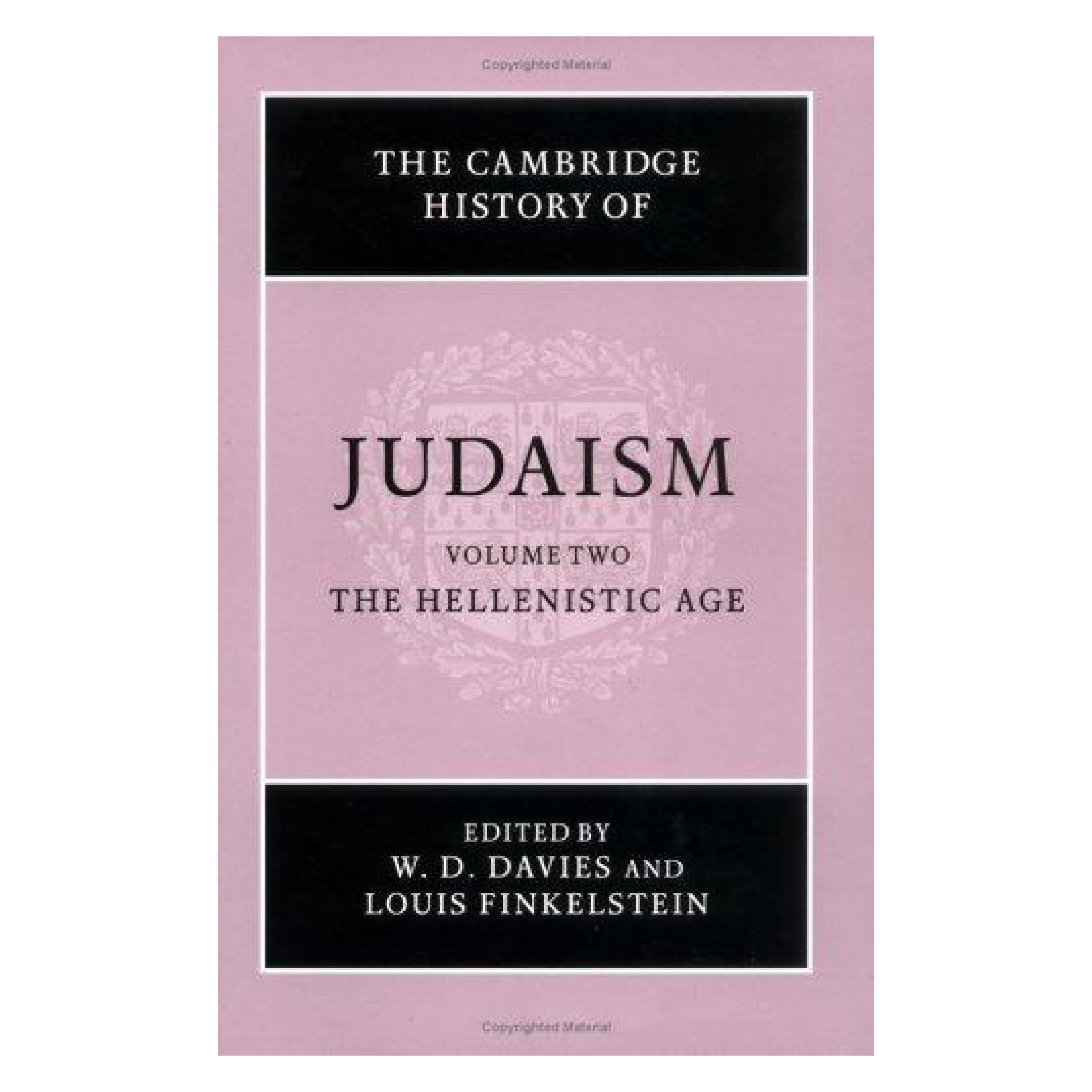
This volume examines Judaism in the Hellenistic age.
It considers encounters between Jewish communities and Greek culture.
Political history accompanies studies of religious and literary change.
The essays trace Jewish life within a changing Mediterranean world.
Series: History & Judaism
The Cambridge History of Judaism, Volume 2: The Hellenistic Age — W. D. Davies and Louis Finkelstein (editors)
Publication source
Explore: History & Judaism
Related episodes: Cambridge History of Judaism 2 - The Hellenistic Age 1/2 · Cambridge History of Judaism 3 - The Early Roman Period 1/4
Got something to...
Cambridge History of Judaism 3 - The Early Roman Period 3/4

This volume examines Jewish life under early Roman rule.
Its essays cover institutions, communities, and schools of thought.
Archaeology and inscriptions complement the study of written sources.
Christianity is considered within the history of ancient Judaism.
Series: History & Judaism
The Cambridge History of Judaism, Volume 3: The Early Roman Period — William Horbury, W. D. Davies, and John Sturdy (editors)
Publication source
Explore: History & Judaism
Related episodes: Cambridge History of Judaism 3 - The Early Roman Period 2/4 · Cambridge History of Judaism 3 - The Early Roman Period 4/4
<...Cambridge History of Judaism 3 - The Early Roman Period 2/4
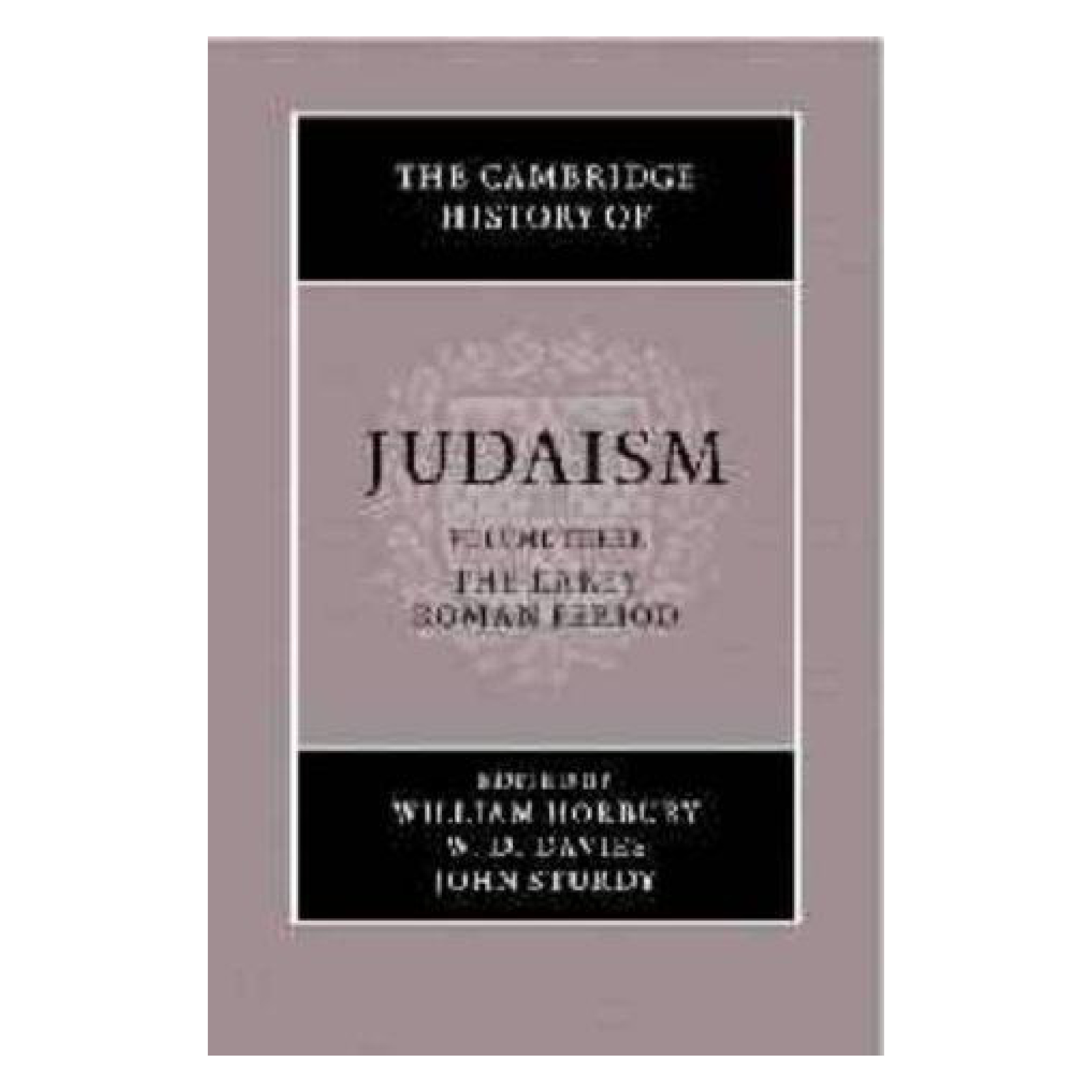
This volume examines Jewish life under early Roman rule.
Its essays cover institutions, communities, and schools of thought.
Archaeology and inscriptions complement the study of written sources.
Christianity is considered within the history of ancient Judaism.
Series: History & Judaism
The Cambridge History of Judaism, Volume 3: The Early Roman Period — William Horbury, W. D. Davies, and John Sturdy (editors)
Publication source
Explore: History & Judaism
Related episodes: Cambridge History of Judaism 3 - The Early Roman Period 1/4 · Cambridge History of Judaism 3 - The Early Roman Period 3/4
<...Cambridge History of Judaism 3 - The Early Roman Period 1/4

This volume examines Jewish life under early Roman rule.
Its essays cover institutions, communities, and schools of thought.
Archaeology and inscriptions complement the study of written sources.
Christianity is considered within the history of ancient Judaism.
Series: History & Judaism
The Cambridge History of Judaism, Volume 3: The Early Roman Period — William Horbury, W. D. Davies, and John Sturdy (editors)
Publication source
Explore: History & Judaism
Related episodes: Cambridge History of Judaism 2 - The Hellenistic Age 2/2 · Cambridge History of Judaism 3 - The Early Roman Period 2/4
G...
