We Are For Good Podcast - The Podcast for Nonprofits

The We Are For Good Podcast brings nonprofit professionals + everyday changemakers into conversations with the most innovative, heartwired leaders in social impact. Hosted by Jon McCoy + Becky Endicott, each episode unpacks fresh mindsets, practical skills + inspiring stories designed to help you work smarter, build healthier cultures + accelerate our collective impact.Join our value-aligned community—it’s free—at weareforgoodcommunity.com.About We Are For GoodWe Are For Good is a storytelling, learning + activating community built for nonprofit professionals + everyday changemakers. Through our podcasts + media, purpose-driven activations + global gatherings, we equip for-good leaders with the connection, skills + inspiration to grow their impact...
755. You Don’t Have to Do It Alone: What Nonprofit Leaders Need to Hear About Burnout - Nionne James, Dr. Jasmine Escalera + Jeremy Haselwood

In this special episode, Jon sits down with three We Are For Good community members: operations leader Nionne James, generational healing expert Dr. Jasmine Escalera, and ImpactUp: Atlanta host Jeremy Haselwood. They get real about burnout, where the "give until it hurts" mindset comes from, and why community is the antidote. 🩵
In this episode, you'll hear:
The simple self-check Nionne uses to catch exhaustion before it winsWhy so many high achievers inherit their definition of success, and how to rewrite it on your own termsHow walking into one room can give you the confidence to...754. The Audacity to Build Unlikely Alliances: Lessons for Every Nonprofit Leader - Hillary Blout, For the People

Hillary Blout spent years as a prosecutor fighting for victims and safer neighborhoods. Then she sat across from a man serving a life sentence and realized the system had no way to look back. So she wrote a law to change that.
Today, Hillary is the founder of For The People, which pioneered prosecutor-initiated resentencing, the first law of its kind in the country. Guest co-host Carolina García Jayaram, founding CEO of the Elevate Prize Foundation, joins Jon to talk about audacity, proximity, and building alliances no one thought possible. 🩵
In this episode, you...
753. Policies Move at the Speed of Narrative: Meet the Org Changing the Story on Poverty - Aisha Nyandoro

In 2017, a mom in Jackson, Mississippi told Aisha Nyandoro she couldn't afford pizza and a movie with her kids. She was working, in job training, and showing up for every program. She was doing everything "right." It still wasn't enough.
That conversation sparked the Magnolia Mother's Trust, one of the country's first and longest-running guaranteed income programs, giving Black mothers $1,000 a month with no strings attached. Then Aisha learned the hardest truth of all: proving it works doesn't move the money. Changing the story does. 🩵
In this episode, you'll hear:
Why asking "wha...752. When Your Model Stops Working: How to Evolve and Multiply Your Impact - Kohl Crecelius

Ten years into building Krochet Kids intl., Kohl Crecelius hit a wall. Revenue plateaued. Donors said the self-sustaining model didn't need their money. And the thing that made the brand special was the thing holding it back.
So he rebuilt from the ground up. The result: KNOWN SUPPLY, a certified B Corp that helps nonprofits, brands, and companies make ethically produced merch, supporting thousands of makers worldwide.
Guest co-host Jason Locy of Whiteboard joins Jon for this one.
In this episode, you'll hear:
Why your org's "unique differentiator" might be...751. Why 20% Fewer People Are Giving (And What Nonprofit Leaders Can Do About It) - Allison Fine and Joan Garry

20% fewer people give to a cause today than they did in 2000. Only 19% of donors give a second time. And just 14% of nonprofits can accept the assets where most wealth actually sits.
Allison Fine, president of Every.org and four-time author on technology and social change, calls it the generosity gap. In this special episode, she joins Jon and guest co-host Joan Garry, founder of the Nonprofit Leadership Lab, to talk about how nonprofits close it. 🩵
In this episode, you'll hear:
Why 97% of wealth sits in non-cash assets like stock, crypto, and DAFs, and...750. From 2,000 Donors to Under 100: How to Rebuild a Fundraising Program from Scratch - Becky Carlino

When Becky Carlino walked in as the first-ever VP of Development at Volunteers of America of Massachusetts, the donor base had collapsed from roughly 2,000 active donors to fewer than 100. The reason? The organization had stopped talking to them.
Becky has spent 25+ years doing the relational work that makes fundraising actually work, including leading two successful capital campaigns at VOA Ohio & Indiana. Now she's rebuilding from the ground up, and her blueprint starts with one word: love. 🩵
In this episode, you'll hear:
How to rebuild donor trust after years of silence, and why the...749. Stewarding a 160-Year Legacy: How to Honor History While Driving Change - Archana Jayaram, Brooklyn Community Services

Archana Jayaram stepped in as CEO of Brooklyn Community Services just as one of New York City's oldest nonprofits entered its 160th year. Her first move wasn't a bold new vision. It was a question: "What do you need?"
Founded in 1866, BCS now serves more than 14,000 Brooklynites a year across housing, mental health, education, and workforce development. Archana shares how she's honoring that legacy while listening her way toward what comes next. 🩵
In this Possible in Practice episode, you'll hear:
How to lead change inside a long-standing institution by starting with the peo...748. How One Founder’s Lived Experience Created 116,000 Anchors - Ali Borowsky, Find Your Anchor

A note before you listen: This episode discusses suicide and suicide prevention. If you or someone you know is struggling, you’re not alone. In the U.S., call or text 988 to reach the Suicide & Crisis Lifeline, available 24/7. Outside the U.S., visit findahelpline.com to find support near you.
Ali Borowsky used to design for the NHL Winter Classic. Now she designs something far more personal: a small blue box that tells whoever finds it that strangers care. 🩵
Rooted in her own lived experience, Find Your Anchor brings color, creativity, and hu...
747. How One $14,410 Fundraiser Became a Global Movement - Jeremy Vallerand, Atlas Free

Jeremy Vallerand and a few friends turned a Mount Rainier climb into a fundraiser: $1 for every vertical foot, $14,410 total. It was supposed to be a one-off. It wasn't.
Today, Atlas Free is a global network of 160+ organizations in 67 countries fighting sex trafficking, still fueled by the community hikes and climbs that started it all. 🩵
In this Possible in Practice episode, you'll hear:
How one climb became hundreds of community-led hikes and climbs every year, and the simple idea that made it spread: do what you love to fight what you hateWhy Atlas Fre...746. 1 in 2 American Adults Struggle with Social Connection. Nonprofits Are Part of the Solution. - Aaron Hurst

1 in 2 American adults is struggling with social connection, and fewer than 20% are thriving. Aaron Hurst, the social entrepreneur behind the Taproot Foundation and the pro bono movement, says that's why volunteering and giving are collapsing, and why nonprofits hold the key to reversing it.
Guest co-host Susan McPherson, author of The Lost Art of Connecting, joins us to dig into the U.S. Chamber of Connection's Six Points of Connection report, the first national index of its kind.
In this episode, you'll hear:
Why the sector doesn't have a philanthropy problem or a volunteer p...745. 3 Case Studies on Using Data + Storytelling to Grow Your Org's Impact - Urina Harrell

A pandemic relief territory that grew 39% while every area around it went red. A fund that deployed capital fast and couldn't prove what it did. A 55-year-old nonprofit still running on paper.
Urina Harrell, founder of Vox Pop Branding, walks through all three — what was broken, what she built, and what happened next. 🩵
In this episode, you'll hear:
Case study 1 — Long Beach: Why workshops and education stopped moving the needle, and how rolling up sleeves alongside founders produced the only green zone on the mapCase study 2 — JLH Fund: How to build...744. Make the Problem Bigger: A Different Way to Build Community - Greg Tehven, Emerging Prairie

Greg Tehven runs a $5.5 million nonprofit with 40 teammates in Fargo, North Dakota — and his advice to leaders is to stop working on problems they can solve alone.
That instinct built Emerging Prairie into the heartbeat of a region's entrepreneurial ecosystem, launched Grand Farm, and turned TEDx Fargo into an event 1,000+ people build their year around. Guest co-host Stacy Huston, CEO of SixDegrees.org, brings Greg on to talk about what it actually takes. 🩵
In this episode, you'll hear:
Why "make the problem bigger" is the fastest way to get more people working on it — and mor...743. Unlock the Full Potential of Your Peer-to-Peer Program - Victoria Vighetto, ZERO Prostate Cancer

When ZERO Prostate Cancer's peer-to-peer program started slipping, Victoria Vighetto didn't tell her field staff to make more calls. She walked the constituent journey herself — and found the problem sitting in an email.
The call-to-action button was too far down. The sends were landing at the wrong time for open rates. Registration was where people were falling out. 🩵
In this Possible in Practice episode, you'll hear:
Why a fundraising dip is almost never a motivation problem — and the diagnostic question to ask insteadHow ZERO ran a three-day, $30K matching challenge and saw fundrai...742. Money Is Medicine: Decolonizing Wealth and the Future of Philanthropy - Edgar Villanueva

An elder told Edgar Villanueva that the medicine that had chosen him was money. One sentence — and it turned an angry, burned-out program officer into the person rewriting how philanthropy thinks about wealth.
Edgar is the founder and CEO of the Decolonizing Wealth Project and the author of Decolonizing Wealth, now in its second edition. His work has helped move nearly $1 billion toward the communities that need it most. 🩵
Joining us as guest co-host is Lindsey Fuller, Executive Director of The Teaching Well.
In this episode, you'll hear:
Why reparative philanthropy starts with...741. Fundraising Problem or Distance Problem? The Reframe That Raised $1M - Connie Lewin

Connie Lewin found the funders. She wrote the emails. She sent the proposals. The response was silence.
With a $1 million goal for a small nonprofit in Rwanda and no established high-net-worth donor network, Connie had to quickly step into a leadership role and take responsibility for the organization’s goal to scale its impact and operations in three years.
What finally moved the money wasn't better writing. It was closing the distance between donors and the people at the center of the mission by tapping into donors' heads and hearts and making the case for gi...
740. Start Before You're Ready: How Creative Futures Collective Grew from 10 to 3,500 Without a Roadmap - Jai Al-Attas

Jai Al-Attas started a record label at 16, sold it to Virgin Records at 24, and never went to college. So when he moved to LA and tried to get people from a reentry program and a homeless youth org into music industry internships, the question that kept coming back — "are these people in college?" — landed personally.
He didn't have a plan. He had a chip on his shoulder and $1,800 he needed for rent. He spent it on 10 Chromebooks instead. 🩵
Today Creative Futures Collective has moved 3,500 creatives through its programs in 10 cities across three countries — into Nike, Live Nati...
739. The Simple Gratitude System That Doubled Donor Retention (From 33% to 66%) - April Thompson

April Thompson took a grassroots foster care nonprofit from 33% donor retention to 66% — and grew the donor file from about 100 to over 400 along the way.
The system behind it was two touches: a personal voicemail within 48 hours, a handwritten note from a board member days later. Both logged in the CRM. That's it. 🩵
In this episode, you'll hear:
The "one-two punch" gratitude guide that doubled retention, and how to document it so nobody loses track of the last donor touchWhy a ringless voicemail drop is the highest-return, lowest-lift gratitude tool most small shops have never tried...738. The Storytelling Strategy That Turns Donors into Believers (And How to Build It) - Annie Wood and Max Kringen

The film ended and the room went silent. Then it roared. Over the next three years, hundreds of donors gave more than $300,000 to build one young woman a home of her own.
That's what belief looks like when it shows up. Max Kringen and Annie Wood of Tellwell Story Co. have spent years studying how it gets built — and it isn't luck, and it isn't a bigger ask. 🩵
In this episode, you'll hear:
Why a muddy story keeps donors stuck in transaction mode — and how confusion becomes a tax on every dollar you rai...737. How to Find and Activate the Right Influencers for Your Mission - Trevor Boffone

The right influencer for your mission probably isn't the biggest account in your city. It's more likely someone already following you, already talking about your cause, and already waiting to be asked well.
Trevor Boffone had three months and zero dollars to activate creators for Mental Health America of Greater Houston's new provider-matching platform. His first list of 20 got him one yes. His second approach — an open call and a radically honest ask — got him 26 pieces of content. 🩵
In this episode, you'll hear:
Why "influencer" has nothing to do with follower count — and how t...736. Meet the Nonprofit Building a Brand + Movement Around Unity - Adam Mizel, Us United

"There's so many brands for division in this country. Where's the brand for unity?"
That question is why Us United exists. Adam Mizel spent more than 30 years in finance and entrepreneurship before his wife Tanya asked him the question that ended that chapter: What are you going to do? 🩵
What he did was build a brand — hats, T-shirts, media, storytelling, leadership — and wrap a movement around it. Us United now runs a unity pledge, monthly cross-bubble conversations, Unity Seats at live sporting events, and a sheriff network nearly 100 strong.
In this episode, you'll...
735. Case Study: How a Grant Rejection Turned Into a $223,000 Yes - Katie Hannah, Momentum Leaders

Katie Hannah printed out the rejection email and brought it to the interview. "After careful consideration, our board of reviewers has determined that your application does not make the case for membership at this time."
Most fundraisers file that away and move on. The Director of Development at Momentum Leaders sent one open-ended question instead — and it turned into a $223,000 yes for a leadership nonprofit in Birmingham, Alabama. 🩵
This is Possible in Practice, a limited series of case studies from leaders in the We Are For Good community — the ask they sent, the risk th...
734. The Planned Giving Multiplier: Why Your Most Loyal Donors Are Your Biggest Opportunity - Tony Martignetti

$1,500 in lifetime giving. A million-dollar gift in the will.
Tony Martignetti calls it the planned giving multiplier — the gap between what a donor gives you while they're living and what they leave you when they're gone. It's often measured in the thousands. And the donors most likely to trigger it aren't your wealthiest. They're your most loyal. 🩵
Tony has spent 29 years in planned giving — as a frontline fundraiser, a director of planned giving at two nonprofits, and now founder of Planned Giving Accelerator, where his clients have secured millions in bequests. His new book exists to prov...
733. The Creator Partnership Playbook Every Nonprofit Leader Needs - Patricia McLoughlin, The Anthem Awards

One in five adults now get their news from TikTok. Over 40% of adults under 30 do. That same feed is where younger donors are finding the causes they'll give to. Trust has shifted from institutions to individuals, and most nonprofits are still running the old playbook. 🩵
Patricia McLoughlin is General Manager of The Anthem Awards, where she reviews more than 2,000 entries a year from 42 countries. Her team turned that vantage point into the Shared Influence report, then into something more useful: a set of plays any nonprofit can run, whether you have a media budget or a staff of...
732. Measuring What Matters: The 3-Step System for Measuring Your Impact - Ginneh Baugh, Big Brothers Big Sisters of America

Big Brothers Big Sisters has been collecting data for 120 years. When an economist finally studied it, the case for support changed completely: young people who were mentored are 20% more likely to attend college and earn 15% more.
Ginneh Baugh, Chief Impact Officer at Big Brothers Big Sisters of America, has spent two decades helping nonprofit leaders measure what actually matters. Her system is three steps — know your data, show it as a story, grow the movement around it. 🩵
In this episode, you'll hear:
Know: Why you don't need 25 data points — you need two you kno...731. What the World's Most Effective Nonprofits Have in Common (And You Already Have It Too) - Scott Curran

Scott Curran has helped former presidents, Fortune 500 companies, and street-corner nonprofits turn good intentions into real impact. After a decade as general counsel of the Clinton Foundation and ten years building Beyond Advisors, he kept noticing the same thing: the world's most effective changemakers and the hometown hero nobody's heard of have the exact same nine things in common.
So do you. That pattern became his new book, Better Good — a framework any organization can start using today with a Post-it note. 🩵
In this episode, you'll hear:
What every effective organization has in common — and why...730. Capacity Is the Strategy: How to Make Your Org More Sustainable - Brooke Richie-Babbage, Chidi Asoluka, and Casey Lardner

Most nonprofit leaders treat capacity like a fuel tank — something you deplete and refill. Brooke Richie-Babbage makes the case that capacity is something you design, and that the strain you're feeling is information about that design, not about your dedication.
She's joined by two leaders who've rebuilt theirs in public: Casey Lardner, Executive Director of Genspace, the world's first community biology lab, and Chidi Asoluka, Founder and CEO of NewComm, which went from a classroom experiment with 18 kids to a student-led organization delivering projects for the NYC Department of Health and Mount Sinai. 🩵
In this episo...
729. The 4-Step Formula to Get Your Mission Seen by Media, Partners, and Donors - Jenn DeBarge Goonan
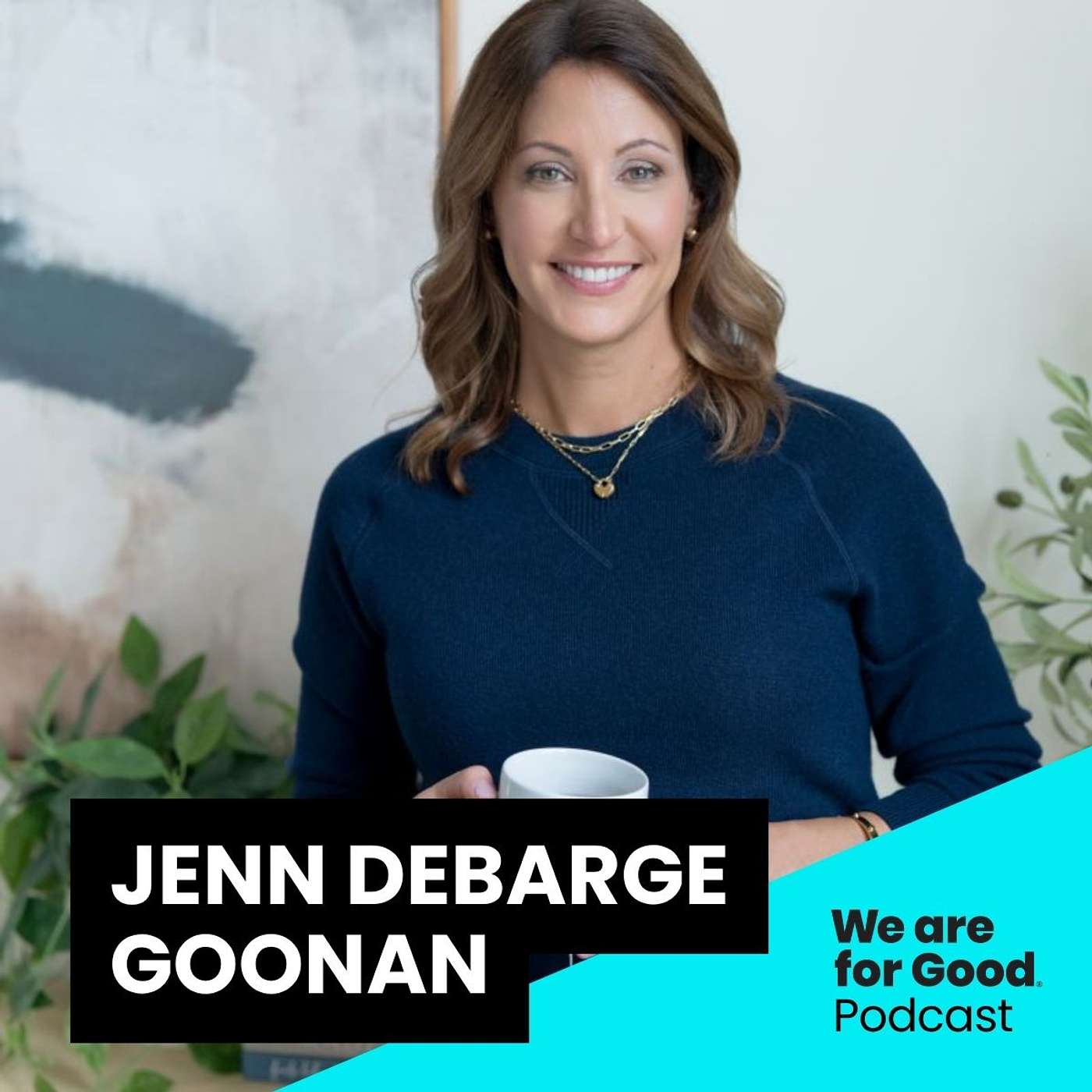
Jenn DeBarge Goonan has sent thousands of pitch emails to editors, producers, and partners. She's distilled what works into four steps — and they work whether you're chasing press coverage, a corporate partner, or a major donor meeting.
Jenn launched Lululemon into the U.S. market, built campaigns for Ben & Jerry's, and now runs JAG Communications, where she's spent 20 years making mission-driven work visible. 🩵
In this episode, you'll hear:
Step 1: Why every note has to be a one-of-one, and the 10 minutes of research that makes it landStep 2: Lead with connection, not c...728. How to Tell Stories That Fill the Hope Gap: 3 Lessons from 8 World-Changing Leaders - Jon and Becky

The gap between hope and despair has grown from 4% in 2010 to 27% today. That's the "hope gap" — and it's the reason Jon and Becky spent 10 episodes sitting with eight change leaders who are filling it, one story at a time. 🩵
In this series finale, they pull out the throughlines: what actually made these missions land, and what any nonprofit can copy starting Monday.
In this episode, you'll hear:
Why clarity is a superpower — and how to say what you do, who you serve, and why the problem is solvable in 30 seconds without...727. Working Session: The Automation Playbook That Added $200K at Year End - Rachel Bearbower
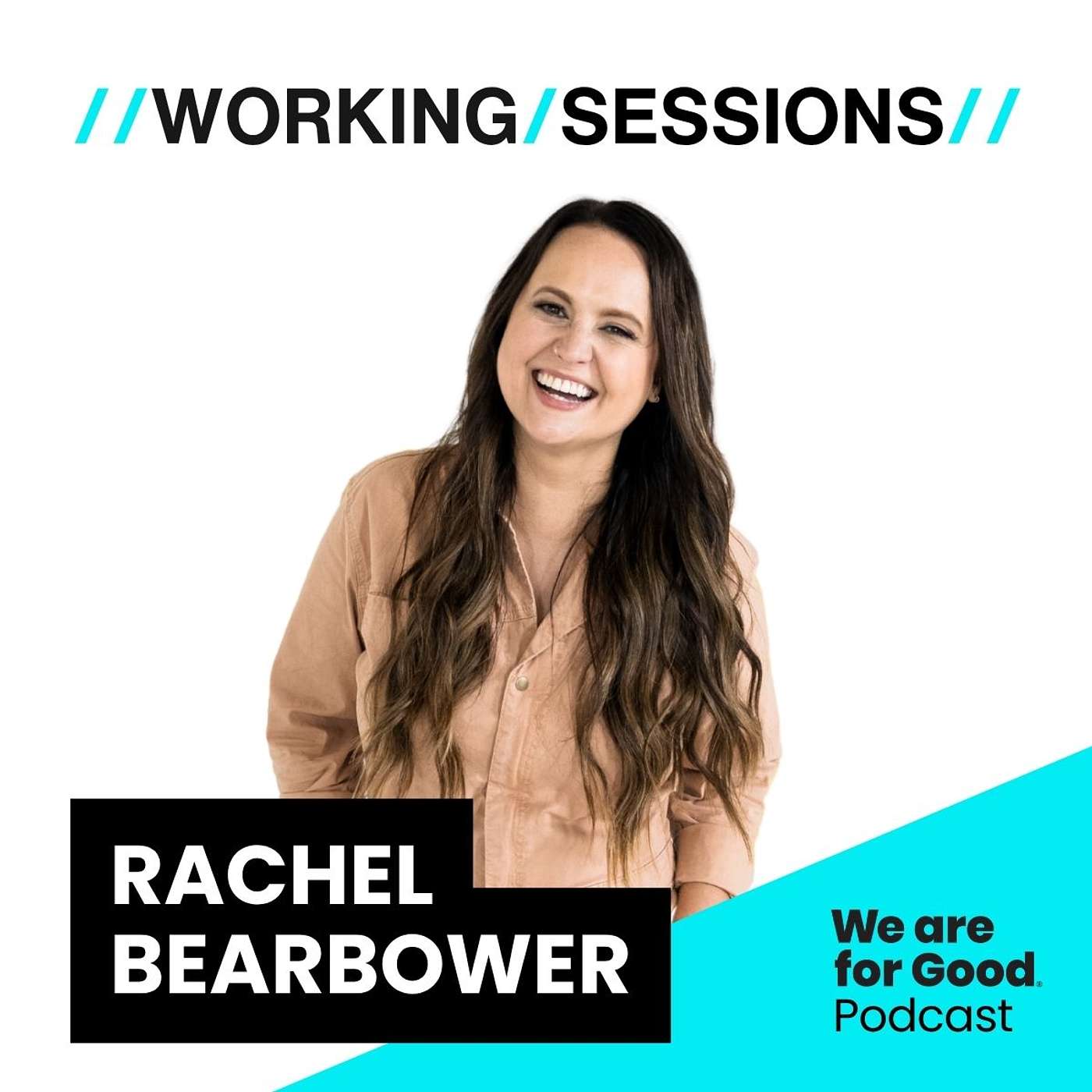
One client reclaimed 15% of their lapsing donors and added $200,000 by year-end. No new campaigns. No bigger team. Just a stewardship system running quietly in the background. Rachel Bearbower built it.
As founder of the Nonprofit Automation Agency, Rachel has helped clients climb from 35% to 50% donor retention in a single year, recover nearly $20,000 in lapsed gifts in 90 days, and hand 20+ hours a month back to overstretched teams — all without losing the human touch. 🤖💛
In this episode, you'll hear:
The exact case study behind the $200K: what a 15% retention lift looks like when you automate...726. Stories to Fill the Hope Gap: Turning County-Level Wins Into National Change - Hannah Fried, All Voting Is Local
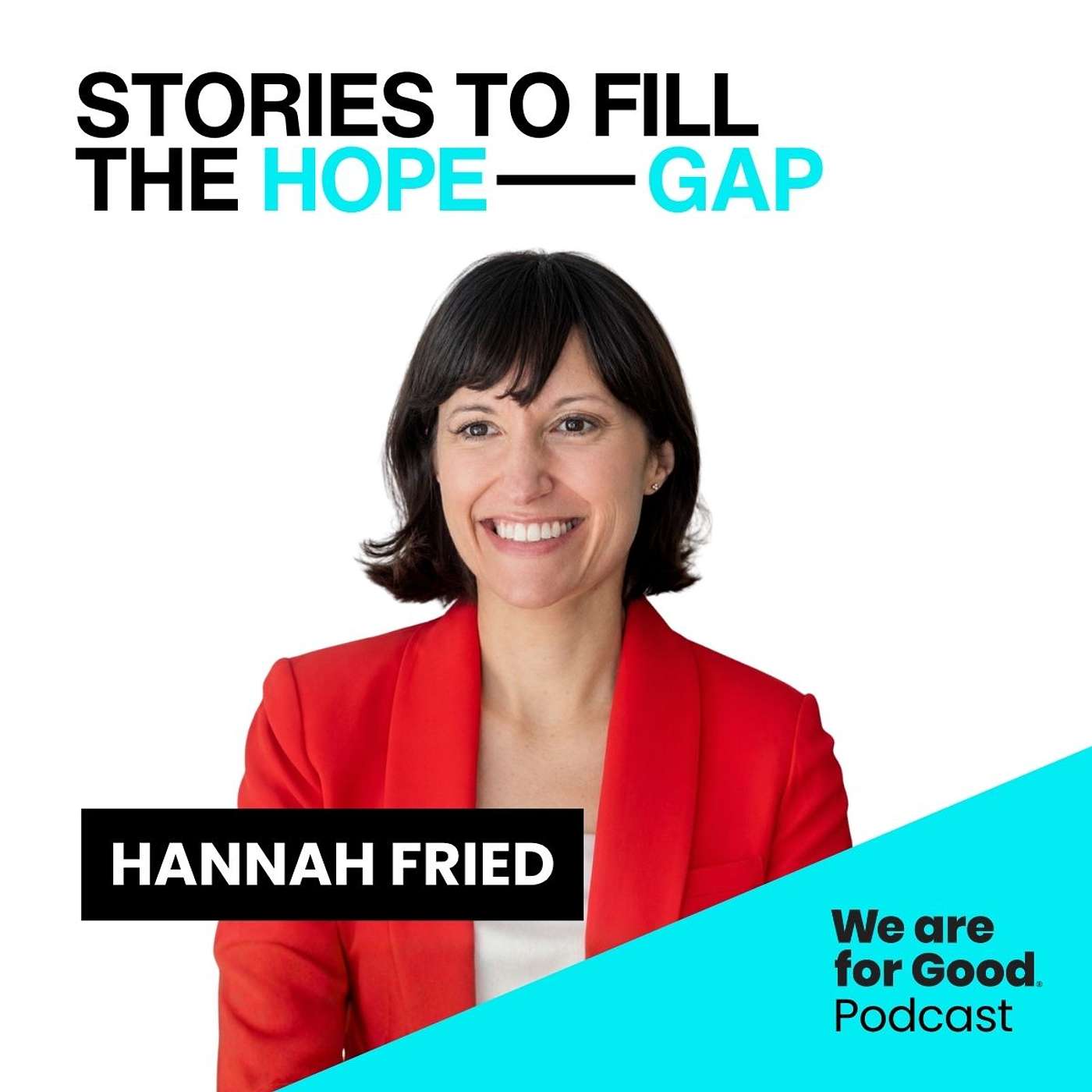
Most of us picture democracy being decided on Election Day. Hannah Fried spends her life on the part nobody watches — the quiet, local decisions made months and years before a single ballot is cast.
Hannah is co-founder and CEO of All Voting Is Local, a national nonprofit working year-round in eight states to remove voting barriers for Black, Brown, and Native American communities. She and her co-founder spent years saying "somebody should start an organization" focused on the local officials quietly deciding how elections run — then realized they were the somebody. They built it from her kitchen tabl...
725. How to Fund, Storytell, and Scale What Feels Unsolvable - Sam Teicher, Coral Vita
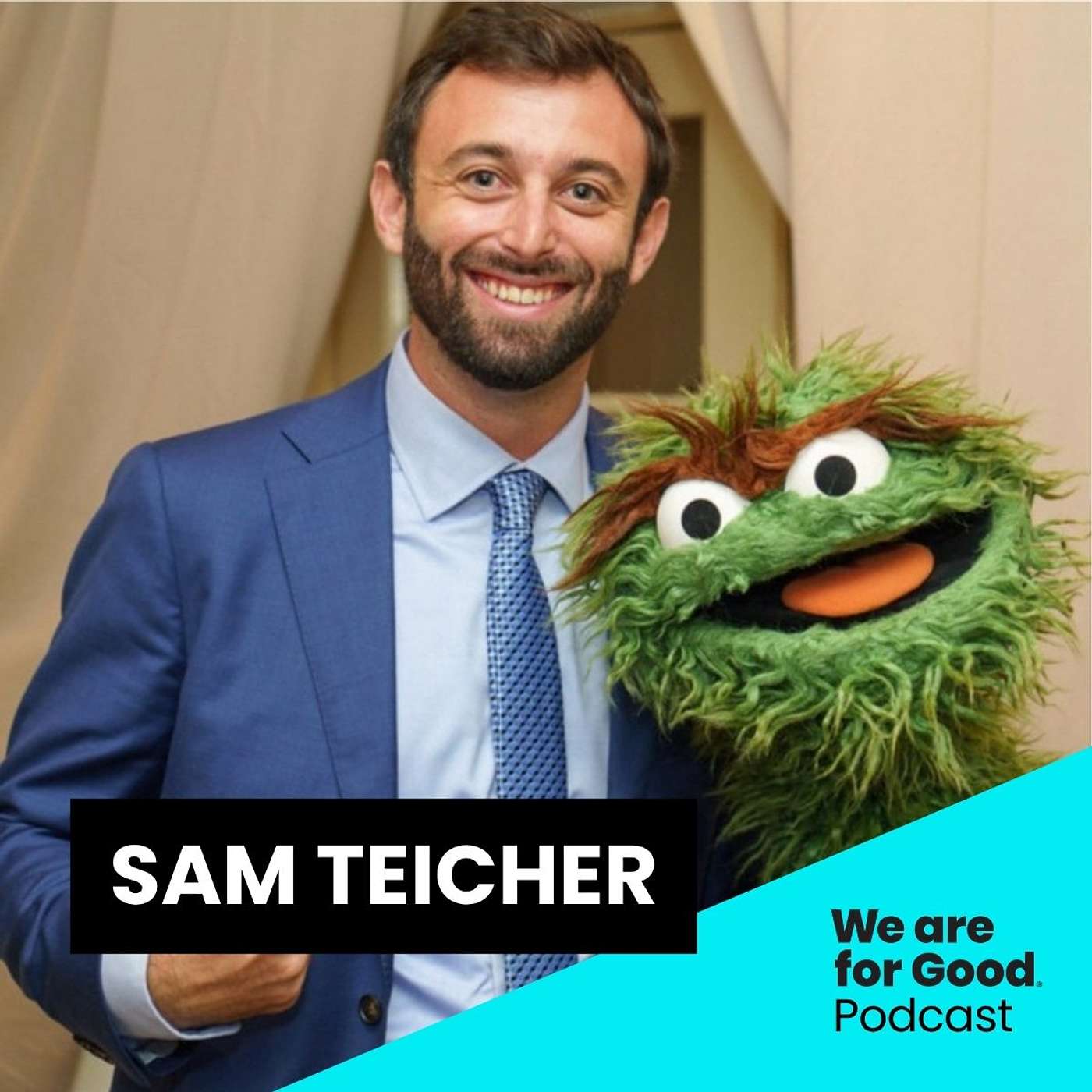
Half the world's coral reefs have died since the 1970s. That's the kind of number that makes a person feel too small to matter. Sam Teicher has built his whole approach around refusing to let it. Sam is the co-founder and Chief Reef Officer of Coral Vita, a company that grows coral in land-based farms and plants it back onto dying reefs. He could have built a nonprofit to do it. He built a for-profit instead — after a UN-funded project collapsed when a small, restrictive grant didn't renew — and started with just $1,000. A decade later, Coral Vita runs farms from...
724. Stories to Fill the Hope Gap: The Fight to Hold Big Tech Accountable - Imran Ahmed, Center for Countering Digital Hate

A 52-year-old man who'd spent too long online reading conspiracy theories walked up to Imran Ahmed's colleague — a member of parliament and mother of two — and killed her, screaming internet slogans as he did it. That was the moment Imran realized the online world and the offline world had quietly become the same world.
Imran Ahmed is the founder and CEO of the Center for Countering Digital Hate (CCDH), a US–UK nonprofit that produces the hard evidence lawmakers, advertisers, and parents use to hold social media and AI companies accountable. 🧠
In this episode, you'll hear:
...723. How American Express Is Building the Next Generation of Nonprofit Leaders (and What It Means for Yours!) - Madge Thomas
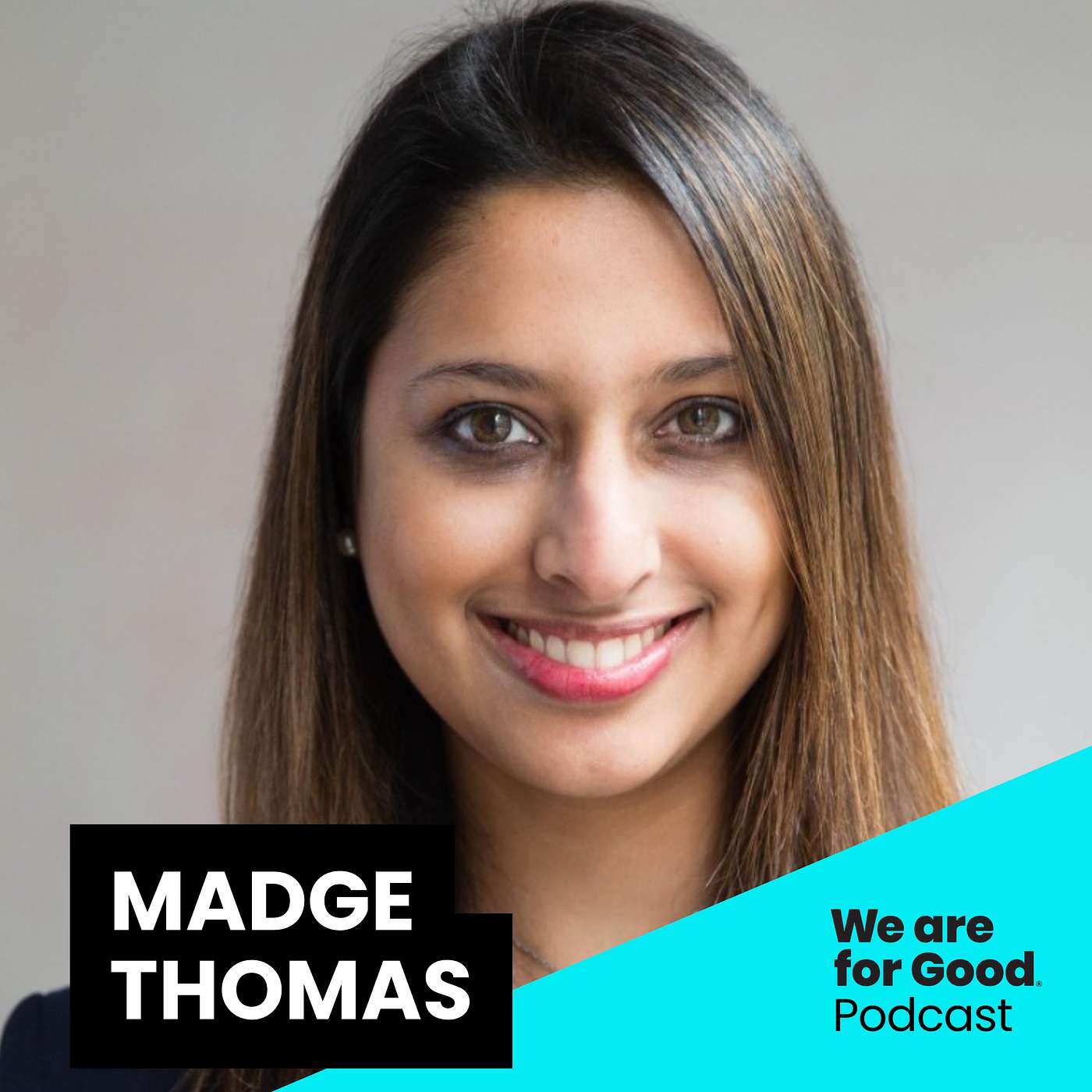
Madge Thomas leads a leadership academy most nonprofit professionals have never heard of — one that's quietly spent nearly two decades and $100M+ training over 165,000 nonprofit leaders worldwide. As president of the American Express Foundation and head of corporate sustainability at American Express, she's built it on a deceptively simple premise: invest in the leader, not just their programs, and the impact ripples outward — to the organization, the community, and long after any single initiative ends.
Madge makes the case that the people powering nonprofits are the sector's most under-resourced asset — then shows how the Academy is changing that w...
722. Stories to Fill the Hope Gap: Storytelling That Turns Crisis Into Action - Dr. Lisa Hunter Romanelli, The REACH Institute

There are 12 million kids in the U.S. with a mental health concern, and four out of five never get treatment — not because the care doesn't exist, but because it takes an average of 15 years for proven research to reach the providers families actually visit.
Dr. Lisa Hunter Romanelli has spent her career closing that gap. As CEO of The REACH Institute — and its very first employee 19 years ago — she's helped train nearly 10,000 primary care providers in evidence-based children's mental health care, with a goal of 16,000 by 2027. 🧠 But this conversation is really about storytelling. Lisa has taken a public...
721. Four Leaders on Mergers, Burnout, and Radical Honesty with Funders - Stacy Huston, Lindsey Fuller, Tammy Tibbetts, and Becky Straw

The traditional nonprofit playbook is full of defaults nobody voted for: merge only when you're desperate, expect your team to run on empty, soften your mission to stay safe, and treat funders like they're doing you a favor. At the We Are For Good Summit, four leaders sat down to throw all of that out. 🧠
Hosted by Stacy Huston, CEO of SixDegrees.org and a social impact strategist working at the intersection of storytelling, influence, and action, this conversation brings together Tammy Tibbetts (She's the First), Lindsey Fuller (The Teaching Well), and Becky Straw (The Adventure Project) — three...
720. Stories to Fill The Hope Gap: Why Celebration Is the Story That Changes Everything - Colby King, Kiki Arts Collaborative

The Kiki and ballroom scene, built by Black and brown LGBTQ+ youth of color in New York City, has been creating art, designing fashion, performing, and building community for over 20 years.
Meet Colby King 👋 He’s the founder of Kiki Arts Collaborative, an economic development platform turning ballroom artistry into sustainable careers in arts, culture, and media through creative mentorship, job training, and internship placement. In 2025, that work earned Colby the David Prize, one of five awarded annually to the most luminary nonprofits in New York City.
In this episode, you'll hear:
Colby’s personal...719. Consistency Over Intensity: The Science of Sustainable Giving - Dr. Sanjay Bindra, GOSUMEC Foundation USA

Dr. Sanjay Bindra is a practicing cardiologist who built a $2.5 million endowment at a zero-staff nonprofit in less than four years, with no campaigns and no urgency emails. Then he studied why it worked.
The result: the GIVE Study, a 12-month real-time look at how small nonprofits can achieve sustainable recurring giving through trust, behavioral design, and strong governance.
In this episode, you'll hear:
Why first-time donor retention has been under 20% for decades, and the single most important thing you can do to change that numberThe difference between dopamine-driven fundraising and oxytocin-driven relationshipsThe GIVE fr...718. Stories to Fill The Hope Gap: How Hip Hop Therapy Is Rewriting What Healing and Storytelling Look Like - J.C. Hall

An 85% graduation rate against a district average of 60% — at a second-chance school in the South Bronx where the primary healing tool isn't a worksheet or a clipboard. It's a professional recording studio. 🎙️
J.C. Hall is a licensed clinical social worker, a hip hop artist, and a 2024 David Prize winner (one of just five awarded across New York City). At Mott Haven Community High School, he's spent 13 years building a program where trauma-exposed students rewrite their own narratives — set to a beat. His own path here ran through addiction, psych wards, and a teenage years he didn't expect to...
717. The Funding Landscape Is Shifting. Here's What Nonprofits Need to Know - Hala Hanna, MIT Solve

"Crisis creates clarity, and philanthropic funding is the best risk capital we have." That's how Hala Hanna reads the moment we're in, and as Executive Director of MIT Solve, she has the data to back it up.
MIT Solve has spent a decade brokering the relationship between companies, funders, and the early-stage innovators closing equity gaps in health, learning, climate, and economic opportunity. Their 460 solvers are reaching 430 million lives, have mobilized $87 million in direct funding, and have collectively raised $1.4 billion. And Hala has a front-row seat to the fundamental shift happening in how money moves toward mission.<...
716. Stories to Fill the Hope Gap: How Story Becomes the Strategy to Shift Culture - Ai-jen Poo, Caring Across Generations

As Co-Founder of Caring Across Generations and President of the National Domestic Workers Alliance, Ai-jen Poo has spent decades working at the intersection of policy and culture — because she knows you can't change one without the other.
A MacArthur Fellow, Time 100 honoree, and author of The Age of Dignity, she's now launching a million-care-conversations campaign and a new production label, Give Not Take Media, to get care stories into film and television at scale. 🩵
In this episode, you'll hear:
Why culture change has to come before policy change — and what that sequencing means fo...