The Jim Rutt Show

Crisp conversations with critical thinkers at the leading edge of science, technology, politics, and social systems.
EP 346 Cory Doctorow on Why the Internet Suddenly Got Worse and What to Do About It
Jim talked with Cory Doctorow—prolific sci-fi and nonfiction author, journalist, activist, EFF special adviser, and author of Enshittification: Why Everything Suddenly Got Worse and What to Do About It—about how structural forces degraded the internet, and what citizens (not consumers) can actually do about it. They discussed: The origin of "enshittification"—Cory's January 2023 blog post, its viral spread, and its naming as Word of the Year by the American Dialect Society Two-sided markets & the persistence of intermediaries Crad Kilodney as a self-publishing illustration, and why platform middlemen survive even when they shouldn't Monopsony vs. monopoly The real statistics of Ama...
EP 345 Worldviews: Tyson Yunkaporta on Initiation, Distributed Sexuality, and Seeing in 3D

Jim talks with Tyson Yunkaporta—indigenous Australian scholar and author of Sand Talk, one of Jim's top ten favorite books—about his metaphysics and worldview, the ecology of sex and creation, and how to wear rationalist and traditional knowledge frameworks simultaneously. They discuss: Jim's editorial endorsement of Sand Talk—"one of the top 10 best books I have ever read" Tyson's trilogy of books Humans as a custodial species—sacred carers embedded in nature Who Tyson is when he wakes from deep sleep Tyson's experience under general anesthesia—ten thousand years of deep dark oblivion How Jim shifted Tyson toward rationality and eviden...
EP 344 Lisa Buckingham on Hiring for the AI Era

Jim talks with Lisa Buckingham—a veteran HR leader at Vialto Partners, US Soccer, Lincoln Financial, and Thomson—about how the LLM era is reshaping hiring and job architecture, and how companies and workers can roll with the changes. They discuss: Jim and Lisa's shared history in natural language processing labs thirty years ago—and the contrast with today, where "everybody can be an AI expert" The kind of people to hire in the age of LLMs: intellectual curiosity, learning agility, and willingness to work differently "Trust the machine, but always validate"—the principle of embracing AI while maintaining human oversigh...
EP 343 Worldviews: Peter Wang on the Metaphysics of Quality, Sucker's Bets, and Ofness

Jim talks with Peter Wang—chief AI officer, cofounder and CEO of Anaconda, board member of the Center for Humane Technology, and founder of the Austin STEM Center—about Robert Pirsig's metaphysics of quality, how modernity encourages defection, and a secular conception of the sacred. They discuss: Peter's self-description as "the music in a violin that can kind of hear itself" The "Peter Wang-shaped hole in the universe" thought experiment Subject-object Cartesian dualism as a false alienation Minimum viable metaphysics & atheistic agnosticism Religion as an evolutionary emergent coherence mechanism for human collectives Figure and ground as a metaphysical lens—the anonym...
EP 342 Worldviews: Jordan Hall on Reality as Relationship, the Soul, and Why the Dead Are Still Present
Jim talks with recurring guest and deep systems thinker Jordan Hall about the scaffolding of his worldview. They discuss the waking-up scenario as a window into consciousness and personal identity, Jordan's phenomenology of waking and the "latent potential of all possible memory," the soul as the binding of finite and infinite, Jim's counter-framing of consciousness as a fusion of perception, interoception, and unconscious memory, the infinite as genuinely real, the Platonic triangle as a concrete example of transcendentals that have no particular location in the causal field, Forrest Landry's distinction between being and existence, knowing with confidence vs. knowing with...
EP 341 Bonnitta Roy on Post-Formal Actors, Stage Theory, and the Character Void in Leadership

Jim talks with Bonnitta Roy, interdisciplinary thinker and founder of the Pop-Up School and the Divinity School, about her worldview, the deep foundations of her work, and an upcoming conference in Cambridge. They discuss the phenomenology of waking up and recomposing, life as a stream of participation, being nested in place through horses, pigeons, bees, and gardens, covariant motions as her process-philosophy term for embeddedness, the limits of computational rationalism, the bench scientist versus the metatheoretical interpreter, Michael Levin's interpretive science and the standards it demands, McGilchrist's left-brain dominance in late-stage Game A, early complexity theory's assumption that enough compute...
EP 340 Worldviews: Liv Boeree on Poker, Moloch, and the Art of Finding Win-Wins
Jim talks with Liv Boeree—science communicator, former professional poker player, and host of the Win-Win Podcast—about consciousness, egregores, multipolar traps, and the ethics of factory farming. They discuss the nature of personal identity across sleep, the teleportation machine thought experiment, consciousness as a self-aware story-threading entity, the "attention as cursor of consciousness" framing, Jim's memory-competition theory of attention, Gerald Edelman and Daniel Dennett as proponents of competitive models, the Telepathy Tapes podcast and nonverbal autistic children, Donald Hoffman's view that consciousness is foundational, panpsychism and the "radio tuner" model, Liv's poker premonition story and a $1,700,000 tournament win, two flav...
EP 339 John Krakauer on Why Neuroscience Needs Behavior
Jim talks with John Krakauer—professor of neurology and neuroscience, director of the Center for Study of Motor Learning and Brain Repair at Johns Hopkins, and external faculty at SFI—about his 2017 paper "Neuroscience Needs Behavior: Correcting a Reductionist Bias." They discuss defining behavior as ecologically valid goal-directed action within an animal's umwelt, behavioral decomposition being epistemically prior to neural investigation, bipedal running and Sherrington's spinalized cat experiments as illustrations of that decomposition, what a satisfying neural explanation should actually look like, emergence and neuroscientists' resistance to it, the concept of explanatory autonomy and the "wings don't fly, birds do" fram...
EP 338 Jeff Giesea on Dionysian Futurism

Jim talks with Jeff Giesea, entrepreneur, writer, and founder of the Boyd Institute, about his essay "Dionysian Futurism" and the broader question of what's missing from our visions of the future. They discuss Nietzsche's Apollo/Dionysus framework from The Birth of Tragedy, the critique that techno-optimist futures are lifeless and sterile, Jim's extension of that critique to Game B and adjacent social change spaces, the distinction between positive Dionysian energy and mere degeneracy, Jim's concept of decadence as wire-heading on dopamine traps and gambling apps, generational decline in conviviality, Gen Z statistics on less sex and fewer dates, the structural...
EP 337 Worldviews: Philip Rosedale on Emergent Worlds, Localism, and What Building Second Life Taught Him About Humanity
Jim talks with Philip Rosedale, founder and CEO of Linden Lab and creator of the game Second Life, about the nature of self, society, and the design of virtual worlds. They discuss the phenomenology of waking up and coalescing into a self, the polycrisis and whether to work on AI or on software that helps people get along better, Philip's role-based sense of identity, his messianic feeling during Second Life's early days versus a more Zen perspective now, humanity's place in the cosmic timeline, resistance to the techie utopian view that humans are merely a stepping stone to AI, the...
EP 336 Rufus Pollock on the Wisdom Gap and the Second Renaissance
Jim talks with Rufus Pollock—entrepreneur, activist, Zen practitioner, founder of Life Itself and the Open Knowledge Foundation, and author of Open Revolution—about the metacrisis, the wisdom gap, and what a Second Renaissance might look like. They discuss Jim's own early belief that accessible information would produce a renaissance of democracy, the realization that "open knowledge does not make open minds," the printing press and Gutenberg as a historical parallel to today's breakdown of sense-making, why today's epistemic crisis is exponentially harder than 1520 because any formulation you want is on offer, the breakdown of trust in science and rational bure...
EP 335 Worldviews: Samantha Sweetwater
Jim talks with Samantha Sweetwater about her book True Human: Reimagining Ourselves at the End of Our World and the question of what it means to be human at this moment in planetary history. They discuss her verb-based rather than noun-based self-identity, Lisa Feldman Barrett's construction theory as a framework for understanding the entanglement of body, brain, mind, and relationship as the fabric of lived experience, Samantha's identity as a "Gaian" and humans as a creator-destroyer class of organism, the Fermi paradox and the gigantic moral freight of potentially being the only general intelligence in the universe, the meaning of...
EP 334 Worldviews: Joscha Bach

Jim talks with cognitive scientist and AI researcher Joscha Bach about the computational and representational foundations of consciousness, mind, and reality. They discuss the phenomenology of waking up and coalescing into a self, language as a representational architecture and natural language as "a genre of music," the brain as a game engine constructing a simulated world, the "feeling of realness" as a hallucination, "to be real means to be implemented" as a criterion for reality, money as an AI and a mechanism for reward allocation, the need for multi-dimensional organizational signaling beyond money, the apparent reversibility of the universe as...
EP 333 Worldviews: Iain McGilchrist
In this Worldviews episode, Jim talks with Iain McGilchrist about consciousness, matter, and the nature of reality. They discuss consciousness as the basis of everything we know, matter as a phase of consciousness that provides resistance and persistence, pan-experientialism and the belief that everything in the cosmos experiences in some form, the whirlpool metaphor for individual consciousness within a broader field, emergent naturalism and nested levels of organization, the question of whether the universe is continuous or granular at the Planck scale, consciousness in animals including chimps and corvids, language as the principal difference between human and animal consciousness, John...
EP 332 Worldviews: Jim Rutt
In a special edition of the new Worldviews series, Brendan Graham Dempsey asks Jim about his life and worldview using a faith development interview. They discuss Jim's life chapters from growing up through becoming a complexity guy and GameB advocate, his age 11 epiphany that religion is bullshit after researching world religions at the library, the formative influence of his wife and parents who built lives from poverty, his realization that exponential growth on a finite planet driven by advertising and economic systems is destructive, understanding the limits of knowledge through complexity science and rejecting naive Newtonianism, his three core values...
EP 331 Worldviews: Michael Shermer

Jim talks with Michael Shermer about his worldview and his new book, Truth: What It Is, How to Find It, and Why It Still Matters. They discuss Michael's self-identification as a monist and realist who believes in a physical objective world, the concept of fallibilism, intersubjective verification of the interobjective, reliance on authorities and institutions, the battle between the book of authority versus the book of nature, balancing rationality with empiricism, the dependence of mathematical truths on axioms, January 6 as an example of people acting rationally on false beliefs, Shermer's journey from born-again Christian to atheist and Jim's opposite journey...
EP 330 Worldviews: Ben Goertzel

Jim talks with Ben Goertzel about his worldview. They discuss Ben's morning experience of consciousness crystallizing from ambient awareness, his identification as a panpsychic, the concept of pattern being more fundamental than stuff, Charles Peirce's ontology of first/second/third, the idea of uryphysics as a broader notion of physics beyond metaphysics, parapsychology and psi phenomena including remote viewing and Project Stargate, reincarnation-like phenomena and cases from India, experimental design in parapsychology research, the legitimation of both AGI and psi research, the consciousness explosion occurring alongside AI/ASI development, Jeffrey Martin's work on fundamental well-being and persistent nonsymbolic experience, the...
EP 329 Worldviews: David Krakauer
In the inaugural episode of a new series, Jim talks with David Krakauer about his intellectual formation and worldview. They discuss what woke up as David this morning, his commitments to chance and pattern seeking, his epiphany about the idea of the idea at age 12 or 13, his perverse attraction to the arcane and difficult, evolution as integral to intelligence, the risk-averse character of scholars and the sociology of science, the Santa Fe Institute's attempt to maintain revolutionary science, the Ouroboros concept challenging foundationalism in epistemology, the standard model of physics as foundational versus the view that you can establish foundations...
EP 328 Brendan Graham Dempsey Interviews Jim Rutt on Minimum Viable Metaphysics
In this flipped episode, Brendan Graham Dempsey interviews Jim about the ideas in his recent Substack essays "A Minimum Viable Metaphysics" and "What I Mean by 'Metaphysics'." They discuss metaphysics as assumptions for learning and reasoning, the difference between deduction, induction, & abduction, Jim's belief that there are no paradoxes in the real world, the reality principle, the asymmetry principle, the lawfulness principle, the potential stochastic nature of reality, why determinism and lawfulness aren't the same, consciousness in the tree of emergence, why emergence is important, causal time, downward causality as the main claim of emergence, temporal reciprocal emergence, Jim's reputation...
EP 327 Nate Soares on Why Superhuman AI Would Kill Us All
Jim talks with Nate Soares about the ideas in his and Eliezer Yudkowsky's book If Anybody Builds It, Everyone Dies: Why Superhuman AI Would Kill Us All. They discuss the book's claim that mitigating existential AI risk should be a top global priority, the idea that LLMs are grown, the opacity of deep learning networks, the Golden Gate activation vector, whether our understanding of deep learning networks might improve enough to prevent catastrophe, goodness as a narrow target, the alignment problem, the problem of pointing minds, whether LLMs are just stochastic parrots, why predicting a corpus often requires more mental m...
EP 326 Alex Ebert on New Age, Manifestation, and Collective Hallucination

Jim talks with Alex Ebert about the ideas in his Substack essay "New Age and the Religion of Self: The Anatomy of a Rebellion Against Reality." They discuss the meanings of New Age and religion, the New Thought movement, the law of attraction, manifesting, Trump's artifacts of manifestation, the unmooring from concrete artifacts, individual and collective hallucinations, intersubjective verification of the interobjective, the subjective-first perspective, epistemic asymmetry as the cool, New Ageism's constant reference to quantum physics, manifesting as a way to negate social responsibility, the odd coincidence of leaving the gold standard and New Ageism, spiritual bypassing, a global...
EP 325 Joe Edelman on Full-Stack AI Alignment

Jim talks with Joe Edelman about the ideas in the Meaning Alignment Institute's recent paper "Full Stack Alignment: Co-Aligning AI and Institutions with Thick Models of Value." They discuss pluralism as a core principle in designing social systems, the informational basis for alignment, how preferential models fail to capture what people truly care about, the limitations of markets and voting as preference-based systems, critiques of text-based approaches in LLMs, thick models of value, values as attentional policies, AI assistants as potential vectors for manipulation, the need for reputation systems and factual grounding, the "super negotiator" project for better contract negotiation...
EP 324 John Preston on 40 Flushes to Grow Your Business
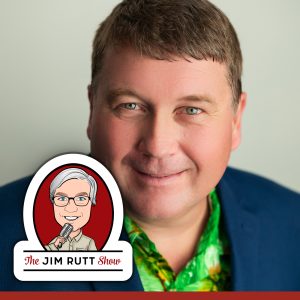
Jim talks with John Preston about his book 40 Flushes to Grow Your Business: The World's #2 Business Series, which is designed to be read during bathroom breaks. They discuss breaking free from being a one-person show, hiring self-guided employees, the importance of business owner support networks, clarity on business goals & personal objectives, the five-gear growth machine business metrics model, marketing fundamentals & investment levels, understanding the customer journey, social media pitfalls, customer inquiry response strategies, complaint management, CEO time management & delegation, working capital needs, lifestyle creep, measuring business metrics, gross profit vs net profit, building high-trust company cultures, transparency with employees, marketing s...
EP 323 Pablos Holman on Deep Tech
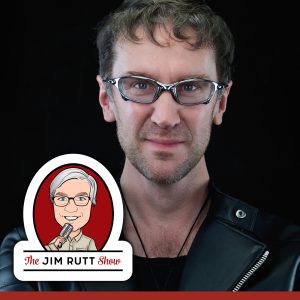
Jim talks with Pablos Holman about the ideas in his new book Deep Future: Creating Technology That Matters. They discuss deep tech versus shallow tech, computational modeling and simulation for real-world problems, the hacker mindset, the role of inventors, nuclear power and renewable energy solutions, population growth, development challenges, space-based solar power, the likelihood of fusion power, mistakes in German energy policy, energy storage limitations, the transformation of the apparel industry through automation, and much more.
EP 322 Brendan Graham Dempsey on Psyche and Symbolic Learning
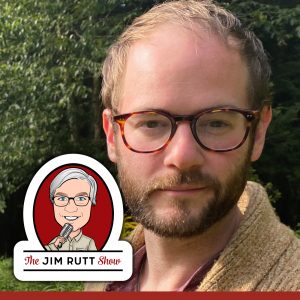
Jim talks with Brendan Graham Dempsey about the ideas in his book Psyche and Symbolic Learning, volume 2 in his Evolution of Meaning series. We discussed hierarchical complexity, stage theories of development, constructivism & realism, dynamic skill theory, the Lectical Scale, ego development & consciousness, meaning systems & worldviews, cross-cultural developmental patterns, statistical distributions of developmental stages, the relationship between semantic richness & structural complexity, justification systems theory & cultural evolution, & much more.
EP 321 James Fadiman and Jordan Gruber on Microdosing Psychedelics

Jim talks with James Fadiman and Jordan Gruber about the findings in their recent book Microdosing for Health, Healing, and Enhanced Performance. They discuss the definition of microdosing, "subthreshold" vs "subperceptual," typical doses, current usage statistics & demographics, its legal status & classification history, LSD, psilocybin, why cannabis isn't suitable for microdosing, mechanisms of action, dosing protocols, anti-inflammatory effects, health applications, enhancement applications, contraindications & side effects, research methodologies & limitations, commercial potential, global adoption patterns, and much more.
EP 320 David Shapiro on Mastering AI Tools for Research
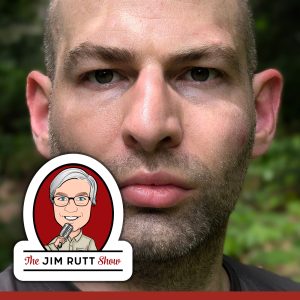
Jim talks with David Shapiro about how to use AI language models as research and writing tools. They discuss post-labor economics, the evolution of AI tools from GPT-2 through GPT-4, using AI as a learning companion vs. relying on it completely, David's AI tool stack, exploring new domains, using NotebookLM for document management & searching, AI writing and editing techniques, critique and perspectives through personas, the rapid adoption of AI tools across industries, understanding limitations, challenges for AI startups, and much more.
EP 319 Lawrence Cahoone on Emergence and Natural Order
Jim talks with Lawrence Cahoone about his book The Orders of Nature and his systematic approach to naturalist philosophy. They discuss fallibilist & local metaphysics, objective relativism, the rejection of simples, Jim's materialism which grants emergence first-class existence, Wimsatt's notion of emergence & nonaggregativity, downward causation & pruning rules, natural complexes, Aristotle's four causes & the use of purpose in biology, the distinction between teleonomy & teleology, the five orders of nature (physical, material, biological, psychological & cultural), characteristic time scales in emergence theory, why particular disciplines coevolved in intellectual traditions, Erik Hoel's theory about emergence having the highest causal power, natural religion & the fine-tuned constants...
EP 318 Adam B. Levine on Thinking on Demand
Jim talks with Adam B. Levine about humanity's rapidly changing relationship with AI and "thinking on demand." They discuss the GPT-5 release & pricing, open-source AI models, the three-dimensional framework of AI advancement (models & hardware & agent frameworks), the evolution of vibe coding, development tools, agent-based development, AI implementation strategies with humans in the loop, the Midnight Protocol project, Vendor Relationship Management versus CRM, automated negotiation systems, the trillion-dollar opportunity in improving the infosphere, enshittification risks, local AI processing on personal devices, the future of AI agents as personal representatives, and much more.
EP 317 David Shapiro on Post-Labor Economics
Jim talks with David Shapiro about his six-part series on "post-labor economics." They discuss historical economic transitions, the logic of labor substitution, automation & AI's impacts on employment, the four basic human economic offerings (strength, dexterity, cognition & empathy), labor as a societal pillar, the pyramid of prosperity (universal basic services, collectively owned public & private assets, conventional private assets, & residual wages), the pyramid of power (immutable civic bedrock, freedom to transact, radical transparency, direct programmable democracy, & forkable constitutional meta-governance), blockchain & cryptocurrency, radical financial transparency, liquid democracy, governance innovation, and much more.
EP 316 Ken Stanley on the AI Representation Problem
Jim talks with Ken Stanley about the Fractured Entanglement Representation hypothesis in deep learning neural networks. They discuss open-endedness in AI systems & evolution, the Picbreeder experiment & its significance, the objective paradox of finding things by not looking for them, comparisons between Picbreeder & SGD networks, visual differences in internal representations, weight sweep experiments, modular vs tangled decomposition, implications for creativity & continual learning & generalization abilities, Unified Factored Representation as an alternative to FER, the relationship to grokking in neural networks, scaling considerations & evidence in larger models, potential methods to achieve UFR, connections to biological evolution and DNA representation, and much more.
EP 315 Ed Latimore on Hard Lessons from the Hurt Business

Jim talks with Ed Latimore about his new book Hard Lessons from the Hurt Business: Boxing and the Art of Life. They discuss Ed's chess playing & street hustling, size differences in modern heavyweight boxing, growing up in Pittsburgh's Hill District, childhood trauma & violence, relationships with his single mother & absent father, middle school & gifted programs, the cocaine prank incident, his high school football career, academic struggles, attending University of Rochester, spending his father's life insurance money, his boxing career, the All American Heavyweights program, alcohol abuse, sobriety, Olympic trials, military service, a degree in physics, his current life as an author & s...
EP 314 Zak Stein and Marc Gafni on the Nature of Everything
Jim talks with Zak Stein and Marc Gafni about consciousness, attention, and value as fundamental aspects of reality. They explore continuity & discontinuity in evolution, phenomenology & naturalism, emergence, value theory, selection theory, mathematics as both discovered & created, pre-life organic chemistry, sexual selection & evolutionary dynamics, attraction/allurement across different emergent layers, evolving value, first principles & first values, the intimacy equation concept, desire as disclosing value, consciousness in animals vs simpler systems, machine consciousness, group selection theory, the evolution of complexity, the role of contingency & necessity, religious & materialist perspectives on value, and much more.
EP 313 Chris Colin on Why Customer Service Sucks
Jim talks with Chris Colin about his recent Atlantic article "That Dropped Call with Customer Service? It Was on Purpose." They discuss customer service hell & Chris's personal story with Ford, the concept of sludge, intentional friction in customer service systems, call center operations & tactics, high-quality customer service approaches, the impact of short-term CEO tenures on service quality, the Biden administration's attempts to address bureaucratic time tax, political implications of poor government services, administrative burden, coping mechanisms, consumer action possibilities, the psychological toll of dealing with poor service, Cory Doctorow's concept of "enshittification," responses to Chris's article, and much more.
EP 312 Lee Cronin on Automating Chemistry
Jim talks with Lee Cronin about Chemify, his startup that aims to automate chemistry through "chemifarms" that turn code into molecules. They discuss the development of the ChemChi programming language & its evolution to Turing completeness, quantum vs classical chemistry computation, open source tools & academic access, robotics & automation in chemistry, catalyst discovery & optimization, integration with tools like AlphaFold, business models & venture capital funding, supply chain implications & distributed manufacturing, personalized medicine possibilities, and much more.
EP 311 Nicholas Humphrey on the Invention of Consciousness
Jim talks with Nicholas Humphrey about the ideas in his 2023 book Sentience: The Invention of Consciousness. They discuss the distinction between sentience & consciousness, access consciousness vs phenomenal consciousness, terminology in consciousness studies, ring-fencing theories, Nicholas's early experiments with phosphenes, the discovery of blindsight in monkeys, his relationship with Helen the monkey, color preferences in monkeys, sensation vs perception, realism vs illusionism, consciousness as art, the concept of "ipsundrum," the evolution of consciousness as "all or nothing," the Fermi paradox & the uniqueness of consciousness, qualophilia, consciousness in birds & mammals, theory of mind in different species, and much more.
EP 310 Samo Burja on Anduril's Plan to Modernize the US Military

Jim talks with Samo Burja about his report on the defense startup Anduril's plan to modernize the U.S. military. They discuss "live players vs. dead players," AI adoption & cognitive tools, Anduril's background & naming origin, military technology modernization, software-defined conflicts, autonomous & software-enabled weapons, sensor deployment & data collection, the Lattice software platform, hardware offerings including drone & underwater vehicle acquisitions, surface naval warfare obsolescence, military industrial capacity, US vs. China manufacturing capabilities, personnel-to-weapon system ratios, drone production scale, cost considerations, defense industry ecosystem, traditional contractors, friend-shoring possibilities, NATO+ industrial capacity, component manufacturing, future warfare implications, training advantages of digital systems, scale of...
EP 309 Richard David Hames on the Final Performance of Western Civilization?
Jim talks with Richard David Hames, picking up from the ideas in his recent Facebook essay about the decline of Western civilization. They discuss the retreat from truth in politics & institutions, postmodernism's impact on rationality, China's governance model, the failure of democratic institutions, wealth inequality & social stratification, the liberation of women as our era's defining achievement, climate change denial, the futility of modern warfare, AI's disruptive potential, the loss of character & virtue in leadership, living in a liminal period between worlds, and much more.
EP 308 David Chapman on Rethinking Nobility

Jim talks with David Chapman about rethinking nobility for the modern age through his recent "nobility tetralogy" of essays. They discuss character & virtue as "risible" concepts, noblesse oblige & elite education, nobility as intention vs status, "The Battle of Maldon" poem & its lessons, postmodernism & postmodernity, the failure of elite universities, effective altruism & Sam Bankman-Fried, Elon Musk & hubris, meritocracy & institutional change, Nietzsche's master-slave morality, Tolkien's models of nobility, Vajrayana Buddhism's life-affirming approach, software engineers eating the world, meta-rationality & the tech industry, new institutions, visions for a more playful & connected future, and much more.
EP 307 Thomas Schindler on Heliogenic Civilization
Jim talks with Thomas Schindler about heliogenic civilization as a vision for a regenerative future. They discuss the current multipolar trap shitshow of global civilization, M3 money supply & GDP growth requirements, the doubling of energy demand, exit to planet as an alternative to traditional business exits, biomimicry & biological approaches to manufacturing, solar energy as a fusion reactor, nature's material production vs human industrial production, construction systems using earth blocks & natural materials, bioregional self-sufficiency, feminine scaling vs traditional growth models, the Oslo Project as an inverse Manhattan Project, deep ecology & Arne Næss's philosophy, governance structures, education systems as symptoms of i...
