The mindbodygreen Podcast
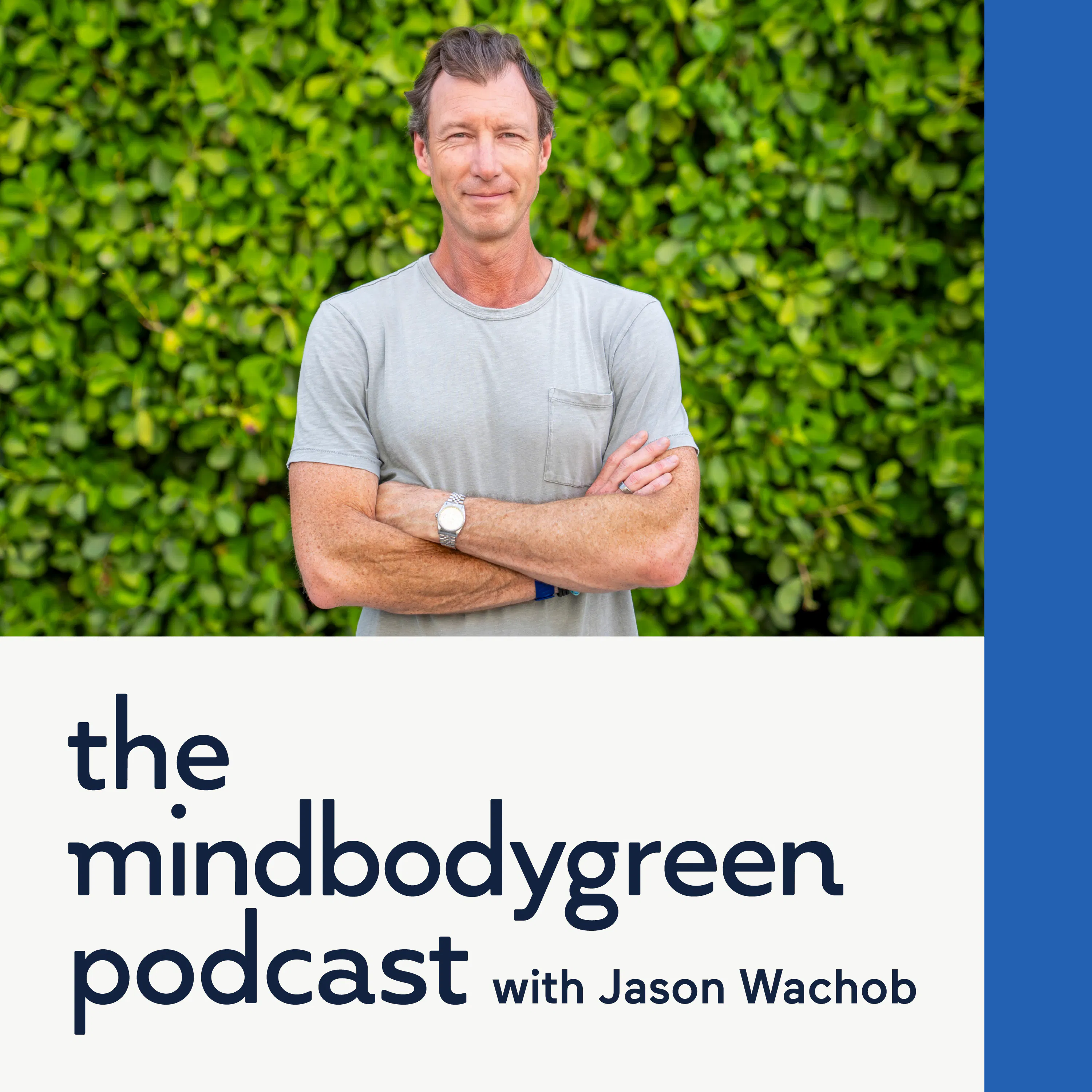
The mindbodygreen podcast explores the infinite possibilities of health & well-being. Hosted by founder and co-CEO Jason Wachob, each episode features a thought-provoking interview with a leader in the health space. Whether you’re thinking about changing what’s on your plate, how you move, or how you think, these conversations are sure to offer solutions in whole-body health.
The housekeepers who got leaner just by changing what they believed
In this week’s solo episode of the mindbodygreen podcast, Jason breaks down a fascinating study of hotel room attendants that showed how a small shift in mindset can completely change how our bodies respond to movement. It’s easy to get caught up in the data, but this study is a reminder that the meaning you assign to what you're doing is another critical input.
00:00 - The chambermaid study
04:06 - What changed after four weeks
06:24 - The milkshake study
07:37 - The honest caveats
09:03 - 3 ways to u...
Is being “good enough” the secret to longevity? | Matt Bloom, Ph.D.
“Small steps add up over time to the big changes that we seek,” says Matt Bloom, Ph.D.
Bloom is a professor emeritus of business at the University of Notre Dame. He has a PhD in psychology from Cornell University. For nearly thirty years, he and his research team studied the well-being of people who work in the helping and healing professions including physicians, humanitarian workers, clergy and public school teachers. Matt is cofounder of Ritual, a mobile app that offers a living library of evidence-based well-being practices created in partnership with wise guides including Barbara Brown Taylo...
Why food quality matters more than calories | Dariush Mozzaffarian, M.D.
“The food industry is experimenting on us without data and knowledge,” says Dariush Mozaffarian, M.D., DrPH.
Mozaffarian is a cardiologist, Director of the Food is Medicine Institute at Tufts University, and author of the book, Food is Medicine (Holt/Macmillan). He serves as Distinguished Professor, Dean Emeritus, and Jean Mayer Professor; and is clinically active in cardiology at Tufts Medical Center. His work aims to create the evidence and translation for a food system that is nutritious, equitable, and sustainable. He has authored nearly 700 scientific publications, and has served in numerous advisory roles. His work has been...
The latest on how to prevent Alzheimer’s | Kellyann Niotis, M.D.
"What we know for sure is that Alzheimer's is a preventable disease. It's not destiny,” says Kellyann Niotis, M.D.
Niotis is the world’s first fellowship-trained preventive neurologist. She is a Clinical Assistant Professor of Neurology at Weill Cornell Medicine, the Director of Parkinson’s and Lewy Body Dementia Prevention Research at the Institute for Neurodegenerative Diseases (IND) and runs a private preventive neurology practice in New York City focused on early detection and personalized risk reduction strategies for diseases like Alzheimer’s, Parkinson’s and Dementia with Lewy Bodies. Her research has been published in notable me...
Why 70% of American kids quit sports by age 13
Youth sports has become a multi-billion-dollar industry built on one unspoken promise: specialize early, and your kid has a shot. In this solo episode, we dig into what the research really says about early specialization. We also looks at how Norway built a youth sports system around play instead of competition, and why it's keeping kids in the game at nearly triple the US rate.
00:00 - The myth of sports specialization
04:29 - How youth sports became a billion-dollar industry
05:10 - My own path to Division I basketball
06:52...
What 200K full-body scans reveal about how we age | Andrew Lacy, Founder & CEO at Prenuvo
"I hope in 20 or 30 years time, a clinical diagnosis is something that's rarely given because most everything has been caught before it rises to that stage,” says Andrew Lacy.
Lacy is the CEO and founder of Prenuvo, the company pioneering proactive whole-body imaging for the early detection of cancer and other diseases. Under Lacy’s leadership, the company has expanded across North America, establishing Prenuvo as a recognized and trusted proactive healthcare service to both patients and referring clinicians. A seasoned entrepreneur, he scaled transformative products (including Tapulous, acquired by Disney) and grew Prenuvo into a global lead...
Why this doctor stopped fearing sugar, ice cream, & alcohol | Keshav Grover, D.O, M.S.
"What is the lowest dose of intervention that can have the maximum effect to help the body heal itself?” asked Keshav Grover, D.O., M.S., IFMCP.
Grover is the founder of Grover Health and Wellness, PLLC. He is a physician, keynote speaker, and champion of functional/integrative medicine and of eating a whole foods, plant-based diet. He holds a Doctorate in osteopathic medicine from Michigan State University College and a Master of Science from Wayne State University School of Medicine. He completed the prestigious Andrew Weil Center of Integrative Medicine fellowship at the Un...
Is wellness culture making us less healthy? | Ezekiel J. Emanuel, MD, PhD, MsC
“I don't need to track it. I just listen to my body,” says Ezekiel J. Emanuel, M.D., Ph.D., Ms.C.
Dr. Emanuel is an oncologist and world leader in health policy and bioethics. He is the Vice Provost for Global Initiatives at the University of Pennsylvania, and holds appointments in the Department of Medical Ethics and Health Policy in the Perelman School of Medicine and the Department of Health Care Management in the Wharton School. He is Special Advisor to the Director General of the WHO, Senior Fellow at the Center for Ameri...
Why adding more to your diet beats eliminating | Wendy Bazilian, DrPH, MA, RDN
"The diet you'll stay on is a diet that's enjoyable and not too hard,” says Wendy Bazilian, DrPH, MA, RDN.
Bazilian is a Registered Dietitian Nutritionist, American College of Sports Medicine Certified Exercise Physiologist, and Doctor of Public Health. She's authored multiple bestselling books, as well as contributed to a New York Times bestseller and a James Beard-nominated cookbook. She’s a spokesperson for Avocados – Love One Today and a frequent nutrition expert cited in mindbodygreen articles.
00:00 - The value of the food we consume
03:06 - Why dietary...
Status, Sex, & Sports Cars: What Science Says
What does driving a sports car actually do to your hormones? In this episode, we break down a surprisingly revealing 2009 study in which researchers had men drive a bright red sports car and a beige sedan and measured changes in their testosterone before and after.
The results weren't what anyone expected. And the real finding had nothing to do with speed, horsepower, or even the car itself.
We dig into the evolutionary biology behind status signaling, why social context drives hormonal responses, and what this study quietly reveals about how we chase external validation in...
Is Zone 2 training a waste of your workout time? | Kristi Storoschuk, exercise scientist
“As your time commitment goes down, the importance of intensity goes up,” says Kristi Storoshuk.
Storoschuk is a PhD candidate in Muscle Physiology at Queen’s University in Kingston, Ontario. Her research focuses on the relationship between skeletal muscle metabolism and whole-body metabolism, with an emphasis on how nutrient–exercise timing influences physiological adaptations to exercise. Storoschuk has contributed to peer-reviewed publications and is passionate about translating complex scientific findings into practical, evidence-based recommendations. Outside of her academic work, Kristi is the founder of a women’s health coaching program focused on improving metabolic health thr...
High-achiever? Here’s how to prevent burnout | science writer Elizabeth Svoboda
"It's way better to pull yourself back from the brink of burnout before it hits than to let yourself fall all the way in,” says Elizabeth Svoboda.
Svoboda is an award-winning science writer and contributor to Scientific American, Discover, The Boston Globe, The New York Times, and other publications. Elizabeth is a winner of the Evert Clark/Seth Payne Award for Young Science Writers, and her work has been anthologized in the Best American Science and Nature Writing series. She lives in San Jose, California, with her husband and young sons. Her new book, The Art of Pa...
Daily choices that shape brain health in your 30s, 40s & beyond | David Perlmutter, MD
“We can choose our brain’s destiny,” says David Perlmutter, MD.
Perlmutter is a Board-Certified Neurologist and six-time New York Times bestselling author whose work focuses on the intersection of neurology, nutrition, and brain health. He is on the Board of Directors of the American College of Nutrition and the Editorial Board of the Journal of Alzheimer’s Disease. His books, including the #1 bestseller Grain Brain, has been published in 32 languages and sold over a million copies. Perlmutter lectures globally at leading institutions and has been featured on major media outlets including 20/20, CNN, The Today Sh...
The truth about peptides, NAD, & other longevity treatments | Rachele Pojednic, Ph.D.
"If you don't get those foundational behaviors down, there ain't nothing a peptide's gonna do for you,” says Rachele Pojednic, Ph.D.
Pojednic is a professor of Sports Nutrition and Exercise Physiology at Stanford University and is the Chief Science Officer at Restore. Her work examines nutrition, supplementation and physical activity interventions on muscle physiology, performance and recovery, as well as muscle related chronic disease, with a particular focus on women. Pojednic holds a Certified Strength and Conditioning Specialist (CSCS) certification from National Strength and Conditioning Association (NSCA) and is board certified Health Coach fro...
Why structure is good for your brain | journalist David Epstein
"I think structure is more liberating than it is stifling, and it often takes people losing it to sort of realize that,” says David Epstein.
Epstein is the author of the number one New York Times bestseller Range and the New York Times bestseller The Sports Gene. He has master’s degrees in environmental science and journalism and has worked as a senior writer for Sports Illustrated and as an investigative reporter for ProPublica. He lives in Washington, DC. His newest book, Inside The Box, is out now.
00:00 - Why c...
How to build a flourishing mind in 5 minutes | Richard Davidson, Ph. D.
“Every human being comes equipped with the capacity to flourish,” says Richard Davidson, Ph.D.
Davidson is the William James and Vilas Professor of Psychology and Psychiatry at the University of Wisconsin–Madison and the Founder and Director of the Center for Healthy Minds. He is best known for his groundbreaking work studying emotion and the brain. A friend and confidante of the Dalai Lama, he is a highly sought after expert and speaker, leading conversations on wellbeing on international stages such as the World Economic Forum, where he served on the Global Council on Ment...
The most efficient path to better cardio | sports scientist Fraser Thurlow, Ph.D.
"When it comes to high-intensity interval training work, quality is much more important than quantity,” says Fraser Thurlow, Ph.D.
Thurlow is a high-performance coach, researcher, and lecturer with over a decade of experience helping people improve their fitness and performance. He holds a PhD in Human Performance, has published extensively on training, and has lectured at leading Australian universities in sport and exercise science. His work focuses on translating science into practical, evidence-based strategies that improve health, fitness, and athletic performance.
00:00 - How to actually raise your VO2 max...
The science of art as medicine | behavioral scientist Daisy Fancourt
“When we engage in the arts, it exposes us to a lot of emotions, which can have a tangible impact on the neurotransmitters released in our brains, the stress hormones in our bodies, and even the levels of inflammation in our immune system,” says Daisy Fancourt.
Fancourt is a Professor of Psychobiology and Epidemiology at University College London where she heads the Social Biobehavioural Research Group, and serves as the Director of the World Health Organization Collaborating Centre on Arts and Health. She is one of the most highly cited scientists in the world, havin...
The connection between pain & the brain | Rachel Zoffness, Ph.D.
“Anatomy and physiology always matter when it comes to pain. They're just not the whole story,” says Rachel Zoffness, Ph.D.
Zoffness is a pain scientist, pain psychologist, and thought-leader revolutionizing the way we understand and treat pain. She's an assistant clinical professor at UCSF, lectures at Stanford, and consults on the development of pain management programs around the world. Dr. Zoffness’s new book, Tell Me Where It Hurts, is out now, and in the process of being translated into over 25 languages.
00:00 - Everything we know about pain is wrong
05:4...
A cardiac surgeon had a heart attack—here’s what he missed | Jeremy London, M.D.
"Making the effort earlier totally changes the trajectory for the rest of your life,” says Jeremy London, MD.
London is a board-certified cardiovascular surgeon with more than 25 years of clinical experience caring for patients across the full spectrum of heart disease — from prevention to advanced intervention. Dr. London received his medical degree from the Medical College of Georgia and completed his general surgery residency at Joseph’s Hospital in Denver, Colorado. He completed a general vascular and thoracic surgical fellowship at the Carolinas Medical Center in Charlotte, N.C. To deepen his understanding of medicine, he completed the In...
Why your 40s & 50s are your most powerful years yet | psychologist Margie Lachman, Ph.D.
"Midlife is a perfect time for you to think about where you've been & where you want to go,” says Margie Lachman, PhD.
Lachman is professor of psychology at Brandeis University and director of the Lifespan Lab. A leading expert on adult development and aging, Lachman is one of a small group of scholars who study midlife from a lifespan developmental perspective. Her honors include research awards from the American Psychological Association (APA) and the Gerontological Society of America. Lachman was a member of the John D. and Catherine T. MacArthur Foundation Research Network on Suc...
A neurologist's honest take on Alzheimer's blood tests | Richard Isaacson, MD
"There is no one magic test for brain health,” says Richard Isaacson, MD.
Isaacson is a Harvard-trained neurologist who directs the Precision Prevention Program at Atria Health and Research Institute and founded the world's first Alzheimer's Prevention Clinic at Weill Cornell Medicine/NewYork-Presbyterian. A leader in precision-medicine approaches to Alzheimer's risk reduction, he has served as principal investigator for multiple research initiatives focused on individualized care. He recently led an NIH-funded clinical trial showing that a free online tool (RetainYourBrain.com) reduced Alzheimer's risk by 16% in six months, and is working to democratize brain health test...
A guide to healthy pooping | Trisha Pasricha, MD, MPH
"You shouldn't be spending more than five minutes in there at a time,” says Trisha Pasricha, MD, MPH.
A graduate of Harvard College, Pasricha earned her medical degree from Vanderbilt University School of Medicine and a Master of Public Health from the Harvard T.H. Chan School of Public Health. Her training includes an internal medicine residency at The Johns Hopkins Hospital and gastroenterology and motility fellowships at Massachusetts General Hospital. Currently, Pasricha is an assistant professor of medicine at Harvard Medical School and director of the Institute for Gut-Brain Research at Beth Israel Deaconess Medical Center, an NIH...
36 years of happiness research points to this | Sonja Lyubomirsky, Ph.D.
"Almost all of the interventions that make us happier work because they make us feel more connected and more loved,’ says Sonja Lyubomirsky, Ph.D.
Lyubomirsky is a Distinguished Professor of Psychology at the University of California, Riverside, a Fellow of the American Association for the Advancement of Science, and the bestselling author of The How of Happiness and The Myths of Happiness—and her latest, How to Feel Loved (Harper Collins, 2026), paired with a mainstage TED talk. A Harvard and Stanford-trained scientist whose research has been featured in the New York Times, on podc...
Is spirituality medicine? | Joshua W. Brown, Ph.D.

“Placebo effects are real and mind-body effects are real, and there's a fairly large scientific literature on these things,” says Joshua W. Brown, Ph.D.
Brown is a professor of Psychological and Brain Science at Indiana University, where he directs the Cognitive Control Lab. He also co-founded the Global Medical Research Institute With decades of experience in computational neuroscience and over 79 peer-reviewed publications, he brings the same rigorous scientific methodology to extraordinary claims of healing that he applies to understanding the brain.
00:00 - A neuroscientist's brain tumor diagnosis
07...
Why “in range” lab results aren’t the solution to longevity | Florence Comite, M.D.
"What we don't know CAN really hurt us, " says Florence Comite, M.D.
Comite is a Yale University School of Medicine and National Institutes of Medicine trained physician-scientist, endocrinologist, and the leading voice in the field of precision medicine and healthy longevity. She was founder of the first global women only health center at Yale three decades ago and is founder of the Comite Center for Precision Medicine & Healthy Longevity in 2005, in New York, with satellite offices in Palo Alto and Miami Beach. Her new book, Invincible: Defy Your Genetic Destiny to Live Better, L...
How to walk to optimize your health | Courtney Conley, D.C.
"I want people to start thinking of walking as a physiological necessity, not simply as a form of exercise,” explains Courtney Conley, D.C.
Conley is a renowned foot and gait specialist, chiropractic physician, and founder of Gait Happens and Total Health Solutions clinic and Total Health Performance gym in Lakewood, She is a founding member of the Healthy Foot Alliance and coauthor of Walk, a new book about the power of walking.
0:00 - Walking is fundamental
03:34 - Debunking 10,000 steps
05:37 - The power of a mi...
The new rules of heart health | Giovanni Campanile, MD & Sandra Cammarata, MD
“The awareness of how lifestyle, diet, and exercise affect us is mind-blowing.”
Dr. Giovanni Campanile and Dr. Sandra Cammarata are the founders of CorAeon, the only functional medicine practice founded and led by a husband-and-wife team. Campanile is a Harvard-trained functional cardiologist, Associate Professor of Medicine at Rutgers, New Jersey Medical School, and former cardiologist for the President of the United States, George H.W. Bush. Cammarata is a Tufts-trained functional psychiatrist with 36 years of experience and multiple Castle Connolly Top Doctor honors. Together, they treat cardiovascular health and mental well-being as one inseparable syst...
The gut is the missing link to women’s longevity | Cynthia Thurlow, NP
“Every single lifestyle choice we make can either drive inflammation up or drive it down.”
Cynthia Thurlow, NP, is a perimenopause and menopause expert, nutrition educator, and nurse practitioner with nearly 20 years of experience in the ER and clinical cardiology. Now, she works to help women live vibrant and healthy lives. Her new book, the Menopause Gut, comes out on April 28.
00:00 - Why women chronically undereat protein
03:19 - Fiber: the missing link in gut health
09:00 - Healthy fats & targeted nutrients
13:08 - The importance of hea...
The truth about cognitive decline and what you can do about it | Tommy Wood, M.D., Ph.D.
“It should be possible to maintain stable cognitive function into your eighth and ninth decades. But we don't really internalize that. We expect decline, and because we expect decline, we're less likely to engage in those things.”
Dr. Tommy Wood is a neuroscientist, Associate Professor at the University of Washington School of Medicine, and author of The Stimulated Mind. With degrees from Cambridge and Oxford, he has published more than 100 scientific papers and lectured worldwide on brain health, metabolism, and human performance. He also serves as a performance consultant to world-class athletes, including Olympians and...
This small town's secret to longevity had nothing to do with diet
In the 1960s, a small Pennsylvania town called Roseto had half the national rate of heart disease — and zero recorded heart attack deaths for men under 55. They smoked, ate pasta and sausages, and drank wine. Scientists were baffled.
What they found changed everything we thought we knew about health.
Link to the study: https://pubmed.ncbi.nlm.nih.gov/1636828/
Chapters
00:00 Meet Roseto: the town that shouldn't have been healthy
01:49 The shocking discovery: heart disease stats that defied logic
02:11 What scientists found when they in...
Why the ovary is key to women’s longevity | Natalie Crawford M.D.
“When we think about longevity for women, the ovary truly is the key.”
01:07 - A window into women’s health
05:00 - The ovarian lifespan
10:13 - Why puberty is starting earlier
13:29 - Endocrine disruptors & your child’s hormones
20:22 - The drivers behind early menopause
24:44 - Egg quality explained
28:30 - The MTHFR gene
32:32 - Why embryo grading is flawed
36:45 - The psychological aspect of IVF
41:45 - The future of fertility
Referenced in the episode...
Healing inner-child wounds you didn’t know you had | Nicole LePera, Ph.D. (The Holistic Psychologist)
"Trauma isn't just what happened to us. It's more so about the support we may or may not have had to navigate the emotional fallout of what happened."
Nicole LePera, Ph.D., is the creator of the worldwide @theholisticpsychologist movement, and the author of multiple bestselling books including How to Do the Work and her newest, Reparenting the Inner Child. She was trained in clinical psychology at Cornell University and the New School for Social Research and studied at the Philadelphia School of Psychoanalysis. Her work has reached tens of millions of people on...
The science of sweat, saunas & stress | best-selling author Bill Gifford
“Sweating is our superpower," explains Bill Gifford.
Gifford, a veteran science journalist and author of Spring Chicken, a New York Times bestseller on longevity. His latest book, Hotwired: How the Hidden Power of Heat Makes Us Stronger, dives deep into the emerging science of heat, sweating, and what happens when we stop running from discomfort.
00:00 — Sweating as an evolutionary superpower
03:00 — The science of ancient heat rituals
05:45 — How long & how hot?
07:55 — The dehydration trap
09:52 — All about Finnish sauna culture
12:50 — Heat acclimation training
16:41 — Elite athletes & what they can teach...
The science of real optimism & why positivity is holding you back | Deepika Chopra, Ph.D.
"Emotional flexibility is literally the skill that we all should be sharpening like a muscle," explained Deepika Chopra, Ph.D.
Chopra (widely known as The Optimism Doctor) is a clinical health psychologist, visual imagery expert, and author of the upcoming book The Power of Real Optimism. But here's what makes Deepika's work so different: she's not selling you positivity. In this episode, we get into the real science of optimism—and why it has far more to do with resilience and curiosity than with good vibes.
Optimism vs. positivity: what we're getting wrong (0:00)
Why...
How to unlock your body’s innate healing system | Victoria Maizes, M.D.
"Your body heals better when it feels safe, when your nervous system is quiet,’ explains Victoria Maizes, M.D.
Maizes is the Executive Director of the Andrew Weil Center for Integrative Medicine and co-host of the Body of Wonder podcast. She's a leading voice in integrative medicine and author of the new book Heal Faster, which makes the case that modern medicine has been so focused on treating disease that it's largely overlooked the body's most powerful asset: its innate capacity to heal.
In this episode, we discuss:
What is the recovery reflex? (1:10)
...How to lower your Alzheimer’s risk at any age | Majid Fotuhi, M.D., Ph.D.
"You are in control of your brain health, just the same way you're in control of your heart health."
Today's guest is Majid Fotuhi, M.D., a Harvard and Johns Hopkins-trained neurologist, brain health researcher, and author of Invincible Brain. Dr. Fotuhi has spent his career studying one of the most pressing questions of our time: why do some people's brains deteriorate with age, while others stay sharp well into their eighties and nineties? His answer might surprise you.
Why 45% of dementia is preventable (00:00) The biomarkers worth testing for cognitive decline (1:53) Why you should never test...The science of flourishing & how to give life meaning | Daniel Coyle
“When we really look at the definition of flourishing, it's joyful, meaningful growth shared,” explains Daniel Coyle.
Coyle is the bestselling author of The Culture Code and The Talent Code, who just released his latest book, Flourish: The Art of Building Meaning, Joy, and Fulfillment. After spending decades studying elite performers, Navy SEALs, championship sports teams, and top business leaders, Coyle had climbed to the mountaintop of success research only to realize it wasn’t what he thought it would be. Now, he focuses his work trying to answer the question: What actually makes a life worth living...
What the Amish can teach us about health
Are your kids too clean for their own good?
Amish children experience 90% less asthma than the national average—not despite getting dirty, but because of it. When scientists analyzed the dust in their farmhouses, they discovered an invisible ecosystem that was training immune systems to be resilient instead of reactive.
In his episode, host Jason Wachob explores the groundbreaking research behind the "hygiene hypothesis" and its implications for modern parents raising kids in an increasingly sanitized world.
This discovery is forcing us to rethink everything about dirt, bacteria, and health. And it's already le...
How to identify what really matters & reverse engineer your life | Sahil Bloom
"I define wealth as being able to take my son in the pool at 1:00 PM on a Tuesday," explains Sahil Bloom.
Bloom is a NYT bestselling author of The 5 Types of Wealth: A Transformative Guide to Design Your Dream Life. He’s also an entrepreneur, investor and a proud, son, husband, and father who believes the greatest things in life come not from finding the right answers, but from asking the right questions.
The math that changed Sahil’s life (0:18)
Redefining success & happiness (2:03)
The truth about time with kids (6:11)
Can...
