Mendelspod Podcast

Offering a front row seat to the Century of Biology, veteran podcast host Theral Timpson interviews the who's who in genomics and genomic medicine. www.mendelspod.com
Ten Years Ago Mike Joyner Was Skeptical of Precision Medicine. What Does He Say Today?

This is a free preview of a paid episode. To hear more, visit www.mendelspod.com
A recent New York Times article highlighted a remarkable study showing that exercise can help keep colon cancer in remission. After eight years, 90 percent of patients in a structured exercise program were still alive, compared with 83 percent in the control group. Yet despite these results, such programs are rarely covered by insurance. It’s a striking example of something our guest today, Mayo Clinic physiologist Mike Joyner, has argued for years. Are we overlooking some of the most powerful ways to im...
Deeper into the Genome: Google DeepMind’s Ziga Avsec on the New AlphaGenome Atlas

This is a free preview of a paid episode. To hear more, visit www.mendelspod.com
Is biology headed back into the genome?
While much of biology has been expanding outward into single cells, spatial biology and ever more biological context, Žiga Avsec and his team at Google DeepMind are making the case that there is still an enormous amount to learn by going deeper into DNA itself.
Their new AlphaGenome Atlas uses AlphaGenome to predict the molecular effects of every possible single letter change in the human genome. That’s some nine bil...
Mass Spec Comes to the Routine Core Lab: Don Mason of Roche on a New Era in Clinical Testing

Mass spectrometry has been one of the most powerful technologies in clinical testing for decades. So why is it still largely confined to specialty labs?
Don Mason has spent more than 25 years in clinical mass spectrometry. Now Senior Marketing Manager for Mass Spectrometry at Roche Diagnostics, he says the technology’s strength has also been its weakness: “Part of its power and part of its challenges are linked.” Mass spec is extraordinarily sensitive, selective and flexible, but traditionally requires specialized operators, complicated workflows and batch processing.
That may finally be changing. Last year Roche launched their...
Jennifer Dionne Wants to Read the Whole Proteome Using Nanophotonics, i.e. Raman Spectroscopy

This is a free preview of a paid episode. To hear more, visit www.mendelspod.com
Jennifer Dionne, Stanford physicist and co-founder of Pumpkinseed, joins us to talk about a radically different way of reading proteins. Pumpkinseed’s deSIPHR technology combines nanophotonics with Raman spectroscopy to detect the molecular vibrations of individual amino acids. The goal is de novo protein sequencing that can read not only the 20 canonical amino acids, but potentially the enormous alphabet created by post-translational modifications and other forms of protein variation.
Raman spectroscopy is super cool even if nearly a century ol...
Katie Maloney, Partner at DeciBio Consulting, Sees an Inflection Point for Digital and Computational Pathology

This is a free preview of a paid episode. To hear more, visit www.mendelspod.com
Digital technology has been promising to transform pathology for years. But the last year looks different. Roche paid roughly $1 billion for PathAI. Tempus acquired Paige. Other deals are adding to a sudden wave of consolidation. And AstraZeneca is developing a computational pathology algorithm for TROP2 that could become a companion diagnostic used to determine which patients receive a drug.
DeciBio partner Katie Maloney says these are signs that digital pathology may finally be reaching an inflection point.
...
It’s One of the Greatest Success Stories of Molecular Medicine. Genomics Historian Kevin Davies on His Latest Book about Casgevy and Sickle Cell Disease

This is a free preview of a paid episode. To hear more, visit www.mendelspod.com
It was the heady days of the CRISPR revolution and of the gene therapy Casgevy. And when longtime genomics editor and author Kevin Davies went looking for a book that told the story of sickle cell disease and could not find one, he was perplexed and then inspired.
A few years later, the result is Curved Air, a biography of sickle cell anemia that traces one of the most remarkable arcs in modern biology. Davies begins with Victoria Gray...
Elias Sayour on the Cancer Vaccine Breakthrough

This is a free preview of a paid episode. To hear more, visit www.mendelspod.com
After being pursued for more than 150 years, cancer vaccines may finally be having their moment.
The recent positive Phase III results from Moderna and Merck offer what today’s guest Dr. Elias Sayour calls the first “bona fide evidence” that a therapeutic personalized cancer vaccine can work. For Sayour, a pediatric oncologist and cancer researcher at the University of Florida, the result is not the culmination of the field. It is “just the tip of the iceberg.”
Sayour exp...
What Single Cell Sequencing Revealed About Pulmonary Fibrosis with Nick Banovich, TGen

Single cell sequencing has given researchers extraordinary new maps of human biology. For Nick Banovich of TGen, the burning question is how to turn those maps into something that matters for patients.
Banovich has spent much of his career studying pulmonary fibrosis, and single cell sequencing has changed the field’s understanding of the disease. Instead of looking at an average signal from diseased lung tissue, researchers can now separate molecular changes from changes in the populations of cells themselves. That has helped point drug developers away from simply targeting fibrosis and toward earlier changes in epithelial an...
The Quest to Measure Protein Function with Polly Fordyce, Stanford

Stanford physicist and bioengineer Polly Fordyce has a big vision. She’s attempting to measure protein function at the scale at which we learned to measure DNA. We can sequence proteins. We can increasingly predict their structures. But we still have a surprisingly difficult time measuring what proteins actually do.
Fordyce wants to change that. Her lab is developing ways to measure protein folding, binding, kinetics and function at a massive scale, using the quantitative language of physics. Her ambition is not simply to create more protein data. She wants measurements good enough to make biology more pr...
Doubling Down on Long Reads: New CEO of PacBio, Mark Van Oene

Mark Van Oene has just taken over as CEO of Pacific Biosciences, and Mendelspod is his first interview in the new job. He began his career as a scientist studying cystic fibrosis genetics at Toronto’s SickKids, then spent fifteen years at Illumina, rising from its first sales rep in Canada to Chief Commercial Officer. He joined PacBio in 2021 as COO and has spent the past five years helping build the product portfolio he now inherits as CEO.
He joins us today with a clear message: PacBio is choosing long reads. The company has moved on from it...
Serge Saxonov on What’s Next for 10x Genomics

This is a free preview of a paid episode. To hear more, visit www.mendelspod.com
10x Genomics has been remarkably good at figuring out where biology is going next.
In this wide-ranging conversation, co-founder and CEO Serge Saxonov explains why. Despite decades of genomics, “we still understand very little biology.” For 10x, the way forward has been to build better tools for measuring it and to work backward from the biological questions rather than forward from a particular technology.
That philosophy helped drive the single-cell revolution and 10x’s move into spatial biolog...
“You Cannot Discover What You Cannot Make”: Lee Cronin on Programming Chemistry

This is a free preview of a paid episode. To hear more, visit www.mendelspod.com
Those of us in biology tend to think that chemistry is rather straight forward. But today’s guest says there’s quite an art to synthesizing a molecule.
A few years ago, Lee Cronin, a chemistry professor at the University of Glasgow joined Mendelspod for a sprawling conversation about the origin of life, alien biology, assembly theory, and his conviction that chemistry could become programmable. Now Cronin is back, and that last idea has become a company that now has...
All of Us Comes of Age. And So Does Its Funding: Josh Denny on the Next Phase of Precision Medicine

There are very few genomics projects with the level of ambition of the NIH All of Us Research Program. The latest release includes data from more than 747,000 participants, 535,000 whole genomes, 480,000 electronic health records, and—for the first time—long-read sequencing, proteomics, transcriptomics, and a large collection of information extracted from clinical notes. More than 24,000 researchers are now using the resource. But the program is also arriving at an important transition: roughly 80 percent of its original ten-year funding runs out this year.
So what happens when a massive national research experiment begins to come of age?
Josh...
Season Opener: Is Biology Having Its Newtonian Moment? with Rob Phillips, Caltech

Welcome to Mendelspod’s 16th season!
It’s hard to believe we’ve been doing this for just over 15 years, following first and foremost the people reshaping biology and medicine. But also the technologies and ideas. Our original vision was to feature the “people behind the headlines” and you’ll see that what we continue to do in this first show of the new season. A sincere thank you to everyone who has listened, watched, subscribed, sponsored, recommended guests, shared a show, told your friends, and simply kept coming back. We have a terrific season ahead, with some of the...
From the Archives: Erdinc Sezgin and the Physics of Living Cells

On Mendelspod, we’re always searching for scientists who are looking at biology in new ways. Sometimes that means a new technology. Sometimes it means asking entirely different questions. Erdinc Sezgin is bringing the tools of physics to biology.
Sezgin is a group leader at the Max Planck Institute of Molecular Cell Biology and Genetics, where he heads the Membrane Biophysics Group. His research focuses on one of the most familiar yet least understood structures in biology: the cell membrane.
In this conversation from April, Sezgin explains why the membrane isn’t a smooth sea of l...
From the Archives: How Cellanome Is Changing the Way We Study Cell Function with Matthew Spitzer and Pier Federico Gherardini

One of the biggest technology shifts we saw in biology over the past year came from the young company, Cellanome. Instead of relying only on static single-cell snapshots, the Cellanome platform enables longitudinal observation of live cells.
In this conversation, Pier Federico Gherardini, VP of Computational Biology at Cellanome, joins Matthew Spitzer of UCSF, whose lab is putting the Cellanome platform to work in cancer immunology.
The new CellCage technology allows researchers to follow individual cells and their interactions over time, then pair that behavior with transcriptomic and other molecular readouts. As Gherardini explains, this...
Agilent and Oxford Nanopore Discuss Bringing Long Reads to the Clinic with a Customer

Acute leukemia patients often wait days or even weeks for the full battery of molecular tests needed to guide treatment decisions. Dr. Parth Shah from Dartmouth believes long read sequencing can dramatically shorten that timeline. In this episode, Shah joins Agilent's Rita Shaknovich and Oxford Nanopore's Claire Attwooll to discuss some details of how long reads are beginning to move from research applications into routine clinical testing.
Along the way, we explore the role of targeted enrichment, quality control, automation, and informatics in making these workflows practical for real-world laboratories.
For Shah, the field has...
Liquid Biopsy for the Tumor Microenvironment: with Vince Miller and Mirna Jarosz

This is a free preview of a paid episode. To hear more, visit www.mendelspod.com
We’ve become remarkably good at reading cancer cells. Spatial biology enabled us to read them in context. Today we discuss a new Nature study suggesting that the tumor microenvironment—the immune cells, stromal cells, and surrounding biology that often determines whether a therapy succeeds or fails—can be measured from a simple blood draw, or liquid biopsy.
To do that we’re joined by Dr. Vincent Miller, an oncologist and former founding Chief Medical Officer of Foundation Medicine, and Dr...
Can Liquid Biopsy Transform Chronic Disease? Hamed Amini and Soheil Damangir of Hepta

This is a free preview of a paid episode. To hear more, visit www.mendelspod.com
For the past decade, liquid biopsy has largely been defined by oncology. Tumors shed DNA carrying mutations and epigenetic changes which allows researchers to detect cancer and monitor response. With this physicians are increasingly able to guide treatment. But chronic diseases are different. There is no tumor. Biological signals are subtle and quite d…
The UAE’s Big Bet on Genomic Medicine with Mohamed Alameri and Albarah El-Khani

The future of genomics has arrived in Abu Dhabi.
On today’s show, Dr. Mohamed Alameri of the UAE Department of Health and Albarah El-Khani of M42 describe one of the most ambitious precision medicine efforts underway anywhere in the world: the Emirati Genome Program, which has already sequenced more than 900,000 genomes and is rapidly integrating that data into everyday healthcare.
The UAE program is not only a large sequencing effort and database—soon to be made available for research anywhere—but a coordinated national strategy built on prevention, diagnosis, and long-term population health. Particularly striki...
Ryan Flynn of Harvard on Non-Coding RNA

On today’s show, Dr. Ryan Flynn of Harvard Medical School and Boston Children’s Hospital takes us into a newly emerging layer of biology: the architecture of the cell surface itself. Flynn first gained attention for the discovery of glycoRNA — RNA molecules displayed on the outside of cells — a finding that challenged the traditional picture of the cell surface as a world composed primarily of proteins and glycans. RNA has long been understood mainly as a carrier of genetic information (messenger RNA), but Flynn’s work has show that it has other functions critical to basic processes in the cell...
Gary Schroth on Connecting Cellular Behavior to the Transcriptome

For decades, biology has been driven by the powerful notion that if we could sequence enough genomes, transcriptomes, epigenomes, then we could finally explain the cell. On today’s show, Gary Schroth, the Chief Scientific Officer at Cellanome, argues that something essential was still missing.
Schroth spent nearly two decades at Illumina helping build the sequencing revolution. He has now joined Cellanome to pursue an expanded vision of biology that connects transcriptomics with live-cell imaging. Our conversation centers around two newly released preprints describing the company’s platform and its application to CRISPR screening, where imaging and tran...
Two-Thirds of High-Risk Breast Cancer Patients May Avoid Chemotherapy According to Veracyte Data Presented at ASCO

Today on the show, we’re discussing a new study just presented at ASCO 2026 that could change how chemotherapy decisions are made for a large group of breast cancer patients.
During ASCO we spoke with Phil Febbo, Chief Scientific and Medical Officer at Veracyte, and John Leite, the company’s Chief Commercial Officer, looking at the results from the OPTIMA study, a large prospective trial involving roughly 4,500 patients with clinically high-risk ER-positive, HER2-negative breast cancer. The study found that about two-thirds of these patients could safely avoid chemotherapy when treatment decisions were guided by the Prosigna test...
Building the Diagnostic Layer of Modern Cancer Care with Rita Shaknovich and Karina Kulangara of Agilent

For years, precision oncology has largely been discussed through the lens of breakthrough drugs. But there’s another story running underneath modern cancer care: the quiet rise of companion diagnostics. These tests are increasingly deciding who receives those therapies in the first place. In many cases, the real bottleneck is no longer discovering a drug target. It’s building a reliable system for identifying the right patient at the right moment in the disease. That challenge sits at the center of this conversation with Rita Shaknovich, Chief Medical Officer for Life Sciences and Diagnostis, and Karina Kulangara, Associate Vice Pres...
Mapping the Multi-Omic Era with Eric Green of Illumina

Dr. Eric Green returns to Mendelspod in a new role: Chief Medical Officer of Illumina. After more than three decades at the National Human Genome Research Institute, where he helped guide genomics from research initiatives to clinical reality, he now joins one of the industry’s most influential companies at a moment when the field is expanding beyond DNA alone.
Green takes us on a tour around the world of multi-omics, which he says is not a branding exercise but a practical response to the limits of sequence data by itself. Genomics remains foundational, but many clinical qu...
Inside Proteomics at Thermo Fisher with Yan Zhang

This is a free preview of a paid episode. To hear more, visit www.mendelspod.com
For years, proteomics was described as the missing layer of biology. Why missing? Because measuring proteins at scale turned out to be vastly harder than sequencing DNA.
That may finally be changing.
In today’s episode Theral speaks with Dr. Yan Zhang, President of Proteomic Sciences at Thermo Fisher Scientific, about the rapid evolution of large-scale p…
Separating Epigenetic Signals Improves Early Cancer Detection with Rob Osborne, Biomodal

We’ve gotten very good at reading DNA. We’re just beginning to understand how to read its state.
On today’s show, Rob Osborne, Senior Vice President of R&D at Biomodal, discusses new evidence that separating two epigenetic marks—5-methylcytosine and 5-hydroxymethylcytosine—can improve early cancer detection from liquid biopsy. In a recent Nature Communications Medicine study, his team showed that analyzing these signals independently in circulating DNA significantly enhanced detection of Stage I colorectal cancer compared with approaches that combine them.
The advance does not require new sequencing hardware. Biomodal’s approach uses a sampl...
Digital Controls for Cancer Drug Trials? Irina Babina, Concr

This is a free preview of a paid episode. To hear more, visit www.mendelspod.com
On today’s show, a fascinating discussion about digital twins for medical research— leading to the 64 million dollar question of how much of the current AI wave in healthcare may eventually prove real.
Drawing on her background in cancer research and now as CEO of Concr, Dr. Irina Babina joins us to argue that the future of oncology may depend less on g…
Solexa Co-Inventor Shankar Balasubramanian on Six-Base Sequencing and What's Next in Genomics

An inventor of Solexa sequencing by synthesis has a new idea.
On today’s show, Sir Shankar Balasubramanian revisits the accidental origins of Solexa sequencing, born not from a sequencing project at all, but from curiosity-driven experiments watching DNA polymerase at work. What followed helped transform DNA sequencing from a specialized pursuit into a routine engine of modern biology. But as Shankar makes clear, the biggest surprise may not have been genomics itself—it was how next-generation sequencing became a universal readout for biology, powering everything from single-cell and spatial biology to entirely new ways of probing mole...
The Next Frontier in Biology: Physics? Erdinc Sezgin of the Karolinska Institute

There’s a famous line attributed to Ernest Rutherford, the father of nuclear physics: “All science is either physics or stamp collecting.” It’s still provocative. But it’s unfair to biology. Long before today’s omics era, biologists were uncovering causality everywhere from evolution and natural selection to Mendelian inheritance. They have never merely catalogued life. They have explained it. But modern biology has also generated extraordinary inventories of genes, proteins, and pathways, and those inventories now invite a deeper systems-level question: how do the parts behave together in living cells? Could new precise physical measurements aid biology and medicine...
The Case for a 6-Base Genome with Peter Fromen, CEO of Biomodal

You’ve heard of 5-base genomics. How about 6-base? It turns out that separating 5-methylcytosine (mC) and 5-hydroxymethylcytosine (hmC) is pretty important.
Peter Fromen has had a front-row seat to the evolution of sequencing, from the rise of high-throughput genomics at Illumina to long-read technologies at PacBio. Now, as CEO of Biomodal, he’s focused on integrating genetics and epigenetics into a single workflow—and showing that the regulatory layer of the genome may be where the next breakthroughs lie.
Chapters:
0:00: Why epigenetics needed a reset12:07 The colorectal cancer study and early detection signal...
The Eligible But Under-Tested: Genomic Medicine in 2026 with Damon Hostin, Illumina

What is the value of someone’s genome over their life? Is a genome today what it was 10 years ago? How does the adoption of genomic testing compare to other areas in medicine, such as imaging or electronic health records?
Today we take a pretty comprehensive look at genomic testing in practice with Damon Hostin, Head of Market Access, Clinical Solutions at Illumina. Damon brings a rare perspective to this conversation. He’s been in the field since the Celera era, when sequencing was helping define modern genomics, and he’s also worked on the front lines in a l...
Spatial Transcriptomics Is Changing How We Do Biology: Fei Chen, The Broad Institute
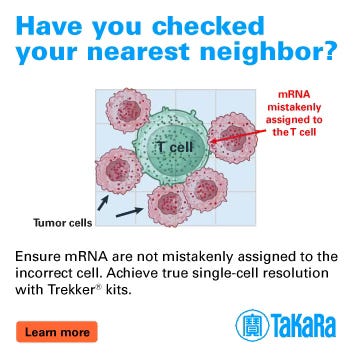
Fei Chen of the Broad Institute describes the original problem simply: genomics gave us powerful inventories of gene expression, while microscopy gave us structure—yet the two lived in separate worlds. “You could either have your structure or you could have gene expression, but you couldn’t have both.”
In this conversation, Fei walks us through how Slide-tags—now commercialized as Takara Bio Trekker technology—set out to close that gap. Instead of mapping gene expression onto a grid, his team flipped the problem: barcoding the cells in place, then reading them out with single-cell sequencing. The result is so...
Beyond GLP-1: Why Peptides Are Back at the Center of Drug Discovery with Charlie Johannes and Tomi Sawyer

Peptides are having a moment.
But beneath the market excitement and the GLP-1 headlines, something more interesting is going on. A field that for years seemed technically promising but perpetually constrained is becoming wide open.
To see into that open terrain, we’re joined by Charlie Johannes, founder of EPOC Scientific and president of the Peptide Drug Hunting Consortium, along with Tomi Sawyer, a founder of the Consortium and founder of Maestro Therapeutics. We asked them for a high-level look at a field being reshaped by advances in chemistry, screening, delivery, and by a growing se...
From the Archives: Inventor Mark Kokoris Debuts Roche’s New SBX Sequencer
It was the biggest story in sequencing last year: Mark Kokoris, head of SBX sequencing at Roche and inventor of the technology, joins Mendelspod to talk about how Sequencing by Expansion (SBX) works and why it may redefine the limits of genomics.
* 0:00 A long journey inspired by PCR
* 7:20 What is sequencing by expansion?
* 14:00 On scale and accuracy
* 19:40 Multi-omics vision?
* 24:40 What will be the killer app?
* 30:00 Biggest challenge for launch
Kokoris recounts the long path from co-founding Stratos Genomics in 2007 to Roche’s acquisition in 2020, when hi...
Why Do Some Animals Live Ten Times Longer? Pursuing the Science of Aging with Steve Austad

Why do some animals live ten times longer than others?
That question opens today’s interview with Steve Austad, Distinguished Professor at the University of Alabama at Birmingham and one of the leading thinkers in the biology of aging. It quickly becomes clear why he’s been such an important voice in bringing aging research from the margins into the center of science. As he puts it, the field was once “where scientists went to die,” but with modern genetic and molecular tools, it has become one of the most active areas in biomedicine.
Steve’s approach...
MRD Testing: From Residual Disease to Real Decisions with Chris Hourigan and Gary Pestano

Molecular residual disease, or MRD, has been part of oncology’s vocabulary for decades. But knowing something is there and being able to measure it precisely are two very different things. In today’s show, we explore how MRD testing moved from a long-standing clinical suspicion to one of the most consequential tools in modern oncology.
Joining us on the program are Chris Hourigan, Director of the Fralin Biomedical Research Institute Cancer Research Center (DC) at Virginia Tech, bringing the academic and clinical AML lens, and Gary Pestano, Chief Scientific Officer at Biodesix, offering the industry and diag...
Early vs Late Recurrence: How Multimodal AI Is Changing Breast Cancer Prognosis with George Sledge, Caris Life Sciences

This is a free preview of a paid episode. To hear more, visit www.mendelspod.com
For two decades, tests like Oncotype DX have helped oncologists decide which early-stage breast cancer patients should receive chemotherapy. But those tools were designed mainly to predict early recurrence, leaving physicians with far less clarity about the risk that cancer might return years later.
For today’s program, George Sledge, Chief Medical Officer at Caris Life Sciences, discusses new findings from the TAILORx trial showing how multimodal AI—combining molecular sequencing, digital pathology, and clinical data—can improve long-term predic...
The Dark Genome with Author Sudhakaran Prabakaran

We began this podcast back around the time the ENCODE project announced that much of the genome was biochemically active. The big science project was undoing the tidy idea of “junk DNA,” and not without controversy. But activity is not the same as purpose. On today’s show, we move past the question of whether the non-coding genome does something and ask a more ambitious one: why has evolution retained so much genomic material unless it carries adaptive potential?
Theral speaks with Sudhakaran Prabakaran, computational biologist at Northeastern University and founder of NonExomics, about his provocative new book...
Illumina's New Mapped Read Technology Provides Insights into Rare Disease: Stephen Kingsmore, Olivia Kim-McManus and Ali Crawford

“We have been talking now for 15, 20 years about the diagnostic odyssey. That shouldn’t exist anymore. The new odyssey is the therapeutic odyssey.”
That’s Stephen Kingsmore, president and CEO of Rady Children’s Hospital (he just announced his retirement), explaining the impact of a new genome mapping technology from Illumina.
Whole-genome sequencing has transformed diagnosis, but some of the hardest pediatric cases persist because the structure of the genome has remained difficult to resolve. Today on Mendelspod, we cover Illumina’s newly launched proximity mapped reads, showing how long-range genomic context can be captured directly on...