Revolution.Social
A podcast about the future of social media and reclaiming our digital communities. Revolution.Social is hosted by technologist and community advocate Rabble, a.k.a. Evan Henshaw-Plath — who was Twitter’s first employee and hired Jack Dorsey. In weekly interviews, Rabble will interview thought leaders, technologists, academics, and more about the need for a new social media "bill of rights." Just as the original Bill of Rights protected individual freedoms from government overreach, we need fundamental protections from corporate control and surveillance capitalism. This is the start of a conversation about what developers are building, how they're building it, and...
Gary Vee Was Right About Social Media. Here’s What’s Next.
What can history teach us about surviving the AI era?
Before Gary Vaynerchuk became a household name, he was running his family's wine business in New Jersey, pioneering digital marketing before most people knew what it was. From launching one of the first e-commerce wine sites in 1996 to being one of Twitter's earliest power users, he was one of the first people to prove how social media could transform a business.
In this episode, Gary sits down with Rabble, CEO of Divine, to make sense of where social media h...
Gary Vee Was Right About Social Media. Here’s What’s Next.
What can history teach us about surviving the AI era?
Before Gary Vaynerchuk became a household name, he was running his family's wine business in New Jersey, pioneering digital marketing before most people knew what it was. From launching one of the first e-commerce wine sites in 1996 to being one of Twitter's earliest power users, he was one of the first people to prove how social media could transform a business.
In this episode, Gary sits down with Rabble, CEO of Divine, to make sense of where social media h...
What if Social Media Was Good for You? Taylor Lorenz, Reggie COUZ, and Rabble
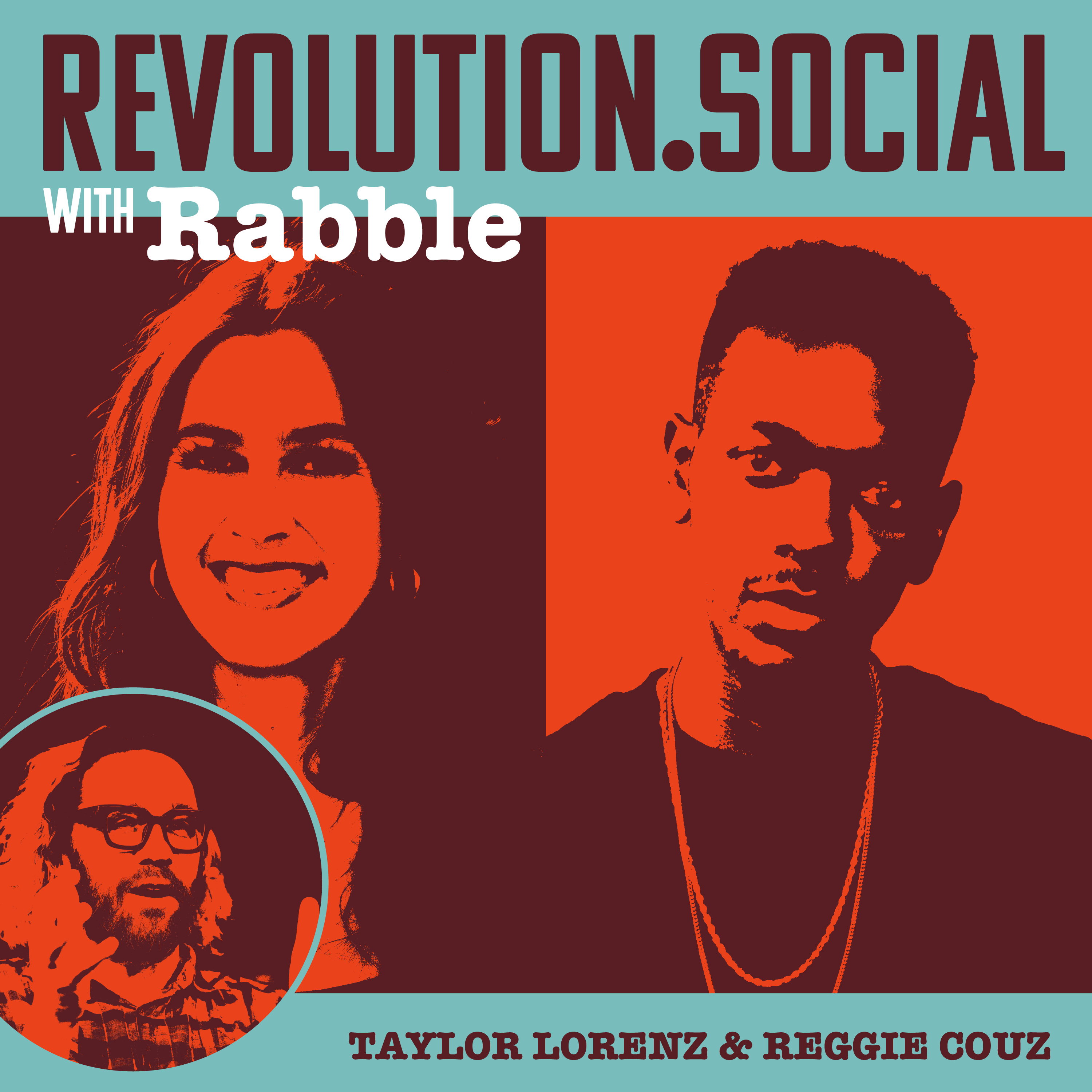
At VidCon 2026, journalist Taylor Lorenz, sat down with Rabble and creator, Reggie COUZ, to discuss social media’s bad reputation and explore whether it’s possible for social media to actually be good for you.
In their chat, they make a case for a different path forward not just for creators, but for anyone who spends time on the internet. Reggie shares the disorienting experience of having his content flagged with no explanation and with no recourse, which Rabble points out is because the social media giants have consolidated all of the power to just a few key...
Learning from Twitter’s Chaos for Divines Comeback!
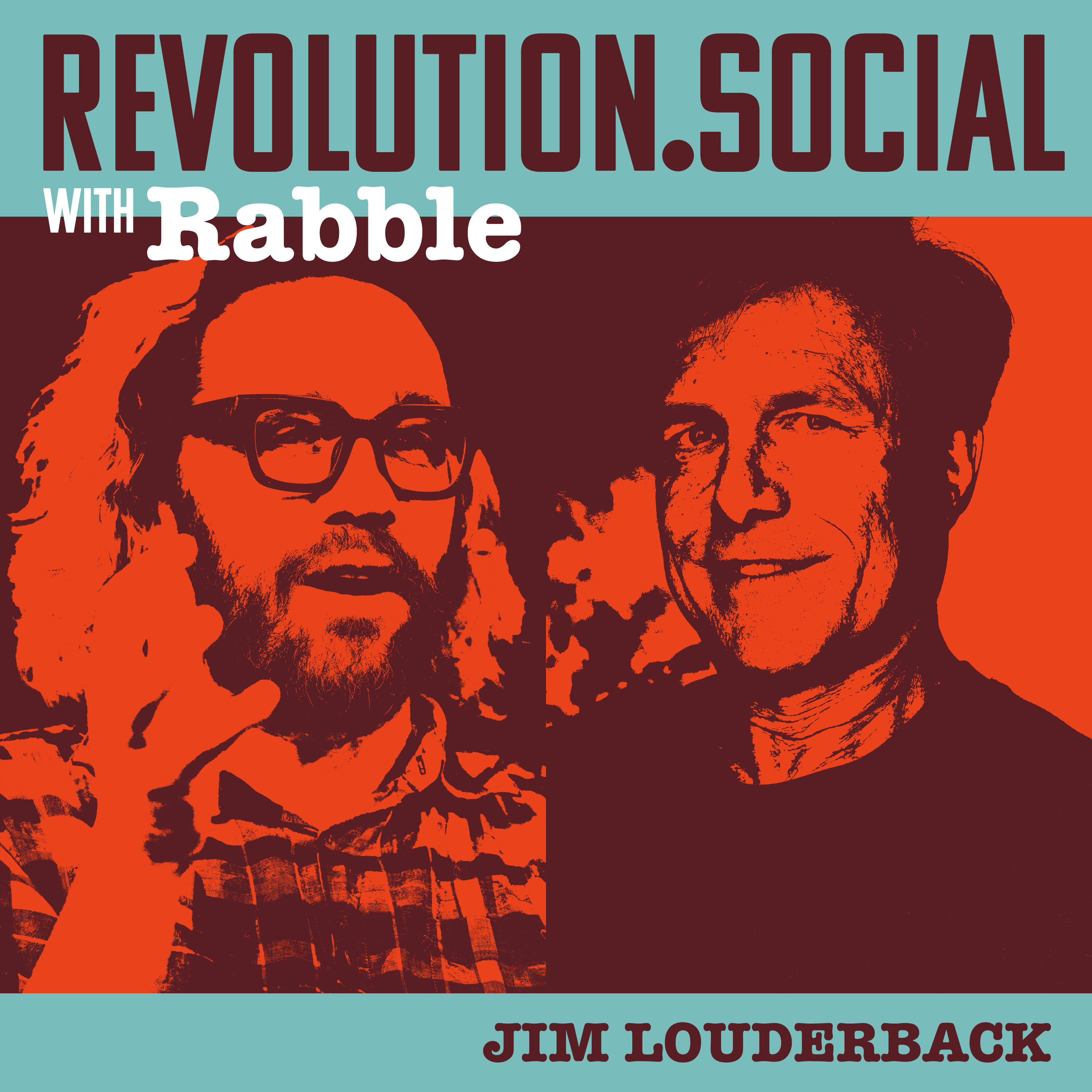
The tables have turned! In this episode, CEO of VidCon Jim Louderback asks Rabble about his time as Twitter’s first employee, the chaotic rise of social media, and what the future of a decentralized social media world can look like.
Rabble talks about what he learned and how he's using those learnings to revive Vine in a way where creators keep ownership of their content, their audience, and their income. He talks about Twitter's early days, why podcasting never fell into the same trap as the rest of internet media, and what Divine is doing to gi...
Rebuilding Social Media From Scratch!
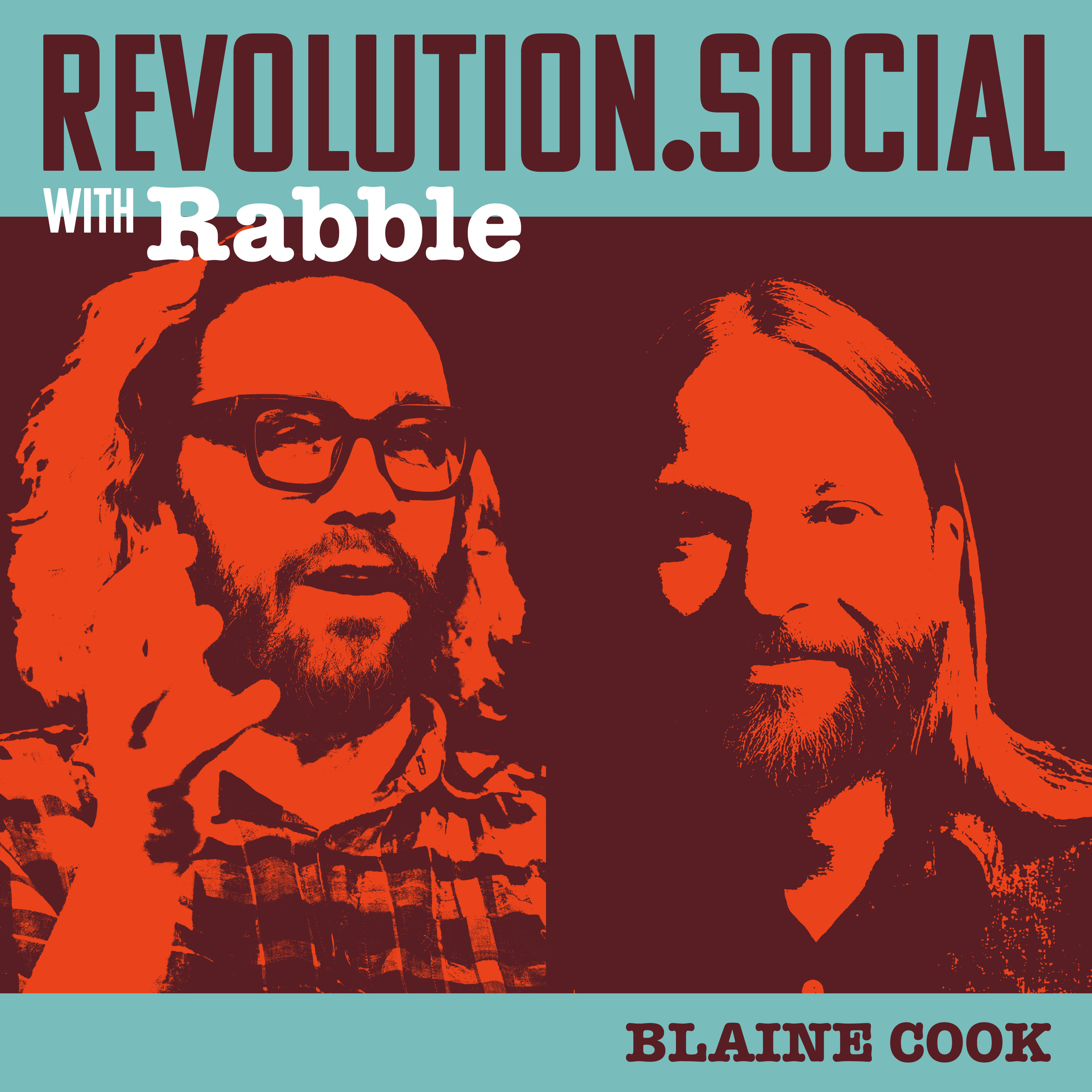
What happens when the person who once architected one of social media’s biggest platforms decides it needs to be entirely re-thought?
From day one Blaine Cook helped build Twitter creating the @ mention, OAuth, and numerous technologies that still quietly power the internet. Disillusioned by what social media has become, he stepped back to rethink it entirely.
In this episode, he chats with Rabble about Twitter's early chaos, the decisions that shaped it, and why he refuses to accept that these platforms can't be changed. Today he’s building a be...
Is the Saudification of America Underway?
From sitting next to Bezos to fighting from outside The Washington Post, Karen Attiah refuses to give up.
Karen Attiah went from a grad student cheering on the Arab Spring to The Washington Post’s Global Opinions editor who hired Jamal Khashoggi. When she was fired over benign comments about Charlie Kirk she took to the internet and continued to use her knowledge of technology to speak truth to power. In this episode, she chats with Rabble about how social media brought her to journalism, institutional power, the rise of authoritarianism, and how we co...
Vine Was Chaos. That’s Why It Worked.
What happens when you take Larry King’s studio, a crack production team, improv comedy, internet chaos, and the earliest generation of Vine creators?
You got Behind The Vine.
Eric Artell, the former host of Behind the Vine, joins Rabble for a deep dive into the golden age of Vine, the birth of creator culture, and the internet before every platform became an engagement machine. From interviewing rising Vine stars to witnessing the mental health realities behind online fame, Eric shares stories from one of social media’s weirdest and most infl...
OG Viner on How the Creator Economy is Broken
He hit a million followers on Vine before “creator” was even a job title. Now Reggie Couz (an OG Viner) sits down with Rabble to answer the question that haunts every creator: Wwhat happens when the platform you built your career on decides it doesn’t need you anymore?
From mustaches and wigs in his mom’s New Jersey house to Vine Meetups in LA, Reggie traces how he became an internet star and why he’s now leaning in on decentralization and the revival of 6-second looping videos on Divine. It’s a conversation about creativity, c...
OG Viner on How the Creator Economy is Broken
He hit a million followers on Vine before “creator” was even a job title. Now Reggie Couz (an OG Viner) sits down with Rabble to answer the question that haunts every creator: Wwhat happens when the platform you built your career on decides it doesn’t need you anymore?
From mustaches and wigs in his mom’s New Jersey house to Vine Meetups in LA, Reggie traces how he became an internet star and why he’s now leaning in on decentralization and the revival of 6-second looping videos on Divine. It’s a conversation about creativity, c...
How Social Media Platforms Use Regulation To Stifle Competition
Are we regulating the wrong tech problems? Many opponents of Big Tech cheered recent lawsuits that found Meta and YouTube liable for violating consumer protection laws and designing their products to addict kids and teens. But in the battle over user safety, is free expression going to end up as a casualty? In this episode of Revolution.Social, Rabble (Twitter’s first employee) sits down with two influential voices in digital media: Mike McCue (CEO of Flipboard) and Mike Masnick (Founder of Techdirt). McCue and Masnick explain why social media regulations could have unintended consequences. Masnick cites a 2016 carveout to Se...
Can We Bring Vine Back From the Dead?
Is 2026 the new 2016? Back then, we didn't know that Facebook could win or lose elections, and become weaponized, that Gamergate-style harassment would take over politics, or that we were about to lose the creative, absurd, and sometimes brilliant short-form video platform Vine. Here's the good news: We're going to try to recapture the magic of Vine. Rabble’s new app, Divine, is available now at Divine.video and the links below. To celebrate Divine's launch, we brought back two of our favorite podcast guests: journalist & founder of User Mag, Taylor Lorenz; and the host of the podcast "There Are No Gi...
Why the Algorithm Loves a Villain, And How to Beat It
When the internet is full of distortions, fake news, and AI-generated slop, how can facts and journalism rise to the top? Former BBC and Vice journalist Sophia Smith Galer has one possible way to beat the misinformation and exploitation. Her app Sophiana writes "algorithm-ready" video scripts for journalists and experts, to cut through the noise and help them go viral. In this episode of Revolution.Social, Rabble (Twitter’s first employee) sits down with Sophia to talk about her reporting on our broken digital discourse, as well as her new book "How to Kill a Language: Power, Resistance, and the Ra...
Why does the internet feel worse than it used to?
From scams and spam to platforms we don’t control, many of the systems shaping our online lives feel increasingly broken. In this episode of Revolution.Social, Rabble (Twitter’s first employee) sits down with Molly White, software engineer, Wikipedia editor, and creator of “Web3 is Going Just Great”, to unpack what’s actually gone wrong, and whether it can be fixed. Molly has spent years documenting the realities behind crypto and the modern internet, from high-profile collapses to the incentives that allow scams and bad actors to thrive. Together, they explore: Why Wikipedia still works as a model of the “digit...
Ethical Venture Capital: Why Social Media Needs a Conscience (with Brad Burnham & Zoe Weinberg)
In an era of hypergrowth and enshittification, can venture capitalists win by investing with conscience? Today on Revolution.Social, Rabble talks to Union Square Ventures co-founder Brad Burnham and ex/ante founder Zoe Weinberg about digital agency, human rights, and tech that makes the world more inclusive and democratic. "One of the broader objectives of ex/ante is to think about how do you move beyond surveillance capitalism?" Zoe says. "And the irony is not lost on me that venture itself is part of what created it. And so I think we have to be intellectually honest about that and al...
Escaping Algorithmic Binds: Creators vs. Corporate Platforms (w/ Bridget Todd & Rudy Fraser at SXSW)
The biggest social media platforms in the world have alienated their users and trapped them inside algorithms that only serve corporate interests. But there is good reason to have hope for the future of decentralized social apps, made for and by their communities. In this live interview recorded at SXSW 2026 in Austin, Texas, Rabble speaks with Rudy Fraser, the creator of Blacksky Algorithms, and Bridget Todd, the host of the podcast There Are No Girls on the Internet and an affiliate at Harvard University's Berkman Klein Center for Internet and Society. "I want to see more optimistic visions of the...
What Creators Can Do & AI Can’t (with Jim Louderback)
Jim Louderback is a media pioneer: a journalist and columnist who went on to become the CEO of the internet-based television network Revision3, and later of the global events business, VidCon. Today, as the editor of the popular Inside the Creator Economy newsletter, he is thinking a lot about how creators can respond to AI. "What are the things that they can uniquely do that AI can't?" he asks. "If you don't lean into the things that make you uniquely human ... I think we then just end up in this one-to-one world, where all media is crafted specifically 100% for us...
An Alternate History of Social Media (with Ben Werdmuller)
Ben Werdmuller is the Senior Director of Technology at ProPublica and a seasoned technologist who has spent his career building platforms that prioritize social impact and integrity. In 2004, he co-founded the open-source social networking software Elgg, which for more than 20 years has served as an alternative to Facebook for governments, schools, and political movements around the world. "They are very similar," Ben says of Elgg and Facebook. "PHP-based social network[s], both heavily inspired by LiveJournal ... They took different paths and now Mark has a private Hawaiian island, and I don't. And also, Mark has undermined democracies and been culpable...
Ethics Have Become Optional in Big Tech. We Can Do Better. (with Alex Komoroske)
Alex Komoroske spent over a decade at Google overseeing key initiatives for ads, Chrome, and Maps, before running Corporate Strategy at Stripe. At heart, he's a champion for the open web. Today, as the CEO and co-founder of Common Tools, Alex says technologists must lean into ethics and away from short-term results. "We're in the late stage of this extractive kind of thing, where we're all just trying to wring more out of these walled gardens," Alex adds. "And what bothers me is that all of us seem to have forgotten that. And everyone's like, in this zombie state: 'Well...
Silicon Valley Has Lost Its Moral Compass (with Anil Dash)
Anil Dash is a pioneering technologist, advocate for ethical tech, and former CEO of Glitch, who currently serves on the board of the Electronic Frontier Foundation. Looking back on his career, he says Silicon Valley has lost its moral compass because it no longer responds to shame. "You stopped being able to say, don't do this thing, it makes you look bad," Anil says. "Facebook never cared about that. And most of the product managers at OpenAI used to work at Facebook.” “If [they] were a person that joined Meta after they enabled the Rohingya genocide and then [they] went to w...
“I've Never Been More Optimistic” (Flipboard’s Mike McCue On the Open Social Web)
Mike McCue has seen a lot of changes over the years to the open web. He was an executive at Netscape, which helped liberate the web from AOL's walled garden; he served on the board of Twitter but wasn’t able to prevent it from abandoning its open API ecosystem; and now, as the CEO of Flipboard, he's building towards a more open future. “I've never been more optimistic than I am now about how the internet is going to develop and how the social media world and ecosystem is going to develop into a much more open, connected experience for...
Building Community vs. Building an Audience (with VidCon’s Jacques Keyser)
VidCon programming director Jacques Keyser says there’s a big shift happening in social media: Creators who once lived and died by the algorithm are increasingly looking for ways to “own” their audiences. “No one can take your podcast away, no one can take your newsletter away,” Keyser says. “Once you've built that audience, that is yours, you own that … if you are on YouTube, if you're on TikTok, if you're on Meta, at any point you could violate one of the T's and C's [and lose your account].” VidCon got its start as a small event in a hotel lobby organized...
The Battle for Digital Freedom and Why KOSA Ain’t It (with Evan Greer)
Evan Greer is a director at Fight for the Future, the digital rights organization that helped organize the SOPA blackout and continues to fight for an internet where ordinary people have a voice. As a parent, a trans activist, and someone who's spent over a decade in the trenches of internet policy, she brings a unique perspective to the debate over how we protect kids online. “So many of these folks that say they want to protect kids are just not actually interested in listening to kids,” Evan says. “And it's really hard to protect kids when you don't listen to the...
An Update on diVine: Joyscrolling, AI Filtering, and Trust & Safety
Rabble and Alice Chan, Revolution.Social's host and executive producer, share an update on diVine, the new social video app that's bringing back the spirit of Vine and real human creativity (no AI content allowed!). "We're not anti-AI," Alice says. "We just believe that there is great power in human creativity and that humans have kind of had that power taken away from them involuntarily." Recording at the 1 Billion Followers Summit in Dubai, Rabble and Alice talk about how the diVine team is preparing to handle potentially millions of users, and how it’s partnering with trust and safety experts lik...
Open Source Safety Tools for Everyone (with Camille François)
Camille François, assistant professor at Columbia University’s School of International and Public Affairs, has spent her career at the frontlines of trust and safety, including as a principal researcher at Google and the Senior Director of Trust & Safety at Niantic; now the founding president of ROOST (Robust Open Online Safety Tools), she's working to make the safety tools used by big tech companies accessible to everyone. “What children face online right now, the state of the threat is so far ahead from the current state of the defenses,” Camille says. “We know the defenses are brittle. We know the defen...
Social Media Should Be Public Infrastructure (with Ben Cerveny)
"My thesis is that humans invent things all the time, and for the first 30 years, we call them technology," says Ben “Neb” Cerveny, president of the Foundation for Public Code. "And then if they work, we call them infrastructure." Ben was part of the original team that built one of the defining Web 2.0 platforms, Flickr, and he even gave Flickr its name. Currently, he is applying what he learned from building digital communities to the next wave of software, web services, and urban planning; Foundation for Public Code, he says, has helped convince most of Europe’s governments that tech solutio...
AI Slop Is Killing the Joy of the Internet (with Bridget Todd)
Bridget Todd is the host of the podcast There Are No Girls on the Internet, a fellow at Harvard's Berkman Klein Center, and a longtime commentator on how platforms shape culture. And she says the rise of AI-generated videos has turned her — an OG superfan of Vine — against short-form video altogether. "I can't trust that any of these are real cats doing cute things," Bridget says. "It's completely turned me off of a kind of content that I've been enjoying for decades." Today on Revolution.Social, Bridget and Rabble discuss what diVine needs to do to bring back the joy of V...
[Re-Air] What's Next for Jack Dorsey After Twitter and Bluesky
![[Re-Air] What's Next for Jack Dorsey After Twitter and Bluesky episode artwork](https://d3t3ozftmdmh3i.cloudfront.net/staging/podcast_uploaded_episode/46229419/0763509437294265.jpg)
Happy new year to all! Today, we're re-airing the first episode of Revolution.Social, an interview with Jack Dorsey. We'll be back next week with a new interview about the future of social media. Twitter never should have been a traditional tech company, says Twitter co-founder and former CEO Jack Dorsey. Instead, it should have been designed as a protocol — like email, or podcasting. “That was the pure expression of it from day one,” Dorsey says. “And it was never really allowed to be that because it was on this fast track to becoming a public company.” Today on Revolution.Social, Do...
Decentralized Social Media for 40 Million+ Users (with Bluesky’s Jay Graber)
When Bluesky hit its millionth user, it had fewer than 10 employees; today, it has more than 40 million users, but only 30 workers; that means that “everyone on the team wears a lot of hats,” says Bluesky CEO Jay Graber. It also makes it much harder to comply with regulations like the new wave of age verification laws, which have been designed for Meta-sized social media companies. “There's a whole patchwork of legislation [in different jurisdictions] … these massive nation state-sized corporations are just going to throw 10,000 people at it and comply,” Jay says. “And we have a tiny team of five product devs trying...
Team Human vs. Tech Monopolies (with Douglas Rushkoff)
Douglas Rushkoff is a media theorist, author, and host of the Team Human podcast, who has been advocating for human-centered technology since the early '90s. He believes venture capital turned social media into a strip mall, but that its fundamental values can be reclaimed and re-invented. “It was a wonderful chaotic thing,” Douglas says about Twitter. “It was not a mean, treacherous, troll-baiting, horrible thing … the bias was towards collaboration, cooperation, and certain social norms that emerged naturally. It didn't turn fucked-up and evil until the platform became about monetizing things." Today on Revolution.Social, Doug and Rabble discuss how the...
Defending Digital Rights in the Surveillance Era (with Jillian York)
We need a more diverse approach to internet governance, says Jillian York, the director of International Freedom of Expression at the Electronic Frontier Foundation (EFF). At the EFF, Jillian has studied the global impact of social media policies and advocated on behalf of global activists and others whose voices are often suppressed. Today on Revolution.Social, she and Rabble talk about the challenges of content moderation, the importance of end-to-end encryption, and the unintended consequences of age-verification legislation aimed at protecting minors on the internet. They also discuss the theft of copyrighted works that helped train AI large language models, a...
Enshittification and “Breaking Kings” (with Cory Doctorow at Web Summit)
In this live interview recorded in November at Web Summit 2025 in Lisbon, Cory Doctorow returns to Revolution.Social to talk about building alternatives to “enshittified” digital platforms. "Apps are websites that are illegal to protect your privacy while you use them," Cory explains. "The reason companies are so horny to get you to use their apps is because they can't be modified in that way. No one's ever installed an ad blocker for an app." Cory and Rabble also discuss how Europe could export jailbreaking tools as industrial policy, why other countries should respond to American tariffs with a targeted strike...
"Our Mission Is To Keep Flickr Pictures Visible for 100 Years" (with George Oates)
Designer, community-builder, and Flickr co-creator George Oates is now the executive director of the Flickr Foundation, which is working to preserve the platform's 21 years of photos for the next 100 years. She helped create Flickr's community guidelines, designed its nested privacy controls, and launched the Flickr Commons program, which partners with more than 100 institutions to make publicly held photography collections more accessible. “The Flickr community loved it, and actually would help the institutions by describing the photos, and in some cases identifying things like the location they were taken, who was in them, the events surrounding them, stuff like that,” George says...
Vine Revisited and The Fight Against AI Slop
Rabble and Alice Chan, Revolution.Social’s host and executive producer, talk about the launch and overwhelming reception to diVine, a new social video app that resurrects the six-second looping format of Vine and features archived original Vine content. This time, however, the app is built on open protocols and a promise to focus on real content made by real people, not AI. Within hours of announcing diVine at Web Summit in Lisbon, it had 10,000 signups on TestFlight, Apple’s developer testing app, and its beta program was full. Its early success is proof that new social apps can be buil...
Building Human Rights Into the Social Web (with Mallory Knodel)
Mallory Knodel is the executive director of the Social Web Foundation and former CTO of the Center for Democracy & Technology. Her roots go back to the activists, anarchists, and dreamers who built the open web, and then lost control of it to big business. “Especially in the smaller circles of digital human rights organizations and so on, [they] really understood that everything that they would work so hard for … could just be so easily undone from the top-down of a huge corporate,” Mallory says. “Nothing was durable at all.” Today on Revolution.Social, Mallory and Rabble talk about who controls Web 2.0 an...
How to Overthrow Dictators Without Violence (with Srđa Popović)
Political activist Srđa Popović led the movement that overthrew Serbian dictator Slobodan Milošević in 2000. Since then, his organization, Canvas, has trained activists in over 50 countries how to build successful nonviolent movements—and he says most people misunderstand how change actually happens. “When we start working with them, they often say, ‘Oh, I'm too busy doing things, I don't have time for planning,’” Srđa says. “If I was given a dime every time I've heard that, I would probably have a private plane. Unfortunately I wasn't, so I drive a 2012 old Buick.” This week on Revolution.Social, Srđa and Rabble talk ab...
Banning Kids From Social Media Isn’t the Answer (with Pamela Wisniewski)
Pamela Wisniewski is one of the leading researchers on how social media affects teens, working at the UC Berkeley-affiliated International Computer Science Institute. In an era of moral panics around youth online safety, she believes the solution is to empower teens and teach them resilience, rather than restricting them. "We treat it as if our teens should know how to act online without any kind of training," Pamela says. "We don't give our 16-year-olds the keys to our car and just say, 'Hey, go at it.' But that's what we're doing with the internet." Today on Revolution.Social, Pamela...
Jeff Jarvis on the Death of Mass Media, Twitter vs. UberMedia, and Section 230’s Brilliance
In books like The Web We Weave and podcasts such as Intelligent Machines, journalist and educator Jeff Jarvis — formerly the director of the Tow-Knight Center for Entrepreneurial Journalism at the City University of New York — has traced the history of media from the Gutenberg press to AI. And he says that today’s attempts to clamp down on the internet are nothing new. "Whenever there's an explosion of speech, those who controlled speech resent it," Jeff explains. "They try to fight it, they try to control it, they launch into a moral panic about it." Today on Revolution.Social, Jeff and Ra...
Harper Reed on Building for Obama, Social Media for Bots & Why Tech Isn't Always the Solution
2389 Research CEO Harper Reed was previously the CTO of President Barack Obama's 2012 reelection campaign, where he helped redefine modern political technology. Before that, he was CTO of Threadless, the crowdsourced T-shirt company that accidentally invented crowdsourcing. Harper has spent his career building systems that bring people together online—but also exploring why technology often produces unintended consequences. He recently published a paper on creating a social media ecosystem for AI agents, raising urgent questions about how humans and machines will interact in decentralized environments, and asks deep questions about the future of work in an AI world. Today on Revolution.So...
“Think Like a Commoner" Author David Bollier on the Commons & Why Open Platforms Aren't Enough
When a community wants to organize itself, it might decide between private ownership and state control. David Bollier has spent decades arguing that that’s a false binary, and that there is a better way: The commons. "The commons is as old as humanity," David says. "It's kind of the default setting for coordination and governance. It's just in the past 200 years or so, we've tricked ourselves into thinking that we're isolated individuals and that the social context and the Earth is irrelevant." Today on Revolution.Social, David and Rabble talk about why a platform being “open” isn’t enough to keep...
“The Etymology Nerd” Adam Aleksic on Algospeak, AI Slop, and the End of Writing
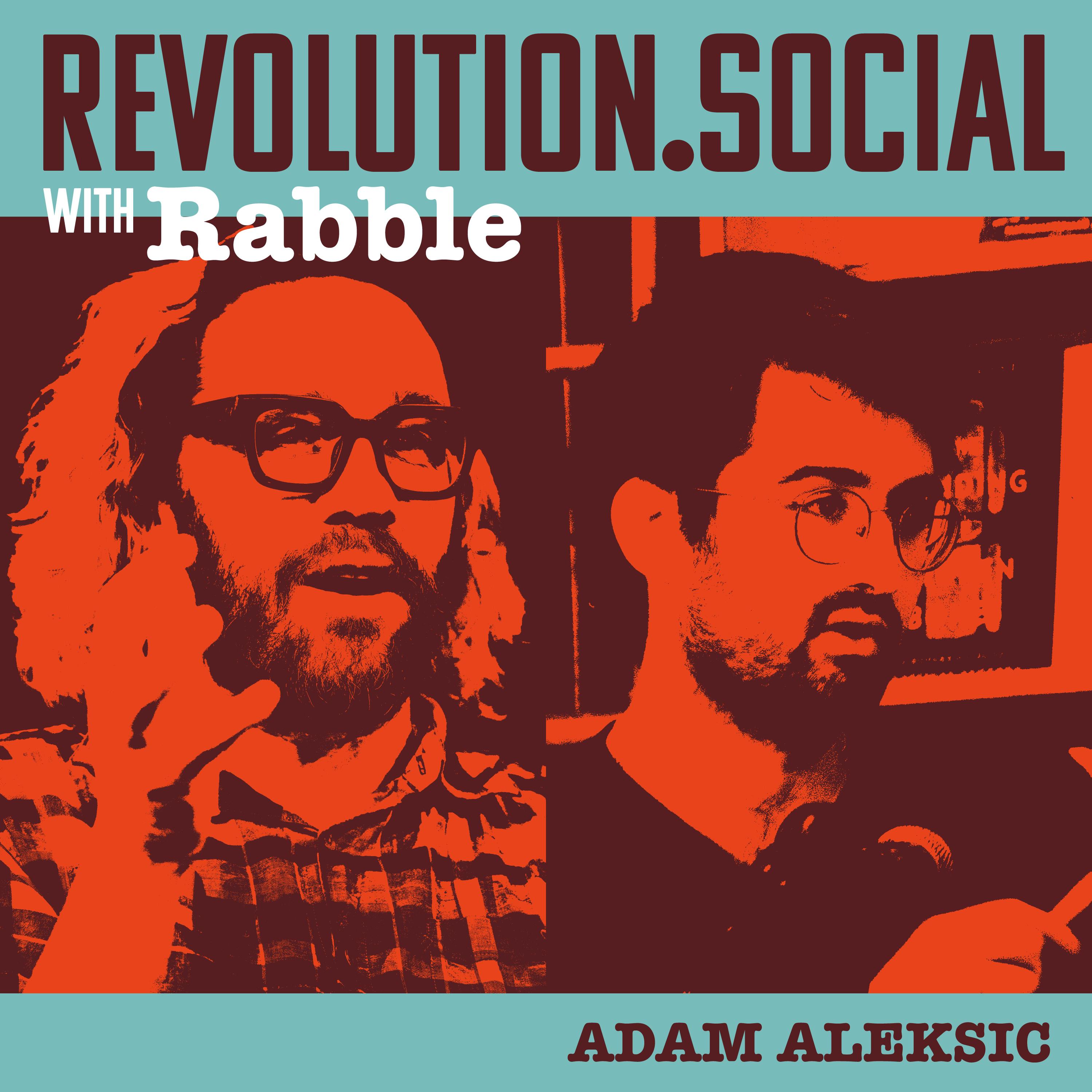
Adam Aleksic, known to his social media followers as the “Etymology Nerd,” has built a massive audience by decoding the origins of words, accents, and memes. In his new book Algospeak: How Social Media is Transforming the Future of Language, he talks about the ways our social media algorithms have accelerated the “context collapse” that changes the words we use. “You perceive this creator using a word like, I dunno, rizz, ate, slay, served,” Adam says. “These are all from the ballroom scene in the 1980s, this gay, Black, Latino space. But these words are now just being used by white girls. I...
