Beyond the Couch: AI in Psychology

Beyond the Couch: AI in Psychology bridges the gap between psychology and artificial intelligence, offering psychologists across all specialties clear, actionable insights into how AI is transforming the field. Whether you're a clinician, researcher, educator, organizational psychologist, or working in any psychological specialty, this podcast delivers expert perspectives on ethical integration, practical applications, and future developments to help you confidently navigate the digital transformation of our profession. Presented by ABPP and Wayde AI, with sponsorship from the National Register of Health Service Psychologist, this collaboration brings together psychological expertise and technological innovation to explore how AI can enhance psychological work...
Rethinking Psychological Care in the Age of AI with Dr. Leanna Fortunato

In this episode of Beyond the Couch: AI in Psychology, Dr. Ernest Wayde sits down with Dr. Leanna Fortunato, licensed clinical psychologist and Director of Digital Health and Innovation at the American Psychological Association (APA), to explore how artificial intelligence and digital mental health tools could reshape psychological care. Drawing on her experience in clinical practice and digital health, Dr. Fortunato discusses opportunities to move beyond the traditional once-weekly therapy model through earlier intervention, personalized support, and tools that help patients apply therapeutic strategies between sessions. She emphasizes that technology should expand care options while keeping clinical judgment and...
AI in Psychology: Protecting Human Connection and Clinical Judgment with Dr. David Luxton

In this episode of Beyond the Couch: AI in Psychology, Dr. Ernest Wayde sits down with Dr. David Luxton, a licensed clinical psychologist and affiliate professor at the University of Washington School of Medicine, to explore how artificial intelligence is changing psychological practice and what clinicians must preserve as these technologies advance. Drawing on his experience in behavioral health technology and AI research, Dr. Luxton discusses the potential benefits of AI-assisted clinical documentation, the importance of understanding how patients independently use AI for mental health support, and the risk of professional deskilling when clinicians rely too heavily on automated...
AI in Psychiatry: Clinical Judgment, Patient Risk, and Safety with Dr. Eric Lin

In this episode of Beyond the Couch: AI in Psychology, Dr. Ernest Wayde sits down with Dr. Eric Lin, a psychiatrist and clinical informatician at Stanford University School of Medicine and VA Palo Alto, to explore the growing role of artificial intelligence in mental health care and the challenges of evaluating its safety. Drawing on his clinical experience and research into AI-associated psychosis concerns, Dr. Lin discusses how interactions with AI chatbots may intersect with psychological vulnerabilities, the possible relevance of shared delusional beliefs, and why seemingly appropriate chatbot responses may fail to account for individual patient needs. He...
AI in Psychology: Clinical Judgment, Ethics, and the Future of Mental Health Care with Australian Psychologist Dr. Erika Penney

In this episode of Beyond the Couch: AI in Psychology, Dr. Ernest Wayde sits down with Dr. Erika Penney, principal clinical psychologist at Schema Therapy & Supervision Australia, to explore how artificial intelligence is reshaping psychological practice, clinical education, and mental health care. She explains why psychologists and educators need to rethink traditional approaches to AI, including how clinical training can prepare future psychologists to use these tools responsibly while maintaining independent clinical competence.
The conversation examines AI’s potential to support psychologists through administrative tasks, AI scribes, research, literature reviews, and between-session therapeutic work, while em...
AI, Artificial Intimacy, and the Illusion of Empathy with Dr. Sherry Turkle

In this episode of Beyond the Couch: AI in Psychology, Dr. Ernest Wayde sits down with Dr. Sherry Turkle, MIT professor, clinical psychologist, and author of Artificial Intimacy, to explore how artificial intelligence is reshaping human connection, empathy, and relationships. Drawing on decades of research into the emotional impact of technology, Dr. Turkle explains how AI chatbots can create the feeling of being understood without the lived experience or mutual engagement that defines human empathy. She examines how emotionally responsive AI companions may change our expectations of relationships, making human interactions seem increasingly difficult by comparison.
<...AI in Mental Health: Why Clinical Judgment Still Matters with Dr. Caitlin Stamatis

In this episode of Beyond the Couch: AI in Psychology, Dr. Ernest Wayde sits down with Dr. Caitlin Stamatis, a clinical psychologist who has spent more than a decade working across digital mental health, behavioral health research, and technology, and now leads research at Slingshot AI. Dr. Stamatis shares how her skepticism of AI began to shift after seeing purpose-built mental health systems and emerging research such as the Therabot trial. They explore where AI may extend mental health support, from personalized clinical materials and assessment tools to support between traditional appointments, while examining why the vocabulary of therapy...
AI Beyond the Therapy Session: Human Connection, Family Care, and AI with Dr. Shiri Sharvit
In this episode of Beyond the Couch: AI in Psychology, Dr. Ernest Wayde sits down with Dr. Shiri Sharvit, a clinical psychologist, researcher, technology entrepreneur, CEO and cofounder of Resolve Together, and Distinguished Professor of Research at Palo Alto University. Drawing on more than two decades in clinical psychology and years of work integrating technology into behavioral healthcare, Dr. Sharvit explores what makes generative AI different from earlier digital interventions and how it can support clinicians with documentation, assessments, continuous support, and care between sessions. She argues that human connection, clinical judgment, and understanding people in context must remain...
AI and Mental Health: The Promise, Risks, and Future of AI Therapy with Dr. Hiba Arnaout

In this episode of Beyond the Couch: AI and Psychology, Dr. Ernest Wayde sits down with Dr. Hiba Arnaout, a postdoctoral researcher at the Ubiquitous Knowledge Processing (UKP) Lab at TU Darmstadt. Dr. Arnaout’s research focuses on natural language processing, knowledge graphs, digital mental health, scholarly AI, and responsible AI. She discusses how AI is already being used for mental health support, particularly when people face barriers to traditional therapy, and explores how AI could help improve access and support therapists with tasks such as therapy session summaries and clinical insights.
The conversation also examines the ri...
AI Is Moving Faster Than Governance. What Should Healthcare Do?

In this episode of Beyond the Couch: AI in Psychology, Dr. Ernest Wayde examines what happens when AI capabilities and adoption move faster than the systems designed to govern them. Drawing connections between recent AI cybersecurity testing, rapid AI adoption in healthcare, shadow AI, and evolving clinical workflows, he argues that responsible AI governance must extend beyond vendor approval, security reviews, and initial validation. Organizations also need to understand what AI systems can access, what actions they can take, how their capabilities change, and how unexpected behaviors will be identified after deployment.
Dr. Wayde also explores a...
The Future of AI in Mental Health: Safety, Therapy, and Human Judgment with Dr. Alyssa Dietz
In this episode of Beyond the Couch, Dr. Ernest Wayde sits down with Dr. Alyssa Dietz, a clinical psychologist whose career spans academia, clinical practice, digital therapeutics, and technology-enabled mental health care. Dr. Dietz shares how her work evolved from researching digital interventions and training future therapists to developing and evaluating AI-supported mental health tools. She discusses how AI can help expand access to evidence-based care, where it performs well in areas such as skills training and pattern matching, and why human clinical judgment, context, and nuance remain essential.
The conversation also explores what responsible AI looks...
AI in Mental Health: Why Human Connection Still Matters with Prof. Munmun De Choudhury

In this episode of Beyond the Couch: AI in Psychology, Dr. Ernest Wayde sits down with Prof. Munmun De Choudhury, J. Z. Liang Professor of Interactive Computing at Georgia Tech and a leading researcher in computational social science, human-computer interaction, and digital mental health. Her work focuses on understanding how digital technologies and online interactions shape mental health and well-being.
The conversation explores one of the biggest questions facing psychology today: How can we embrace AI in mental health without losing the human connection at the center of care?
Prof. De Choudhury explains why mental...
Think First, AI Second: Why Human Judgment Still Matters in Psychology with Dr. John Gavazzi
In this episode of Beyond the Couch, Dr. Ernest Wayde sits down with Dr. John Gavazzi, board-certified clinical psychologist, ethics educator, and former President of the Pennsylvania Psychological Association, to explore how psychologists can responsibly integrate artificial intelligence into clinical practice without compromising professional judgment or quality of care.
Drawing decades of experience in ethics, mental health law, and clinical decision-making, Dr. Gavazzi explains why AI should enhance, not replace, the thinking process of psychologists. He introduces the concept of "Think First, AI Second," arguing that clinicians must remain the originators of thought, using AI only after...
Building AI for Mental Health: A Computer Scientist’s Perspective with Zainab Iftikhar
In this episode, Dr. Ernest Wayde sits down with Zainab Iftikhar, a PhD candidate in Computer Science at Brown University whose research focuses on Human-Computer Interaction (HCI) and AI for mental health. As the first computer scientist featured on the podcast, Zainab offers a unique perspective on how mental health AI systems are designed, evaluated, and used in the real world.
The conversation explores why people turn to AI for emotional support, the benefits and risks of mental health chatbots, and what happens when users begin to rely on these systems in place of human connection. Zainab...
Psychology in the Age of AI - What Comes Next?
In the Season 3 premiere of Beyond the Couch: AI in Psychology, Dr. Ernest Wayde explores a question that is becoming increasingly urgent for psychologists, clinicians, educators, researchers, and organizational leaders: now that artificial intelligence is already part of our professional and personal lives, what is psychology responsible for?
Reflecting how the AI conversation has evolved over the past year, Dr. Wayde argues that the question is no longer whether AI is coming; it is already here. From clients consulting chatbots before therapy sessions to students using AI in education, clinicians leveraging AI for documentation, and researchers navigating...
Teaching Students to Think With AI, Not Around It with Dr. David Williamson Shaffer
In this episode of Beyond the Couch, Dr. Ernest Wayde sits down with Dr. David Williamson Shaffer, learning scientist, educator, and professor at the University of Wisconsin-Madison, to explore how artificial intelligence is transforming education, writing, critical thinking, and the future of learning.
Dr. David Williamson Shaffer shares his journey from classroom teacher to leading researcher in learning analytics and AI in education. He reflects on how the rise of computers, the internet, and now generative AI have fundamentally changed the way humans think, learn, and interact with information.
The conversation explores why traditional education...
AI, Therapy & Human Connection: What Psychologists Need to Know with Dr. Page Anderson
In this episode of Beyond the Couch, Dr. Ernest Wayde sits down with Dr. Page Anderson, clinical psychologist, researcher, and associate professor at Georgia State University, to explore how artificial intelligence is reshaping mental health care, psychology training, and the future of therapy.
Dr. Anderson shares her unexpected journey into digital mental health, from working in one of the earliest virtual reality exposure therapy companies to seeing firsthand how AI-powered assistive technology transformed her son’s independence and daily life. The conversation dives into the growing reality that people, especially younger generations, are already using AI tools fo...
Parenting Through the AI Era: What Every Parent Needs to Know with Dr. Amber Childs
In this episode of Beyond the Couch, Dr. Ernest Wayde sits down with Dr. Amber Childs, child and adolescent psychiatrist, Yale School of Medicine associate professor, and founder of Dr. Amber Childs Advisory. The conversation explores how artificial intelligence is reshaping the lives of teens, parents, clinicians, and the future of mental health care.
Dr. Childs shares how her unexpected journey into AI began during the COVID-19 pandemic, when she rapidly helped scale telehealth services for adolescent psychiatry at Yale. She discusses how teens are already integrating AI into their daily lives for learning, emotional support, curiosity...
How AI Is Reshaping PTSD Therapy and Clinician Training with Dr. Philip Held
In this episode of Beyond the Couch, Dr. Ernest Wayde interviews Dr. Philip Held, a clinical psychologist and researcher focused on improving PTSD treatment outcomes through AI and accelerated therapy models. The conversation explores how Dr. Held’s team developed “Socrates 2.0,” a multi-agent AI system designed to support cognitive restructuring through Socratic dialogue alongside evidence-based therapy.
Dr. Held explains how the system uses multiple AI agents to supervise and improve therapeutic conversations in real time, reducing looping behaviors and improving the quality of AI-assisted interactions. The discussion highlights how veterans are using AI as a practice space before...
How AI Is Changing Human Relationships and Mental Health with Dr. Rachel Wood
In this episode of Beyond the Couch, Dr. Ernest Wayde interviews Dr. Rachel Wood, a cyber psychology researcher, licensed professional counselor, and founder of the AI Mental Health Collective. The discussion explores how artificial intelligence is shifting the relational bedrock of society, noting that clients are increasingly bringing AI into their therapy sessions for advice, comfort, and validation.
Dr. Wood emphasizes that as AI usage becomes more common, therapists should prioritize clinician competence and practice informed consent. She advocates for a cross-disciplinary approach, urging mental health practitioners to collaborate with AI builders to establish safeguards, raise user...
Defining the Boundaries of AI in Mental Health with Dr. Shannon Wiltsey Stirman
In this episode of Beyond the Couch, Dr. Ernest Wayde interviews Dr. Shannon Wiltsey Stirman, a professor of Psychiatry and Behavioral Sciences at Stanford and co-director of the Center for Responsible and Effective AI Technology Enhancement for PTSD treatment (CREATE), discusses how large language models can support evidence-based mental health interventions, and can also be used to assist in training therapists through the use of simulated patients.
Dr. Wiltsey Stirman notes that while AI can be a powerful tool for tasks like clinical scribing and reflection, it should supplement rather than replace human therapists, especially regarding complex...
Understanding How Large Language Models (LLMs) Work with Dr. Ernest Wayde
In this episode of Beyond the Couch, Dr. Ernest Wayde reveals the real mechanics behind large language models like ChatGPT, demystifying what happens inside these systems when you use them. Whether you're a psychologist or healthcare professional, understanding this process is crucial for responsible use and interpreting AI-generated information accurately.
Takeaways:
Fluency does not equal accuracy. AI operates through pattern matching, not reasoning. Training data bakes in human bias. The "fine-tuning" stage reflects human values. Context is limited to the current prompt. Accountability remains with the professional.
Connect...
AI Ethics, Responsibility, and the Role of Humans in the Age of AI with Dr. Joanna Bryson
In this episode of Beyond the Couch, Dr. Ernest Wayde interviews Dr. Joanna Bryson, professor of Ethics and Technology in Berlin and advisor to organizations including the UN and EU, about what “AI ethics” really means. Dr. Bryson argues it’s not coherent to call AI itself ethical. She argues that the primary concern should be whether and how humans should build and deploy AI and how it may change societies. Dr. Bryson highlights recurring concerns like bias, but stresses broader failures around accountability, surveillance, deception, and weaponization, urging users to maintain agency, verify outputs, protect data, and avoid trusti...
AI and Teens: Navigating Mental Health in the Digital Age with Dr. Caroline Figueroa
In this episode of Beyond the Couch, Dr. Ernest Wayde engages with Dr. Caroline Figueroa, who discusses her extensive background in mental health, neuroscience, and AI. They explore how AI tools are being utilized by youth for emotional support, the implications for psychologists, and the importance of involving young people in the design and regulation of these technologies. The conversation highlights the need for responsible AI frameworks, discussing AI use with young people, and the challenges faced by mental health professionals.
Takeaways:
Many young people find AI chatbots helpful. Psychologists should ask about AI...Wellness AI for College Student Wellbeing with Dr. Ashleigh Golden
In this episode of Beyond the Couch, host Dr. Ernest Wayde sits down with Dr. Ashleigh Golden, a Stanford trained clinical psychologist and co-founder of WayHaven, to explore the transformative role of conversational AI in student wellness.
Dr. Golden and Dr. Wayde discuss the upstream model of care: using AI not as a replacement for therapy, but as a proactive tool to help students build social emotional skills and navigate campus resources before they reach a clinical crisis. Dr. Golden emphasizes that while technology is evolving rapidly, the clinician must remain in the driver’s seat, using th...
What AI Is Doing to Us as Psychologists with Dr. Ernest Wayde
In this episode, Dr. Ernest Wayde explores the integration of AI in psychology, discussing its practical applications, benefits, and challenges. He emphasizes the importance of ethical use, the impact on cognitive load, and the necessity of validation in AI outputs. The conversation highlights how AI can enhance efficiency in writing and decision-making while also stressing the need for critical thinking and professional responsibility in the face of rapidly evolving technology.
Takeaways
AI reduces cognitive load, allowing for more focus on judgment. Writing processes are transformed by AI, making it easier to start. Trust in...Will AI Replace Your Therapist? The Future of Mental Health Care
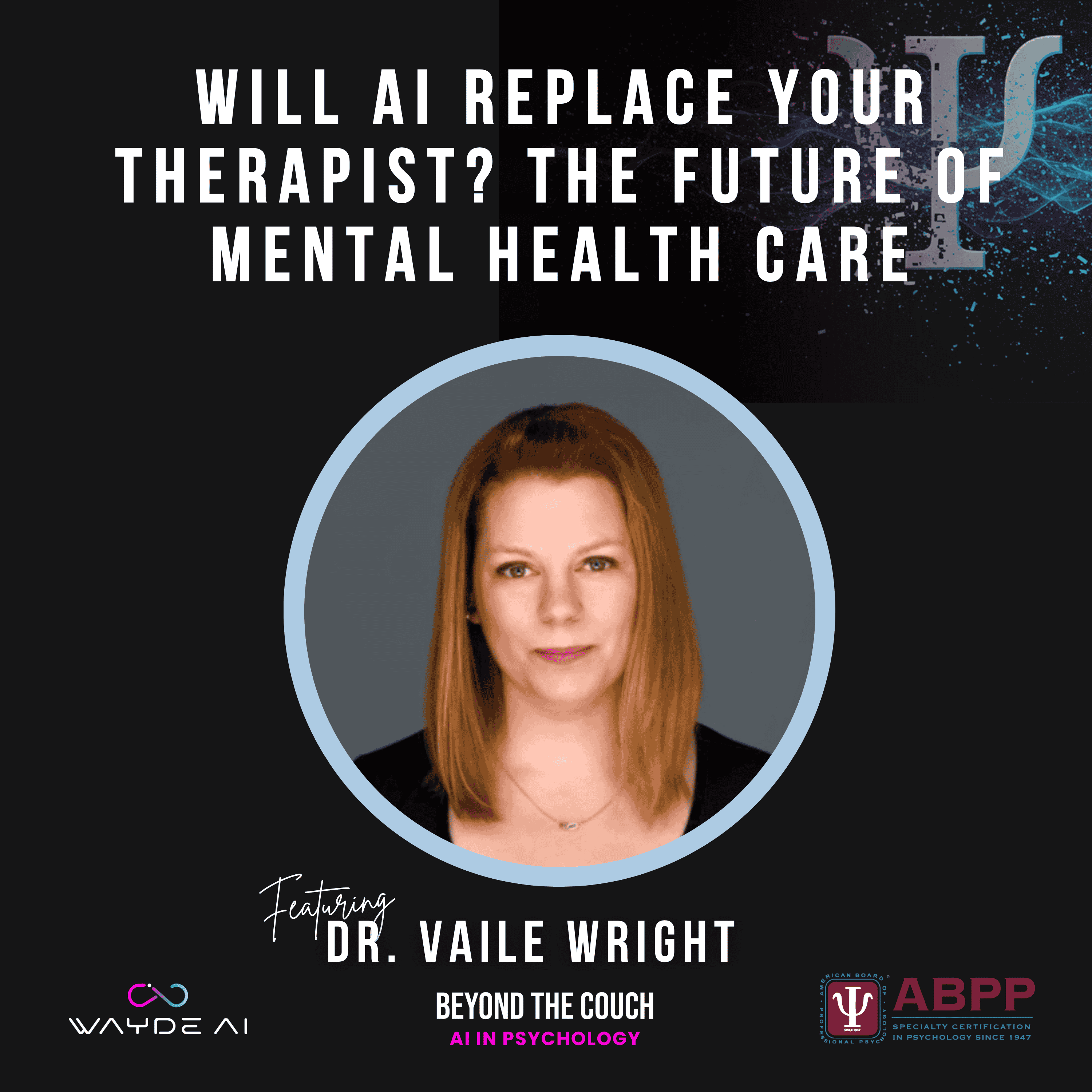
In this episode, Dr. Ernest Wayde interviews Dr. Vaile Wright, the inaugural senior director of the Office of Healthcare Innovation at the American Psychological Association. They discuss the intersection of AI and psychology, exploring how technology can improve mental health care, the hesitancy among psychologists to adopt AI tools, and the importance of maintaining human connection in therapy. Dr. Wright shares insights on the current landscape of AI applications in mental health, the role of policy and regulation, and the guidance provided by the APA for psychologists navigating this evolving field.
Takeaways
The...
When Chatbots Become “Best Friends”: Clinical Implications with Dr. Don Grant
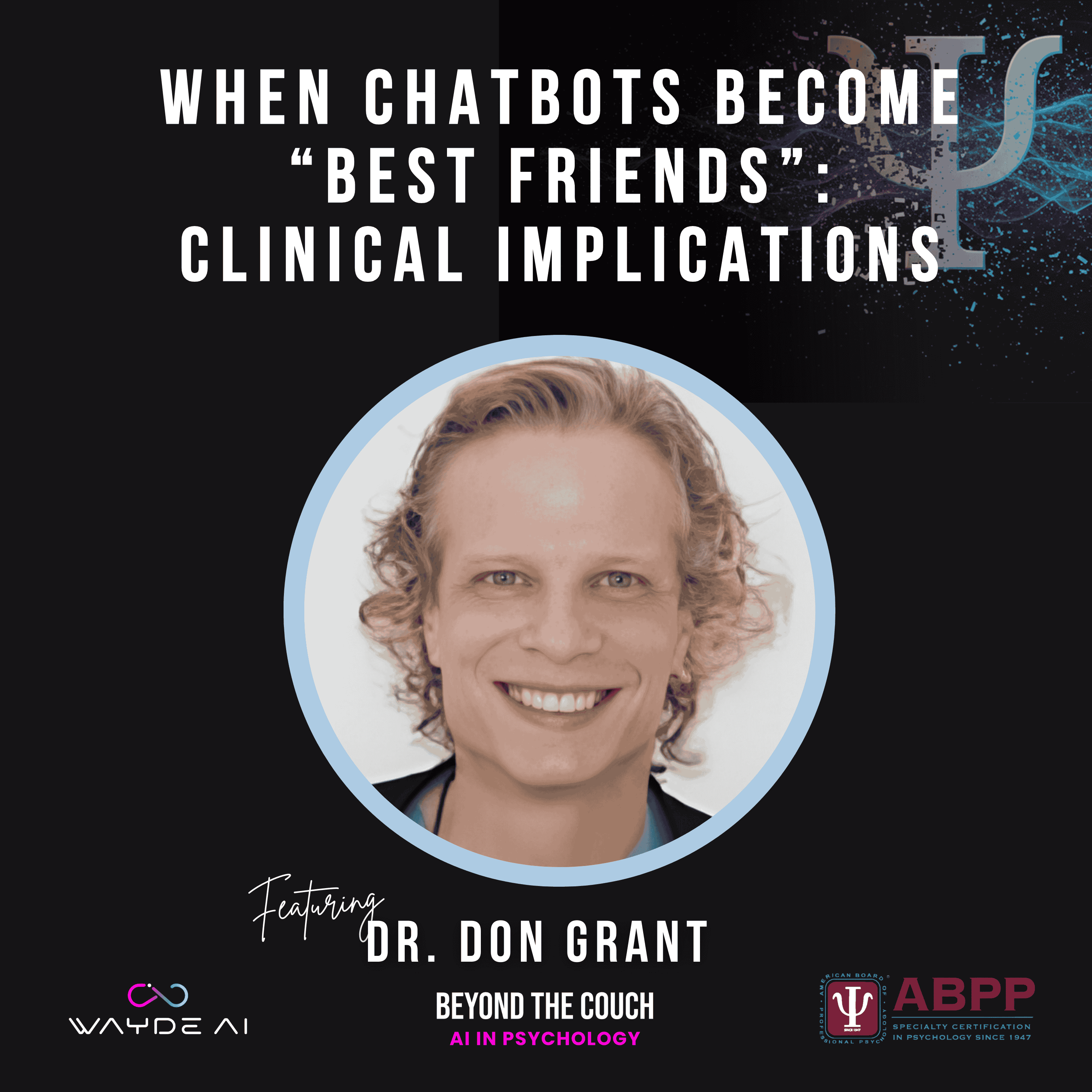
In this episode, Dr. Ernest Wayde interviews Dr. Don Grant, a media psychologist, about the intersection of AI and mental health. They discuss the implications of AI on socialization, the rise of chatbots, and the potential dangers of relying on AI for mental health support. Dr. Grant emphasizes the importance of understanding technology as a tool, the need for parents and clinicians to engage with children about their use of AI, and the responsibilities that come with it.
Takeaways
• AI has been embedded in many platforms for a long time, influencing user behavior.
...Navigating AI in Psychology: A New Era
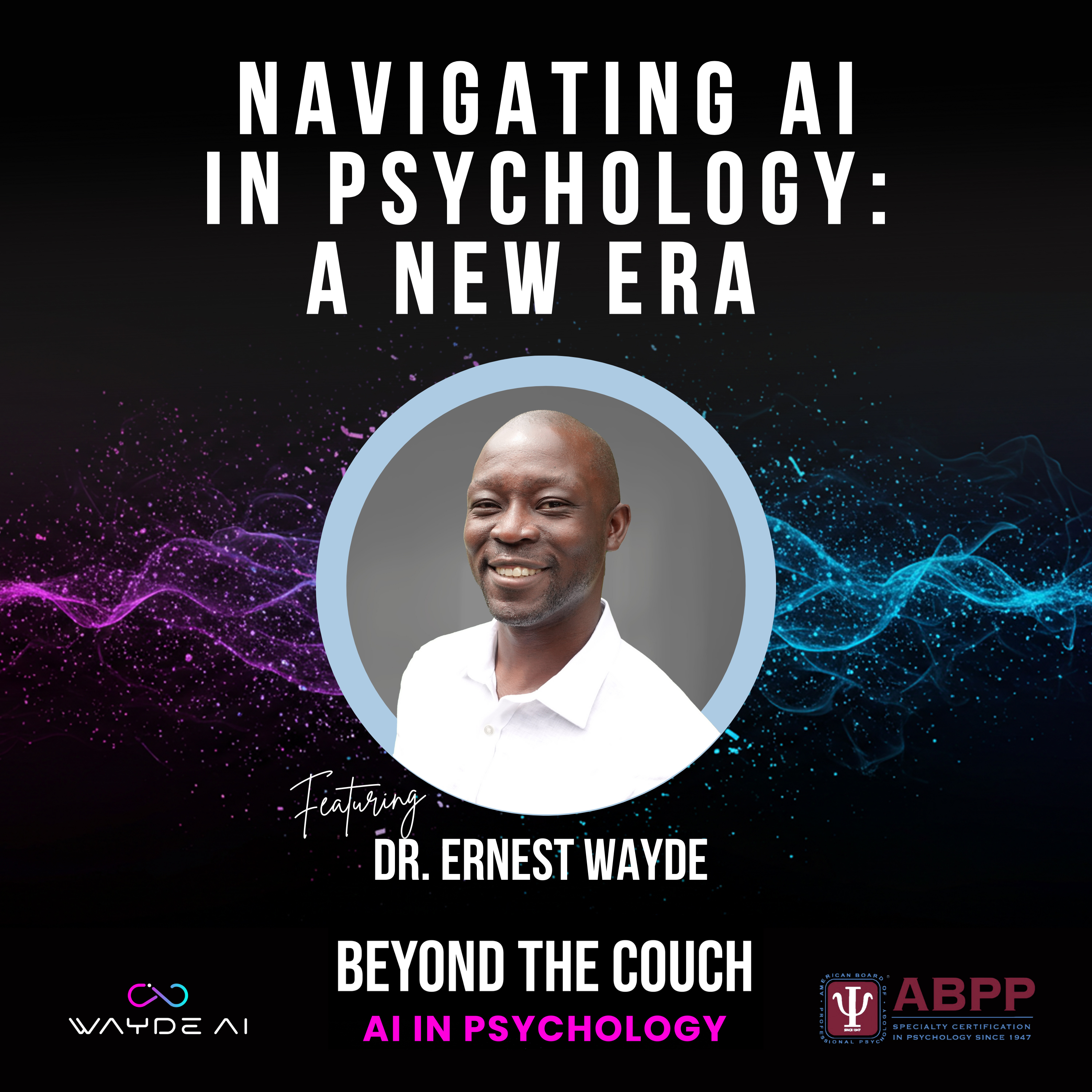
In this episode, Dr. Ernest Wayde discusses the intersection of AI and psychology, emphasizing the importance of understanding AI's limitations and the irreplaceable aspects of human psychological expertise. He explores the therapeutic relationship, highlighting the differences between human and AI interactions, and introduces the WAYDE AI Three Questions Assessment to help psychologists building awareness and make informed decisions about AI development related to their practice. The conversation aims to foster clarity and agency among psychologists as they navigate the evolving landscape of AI in mental health care.
Key takeaways include:
• AI cannot replace the irreducible co...
Dirty, Dull, and Dangerous: AI, Exposure Therapy, and the Future of Clinical Practice with Dr. Andrew Sherrill

In this episode, Dr. Ernest Wayde speaks with Dr. Andrew Sherrill, an Emory psychologist specializing in anxiety, PTSD, and OCD, to explore how AI can support—not replace—clinicians. Dr. Sherrill explains how automation can take on the dirty, dull, and dangerous tasks that bog down therapists, freeing them to focus on empathy and evidence-based care.
Drawing from exposure therapy, he offers a powerful parallel for psychologists learning to face their own “AI anxiety.” By approaching new technology the same way we help clients face fears—gradually, with curiosity and compassion—clinicians can engage with AI ethically, creatively...
Psychological Report Writing in the Age of AI: Human Judgment vs. Machine Speed with Dr. Adam Lockwood

What happens when AI can write a psychological report in under two minutes — and licensed psychologists take hours? In this episode of Beyond the Couch: AI in Psychology, Dr. Ernest Wayde talks with Dr. Adam Lockwood about the disruptive role of AI in psychological report writing.
They explore how AI compares to human-written reports, where clinicians see value and risks, and what this means for the future of psychology.
Key Takeaways:
AI-generated reports can match human quality in many areas — and sometimes surpass them in recommendations.Clinicians still prefer human summaries, but effect size diff...Navigating AI Ethics in Psychology with Dr. Lindsay Childress-Beatty

In this conversation, Dr. Ernest Wayde and Dr. Lindsay Childress Beatty explore the intersection of artificial intelligence (AI) and psychology, focusing on the ethical implications, the importance of competence, and the evolving role of psychologists in the development and application of AI technologies.
They discuss the need for ethical guidelines, the challenges posed by rapid advancements in AI, and the necessity of integrating cultural competency into AI design. The conversation emphasizes the importance of critical thinking and ethical frameworks in preparing future psychologists for a landscape increasingly influenced by AI.
Takeaways include:
• AI is...
Transforming Clinical Practice with Dr. Dylan Ross

In this episode, Dr. Ernest Wayde and Dr. Dylan Ross discuss the integration of AI in psychology and clinical practice. They explore how AI is transforming treatment planning, the role of AI scribes in reducing clinician workload, and the future of AI in mental health.
Dr. Ross emphasizes the importance of psychologists in the development of AI tools to ensure quality and safety in mental health care. The conversation also highlights the need for clinicians to engage with technology and find communities that support their professional growth in this evolving landscape.
Takeaways include:
• Trea...
AI as Your Therapy Assistant: How Technology Can Enhance Mental Health Practice
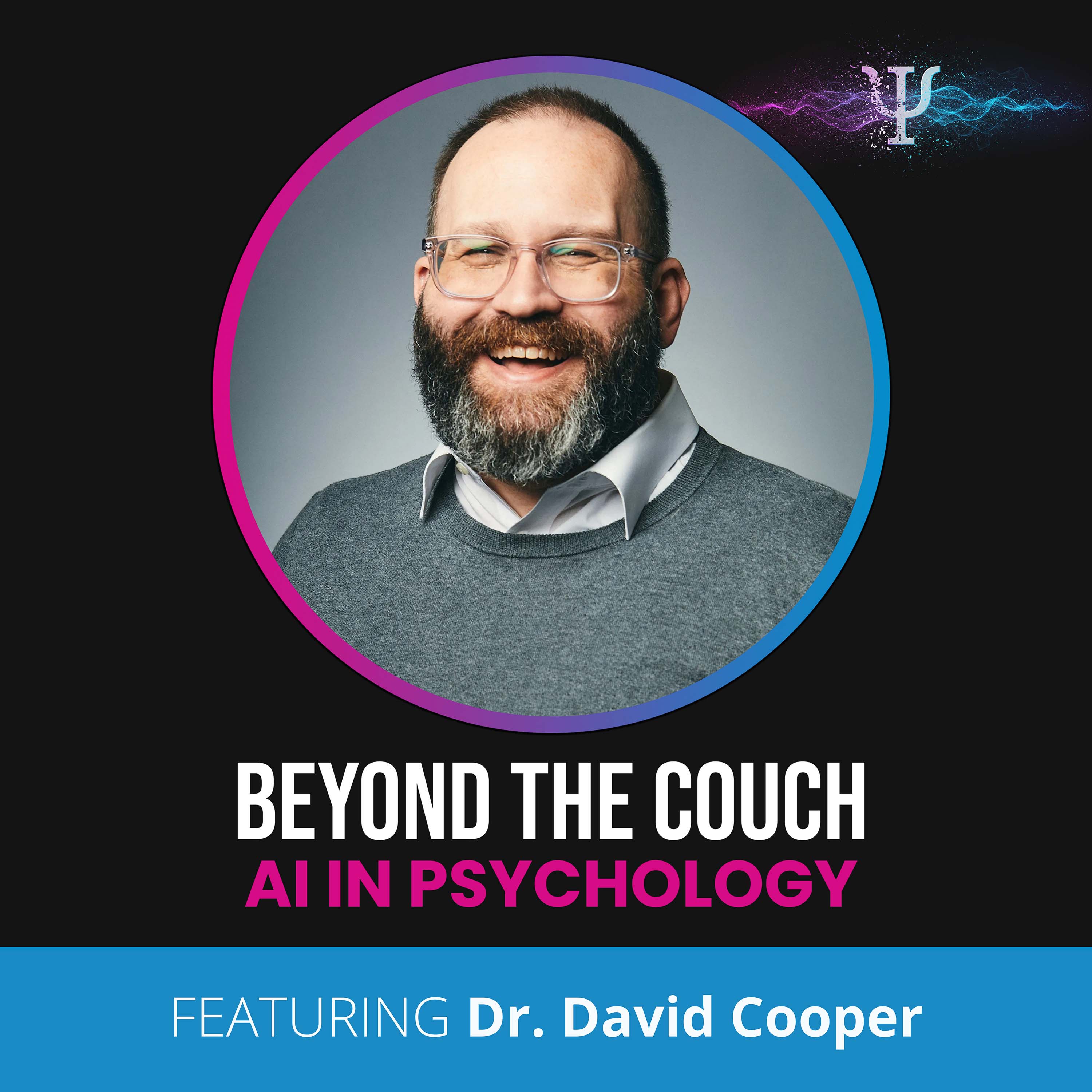
In this conversation on the Beyond the Couch: AI in Psychology Podcast, Dr. Ernest Wayde and Dr. David Cooper explore the intersection of AI and psychology, discussing how AI can assist therapists in their work, the fears surrounding AI replacing human therapists, and the practical applications of AI in mental health.
They emphasize the importance of psychologists being involved in the development of AI tools and the need for ethical guidelines as AI continues to evolve in the field. The discussion also highlights the potential for AI to augment therapeutic practices rather than replace them, encouraging psychologists...
From Skeptic to Daily User: Setting the Stage for AI in Psychology

Welcome to the Beyond the Couch: AI in Psychology Podcast!
In this inaugural episode of 'Beyond the Couch: AI in Psychology', Dr. Ernest Wayde and Dr. Jeni McCutcheon explore the intersection of artificial intelligence and psychology. They discuss the rapid evolution of AI in mental health practices, the ethical considerations surrounding its use, and the potential future of AI in the field.
Dr. McCutcheon shares her journey of integrating AI into her clinical practice, highlighting both the benefits and challenges. The conversation emphasizes the importance of ethical practices, transparency, and the collaborative potential of AI...
AI is transforming psychology. Are you ready?
Join Dr. Ernest Wayde, psychologist and AI strategist, for essential conversations about AI's impact on the field of psychology, clinical care, research, practice and more. No tech background required—just curiosity about the future of our profession.
Topics include: Psychology, Clinical AI integration, Research innovation, Ethics, Professional development
This show is for Psychologists ready to shape, not just survive, the AI revolution.
Subscribe and join us!
