The Security Nexus Deep Dive
The Security Nexus is your briefing room at the intersection of cyber strategy, intelligence, and global conflict. This podcast dives deep into the ideas shaping 21st-century statecraft, where gray zone tactics, information warfare, and cyber coercion redefine the rules of engagement.Each episode brings sharp analysis, original research, and field-tested insight from the frontlines of modern security. Whether unpacking the strategic logic behind cyber incidents or exploring decision-making failures that lead to conflict, The Security Nexus gives listeners the clarity to navigate today’s complex threat landscape.🔗 Explore more at www.thesecuritynexus.net
The Chekist Craft, Part IV: Cashing In the War's Best Investment
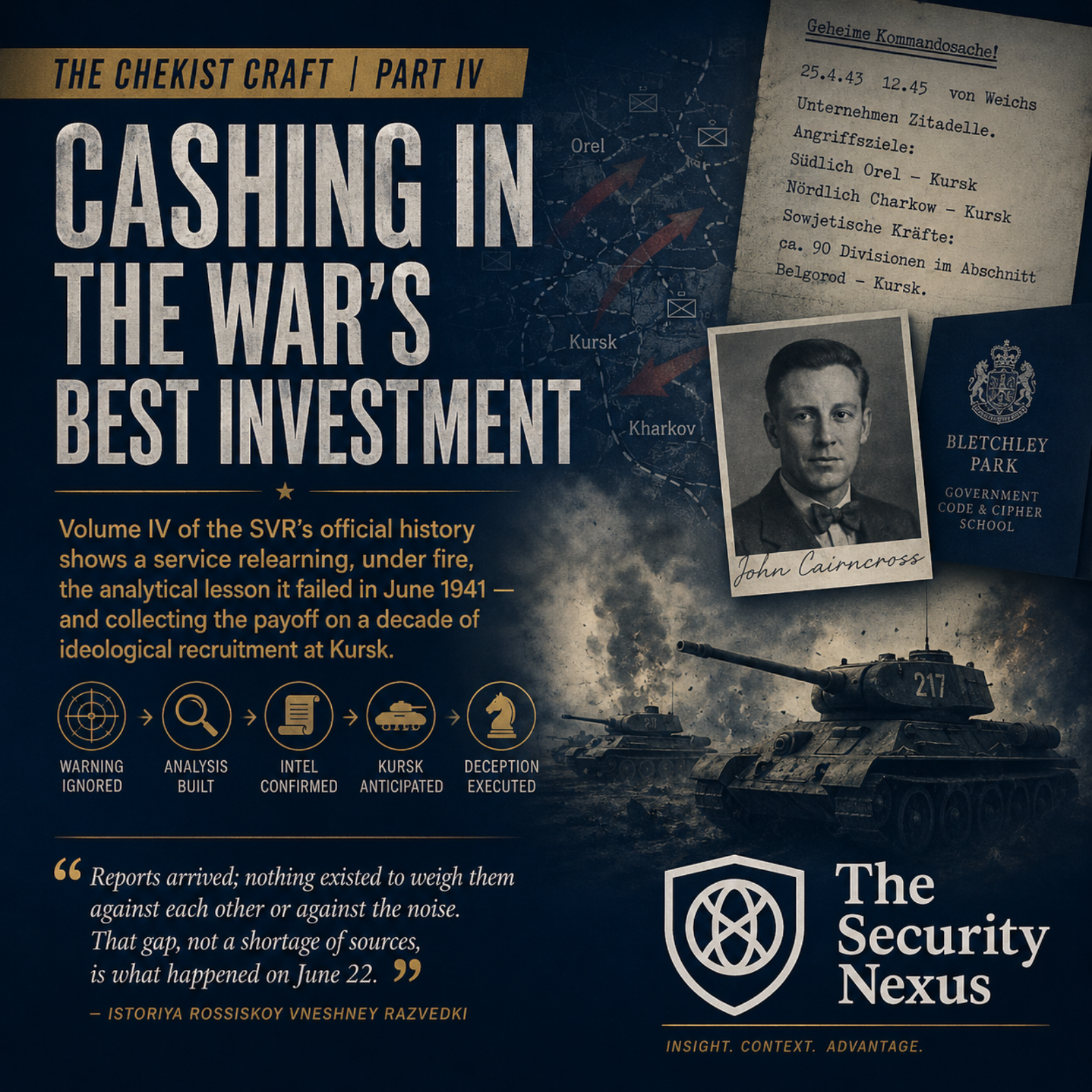
Volume IV of the SVR's official history shows a service relearning, under fire, the analytical lesson it failed in June 1941 — and collecting the payoff on a decade of ideological recruitment at Kursk.
https://www.thesecuritynexus.net/
The Chekist Craft, Part III: What Moscow Knew Before Barbarossa: The SVR's own official history of 1933–1941 documents a service that recruited well, collected precisely, and still failed to stop the surprise it foresaw.
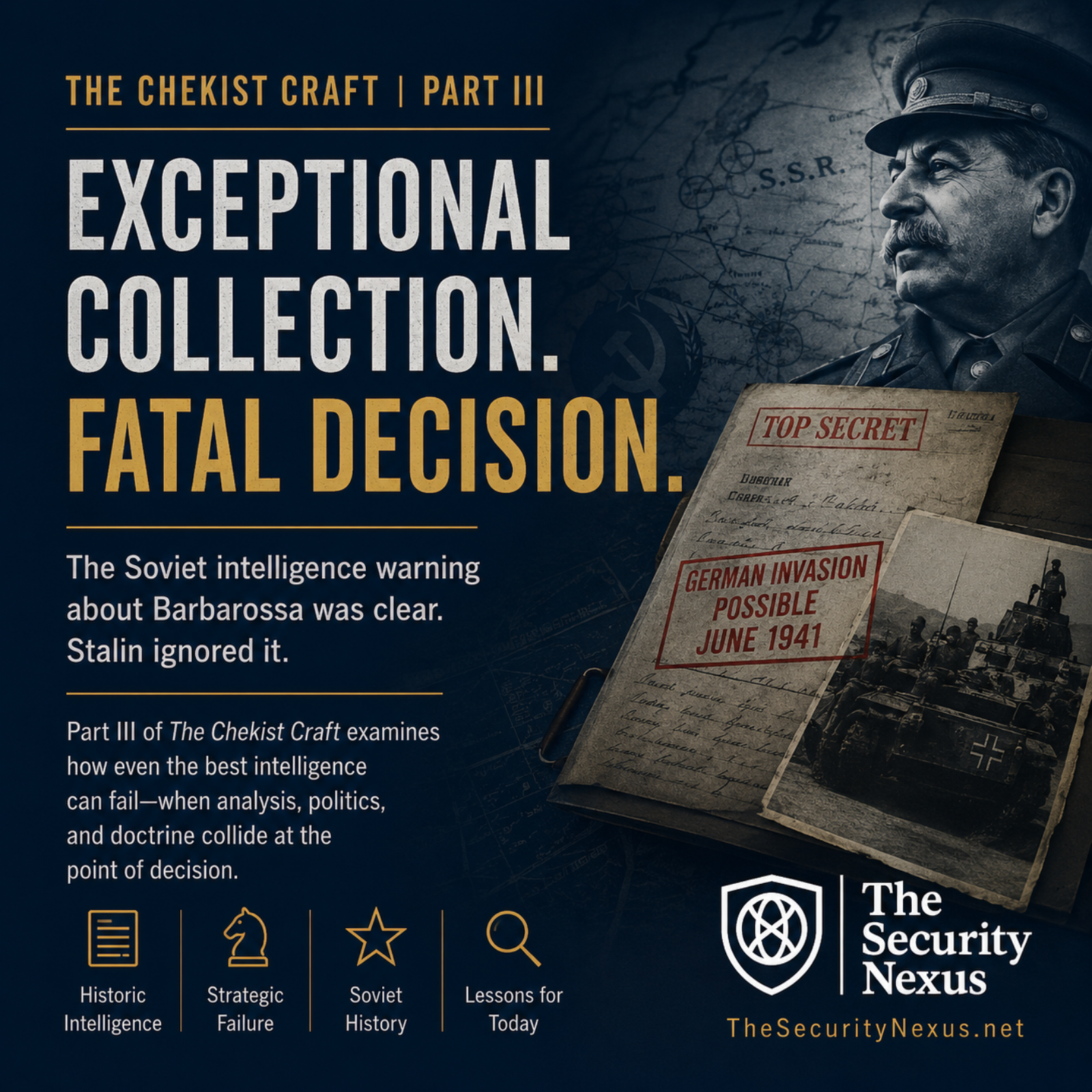
Volume III of Istoriya rossiyskoy vneshney razvedki, the SVR's official multivolume history, covers 1933 to 1941 — the years Soviet foreign intelligence built some of the most productive ideological networks in its history and then watched its own leadership discount the one report that mattered most. The volume's throughline is not collection failure. It is the gap between what a service knows and what a state does with the knowledge, and the 1,100-plus pages the SVR devoted to this period read as an unusually candid admission that the second problem, not the first, cost the Soviet Union its strategic surprise on June 22, 1941.
...The Chekist Craft: How Soviet Intelligence Learned to Deceive the World
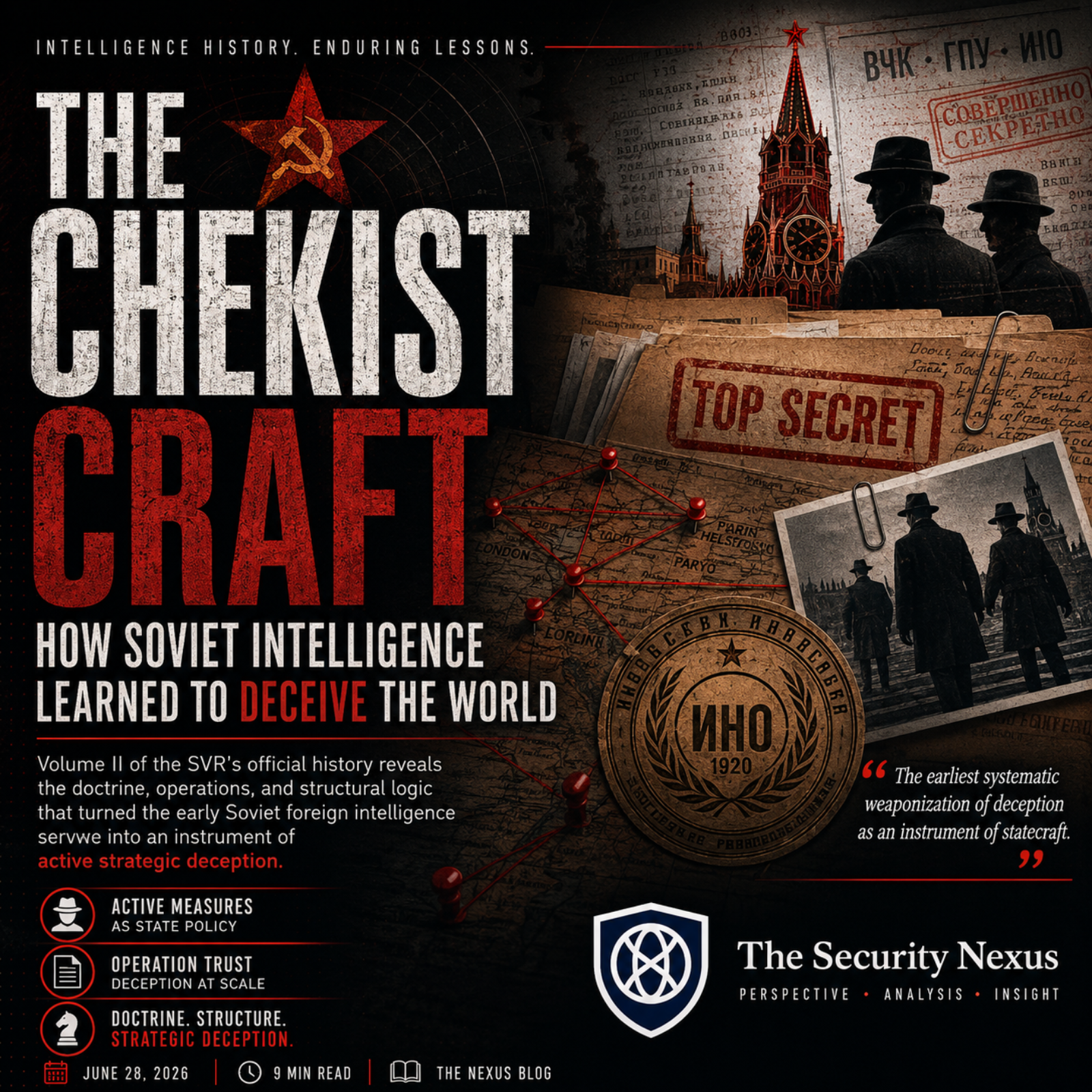
How Soviet intelligence transformed deception into statecraft. Explore the origins of active measures, Operation Trust, and the enduring doctrine behind modern Russian influence operations.
https://www.thesecuritynexus.net/
Why Russia Treats Intelligence as a Pillar of State, Not a Support Function

This is the first installment of a six-part series tracing the institutional and doctrinal history of Russian foreign intelligence, drawn from the Sluzhba Vneshney Razvedki's own commissioned history, Ocherki istorii rossiyskoy vneshney razvedki (Essays on the History of Russian Foreign Intelligence), edited by former SVR director and Foreign Minister Yevgeny Primakov. Each installment will pair the SVR's official narrative, read critically, against independent scholarship. This post covers Volume 1: the period from Muscovite Russia through the eve of the Bolshevik Revolution.
https://www.thesecuritynexus.net/
Eyes Beneath the Surface: China's Maritime Intelligence Architecture Deck
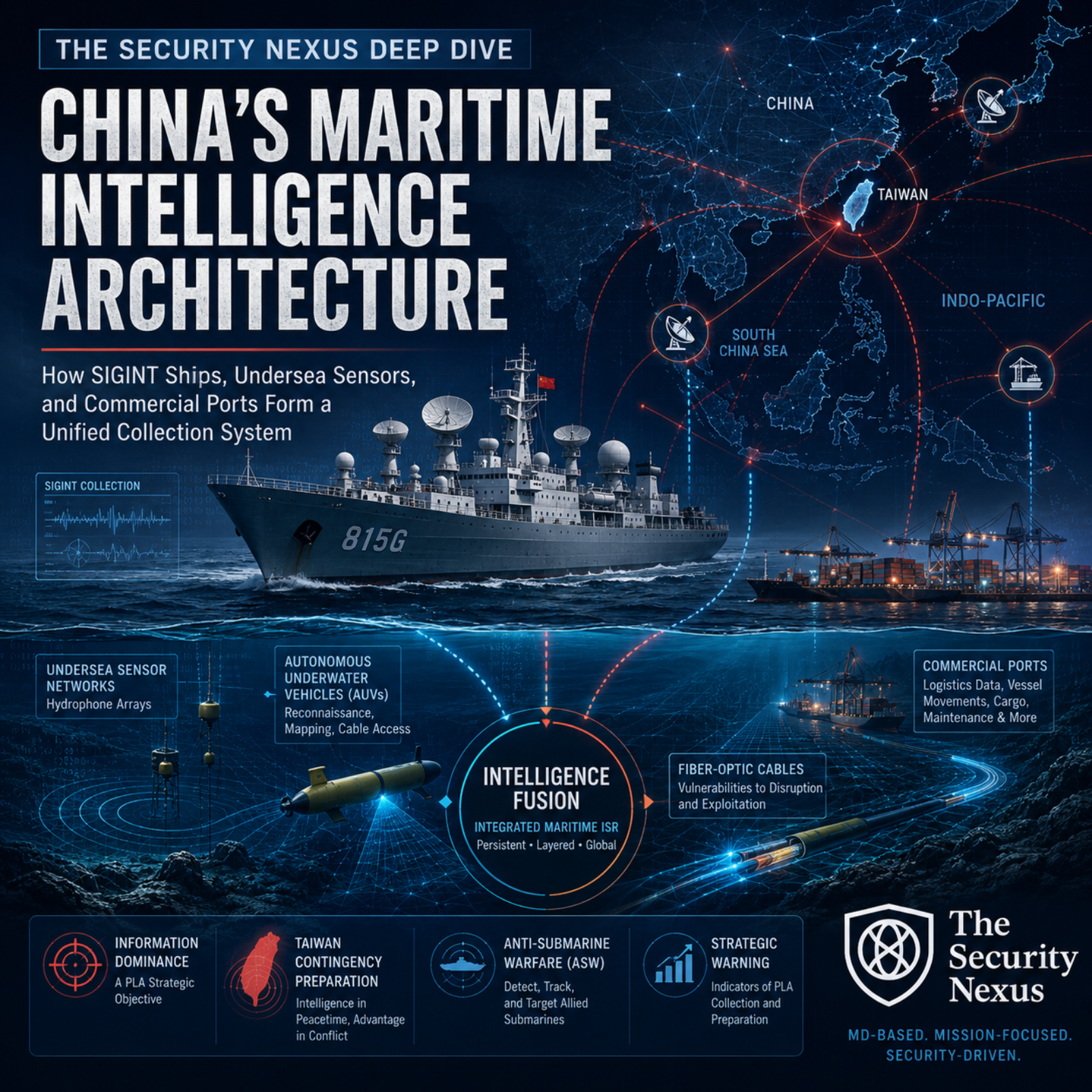
China's spy ships, undersea sensor networks & port data aren't parallel programs — they're one integrated collection system aimed at a Taiwan contingency. Western strategy needs to catch up.
thesecuritynexus.net
The Watcher State: North Korea's Intelligence Architecture as a Survival Machine
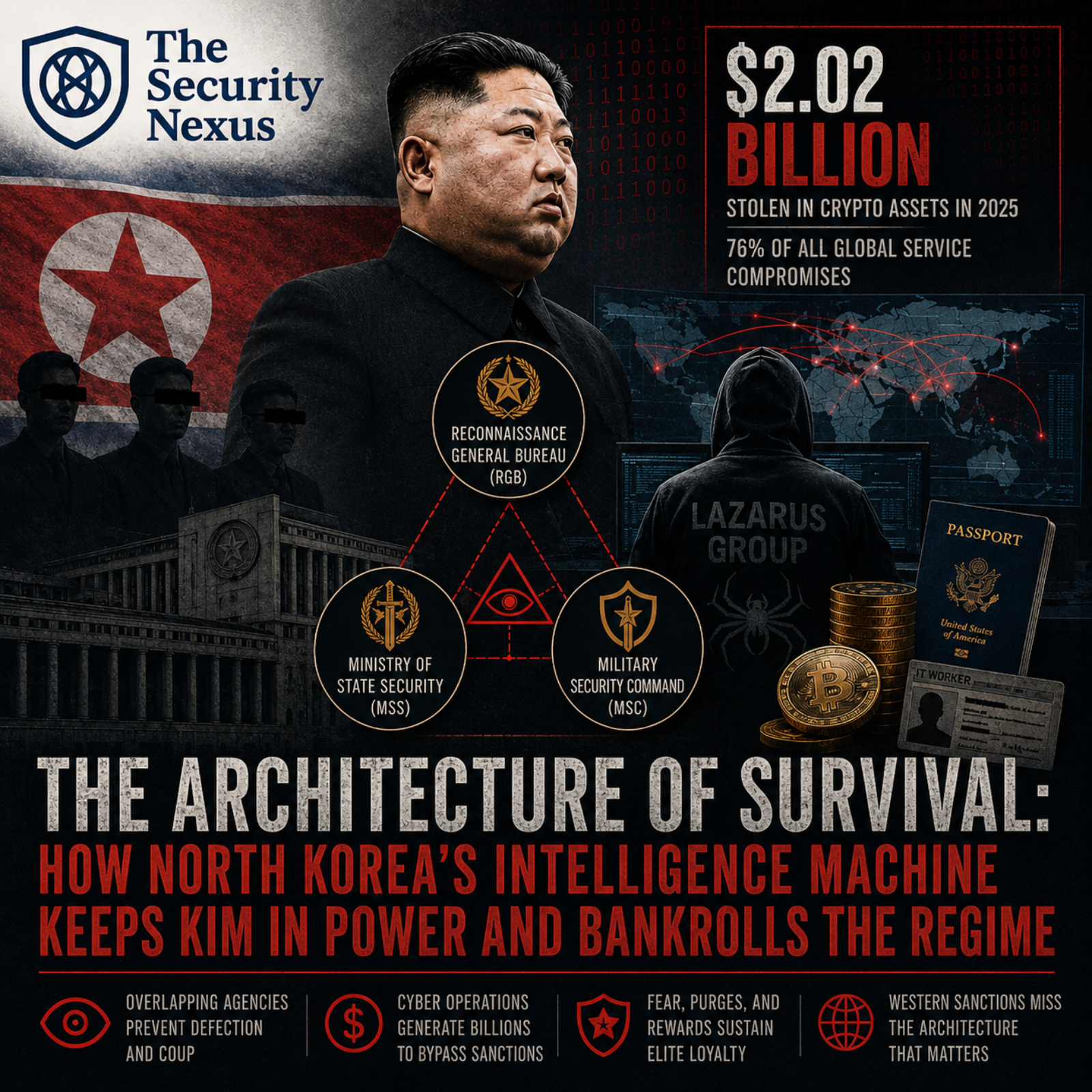
Kim Jong-un's overlapping intelligence agencies are not redundant bureaucracies — they are a deliberately engineered system for preventing coups, disciplining elites, and bankrolling a sanctions-strangled regime.
https://www.thesecuritynexus.net/
The Defector Dilemma: How Western Intelligence Mishandles Its Most Valuable Sources
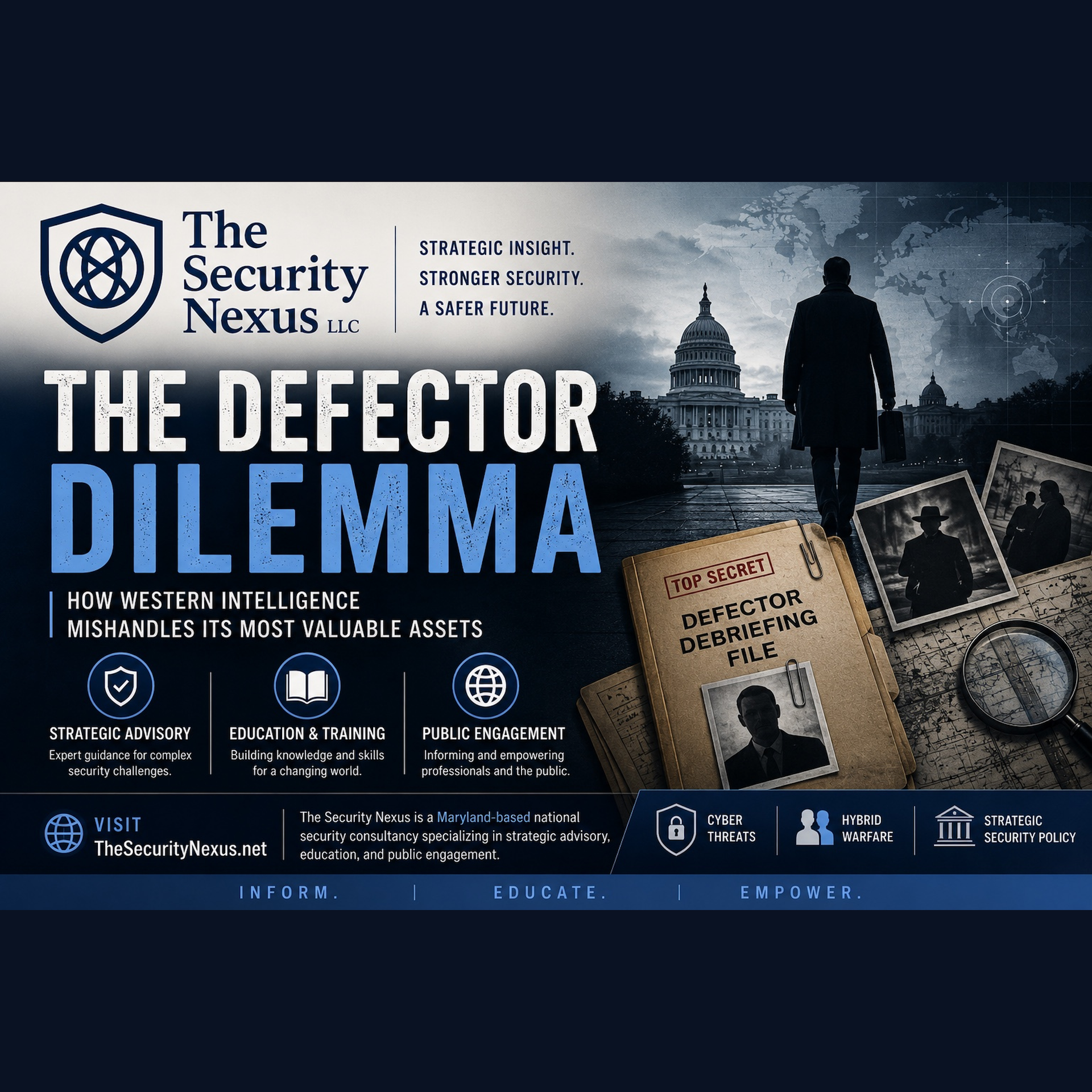
Between paranoid skepticism and reckless credulity, Western agencies have repeatedly failed to extract full value from defectors—and the structural causes remain unreformed.
https://www.thesecuritynexus.net
China’s Southern Flank: How Beijing Built a Multi-Domain Intelligence Architecture in Latin America

From SIGINT stations in Cuba to a PLA-operated antenna in Patagonia, China’s intelligence footprint in the Western Hemisphere is more operationally mature than U.S. policy acknowledges.
https://www.thesecuritynexus.net
The Purge Paradox: When Authoritarian Leaders Gut Their Own Intelligence Services
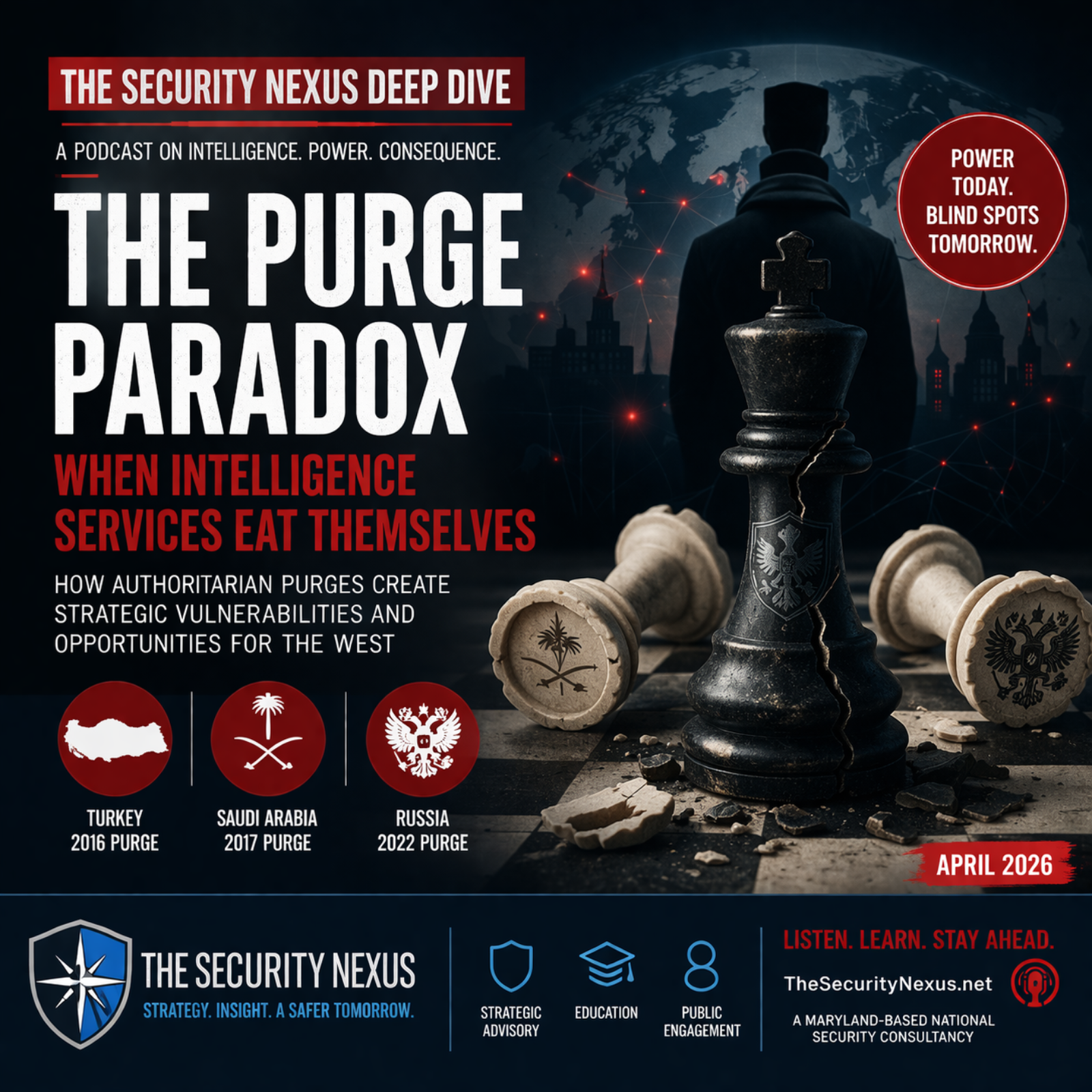
Purging intelligence services consolidates political control, but it systematically degrades the operational capacity autocrats need to survive. Turkey, Saudi Arabia, and Russia illustrate the pattern.
https://www.thesecuritynexus.net
The Troika Problem: How Rivalry Between Russia’s Intelligence Services Is Shaping the War and Threatening Western Security
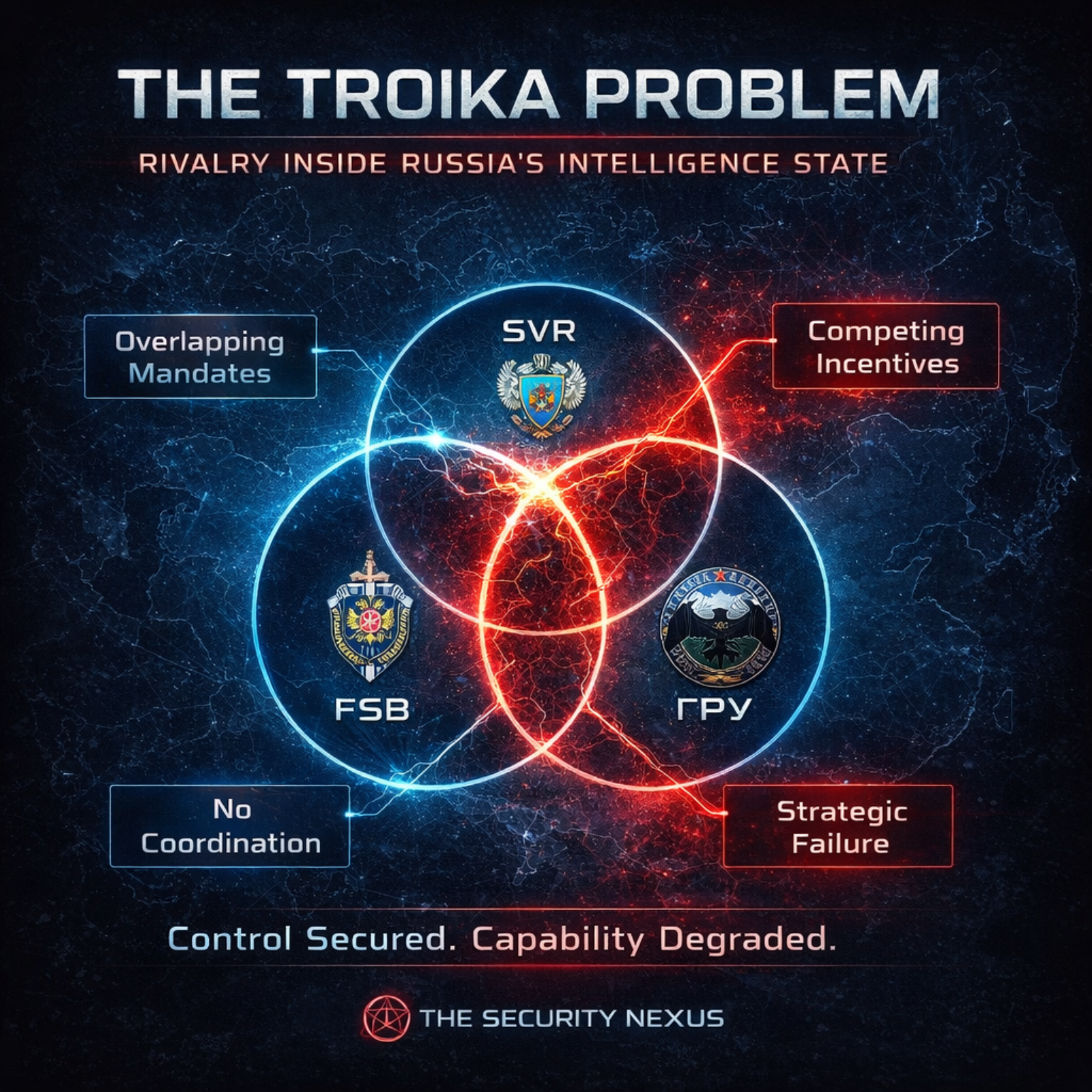
Russia’s intelligence system is built around competition, not coordination. That structure protects Putin but distorts analysis, degrades integration, and produces cascading failures. In Ukraine, those weaknesses manifested in poor strategic warning, disjointed operations, and a forced shift to tactical intelligence. Western services have recognized these dynamics but have not systematically exploited them. The Troika problem remains both a liability for Russia and an underused opportunity for its adversaries.
https://www.thesecuritynexus.net
Commercial Spyware Is a NATO Counterintelligence Problem
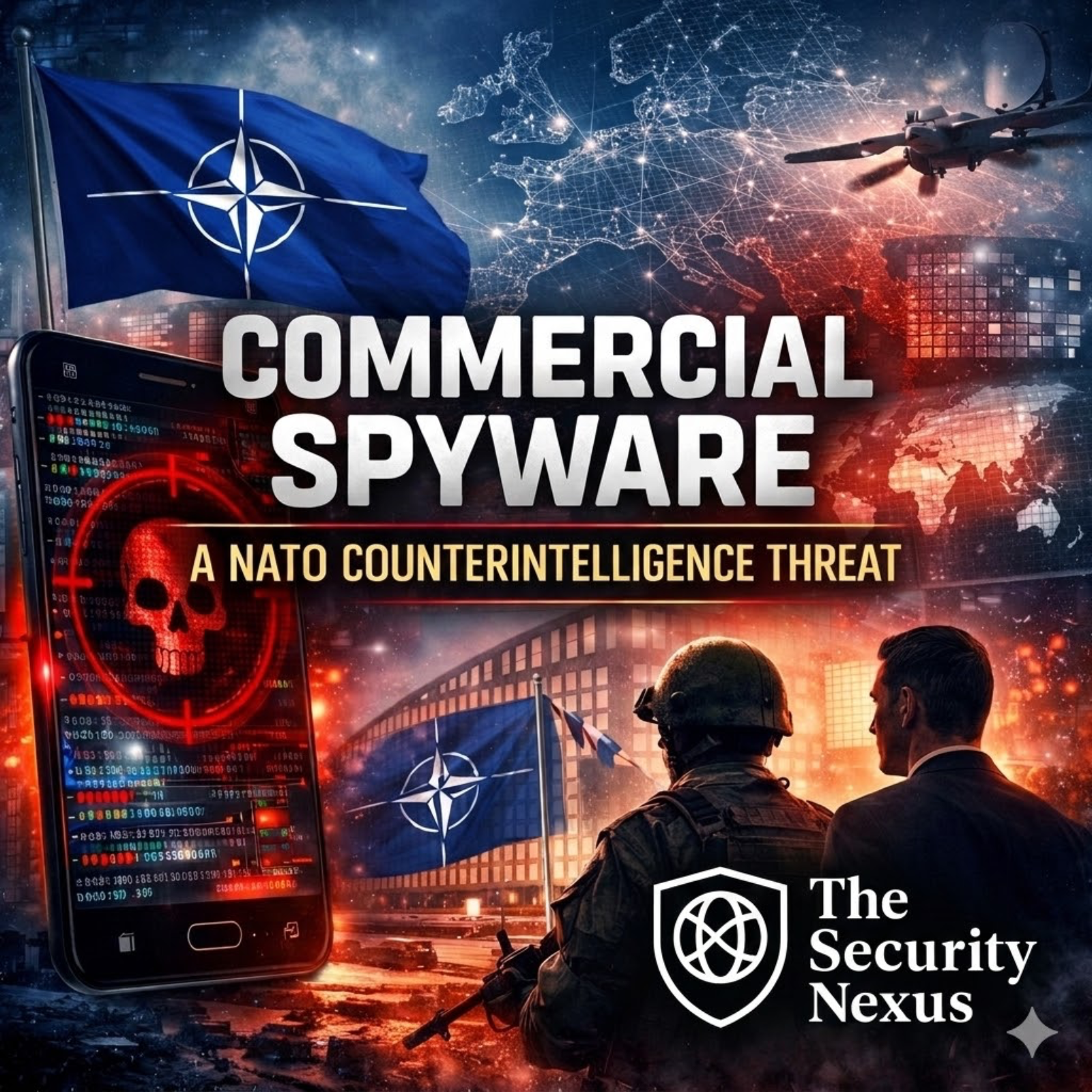
Commercial spyware has evolved into a privatized intelligence capability that allows governments to acquire advanced mobile exploitation tools without developing them internally. Platforms such as Pegasus and Predator can covertly access communications, contacts, location data, and encrypted messaging, turning smartphones into powerful intelligence collection devices. While public debate often focuses on civil liberties, the more significant issue is strategic: these tools enable adversaries to conduct intelligence operations against NATO officials, diplomats, and defense personnel through commercial intermediaries. Because the spyware market complicates attribution and bypasses traditional export controls, NATO’s current responses—primarily device-level cybersecurity measures—are insufficient. Treating commer...
Governing Proxies Without Command Authority
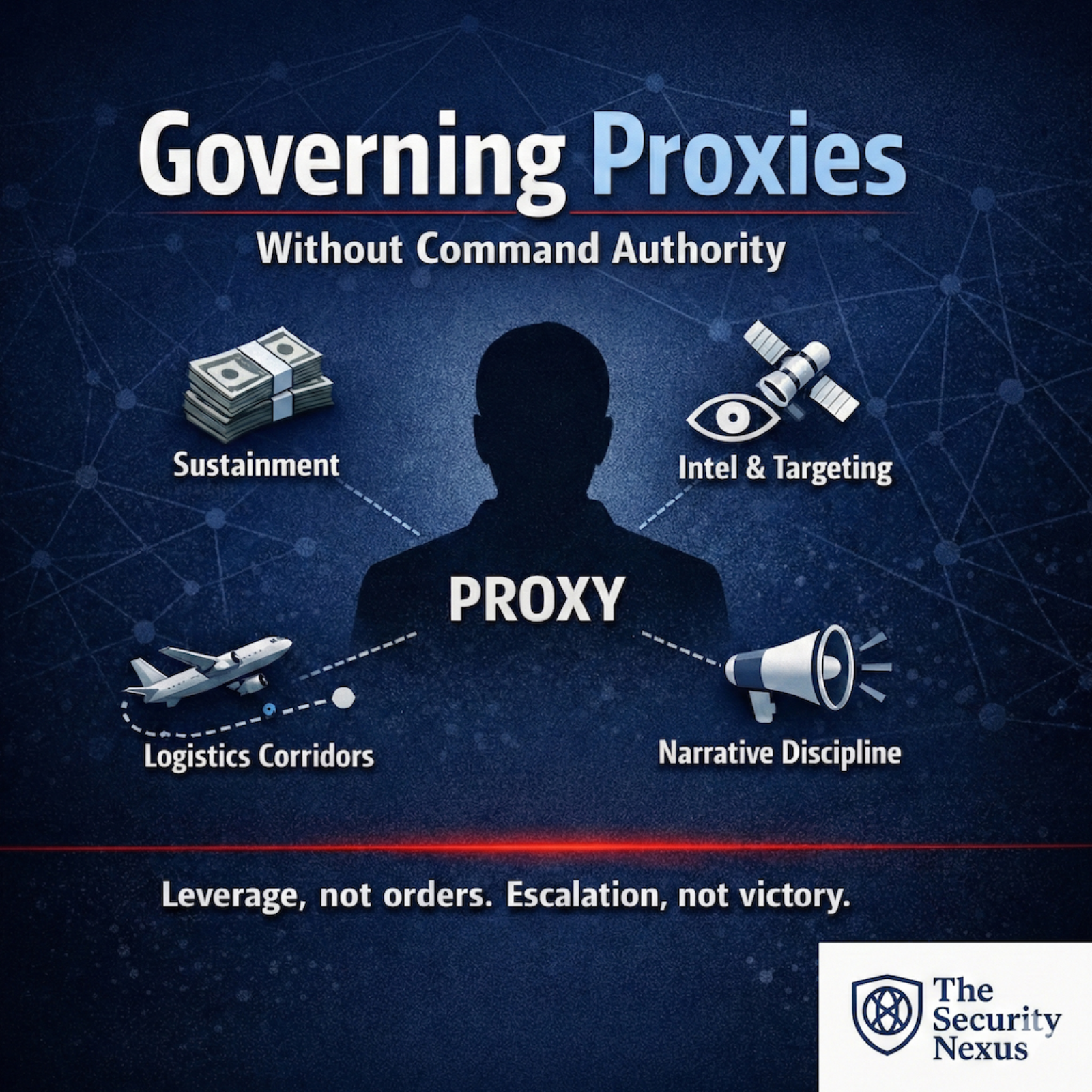
States don’t need command authority to govern proxies—but they do need leverage. The real mechanisms are sustainment, intelligence/targeting support, sanctuary and logistics corridors, and narrative discipline. Those tools can keep proxy violence “below threshold,” but they also produce predictable failures: agency slack, autonomization, deniability collapse, and blowback.
https://www.thesecuritynexus.net
Counterintelligence for the Cloud: Treat Your Hyperscaler Like Contested Terrain
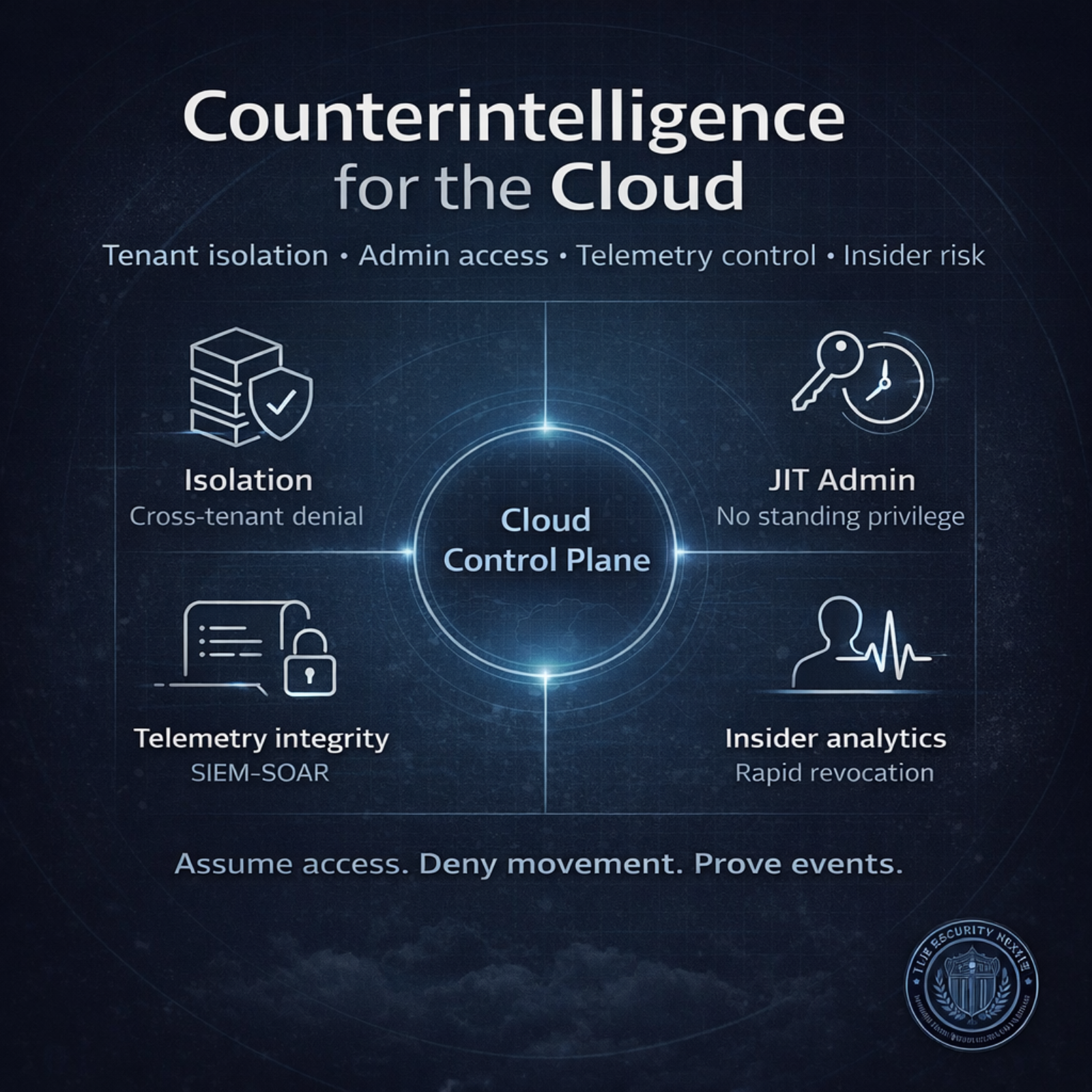
Cloud counterintelligence treats hyperscale and GovCloud environments as contested terrain. The decisive fights happen at tenant boundaries, privileged access, telemetry integrity, and insider-risk enforcement. Build for constrained privilege (JIT), durable visibility (tamper-resistant telemetry), and compartmented blast radius—then continuously verify.
https://www.thesecuritynexus.net
Militarized Policing and the Civil Liberties Trap
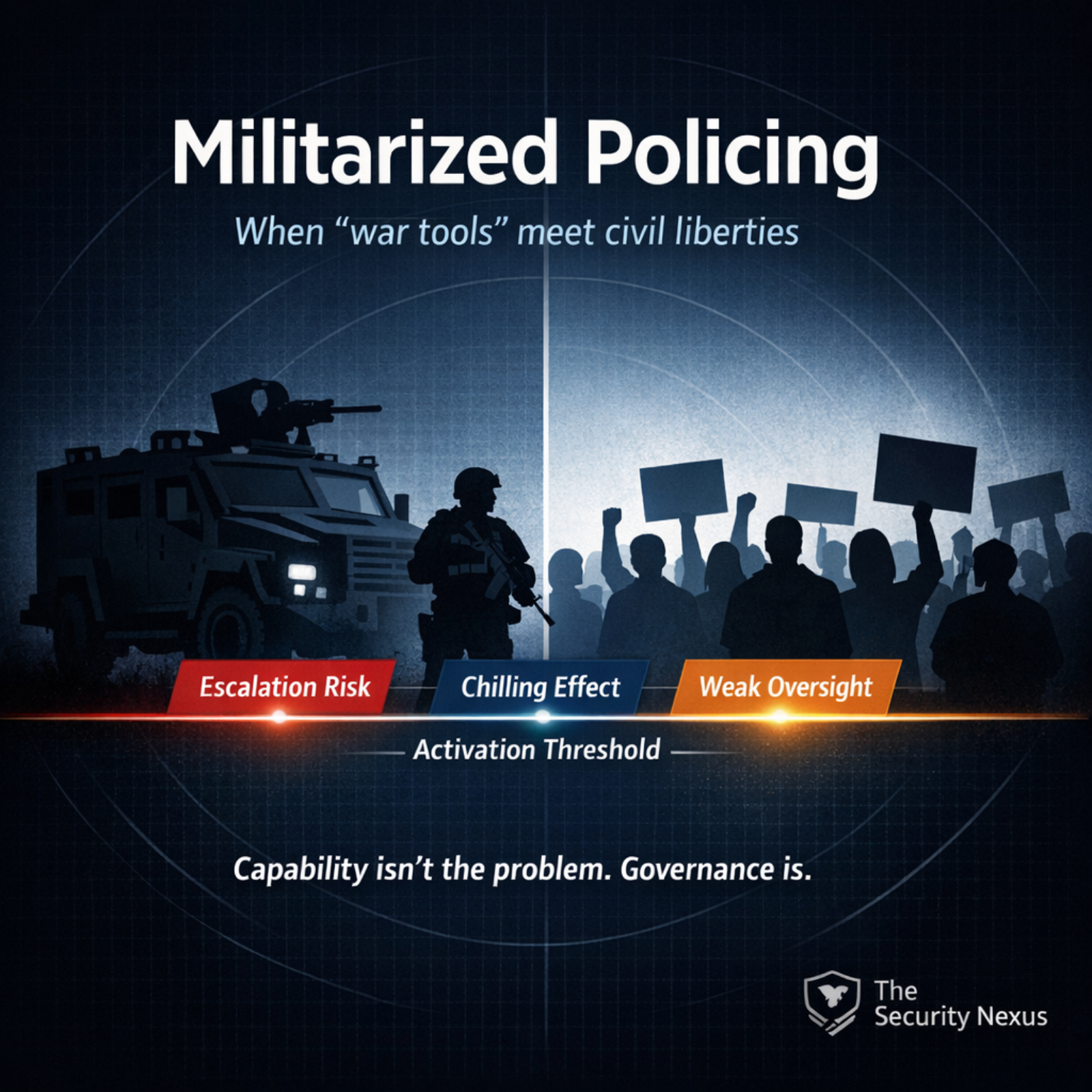
The strategic mistake is treating militarized policing as a “gear” issue. It is a governance problem: coercive capacity plus weak constraints yield predictable degradation of civil liberties. The evidence base provides little confidence that militarization systematically reduces crime or improves officer safety, while it does indicate reputational harm and potential escalation risks. A democratic state can maintain a high-end response capability, but it must make militarized deployment rare, auditable, and politically costly when misused.
https://www.thesecuritynexus.net
Open Source Naval Order of Battle

Commercial maritime sensing has made it easier to build naval order-of-battle estimates from open sources. AIS provides identity and patterns but is vulnerable to spoofing and manipulation. SAR detects ships regardless of cooperation, and fusion approaches exploit mismatches between AIS and imagery to identify anomalies and “dark ships.” Commercial RF mapping can add another layer of behavioral evidence when AIS goes silent. States should counter OSINT by reducing adversary inference through emission discipline, selective disclosure, AIS governance, and better internal sharing, rather than defaulting to overclassification.
https://www.thesecuritynexus.net
Rails Without Borders: How Cross Border Dependencies Turn Rail Networks into Cascading Risk Machines
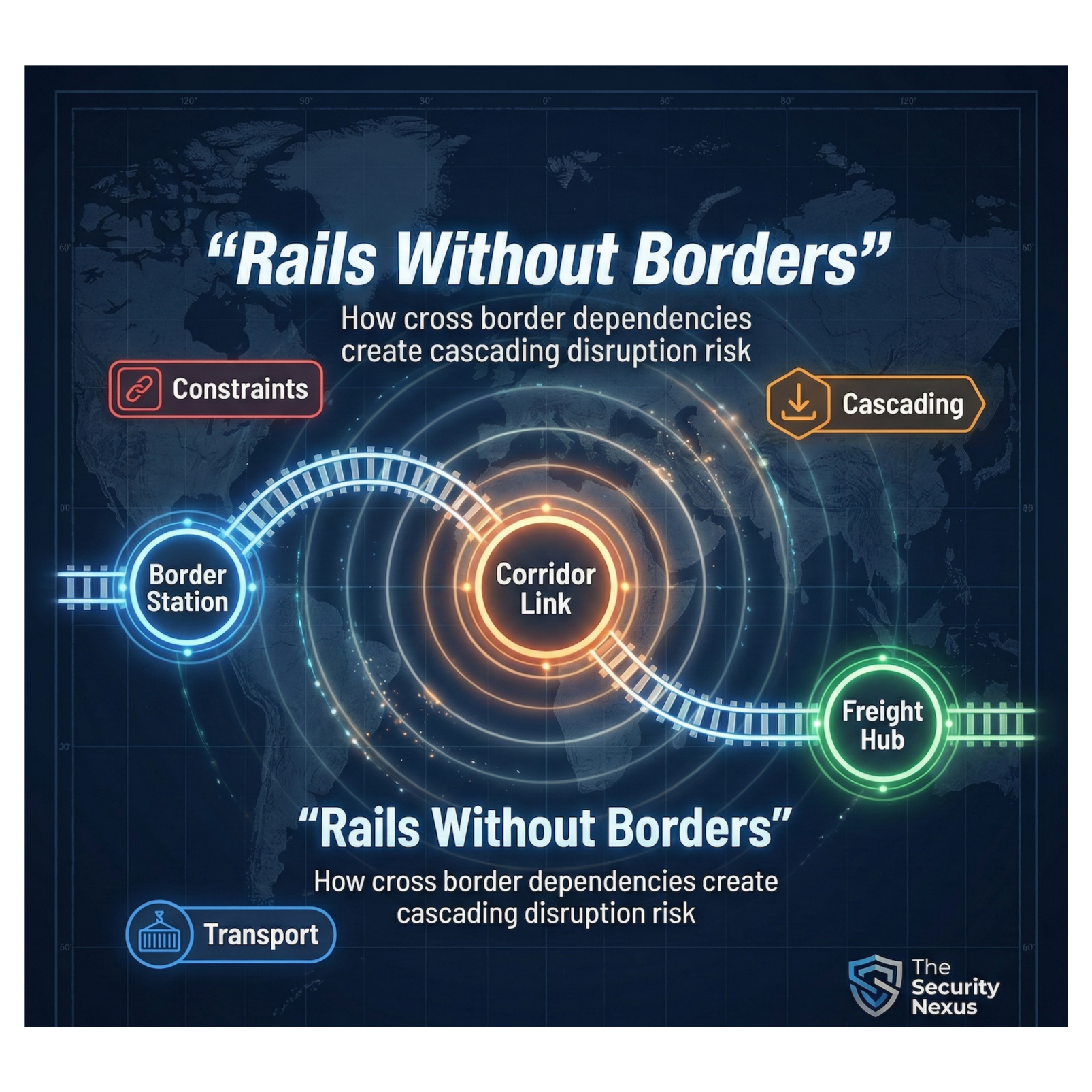
International rail networks become uniquely vulnerable at borders because critical flows concentrate into a few corridors and ports of entry, while operational interdependencies (services, rolling stock, crew) turn local constraints into network wide delay cascades. The most effective countermeasures combine cross border governance (shared playbooks, joint incident command, mutual aid) with technical resilience (slack capacity, modular operations, predictive monitoring, network aware rerouting, and cyber physical hardening), all aimed at preventing constraint overload and shortening time spent in cascade mode.
https://www.thesecuritynexus.net
How Secure Is U.S. Passenger Rail, And What Does “Critical Rail Infrastructure Security” Look Like?
U.S. passenger rail is an open network. Airport-style checkpoints do not scale across hundreds of stations and platforms. Effective security is layered and intelligence led: visible policing and K9 presence, randomized checks, strong reporting and intel sharing, and fast incident response and recovery. The real high-leverage work sits in the cyber-physical stack that moves trains safely: signals, interlockings, dispatch, power, and communications. The post lays out a clean threat model, clarifies federal and operator roles for “critical rail,” and closes with practical guidance for travelers as well as feasible improvements for policymakers and operators.
http...
HUMINT After UTS: Tradecraft in a World of Total Telemetry
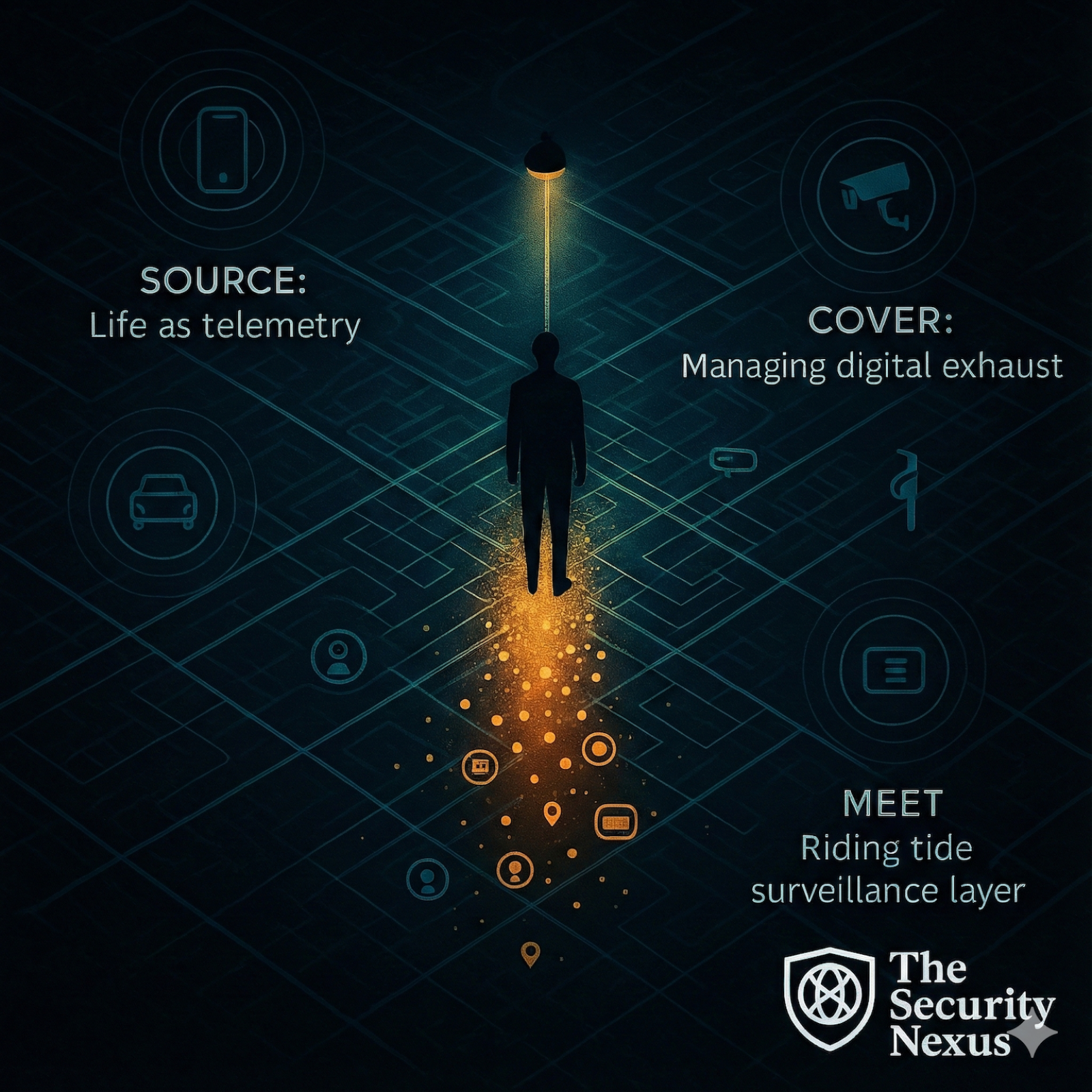
Human intelligence is not dead in the age of ubiquitous technical surveillance (UTS), but its center of gravity is shifting. In a world where phones, cars, and cities are sensors, HUMINT has to adapt around three pressure points:
Sources are selected and developed in the shadow of pattern-of-life analytics, with elite targets either hyper-observable or deliberately off-grid.Covers now live or die by their digital exhaust: if your pattern looks wrong to an algorithm, your legend is already burned.Meets move from heroic “Moscow rules” streetcraft to operations that ride on, or even weaponize, the surveillance laye...Export Controls as a Battlefield: The Quiet War Over GPUs and Model Weights
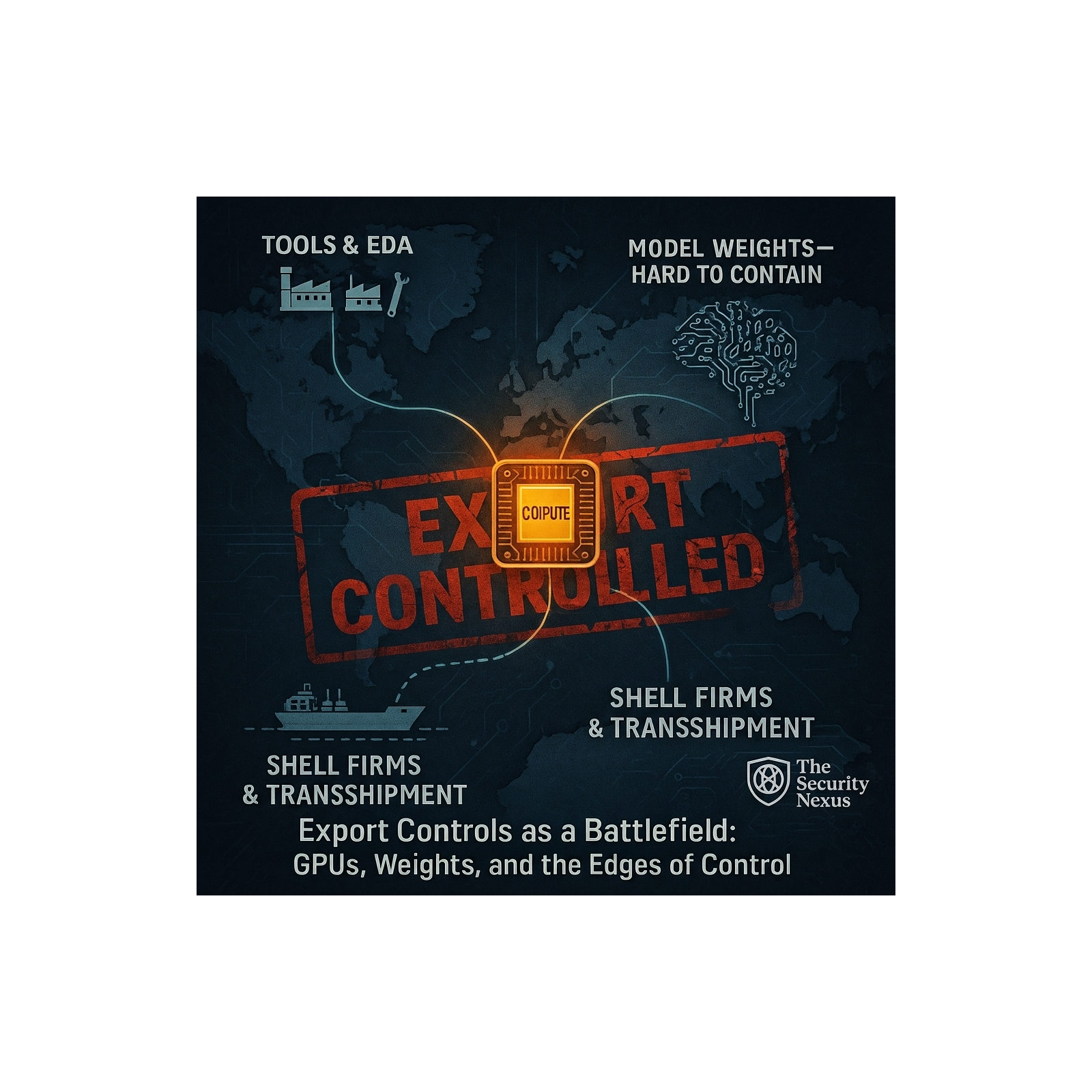
Export controls on GPUs and model weights absolutely shape the AI battlefield—but only where chokepoints are real, coalitions are tight, and enforcement data is exploited as aggressively as the hardware. Overreliance on broad, performance-based rules risks pushing adversaries toward harder-to-monitor paths and nudging the entire system toward fractured techno-blocs. A smarter architecture focuses narrowly upstream, leans into AI-enabled enforcement, and treats model weights as a special, high-friction case—not a magical lever.
https://www.thesecuritynexus.net
Catastrophic Cyber Insurance: The Clause That Breaks Deterrence
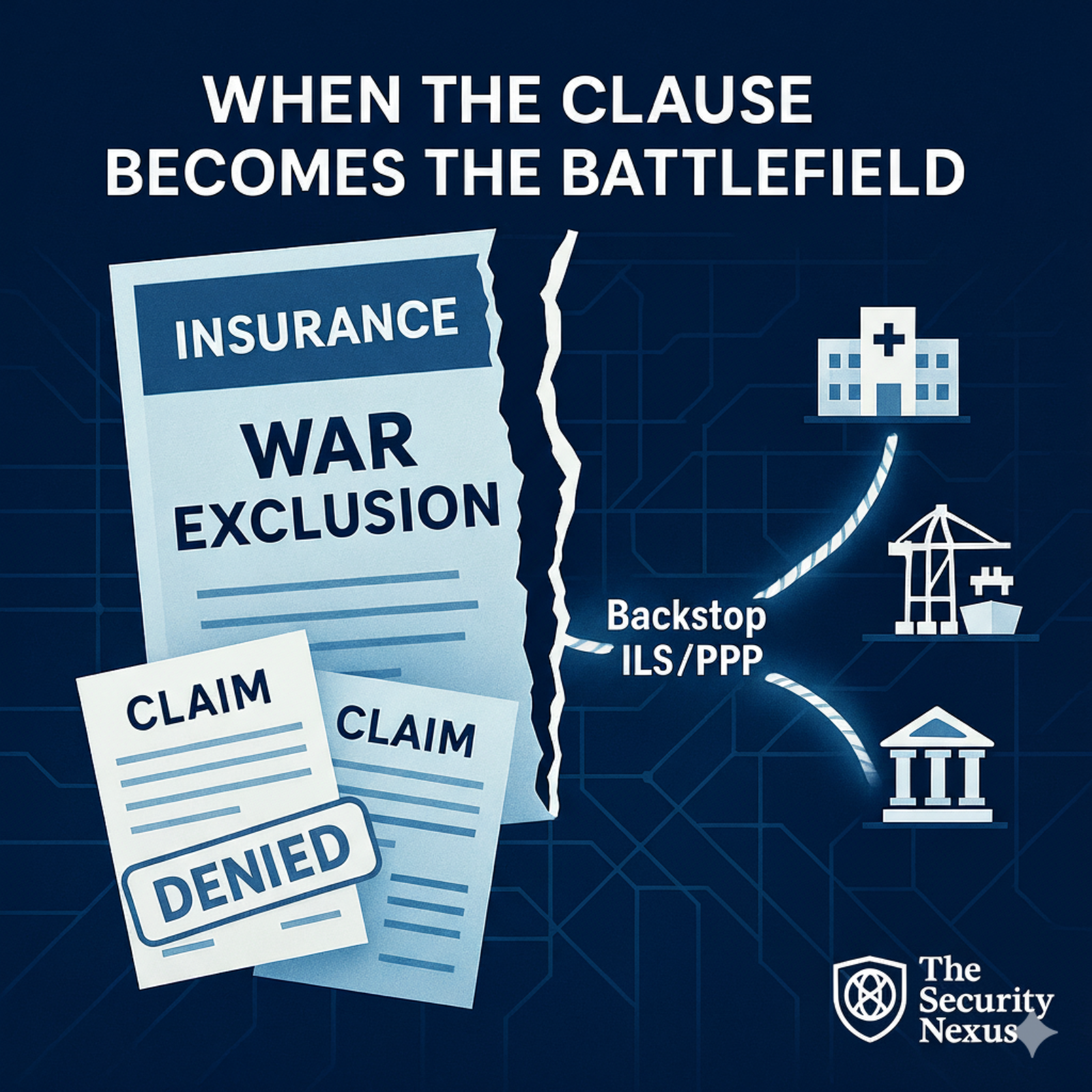
Cat-scale cyber events blow past the diversification logic that makes insurance work. As reinsurers pull back and war-exclusion language broadens, payout uncertainty grows—reshaping how boards invest, how adversaries calculate risk, and how governments contemplate backstops. The market’s fine print is fast becoming de facto cyber norms, for better or worse.
https://www.thesecuritynexus.net
Data Dunkirk: Evacuating a Nation’s Information Under Fire
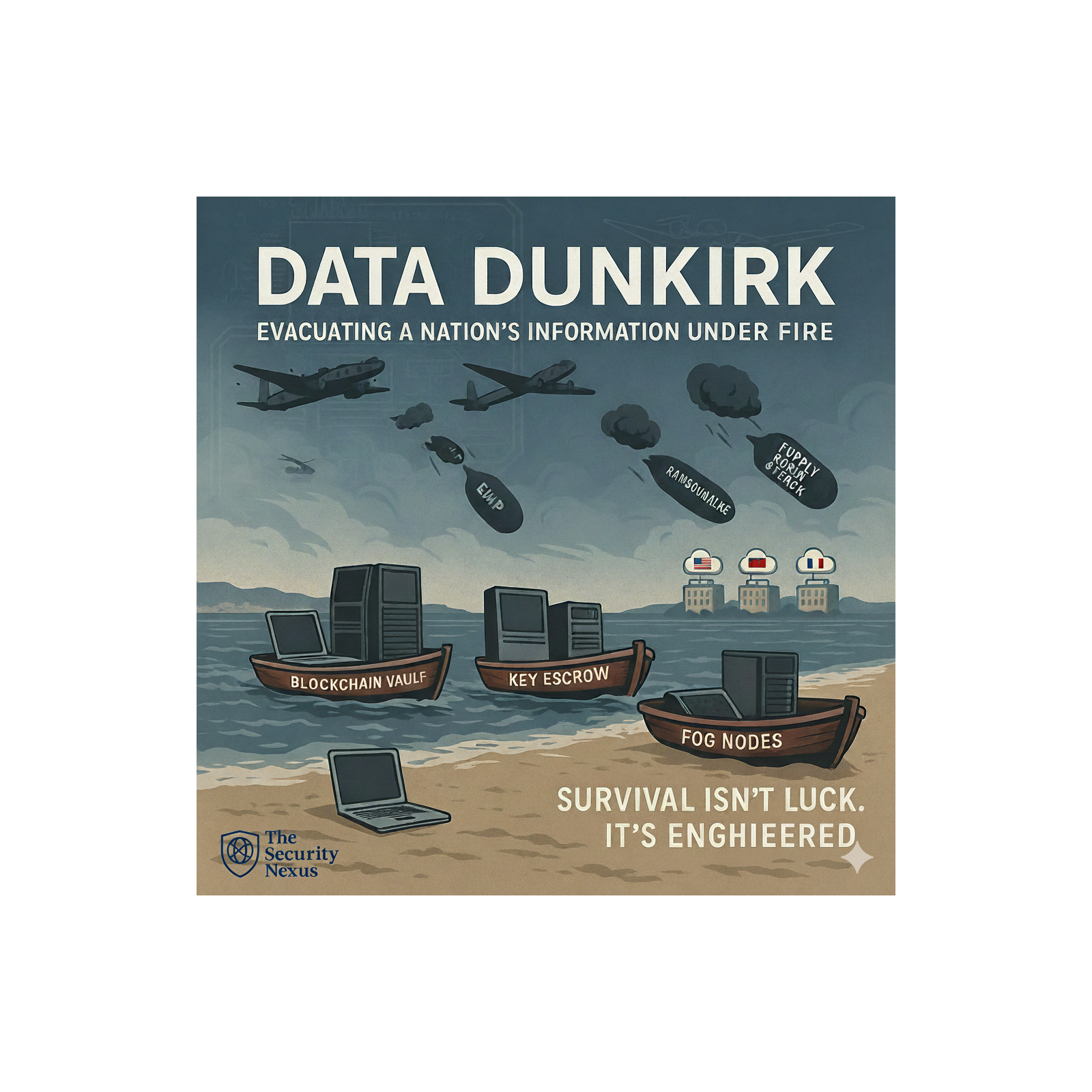
What happens when bombs — cyber or kinetic — threaten the lifeblood of a nation’s systems: its data? “Data Dunkirk” explores how modern states can preserve their most vital information assets under siege. From blockchain-enabled federated cloud systems to Cold War-era key escrow principles, this post charts an actionable blueprint for digital resilience and governance continuity. We examine decentralized backup strategies, encryption controls, and post-attack recovery architectures — because survival isn’t luck. It’s engineered.
https://www.thesecuritynexus.net
Zero-Day Diplomacy: How Vulnerability Disclosure Shapes Alliances
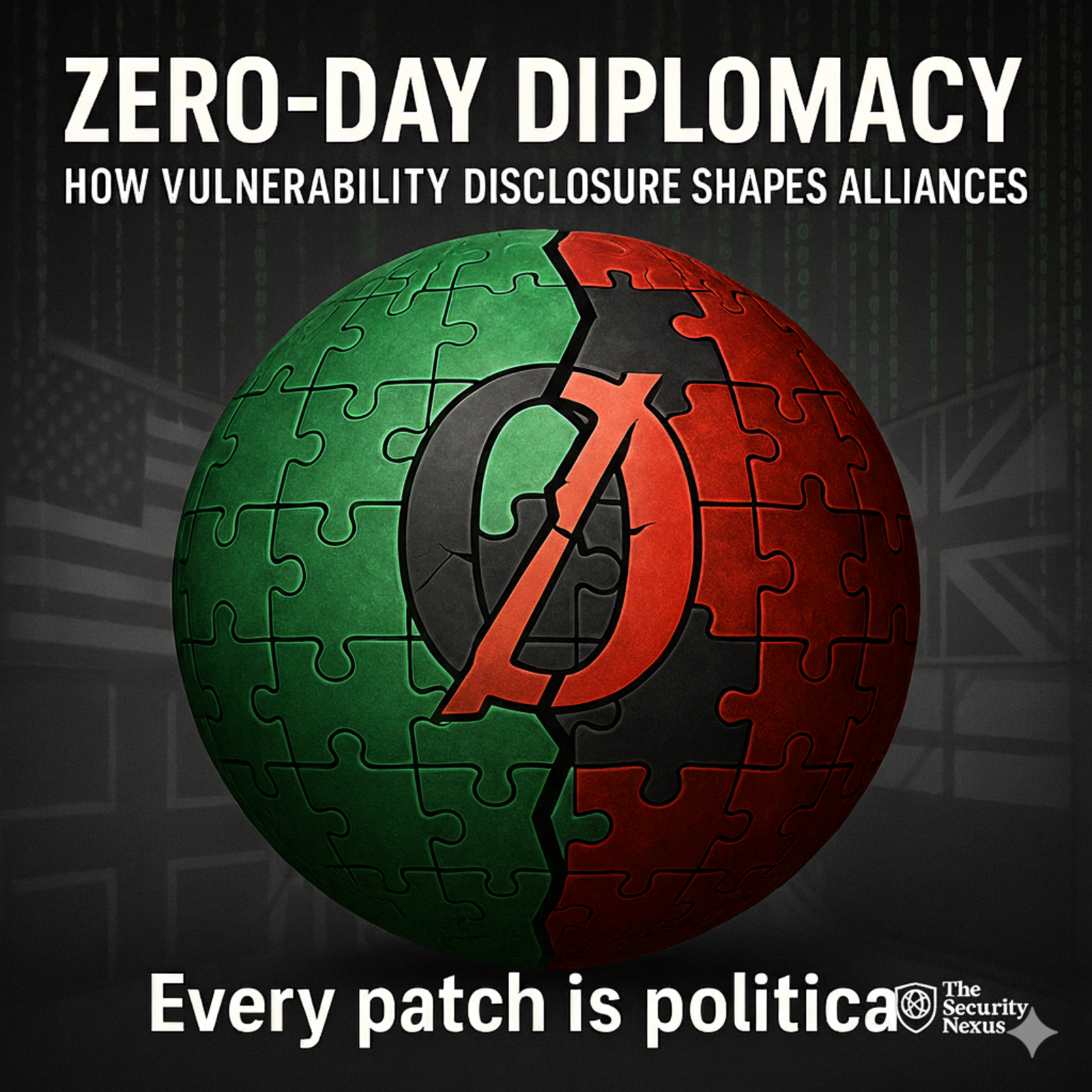
Vulnerability disclosure is no longer just a technical process—it’s a diplomatic act. As cyber vulnerabilities become currency in the geopolitical marketplace, decisions about whether to patch or exploit are reshaping alliances, sowing distrust within coalitions, and forcing a reckoning with the norms of responsible state behavior. This post explores the inner workings of the U.S. Vulnerabilities Equities Process (VEP), coalition frictions over zero-day handling, and how cyber risk management choices are warping traditional diplomatic trust structures.
https://www.thesecuritynexus.net
Grid Under Glass: The ICS Kill Chain from Breakers to Bytes
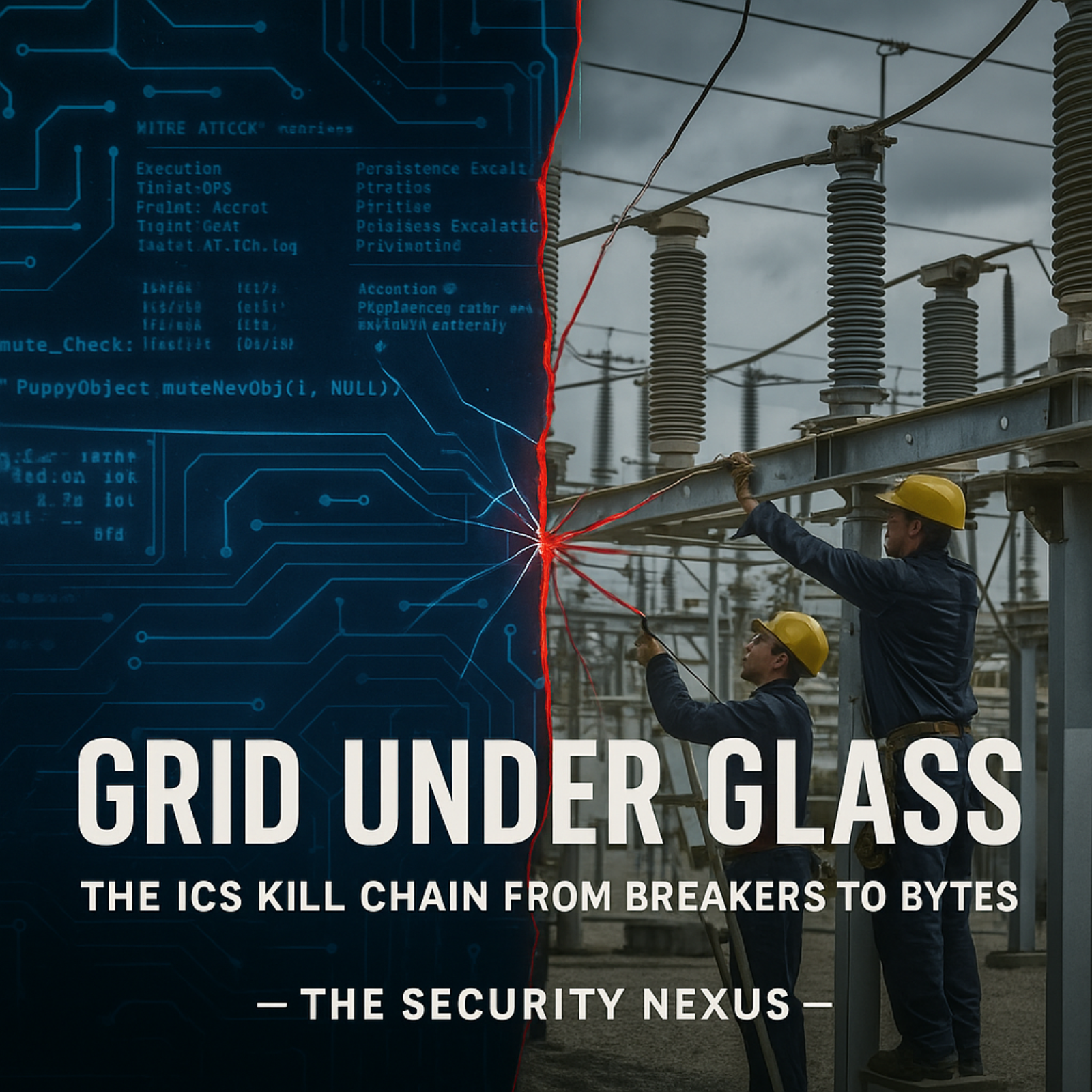
Cyber-physical power systems are increasingly vulnerable to attacks that blur the line between bits and breakers. This blog post explores how adversaries methodically move from network infiltration to catastrophic grid disruption—focusing not on abstract malware, but on the very real-world hardware where incident response must span linemen and laptops. Using recent research and the Security Nexus Deep Dive transcript, we break down the evolving kill chain, the point of no return (PNR), and how relays, substations, and the trust we place in them may be the last line of defense.
https://www.thesecuritynexus.net
Sensing the City: Building ISR from Commercial Tech
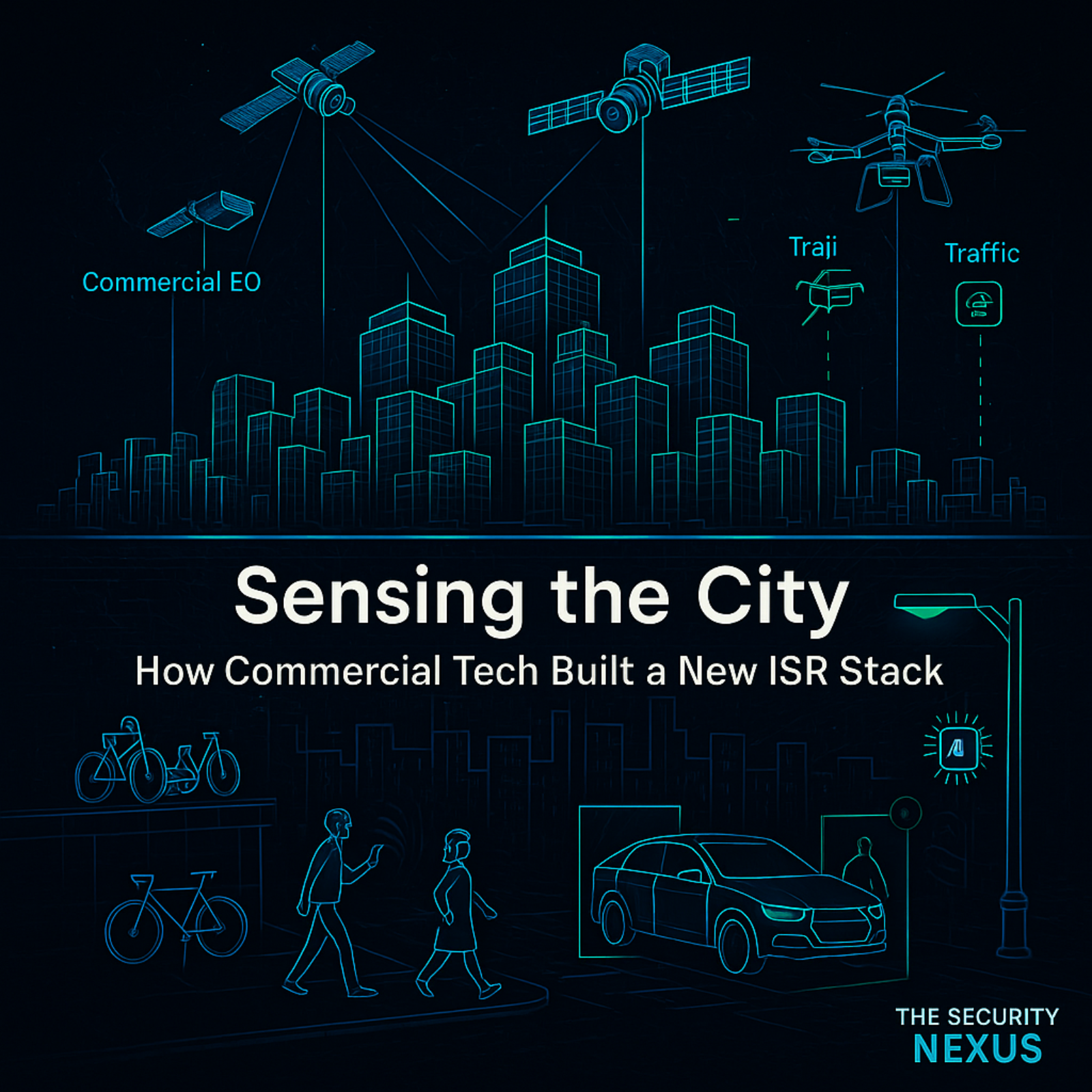
What happens when AI-enhanced commercial satellites, smart city sensors, retail cameras, and mobile apps converge into a single open-source intelligence stack? You get a new kind of ISR; emerging not from secret state programs, but from the fabric of daily urban life. This post examines how edge computing, multimodal remote sensing, SLAM tools, and satellite IoT are transforming situational awareness, raising new strategic dilemmas about control, ethics, and the erosion of secrecy.
https://www.thesecuritynexus.net
Deepfake Diplomacy: Crisis Management in an Age of Synthetic Media
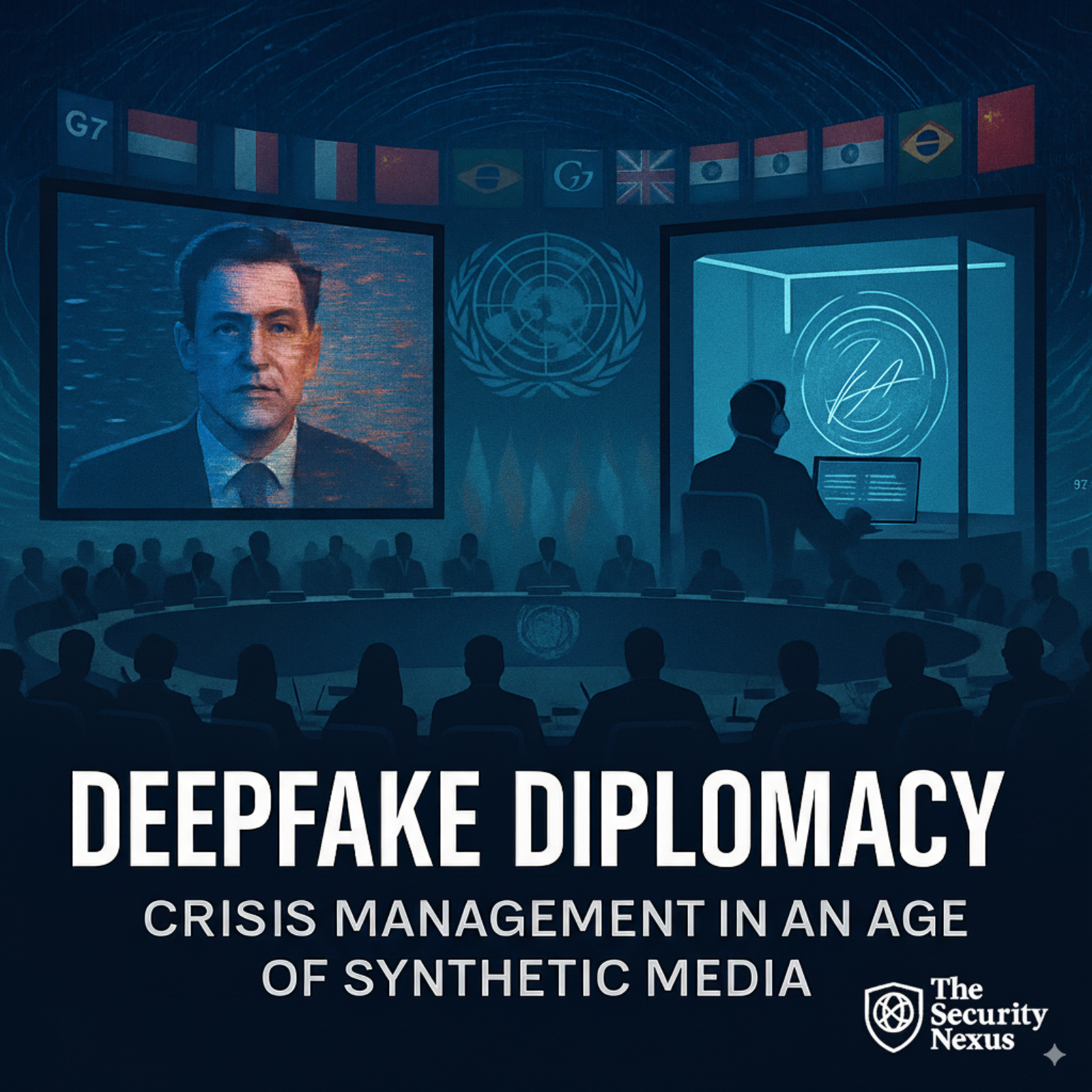
As synthetic media becomes a tool of statecraft and subversion, deepfakes pose an acute challenge to diplomatic crisis management. This post examines emerging state and non-state playbooks for combating deception at three levels: attribution, narrative containment, and technical watermarking. From false flag videos sparking regional instability to proactive watermarking systems that could become the Geneva Conventions of digital media, this is a strategic guide for the era when seeing is no longer believing.
https://www.thesecuritynexus.net
Jammed: The New GPS Battlefield
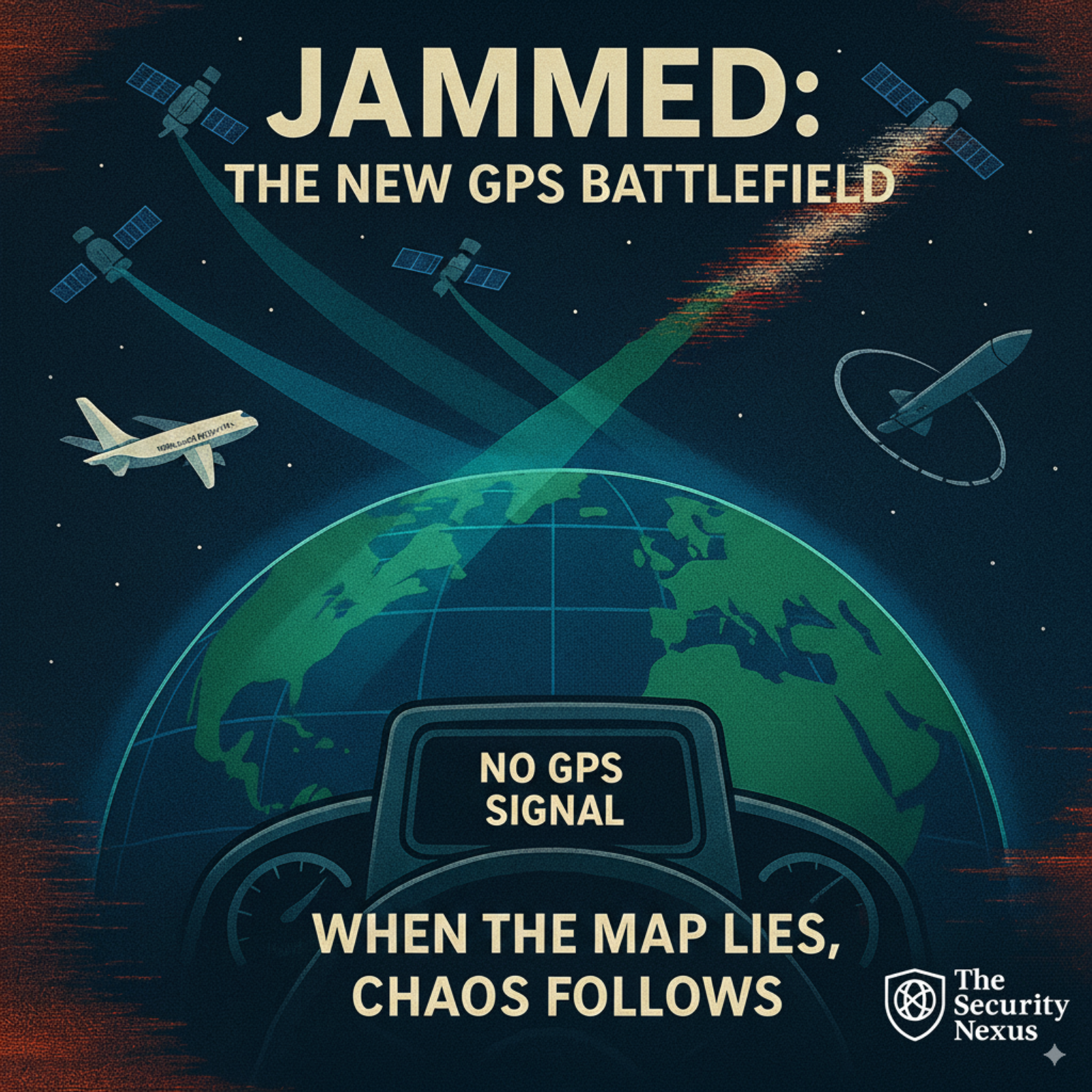
GPS is under attack. From jamming in war zones to spoofing near airports and farms, GNSS threats are rising fast. This post explores how critical infrastructure is affected and what technologies—like AI, sensor fusion, and multi-antenna arrays—are being developed to fight back. The future of navigation depends on resilience.
https://www.thesecuritynexus.net
Chokepoints of the Digital Ocean: Securing Subsea Cables
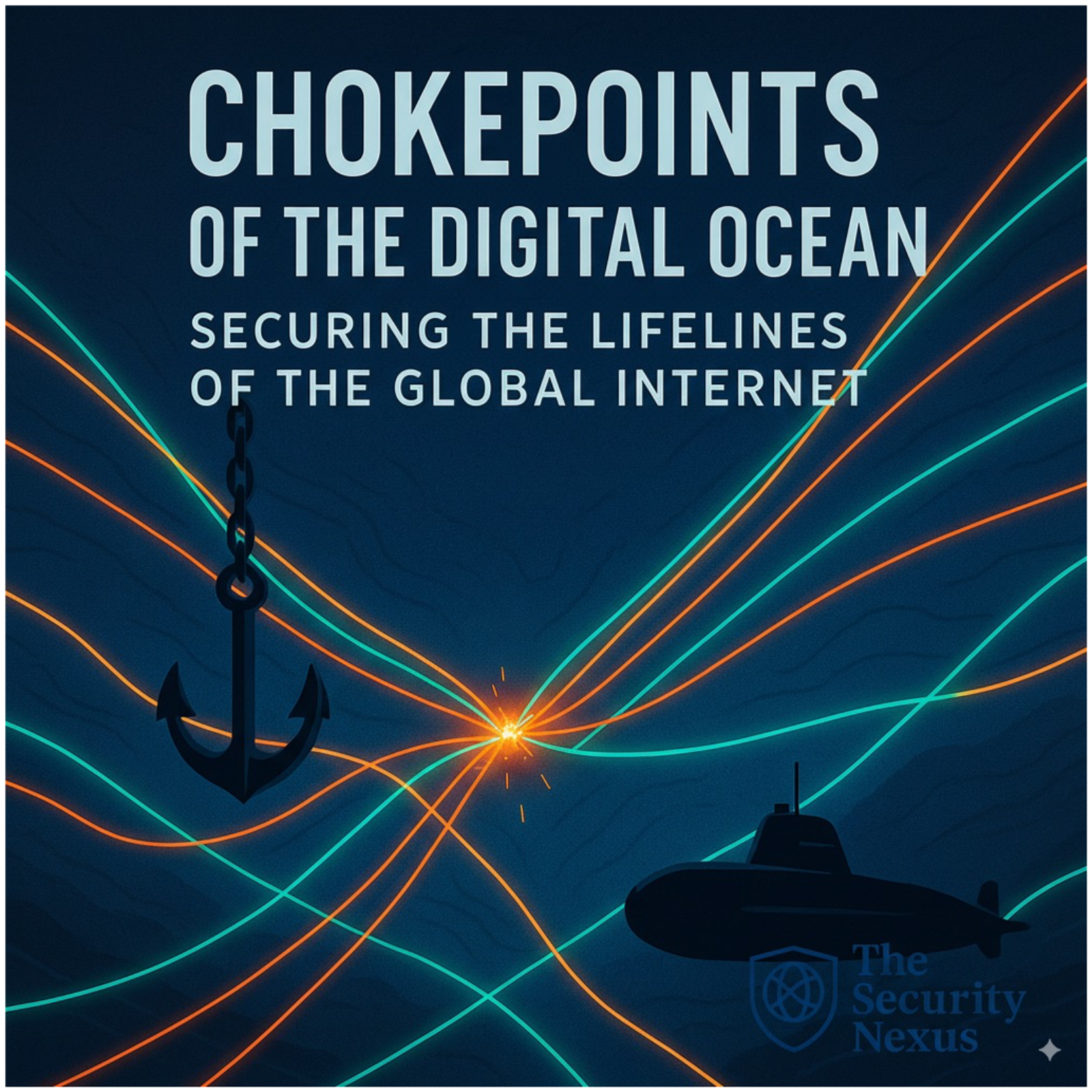
Subsea cables carry over 99% of the world's digital traffic but remain critically vulnerable to sabotage, espionage, natural disasters, and accidental damage. This post explores the triple invisibility of subsea infrastructure, highlights threats to cable security, and examines deterrence, detection, and redundancy options.
thesecuritynexus.net
After the Coup: How Intelligence Services Survive (or Collapse) in Political Upheaval
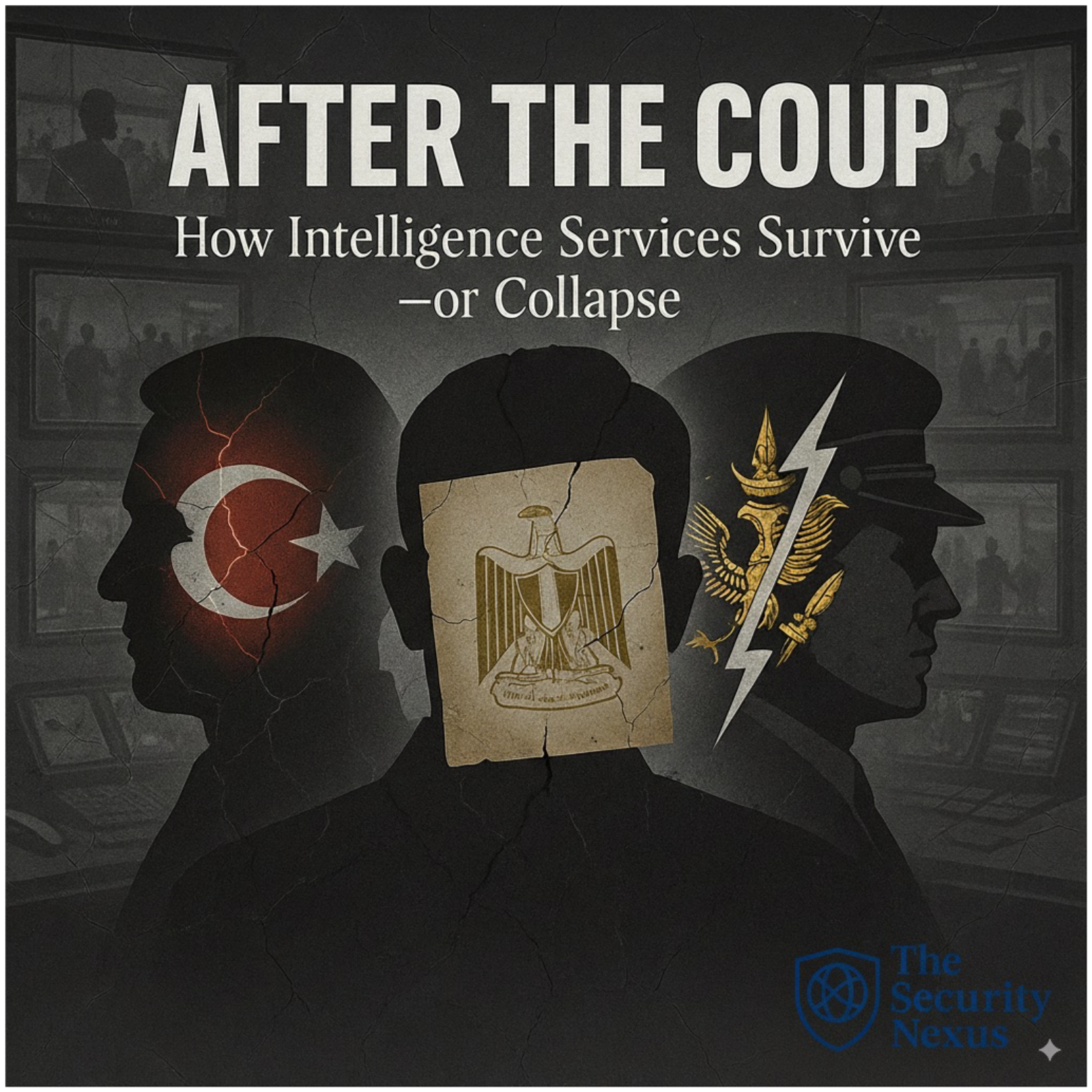
When regimes collapse or survive a coup, intelligence agencies face purges, realignment, or ruin. This post examines how Egypt, Turkey, and Thailand rewired their intelligence structures to maintain control—offering stark lessons in power, paranoia, and statecraft.
https://www.thesecuritynexus.net
#thesecuruitynexus
Operation Echo Chamber: How Algorithms Are Becoming Intelligence Actors

What began as convenience has evolved into covert capability. This deep dive explores how recommendation systems—once designed to ease cognitive load—have quietly matured into powerful intelligence actors. By collecting behavior trajectories and analyzing sentiment at scale, algorithms can now detect societal unrest, fuel disinformation, and even function as tools of modern espionage. The question isn’t just what these systems know—but how they’re being used, and by whom.
https://www.thesecuritynexus.net
Security by Design: Why We Need a Department of Cyber Infrastructure
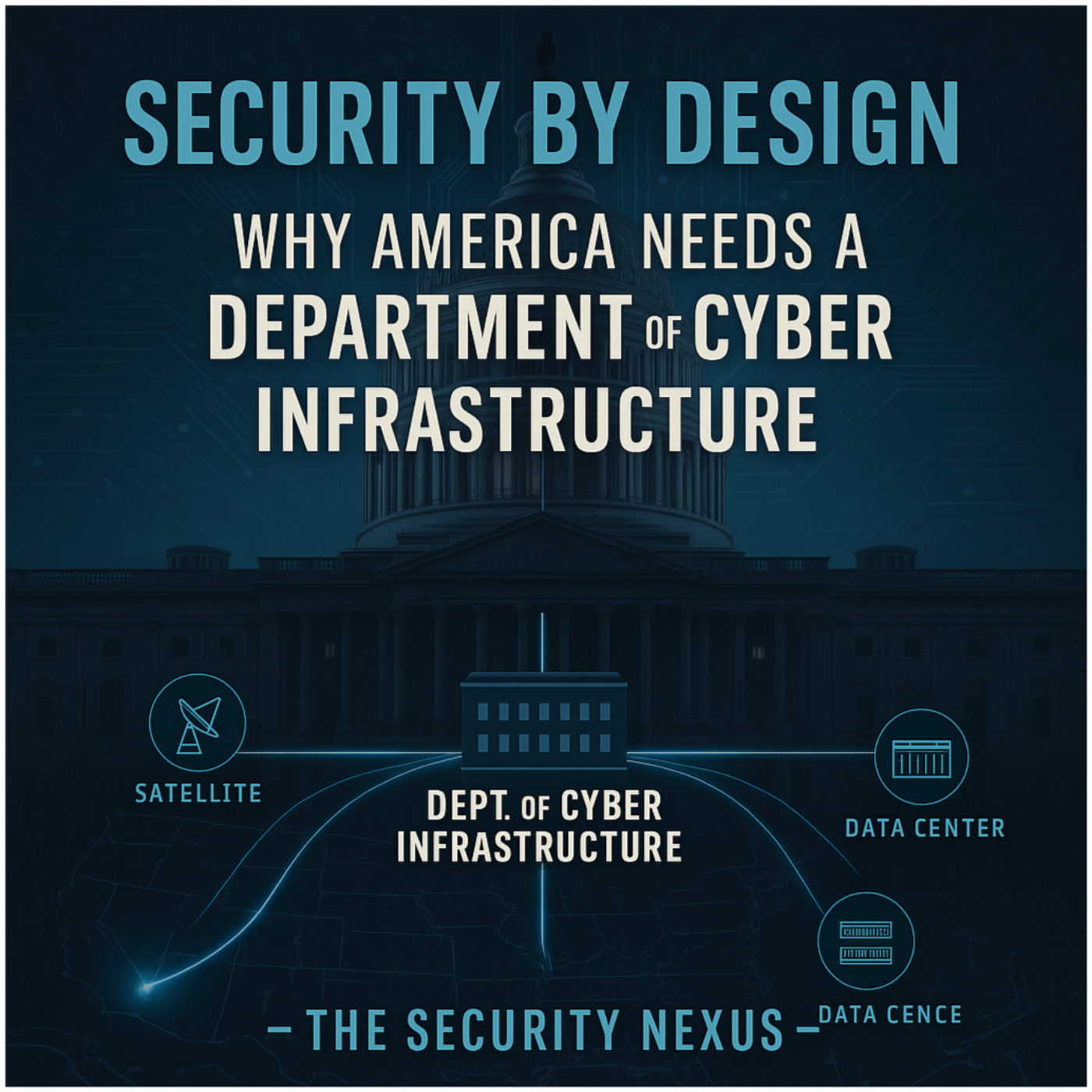
The United States needs a dedicated Department of Cyber Infrastructure—a centralized executive-level body focused solely on safeguarding the nation’s digital backbone. Much like DHS was created post-9/11 to unify disparate agencies under a counterterrorism mandate, today’s cyber threats—from ransomware to foreign supply chain attacks—demand a coordinated federal response. Our current approach is fragmented and inadequate for the pace, scale, and complexity of cyber-physical convergence. This post argues for a reimagined structure that treats digital infrastructure as strategic infrastructure—vital, vulnerable, and in need of federal stewardship.
#TheSecurityNexus
https://www.thesecur...
The Unseen Theater: Intelligence and Security Operations in Space: Beyond satellites—how the race for orbital dominance, intelligence surveillance, and cyber/kinetic/EW converge in orbit
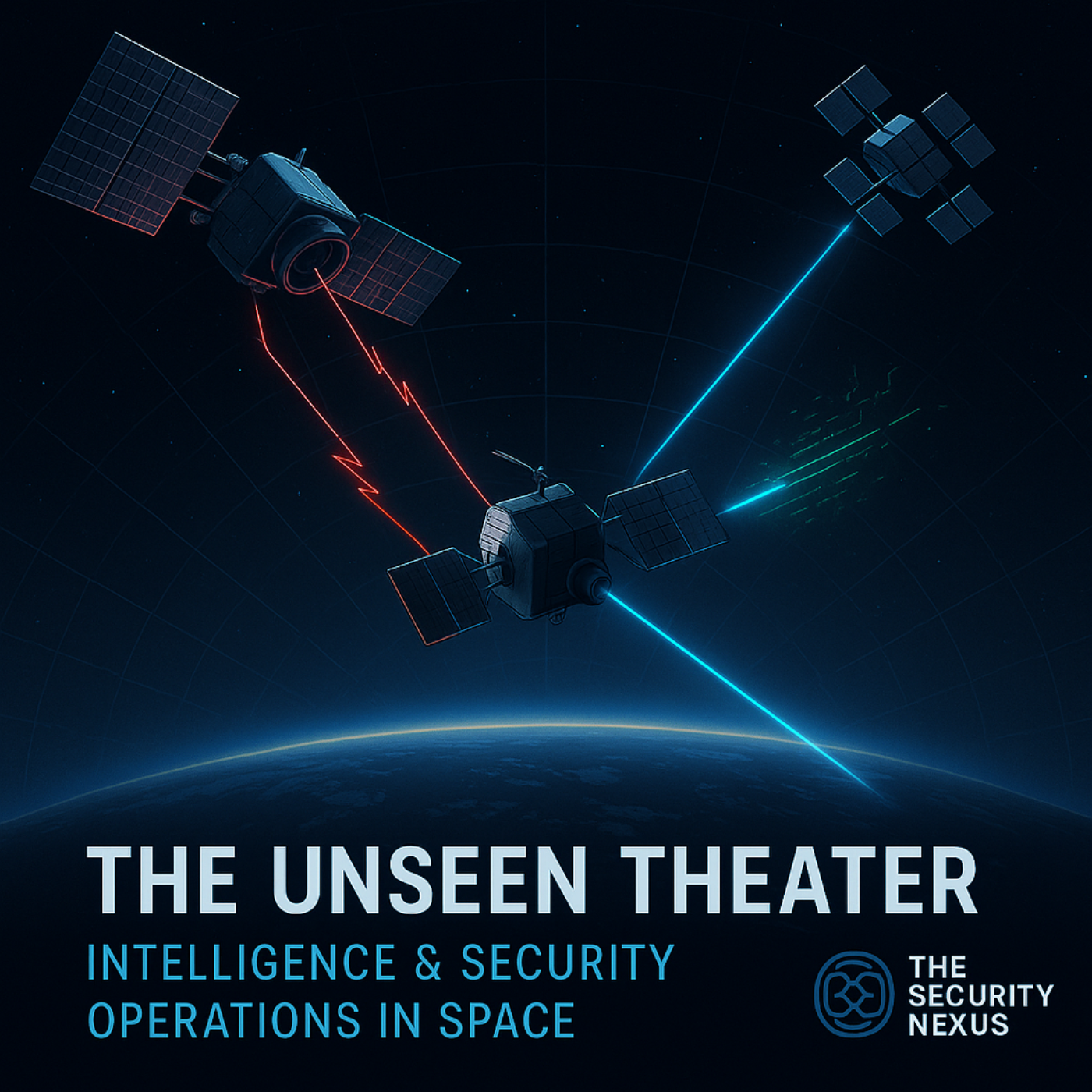
Space is no longer “just” about satellites beaming weather pics or GPS timing. It’s a contested, surveilled battlespace where autonomous constellations, on‑orbit proximity ops, and dual‑use cyber/EW/kinetic tools shape deterrence, crisis stability, and escalation pathways. The same AI that optimizes space traffic can cue counterspace missions; the same cameras that map crops can quietly stalk satellites; and a glitch in orbit can ripple straight into nuclear C3 timelines. Policymakers need to build redundancy, attribution, and norms into orbital ops—before ambiguity becomes the spark.
www.thesecuritynexus.net
Surveilled and Unaware: How Everyday Life Feeds the Watchers
In a hyper-connected world, we are not just observed—we are quantified. This blog post dissects the invisible architecture of ubiquitous technical surveillance (UTS), the erosion of privacy by design, and how our everyday interactions—both voluntary and coerced—fuel a vast ecosystem of data-driven control. From algorithmic profiling to emotional surveillance and counterterrorism’s moral gray zones, this piece interrogates the unsettling convergence of security, commerce, and control.
https://www.thesecuritynexus.net
The Digital Diaspora: When Exiles Become Strategic Threats or Assets
Authoritarian regimes have long viewed exiled dissidents as a threat—but in the digital era, this contest has gone transnational. Today’s exiles are not just passive victims of repression but strategic actors in global information warfare. Armed with smartphones and secure messaging apps, they amplify dissent, shape international opinion, and even provide actionable intelligence to foreign governments. But they also face mounting risks—malware, phishing, threats to family back home—as regimes extend their coercive power across borders. Drawing on cases from Iran, Syria, and beyond, this post examines the evolving dynamic of digital transnational repression and the emerging...
The Bureaucracy of Secrecy: Is Classification Hindering Innovation?
Overclassification and rigid compartmentalization are suffocating innovation in the intelligence community. In an era where technological speed determines security relevance, our antiquated secrecy protocols increasingly serve as roadblocks, not safeguards. This piece analyzes how bureaucratic secrecy undermines agility, collaboration, and digital transformation—and argues for a recalibration of risk in how we handle classified knowledge.
https://www.thesecuritynexus.net/blog.html
The Myth of the ‘Rogue Hacker’: State-Enabled Plausible Deniability in Cyberspace
The popular image of the rogue hacker as a lone digital warrior—unaffiliated, ideologically driven, and detached from state control—is a myth that obfuscates the real structure of cyber conflict. States increasingly outsource cyber operations to non-state proxies, leveraging patriotic hackers, private contractors, and criminal syndicates. This blog post deconstructs the lone actor narrative and examines how state-enabled plausible deniability remains a core feature—and growing liability—in contemporary cyber strategy.
https://www.thesecuritynexus.net/blog.html
The Gerasimov Doctrine Revisited: Myth, Meme, or Method?
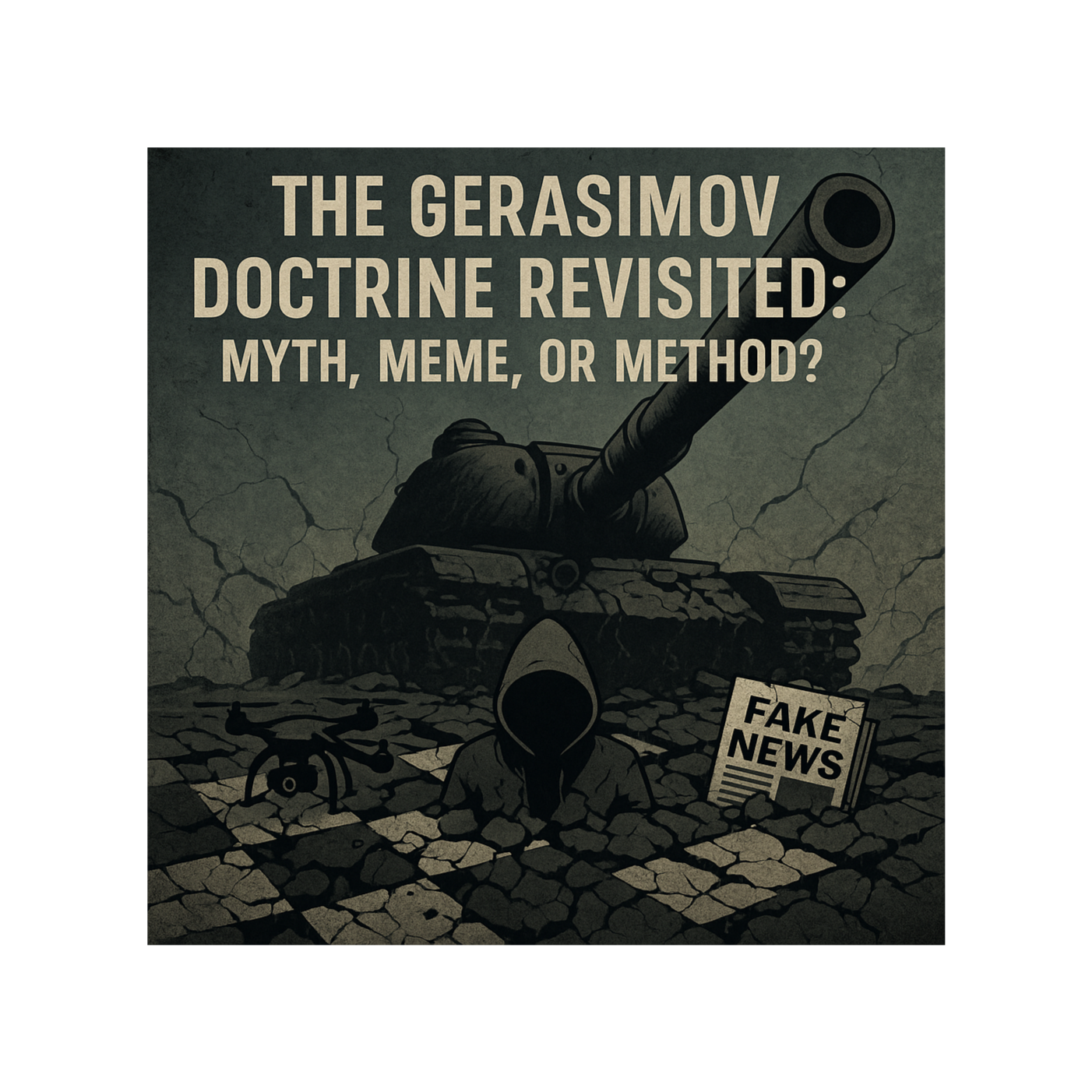
Once hailed as the Kremlin’s masterstroke in sub-threshold warfare, the so-called “Gerasimov Doctrine” has shaped Western interpretations of Russian hybrid conflict since the 2014 annexation of Crimea. But as Russia’s war in Ukraine drags on, its early fusion of psychological operations, information warfare, and kinetic ambiguity is giving way to an older, bloodier reality. This post reevaluates the Gerasimov Doctrine—where it came from, what remains relevant, and what recent failures suggest about its limits.
-
TheSecurityNexus.net
The Rise of the Red Shield: The Evolution of China’s Ministry of State Security
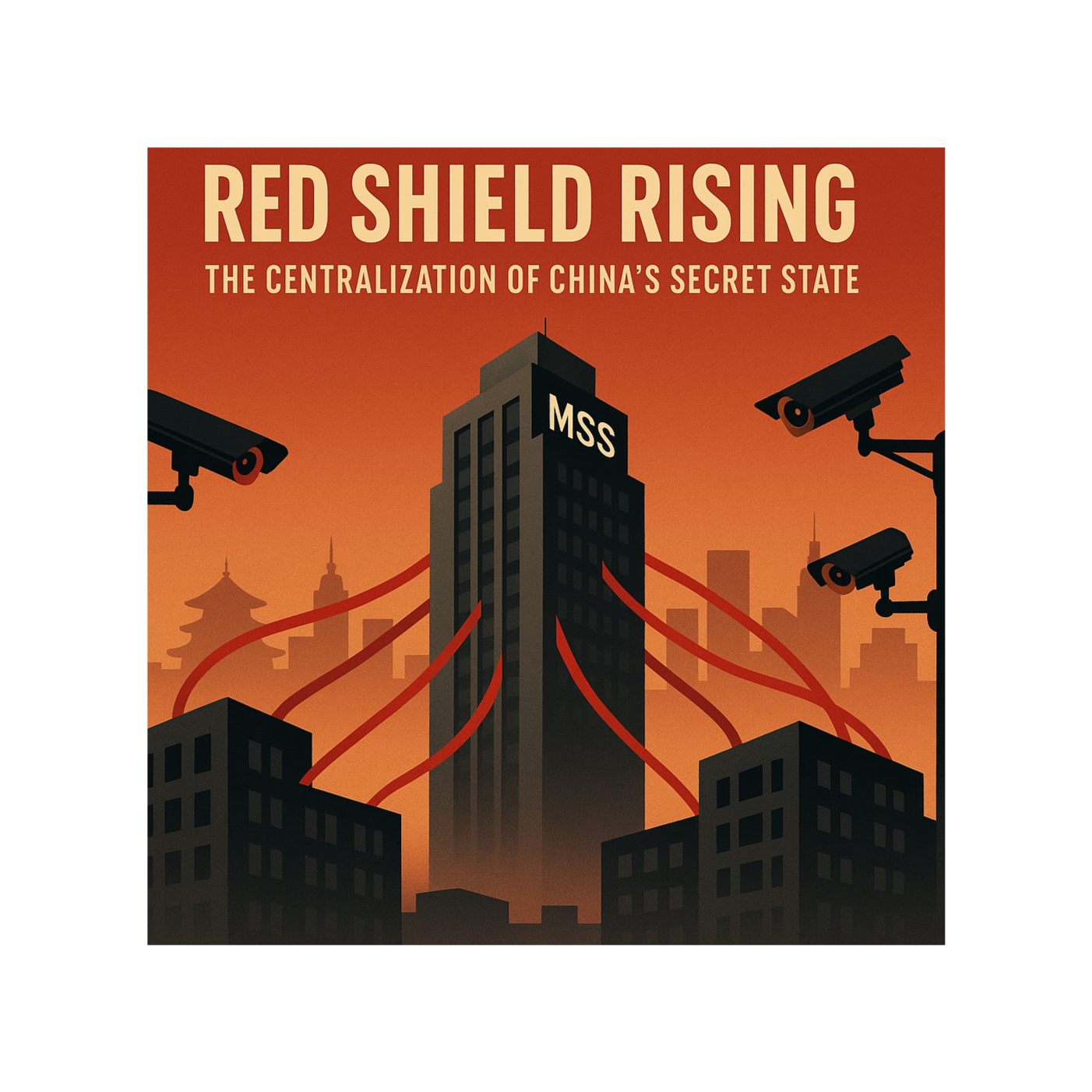
From its fragmented beginnings in the early 1980s to its current vertically integrated dominance, China’s Ministry of State Security (MSS) has evolved from a marginal actor to a central pillar of the Communist Party’s internal and external power projection. This post traces the evolution of the MSS in terms of structure, function, and authority, culminating in a centralization campaign under Xi Jinping that has reshaped the very fabric of China’s intelligence and security architecture.
The Security Nexus.
https://www.thesecuritynexus.net/blog.html
Swarm Revolution: How Ukraine’s $1K Drones Are Rewriting Warfare

How $1K drones destroyed Russia’s bombers—and exposed U.S. vulnerabilities. Ukraine’s Spider’s Web strike redefines modern warfare. Read more at The Security Nexus.
#DroneWarfare #AICombat #thesecuritynexus.net
The Drone Deluge: How Ukraine’s Swarm Strike Exposed a Strategic Weakness

Ukraine’s successful drone swarm strike deep inside Russian territory marks a turning point in modern warfare. As inexpensive, autonomous UAVs exploit gaps in legacy air defense systems, this event serves as a clarion call to Western militaries: drone swarms aren’t just the future—they are the now. This post explores the strategic implications of drone swarm warfare, the lessons from Ukraine’s asymmetric success, and the urgent need for scalable countermeasures like high-power microwave (HPM) weapons.
The Security Nexus @ thesecuritynexus.net
Signals and Silence: When Cyberattacks are Meant to Be Noticed
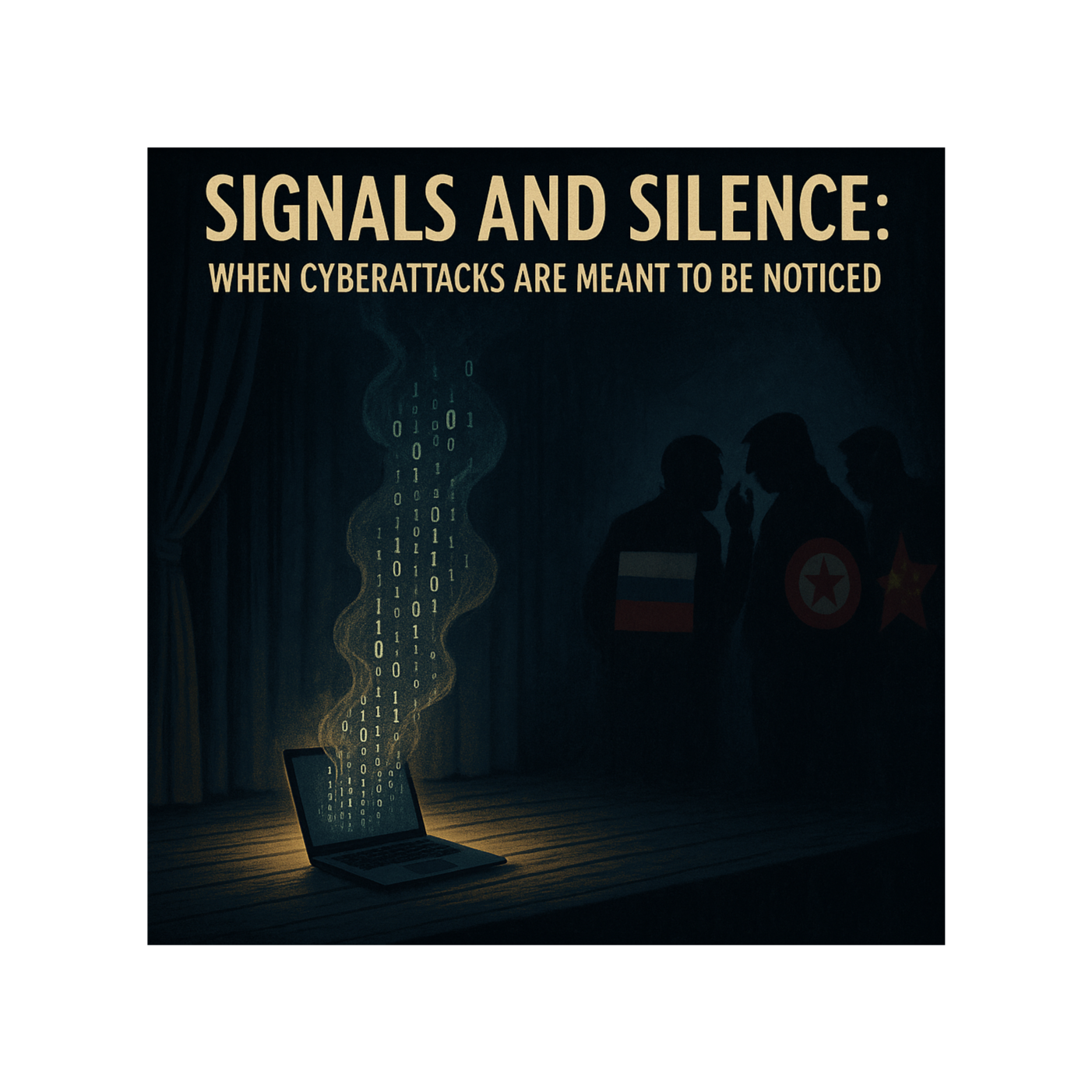
Not all cyberattacks aim to remain covert. In fact, many are intended to be seen. This post explores the logic of cyber signaling—when visibility is the point, attribution is welcomed, and deterrence is delivered through digital theater.
