Global Tantrum! with Steve Palley and Prof. Galen Jackson
Two International Relations PhDs help you make sense of the post-postwar era. globaltantrum.substack.com
Dems X Trump: Foreign Policy Edition
A change in control of Congress does not automatically change American foreign policy. Steve Palley and Galen Jackson examine what the midterm results could mean for the final two years of Donald Trump’s presidency, starting with the effort to impeach Defense Secretary Pete Hegseth. Would removing an official change the policy, or simply change who carries it out?
Congress has war powers, control of spending and the ability to investigate. Presidents have considerable room to act, and a veto can put legislation beyond the reach of an ordinary majority. We discuss why the War Powers Resolution ha...
Can America Defend Space?
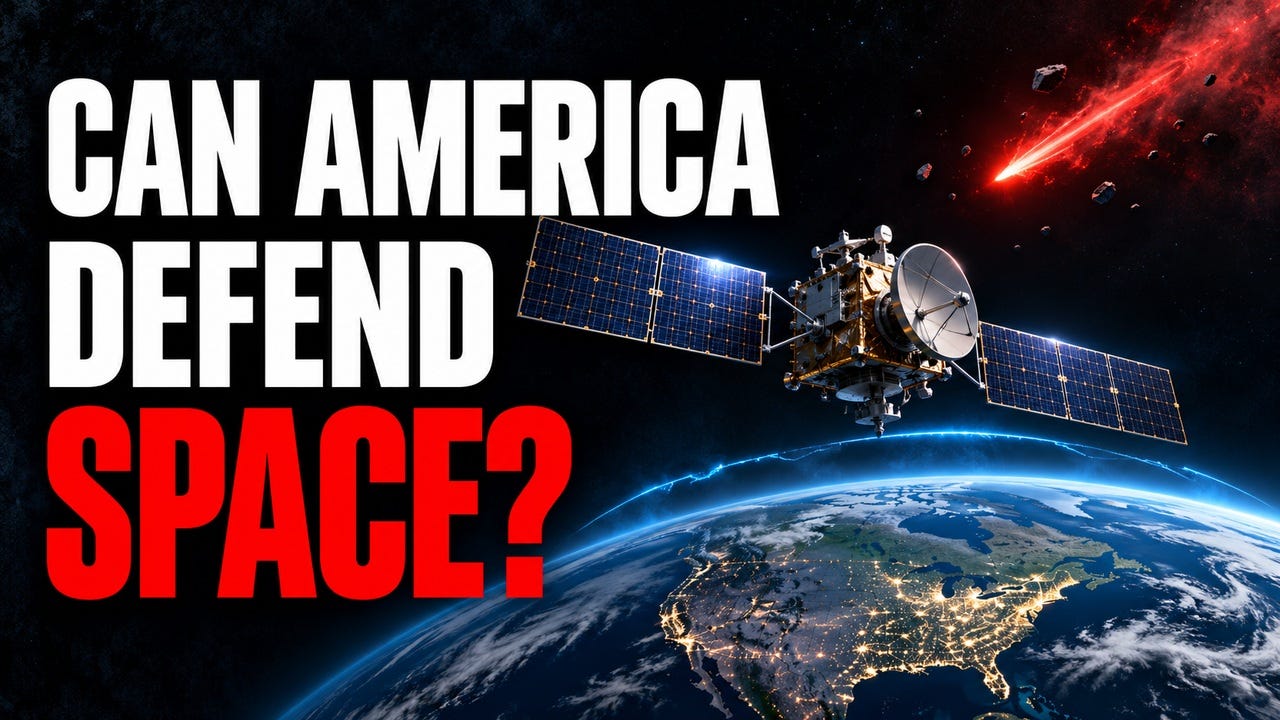
Space is becoming a battlefield, but what does that actually mean? Steve Palley and Galen Jackson start with the United States’ acknowledgment of weapons in orbit and work through what satellites do for surveillance, communications and precision strikes. We also explain why conventional weapons in space raise different legal questions from the nuclear weapons barred by the Outer Space Treaty.
Then we revisit the long American search for missile defense, from Reagan’s Star Wars to Golden Dome. Drawing on Frank A. Rose’s From Star Wars to Golden Dome, we ask why defending against shorter-range missiles is a d...
Can AI Save the Internet?
A quiet success in cybersecurity can look a lot like a crisis. Researchers find a dangerous vulnerability, governments and companies scramble to patch it, and websites go offline as a precaution. Steve Palley and Galen Jackson examine PHP2Shell, the flaws in a widely used programming language that exposed just how much modern life depends on software most people never think about.
The PHP Foundation’s account tells a story of AI-assisted discovery, difficult engineering tradeoffs and a coordinated defense that ran into disclosure problems. Amazon’s early attack detections make the timing even more unsettling: attackers were...
Can France Break Europe?
France’s political stalemate has become a financial problem, and its financial problem is becoming Europe’s. Steve Palley and Galen Jackson look at the protests, the resistance to pension and spending reforms, and the pressure building on a country that wants to preserve its social model without a clear way to pay for it. The European Commission’s forecast shows why the argument over the budget will outlast any single government.
The last eurozone crisis offers a warning, but France is a different proposition from Greece. Its economy is larger, its political weight is greater, and its bo...
Is China Winning the Cyberwar?
China’s hackers have reached deep into American networks, but what would it mean to be winning a cyberwar? Steve Palley and Galen Jackson take up Anne Neuberger’s argument that America needs a new strategy of deterrence and The Cyber Gap, by Matthew Ferren, Adam Segal and Rush Doshi. We ask whether weak defenses tell us enough about the larger strategic balance, especially when so much of the offensive side remains classified.
One proposed answer is to build digital twins of critical infrastructure: virtual systems where defenders can test changes without disrupting the real thing. The idea...
Can Distance Still Protect America?
Two new papers point toward different strategic futures. Eli Sanchez argues that emerging technology is unlikely to make the oceans transparent. Steve Palley and Galen Jackson discuss what that means for submarine survivability, nuclear deterrence, and the political conflicts that a stable balance of terror cannot settle.
Erik Sand’s study of the new missile age presents a more unsettling prospect: precision conventional ICBMs could become militarily relevant within a decade. What happens if distance stops protecting bomber bases and other vulnerable targets? We examine the incentives to strike first and the danger of mistaking a conventional la...
Who Can Control AI?
The White House has brought leading AI companies together around voluntary safety commitments. But what does self-policing mean when the same companies are racing to build more capable systems? Steve Palley and Galen Jackson look at the promises, the incentives, and the gap between corporate oversight and public control. The administration’s new terminology order adds another wrinkle: calling everything superintelligence does not settle what the technology can do.
Anthropic’s analysis of GLM-5.3 sharpens the problem. A downloadable model can develop sophisticated cyber exploits, while its safeguards can be weakened or removed. We discuss what those resu...
Saudi Arabia's Worst-Case Scenario
The Houthis have rapidly expanded their control along Yemen’s western coast, seizing Mocha and strategically important Red Sea positions. That advance gives them more leverage around the Bab el-Mandeb just as a reported Iran-aligned militia attack put Saudi Arabia’s East-West oil pipeline under pressure.
Riyadh wants help. Mohammed bin Salman reportedly asked Donald Trump to intervene against the Houthis, but the White House held off. Saudi Arabia still has money, reserves, and time, but its reliable ways to move oil around the Strait of Hormuz are narrowing.
Andrew Leber joins us to explain why...
The War on Terror's Legacy
Steve and Galen look back at September 11 and the decisions that followed, from the first campaign in Afghanistan to the invasion of Iraq and the rise of the Islamic State. The conversation asks which choices were unavoidable, which were errors, and why the difference still matters.
The hosts also trace the roots of al-Qaeda, the Taliban’s sanctuary in Afghanistan, and the regional politics that shaped the wars. The result is less a simple verdict on counterterrorism than a look at how a narrow mission became a much larger project.
A recent Foreign Affairs essay by...
Agentic AI and the Future of Cyberwarfare
AI is getting better at finding vulnerabilities. Whether that makes the world safer is a different question. Lennart Maschmeyer’s International Security article argues that defenders stand to gain more than attackers. Steve Palley and Galen Jackson use that argument to ask whether increasingly capable AI agents are changing the balance.
We put the article alongside Anthropic’s account of an AI-assisted espionage campaign and the independent investigation of the Hugging Face incident. A system that finds a bug is one thing. An agent that keeps working, coordinates with other agents, and finds ways around obstacles presents a di...
Is This World War III?
Would we recognize a world war before historians gave it a name? Bret Stephens’s recent essay gives us a reason to ask. Fighting in Ukraine and the Middle East, cooperation among authoritarian powers, and the possibility of war over Taiwan make the 1930s comparison tempting. Steve Palley and Galen Jackson work through where it helps and where it breaks down.
Nuclear weapons are the biggest difference. They make another march on Berlin hard to imagine, but they also make a confrontation over something a government considers essential far more dangerous. Deterrence might prevent a great-power war. It...
Canada Draws the Line
The United States and Canada have spent decades building one of the deepest economic relationships in the world. Cars and their components cross the border repeatedly, supply chains are tightly integrated, and the two countries traded about $872.3 billion in goods and services in 2025. Now Donald Trump is treating that interdependence as leverage rather than an alliance.
The immediate dispute is narrow but revealing. Washington imposed 50 percent tariffs on nearly $20 billion in Canadian vehicles, alcohol, and dairy after negotiations collapsed. Mark Carney recalled Canada’s team and promised dollar-for-dollar counter-tariffs on a broader group of American goods beginning Se...
The Houthis Close the Red Sea
The Houthis have declared a maritime blockade against Saudi-linked shipping in the Red Sea, attacked vessels near the Bab el-Mandeb, and renewed strikes on Saudi energy infrastructure. The immediate trigger was a July strike that disabled the runway at Sana’a airport as an Iranian flight attempted to land, but the confrontation rests on a much older Saudi-Houthi conflict.
We trace the Houthis from their roots in Yemen’s Zaydi community through the fall of Ali Abdullah Saleh, the seizure of Sana’a, and the Saudi-led war that failed to dislodge them. That history matters because the moveme...
Why Regime Change Fails
Galen Jackson’s new War on the Rocks essay examines five regime-change campaigns, from Suez and Lebanon to Iraq, Libya, and Iran, and asks why outside powers keep making the same gamble.
The central mistake is confusing tactical success with political control. Great powers can destroy targets, topple governments, and kill leaders. They cannot manufacture legitimacy, national cohesion, or a stable replacement regime.
Why keep trying? Decapitation looks cheap and decisive, military superiority feels like political leverage, and occasional apparent successes in places such as Panama and Venezuela invite bad analogies. In the Middle East, na...
Politicizing The Pentagon
On July 3rd, C.Q. Brown, the Air Force general Trump fired as chairman of the Joint Chiefs in February 2025, published an essay in Foreign Affairs with Duke political scientist Peter Feaver, warning what happens when a country asks too much of its military. He never names Trump or Hegseth. He doesn't have to. In the sixteen months since Brown's dismissal, Pete Hegseth has fired or forced out more than a dozen general and flag officers, most recently Chris Donahue, the commander of U.S. Army Europe and Africa, in June.
The American civil-military canon is built...
Hezbollah's Still Here
The Iran war is winding down, but one front never closed. In southern Lebanon, Israel and Hezbollah are still trading fire, and it’s become one of the biggest sticking points left in the deal between Iran and the United States. The old question is back: what do you actually do about Hezbollah? What CAN you do?
Here’s what’s hard about Hezbollah: it is two things at once. On the one hand, it’s a Lebanese political party that holds seats in parliament and runs the clinics and schools the failing Lebanese state can’t. On the oth...
Is Israel Losing USA?

On June 14th, the U.S. and Iran signed a memorandum of understanding to end the Iran War. The Strait of Hormuz reopens, sanctions lift, and a $300 billion reconstruction fund is on the table. Iran got nearly everything it wanted. America got out. Trump marked the same day by turning 80 and hosting a UFC card on the White House lawn. Iran is off his radar, and he’s turned the keys over to JD Vance.
But the deal’s biggest loser isn’t Washington, it’s Jerusalem. Like the U.S. Israel got exactly none of its war aims...
America's Empty Arsenal

Trump’s recent military excursion against Iran wins several awards from the Global Tantrum Academy: 1) Most Declarations Of Victory, 2) Best Maritime Rescue By A Supporting Autonomous Boat, and 3) Largest Expenditure Of Ultra-Rare Munitions In A Losing Campaign.
Depending on what happens over the next three to five years, while the US defense majors crank into gear replacing said munitions, that last one might become the most significant outcome of the conflict.
The US blew a quarter to a half of its stockpile of its advanced offensive and defensive missiles trying to overthrow the Islamic Republic an...
America's Debt Trap

Most Americans don’t know this: the United States technically defaulted on its debts not once but twice in the last century: once in 1933 and again in 1971.
Luckily, the country won World War 2 in between those two incidents, which counted for a lot in terms of international credibility and creditworthiness. However, as any consumer currently out over his or her skis will know, lenders do not make a habit of propping up unsustainable borrowing forever.
Not even the most powerful and successful country in world history can ignore this law of financial gravity forever. But th...
Iran Isn't USA's "Suez Moment," But It Sure Isn't A Win

After a bruising war with Iran, the editorials wrote themselves: the Strait of Hormuz closed, US bases hit, interceptors burned, and nothing decisive to show for it. Pundits reached for the ultimate decline metaphor. Could this be America’s “Suez Moment,” referring here to the the 1956 foreign policy fiasco / humiliation that ended Britain and France’s time as major independent global actors?
We don’t buy it. Suez worked as a death knell because there was a senior partner, the United States, able to bankrupt London and Paris if they failed to toe the line. In 2026 there’s no one who...
Cuba Goes Dark
After the US deposed Maduro and installed Delcy Rodriguez in Caracas, Venezuela stopped shipping oil to Cuba. That oil, heavily subsidized in exchange for Cuban doctors, teachers, and security advisors since the Chávez era, was the foundation of the Cuban economy. The last Russian tanker arrived in March. Now there’s no replacement coming and Cubans are living through 22-hour-a-day blackouts.
This isn’t a humanitarian story dressed up as geopolitics. The USS Nimitz strike group is parked under Southern Command. Trump’s DOJ just indicted 94-year-old Raul Castro for the 1996 Brothers to the Rescue shootdown, 30 years a...
Xi Cleans House

Since 2022, more than 100 senior People’s Liberation Army officers have been removed, disappeared, or placed under investigation, and last week two former defense ministers, Wei Fenghe and Li Shangfu, were handed suspended death sentences that will commute to life imprisonment without parole. The Central Military Commission, which is supposed to have seven members, is down to two: Xi himself and a discipline specialist. Xi’s hand-picked vice chairman, the PLA’s top professional soldier, is now under investigation.
It’s tempting to read this as pure power consolidation, a Stalin-style coup-proofing where the dictator clears out anyone who coul...
Project Mythos & AI's Zero-Day Edge

On April 7, Scott Bessent and Jerome Powell pulled the CEOs of the biggest U.S. banks into Treasury for an urgent, closed-door briefing — not about rates, not about liquidity, but about an AI model. Anthropic’s Claude Mythos Preview is apparently an order of magnitude better than anything currently public at finding software vulnerabilities. Rather than release it, Anthropic built a consortium called Project Glasswing and gave the major platform companies early access to patch before the capability proliferates. The warning shot landed loud: Mozilla used Mythos to find and fix 271 previously unknown vulnerabilities in Firefox 150. On the prior vers...
Iran War: Are We Done Yet?

The ceasefire’s held for over a week. The rockets, drones, and fighter-bombers are all taking a breather. The Strait of Hormuz might be opening (except to Iranian traffic, perhaps). The Gulf Arab states are expressing (very) cautious optimism. Israel might be holding its fire in Lebanon during its own separate, but linked, conflict with Hizbullah. And the Trump Administration may be on its way to back to Islamabad to try to secure a deal before the ceasefire formally lapses next week.
This is all good news… but does it really mean the war’s over? And even i...
Peace in the Middle East?

On April 7th, Trump announced a two-week ceasefire with Iran, brokered by Pakistan, with negotiations now opening in Islamabad. Hegseth called it a “historic and overwhelming victory” and claimed every US objective was met. Iran called it a historic win of its own. Only one of those can be true.
Our read: Iran has the whip hand. Not because it beat the US in any conventional sense, but because it didn’t lose. It absorbed the punishment, closed the Strait of Hormuz on demand, and walked into ceasefire talks with its nuclear ambitions more justified and its coerci...
Iran War: No End In Sight

The theory of the Iran War from the U.S. perspective, to the extent that one existed, hinged on getting in and out quickly: decapitate the leadership, do maximum military damage, hope that the Iranian people rise up and take over, and then go home in triumph either way. Two to three weeks, tops.
So much for that happy idea. We are five weeks in to this military “excursion,” to use President Trump’s terminology. America just blew up the biggest bridge in Iran, F-15s are getting shot out of the sky, and explosives are raining down a...
Iran: 4 Weeks In

The US-Iran war has entered its fourth week, and both sides are now talking — sort of. Iran is demanding transit tolls through the Strait of Hormuz and feels it is owed reparations. Washington responded with a fifteen-point plan that reads less like a negotiation and more like terms of surrender. The yawning gap between those two positions is where this war lives now.
Oil is hovering around $105 a barrel. Parts of Asia are rationing fuel. The ground invasion debate is heating up in Washington, and the historical echoes — Gulf War, Eagle Claw — aren’t reassuring.
We get i...
The Iran War: Week Three

Three weeks into the Iran war and there are no good options left on the table. The Strait of Hormuz remains effectively closed, oil is spiking, the Gulf monarchies are being blasted, Lebanon’s on fire. A disaster of truly global proportions looms.
The strategic picture has shifted. Trump asked NATO and even China for help reopening the strait and got a flat no. A new Foreign Affairs analysis makes the case that air power alone won’t cut it — clearing the waterway would require boots on the ground along Iran’s coastline, and no one is signing...
The Iran War: Week Two

The U.S.-Israeli strikes that killed Ayatollah Khamenei on February 28th were supposed to be the decisive blow. Instead, two weeks later, Iran has a new Supreme Leader, Khamenei’s son Mojtaba, installed by the Revolutionary Guards, the Strait of Hormuz is closed, and roughly 10-15% percent of global oil is off the market. The IEA just authorized the largest emergency stockpile release in history. The old boss is gone, but the regime is still standing.
This was supposed to be the Trump doctrine at work: overwhelming force, maximum leverage, quick resolution. But Iran did its ho...
The Iran War (Audio Only)

Please see our full post for the video version.
This is a public episode. If you would like to discuss this with other subscribers or get access to bonus episodes, visit globaltantrum.substack.com
Mexico's Cartel Problem

On February 22nd, Mexican security forces killed Nemesio Oseguera Cervantes, known as El Mencho, the leader of the Jalisco New Generation Cartel. Within hours, CJNG retaliated with over 250 roadblocks across 20 Mexican states and set fires in Puerto Vallarta. The message was clear: the cartel’s reach extends far beyond any single leader.
But this isn’t just a story about one dead kingpin. Mexican cartels collectively control an estimated 35% of the country’s territory. They function as states within a state, providing goods and services in areas where the central government can’t or won’t. CJNG and the Si...
Is the Liberal International Order Dead?
This week we’re talking about one of the big ideas that shaped the world after 1945: liberal internationalism. Free trade, international institutions, and democracy promotion were the three pillars meant to keep the peace and spread prosperity. For decades, they might have (depending on who you ask, of course). But something has clearly shifted, and we wanted to dig into what exactly that something is.
We frame the conversation around two competing views. John Ikenberry argues that the liberal order was a genuine institutional achievement: a system of rules and norms that even the hegemon agreed to be...
The Global Chip War
The Trump administration has begun loosening semiconductor export controls on China, allowing Nvidia to sell advanced AI chips like the H20 to Chinese buyers in exchange for a cut of the revenue. It’s a sharp reversal from the Biden-era strategy of choking off China’s access to cutting-edge technology entirely, and it raises a question that has no clean answer: is it better to sell your adversary the weapons of the future, or to force them to build their own?
The semiconductor supply chain is the most strategically consequential chokepoint in the global economy. Virtually all of t...
Can Europe Go Nuclear?

On this week’s episode, we ask an urgent question: what happens to European security when American nuclear deterrence becomes optional? The New START treaty is lapsing, Russia is deploying exotic new capabilities like the Poseidon drone, and Trump is pitching a Golden Dome missile defense system that may or may not work. The old Cold War certainties are cracking.
The episode hinges on a credibility problem that nobody really wants to talk about. France and Britain have nuclear weapons. But would they actually use them to defend Poland? But if geography matters—if standing next to your...
Trump's Greenland Obsession

In this episode, we dive into President Trump’s renewed push to acquire Greenland from Denmark. What started as a seemingly absurd proposal in 2019 has now become a serious geopolitical flashpoint, with Trump threatening tariffs on European allies and making aggressive statements at the World Economic Forum in Davos.
Greenland, an autonomous territory within the Kingdom of Denmark with its capital in Nuuk, has been a source of fascination for American presidents for decades. Trump first floated the idea back in 2019, calling it “essentially a large real estate deal.” Danish Prime Minister Mette Frederiksen responded by calling the pr...
New Boss in Venezuela

On January 3rd, U.S. forces captured Venezuelan President Nicolás Maduro and his wife in a meticulously planned operation. The lights went out across Venezuela—a demonstration of American cyber capabilities—while Russian air defenses proved useless. The old boss is gone.
But this wasn’t regime change. Delcy Rodriguez, Maduro’s deputy, now runs the government—under Washington’s direction. Trump has made it explicit: cooperate or face worse. Another term for it could be “tyrant change.”
Why did we do this? It’s not about democracy or drugs. It’s about oil, leverage over China...
Japan Draws a Line on Taiwan
In a recent statement, Prime Minister Sanae Takaichi argued that a Chinese attack or blockade of Taiwan would constitute a “survival-threatening situation” for Japan. That phrasing matters. Under Japan’s postwar legal framework, it is the specific language that allows Tokyo to participate in collective military defense alongside the United States.
This is not abstract signaling. It is a quiet but meaningful shift in Japanese security policy.
China reacted forcefully. Trade restrictions. Cultural retaliation. Increased gray-zone pressure around disputed islands. Diplomatic outreach to Europe and Washington. The response was coordinated and familiar—what’s often described...
Trump's 2025 National Security Strategy: Part 2
More on the 2025 National Security StrategyGreat-power realism, MAGA internationalism, and the contradictions at the heart of Trump’s worldview
STEVE PALLEYNOV 2025
Last episode, we walked through the opening logic of Trump’s 2025 National Security Strategy: its populist tone, its rejection of post–Cold War overextension, and its attempt to reframe U.S. grand strategy around sovereignty, restraint, and balance-of-power politics. This week, having actually read the full document, we go deeper—and the picture gets stranger.
At its best, the strategy gestures toward something serious. It rejects global primacy, emphasizes great-power competition over moral cr...
Trump's 2025 National Security Strategy: First Impressions
Every few years, a U.S. administration publishes its National Security Strategy—a grand, self-congratulatory mission statement that tells the world what Washington thinks it stands for. Most are boring, bureaucratic, and easy to ignore. The 2025 version under Trump is not one of those.
This document reads less like a policy white paper and more like a manifesto. It’s part ideological declaration, part foreign policy blueprint, and part campaign ad. From the opening pages—where Trump boasts of “obliterating” Iran’s nuclear facilities and “settling eight raging conflicts”—the tone is unmistakable: America is back, the elites are out, an...
Russia Gets Sanctioned

For the first time in nearly four years of war, the U.S. has taken direct aim at the beating heart of Russia’s economy: its oil exports.
The Trump administration’s new sanctions on Rosneft and Lukoil, Russia’s two biggest energy companies, block both American and foreign firms from doing business with them. In practical terms, that means any bank or corporation that wants access to U.S. markets now has to choose—us or them.
It’s a major escalation. With these measures, over 75% of Russia’s oil exports are now under Western sanc...
