Science Made Simple

Science Made Simple is a science podcast that explains big ideas in plain English — science explained simply for students, curious minds, and science lovers.Explore astronomy and space — NASA, Artemis, the James Webb Telescope, black holes, exoplanets and the search for alien life — plus brain science and neuroscience, physics, biology, climate, and artificial intelligence, one clear topic at a time.New episodes daily — three fresh episodes every day. Every episode takes one complex question, removes the jargon, and answers it in about a minute.Hit follow and feed your brain, the simple way.Become a supporter of this podcast: https://www.spre...
Hera Sees Two Asteroids: One Dot Becomes Two | Science Made Simple
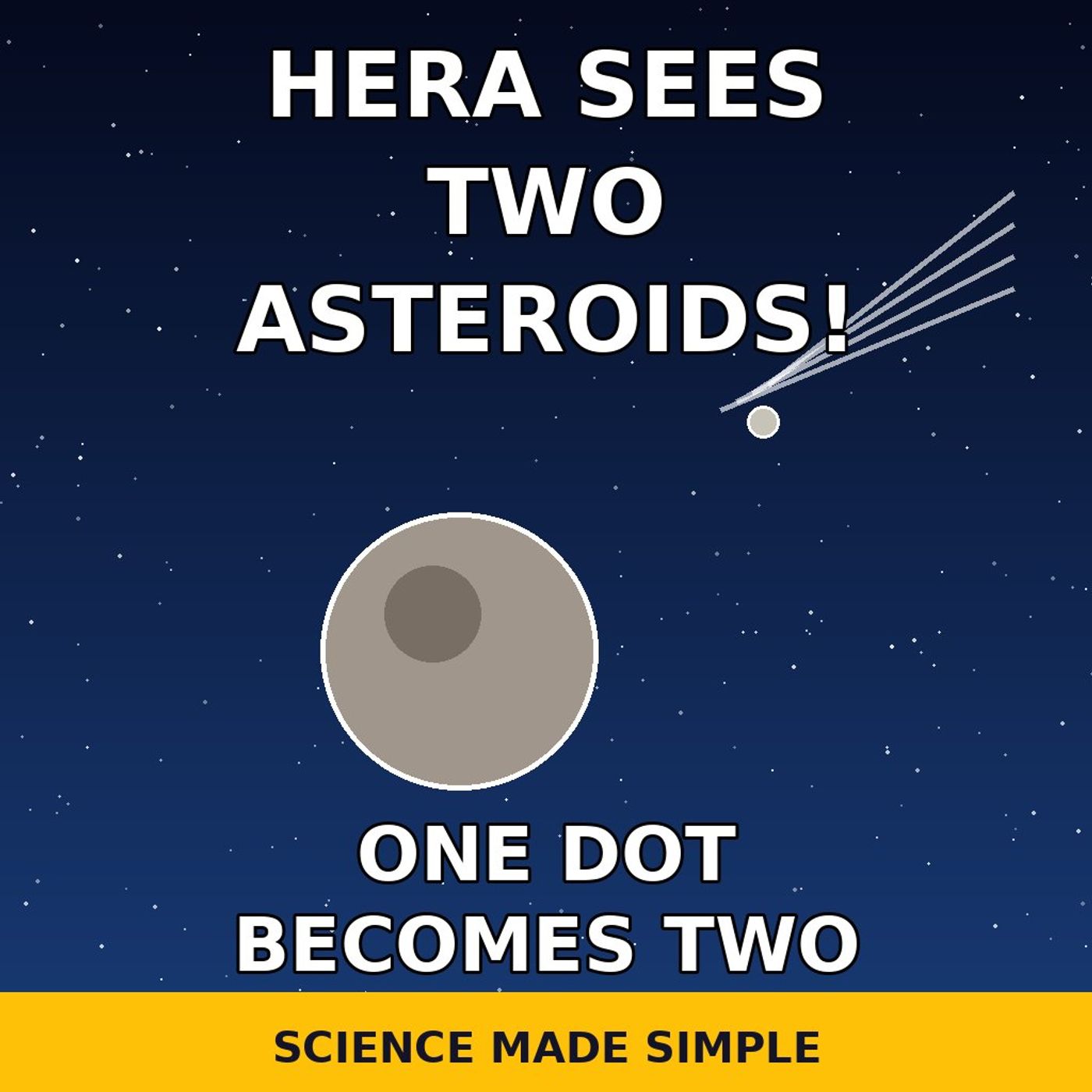
Discover how ESA's Hera spacecraft saw the Didymos and Dimorphos asteroids as two separate objects for the first time. Learn why the pair previously looked like a single dot, how the 18 October image from about 1,280 km revealed tiny Dimorphos, and how NASA's 2022 DART impact shortened Dimorphos's orbit by about 33 minutes — and why Hera's close-up study matters for planetary defence.
Become a supporter of this podcast: https://www.spreaker.com/podcast/science-made-simple--6610397/support.
Comets Probably Didn't Seed Life on Earth | Science Made Simple
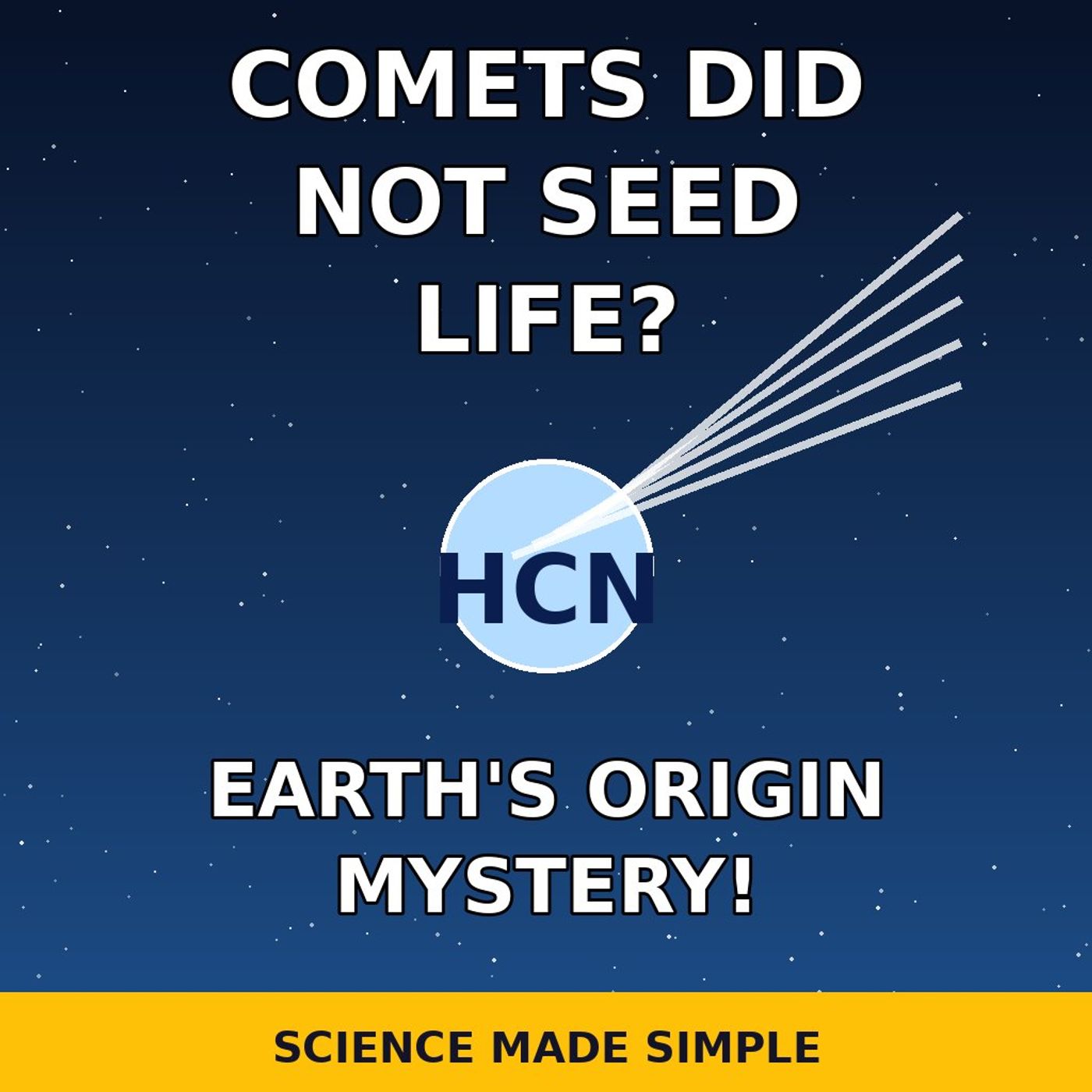
Discover how University of Cambridge scientists tested whether comets could have delivered life's building blocks to early Earth. Learn why small comets break up in the atmosphere, why fast, steep impacts destroy most hydrogen cyanide (HCN), why successful delivery averaged zero in their models, and why Mars looks slightly more promising — while stressing this does not definitively rule comets out. Keywords: comets, origin of life, hydrogen cyanide, HCN, Cambridge, Scientific Reports, Mars, prebiotic, impacts, astrobiology
Become a supporter of this podcast: https://www.spreaker.com/podcast/science-made-simple--6610397/support.
Cold's Hidden Lifespan Switch: The BH2 Pathway | Science Made Simple
Discover how moderately cold temperatures switch on a hidden BH2 metabolic pathway in roundworms, extending lifespan by about 15 percent. Learn how the CAT-4 enzyme in muscle makes BH2, how it travels to the gut and nerves, converts to BH4 and helps make tyrosine, and why this worm and lab-cell finding is not yet a human treatment.
Become a supporter of this podcast: https://www.spreaker.com/podcast/science-made-simple--6610397/support.
Gut Toxin's Hidden Door Found: Claudin-4 and Colon Cancer | Science Made Simple
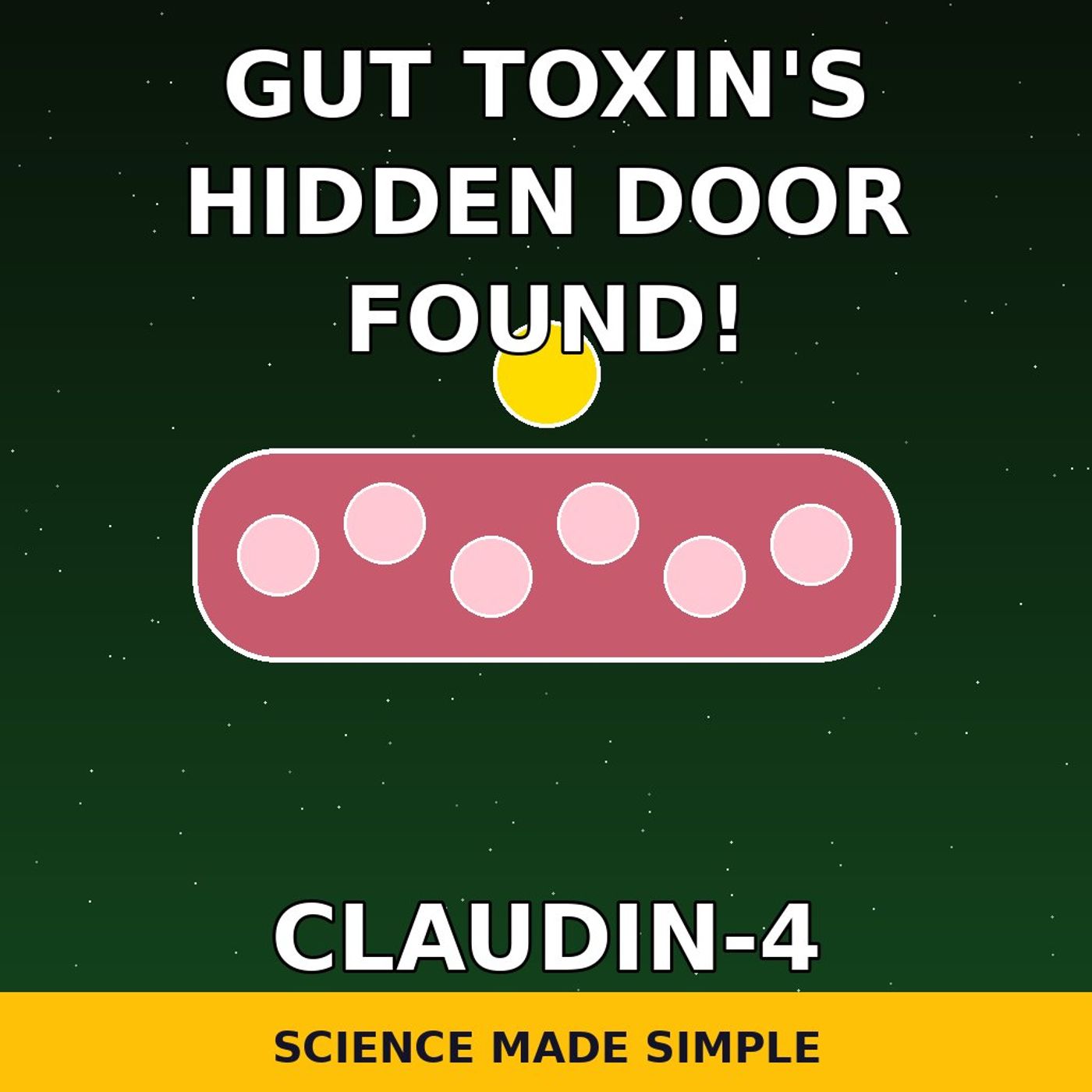
Discover how Johns Hopkins scientists found claudin-4, the docking protein a gut bacterium's toxin needs before it can damage the colon lining. Learn how Bacteroides fragilis toxin BFT cuts E-cadherin, how a soluble claudin-4 decoy protected mice from toxin damage, and why this is not yet a human treatment or proven cancer prevention.
Become a supporter of this podcast: https://www.spreaker.com/podcast/science-made-simple--6610397/support.
New Dwarf Planet Beyond Pluto: Rubin Finds 2026 ED138 | Science Made Simple
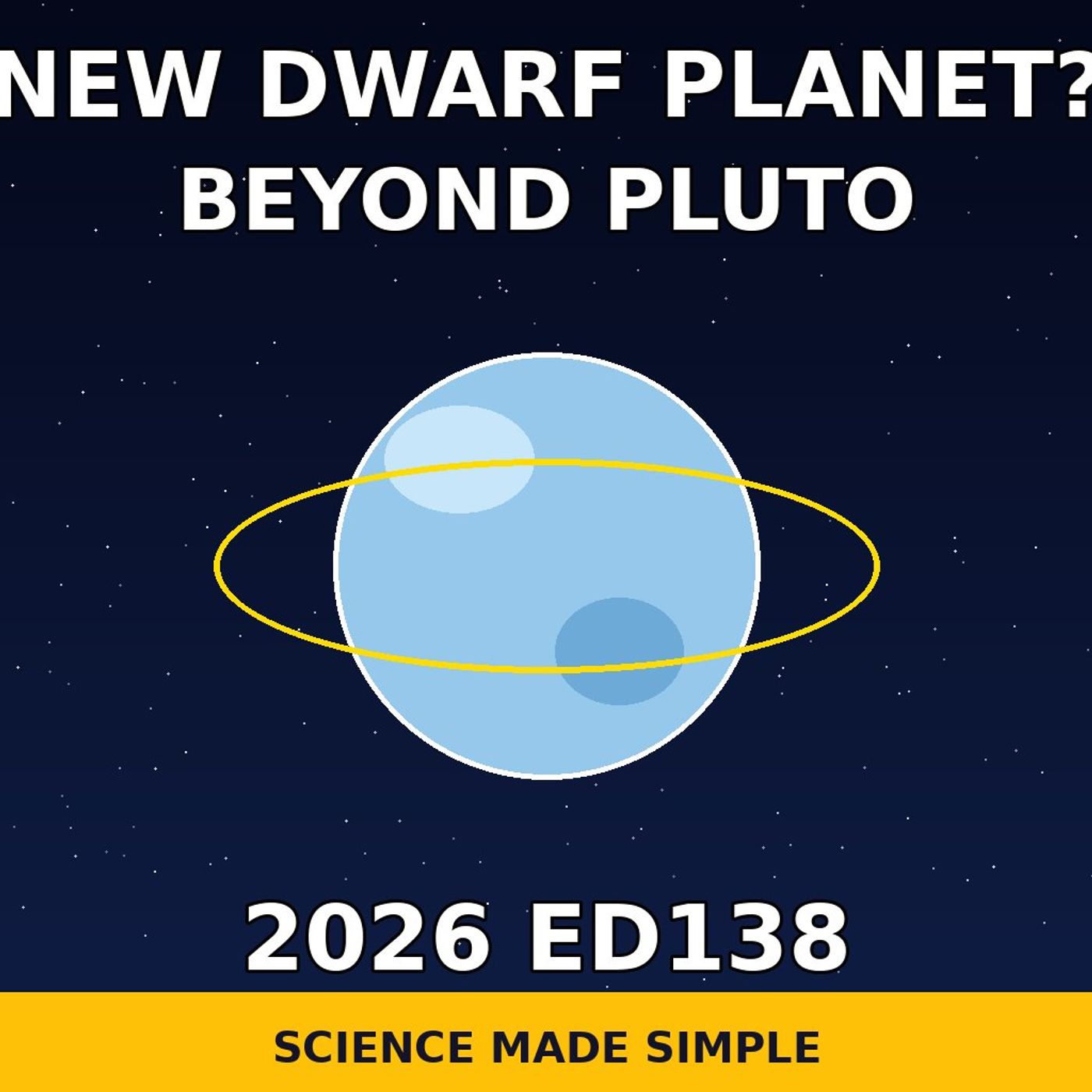
Discover how the Vera C. Rubin Observatory in Chile found 2026 ED138, a large icy body beyond Pluto. Learn why its estimated size of 600 to 1,500 kilometres makes it a dwarf planet candidate, how it sits about 46 astronomical units from the Sun, why its gravity may have pulled it round, and what infrared observations must confirm before it joins Pluto, Ceres, Eris, Haumea and Makemake as a recognised dwarf planet.
Become a supporter of this podcast: https://www.spreaker.com/podcast/science-made-simple--6610397/support.
Lab-Grown Ancient Microbes: Our Oldest Relatives Found | Science Made Simple
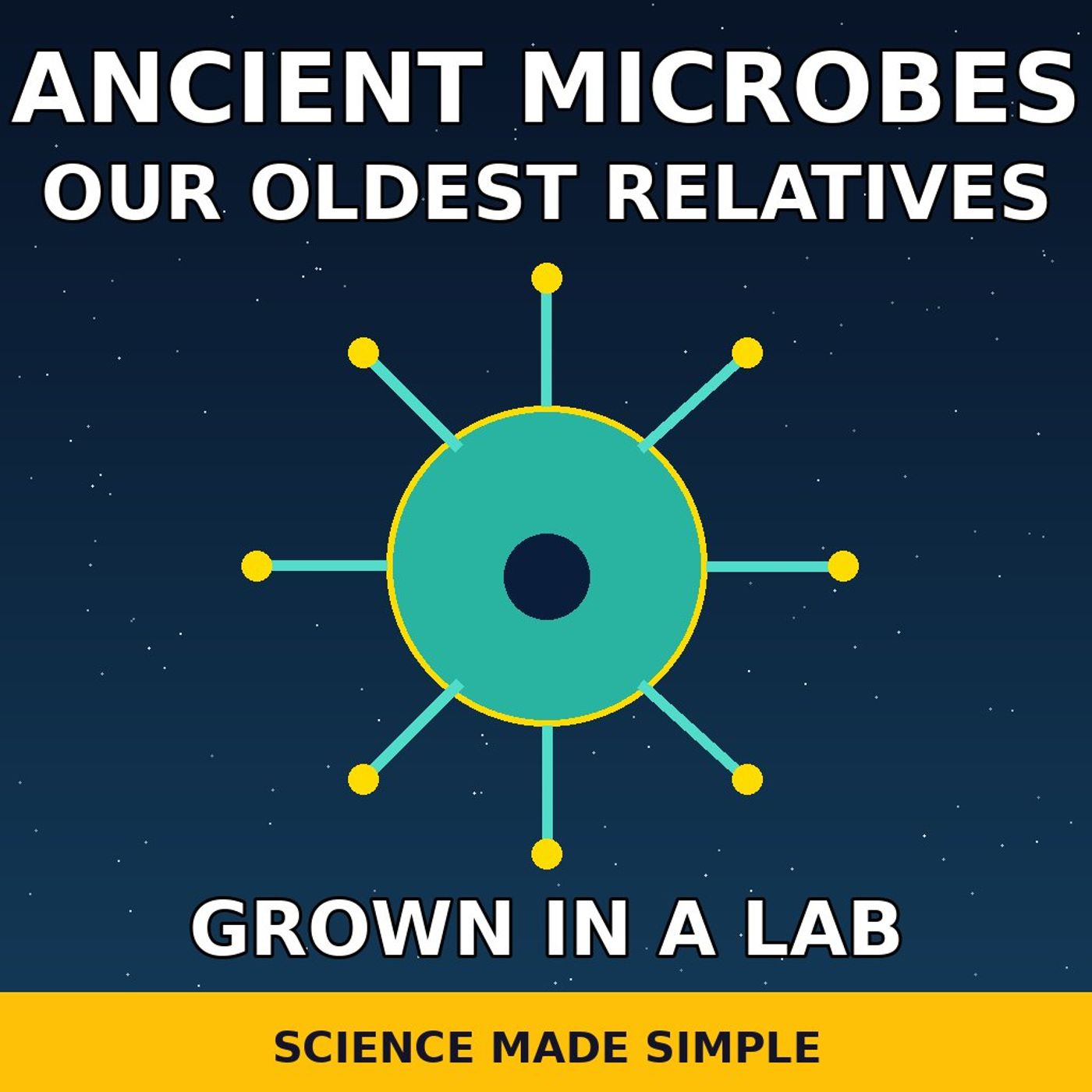
Discover how JAMSTEC scientists grew two strains of Heimdallarchaeia in the lab for the first time. Learn why these archaea are the closest known relatives of eukaryotes, why their simple interiors surprised researchers, how their long branching surface protrusions grip partner microbes, and how surface symbiosis may have led to mitochondria and complex life.
Become a supporter of this podcast: https://www.spreaker.com/podcast/science-made-simple--6610397/support.
Rooibos Seeds Go to Space: 17,346 Seeds Head to the ISS | Science Made Simple
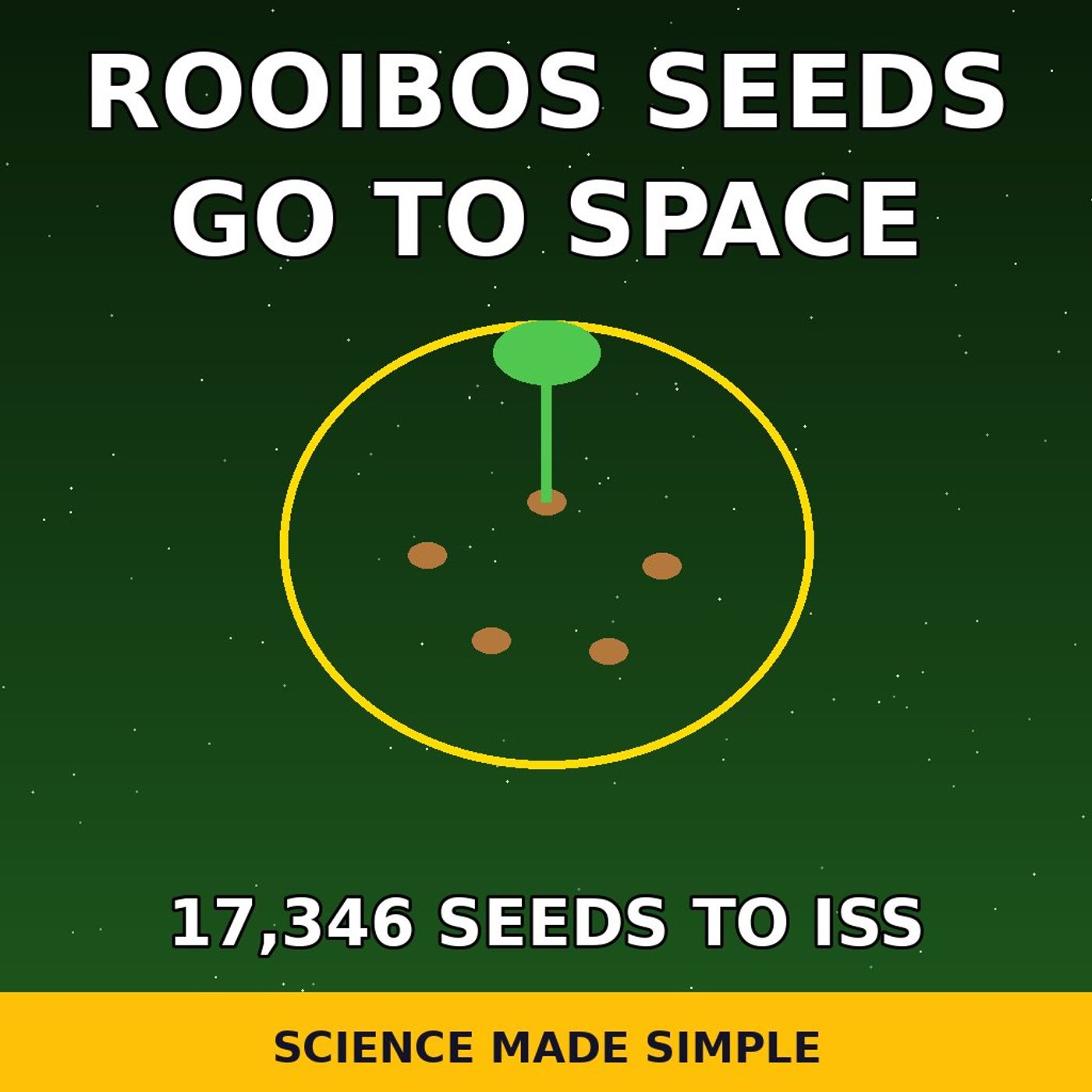
Discover how 17,346 rooibos seeds from South Africa are heading to the International Space Station. Learn why the seeds travel first to Voyager Technologies in Texas, how a compact Nanolab will carry them aboard the Cygnus NG-25 spacecraft between December 2026 and January 2027, why they will spend four to six weeks exposed to microgravity and space radiation, and how schools in the Cederberg region will grow them beside Earth-kept control seeds for 18 months to compare germination and growth.
Become a supporter of this podcast: https://www.spreaker.com/podcast/science-made-simple--6610397/support.
A Third Kind of Magnetism: Altermagnetism Confirmed | Science Made Simple
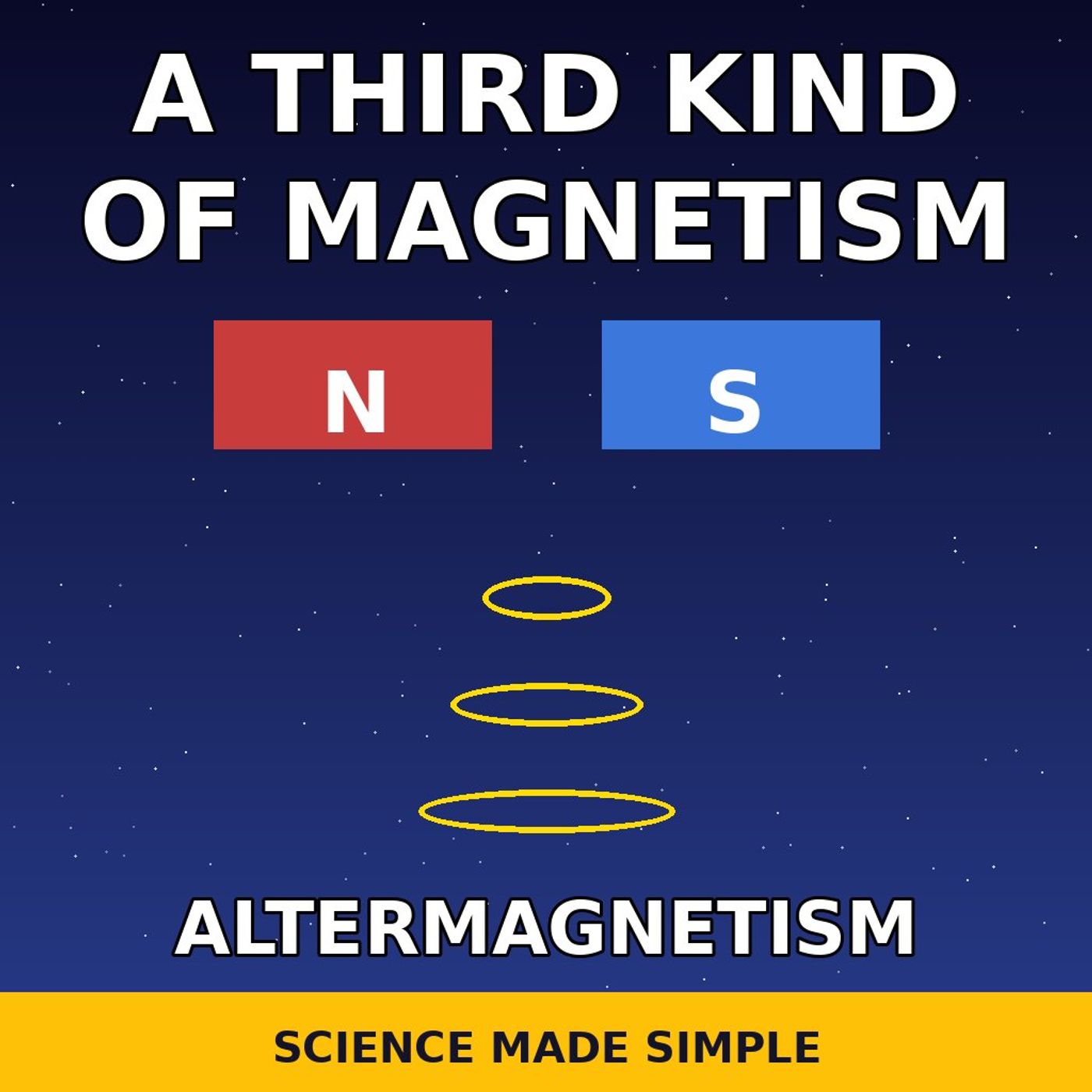
Discover how a SLAC-led team confirmed altermagnetism, a third magnetic phase, in manganese telluride (MnTe). Learn how ferromagnets align spins in one direction, antiferromagnets cancel them out, and altermagnets combine both traits through a chiral twist in the crystal lattice, and why this stable, spin-carrying material could lead to faster, lower-power computers and data centres.
Become a supporter of this podcast: https://www.spreaker.com/podcast/science-made-simple--6610397/support.
A Rock from Mars: Teghaza 001's 13 Possible Homes | Science Made Simple
Discover how NASA's October 29 map narrows the ancient Martian meteorite Teghaza 001 to 13 possible origin sites in Mars' southern highlands. Learn how the rock, found in Mali's Sahara Desert in 2022 and dated to more than 4.1 billion years old, was matched to those sites by comparing its mineralogy and chemistry with Mars Reconnaissance Orbiter data, and why scientists can narrow the search but still cannot name the exact crater that launched it from Mars.
Become a supporter of this podcast: https://www.spreaker.com/podcast/science-made-simple--6610397/support.
The Horns of Venus: A Crescent Beyond 180 Degrees | Science Made Simple
Discover how NASA's October 29 Astronomy Picture of the Day shows Venus as a thin glowing crescent, not the Moon. Learn why Venus, seen almost directly between Earth and the Sun, shows phases like the Moon, why its thick atmosphere bends and scatters sunlight so the crescent arc stretches beyond 180 degrees, and why the long tips of that arc are called the horns of Venus. See why this alignment returns about every year and a half, and how a small telescope or binoculars at twilight can reveal it.
Become a supporter of this podcast: https://www.spreaker.com/podcast...
Australia's Spider Crater: A Giant Spider Seen from Space | Science Made Simple
Discover how NASA's Landsat 9 image of Australia's Spider Crater reveals a giant spider-like shape in the Kimberley region. Learn why the 13 by 11 kilometre oval, with a 4 kilometre spider-like centre, is the eroded remains of an ancient meteorite impact, how its central uplift and light sandstone ridges formed its legs, and why shatter cones and shocked quartz proved it was an impact and not a volcano. The impact happened about 900 to 600 million years ago, and its rocks still carry the evidence today.
Become a supporter of this podcast: https://www.spreaker.com/podcast/science-made-simple--6610397/support.
The Hunter's Moon: October's Full Moon Rises Tonight | Science Made Simple
Discover how the Hunter's Moon lights up the October sky tonight, why it rises at nearly the same time for several nights, and what Saturn nearby adds to the view. Learn the story behind the Hunter's Moon name, how the Moon's orbit shapes its moonrises, and how to spot it with no telescope needed. Keywords: Hunter's Moon, full moon, October moon, moonrise, Saturn, astronomy, lunar orbit, night sky, stargazing, science explained simply.
Become a supporter of this podcast: https://www.spreaker.com/podcast/science-made-simple--6610397/support.
Nobel Prize 2026: Ghost Particles from Space Caught in Antarctic Ice — IceCube Explained | Science Made Simple
Discover how Francis Halzen and the IceCube Neutrino Observatory won the 2026 Nobel Prize in Physics by catching high-energy neutrinos from deep space in Antarctic ice. These ghost particles travel across the universe and reveal its most powerful events. Nobel Prize 2026, IceCube, neutrino, physics, Antarctica, astronomy, cosmic particles, science made simple
Become a supporter of this podcast: https://www.spreaker.com/podcast/science-made-simple--6610397/support.
Nobel Prize 2026: Controlling Brain Cells with Light — Optogenetics Explained | Science Made Simple
Discover how optogenetics won the 2026 Nobel Prize in Physiology or Medicine. Karl Deisseroth, Peter Hegemann and Georg Nagel discovered how to switch nerve cells on and off with light, changing how scientists study the brain, memory and behaviour. Nobel Prize 2026, optogenetics, brain science, neuroscience, nerve cells, light, medicine, science made simple
Become a supporter of this podcast: https://www.spreaker.com/podcast/science-made-simple--6610397/support.
3I/ATLAS: The Interstellar Comet Older Than the Sun | Science Made Simple
Discover how interstellar comet 3I/ATLAS, a visitor from another star system, became the biggest space story of 2026. Scientists using the James Webb Space Telescope found unusual chemistry in this ancient comet, and new research shows the Sun stripped meters of material from its surface. 3I/ATLAS, interstellar comet, James Webb, space news 2026, astronomy, comet older than the Sun, NASA, science made simple
Become a supporter of this podcast: https://www.spreaker.com/podcast/science-made-simple--6610397/support.
How Tiny Nanoparticles Sparked Life on Earth | Science Made Simple

Discover how microscopic mineral nanoparticles acted as hidden chemical engines, transforming early Earth's chemistry to create the first building blocks of life.
origin of life, nanoparticles, early earth, abiogenesis, science made simple, mineral chemistry, evolution of life, geochemistry
Become a supporter of this podcast: https://www.spreaker.com/podcast/science-made-simple--6610397/support.
How AI is Transforming Renewable Energy and Sustainable Agriculture)
Discover how Artificial Intelligence is driving the future of clean energy and smart farming. Learn how green technology and AI work together to protect our planet.
Artificial Intelligence, Renewable Energy, Sustainable Agriculture, Green Technology, Smart Farming, Eco-Friendly Innovation, Science Made Simple, AI and Environment
Become a supporter of this podcast: https://www.spreaker.com/podcast/science-made-simple--6610397/support.
Artemis II: NASA’s First Crewed Moon Mission & The Big Return (2026)

NASA is officially heading back to the Moon! In this episode, we dive deep into the Artemis II mission, the first crewed flight of the Orion spacecraft in over 50 years. We explore the 10-day journey of the four brave astronauts—Reid Wiseman, Victor Glover, Christina Koch, and Jeremy Hansen—as they test critical deep-space life support systems.What you will learn in this episode:
The Mission Path: How the SLS rocket and Hybrid Free Return Trajectory work.Life on Orion: Testing deep space capabilities for future Mars missions.The Return: S...
The Watery Birth of Stars: How Ice Clouds Fuel the Milky Way

Welcome to Science Made Simple. In this episode, we simplify one of the universe's most fascinating processes: how stars are born. We dive deep into the Milky Way to explore the crucial role of vast water ice clouds. Discover how these frozen stellar nurseries provide the cooling necessary for gravity to trigger the birth of new stars. If you’ve ever wondered about the 'watery' origins of the stars above, this episode breaks it down simply.
Science Made Simple, Star Formation, Water Ice Clouds, Milky Way, Stellar Nurseries, Astronomy Podcast, Astrophysics Explained, Interstellar Ice, Space Science, How Stars Are Bo...
Artemis II Landing Mission 2026: Will Humans Return to the Moon? Full Latest Deep Analysis

Artemis II Landing Mission 2026: Will Humans Return to the Moon? Full Deep AnalysisSpace exploration ka naya era officially shuru ho chuka hai — aur is ka center hai NASA ka Artemis program. Aaj kal sab se zyada poocha jane wala sawal hai: “Kya Artemis II Moon par land karega?”Internet par bohot confusion hai. Kuch log kehte hain yeh next Apollo 11 hai, jab ke kuch kehte hain yeh sirf ek test mission hai. Sach kya hai?Clear answer: Artemis II Moon par land nahi karega. Lekin phir bhi yeh mission itna important hai ke bina iske future Moon landing possible nahi.
Artemis Program: Ek New Space...
Artemis II Mission Status Update 2026: Latest Progress, Delays, and What to Expect

Get the latest Artemis II mission update for 2026. Learn about NASA’s progress, Orion spacecraft testing, launch delays, and what astronauts will experience on this historic lunar flyby.
Artemis II update 2026, NASA mission status, Moon mission progress, Orion spacecraft testing, Space Launch System update, Artemis program timeline, space exploration news, NASA updates
Become a supporter of this podcast: https://www.spreaker.com/podcast/science-made-simple--6610397/support.
Is Artemis II Actually Going to Land on the Moon? Full Mission Explained 2026

Is NASA’s Artemis II mission going to land on the Moon? Discover the full explanation, mission goals, timeline, and why this 2026 mission is only a flyby, not a landing.
Become a supporter of this podcast: https://www.spreaker.com/podcast/science-made-simple--6610397/support.
Meet the Artemis II Crew: A 10-Day Journey Around the Moon

The History: The first crewed lunar mission since Apollo.
The Mission: A high-speed flyby around the Moon.
The Tech: Testing the Orion spacecraft’s life support systems.
NASA is headed back to the Moon! Join us as we dive into the Artemis II mission, the first crewed flight of the Orion spacecraft. In this episode, we explore the 10-day journey of four brave astronauts as they test deep space capabilities and prepare for future lunar landings
#ArtemisII #NASA #MoonMission #SpaceExploration #OrionSpacecraft #ArtemisGeneration.
Become a sup...
Beyond Earth: The Unfolding Saga of Space

Beyond Earth: The Unfolding Saga of Space Exploration
Dive into the wonders of space exploration, from humanity's first steps to future missions, and discover why venturing beyond Earth is crucial for our future.
Tags: space exploration, NASA, cosmic journeys, astronomy, future technology, Mars mission, James Webb Space Telescope
Become a supporter of this podcast: https://www.spreaker.com/podcast/science-made-simple--6610397/support.
AI Companions: Digital Dost Aur Emotional Technology | The Future of Human-AI Friendship

Explore how AI Companions are reshaping human emotions and digital relationships in 2025. From loneliness to virtual friendship, this podcast reveals how technology is becoming our closest companion.
AI Companions, Artificial Intelligence Podcast, Digital Friendship, Emotional AI, Future Technology, AI in 2025, Virtual Companions, Replika App, AI Emotions, Human-AI Connection, Podcast on AI, Tech Future, Digital Loneliness
Become a supporter of this podcast: https://www.spreaker.com/podcast/science-made-simple--6610397/support.
Climate Change and Its Impact on Pakistan's Agriculture in 2025

Explore how climate change is affecting Pakistan's agriculture in 2025. Learn about changing rainfall patterns, crop yields, and strategies farmers can adopt to adapt and sustain productivity.
Climate Change Pakistan, Agriculture 2025, Farming Challenges, Crop Yield, Sustainable Farming, Water Scarcity, Extreme Weather, Food Security, Global Warming, Agri-Tech
Become a supporter of this podcast: https://www.spreaker.com/podcast/science-made-simple--6610397/support.
Enhancing Engagement with AI in the Classroom | How AI Boosts Student Participation & Learning

Discover how AI tools are transforming classrooms by boosting student engagement, participation, and interaction. Learn how teachers can use AI for dynamic, personalized, and effective learning experiences.
AI in education, student engagement with AI, classroom technology, AI teaching tools, interactive learning, personalized education, EdTech podcast, AI for teachers, future of education, AI classroom strategies, artificial intelligence in schools, AI-powered learning
In this episode, we dive into how AI can enhance student engagement in the classroom. From personalized learning experiences to interactive participation tools, AI is reshaping the way students connect with lessons and teachers deliver content. 🎙️ What you’ll lear...
Your Body After 24 Hours of Death – The Science of Decomposition

What really happens to your body after death? In this episode of Science Unseen, we dive into the first 24 hours of decomposition.
From the chilling onset of rigor mortis to the rise of bacteria and gases, discover how your body transforms after your final breath.
Backed by forensic science, biology, and real medical data, this cinematic podcast explores how the human body becomes an ecosystem after death.
Subscribe for more mysterious, mind-bending science episodes every week.
🎙️ Follow Science Unseen – Where the unknown meets reality.
Become a supporter of this podcast: https://www.spreake...
What Happens 1 Second After You Die? 😱 | Science Unseen Podcast Ep. 02

🧠 Ever wondered what really happens right after death?
In this gripping episode of Science Unseen, we dive deep into the mystery of death—scientifically.
What happens to your brain?
Is your consciousness still there?
Can science explain the “light at the end of the tunnel”?
Join us as we uncover real medical studies, near-death experiences (NDEs), and shocking data showing brain activity after clinical death.
This is not horror. It’s hard science... with a touch of the unknown.
🎧 Follow for more mind-blowing facts from space, physics, biology, and tech.
What Happens If You Go To Space Without a Suit?

In today’s episode, we uncover [insert fact: e.g., what happens to the human body in space] and explain the science behind it in under 2 minutes.
Perfect for students, science lovers, or anyone curious about how the universe works.
👉 Subscribe for more science shorts, space facts, and fun learning!
🔬 Topics Covered: Space, Physics, Earth, Brain, Nature, Technology
🎧 Also available on TikTok, Spotify & Instagram Reels
ScienceFacts #ShortScience #FunScience #DailyScience #LearnScience #PhysicsFacts #SpaceFacts #HowItWorks #SciTalks
Become a supporter of this podcast: https://www.spreaker.com/podcast/science-made-simple--6610397/support.
Title: Neuroverse: Hacking Dreams to Shape Reality – A Futuristic Science Fiction Thriller

Title: Neuroverse: Hacking Dreams to Shape Reality – A Futuristic Science Fiction Thriller
Step into the Neuroverse, a mind-bending sci-fi podcast where dreams become digital battlegrounds. In this gripping episode of the Specar Podcast, we explore a future where advanced neuroscience allows corporations to hack into human dreams, modify behavior, and control society from the inside out. Follow Dr. Elara Voss, a rogue neuroscientist, as she fights to reclaim the dream-link interface she created—now weaponized by a powerful tech giant called Somnitek. With the help of lucid dreamers and AI allies, she enters the subconscious to expose the trut...
Can Artificial Intelligence Feel Emotions? | AI vs Human Emotion Explained

Can Artificial Intelligence truly feel emotions — or is it just mimicking human behavior? In this episode of Science Made Simple, we break down the difference between real emotions and AI simulations.What are emotions, really?How does AI respond emotionally?Why can’t machines actually feel?Could AI feel emotions in the future?Whether you're curious about neuroscience, tech, or the future of human-like machines, this episode simplifies the science behind emotional intelligence in AI. 🎧 Perfect for tech lovers, science fans, and curious minds.
🎧 In this episode of Science Made Simple, we explore the science behind emotions and why AI may nev...
How Do Insects Survive Extreme Environments? | Nature’s Tiny Survivors Explained

How Do Insects Survive Extreme Environments? | Nature’s Tiny Survivors Explained
Discover how insects survive Earth’s harshest environments — from freezing Arctic tundras to boiling deserts. Learn about cryoprotectants, water-harvesting beetles, and radiation-tolerant bugs in this science-packed podcast episode.
#InsectSurvival #ExtremeEnvironments #SciencePodcast #EntomologyExplained #NatureScience #Cryoprotectants #DesertBeetles #TinySurvivors #BugFacts #ScienceMadeSimple
Become a supporter of this podcast: https://www.spreaker.com/podcast/science-made-simple--6610397/support.
Can Plants Communicate? | The Hidden Language of Trees & Nature Explained

Can Plants Communicate? | The Hidden Language of Trees & Nature Explained
Plants don’t talk like humans, but they do send signals. In this podcast, discover how plants use chemical messages and fungal networks to warn, share, and survive — nature’s silent language revealed.
#PlantCommunication #WoodWideWeb #NaturePodcast #ScienceMadeSimple #TreeSignals #FungalNetwork #HiddenLifeOfTrees #NatureScience #BotanyExplained
Become a supporter of this podcast: https://www.spreaker.com/podcast/science-made-simple--6610397/support.
How Neuroplasticity Helps the Brain Heal | Science Made Simple
Welcome to SCIENCE MADE SIMPLE! In this episode, we explore neuroplasticity — the brain’s amazing ability to heal and rewire itself after injury. Learn how scientists use therapy and exercises to boost brain recovery.
Perfect for students, curious minds, and anyone interested in how the brain works!
👉 Don’t forget to subscribe and share for more simple science!
Become a supporter of this podcast: https://www.spreaker.com/podcast/science-made-simple--6610397/support.
Is Elon Musk’s Mars Mission Humanity’s Backup Plan? | SpaceX & Mars Explained

Is Elon Musk’s Mars Mission Humanity’s Backup Plan? | SpaceX & Mars Explained
Is Mars humanity’s backup plan? In this podcast, we explore Elon Musk’s vision for colonizing Mars through SpaceX, the science behind it, and whether it could really save us from extinction.
#ElonMusk #SpaceX #MarsMission #ColonizeMars #Terraforming #BackupPlanet #FutureOfHumanity #SciencePodcast #ScienceMadeSimple
Become a supporter of this podcast: https://www.spreaker.com/podcast/science-made-simple--6610397/support.
Can Stress Actually Shrink Your Brain? | Brain Under Stress Explained

Discover how chronic stress affects your brain. Learn how stress can shrink memory and decision-making regions and what you can do to reverse the effects.
can stress shrink your brain,
chronic stress brain damage,
stress and the brain,
cortisol and brain shrinkage,
how stress affects memory,
stress neuroscience,
brain shrinkage stress,
hippocampus and stress,
prefrontal cortex stress,
amygdala and anxiety,
brain changes from stress,
Science Made Simple,
mental health and stress,
stress recovery brain,
neurogenesis and stress
Become a supporter of this podcast...
Why Do We Get Déjà Vu? | Brain Glitch or Memory Science

Ever wondered why déjà vu happens? This episode explains the brain science behind that mysterious feeling — from memory overlap to timing errors in the brain.
Podcast Episode: Why Do We Get Déjà Vu?
Duration: ~5 minutes | Date: 2025/05/27
Have you ever walked into a place and felt like you’ve been there before — even though you know you haven’t? That odd sensation is called déjà vu, and in this episode of Science Made Simple, we explore the brain science behind it.
Is it a memory glitch? A brain processing delay? Or a sign of how your memor...
Why Does Time Feel Faster As We Age?

Explore why time feels faster as we age. Discover how memory, routine, and brain changes affect our sense of time in this science podcast.
Why does time go faster as we get older,
Why does time feel fast when we age,
Time perception and aging,
Science of time feeling faster,
Time and memory connection,
Brain and time perception,
Proportional theory of time,
Why childhood felt longer,
Why adulthood feels shorter,
Aging and time psychology,
Science Made Simple,
Science podcast time,
Neuroscience of time passing,
How memory...
The Science Behind Goosebumps: How Emotions Trigger Ancient Instincts

Why do we get goosebumps when we're cold, scared, or moved by music? Discover the surprising science behind this ancient survival response, from brain chemistry to evolutionary roots.
#GoosebumpsExplained #SciencePodcast #EmotionalResponse #LimbicSystem #SurvivalInstincts #NeuroscienceFacts #ScienceMadeSimple #BodyReactions #WhyWeGetGoosebumps #MindBodyConnection
Become a supporter of this podcast: https://www.spreaker.com/podcast/science-made-simple--6610397/support.
