M365.FM a Microsoft MVP Podcast by Mirko Peters

M365.FM is a podcast about Microsoft 365, Microsoft Copilot, AI, Modern Work, security, governance, Power Platform, Azure, and the technologies shaping the future of work.Hosted by Microsoft MVP Mirko Peters, M365.FM brings together Microsoft MVPs, Microsoft employees, product experts, architects, developers, and community leaders from around the world.Each episode goes beyond announcements and hype to explore what Microsoft technologies mean in practice. From Microsoft 365 Copilot and AI agents to Teams, SharePoint, Power Platform, Microsoft Fabric, Entra, Purview, security, governance, adoption, and automation, M365.FM focuses on real-world experience, implementation, strategy, and lessons learned.Expect expert interviews, technical...
Content Understanding & Document AI - Simply Explained
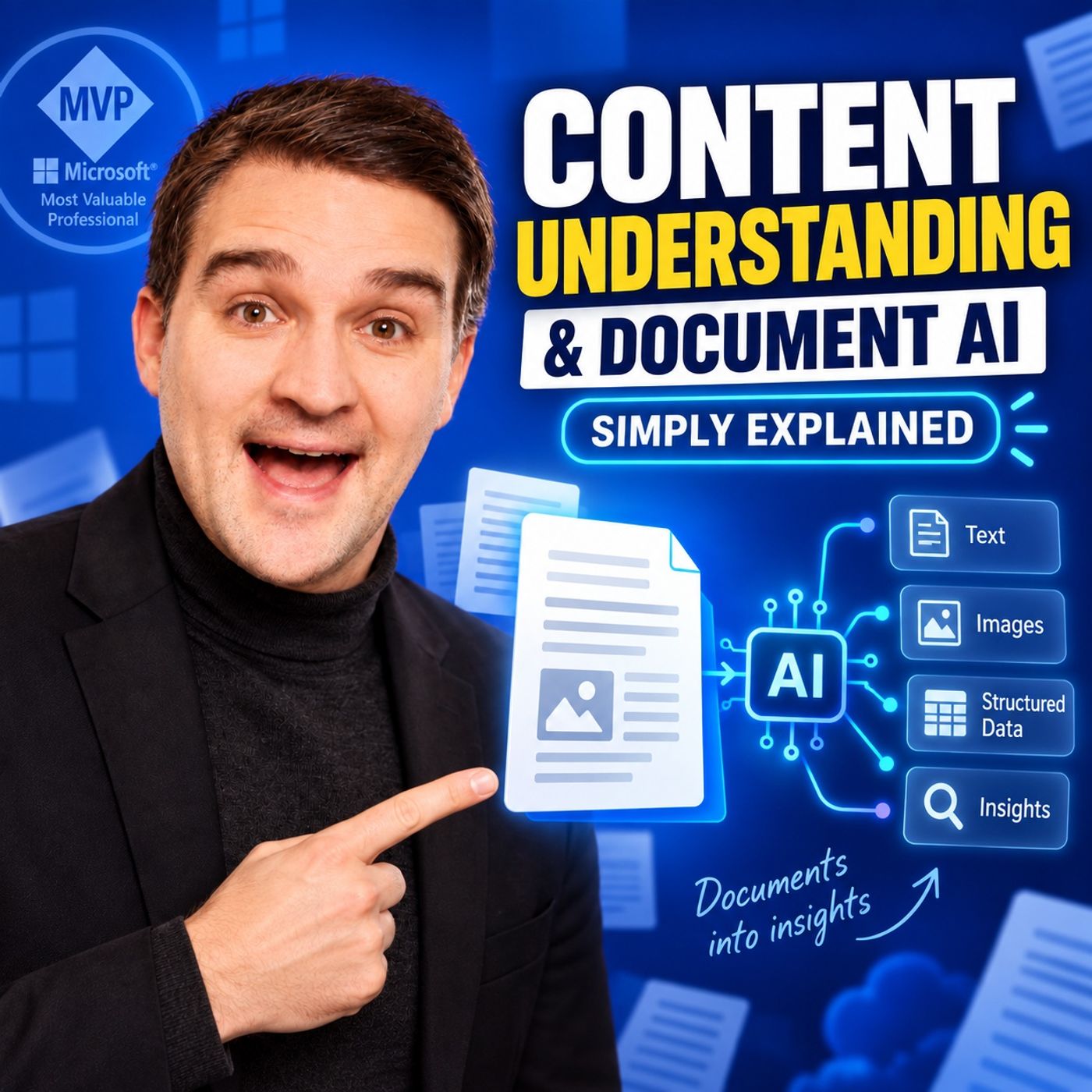
Invoices, contracts, receipts, forms, scanned PDFs, and email attachments contain valuable business information — but most automation still struggles to turn those documents into reliable, structured data.
In this episode of M365 FM – Simply Explained, we break down Microsoft Content Understanding, Document AI, OCR, AI Builder, Power Automate, Dataverse, and Power Apps and explain how they work together to transform documents into usable business data and automated processes.
You’ll learn why traditional OCR is only the beginning. OCR can recognize text such as an invoice number or amount, but it does not automatically understand whether a number...
IoT Hub Message Routing vs Event Grid — Why Telemetry and Events Are Not the Same Problem
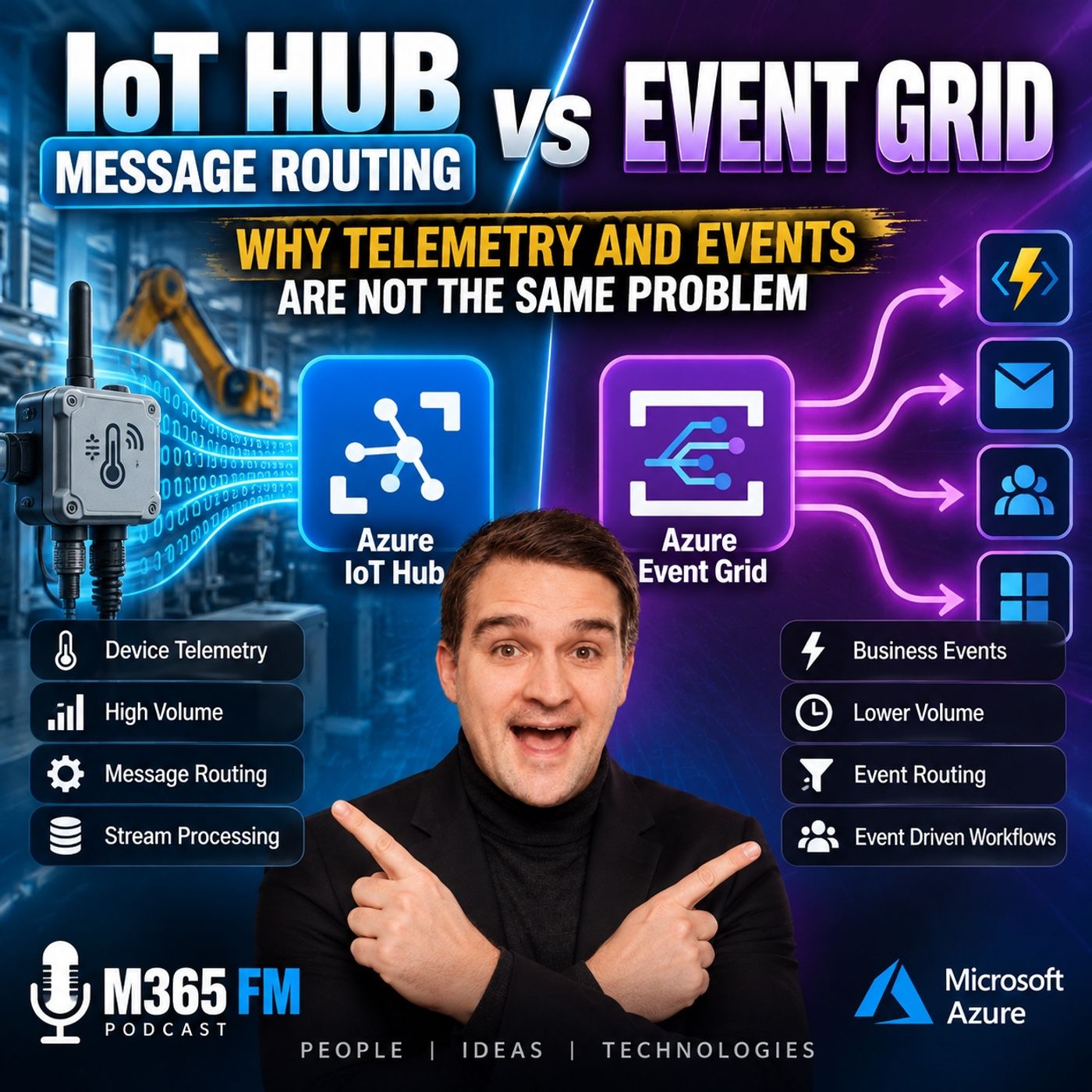
A machine sends temperature readings, vibration data, cycle counts, power consumption, and operating states every few seconds. Then the gateway suddenly disconnects. Are all of those messages simply “events”? Technically, you could describe them that way. Architecturally, that can create serious problems. Azure IoT Hub Message Routing and Azure Event Grid solve different problems. One path is designed around preserving and distributing operational data. The other is designed around notifying systems that something changed and may require a response. Treating them as interchangeable can leave you with expensive workflows processing routine sensor data—or important signals buried inside a telemetry pipeli...
The 5 Pillars of Data Transformation - Simply Explained
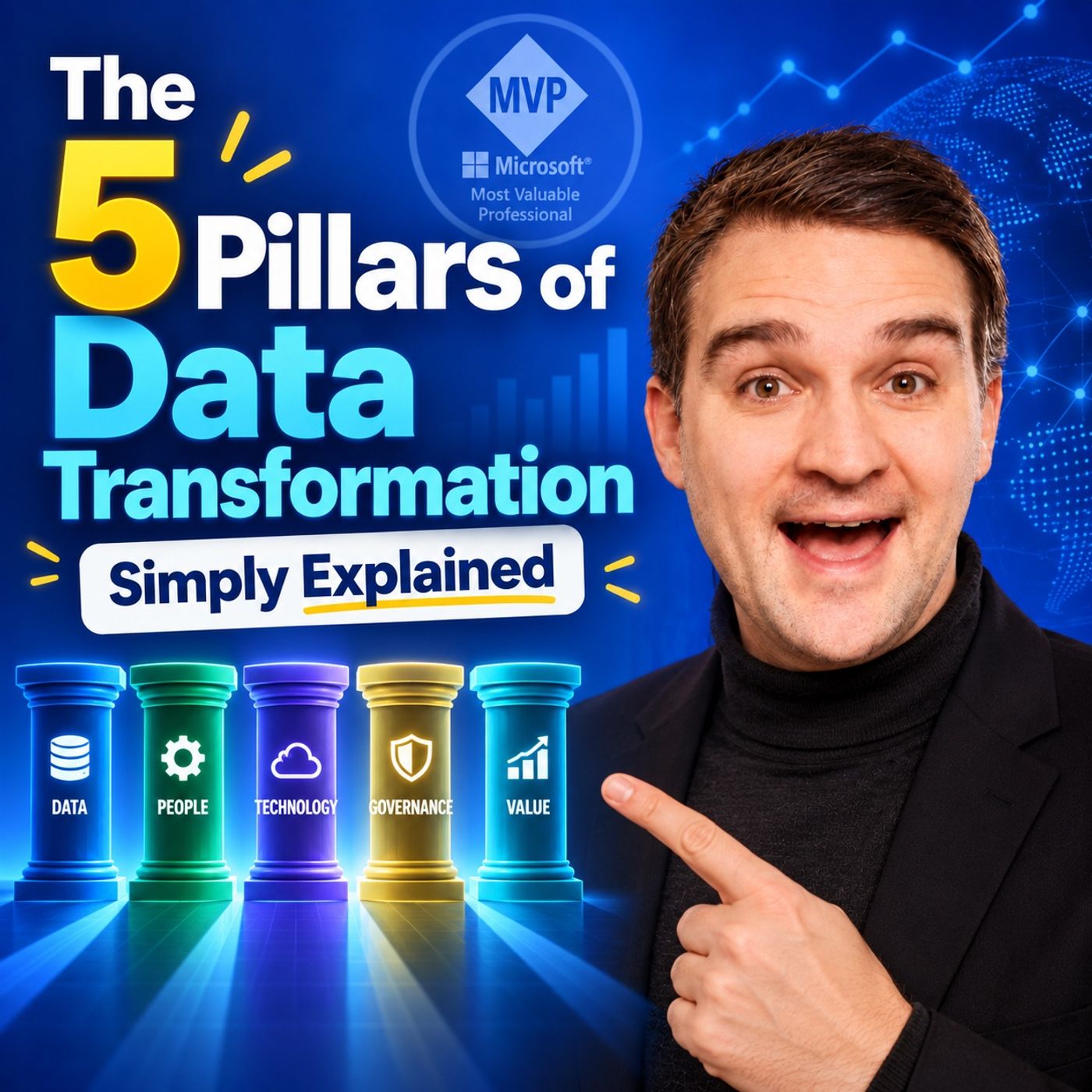
AI was supposed to clear the backlog, accelerate decisions, and give every team a smarter way to work. Instead, many organizations now have Microsoft Copilot, Power BI, Microsoft Fabric, AI agents, and more data than ever before—while important decisions still crawl through meetings because nobody fully trusts the numbers or knows who can act on them. The technology spend keeps rising. The action does not. The problem is often not a lack of AI. It is the absence of an operating model connecting data, meaning, governance, technology, people, and accountability. In this episode of M365 FM – Simply Explained, we brea...
Your Factory Cloud Bill Is Much Higher Than You Think

Cloud storage may look cheap. Sending factory data to the cloud may look cheap. But the real cloud bill often starts when that data begins moving. In this episode, we break down the hidden costs behind modern Industrial IoT, manufacturing cloud, edge computing, and factory data architectures — from data egress and cross-region replication to NAT gateways, backups, dashboards, and high-frequency sensor data. A single MQTT stream from a factory can quickly become multiple data flows once telemetry is copied into storage, analytics platforms, dashboards, data science environments, disaster recovery systems, and external applications. The machine generated the data once — but your...
From Financial Data to AI-Ready Decisions: Power BI, Microsoft Fabric, Semantic Models & AI Agents with Rishi Sapra [MVP]
![From Financial Data to AI-Ready Decisions: Power BI, Microsoft Fabric, Semantic Models & AI Agents with Rishi Sapra [MVP] episode artwork](https://d3wo5wojvuv7l.cloudfront.net/t_rss_itunes_square_1400/images.spreaker.com/original/8aa4d01a181f070d9dcb236b70c41702.jpg)
What happens when AI agents start making sense of financial and business data — not just displaying it?In this episode of M365.FM, Mirko Peters talks with Rishi Sapra Microsoft MVP about the architecture required to move beyond traditional dashboards and toward AI-powered, context-aware analytics with Microsoft Fabric, Power BI, Copilot Studio, semantic models, ontologies, and data agents.Organizations already have enormous amounts of information spread across ERP systems, Excel workbooks, Power BI reports, Microsoft Fabric, SharePoint, financial systems, budgets, forecasts, and operational applications.Adding AI on top of that data does not automatically mean the AI understands the business.Wh...
Why Your ERP Can't Build an Optimal Production Schedule
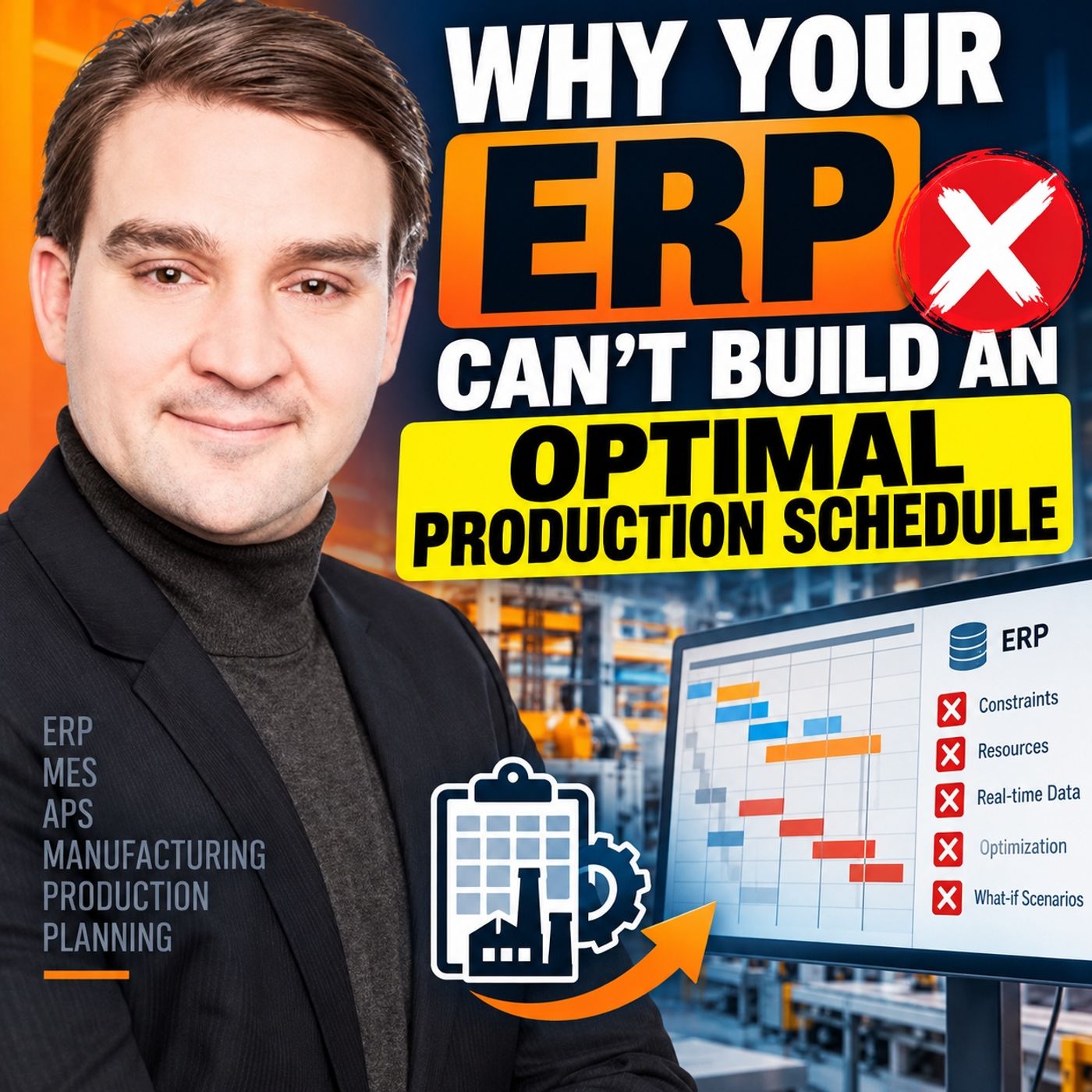
Your ERP can calculate production dates, explode demand through MRP, manage routings, inventory, purchase orders, and production orders. But that does not automatically mean it can create a production schedule that your factory can actually execute. In this episode, we break down the gap between ERP planning and finite production scheduling — and explain why a schedule can look perfectly reasonable in the ERP while multiple orders are competing for the same machine at the same time.
THE INFINITE-CAPACITY PROBLEM
Traditional ERP planning can place demand against resources without reserving finite blocks of actual machine time. This “infinite capa...
Production Planning Software: When Does a Manufacturer Actually Need It?
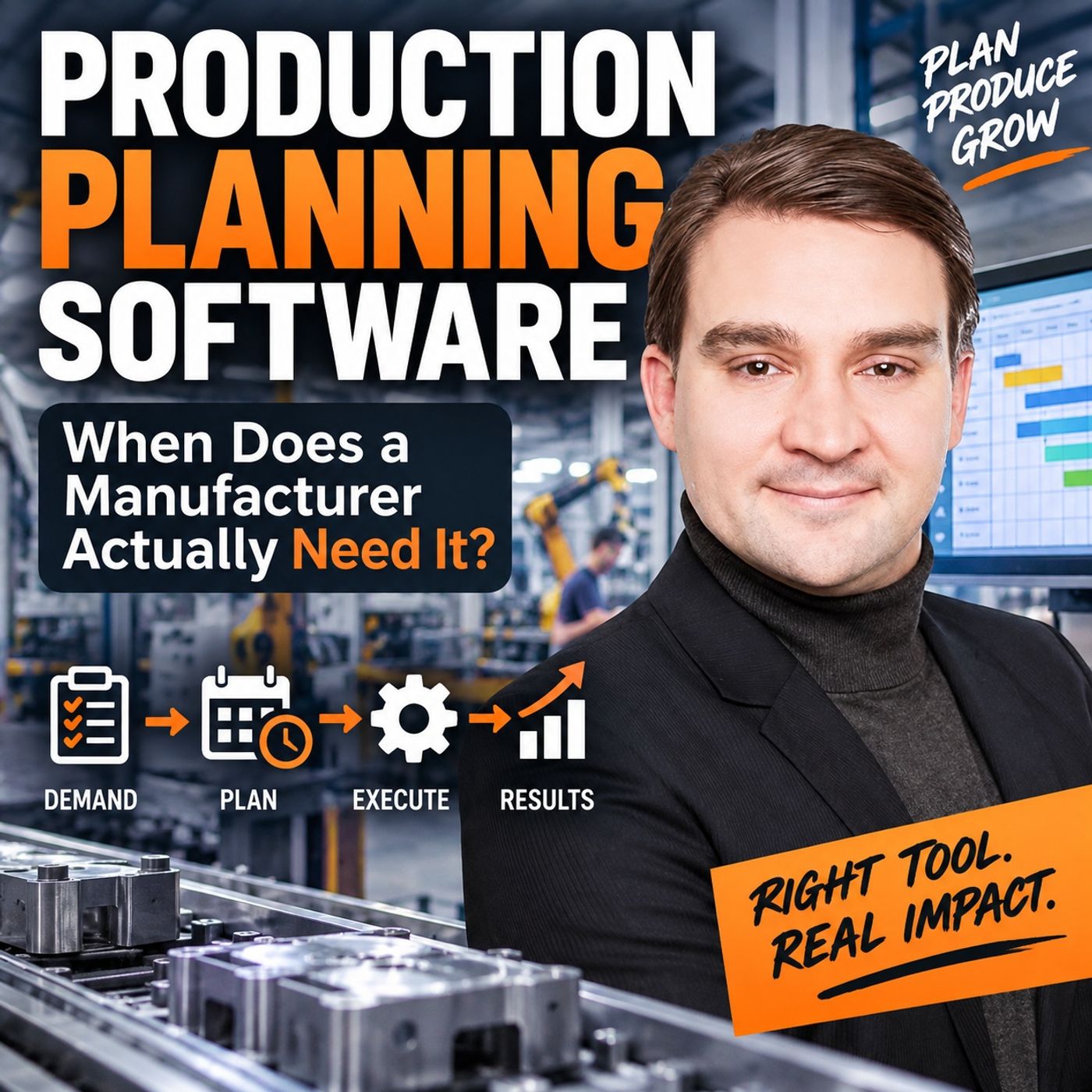
When does a manufacturer actually need dedicated production planning software? It is not when the company reaches a certain size. It is not when Excel suddenly becomes “unprofessional.” And it is definitely not because a software vendor showed you a beautiful Gantt chart. The real threshold comes when production complexity, constraints, and constant change become too difficult for planners to reliably coordinate through ERP dates, spreadsheets, whiteboards, calls, emails, and experience alone. In this episode, we explore the warning signs that indicate your manufacturing planning process may have reached that point.
WHEN MANUAL PRODUCTION PLANNING STILL WORKS
Not...
Can You Simulate Your Factory Before Changing It?

What happens when you change a factory before you know how the rest of the production system will react? Adding a shift, buying a new machine, reducing buffers, changing staffing, or accepting a different product mix can look like obvious solutions. But factories are interconnected systems. Improving capacity at one resource can simply move the bottleneck somewhere else. In this episode, we explore factory simulation, production planning, Digital Twins, finite capacity, bottleneck management, and manufacturing optimization — and how manufacturers can test operational changes before introducing them on the real shop floor.
WHY FACTORY CHANGES ARE HARD TO PREDICT
APS Software vs. ERP: What's the Difference?
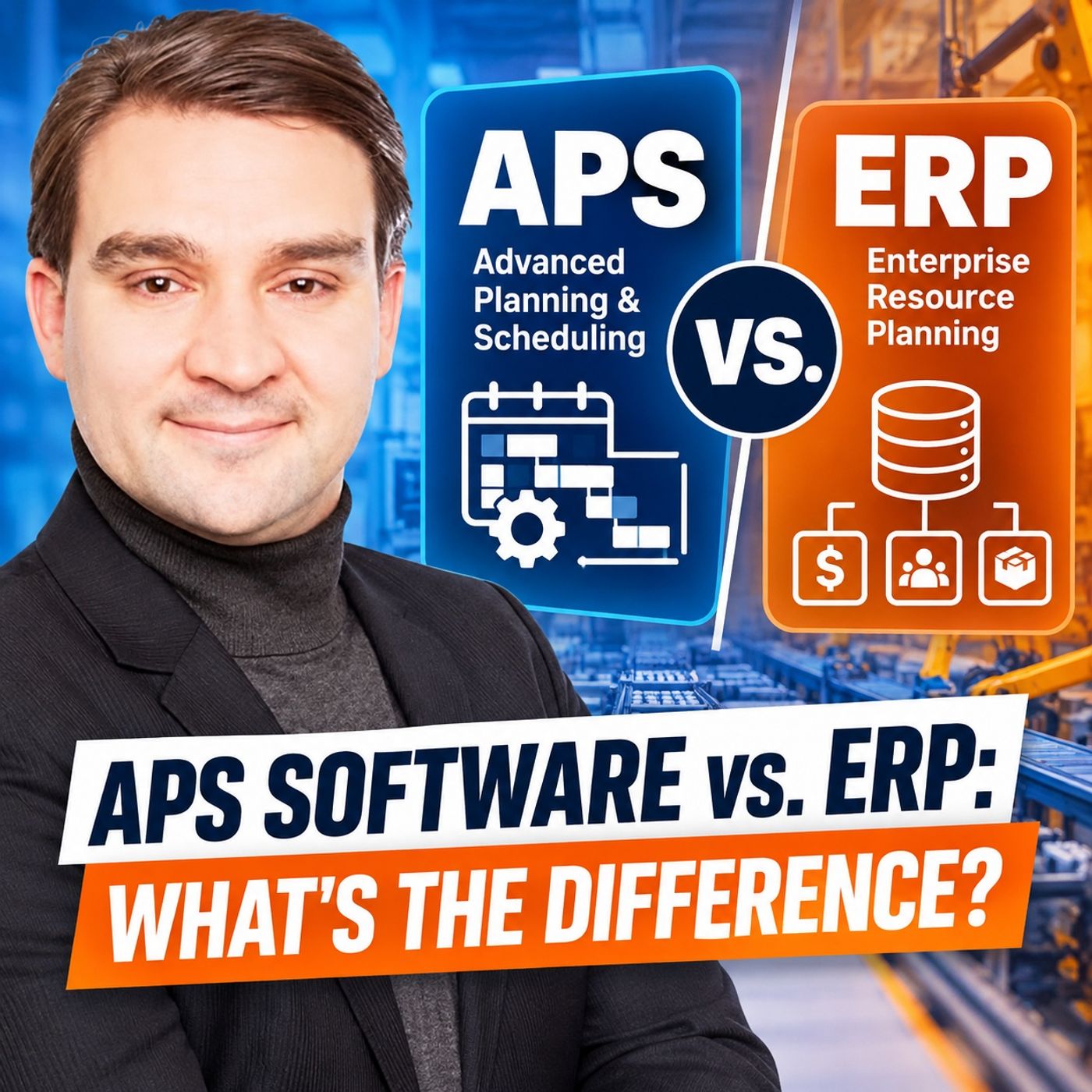
Manufacturers often rely on ERP systems to manage orders, materials, inventory, purchasing, production orders, and financial transactions. But when a machine goes down, an urgent customer order arrives, or a critical operator is unavailable, a different question suddenly matters: Can the production plan actually run? That is where APS — Advanced Planning and Scheduling — differs fundamentally from ERP. ERP records and governs the business transaction. APS tests whether production can execute the plan under the real constraints of the factory. In this episode, we take a detailed look at APS software vs. ERP, why traditional ERP planning can create a false sens...
Constraint-Based Scheduling: The Architecture That Makes Production Plans Real
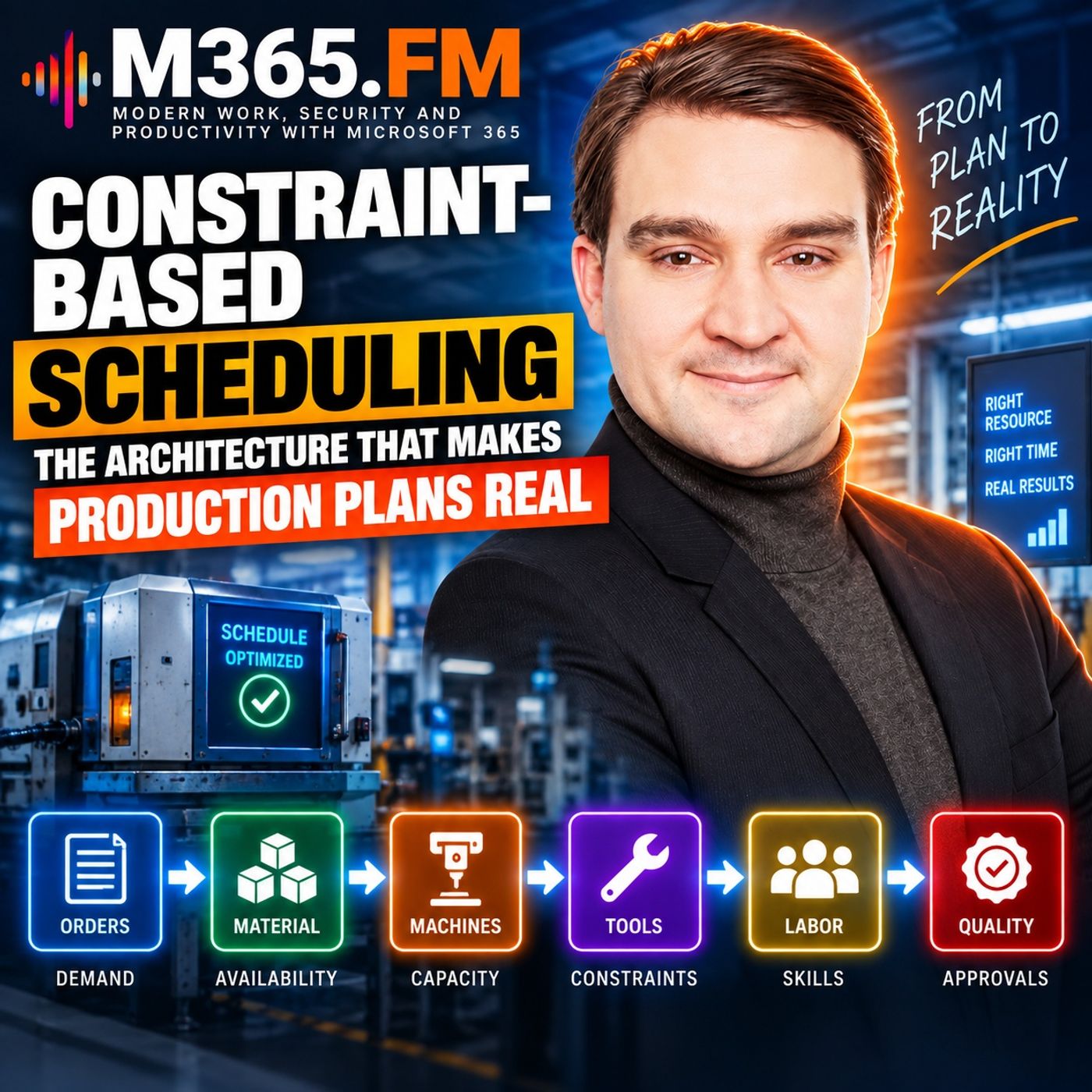
Your ERP says the customer order ships on Friday. The work order is released. The routing looks correct. Capacity appears available. Everything looks fine in the planning report. Then Monday morning arrives. A critical five-axis machining center goes down. One order is already in production. Another is waiting for material. A third could theoretically move to another machine — but only if the shared fixture is available, the correct program is approved, and a qualified operator is working that shift. The ERP plan still says Friday. But a date in ERP does not automatically mean the factory can physically deliver it. In...
A Machine Goes Down. How Should Your Production Plan React?
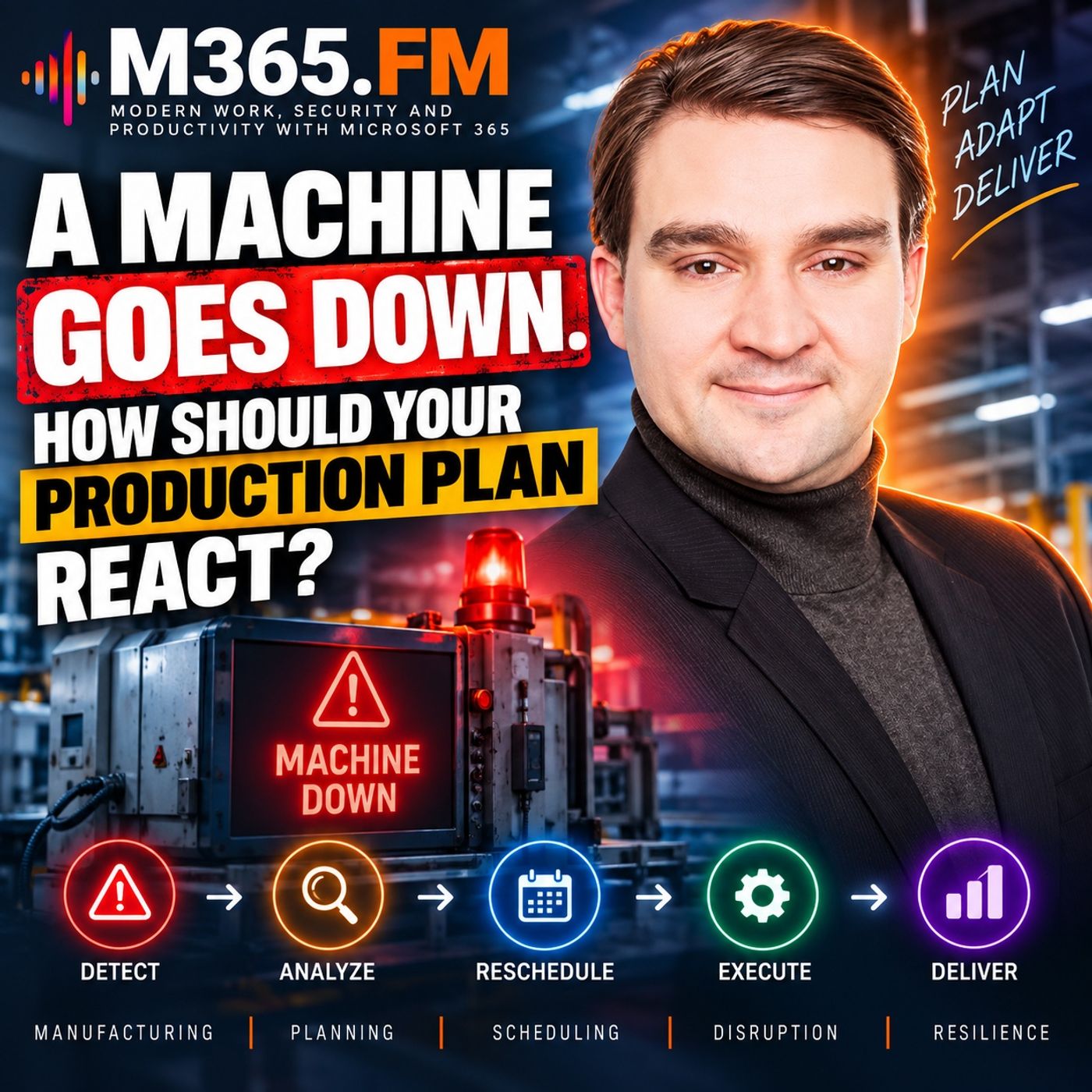
A machine goes down. Maintenance receives the alarm. The operator stops production. The MES records an interrupted operation. But your ERP may still believe that the machine has capacity. And your production schedule may still promise that every order will be completed on time. That is where a machine breakdown stops being only a maintenance problem and becomes a production planning problem. In this episode, we explore what should actually happen to a production plan when a critical machine becomes unavailable — from detecting the disruption and estimating lost capacity to identifying affected orders, evaluating alternative resources, rescheduling with finite capacity, an...
Can Value Stream Mapping Become a Live Data Model?
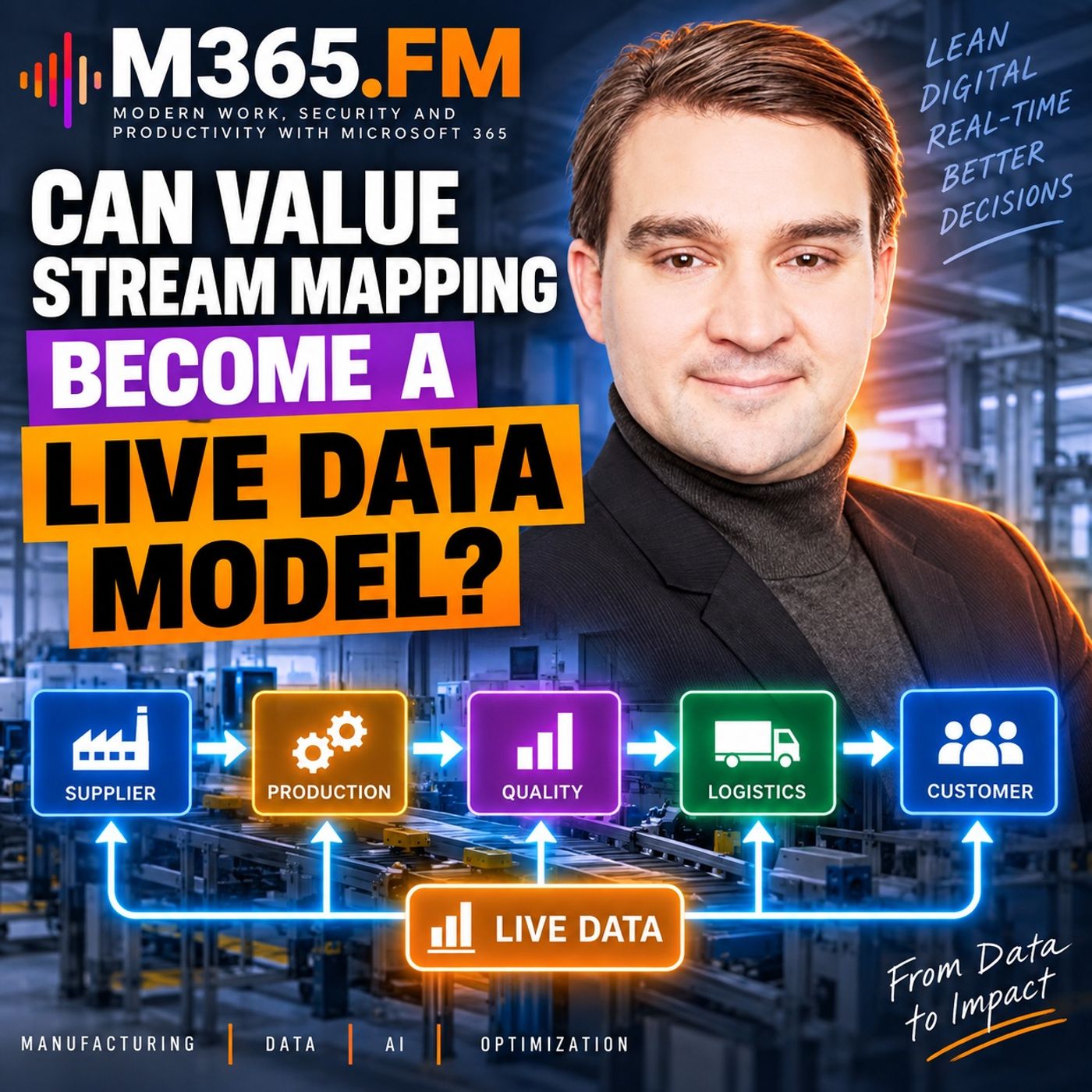
Value Stream Mapping has been one of the most useful tools in Lean Manufacturing for understanding how material, information, and decisions move through a production system.But traditional Value Stream Mapping has a fundamental limitation.The factory keeps changing. The map does not.You can bring production, planning, quality, maintenance, supply chain, and operations into the same workshop. You can map cycle times, queues, batch sizes, handoffs, waiting times, information flows, and bottlenecks. At the end of the workshop, everyone may finally share the same picture of how the production system works.Then reality changes.A supplier shipment arrives late...
How Finite Capacity Scheduling Actually Works in Manufacturing
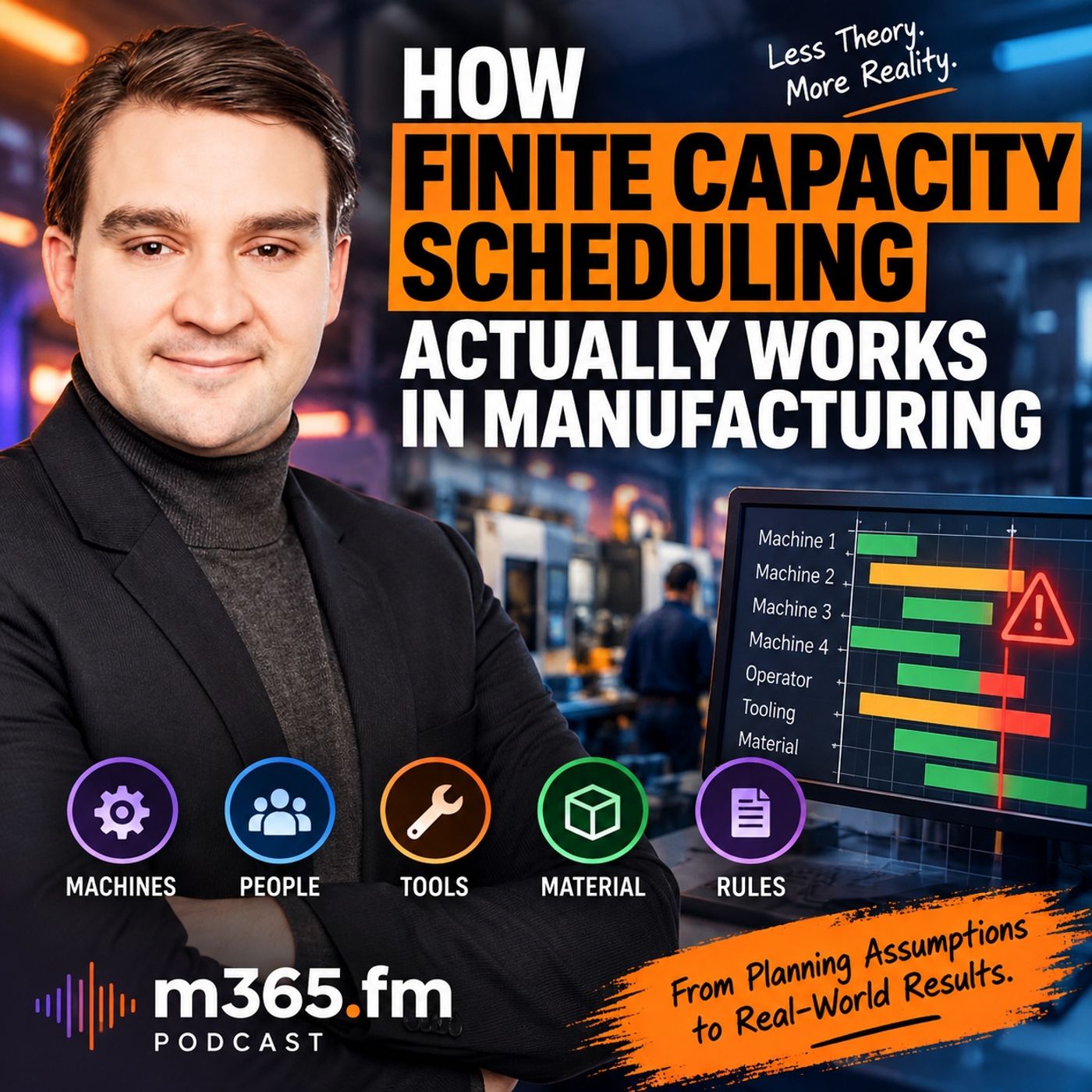
Your ERP says the production order should finish next Thursday. The routing looks correct. Material is planned. Everything appears under control. Then you walk onto the shop floor and discover the machine is already overloaded, the required operator is booked elsewhere, the fixture is in use, or the material exists in ERP but has not actually been inspected and released. That is the gap between planning demand and scheduling reality. In this deep dive, we break down how finite capacity scheduling actually works in manufacturing — from ERP and MRP planning to a schedule that accounts for the physical constraints of ma...
Why Your Critical Path Changes When Production Changes
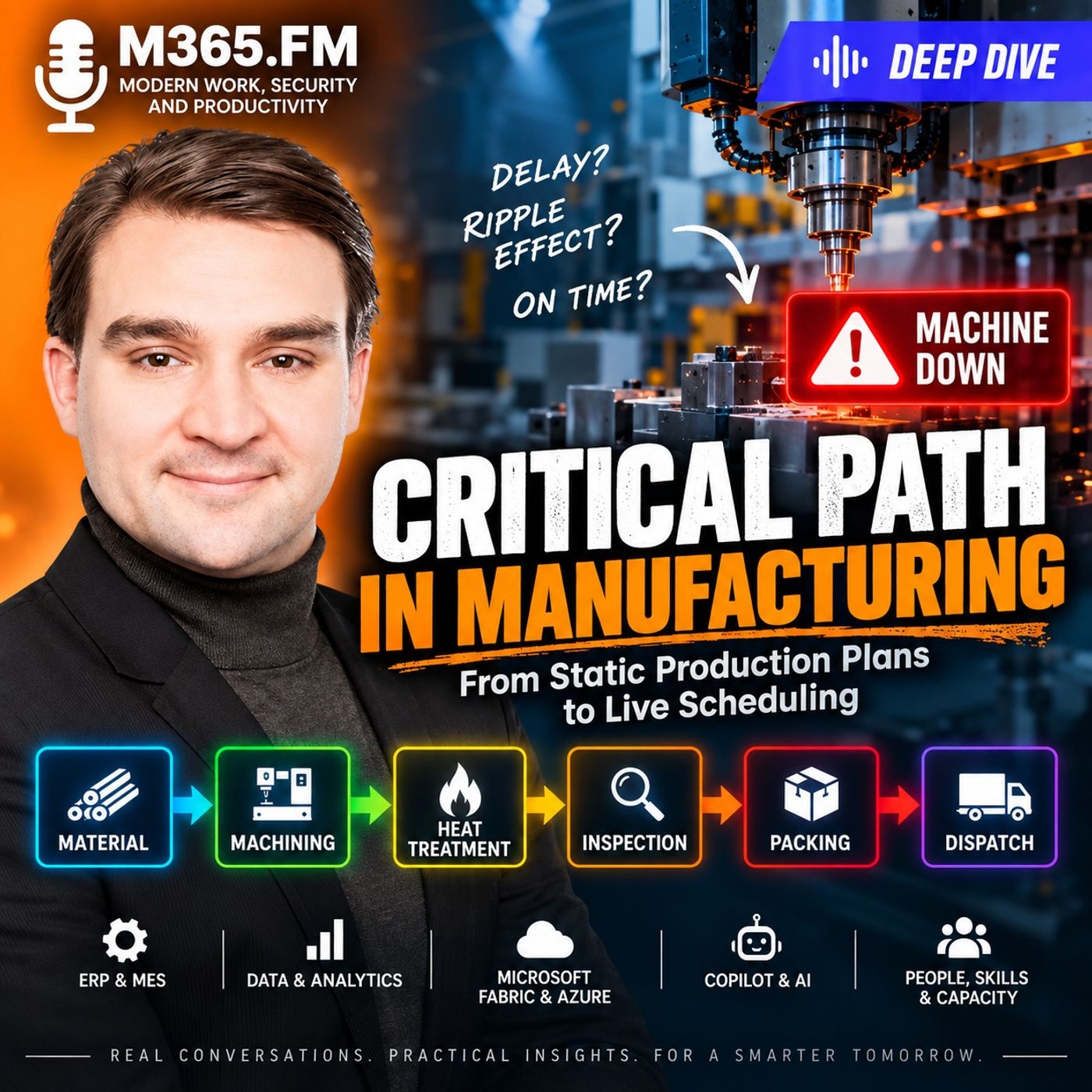
A production plan can look perfectly reasonable — until production actually starts.One machine runs late. A material release slips. A qualified operator becomes unavailable. A quality inspection takes longer than expected. A batch misses its furnace window. Suddenly, a delay of only a few hours can put an entire customer delivery at risk.In this deep dive, we explore how the Critical Path Method (CPM) can be adapted from traditional project management to modern manufacturing and production planning.The central idea is simple: the critical path in manufacturing should not be treated as a fixed sequence created when the production or...
How AI Changed Software Development Forever — Building the Agentic Future with Andre Baltieri [MVP]
![How AI Changed Software Development Forever — Building the Agentic Future with Andre Baltieri [MVP] episode artwork](https://d3wo5wojvuv7l.cloudfront.net/t_rss_itunes_square_1400/images.spreaker.com/original/60f2b3cc2fa57ceb80e5234f6b0c736b.jpg)
Artificial intelligence is changing software development at a speed we have rarely seen before.Developers have already moved from writing every line of code themselves to working with AI assistants that can generate code, explain unfamiliar systems, create tests, debug applications, and automate repetitive work.But according to Microsoft MVP Andre Baltieri, that is only the beginning.In this episode of M365.FM, Mirko Peters sits down with Andre for a deep dive into the transition from traditional software development to AI-assisted development, coding agents, agentic architectures, Microsoft Agent Framework, .NET, RAG, context engineering, security, and the economics of generative...
Architecting Power Platform for Complex Enterprise Solutions with Ian Tweedie [MVP]
![Architecting Power Platform for Complex Enterprise Solutions with Ian Tweedie [MVP] episode artwork](https://d3wo5wojvuv7l.cloudfront.net/t_rss_itunes_square_1400/images.spreaker.com/original/6204ecb0c4796f62f7eeea678de0af40.jpg)
Microsoft Power Platform is often described as a low-code platform. But what happens when the applications you build become business-critical, highly integrated, and too complex for a simple maker-first approach?In this episode of M365 FM, Mirko Peters talks with Power Platform Solution Architect Ian Tweedie about what happens when Power Platform moves beyond simple low-code applications and becomes part of a serious enterprise architecture.
LOW-CODE DOESN’T MEAN LOW ARCHITECTURE
Power Platform can deliver a large percentage of business value quickly, but enterprise solutions almost always contain requirements that go beyond standard low-code capabilities.Ian explains wh...
Copilot Inherits Your Mess: Modernizing Microsoft 365 for AI with Richard Harbridge [MVP]
![Copilot Inherits Your Mess: Modernizing Microsoft 365 for AI with Richard Harbridge [MVP] episode artwork](https://d3wo5wojvuv7l.cloudfront.net/t_rss_itunes_square_1400/images.spreaker.com/original/9d5d5d3fdf655863f1b4034e5baf4923.jpg)
Microsoft 365 Copilot doesn’t arrive in a clean Microsoft 365 tenant. It arrives in an environment that organizations have been building for years — full of SharePoint sites, Teams, OneDrive content, duplicate documents, historic migrations, guest accounts, inconsistent permissions, forgotten workspaces, broken ownership models, and content nobody has reviewed in years.For traditional Microsoft 365 management, much of this technical debt could remain relatively hidden. AI changes that.In this episode of M365.FM, Mirko Peters talks with Richard Harbridge, Microsoft MVP and industry advisor at ShareGate, about why AI readiness is fundamentally connected to Microsoft 365 modernization and governance.The conversation moves beyond the...
Microsoft 365 Copilot: What Actually Makes People More Productive with Adrian Espes [MVP]
![Microsoft 365 Copilot: What Actually Makes People More Productive with Adrian Espes [MVP] episode artwork](https://d3wo5wojvuv7l.cloudfront.net/t_rss_itunes_square_1400/images.spreaker.com/original/89b125df82f77bf19b26cc1682f4ac0d.jpg)
Does Microsoft 365 Copilot really make people more productive?In this episode of the M365 FM podcast, Mirko Peters speaks with Microsoft MVP Adrian Espes about what Copilot actually delivers in everyday work—not in a polished demo, but during a normal working day filled with meetings, emails, documents, Teams messages, deadlines, and constant interruptions.Adrian brings a practical perspective shaped by his experience in training, business analytics, modern workplace consulting, and Microsoft 365 adoption. Together, Mirko and Adrian look beyond the marketing and explore where Copilot is genuinely useful, where expectations are still unrealistic, and what organizations need to consider before ro...
How Microsoft 365 & Copilot Are Redesigning the Way We Work with Tracy van der Schyff [MVP]
![How Microsoft 365 & Copilot Are Redesigning the Way We Work with Tracy van der Schyff [MVP] episode artwork](https://d3wo5wojvuv7l.cloudfront.net/t_rss_itunes_square_1400/images.spreaker.com/original/8c1746c10e7fc565396a0e267127498b.jpg)
Microsoft 365 has given organizations more tools than ever to communicate, collaborate, automate, and manage information. Now Microsoft 365 Copilot adds an entirely new layer of AI capability. But behind all the discussion about productivity, automation, agents, and AI, there is a much bigger question: are these technologies simply helping us work faster, or are they fundamentally changing the way we think, learn, communicate, collaborate, and work?In this episode of m365.fm, Mirko Peters sits down with Tracy van der Schyff to explore the human side of Microsoft 365 and Copilot. Tracy has spent years working at the intersection of technology, productivity...
Stop Reinventing SPFx- Building Better SharePoint Solutions with PnP React Controls with Siddharth Vaghasia [MVP]
![Stop Reinventing SPFx- Building Better SharePoint Solutions with PnP React Controls with Siddharth Vaghasia [MVP] episode artwork](https://d3wo5wojvuv7l.cloudfront.net/t_rss_itunes_square_1400/images.spreaker.com/original/39e91285397053de371efe06eda2fa15.jpg)
Modern SharePoint development does not mean building every component from scratch. In this episode of the M365 FM Podcast, Mirko Peters talks with Microsoft MVP Siddharth Vaghasia about building production-ready SharePoint Framework (SPFx) solutions by combining the right Microsoft 365 technologies with reusable community components.Siddharth brings nearly 18 years of experience across the Microsoft technology stack, from .NET and the early days of SharePoint Server to SharePoint Online, Microsoft 365, Power Platform, Azure, and modern SPFx development.
WHEN SHOULD YOU ACTUALLY USE SPFx?
Not every SharePoint requirement needs custom development. Siddharth explains a simple principle: first determine whether Microsoft...
SharePoint Isn't Boring Anymore: How Copilot Is Reinventing the Modern Workplace with Marcin Siewnicki [MVP]
![SharePoint Isn't Boring Anymore: How Copilot Is Reinventing the Modern Workplace with Marcin Siewnicki [MVP] episode artwork](https://d3wo5wojvuv7l.cloudfront.net/t_rss_itunes_square_1400/images.spreaker.com/original/2385e5173706c4023c00430247d6b75f.jpg)
For years, SharePoint has carried a reputation for complicated document libraries, outdated intranets, confusing navigation, too many sites, and information that employees simply cannot find. But Microsoft 365 is changing, and Copilot is making SharePoint more important than it has been in a long time.In this episode of the M365 FM Podcast, Mirko Peters talks with Microsoft MVP Marcin Siewnicki about how SharePoint is evolving from a traditional document and intranet platform into a central information and knowledge layer for the modern workplace. Marcin has worked with SharePoint since the SharePoint 2003 era, giving him more than two decades of perspective...
Microsoft Fabric End-to-End: From Raw Data to Business Decisions with Amit Chandak [MVP]
![Microsoft Fabric End-to-End: From Raw Data to Business Decisions with Amit Chandak [MVP] episode artwork](https://d3wo5wojvuv7l.cloudfront.net/t_rss_itunes_square_1400/images.spreaker.com/original/bfbd20ad8a411469d5aad58275f070a5.jpg)
Microsoft Fabric brings data engineering, analytics, business intelligence, governance and increasingly AI together in one platform. But what does an end-to-end Fabric architecture actually look like when you move beyond individual features and start connecting everything?In this episode of the M365 FM Podcast, Mirko Peters is joined by Amit Chandak [Microsoft Data Platform MVP] for a practical journey through Microsoft Fabric — starting with raw organizational data and ending with trusted information that business users can use to make decisions.
WHY MICROSOFT FABRIC?
Before Fabric, organizations could already build sophisticated analytics architectures using Azure, Power BI and ot...
Beyond Copilot: Building Enterprise AI Agents That Actually Work with Copilot Studio with Manpreet Singh [MVP-MCT]
![Beyond Copilot: Building Enterprise AI Agents That Actually Work with Copilot Studio with Manpreet Singh [MVP-MCT] episode artwork](https://d3wo5wojvuv7l.cloudfront.net/t_rss_itunes_square_1400/images.spreaker.com/original/652c892d0cae1ca4aae52a0c2f51cc7b.jpg)
Enterprise AI is moving beyond chatbots that simply answer questions. The next generation of AI agents can understand business context, connect to enterprise systems, orchestrate workflows, and take action on behalf of users.But building an impressive AI agent demo is easy. Building an agent that works reliably across a global enterprise—with sensitive data, complex business processes, governance requirements, thousands of users, and measurable outcomes—is a very different challenge.In this episode of the M365 FM Podcast, Mirko Peters talks with Manpreet Singh [MVP/MCT] about what it actually takes to build production-ready enterprise AI agents with Microsoft Copi...
From Copilot Rollout to AI Workplace: Adoption, Agents & Real Business Value with Christoffer Besler Hansen [MVP]
![From Copilot Rollout to AI Workplace: Adoption, Agents & Real Business Value with Christoffer Besler Hansen [MVP] episode artwork](https://d3wo5wojvuv7l.cloudfront.net/t_rss_itunes_square_1400/images.spreaker.com/original/e66550fbcd704843cb2eb18dd66d8a20.jpg)
Microsoft 365 Copilot has moved beyond the question of “What can generative AI do?” The harder challenge is now turning AI into something thousands of employees actually use, trust, and derive measurable business value from. In this episode of M365 FM, Mirko Peters talks with Microsoft MVP Christoffer Besler Hansen, Head of AI Workplace at Atea Group, about what it takes to move from a Copilot rollout to a genuine AI-powered workplace. Drawing on experience supporting AI adoption across more than 8,000 employees, Christoffer shares lessons on Microsoft 365 Copilot adoption, training, agents, Copilot Studio, Microsoft Foundry, governance, security, extensibility, FinOps, and measuring busi...
Azure Local and Landing Zones: How to Build Hybrid Cloud the Right Way with Christoffer Klarskov Jakobsen [MVP]
![Azure Local and Landing Zones: How to Build Hybrid Cloud the Right Way with Christoffer Klarskov Jakobsen [MVP] episode artwork](https://d3wo5wojvuv7l.cloudfront.net/t_rss_itunes_square_1400/images.spreaker.com/original/fd14acff203bdb255365b5f6a98a6cdc.jpg)
What happens when your cloud strategy cannot live entirely in the public cloud? Organizations are modernizing infrastructure with Azure, platform services, Infrastructure as Code, automated deployment pipelines, and Azure Landing Zones. At the same time, some workloads still need to remain close to factories, offices, regulated environments, existing infrastructure, or latency-sensitive systems. In this episode of M365 FM, Mirko Peters talks with Microsoft MVP Christoffer Klarskov Jakobsen about how Azure Local can become part of a broader Azure architecture rather than another isolated on-premises platform. They explore Azure Local, Azure Landing Zones, Azure Arc, governance, Infrastructure as Code, Bicep, Azure...
Dynamics 365 Business Central AL Development
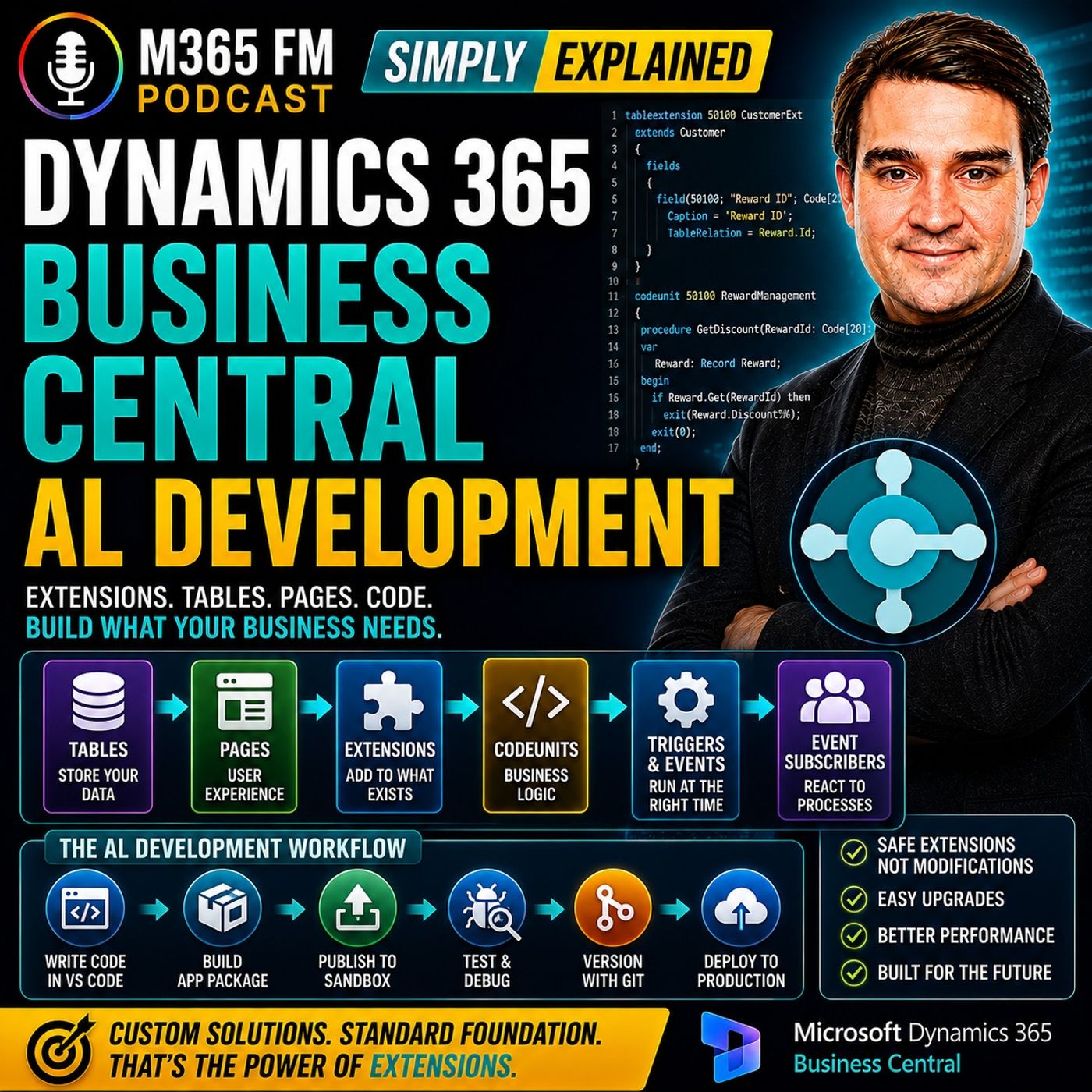
Business Central handles finance, customers, sales orders, inventory, and invoices out of the box. But what happens when your company needs one additional field, a custom approval step, a new business rule, or functionality that doesn't exist in the standard application? In this episode of M365 FM, Mirko Peters explains Dynamics 365 Business Central AL Development—how developers use Microsoft's AL language and extensions to customize Business Central without directly modifying the standard application.
WHAT IS BUSINESS CENTRAL AL DEVELOPMENT?
AL stands for Application Language. It is Microsoft's programming language for developing functionality specifically for Dynamics 365 Business Central. AL al...
Dynamics 365 Dual-write - Simply Explained
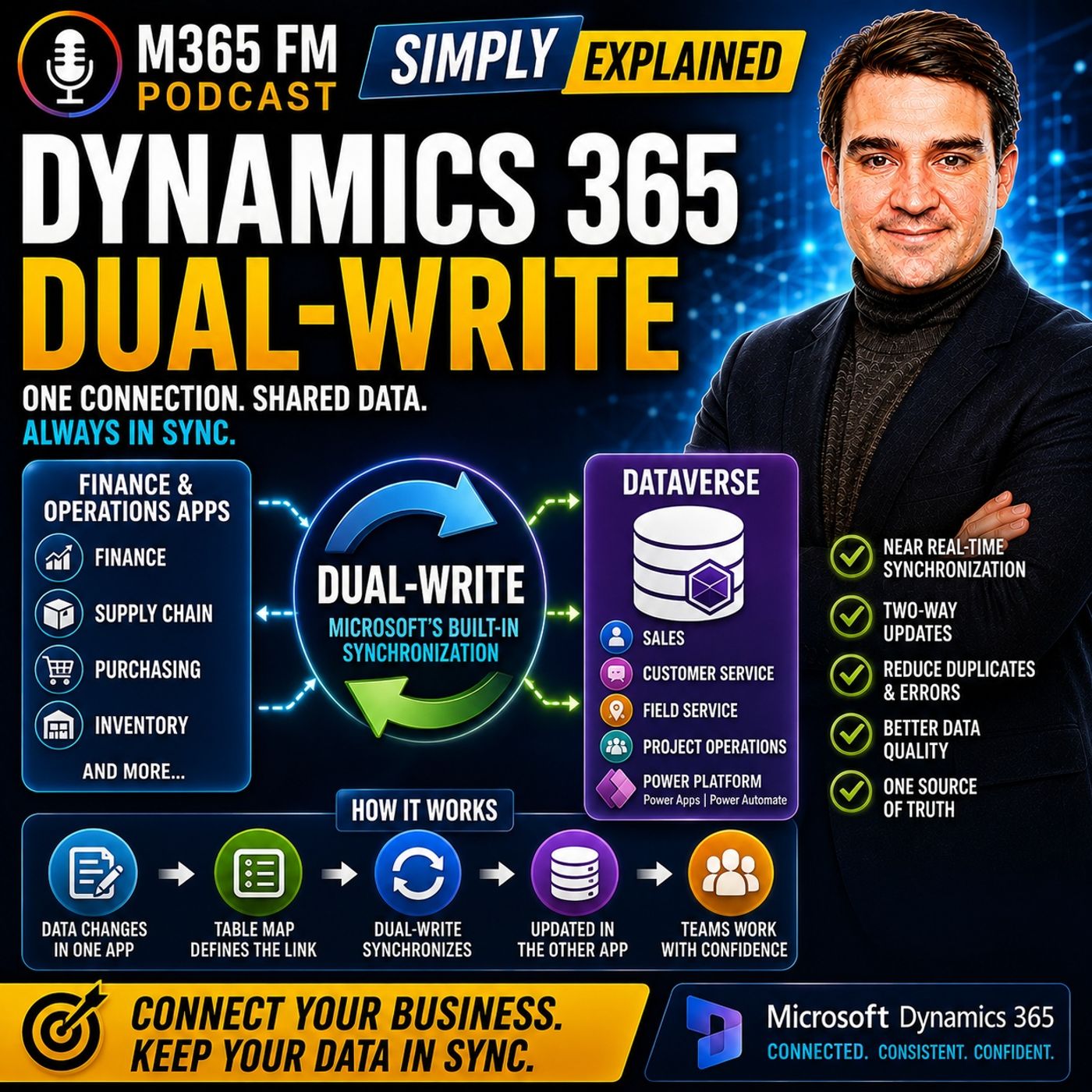
A salesperson updates a customer address in Dynamics 365 Sales. Later, someone in finance opens the same customer and still sees the old address. Which one is correct? When sales, service, finance, and operations work in different applications, shared business data can quickly become duplicated or inconsistent. In this episode of M365 FM, Mirko Peters explains how Dynamics 365 Dual-write connects Finance and Operations apps with Microsoft Dataverse so supported records such as customers, addresses, contacts, products, and orders can remain synchronized as teams work.
WHAT IS DYNAMICS 365 DUAL-WRITE?
Dual-write is Microsoft's built-in connection between Dynamics 365 Finance and Operations...
Dynamics 365 Accounts Payable - Simply Explained
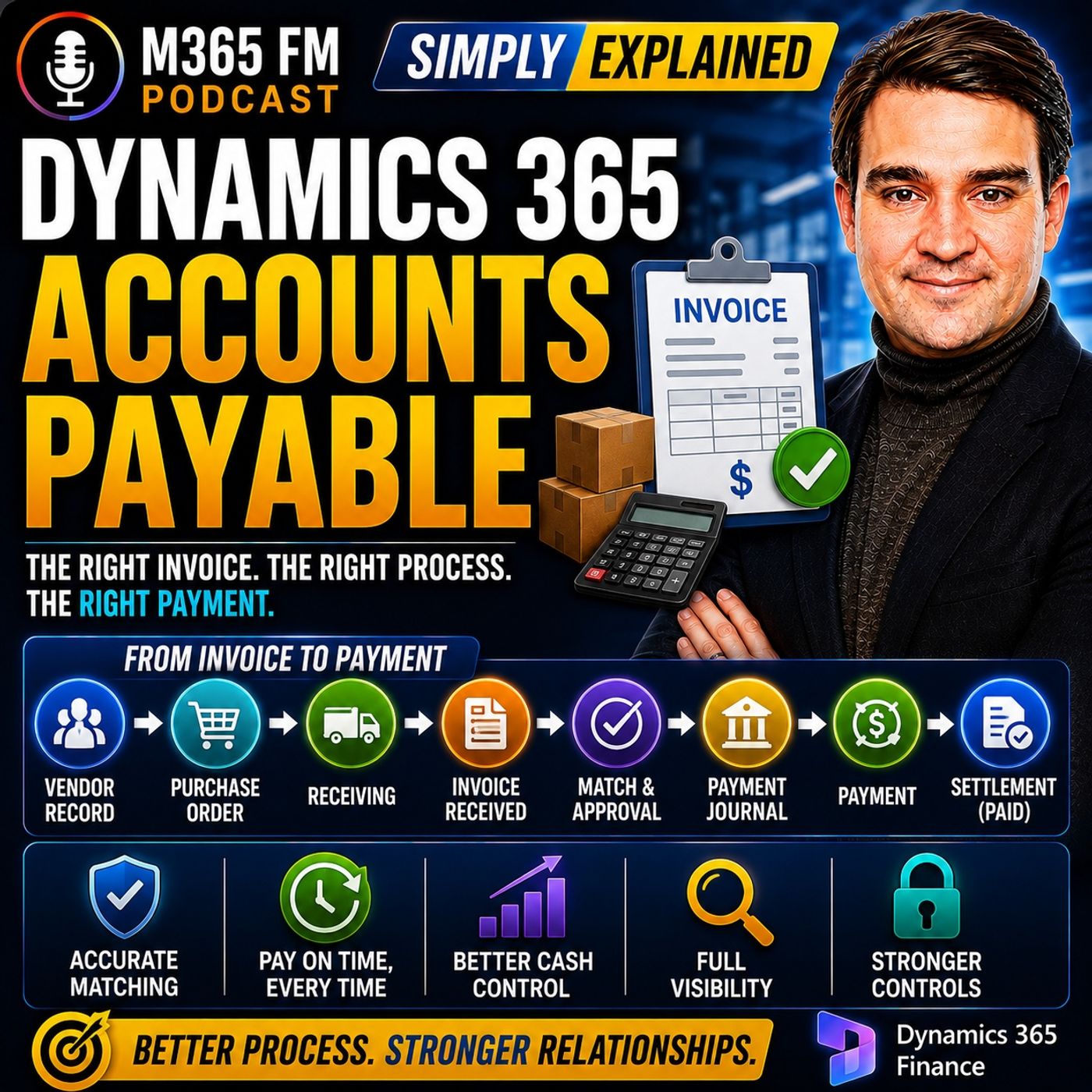
A supplier invoice arrives. The goods may already be sitting in your warehouse or the service may already be complete—but what actually needs to happen before money leaves the company? Dynamics 365 Accounts Payable connects vendor records, invoices, purchase orders, receiving, invoice matching, approvals, payment runs, bank accounts, and settlement into one controlled financial process. In this episode of M365 FM, Mirko Peters explains how Dynamics 365 Finance manages the complete journey from receiving a vendor bill to recording the final payment.
WHAT IS DYNAMICS 365 ACCOUNTS PAYABLE?
Accounts Payable tracks money your company owes vendors for goods and se...
Dynamics 365 Virtual Entities - Simply Explained
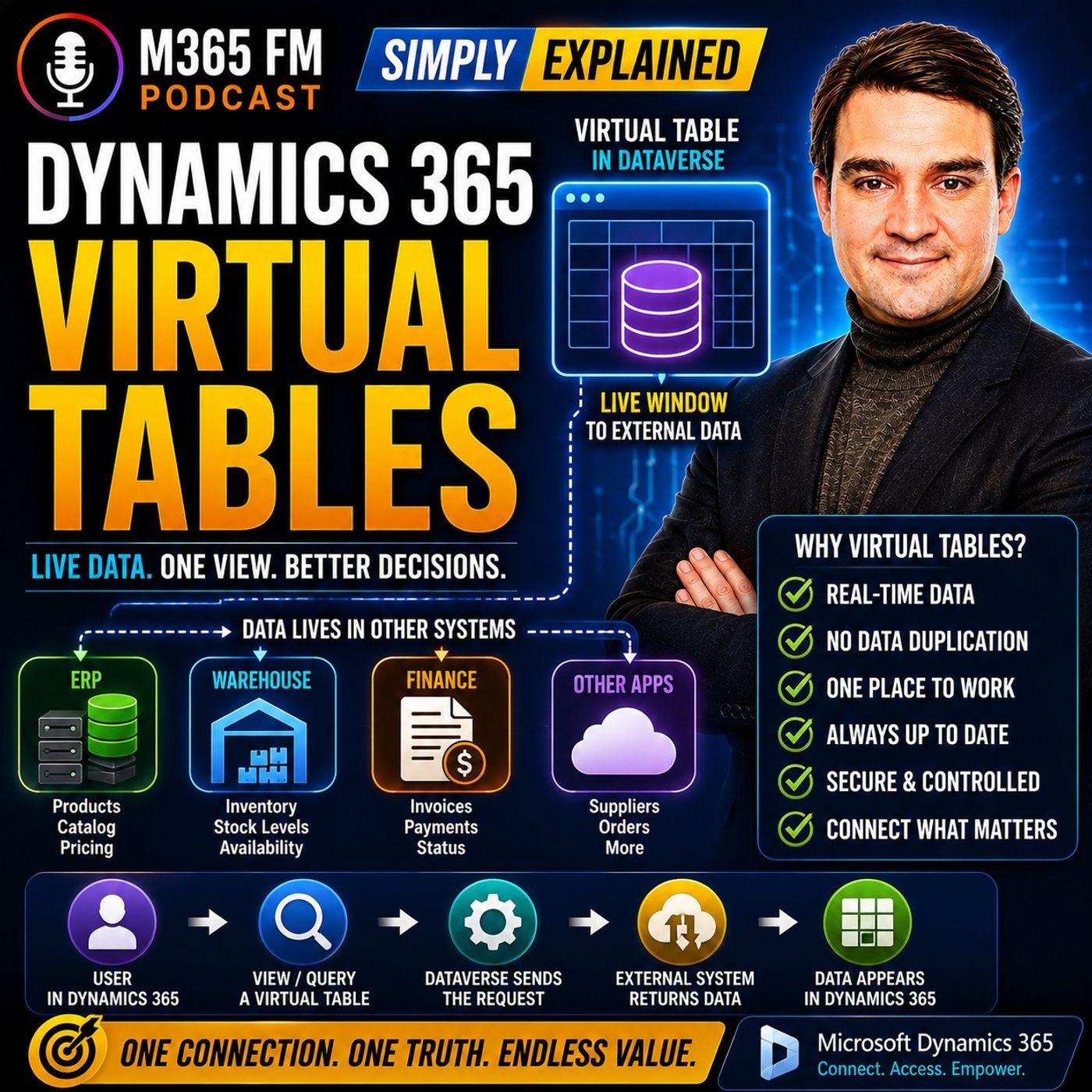
What happens when your sales team works in Dynamics 365, but inventory lives in a warehouse system, invoices live in finance, and product information lives in an ERP? You could copy all that information into Dataverse, but then you create duplicate records, synchronization jobs, delays, and another place where information can become outdated. In this episode of M365 FM, Mirko Peters explains how Dynamics 365 Virtual Tables, formerly known as Virtual Entities, provide live access to external business data without requiring Dynamics 365 to store another copy.
WHAT ARE DYNAMICS 365 VIRTUAL TABLES?
A Virtual Table is a table definition inside...
Dynamics 365 Product Information Management - Simply Explained
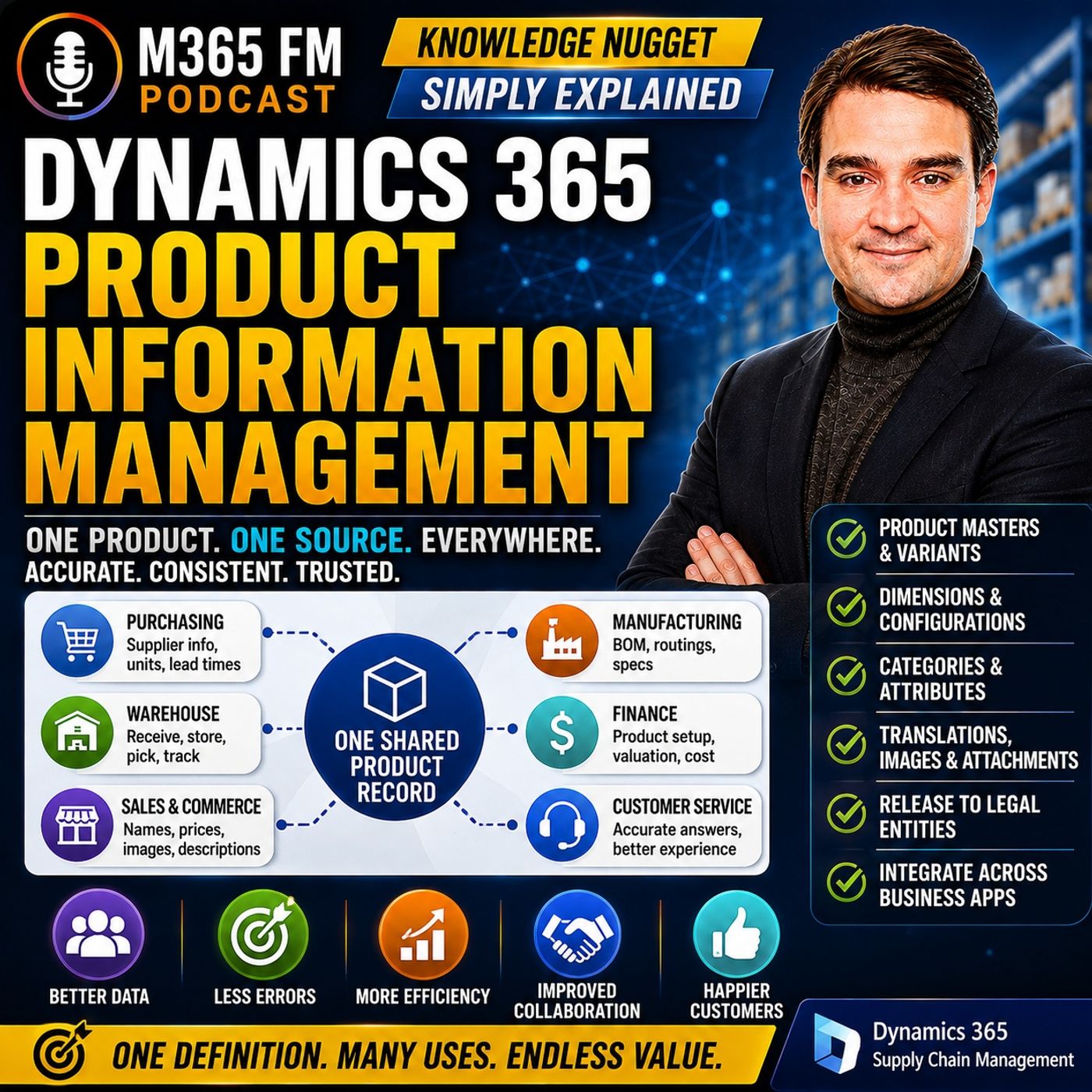
What happens when sales, purchasing, warehouse teams, and your online store all have different information about the same product? A supplier changes a specification, one spreadsheet gets updated, another system doesn't, and suddenly customers receive outdated information or employees order the wrong item. In this episode of M365 FM, Mirko Peters explains how Dynamics 365 Product Information Management (PIM) creates a shared product definition across the business and manages products, product masters, variants, dimensions, configurations, categories, attributes, legal entities, and integrations.
WHAT IS DYNAMICS 365 PRODUCT INFORMATION MANAGEMENT?
Dynamics 365 Product Information Management provides a central place for defining and...
Dynamics 365 Master Planning - Simply Explained
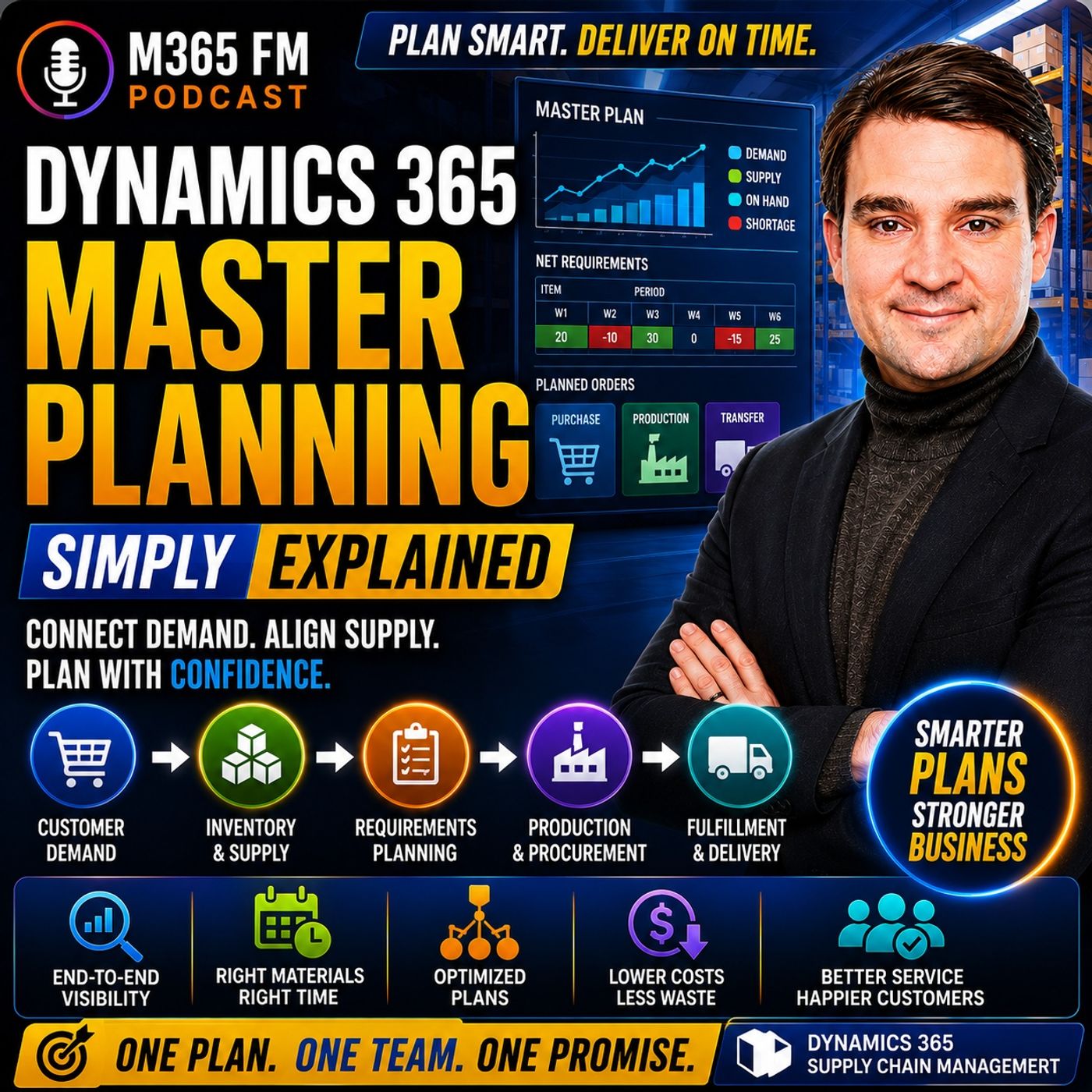
A customer wants 100 bicycles next month. You already have some finished bicycles in stock, wheels are arriving from a supplier, frames are stored somewhere else, and your production line is booked for the next two weeks. What should you buy, what should you build, what should you move—and when does each action need to happen? In this episode of M365 FM, Mirko Peters explains how Dynamics 365 Master Planning connects customer demand, inventory, purchasing, production, bills of materials, lead times, capacity, forecasts, and planned orders to create one connected supply plan.
WHAT IS DYNAMICS 365 MASTER PLANNING?
Dynamics 365 Ma...
Dynamics 365 Intelligent Order Management - Simply Explained
A customer clicks Buy, but the product could be sitting in a central warehouse, a nearby store, another legal entity, or with a fulfillment partner. The customer doesn't care about that complexity. They expect a clear delivery promise and their package to arrive. Dynamics 365 Intelligent Order Management coordinates that journey across sales channels, inventory locations, fulfillment systems, warehouses, carriers, and billing platforms. In this episode of M365 FM, Mirko Peters explains how Intelligent Order Management uses orchestration flows, inventory visibility, fulfillment optimization, providers, Dataverse, Power Automate, and Power BI to coordinate orders from initial capture through fulfillment and billing.
<...
Dynamics 365 Business Central Extensions - Simply Explained
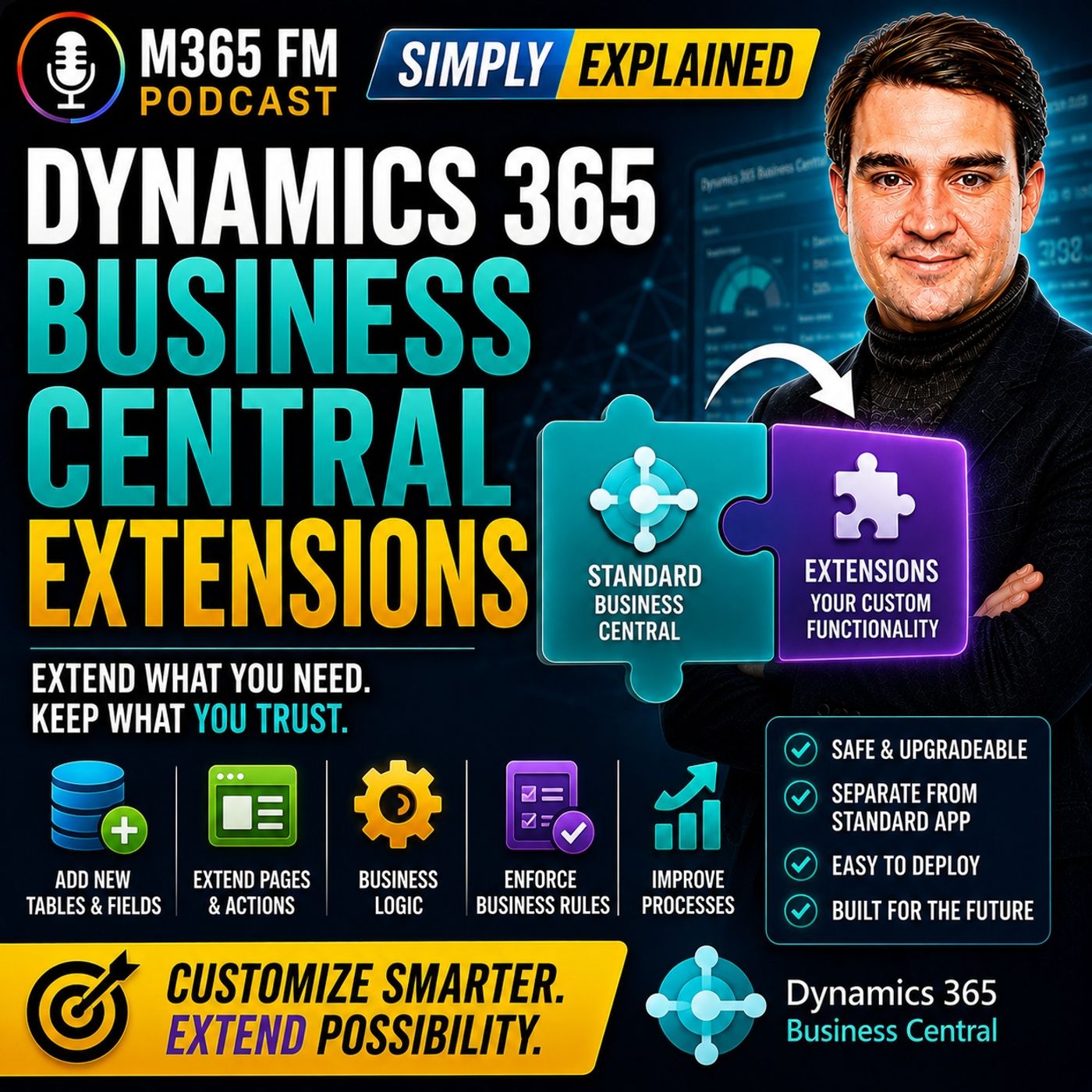
Dynamics 365 Business Central already provides capabilities for finance, sales, purchasing, inventory, projects, and other core business processes. But no two organizations operate exactly the same way. A company might need specialized shipping, local financial reports, additional approval rules, bank integrations, electronic invoicing, or a connection to another business system. In this episode of M365 FM, Mirko Peters explains how Business Central extensions add these capabilities without directly modifying the standard application—and what organizations should check before installing them.
WHAT ARE BUSINESS CENTRAL EXTENSIONS?
A Business Central extension is an add-on package that adds capabilities to Dynamics 365 Bu...
Dynamics 365 Procurement and Sourcing - Simply Explained
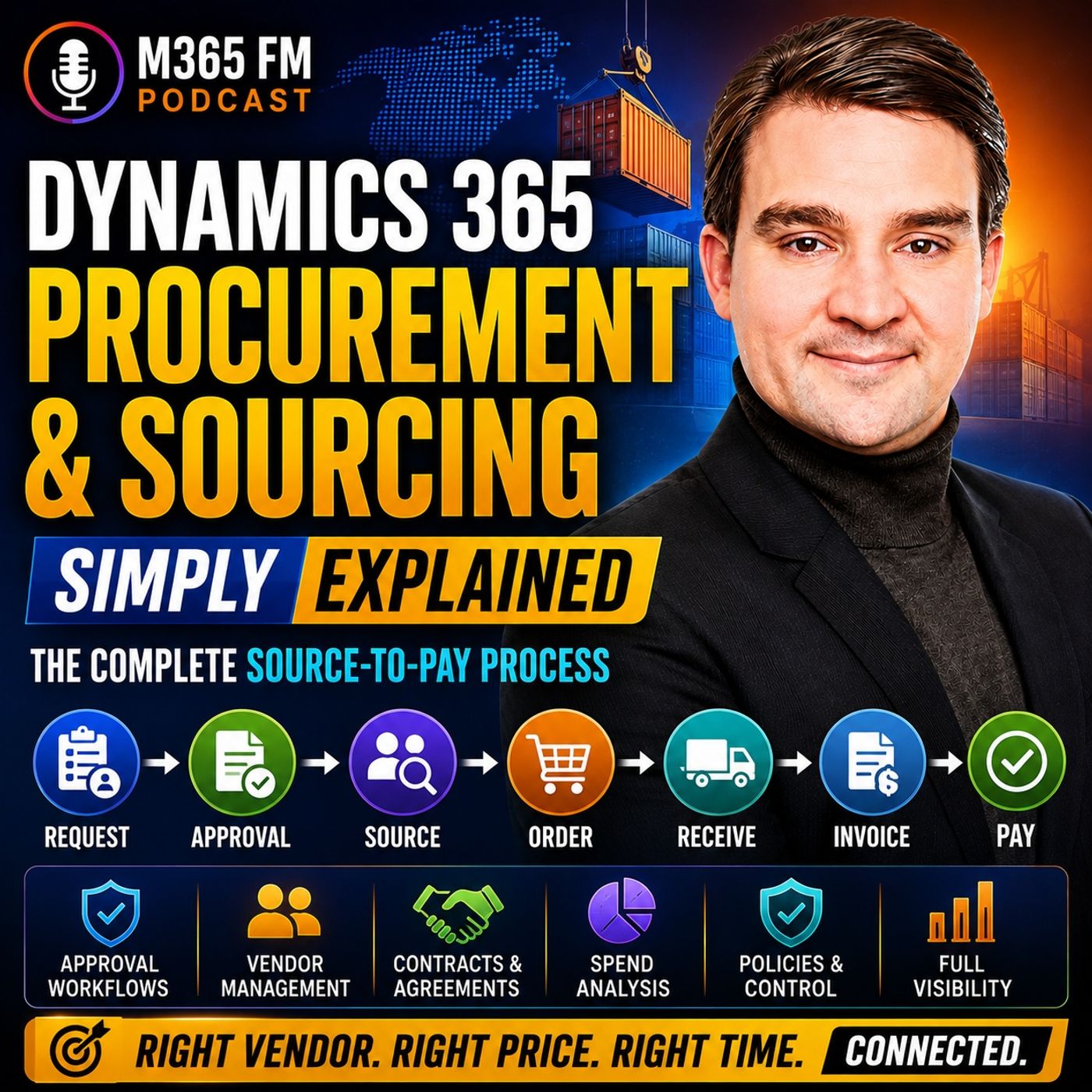
What happens when someone at work needs a new laptop, raw materials for production, safety equipment, consulting services, or even a cleaning contract? In many organizations, purchasing still involves emails, spreadsheets, approval messages, vendor quotes, delivery notes, and invoices spread across different systems. Dynamics 365 Procurement and Sourcing connects these activities into one controlled source-to-pay process. In this episode of M365 FM, Mirko Peters explains how Dynamics 365 Supply Chain Management connects purchase requisitions, sourcing, vendors, RFQs, purchase orders, receiving, invoice matching, approvals, Accounts Payable, and vendor payments.
WHAT IS DYNAMICS 365 PROCUREMENT AND SOURCING?
Procurement and sourcing are closely...
Dynamics 365 Accounts Receivable - Simply Explained
You made the sale and sent the invoice—but when does the money actually reach your account, and what happens when it doesn't? Dynamics 365 Accounts Receivable connects customer accounts, invoices, payment terms, incoming payments, settlement, credit management, collections, disputes, and overdue balances inside Dynamics 365 Finance. In this episode of M365 FM, Mirko Peters follows one customer balance from the original sale through invoicing and payment—and shows what happens when payment arrives late.
WHAT IS DYNAMICS 365 ACCOUNTS RECEIVABLE?
Accounts Receivable tracks money customers owe the business and the payments received against those debts. Think of it as a fin...
Dynamics 365 Warehouse Management - Simply Explained
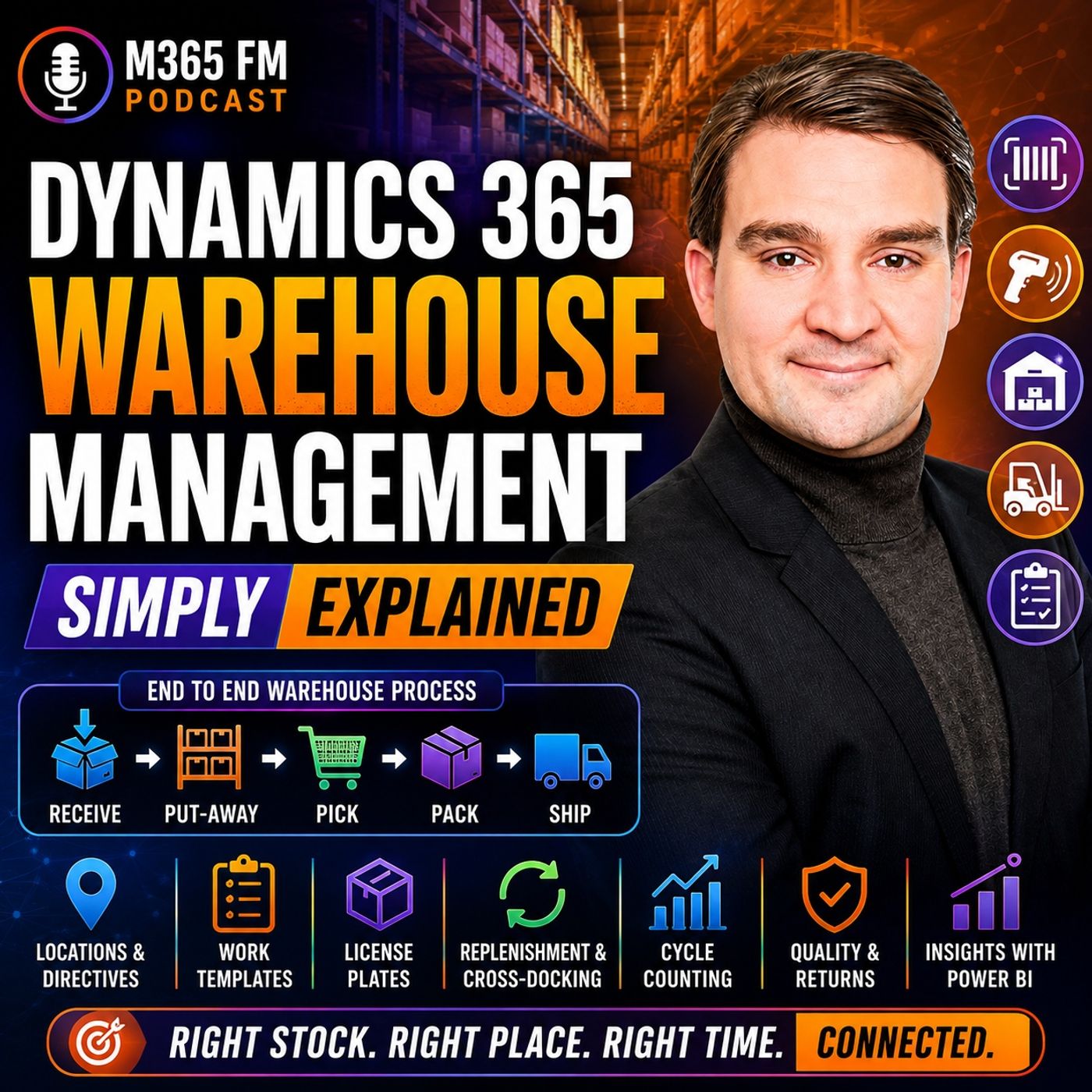
Dynamics 365 Warehouse Management turns inventory records into guided physical work on the warehouse floor. Knowing that 200 units exist is only the beginning. Warehouse teams need to know exactly where those units are stored, whether they are available, which customer orders they belong to, and what workers should do with them next. In this episode of M365 FM, Mirko Peters explains how Dynamics 365 Warehouse Management connects receiving, put-away, storage, replenishment, picking, packing, shipping, cycle counting, returns, quality management, barcode scanning, and warehouse automation with the wider Dynamics 365 Supply Chain Management platform.
WHAT IS DYNAMICS 365 WAREHOUSE MANAGEMENT?
Dynamics 365 Warehouse...
Dynamics 365 Transportation Management - Simply Explained
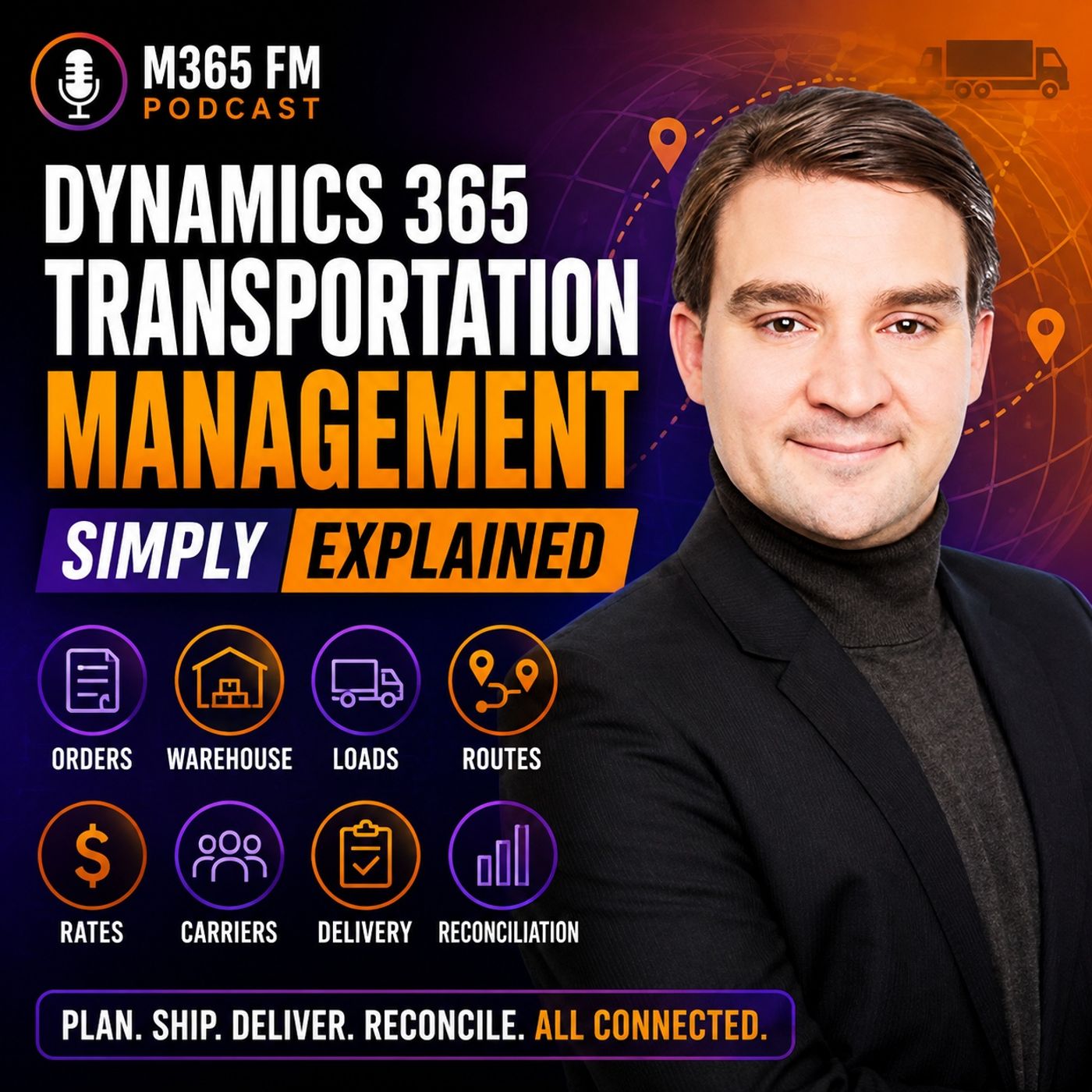
Dynamics 365 Transportation Management connects the movement of physical goods with sales orders, purchase orders, warehouse operations, carriers, routes, rates, loads, and freight costs. Instead of managing transportation through separate spreadsheets, emails, carrier rate sheets, and phone calls, organizations can create a connected transportation plan directly inside Dynamics 365 Supply Chain Management. In this episode of M365 FM, Mirko Peters explains how Transportation Management works from the moment goods need to move through load planning, carrier selection, warehouse execution, delivery, and freight reconciliation.
WHAT IS DYNAMICS 365 TRANSPORTATION MANAGEMENT?
Dynamics 365 Transportation Management is the transportation planning capability inside Dynamics 365 Supply...
Extending Microsoft 365 Copilot: Agents, MCP & Production-Grade AI with Yves Habersaat [MVP]
![Extending Microsoft 365 Copilot: Agents, MCP & Production-Grade AI with Yves Habersaat [MVP] episode artwork](https://d3wo5wojvuv7l.cloudfront.net/t_rss_itunes_square_1400/images.spreaker.com/original/4e3345ace7fa81620f09dec913c1dd18.jpg)
Microsoft 365 Copilot is moving far beyond prompt engineering. As organizations adopt AI more seriously, the challenge becomes connecting Copilot and AI agents to business applications, Microsoft Graph, organizational knowledge, APIs, workflows, and enterprise data while maintaining security and governance. In this episode of the M365 FM Podcast, Mirko Peters talks with Microsoft MVP and AI Tech Lead Yves Habersaat about Microsoft 365 Copilot extensibility, Copilot Studio, Microsoft Foundry, Model Context Protocol (MCP), RAG, multi-agent architectures, enterprise search, permissions, governance, AI readiness, and what it takes to build production-grade AI solutions.
FROM PROMPT ENGINEERING TO AI ARCHITECTURE
Prompt engineering...
GitHub Copilot, Clean Context, Automated Testing & AI Coding Agents with Lars Gyrup Brink Nielsen [MVP]
![GitHub Copilot, Clean Context, Automated Testing & AI Coding Agents with Lars Gyrup Brink Nielsen [MVP] episode artwork](https://d3wo5wojvuv7l.cloudfront.net/t_rss_itunes_square_1400/images.spreaker.com/original/61cf8287d873bf4210956022d170b467.jpg)
Related M365.FM resources: For more on AI coding agents and clean repository context, see https://www.m365.fm/blog/copilot-not-responding-troubleshooting-guide-for-microsoft-users/ and https://www.m365.fm/the-monorepo-myth-why-your-architecture-is-fragmented/. For Microsoft AI agent architecture and Copilot extensibility, see https://www.m365.fm/understanding-microsoft-copilot-enterprise-architecture/ and https://www.m365.fm/copilot-studio-vs-azure-ai-foundry-pick-your-poison/.
AI-assisted development is moving beyond autocomplete and chat. Modern AI coding agents can inspect repositories, modify files, run tests, analyze failures, create pull requests, and execute increasingly complex development tasks. In this episode of the M365 FM Podcast, Mirko Peters talks with Microsoft MVP Lars Gyrup Brink Nielsen about GitHub Copilot...
Dynamics 365 Asset Management - Simply Explained
Related M365.FM resources: To explore connected Dynamics 365 capabilities, see https://www.m365.fm/dynamics-365-supply-chain-management-simply-explained/, https://www.m365.fm/dynamics-365-inventory-management-simply-explained/, and https://www.m365.fm/dynamics-365-finance-simply-explained/.
A conveyor stops in the middle of a shift, a forklift won't start, or a pump suddenly begins leaking. Before anyone can repair the equipment, the business needs answers: Who is responsible? When was it last serviced? Which parts are required? What happened during the previous repair? Dynamics 365 Asset Management provides one central place for this information. In this episode of M365 FM, Mirko Peters explains how Dynamics 365 Asset...
