Centre for Public Integrity
Australia’s leading democracy research institute invites you to join us as we explore the inner workings of politics, policy and public integrity. With a commitment to elevating public discourse, this new series offers three distinct perspectives:Decision Makers: The Hon Michael Barker KC interviews parliamentarians, revealing the challenges, successes and outstanding issues that they have encountered.In the Weeds: Executive Director, Dr Catherine Williams, unpacks the nuances of policy design with leading experts.The Centre: Quentin Dempster AM delves into the personal journeys of our experts, sharing the stories that inspired their commitment to transparency and accountability.
“No better method of getting to the truth”: Geoffrey Watson SC on royal commissions and the Big Build

Royal commissions are expensive, slow and sometimes political. They can also be the best tool we have for finding out what went wrong.
In this episode of the Integrity Puzzle, Associate Professor Will Partlett speaks with Geoffrey Watson SC, a director of the Centre for Public Integrity, about what separated Robodebt and the banking royal commission from the ones that failed, and why the terms of reference and the choice of commissioner matter most.
They then turn to Victoria’s Royal Commission into the Big Build: what Geoffrey found in 18 months investigating the CFMEU without th...
Danielle Wood on the Productivity Commission, public integrity, and Australia’s productivity challenges

Former Federal Court judge Michael Barker interviews Danielle Wood, Chair of the Productivity Commission, about the role of economists and independent institutions in democratic accountability.
Wood explains how economics shapes policymaking through trade-offs, why the Commission’s independence matters even when its advice draws political backlash (including criticism over its GST distribution report), and how undermining institutions can erode trust and economic performance.
She outlines how corruption and “grey corruption” harm growth by increasing uncertainty, diverting resources from innovation, inflating infrastructure costs, and weakening social capital.
Wood discusses the Commission’s work on AI and d...
Tasmania’s Independent Tradition and Integrity Reforms: A Conversation with Meg Webb MLC
Host Michael Barker interviews Meg Webb MLC, independent member for Nelson in Tasmania’s Legislative Council, about her path from 20 years in community services and social policy advocacy into parliament after winning the open Nelson seat in 2019 and being re-elected in 2025. Webb discusses why Tasmania has strong independent representation, especially in the 200-year-old upper house, citing single-member electorates, rolling elections separate from lower house contests, and strict spending caps, alongside Hare-Clark proportional representation in the lower house. She outlines her campaign priorities—integrity, governance, gender equity, environment, and poker machine reform—and details work on integrity architecture including ministerial diary...
Kylie Kilgour: Acting Commissioner of the National Anti-Corruption Commission

Episode Summary:
Michael Barker, former Federal Court judge and director of the Centre for Public Integrity, sits down with Kylie Kilgour — Acting Commissioner of Australia's National Anti-Corruption Commission (NACC) — for a wide-ranging conversation about the country's newest federal integrity body.
They explore the history of anti-corruption commissions across Australia's states and territories, and how the NACC came to be established in 2023. Kylie breaks down the legal definition of corrupt conduct under the NACC Act — from dishonest performance of duties to abuse of public office — and explains how the Commission decides which referrals to investigate.
The co...
Nick Feik: Investigative journalism and the accountability cycle
Will Partlett speaks with Nick Feik, former editor of The Monthly, about the role investigative journalism plays in Australia’s integrity puzzle.
They discuss:
Why difficult stories often need sustained public attention before they produce reformHow reporting on Tasmania’s Ashley Youth Detention Centre and Robodebt exposed deeper institutional failuresWhy public inquiries, parliamentary pressure and civil society all matter to accountabilityThe episode also examines the challenges facing investigative journalists, including defamation law, short media cycles and governments’ ability to delay or manage demands for reform.
Full show notes:
00:00 Intro
02:4...
John McKechnie on integrity, corruption and public accountability
Will Partlett speaks with John McKechnie, former Western Australian Director of Public Prosecutions, Supreme Court judge and Corruption and Crime Commissioner, about the limits of “integrity” as an institutional slogan. McKechnie reflects on WA Inc, the creation of independent prosecution and anti-corruption bodies, and why corruption commissions must do more than promote good culture. They must investigate misconduct, expose failures and help ensure public power is exercised for public purposes.
SHOW NOTES:
00:00 Welcome and Guest Intro
01:06 Why Law School
02:24 Early Practice and Crown Move
04:12 Creating the DPP
How to make integrity watchdogs truly independent - Deborah Glass Victoria's Ombudsman 2014-2024
What does it take for an integrity watchdog to be genuinely independent? In this episode, Deborah Glass — former Victorian Ombudsman and honorary fellow at Melbourne Law School — explains why the answer goes well beyond personal integrity. She discusses the real pressures created by executive-controlled appointments, funding battles and weak oversight, and sets out what stronger institutional design could look like. This is a conversation about why the fine print of integrity reform matters, and why democratic accountability depends on getting it right.
Money, power and the Constitution
In this special edition podcast, former federal court judge The Hon Michael Barker KC speaks with Professor Gabrielle Appleby, Research Director at the Centre for Public Integrity and public law expert at UNSW Law & Justice, about how Australia’s Constitution distributes the power over money. They delve into the powers of the Senate, the significance of responsible government, and the historical compromises that shaped Australia’s constitutional framework, and how that played out in the dismissal of Prime Minister Gough Whitlam in 1975. This is a special episode for the upcoming 2026 National School's Constitutional Convention, aiming to foster a deeper unde...
Jay Weatherill AO: Democracy's Challenges and the Path Ahead
In this episode of the Center for Public Integrity's podcast, the Hon Michael Barker KC, a former federal court judge, interviews Jay Weatherill AO, the 45th Premier of South Australia and recently appointed High Commissioner to the United Kingdom.
They discuss Weatherill's background, influenced by his father's trade union work and his own early immersion into politics. Weatherall recounts his journey to becoming Premier and reflects on the various facets of democracy, the importance of integrity in governance, and the role of civil society.
He shares his views on freedom of information reforms, proactive disclosure...
Prof Megan Davis AC - Integrity at the Margins: Power & Accountability in Indigenous Affairs
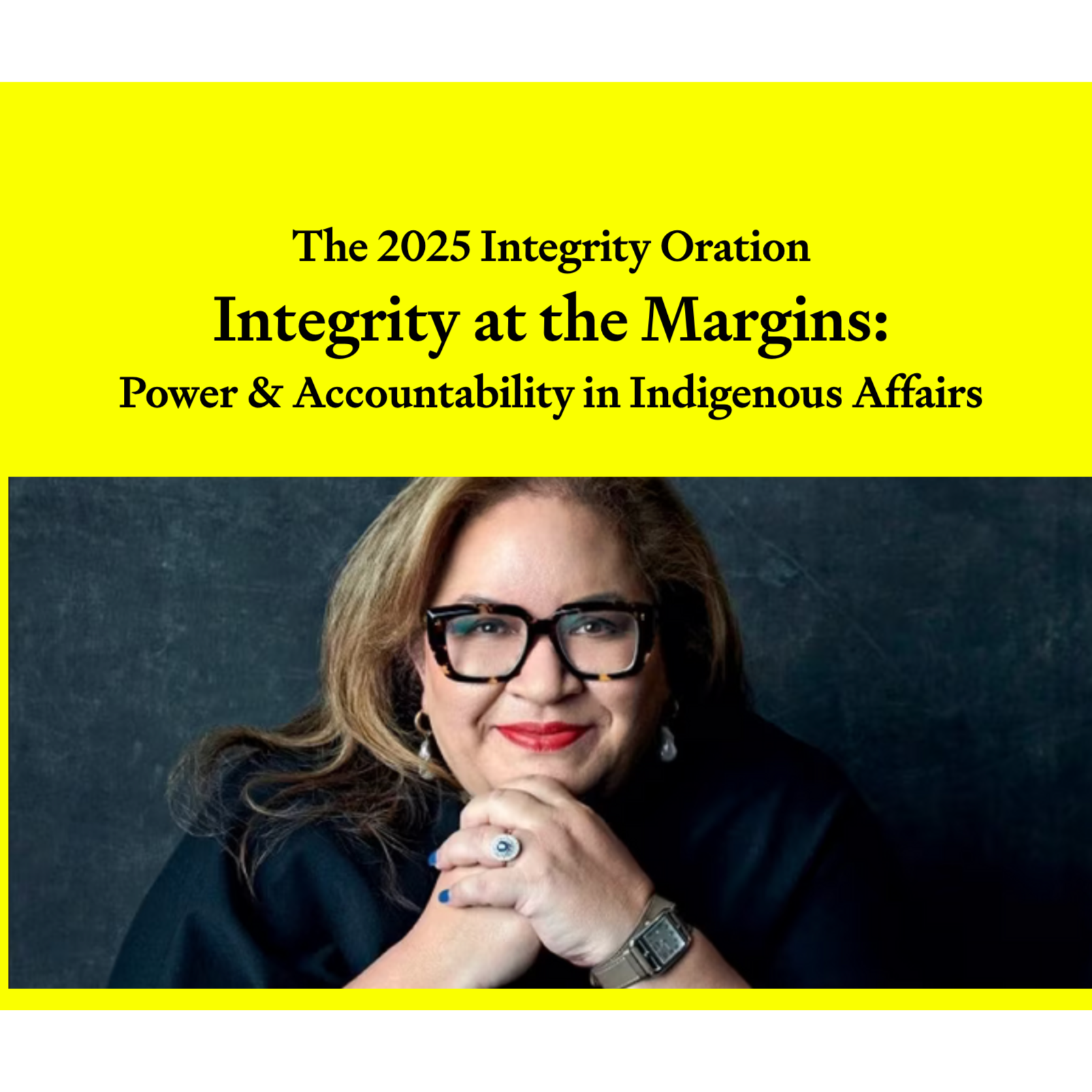
In this podcast episode from the Centre for Public Integrity, former federal court judge the Hon Michael Barker KC interviews Professor Megan Davis AC, one of Australia's leading constitutional law academics. Davis discusses her journey from law school to her significant contributions at the United Nations and her current role at the University of New South Wales.
The conversation delves into Davis's work on the Uluru Statement, her views on constitutional recognition for First Nations people, and her skepticism and optimism about future reforms. The discussion also touches on various integrity issues within Australian politics, the discrepancies...
ACT Chief Minister Andrew Barr
In this episode of the Centre for Public Integrity's podcast, host the Hon Michael Barker KC interviews Andrew Barr, Chief Minister of the ACT. The discussion explores the unique governmental structure of the ACT, combining state and municipal responsibilities, and the impacts of this hybrid model. Topics include the evolution and benefits of self-government, the proportional representation electoral system, political stability, and the growing influence of independents. Barr comments on the challenges of lobbying, the importance of transparency, and recent technological concerns such as AI and deepfakes in politics. He also touches on his own political journey, the significance...
Peter Malinauskas: Reforming Political Finance the South Australian way

In this episode of the Center for Public Integrity's podcast, the Hon Michael Barker KC speaks with Peter Malinauskas, the Premier of South Australia, about the innovative changes to the state's Electoral Act that ban political donations, making elections publicly funded. The discussion delves into the motivations behind these reforms, the influence of Malinauskas' visit to the U.S., and the broader implications for democracy. They also explore the benefits of compulsory voting, the risks of lobbying, and the importance of teaching civics in schools to combat apathy and nurture informed citizens. Premier Malinauskas shares insights from his personal...
Zali Steggall - Olympian, Barrister, Community Independent

Zali Steggall burst onto Australia’s political stage in 2019, unseating a 25-year incumbent to become an outspoken community independent. A world-champion slalom skier turned high-stakes advocate, Zali seamlessly transitioned from life at the Olympic starting gate to the House of Representatives.
In her maiden speech, she warned that big money and “spin” were eroding trust in Parliament—an issue she’s since taken head-on, campaigning to outlaw misleading political advertising and push Australia toward net-zero emissions.
As a former barrister who helped write key climate legislation and fought to cancel offshore gas leases off Sydney’s Northern B...
Bridget Archer Federal Member for Bass

“You should be accessible and accountable to the people you’re asking to represent.”
The Hon Michael Barker KC speaks with Bridget Archer MP, who has gained a national reputation for her independence and principled stances within the Liberal Party. In this episode, they explore what it means to be a genuine community representative in federal politics. Bridget reflects on her philosophy of putting her electorate’s needs first, the challenges of crossing the floor on major issues like the National Anti-Corruption Commission, and why disagreement and difficult conversations are vital for democratic health. She also dis...
Bridget Archer MP – Federal Member for Bass

The Hon Michael Barker KC speaks with Bridget Archer MP, who has gained a national reputation for her independence and principled stances within the Liberal Party. In this episode, they explore what it means to be a genuine community representative in federal politics. Bridget reflects on her philosophy of putting her electorate’s needs first, the challenges of crossing the floor on major issues like the National Anti-Corruption Commission, and why disagreement and difficult conversations are vital for democratic health. She also discusses the risks and benefits of a growing crossbench and what true integrity in politics looks like.
Judge, Barrister, Royal Commissioner, Navy Commander & Deputy Chancellor: the Hon Margaret White AO
Margaret White AO was the first woman judge appointed in Queensland. Before that, she had already had a remarkable career from working in Barbados, as an academic and then on two of Australia's most significant constitutional law cases (Tasmanian Dams and Mabo).
Following a lengthy period on the bench, Margaret then went on to run Royal Commissions investigating the racing industry and child protection in the Northern Territory. She reflects on their effect and how they emphasised her belief in the importance of robust regulation and accountability.
Currently, she advocates for anti-corruption and democratic integrity...
Sophie Scamps: Are grassroots movements rewriting the rules of governance?

Former athlete and current independent MP Sophie Scamps reveals her journey from working as a GP to becoming the community independent member for Mackellar.
Through the interview, the Hon Michael Barker KC, former Federal Court Judge and Centre Director, queries the successes, the challenges and the issues outstanding for the 47th Parliament, and for Scamps in particular. And asks whether there is an appetite for bold ideas that challenge the status quo—what if independent selection panels, transparent lobbying, and stronger whistleblower protections could upend a system swamped by big money?
Curious about how grassroots mo...
Helen Haines: Integrity, Independence, and Innovative Policy in Indi

In this episode of the Centre for Public Integrity’s podcast series, former Federal Court Judge and Director at the Centre, Michael Barker, engages with Helen Haines MP, the dynamic independent member for Indi in the Federal Parliament.
Drawing on her deep roots in rural Australia and her unexpected journey into public service, Helen shares how her electorate’s unique challenges—from critical water management and unreliable telecommunications to energy infrastructure and sustainable agriculture—have shaped her commitment to evidence-based policy and democratic accountability.
She reveals how grassroots initiatives and a relentless focus on community engageme...
Rethinking the NACC and Australian Integrity Commissions for a Fairer Future
Associate Professor Will Partlett is the inaugural Stephen Charles Fellow at the Centre, where he devotes his research to understanding the design and operation of integrity commissions.
As Director of the Centre for Comparative Constitutional Studies, a former fellow of the Brookings Institution, and a leading expert on the centralisation of power,
Will leverages his deep constitutional insight to examine how robust integrity commissions can effectively check concentrated executive authority.
Drawing on critical lessons from the COVID-19 pandemic and the evolution of oversight bodies like the National Anti-Corruption Commission, he highlights the essential...
Reforming Accountability: Constitutional Reflections on Modern Governance
What if the failures of a controversial government scheme and a historic referendum could ignite a revolution in our democratic process? In this episode, journalist Quentin Dempster sits down with Professor Gabrielle Appleby—one of Australia’s leading constitutional law academics and a board director at the Centre—to explore how her groundbreaking work strives for transparency, accountability, and reform in government.
Drawing on her academic expertise and firsthand observations, Gabrielle recounts her dual role in pivotal democratic debates. She critically examined the shortcomings revealed by the RoboDebt Royal Commission, advocating for reforms to bolster support for in-hou...
Attorney General Mark Dreyfus: Inside Australian Democracy

Former Federal Court judge and Centre for Public Integrity Board member, the Hon. Michael Barker KC, sits down with Commonwealth Attorney-General the Hon. Mark Dreyfus KC MP.
Drawing on his extensive parliamentary experience—having served as Attorney-General twice and representing the historic seat of Isaacs in South East Melbourne— Mark reflects on his journey from his early days as a junior climate minister to his tenure in government.
He discusses landmark reforms, including the introduction of the Public Interest Disclosure Act and enhancements to whistleblower protections, as well as the challenges of establishing a National Anti...
Campaign Financing Reimagined: From a Fat Cat Model to the Many Kittens Model
In this episode of In the Weeds, Dr Catherine Williams sits down with Associate Professor Zim Nwokora from Deakin University—a political scientist and member of the Centre for Public Integrity’s Money in Politics Expert Committee.
In today’s conversation, Zim unpacks innovative approaches to campaign financing—from regulating private donations to exploring mixed public-private models. He advocates for a “kittens model” where many small contributions replace the influence of “fat cat” funding, offering a fresh perspective on creating a more equitable and transparent democratic process.
Tune in for an enlightening discussion that challenges conventional fin...
Anthony Whealy KC: From a Bookmaker's Son to Chair at the Centre
Behind the Scenes of Integrity
In this compelling episode of the Centre for Public Integrity’s podcast, journalist Quentin Dempster sits down with the Honourable Anthony Whealy, Founding (and current) Chair of the Centre for Public Integrity. Anthony takes us on a journey from his humble beginnings in Sydney—growing up in a middle‑class family with a bookmaker father—to his transformative education and career in law. Reflecting on his colourful experiences and the battles fought in courtrooms and Parliament alike, Anthony discusses how his post-judicial career opened his eyes to the structural and systemic problems in Austr...
Larissa Waters: Empowering Democracy

Former Federal Court judge Michael Barker sits down with Larissa Waters, Senator for Queensland and a leading voice for the Greens. Larissa recounts her journey into politics—beginning with her unexpected entry in 2010 and overcoming a notorious section 44 hiccup—to champion a vision of a more representative and inclusive parliament. Together, they explore how diversity in Parliament is essential for informed, fair policymaking; discuss the pressing need to reform our archaic constitutional eligibility rules; and highlight the critical importance of addressing issues from climate action and environmental justice to gender equality. Join this insightful dialogue that not only unpacks the...
Unpacking Accountability with the former Clerk of the Victorian Parliament
Join Dr Catherine Williams, Executive Director of the Centre for Public Integrity, as she sits down with Andrew Young, former Clerk of the Victorian Parliament and a key member of Deakin University’s Parliamentary Research Unit. In this episode, Andrew demystifies the process of orders for production of documents—a crucial parliamentary tool that compels the government to release withheld information. He explains how these orders underpin the accountability and transparency necessary for effective lawmaking, while highlighting the alarming decline in compliance and the contentious use of public interest immunity claims. Drawing on comparisons between Victoria and New South Wale...
Geoffrey Watson: life, career and the importance of integrity
In this candid interview, founding board director Geoffrey Watson, SC, takes us on his remarkable journey—from being inspired by “To Kill a Mockingbird” to becoming a leading anti-corruption crusader. A former counsel assisting the NSW Independent Commission Against Corruption and a teaching fellow at UNSW, Geoffrey reveals the gritty realities of exposing deep-seated corruption, the personal toll of his work, and the insights that have shaped his career in the pursuit of public integrity. Join Quentin Dempster as he delves into Geoffrey’s experiences, the challenges of defending the public interest, and why the fight for accountability remains more cru...
Kate Chaney MP: Reimagining representation

In this compelling episode, former Federal Court judge Michael Barker KC sits down with Kate Chaney, MP for Curtin, to explore the evolving landscape of Australian democracy. Kate shares her unexpected journey—from a diverse career outside politics to a historic, reluctant run as an independent in a traditionally Liberal seat—to champion long-term thinking, integrity, and community-driven change. Together, they discuss the challenges of the current system, rebuilding trust in our institutions, and creating a political system that truly reflects the values of its people. Tune in for an interesting conversation that redefines what it means to represent and...