Normal Curves: Sexy Science, Serious Statistics
Normal Curves is a podcast about sexy science & serious statistics. Ever try to make sense of a scientific study and the numbers behind it? Listen in to a lively conversation between two stats-savvy friends who break it all down with humor and clarity. Professors Regina Nuzzo of Gallaudet University and Kristin Sainani of Stanford University discuss academic papers journal club-style — except with more fun, less jargon, and some irreverent, PG-13 content sprinkled in. Join Kristin and Regina as they dissect the data, challenge the claims, and arm you with tools to assess scientific studies on your own.
Researching Honesty: Can you trust the data? Part 1
A famous Harvard researcher. A blockbuster finding about honesty. Suspicious data, failed replications, and a $25 million lawsuit. Welcome to one of the strangest research misconduct scandals in recent memory. In the first of two episodes about the Francesca Gino case, we investigate a famous experiment claiming that signing an honesty pledge at the top of a form makes people less likely to cheat. We follow the trail from a failed replication to some extraordinary detective work involving an Excel spreadsheet—and conduct a little statistical sleuthing of our own. Along the way, we discover how suspicious changes to a ha...
Statistical Sleuthing: Can you spot a problem?
Can you spot problems in a scientific study just by reading the published paper? We put our statistical sleuthing skills to the test with a famous study on procrastination and deadlines that was retracted more than 20 years after it was published. But were there clues hidden in plain sight in the published results—and would we have noticed anything suspicious at the time? We put on our data-detective hats and find a few statistical clues of our own before turning to Data Colada’s investigation of the original data, where the story gets even stranger. Along the way, we hunt...
Ctrl-Z Awards: Will retracting your paper ruin your career?
What happens when you discover that your published paper is wrong? Does retracting it ruin your reputation—or could owning the mistake actually make things better? In this episode, we meet the inaugural winners of the Ctrl-Z Awards, which recognize scientists for correcting or retracting their own work. Behavioral ecologist Kate Laskowski takes us inside a scientific detective story involving suspicious spider data, three retracted papers, and the fear that going public might tank her career. Then computational social scientist Alyssa Smith tells us how one small error in a figure led her to retract the paper at the ce...
Statistical Power: When is it useful?
Statistical power is one of the most important ideas in statistics—and one of the most misunderstood. In this episode, we explain what statistical power really means, why researchers need to think about it before they collect their data, and what goes wrong when they calculate “post hoc power” after the study is over. Along the way, we hunt for UFOs, test Kristin’s psychic abilities, explore the ethics of underpowered studies, and discover why post hoc power is really just a p-value wearing a fake mustache. Then statistician and powerlifter Andrew Althouse joins us for the inside story of a yea...
Cannabis and Brain Aging: Can weed keep your brain young?
Can weed protect your brain as you get older? We unpack a study linking lifetime cannabis use to larger brain volumes and better cognitive test scores in older adults—and investigate how those findings became headlines urging readers to “pass the pot to grandma.” Along the way, we explore collapsing categorical variables, confounding, clinically versus statistically significant results, multiple testing, and how a press release subtly changed a story. We also meet permanently stoned mice, learn about Carl Sagan’s surprising connection to cannabis research, and discover how a single missing word can change the entire meaning of a study.<...
Double Duty: Can the meningitis vaccine also protect against gonorrhea?
Can the meningitis vaccine do double duty against gonorrhea? We examine a fascinating randomized trial inspired by years of encouraging observational studies—and what happened when those earlier results were finally put to the test. Along the way, we discuss ecological studies, case-control studies, why statisticians distrust phrases like “trend toward significance,” how intention-to-treat differs from per-protocol analysis, and why no amount of statistical adjustment can fully substitute for randomization. Along the way we celebrate outrageously named clinical trials, ask whether “flirting with statistical significance” belongs in a romance novel or a medical journal, and discover that “practice safe statistics”...
Hot Tubbing: Can soaking in hot water help you run faster?
Can you improve your endurance by sitting in a hot tub instead of doing another hard workout? We dig into a study that put elite runners through five weeks of what we affectionately call “endurance hot tubbing” to see whether heat alone could trigger the same cardiovascular adaptations as altitude training. Along the way, we explore crossover study designs, multiple testing, why significant physiological changes don’t necessarily translate into better athletic performance, and how an exploratory regression analysis ended up answering the wrong scientific question. We also discover that serious hot tub research involves surprisingly little relaxation, debate whethe...
Exercise Snacks: Can just four minutes of exercise a day improve blood sugar?
Could four one-minute bursts of exercise really improve blood sugar? We try “exercise snacks” ourselves before taking a close look at the clinical trial that inspired headlines. We explain why the study’s main result wasn’t statistically significant, how 34 secondary outcomes complicated the story, and what pre-registration can reveal about a study after it’s published. Along the way, we compare notes on our own exercise-snacking adventures, debate continuous glucose monitors, and ask how much evidence a single study should generate before it becomes health news.
Statistical topics
Crossover designMultiple testingPre...Cancer Blood Tests Part 2: The clinical trial
How do you decide whether a clinical trial “worked”? In Part 2 of our Galleri series, we examine the landmark randomized trial of a blood test designed to detect more than 50 cancers. We explore why different outcome measures led to dramatically different headlines, discuss primary versus secondary outcomes, pre-registration, hierarchical testing, and post hoc analyses, and explain why mortality remains the outcome everyone is waiting for. Along the way, we uncover a statistical mystery involving dozens of missing cancers and discover how a little arithmetic can sometimes reveal more than a press release.
Statistical topics
cancer screeningexploratory anal...Cancer Blood Tests: Are they ready for primetime? Part 1
Can a single tube of blood really detect dozens of cancers before symptoms appear? We dive into the science behind Galleri, a blood test that claims to detect more than 50 types of cancer from a simple blood draw. Recent headlines about the test ranged from “breakthrough” to “bust” after the release of results from a massive randomized clinical trial. In this Part 1 episode, we explore cell-free DNA, DNA methylation, machine learning, sensitivity, specificity, and positive predictive value. Along the way, we revisit the prenatal screening revolution, ask why detecting cancer earlier doesn’t always help patients, and learn how escaped DN...
Odds Ratios: Do most people get them wrong?
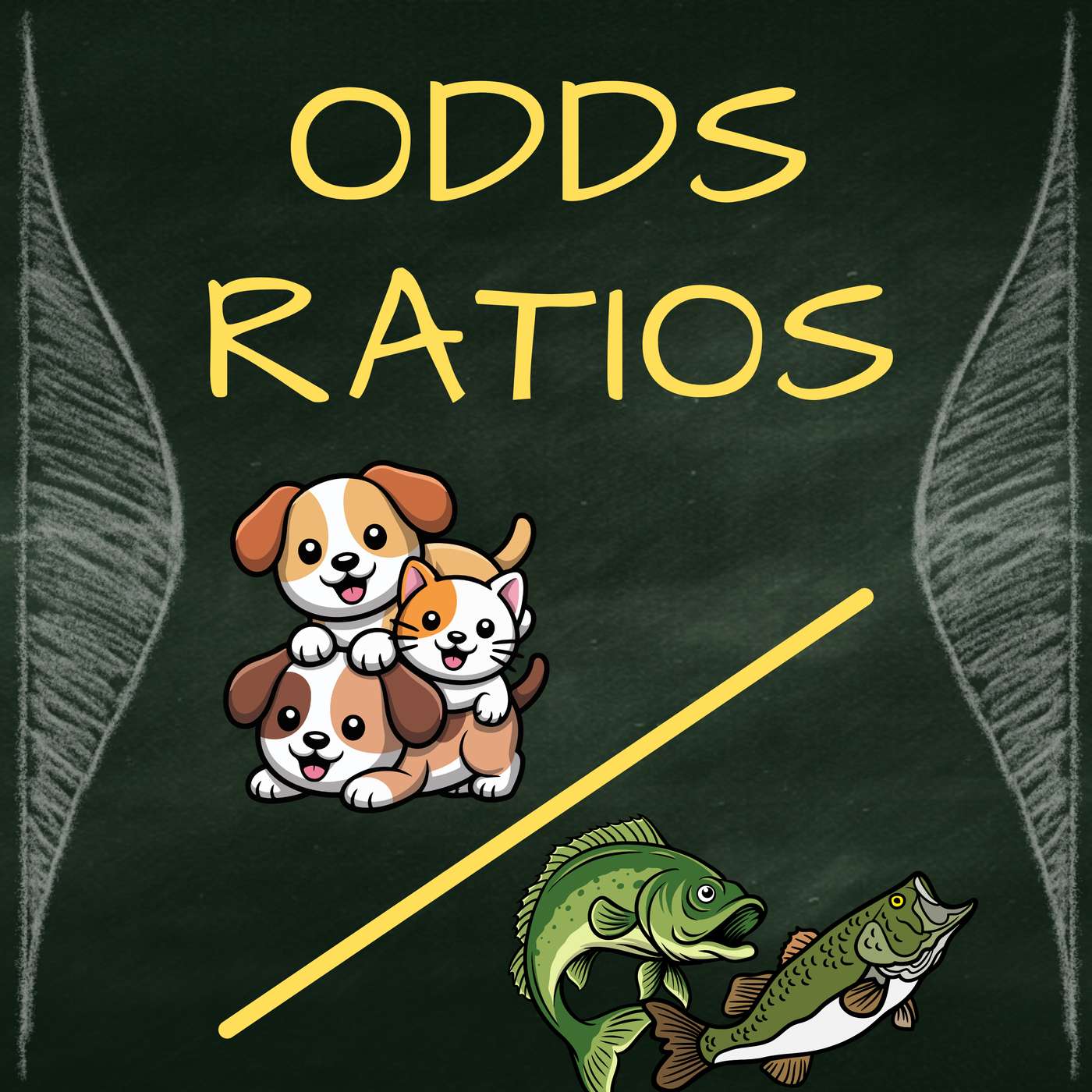
Odds ratios show up everywhere in medical research—but do readers, journalists, and even researchers always know what they mean? In this episode, we tackle one of the most common statistical misunderstandings in science: treating odds ratios like risk ratios. Along the way, we explore puppy photos, fish photos, first-date hookups, sugary drinks, cardiac care, and a listener challenge that started with an informal study of five medical residents and a box of chocolate truffles. We explain why logistic regression produces odds ratios, when odds ratios can wildly exaggerate effects, and why some famous headlines turned out to be mu...
Coffee and the Heart: Is caffeine a trigger for AFib?
Does coffee trigger atrial fibrillation — or have doctors been warning people away from caffeine without strong evidence? We dig into two recent randomized clinical trials testing whether caffeinated coffee causes dangerous heart rhythm problems. Along the way, we talk about AFib, survival analysis, intention-to-treat versus as-treated analyses, and one surprisingly elaborate effort to catch clinical trial cheaters with receipts and geolocation tracking. We also explore how a pope may have fueled a European coffee resurgence, why plants make caffeine, and how a game show competition explains hazard ratios.
Statistical topics
Sleep and Exercise: Does working out on too little sleep speed up aging?
Can exercise actually be bad for you if you don’t get enough sleep? A widely shared claim says yes—that working out while sleep deprived may speed up aging. In this episode, we put that claim under the microscope. We examine the study behind it, unpack how sleep and aging were measured, and explore key statistical ideas like interaction effects and flexible models that can “dance” to the data. With the help of a $400,000 handbag and a man with seven boats, we also break down what it really takes to show that one variable changes the effect of another...
Sex Recession: Are young people really having less sex?
Are young people really having less sex? Headlines about a “sex recession” suggest a dramatic decline—but what do the data actually show? In this episode, we trace that claim back to the research behind it—and find a story that’s far more nuanced than the headlines suggest. We examine large national surveys, including the General Social Survey and the National Survey of Sexual Health and Behavior, and uncover how small analytical choices can completely change the story. Along the way, we tackle ordinal versus quantitative data, why averages can mislead, how logistic regression reframes the question, and what happe...
Diagnostic Testing: Do the stats tell you what you need to know?
Diagnostic testing: what do those statistics actually tell you? Sensitivity, specificity, positive predictive value . . . you’ve probably seen these terms before. Maybe you memorized them for a test. But do you actually know what they mean? In this episode, we take a closer look at how diagnostic tests are evaluated—and how they’re often misinterpreted. From a genetic test for cellulite to a blood test for autism, we explore how “statistically significant” findings can turn into tests that don’t actually help anyone. Along the way we meet the freckle gene, the wanderlust gene, and infidelity gene.
Statis...
Epidurals: Are labor epidurals really linked to autism?
Epidurals are widely used and widely trusted for pain relief during labor. So when a 2020 study reported that they might be linked to autism, it raised a troubling question: could a routine medical decision have long-term consequences? We follow that claim from headline to evidence—and watch what happens when other scientists take a closer look. We dig into the original study, a wave of replication studies from around the world, and a meta-analysis that tries to make sense of it all. Along the way, we unpack hazard ratios, Cox regression, inverse probability weighting, and sibling analyses—and why even...
Daylight Saving Time: Does springing forward cause heart attacks?
Every year we spring forward and lose an hour of sleep. But do we also lose a few heart cells? Some headlines claim that heart attacks spike by 24% after daylight saving time begins. In this episode we trace that number back to the research behind it—and what we find is more complicated than the headlines suggest. We examine a famous New England Journal of Medicine letter, a large international meta-analysis, and a massive modern U.S. registry study. Along the way we talk about incidence ratios, relative versus absolute risk, negative controls, and a haunting concept called harvesting. Pl...
Marathon Performance: Does high-carb fueling work?
How many carbs do you need to run your best marathon? Recent headlines suggest that 120 grams per hour is the magic number. But what’s the science behind that claim? To find out, we dug into the study fueling the hype — and were surprised by what we found. In this episode, we uncover numbers that mysteriously shift after peer review, figures that don’t match the text, and p-values that refuse to line up with their confidence intervals. Along the way, we swap bonking stories, revisit repeated-measures ANOVA, renew our antipathy for spreadsheets, and follow a trail of statistical termit...
Falling in Love: Do the 36 Questions Actually Work?
Can a list of questions really make two strangers fall in love? In 2015, a viral New York Times Modern Love column claimed psychologists had discovered a formula for love: 36 increasingly personal questions, plus four minutes of eye contact. Millions of people tried it. There was even an app. But when we followed the citation trail back to the science, the story started to unravel. In this episode, we crack open the 1997 study behind the “36 Questions,” unearth a forgotten pilot study with a different (and sexier) protocol, and track down the real origin of the eye-gazing task. Along the way, we b...
Bonus: Pheromones with commentary
While we’re on a short break between seasons, we’re revisiting some of our favorite episodes from Season 1. This week, we’re re-releasing our debut episode on pheromones and sexy sweat, with some added commentary up front..
Sweaty t-shirt dating parties, sex pheromone dating sites, choosing your dating partner by sniffing them up — wacko fringe fads or evidence-based mating strategies? And what does your armpit stain have to do with your kids’ immune systems, or hormonal contraceptive pills, or divorce rates?
In this episode, we reach back into the 1990s a...
Bonus: Sugar Sag with Commentary
While we’re on a short break between seasons, we’re revisiting some of our favorite episodes from Season 1. This week, we’re re-releasing our exploration of how your diet can affect your skin – now with added commentary!
Wrinkles and sagging skin—just normal aging, or can you blame your sweet tooth? We dive into “sugar sag,” exploring how sugar, processed foods, and even your crispy breakfast toast might be making you look older than if you’d said no to chocolate cake and yes to broccoli. Along the way, we encounter statistical adjustment, training and test data sets...
Bonus: Vitamin D Part 1 with commentary
While we’re on a short break between seasons, we’re revisiting some of our favorite episodes from Season 1. This week, we’re re-releasing our deep dive into vitamin D and the origins of the so-called deficiency epidemic, with added commentary.
Is America really facing an epidemic of vitamin D deficiency? While this claim is widely believed, the story behind it is packed with twists, turns, and some pesky statistical cockroaches. In this episode, we’ll dive into a study on Hawaiian surfers, expose how shifting goalposts can create an epidemic, tackle dueling medical guidelin...
The Batman Effect: Do weird surprises make people nicer?

Description
Nobody expects Batman—but when he shows up in a crowded subway car, are people suddenly more likely to help a passenger in need? This week on Normal Curves, we unpack a recent quasi-experimental field study involving a caped superhero costume, a prosthetic pregnancy belly, and some puzzled Italian commuters. Along the way, we demystify three common ways of describing effects for binary outcomes—risk differences, risk ratios, and odds ratios—and explain what they actually mean in plain language. We also do some statistical sleuthing, uncover a major problem hiding in the paper’s number...
Holiday Survival Guide Part 2: The survey study edition
Does the temperature of your coffee six months ago really predict whether you feel gassy today? This week we dissect a new nutrition survey study on hot and cold beverage habits that claims to connect drink temperature with gut symptoms, anxiety, and more—despite relying on year-old memories and a blizzard of statistical tests. It’s the perfect case study for our Holiday Survival Guide Part 2, where we teach you how to talk with Uncle Joe at the dinner table about one of the most common—and most fraught—study designs in science: cross-sectional surveys. We walk through our easy che...
Holiday Survival Guide: How to talk about scientific studies around the dinner table
Does a little alcohol really make you speak a foreign language better? This week we unpack a quirky randomized trial that tested Dutch pronunciation after a modest buzz—and came to the opposite conclusion the researchers expected. We use it as the perfect holiday case study: instead of arguing with Uncle Joe at the dinner table, we’ll show you how to pull apart a scientific headline using a friendly, practical checklist anyone can learn. Along the way we stress-test the study’s claims, take a quick detour into what a .04% buzz actually looks like, and run our own before...
Shingles Shot and Dementia: Could one vaccine protect your brain?
What do chickenpox and shingles have to do with your brain? This week, we dig into two 2025 headline-grabbing studies that link the shingles shot to lower dementia rates. We start in Wales, where a birthday cutoff turned into the perfect natural experiment, and end in the U.S. with a multi-million-person megastudy. Featuring bias-variance Goldilockses, Fozzy-the-Bear regression discontinuities, a Barbie-versus-Oppenheimer showdown for propensity scores – and the hottest rebrand of inverse-probability weighting you’ll ever hear.
Statistical topics
Scary Bridge Study: Can fear make you horny?

What if a haunted house makes your date look hotter? This week we dive into the infamous Scary Bridge Study — the 1970s classic that launched a thousand pop-psych takes on fear and lust. It’s the one with the swaying bridge, pretty “research assistant,” and phone number scrawled on torn paper. The study became legend, but how sturdy were its stats? We retrace the design, redo the numbers, and see how many math errors it takes to sway a suspension bridge. Along the way we find an erotic-fiction writing exercise, Adventure Dudes choosing their own experimental groups, and snarky replicat...
Ultramarathons: Can vitamin D protect your bones?
Ultramarathoners push their bodies to the limit, but can a giant pre-race dose of vitamin D really keep their bones from breaking down? In this episode, we dig into a trial that tested this claim – and found a statistical endurance event of its own: six highly interchangeable papers sliced from one small study. Expect missing runners, recycled figures, and a peer-review that reads like stand-up comedy, plus a quick lesson in using degrees of freedom as your statistical breadcrumbs.
Statistical topics
P-Values: Are we using a flawed statistical tool?
P-values show up in almost every scientific paper, yet they’re one of the most misunderstood ideas in statistics. In this episode, we break from our usual journal-club format to unpack what a p-value really is, why researchers have fought about it for a century, and how that famous 0.05 cutoff became enshrined in science. Along the way, we share stories from our own papers—from a Nature feature that helped reshape the debate to a statistical sleuthing project that uncovered a faulty method in sports science. The result: a behind-the-scenes look at how one statistical tool has shaped the cult...
Exercise and Cancer: Does physical activity improve colon cancer survival?
Exercise has long been hailed as cancer-fighting magic, but is there hard evidence behind the hype? In this episode, we tackle the CHALLENGE trial, a large phase III study of colon cancer patients that tested whether prescribed exercise could improve cancer-free survival. We translate clinical jargon into plain English, show why ratio statistics make splashy headlines while absolute differences tell the real story, and take a detour into why statisticians think survival analysis is downright sexy. And we even bring in a classic reality show to make sense of the numbers.
Statistical topics
Age Gaps: How much does age matter in dating?
Are we all secretly ageist when it comes to dating? We put the stereotype that older men prefer younger women under the microscope using data from thousands of blind dates. What we found surprised us: the “age penalty” was real but microscopic, women wanted younger partners too, and hard age cutoffs weren’t so hard after all. Along the way, we unpack statistical significance versus practical importance, play with the infamous “half your age plus seven” rule, and imagine what it would take for love to die out… somewhere around age 628.
Statistical topics
Your Brain on AI: Is ChatGPT making us mentally lazy?
ChatGPT is melting our brainpower, killing creativity, and making us soulless — or so the headlines imply. We dig into the study behind the claims, starting with quirky bar charts and mysterious sample sizes, then winding through hairball-like brain diagrams and tens of thousands of statistical tests. Our statistical sleuthing leaves us with questions, not just about the results, but about whether this was science’s version of a first date that looked better on paper.
Statistical topics
ANOVABar graphsData visualization False Discovery Rate correctionMultiple testingPreprintsStatistical SleuthingMethodological morals
"Treat your preprints like your blind dates...The Backfire Effect: Can fact-checking make false beliefs stronger?
Can correcting misinformation make it worse? The “backfire effect” claims that debunking myths can actually make false beliefs stronger. We dig into the evidence — from ghost studies to headline-making experiments — to see if this psychological plot twist really holds up. Along the way, we unpack interaction effects, randomization red flags, and what happens when bad citations take on a life of their own. Plus: dirty talk analogies, statistical sleuthing, and why “familiarity” might be your brain’s sneakiest trick.
Statistical topics
Unpublished "Ghost Paper"
Dating Wishlists: Are we happier when we get what we want in a mate?
Loyal, funny, hot — you’ve probably got a wish list for your dream partner. But does checking all your boxes actually lead to happily ever after? In this episode, we dive into a massive global study that put the “ideal partner” hypothesis to the test. Do people really know what they want, and does getting it actually make them happier? We explore surprising statistical insights from over 10,000 romantics in 43 countries, from mean-centering and interaction effects to the good-catch confounder. Along the way, we dig into dessert metaphors, partner boat-count regression models, and the one trait that people say doesn’t matter —...
Stats Reunion: What have we learned so far?
It’s our first stats reunion! In this special review episode, we revisit favorite concepts from past episodes—p-values, multiple testing, regression adjustment—and give them fresh personalities as characters. Meet the seductive false positive, the clingy post hoc ex, and Charlotte, the well-meaning but overfitting idealist.
Statistical topics
References
Nuzzo RL. The Box Plots Alternative for Visualizing Quantitative Data. PM R. 2016 Mar;8(3):268-72. doi: 10.1016/j.pmrj.2...HPV Vaccine: How close are we to wiping out cervical cancer?
Could a preteen vaccine wipe out a global cancer? In this episode, we examine the bold claim that cervical cancer could be eradicated in much of the world by the end of the century—thanks to the highly effective HPV vaccine. We unpack statistical modeling, microsimulations, and how Markov chains make good date-night conversation. We also explore why vaccine uptake has been uneven, how a splash of vinegar is helping screen for cancer in low-resource countries, and why HPV isn’t just a women’s issue—it now causes more cancer in men than in women. Plus: dangerously tight corsets...
Equipment Size: What is average?
Today’s deep dive: the surprisingly serious science of penis size. Using self-report surveys, objective measurements, and a healthy dose of old-school statistics, we ask: How do you get clean data on gentlemen’s goods?Along the way, we explore social desirability bias, survey design tricks, and what happens when science meets insecurity. You’ll never look at a Starbucks cup the same way again.
Statistical topics
Social desirability biasSelection biasVolunteer BiasDescriptive StatisticsRight-Skewed DistributionsStrategies to improve accuracy in self-report dataMethodological morals
“When answers aim to please, truth takes its leave.”“Without descriptive statistics, you'll never...Sugar Sag: Is Your Diet Aging You?

Wrinkles and sagging skin—just normal aging, or can you blame your sweet tooth? We dive into “sugar sag,” exploring how sugar, processed foods, and even your crispy breakfast toast might be making you look older than if you’d said no to chocolate cake and yes to broccoli. Along the way, we encounter statistical adjustment, training and test data sets, what we call “references to nowhere,” plus some cadavers and collagen. Ever heard of an AGE reader? Find out how this tool might offer a sneak peek at your date’s age—and maybe even a clue about his… um… “perfor...
Hookworms: Can parasites improve your health?
What if you could treat your prediabetes with . . . worms? Regina and Kristin dive into a surprising early-phase clinical trial on hookworm therapy—that’s right, intentionally infecting yourself with parasitic worms—to treat metabolic conditions. They dig into the biological rationale (inflammation, abdominal fat, and gut immunology), the clever study design (hello, Tabasco sauce!), and the statistical chops behind this phase 1B trial (block randomization, missing data, and nonparametric hypothesis tests). Along the way, expect self-experimenting scientists, worm sex, poop analysis, and the world’s nerdiest aphrodisiac: a well-documented protocol.
Statistical topics
Randomized controlled trial (RCT)Primary a...Alcohol: Are happy hours good for your heart?
Does a daily glass of wine really keep the cardiologist away? It’s a claim we’ve all heard: light to moderate drinking is good for your heart. But is it science or just a convenient excuse for happy hour? In this episode, we dive into the history behind this claim, discuss the challenges of observational studies and statistical adjustment, and explore attempts at randomized trials and natural experiments to get to the bottom of this boozy debate. Grab your drink—or maybe don’t—and join us!
Statistical topics
