Before Us

Every living person can trace their ancestry back to Africa, where modern humans evolved some 300,000 years ago before expanding out of Africa and around the world. Those early humans lived lives filled with emotions and challenges much like people today and their journeys stand as a testament to human intelligence, ingenuity, creativity, and resilience. But, what does the archaeological record tell us about their lives, their successes, their failures, and who we are today? In this podcast, world-recognized experts in maritime and prehistoric archaeology, Dr. Helen Farr and Dr. Erich Fisher, reveal the people and the world that existed “Before Us...
Kelp getting to the Americas?
In this episode we explore the ecology of the North Pacific Rim with Jon Erlandson, and specifically, the idea that kelp ecosystems may have acted much like a highway into the Americas, providing early coastal and maritime hunter-gatherers with familiar, dense, and predictable resources almost continuously from Japan all the way to the southern tip of South America
**Please do not forget to rate and review the show**
Have a question or comment?
Email: [email protected]
Reddit: https://www.reddit.com/r/Be...
Sailing to Ryukyu
How do you test how people reached Okinawa more than 30,000 years ago? Build a log boat using only Paleolithic stone tools, then paddle it from Taiwan to the Ryukyu Islands. This week, we talk to Prof. Yousuke Kaifu about the extraordinary project he led to explore how prehistoric people could have made a voyage that, even today, seems improbable. It’s a fascinating discussion about their trials-and-errors to build a boat that could handle the open ocean and their journey to cross one of the world’s biggest ocean currents.
**Please do not forget to rate a...
The wakes we inherit
We're taking a small detour this week to talk about the role of voyaging and the embodied knowledge of seafaring that has been collected and passed down for generations among modern communities all across the Pacific. It's a perspective that isn't so much about the past rather than how the past shapes the present and future.
**Please do not forget to rate and review the show**
Have a question or comment?
Email: [email protected]
Reddit: https://www.reddit.com/r/BeforeUsMedia/<...
Saturday Bonus Minisode plus sneak peak of Season 2, Episode 5
Have a question or comment?
Email: [email protected]
Reddit: https://www.reddit.com/r/BeforeUsMedia/
Or click “Send us a message!” to send us an SMS.
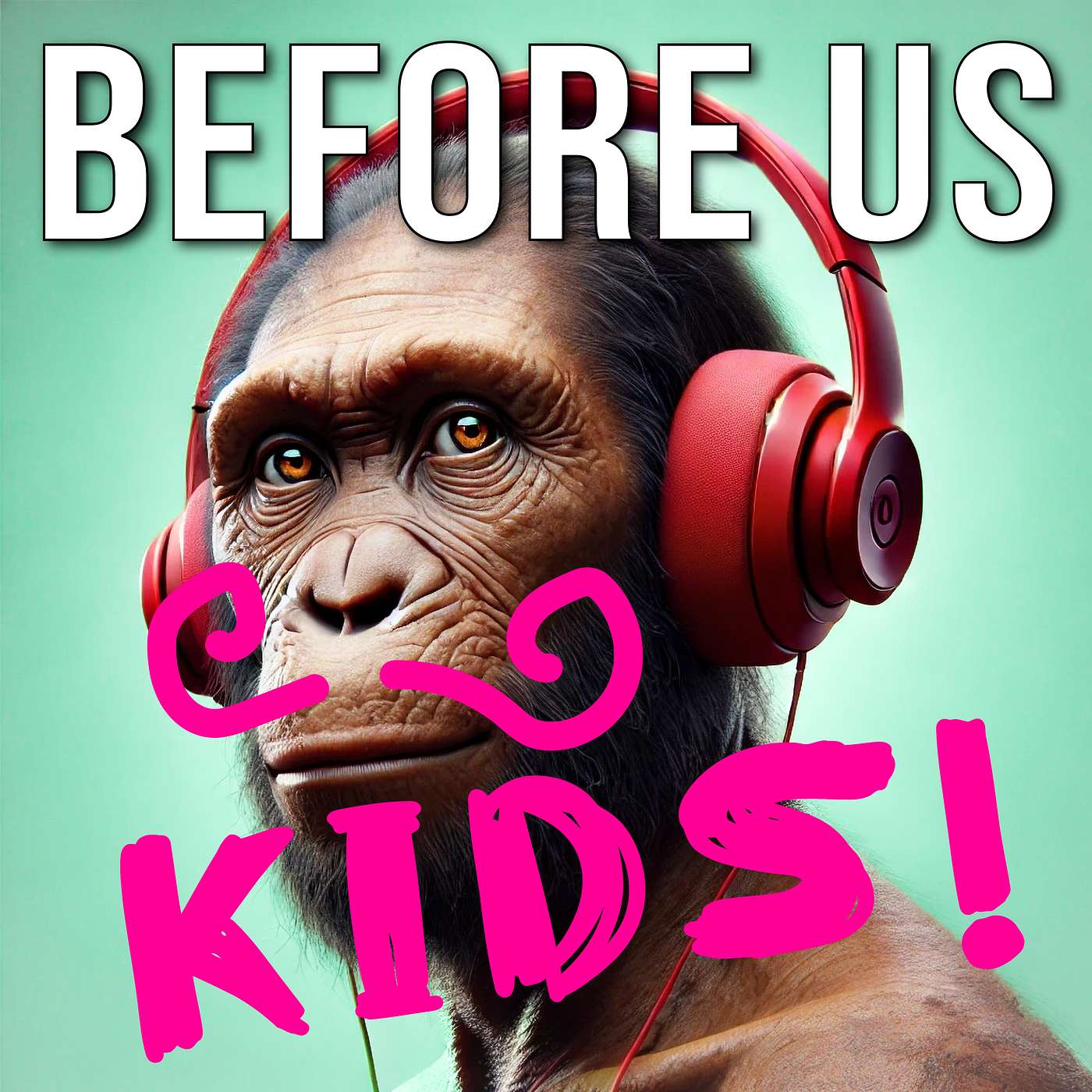
Before Us Kids!
If you or your kids want to learn more about Denisvans then check out "Our faceless ancestors no more." This fun-filled, kid-friendly episode explores the Denisovans and the discovery that finally put a face to the name. Click here for a direct link.
More information about Before Us Kids! From...
(South) East Side Story
Fossil and genetic evidence shows that eastern Asia was a hotspot of diversity for the genus Homo during the Middle and Late Pleistocene. Homo erectus, Denisovans (Homo longi and Homo juluensis) / Neanderthals, Homo floresiensis, and Homo Luzonensis were all present at one point or another. But when did modern humans arrive from Africa?
In this episode, we talk to Fabrice Demeter about excavations at Tam Pa Ling cave in Laos, where his team has uncovered a rich fossil record documenting some of the earliest known modern humans in Southeast Asia. These discoveries place modern humans in the r...
Saturday Bonus Minisode plus sneak peak of Season 2, Episode 4
Have a question or comment?
Email: [email protected]
Reddit: https://www.reddit.com/r/BeforeUsMedia/
Or click “Send us a message!” at the top of this page.
Before Us Kids!
If you or your kids want to learn more about Denisvans then check out "Our faceless ancestors no more." This fun-filled, kid-friendly episode explores the Denisovans and the discovery that finally put a face to the name. Click here for a direct link.
More information about Before Us Kids...
Hominin around Asia
Asia plays a central role in the story of human evolution and recent cutting-edge research shows that eastern Asia was home to a variety of archaic human species that were still present by the time modern humans arrived during the late Pleistocene. In this episode, Prof. Christopher Bae leads us on a fascinating journey of the paleoanthropology and archaeology of eastern Asia to understand the complex biogeographic landscape that greeted those earliest modern humans.
**Please do not forget to rate and review the show**
Have a question or comment?
...Shore is dry around here
As modern humans spread across the world along coastlines and waterways during the Late Pleistocene, they encountered a remarkable variety of coastal environments, each with its own resources and challenges. In this episode, we explore one of the seemingly least hospitable coastal environments: maritime deserts. We discuss Boodie Cave on Barrow Island, off Australia’s northwest coast, with Tiina Manne from the University of Queensland to discover how people adapted their knowledge to this demanding environment and thrived there for tens of thousands of years.
**Please do not forget to rate and review the show!**
Saturday Bonus Minisode plus sneak peak of Season 2, Episode 2
Click here to send us a message!
Have a question or comment?
Email: [email protected]
Reddit: https://www.reddit.com/r/BeforeUsMedia/
Or click “Send us a message!” at the top of this page.
Before Us Kids! From the creators of the Before Us podcast comes an exciting new adventure: Before Us Kids! This brand-new, fun, and engaging podcast is co-hosted by kids, for kids, and takes young listeners on a journey through deep time to discover the lives of the peopl...
The lore you know
As modern humans spread across the world at the end of the Pleistocene, they learned to survive in a remarkable range of environments. How did those hunter-gatherers preserve their knowledge and pass it on from one generation to the next? In this episode, Helen and Erich speak with Patrick Nunn to explore the role of oral history, myths, and storytelling in the preservation of knowledge among preliterate societies. Welcome back to a new season of Before Us!
**Please do not forget to rate and review the show!**
Have a question or co...
Before Us Season 2 Trailer!
A new season of Before Us premieres Tuesday, September 29, 2026! Join us as we as we explore the remarkable human story behind the world we know today.
We are continuing to explore humanity’s enduring relationship with aquatic resources and how coastlines and waterways helped shape our remarkable expansion worldwide. This season, we follow the movement of modern humans through Southeast and East Asia, around the North Pacific Rim, and into North and South America, uncovering the epic story of the Peopling of the Americas.
This season will be bigger and more amazing than ever before. We've...
Special Preview of Before Us Kids! Out for a stroll at White Sands
Imagine taking a walk with Columbian mammoths, giant sloths, lions, sabre-tooth tigers, camels and loads of other animals? Sounds crazy, right! Yet it actually happened 20,000 years ago and in this episode Dr. Erich talk to Noah and Colton about some seriously cool discoveries at White Sands National Monument in New Mexico.
Want to learn more? Check out the Before Us Kids Patreon (https://www.patreon.com/c/BeforeUsKids) where we have bonus episodes that discuss the science behind the stories and other exclusive content such as the 10-part series A Totally Ridiculous, Mostly Serious, A...
Special Preview of Before Us Kids! Red-headed Neanderthals?

In this hair-larious episode, Dr. Erich chats with Jake and Colton all about red hair, genetics, and some super cool things we might’ve gotten from our ancient cousins—the Neanderthals!
Want to learn more? Check out the Before Us Kids Patreon (https://www.patreon.com/c/BeforeUsKids) where we have bonus episodes that discuss the science behind the stories and other exclusive content such as the 10-part series A Totally Ridiculous, Mostly Serious, Always Awesome Guide to Surviving the Ice Age (but also Zombies and the Weirdness of Life in General). There’s even a...
Special Preview of Before Us Kids! Woolly Mice?

In this episode, Dr. Erich and Colton dive into a wild idea—bringing back the woolly mammoth! How are scientists doing it? Believe it or not…some scientists think it starts with woolly mice! Yep, you heard that right. WOOLLY MICE! Join us for a super fun and funny chat about some very fluffy science. You won’t want to miss this one!
Want to learn more? Check out the Before Us Kids Patreon (https://www.patreon.com/c/BeforeUsKids) where we have bonus episodes that discuss the science behind the stories and other exclusive content such as the 1...
Going with the Flow
There is unambiguous agreement that early humans had to cross open water when they traveled from Sundaland to Sahul before 40,000 years ago. How were they able to do this and would ocean winds and currents have helped or hindered their voyages? In this episode we talk to Kiki Kuijjer and Bob Marsh, both from the University of Southampton, about flow modeling that potentially reveals how humans may have been able to make their fantastical journeys.
Key People
Robert Marsh
Kiki Kuijjer
Further R...
Water you waiting for?
Sea levels rise and fall in response to complex planetary drivers, including shifts in polar ice caps, land masses, and other factors. Understanding these processes is crucial for studying prehistory in deep time, including human migration from Sundaland to Sahul and the movement of people around the globe. In this episode, Justin Dix breaks down what drives sea level change, how scientists reconstruct past sea levels, and how these fluctuations have shaped human history.
Key People
Justin Dix
Key Places
Bonaparte G...
Helen talks the ACROSS Project
In this episode, we speak with Before Us co-host Helen Farr about her European Research Council project, Australasian Colonisation Research: Origins of Seafaring to Sahul—or simply, ACROSS. This ambitious project dives into oceanographic, geoscience, archaeological, and archaeogenetic data to figure out when and how people first made the journey to Sahul, what routes they might’ve taken, and just how long they were stuck in a boat. Spoiler: it wasn’t a weekend trip. These early voyages don’t just tell us about getting to Sahul—they also help us understand the bigger picture of how modern hum...
Hooked from the start
The rapid dispersal of modern humans across Wallacea to modern day Australia not only required boat technology for long-distance sea travel, but also knowledge about deep-sea fishing. In this episode, we talk to Sue O’Connor about the different routes that people may have taken across Wallacea in the Pleistocene and how the different kinds of islands on those routes may have influenced maritime resource use and the earliest evidence of pelagic fishing.
Key People
Susan O'Connor - Australian National University
Key Sites / Concepts<...
Before Us+ Erich answers some of our fan mail
In this special bonus episode, Erich answers some of the fantastic questions that we've received from listeners around the world. If you want to send us your own questions about anything you've heard on Before Us, or just comment in general, please hit the "send us a text" button above every episode description. We would love to hear from you!
Click here to send us a message!
Before Us is produced by Worlds Before LLC. Erich Fisher writes and produces each episode and handles sound design and editing. Helen Farr co-hosts and contributes with writing...
Living large yet so small
The discovery of Homo floresiensis and Homo luzonensis in SE Asia raises big questions about what happened to some early populations of migrants. Here, John McNabb, explains how these discoveries re-shape our understanding of human evolution and human migrations, but also what the world was like when modern humans began to expand out of Africa. It may have been much more crowded than previously thought!
Key Site
Liang Bua
Mata menge
Dmanisi
Key People
John McNabb (Mac)
<...Not just wanderers, also wonderers
Why did humans migrate out of Africa? This question has long puzzled archaeologists. Were they driven by unknown pressures, drawn by opportunities, or was it something else entirely? Best-selling author and researcher Clive Gamble explores how curiosity may have fueled the human expansion out of Africa and how the development of the concept of 'containers' was crucial for technological innovations, such as boats.
Key People
Clive Gamble
Click here to send us a message!
Before Us is produced by Worlds Before LLC. Erich Fisher writes and...
In deep time, in deeper waters
Sea levels have risen and fallen repeatedly over the last 2 million years. During low sea levels, large tracts of land were exposed along coastlines around the world, creating new habitats for plants, animals, and people to inhabit and new routes for people to move around the world. Now, many of these places are underwater, but evidence of these ancient landscapes, and the people who occupied them, still exists. In this episode we chat with Geoff Bailey and Hayley Cawthra about the challenges of working in coastal environments and reconstructing their submerged stories.
Key...
Waves of Change
Around 170,000 years ago people living in sea caves on South Africa’s south coast were repeatedly collecting and eating shellfish from the nearby coastline. It marked an important behavioral shift from the occasional collection of aquatic resources to systematic relying on aquatic resources for survival. In this episode, travel to the UNESCO World Heritage Site of Pinnacle Point in South Africa to talk with Curtis Marean, one of the foremost experts on the origins and development of coastal foraging, about how the transition from opportunistic to systematic coastal foraging may have occurred and the unexpected impact that the shift to...
The Omega-th wonder of the world
Have you ever wondered how aquatic foods shaped human evolution? In this episode, we dive into the fascinating role of seafood in our development with world-renowned experts Michael Crawford and Stephen Cunnane. As leading researchers in brain-selective nutrition, they explore how iodine, fatty acids, and other essential nutrients have influenced modern human health—and their profound impact on our evolutionary journey.
CLICK THE LINKS BELOW FOR MORE INFORMATION
Guests:
Michael Crawford
Stephen Cunnane
Click here to send us a message!
Before Us is...
Flame-kissed fins
Homo erectus is widely believed to be the first human species to leave Africa, expanding into parts of Europe and Asia. They were also the first to control and use fire. In this episode, we speak with Josephine Joordens and Irit Zohar to explore these early time periods, approximately 2 million years ago. We delve into when and how hominins first developed an interest in aquatic resources, the transformative impact of cooking fish, and why a stable, year-round food source like fish was crucial for hominin survival and their dispersal across the globe.
Key...
Head over heels for aquatic environments
Archaeology tells the story of people, yet identifying individuals in the archaeological record remains notoriously challenging. In this episode, we speak with Rachel Bynoe, Charles Helm, and three Ju/’hoansi master trackers - /ui Kxunta, ≠oma Daqm, and /uce Nǂamce - from Nyae Nyae, Namibia, to explore ichnology—the study of tracks and traces. Together, we uncover evidence of individuals from deep time and gain insights into the landscapes they inhabited.
CLICK THE LINKS BELOW FOR MORE INFORMATION
Key sites discussed:
Happisburgh, United KingdomBrenton-on-Sea, South AfricaNyae Nyae Conservancy, NamibiaBefore Us Season 1 Trailer
Get read for a new podcast that digs deep into big issues in archaeology and human evolution. In this season, archaeologists Helen Farr and Erich Fisher take a deep dive into the origins and development of Maritime Adaptations, tracing humanity's journey from the earliest interests in aquatic resources to the global expansion of modern humans via oceans, coastlines, and waterways. Debuting January 2025.
Click here to send us a message!
Before Us is produced by Worlds Before LLC. Erich Fisher writes and produces each episode and handles sound design and editing. Helen Farr co-hosts and contributes...
