Grüezi Amerika. Views from the Sister Republic

Since January 20, 2025, we are officially in the era of Trump 2.0. But is it, will it be any different from Trump 1.0? And what do the events across the Atlantic mean for us in Europe? My name is Claudia Franziska Brühwiler, and I am a professor of American Political Thought and Culture at the University of St.Gallen. This podcast will take a closer look at current events through the lens of American history, politics, and culture. Sometimes, I will keep it short and share with you my analysis, thoughts, or some background story to what is happening. At other occasions, we wi...
Episode 47 – Ein neues transatlantisches Verhältnis?
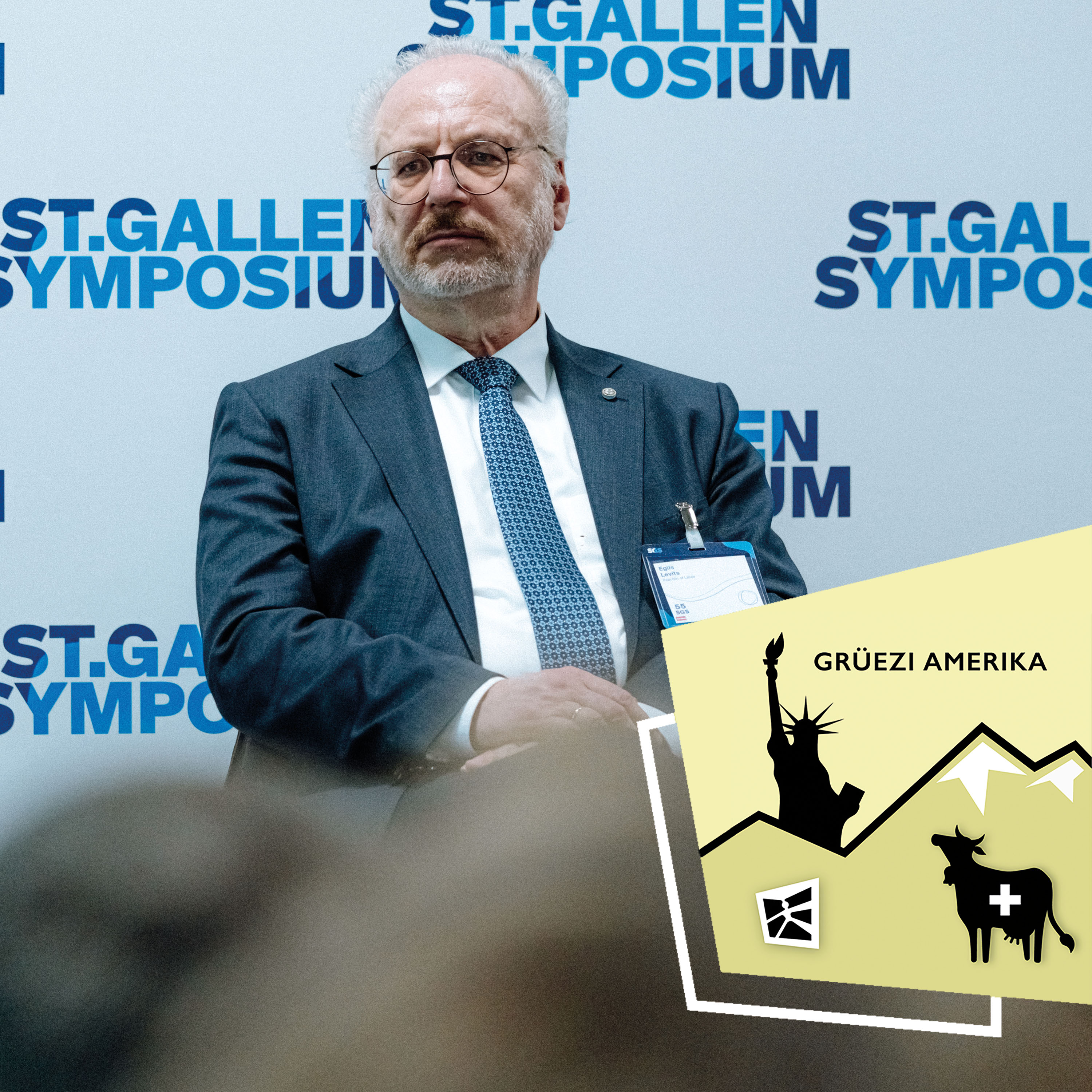
Manche Menschen sind nicht einfach Zeitzeugen, sondern Mitgestalter ihrer Zeit und deren Umbrüche: Egils Levits, 1955 geboren in der Lettische Sozialistische Sowjetrepublik, erlebte die Ausweisung seiner Familie nach Deutschland, studierte dort und fasste Fuss als Jurist – um dann 1990 in seine alte Heimat zurückzukehren und deren demokratische Zukunft mitzuprägen. Neben vielen anderen Stationen diente er unter anderem als Richter am Europäischen Gerichtshof für Menschenrechte und am Europäischen Gerichtshof, bevor er von 2019 bis 2023 Präsident Lettlands wurde. Heute beobachtet er kritisch das Zeitgeschehen.
Anlässlich des 55. St.Gallen Symposiums sprachen wir über die Herausforderungen Europas, in...
Episode 46 – Trumponomics 2.0
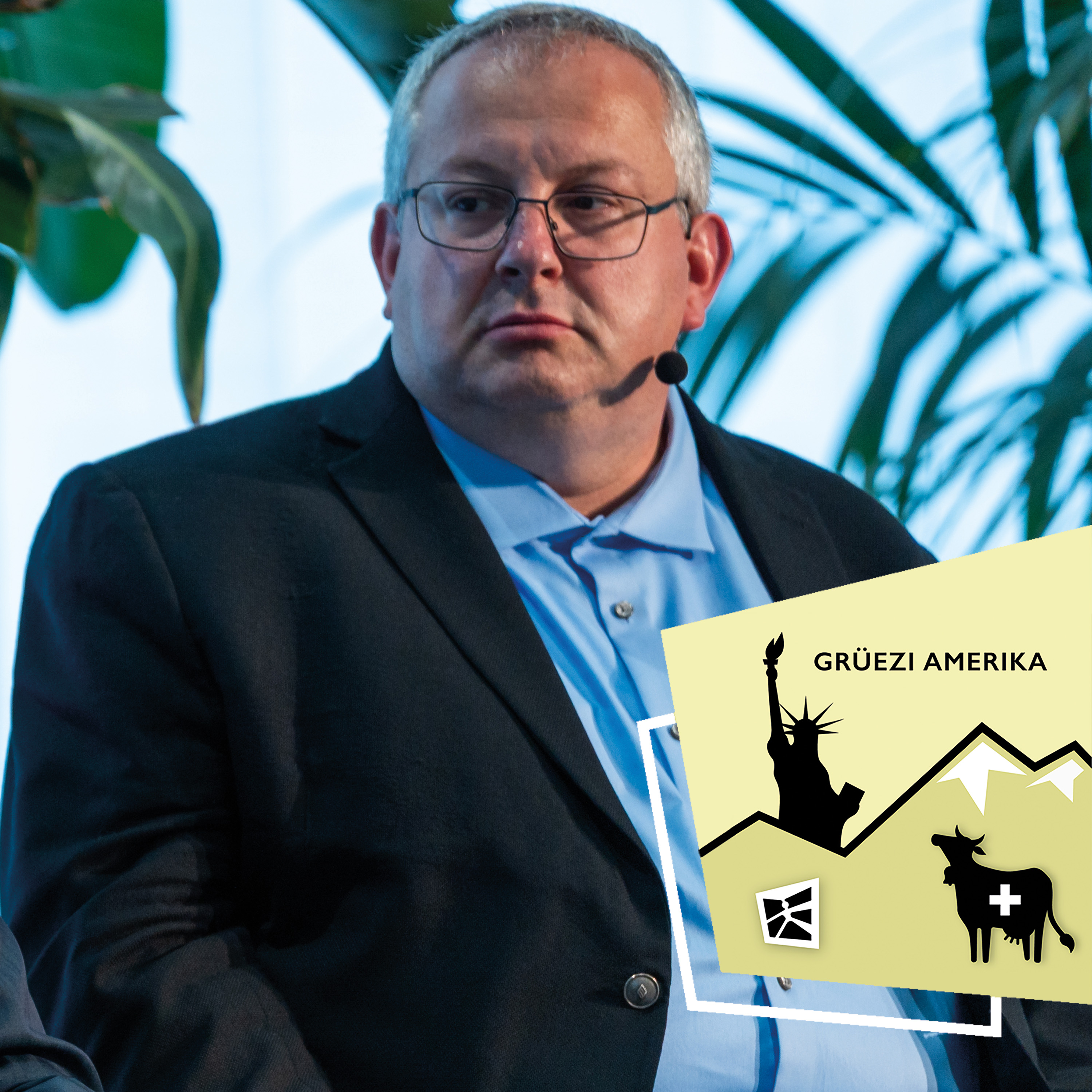
Uncertainty on the tariff front, the war in Iran with the blockage of the strait of Hormuz, and a dissatisfied population: 61 percent of Americans feel that the economy is getting worse, and many wonder how the president wants to turn the situation around prior to the Midterm elections on November 3. Is there anything in the toolbox of Trumponomics 2.0 that can remedy the current situation? Or are things not as bleak as people feel? At the occasion of the 55th St.Gallen Symposium, "Grüezi Amerika" seized the opportunity to discuss these questions with Rüdiger Bachmann.
Professor Rü...
Episode 45 – Der amerikanische Traum «made in China»?

Als der Historiker und Autor James T. Adams 1931 den Begriff des «amerikanischen Traums» prägte, war dieser in materieller Hinsicht für die Mehrheit der Amerikaner tot: Das Land steckte inmitten der Grossen Depression, statt auf Aufstieg hoffte man in erster Linie auf Überleben. Gerade deshalb betonte Adams, dass es beim amerikanischen Traum um mehr gehe als ein schickes Auto oder andere Besitztümer. Und tatsächlich betonen auch heute noch die Amerikaner unterschiedliche Aspekte, wenn sie den amerikanischen Traum definieren. Ob es um Stabilität oder Aufstieg geht, noch glaubt knapp die Mehrheit an die Erfüllbarkeit ihres Traums –...
Episode 44 – A Pyrrhic Victory for the US and Israel?

In late February, Israeli airstrikes—soon joined by the United States—targeted key sites across Iran, triggering a chain reaction that has reshaped the Middle East almost overnight. Iran retaliated with missile and drone attacks across the region and, in a move with massive global implications, closed the Strait of Hormuz, sending shockwaves through energy markets and international trade. At the same time, the internal balance of power in Tehran appears to be shifting, with the Revolutionary Guard stepping into an even more dominant role. Shortly after threatening Iran with “the destruction of their civilization,” President Trump announced a two-week...
Episode 43 – Special Episode: The US Strikes against Iran
The President who had promised an end of “forever wars” and of unnecessary entanglements has greenlit strikes against Iran. Since February 28, Iran is under US and Israeli attack; Ayatollah Khamenei was among the first of the Irani leadership to be killed. President Trump has called on the Iranian people to “take back their country” and has promised the operation to be concluded within five weeks. While few observers mourn the possible demise of the Islamic theocracy, many fear that the US and Israel might have unleashed a regional conflict with a more than doubtful ending. How do the strikes fit into...
Episode 42 – Special Episode: The Trouble with Chagos

Disputes over territory seem to be the new norm in transatlantic relations: after fears over the world’s largest island Greenland rattled the entirety of Europe, the fate of a small archipelago in the Indian Ocean has worsened US-UK relations. In 2024, the United Kingdom reached an agreement with Mauritius, transferring sovereignty over the Chagos archipelago to the latter. Earlier, President Trump applauded the deal – but he has since backtracked and demands that the UK keep sovereignty over the group of islands. What’s the trouble with Chagos? And why has its status been disputed for decades? We are breaking down t...
Episode 41 – Trump, Tariffs, and the Court

It's a landmark case: in Learning Resources, Inc. v. Trump (2026), the Supreme Court declared Donald J. Trump's tariff regime unconstitutional. Specifically, the Court holds that the International Emergency Economic Powers Act (IEEPA) does not authorize the President to impose tariffs. Expectedly, the President denounced the decision and the three conservative Justices who went with the 6:3 majority, including Chief Justice Roberts. We are trying to make sense of it all with Prof. Christoph Frei.
Prof. emeritus Christoph Frei teaches history of political thought, international governance, and world politics at the University of St.Gallen. An award-winning researcher and...
Episode 40 –Henry Wirz, Swiss War Criminal of the Civil War

Nov. 10, 1865: Heinrich “Henry” Wirz is executed as only one of three men tried, convicted, and executed for war crimes during the Civil War – a Swiss who had fought for the Confederacy. As Captain, he had been in charge of Andersonville Prison, a prisoner-of-war camp in Georgia, and he would be held responsible for the dire conditions under which Union soldiers were held there: “45,000 Union soldiers were imprisoned there, and nearly 13,000 died from disease, poor sanitation, malnutrition, overcrowding, or exposure”. How did Wirz, born in Zurich, end up commanding Andersonville? And was he a mere scapegoat or the monster he was made o...
Episode 39 – Grönlandträume

«We need Greenland» – nicht zur Miete, sondern als Besitz, erklärte US-Präsident Donald J. Trump mehrfach, zuletzt auch am World Economic Forum in Davos. Doch dann löste sich die Anspannung: Ein Abkommen mit der NATO sei in Sicht, verkündete er nur Stunden nach einer Rede, in der er zwar einen Militärschlag zur Besitzergreifung ausgeschlossen, den Besitzanspruch aber nochmals unterstrichen hatte. Nie wurde intensiver über das Schicksal der grössten Insel der Welt gesprochen – und nie fühlte sich die dortige Bevölkerung mehr als Spielball anderer. Gemeinsam mit Prof. Dania Achermann erweitern wir den Blick auf Grönland, v...
Episode 38 – Drugs and the Donroe Doctrine

On January 3, 2026 US troops captured Venezuela's President Nicolás Maduro at his home in Caracas. The political heir of Hugo Chávez had been in office for nearly thirteen years, resorting to electoral fraud and suppressing the opposition to stay in power. During his time in government, around nine million people fled Venezuela. U.S. prosecutors accuse him and the Venezuelan government of a cocaine-trafficking conspiracy and partnering with cartels designated as terrorist groups. But is Venezuela indeed that important for the regional drug trade? And how do countries in the region perceive the U.S. intervention?
Pr...
Episode 37 – Die Schweizer Wirtschaftsbeziehungen zu den USA nach einem Jahr Trump 2.0
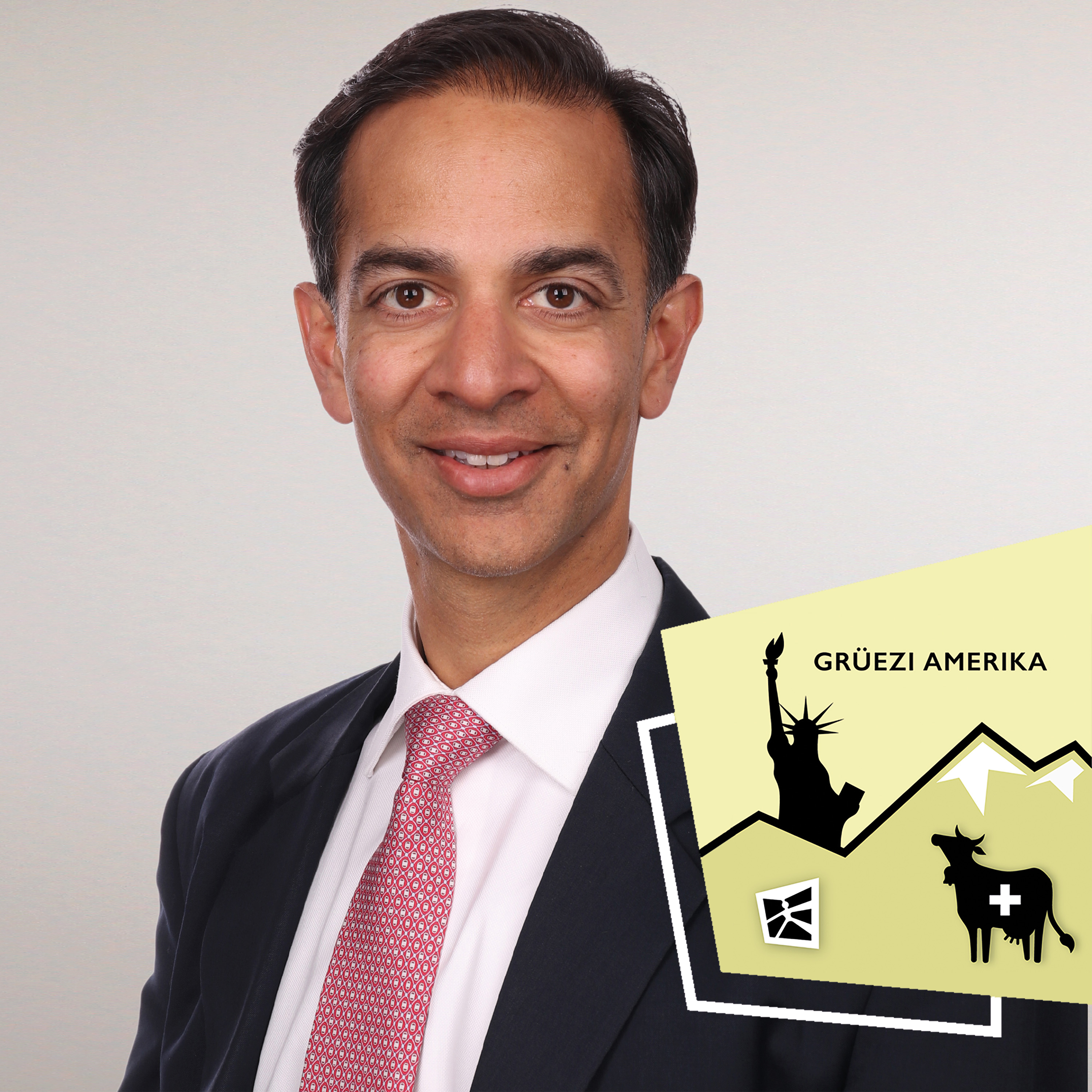
Das Verhältnis zwischen der Schweiz und den USA scheint nach einem Jahr unter Donald Trump 2.0 angespannt, kühl und unsicher. Ausgerechnet zum Nationalfeiertag erreichte die Schweiz die Botschaft, dass die Zollverhandlungen gescheitert, das für das Land weiterhin schlechtere Handelsvoraussetzungen als beispielsweise für die EU-Mitgliedstaaten gelten würden. Auch die Einigung vom November wurde nicht überall als Erfolg gefeiert. Von Goldbarren- oder Oligarchendiplomatie war die Rede, als eine Gruppe Schweizer Wirtschaftsführer mit Präsident Donald J. Trump das amerikanische Zollregime diskutierten. Wie steht es wirklich um die Schweizer Wirtschaftsbeziehungen zu den USA unter Trump 2.0? Wie gut, wie schl...
Episode 36 – ‘tis the Season to Watch Christmas Movies!

What gets you in a festive mood? For some it’s the lights and mulled wine, wrapping gifts and decorating their home – and for others it’s a Christmas movie! But what is a Christmas movie, anyway? Let’s discuss this with my colleague Professor Suzanne Enzerink! She picks the most American, the most iconic, and the most underrated American Christmas movie.
Suzanne had joined us earlier for Episode 18 to discuss “Hollywood in Times of Political Division.” A Dutch native, she did most of her American Studies coursework at the University of Groningen, with an exchange at the Universi...
Episode 35 – JFKs Mörder, QAnon & Co.: Amerikas Liebe zu Verschwörungstheorien

Die Amerikaner waren nie auf dem Mond.
Die CIA tötete John F. Kennedy.
Die Illuminati kontrollieren alles.
George Soros finanziert illegale Einwanderer, um Amerika zu destabilisieren.
Dank QAnon wissen wir alle, was im Keller einer Washingtoner Pizzeria passiert.
Und natürlich wurde Donald Trump 2020 um den Wahlsieg betrogen.
Dies ist nur eine kleine Auswahl der Verschwörungstheorien, die in Amerika kursieren – und von denen manche sogar vom Präsidenten selbst verbreitet werden. Allerdings, so lernen wir im Gespräch mit dem Tübinger Professor Michael Butter, kennt di...
Busting Free Market Myths With Jacob Soll – A Joint Episode of "Grüezi Amerika", "Ohne Senf" and "SQUARE Talks"

"The Free Market" has been a dominant concept in 20th century political and economic discourse – so dominant in fact that it has remained unquestioned. It has become both ambition and panacea as is reflected by the conditionalities of development banks. Let the "invisible Hand" reign supreme and all shall be well, seems to be the mantra. Yet in the 21st century, even the US right, once stalwart defenders of libertarianism, have fallen out of love with "the free market." We dissect the history of the "free market" with historian Jacob Soll whose recent book "The Free Market: History of an...
Episode 33 – As Ohio Goes, So Goes the Nation?
"As Ohio goes, so goes the nation," thus the old saying: Ohio is reputed to be a microcosm of the US. Since 1896, the majority of Ohioans voted for the presidential winner on all but three occasions. The last time the nation decided differently was in 2020 when Trump won Ohio by 8 points but lost overall. Political observers were quick to declare that Ohio was no longer a representative state, ignoring the reasons why the state currently appears solidly red. Generally, Ohio deserves our attention: America’s 7th largest economy, comparable in fact to Switzerland, holds many clues as to what is...
Episode 32 – Making a Home in America

Owning a home, surrounded by a white picket fence – that’s what many consider part of the proverbial American dream. However, Americans are increasingly pessimistic that they will ever become homeowners - they are aware that significantly more people are looking for houses than the market has on offer: there is a shortage of over 4.7 million homes. In addition, nearly a third of American households are “cost burdenend,” meaning that they need to spend at least 30% of their incomes on housing. In Chicago, the third largest city in the US, the percentage is even higher, at 43%. Why has housing become s...
Episode 31 – «The Business of Human Emotion». Ins Taylorverse mit Jörn Glasenapp

«I’m in the business of human emotion,» erklärte sie letztens im Podcast ihres Verlobten – ein Business, das sie beherrscht wie niemand zuvor: Taylor Swift ist die erste Person, die mit ihrer Musik allein eine Milliarde Dollar verdient hat; kein Musiker hat mehr American Music Awards gewonnen; als einzige durfte sie viermal einen Grammy für das Album des Jahres entgegennehmen; kein Song auf Platz 1 der US-Charts war länger als das zehnminütige «All Too Well»; und selbst die Podcastepisode mit ihrem Verlobten brach Rekorde. Die Liste mit Swifts Rekorden und Erfolgen liesse sich noch lange fortsetzen und wird woh...
Episode 30 – «This is not who we are». Gewalt in Amerika

«This is not who we are – we are good people», war nicht nur Präsident Joe Bidens Reaktion auf Auswüchse politischer Gewalt, sondern ist ein vielgehörter Satz, wann immer es in den USA zu Massenschiessereien oder politischen Attentaten kommt. Seit der Ermordung des Politaktivisten Charlie Kirk dominiert jedoch die Angst vor zunehmender Gewaltbereitschaft: Zwar lehnen in beiden politischen Lager eine überdeutliche Mehrheit der Amerikanerinnen und Amerikaner politisch motivierte Gewalt ab, doch gerade die jüngere Generation droht gegenüber deren Gefahr abzustumpfen. Insbesondere meint mehr als ein Drittel der GenZ, Gewalt sei ein probates Mittel im Kampf gegen politi...
Episode 29 – Ordnung and Gemee. The Amish and Their Swiss Roots

2025 is a special year in the history Christianity. Not only is it a holy year for Roman Catholics, it also marks the 500th anniversary of a movement that has its roots in Switzerland. While many took note of the Reformationsjahr 2017, the 500 year-celebration of the reformation, few are aware of the 2.1 million people worldwide who are celebrating an event that took place in Zurich: on January 21st in 1525, people witnessed the first adult baptism, or re-baptism. This marked the beginnings of the anabaptist movement, der Täuferbewegung.
Nowadays, only 2000 anabaptists call Switzerland their home. By contrast, more than h...
Episode 28 – Mit Trumps Washington verhandeln. Ein Gespräch mit Alt-Botschafter Martin Dahinden
39 Prozent. Ausgerechnet am Vorabend des Schweizer Nationalfeiertags verkündete die Regierung Donald J. Trumps, dass die Schweiz seinen «Zollhammer» zu spüren bekommt und nur vier andere Länder mit noch höheren Zöllen auf Exporte in die USA konfrontiert sind. Die Tageszeitung «Blick» färbte die Titelseite schwarz, es hagelte Anschuldigungen gegen Bundespräsidentin Karin Keller-Sutter und ihr Verhandlungsteam, man habe zu wenig keck und mutig verhandelt, privatwirtschaftliche Netzwerke ungenügend genutzt. «Schwesterrepublik» Amerika? Daran glauben im Moment wohl nur wenige Schweizer.
Einer, der auch nach seiner Zeit als Botschafter in Washington, D.C., gerne über die Idee de...
Episode 27 – Gewisper in Washington. Amerika hinter den Schlagzeilen

Schlagzeilen über Amerikas Politik und Gesellschaft sind meist laut und schrill, besonders seit Donald J. Trumps zweitem Amtsantritt. Und sie sind paradoxerweise lauter und schriller diesseits des Atlantiks, wie auch der freie Journalist und Autor Marc Neumann bemerkt. In seinen Beiträgen, u.a. für die Neue Zürcher Zeitung und seinen LinkedIn-Blog Neumanns Whisper, fokussiert er stattdessen auf die Realität hinter den vereinfachenden Erzählungen und horcht auf die Zwischentöne. Im Gespräch mit «Grüezi Amerika!» teilt Marc Neumann seine Eindrücke, nicht nur zur Lage der Nation, sondern auch zu deren Beurteilung durch das deutschs...
Episode 26 – American Compass and the New Conservatives
American Compass is, at 5 years, a relatively young think tank, but it has already become well-known for mapping an alternative to right-wing economic orthodoxy. Its founder, Oren Cass, has tirelessly explained the reason why American Compass believes the US economy – and, above all, US workers, will benefit from an overall tariff of 10 percent and why the initial pains will be rewarded with substantial gains. Vice President JD Vance has embraced the course of American Compass, Secretary of State Marco Rubio has contributed to its publications and events, and Senator Josh Hawley (Missouri) is among its many supporters.
Wh...
Episode 25 – Migration beyond Myths & Polemics

We already seem to have forgotten it, but it has only been weeks that President Donald J. Trump federalized the National Guard to re-establish order in the city of Los Angeles amidst protests against deportations of undocumented immigrants. What L.A. mayor Karen Bass and California’s Governor Gavin Newsom condemned as a presidential abuse of power, Republican lawmakers in California considered a necessary step to prevent further escalation. Few issues are as divisive in US politics as immigration – and on few issues do voters see so little progress and true reform. What is the situation at the border real...
Episode 24 – Happy Fourth of July!

Today, Americans celebrate the signing of the Declaration of Independence in 1776 - or do they? As you can suspect from such a rhetorical question, the answer is "not quite." In fact, the Declaration of Independence was adopted on July 4, 1776, but it was only signed later, on August 2, 1776. In this very short episode, we take a look at the history of Independence Day.
Further reading: The Declaration of Independence
Episode 23 – An Insider’s Guide to the Senate by Jason Thielman

It’s one of America’s most popular political myths: the idea that George Washington considered the Senate necessary as a “legislative cooling saucer.” Just as tea or coffee had to be poured on the saucer to get its temperature down, the Senate was needed to reflect on legislation and be the wiser of the chambers. The idea seems more appealing today than ever, but one wonders how much the Senate still lives up to its wise reputation. With 53 seats, the Republicans are the majority, making a net gain of four seats in the 2024 election. We are in luck that one...
Episode 22 – New Glarus: A Swiss Founding in Wisconsin

Since the early 18th Century, an estimated 300,000 Swiss emigrated across the Atlantic and settled in the United States. Thus, more than a million American citizens claim Swiss roots. There’s hardly a place that more proudly celebrates its Swiss ancestry than a small town in Wisconsin: New Glarus. Founded in 1845, the town was founded by emigrants from the Canton of Glarus with which it maintains a close bond. If you are craving for Rösti or the – so we are told – best beer of the region, New Glarus is the place that serves it all!
Bekah Stauffacher helps p...
Episode 21 – A Transatlantic Divorce? America’s Anti-European Foreign Policy

It was a watershed moment: Vice President JD Vance’s speech at this year’s Munich Security Conference shook European observers. Instead of reaffirming transatlantic ties, the Vice President scolded European governments for what he perceived as the marginalization of dissident voices. The Oval Office confrontation between Presidents Zelenskyj and Trump further fanned fears that the United States might abandon its long-time commitment to European security. And, most recently, a Signal chat between Cabinet members further revealed a disconcerting level of disdain for Europe. While anti-American reflexes are nothing new in transatlantic relations, many observers consider anti-Europeanism as a new...
Episode 20 – Wait Wait… Don’t Tell Me, It’s Katherine Maher!

For Europeans, they are a staple of their media habits: public media. Whether it’s the grand old lady BBC in the United Kingdom, or the many different stations run by Switzerland’s SRG/SSR, many Europeans rely on public broadcasting for news and entertainment. According to the EU, 48% of its citizens select public TV and radio stations as a news source they trust most. While funding cuts are not unknown to European public broadcasters, few are subject to constant political battles as seen in the United States: since they went on air in the 1970s, Public Broadcasting Service (PBS...
Episode 19 – Ryan Enos on the State of the Union – and of the Democrats
Few Harvard professors have been as outspoken against the Trump Administration’s attack against their University as he has: Ryan Enos has spoken at rallies, given interviews, and written in defense of academic freedom. This isn’t a new quest for him, as he was critical of Harvard’s leadership in the wake of October 7. We take Professor Enos’s attendance of the St.Gallen Symposium as an opportunity to discuss the state of the union, and of the Democratic Party in particular.
Professor Enos’ research is situated at the intersection of psychology, geography, and politics in the United...
Episode 18 – Hollywood in Times of Political Division

Disney turned its beloved Snow White into a live action movie – and no one seems happy: some criticize the casting with a Latina star whose skin is not “white as snow,” while others take issue that the color of skin is a topic of controversy at all. And then there’s the problem of the seven dwarves who are, this time around, not dwarves at all which, again, doesn’t please anyone either. The list goes on, and it is exemplary of the way some movies get caught up in the U.S. culture wars. But is this an entirely n...
Episode 17 – Rollercoaster Economics 101 with Simon Evenett

Many tried to predict what Donald J. Trump’s first 100 days in office would amount to. The best advice stemmed from Karl Rove, long-time Republican strategist and political legend: “Buckle up, buttercup!” And yes, a wild ride it has been, particularly since “liberation day” which brought tariffs for America’s friends and foes alike, even uninhabited islands. While some have dismissed Trump’s economic agenda as sheer madness, others claim to detect method and believe it all part of a larger plan to plunge the US into recession. But is there any truth to these claims? What to make of the economi...
Episode 16 – It Happened Here – or Did It?

“But – it can’t happen here!” many Americans asserted in light of the Nazi takeover in Germany. Novelist and muckraker Sinclair Lewis ran with this line and sentiment, outlining a scenario in It Can’t Happen Here (1935) in which it did happen: an authoritarian turn in the United States. Similarly, Philip Roth imagined The Plot against America (2004) in which Franklin Delano Roosevelt would lose the election to “America First Committee” candidate Charles Lindbergh. Scholars and journalists now claim that it has indeed happened here and the plot against America was successful. The “coup from within” succeeded in ringing in “technofascist” age...
Episode 15 – Emil Frey: Vom US-Bürgerkrieg in den Bundesrat

Emil Frey (1838-1922) war bislang nicht nur der einzige Bundesrat aus dem Kanton Basel-Land, sondern auch – laut der NZZ – «der abenteuerlichste Bundesrat, den die Schweiz je hatte»: Ausgerechnet im amerikanischen Schicksalsjahr 1860 reiste er gemeinsam mit seinem Cousin in die USA, ursprünglich, um sich als Agronom weiterzubilden. Letztlich blieb er fünf Jahre, um im Bürgerkrieg für die Nordstaaten zu kämpfen. Bei Gettysburg geriet er als Major in Kriegsgefangenschaft. Ein Stoff, der in den USA verfilmt würde – in der Schweiz wurde er zum Roman: «Der Amerikaner im Bundesrat. Stationen im Leben des Emil Frey» von Markus Wüest, mi...
Episode 14 – Poland Leading the European Way under Trump 2.0?

"Si vis pacem, para bellum" – "If you want peace, prepare for war." This could become the new motto of Europe under the second Trump Administration: it had been well-known that President Trump asks European states to strengthen their armies and expand their defense budgets. But it has only been in the wake of Vice President JD Vance’s talk at the 61st Munich Security Conference and the disastrous press conference with President Zelenskyi that all European states are starting to take Trump seriously. Poland is decidedly ahead of the curve: in 2024, it spent 4.12% of its GDP on defense.
Ho...
Episode 13 – Trump in the Ivory Tower: Academic Freedom under Assault?

Scientific freedom under assault? The headlines and numbers are worrisome: amidst federal funding cuts, even the wealthiest research universities have been forced to cut PhD positions and research projects, putting careers and scientific progress in jeopardy. Researchers abroad are likewise affected if and when they collaborate with US colleagues in federally funded projects. What is the significance of these federal funds for public and private institutions of higher educations? Why have some colleges opted out of federal funding in the first place? And what is the aim of the Trump Administration’s attack against science? Is it simply backlash ag...
Episode 12 – Law & Order

Von amerikanischen Krimi- und Gerichtsserien bis zu True Crime-Podcasts und Dokumentationen: Viele von uns tauchen immer wieder einmal in die US-(Verbrechens)Welt ein. Obschon sie uns durch Film und Audio bekannt ist, bleibt vieles fremd: die Rolle von Staatsanwälten, die teils absurd anmutenden Strafmasse oder das Festhalten an der Todesstrafe. Im Gespräch mit Prof. Nora Markwalder gehen wir dem, was uns so befremdet, auf den Grund.
Prof. Nora Markwalder ist Ordinaria für Strafrecht an der Universität St.Gallen, hat in Lausanne studiert und in Zürich promoviert. Zudem führten sie zwei längere...
Episode 11 – The 2nd Certainty in Life – Taxes!

53% of Americans are "very bothered" by the complexity of the US tax system – rightly so, explains Prof. Peter Hongler in this episode of "Views from the Sister Republic". While it bears some similarities to the Swiss one, it differs in many important aspects, such as the lack of a value-added tax (VAT). What are the reasons for these differences? What should we make of Donald J. Trump’s ideas? And what changes would an expert prioritize?
Prof. Peter Hongler dives into these questions and shows that taxes can be quite fun to discuss! Peter joined the University of S...
Episode 10 – Mit Peter Hossli am Puls Amerikas

Seit Donald J. Trump wieder im Amt ist scheinen die USA und die Welt in fieberhafter Erregung. Nie wurde so minutiös über jede Amtshandlung eines Präsidenten berichtet, wie dies bei Trump der Fall ist. Dabei überbieten sich die Medien in dystopischen Zukunftsszenarien. Doch wie viel ist auf die Prognosen jener zu geben, die einen Wahlsieg Kamala Harris’ vorausgesagt haben? Auch deutschsprachige Medien tun sich schwer damit, Amerika den Puls zu nehmen und der Öffentlichkeit zu vermitteln, wie (unterschiedlich) das Land tickt. Warum das so ist, diskutieren wir in dieser Folge mit Peter Hossli.
Mit 29 Jahren zog Pete...
Episode 9 – The Dismantling of the Administrative State?

Already in his first run for the presidency, Donald J. Trump promised voters to "drain the swamp" and reign in the administrative state. To this end, the new administration created the temporary Department of Government Efficiency (DOGE) which – under the controversial guidance of Elon Musk – intends to save the federal state one to two trillion US Dollars. For the past few weeks, various measures by DOGE have led some to claim that we are currently witnessing an "administrative coup" or a "coup from within". But is that indeed the case? And how revolutionary are the measures pursued by DOGE?
Episode 8 – Taiwan: the Most Dangerous Place on Earth in the age of Trump 2.0

In May 2021, the British weekly The Economist declared Taiwan to be "The Most Dangerous Place on Earth." While the advent of war in the Middle East and Ukraine suggest that the 2021 cover story was hyperbolic, the small island in the South China Sea is indeed at the center of a conflict that is repeatedly called "the New Cold War": Taiwan’s future is contingent on US-Chinese relations. And these also affect the rest of the world, not least export-driven economies such as Switzerland. How much has the situation of Taiwan been affected by changing US Administrations? What does Taiwan ex...


